The occurrence of violence leads to further violence. The often-observed intergenerational transmission of violence had been explained by the “cycle of violence” hypothesis proposed by Widom (Reference Widom1989). Following her assumption, caregivers who have been exposed to violence in their own childhood are more likely to perpetrate violence against their children. However, this hypothesis does not fully explain the intergenerational transmission since studies on the relationship of exposure to violence in families of origin and subsequent perpetration of violence against own children show only moderate correlations (Thornberry, Knight, & Lovegrove, Reference Thornberry, Knight and Lovegrove2012). Additional factors may have an influence on the perpetuation of violence against children, particularly in the aftermath of war and natural disaster.
Catani (Reference Catani2010) proposed that exposure to war may lead to disruption within the community as well as the family which, in turn, contributes to an increased rate of violence against children. Several studies showed that the prevalence of family violence against children is particularly high in post-war communities (e.g., Dubow et al., Reference Dubow, Boxer, Huesmann, Landau, Dvir, Shikaki and Ginges2012). For example, Haj-Yahia and Abdo-Kaloti (Reference Haj-Yahia and Abdo-Kaloti2003) found high rates of child maltreatment in a Palestinian sample that were associated with the level of exposure to war-related events. Likewise, the experience of violence has been reported by an unusually high proportion of children in the war-affected north of Sri Lanka (Catani, Jacob, Schauer, Kohila, & Neuner, Reference Catani, Jacob, Schauer, Kohila and Neuner2008a). These findings lead to the assumption that war exposure may play an important role in the development and the perpetuation of child maltreatment. However, little is known about the factors that may have an impact on the association between exposure to war and experience of child maltreatment. Catani (Reference Catani2010) suggested that parental psychopathology such as posttraumatic stress symptoms and substance abuse may mediate the relationship between war exposure and child abuse. Recent studies support such a perspective (e.g., Saile, Ertl, Neuner, & Catani, Reference Saile, Ertl, Neuner and Catani2014). In a study with Sri Lankan school children and their caregivers, parental traumatization was significantly related to parent-reported perpetration as well as child-reported victimization. In addition, substance abuse by fathers appeared to be the strongest predictor of father-reported perpetration of violence against children (Sriskandarajah, Neuner, & Catani, Reference Sriskandarajah, Neuner and Catani2015). However, children's own mental health problems might also be a potential mediator between war violence and family violence against children. It is well known that children living in postwar communities are at high risk of developing psychological problems (Ayub et al., Reference Ayub, Poongan, Masood, Gul, Ali, Farrukh and Naeem2012; Mclaughlin et al., Reference Mclaughlin, Fairbank, Gruber, Jones, Lakoma, Pfefferbaum and Kessler2009; Thabet, Karim, & Vostanis, Reference Thabet, Karim and Vostanis2006) including behavioral and emotional difficulties such as hyperarousal, irritability, or outbursts of anger (Catani, Reference Catani2010). Caregivers may find it difficult to cope with their children's impairments and might, in response, adopt inappropriate or even violent parenting strategies to raise their children. Several studies on the link between parental stress and violence against children support this assumption (Garcia & Alampay, Reference Garcia and Alampay2012; McElroy & Rodriguez, Reference McElroy and Rodriguez2008; Rodriguez & Tucker, Reference Rodriguez and Tucker2015).
To date, the potential of children's psychopathology as a mechanism linking war trauma to child maltreatment is poorly understood. A promising approach to study this pathway is to look at children in a postconflict society who are currently raised in the absence of their parents so that a potential influence of parental psychopathology and/or genetic factors on the transmission of war violence into interpersonal violence can be ruled out. Therefore, children living in an orphanage or residential home are a suitable population: They not only may have experienced adverse events associated with their life circumstances (e.g., war or community violence) but also violence perpetrated by their parents before admission to the residential care institution. Several studies show that the most frequent reasons for the placement of children in residential care institutions are due to violence and neglect within the family of origin (Morantz, Cole, Ayaya, Ayuku, & Braitstein, Reference Morantz, Cole, Ayaya, Ayuku and Braitstein2013; Oliveira et al., Reference Oliveira, Soares, Martins, Silva, Marques, Baptista and Lyons-Ruth2012; Sainero, Bravo, & del Valle, Reference Sainero, Bravo and del Valle2014). Accordingly, a study with institutionalized children in Tanzania found that more than half of the children had experienced violence in the family of origin before they were admitted to the residential care institution (Hermenau, Hecker, Elbert, & Ruf-Leuschner, Reference Hermenau, Hecker, Elbert and Ruf-Leuschner2014).
Following the framework of Catani (Reference Catani2010), it may be assumed that such an accumulation of violent experiences increases the risk for these children to also experience violence at the hands of their new guardians in the orphanage or residential home. Studies on child maltreatment by guardians in residential home show high prevalence, with rates up to 89% (Gavrilovici & Groza, Reference Gavrilovici and Groza2007; Hermenau et al., Reference Hermenau, Hecker, Elbert and Ruf-Leuschner2014; Saboula, Hussien, & El-Refaee, Reference Saboula, Hussien and El-Refaee2015). In this context, it is noteworthy that residential care institutions in third-world countries are often unregistered and unregulated, often leading to a lack of proper training of the guardians providing childcare (Hecker, Mkinga, Ssenyonga, & Hermenau, Reference Hecker, Mkinga, Ssenyonga, Hermenau, Rus, Parris and Stativa2017). In addition, their environment within children's institutions may be chaotic due to a high fluctuation of staff members as well as an inconsistent assignment of guardians to specific children (Muhamedrahimov, Palmov, Nikiforova, Groark, & McCall, Reference Muhamedrahimov, Palmov, Nikiforova, Groark and McCall2004; Wright, Lamsal, Ksetree, Sharma, & Jaffe, Reference Wright, Lamsal, Ksetree, Sharma and Jaffe2014).
Peer violence seems to be another common phenomenon in residential care institutions. Research on the prevalence of peer violence among institutionalized children is scarce, but initial studies revealed prevalence rates of physical violence by peers of up to 56% and psychological violence up to 73% (Attar-Schwartz & Khoury-Kassabri, Reference Attar-Schwartz and Khoury-Kassabri2015; Khoury-Kassabri & Attar-Schwartz, Reference Khoury-Kassabri and Attar-Schwartz2014; Sekol & Farrington, Reference Sekol and Farrington2009). Although the extent of violence against institutionalized children is alarming, the factors that may lead to these high prevalence rates are still understudied.
According to the concept of revictimization, children who have experienced violence are more likely to experience subsequent exposure to violence at later stages of their lives (Widom, Czaja, & Dutton, Reference Widom, Czaja and Dutton2008). This may lead to the assumption that institutionalized children, who have experienced family violence as well as war violence, are at particularly high risk of experiencing further violence by their guardians and peers. Studies on the relationship between family violence and peer violence support this assumption (Cluver, Bowes, & Gardner, Reference Cluver, Bowes and Gardner2010; Shields & Cicchetti, Reference Shields and Cicchetti2001). For example, a longitudinal study with Chinese school children showed that the experience of family violence even predicts victimization by peers (Xia, Li, & Liu, Reference Xia, Li and Liu2018).
To the best of our knowledge, however, no study to date has investigated potential predictors of violence by guardians and peers within a residential care institution in the aftermath of mass trauma, such as war and natural disaster. Also, the potential mediating effect of child psychopathology on the relationship between traumatic events and interpersonal violence in residential care institutions has not been examined. To address this gap in the literature, we conducted a study with institutionalized children in a region of Sri Lanka which has been severely affected by an armed conflict lasting over two decades and by the tsunami disaster in 2004. The civil war in the Tamil areas of Sri Lanka only came to an end in May 2009 (United Nations, 2011). Up to 100,000 people were killed, and hundreds of thousands of civilians were internally displaced (ABC News, 2009). As the civil war continued to rage, the coastal areas of the northern, eastern, and southern provinces of Sri Lanka were devastated by the Asian tsunami in 2004, which led to further deaths, displacements, and disruptions in affected families (Ratnasooriya, Samarawickrama, & Imamura, Reference Ratnasooriya, Samarawickrama and Imamura2007).
The present study aimed to explore potential risk factors for the victimization of institutionalized children in the aftermath of mass trauma. We predicted that exposure to the tsunami, war, and family violence, and mental health problems would represent significant predictors of victimization of children by guardians and peers. Moreover, we assumed a mediating effect of children's mental health on the relation between exposure to traumatic events prior to admission to the residential home and victimization experienced while in the residential home.
Method
Sample selection
During 2012, we conducted a cross-sectional study with children residing in an institution and their guardians in a residential care institution in the Jaffna district in Northern Sri Lanka. This residential care institution was financed by state funding and private donations and was situated near a governmental school. Children from the age of 5 were admitted to the residential home either by court order due to absence of safety in the children's environment or by their relatives due to loss of parent and/ or poverty. If safety was assured, the institutionalized children were allowed to stay with their relatives for a maximum period of one week per year. In this study, all institutionalized children between the ages of 8 and 17 were interviewed. The ethical review board of the Bielefeld University as well as the local court in charge of the children's home approved the implementation of the survey.
Participants
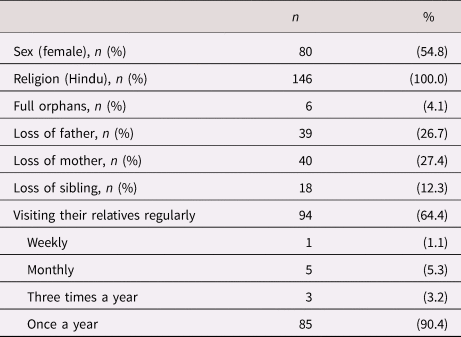
The current sample consisted of 146 children living in an institution in Northern Sri Lanka. The children were on average 12.8 years old (SD = 2.0).The majority of the children (74.7%) reported that one of the reasons for their institutionalization was poverty. Other frequent reasons were loss of one parent (41.1%), better access to education (12.3%), and more safety (8.9%). On average, the children had been living in the residential home for 33.29 months (SD = 26.83). All children possessed their own bed and, on average, seven pieces of clothing (SD = 3.44). Children reported an average intake of 3.40 meals and snacks a day (SD = 0.55), even though the residential care institution claimed to provide three daily meals and two snacks. Further sample characteristics are displayed in Table 1.
Sample characteristics (n = 146).

Measures
All instruments, except the questionnaire on peer violence, had been previously translated into Tamil language, validated, and deployed in previous studies. The additional questionnaire was translated following international standards (de Figueiredo & Lemkau, Reference de Figueiredo and Lemkau1980; Geisinger, Reference Geisinger1994) using lexical back translation, blind back translation, and discussions with a group of local bilingual experts.
Sociodemographic characteristics and exposure to mass trauma
For the assessment of sociodemographic characteristics, we adopted a questionnaire that had previously been used with Tamil schoolchildren (Catani et al., Reference Catani, Jacob, Schauer, Kohila and Neuner2008a; Elbert et al., Reference Elbert, Schauer, Schauer, Huschka, Hirth and Neuner2009) and included additional questions regarding their stay in the residential care institution. The questionnaires for the assessment of exposure to the tsunami in 2004 and to the civil war were also adopted from previous studies in Northern Sri Lanka (Catani et al., Reference Catani, Jacob, Schauer, Kohila and Neuner2008a). The ten types of war-related events were summed in order to create an index of exposure to the civil war (range 0–10).
Exposure to family violence and violence in the residential home
For the assessment of exposure to family violence we adopted a questionnaire that had previously been created by Catani et al. (Reference Catani, Jacob, Schauer, Kohila and Neuner2008a) and used with schoolchildren in Northern Sri Lanka as well as in other cultural contexts (Saile et al., Reference Saile, Ertl, Neuner and Catani2014; Saile, Neuner, Ertl, & Catani, Reference Saile, Neuner, Ertl and Catani2013). The questionnaire consisted of 32 items regarding physical, emotional, and sexual abuse as well as neglect. The children were asked whether they had experienced a specific event (yes/no). We established an index of exposure to family violence by summing up all reported types of violence related events (range of possible scores 0–32). Similarly, we asked the children whether they have experienced the same types of events in the residential home (yes/no) and established an index of exposure to violence by guardians by aggregating the reported event types (range of possible scores 0–32). For the assessment of exposure to peer violence in the residential home, we created a questionnaire consisting of five items that address psychological violence and four items that address physical violence. The cumulative number of different peer violence experiences was used to estimate the level of exposure to peer violence (range of possible scores 0–9).
Furthermore, we summed up the index of exposure to family violence, the index of exposure to civil war, and exposure to the 2004 tsunami in order to establish an index of exposure to violence prior to admission to the residential care institution.
Posttraumatic stress disorder
The University of California of Los Angeles (UCLA) PTSD Reaction Index for DSM-IV (UPID) for children (Pynoos, Steinberg, & Piacentini, Reference Pynoos, Steinberg and Piacentini1999) was used for the assessment of posttraumatic stress disorder (PTSD). The UPID has previously been employed with children in different cultural contexts and has shown overall good validity and nearly excellent reliability (Steinberg, Brymer, Decker, & Pynoos, Reference Steinberg, Brymer, Decker and Pynoos2004). Elbert et al. (Reference Elbert, Schauer, Schauer, Huschka, Hirth and Neuner2009) translated this instrument into Tamil following standard principles of instrument translation and validated it in a sample of war-affected children in Sri Lanka. The UPID codes the frequency of the Diagnostic and Statistical Manual of Mental Disorders, fourth edition (DSM-IV) symptom criteria on a 5-point Likert-type scale ranging from 0 (none of the time) to 4 (most of the time). The sum-score of the UPID represents the overall PTSD severity score (range: 0–68). In order to establish the diagnosis of PTSD according to the fulfillment of the DSM-IV criteria we included six items related to problems in functioning in different areas of the children's life which had been utilized in a previous study (Catani et al., Reference Catani, Jacob, Schauer, Kohila and Neuner2008a).
Depression and suicidality
Sections A and B of the Mini-International Neuropsychiatric Interview for Children and Adolescents (MINI-KID; Sheehan et al., Reference Sheehan, Lecrubier, Sheehan, Amorim, Janavs, Weiller and Dunbar1998) were used to assess the presence and levels of major depression and suicidality. The MINI-KID is a brief, structured diagnostic interview assessing psychiatric disorders in children and adolescents on the basis of DSM-IV and ICD-10 (International Classification of Diseases, 10th Revision) criteria. It shows good reliability and good concurrent validity when compared to the parents’ version of the MINI-KID (MINI-KID-P) and the Schedule for Affective Disorders and Schizophrenia for School Aged Children – Present and Lifetime Version (K-SADS-PL; Sheehan et al., Reference Sheehan, Sheehan, Shytle, Janavs, Bannon, Rogers and Wilkinson2010). The Tamil version was adopted from previous studies with schoolchildren in Sri Lanka (Catani et al., Reference Catani, Jacob, Schauer, Kohila and Neuner2008a; Elbert et al., Reference Elbert, Schauer, Schauer, Huschka, Hirth and Neuner2009).
Internalizing and externalizing behavior problems
To assess children's internalizing and externalizing behavior problems, the self-report version of the Strengths and Difficulties Questionnaire (SDQ; Goodman, Reference Goodman1997) was used. The SDQ consists of five scales with five items each: emotional symptoms, peer relationship problems, conduct problems, hyperactivity/ inattention, and prosocial behavior. The emotional symptom scale and the peer relationship problem scale can be combined into an “internalizing behavior” subscale and the conduct problem scale and hyperactivity scale into an “externalizing behavior” subscale. The overall difficulties score (range: 0-40) can be calculated by aggregating the indices for internalizing and externalizing behavior problems. This questionnaire has been used in different cultural settings and has consistently shown good psychometric properties (Woerner et al., Reference Woerner, Fleitlich-Bilyk, Martinussen, Fletcher, Cucchiaro, Dalgalarrondo and Tannock2004). In this study, a translated and validated Tamil version of the SDQ self-report was used (Lukumar, Wijewardana, Hermansson, & Lindmark, Reference Lukumar, Wijewardana, Hermansson and Lindmark2008).
Procedure
The director of the children's home was first informed about the purpose and content of the study. After obtaining his consent, we selected the sample: Out of the 203 children/ adolescents living in the children's home, 146 children were in the age range of 8–17. We invited all children in this age range to take part in the study and none declined to participate. Prior to the interviews, written informed consent was obtained from the children and their legal guardian (the director of the children's home). The clinical interviews took place in the assembly hall of the children's home and were carried out by ten school teachers who had been trained previously as “master counselors”. These master counselors were experienced in conducting diagnostics and treatments of children's mental health disorders. In a seven-day training prior to the study, these master counselors were provided with detailed instructions on administering the study instrument. The local team was accompanied and supervised on a regular basis by one clinical psychologist from our workgroup to ensure that they were properly supported and that the clinical interviews were carried out correctly.
Data analysis
Data were analyzed using JMP 13.0 (SAS Institute) and the Statistical Package for Social Sciences (SPSS), Windows Version 25 (Chicago, Illinois, USA). We calculated frequencies, mean scores, and standard deviations to describe the traumatic events experienced by the children and their mental health. Spearman's rank correlations (Spearman's ρ) were used to assess the bivariate association between traumatic events and mental health. Multivariate linear regressions were employed to identify the predictors of violence in the residential home. The indices for violence by guardians and for peer violence were used as outcome measures whereas age, sex, exposure to tsunami, war, and family violence were entered as potential predictors. The overall difficulties score for internalizing and externalizing behavior problems was added as a further continuous variable in the regression models. The mediating effect of internalizing and externalizing behavior problems on the relationship between exposure to violence prior to admission to the children's home and the experience of violence in the children's home was tested using Sobel tests in order to estimate the effect-sizes and to test the significance of the indirect effect. We also used a boot-strapping procedure as proposed by Preacher and Hayes (Reference Preacher and Hayes2004) with 5,000 bootstrap samples to yield more valid estimates of the indirect effects.
Results
Exposure to adverse and traumatic events
Civil war and tsunami
More than half of the children (53.1%) reported the experience of at least one type of war-related event during his/her lifetime. On average, the children experienced 1.68 (SD = 2.18) different types of war events in their life. The most common war-related events were seeing a dead or mutilated body (37.9%), being close to shelling or gunfire (29.0%), and being rounded up (20.7%). Ten children (6.9%) reported experiencing the 2004 tsunami.
Violence in the family of origin
A large number of the sample (80.0%) experienced at least one family violence-related event before entering the children's home. On average, the children experienced or witnessed 3.46 (SD = 3.82) different event types in their families. The most frequent family-related violence event types reported by the children were being hit on the body, arm or leg (44.1%), witnessed family member being pinched or hit (35.9%) and being told not to be a good child (31.0%). Four children (2.8%) had at least one injury as a result of the reported family-related violence and needed medical treatment. Three children (2.1%) experienced at least one incident of sexual abuse at home.
Violence in the residential home
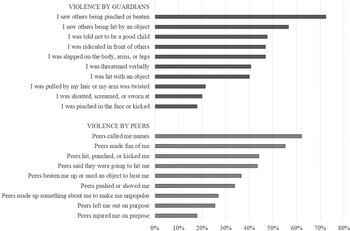
The majority of the sample (84.1%) reported at least one incident of violence by their guardians. The children experienced or witnessed on average 4.92 types of such violent events (SD = 3.98). Four children (2.8%) had at least one injury resulting from the reported incidents, and three of these children (2.1%) needed medical treatment. Furthermore, 77% of the children experienced peer violence in the residential home. On average, the children were exposed to 3.46 types of peer violence events (SD = 2.73). Figure 1 shows the frequency of the most often reported types of violent events in the residential home. No child reported the experience of sexual abuse in the residential care institution.
Frequency (%) of the most often reported types of violence related events in the children's home.

Traumatic life events
Witnessing (73.8%) and experiencing physical assault (50.3%) were the most frequent traumatic event types reported by the children. Nearly half of the children experienced the death of a close person (44.8%). Other frequently-reported traumatic life events were witnessing an accident (44.1%), witnessing the death of a person (40.0%), and witnessing a fire or an explosion (33.3%).
Mental disorders and internalizing/ externalizing behavior problems
PTSD
The vast majority of the children (73.8%) fulfilled criterion A for the diagnosis of PTSD according to the standards of the DSM-IV. Witnessing the sudden death of a person (32.2%), experiencing physical assault (10.5%), and witnessing an accident (7.7%) were rated most frequently by the children as their most upsetting life event. The prevalence rate of PTSD according to DSM-IV was 20.0% and the mean PTSD severity score on the UPID was 22.2 (SD = 13.3).
Major depression and suicidality
Eleven children (7.6%) were diagnosed with a major depressive disorder. Nineteen children (13.1%) were diagnosed with current suicidal ideation and 28 children (19.3%) reported suicidal tendencies in the past.
Internalizing and externalizing behavior problems
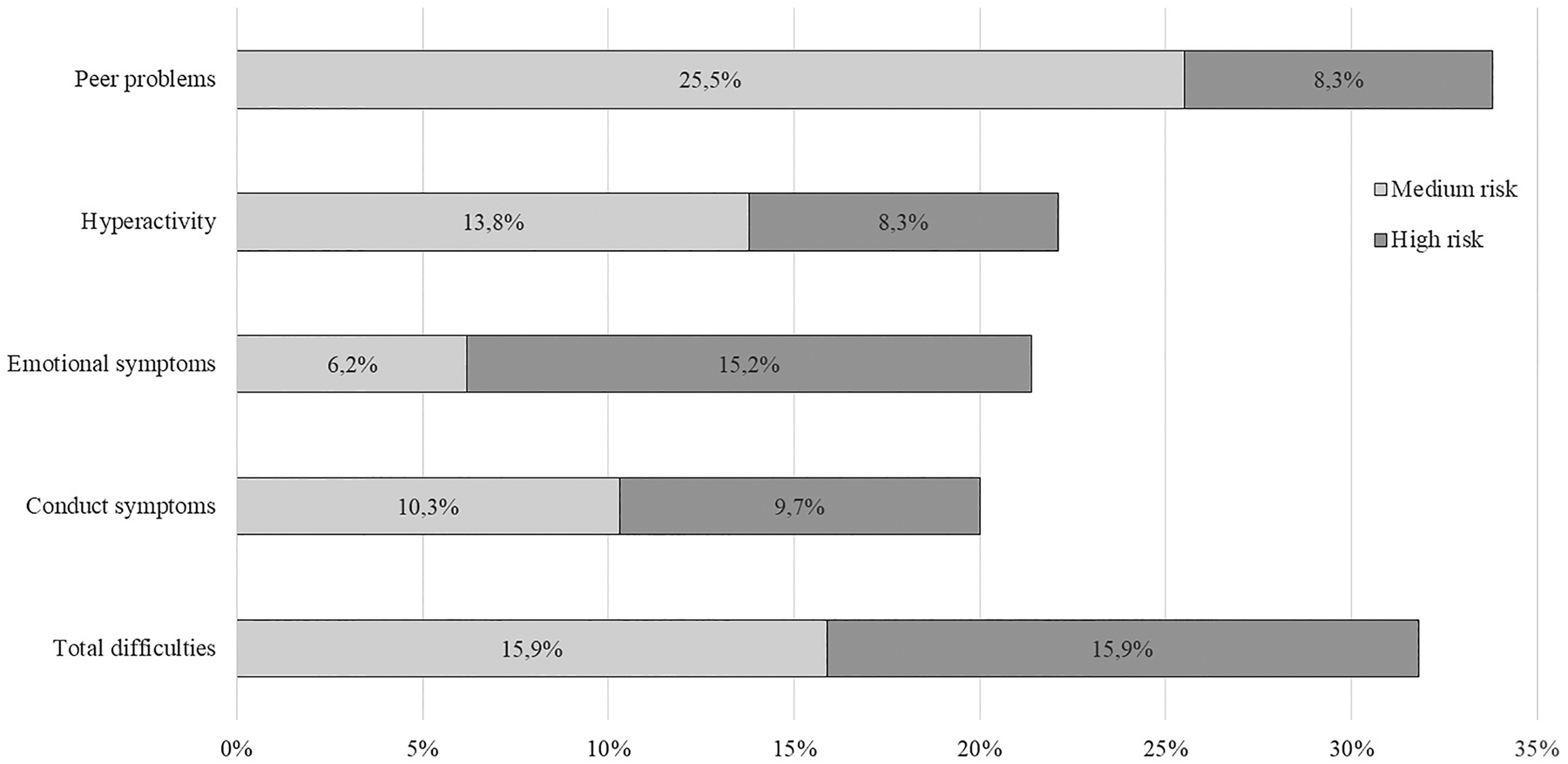
The average score for internalizing problems was 6.3 (SD = 3.8) and the average score for externalizing behavior problems 5.9 (SD = 3.4). The mean score of total difficulties as measured by the SDQ was 12.2 (SD = 6.6). The percentages of children with medium and high risk for mental disorders are shown in Figure 2.
Frequencies (%) of critical scores on the four Strengths and Difficulties Questionnaire (SDQ) subscales (peer problems, hyperactivity, emotional symptoms, and conduct problems) and on the SDQ sum score.

Prediction of violence in the residential care institution
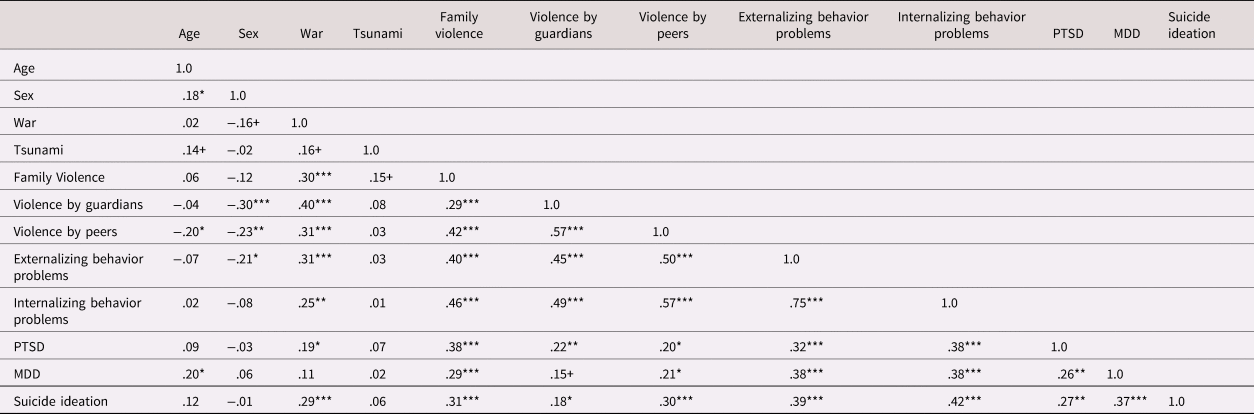
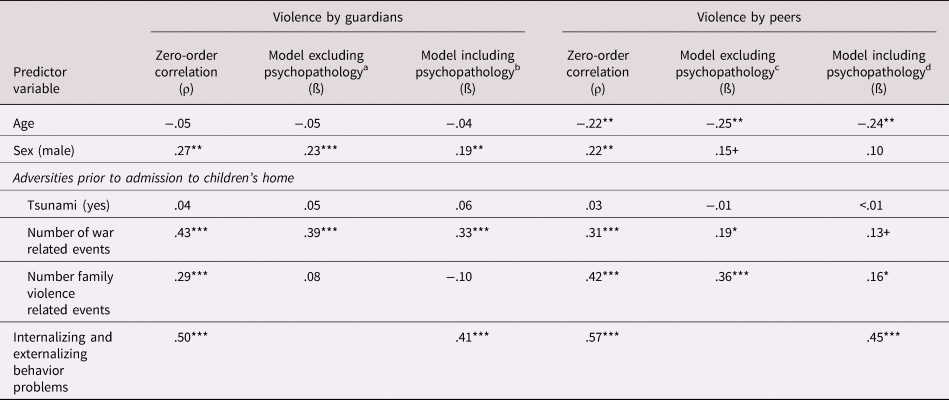
After assessing bivariate relationships between child characteristics, psychopathological symptoms, and violence types (Table 2), we conducted two linear regressions analyses with the sum score of the checklist for violence perpetrated by the guardians and the sum score of the peer violence checklist as dependent variables.
Zero-order correlations (Spearman's rho) to determine bivariate relationships between sample characteristics, violence types, and psychopathology
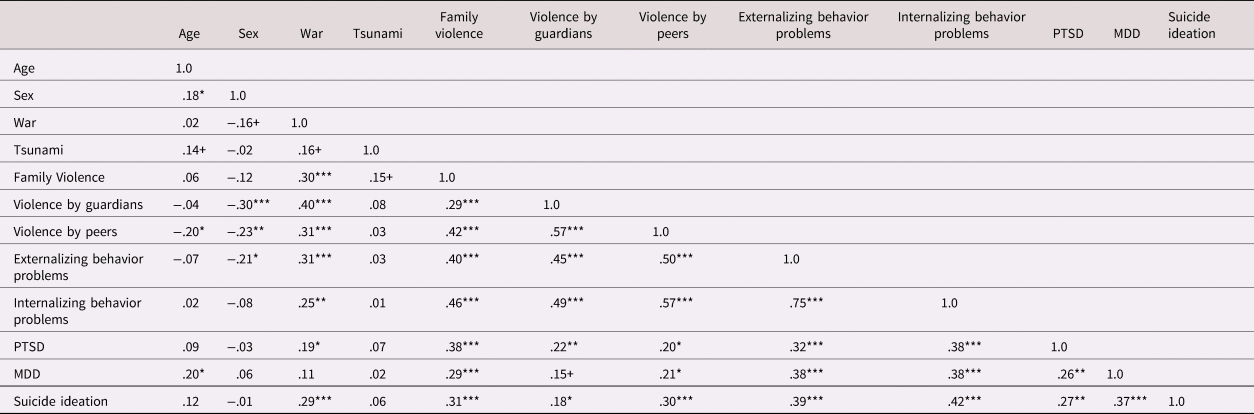
Note: +p < .10. *p < .05. **p < .01. ***p < .001. MDD = major depressive disorder; PTSD = posttraumatic stress disorder
One child was excluded due to missing data in the war event checklist. The results of the regression analyses are shown in Table 3.
Linear regression models predicting violence by guardians and peers by previous exposure to mass trauma, family violence, and internalizing and externalizing behavior problems (standardized beta coefficients, Spearman's rho, and significance levels are reported).
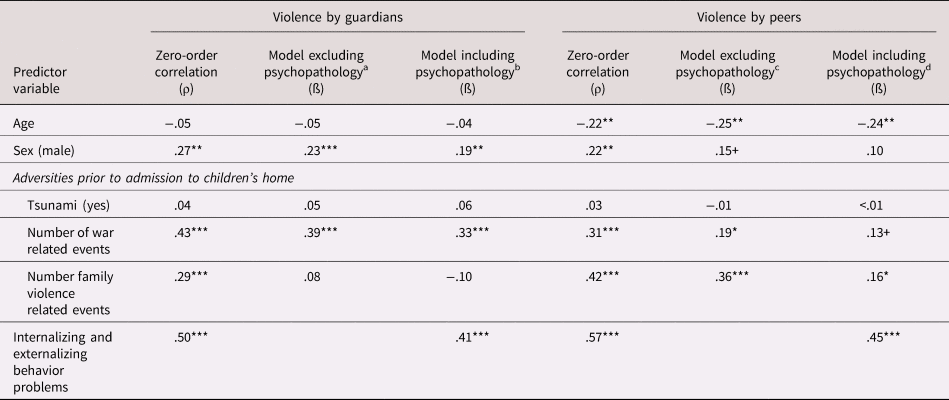
Note: +p < .10. *p < .05. **p < .01. ***p < .001.
aAdjusted R2 = .24; F(5, 139) = 9.89; p < .001.
bAdjusted R2 = .35; F(6, 138) = 14.15; p < .001.
cAdjusted R2 = .27; F(5, 139) = 11.61; p < .001.
dAdjusted R2 = .41; F(6, 138) = 17.89; p < .001.
In a second step, we added to each regression model the children's internalizing and externalizing behavior problems as a potential predictor of violence experienced in the residential home. These regression analyses revealed internalizing and externalizing behavior problems to be significant predictors of violence by guardians and by peers (Table 3).
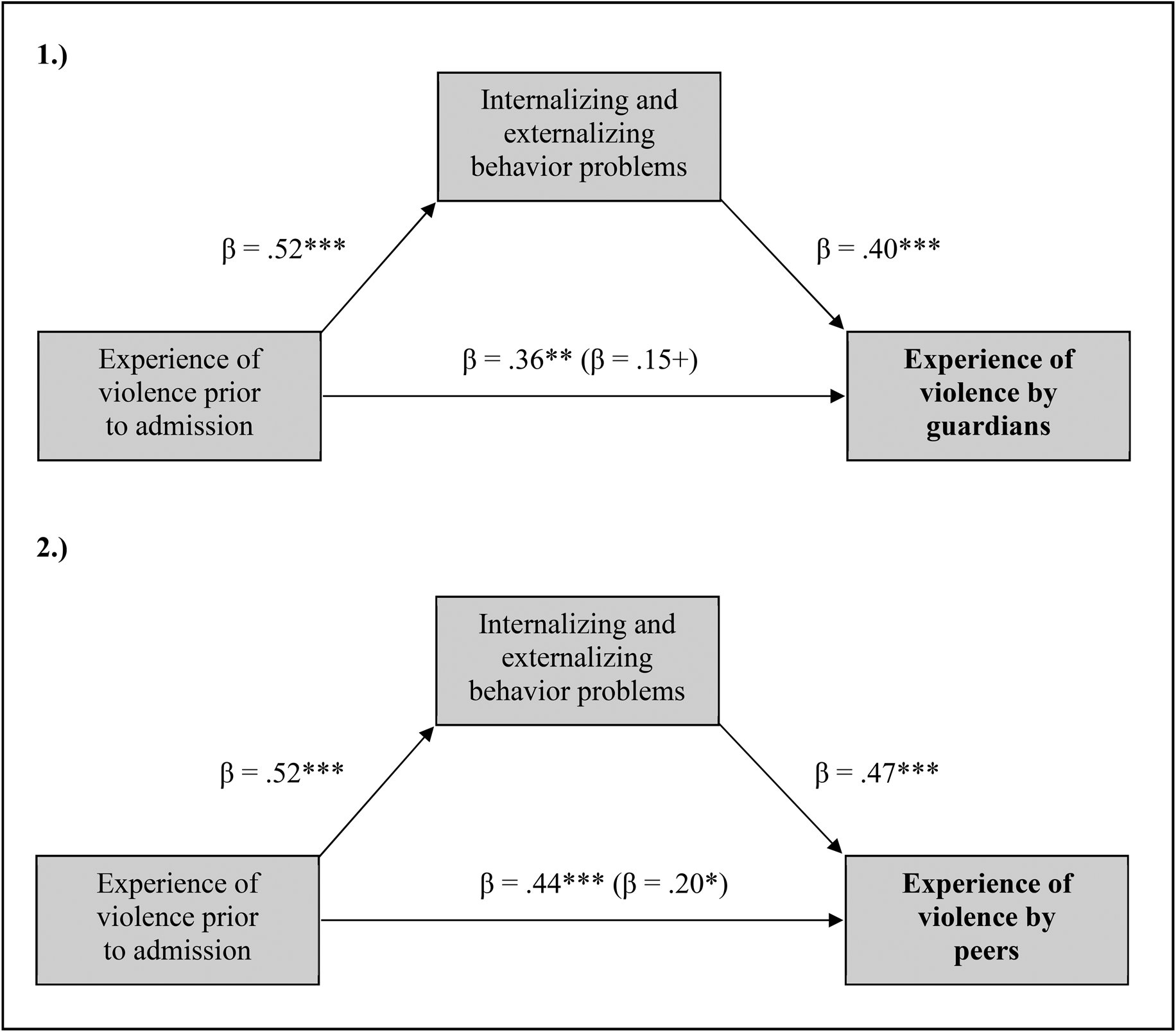
To test a potential mediation effect of internalizing and externalizing behavior problems on the relationship between exposure to violence prior to admission to the children's home and violence experienced in the children's home, we calculated mediation models that are shown in Figure 3. All indirect effects calculated according to Preacher and Hayes (Reference Preacher and Hayes2004) were significant. After entering children's behavior problems as mediator, the direct effect of violence experienced prior to admission on the victimization by guardian violence was no longer significant.
Standardized regression coefficients for the relationship between the experience of violence prior to admission to the children's home and violence experienced in the children's home as mediated by children's internalizing and externalizing behavior problems. The standardized regression coefficients between the experience of violence prior to admission and violence experienced in the children's home after controlling for internalizing and externalizing behavior problems are shown in parentheses. (a) Sobel's z = 3.92; p < .001. (b) Sobel's z = 4.64; p < .001. +p < .10. *p < .05. **p < .01. ***p < .001.

Discussion
The present study aimed at identifying risk factors for the victimization of institutionalized children in the aftermath of mass trauma. We found that children's experience of war and family violence prior to admission to the children's home was significantly associated with the amount of violence they experienced by guardians and by peers. This finding extends prior research on revictimization processes (Widom et al., Reference Widom, Czaja and Dutton2008) by suggesting that the transmission of mass trauma into interpersonal violence against children can occur independently from the effects that such mass traumas have on the psychopathology of the parents. In line with previous studies in post-conflict settings (Attar-Schwartz & Khoury-Kassabri, Reference Attar-Schwartz and Khoury-Kassabri2015; Catani Reference Catani, Jacob, Schauer, Kohila and Neuner2008a; Catani, Schauer, & Neuner, Reference Catani, Schauer and Neuner2008b; de Zoysa, Senarath, & de Silva, Reference de Zoysa, Senarath and de Silva2018; Khoury-Kassabri & Attar-Schwartz, Reference Khoury-Kassabri and Attar-Schwartz2014), we have found a high prevalence rate of guardian and peer violence in our sample.
In order to better understand the mechanisms behind the revictimization process we have further investigated children's characteristics that may influence the relationship between the experience of violence prior to admission to the children's home and violence experienced in the institution. We found that children's internalizing and externalizing behavior problems fully mediated the relationship between early child adversities and subsequent experience of violence by guardians. This finding is in accordance with the specific pathway introduced by Catani (Reference Catani2010, Reference Catani2018) by which war trauma could translate into increased levels of violence against children: Children who grow up in the midst of war and are subject to various traumatic experiences early in their lives are at greater risk of developing challenging behavior problems such as higher levels of internalizing and externalizing symptoms or irritability. In concordance with the proposed pathway, we have found high prevalence rates of exposure to different types of violence as well as high prevalence rates of depression, suicidality, and PTSD. Even the risk for other internalizing and externalizing behavior problems is elevated in the present sample. Typically, these psychological problems are accompanied by functional impairments related to school performance or successful engagement in social relationships. Guardians may perceive these impaired children as particularly difficult and may, in response, apply more violent and harsh strategies to manage these children (Garcia & Alampay, Reference Garcia and Alampay2012; Miragoli, Balzarotti, Camisasca, & Di Blasio, Reference Miragoli, Balzarotti, Camisasca and Di Blasio2018). The guardians’ more violent strategies may result from guardians’ lack of knowledge of nonviolent disciplinary measures (Hecker et al., Reference Hecker, Mkinga, Ssenyonga, Hermenau, Rus, Parris and Stativa2017). It can be further assumed that the finding of high prevalence rates of guardian violence may not only result from the fact that verbal and corporal punishment perpetrated by guardians is lawful in Sri Lanka (GIEACPC, 2018), but also from a common Sri Lankan view that physical violence by parents and teachers is an accepted form of disciplinary measure (de Silva, Reference de Silva1981). Our finding of a low rate of severe child abuse support the view that minor violent acts are used as a form of disciplinary measure by guardians.
With respect to the link between early experiences of violence and later experiences of peer violence, we again identified children's mental health impairments as a significant mediator; however, in contrast to violence perpetrated by guardians, the mediation was only partial. This result supports the described pathway of transmission of war violence into interpersonal violence by children's behavior problems but also leads to the assumption that this mechanism may not be a sufficient explanation for peer violence. Our finding that family violence is a significant predictor only for peer violence (not for violence by guardians) may further indicate that the experience of earlier interpersonal violence in particular paves the way for subsequent interpersonal violence. Xia et al. (Reference Xia, Li and Liu2018) have found that children who have experienced family violence are more likely to accept violent norms and to associate themselves with violent peers which, in turn, makes them vulnerable to revictimization. Studies also indicate that victims of peer violence are not only likely to have mental impairments but also a low self-esteem and a lack of social skills which may also mediate the relationship between family violence and peer violence (Fox & Boulton, Reference Fox and Boulton2005; Postigo, González, Mateu, & Montoya, Reference Postigo, González, Mateu and Montoya2012; Shetgiri, Reference Shetgiri2013). Children who have experienced degradation within their family may be unable to develop a healthy self-esteem and adequate social skills which, in turn, may hinder the prosocial participation in peer relationships and may lead to disagreements and potential conflicts (Hong, Espelage, Grogan-Kaylor, & Allen-Meares, Reference Hong, Espelage, Grogan-Kaylor and Allen-Meares2012). These findings may be considered in the light of the Social Interaction Learning model (Patterson, Reference Patterson1982, Reference Patterson, Dishion and Snyder2016): Children who grew up in a setting of coercive parent–child interactions may learn to use aversive strategies, such as manipulation and aggression, in conflict situations (Snyder & Dishion, Reference Snyder, Dishion, Dishion and Snyder2016) which may further fuel negative interactions. In addition, these children may associate themselves with peers displaying deviant behavior (Forgatch, Patterson, Degarmo, & Beldavs, Reference Forgatch, Patterson, Degarmo and Beldavs2009) thereby increasing the likelihood to experience peer violence. It is therefore conceivable that peer violence is a result of children's psychological impairment and poor relational skills. However, further studies are needed to understand the complex interplay of the various variables that predict peer violence in the context of mass trauma.
The findings described here must be viewed in light of several limitations of the present study. Due to logistical and political restrictions during the time of the survey it was not possible to randomly select the region of study and the residential care institution. As a result, our sample is not representative for the whole community of institutionalized Sri Lankan Tamil children. The current study focused solely on the mental health of the institutionalized children. Future studies with institutionalized children in postconflict settings should also include the assessment of guardians’ mental health and prior adverse experience in order to rule out the possibility of their mental health playing a role in the perpetration of violence against the institutionalized children. Most importantly, due to the cross-sectional design of our study, it is premature to consider the mediating effect of children's mental health in the relationship between exposure to traumatic events and further experience of interpersonal violence as proven. Externalizing and internalizing behavior problems could as well be a consequence of the violence by guardians and/ or peers. Longitudinal studies are needed to investigate the temporal course of mental health and exposure to violence within the residential care institution.
Despite these limitations, our findings offer valuable and new insight into the mechanisms behind the transmission of mass trauma into interpersonal violence against children. Since potential confounding effects of parental psychopathology can be ruled out in the present sample, our findings strengthen the view that children's mental health plays a major role with regard to the passing on of violence in the aftermath of war as well as in the revictimization process between early family abuse and subsequent violence by peers or guardians. Institutionalized children who are affected by mass trauma and associated mental health problems are more vulnerable to experiencing further violence and, as a result, require more care and attention. Intervention programs should not only include the treatment of children's mental impairments but also provide training in nonviolent behavioral management strategies for guardians in order to promote positive disciplinary measures as well as training for children in order to nourish their social skills and, as a result, their success in establishing healthy, non-violent relationships.
Acknowledgments
This study was generously supported by the German Research Foundation (DFG). We thank the director and the guardians of the children's home as well as the children for participating in the study. We thank the local counselors for their exceptional dedication while conducting the interviews. We are also grateful to the administrative team in Sri Lanka, as well as Justin Preston for editing and Verena Ertl for assisting in data analyses.
Financial Statement
This work was supported by the German Research Foundation (FN & CC, grant number CA 632/3-1).
Conflicts of Interest
None