When corporations and their employees spend money in the political arena, to what extent are they purchasing special treatment? Complaints about the deleterious effects of corporate money in politics are ubiquitous in American political discourse. However, in order to pinpoint the place of these expenditures in American democracy, and to appreciate fully the consequences of various reform proposals, it is critical to identify the precise mechanism through which any preferential treatment might occur.
In this spirit, scholars have suggested that corporations make political expenditures because they hope to influence government behavior, through either explicit quid pro quos with legislators for constituency service or favorable votes (Baron 1989; Grossman and Helpman 1994, 2001), improved access to legislators (Hall and Wayman 1990; Langbein 1986), or enhancement of the electoral prospects of sympathetic incumbents (Poole and Romer 1985). Empirical evidence verifying a definitive relationship between expenditures and specific policy change, unfortunately, has proven elusive. In a recent review essay, Ansolabehere, de Figueiredo, and Snyder (2003, 116) conclude, “Contributions explain a miniscule fraction of the variation in voting behavior in the U.S. Congress.” They suggest that contributions are better thought of as consumption goods that fulfill a desire to participate in politics than as investment in a political marketplace.
At the same time, recent research has suggested that campaign expenditures may be the tip of the iceberg. Wright (1990) and Ansolabehere, Snyder, and Tripathi (2002) note that lobbying, rather than campaign contributions by political action committees (PACs), constitutes the bulk of interest group political expenditures. Because data on lobbying expenditures have been harder to come by, we know little about their effect on policy. Still, we can recast the debate over campaign contributions as one about political expenditures more broadly: If corporate political expenditures merely reflect the expressive desires of a few executives, we needn't be too worried that those with deep pockets get their way in politics more often than others. If, on the other hand, such expenditures are an investment whose return political scientists have simply failed to document, there is greater cause for concern that access to the levers of power exists only for a select few.
We propose that political expenditures serve as a visible means by which corporations flex their muscles to potential adversaries, in particular, the bureaucracies charged with regulating them. Regulatory agencies can impose costs and benefits tailored to individual companies through the discretionary enforcement of statutes and rules. If a company can communicate its intention to fight agency decisions through subsequent action in the political arena, regulators will simply choose either to regulate less or to regulate elsewhere.
Accordingly, we should expect reduced regulatory oversight of companies with larger political expenditures. However, it could be that large expenditures would implicate a company in noncompliance and spur greater oversight. Companies would then want to reduce political spending to avoid being targeted. To better understand the specific conditions under which political expenditures might play the role we suggest, we present a model of costly signaling by a firm to a regulator. We use this model to demonstrate the existence of an equilibrium wherein larger expenditures do induce the agency to reduce its regulation. We then test the model's predictions using data on the inspection activities of the Nuclear Regulatory Commission (NRC).
The key implication of our theory is that firms can extract policy concessions from regulators through political expenditures to elected officials, even holding legislative behavior constant. This does not mean that corporations and their executives never attempt to buy legislative access or special treatment outright. It does imply that a firm may never need to fight an agency politically if it can credibly signal its willingness to do so. This insight helps to explain two puzzles concerning the role of money in politics. First, corporate political expenditures seem small relative to the benefits of legislative action because signaling a willingness to fight is always less costly than the fight itself. Second, political scientists have often had difficulty documenting a systematic relationship between political expenditures and policy outcomes empirically because, in essence, we've been looking in the wrong place.
The paper also seeks to advance our understanding of regulatory politics and the relationship between bureaucracies and interest groups. Although in our model some firms achieve forbearance, regulators are not “captured” in the sense of an aging bureaucracy allying with or adopting the preferences of an industry it was originally intended to regulate (e.g., Bernstein 1955; Huntington 1952) or accepting side-payments from industry (e.g. opportunities for future employment) in return for lax regulation (Gormley 1979; Laffont and Tirole 1991). Rather, the regulator simply reacts to the realities of its limited abilities and pursues the rewards of regulation in other places.
SELECTIVE REGULATION AND POLITICAL EXPENDITURES
Regulation is the area of public policy most frequently identified with efforts by corporations to influence government officials' behavior. According to one perspective, producers offer political support to legislators in return for regulation if it reduces market uncertainties or imposes price, quantity, or entry restrictions to the benefit of existing firms (Grossman and Helpman 1994; Kolko 1965; Stigler 1971). Often, however, regulatory policy is characterized by an agency that compels firms to internalize the cost of some production externality. Inasmuch as firms wish to minimize such costs, they will enter the political arena in pursuit of regulatory forbearance (Honohan and Klingebiel 2000): the reduction of regulatory burdens.
Through what mechanisms might corporations plausibly influence government regulatory action through political expenditures? First, campaign contributions may secure the incumbency of allies (Endersby and Munger 1992; Poole, Romer, and Rosenthal 1987). For example, FirstEnergy Corporation, an Ohio-based utility, contributes frequently to Senator George Voinovich, a strong advocate of streamlining the process for building new nuclear plants. Second, expenditures may be service-oriented (Baron 1989; Snyder 1990). In 1990, five senators were accused of having pressured the Federal Home Loan Bank Board into diminishing its oversight of the Lincoln Savings and Loan Association. Charles Keating, the chair of Lincoln's parent company, had coordinated campaign contributions to the senators totaling more than $1.3 million.
A third mechanism is more subtle. As the Justice Department's investigation and subsequent antitrust suit against Microsoft progressed in the late 1990s, the company drastically increased its lobbying and campaign expenditures. The Washington Post reported, “The company's goal, according to people familiar with its strategy, is to discourage government lawyers from seeking aggressive sanctions in their antitrust lawsuit” (Chandrasekaran 1999). Microsoft officials suggested that by lobbying Congress to cut the Antitrust Division's budget in October 1999—too late to have any effect on their case—they were sending a message to the Division about their displeasure with its conduct (Morgan and Eilperin 1999). The American Antitrust Institute, a Washington nonprofit, called the action a negotiating ploy, noting, “Microsoft's salvo is clearly an attempt to leverage its position through intimidation” (Lawsky 1999).
During the lawsuit, lawmakers came to Microsoft's defense in floor speeches railing against the bureaucracy and Thomas Penfield Jackson, the presiding judge on the case. But what is striking about the episode is that company officials were hoping the expenditures themselves, rather than direct action by any legislators, would have the desired effect on the Justice Department's strategy. By spending in the political arena, in other words, Microsoft was flexing its political muscles.
Regulation is costly to firms, but it can also be made costly to regulators. We propose that corporations sometimes make political expenditures to signal credibly their willingness to take actions that would impose costs on an agency in response to its enforcement efforts. In doing so, a firm can affect an agency's discretionary enforcement behavior, and hence the expected costs to the firm of regulation. To work, such a causal mechanism requires that firms be able to impose costs on agencies, that the willingness to impose such costs differs across firms, and that these differences be communicable via the signal. The last of these requirements is the focus of the next section. We describe the first two in greater detail here.
There are many ways a firm can impose costs on an agency in response to the agency's enforcement actions. Perhaps the simplest is to contest the agency's findings, either informally, as with company officials hashing out the appropriate response to a safety violation with compliance officers, or formally, through an appeal process within the agency or in court. To the extent that an agency must dedicate resources to responding to such appeals, and to the extent that such appeals are successful, an agency is worse off when a firm contests actions than when it does not.
A firm may also appeal to Congress for relief, imposing costs on an agency indirectly in the process. Congress determines the size of agency budgets (Fenno 1966), which may or may not be devoted to enforcement.1
For a discussion of different constraints on the budget as an effective weapon for legislators to wield (whether on behalf of or against corporate interests), see Quirk 1981 and Ting 2001.
Individual legislators can demand time-consuming and resource-intensive oversight hearings that agency officials prefer to avoid (Aberbach
1990). The legislature can also alter the substantive content of an agency's enabling statute or shift the agency's burden of proof to make a firm's appeal of enforcement actions in court easier.
2 Of course, the legislature is not unique in its ability to manipulate agencies; through their appointment power and statutory interpretation, presidents also play a critical role (see Moe 1985, 1987).
Each of these possible responses to an appeal from a firm makes the agency worse off. Ceteris paribus, the more vigorously the firm contests the agency's actions, the lower the net benefit to the agency of documenting infractions at that firm in the first place.
Of course, the means with which a firm can impose costs on an agency entail costs for the firm as well. It is thus not necessarily the case that a firm will want to undertake the effort. The potential benefit to a firm of contesting an agency's decisions is the suspension or overturning of some of the agency's decisions against it, so that the firm is not required to correct as many infractions or pay as many fines as it otherwise would have been. Because the costs of correcting a given infraction differ across firms, firms differ in the net benefits that they obtain from appealing. Ceteris paribus, firms with higher costs of compliance find appealing an agency's decisions against them—whether in the agency, the court, or the legislature—more attractive, and can be expected to contest the agency's decisions more vigorously.
These two features—that the agency's net benefit from documenting violations at a firm declines with the vigor of the appeal and that firms with higher costs of compliance are more willing to appeal—imply that the agency's net benefit from discovering violations at a firm will decline with the firm's compliance costs. If an agency could determine them, it would prefer regulating firms with higher compliance costs less stringently. Firms with different compliance costs will also differ in their valuation of regulatory leniency: Those with higher compliance costs value it more and, hence, would be more willing to bear costs ex ante in order to obtain it. It is therefore possible for a costly signal by a firm to communicate its compliance costs to the agency.
While any costly expenditure that a firm could undertake and that would be observed by the agency could, in principle, be used to demonstrate its willingness to contest the agency's decisions, political expenditures are especially well suited for this role. To see why, consider the following analogy: Lawsuits are costly, so litigants typically reach a settlement before going to trial. In order to improve his or her bargaining position, each party to the suit would like to be able to signal credibly to the other his or her willingness to spend a significant sum on a trial if a favorable settlement were not reached. While any costly action (i.e., “burning money”) could indicate his or her willingness to go to trial, retaining an army of high-priced trial attorneys would be the most unambiguous gesture of a party's resolve in the contest.
Similarly, a regulated firm could undertake a variety of costly expenditures, such as making charitable contributions or running public service announcements. However, political expenditures—whether in the form of legislative lobbying or employee campaign contributions coordinated through corporate PACs—most clearly signal the willingness of regulated parties to contest agency decisions, in the political arena if necessary.3
In our theory, costly signaling by a firm follows immediately from its intention to fight. An alternative approach would conceive of the signal as an evolved convention, much like a dog unconsciously baring its fangs when angry or threatened. We thank an anonymous reviewer for suggesting this alternative.
This intuition helps us to understand why corporate political expenditures appear low as a fraction of corporate revenues and assets. Just as the act of retaining counsel is cheaper than litigating, signaling a willingness to fight politically is necessarily cheaper than the actual fighting.
Note that this mechanism need not imply that political expenditures never play the roles we normally associate with them. Lobbying still facilitates the reception of interest group messages. Corporate executives may still employ PAC contributions to secure the incumbency of legislative allies, buy access, or secure favorable legislation. Our theory does suggest that if political expenditures can be used to extract concessions from an agency, then firms have less reason to pursue these more drastic measures, making blatant quid pro quos rare. Indeed, such a mechanism would be valuable to the legislature itself precisely because it generates benefits for the members without their having to take any action (let alone an unseemly one) at all.4
Note that the theory is also analytically distinct from the famous “iron triangle” account (Freeman 1965): (1) Multiple firms exist within the same industry and are treated asymmetrically; (2) the agency does not provide benefits to firms—all else equal, firms would prefer the agency not exist; and (3) relevant legislators do not actively protect the agency.
Up until this point, we have been deliberately vague in articulating precisely which political expenditures send the clearest signal. As noted above, campaign contributions to legislative candidates constitute only a fraction of corporate political expenditures. A more elaborate story (beyond the scope of this paper) would be needed to explain the choice between corporate PAC expenditures and lobbying (although, critically, PAC funds come from employee contributions and not directly from the company treasury). To keep the exposition as simple as possible, we assume that firms allocate political expenditures optimally given their particular goals, noting that different types of political expenditures made by individual firms are highly correlated (Ansolabehere, Snyder, and Tripathi 2002; Wright 1989).
MODEL
Our model is one of strategic costly signaling between the firm and the agency. We are not the first to suggest that political expenditures play the role of signals to policy makers. Lohmann (1995) considers a model in which lobbyists with extreme preferences must pay a premium (a contribution) to credibly signal private information. Ball (1995) shows how campaign contributions can signal an interest group's concern about a particular issue. Likewise, we are not alone in suggesting that firms enter the political market in order to reduce the costs imposed by regulators. In discussing the services that a campaign contribution might buy, Baron (1989) points specifically to legislative intervention in the bureaucracy on behalf of the contributor, and Johnston (2002) shows that purchases of such intervention may sometimes have informational spillovers.5
We thank Matt Stephenson for bringing the latter to our attention.
An important distinguishing feature of our theory, however, is that firms (or their employees) undertake political expenditures in expectation of benefits that entail no action on the part of elected officials.
Basic Structure
The sequence of the game is as follows. First, Nature chooses the firm's type τ, 0[les ]τ[ell ][les ]τ[les ]τh, which controls the cost of complying with regulations and which is revealed only to the firm.6
Such costs may be either tangible, reflecting technological or institutional variation between firms, or intangible, reflecting the presence or absence of a “sense of duty” to comply (Scholz and Pinney 1995).
Nature then chooses whether or not to sound a publicly observable fire alarm (cf. McCubbins and Schwartz
1984) corresponding to a compliance problem with the firm.
7 Because we are interested in the firm's choice of contribution and the agency's response to it, we concern ourselves only with alarms that sound before the contribution is made. Although it is empirically true that an alarm may also sound after the contribution has been made, it cannot affect the contribution. In order to express the salient features of the model as simply as possible, we dispense with the latter possibility.
Next, the firm chooses its political contribution
c[ges ]0 and, simultaneously, its level of regulatory compliance
k, 0[les ]
k[les ]1. Finally, the agency observes the firm's contribution and then chooses the level
m at which it will monitor the firm. If an alarm has not sounded, the agency has complete discretion in choosing the level of monitoring, 0[les ]
m[les ]1.
8 Making inspection intensity strictly positive for all firms would not affect our results.
If it has sounded, the agency must perform a mandatory inspection corresponding to a level of monitoring
, but it may monitor the firm more than that, if it so chooses, so that
. Following these choices, the agency observes a proportion of the firm's violations corresponding to the level of monitoring of the firm, e.g., if the agency monitors the firm at a level
, then it observes a third of the firm's violations. The firm must correct all observed infractions and pay fines that are imposed according to an exogenously determined schedule (discussed below).
The firm must bear as costs its contribution, fines for documented infractions, and the costs associated with compliance, including the costs of correcting documented infractions. Let ω represent the magnitude of the violation that the firm would produce if it made no effort to comply with regulations, i.e., if k=0, and assume it is common knowledge between the firm and the agency. This variable captures commonly known features of the firm (e.g., size) that contribute to its innate propensity to generate violations. Let f(k) represent the schedule of average fines imposed on the firm per unit of detected infractions. Because fines are a punitive measure, the fine per unit is increasing in the level of noncompliance so that, controlling for the innate propensity of the firm to commit violations, worse violators are fined more punitively.9
This assumption corresponds to the NRC's enforcement policy; see U.S. Nuclear Regulatory Commission 2000. Fines can be a function of compliance because the agency correctly infers it once it inspects.
Fines are levied only for documented infractions, which are equal to
m(1−
k)ω. The total fine assessed against the firm is the product of the per unit fine, which is determined by its level of compliance, and its documented infractions. Firms with lower levels of compliance face higher total fines both because they must pay higher rates and because they must pay for more violations.
The firm's type, known only to it, is its cost per unit of reducing violations. The total cost of compliance for the firm includes the cost of rectifying the violations that the agency observes as well as the cost of its initial chosen compliance level. A firm of type τ and size ω that complies with regulations at level k and is monitored at level m bears a cost of compliance τ(k+m(1−k))ω.
The agency benefits from the rewards associated with documenting infractions and from alternative expenditures on, inter alia, administrative costs, overhead, educational expenditures, and, importantly, monitoring other firms (here unmodeled).10
Explicitly modeling the agency's allocation across firms and the potential resultant competition among firms is beyond the scope of the current analysis.
The agency faces a budget constraint
b. Since compliance must be verified for the entire firm, the amount of monitoring depends both on its known violation propensity and on the thoroughness of the inspection. The average per unit cost of monitoring is
a(
m). We assume that, controlling for the size of the firm, a thorough inspection is more costly to perform than a superficial one, so that the average per unit cost borne by the agency is increasing in the level of monitoring. The total cost of monitoring is then given by
a(
m)
mω.
From the budget constraint, the funds remaining available for alternative expenditures is b−a(m)mω. We assume that b[ges ]a(1)ω, so that the agency could monitor the firm fully if it chose to do so. The agency's reward per unit of documented violations is r(τ). Because, as we discussed above, a firm with higher costs of compliance is more willing, ceteris paribus, to contest the agency's findings ex post, the agency's per unit reward is assumed to be decreasing in the firm's compliance costs. This assumption plays an important role in supporting the existence of a separating equilibrium. Note that although the agency's reward per unit of documented violation is lower for a firm with a higher cost of compliance, the total reward to the agency for a given level of monitoring may be higher or lower, depending on how much the higher-cost firm reduces its level of compliance. These possibilities entail very different incentives for both the agency and the firm, a point that is examined more carefully below.
To minimize mathematical complexity, we assume linear functional forms for f(k) and a(m). Because these functions represent per unit fines and costs, they correspond to increasing marginal fines for noncompliance and increasing marginal costs of inspection. The agency's indirect utility function, uA, may be written
and is concave with respect to m, the agency's choice variable. The firm's indirect utility function, uF, is
and is concave with respect to compliance k.11
Although our specification of the model is deliberately kept simple to avoid algebraic complications, its results extend relatively easily to more general functional forms. The assumed linearity of the fines and of the agency's costs of inspection does not drive the main substantive results, nor does it interfere with the derivation of comparative statics. As we show below, in this specification, the agency always chooses to monitor the firm (m > 0) but not completely (m < 1), i.e., the agency never chooses a corner solution. Because the agency's choice of the level of monitoring is effectively unconstrained (when an alarm has not sounded), it is able to adjust its behavior in either direction in response to variation in the firm's contribution.
The agency's prior beliefs about the firm's costs of compliance are described by the cumulative probability distribution P(τ), such that P(τ) is continuous and strictly increasing in τ from τ[ell ] to τh. The associated probability density is p(τ). Denote the agency's expectations about the firm's strategy, which are correct in equilibrium, as
k*(τ) and c*(τ). The agency's expected utility, given the information available when it chooses, is
Equilibrium
We derive the separating sequential equilibrium in Appendix A and discuss it informally here. A separating equilibrium is one in which different types of firms choose different publicly observable contributions. As in all continuous signaling games, a pooling equilibrium, in which different types choose the same actions, also exists. Because such an equilibrium would correspond to identical contributions for all firm types and a constant level of monitoring behavior for the agency, it would fail to capture the causal mechanism we theorize. Hence we limit our attention to the separating equilibrium. We employ the sequential equilibrium refinement to ensure that players modify their beliefs in accordance with Bayes' rule in response to new information and that each player's behavior maximizes its expected utility at the time of action.12
More precisely, we derive the unique separating sequential equilibrium behavioral profile, which, in conjunction with the appropriate beliefs, constitutes the unique universally divine equilibrium. For an overview of signaling games in political science, see Banks 1991.
In solving for the separating equilibrium, we also identify the conditions under which it exists, i.e., conditions under which the firm's contribution correctly reveals its type to the agency. Conditions for existence are of particular substantive interest here because in equilibrium, the agency infers not only the firm's type from its contribution, but also its chosen level of compliance. The agency obtains a smaller per unit reward for documenting infractions at firms with high compliance costs, but it also finds more infractions at those firms. When the latter incentive dominates, the total reward increases in the firm's type, and the agency will prefer to monitor higher-type firms more. In that case, those firms will not be willing to distinguish themselves from lower-type firms through costly contributions. The conditions for the existence of a separating equilibrium characterize circumstances under which the former incentive dominates the latter. When the per unit reward to the agency decreases rapidly enough as the firm's costs of compliance increase, the separating equilibrium exists. We present this condition formally in Appendix A.
The game consists of two subgames that can be analyzed independently: one in which the alarm has not sounded and one in which it has.13
Making fire alarm occurrence endogenous (e.g. as a function of compliance) would have the following effects, neither of which would alter the substantive intuition of our more parsimonious account: (1) Firms would have additional incentives to comply aside from increasing marginal fines, and (2) the agency's beliefs in each subgame would change.
In each, the firm chooses a level of compliance, which is not directly observed by the agency, and a contribution, which is. The agency then chooses how much to monitor the firm. The difference between the subgames is that in the former, the agency can choose to monitor the firm as much or as little as it likes, whereas in the latter, it must perform at least a mandatory minimum inspection. We characterize equilibrium behavior in each of these subgames and then compare them.
Pure Patrol Subgame
We solve by backward induction in order to ensure that each player's choice of action best serves his or her own interests, from the perspective of his or her own beliefs, at the time at which he or she acts. We first characterize the agency's choice of the level of monitoring, given its knowledge of the basic setup of the game, the firm's equilibrium strategy k*(τ, c) and c*(τ), and its inference (in the separating equilibrium) of the firm's type from its observed contribution. We then characterize the firm's optimal contribution and level of compliance, given that the firm knows its own choice of each and correctly anticipates the agency's response, m*(k*(·), c*(·)).
In equilibrium, the levels of compliance and contribution are such that the value to the firm of an additional unit of resources committed to either is zero for all types of firms. However, a firm with a higher per unit cost of compliance chooses to comply less. To compensate for the lower compliance, which, ceteris paribus, results in higher marginal fines, the higher-type firm makes higher political contributions in order to obtain a lower level of monitoring, thereby ensuring that a smaller proportion of infractions is detected.
The agency in equilibrium always chooses to monitor the firm somewhat, but never completely. The marginal cost of monitoring is increasing for the agency and is independent of both the firm's behavior and its type. In contrast, the marginal benefit from monitoring depends on both the firm's type and its chosen level of compliance, and the restrictions discussed above on the schedule of per unit rewards for the agency ensure that the marginal benefits of monitoring are decreasing in the firm's type. Thus, ceteris paribus, the agency monitors higher-type firms—which are identified in equilibrium by their higher contributions—less than lower-type firms.
Alarm Subgame
The analysis of the subgame that follows the sounding of the alarm differs from that of the other subgame only in the imposition of a potentially binding constraint on the agency's behavior. Because the agency must monitor at least
, the firm has no incentive to offer a contribution in excess of the amount necessary to induce the agency to choose that minimum level of monitoring. Similarly, the firm's level of compliance reflects its anticipation of being monitored at least that much. Thus, not only is the agency's equilibrium monitoring strategy constant at
for all contributions greater than some critical value
, but also the firm's equilibrium strategy c*(τ) is constant at
for all
. Although the equilibrium level of compliance is decreasing in the firm's type throughout, it does so more slowly for
when the alarm has sounded than when it does not.
Two propositions summarize our results. The first characterizes behavior in both subgames:
Proposition 1. In the unique separating sequential equilibrium behavioral profile:
- the level of the agency's monitoring of the firm, and hence the proportion of committed violations that are detected, is decreasing in the size of the contribution, ceteris paribus;
- the size of the contribution is increasing in the per unit costliness of compliance for the firm, ceteris paribus; and
- the level of the firm's compliance is decreasing in the per unit costliness of compliance, ceteris paribus.
Thus, in both subgames, firms that make larger contributions commit more infractions, holding firm size constant, yet are monitored less. The second proposition compares behavior in the unique separating sequential equilibria of the alarm and pure-patrol subgames.
Proposition 2. For sufficiently high costs of compliance:
- the firm contributes strictly less when the alarm sounds than when it does not;14
Another plausible way to model the effects of fire alarms is to assume that the reward to the agency per unit of observed violation increases after the alarm sounds. If political expenditures were directly purchasing reduced oversight in the sense of a quid pro quo, such an increase would drive up the “purchase price” of forbearance. Accordingly, we would expect to see firm contributions increase after a fire alarm. By contrast, in our theory a firm's expenditures affect regulatory oversight only through their impact on the agency's beliefs about the firm's type. If the agency's rewards to regulation are so high that regardless of its beliefs, it still has an incentive to regulate, then that firm will no longer find it worthwhile to make these expenditures. Our prediction that fire alarms will lead on average to fewer political expenditures is therefore sustained given this alternative formulation. Effectively, our empirical analysis provides a critical test for distinguishing between an exchange-based account and our informational approach.
- the firm is strictly more compliant when the alarm sounds than when it does not; and
- the agency monitors the firm strictly more when the alarm sounds than when it does not.
For all other types, the alarm has no impact on the behavior of the firm and the agency.
AN APPLICATION OF THE THEORY
Three of the six predictions above are testable. As firm political expenditures increase, regulatory oversight should decrease. Firms with publicly observable problems (fire alarms) should reduce their political expenditures. And inspections should increase where fire alarms have sounded. To test these predictions, we collected data on the monitoring activities of the NRC at 63 privately operated nuclear power plants over the nine-year period from 1994 to 2002, and campaign contributions from their associated operating companies' PACs.
Monitoring Activity of the Nuclear Regulatory Commission
Since 1974, the NRC has been charged with licensing the construction, operation, and decommissioning of civilian nuclear plants; licensing the possession, use, handling, and export of nuclear material; investigating nuclear incidents; and monitoring the activities of licensed facilities (Office of the Federal Registry 2003). Inspection of facilities to ensure their safe operation constitutes the bulk of the fieldwork conducted by the Commission's four regional offices. Several key features of the oversight program differ from those of the inspection programs of other federal agencies (such as the EPA or OSHA). First, the NRC maintains a full-time inspection presence at each facility in the form of “resident inspectors.” In addition to this presence, the regional offices may allocate plant-specific supplementary monitoring resources.
Second, much of the inspection activity of the NRC is financed by fees billed to operators. Importantly, this does not eliminate the agency's budget constraint. Congress establishes programmatic budgetary authority for the NRC's Reactor Inspection and Performance Assessment program ($72.7 million in fiscal year 2002, with 611 full-time-equivalent employees). From 1990 to 2000, federal statute required the Commission to recoup approximately 100% of its authorization through fees. This percentage has been reduced, albeit only very slightly, in the past several years. In 2002 and 2003, the agency billed a professional rate of $150 per hour for reactor inspections. This procedure will allow us to construct a more stringent test of the expenditures hypothesis below.
Data and Method
We have data on the inspection and operation of 74 civilian nuclear power plants from 1994 to 2002. For the current analysis, we restrict attention to the 63 plants run by private companies. Public authorities and cooperatives are presumed not to behave according to the causal mechanism outlined above. In our test of the expenditures hypothesis, the dependent variable is the number of hours spent inspecting a plant in a given year (source: NRC Regulatory Information Tracking System). There is considerable variation in the intensity of monitoring at different plants. For example, the NRC billed enough hours at Northeast Utilities' troubled Millstone plant in Waterford, Connecticut, in 1998 to employ nearly six inspectors full-time. At the opposite end of the spectrum, the NRC billed hours for Dominion's North Anna plant in Louisa County, Virginia, for just half of one full-time equivalent. Total inspection activity of the Commission has also varied over time; especially noteworthy is a reduction that began in 2000, as the NRC began relying increasingly on ostensibly neutral measures of plant risk.
Our theory posits an association between political expenditures and inspection activity. Clearly, however, other factors will influence the extent of agency monitoring at a particular plant.15
The necessity of control variables is critical for theoretical as well as methodological reasons. One can envision an alternative theory in which the regulator is fully informed of firms' compliance costs based on its knowledge of their observable features. Such a model would predict no relationship between firm political expenditures and agency oversight, except to the extent that political expenditures made for other purposes serve as proxies for omitted variables measuring salient firm characteristics. If political expenditures are found to influence agency activities in the presence of a well-specified set of controls, our signaling theory will prove to have greater explanatory power than this full-information account.
First, plants vary in their technical features, and operating companies in their structural characteristics. We employ fixed effects specific to individual plant–operator dyads (72 total) to control for all time-invariant characteristics relating to a site under the control of a particular firm. (A plant that changed ownership once during the sample period would be represented by two fixed effects.) If a plant's technology or construction makes it particularly error prone, or if an operator's corporate structure impedes the safe operation of the plant compared to that of other operators, such features' impact will be absorbed by the fixed effects.
16 The effects also capture variation among regional offices; see Whitford 2002.
We also gathered data on the operating characteristics of individual plants (source: Energy Information Administration). In addition to the plant-specific effects, we control for time-varying characteristics including the number of reactors on line at the plant (which varies over time at several sites), the capacity of the plant in Megawatts Electric (MwE), the proportion of total hours in the year in question that the plant was on-line, and the average operational age of reactors at the plant.
Second, the NRC views plants in more populated areas as inherently more dangerous. This measure will be spanned by the fixed effects, but for specifications that exclude the dummies, we control for the population density per square kilometer in the surrounding county.
Third, in the past decade, the Nuclear Energy Institute, which lobbies on behalf of the nuclear industry, has defended market consolidation of nuclear utilities on the grounds that scale economies permit larger companies to enjoy superior safety records. We therefore control for the total assets of the operating company in thousands of dollars17
All dollar values deflated to 1996 equivalents using the GDP Implicit Price Deflator.
as well as the total number of nuclear plants operated by the company during that year. Controlling for company assets also insures that our measure of campaign expenditures is not merely picking up the effect of firm size.
Fourth, any number of time-specific factors could influence the Commission's decision to increase or decrease inspections across all plants. For example, in 2000, the NRC revamped its inspection process; the immediate effect has been a reduction in total reactor oversight. Also, the agency's budget and the hourly rate it charges vary from year to year. Rather than attempting to control for all potentially relevant interventions with cross-reactor effects, we instead employ year-specific dummy variables.18
The year-specific effects also permit us to control for changes in the preferences of the NRC's political principals and commissioners. Questions of overhead political control are important (e.g., Wood and Waterman 1994) but beyond the scope of the current analysis.
Finally, we examine the operating company's associated campaign expenditures (PAC contributions to and on behalf of candidates) for that year (source: Federal Election Commission). Since our causal story concerns political expenditures more generally, we might employ the sum of lobbying expenditures and campaign expenditures as a comprehensive measure of political investment. Since 1995, lobbying firms and corporations with in-house lobbyists have been required to disclose their expenditures to the House and Senate twice a year. However, the disclosure process is not as standardized as the FEC reporting system, and we encountered numerous errors in the reports.19
Some lobbyists report expenditures for the full year on year-end reports, while others report only those from the last six months. Also, some firms file both as registrants and as clients; although they are supposed to report expenditures as clients in their registrant totals, not all do so.
Because of these difficulties, and because of the high correlation between lobbying and campaign expenditures noted above (and confirmed in our preliminary analysis of nuclear operating companies), we employ campaign expenditures as a proxy for broader political expenditures.
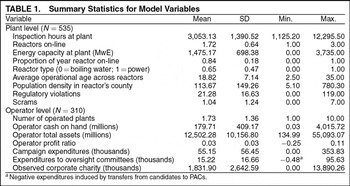
Table 1 presents summary statistics for the variables employed in our analysis.
The Potential for Endogeneity Bias
Moving to an empirical specification necessitates recognizing the endogeneity of expenditures (a choice variable). We employ an instrumental variables estimator that resembles two-stage least squares (2SLS), with an important exception: 2SLS uses all exogenous variables in a system of equations for the first stage regression. This approach is inappropriate in the current context, because the unit of analysis for the inspection equation is the plant, while the unit of analysis for the expenditures equation is the company. Thus, we employ only firm-level covariates in the first stage.
Reliance on the instrumental variables methodology requires identifying exogenous covariates correlated with campaign expenditures, but that only affect inspections indirectly through the contribution themselves. The firm-level variables we employ are financial measures derived from the operating companies' 10-K filings and their first differences. The logic of employing first differences is that certain changes in the financial status of a company could not be perceived directly by the NRC until the publication of the company's financial statements and, thus, should not influence inspection decisions. These variables, of course, are functions of firm choices. We justify their use as instruments by noting that the financial data typically reflect investment and other financial decisions having nothing to do with the day-to-day operations of the plants, as well as external economic conditions. The right-hand-side variables appearing in the first stage regression along with their first differences are the firm's total assets (which also appears in the inspection equation), cash on hand, and profit ratio (net income divided by total assets). Also included are firm-specific and year-specific indicator variables.20
We employ financial attributes of the parent companies, where applicable, and the campaign expenditures of both parent and subsidiary.
Although for reasons of space we do not present the results of the first stage regression here, the results are similar to those displayed in
Table 3 below. An
F-test suggests the joint significance of the excluded instruments (see Bound, Jaeger, and Baker
1995).
Results
The Expenditures Hypothesis
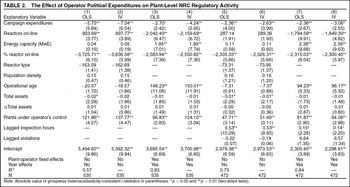
Table 2 presents results from eight different specifications of the full model. The dependent variable is the number of hours the NRC inspected plant i in year t. For purposes of comparison, we present OLS estimates along with IV counterparts. Although the IV estimates are to be preferred to OLS on theoretical grounds, Hausman tests comparing the estimates suggest no significant difference between the two. Thus, OLS estimates are arguably preferable for efficiency reasons. Columns (1) and (2) display results of the basic estimation with neither fixed effects nor lags, while (3) and (4) add plant- and year-specific effects. Columns (5) through (8) replicate the analysis, adding lagged values of inspection intensity and regulatory violations.21
The NRC and its regional offices do not commit to a fixed monitoring allocation across plants each year, instead adjusting the allocation as necessary. Thus, even though our theoretical model suggests that campaign contributions precede monitoring, it is not desirable to employ a one-year lag on campaign expenditures in the empirical specification. Modeling continuous adjustment by the agency is a task we leave for future research.
Before proceeding to the substantive results, we note that one can easily reject the null hypothesis for all four specifications that the plant-specific fixed effects are jointly equal to zero. Likewise, one can reject the null for the joint significance of the year-specific effects in each regression. Finally, introducing a dynamic element to the model in the form of the lagged dependent variable is also a statistically significant contribution.
Consider first the measure of the number of reactors on line at a site. In the specifications with no fixed effects, the measure is statistically significant and positive at at least the 10% level, whereas in specifications with fixed effects included, the coefficient's sign dramatically switches. This is because only three plants varied in the number of operational reactors over the time period examined: Maine Yankee, Zion, and Millstone. The former two reduced the number of reactors during a site decommissioning process (which increased inspection presence), while Millstone's difficulties simultaneously boosted inspection presence and necessitated the decommissioning of one of its reactors. Another technical measure of note is the percentage of time the reactor is on-line: Both forced and unforced outages typically boost inspection presence, while sustained smooth operation decreases it.
On the one hand, operators with large total assets are inspected less, although the statistical significance of total assets varies across specifications. However, controlling for total assets, the more plants an operator runs, the more those plants are inspected. On the one hand, this could imply that the Commission suspects a company's resources are spread thin. More likely, it could result from the fact that in the late 1990s through 2002, a few big firms such as Exelon and Entergy began buying up troubled plants.
Finally, we turn to the campaign contribution variable. In all eight specifications, the coefficient on the measure is negative and highly statistically significant, in line with the prediction of the theoretical model. Depending on specification, a $1,000 increase in expenditure produces an estimated drop in inspection hours anywhere from slightly more than two hours to more than seven. An increase from the 25th percentile of contributions to the 75th percentile (about $13,800 to $76,200) would produce anywhere from a 147 (±110)- to a 439 (±134)-hour reduction in plant inspections. This corresponds to a reduction of from 5% to 16% from the median inspection intensity of 2,800 hours.22
The finding of a negative relationship persists in simpler specifications; for example, the pairwise correlation between inspection intensity and contributions is a statistically significant −0.35.
A More Stringent Test
We can adopt a more stringent criterion for our analysis: The magnitude of the coefficient on campaign contributions cannot be too big. Our theoretical model demonstrates the existence of a separating equilibrium in which firms with different private compliance costs contribute different amounts. In the case of nuclear regulation, there are additional, easily observed costs to inspection: the fees that the NRC charges firms for oversight.
Now consider the observable savings to the average firm associated with $1,000 of political expenditures. In adjusted 1996 dollars, the average inspection fee listed in the Code of Federal Regulations from 1994 to 2002 was $129.56 per hour. The average firm in the sample operated 1.71 plants in any given year, implying that a hypothetical inspection reduction of one hour across all plants would result in an average net savings of $221.55 per operator. For this hypothetical firm to break even on a $1,000 investment in terms of observable direct costs alone, the marginal reduction in annual inspections would therefore have to be 4.51 hours per plant.
One might initially conclude that it would be irrational for our hypothetical average firm to contribute if it got bang for the buck less than 4.51 hours. In fact, our theory's causal mechanism suggests just the opposite: If the marginal reduction were greater than 4.51 hours, the separating equilibrium would collapse: Any individual firm, irrespective of its private costs, would have a best response of increasing its expenditures, driving inspections all the way down to zero. In such a situation, however, campaign contributions would reveal no private information to the regulator, so the regulator would fail to update and inspect naively. Thus, 4.51 hours represents the absolute maximum reduction that could in principle sustain the equilibrium.23
In practice, the figure may be quite a bit smaller than 4.51, because the NRC might be able to observe additional direct costs that the analyst cannot. Also, this assumes that the sole purpose for campaign expenditures by nuclear operators is to signal the NRC, a far stronger claim than any we wish to make here.
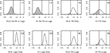
Figure 1 displays the distribution of the estimated
's on the expenditure variable across our eight model specifications. The vertical lines in each panel are positioned at −4.51 and 0, respectively. Regions under the density shaded gray denote the probability that the parameter value falls outside the critical region. The number in the upper-right corner of each panel denotes the percentage probability that the parameter falls within the region.
The Magnitude of the Expenditure Effect Across Specifications
In five of the eight specifications, the parameter falls within the specified range with 87.8% or greater probability, and in one with approximately 56% probability. In the remaining two, the magnitude of the estimate is too large. Note that these two specifications place constraints on the model that statistical tests suggested were unwarranted: The large coefficient values in the models with neither lags nor fixed effects most likely reflect the fact that the contribution variable is picking up variance attributable to other company or plant characteristics or secular changes in contribution behavior and inspections over time.
Readers might object that this test is problematic because campaign contributions play the role of proxy for a broader set of political expenditures. However, if the effects of other political spending are picked up by the contribution variable, we would anticipate that the magnitude of the coefficient on the unobservable total expenditures variable would be smaller than what we observe, lending additional support to the test.
The Fire Alarm Hypotheses
Our theory also implies that when an operating company's plants produce violations that are observable to actors other than the NRC and the operator, compulsory oversight reduces the incentive of firms to invest politically. Thus, we ought to observe smaller contributions in observably troubled firms. Both Northeast Utilities (the operator of Millstone) and FirstEnergy (the operator of Davis-Besse) reduced their campaign expenditures in the year following embarrassing revelations at their plants. Unfortunately, these reductions occurred during off-election years. Also, the revelations come from NRC inspections. Testing the fire alarms hypothesis statistically requires a more general fire alarm measure that satisfies two criteria. First, it should be minimally subject to opportunistic manipulation by plant operators and not rely on determinations made by regulators. Second, it should be publicly observable.
The NRC collects a number of indicators to assess plant safety performance. One measure that comes closest to meeting the above criteria is the number of unplanned, automatic shutdowns, called “scrams” in industry jargon, at a reactor in a given year. During a scram, the neutron-absorbing control rods plunge into the reactor pressure vessel, abruptly ceasing nuclear fission. Scrams may occur for a host of reasons, including safety system failures, water volume or pressure loss, fires, and blown fuses. After a scram in 2003 at the Nine Mile Point in upstate New York, an NRC spokesman noted, “It's like running your car at 60 miles an hour down the highway and then slamming on the brakes. It's not very good, but nonetheless it's designed to do it” (Partlow 2003). Scrams are frequently reported by local media outlets.
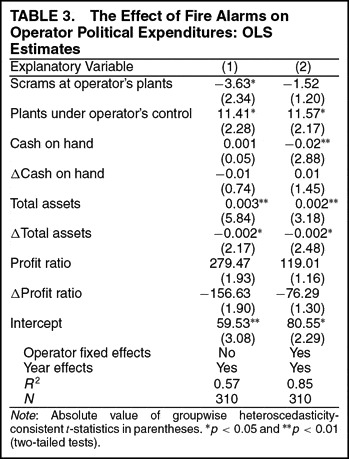
To assess the influence of scrams on company political expenditures, we reestimated the expenditure equation, this time including the number of scrams at plants belonging to the operator (scram data are from the Idaho National Engineering and Environmental Laboratory). Because contributions occur at the operator level, the level of analysis is the operator-year rather than the plant-year. Results are displayed in Table 3. In specification (1), the scram measure is negative and statistically significant. All else equal, an additional scram leads to a $3,630 reduction in political expenditures that year. In the specifications including fixed effects, the coefficient estimate remains negative but is no longer statistically significant at conventional levels; however, this is very likely a consequence of minimal variation in scrams from year to year (Beck and Katz 2001).
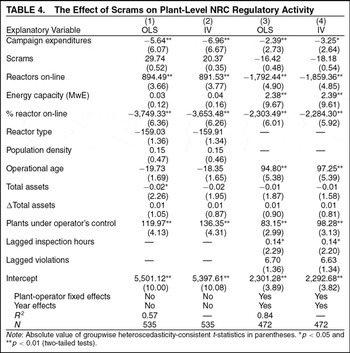
Next, in Table 4, we reestimate several specifications of the inspections regression including scrams as an independent variable. We expect to see increased oversight at plants where fire alarms have sounded. Contrary to expectation, in none of the specifications we employed was the scram variable statistically significant. Puzzled, we contacted the NRC and were informed that, indeed, following a scram, agency rules require that a supplementary inspection, called a “95001,” be performed. What, then, explains the null finding? One plausible explanation that is consistent with the result is that fire alarms have two effects, only one of which is adequately captured by the model. The first is a short-term increase in inspections. The second is compulsory investment by the operator in compliance technology that would lead to a long-term decrease in oversight at the plant. An examination of more fine-grained inspection data (not available at present) would allow us to distinguish the short- and long-term effects more completely.
The Nature and Specificity of the Signal
In presenting our theoretical story, we emphasized that it is political expenditures, rather than voluntary expenditures more generally, that more effectively communicate a company's willingness to dispute agency decisions. It is possible to construct an empirical test of this distinction. If any “burning money” will suffice as a signal, we ought to observe an agency response to nonpolitical voluntary corporate expenditures. We therefore gathered data on the corporate philanthropy programs and foundations associated with each operating company in our sample (source: National Directory of Corporate Giving, various editions).
There is a slight difficulty with the data: Companies sometimes report having a program and/or foundation but only report the disbursements of one (or neither). Thus, the data are sometimes left-censored. We therefore employ a multiple imputation technique that supplements an algorithm suggested by Tanner (1993, 42).24
After estimating an initial vector of parameters via Tanner's EM algorithm in the first stage of our IV regression, we generate 50 imputed data sets by assuming that the missing data are draws from a truncated normal distribution. (Using the truncated rather than the untruncated normal allows us to exploit our knowledge that censored contributions must be at least a certain amount.) We then estimate 50 coefficient vectors and present the mean of those estimates. Standard errors are derived using the formula derived in Rubin 1987 and discussed in King et al. 2001. Code is available upon request. Treating the charity data as fully uncensored produces substantively identical results to those presented here.
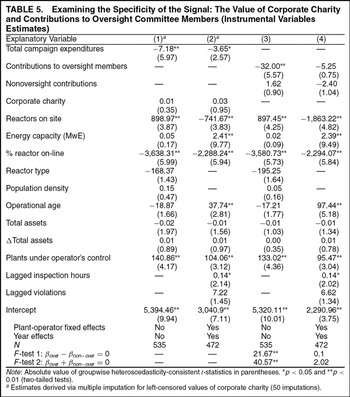
Coefficient estimates for the model including corporate charity appear in columns (1) and (2) in
Table 5. Philanthropy has no statistically significant effect on the NRC's inspection activity, lending credence to our distinction.
One must also be careful in specifying precisely which political expenditures are most relevant. As discussed above, corporate PAC spending is a proxy for a broader set of political expenditures. However, to the extent that operating companies wish to tap into legislators' ability to manipulate agency incentives, we might expect that the agency will respond more when they make contributions to legislators whose actions are more relevant to the agency: in the case of the NRC, those sitting on the House Energy and Commerce Committee and the Senate Committee on Environment and Public Works. On the other hand, because operating companies are regulated by many different agencies overseen by different committees, it could be to the benefit of those companies to reduce the specificity of the signal somewhat by investing across members of different committees. To examine these possibilities, we divided corporate contributions into two components: those to members of the relevant oversight committees and all others. Estimates appear in columns (3) and (4) in Table 5.
Before examining the results, we note that oversight and nonoversight contributions are very highly correlated (ρ=0.86). In the specification with fixed effects, this multicollinearity swamps the estimates, eliminating the significance of both measures (their sum in this specification would still be significant at the 10% level applying a one-tailed test). The specification without fixed effects or lags in column (3), however, does provide evidence for the argument that there is more signal for the buck in contributions to the committee members. An F test of the difference between the coefficients on the oversight and nonoversight measures rejects the null at above the 99.9% level. We are somewhat reluctant to make too much of this finding, however. It may be the case that oversight contributions are a better proxy for aggregate political expenditures than nonoversight contributions, which would help to explain why the magnitude of the former's coefficient is so large. At this point, we wish only to point out that the distinction between these different types of expenditures is intriguing, and worthy of greater attention in future research.
CONCLUSION
In this study, we have argued that political expenditures can play a role heretofore unexamined by political scientists: that of signals of the willingness to pursue one's policy goals in the political arena if necessary. Critically, the effectiveness of the mechanism might obviate the need to actually engage in open political battles directly. In this application, the sender of this information is the corporation, and the potential adversary receiving the information is the regulatory agency. We find evidence that even controlling for a host of other factors, the NRC reduces its inspection at nuclear plants whose operators make large contributions to political campaigns. We find further evidence that operators tend to reduce their political expenditures when mishaps at their plants necessitate mandatory inspections by the Commission.
Not all expenditures send the same kind of signal. Because elected officials ultimately control both the resources available to the agency and the rewards to the agency of doing its job, political expenditures tap into the incentives of the agency in a way that other expenditures would not. This distinction suggests two future lines of inquiry. First, additional work is required to parse out the effects of different kinds of political expenditures. Second, because legislators play a critical role in determining agency incentives, it is desirable to incorporate them more explicitly as strategic actors in a comprehensive model. Legislators might calibrate the budget and statutory authority of an agency partly to maximize campaign contributions. Further, because the benefits to firms would accrue at the stage of bureaucratic implementation, legislators could escape blame for outcomes that hurt the welfare of consumers.
Although we consider the relationship between firms and regulators, the underlying logic of our causal mechanism extends readily to interest group conflict more generally. There is no reason to suspect that an interest group, upon observing costly political expenditures by its adversary, would not be in a position to make the same inferences about the latter's willingness to fight that a legislator or bureaucrat could. In so doing, the recipient of the signal would be in a position to reassess the viability of its position with respect to a particular policy conflict. Alternatively, expenditures by industry may draw the attention of opposition groups and bolster their demands for increased regulation.
Finally, we have also endeavored to articulate and test an explicitly political theory of regulation that does not rely on notions of bureaucratic capture or side-payments (in the form of either future employment prospects or bribes) by industry to the agency. In our model, regulation provides no direct benefit to the firm: All else equal, the firm would prefer that the agency disappear. Further, regulators are motivated, possibly in part by professional norms, to catch violators. In this sense, our causal story is fully consistent with Wilson's (1989) observation that professional civil servants often do not desire future private sector employment, and that even if they do, “the kind of work that will impress a potential private employer is not necessarily that which favors industry but that which conveys evidence of talent and energy” (86). This is not to suggest that agencies do not differ in the nature of the rewards available to them. A more extensive comparison across agencies, or of a single agency over a more extensive time period, would foster a greater understanding of the range of conditions under which the theory operates.
APPENDIX A. FORMAL DERIVATIONS
Pure Patrol Subgame
A sequential equilibrium of the game is a behavioral profile c*(τ), k*(τ), m*(c), and a system of beliefs p(τ, c) for all τ, c, such that
and
for all c such that
. We refine the set of sequential equilibria using the concept of universal divinity (Banks and Sobel 1987), which restricts posterior beliefs off the equilibrium path. It requires that, after observing a contribution that is off the equilibrium path for all types, the agency's posterior beliefs must assign positive probability only to the type(s) for whom that contribution is most desirable.
Let f(k)=γ+φk, with φ<0 and γ[ges ]−φ; and a(m)=α+βm, with α[ges ]0, β>0.
Consider first the pure patrol (no alarm) subgame. In a separating equilibrium, c(τ) is one-to-one, and hence its inverse, T(c), exists. In accordance with Bayes' rule,
It follows that
The agency chooses its level of monitoring activity
to maximize its expected utility. From the first-order condition,
The firm's optimal level of compliance, k, is a function of its expectations of the agency's strategy, m*(c), and c. The first-order condition is
Substituting (A4) into (A2), we obtain the firm's monitoring choice as a function of contribution. Collecting terms, m(c, c*(τ)) must satisfy
Because φ<0 and τ>0 (i.e., compliance is never free), m is bounded away from zero. If m=1, the left-hand side of this equation is 4βφ+(2αφ−r(T(c))(φ+γ). Recalling that φ+γ[ges ]0, this expression must be less than zero at m=1. Thus m is also bounded away from one.
To obtain the firm's optimal contribution c, we solve the first-order condition for uF(·):
By assumption, γ+φk[ges ]0, τ>0, and k[les ]1. Thus, either ∂m/∂c[ges ]0 and c*=0 for all τ and all k or ∂m/∂c<0. The former would correspond to a pooling equilibrium; thus ∂m/∂c<0 is a necessary condition for the existence of a separating equilibrium.
To determine when this necessary condition is met, we first obtain ∂m*(c)/∂c. Because m* is always an interior point in (0, 1), it is responsive to changes in c for all positive contributions. From the implicit function theorem and (A5),
for all c (i.e., for all τ). The denominator is negative (because φ<0). To see that ∂T/∂c>0 if ∂m*(c)/∂c<0, observe that, from (A3),
and from (A6),
It follows that for higher types τ, the marginal value of contribution c is higher and that of compliance k is lower. Thus ∂c/∂τ>0 and its inverse ∂T/∂c>0, and ∂k/∂τ<0.
From (A7), ∂m*(c)/∂c<0 if and only if
This inequality constitutes a constraint on the agency's per unit rewards from documenting infractions as a function of the firm's type. When r(τ) is such that inequality (A8) is satisfied, then ∂m*(c)/∂c<0. For example, if φ+γ=0, then (A8) is equivalent to (∂r/∂τ)[les ][r(τ)/τ]<0. Because only the separating equilibrium is consistent with the posited causal mechanism and the empirical results, we focus exclusively on the case in which (A8) is satisfied.
The equilibrium schedule of contributions c*(τ) is determined by (A6), evaluated at k*(c, τ) and m*(c), which is equivalent to the following differential equation:
The satisfaction of (A6) for all τ, and hence the satisfaction of (A9), is necessary and sufficient for the existence of a separating equilibrium (Mailath 1987). Sequential rationality dictates that τ[ell ] choose c=0 in any separating equilibrium, since if it were to choose a strictly positive contribution, it would nonetheless be monitored the same amount. This condition identifies a unique solution to (A9) and, hence, the unique separating sequential equilibrium behavior. Since only the separating equilibrium behavior can be supported by beliefs that satisfy universal divinity, the strategy profile identified by (A9), (A4), and (A5) is the unique universally divine behavior.
All contributions c[les ]c(τh) occur on the equilibrium path of play. For all higher contributions c>c(τh), τh suffers less disutility from c than does any other type. Hence, universal divinity requires that
The agency will then choose a level of monitoring m=m*(c*(τh)). Although this corresponds to the lowest level of monitoring chosen in equilibrium, the firm is better off choosing c*(τh), since it would then pay a lower contribution to achieve the same low level of monitoring. We have already established that a firm of type τ≠τh is better off choosing c*(τ) than c*(τh).
The Alarm Subgame
The constraint
implies that the highest types may pool at some
in equilibrium. The posterior beliefs are
Note that if
and thus
are not binding, then (A10) and (A1) are equivalent. Then
and
As in the pure patrol subgame, k*(τ, m*(c)) is given by (A4). Substituting into (A11), we obtain the following definition of m*(c):
Because the agency is constrained to choose
,
for
. Because
is exogeneously determined, the last equation determines
, which was defined to be the lowest type that chooses contribution
.
For contributions between zero and
, the agency's response is identical to its response in the pure-patrol subgame. Likewise, c*(τ) is the same in both subgames for all
; but in the alarm subgame,
for all
. As demonstrated in the analysis of the pure patrol subgame above, the level of monitoring m*(c) is decreasing in contributions
, contributions c*(τ) are increasing in the firm's cost of compliance
, and the firm's level of compliance k*(τ) is decreasing in its cost of compliance
.
APPENDIX B. FULL LIST OF DATA SOURCES
Inspection hours and violations per year: Nuclear Regulatory Commission, Regulatory Information Tracking System.
Plant operations: International Atomic Energy Agency, Power Reactor Information System.
Scrams per year: Idaho National Engineering and Environmental Laboratory.
Plant operating companies, by year: Nuclear Energy Institute.
Operating company campaign expenditures: Federal Election Commission.
Static plant characteristics: Department of Energy, Energy Information Administration.
Operating company financial data: Thompson's Research/SEC Disclosure; Mergent online; SEC Edgar database; individual company homepages.
Corporate philanthropy data: The Foundation Center, National Directory of Corporate Giving, various editions.
We thank Neal Beck, Bruce Bueno de Mesquita, Sven Feldmann, Sean Gailmard, Gregory Huber, Jeffrey Lax, Jeffrey Milyo, Rebecca Morton, Jonathan Nagler, Shanker Satyanath, Matthew Stephenson, Craig Volden, and, especially, Dimitri Landa for their helpful comments and suggestions, as well as the participants of the NYU Department of Politics in-house seminar series and three anonymous reviewers. Previous versions of this paper were presented at the annual meetings of the Midwest and American Political Science Associations and the UCSD APIP seminar, where we received very valuable feedback. We are also grateful to Nicholas Almendares, who helped to gather corporate philanthropy data.






Comments
No Comments have been published for this article.