1. INTRODUCTION
Judges enjoy an exalted position in Thai society, and the Thai judiciary is regarded as having a high prestige. As a result, Thai judges have intervened boldly in social and political issues. For example, Thailand’s Constitutional Court in 2012 ruled that an attempt by Parliament to revise the 2007 Constitution was illegal because it would eliminate the democratic government with the king as head of state.Footnote 1 This judicial action led some to claim that the court was attempting to mount a coup d’état.Footnote 2 Despite rendering decisions that seemingly transcend their formal legal role, Thai judges have been widely admired since the creation of the modern Thai legal system in the late nineteenth century, and their prestige grew during the second half of the twentieth century. Throughout this period, they have commanded wide respect, not only among the general population, but also among public intellectuals. Their exceptional position in Thai society has not varied with the type of government in power at any given time—whether relatively democratic or relatively authoritarian. The well-known political scientist, Thirayuth Boonmee, for example, has argued that the judiciary is an honourable institution, which stands apart from the special interests of the business and political sectors. It is widely recognized that judges also enjoy the respect of the Thai monarchy, and the late King Rama IX honoured judges more than any other state officials. Even the Buddhist clergy regard Thai judges with respect. The celebrated monk, Buddhadasa Bhikkhu, once stated that judges are exemplars of morality in Thai society.Footnote 3
How is it, then, that Thai judges have maintained such a high status in Thai society, and have sometimes used their status to make influential decisions—even at the risk of being criticized for politicizing the judiciary or tending toward a juristocracy? In this article, I suggest that the answer is to be found in the cultural construction of a unique identity for Thai judges, and I analyze the elements that have been used to construct and sustain that identity over a period of many years. This article is an exercise in intellectual history, and I use the historian’s tools and methods to present my argument. However, this is also an essay on legal consciousness. A central concern is how the consciousness of the public is shaped with regard to judges’ identities—and how the consciousness of the judges themselves is formed.
This article, therefore, will use a historical approach to analyze how this process of cultural production has taken place, particularly in the second half of the twentieth century and the beginning of the twenty-first century. It will ask how the legal consciousness of the general public and of the Thai judges themselves is shaped in such a way as to gain broad acceptance for a particular understanding of the judge’s identity. Rather than focusing only on the legal consciousness of “ordinary people,” I will therefore focus on a formal legal institution, the judiciary, and will explore the cultural components—the informal and even irrational aspects that become part of the construction of its identity. In this article, I use the concept of identity in a sociopolitical sense. Identity is the meaning of self and professionalism that Thai judges give to themselves. In so doing, they hope that others will see them in the same way.
This study of modern Thai intellectual history is based on an analysis of judges’ “cremation volumes” (nangsue ngan sop), which are published and distributed in connection with the funerals of noted figures in Thai society. Cremation volumes represent “a unique genre of literature” in Thailand consisting of “booklets published and distributed as gifts on the occasion of cremation ceremonies.”Footnote 4 They are obituaries in a sense, but they usually contain more than just a biography of the deceased. Cremation volumes may also include writings of the deceased themselves, general accounts of the deceased’s life and profession, or even completely unrelated texts that are deemed by the deceased or their relatives to be worth passing on to the next generation. Thus, each book contains extensive information about a judge, including how the judge thought and felt about himself.
Altogether, I read around 50 cremation volumes in my research on the identity of Thai judges. They were published between the years 1957 and 2007, which includes the terms of Thai judges who served during liberal democratic regimes as well as less democratic regimes since 1932. I found most of these cremation volumes by surveying the Thailand National Library and the Pridi Banomyong Library of Thammasat University. Others were found at the Library of Wat Baworn Nivate Vihear, which is the temple where leading government officials tended to have their cremation ceremonies. The biographical material and the selection of texts in the cremation volumes proved to be highly revealing. They showed how the judges, their families, and their close followers attempted to establish a particular set of values and images that they viewed as essential to the identity of a respected judge. I will suggest that, through the cremation volumes and through other similar efforts, a particular identity has been created for judges in Thai society—and this identity has become a fundamental part of the legal consciousness of Thai citizens, bureaucrats, lawyers, and even of the clergy and the royal institution itself.
A close reading of the materials contained in judges’ cremation volumes reveals that their identities are constructed around four traits that are viewed as demonstrating their exceptional intellectual, social, and spiritual powers. The four traits are: (1) khon di (a good person as defined by Buddhist teachings and Thai cultural norms; (2) phudi (a proper gentleman both in appearance and manners); (3) phuru (a person who is learned in the law and wise); and (4) phu phakdi (a loyal servant of the king). By underscoring these four elements of judges’ identities, as evidenced in the cremation volumes of notable Thai judges, legal and social elites in Thailand have successfully shaped a widespread form of legal consciousness that accords respect and considerable power to the Thai judiciary regardless of the political circumstances or type of government that may prevail at any given time.
In order to analyze the four traits that constitute the identity of Thai judges and contribute to their legitimacy, this article will continue in Section 2 with a brief discussion of legal consciousness and the historical approach. Section 3 offers a more fine-grained account of the life story published after the death of Sanya Dharmasakti. As an “ideal judge,” Sanya embodied the qualities that justified the extraordinary respect and moral authority he attained in his lifetime. Section 4 demonstrates that the four qualities highlighted in Sanya’s biography are also found in the cremation volumes of other judges. This section will suggest a collective identity of Thai judges. Finally, Section 5 discusses the relationship between the identity construction of Thai judges and the unique moral and political role they play in the Thai society.
2. LEGAL CONSCIOUSNESS OF THAI JUDGES THROUGH A HISTORICAL APPROACH
Legal consciousness refers to “the ongoing, dynamic process of constructing one’s understanding of, and relationship to, the social world through use of legal conventions and discourses.”Footnote 5 Scholarly literature on legal consciousness often focuses on the thoughts and actions of individuals in relation to the law, but it can also refer to broader social groups. Collective forms of legal consciousness are the shared ideas, values, thoughts, opinions, emotions, and attitudes about law and legal institutions shared by significant numbers of people in a given society.Footnote 6 Legal consciousness research dealing with individual subjects typically asks how they define, interpret, and enforce the law. Such studies tend to focus on marginalized social groups, such as the working class, women, persons with disabilities, and indigenous people, and they highlight the distinction between legal formalism and everyday life practices.Footnote 7 But some legal consciousness studies also explore the concept of “identity,” which is the aim of this article. Identity-based legal consciousness research points to the importance of identity construction for determining how laws are mobilized and applied as well as for determining the legitimate roles of various legal actors.Footnote 8 Such studies demonstrate that, as long as a particular identity is seen as consistent with legal action, the actor is viewed by others—and by him or herself—as behaving appropriately even when exercising very broad social and legal powers. In this type of scholarship, legal consciousness and identity are regarded as conceptually interdependent, and both are socially constructed out of cultural and legal elements.
Many studies discuss the relationship between identity of the individual and his or her legal consciousness, such as Engel and Munger’s research about the rights consciousness of Americans with disabilities through the use of their life-story narratives. Each personal memory creates a unique identity for each individual. Consequently, according to Engel and Munger, an individual with disabilities will have his or her own way to react and to invoke his or her legal rights.Footnote 9 In their research, identity and legal consciousness could be linked to each other via the life story.
This article on Thai judges will arrive at similar conclusions about the link between identity and legal consciousness, but by a different approach and with a different purpose. The differences help to explain why the design of the presentation in this article may appear unique. Unlike other studies that tend to focus on common people’s perceptions of the relevance of law in their own lives, this article will focus on the identities of elite lawyers, whose relationship to the law is completely different from that of the average person. It will examine how their dignity, determination, and values are constituted and how ideology and power shape the work and the public image of the Thai legal elite. This article also differs from the others in this symposium in its methodology. It is the work of a legal historian and not a sociologist or anthropologist. It focuses on the past in order to draw conclusions about the present and future of the Thai legal system. Rather than relying on in-depth interviews, like most legal consciousness scholarship, this article will present a textual and contextual analysis of historical evidence based on archival research.
3. SANYA DHARMASAKTI: IDEAL IMAGE OF THE THAI JUDGE
It is impossible to discuss the ambitions, attitudes, personalities, and experiences of each of the many judges commemorated in the cremation volumes on which this study is based. But, without a life-story narrative of any kind, the identity construction of a Thai judge cannot be fully understood. For that reason, this article begins with a presentation of one of the foremost judges of modern Thailand: Sanya Dharmasakti. Sanya is a good choice not only because of his great popularity in Thailand, but also because of his achievements in a number of different sectors, including business, academia, and the judiciary. Moreover, he was highly regarded by the royal institution and was the first commoner to be appointed president of the Privy Council of Thailand. Sanya was also chairman of a large business corporation in Thailand: the Siam Cement Group (SCG).Footnote 10 As a law professor, Sanya was praised by many of Thailand’s leading academics, including Sulak Siwalak, founder of Thailand’s most respected scholarly journal, Sangkhomsat Parithat (Social Science Review).Footnote 11 In the field of Thai Buddhism, he served as president of the Thailand Buddhism Association as well as the World Buddhism Association. Buddhadasa Bhikkhu, mentioned above, corresponded regularly with Sanya and described him as “a dharma friend.” In addition, King Rama IX appointed Sanya as prime minister of Thailand after the popular uprising of 14 October 1973. Lastly, within the legal profession itself, Sanya served as president of the Supreme Court, the highest position in the Thai legal establishment.
One indication of Sanya’s extraordinary reputation was his nickname: “Bao Zheng of Thailand” (Justice Bao).Footnote 12 The tales of Justice Bao have long been a part of Thai popular culture, reproduced in literature, television programmes, commercial products, and Chinese opera. Justice Bao is known as the “God of Justice” and is an iconic figure representing pure, clean, and just legal behaviour. Associating Sanya with Justice Bao through his popular nickname signifies that Sanya Dharmasakti is himself the “image of justice” in Thai society.
Much like the legendary Justice Bao, the story of Sanya Dharmasakti has emerged from a mythologizing narrative that was created by people within his network, including the judiciary, the Ministry of Justice, Thammasat University, and the SCG. Many stories that comprise this narrative have been woven together into a single tapestry that depicts what it is to be a good judge.Footnote 13 This section of the article will provide a sketch of the narrative of Sanya’s life as formulated within this mythologizing process. Some portions deal with large themes and events in Thailand’s political history; others are surprisingly personal, intimate, and seemingly mundane or even trivial. All of the narrative elements, however, are necessary and important to demonstrate that Sanya did indeed achieve the four essential qualities of the ideal judge.
Sanya Dharmasakti was the second son of Thongdee Dharmasakti, chief judge of the Thai Court of Appeals. Sanya studied law under Prince Ratburi Direkrit, who was known as the father of modern Thai law. Although he was born into a noble family, his father died at a young age from influenza, turning Sanya’s life upside down.Footnote 14 Yet Sanya responded to this misfortune by demonstrating his virtuous character, namely his good will, diligence, and studiousness. He also showed his gratitude to both of his parents. In 1925, he followed in his father’s footsteps and began his legal studies. He demonstrated his gratitude to his mother in 1928 by following the Thai tradition of temporary ordination as a monk in order to make merit on her behalf.Footnote 15
After graduating as a barrister at law of Siam in 1929, Sanya took an examination for a scholarship to study in England, France, and Germany. His mother was very upset, because Sanya did not consult with her beforehand. She opposed his plan to study abroad, since her first son, Bunjong Dharmasakti, had died while studying overseas and she feared that Sanya would suffer a similar fate. Therefore, after learning of his plans, Sanya’s mother went to the City God Shrine and promised to make an offering in exchange for Sanya’s failure to pass the exam. She succeeded, and Sanya failed the exam. After this initial episode, Sanya consulted with his mother about his desire to study abroad. With her permission and blessing, he applied for a different scholarship: the Rabibonnithi Scholarship offered by Prince Ratburi’s Student Foundation. This time, the examination was more difficult and competitive, but Sanya was the only student to win the scholarship (with his mother’s support).Footnote 16 Thus, even in his early years, Sanya demonstrated the qualities of a diligent student, a respectful son, and a brilliant intellect.
Another key element of Sanya’s narrative involved his lifelong relationship with his wife. Before leaving Siam to study in England, Sanya became engaged to Panga Penchat. She was known as a well-educated woman. She attended an elite school: Saint Francis Savior Convent’s School, where she was taught manners, etiquette, discipline, and Thai culture and traditions. While in school, she never misbehaved and was never punished. Panga excelled in all her assignments. Most importantly, when she curtsied, her manner was more beautiful and elegant than any other student’s.Footnote 17 When Sanya graduated as a British barrister at law (Middle Temple Inns) in 1934, he and Panga were married at the elegant Rotfai Hotel (Railway Hotel) in Hua Hin—a resort area where the Thai elite socialized. Their wedding was celebrated in noble fashion, with traditional Thai costumes.Footnote 18 Throughout their married life, Sanya was the head of the family. Panga was the homemaker, who managed every small aspect of family life. By all accounts, Sanya and his wife loved and respected each other all through their lives.
Sanya’s life story also includes homely details that shed light on his character of simplicity, humility, and propriety. Although Sanya was Western-educated and perceived to be a wealthy member of the Thai nobility, he did not lead an extravagant lifestyle. He believed one should avoid expensive clothes but should pay attention to details of one’s attire, always emphasizing cleanliness and proper dress and grooming.Footnote 19
Sanya completed his three-year programme after only two years and three months, graduating with a degree of barrister at law from the Middle Temple Inns.Footnote 20 Despite his intensive studies, Sanya never failed to write to his fiancé. By chance, one of his letters was mistakenly mailed to Phraya Dharmasaki Montri, Thailand’s minister of education, who was in charge of Sanya’s scholarship to study abroad. Phraya Dharmasaki took the opportunity to read Sanya’s letter and was deeply impressed by his excellent command of both the Thai and English languages.Footnote 21
In 1933, upon returning to Thailand, Sanya began serving as a judge in the Ministry of Justice. During that same year, Sanya first befriended Buddhadasa, who was already a very famous monk of Suan Mok Temple. As noted above, Sanya subsequently was instrumental in establishing and administering the Buddhism Association of Thailand and later won election as president of the World Buddhist Association—a position he occupied from 1984 until his death.Footnote 22 Thus, Sanya’s life narrative weaves together his legal and religious activities from the very beginning of his career until the end.
Sanya’s moral values influenced his beliefs about the qualities judges should cultivate. He believed that judicial promotion should depend above all on one’s character. He placed particular importance on mindfulness, honesty, impartiality, intelligence, and detachment from desires. Sanya believed these traits were the key to being an exemplary judge. They are, of course, the same qualities that people associated with Sanya himself in constructing his identity as an “ideal judge.”
As Sanya rose through the ranks, he continued to draw upon these traits. Throughout his professional life, he held major positions, including chief judge of the Chiang Mai Provincial Court, permanent secretary, and president of the Supreme Court. While he served as the chief judge in Chiang Mai, he visited many villages in remote areas and played an important role in building the Buddha Sathan Footnote 23 in 1952. As permanent secretary of the Ministry of Justice, Sanya revised and improved the judicial training system. He helped to found a new academic journal named Dunlaphaha.
Inseparable from these efforts to improve judicial professionalism were Sanya’s activities to strengthen the moral qualities of Thai judges. Sanya invited Buddhadasa to lecture his colleagues about Buddhist precepts to sharpen the moral sensibilities of judges. These lectures were later published as Khumue Manut (the Hand Book of Mankind) and as the three-volume series, Tulakanrikatham’ (Dharma of the Judge).Footnote 24 All of these books focused on keeping a clear mind and searching for truth in the Buddhist sense. Sanya also concentrated on matters of etiquette and the social skills of judges. He even encouraged them to engage in physical activities such as tennis, badminton, and dancing, with funding provided by the Ministry of Justice when he served as the secretary.
In 1966, while serving as president of the Supreme Court, Sanya presided over one of the most prominent cases in Thai legal history, known as the Kin Pa case (literally, “eating the forest”). This particular case involved many influential political figures, but Sanya was fearless in dealing with the military government. This case transformed Sanya into a legend and first led to the nickname “Justice Bao of Thailand.” Sanya’s courage in this matter reflected well on all Thai judges. At that time, Sanya made a statement that has been widely acclaimed, asserting a unique position for judges within the Thai polity: “It is the judge alone who serves in the name of the King.”Footnote 25
After stepping down from the judiciary, Sanya was appointed dean of the Law School at Thammasat University and also became a member of the Privy Council. Shortly after, he was appointed president of Thammasat University. During his tenure at Thammasat, Thailand experienced the student uprising of 14 October 1973. At that time, the king appointed Sanya prime minister of Thailand. Later, when he stepped down as prime minister, Sanya was appointed president of the Privy Council.
In sum, the epic story of Sanya Dharmasakti constructs his identity as one of the greatest lawyers of modern Thailand. His identity has become interwoven with Thai legal history and, in particular, with the public consciousness of Thai judges as a class. His narrative is deeply rooted in the minds of Thai lawyers across the generations. The next section of this article will suggest how the prototype of the ideal judge constructed around the life of Sanya Dharmasakti has resonated in the life-story narratives of other judges, as evidenced by their cremation volumes.
4. CONSTRUCTING THE COLLECTIVE IDENTITY OF THAI JUDGES
In the preceding section, we considered the construction of Sanya Dharmasakti’s life-story narrative—a project of mythologizing his extraordinary experiences and achievements. In light of the many accomplishments described in this narrative and his unblemished character, it is not surprising that Sanya became a role model for all Thai judges and was given the title of “Banpha Tulakan” (“Progenitor of Thai Judges”). As we consider specifically how Sanya’s idealized identity has been constructed, however, we can see that he exemplified four traits that should, in theory, be shared by all Thai judges. To the extent they exhibit these four traits, they set themselves apart from other civil servants and justify the perception that judges in Thai society have an exalted status and expansive role.
It must be emphasized that Thai judges do not derive their exceptionally prominent stature or moral authority from Thailand’s formal legal system. On the contrary, as in other civil-law jurisdictions influenced by German and French jurisprudence, the legal powers of Thai judges are rigidly constrained. As Yud Sanguthai explains, Thai judges can only apply legal provisions to the facts of each case. In his view, judges should not even interpret the law other than in exceptional cases when it is unclear. In the rare instances when legal interpretation is required, moreover, the judge’s role is limited in civil matters by the principles contained in the code. Thai law does not explicitly authorize judges to range freely and make whatever general pronouncements they please. Judges should be bound in the first instance by the requirements of the positive law, then by local customs, and, following that, by closely related legal provisions. It is only in cases in which none of these interpretive practices can be used that a judge may interpret the law by invoking general legal principles.Footnote 26 The roots of Thai judges’ exceptional authority and prestige cannot, therefore, be found in its positive law and must be sought instead in its culture and in its social and political milieu.
In this section, the cremation volumes of numerous deceased judges serve as a collective database providing further insights into these four judicial traits and the men who are deemed to have attained them. The cremation volumes contain indications of how the deceased judges thought about themselves. From all the details of a single life, the editor of each cremation volume determines which facts and experiences become part of the personal history. Many of these cremation volumes contain the same narrative structure as the story of Sanya Dharmasakti. It is the contention of this article that, in their stories, as in Sanya’s, four traits are central to the selective reporting of a judge’s life: khon di, phudi, phuru, and phu phakdi.
4.1 Khon Di (the Good Person)
As we saw in Sanya’s narrative, he was described as virtuous throughout his entire life. To be “good” in this instance is defined by secular morality strongly influenced by Buddhist precepts. Sanya displayed this type of morality when he demonstrated gratitude to his parents, thereby conforming to the teachings of the Buddha. For example, when he failed the first examination to study abroad, he had momentarily failed to display proper gratitude toward his mother and caused her to feel distress when she learned of his secret attempt to continue his education in Europe without consulting her. The bad karma he created caused him to fail, even though the exam was relatively easy. But he then demonstrated proper gratitude by gaining his mother’s approval before taking the second exam. That virtuous act led him to succeed, even though the exam was considerably more difficult.
Sanya consistently practised Buddha’s teachings (dhamma) and attempted to put them into action. He introduced the concept of jitrapraphatsorn to Thai judges, instructing them to maintain a “clear mind” in deciding cases. Thus, Thai judges’ decisions should be made by men who have a khon di identity profoundly influenced by Buddhist doctrine. Similarly, nearly all editors of cremation volumes for judges after the Sanya era consistently emphasized the deceased judges’ Buddhist behaviour in order to demonstrate that they had been khon di. In this particular sense, goodness became a key feature of the identity of the Thai judge. Montri Yodpanya,Footnote 27 who also served as president of the Supreme Court, had an even more extensive list of Buddhist activities—he served as chairperson at a Kathin ceremony at Wat Sam Chuk,Footnote 28 and was ordained as a monk and served as a director of an India pilgrim project for the Office of Justice. These activities are highlighted in his cremation volume,Footnote 29 and his character is described in religious sounding terms, such as tranquillity, modesty, honesty, and the pursuit of justice with a good heart.
The concept of material non-attachment, or asceticism, appears repeatedly in the descriptions of Thai judges. This quality has become part of the conventional narrative of the judges’ life stories and appears in many of the cremation volumes as a reason to remember and honour the judge after his death. To be an “ascetic” in this sense of the word is an important step toward becoming an ideal judge, since it suggests both religiosity and incorruptibility. Even in the present day, the image of the judge as ascetic is crucially important for identity construction.
4.2 Phudi (the Proper Gentleman)
The identity construction of Thai judges emphasizes that they are proper gentlemen, or phudi. Dokmaisod, a popular Thai writer, explained the Thai version of a proper gentleman in a widely read novel entitled Phudi. She claimed that, in order to be a phudi, one must be noble, gentle, and have proper manners—both physically, mentally, and in speech—but need not be born into high rank or wealth. Furthermore, Dokmaisod observes that a phudi must be honourable, patient, and able to control his emotions. He must be well mannered and willing to make sacrifices for others without thought of reciprocation. He must be self-sufficient and must be able to forgive others graciously. A true phudi will not readily ask for help or seek anything that does not belong to him, even when he faces struggles in his life, because he does not wish to depend on others. Importantly, Dokmaisod emphasizes that phudi always support their family no matter how hard their life may be. And a phudi does not make superficial judgments of others based on their wealth or appearance, nor does a phudi adopt the trappings of Western modernity, such as watching movies or sports, eating Western cuisine, or discussing politics and science. These are merely the “shell” but not the essence of being a phudi.
These definitions of phudi are entirely consistent with portrayals of the character of Sanya Dharmasakti. The characteristics attributed to Sanya make it clear that he was a phudi in both his outward appearance and his inner essence. Externally, he dressed properly as a gentleman, he ate Western food, and he stressed the importance of participating in sports. Inwardly, he sacrificed himself by reluctantly agreeing to serve as president of Thammasat University and as prime minister of Thailand, although he did not seek either of these positions and never displayed unseemly ambitions for his own career. Sanya took good care of his family. He was deemed a perfect father, and his wife Panga was portrayed as a very fine lady. All of these qualities of phudi that Sanya embodied were later emulated by judges of the younger generation. The cremation volumes make it clear that judges who seek to honour their deceased colleagues will inevitably speak of their good manners, their etiquette and attire, and their marriage and family life.
Thus, Wirat Limwichai described Sanya’s outstanding administrative qualities by emphasizing that he was “decisive, yet polite, gentle, and warm,” which are key attributes of a phudi. Similarly, Sanya’s successor as president of the Supreme Court, Prakob Hutasingh, was cited for the belief that a “good and honorable judge” must be a phudi, as well as being honest, hardworking, persistent, brave, and well versed in the law. Dr Prakob was said to have asserted that being a phudi means being a gentleman in all respects, including social etiquette, behaviour, and conformity to the manners of both Thai and Western cultures.Footnote 30
Significantly, the personal qualities of the judges’ wives are frequently mentioned in order to demonstrate that the judge himself was a phudi. For example, one member of the Privy Council referred to Sanya’s wife as an ideal spouse: “When one thinks of Dr. Samruay, one perceives a very fine lady with great manners suitable to be the honorable Sakda’s life partner.” Other cremation volumes contain similar praise for the judges’ wives, illustrating how important her character is for the identity of the ideal judge. For example, Dame Chuanchuen Hutasingh was the wife of Prakob Hutasingh, Sanya’s successor as president of the Supreme Court as well as the vice prime minister in Sanya’s government and a member of the Privy Council. She was described as a fine lady. Dame Chuanchuen was a good and grateful daughter and an obedient person who respected her elders. She was a beautiful and elegant lady with very refined and gentle manners suitable to be a role model for all Thai women. Furthermore, she was a perfect wife who sustained a long and happy marriage throughout her husband’s life.Footnote 31
A historical source outside the cremation volumes reveals how important the trait of phudi was for the recognition and advancement of Thai judges. A form entitled N.W. 30/2501 was used to report on and evaluate each judge for annual salary increase and promotion. The objective of this report was:
To inform the Ministry of Justice and the Judicial Commission in detail regarding the true performance of the judge with regard to his competence, knowledge of the law, social and ethical behavior, and other matters in order to properly and carefully decide on promotion.
In order to evaluate the judge’s family life, Chuchat Raktabutr, a judge who was also a columnist in Dulphaha, a journal for barristers at law, proposed a questionnaire containing a checklist. He hoped to persuade the secretary of justice to adopt this questionnaire rather than the customary descriptive report.Footnote 32
Although it was never adopted, Chuchat’s questionnaire contains many revealing insights into what was considered relevant and important with regard to the judges’ private behaviour and that of their spouses. Questions included the spouse’s education, work experience, family relationships, spousal roles in her husband’s profession, her manner of discourse, whether she had any gambling problems, her manner of dress, and the sports and physical activities in which she engaged. Including this information in the judge’s annual report was thought to reflect on the judge’s status as a phudi, since it would reveal the judge’s attitudes toward his own personality as well as toward his family life, both of which are essential components of the proper gentleman. Thus, the questionnaire provides remarkable insights into the relevant personal and family matters that revealed whether the judge was indeed a phudi and an honourable member of the judiciary. These are the same qualities that are consistently referenced in the cremation volumes of deceased judges in order to construct their identities as conforming to the ideal of the Thai judge, and the trait of the phudi remains an important attribute for judges even to the present day.
4.3 Phuru (the Learned and Wise Person)
The third quality of the ideal Thai judge is knowledge and wisdom. Phuru refers to the judges’ exceptional intellectual ability and outstanding professional performance. In short, judges should be the most sophisticated in legal knowledge. Sanya’s life-story narrative, for example, emphasized his ability to earn his barrister at law degree in England in only two years and three months, rather than the usual three years. Sanya’s accelerated course of study is frequently referenced in order to show that he was a phuru. It was recognized that earning a law degree from abroad signified that a judge was sophisticated and highly educated. Moreover, legal study was historically considered more difficult and prestigious than other fields—a view originating in the era before the revolution of 1932. Law was regarded as a specialized body of knowledge that was essential to govern the country. Moreover, judges perceived themselves to be the most knowledgeable experts in law of anyone in Thai society, and their lofty cultural status was a natural result of their exceptional knowledge, which played such an important political role from the transformation of the Thai state to the present day.
In more recent years, to characterize judges as phuru, the life-story narratives devote great attention to their work experiences, as well as the high degree of difficulty in passing Thailand’s bar examination. For example, Wasan Soipisut, president of the Constitutional Court from 2012 to 2013, took only one year to complete both portions of the bar examination after graduating from Thammasat University, and was consequently too young to become a judge or prosecutor. While working at the prominent Seni Pramoj Law Office, he had to prepare for the judge’s examination while handling a heavy case-load. Despite this difficult challenge, he passed the exam and became a judge.Footnote 33 This kind of unusual intellectual achievement is the mark of a true phuru. Similarly, Montri Yodpanya, who also served as president of the Supreme Court, was given the nickname “Tu Dika Kleuenthi” (“Moveable Case Cabinet”) because of his amazing memory concerning almost all of the decisions of the Supreme Court.Footnote 34 Such knowledge also provides an indication of the status of phuru.
Constructing the identity of Thai judges involves emphasis on their exceptional knowledge of the law obtained through a very difficult selection process. Thus, Thai judges are presumed to have a knowledge of the law far superior to that of other legal professionals, even including lawyers and legal scholars, who may hold superior master’s or doctoral degrees. As Wasan once joked, other lawyers are just “pigs” before the court. Others with legal training may have some knowledge, but they do not truly know the law because they have not undergone the same rigorous selection process.
4.4 Phu Phakdi (Loyal Servant of the King)
The fourth characteristic of the ideal judge, phu phakdi, means one who loves and demonstrates personal loyalty to the late King Bhumibol Adulyadej (Rama IX), not just to the royal institution. Sanya Dharmasakti, who has been a role model for Thai judges for many decades, expressed his loyalty to King Bhumibol most memorably when he stated:
For the King, I love and revere His Majesty the most. I shall always obey his command and be at his service. It would be unthinkable for me to deny any request. Even if he wished me to drop dead, I would certainly obey.
When Sanya retired as president of the Supreme Court in 1963, he reminded his fellow judges that they must strive for a just judicial system, “Because we all work in the name of the King.” This quotation has provided a powerful reason why people should respect and obey all Thai judges. Thus, the ideal judge embodies Sanya’s unmistakable loyalty to the king and demonstrates his loyalty by working in the king’s name. The ideal judge must be a phu phakdi.
Other Thai judges have their identities constructed in similar ways, making it evident that they are loyal followers of the king. Whether in public deeds or in private conversations, judges frequently declare that the honour of their profession comes from working in the name of the king. All cremation ceremonies of high-ranking judges have royal sponsorship, and traditionally the king himself came to preside at the ceremony or sent one of his relatives as a personal representative. The cremation volumes always contain a note expressing thanks to the king and his representatives, thus reinforcing this crucial aspect of the judge’s identity.
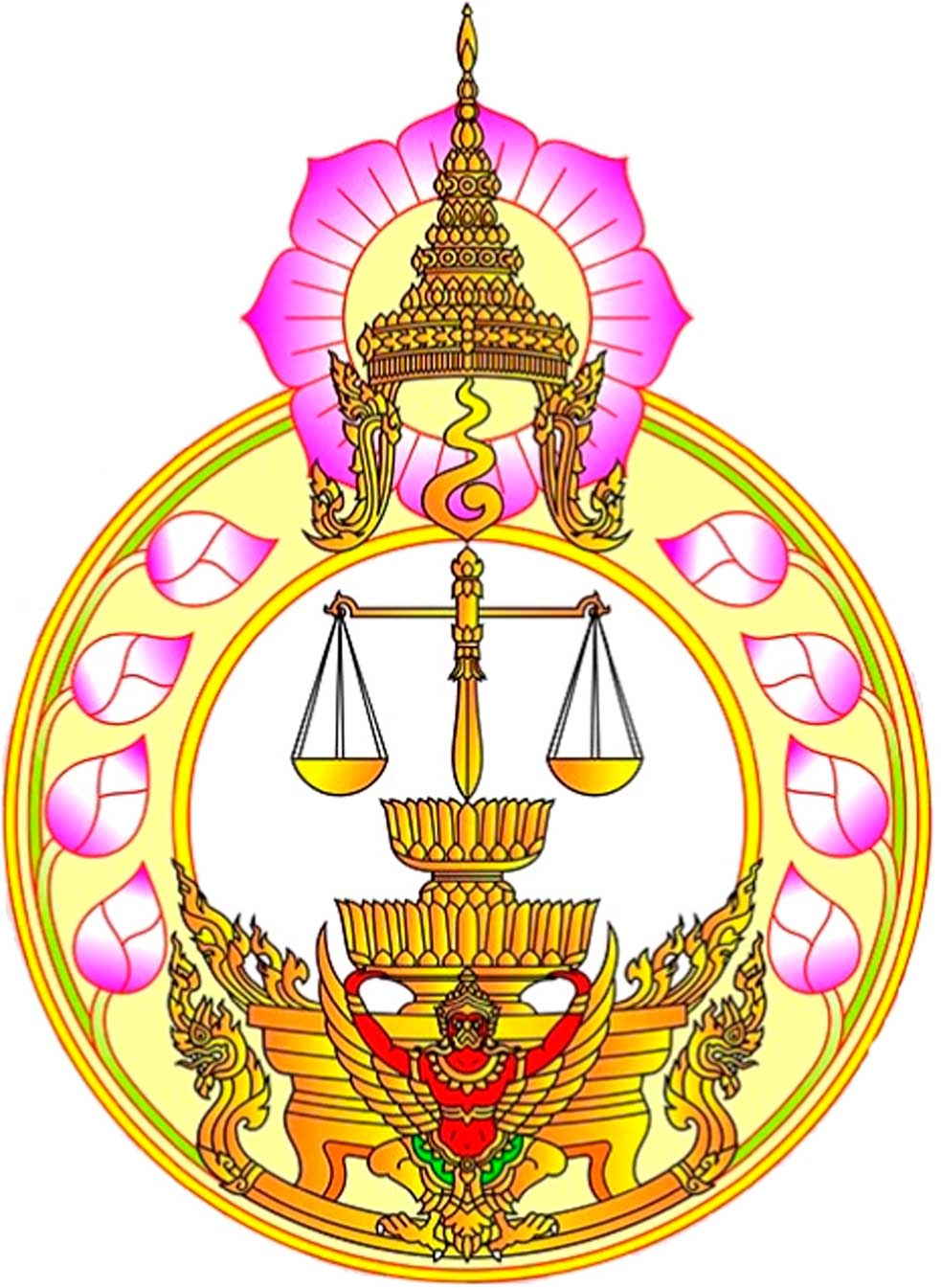
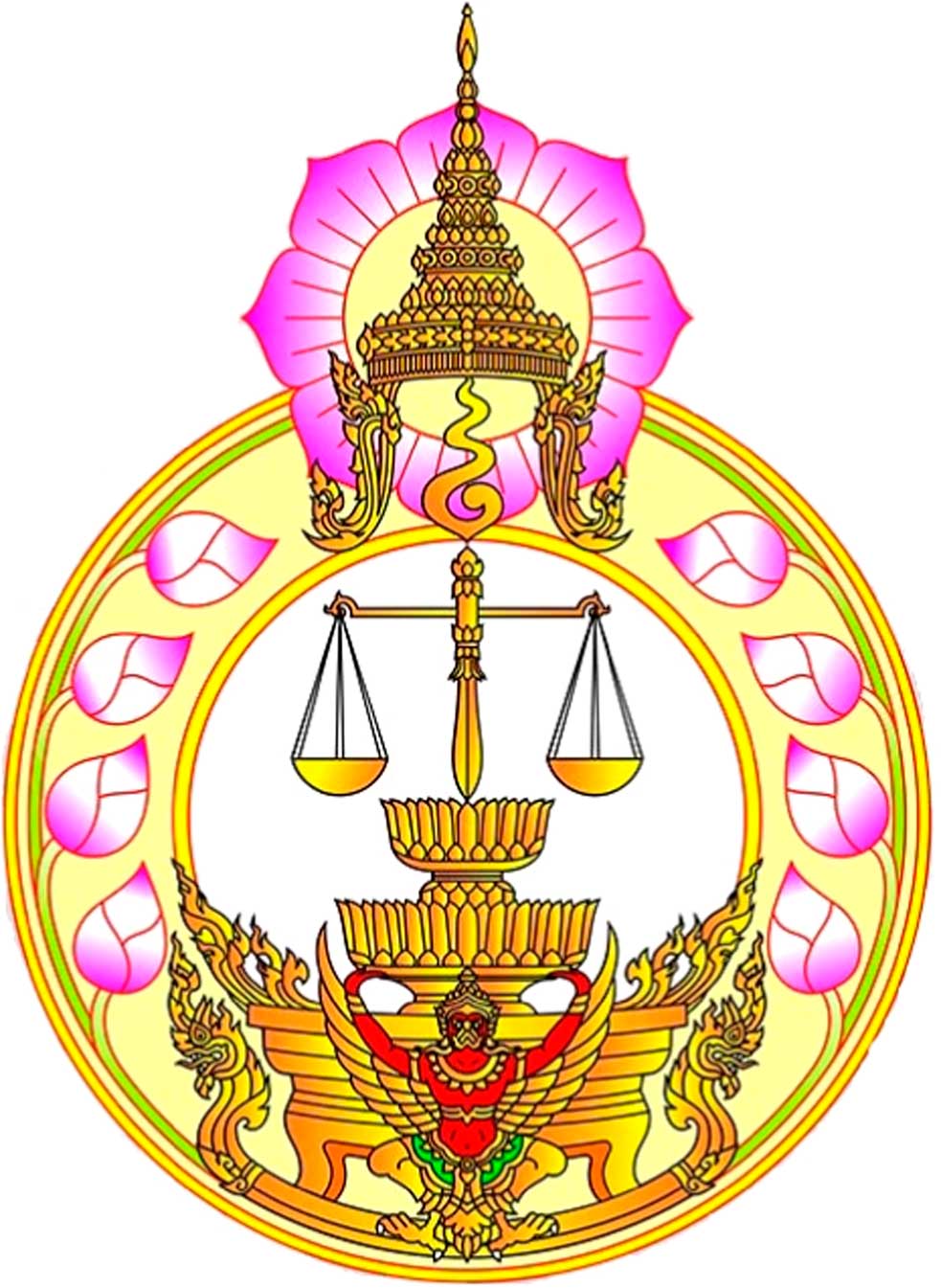
The cremation volumes usually contain another indication of the identity of judges as phu phakdi, and that is the Seal of the Courts of Justice where all judges work. The seal consists of six elements (Figure 1). The first element, on the top of the seal, is a symbol called Tra Pichai Maha Mongkut (the Crown symbol), which refers to the king. It is placed at the top to illustrate that the king is the protector of justice. The second element is called Dunlapaha or Trachu (a scale or balance). Dunlapaha is positioned on double pedestal bowls situated on a solid base. This is meant to symbolize the fact that justice rests on a strong and stable foundation that cannot be compromised. The third element is a Garuda perched on a double-headed serpent. Generally, Garuda is the mount of the Lord Vishnu who is an avatar of the king in the Indo-Chinese tradition. This symbolizes the land of the Thai people. The fourth element is the frame of the seal that is surrounded by nine lotuses. The lotus symbolizes purity and is suggestive of the Buddhist sense of virtue and purity. The nine lotuses represent the ninth king, referring to King Rama IX, whose name was King Bhumibol Adulyadej. In its entirety, the Seal of the Courts of Justice signifies that King Rama IX bestowed purity and justice upon every scale of justice in the kingdom of Thailand. Thus, the seal of the judicial institution explicitly displays the interconnection between the judges’ identity and the reverence felt by Thai people toward the King Rama IX.
The Seal of the Court of Justice Thailand. Source: Court of Justice Thailand, available at http://www.coj.go.th/home/embed.html (accessed 23 November 2017).
In addition to the Seal of the Courts of Justice, the cremation volumes contain other reminders that the deceased judge was a phu phakdi. For example, they may mention activities through which the deceased judges displayed their loyalty to the king, such as the “Tulakan’s (Judge’s) forest planting project in honor of the King.” Another noteworthy activity in the cremation volumes is the Tulakan’s Ordination Project in Honor of the King. Both of these activities were first inspired by Praman Chunseu, a former president of the Supreme Court, who actually became the first president of the Supreme Court to be ordained for the king. That ordination project was set up to commemorate the 50th anniversary of King Rama IX’s coronation. Praman and a group of other judges were ordained for two weeks on July 1994 at Wat Bavorn Nivate.Footnote 35 Significantly, to be ordained for the king reinforced the identity of judges both as khon di and as phu phakdi in the same activity.
One narrative by a still-living judge vividly expresses how the sense of loyalty and devotion to the late king pervaded everyday working life in the court, particularly when dealing with hard cases or difficult challenges. Kasemsan Wilawarn, a judge in the Labor Court, wrote in his memoir that he once handled an exceptionally difficult case. While wrestling with the complexities of the case, Kasemsan happened to glance at the wall and saw information posted that indicated the year 2550 be (2007 ce) would be the king’s 80th birthday. This reminded him of his determination to perform his job to the best of his ability. Inspired by the king’s birthday, he decided the case with an expansion of judicial power for the greater good.Footnote 36 Kasemsan’s story illustrates the king’s great influence on judges’ consciousness and their decision-making even, on occasion, when it means going beyond the literal and formalistic application of the law.
Thus, the judicial institution and the monarchy of King Rama IX since the mid-twentieth century have historically had a very close relationship. This relationship has infused the identity of the Thai judge with meaning, at both the personal and professional levels. Phu phakdi is therefore a crucial element in the construction of the judge’s identity, and judges tend to believe that their unique loyalty to the person of the king sets them apart from all other people.
5. IDENTITY CONSTRUCTION AND THE ROLE OF THE JUDGE IN THAI SOCIETY
We have seen that the identity construction of the Thai judge has four components: khon di, phudi, phuru, and phu phakdi. The cremation volumes make it clear that these four traits are reproduced in many ways, such as through the training judges receive, the study of law and history, through ceremonies and rituals, and through other activities. Those narratives deliberately accentuate aspects of the deceased judges’ lives that illustrate the four essential traits and omit details that might suggest otherwise. In this way, they contribute to a form of legal consciousness that views it as entirely fitting for judges to exercise great authority and freedom of action, even in matters that exceed their narrowly formalistic roles.
It must be emphasized that these four elements of the judge’s ideal identity are unique and are not shared even by other eminent legal professionals. For example, in the cremation volume of the famous lawyer, Yud Sanguthai, who was not a judge, it is stated that his knowledge of the law was “as good as any of the judges,” but there is no reference to the other three traits that are emphasized in the judges’ narratives. There is nothing to make the reader think that Yud strove for “goodness” in the Buddhist sense, that he was a noble gentleman, or that he was a devoted personal servant of the king. Yud is admired as an excellent and accomplished lawyer, who wrote dozens of books, but none of them reveals the influence of Buddhist teachings. Indeed, one commentator, Jaeng Ratanarat, recounted that Yud behaved like a bully at times. Even Yud’s hobby presents a contrast with the images of Thai judges, since he was a gun collector—not the sort of exercise that typifies the ideal judge’s personality.Footnote 37
Thus, non-judge lawyers are usually memorialized in a different way. Another good example is the cremation volume of Thongbai Thongpao, a famous lawyer who won the Ramon Magsaysay Award for his human rights work. Though Thongbai was an accomplished lawyer, his legal expertise is never mentioned in his cremation volume. He was not described as ascetic, noble, and gentle, as intellectually or socially sophisticated, or as a devoted loyalist of the king. Thongbai possessed the same professional qualifications as most judges, but he lacked the four central characteristics that distinguish judges from other legal professionals. While judges called for a salary increase suitable for their social status, Thongbai performed pro bono work for those without means.Footnote 38
The examples of Yud and Thongbai clearly illustrate that judges’ identity construction is relevant only to the judicial personality. Persons of equal or higher qualifications do not tend to be characterized as khon di, phudi, phuru, or phu phakdi, as judges do. Nevertheless, there are some exceptions. There are some Thai judges who illustrate a kind of shifting identity construction. One of the most prominent examples is provided by the cremation volume of Judge Praman Chunsue. Although Praman satisfied the four characteristic requirements, he was not a typical judge, and in some ways his memorial representation forms a dramatic contrast to the example of Sanya Dharmasakti. Praman simultaneously performed the Thai judge identity and, at the same time, defied it. Praman served two terms as president of the Supreme Court, but he was then removed from his job. To expound on the character of Praman, one must begin with the quality of asceticism in his life story.
According to Buddhist teaching, to be ascetic, one must be content and unambitious. In the case of a judge, one must also be guarded in one’s personal relationships. Yet Praman does not fit this description at all. He was both ambitious and highly sociable. He collected fine wines, enjoyed good food, and consorted with powerful and influential people in political and business circles. Chalerm Yubamrung, one of his politician friends, stated:
I had many opportunities, so many that I cannot remember them all, to dine with Praman. After his retirement, we still met each other at his house from time to time. I visited and had dinner with him and close relatives at least twice a year.
In addition, Praman also had friends like Shin Sophonpanich who were business tycoons. Shin and Praman remained in contact, perhaps because both of them were Sino-Chinese. Shin stated in Praman’s cremation volume: “He invited me to join him on a very interesting cruise down the Yangtze River.”
Praman was not a judge who avoided politics, especially when striving for an administrative position in the Courts of Justice. Evidence is provided in a story in Praman’s cremation volumes recounted by a judge named Surat Srianupan. Surat recalled that Praman asked him to support Praman to replace him as chief judge of the Criminal Court. Therefore, Praman asked Surat for his indispensable support as a member of the Judicial Commission to vote for him. As a result, by a margin of a single vote, Praman won the vote to become chief judge of the Criminal Court. From this story alone, it is obvious that Praman did not reject judicial politics. He knew how to lobby the commissioners to achieve victory in the political arena. His ability in politics was noted by his close friend, Ekkehart Muller-Rappard, whom he met while studying abroad: “Praman was more political than legal minded and therefore fit well Aristotle’ definition of the human being as a ‘political animal’.” It should be observed that a model judge such as Sanya Dharmasakti might actually have been a greater politician than Praman but, unlike Praman, he never sought advancement in an openly political way.
To be “noble and gentle” (phudi), Thai judges must wear clean and proper attire. All photographs of judges in their cremation volumes depict them in robes, suits, and neckties. Even the pictures taken before they became judges show them only with clothes suitable to their high status. Again, Praman is the exception. In his cremation volume, he appears in photographs wearing sunglasses, a cap, and jeans considered fashionable during his time. Photographs of Praman in his cremation volumes display a range of styles; he might be drinking, smoking, relaxing, or dressing fashionably.
From Praman Chunsue’s life narrative, we come to the realization that the specifics of the identity of Thai judges are not completely uniform. Therefore, the judicial identity is more like an image that judges display to the public. This image is meant to instil a particular type of collective legal consciousness and to persuade the public to obey judges and respect their interpretation of the law. In fact, the manners and behaviours of Thai judges could be considered paradoxical. They have a tendency to claim that they are ascetic, unambitious, cautious about forming close relationships, and so forth. Yet, at the same time, they may publicly demonstrate to demand higher salaries.
Judges like Praman do not follow this ideology. Praman seemed to believe that judges need not shun political or economic ambition. Praman gathered support from many sectors of society, and he established a fund for court officials. This campaign clashed with the more conventional ideology of judges associated with Sanya Dharmasakti. Significantly, however, Praman was very popular among the judges as an administrator, as demonstrated by his two-term presidency of Supreme Court. Although judges’ behaviours seemed to have changed in certain ways, the identity of Thai judges has remained more or less constant for more than half a century. The characteristics of judges’ identities are a matter of cultural and political construction, and they have long contributed to a form of popular legal consciousness that accepts and approves a distinctively active and wide-ranging role of Thai judges as spokespersons for Thai values and culture as well as law.
6. CONCLUSION
An important aspect of legal consciousness shared by many Thai people is the belief that judges enjoy an exalted status, enabling them not only to decide legal cases, but to shape social and cultural norms and resolve political conflict. Moreover, this aspect of the collective legal consciousness in Thai society is shared by the judges themselves, as well as by their families and supporters. Judges’ powers in this regard are seen to derive from four essential qualities: khon di, phudi, phuru, and phu phakdi. Together, these four qualities combine to create a transcendent identity and legitimacy of judges to intervene not only in social matters, but also in politics, involving themselves in the most challenging issues that have faced Thai society in recent times. I have suggested that the status of Thai judges that grants them this exceptional authority and prestige derives from the construction of their identity in Thai society. The way in which the identity of Thai judges has been constructed is consistent with widespread perceptions that their actions are both legitimate and appropriate.
In terms of their formal authority, Thai law grants judges quite limited power. In practice, however, important cases are not determined merely by positive law. The real circumstances of society give Thai judges considerable cultural power to interpret the law broadly. For this reason, Thai judges must strike a delicate balance between their formal role as a legal servant who merely translates the law and that of a legal interpreter who goes beyond mere translation to shape the discourse of law. For the most part, Thai judges present a public image of themselves as legal translator. In such cases, they are careful to explain that their decisions were determined entirely by the law. These reminders of their limited formal power demonstrate their humility and morality, and therefore serve to enhance their legitimacy. The formal legal power exercised by Thai judges can be termed their “authority.”
In addition to the exercise of their formal and somewhat limited “authority,” however, the Thai legal system also requires judges to exercise an informal power, which could be called “influence.” Influence entails the capacity to shape legal and social norms, and to introduce new legal interpretations. Balancing these two forms of judicial power—authority and influence—is a key responsibility for a judge, because the Thai legal system cannot function if it lacks one or both of them. At times, Thai judges can be insecure within the unstable and frequently changing political contexts that have marked Thailand’s history since the mid-twentieth century. Their insecurity during this time period has led them to forge connections with persons of power, both political and cultural, such as the monarchy. The result can seem paradoxical and even controversial: being royalist at the same time as being sophisticated legal experts; being ascetic at the same time as being modernized. Nonetheless, such paradoxes have helped them maintain their social status, as well as assisting them in organizing ordinary tasks in everyday life, including the interpretation of Thai laws.
When Thai judges exercise power, their own legal consciousness as well as that of the general population makes their efforts appear legitimate by virtue of their unique identity and its four constituent elements. Each element plays a critically important role in Thai culture. The religious aspects of khon di have been associated with Thai rulers for centuries. Kings in pre-modern times had to support Buddhism. King Rama I declared Buddhism to be the reigning ideology of his kingdom. Old Thai laws had to accord with Buddha’s teaching, known as dhamma, as set forth in the Law of the Three Seals. Further, characteristics of the phudi distinguish judges from others whose character may be less refined. When King Rama V introduced modern law to Thailand, he emphasized the importance of being sivilai—a civilized person. Since modern Thai law is derived from European models of legal professionalism and traditions of Thai cultures, it is also essential for judges to have the attributes of a phuru. A judge’s professional duties require him or her to deal with law texts, cases, and theories. The judge must be knowledgeable in order to make people believe in and obey these decisions. Finally, Thai judges must construct their identities as phu phakdi. Judges must take the king’s side, because their more far-reaching decisions may appear to lack legitimacy within their institution and require transcendent cultural authority to support them. It has thus seemed entirely appropriate throughout modern Thai history for the judge to display complete obedience to the royal institution.
The identity of Thai judges, derived from Thai legal culture, is the real source of their capacity to exert influence beyond their formal authority. Legal consciousness of the judicial role is more deeply rooted in culture than in positive law. Thai people have always sought to recognize persons of extraordinary power, ability, and charisma, and they defer to individuals who seem to possess those qualities. The process of cultural construction discussed in this article endows individuals with the characteristics that enable them to exercise special powers—and to be perceived as legitimate in doing so. Thus, the Thai legal system continues to function thanks to the cultural construction of the judge’s identity as one who can assert both “authority” and “influence.”
This article has analyzed a central aspect of Thai legal consciousness, namely the exalted position of the judge in Thai culture. It has concluded that judges have held this special status since at least the 1960s, if not before. At the present time, judges have displayed an expanded power of decision-making in the legal, political, economic, cultural, and social realms and have struck a new balance between what we have called authority and influence. For judges in the Thai legal system, the risk of emphasizing influence over authority is that people’s legal consciousness may undergo a shift, and they may begin to question the judges’ legitimacy if their actions do not appear to be sufficiently constrained by their formal legal powers. It is essential therefore to understand the basis for the legitimacy of the Thai judiciary in the contemporary world and, if necessary, to bring into harmony once again the relationship between the state, the court, and society as a whole.