Introduction
The Nehruvian developmental era was idealistic in its effort to transcend the antagonism of anticolonial politics as well as of domestic class conflict. Such idealism resonated well with the fact of single party domination, and with the state's need for occupying the commanding heights of planned development. One outcome however was that, when faced with vociferous internal dissent and serious challenges to its political legitimacy, the mechanisms of assuring political control and of reliably representing popular consent were found to be lacking. The National Emergency of 1975–1977 was such a moment.
Although the Emergency was justified as a response to the threat to national security due to internal disturbances, it brought to prominence a theme already familiar in the post-independence period. Economic development had to be treated as an emergency situation, since the rest of the world was quickly progressing while India was lagging behind. Haste was therefore imperative, and politics was an extravagance.Footnote 1 The Emergency's suspension of civil liberties and the ban on dissent was accompanied by forceful state action. A host of actions were targeted as being deleterious for the nation, from economic crimes such as adulteration, hoarding, tax evasion and smuggling, to forms of behaviour not previously subject to state punishment, such as inefficiency, rumour-mongering, lack of productivity at work and over-productivity with respect to procreation. The shutting down of civil society institutions that could channel and diffuse the management of political consent placed an inordinate burden on the state, that it could not, eventually, manage.
Recent accounts of the Emergency seem to concur that the deviations it represented, while genuine, did not represent any fundamental change on the part of the Indian state, and that the period offers little distinct insight on the post-independence period as a whole.Footnote 2 This paper argues, to the contrary, that the Emergency was a watershed in post-independence history. With its ban on dissent and suspension of constitutional rights, the Emergency sought to suppress all political disturbances to governance. By doing so, it forefronted the problems of postcolonial politics in at least three respects.
First, the Emergency demonstrated that coercion was inextricably combined with consent in state-led development. Second, this led to a heavy reliance on practices of communication to redefine coercion and to stage popular consent. Third, in the process, the boundaries of the political were reinforced, emphasizing the friend/enemy distinction fundamental to politics.Footnote 3 In the aftermath of the Emergency there occurred a profound political reorientation of the existing model of developmental governance. Governance in the aftermath of the Emergency placed an overt reliance on consent over coercion, in ways that are themselves significant. Categories of culture and community, and related forms of social difference gained in importance over earlier developmental distinctions premised on an authoritarian relationship between state and the people. The change meant a shift away from the Nehruvian focus on the economy as the crucial arena of nation-building, involving labour as the key modality of citizenship. Instead, culture and community became categories that gained political salience in the period of economic liberalization.
In the process, there was a redistribution of the places where political conflict occurred, besides election campaigns. In the period leading to the Emergency, industrial conflict was perhaps the key arena regulated by the state where citizens could express dissent and organize collectively in an effort to improve their condition, other than voting. Strikes and other forms of work-stoppage could be violent, but their occurrence fitted into an established understanding of citizens whose form of belonging in the nation was perceived in economic terms, as productive in its outcomes for national development. As such, the task of the government was to mediate disputes between labour and management, and to ameliorate, not thwart them. Each major political party operated a union, and party conflict overlapped with trades union conflicts. After the Emergency, politically significant forms of conflict that occurred around organized labour drastically diminished and thereafter new channels grew for the expression of conflict.
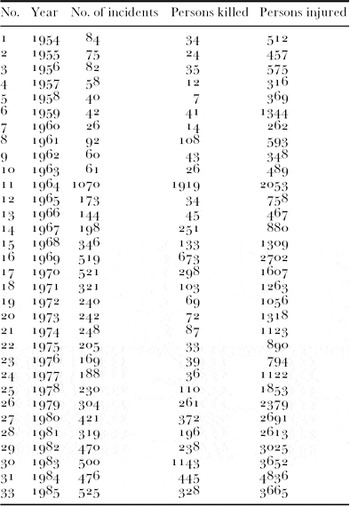
After the return of the Congress Party in 1980, with the brief exception of the textile strike of 1982, unions were no longer granted the same leeway to use industrial conflict to alter the balance of power. Work stoppages increasingly became symbolic events, for example, through participation in actions such as the bandh. However, in a change that signalled a shift in both the site and the nature of political conflict, ‘communal’ violence, i.e., violence between religious communities, grew significantly, in terms of the number of incidents reported annually, and the number of dead and wounded recorded.Footnote 4
The contrast between the two forms of conflict is relevant in understanding the transition from the Nehruvian period to that of market liberalization. Strikes were governed by government regulations, and featured state agencies as official intermediaries. As such, they grew out of legitimate forms of negotiation, and even when they led to open conflict, expressed secular identities for whose adjudication there existed specific institutional mechanisms recognized by the state. In other words, this was a form of conflict centred in civil society.
Conflict between religious communities, in contrast, played no part in the developmentalist agenda of the state, except as events to be suppressed. The entities that clashed in such conflicts were invariably private, and lacked official status of any kind. Unlike industrial conflict, where negotiation was the norm and violence was the exception, the opposite was the case with communal violence. Communal conflict made the news chiefly through reports of violence and the disruption of civil order. Gangs, rowdies, and criminal elements tended to feature as key combatants in such violence, engaging in various non-official behaviours in which no government agency could intervene, save the police or the army. In other words, this was a form of conflict centred in what Partha Chatterjee has called political society, a realm of informal negotiation between the state and the majority of its citizens, whom the state lacks the resources to treat on an equal footing with members of civil society.Footnote 5 However, the increase in this form of conflict occurred as part of the governing political process, through what Paul Brass has called ‘an institutionalized riot system’, thus calling Chatterjee's distinction into question, and posing the need to rethink the formation of politics in this context.Footnote 6
The 1980s are widely recognized as being a period of the increasing communalization of Indian politics. Among the causes attributed to this development are the decision by the Congress Party to cultivate the Hindu vote after its defeat in the 1977 national elections, to bolster an electoral base that had shown itself to be unstable. This was more than a decision of the political leadership however. Alongside the state's gradual withdrawal from the commanding heights of the economy with market liberalization, there was an alteration in the ways in which politics was expressed and perceived. The state itself participated in the transfer of legitimacy away from the state to the market, and in promoting the initiative of private forces in economic growth and in nation-building. The mass media were central to the resulting redefinition of the political, multiplying in size and reach, and fashioning market-sensitive forms of address couched in the rhetoric of individual choice. These events are critical to understanding the formation of the new middle class in India, as a category that increasingly comes under the sway of corporate capital, expressing itself through cultural and consumerist forms of identity, and is less identified with the state.Footnote 7 This paper examines the context and instances of publicity during the Emergency to show how state imperatives directed at the citizen gradually shifted to the representation of choices that consumers were supposed to express pointing to changes in the way political authority was being conceived and enacted.
A New Middle Class
I have seen that people with savings do not have the correct avenues for investment. This is particularly true of the salaried and the middle class. They have to invest in bank deposits or units, which do not give very good returns, So more and more middle class people are attracted to my shares. . . . Middle class people are joining hands to build something big. In the process, the country benefits. . . . In 1980 the total resources in the capital market was Rs 100 crore. Last year it was Rs 2500 crore. That shows we had the water but no pumping station. Everybody is now installing pumping stations. Just look at the number of people who have issued debentures. For our Seventh Plan we don't have money for power projects, buildings, railways. There is no money in the government, that is true, but there is money with the public. We can pump that money to a hundred Reliances and build a strong country.Footnote 8
The comment quoted above by the late Dhirubhai Ambani, whose company went on to become the largest in India, expresses a pervasive contradiction in postcolonial state formation. The Indian developmental state's claim had always been that it was the most appropriate agency to generate resources to build and manage the national economy. However, a significant portion of state revenue was allocated to state-run institutions employing hardly one-tenth of the working population.Footnote 9
By adopting a mixed economy framework the state and the private sector competed for resources, resulting in a scarcity of capital.Footnote 10 If the state adopted a pedagogical stance towards its citizens, Ambani's account neatly reversed the rhetoric and upstaged the state, albeit in a gesture of sanctioned critique. His comment suggests that private citizens were accumulating capital for which adequate investment opportunities were lacking. If individual entrepreneurs were able to mobilize this capital, claiming that in the process they were helping to build the nation, state monopoly over national economic surplus would have to end.
After independence, the state retained considerable powers to regulate the economy, and the ability to borrow money at lower interest rates than individual entrepreneurs. If the public savings of the middle class were to become a more reliable source of investment, it would be for at least two reasons: bank nationalization (in 1969 and 1980) imposed lending restrictions on state-owned financial institutions, and the government made it possible for entrepreneurs to tap into public savings. It is generally agreed that Ambani was influential in opening a mass market for equity-investing that had earlier been confined to brokers and high net-worth individuals, freeing his business and others, from depending on the national banks. In an era when the government's Controller of Capital Issues essentially set the price of equity issues, Ambani applied a logic learned from consumer goods brands across primary and secondary investor markets, releasing multiple debenture and stock offerings and allowing his ‘mother brand’, Reliance, to boost new offerings, with satellite brands able to generate, hoard and release capital as required. In a sense he was the harbinger of an entrepeneurial type that learned to think across given boundaries in a controlled economy, and showed its readiness to be global, even as it came of age nationally.Footnote 11
Between 1977 and 1991, the Indian state proceeded markedly to increase the quotient of devolved and delegated forms of authority in economic development, rather than insisting on the superiority of its reasoning and its powers of implementation, as it had done since independence. By the 1980s, as Ambani's observations show, despite being an artifact of state policies, a newly-fashioned investing ‘middle class’ was acquiring a life of its own. The private consumption of this segment of society would increasingly assume and partly replace the productive role of state investment.
The state's newfound rhetorical modesty regarding economic development and market liberalization, and the overt transfer of functions from state to private forces, has invariably been described in pragmatic terms, for example, as the only available means of responding to the bottlenecks imposed by a corrupt and inefficient bureaucracy.Footnote 12 Economic arguments have dominated, comparing rates of growth in public and private sectors in the periods before and after reforms began, and dwelling on how the unaffordable and rent-seeking character of state regulatory efforts hampered growth. However, the political dimension of these economic arguments tends to be glossed over by advocates of liberalization. Those critical of liberalization, on the other hand, have usually argued that latent political inputs skew outcomes, and that the Nehruvian developmentalist state, which had an inclusive mission, abandoned its course. In such accounts, market reforms were a way of jettisoning state responsibility to the poor and of affirming an elitist stance thereafter.Footnote 13
Public reasons for liberalization were centered largely on the economic criteria of efficiency. I suggest, however, that the shift involved a significant modification of political regime. The envisioning of the middle class as the humble hero of national development, capable but lacking privilege and deserving of assistance, was something new. In this understanding, the middle class disturbed the status quo only to improve it. It seemed to formulate a strategy for national economic improvement, i.e., what the state was meant to do, but from civil society. ‘Middle class’ in this instance was only partially a descriptive term. In addition it was a proxy for state strategy, and a heuristic to indicate its changing relationship with civil society, that was increasingly mediated through corporate capital and staged through technologies of mass communication.
Relevant historical literature on the Indian middle class reflects concerns regarding economic transition and the possibility of establishing national autonomy through the process of industrialization.Footnote 14 In other words, the state itself creates the conditions for a new middle class formation, that in turn distances itself from the state, or from what the state used to stand for. It examines the contradictory entailments of a colonial project of state formation, where a middle class was engendered by the British to emulate themselves rather than the native aristocracy. Although the middle class was designed to function as a governing intermediary vis-à-vis the majority, it went on to become nationalist.Footnote 15 This literature can be distinguished by regarding class formation either as a continuous process with only superficial changes in cultural and political alignment, or as one marked by ‘fractured modernity,’ involving a structural fault-line between colonial and native worlds requiring to be negotiated.Footnote 16 In addition, there is a growing interest in the middle class as a key propellant of social and political trends, and as offering a window into a given national context, especially as a term of comparative analysis across developing countries.Footnote 17 This paper aims to contribute to these efforts by pointing to the historical interlude of the Emergency, which separates two different phases of the Indian middle class, the former being under the hegemony of the state, and the latter, increasingly assertive, but disenchanted with erstwhile forms of politics, defining itself through cultural and consumerist forms of identity.
The Emergency witnessed an unprecedented escalation of claims by the state to command and direct the nation towards progress and development. In Indira Gandhi's view, a degree of coercion in the national interest was within the rights of the state, and although the intelligentsia was bound to object, she was scornful of their power to affect her rapport with the masses. After the Emergency was instituted, the sense of tumult previously conveyed by the press abruptly subsided. The Press had been censored and Mrs Gandhi confirmed her view that the protest had been confined to the press and did not reflect the real situation. She did not take the press seriously because she saw it, quite reasonably, as representing but a small fraction of society. In 1971, for example, total newspaper circulation was estimated at nine million, in a population of 548 million (see Appendix One). In the 1971 elections, the press, which was dominated by business interests, opposed Mrs Gandhi for her nationalization of the banks and abolition of privy purses, and proceeded on the assumption that the Congress would lose. Despite the campaign against her, Mrs Gandhi's party won a landslide victory due to her pro-poor economic programmes, and adroitly conceived publicity that responded to the opposition's slogan of Indira Hatao (Remove Indira) with a phrase that turned out to be galvanizing, Garibi Hatao (Remove Poverty).
Once elections were declared in January 1977, the critical campaigns conducted against the Congress in opposition rallies and in the press turned voters against Indira Gandhi. Unexpectedly, left and right-wing groups came together to oppose the Congress, led by Jayaprakash Narayan and the Jan Sangh respectively. Press coverage of emergency ‘excesses’ was copious. Even before voters went to the polls, Mrs Gandhi was both distancing herself from the Emergency and apologising for it, claiming variously that the government had been infiltrated by the Jan Sangh in order to discredit it, and that the sterilization campaign had been taken too far by underlings. Nonetheless, the Congress was completely expelled from state assemblies across North India. Its all-India seat total plunged from 352 in 1971 to 154 in 1977; its share of the popular vote declined much less however, from 43.7 per cent to 34.5 per cent.Footnote 18 Public opinion, as reflected in the press, had been shown to alter the outcome of an election, and for the first time, the ruling party had been decisively ousted from the Centre. (The four southern states, together with Assam, voted for the Congress, but nowhere else did the Congress win.) Thereafter it was seen as more prudent to offer the members of the press and arguably, the urban well-to-do in general, more incentives to cooperate, rather than subject them to governmental fiat, perhaps on the assumption that the seat of public opinion lay with these segments of society.
Thus, the Emergency itself may be said to have brought to a crisis the era of the developmental state, with its assurance that planners and policy-makers could assess what the people wanted and dictate accordingly. It showed the limits of the state's capacity to govern without actively and continuously seeking and winning popular consent. The rhetoric of the state became more self-conscious as it sought new loci of authority in support of its activities. The invocation of the middle class as a sanctioned actor, and as the favoured agent of growth, development and democracy is a feature of the post-Emergency period. ‘Middle class’ became a proxy for state reason, ventriloquizing arguments and designs of those at the helm of government and a force for criticism when government views were ignored or overlooked in the political process. The complementary era of market liberalization, involving new arguments pertaining to the economy and bringing together issues of need and utility and the manner of their administration, highlighted the relatively autonomous domain of public opinion as an emergent second layer of the state that was, however, not distinguishable as the state.
The Emergency
The Emergency of 1975–1977 was the high point of state centralization, when every government decision was shifted beyond the reach of normal mechanisms open to legislative discussion, official procedure or public lobbying, and instead shrouded in executive privilege under the claim of the extraordinary circumstance of a threat to national security. With all due process and civil liberties suspended, and all manner of free association stifled to safeguard the nation from its ‘enemies,’ the state operated with little customary intervention from journalistic commentary, political opposition or social protest.
Typically regarded as initiated by a dictatorial ruler, and concluded thanks to the will of the electorate, the Emergency's aftermath led to widely circulated literature virtually unanimous in its view of the Emergency as an exceptional period of despotic rule effectively reduced to a sequence of events whose beginning and end, cause and cure, could be contained in a simple narrative.Footnote 19 The Emergency thus became part of the myth of the Indian nation in which the people asserted their indomitable spirit against a host of obstacles, from foreign domination to native tyrants. The Rashtriya Swayamsevak Sangh (RSS), for example, identified as the core of the resistance to the Emergency,Footnote 20 described the 1977 Congress defeat as India's ‘second freedom struggle’.Footnote 21
Other recent revisionist literature has rejected the idea that the Emergency was exceptional, stressing instead its continuities with the rest of post-independence history. Three recently published volumes, by Bipan Chandra, P. N. Dhar and Emma Tarlo respectively, make assumptions along these lines.Footnote 22 The underlying argument is most clearly articulated by Bipan Chandra and dictates that the Emergency was a period of ‘flirting with authoritarianism’ that, however, aimed to preserve the status quo and thus did not inaugurate a radically new politics, either fascist or totalitarian. He argues that neither the JPFootnote 23 Movement nor the Emergency reflected structural tendencies of the Indian economy or polity; in this sense they were ‘epiphenomenal’, and campaigns such as ‘sterilisation’ and ‘slum demolition’ popularly identified with the Emergency were not intrinsic to it. They defined its excesses and not its character, which was authoritarian, bureaucratic and extra-constitutional, according to Chandra.Footnote 24
Unless authoritarianism is disclosed as functional to specific interests, it is presumed in such accounts to lack enduring salience. Politics is reduced to the economic or social ends it serves, and is understood to have no significance in itself in these arguments. Such explanations ignore the fact that the opposition to the Emergency rejected the ruling party, and by implication the existing state regime. This opposition represented a challenge to the developmental state's attempt to monopolize politics, and showed that control over communications did not necessarily result in popular consent, even when backed by state power. In other words, political consent did not necessarily develop in the spaces designated for it by the state. It is clear that the lesson was absorbed by the state; opinion was seldom assumed to be a matter of mere transmission in subsequent governments. However, the statist orthodoxy of Chandra's account was reflected in official responses to the Emergency after the defeat of the Congress Party, perhaps as a means of shifting the blame for the surrender of the state machinery to its leader and her coterie.
The critical term for assessing the Emergency, propagated by the Shah Commission of Inquiry and reproduced in the press, was ‘excesses’ set against an unspecified standard of normalcy.Footnote 25 The most spectacular ‘excesses’ of the Emergency were however, not distinct to the period, but existed before it and continued after it. The bureaucratic culture as revealed by the inquiry commission only confirmed that concerns of accountability and legality seldom interfered with the giving and taking of orders in government.Footnote 26 The idea of ‘excesses’ used to assess the Emergency's distinctiveness was generated in the context of a successor regime (the Janata Party, 1977–1980) that sought to limit the crisis stemming from public knowledge of the bureaucracy's wholesale capitulation under Indira and Sanjay Gandhi. Very quickly, the democratic afflatus from vanquishing the Emergency resolved into business as usual under a new government. Within three years, the Congress returned to power, whereafter there were no incentives to remember the Emergency; the Shah Commission report itself was soon withdrawn from circulation.
The Emergency had confirmed the Caesarist character of the Indian state at the time; in D. K. Barooah's words, ‘India was Indira and Indira was India’.Footnote 27 Although the government ostensibly aimed to serve the people as a whole, it demonstrated its intention to do so by presenting the image and words of Indira Gandhi. No mention was made of popular choice or preference to be expressed; public opinion was subsumed into the will of the state, although its existence was presumed. And during this time, government expenditure on propaganda increased greatly, mostly through the Directorate of Audio-Visual Publicity.Footnote 28
The unprecedented attempt to shape public opinion, however, granted it a level of political importance it had not previously had. Once the link between the people and the leader was severed with Indira's defeat, it could not easily be reclaimed again. The statist character of Emergency-era politics was seen to be unsustainable and was followed by more deliberately populist forms of governance. Thereafter the conditions under which state publicity was shaped no longer remained internal to the state but had to engage the terrain upon which public opinion was reproduced. Consent had actively to be sought and won. As a result the overt role of opinion leader was one that the state understandably became reluctant to occupy following the Emergency.
The political circumstance of the National Emergency both demanded and confirmed the need for an escalation of rhetoric; the state assumed a function of prime mover, taking over and directing the institutions of civil society, or claiming to do so. The state was required to justify its role as it had never done before, without the excuse of a war against China or Pakistan, as had been the case in previous national emergencies. (The wartime emergency of 1971 was still in force, one observer noted, rendering the 1975 event a ‘double emergency.’Footnote 29) What this meant was that the state had to adopt a stance of mobilizing the population, without any corresponding popular activity that might have had unpredictable results.
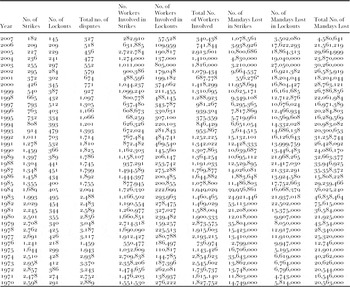
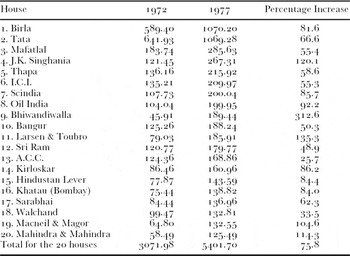
Although most accounts describe the Emergency as a break from what had preceded it, the period can be seen as the high water mark of the developmental era in a specific sense. The state's mission of managing economic growth and providing social welfare was never conveyed in so public and insistent a fashion before, nor were those who crossed its path prosecuted with greater zeal. In the effort to overcome stagnant industrial productivity, a plan was announced to throw open the public sector ‘to the rough and tumble of market forces; they should neither claim, nor be given, any special privileges. . . .’Footnote 30 The chief critics of state management of the economy in the past, namely private business, achieved profits that surpassed all previous experience (see Appendix Two). Meanwhile, strikes and lockouts plunged to historic lows (see Table One, Figure 12), a point discussed further in the next section.
The Emergency enacted a spectacular fashioning of the economy as a site for collective participation to invigorate a national body requiring stimulation because it had become weakened over time. A range of populist policies were announced that promised welfare for groups ranging from the rural poor—e.g., freedom for bonded labour and from money-lenders—to housing plot allocations for the urban poor in return for ‘voluntary’ sterilization, to cheaper textbooks for college students. Whether due to failures of implementation or of political will, or due to the influence of the Prime Minister's son Sanjay Gandhi, whose constituency has been identified as specifically middle class,Footnote 31 it is the high price the state exacted in return for benefits granted to the poor that eventually came to distinguish the Emergency.
Coercion directed at the bodies of the poor through slum demolition and sterilization was central to the programme of national revitalization. The spectacle of violence was pedagogical, distinguishing between those whom the violence corrected and those for whom it illustrated the correct lessons. It affirmed the character of a national body being enhanced through the ‘shock therapy’ of the Emergency. This was an upper caste body, residing in sanitized and beautified urban spaces, denuded of the pollution of poor, lower castes who generated unhygienic conditions that endangered the lives of their betters.
While the Emergency sought to maximize economic growth, it simultaneously involved a concern for quality over quantity, and for the proper aesthetic form to condition and regulate mere substance. Degraded practices of production existed in abundance and depleted the strength of the nation insofar as proliferating poor bodies uselessly consumed resources to generate sickness, not health. Defiant of prevailing national ideals, these resistant bodies were especially dangerous, and needed to be neutralized for the collective welfare of the nation. Stern measures, such as sterilization campaigns, were thus believed to be imperative and undertaken on a war-footing, if national economic and social gains were to be consolidated.
Outlined in these terms, it is striking the extent to which this programme anticipated elements of what became familiar later with the rise of Hindu nationalism from the late 1980s onwards, even though national development was cast in overtly secular and scientific terms. The parallel was a programme conceived in militaristic terms. It inscribed specific plans onto people treated as part of the material surface of society, re-arranged and eliminated aberrant entities, and conscripted its best elements to help implement these designs. Alarms regarding Muslim plans to violate family planning norms and overtake Hindus were preceded by more general alarms about viral population growth that had to be curbed at all costs. While family planning was presented as a generally applicable norm, in practice it was directed at the poor, and it invoked the small nuclear family ideal already widely prevalent in urban upper caste families.
‘Urban beautification’, the operative euphemism for slum demolition, as well as family planning policies, long predated the Emergency. But between 1975 and 1977 they acquired enormous power as publicly-declared state imperatives. State-directed violence enacted and confirmed sanctioned forms of knowledge and exemplified their superior moral status. Although at first it appeared to be secular, and later Hindu, violence was treated as necessary and productive during and after the Emergency. It contributed, ultimately, to the formation of a middle class that regarded such violence as legitimate, as law-making and law-preserving, enacted on its behalf, and on behalf of the nation as it ought to be.
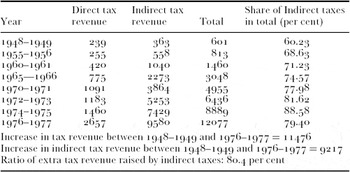
Government policies since independence had been structurally biased towards the more affluent classes, proportionately favouring college over primary education, public sector over private sector employees, and drawing revenue disproportionately from indirect taxes borne by the poor.Footnote 32 What occurred after the Emergency was not the rise of a purely autonomous literati so much as the rapid growth and development of forces that could not only influence public debate but claim to stand for the public itself.Footnote 33 For example, the press became more politically assertive, launching successful campaigns to defeat repressive legislation such as the Anti-Defamation Bill and the Bihar Press Bill.Footnote 34 Prominently, communications media of all types grew enormously following the Emergency, a development Robin Jeffrey has ascribed to ‘political excitement’.Footnote 35 With the state remaining the principal source of revenue both for print media as well as itself being the monopoly in the case of broadcast media (at least until the 1990s), it can be argued that the growth of the media pointed to a form of state influence that was now mediated through the market.Footnote 36
Where the middle and upper classes were concerned, after the Emergency of 1975–1977 the state more often sought to avoid exercising authority in its own name, at least in matters that did not concern national security. Previously, claiming the eminence of its wisdom and demonstrating the force of its will had been commonplace.Footnote 37 Earlier, austerity could be demanded and coercive measures regularly imposed across a majority of social classes, although the brunt always fell on lower classes of course. Such tendencies were prominent during the Emergency, and were denounced by the Opposition, and apologized for by the Congress in the two months between the suspension of the Emergency in January 1977 and the national elections held in March that year. Even during the latter half of the Emergency, but more so after it, the government found it prudent to avoid overtly coercive measures on the urban well-to-do, and realized the merits of a ‘carrot-and-stick’ approach. A combination of persuasion and incentives for compliance, on winning consent rather than demanding obedience, came to characterize the government's relationship with a section of the polity that recently had demonstrated the unthinkable, namely, the ability of the electorate to unseat the ruling Congress Party.
Emergency messages to the nation: publicity and middle-class formation
Economic planning had existed before, but it had never been brought home in quite this way, seeking to incorporate citizens and staging campaigns to demonstrate that efficiency was indeed the watchword, and that the government meant business in its attempt to set the economy right. Not ‘bread and circuses’, but the claim of a galvanized economy became the legitimation for the Emergency and, above all, a spectacle for collective edification. Until now the reasons of state had often appeared inscrutable, with planning conceived and implemented far above the heads of ordinary people, and few benefits materializing before them in their own lives. T.A. Pai, the Minister of Industry and Civil Supplies, in his valedictory address given on 28 January, 1975, at a New Delhi seminar organized by the Forum of Financial Writers, addressed the frustrations of the ordinary citizen in terms that indicate that what was to come only a few months hence by way of developmental rhetoric was not without precedent:
Life is still so burdensome to vast sections of the country's rapidly rising population that their weariness cannot be taken for unquestioning resignation or submissive despair. The common people do not and need not understand the sophisticated language in which the intellectuals here and elsewhere expound the philosophy and dynamics of planning. They must feel the fruits in order to perceive it and when the fruits are a mixed bag, their faith in planning is bound to turn cynical. Sacrifice is no doubt, essential at every level but the enjoyment of a reasonable portion of fruits of planning, now and then, should not be looked upon as evidence of unpatriotic indulgence. Such enjoyment helps reduce the tension and the sense of insecurity, which now grips large sections of the population.Footnote 38
The state of the economy did not allow the fruits of planning to be distributed very far or in very great measure. But if this were not possible, the visualization and dramatization of the economy at work for the common people's benefit would surely enthuse, uplift and infuse them with correct thoughts for the success of economic development. A Planning Commission document spelt out the steps taken, and the effects it wrought:
The [Annual Plan 1976–1977] . . . takes into account the new sense of discipline and dynamism brought about by the declaration of emergency and the launching of the New Economic Programme in the early part of the year 1975–76. . . . Besides continuing the anti-inflationary measures initiated in the middle of 1974 a number of other measures were adopted particularly after the Emergency to ensure price stability. These included [a] crack down on economic offenders—black marketeers, profiteers and smugglers, restricting the use of unaccounted funds, statutory requirement of exhibition of prices and of stocks of selected essential commodities by traders, mandatory display of weight, measure and identity on pre-packed commodities and banning of sole selling agencies in certain industries such as vanaspati, sugar, paper and cement. These measures combined with the dehoarding operations undertaken by the Government on an extensive scale led to change in the psychology of both the consumer and the traders resulting in the sellers’ market turning into a buyers’ market in various essential commodities.Footnote 39
Insofar as the claims of the Emergency centered on the economy, their veracity is uncertain, as indicated below. Nevertheless, these measures constituted the face of the Emergency to a considerable extent. National advancement could best be calibrated in economic terms. That is, it was at the level of the economy that the nation's condition could be made transparent, with numbers measuring its progress and demonstrating the truth of the claims made.
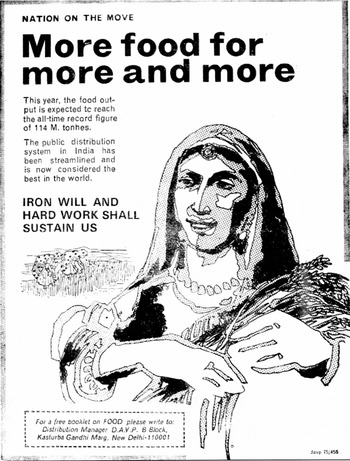
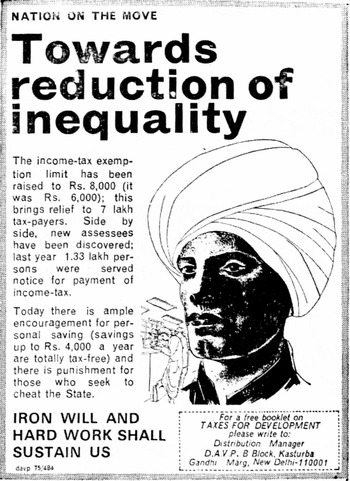
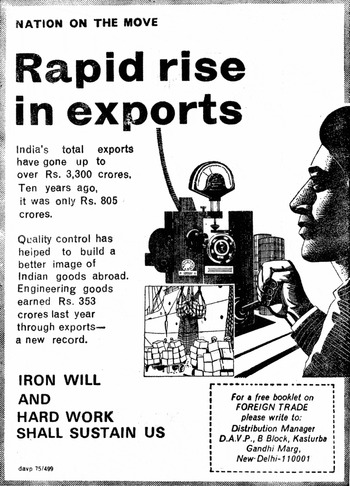
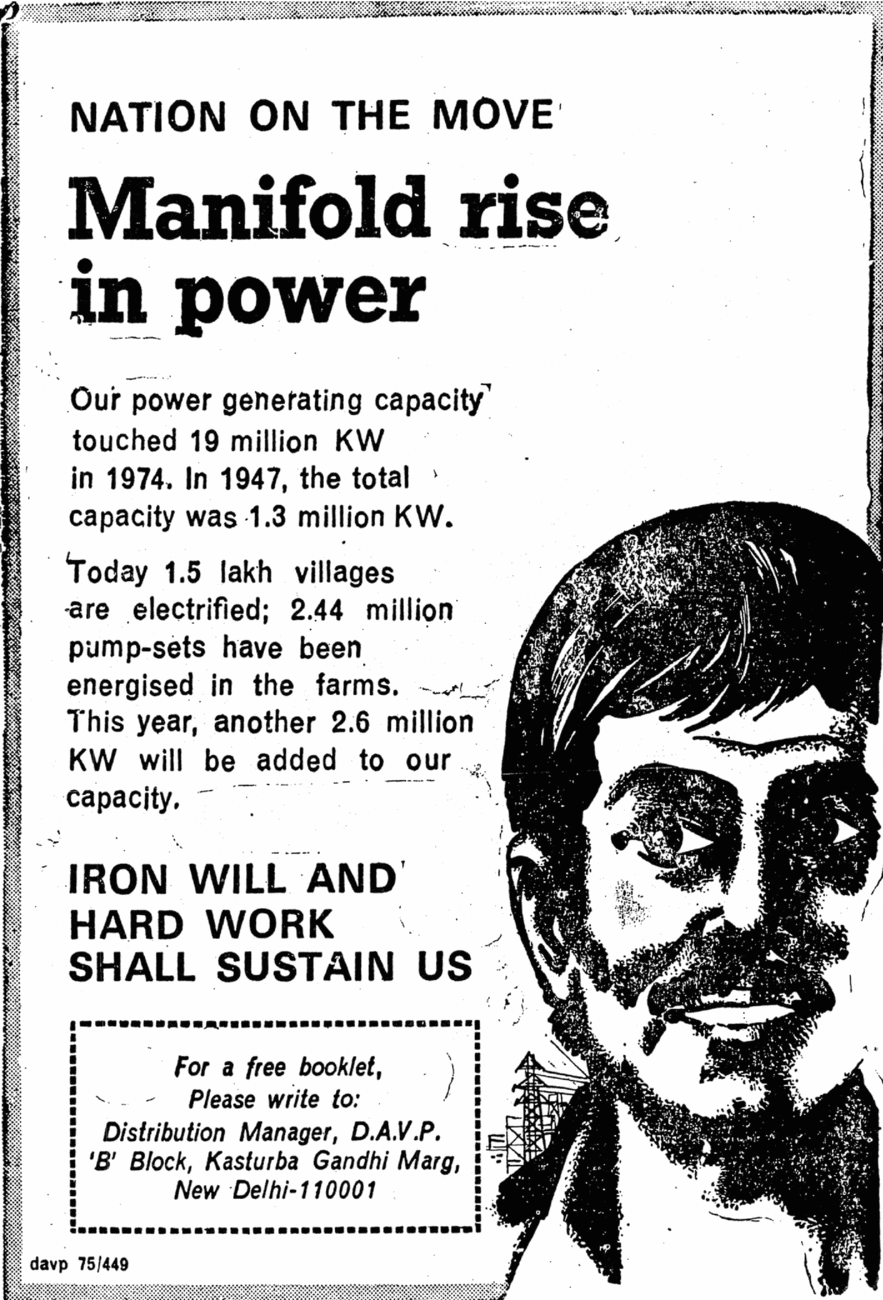
The people's welfare (‘more food for more and more’) appeared through an arithmetic produced by the state. The figures registered national progress, and the streamlining of a public system to distribute food confirmed the existence of good governance. In fact, the increased agricultural production was attributed to a good monsoon rather than to government policies per se.Footnote 40 Nevertheless, advertisements published at the behest of the government's Directorate of Audio-Visual Publicity promoted the theme, albeit in different ways (Figures 1 to 4).Footnote 41
‘More food for more and more’

‘Manifold rise in power’
‘Towards reduction of inequality’

‘Rapid rise in exports’

The ‘shock therapy’ of the Emergency, provoked by the lack of collective discipline, had borne results and the nation was enthused once more. If for Lenin, communism equalled the power of the Soviets plus electrification of the country, here it was the state that linked the villages with ‘power’ and made the spirit of adventure manifest in the nation again. If the achievement was an enhanced sense of well-being among people, it still needed to be demonstrated so that citizens could know and be assured that the nation was indeed on the move and in the right direction, too. This envisioning of the nation, mirroring the work of the masses back to themselves, depended on the state as the vital intermediary able to gather the necessary knowledge and convey it. Effectively, the state appeared on both sides of the equation, directing the people on one side and, on the other, representing results on behalf of the nation. The focus on the economy alleviated the potential for mystification and tautology, however. Economics offered a privileged form of knowledge for testing the accuracy of claims because it could distil the many-sided qualitative issues concerning popular well-being into quantitative ones.
This tactic of clarity carried its own risks. For example, government propaganda claimed that while inflation had reached an annual rate of 32 per cent in 1974, it was transformed into a negative rate within a year.Footnote 42 Figures published by the government's Central Statistical Organization suggested that the reversal was exaggerated, however.Footnote 43 Claims of ‘more and better agricultural inputs and credit facilities for farmers’ were later assessed to be nebulous, and if the Emergency's ‘New Gains’ included the statement, ‘Strikes, lock-outs and bandhs disappear’, working classes whose discontent had been so prominent until recently could hardly be expected to approve.Footnote 44 Strikes and lockouts did decrease (see Table One, Figure 12); meanwhile, those sectors of business enjoying access to the right ministers flourished, and corporate assets reached record levels (Appendix Two).Footnote 45 The income tax exemption limit rose from Rs. 6000 to Rs. 8000, giving relief to 73 lakh middle-class persons.Footnote 46
Economics could be a proxy for state reasoning but it could not always inspire assent in the common man or woman who might be left out of the reckoning.Footnote 47 It remained to directly address and exhort ordinary people, then, and to urge their participation in the success of the Emergency rather than relying on data whose correspondence with peoples’ experience was uncertain. Generating popular consent for governance without relying on material inducements or political coercion was not a skill the state had sought to develop after independence. The state seldom, if ever, sought to test the effectivity of its propaganda outside election campaigns, which involved a very specific form of communication, requiring a binary choice on the part of its addressee—either they voted for the candidate, or they did not. This structure of communication tended to carry over to its developmental propaganda, where consent tended to be assumed—by virtue of the party having won the elections—and directives issued, with little attempt to draw the audience into what lay behind state reasoning.
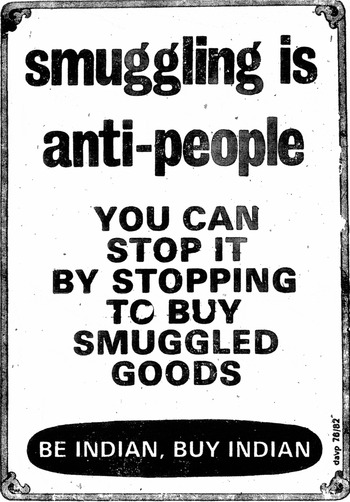
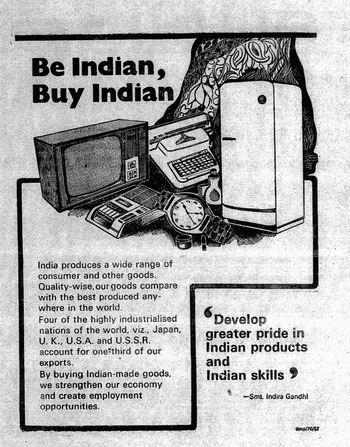
When engaging in exhortation, the government offered messages as good advice framed in such a way that one was expected to agree and, perhaps, pass the word on. Appearing as images but conceived as text, they presented the very model of statist diction (Figures 5, 6, 7). The event was the occasion of their pronouncement, rather than of their performance. The nation was ‘on the move’ and there was much to be done. ‘Less talk’ meant ‘more work’, so there was little need for discussion. There were, however, warnings (Declare ‘any unlicensed transistors/TV sets’; ‘Smuggling is anti-people’) and reminders that themselves could be warnings (‘Be Indian, Buy Indian’)
‘Unlicensed radio/transistor/tv sets’

‘Smuggling is anti-people’

‘Be Indian, buy Indian’

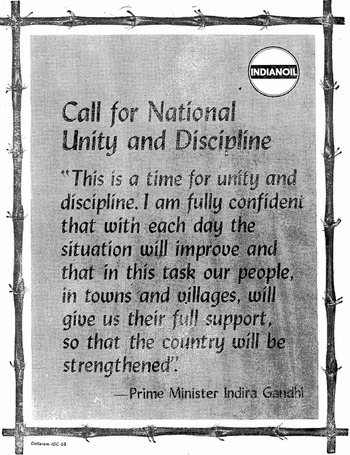
Where the advertisements go beyond articulating a programme of a vision, they are of course, more complex (Figure 8).
‘Call for national unity and discipline’

This message from the Prime Minister moves from the announcement of a time to posing a ‘situation’ that is the situation, which will improve. ‘This task’, then, is presumably improving the situation, although it is not clear; no task has been named. The message goes on, ‘In this task our people . . . will give us their full support, so that the country will be strengthened’. The strengthening of the country is a desirable end but it is not the task itself, only a result of ‘our people’ giving their full support to the unidentified task.
The message offers a series of non sequiturs involving several resonant nouns and adjectives (‘time, unity, discipline, confident, people, full support, country, strengthened’) while remaining reticent, and obscuring how they are joined together. As a communication invoking the Emergency, but not naming it, it seeks to convey the sense of a wartime atmosphere when the urgency and immediacy of what needs to be done is so obvious that it need only be gestured to. But of course it was not wartime and the threat, if any, had been to the Prime Minister herself and not to the country; she is the figure that fills in the blanks in this statement and makes it cohere. She sizes up the situation, defines the task and, presumably, ensures the country is strengthened.
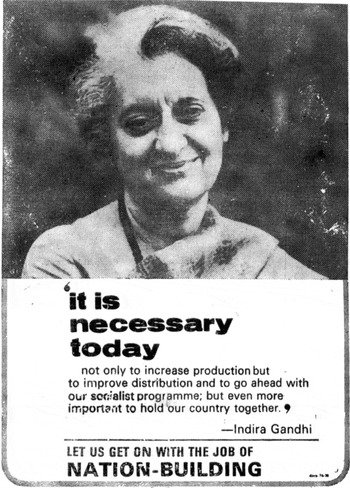
Here is another message, with a picture of the Prime Minister looking relaxed, indeed for an emergency, conveying, no doubt, her confidence at being on top of a difficult situation (Figure 9). Her head is tilted to one side, her eyes are crinkled and she is smiling fondly as if looking at an intimate friend. The message beneath her photograph is more of an admonition than an endearment, however.
‘It is necessary today’

In a single sentence the imperatives cascade and overlay each other—production, distribution, socialism, holding our country together, each phrase more important than the previous one. The main priority is presumably signalled in the last directive, to hold ‘our country together’. The final sentence is still more urgent than its predecessor: ‘Let's get ahead with the job of nation-building’—which is again something more than the previous tasks, perhaps the sum of all of them taken together, although it is also left undefined. The ceaseless motion conceived in these statements is presumably meant to be deliberate and planned but the quick succession of indistinct directives poses a question as to whether the goal is much more than inducing submission to a series of vague but non-negotiable orders.
These messages also raise the issue of voice. Erving Goffman argued that the mere fact of speaking tells us little about how the speaking person is related to the spoken language: he or she might be the mere animator of speech that is attributed directly or indirectly to one or more authors or principals, as opposed to performing what he called ‘fresh talk’. As people speak they also offer various indications of the way in which they are connected to their speech, and this has implications for how one might understand both what they say and who they are. For instance, if someone announced that as a bureaucrat he or she has always done as they were told, and would never dream of questioning the orders they receive, they thereby indicate that they are not necessarily the principal or the author of their speech, but instead an animator, a downstream and second or third order conveyor of words, putting speech into circulation while exempting themselves from authorial responsibility.Footnote 48
To follow Goffman, are the quoted texts expressing the statements of a principal or of the animator of the speech in question? As quotes from the Prime Minister, they are presumably in the first category. But in fact they have all the signs of being the latter, as if they were half-remembered dicta, allegiance to which could be demonstrated by the repetition of select phrases, even if they were out of context, or missing some of the verbal tissue in which they were conceived. The content of the message, what the animator of the speech wishes her audience to do or think, is in any case not very clear, beyond seeking the attention and allegiance of its hearers through a succession of escalating claims indicating that rejection may carry a high cost.
In the examples cited here, questions of public interest and of national security merge together so that matters that might ordinarily be discussed under the former rubric reappear under the latter. Executive intervention and public participation seem simultaneously to be required; there is a reluctance to accept any distinction between the two. Although presumably authorized, even if not authored by the Prime Minister, the statements quoted above give some insight into the forms of authority circulating through the Emergency, enabling it to win recruits, transmit orders and parry questions. Speech was hardly autonomous here, of course, but was accompanied by the threat of force.Footnote 49
Personal authority and communication by word of mouth were the indispensable means of upholding and reproducing the inherited legacy of a massive, impersonal state apparatus. A personalized method of management and surveillance was favoured to maintain political authority, with loyal subordinates creating a tacit chain of command, and informal, spoken exchanges providing a crucial layer of communication that anchored government policies. The lack of accountability and of transparency were two essential accomplices of this mode of governing, devised not by deliberate planning but as a pragmatic response to the exigencies of retaining power. The coercion implied was offset by a method that inspired loyalty. Without an objective record of information, only the threat of force could ensure organizational coordination, although this could be disguised by a culture of fidelity and obedience. P.N. Dhar, who was in the Prime Minister's Secretariat during that time, indicates the effort to convey the right messages in Emergency-era slogans:
. . . H.C. Sarin, a retired member of the Indian Civil Service, paid a casual visit to my office. He said he had come to see the prime minister but thought he would say ‘hello’ to me as well. He was carrying a bundle of papers which, he said, contained his suggestions about a fresh set of slogans that would popularize the Emergency regime and explain its rationale. He also mentioned that he was the author of slogans that had appeared soon after the declaration of Emergency. The only thing I remember about the slogans was their emphasis on the need for discipline. While on the subject he said, ‘You know, P.N., the impression about you is that you have lots of brains but what you do not have is the danda [stick] in your hand that your job requires.’ This was said in a bantering tone and we both laughed.Footnote 50
Effective performance was believed to require grasping the danda in one's hand, but in this case as Dhar remarks, ‘The only thing I remember about the slogans was their emphasis on the need for discipline’. When it came to persuasion about the need for discipline, the event was noted; the effect was lacking.
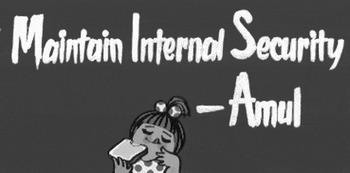
Figures 10 and 11 show flamboyant echoes of some of the most notorious programmes and legislation of the period.
‘Maintain internal security’

‘Compulsory sterilisation’

These slogans are examples of genre-crossing, government propaganda reanimated as consumer advertising. The virtue of these advertisements, from the perspective of the Emergency, was that they freely chose to reflect what was already given as a condition. In the repetition of Emergency signage where it did not have to be repeated, in the shift of context from state proclamations to fast moving consumer edibles, are we witnessing the increase of influence through spatial extension or its weakening through dislocation? Given that agreement was the only permissible public response to state speech of the time, these billboard messages adopted the position of animator, subordinate in relation to the principal author of the words, i.e., the government. The already well-known status of the quote is signalled through size and colouring, so that in a sense the billboards are staging a response to these slogans. But to engage with the truth or falsehood of these messages as government propaganda is largely beside the point. The presentation of the images suggests that they are undergoing a status shift, from legislation, policy or opinion into symbols to be bodily incorporated for individual enhancement. Even in the second order publicity for the Emergency, government policy is ‘laminated,’ to use another of Goffman's terms. The impress of the user's intentions could not be visible except through adornment or wholesale envelopment. The commodity image appears here as interface technology, between the repressive apparatuses of the state and the emergence of cultural and consumerist forms of identity.
What is interesting, of course, is that during the Emergency, while populations and the management of life become the locus of state action in the guise of improving the health of the nation via family planning, the poor bore the brunt of these efforts. As advertisements for a product sold to the urban middle classes (arguably Amul Butter's constituency in 1976–1977) these messages are also about a eugenic sense of class identity, signalled by the pink-cheeked girl and the comfortable juxtaposition with slogans that were so ominous for dissidents and for the economically weaker sections of society.
The waning of Labour politics
The Emergency is perhaps the high water mark for leaders who rose to political power on the strength of their trade union militancy, the last major figure in this respect being George Fernandes.Footnote 51 Thereafter, unions only infrequently came to be regarded as yielding significant political capital, and state intervention in labour disputes increasingly took the side of management rather than labour.Footnote 52 The figures for strike and lockout activity give an indication of the diminishing returns of labour conflict and the declining problem posed by labour militancy (see Table 1).
Industrial Disputes 1970 to 2007

Notes: *Figures in Annual Reports and Yearbooks are rounded off and may vary slightly from reports (Indian Labour Statistics) that give exact figures.
2007 data source: Indian Labour Journal, Vol. 49, No. 3, March 2008. Gol, MoL&E, Shimla, page 261. Table A.3.1. Provisional statistics.
2006 data source: Indian Labour Journal, Vol. 48, No. 3, March 2007. Gol, MoL&E, Shimla, page 277. Table A.3.1. Provisional statistics.
2005 data source: Statistics on Industrial Disputes, Closures, Retrenchments and Lay-offs in India During the Year 2005, Gol, MoL&E, Labour Bureau: Shimla, 2005, page 20. Table A-I & A-II.
2003-04 data source: Annual Report 2005-06. MoL&E, Gol. Shimla 2005, page 38. No table number given.
2000-02 data source: Indian Labour Yearbook 2004. Gol, MoL, Labour Bureau, Shimla: 2004, p. 115-1/6. Tables 4.06 & 4.07.
1996-1999 data source: Indian Labour Yearbook 1999. Gol, MoL, Labour Bureau, Shimla: 2001, p. 111-112. Tables 4.06 & 4.07.
1993-95 data source: Indian Labour Yearbook, 1995. Gol, MoL, Labour Bureau, Shimla: 1997, p. 79, Table 4.06 & 4.07.
1983-92 data source: Indian Labour Yearbook, 1993. Gol, MoL, Labour Bureau, Shimla: 1995, p. 67. Tables 4.06 & 4.07.
1982 data source: Indian Labour Statistics 1982-86. Gol, MoL, Labour Bureau. Shimla: 1991, p. 360. Table 10.1(a).
1971-81 data source: Indian Labour Statistics, 1980-81, Gol, MoL, Labour Bureau, Shimla: 1987, p. 257. Table 10.1(a).
1970 data source: Indian Labour Statistics 1978, Gol, MoL, Labour Bureau, Shimla: 1987, p. 263. Table 10.1(a).
1983 data includes 57 strikes, 159534 workers involved and 13378000 mandays lost due to Bombay Textile Strikes. (Note b in Indian Labour Yearbook 1982-86, p. 360. Table 10.1(a).)
1982 data includes 59 strikes, 170748 workers involved and 41401000 mandays lost due to Bombay Textile strikes. (Note a given in MoL publication below the table.)
With the dominance by business interests over the means of publicity, it is not surprising that strikes were seldom presented as an occasion for solidarity; rather, news reports presented them as disruptive of a consensus whose actual form remained unexamined.Footnote 53 By contrast, communal conflict could receive coverage sympathetic to Hindus, for example downplaying Muslim losses and highlighting aggression against Hindus even when Muslims were largely the victims of such conflict. The Emergency is a period when the data for all overt conflict shows a steep drop—but beginning in 1977, and in the years following, communal riots grow in number and gain enormously in intensity, signalling the increasing importance of caste and religious difference as sites for inter-party political competition, and the increasing investment of political parties in communal conflict.Footnote 54
What deserves to be noted here is the different orientation of the state with respect to this violence, that is, the mode of engagement of the state when it confronted disputes of various kinds, say, labour disputes as opposed to communal disputes. In the case of labour, the Indian state, from the time of the Independence Movement, had retained an interest in the advancement of trade unions, which were seen as an extension of nationalist political activity, and of political parties. Whereas in many countries, state arbitration was a last resort when business and management could not resolve their differences, in India it usually became the first resort, with political leaders often eager to advance the interests of their constituents amongst trade union workers. While this meant that union strength depended on their relation to political parties, the shop-floor became to some extent a site of inter-party competition, while engaging in labour conflict was a means of political advancement, especially for aspiring non-Congress political leaders.
Behind this fact lay the organizing activity of the All India Trade Union Congress (AITUC), the Communist Party of India's trade union wing. Until the formation of the Congress-affiliated Indian National Trade Union Congress (INTUC) in 1946, AITUC was, in terms of its membership size, the principal labour union in the country. Against the recommendations of the first Indian Labour Conference of 1951, which advocated bipartite negotiation between management and labour, various amendments to the Industrial Disputes Act (promulgated in its initial form in 1947) ensured that labour dispute resolution was shifted from the factory gates to the corridors of power where worker militancy became remote from its outcome. The result of these efforts to bureaucratize industrial dispute resolution, spearheaded by INTUC, was to increase rather than to diminish the likelihood of strikes, as workers, often led by the powerful AITUC, sought to reassert influence over negotiations.
The relatively high incidence of strikes in the post-independence era, at least until the Emergency, points to the unsuccessful attempts of the state to control labour, and of the strength of union activism that succeeded in overcoming efforts to thwart their aspirations. This is an index of the quality, scope and extent of political dissent that was allowed or had to be accommodated because there were not yet the political conditions for its containment. Nevertheless, the fact that strikes were a means for unions to wield their strengths and achieve their goals, pointed to the existence of what was de facto a sanctioned political field in which labour was a legitimate political actor, one that could win considerable gains, as indeed was witnessed across the 1950s and 1960s.
It was perhaps the mark of a ‘soft state,’ that confronted its problems by partially yielding to them, that had to endure a degree of labour militancy as the cost of maintaining what passed for order. But this was not all. Labour occupied a specific place in the Nehruvian imagination. Labour was the human element in a system of economic production, and the counterweight to the drive for profit that was its own end. The principal avenue of such attention was the institution of the labour union, which of course covered only a fraction of the working population, but a substantial section of the organized sector. Government attention to unions did not necessarily mean they prospered or became strengthened; but it was an affirmation of the developmental state itself, which after all saw itself as the anchor and connecting point of the different segments of the population. If the nation was imagined as an economy, it was through the state that labour and capital came together in a productive wayFootnote 55 and, of course, in a secular developmental state, it was also the point of connection between different religious communities.
The two strikes that book-end the Emergency, the railways strike of 1974, and the textile strike of 1981–1982, make clear the sea-change that occurred in the position of labour, and the drastic diminution of labour's bargaining power with the unwillingness of the state after the Emergency to entertain labour as a meaningful interlocutor in industrial relations and in economic development. The Emergency itself was a turning point, signalled by a significant drop in the occurrence of strikes and lockouts (see Table 1 and Figure 12).
Industrial disputes in India 1970–2007. No. of strikes and lockouts.

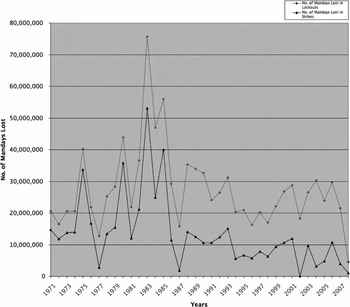
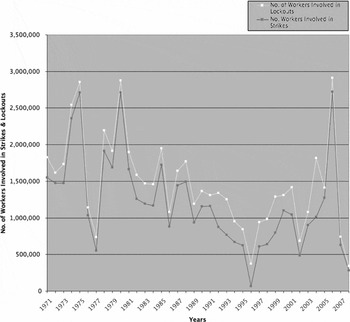
If we disaggregate these figures, lockouts form the greater part of the man-days lost during this period (Table 1 and Figure 13), indicating that increasingly, management not labour was responsible for work stoppage. Interestingly, the number of workers involved in these trade disputes does not fold into the picture of long-term decline of industrial conflict. The number of workers involved in strikes in 2005 is 2.9 millions, more than the number involved in strikes during the year of the railways strike in 1974, 2.85 millions, for example, although the number of man-days lost in 2005 is a third of that figure (Table 2 and Figures 13 and 14).
Industrial disputes in India 1970–2007. No. of Mandays lost.

Industrial disputes in India 1970–2007. No. of workers involved in strikes & lockouts.

Number of Communal Incidents and Persons Killed and Injured in these Incidents During 1954 to 1985

Source: Rajgopal, P.R. Communal Violence in India. New Delhi: Uppal Publishing House, 1987, pp. 16–17.
After the Emergency, the incidence of labour militancy drops, and again, if we disaggregate the figures, man-days lost are almost entirely due to lockouts. Business houses are allowed increasing freedom to engage with labour on their own terms, and are free to declare lockouts with little intervention by the state. Strikes increasingly involve more workers, but they are shorter, and acquire a symbolic status rather than exhibiting the political muscle of unions in the production process. The nature of the negotiation between labour and business also changes, with monetary compensation becoming much more important than political power or workers’ rights. Increasingly, workers appear willing to give up their ability to influence shop-floor practices in return for cash benefits, while businesses wield the threat of casualization over workers to compel them to accept such conditions.Footnote 56
A change in the character of the political regime occurs, and the Emergency is a watershed in this change. It is as if the state steps back, appears to devolve agency to businesses, and to a hierarchical Hindu society, increasingly presenting itself as external to the cultural and economic processes going on. It is an interested party, an enabler, rather than the necessary point of connection through which the disparate elements of economy and society (labour and capital, religious communities) were joined.
Thereafter, we see that the incidence of communal riots increases quite steadily for a decade or more (Table 2). There occurs a transfer of political violence from labour to religious communities and specifically to communal activity.Footnote 57 If labour was a key category for the developmental state's conception of the national economy, it became a political category by virtue of that fact, as well as a site of political contestation, where opposition figures challenged ruling party hegemony. Labour militancy and violence were the signs of such contestation. The growth in the incidence of communal violence points to a parallel phenomenon, namely religious identity as the new salient category where consent was increasingly sought and contested. There is a noteworthy difference, however. The attempt to control labour was uneven and unstable, and constantly confronted by the attempt by workers and opposition leaders to challenge the terms of their categorization by the state—i.e., as docile partners fortunate to have a place at the negotiating table. In the case of religious communities, the state was seemingly external to them, an ineffective arbitrator at best, attempting it might seem to quench the flames of sectarian passion which burst out in society for reasons that had apparently little to do with the state itself.
Conclusion
The political crisis in response to which the Emergency was declared in June 1975 transformed into a different kind of problem thereafter. All challenges to the state appeared immediately to subside with the mass arrest of the members of the opposition and the suspension of civil liberties, including the imposition of press censorship. As the state exercised its right to surveil, direct and, if necessary, monopolize the communicational space of civil society, the question could be posed as never before: what is the state, and where does its authority come from? The state itself both posed the question of its own authority and offered a succession of answers. The state's developmental mission, of course, was always declared to be its chief basis of legitimation, pursued to enhance the national good. This is expressed in purely economic terms at first, and over time, as requiring popular participation and ‘voluntary’ involvement, dependant on particular forms of bodily discipline and civic hygiene. A rhetoric of consent arose alongside the increasing coerciveness of policies, notably of family planning. It is noteworthy that where the character of political power had an avowedly bio-political intent, to curb reproductive capacity, individual participation was labelled as inherently consensual and voluntary.Footnote 58 This marked the passage of power from a statist, developmental model to a disciplinary form more reliant on cultural and consumerist forms of identity.
Historically, this sequence of events was followed by the anointment of the middle class as the preferred vehicle of economic growth and national advancement. The changed model of power takes the small nuclear family, characteristic of the more affluent classes, as its norm. Coercion exercised on behalf of family planning norms is both witnessed and experienced as defending a particular imagination of the modal family type already realized in more well-to-do urban groups. The consuming middle class that precipitates in the later period of liberalization as a full-fledged political actor is to some extent constituted through violence enacted in defence of its biological and civic norms. The growth and influence of this class illuminates the intersection of a new kind of economic nationalism with a resurgent Hindu cultural nationalism, i.e., the support for market-led economic reforms joined to the view that the perceived failure of Nehruvian developmental policies could only be redressed by declaring Hindu majority rule.
In 1989, Ashok Rudra argued that in India the intelligentsia had emerged as a ruling class co-opted into the industrial bourgeoisie's alliance with the landowning elite. His conception of the intelligentsia included white collar workers in public and private sectors, educated professionals such as doctors, lawyers, journalists and teachers, politicians, and trade union leaders. Manual workers like sweepers, drivers, gate-keepers, scavengers, and fourth class government employees like peons, maintenance workers and technicians were excluded.Footnote 59 His analysis reflects a problem in the literature on the political economy of Indian development, namely, a tendency to focus on statics and not dynamics, to theorize models of class identity and position without indicating how they change. Classes mutate over time. Although Rudra's analysis indexes the expansion and a certain maturation of educated middle classes in the post-independence period, questions of historical period and of the instrumentalities of political process are absent from his account, as is an appreciation of how the state and social classes interact and modify each other in the process of governance.Footnote 60 However, what Rudra calls ‘the rise of the intelligentsia’ can be read as the formation of a new middle class, whose opinion stands for public opinion as a whole.
Although Rudra's terms and assumptions require revision, his analysis is relevant to the arguments discussed in this paper. His focus on a ruling class assumes an instrumental conception of power, in which dominating classes oppress the dominated. The intelligentsia occupy an ambivalent position in his argument, since they rule despite being co-opted. In fact, they can be seen to represent a new and embodied form of power as illustrated in the new middle class. Here power is more usefully seen as productive, as shaping a given socio-political formation, infusing its subjects with purpose and volition, rather than as constraining individuals and achieving its ends against their will. Power is exercised through the body and is not limited to the circulation of ideas and opinion but includes modes of civic comportment (personal and environmental hygiene) and dispositions of biological capacity (family planning), cultural attitudes and practices of consumption. The list of occupations Rudra provides for the intelligentsia excludes manual and less educated workers, even within the salaried classes, and in the Indian context carries upper caste connotations. Rather than adding a new member to the ruling class coalition list, Rudra's essay points to the emergence of a form of power not directly located in the developmental state as before but appearing in civil society and expressed in cultural and political terms but enacting a state-like authority.
In the period leading up to the Emergency, the state had courted the masses. For example, bank nationalisation and the abolition of privy purses in 1969 bolstered Indira Gandhi's pro-poor reputation and allowed her to overcome election campaigns against her. National savings schemes at favourable rates of interest drew on government coffers to bolster the savings of the thrifty, and in effect constituted a subsidy to middle classes, although theoretically they were open to all. After nationalization, banks were asked to extend credit to the rural and small scale industries (SSI) sectors, the latter continuing the Mahanalobis strategy of protecting SSIs. Bank loans to these sectors offered the prospect of financing industrious entrepreneurs and stimulating grassroots capitalism. However, the loans had to be sanctioned by nationalized banks, which constituted political patronage, and created access for politicians to finance capital on a scale previously not possible.
Such populist policies continued incrementally during the Emergency but concentrated on those who had access to finite amounts of cash: through public distribution systems (whose benefits flowed largely to urban middle classes), and savings schemes and bank loan schemes as mentioned above. The attempt by the state during the Emergency to bring the population that was beneath the level of the market within its purview, and engage them in its developmental policies, was carried out through a combination of heavy propaganda and forceful policy implementation. The latter included cash incentives to the poor for the relinquishment of their fertility rights, a transaction that was formally consensual, but meant the non-reversible exchange of long-term capacities for modest, short-term gains, and relied on the vulnerability of the poor to such appeals. Such measures were thus not too far removed from the openly coercive sterilization highlighted as Emergency ‘abuses’ by the Shah Commission.
After its return to power in 1980 the Congress Party paid far more attention to the need to generate consent, via a middle class, promoted and identified with state policies that, over time, increasingly favoured a consumption-led model of growth. What occurs in its wake is a growing separation between the command economy and public opinion, so that the latter began to appear, increasingly, as autonomous, and as capable of effectuating the work that is required to be done, by itself, without any assistance from the apparatuses of the state. In other words, the kind of work the image is presented as capable of performing, changes.
Accompanying this redefinition was a shift from economic populism to cultural populism, from policies in which pro-poor programmes were significant, to policies where the new emphasis on a middle class was accompanied by appeals to religious and cultural identity. Certainly there was nothing inevitable about the forms of politics that developed after 1980. But in retrospect, some of the crucial groundwork for this shift can be discerned in the events of the Emergency.
Appendix One

*In 1976, the full year of the period of the Emergency, circulations of newspapers dropped, according to S.C. Bhatt, who worked in the Ministry of Information and Broadcasting, reflecting perhaps popular sensitivity to the prevalence of censorship, but also indicating that newspaper reading itself depended to some extent on political excitement, as Robin Jeffrey has suggested.Footnote 61 (I have been unable to get the figures for this year.)
On the other hand, news coverage of Emergency abuses was prolific in the eight weeks prior to polling in March 1977, and the figures indicate greatly increased circulation following the relaxation of Emergency.
Source: Mass Media in India (Annual Publication, although some years it is Bi-annual). New Delhi: Ministry of Information and Broadcasting.
Appendix Two
Growth in the Assets of Monopoly Houses Assets (Rs. Cr.)

Source: Department of Company Affairs, Ministry of Law, Government of India, 1978.
Growth in Indirect Tax Revenue (Rs. Cr.)

Source: Commerce, 27 March, 1976 and Supplement to RBI Bulletin October 1977. From Focus: Handbook of Statistics. Communist Party of India (Marxist). New Delhi, 30 November, 1979.