The COVID–19 pandemic crisis has increased the levels of uncertainty -defined as an experience of insecurity about the unknown (Hillen et al., Reference Hillen, Gutheil, Strout, Smets and Han2017)- due to the diverse social, economic, and organizational changes (Deev & Plíhal, Reference Deev and Plíhal2022; Junça-Silva & Silva, Reference Junça-Silva and Silva2022). The unemployment rates increased all over the world, as well as the number of people being laid off with reduced wages both of which have accounted for increases in perceived uncertainty (e.g., Tu et al., Reference Tu, Li and Wang2021). Furthermore, the work context has also changed (Adamovic, Reference Adamovic2022); for instance, the implementation of teleworking arrangements has increased all over the world as many organizations needed some measures to assure their survival. Many of these organizations implemented teleworking for the first time, that is, many workers started to work from home for the first time which undoubtedly increased uncertainty. All of these work changes required employees to adapt themselves to such changes. So, adaptive performance –“the extent to which an individual adapts to changes in the work system or work roles” (Griffin et al., Reference Griffin, Neal and Parker2007, p. 329)– is of crucial need in such uncertain times.
Uncertainty might influence the employees’ adaptive performance (Colquitt et al., Reference Colquitt, LePine, Piccolo, Zapata and Rich2012; Matsunaga, Reference Matsunaga2021; Tu et al., Reference Tu, Li and Wang2021; Wright & Cordery, Reference Wright and Cordery1999), as it tends to trigger anxiety, fear, and stress (Cullen et al., Reference Cullen, Edwards, Casper and Gue2014), draining resources that are needed to deal with the challenges of daily life at work. The integrative model of uncertainty tolerance (IMUT; Hillen et al., Reference Hillen, Gutheil, Strout, Smets and Han2017) supports these assertions as it assumes that uncertainty is an antecedent of affective reactions (e.g., anxiety, and fear) and recognizes its resource-draining nature (for instance, creating distractions and reducing the ability to focus on the tasks at hand) –conservation of resources perspective (COR; Hobfoll, Reference Hobfoll1989). Accordingly, resources are needed for employees effectively deal with daily demands, hassles, or other unexpected events (Hobfoll et al., Reference Hobfoll, Halbesleben, Neveu and Westman2018).
Drawing on the IMUT and the COR theory, we argue that experiences of daily uncertainty will arouse negative affective reactions that, in turn, will deteriorate adaptive performance. In addition, the IMUT has been used mainly in the health area; hence, this study will expand what we know from the studies carried out to date since it does not focus on the health area.
Moreover, based on the socio-cognitive perspective of mindfulness –the ability to notice what happens in the present moment (e.g., Pirson et al., Reference Pirson, Langer and Zilcha2018)– we delineate theoretical arguments to argue that mindfulness will influence how individuals deal with and react to uncertainty regarding adaptive performance. According to Langer (Reference Langer, le, Ngnoumen and Langer2014), mindfulness, as a cognitive flexibility, enables individuals to reevaluate a variety of situations and experiences, such as those that trigger uncertainty, allowing negative experiences to be perceived more positively. Further, Pirson et al. (Reference Pirson, Langer and Zilcha2018) argue that mindfulness supports the individual to create cognitive strategies that improve flexibility, focus on the context, and problem-solving ability. Hence, we argue that mindfulness, as a cognitive style (Sternberg, Reference Sternberg2000), will attenuate the detrimental effects of daily uncertainty on adaptive performance through the experience of negative affect.
Despite the empirical findings that uncertainty harms adaptive performance and arouses negative affect (Anderson et al., Reference Anderson, Carleton, Diefenbach and Han2019; Junça-Silva & Silva, Reference Junça-Silva and Silva2022), it is important to deepen the understanding of these variables altogether and to test this cross-level mediated-moderated model. Thereby, this study intended to examine how and when daily uncertainty predicts adaptive performance by (a) exploring the effect of daily negative affect as a within-person process, and (b) testing the buffering effect of mindfulness, as a cross-level moderator.
Specifically, this research offers two main contributions. The first contribution is related to the expansion of the IMUT in two ways. First, it demonstrates its transversal applicability. Second, the IMUT suggests that perceived uncertainty promotes cognitive, affective, and behavioral reactions (Hillen et al., Reference Hillen, Gutheil, Strout, Smets and Han2017). However, the theory does not describe how uncertainty will deliver behavioral or affective reactions and is only focused on healthcare settings. As Hillen et al. (Reference Hillen, Gutheil, Strout, Smets and Han2017) highlighted, empirical studies on uncertainty have been atheoretical or focused on narrow dimensions; however, uncertainty tolerance covers several psychological dimensions and needs, emotions, and personal goals, and these ones are closely related to performance. Hence, analyzing how uncertainty is related to such dimensions is needed. Moreover, analyzing how adaptive performance may be influenced by both uncertainty and negative affective experiences, at the within-person level, may be an important contribution to research and practice regarding the relevance of emotion regulation strategies at work particularly regarding uncertainty (Niessen & Jimmieson, Reference Niessen and Jimmieson2016). Second, by considering socio-cognitive mindfulness as a cross-level moderator, this study contributes to the understating of some cognitive strategies that may be helpful to attenuate the harmful effect of uncertainty on adaptive performance via negative affect. Thereby, in the long run, this study helps to delineate practical strategies to help employees overcome and deal with resource loss and subsequent negative affective responses in uncertain work contexts.
Theoretical Background and Hypotheses
Models of Uncertainty: The Integrative Model of Uncertainty Tolerance
The COVID–19 pandemic crisis has intersected organizational life in many ways. The mandatory confinements, the volatile and uncertain social and economic context, the need for social distance, and isolation have undoubtedly impacted individuals’ behaviors at and toward work. All these changes have increased the workers’ perceived uncertainty (Deev & Plíhal, Reference Deev and Plíhal2022).
Uncertainty “is fundamentally a mental state, a subjective, cognitive experience of human beings rather than a feature of the objective, material world. The specific focus of this experience, furthermore, is ignorance—i.e., the lack of knowledge.” (Anderson et al., Reference Anderson, Carleton, Diefenbach and Han2019, p. 2). The experience of uncertainty is triggered by events or situations, perceived as unknown, as the integrative model of uncertainty tolerance (IMUT; Hillen et al., Reference Hillen, Gutheil, Strout, Smets and Han2017) stated. Uncertainty is subjective in nature, as it depends on the way individuals appraise what happens to them. When individuals experience this subjective perception of uncertainty there are some reactions that may co-occur temporally (Dugas et al., Reference Dugas, Gosselin and Ladouceur2001): (a) Cognitive (e.g., appraisals of denial or threat); (b) affective (emotions, such as fear, aversion or despair), or (c) behavioral (e.g., avoidance, inaction, inattention) reactions. The IMUT also highlighted the role of personality aspects (trait or state) as buffers or intensifiers of the relation between perceived uncertainty and its subsequent reactions, suggesting that certain personality traits or dispositions may attenuate (e.g., optimism, resilience) or exacerbate (e.g., neuroticism) the negative impact of uncertainty on negative affective reactions and behaviors.
Complementarily, the theory of uncertainty management (TUM; Brashers, Reference Brashers2001) assumes that uncertainty results from the appraisal to an event in a given environment within which details are ambiguous, complex, unpredictable, and probabilistic; that is, the way within which individuals appraise their environment will shape their affective and behavioral reactions, much more than the environment per se. For instance, uncertainty is triggered when information about such events is unavailable, inconsistent, or unknown. Uncertainty has also a temporal dimension, that is, it can be short-lived (i.e., fluctuating, and dynamic) or ongoing (e.g., chronic) (Lazarus & Folkman, Reference Lazarus and Folkman1984). The appraisal theories help to explain this assertion. When uncertainty is provoked by a stimulus (e.g., an event) it will trigger transient affective or behavioral reactions. On the opposite, when an individual tends to feel uncertain or insecure in his/her daily life, then this might be more related to his/her personality traits.
The Mediating Role of Negative Affect
Uncertainty can be defined as an awareness of the unknown (Anderson et al., Reference Anderson, Carleton, Diefenbach and Han2019), however, even when an individual is aware of what s/he does not know, s/he tends to feel discomfort and anxiety, as individuals, in nature, prefer what they know and what is predictable (due to their need for control). Therefore, perceived uncertainty, as a lack of knowledge about something tends to make individuals feel uncomfortable, anxious, or stressed when experiencing it (Bakioğlu et al., Reference Bakioğlu, Korkmaz and Ercan2021; Carleton, Reference Carleton2012, Reference Carleton2016). Indeed, when individuals face uncertain events, they feel fear of what they do not know –a fundamental fear of individuals– triggering negative emotions (Carleton, Reference Carleton2012).
Appraisal theories of emotions also support the direct relationship between perceived uncertainty and negative affect (Moors et al., Reference Moors, Ellsworth, Scherer and Frijda2013). Negative affect includes a wide range of negative emotions (e.g., sad, fear, anxiety) and has been consistently recognized as a strong predictor of workplace-related behavior (Diener et al., Reference Diener, Thapa and Tay2020). According to diverse appraisal theorists (e.g., Moors et al., Reference Moors, Ellsworth, Scherer and Frijda2013), emotions serve an adaptive function for an individual when experiencing events; they are shaped by the appraisals that individuals make to the significance of their goals and task accomplishment. For instance, uncertainty about goals and outcomes is a frequent appraisal dimension (Moors et al., Reference Moors, Ellsworth, Scherer and Frijda2013) that tends to make the individual feel negative emotions. For instance, Bakioğlu et al., in 2020, showed that uncertainty was a positive predictor of the fear of COVID–19, depression, anxiety, and stress. This was also empirically demonstrated by Junça-Silva and Silva (Reference Junça-Silva and Silva2022), in their diary study. The authors evidenced that daily uncertainty triggered fluctuations in daily negative affect, impairing therefore mental health. Thus, when individuals appraise a situation as uncertain of their goal attainment, it will arouse negative affective reactions.
By triggering negative affective reactions, uncertainty might influence work-related behaviors, such as adaptive performance – which is crucial in the context of changes (Griffin et al., 2017). Perceived uncertainty at work tends to follow significant work changes (Mäder & Niessen, Reference Mäder and Niessen2017); indeed, a context marked by significant changes, as is the COVID–19 pandemic, requires an additional effort for individuals to deal with and adapt to such changes (Mäder & Niessen, Reference Mäder and Niessen2017). Hence, in such contexts, adaptive performance –defined as the adaptability of the individual to changes in the work systems or roles (Griffin et al., Reference Griffin, Neal and Parker2007)– is even more needed (Griffin et al., Reference Griffin, Parker and Mason2010).
Empirically, the relationship between uncertainty and negative affect, and between this and job performance is well-documented (e.g., Junça-Silva et al., Reference Junça-Silva, Caetano and Lopes2017; Ohly & Schmitt, Reference Ohly and Schmitt2015), however, affective antecedents of adaptive performance are under-investigated as evidenced in several reviews (Baard et al., Reference Baard, Rench and Kozlowski2014; Hwang et al., Reference Hwang, Sung, Chang and Huang2020; Jundt et al., Reference Jundt, Shoss and Huang2015; Park & Park, Reference Park and Park2019, Reference Park and Park2021). Indeed, as indicated in those studies the majority of attention related to affect is in relation to emotional stability (e.g., Neal et al., Reference Neal, Wood, Wu and Kurlander2011), and not to adaptive performance. For instance, recently, Ferreira et al. (Reference Ferreira, da Costa Ferreira, Cooper and Oliveira2019), in their 10-day diary study, showed that negative affect and emotional exhaustion predicted productivity loss. Sprajcer et al. (Reference Sprajcer, Jay, Vincent, Vakulin, Lack and Ferguson2018) with an experimental study on uncertain working conditions, showed that participants in the condition of perceived uncertainty felt more anxious and had poorer cognitive performances (than participants in the non-uncertain condition). Mäder and Niessen (Reference Mäder and Niessen2017), using a sample of 131 employee-supervisor dyads, evidenced an indirect effect of negative affect on the relationship between job insecurity and adaptive performance, via negative affect and negative work reflections. Thibodeau et al. (Reference Thibodeau, Carleton, Gómez-Pérez and Asmundson2013) in their experiment showed that perceived uncertainty negatively impacted day-to-day behaviors and contributed to undesired consequences, such as experiencing higher levels of anxiety and negative affect in general and increases in heart rate.
Thus, based on these empirical findings, we argue that perceived uncertainty at work will shape adaptive performance through the experience of negative affect. That is, when individuals face and perceive uncertainty, they will experience negative affect that, consequently, will impair their ability to adapt to occurring changes. Hence, we hypothesized the following:
H 1: Day-level negative affect will mediate the day-level negative relation between uncertainty and adaptive performance.
The Moderating Role of Mindfulness
The IMUT theory argues that individual differences moderate (buffer or intensify) the individuals’ reactions to perceived uncertainty (Hillen et al., Reference Hillen, Gutheil, Strout, Smets and Han2017). Recently, scholars and practitioners have recognized the importance of socio-cognitive mindfulness in the workplace (e.g., Pirson et al., Reference Pirson, Langer and Zilcha2018).
Socio-cognitive mindfulness has been demonstrated to be a relevant cognitive strategy at work (e.g., Junça-Silva et al., Reference Junça-Silva, Pombeira and Caetano2021; Langer, Reference Langer2009). It was defined as an active mindset characterized by novel distinction–drawing that helps the individual to be (a) focused in the present, (b) sensitive to context and perspective, that is, to what happens around, and (c) guided (but not governed) by rules and routines (Langer & Moldoveanu, Reference Langer and Moldoveanu2000). According to Langer (Reference Langer, le, Ngnoumen and Langer2014), mindfulness, as a cognitive flexibility, enables individuals to reevaluate a variety of situations and experiences, allowing negative experiences to be perceived more positively.
For Langer (Reference Langer1989), the individuals’ mindset may be mindful or mindless. Accordingly, mindfulness includes three dimensions and is defined as a flexible mindset depicted in the cognitive flexibility that promotes the degree to which individuals search for new and innovative perspectives (novelty seeking), the degree to which individuals actively behave in creative and innovative solutions (novelty producing) and the degree to which individuals are able and motivated to engage with the present moment/situation (engagement) (Langer, Reference Langer2005, Reference Langer2009). On the opposite, mindlessness is a rigid mindset where the individual is only able to be focused on one single perspective, acting automatically, and basing his/her thoughts and actions in the past, independent of what happens or the context in itself (Langer, Reference Langer2005).
Due to its cognitive properties (flexible mindset), mindfulness has been seen as a buffer of diverse contextual factors (e.g., events) on diverse key individual outcomes, for instance, well-being (Junça-Silva et al., Reference Junça-Silva, Pombeira and Caetano2021) and performance (Petrou, Reference Petrou2021). Mindfulness may increase individual self-regulation by increasing self-control even when facing negative events, such as uncertain ones (Petrou, Reference Petrou2021). Moreover, the cognitive flexibility inherent to mindfulness may assist individuals to easily adapt to uncertain contexts filled with changes. For instance, actively searching for novel ways of doing things, or thinking about them may facilitate the individuals’ reactions to uncertain settings. In addition, being able to notice what is surrounding, may act like a condition that signals the individual the need for adaptive behaviors, in a proactive way.
Indeed, mindfulness increases the ability to focus on the present moment helping individuals to manage and adjust behavior, which is beneficial for adaptive performance despite of any daily challenges that they experience at work (Glomb et al., Reference Glomb, Duffy, Bono, Yang, Joshi, Liao and Martocchio2011; Johnstone & Wilson-Prangley, Reference Johnstone and Wilson-Prangley2021). Petrou (Reference Petrou2021) in his diary study demonstrated that the lack of closure was related to job performance, however, this relation was moderated by mindfulness, in such a way that lack of closure was negatively related to day-level performance for low employee mindfulness and positively related to day-level performance for high employee mindfulness. Good et al. (Reference Good, Lyddy, Glomb, Bono, Brown, Duffy, Baer, Brewer and Lazar2016) demonstrated that mindfulness buffered the detrimental effects of daily difficulties on resources such as psychological capital. Catalino and Fredrickson (Reference Catalino and Fredrickson2011) evidenced that daily events at work impacted flourishing at work, however, this relation was moderated by mindfulness, in such a way that mindful individuals showed increases in their flourishing levels, even after experiencing negative daily events.
We argue that uncertainty can be managed as individuals may adopt cognitive strategies to better deal with such experiences. Thus, we propose that mindfulness may be a suitable socio-cognitive resource for individuals to buffer the negative effects of uncertainty. Hence, we hypothesized the following:
H 2: Mindfulness moderates the day-level relationship between uncertainty and adaptive performance such that the day-level relationship is weaker for individuals with higher rather than lower levels of mindfulness.
Mindfulness is an individual condition that helps people handle distress and negative affect (Röthlin et al., Reference Röthlin, Horvath, Birrer and Holtforth2016). Empirically, this has been demonstrated through several working contexts. For instance, Johnstone and Wilson-Prangley (Reference Johnstone and Wilson-Prangley2021) showed that mindfulness created conditions that improved individuals’ adaptability to uncertain and stressful conditions and acted as an affective regulation strategy for such conditions. In a similar vein, Junça-Silva et al. (Reference Junça-Silva, Pombeira and Caetano2021) evidenced that mindful of individuals, even when facing daily hassles and experiencing negative affect, were able to focus on the tasks at hand, which led to enhanced levels of performance. Moreover, Hafenbrack and Vohs (Reference Hafenbrack and Vohs2018), in their experiment, showed that mindfulness moderated the relationship between stressors and performance; they demonstrated that mindfulness enabled people to detach from stressors, which improved their focus on the tasks, even when they experienced some stressful situation. Janssen et al. (Reference Janssen, van Strydonck, Decuypere, Decramer and Audenaert2020) also evidenced that mindfulness moderated the relationships between work pressures and job performance indicators, and between work engagement and job performance. The authors highlighted with their findings that under high-work-pressure settings, more mindful individuals still had better job performance and work engagement outcomes than less mindful of individuals. Röthlin et al. (Reference Röthlin, Horvath, Birrer and Holtforth2016) explored the moderating role of mindfulness in demanding situations in sports and they found that it was related to fewer performance worries and prevented the remaining worries from influencing athletes’ behavior, thereby helping them to perform better. Additionally, Glomb et al. (Reference Glomb, Duffy, Bono, Yang, Joshi, Liao and Martocchio2011) evidenced that mindfulness was an individual condition that ameliorated self-regulation thoughts, emotions, and behaviors, and as such contributed to increased performance. The authors emphasized that mindfulness buffered the relationship between stressors and task performance as it helped employees to be more resilient in the face of challenges.
Thus, mindful of employees who experience perceived work-related uncertainty and negative affective reactions should be more likely to manage their behavior and attain adaptive performance. Thereby, based on these empirical findings, and the theoretical perspective of IMUT, we defined the following hypothesis.
H 3: The positive moderating effect of mindfulness on the day-level relationship between uncertainty and adaptive performance is mediated by negative affect (mediated moderation effect, see Figure 1).
The Hypothesized Multilevel Mediated-Moderation Model.

Overview of Studies
We conducted two studies that aimed to test a multilevel mediated moderation model between daily uncertainty, daily negative affect and daily adaptive performance, and the cross-level moderation of mindfulness.
Study 1 aimed to test the proposed mediated moderation model in the period of mandatory confinement with a sample of teleworkers. The mandatory confinement consisted of some social (e.g., social isolation) and organizational (e.g., mandatory teleworking whenever possible) rules determined by the government to minimize social contact and reduce the virus widespread. Hence, in this period there were some conditions that increased uncertainty and fear among individuals. For instance, the higher levels of contagions and the resultant need for health care (when the healthcare centers and hospitals were becoming resourceless), the higher death rates (Portugal was one of the countries with higher rates in Europe), and the obligatory social isolation improved individuals experienced uncertainty and negative affect (Junça-Silva & Silva, Reference Junça-Silva and Silva2022).
The second study aimed to replicate the findings from Study 1, and thus, improve the robustness of the results. To do that, data was collected, out of the mandatory confinement, with individuals working in their physical workplaces (not teleworking). At this time social isolation was no longer obligatory, and nor was teleworking. Moreover, at this stage, the rates of contagion have significantly decreased and so did the death rates by the virus (compared to the period of mandatory confinement).
Study 1–Evidence from the 2021 Mandatory Confinement
Method
Participants and Procedure
We collected data between February and March of 2021 when the country (Portugal) was in the second mandatory confinement.
Overall, 101 adults -of which 64% were female- working remotely participated in this study. Participants were from different occupational areas: Administrative (67%), management (21%), marketing (7%), and academic (5%). The mean age was 37.17 years old (SD = 12.37), and the mean organizational tenure was 16.09 years (SD = 12.61). On average, participants reported working 37.86 hours per week (SD = 11.76). Most of the participants were graduated (54%), followed by those who held a high school degree (34%).
We contacted managers from diverse organizations. We explained to them the main aims of the study and the data collection procedure. We also assured that the data would be used only for research purposes and that all the surveys were anonymous and confidential. The ones that agreed to participate in the study sent an internal e-mail to their workers explaining the voluntary nature of their participation and that their responses were anonymous and confidential. Those who agreed to participate signed an informed consent form and received another email explaining the daily data collection procedure. From the 120 emails sent, we obtained 101 valid responses, which mean an 84% response rate.
We collected data through a general and five-daily questionnaire. The general survey was administered one week before the daily data collection (on the following week). This aimed to assess demographic characteristics and mindfulness. Then, in the following week, participants answered a daily survey at the end of each working day. Daily emails to remind the participant were sent across the five days; they had to answer by 9 p.m. The overall number of observations was 505 (an average of 5 observations per individual). Participants received a voucher of €5, for shopping on FNAC, for their five complete daily surveys.
All procedures were carried out in accordance with relevant guidelines and regulations, and all experimental protocols were approved by our university.
Measures
Daily-Level Uncertainty
We used the three items from the organizational change scale (Rafferty & Griffin, Reference Rafferty and Griffin2006). All items were answered on a 5-point scale (1 = strongly disagree, 5 = strongly agree) (e.g., “Today, I felt that my work environment is changing in an unpredictable way”). Multilevel reliability indices were good (αbetween = .56, ωbetween = .55; αwithin = .74, ωwithin = .74).
Daily-Level Negative Affect
We used the 8-item Multi-Affect Indicator (Warr et al., Reference Warr, Bindl, Parker and Inceoglu2014), to assess the frequency of daily negative affect experienced on that working day (e.g., “anger”). Participants answered on a 5-point scale (1–never; 5–always). Multilevel reliability tests were good (αbetween = .87, ωbetween = .87; αwithin = .88, ωwithin = .88).
Daily-Level Adaptive Performance
We used three items from Griffin et al. (Reference Griffin, Neal and Parker2007) to measure daily adaptive performance: “Today, I coped with changes to the way I have to do my core tasks”). Items were rated on a 5-point scale ranging from 1 (very little) to 5 (a great deal). Multilevel reliability indices were good (αbetween = .75,
 $ \unicode{x03C9} $
between = .74; αwithin = .83,
 $ \unicode{x03C9} $
within = .81).
Mindfulness
We used the 14-item Langer mindfulness scale (Pirson et al., Reference Pirson, Langer and Zilcha2018). This measure assesses the three dimensions of socio-cognitive mindfulness: novelty production (five items: e.g., “I find it easy to create new and effective ideas.”); novelty seeking (five items: e.g., “I try to think of new ways of doing things.”); engagement (4 items: e.g., “I am rarely aware of changes”). Participants answered on a 5-point Likert scale (1= strongly disagree to 5 = strongly agree) (α = .81, ω = .83).
Control Variables
We used sex and time of data collection as control variables as sex may account for differences in daily experienced affect (Dello Russo et al., Reference Dello Russo, Parry, Bosak, Andresen, Apospori, Bagdadli, Chudzikowski, Dickmann, Ferencikova, Gianecchini, Hall, Kaše, Lazarova and Reichel2020), and the time of data collection (Monday to Friday) may influence affect and performance (Fisher et al., Reference Fisher, Minbashian, Beckmann and Wood2013).
Data Analysis
Daily repeated measurements were nested within individuals; therefore, multilevel analyses were conducted, using Mlmed-Macro (Rockwood, Reference Rockwood2017) to test the hypotheses. First, and to assure that we could proceed with the multilevel analysis, we calculated the analysis of variance components and we found significant within-person variance in uncertainty (intraclass correlation coefficient or ICC = 0.65), negative affect (ICC = 0.74), and adaptive performance (ICC = 0.57), lending support for the multilevel analysis.
Hypotheses 1, 2, and 3 were tested through the macro–Multilevel Mediation (MLMed), in SPSS (Rockwood, Reference Rockwood2017). This macro delivers similar results, in the estimation of model parameters, to what other software alternatives do (e.g., Mplus). Plus, it appears to be particularly suitable for models that include cross-level moderators (Rockwood, Reference Rockwood2017), as is this the case. Based on Snijder and Bosker’s (Reference Snijders and Bosker1999) recommendations for multilevel models, the model fit was determined by observing the reduction in model deviance from data (–2LL) at each step, in comparison to a previous model.
Results
Multilevel Confirmatory Factor Analysis
To test for common method bias, we ran a multilevel confirmatory factor analysis in R. The results showed that the three-factor model (daily uncertainty, daily negative affect, and daily adaptive performance) fitted the data (at both within-and-between-person level: RMSEA = .07, CFI = .90 TLI = .92, SRMRwithin = .05, SRMRbetween = .06). On the other hand, the single factor-model (at both within-and-between-person levels) showed an unacceptable fit to the data (RMSEA = .13, CFI = .67 TLI = .66, SRMRwithin = .10, SRMRbetween = .12). Thus, these results showed additional evidence for the validity of our measures.
Descriptive Statistics and Correlations
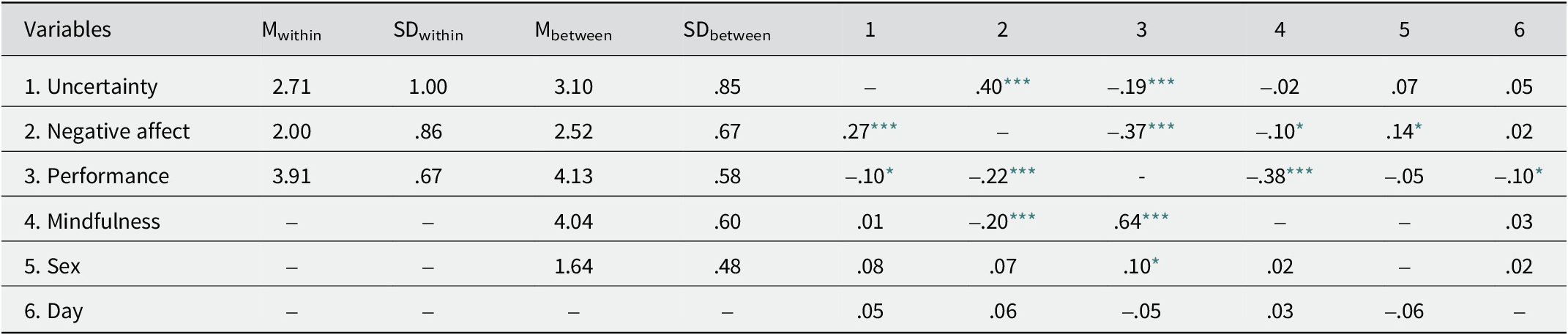
Table 1 shows the descriptive statistics and correlations between the variables, both at the within, and at the between-person level.
Means, Standard Deviations, and between-and within-Person Level Correlations (Study 1)

Note. Correlations below the diagonal are between-person level. Correlations above the diagonal are within-person level. N (observations) = 505; n (participants) = 101.
*** p < .001.
** p < .01.
* p < .05.
Hypotheses Testing
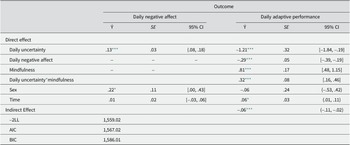
First, we tested the direct within-person effects of uncertainty on negative affect, and negative affect on adaptive performance, as well as the between-person moderation of mindfulness. The results showed a positive within-person relationship between uncertainty and negative affect, Ý = 0.13, 95% CI [0.08, 0.18], and a negative within-person relationship between negative affect and adaptive performance, Ý = –0.29, 95% CI [–0.39, –0.19]. Moreover, the results demonstrated that negative affect mediated the effect of uncertainty on adaptive performance, Ý = –0.06, 95% CI [–0.11, –0.02], supporting H 1.
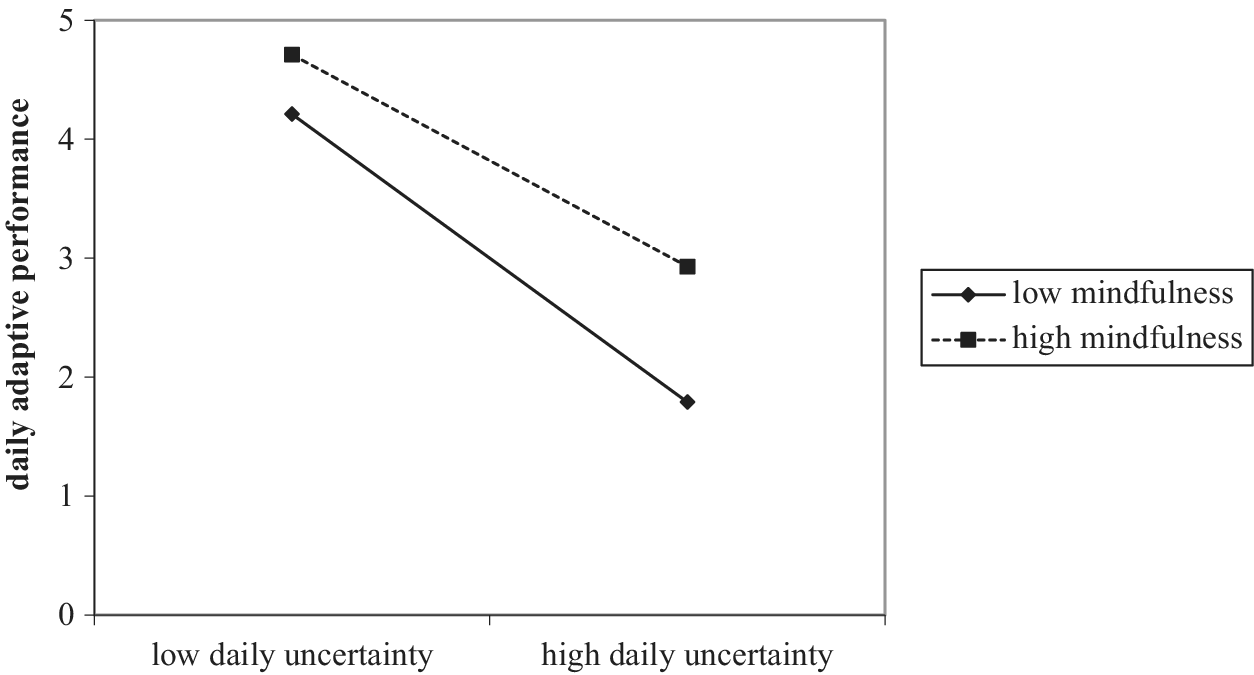
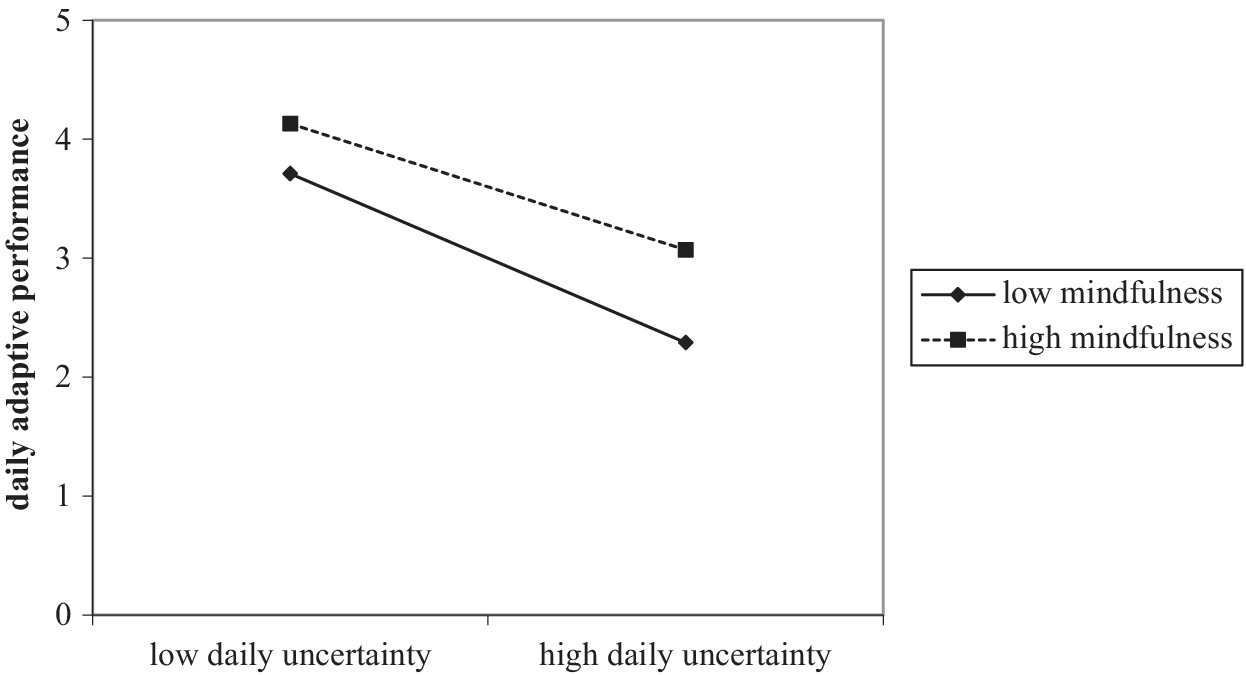
Furthermore, mindfulness significantly moderated the relationship between daily uncertainty and adaptive performance, Ý = 0.32, 95% CI [0.16, 0.46], lending support to H 2 (Table 2). Then, we conducted a simple slope test of this cross-level interaction. As shown in Figure 2, for higher levels of mindfulness, the relationship between daily uncertainty and adaptive performance was weaker (b = –0.89, p < .001) than for lower levels of mindfulness (b = –1.21, p < .001), supporting the buffering effect of mindfulness on this relationship.
Parameter Estimates for Multilevel Mediated Moderation Model (Study 1)

Note. N (observations) = 505; n (participants) = 101; CI = confidence interval; DNA = daily negative affect.
* p < .05.
** p < .01.
** *p < .001.
The Moderating Effect of Mindfulness on the Uncertainty-Adaptive Performance Pathway (Study 1).

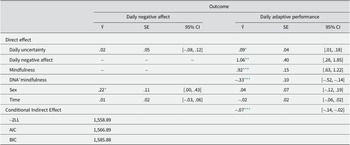
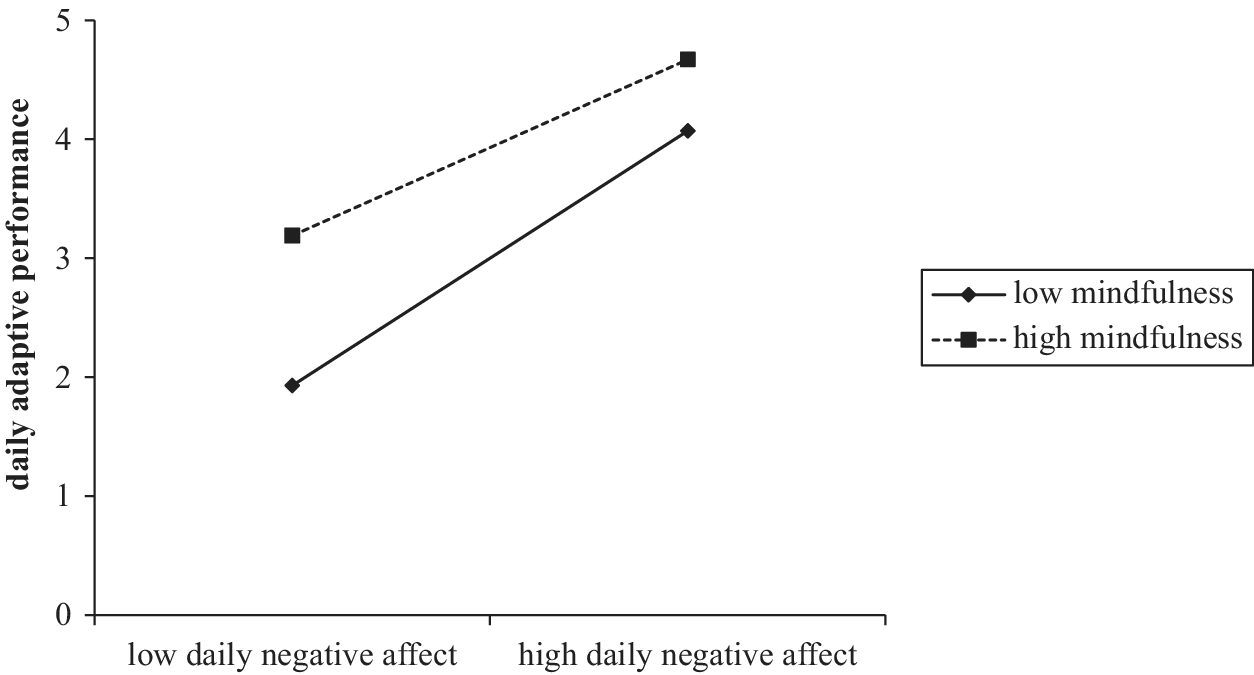
At last, H 3 predicted that negative affect would mediate the moderation effect of mindfulness. The results showed that the indirect effect for uncertainty→negative affect*mindfulness→adaptive performance was –0.07, 95% CI [–0.14, –0.02] (see Table 3). The simple slope (see Figure 3) analysis evidenced that, when daily negative affect increased, for mindful individuals (b = 0.74, p < .01), adaptive performance was significantly higher than for individuals with lower levels of mindfulness (b = 1.07, p < .001). Thus, the H 3 was supported.
Parameter Estimates for Multilevel Mediated Moderation Model (Study 1)

Note. N (observations) = 505; n (participants) = 101; CI = confidence interval; DNA = daily negative affect.
* p < .05.
** p < .01.
** *p < .001.
The Moderating Effect of Mindfulness on the Negative Affect-Adaptive Performance Pathway (Study 1).

Study 2–Off the Mandatory Confinement
Method
Participants and Procedure
We collected data in Portugal between April and May of 2021. Overall, 253 working adults participated in this study, from which 57% were female. The mean age was 36.50 years old (SD = 11.81), and the mean organizational tenure was 15.69 years (SD = 12.16). On average, participants reported working 37.84 hours per week (SD = 11.15). Most of the participants had a high school degree (47%) followed by graduates (33%), and at last by those who held the basic scholarity (20%). Participants were from different occupation sectors: Services (42%), education (18%), administrative (12%), security (11%), management (10%), and academic (7%) areas.
We followed the same procedure as we did in the first study. From the 280 emails sent, there were 253 valid responses, which mean a 90% response rate. The overall number of observations was 1,265 (an average of 5 observations per person).
Measures
We used the same instruments from Study 1. Multilevel reliability indices for daily uncertainty were moderate (αbetween = .48, ωbetween = .51; αwithin = .71, ωwithin = .71). The multilevel reliability tests for daily negative affect were good (αbetween = .88, ωbetween = .88; αwithin = .86, ωwithin = .86), and the same occurred for daily adaptive performance (αbetween = .78,
 $ \unicode{x03C9} $
between = .77; αwithin = .86,
 $ \unicode{x03C9} $
within = .85). We also found good reliability for mindfulness (α = .79, ω = .83).
Data Analyses
First, we calculated the analysis of variance components and we found significant within-person variance in uncertainty (ICC = 0.63), negative affect (ICC = 0.71), and adaptive performance (ICC = 0.61), lending support for the multilevel analysis. Then, we conducted multilevel analyses using Mlmed-Macro (Rockwood, Reference Rockwood2017) to test the hypotheses.
Results
Multilevel Confirmatory Factor Analysis
To test for common method bias, we ran a multilevel confirmatory factor analysis. The results showed that the three-factor model (daily uncertainty, daily negative affect, and daily adaptive performance) fitted the data well (at both within-and-between-person levels: RMSEA = .08, CFI = .85 TLI = .82, SRMRwithin = .06, SRMRbetween = .07). On the other hand, the single factor-model (at both within-and-between-person levels) showed an unacceptable fit to the data (RMSEA = .15, CFI = .70 TLI = .68, SRMRwithin = .14, SRMRbetween = .13).
Descriptive Statistics and Correlations
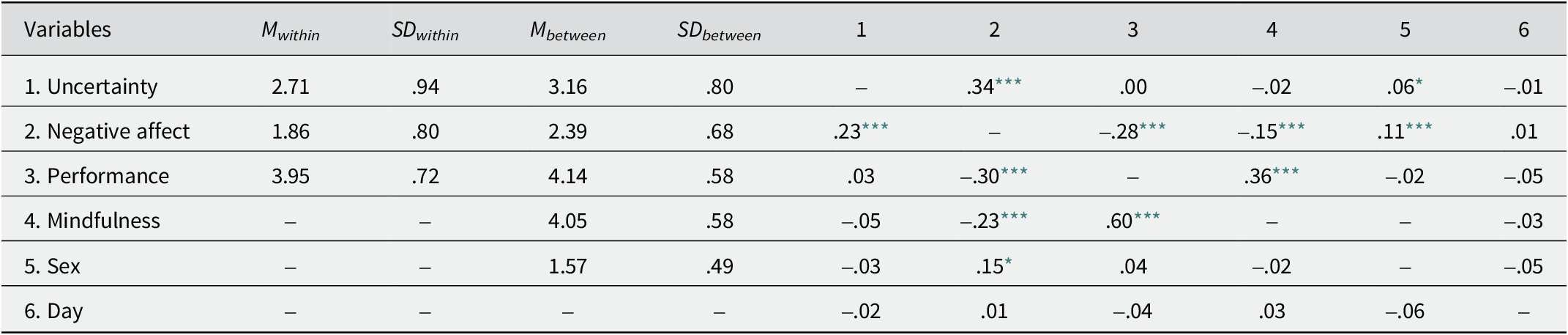
Table 4 shows the descriptive statistics and correlations between the variables, both at the within and at the between-person level.
Means, Standard Deviations, and between-and within-person Level Correlations (Study 2)

Note. Correlations below the diagonal are between-person level. Correlations above the diagonal are within-person level. N (observations) = 253; n (participants) = 1,265.
*** p < .001.
** p < .01.
* p < .05.
Hypotheses Testing
First, we tested the direct within-person effects of uncertainty on negative affect, and negative affect on adaptive performance, as well as the between-person moderation of mindfulness. The results showed a positive within-person relationship between uncertainty and negative affect, Ý = 0.15, 95% CI [.09, .21], and a negative within-person relationship between negative affect and adaptive performance, Ý = –0.14, 95% CI [–0.19, –0.08]. Additionally, the results showed that negative affect mediated the effect of uncertainty on adaptive performance, Ý = –0.60, 95% CI [–0.94, –0.25], supporting H 1.
Furthermore, mindfulness significantly moderated the relationship between daily uncertainty and adaptive performance, Ý = 0.15, 95% CI [0.06, 0.23], lending support to H 2 (as shown in Table 5). Then, we conducted a simple slope test of this cross-level interaction. Similar to Study 1, for higher levels of mindfulness, the relationship between daily uncertainty and adaptive performance was weaker (b = –0.53, p < .01) than for lower levels of mindfulness (b = –0.71, p < .01), supporting the buffering effect of mindfulness on this relationship (see Figure 4).
Parameter Estimates for Multilevel Mediated Moderation Model (Study 2)

Note. N (observations) = 253; n (participants) = 1,265; CI = confidence interval; DNA = daily negative affect.
* p < .05.
** p < .01.
** *p < .001.
The Moderating Effect of Mindfulness on the Uncertainty-Adaptive Performance Pathway (Study 2).

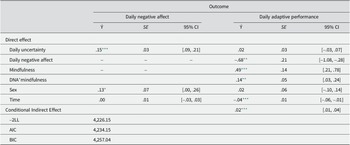
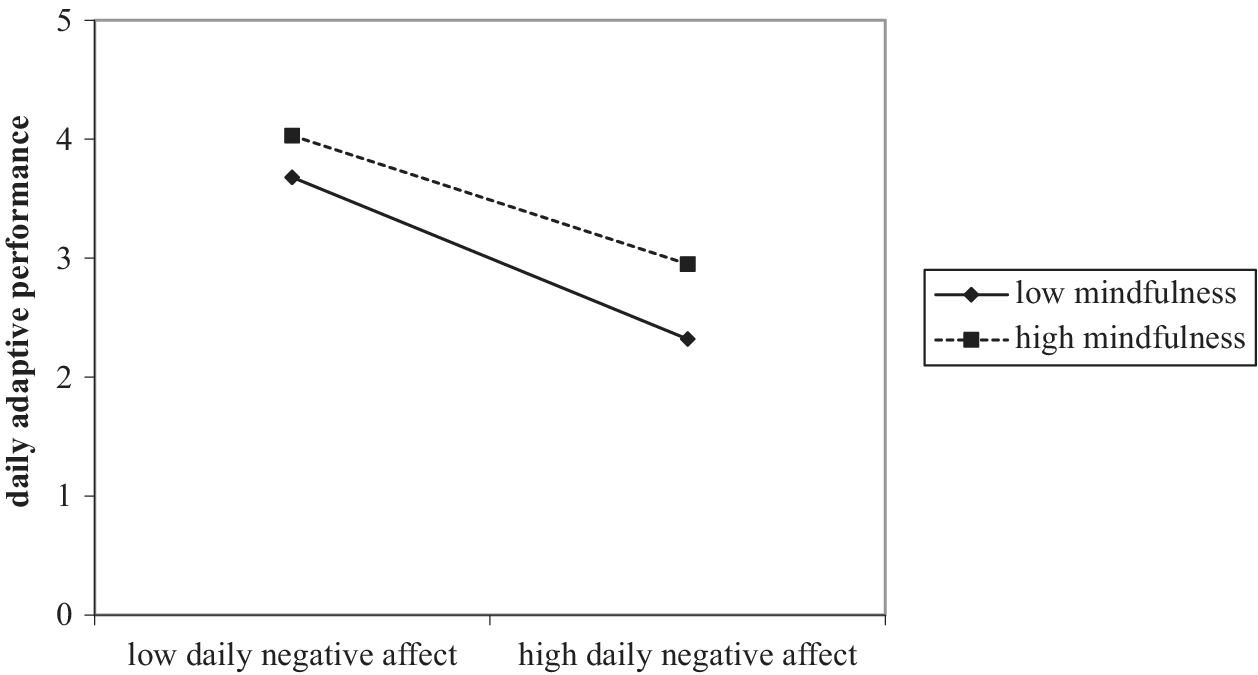
The results showed that the indirect effect for uncertainty→negative affect*mindfulness→adaptive performance was 0.02, 95% CI [0.01, 0.04] (see Table 6). The simple slope (see Figure 5) analysis evidenced that for higher levels of mindfulness, the relationship between daily negative affect and adaptive performance was weaker (b = –0.54, p < .01) than for lower levels of mindfulness (b = –0.68, p < .001), that is, when daily negative affect increased, adaptive performance significantly decreased for individuals with low levels of mindfulness. Thus, the H 3 was supported.
Parameter Estimates for Multilevel Mediated Moderation Model (Study 2)

Note. N (observations) = 1,265; n (participants) = 253; CI = confidence interval; DNA = daily negative affect.
* p < .05.
** p < .01.
** *p < .001.
The Moderating Effect of Mindfulness on the Negative Affect-Adaptive Performance Pathway (Study 2).

Overall Discussion
Uncertainty has significantly increased due to the crisis provoked by COVID–19. This study answers the questions of how and when perceived uncertainty impacts adaptive performance; it demonstrates that negative affect and mindfulness jointly form a mechanism linking uncertainty to adaptive performance.
Our results show that uncertainty is dynamic in nature, as it fluctuates throughout the days, and facilitates negative affect which subsequently harms individuals’ adaptive behaviors regarding performance, depending on their working settings. In addition, the negative effect of uncertainty on adaptive performance was buffered by mindfulness and the interaction between negative affect and mindfulness influences adaptive performance, as it attenuates the detrimental consequences of uncertainty on performance through negative affect.
Overall, our study offers relevant insights into how and when uncertainty negatively predicts adaptive performance and proposes a novel concept of work-related affective uncertainty.
Theoretical Implications
First, two daily-diary studies answer the question of how uncertainty influences adaptive performance at work. This study shows specific mediating (negative affect) and moderating factors (mindfulness) in the context of perceived uncertainty regarding behavioral reactions (adaptive performance); it shows that perceived uncertainty influences certain work-related behaviors –adaptive behaviors regarding performance– through the experience of negative affective reactions. That is, when individuals perceive uncertainty at work, they tend to feel negative affect (e.g., fear) which, in turn, will threaten their adaptive behaviors. Therefore, we suggest not only testable hypotheses but also demonstrate a temporal sequence of perceived uncertainty effects that determine the individual’s uncertainty tolerance. A recent diary study, conducted by Junça-Silva and Silva (Reference Junça-Silva and Silva2022) has indeed demonstrated the fleeting nature of uncertainty and its affective nature. Accordingly, the authors showed that uncertainty positively predicted negative affect that, in turn, influenced individuals’ mental health. Similarly, Bottesi et al. (Reference Bottesi, Tesini, Cerea and Ghisi2018) showed that uncertainty was positively associated with negative affect, which in turn increased individuals’ emotional distress. In a similar vein, Bakioğlu et al. (Reference Bakioğlu, Korkmaz and Ercan2021) evidenced that, in general, uncertainty provoked discomfort and anxiety. Uncertainty occurs when something unknown, unexpected, and unpredictable occurs in the life of an individual. When this happens, individuals appraise that event making them feel emotions, such as insecure or bad about it. Perceived uncertainty about job goals and outcomes is an appraisal dimension proposed by many appraisal theorists (see Moors et al., Reference Moors, Ellsworth, Scherer and Frijda2013). Thus, the appraised uncertainty of an event is likely to be related to emotional experiences. In this vein, “emotions are adaptive processes that reflect appraisals of features of the environment that are significant for the organism’s survival and well-being” (Anderson et al., Reference Anderson, Carleton, Diefenbach and Han2019, p. 4). Thus, based on these empirical findings, and theoretical assumptions, we may conclude that perceived uncertainty at work is an affective construct with behavioral consequences.
Second, mindfulness dampens the detrimental effects of daily uncertainty on daily adaptive performance, and it also interacts with negative affect to buffer its impact on adaptive performance, in uncertain conditions. Thus, mindfulness –a socio-cognitive resource characterized by a flexible mindset- allows individuals to actively construct novel categories (Pirson et al., Reference Pirson, Langer and Zilcha2018) that enable them to reevaluate uncertain events and engage in adequate behaviours when facing such events (Langer, Reference Langer2005). As such, mindful of individuals, even in the presence of highly perceived uncertainty, are able to better manage their reactions and, as such their adaptive performance is higher (when compared to mindless individuals). This might happen because mindful of individuals are able to focus on their goals despite the presence of uncertain working conditions. Langer (Reference Langer2005) argued that socio-cognitive mindfulness helps workers to seek what is new and innovative and to actively engage in its implementation. Therefore, it is likely that mindful individuals, when experiencing higher levels of uncertainty, accept it and manage it based on their own values; for instance, mindfulness may decrease the person’s struggle to change what is happening (Waterschoot et al., Reference Waterschoot, van der Kaap-Deeder, Morbée, Soenens and Vansteenkiste2021), and such personal resources can thus be employed in achieving objectives, rather than in avoiding or changing the context or internal experience (Götmann & Bechtoldt, Reference Götmann and Bechtoldt2021). Further, mindfulness may also imply a greater tolerance of uncertainty (Matta et al., Reference Matta, Rogova and Luna-Cortés2022) –the tendency to consider the possibility of a negative event occurring unacceptable, irrespective of the probability of occurrence (Carleton et al., Reference Carleton, Norton and Asmundson2007)– which may also explain why adaptive performance is higher for mindful employees (even when uncertainty increases). Recent studies have shown the diverse benefits of being mindful during the pandemic. For instance, mindfulness is related to several psychological benefits such as enhanced self-regulation (Brown & Ryan, Reference Brown and Ryan2003), improved coping with stressful periods (Sweeny & Howell, Reference Sweeny and Howell2017), and better emotional regulation with negative affective experiences (Junça-Silva et al., Reference Junça-Silva, Pombeira and Caetano2021). Plus, mindfulness helps people to identify positive aspects even in difficult situations as was the COVID–19 pandemic (Götmann & Bechtoldt, Reference Götmann and Bechtoldt2021), or to use self-regulation strategies to deal with mandatory confinements (Waterschoot et al., Reference Waterschoot, van der Kaap-Deeder, Morbée, Soenens and Vansteenkiste2021). Hence, it is not surprising that higher levels of mindfulness buffer the detrimental effects of perceived uncertainty on adaptive performance.
Moreover, mindfulness also interacts with negative affect in the mediating path from uncertainty to adaptive performance via negative affect. However, the two studies present a slightly different pattern of results, suggesting that this relationship is contextually dependent. In Study 1, the findings evidence a positive cross-level interaction between negative affect and mindfulness to adaptive performance, whereas in Study 2, we find a negative interaction term. That is, while in Study 1 adaptive performance increases, when mindfulness interacts with negative affect, even in the presence of high perceived uncertainty, in the second study, adaptive performance decreases. We must consider the two samples to support these results; that is, in Study 1, participants were teleworking, were completely confined, and most of them held an undergraduate academic degree, while in Study 2 participants were no longer teleworking, nor were confined, and had lower education levels. So, the working settings are different (working from home versus face-to-face work), as well as the social context (mandatory confinement versus non-mandatory confinement) which might account for these findings. By working from home, individuals have the advantages of a time economy from non-commuting (Grant et al., Reference Grant, Wallace, Spurgeon, Tramontano and Charalampous2019). Moreover, working from home is recognized by having the advantage of increased job autonomy and time flexibility (Grant et al., Reference Grant, Wallace, Spurgeon, Tramontano and Charalampous2019) which may be a resource that helps the individual to better manage his/her time, influencing adaptive performance. Hence, in these working settings, teleworkers can easily turn around and have resources that allow them to better manage their reaction to uncertainty, and as such, negative affect, when interacting with higher levels of mindfulness, leads to improved performance. Further, while working from home, participants benefit from working in their “safe place”, which may also explain the positive interaction between negative affect and mindfulness regarding their adaptive performance (Shipman et al., Reference Shipman, Burrell and Huff Mac Pherson2021). On the opposite, participants from Study 2, who were working at the office (and were less educated), appear to have fewer resources to manage the perceived uncertainty and their negative affective reactions which lead to them decreasing their adaptive performance. Face-to-face work may drain even more resources; for example, employees have to go to work and waste time in traffic jams (Junça Silva et al., Reference Junça Silva, Neves and Caetano2022), or have to deal face-to-face with customers, coworkers, and supervisors which may trigger a resource loss process (Chong et al., Reference Chong, Huang and Chang2020). All in all, face-to-face work may impair employees’ ability to cope with negative affect, that in turn, leads to decreased levels of adaptive performance (even for mindful employees).
Despite the differences, in both studies, adaptive performance is higher for those who score higher in mindfulness. Hence, by interacting with mindfulness, negative affective reactions to perceived uncertainty appear to improve adaptive performance, maybe as a form to reduce uncertainty. Uncertainty may be less for those who tend to actively search for information and construct novel categories (Brashers, Reference Brashers2001; Pirson et al., Reference Pirson, Langer and Zilcha2018) which is thereby compatible with the concept of socio-cognitive mindfulness. Indeed, as Griffin and Grote (Reference Griffin and Grote2020) noted, individuals are heavily and primarily motivated to reduce uncertainty. Hence, by perceiving uncertainty, mindful individuals (through their ability to reevaluate more positively a variety of negative situations and experiences; Langer, Reference Langer, le, Ngnoumen and Langer2014) may direct their attention to the reevaluation of uncertainty and engage in adaptive behaviors.
Thus, the findings highlight the importance of mindfulness in the work setting as it may provide conditions and tools for individuals better manage their reactions to what happens, in this case, to uncertain working conditions. According to the socio-cognitive mindfulness model (Langer, Reference Langer, le, Ngnoumen and Langer2014), mindful individuals appear to be more cognitively flexible in interpreting uncertainty. Thus, in light of this evidence, we may say that mindfulness not only helps individuals to reevaluate more positively uncertain events but also lend them to actively engage in adaptive behaviors. Therefore, mindfulness brings light to the unknown as it fills in the blank spaces of uncertainty attenuating the fear and other negative affective impacts and, at the same time, improving adaptive behaviors.
This research allows us to conclude that daily uncertainty, daily negative affect and mindfulness are important variables for daily adaptive performance. This study also emphasizes that the detrimental effects of uncertainty are buffered by individuals’ mindfulness. However, one must also consider the period in which each study was conducted – that is, during the pandemic COVID–19 crisis – even though at different pandemic stages. Hence, the recommendation strategies must be followed and implemented with some caution.
The results of this study may be relevant and useful for managers, who can find here evidence that mindfulness might be a resource to manage uncertainty. First, it would be useful to design and implement mindfulness programs to develop individuals, for instance, through training or coaching sessions. Second, it would also be relevant to create times and spaces for the practice of mindfulness at work. Third, managers may consider promoting conditions for workers to seek and implement novelty behaviors in their tasks. Stimulating a resource like mindfulness may lead to adaptive behaviors in uncertain work situations, which results in better performances. In addition, it would be interesting, from a practical point of view, to create “mindful days” in which individuals could share their ideas freely. Plus, a reward to “sharing individuals – those who share mindful of stories” could be thought of as a practical manner to improve adaptive work-related behaviors.
In a VUCA (volatile, uncertain, complex, and ambiguous) (Bennett & Lemoine, Reference Bennett and Lemoine2014) world, characterized by a significant increase in uncertainty, organizations face a relevant organizational risk. Therefore, managers may consider some strategies. First, given the increase in uncertainty events, it would be relevant to increase the information sharing among workers about organizational processes, dynamics, and changes to minimize the fear of the unknown and other negative effects triggered by uncertainty. Second, resorting to teleworking may be a strategy to deliver positive outcomes. Moreover, given the increased numbers of workers working remotely, some of them, for the first time, and thus experiencing anxiety due to a new experience, managers would increase their support to workers, and manage organizational conditions to improve perceived organizational support.
This research has some limitations. First, we used self-reported measures, which might lead to common method variance (Podsakoff, Reference Podsakoff2017). To overcome this, future studies would use other sources of information (e.g., colleagues, supervisors) regarding daily adaptive performance. Second, we only focused on daily negative affect; however positive affect may also be relevant for daily adaptive performance (Junça-Silva et al., Reference Junça-Silva, Pombeira and Caetano2021). Third, we only measured mindfulness once, because we were interested in the cross-level interaction. However, analyzing the within-person dynamics of mindfulness should be relevant to explore in future studies (Pirson et al., Reference Pirson, Langer and Zilcha2018). At last, both studies are based on data collected from different occupational sectors which may influence the generalizability of these results. Hence, apart from generalizing the findings with some caution, future studies could test the proposed model in specific occupational sectors to understand whether the findings are similar to the ones obtained in this research.
Future studies should test the model, with other moderators (e.g., emotional regulation strategies). Second, future research should test the model with other criterion variables, for instance, health and happiness. To do this, future studies could use objective measures of health (e.g., heart rate or blood pressure). Lastly, the different findings between Studies 1 and 2, particularly the interaction between mindfulness and negative affect regarding adaptive performance can also be justified by the different periods of data collection and the different circumstances (mandatory versus out of the mandatory confinement); hence, future studies could retest the model to better understand the pattern of the results.
Overall, in the analyzed sample, the data shows that uncertainty increases negative affect which, in turn, minimizes adaptive performance, on a daily basis, in particular for those working at the office. This relation appears to be different for teleworkers, as those high on mindfulness engage in more adaptive performance when negative affect is high. Thus, mindfulness –as a socio-cognitive resource- when interacting with uncertainty and with negative affect buffers the negative impact of perceived uncertainty on adaptive performance. In light of this evidence, the findings support that uncertainty interacts with mindfulness and this one ‘brings light’ to the unknown as it fills in its blank spaces attenuating the fear and other negative affective impacts and improving adaptive behaviors.
Acknowledgements
N/A.
Funding statement
This work was granted by Fundação para a Ciência e Tecnologia, Grant ID UIDB/00315/2020.
Competing interest
None.
Data sharing
Data will be made available upon reasonable request to the first author.
Authorship credit
Ana Junça-Silva: Conceptualization, software, data collection and analysis; writing; António Caetano: Supervision, revision.