INTRODUCTION
East Africa represents a global hot spot for the diversity of ixodid ticks (Cumming, Reference Cumming2000). These ticks can impose a heavy burden on animal health both because they are ectoparasites (Van Der Merwe et al. Reference Van Der Merwe, Smit, Durand, Krüger and Michael2005) and because many of them serve as vectors for protozoal, bacterial and viral pathogens (Bock et al. Reference Bock, Jackson, De Vos and Jorgensen2004; Parola et al. Reference Parola, Paddock and Raoult2005; Fyumagwa et al. Reference Fyumagwa, Simmler, Meli, Hoare, Hofmann-Lehmann and Lutz2011). The role of ticks and tick-borne pathogens in the ecology of African savannas remains poorly understood, though it is likely that there are significant impacts on wildlife health, including for species of conservation concern (Nijhof et al. Reference Nijhof, Penzhorn, Lynen, Mollel, Morkel, Bekker and Jongejan2003; Miller et al. Reference Miller, Farnsworth and Malmberg2013; Gortazar et al. Reference Gortazar, Diez-Delgado, Barasona, Vicente, De La Fuente and Boadella2014). Tick-borne diseases negatively affect the production of domestic livestock in the region, including cattle, sheep, goats and camels, and it has been proposed that the effects of ticks and tick-borne diseases on livestock imposes the greatest barrier to economic development in all of East Africa (Young et al. Reference Young, Groocock and Kariuki1988; Perry and Young, Reference Perry and Young1995; Minjauw and McLeod, Reference Minjauw and McLeod2003). As a result of the heavy production costs due to ticks and tick-borne diseases, ranchers in the region frequently apply synthetic acaricides directly to their livestock to minimize losses (Young et al. Reference Young, Groocock and Kariuki1988).
Because ticks affect the well-being of humans, livestock and wildlife, predicting where and when ticks and tick-borne diseases will be most prevalent is a critical problem. One important question is whether biotic (e.g. blood meal hosts) or abiotic (e.g. precipitation) factors (Randolph, Reference Randolph2004) are most important in determining the distribution and abundance of ticks. Host distributions have been shown generally not to limit the species ranges of African ticks (Cumming, Reference Cumming1999), which are better predicted by climate variables including rainfall and temperature (Cumming, Reference Cumming2002). When it comes to the phenology and abundance of tick life stages, climate factors are often assumed to predominate in driving seasonal patterns, yet biotic drivers that alter the abundance and distribution of tick hosts also can strongly affect tick abundance (Keesing et al. Reference Keesing, Allan, Young and Ostfeld2013). Efforts to understand climate factors, which influence phenology of ticks in Africa, have particularly focused on Rhipicephalus appendiculatus, a vector of several economically important pathogens, including Theileria parva, which is the causative agent of East Coast Fever (ECF) in cattle (Randolph, Reference Randolph1993, Reference Randolph1994, Reference Randolph1997). However, few studies have addressed the impacts of abiotic drivers on tick abundance for other species of economically important ticks in Africa, and fewer still incorporate both biotic and abiotic factors and their potential interactions.
In East Africa, treatment of cattle with acaricides that kill attached ticks recently has been shown to greatly reduce the overall abundance of ticks in the environment (Keesing et al. Reference Keesing, Allan, Young and Ostfeld2013; Allan et al. Reference Allan, Tallis, Chaplin-Kramer, Huckett, Kowal, Musengezi, Okanga, Ostfeld, Schieltz, Warui, Wood and Keesing2017), presenting a scenario in which the host functions as an ecological trap for ticks (Keesing et al. Reference Keesing, Brunner, Duerr, Killilea, Logiudice, Schmidt, Vuong and Ostfeld2009). Interestingly, acaricide-treated cattle were shown to reduce only the abundance of nymph and adult life-stage ticks, but not larvae, presumably because abundance of larvae is influenced more by the abundance of wildlife hosts, which allow adult female ticks to successfully mate and feed to repletion (Keesing et al. Reference Keesing, Allan, Young and Ostfeld2013). Previous studies of climate impacts on tick abundance (not considering host abundance) suggest that the larval life stage is most vulnerable to desiccation and therefore most strongly affected by climate variables, including night-time minimum temperature (Randolph, Reference Randolph1993) and moisture availability (Randolph, Reference Randolph1994). Thus, there is considerable potential for interactions between biotic and abiotic variables in determining the abundance and timing of activity for different tick life stages.
We used an 84-month record of tick abundance in an exclosure experiment in central Kenya to assess the effects of both abiotic and biotic factors on the abundance of two common species, Rhipicephalus pulchellus and Rhipicephalus praetextatus (Keesing et al. Reference Keesing, Allan, Young and Ostfeld2013). This research was conducted within the Kenya Long-Term Exclusion Experiment (KLEE), which excludes different combinations of large mammals from large, replicated areas. We compared the effects of monthly precipitation, with and without time lags, to the effects of the availability of livestock vs wildlife hosts on the abundances of all life stages of ticks in this habitat.
METHODS
Study site
This study was conducted from 1999 to 2006 inside the KLEE, which is located at the Mpala Research Centre in Laikipia County, Kenya (36°52′E, 0°17′N). KLEE is located in Acacia woodland underlain by clay ‘black cotton’ soils. The dominant tree is Acacia drepanolobium, which comprises ~97% of the woody vegetation. Other woody plants include Balanites aegyptiaca, Apis mellifera, and Cadaba farinosa. Five grasses – Themeda triandra, Brachiaria lachnantha, Pennisetum mezianum, Pennisetum stramineum and Lintonia nutans – account for 80–90% of the herbaceous plant community. Annual rainfall averages 638 mm (±79 standard error of the mean, 1998–2006) and is weakly trimodal, with heavy rains in May–June, and two periods of typically lighter rainfall in August and October–November.
The study area has a diverse large mammal fauna including giraffes (Giraffa reticulata), savanna elephants (Loxodonta africana), buffaloes (Syncerus caffer), lions (Panthera leo), two species of zebras (Equus burchelli, Equus grevyi) and spotted hyenas (Hyena hyena). Domestic cattle (Bos taurus) in the area are accompanied by human herders during daylight hours and kept in corrals at night. The dominant small mammal is the pouched mouse (Saccostomus mearnsi). Rhipicephalus pulchellus and R. praetextatus, two of the most common tick species in this region, are three-host ticks which parasitize a diversity of wild and domestic host species, commonly infesting large herbivores (Walker et al. Reference Walker, Keirans and Horak2005). They are medically and economically important as vectors of the pathogens that cause several tick-borne illnesses, including Nairobi sheep disease virus and Rickettsia conori, which have been associated with both tick species, as well as Babesia equi, Crimean-Congo haemorrhagic fever virus, Dugbe virus, Theileria parva, and T. taurotragi associated with R. pulchellus (Walker et al. Reference Walker, Keirans and Horak2005).
Study design
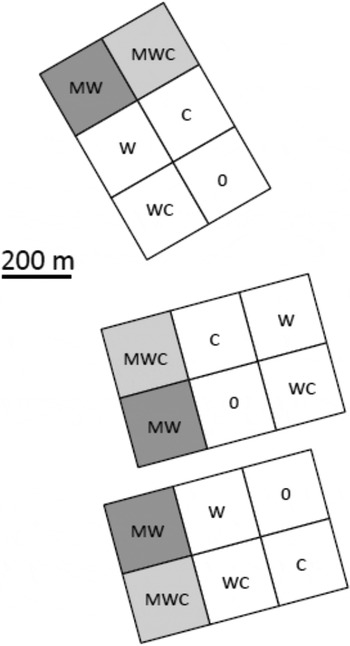
The KLEE experiment consists of three blocks of six treatments each. The treatments cross two levels of cattle abundance (presence, absence) with three levels of native large mammal (>15 kg) abundance (no large herbivore access, all large herbivore access, all large herbivore access except giraffes and elephants or ‘megaherbivores’; Fig. 1). Each treatment area is 400 m × 400 m, or 4 ha, so that each of the three blocks is 24 ha and the total area under study is 72 ha. The wildlife treatments are established using different types of barriers. Treatment plots which exclude all large herbivores do so via a 2·4 m high fence with 11 strands of wire alternately electrified at 5000 volts. Treatment plots which exclude only megaherbivores do so via a live wire 2 m off the ground. Every 50 cm along this live wire, there is a single dangling wire 50 cm long. In addition, a ground wire runs along the soil surface. Control plots which allow access by all large herbivores are unfenced.
Diagram of the treatments in the Kenya Long-Term Exclusion Experiment (KLEE). Letters indicate the animals allowed inside a particular plot (M, megaherbivores; W, other large mammals; C, cattle; 0, no large mammals). Data from plots allowing all wildlife (MW, dark grey) and all wildlife + cattle (MWC, light grey) were used for analysing effects of precipitation and cattle on tick abundance.

Cattle movements are regulated by herders, who allow the cattle to graze on the cattle treatment plots 4–8 times per year, a grazing intensity comparable to that of livestock on the surrounding property [see Young et al. (Reference Young, Palmer and Gadd2005) for details]. Cattle on the Mpala Ranch are treated usually weekly with an acaricide, amitraz, which kills attached ticks through a combination of mechanisms (M. Littlewood, personal communication). Resistance to amitraz appears to be generally infrequent and occurs most commonly in ticks adapted specifically to domestic cattle (George et al. Reference George, Pound and Davey2004).
As described above, access by certain groups of large mammals to the KLEE plots is controlled by fencing or herding, but wildlife, including megaherbivores, move freely on and off the plots to which they have access. Wildlife might, for example, avoid plots to which cattle have access. Based on dung surveys, most wildlife species spend more time on plots to which cattle do not have access, but neither megaherbivore species shows such a response (Kimuyu et al. Reference Kimuyu, Veblen, Riginos, Chira, Githaiga and Young2017).
Data collection
Each month between October 1999 and June 2006, we collected ticks in all 18 treatment plots. In 9 of these 81 months, surveys were not completed because roads to the KLEE site were impassable after heavy rainfall. During each monthly survey, ticks were collected by two observers wearing light-coloured clothing and walking one behind the other along the 4 × 100 m perimeter of the inner hectare in each treatment plot (Schulze et al. Reference Schulze, Jordan and Hung1997; Fig. 1). Observers stopped every 50 m along this square transect to remove any ticks found on their clothing and preserve all ticks collected in 70% ethanol. Tick collection was limited to 9–11 AM and 2–4 PM, and occurred only when vegetation was dry. Ticks were examined under a dissecting microscope and identified by life stage (larva, nymph, adult); larvae and nymphs were identified to genus while adults were identified to species. Rainfall data were collected daily at the headquarters of the Mpala Research Centre, which is ~3·5 km from the centre of the KLEE study area.
Data analysis
Because we have previously analysed the effect of the six KLEE treatments on tick abundance (Keesing et al. Reference Keesing, Allan, Young and Ostfeld2013), we focused analyses here on the effects of rainfall on the plots with access by all wildlife, including megaherbivores (MW plots in Fig. 1), and for some analyses, those plots with all wildlife and cattle (MWC plots in Fig. 1). For each of the three replicates of each treatment, we calculated the mean number of ticks during each month, yielding 72 values for each tick variable in a treatment type, one for each month.
All statistical analyses were done using R version 3.3.3 (http://www.r-project.org). We transformed data to meet assumptions of tests. To determine whether our tick variables were temporally autocorrelated, we used the gls function in the nlme package in R, and then compared the fit of models that did or did not incorporate temporal autocorrelation using the model.sel function in package MuMIn. We also tested for temporal autocorrelation in monthly rainfall data. When temporal autocorrelation was not included in the best-supported models, we assumed that sequential data could reasonably be considered temporally independent.
Our goal was to evaluate the strength of evidence for effects of a series of precipitation variables on temporal variation in the abundance of ticks. We focused our statistical analyses on R. pulchellus, as this species represented the majority of our samples (e.g. 93% of adults). For these analyses, we considered only those plots accessed by wildlife and not cattle (MW plots). For each of the three response variables (abundance of larvae, nymphs and adult R. pulchellus), we compared the strength of evidence for a series of alternative, competing regression models using Akaike's Information Criterion corrected for small sample size (AICcorr). We first compared evidence for the precipitation variables by comparing the AICcorr of a linear regression model containing the monthly rainfall for each of the prior 6 months to the AICcorr value of an intercept-only (i.e. means) model. We then tested a series of increasingly less complex models by removing independent variables for which there was no evidence (as measured by AIC) of an effect on the dependent variable. We also compared the AICcorr of a model containing only the rainfall in the sampling month. We consider rainfall in the sampling month to indicate effects of rainfall on tick questing behaviour, whereas rainfall in prior months indicated effects of rainfall on tick demography. For larvae, we also considered a model that included adult abundance 4 months prior to larval sampling, based on the estimated transition time from adult females to questing larvae from Randolph (Reference Randolph1994), and a model that included the interaction between that time lag and the rainfall in the current month.
Tick eggs are laid in clusters of many hundreds, from which larvae emerge and begin to seek hosts, often forming large aggregations on a single stalk of grass. Thus, the abundance of larvae in a sample was highly dependent on whether one of these clusters was directly sampled. Because this resulted in high variability in larval numbers, we conducted an additional analysis of larvae. We categorized months as those in which any larvae were collected and those in which none were. We then conducted a series of logistic regressions, using the same precipitation variables, to test how precipitation affected the probability of collecting any larval ticks during a sampling session.
After determining the best-supported model for the effect of rainfall on the abundance of ticks at each life stage, we used two-factor analysis of variance to test whether the presence of cattle interacted with rainfall to affect tick abundance, using the rainfall measure from the best-supported model. For these analyses, we used the mean abundance of ticks on plots with wildlife, with and without cattle (MWC plots and MW plots, respectively) for each month.
RESULTS
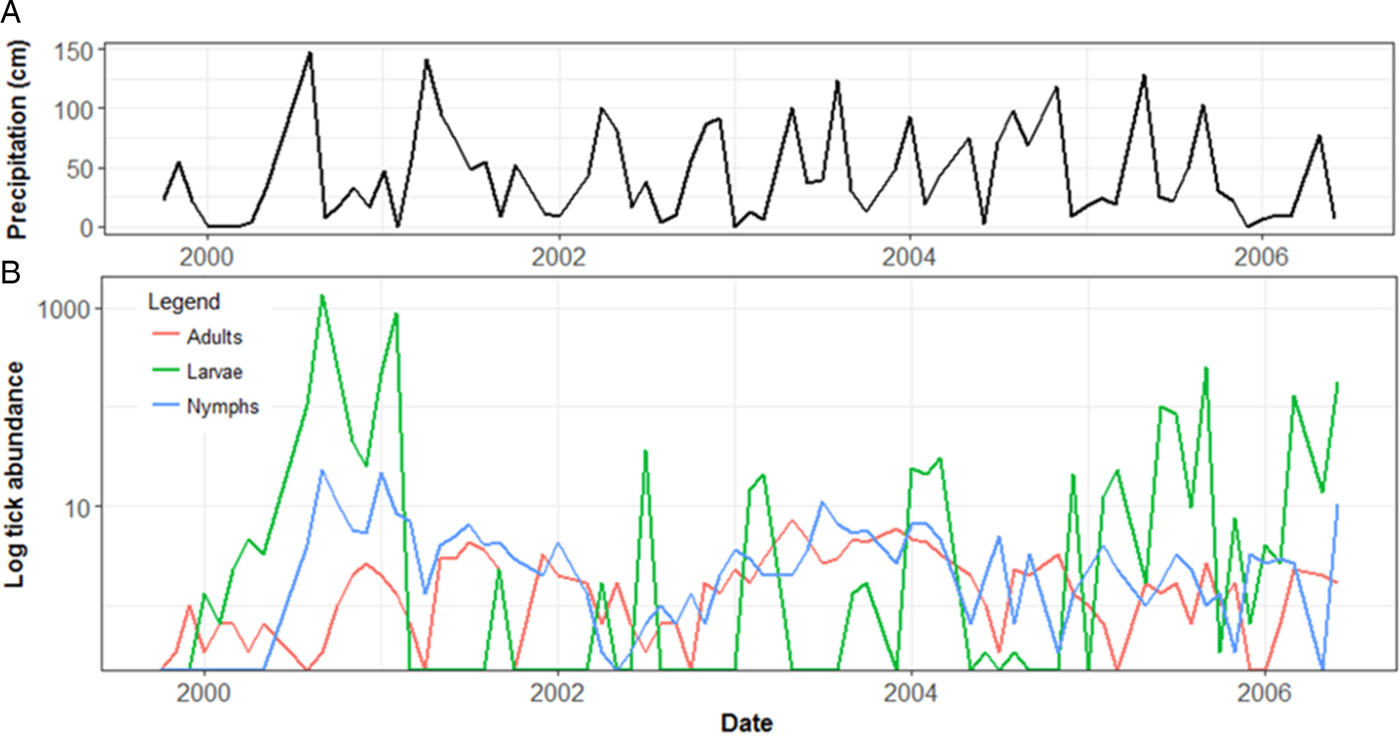
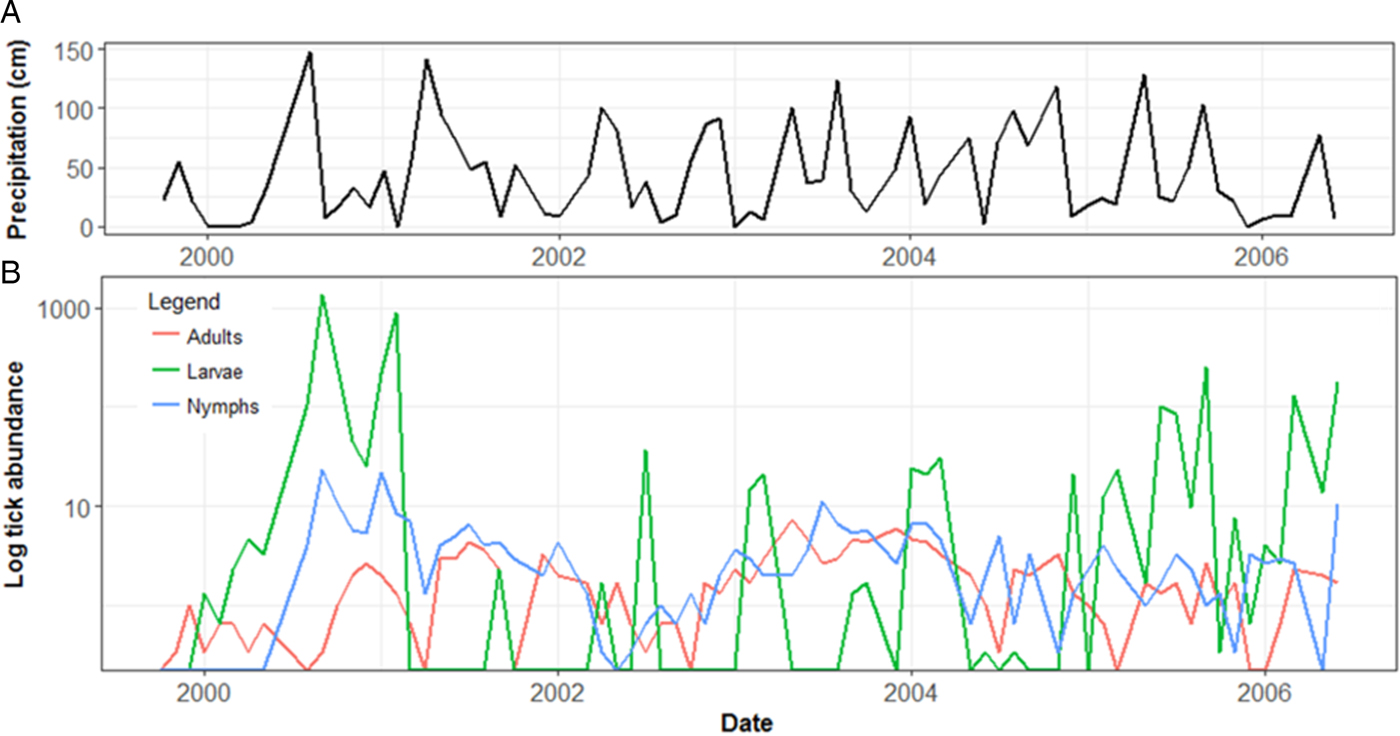
In 72 months of surveys spanning 1999–2006, we sampled over 500 km of savanna transect, collecting over 40 000 ticks. Annual rainfall during this period varied from a low of 344 mm in 2000 to a high of 839 mm in 2004 (Fig. 2A). The most abundant tick species in our surveys was R. pulchellus, which accounted for 93% of adult ticks. Larval and nymphal ticks both reached their greatest abundance during the survey in September 2000, with a mean of 8 larvae m−1 of transect and one nymph approximately every 6 m (Fig. 2B). Models that did not include temporal autocorrelation were better supported for all three life stages, and for precipitation, than did those incorporating autocorrelation.
Time series of total monthly precipitation (A) and abundance of each tick life stage (B) from October 1999 through June 2006. Tick abundance is the mean of the three replicates of the wildlife-only plots (MW) in the Kenya Long-Term Exclusion Experiment (see Fig. 1). The y-axis in part b is on a log scale.
Tick abundance
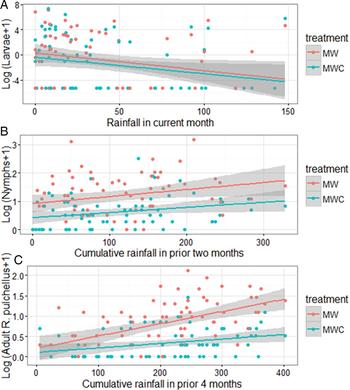
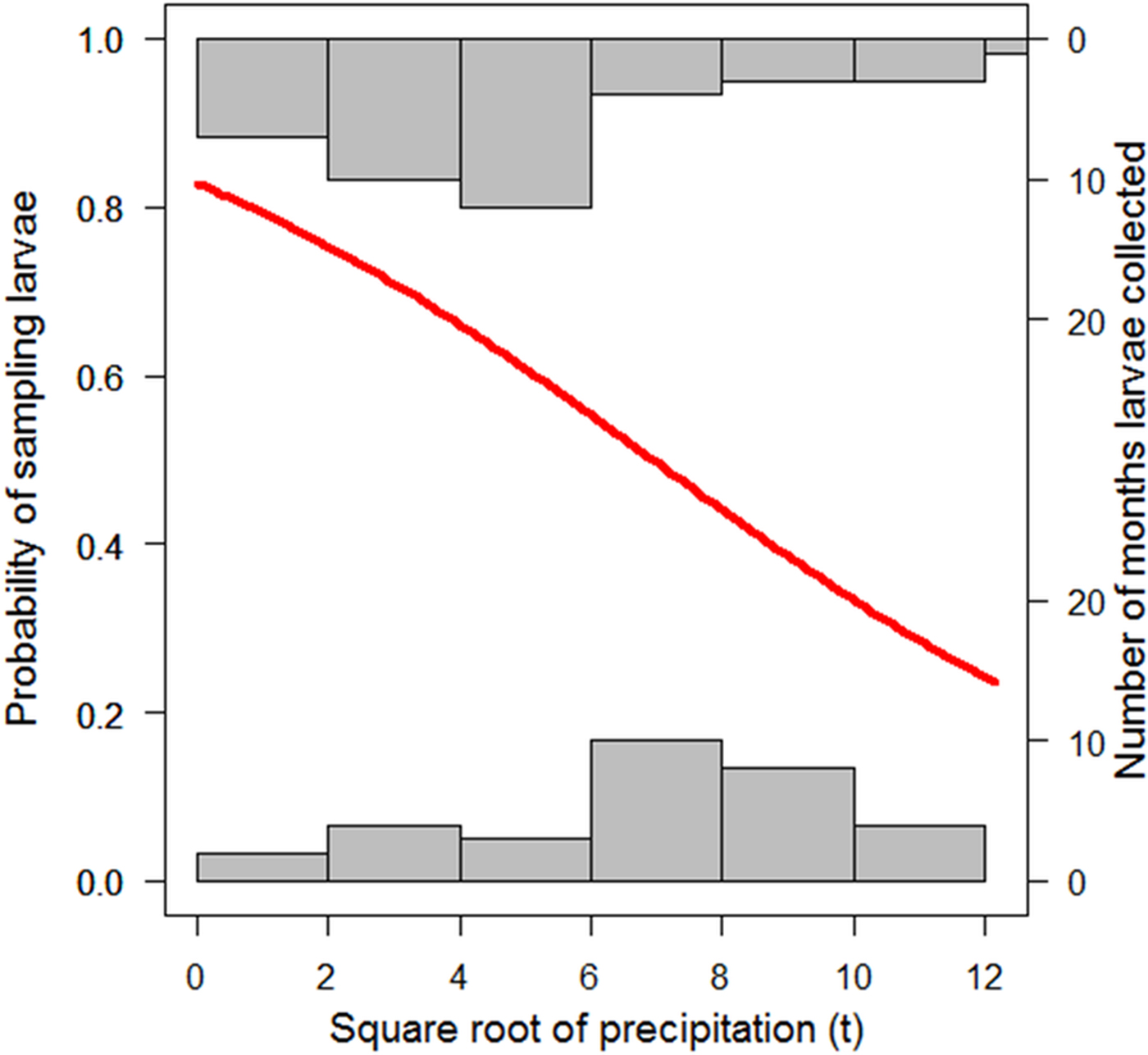
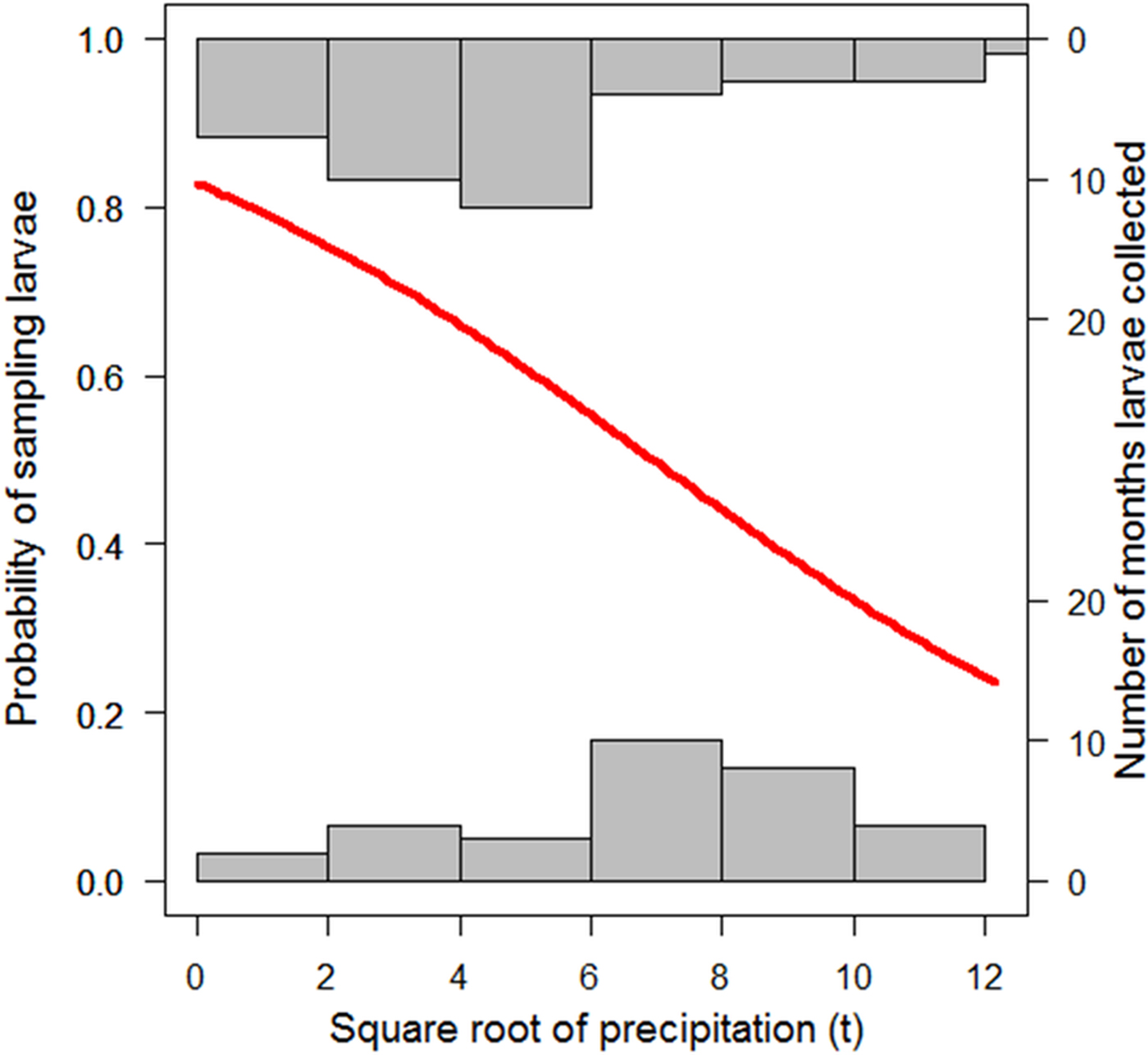
For larval abundance, the strongest model of those we tested incorporated the interaction between the total amount of rainfall in the sampling month (PPT t ) and the log of the abundance of adult ticks 4 months earlier [Log(Adults t−4 + 1)], which performed somewhat better than either of these factors separately (Table 1). The effect of rainfall in the current month on larvae was negative and weak in magnitude (Table 1; Fig. 3A), while the effect of the prior abundance of adult ticks was positive. A model incorporating only the abundance of adult ticks 4 months earlier was selected second of those we tested (Table 1). None of the other models were as well supported in explaining larval abundance; for these variables, the AICcorr values were higher than those of the means model. For the presence vs absence of larvae during sampling months, the strongest logistic regression model of those tested incorporated the total amount of rainfall in the current month (Table 2; Fig. 4), with larvae more likely to be collected in months with lower rainfall. Two models incorporating rainfall in the prior month had some support. The model incorporating an interaction between the sampling month (PPT t ) and the prior month (PPT t−1) had slightly more support than a model with just the prior month.
Rainfall vs log10 of abundance of (A) larval ticks, (B) nymphal ticks and (C) adult Rhipicephalus pulchellus ticks in plots with only wildlife (MW) vs plots with wildlife and cattle (MWC).

Square root of total precipitation in the sampling month vs the probability of sampling larvae (red line) based on logistic regression, and the count of months during which larvae were collected (grey bars). The probability of sampling larvae was higher in months with lower rainfall.
Model comparison statistics for independent variables potentially influencing the abundance of larvae

‘Means model’ is the model based only on the intercept of the regression. The model with the most support (lowest AICcorr value) is in bold. Subscripts refer to the month in which the independent variable was estimated, with year t being the month in which the dependent variable was estimated.
Model comparison statistics for independent variables potentially influencing the presence vs absence of larvae during a sampling month

‘Means model’ is the model based only on the intercept of the regression. The model with the most support (lowest AICcorr value) is in bold. Subscripts refer to the month in which the independent variable was estimated, with year t being the month in which the dependent variable was estimated.
For nymphal abundance, no single model emerged with strong support nor did any model explain much of the variance in nymphal abundance (Table 3; Fig. 3B). The two best-supported models included the rainfall from prior months, with the best model incorporating 2 prior months and the next best incorporating 4 prior months.
Model comparison statistics for independent variables potentially influencing the abundance of nymphs during a sampling month

‘Means model’ is the model based only on the intercept of the regression. The model with the most support (lowest AICcorr value) is in bold. Subscripts refer to the month in which the independent variable was estimated, with year t being the month in which the dependent variable was estimated.
The best-supported model for predicting the abundance of adult R. pulchellus incorporated rainfall from the 4 prior months (Table 4; Fig. 3C). Adult R. pulchellus were more abundant with higher cumulative rainfall; the best model explained 33% of the variance in their abundance.
Model comparison statistics for independent variables potentially influencing the abundance of adult Rhipicephalus pulchellus during a sampling month

‘Means model’ is the model based only on the intercept of the regression. The model with the most support (lowest AICcorr value) is in bold. Subscripts refer to the month in which the independent variable was estimated, with year t being the month in which the dependent variable was estimated.
Interaction of cattle and rainfall
Using the best-supported models linking rainfall to abundance of ticks, we found that for tick abundance, the interaction between precipitation and the presence of cattle varied depending on tick life stage. For larval ticks, whose abundance in our samples was negatively affected by the amount of rainfall in the sampling month, the presence of cattle had no significant effect on their abundance, nor was there a significant interaction between rainfall and cattle presence (Table 5; Fig. 3A). In contrast, while cumulative rainfall in the prior 2 months increased the abundance of nymphal ticks, the presence of cattle significantly reduced their abundance. There was no significant interaction between the presence of cattle and cumulative rainfall in the prior 2 months (Table 6; Fig. 3B). For adult R. pulchellus, the presence of cattle significantly decreased the abundance of ticks. This effect was essentially undetectable in the driest months, but increased strongly with increasing rainfall, resulting in a significant interaction (Fig. 3C; Table 7).
Analysis of variance table for test of the hypothesis that the effect of rainfall in the sampling month (PPT t ) on larval tick abundance is dependent on whether or not cattle are present (treatment)

There is no statistically significant effect of this cattle presence or its interaction with rainfall.
Analysis of variance table for test of the hypothesis that the effect of cumulative rainfall in the past 2 months [PPT(t−1)+(t−2)] on nymphal tick abundance is dependent on whether or not cattle are present (treatment)

There is no statistically significant effect of this interaction.
Analysis of variance table for test of the hypothesis that the effect of cumulative rainfall in the past 4 months [PPT(t−1)+(t−2)+(t−3)+(t−4)] on adult Rhipicephalus pulchellus abundance is dependent on whether or not cattle are present (treatment)

There is a statistically significant effect of this interaction.
DISCUSSION
Over 7 years of surveys, we found that biotic and abiotic factors affected each tick life stage differently, and even in opposite directions. Larvae were less likely to be collected when rainfall in the month of collection was high, but the presence of cattle had no significant effect on larval abundance (Fig. 3A). In contrast, the abundance of nymphal ticks increased with rainfall in prior months, but was uniformly lower when cattle were present (Fig. 3B). For adult R. pulchellus, the presence of cattle significantly decreased the abundance of ticks. This effect was essentially undetectable in the driest months, but increased strongly with increasing rainfall (Fig. 3C). Plots with cattle and wildlife (‘MWC’ plots in Fig. 1) have a lower biomass of herbaceous vegetation than plots with only wildlife and no cattle (‘MW’ plots in Fig. 1; Charles et al. Reference Charles, Porensky, Riginos, Veblen and Young2017). Thus, the effect of cattle on tick abundance could have been direct, through the effects of the acaricide treatment (Keesing et al. Reference Keesing, Allan, Young and Ostfeld2013), indirect through effects on vegetation (Charles et al. Reference Charles, Porensky, Riginos, Veblen and Young2017) or wildlife abundance (Kimuyu et al. Reference Kimuyu, Veblen, Riginos, Chira, Githaiga and Young2017), or a combination of all of these factors.
Each life stage responded differently to rainfall. For larvae, the model that best fit our data incorporated total rainfall in the month of tick collection, with fewer larvae collected when rainfall was high (Fig. 4). For nymphs and adults, in contrast, cumulative prior rainfall was a positive predictor of tick abundance, with nymphs responding most strongly to 2 prior months of cumulative rainfall and adults responding most strongly to 4 prior months.
Previous research from eastern and southern Africa indicated strong effects of climate on the phenology and abundance of R. appendiculatus, a well-studied species due to its economic importance as a vector of ECF. Using a combination of climatic and satellite-derived data with tick seasonal abundance data from South Africa, Randolph (Reference Randolph1993) demonstrated that abundance of the larval life stage was most strongly correlated with climatic variables. Specifically, night-time minimum temperature and saturation deficit may have affected the ability of desiccation-prone larvae to replenish moisture lost from questing activity during hot, dry periods of the day (Randolph, Reference Randolph1993). Using R. appendiculatus abundance data spanning eastern and southern Africa, Randolph (Reference Randolph1994) utilized a method of mortality estimation to determine that it is the transition from adult females to larvae that is most sensitive to abiotically driven mortality, specifically low moisture availability. Randolph (Reference Randolph1997) used the same abundance data from Randolph (Reference Randolph1993) and mortality indices developed for Randolph (Reference Randolph1994) to develop a population model comparing the relative influence of abiotic (i.e. climate) vs biotic (i.e. tick density) factors for mortality of different life stages. The larval life stage was shown to be most vulnerable to mortality due to density-independent abiotic factors, specifically minimum temperature and minimum relative humidity, while the nymphal and adult stages were shown to be most vulnerable to mortality due to density-dependent effects of tick density, hypothesized to be caused by hosts’ acquired resistance to ticks (Randolph, Reference Randolph1997).
Our results also show strong sensitivity of ticks to rainfall, but in ways different from these prior studies. For example, while Randolph (Reference Randolph1997) found that the larval life stage of R. appendiculatus was most vulnerable to desiccation, we found no positive association with prior or current rainfall by larvae. One possibility to explain this discrepancy is that R. appendiculatus, which was the focus of Randolph's studies, responds differently to rainfall than do our focal ticks, R. praetextatus and R. pulchellus. Rhipicephalus ticks are enormously variable physiologically (Walker et al. Reference Walker, Keirans and Horak2005), so this would not be surprising. Further, latitudinal variation in climatic responses may also complicate the comparison. For example, diapause in R. appendiculatus varies across its range in parts of eastern, central and south-eastern Africa, with those populations closest to the equator showing no diapause response (Madder et al. Reference Madder, Speybroeck, Brandt, Tirry, Hodek and Berkvens2002). Bazarusanga et al. (Reference Bazarusanga, Geysen, Vercruysse and Madder2007) demonstrated that in Rwanda high burdens of R. appendiculatus on cattle occur throughout the year, during both wet and dry periods, suggesting a lack of a pronounced seasonal pattern for this species in more equatorial distributions of its range. We might expect, then, that ticks at our site, which is close to the equator, would exhibit a less seasonal pattern than those from southern Africa.
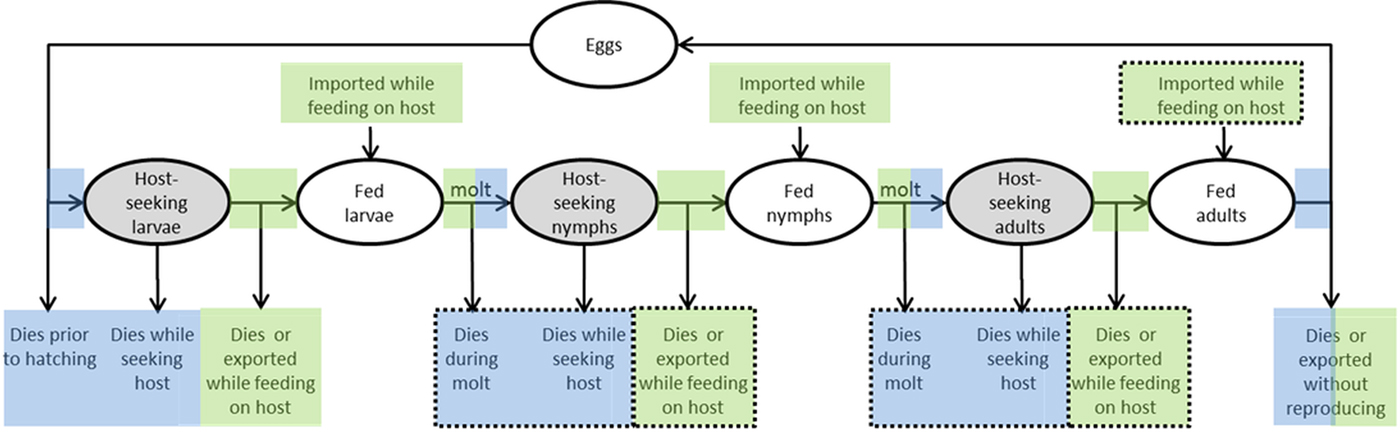
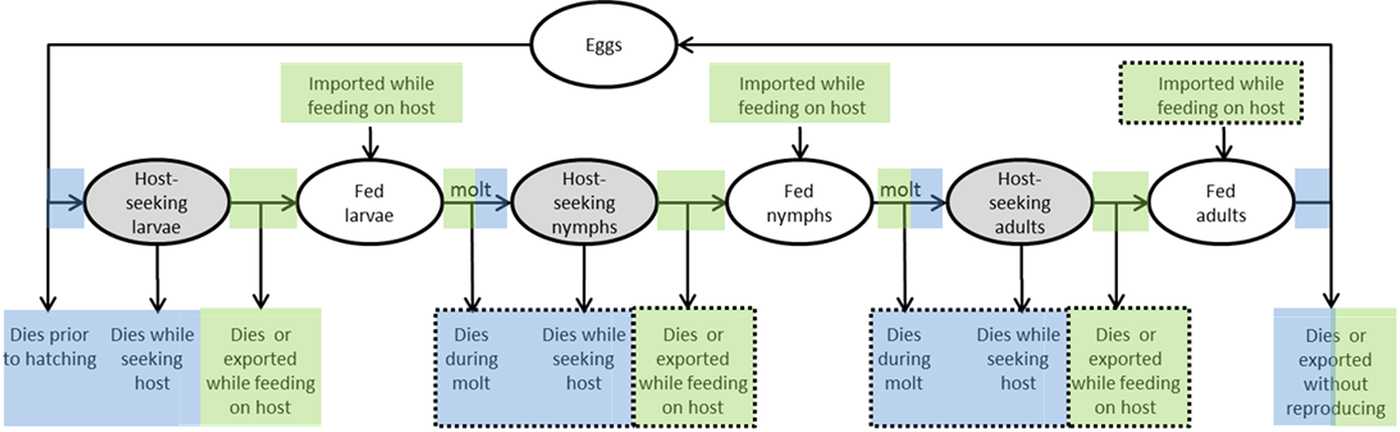
The best model for the abundance of larvae at our site incorporated the abundance of adult ticks 4 months earlier, in keeping with the pattern reported in Randolph (Reference Randolph1994) for R. appendiculatus. The overall effect was weak, however, even after incorporating the negative influence of rainfall in the sampling month (Table 1). Prior research in our system has shown that larval abundance is highly dependent on the presence of large wild mammals, which serve as hosts to the adult ticks from which larvae are produced (Keesing et al. Reference Keesing, Allan, Young and Ostfeld2013). Adult ticks appear to be imported into the experimental plots by these native animals rather than by cattle because adult ticks feeding on cattle are killed by the acaricide with which cattle are regularly treated (Fig. 5). In the current study, all of the experimental plots analysed had large wild mammals, and these animals appear to have imported the larvae we observed.
The life cycle of ixodid ticks and potential effects of biotic and abiotic variables at each stage in development. Blue shading indicates processes likely to be affected by abiotic factors such as rainfall. Green shading indicates processes likely to be affected primarily by biotic factors such as host availability and behaviour. Dashed lines indicate mechanisms for which there is some evidence in the current study. Modified from Keesing et al. (Reference Keesing, Allan, Young and Ostfeld2013).
Based on our likelihood models, larvae were less abundant when there had been high rainfall in the sampling month, which is perhaps surprising given the potential sensitivity of larval ticks to desiccation reported in other studies (Stafford, Reference Stafford1994). One possibility is that larvae were present during these months, but were not questing for hosts so that we failed to detect them even though they were there. Wet vegetation may interfere with the collection of questing ticks, but our sampling protocol restricted collection to days when vegetation was dry (see Methods). Finally, different tick collection methods can introduce biases for assessing the abundances of different tick species and life stages (Schulze et al. Reference Schulze, Jordan and Hung1997). Our selection of walking surveys was determined by the tall height of the vegetation in most treatment plots, which could cause drag sampling or flagging techniques to be ineffective by undersampling ticks questing lower in the vegetation.
In contrast to our results for larvae, we found that both nymphal and adult ticks were less abundant on plots to which cattle had access (Fig. 3B and C). For nymphs, this may have been because some larvae attempted to feed on cattle and then were killed by the acaricide as larvae, preventing them from becoming host-seeking nymphs (Fig. 5). The cumulative rainfall for the prior 2 months was positively correlated with nymphal abundance, suggesting that wet conditions may lead to higher survival between the larval and nymphal stages. For adults, the decline in host-seeking adults on plots with cattle may be due to a similar pattern, with treated cattle killing nymphs that attempted to feed on them, preventing those nymphs from becoming questing adults, with cattle also directly killing feeding adults (Fig. 5). As with nymphs, the more rainfall there was in prior months, the higher the abundance of adults. However, the presence of cattle dampened the effects of rainfall (Fig. 3C). One interpretation of this interaction is that fed nymphs and host-seeking adults are particularly sensitive to rainfall, such that at very low levels of precipitation, their survival from the nymphal stage is so low that there is no additional impact of cattle (Fig. 5).
Isolating the mechanisms responsible for changes in the abundance of host-seeking ticks is challenging given the multitude of biotic and abiotic pathways that can influence their abundance and survival (Fig. 5), as well as complexities of tick behaviour. Revealing an additional challenge, we identified different, even contrasting roles for both rainfall and host availability in determining the abundance of ticks at each life stage. Given the importance of ticks for human, livestock and wildlife health in this region, understanding the factors that affect tick abundance through time is particularly critical. In addition, East Africa is experiencing rapid changes in rainfall patterns due to climate change (Lyon and Dewitt, Reference Lyon and DeWitt2012; McSweeney et al. Reference McSweeney, New and Lizcano2010; Lott et al. Reference Lott, Christidis and Stott2013), as well as growing populations of livestock (Georgiadis et al. Reference Georgiadis, Olwero, Ojwang’ and Romanach2007; Ogutu et al. Reference Ogutu, Piepho, Said, Ojwang, Njino, Kifugo and Wargute2016). These directional changes make understanding interactions between climate change, tick abundance, and human health and well-being all the more important.
ACKNOWLEDGMENTS
We thank the Office of the President of the Republic of Kenya, the National Museums of Kenya, the Mpala Research Centre, Bard College and the Cary Institute of Ecosystem Studies for their cooperation and assistance in the conduct of this research. Darcy Ogada, Kevin Marsee, Doug McCauley, Ann Trainor, Kara Schroepfer, James Wasike, James Ponoto, Abdikadir Ali and Abdikadir Age conducted fieldwork on this project. The Mpala Research Centre staff provided critical logistical support. FK and TPY owe special thanks to the support and generosity of the late George Small, without whom their research at Mpala would not have been possible.
FINANCIAL SUPPORT
This research was supported by a grant from the National Science Foundation (NSF CAREER 0196177) to FK and a grant to BFA, FK and RSO from the National Science Foundation (NSF CNH 1313822). The KLEE exclosure plots were built and maintained by grants from the James Smithson Fund of the Smithsonian Institution (to A. P. Smith), the National Geographic Society (4691-91), the National Science Foundation (BSR-97-07477, 03-16402 and 08-16453), and the African Elephant Program of the U.S. Fish and Wildlife Service (98210-0-G563) to TPY.