INTRODUCTION
Some marine organisms can act as biogenic habitats (Roberts et al., Reference Roberts, Johnston and Poore2008) in the coastal ecosystems and act as refugia for number of associated organisms. Biogenic habitats or habitat-forming organisms perform various functions and have a major effect on the structure of shallow water communities (Stachowicz, Reference Stachowicz2001; Cacabelos et al., Reference Cacabelos, Olabarria, Incera, Jesús and Troncoso2010). For example, marine macroalgae play an important role in coastal ecosystems by providing shelter and food for many organisms, increasing the space for settlement (Wikström & Kautsky, Reference Wikström and Kautsky2004; Cacabelos et al., Reference Cacabelos, Olabarria, Incera, Jesús and Troncoso2010), and protecting the organisms from wave action, heat and desiccation (Moore, Reference Moore1978; Hicks, Reference Hicks1980). Marine invertebrates such as polychaetes, amphipods, isopods, gastropods and mussels are frequently associated with macroalgae communities (Christie et al., Reference Christie, Fredriksen and Rind1998; Cunha et al., Reference Cunha, Güth, Bromberg and Sumida2013). These epifaunal communities may be an important food source for juvenile fishes, which are also abundant in macroalgal beds (Bray & Ebeling, Reference Bray and Ebeling1975; Jones, Reference Jones1988).
The epibenthic communities associated with macroalgae show changes in abundance and composition in relation to temporal and spatial scales due to various physical and biological factors (Caine, Reference Caine1991; Taylor, Reference Taylor1998). Changes in environmental factors, competition, predation and recruitment are the main factors that influence the abundance of epifauna (Jones & Thornber, Reference Jones and Thornber2010; Cacabelos et al., Reference Cacabelos, Olabarria, Incera, Jesús and Troncoso2010). Variations in physical conditions such as shore heights play a significant role in structuring the epifaunal abundance on macroalgae (Cacabelos et al., Reference Cacabelos, Olabarria, Incera, Jesús and Troncoso2010). Several previous studies reported the variability of epifaunal abundance and diversity in relation to macroalgal species (Taylor & Cole, Reference Taylor and Cole1994; Vazquez-Luis et al., Reference Vazquez-Luis, Sanchez-Jerez and Bayle-Sempere2008). For example, Cacabelos et al. (Reference Cacabelos, Olabarria, Incera, Jesús and Troncoso2010) reported that the identity of host algae was an important factor in structuring the epifaunal assemblages. The differences in abundance of epifauna between different macroalgal species inhabiting the same area may be due to factors such as longevity, cell-wall structure, presence of algal epiphytes, production of secondary metabolites and structure of the host plant (Jacobi & Langevin, Reference Jacobi and Langevin1996; Steinberg et al., Reference Steinberg, DeNys and Kjelleberg1998; Viejo, Reference Viejo1999; Le Lann et al., Reference Le Lann, Jegou and Stiger-Pouvreau2008; Gestoso et al., Reference Gestoso, Olabarria and Troncoso2010). As most of the epifaunal species depend on the algae for their food, the cell-wall structure of the macroalgae (internal properties) may contribute much to the distribution patterns of epifauna (Cacabelos et al., Reference Cacabelos, Olabarria, Incera, Jesús and Troncoso2010). The internal properties vary across macroalgae resulting in differences in food value and palatability (Hawkins & Hartnoll, Reference Hawkins and Hartnoll1983; Bates, Reference Bates2009). In addition, the defence mechanism of the macroalgae will also influence the epifaunal abundance. Besides internal properties, the external morphology and epiphytic load of the macroalgae may also play key roles in controlling epifaunal assemblages. The complex and highly branched macroalgae are reported to provide more space than simple forms (Duffy & Hay, Reference Duffy and Hay1991). The role of epiphytic load on the distribution of epifauna depends on strategies of the faunal groups to exploit the food sources. This was evidenced from the study by Bologna & Heck (Reference Bologna and Heck1999), which highlighted the trophic role of epiphytes.
As coastal ecosystems are under the strong impact of pollution and climate change-related stressors (Duarte, Reference Duarte2002), there is a need to assess the changes in diversity and distribution of marine organisms associated with macroalgae and seagrasses. Knowledge about the diversity and distribution patterns of benthic populations in a particular region is also needed for valid estimates of population shifts due to human activities (Maurer et al., Reference Maurer, Leathem, Kinner and Tinsman1979). The diversity and community dynamics of epifauna associated with macroalgae have been studied in coastal ecosystems around the world (Aoki, Reference Aoki1988; Taylor & Cole, Reference Taylor and Cole1994; Christie et al., Reference Christie, Jorgensen, Norderhaug and Waage-Nielsen2003, Fredriksen et al., Reference Fredriksen, Christie and Saethre2005; Satheesh & Wesley, Reference Satheesh and Wesley2006; Cacabelos et al., Reference Cacabelos, Olabarria, Incera, Jesús and Troncoso2010; Jones & Thornber, Reference Jones and Thornber2010; Cunha et al., Reference Cunha, Güth, Bromberg and Sumida2013). The main objective of the present study was to determine the abundance of invertebrates associated with common macroalgal species inhabiting the coastal ecosystem of the Central Red Sea region in relation to sampling season and macroalgal species. In particular, we posed the following questions: Do the dominant epifaunal communities show any preference to macroalgal host? Do the abundance of the epifaunal communities vary between different seasons in the Saudi Arabian Red Sea coast? The observed results may improve our knowledge on the factors structuring the epibenthic invertebrates associated with macroalgae on coastal ecosystems.
MATERIALS AND METHODS
Sampling of epifauna
The study was conducted at Jeddah coast (21°19′09″N 39°06′07″E) of the Central Red Sea region of Saudi Arabia. Seasons at Central Red Sea region can be classified into autumn (mid September–mid December), winter (mid December–mid March), spring (mid March–mid May) and summer (mid May–mid September). Five macroalgae abundantly available in the Jeddah coastal waters, Sargassum, Gracilaria, Padina, Acanthophora and Ulva, were selected for this study. The study focused on the same macroalgal species (based on morphological observations) in each genus throughout the duration. The sampling was conducted in winter and summer seasons for a period of 2 years covering from May 2012 to March 2014. Three samples were collected in each season (from three different stations within a 50 km radius) and the mean ± SD values for those samples (N = 3) were considered. Epifauna were collected by detaching a small portion of each macroalgal front from the macroalgae bed by placing a polythene bag over it. During the sampling maximum care has been taken to avoid disturbance to the macroalgae in the natural habitat. The collected macroalgal samples were kept in polythene bags with fresh seawater and transported to the laboratory. In the laboratory, the algal samples were washed in a trough filled with seawater and drops of formalin to remove the epifauna (Taylor & Cole, Reference Taylor and Cole1994). The water from the trough was sieved through a 0.5 mm mesh to recover the marine invertebrates (Gestoso et al., Reference Gestoso, Olabarria and Troncoso2010). From the filtrate, the invertebrates were separated and preserved in absolute ethanol for further analysis. After epifaunal removal, each macroalgal sample was wiped using a tissue paper to remove the water on the surface and then weighed to determine the wet weight. Epifaunal invertebrates were separated into lowest possible taxon wherever possible using standard manuals of marine invertebrates. The epifaunal assemblages were subjected to analyses including total abundance and number of taxa on each macroalga species. The abundance of invertebrate taxa on each macroalga species were counted manually under a stereomicroscope and presented as number of individuals per 100 g of macroalgal wet weight (100 g AW−1).
Environmental parameters
Environmental parameters including surface water temperature, pH, salinity, dissolved oxygen content and concentration of nitrite, nitrate and phosphate were measured in the coastal waters during the sampling of epifauna usually between 9 and 10 a.m. Water temperature, salinity, pH and dissolved oxygen content were measured in situ. The salinity was measured using a refractometer and the other parameters were measured with the help of a portable dissolved oxygen probe (Hanna) and pH meter (Hanna). For the estimation of nutrients, water samples were collected in plastic bottles, kept in a coolbox and brought to the laboratory. In the laboratory, the samples were filtered and analysed for phosphate, nitrate and nitrite. All these parameters were analysed according to the standard methods compiled by Venugopalan & Paulpandian (Reference Venugopalan and Paulpandian1989).
Data analyses
Univariate diversity indices such as Shannon–Weiner (H′), Pielou's evenness (J′) and species richness (Margalef, d) were calculated using PRIMER 6. The abundance pattern of polychaetes, amphipods, isopods, gastropods and bivalves on macroalgae was expressed by cluster analysis (single linkage) based on Bray–Curtis similarity index using BioDiversity Pro (McAleece et al., Reference McAleece, Gage, Lambshead and Paterson1997). Changes in the abundance of epifauna associated with macroalgae were analysed using a three-way ANOVA with year, season and macroalgal type as factors (STATISTICA software). The diversity indices were subjected to two-way ANOVA with season and macroalgal type as factors (Year was found to be not significant in a three-way ANOVA of abundance data and hence not included in this model.) Simple correlation coefficient was used to find out the relationship between environmental factors and epifaunal abundance by pooling the density of epifauna from all the macroalgae for each season.
RESULTS
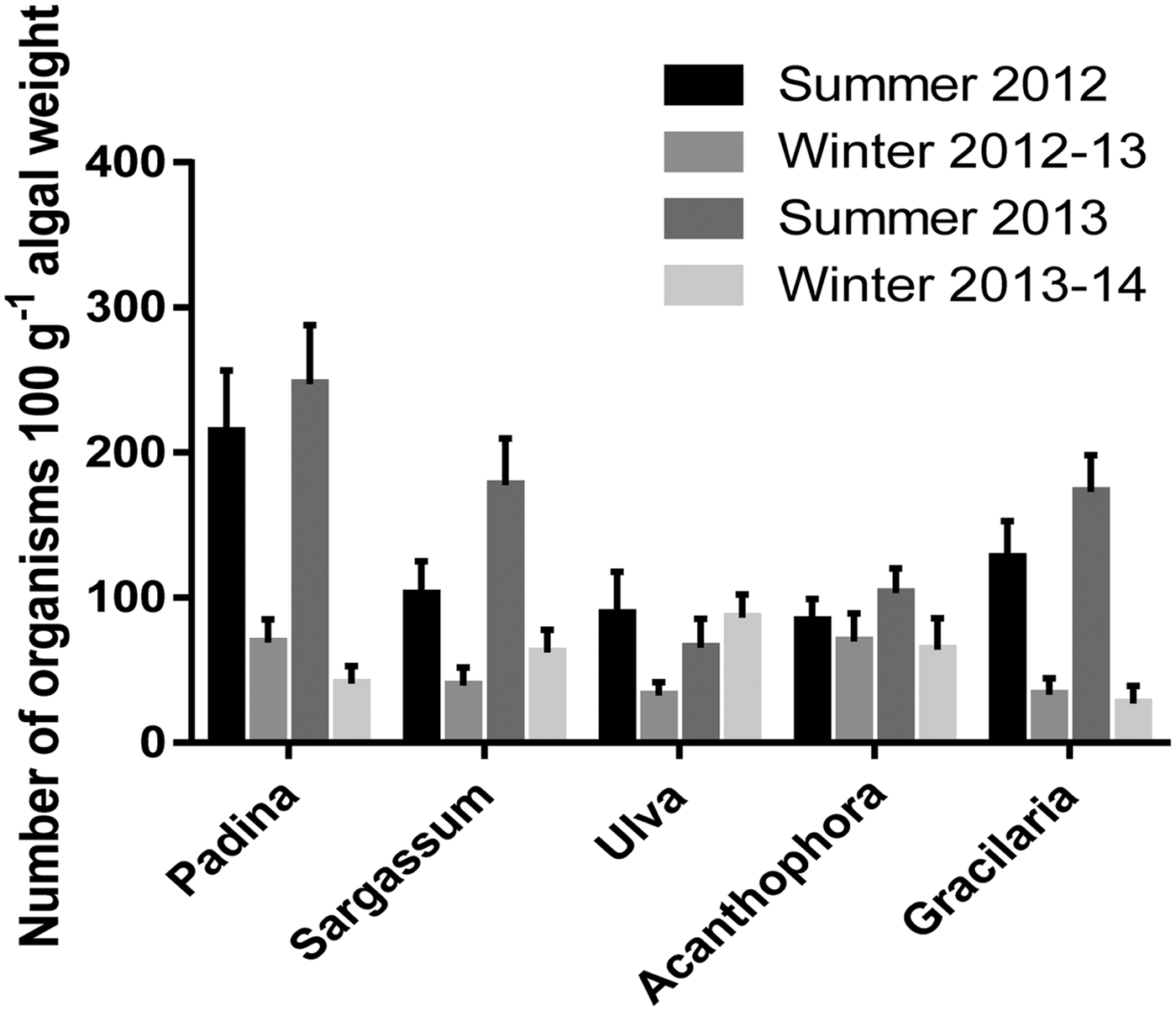
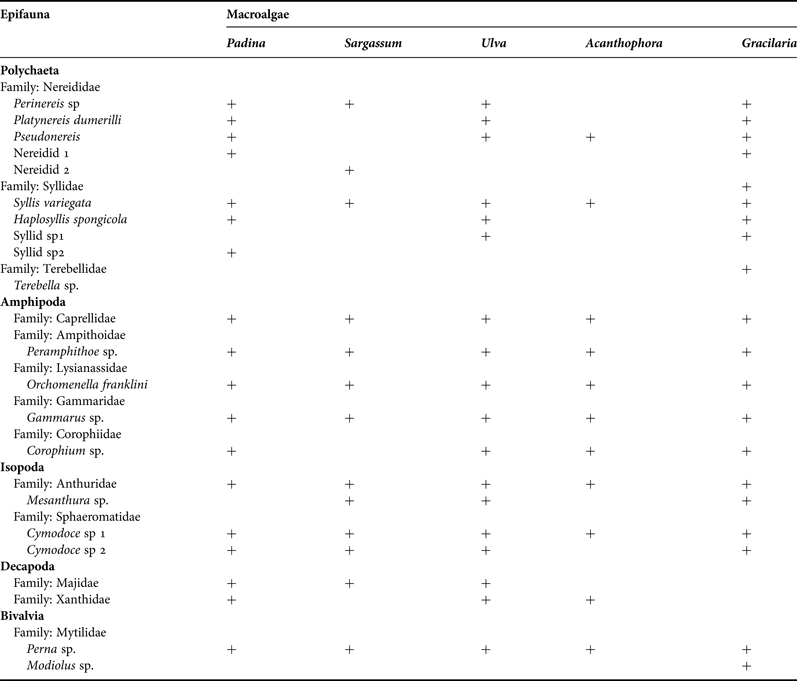
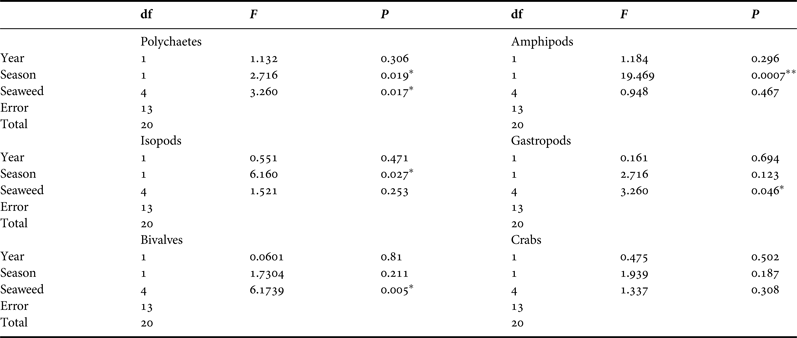
The environmental parameters observed from the coastal waters during the study period are given Table 1. A total of 25 invertebrate species were commonly observed during the study period. Among these, polychaetes were the dominant group with 10 species, followed by amphipods with five species. Other important groups observed include gastropods (three species), isopods (three species), crabs (two species) and bivalves (two species) (Table 2). Abundance of epifaunal groups such as polychaetes, gastropods and bivalves showed a significant (P < 0.05) difference between macroalgae (Table 3). The total number of organisms associated with the five macroalgal genera during summer and winter seasons is presented in Figure 1. The density of epifauna associated to Padina varied from 40 to 247 individuals 100 g AW−1. Higher abundance was observed during summer 2013 and lower in winter 2013–14. On Sargassum, a total of 177 organisms were observed during summer 2013 and 39 individuals 100 g AW−1 in winter 2012–13. The total number of epifaunal communities of Ulva varied between 88 and 32 individuals 100 g AW−1. The abundance was low during winter 2012–13 and high in summer 2012. The number of organisms found associated with Acanthophora was 103 during summer 2013 and 64 individuals 100 g AW−1 in winter 2013–14. On Gracilaria, 172 organisms 100 g AW−1 were observed during summer 2013 and 27 individuals 100 g AW−1 in winter 2013–14. In general, the total abundance of epibenthic communities on macroalgae was low during winter. The observed seasonal trend in total epifaunal abundance was mainly due to the variations exhibited by the polychaetes and amphipods. This was evidenced from the observed significant seasonal variation (P < 0.05) in the abundance of amphipods and isopods (three- way ANOVA, Table 3).
Total number of organisms associated with different seaweeds inhabiting on the Jeddah coast. Error bars indicate standard deviation (N = 3).

Surface water environmental parameters of Jeddah coastal waters during the study period (mean ± SD).

Invertebrate taxa associated with seaweeds on the Jeddah coast of the central Red Sea (+ indicates the presence on a particular seaweed).

Three-way ANOVA (analysis of variance) of abundance of epifauna on different seaweeds. Year (2012–13 and 2013–14), season (summer and winter) and seaweeds (Padina, Sargassum, Ulva, Acanthophora and Gracilaria) were selected as factors.

*P < 0.5, **P < 0.001.
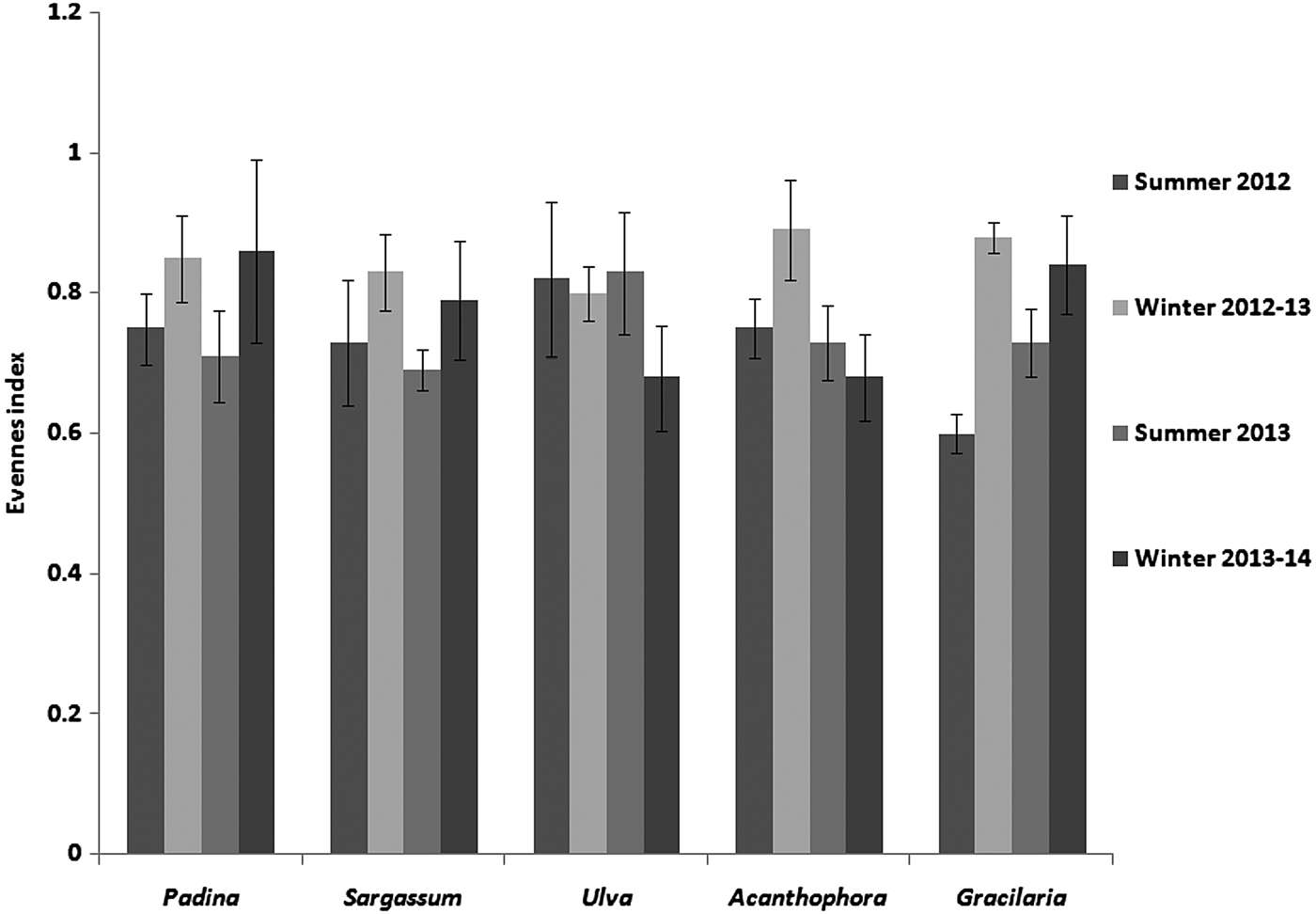
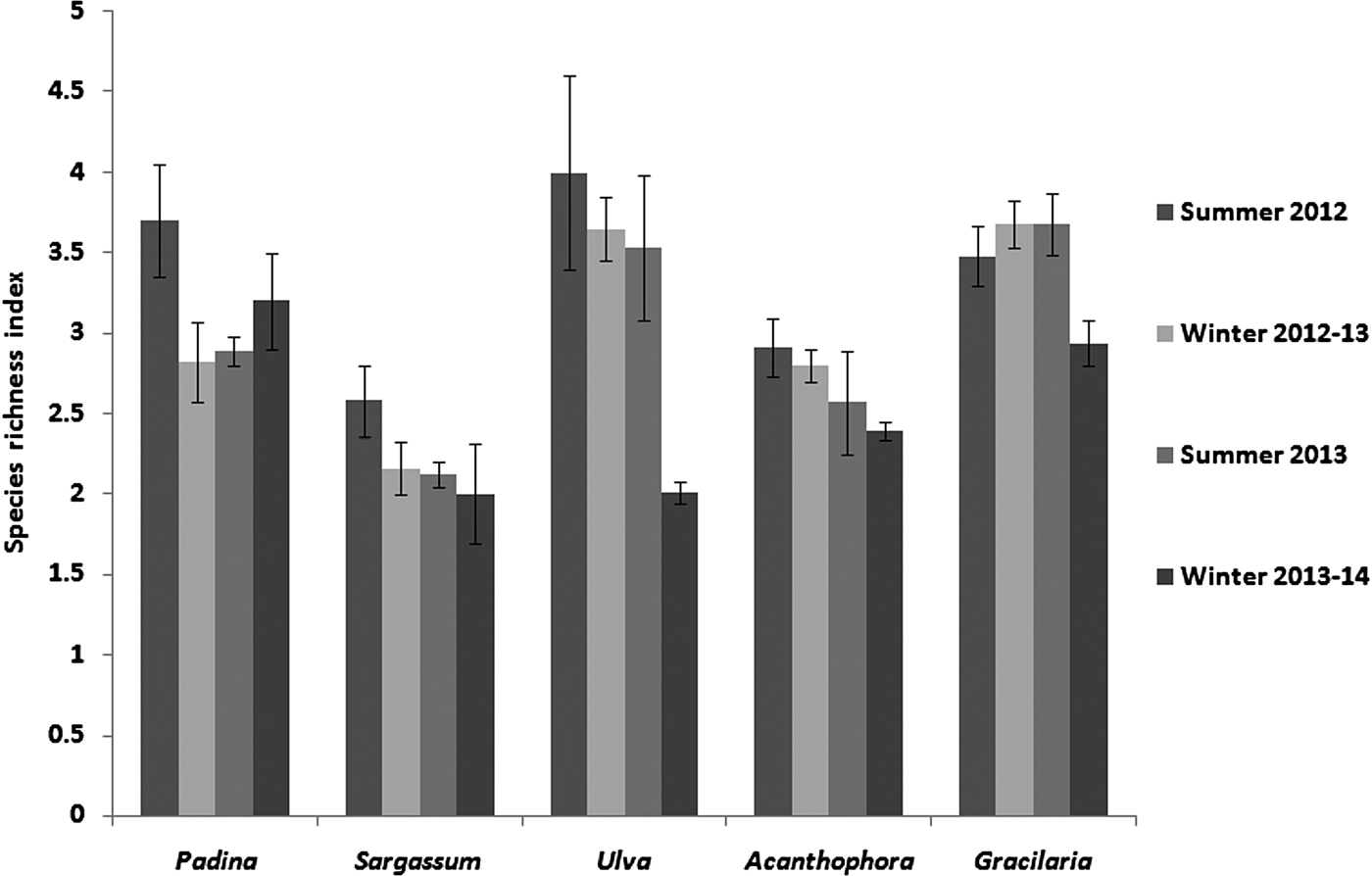
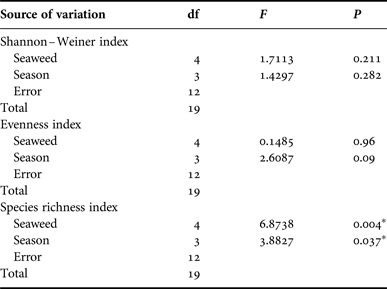
Shannon–Weiner diversity index (H′) of the invertebrate fauna varied between 2.03 and 2.31 on Padina, 1.72 and 1.88 on Sargassum, 1.56 and 2.42 on Ulva, 1.88 and 2.28 on Acanthophora, and from 1.76 to 2.32 on Gracilaria (Figure 2). Evenness index (J′) of the epifauna associated with macroalgae varied between 0.6 and 0.89 (Figure 3). The Margalef's species richness index is given in Figure 4. The species richness (d) of the invertebrates associated with macroalgae was high on Gracilaria (3.68) and low on Sargassum (2). Two-way ANOVA showed significant seasonal and macroalgal variation in species richness index (Table 4). Shannon–Weiner diversity index and evenness index did not show significant variation in relation to season and macroalgae.
Shannon–Weiner diversity index (H′) of epifauna associated with seaweeds.

The evenness index (Pielou's J′) of the epifauna associated with seaweeds during the study period.

The Margalef's species richness (d) of the invertebrates associated with seaweeds.

Two-way ANOVA (analysis of variance) of Shannon–Weiner diversity index (H′), evenness index (J′) and species richness index (d) of epifauna associated with seaweeds. Season (summer and winter) and seaweeds (Padina, Sargassum, Ulva, Acanthophora and Gracilaria) were used as factors.

*P < 0.05.
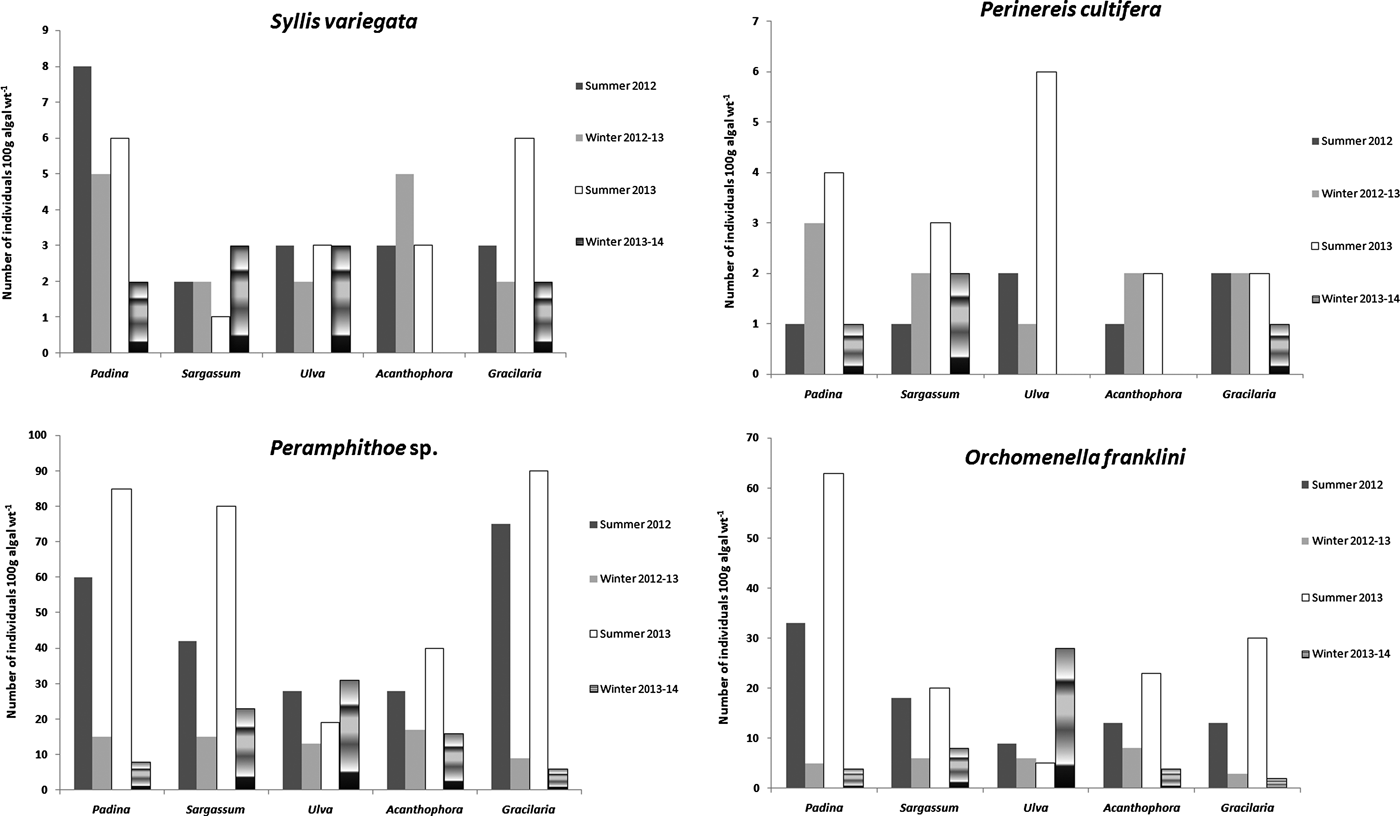
Polychaete communities associated with the macroalgae mainly belonged to the families of Nereididae and Syllidae. A total of 10 species were observed from the macroalgae and Syllis variegata, Perinereis cultifera and Platynereis dumerilii were the abundant species. The abundance patterns of Syllis variegata and Perinereis cultifera are presented in Figure 6. Analysis of macroalgae showed that seven species of polychaetes were observed from Padina and their maximum density (15 ind. 100 g AW−1) was observed during summer 2012 (Figure 5). The polychaete fauna associated with Sargassum consists of three species and the abundance was high during summer 2013–14 (five ind. 100 g AW−1). The polychaete community associated to Ulva consisted of five species and the density was high during summer 2012 (15 ind. 100 g AW−1). Three polychaete species (one syllid and two nereidids) were observed from Acanthophora and a maximum of seven individuals 100 g AW−1 was observed during winter 2012–13. The polychaete community associated with Gracilaria consists of nine species and the abundance was high in summer 2012 (17 ind. 100 g AW−1). The abundance of polychaetes showed significant variation between macroalgae and seasons (Table 3).
Abundance of invertebrate groups studied, i.e. polychaetes, amphipods, isopods, gastropods, mussels and crabs on different seaweeds during summer and winter seasons. Error bars extend to standard deviation (n = 3).

Abundance pattern of dominant epifaunal invertebrate species Syllis variegata (Polychaete), Perinereis cultifera (Polychaete), Peramphithoe sp. (amphipod) and Orchomenella franklini (amphipod) associated with seaweeds.

Amphipods observed in this study include Caprellids, Gammarus sp., Corophium sp., Peramphithoe sp., and Orchomenella franklini (Table 2). The abundance of amphipods on Padina was high (191 ind. 100 g AW−1) during summer 2013 and low (12 ind. 100 g AW−1) in winter 2013–14 (Figure 5). On Sargassum, amphipods abundance was also high during summer 2013 (140 ind. 100 g AW−1) and low during winter 2012–13 (22 ind. 100 g AW−1). The total number of amphipods associated with Ulva varied between 22 (winter 2012–13) and 78 (summer 2013) ind. 100 g AW−1. The amphipods associated with Acanthophora showed a maximum density of 75 ind. 100 g AW−1 during summer 2013 and minimum of 29 ind. 100 g AW−1 in winter 2013–14. Amphipod abundance on Gracilaria varied between 11 (winter 2013–14) and 140 (summer 2013) ind. 100 g AW−1. Peramphithoe sp., and Orchomenella franklini were the dominant species in all the macroalgae (Figure 6). Three-way ANOVA showed a highly significant variation (P < 0.001) in the abundance of amphipods between summer and winter seasons (Table 3). However, the abundance pattern between macroalgal species did not show significant variation.
Isopods such as Mesanthura sp. and Cirolina sp., were commonly associated with the macroalgae (Table 2). Density of isopods associated with Padina was high during summer 2012 (28 ind. 100 g AW−1) and low in winter 2013–14 (three ind. 100 g AW−1). The abundance of isopods on Sargassum varied between nine (winter 2012–13) and 27 (summer 2013) ind. 100 g AW−1. Abundance of isopods on Ulva varied between 1.6 (winter 2013–14) and 8 (summer 2013) ind. 100 g AW−1. On Acanthophora, a higher density of 15 isopods 100 g AW−1 was observed during summer 2013 and a lower density of eight ind. 100 g AW−1 in summer 2012. Isopods abundance on Gracilaria was low (three ind. 100 g AW−1) during winter 2012–13 and high (13 ind.100 g AW−1) in summer 2013 (Figure 5). Three-way ANOVA revealed a significant seasonal variation in the abundance of isopods associated with macroalgae but did not show variation between macroalgae (Table 3).
Another important group associated with macroalgae was the gastropods represented by 3 species (two periwinkles, Littorina sp. and Thais sp.). The density of gastropods associated with Padina varied between two and 20 ind. 100 g AW−1 (Figure 5). Gastropod abundance on other macroalgal species was very low with a maximum of six ind. 100 g AW−1 on Ulva and Acanthophora. Gastropod density on Sargassum and Gracilaria showed a maximum of four and two individuals100 g AW−1 respectively. Three-way ANOVA showed a significant variation on the density of gastropods between macroalgal species but the seasonal variation was not significant (Table 3).
Two species of mussels (bivalves) were observed from the macroalgae and they are abundantly noticed on Padina and Acanthophora (Figure 5). A maximum of 19 ind. 100 g AW−1 were observed on Padina during winter 2012–13. On Acanthophora, the density of bivalves varied between 0.6 (summer 2012) and 17 (winter 2013–14) ind. 100 g AW−1. Mussel density on Ulva showed a maximum of four ind. 100 g AW−1 and a minimum of one ind. 100 g AW−1. The other two macroalgae, Sargassum and Gracilaria harboured only few mussel individuals during the study period. Three-way ANOVA showed that the density mussels varied significantly between macroalgae (Table 3). Crabs mainly belonging to the families Xanthidae and Majidae were observed from the macroalgae occasionally (Figure 5).
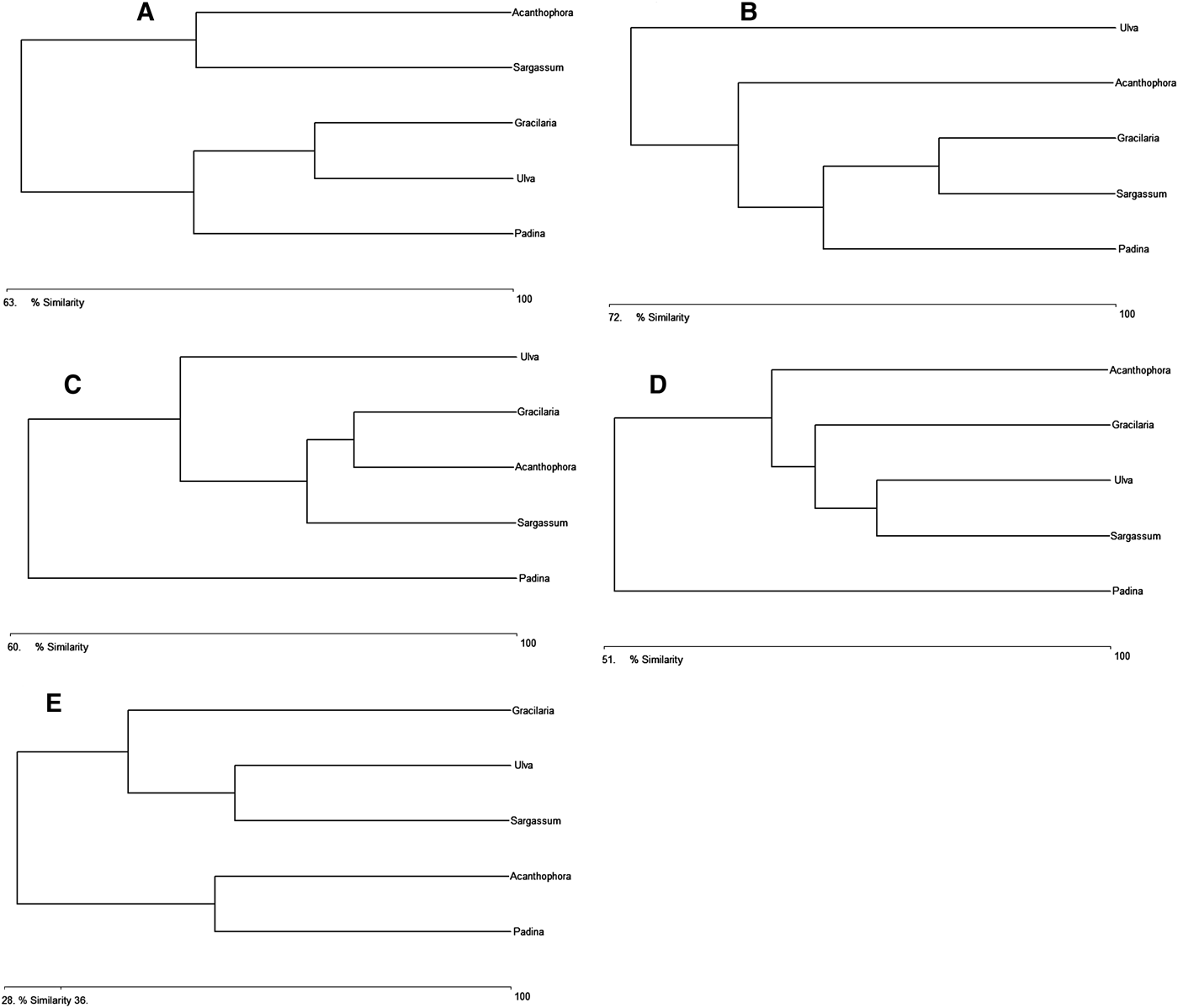
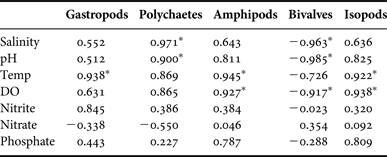
Correlation analysis showed significant positive relationship between surface water temperature and density of gastropods, amphipods and isopods (Table 5). The abundance of polychaetes showed a significant positive correlation with salinity and pH. Correlation analysis also revealed that the abundance of bivalves was negatively correlated with salinity, pH and dissolved oxygen content (Table 5). Cluster analysis dendrograms based on Bray–Curtis similarity index for polychaetes, amphipods, isopods, gastropods and bivalves are given in Figure 7A–E. The cluster analysis plots showed that the epifaunal community structure was influenced by the macroalgal species. For polychaetes, the abundance on macroalgae showed two distinct groups (Ulva, Gracilaria and Padina formed one group and the other group consisted of Sargassum and Acanthophora). The abundance of amphipods and isopods on Ulva differed from other macroalgal species (Figure 7B, C). Cluster analysis of gastropod density on Padina clearly varied from other macroalgal species (Figure 7D). Abundance of bivalves showed two groups in cluster analysis with Padina and Acanthophora forming one group and the remaining macroalgal species were in the other group (Figure 7E).
Cluster analysis based on Bray–Curtis similarity index for polychaetes, amphipods, isopods, gastropods and bivalves associated with macroalgae (A. Polychaetes; B. Amphipods; C. Isopods; D. Gastropods; E. Bivalves).

Correlation coefficient (r) between environmental parameters and abundance of epifauna on macroalgae. The density epifaunal groups on all the five macroalgal species were pooled for each season.

*P < 0.05.
DISCUSSION
Understanding the ecology, general distribution and diversity of epifaunal community associated with macrophytes in the coastal ecosystems will help to predict the changes in benthic communities due to climate change-driven stressors and anthropogenic impacts. In the present study, the invertebrate communities associated with macroalgae were dominated by polychaetes followed by amphipods, isopods and gastropods. Polychaetes associated with macroalgae consisted of 10 species and were dominated by the families Neredidae and Syllidae throughout the study period. Most of the taxa were identified up to genus level or family level. Previous studies on faunal communities associated with macroalgae were mainly focused on one algal species or distribution of particular epifaunal group on different macroalgae. In this study, invertebrate taxa associated with five macroalgal species were analysed in two different seasons.
Polychaetes are important groups which play a key role in macrobenthic secondary production in coastal ecosystems (Paiva, Reference Paiva1993) and form an important part in the food chain. Other taxa such as gastropods and amphipods are often reported as dominant groups on phytal assemblages in coastal waters (Tararam & Wakabara, Reference Tararam and Wakabara1981). Polychaetes, amphipods and isopods showed significant seasonal variation in their densities on macroalgae. Many epifaunal taxa, particularly amphipods and isopods, are considered as demersal zooplankton; they spend part of the time in the marine waters normally during the night and resettle on various substrata before the daybreak (Hobson & Chess, Reference Hobson and Chess1976). Hence, the density of these epifaunal communities may depend on their resettling capability on the macroalgae. While seasonal fluctuations in environmental factors are often cited as important factors controlling the abundance of benthic communities in coastal ecosystems, the Red Sea is a distinctive region in the tropics due to its partial isolation from the open ocean (Shaikh et al., Reference Shaikh, Roff and Dowidar1986), high evaporation rate and lower precipitation. The environmental parameters such as surface water temperature, salinity, pH and dissolved oxygen content observed during this study indicate small differences between summer and winter seasons. The observed values were within the range reported for Red Sea by the previous researchers. For example, water temperature in Red Sea ranged between 25.5 and 31°C but higher values were observed in shallow and coastal areas (Edwards & Head, Reference Edwards and Head1987) and mean salinity may exceed 40 psu (Al-Farawati, Reference Al-Farawati2010). The correlation analysis revealed that water temperature appears to influence the abundance of gastropods, amphipods and isopods. Also, the abundance of polychaetes showed a positive correlation with salinity while bivalves showed a negative relationship. Other important factors such as pH and dissolved oxygen content of the coastal waters also exert some influence on epifaunal abundance as shown from the correlation analysis. The observed significant relationship between abundance of epifauna and environmental parameters such as temperature, salinity, pH and dissolved oxygen content is of particular interest due to the fact that the Red Sea is considered to be fragile and vulnerable to global warming (Cantin et al., Reference Cantin, Cohen, Karnauskas, Tarrant and McCorkle2010; Raitsos et al., Reference Raitsos, Hoteit, Prihartato, Chronis, Triantafyllou and Abualnaja2011).
The changes in diversity and abundance of benthic communities in relation to different spatial and temporal scales are also due to the result of ecological processes such as recruitment and disturbance (Thrush & Dayton, Reference Thrush and Dayton2002). Recruitment will also depend on a number of factors such as reproduction, hydrological conditions, biotic factors, etc. It is important to note that the reproductive cycles of most of the taxa observed in this study are not known in Saudi Arabian Red Sea region. However, recent studies by Al-Aidaroos & Satheesh (Reference Al-Aidaroos and Satheesh2014) reported the pronounced seasonality (active breeding in spring and summer) in reproductive cycle of barnacles in the central Red Sea region. We assume that other species may also follow a seasonal reproductive cycle and that thi could be a possible reason for observed seasonal fluctuations. Previous studies on benthic and plankton communities of Red Sea also reported seasonal variations in abundance (El-Sherbiny et al., Reference El-Sherbiny, Hanafy and Aamer2007; Belal & Ghobashy, Reference Belal and Ghobashy2014).
Food availability and predation are other possible factors that may influence the epifaunal abundance. The seasonal variation in species density and diversity observed in the present study was possibly due to the limitation of epifaunal populations by primary production of plant material (Edgar, Reference Edgar1991) and food source of epifauna. For example, those epifaunal organisms that graze directly upon the macroalgae are likely to influenced by seasonal fluctuations in food quality. The epifaunal species observed in this study, such as the amphipod Amphithoe sp., and the polychaetes Syllis species and Platynereis dumerilli, were reported to graze the algae (Cunha et al., Reference Cunha, Güth, Bromberg and Sumida2013). Another possible reason will be seasonal predation pressure (Aoki, Reference Aoki1988) from predators especially crabs and fishes, which influences the epifauna population dynamics.
The present study showed that the total epifaunal abundance was higher on Padina than other macroalgae, mainly Sargassum and Gracilaria. The influence of macroalgae morphology on the abundance of epifaunal assemblages was previously observed by Stoner & Lewis (Reference Stoner and Lewis1985). Generally, shape and structural complexity of the macroalgae are the key factors that determine the abundance and community composition of the associated epifauna (Cacabelos et al., Reference Cacabelos, Olabarria, Incera, Jesús and Troncoso2010). Hence, macroalga with more structural complexity may harbour more epifauna than those with low structural complexity as they provide a greater surface area (Taylor & Cole, Reference Taylor and Cole1994; Chemello & Milazzo, Reference Chemello and Milazzo2002). While no attempt has been made in this study to analyse the morphological characters of the macroalgae, the data reported in the literature were used for comparison. The macroalgal genera selected in this study may be classified (modified from Holmlund et al., Reference Holmlund, Peterson and Hay1990) into highly branched forms (Gracilaria and Acanthophora), sheet-like forms (Padina and Ulva) and intermediate forms i.e. between highly branched and sheet like forms (Sargassum). The genus Sargassum is reported as structurally more complex in Fucales by various studies (Leite et al., Reference Leite, Tanaka and Gebara2007). Holmlund et al. (Reference Holmlund, Peterson and Hay1990) observed that amphipods were more susceptible to predation by fish on highly branched (more complex) algae than those associated with simple sheet-like morphology such as Padina and Ulva. Amphipod abundance patterns observed in this study showed significant seasonal variation rather than between macroalgal species. Abundance pattern of gastropods and bivalves which showed significant variation between different macroalgae was low on Sargassum and Gracilaria. The number of polychaetes which showed significant seasonal variation as well as difference between macroalgae was also low on Sargassum. While there was no observed clear pattern on abundance of epifaunal groups in relation to macroalgal morphology, Sargassum, which is also considered to be structurally complex, harboured low numbers of common epifaunal groups such as polychaetes, gastropods and bivalves. This observation was in contradiction to earlier studies which reported a higher abundance of epifauna on Sargassum species (Satheesh & Wesley, Reference Satheesh and Wesley2006; Leninraj et al., Reference Leninraj, Satheesh and Wesley2007).
Timing of the sample collection, tidal heights and epiphytic load of the macroalgae have been reported as more important factors determining the epifaunal abundance than structural complexity of the host (Cacabelos et al., Reference Cacabelos, Olabarria, Incera, Jesús and Troncoso2010). In the present study, samples were collected at the same time in each sampling regime (9–10 a.m.). So the bias due to sampling time or month was minimized in our study and the density of epifauna did not show significant variation in relation to sampling year. The sampling was also conducted in the same site throughout the study period and all the macroalgal species were collected within the same shore height. The epiphytic load of the macroalgal species may be one of the possible important factors for the observed variability as studies from various coastal regions suggest that the invertebrates associated with macroalgae are taxonomically and morphologically diverse, and show a range of tropic habits. These epibenthic invertebrates may consist of filter feeders (Caine, Reference Caine1977), grazers that depend on epiphytic algae (Brawley & Fei, Reference Brawley and Fei1987), those organisms which eat detritus (Zimmerman et al., Reference Zimmerman, Gibson and Harrington1979), predators which eat other epifauna (Roland, Reference Roland1978), or herbivores which consume the host alga (Duffy, Reference Duffy1990). As most of the epifaunal groups directly graze upon the macroalgae or the epiphytes for their food source, it is important to consider whether the epiphytic load will differ between macroalgal species. Gestoso et al. (Reference Gestoso, Olabarria and Troncoso2010) confirmed that epiphytic algal density and composition varied between two macroalgal species and influenced the abundance of associated epifauna. A study by Bologna & Heck (Reference Bologna and Heck1999) also highlighted the importance of epiphytes in a higher abundance of bivalves associated with seagrass.
The defence measures of the host plant against the epifauna might be another possible reason for the variation in epifaunal assemblages observed in the present study. To prevent colonization by epibionts, macroalgae have widespread means of direct physical protective measures such as release of mucus, peeling of outer teguments, moulting etc. (Wahl, Reference Wahl1989). Among the five macroalgae studied, different species of Sargassum are known to produce polyphenols which showed inhibitory activity against invertebrate larvae (Lau & Qian, Reference Lau and Qian1997). Considering the low abundance of epifauna on Sargassum, the possible role of a chemical defence mechanism requires consideration. Previous studies mainly on antifouling activities of different macroalgae showed varying levels of activities (Fusetani, Reference Fusetani2004). As the chemical defence may vary over spatial and possibly temporal scales further studies may offer more details on this aspect.
In conclusion, our study confirmed that patterns of abundance of epifaunal communities living on macroalgae in the coastal ecosystems are not driven by a single factor but controlled by a combination of factors across temporal scales. The abundance of epifaunal groups such as polychaetes, gastropods and mussels was high on Padina and low on Sargassum. This variation in the abundance between macroalgal species was possibly not associated with morphology or structural complexity of macroalgae as noted by previous investigations (e.g. Taylor & Cole, Reference Taylor and Cole1994). The observed seasonal variation in abundance of some epifaunal groups also attains significance due to the prevailing environmental conditions in the Red Sea. As coastal ecosystems are under the influence of multiple stressors, the high diversity of epifaunal invertebrates associated with macroalgae indicate the need for more studies to predict the factors responsible for the observed variations.
ACKNOWLEDGEMENTS
We thank Mr. Salman A. Al-Ahmadi for his help during field trips.
FINANCIAL SUPPORT
This project was funded by the Deanship of Scientific Research (DSR), King Abdulaziz University (grant no. 473/150/1434). The authors, therefore, acknowledge with thanks DSR technical and financial support.