INTRODUCTION
Many studies have used species-area relationships (SARs) to evaluate the effect of patch size on species richness in a variety of habitats, including natural forest patches (Estavillo et al. Reference ESTAVILLO, PARDINI, BERNARDO and ROCHA2013, Gignac & Dale Reference GIGNAC and DALE2007, Mohandass & Davidar Reference MOHANDASS and DAVIDAR2010). Studies suggest that lianas and trees show positive relationships between species richness and patch area (Liu et al. Reference LIU, ZANG, DING and ZHANG2013, Morgan et al. Reference MORGAN, WONG and CUTLER2011). However, the exact nature of the relationship between forest patch area and species richness of lianas has received much less attention.
Within forest patches, the forest edge and interior zones differ considerably in their localized environmental and disturbance conditions (Laurance & Yensen Reference LAURANCE and YENSEN1991, Laurance et al. Reference LAURANCE, LOVEJOY, VASCONCELOS, BRUNA, DIDHAM, STOUFFER, GASCON, BIERREGAARD, LAURANCE and SAMPIAO2002). Consequently the edge and interior zones are often populated by vegetation at different successional stages, different species assemblages and with different species richness (Harper et al. Reference HARPER, MACDONALD, BURTON, CHEN, BROSOFSKE, SAUNDERS, EUSKIRCHEN, ROBERTS, JAITEH and ESSEEN2005, Ries et al. Reference RIES, FLETCHER, BATTIN and SISK2004). Though the effects of forest patch size and shape on tree and herbaceous diversity has been investigated in numerous studies around the world (Agra & Néeman Reference AGRA and NÉEMAN2012, Gonzalez et al. Reference GONZALEZ, LADET, DECONCHAT, CABANETTES, ALARD and BALENT2010, Wulf & Kolk Reference WULF and KOLK2014, Yineger et al. Reference YINEGER, SCHMIDT and HUGHES2014, Zmihorski et al. Reference ZMIHORSKI, CHYLARECKI, REJT and MAZGAJSKI2010), liana communities have largely been neglected in these former studies, despite their known roles in ecosystem functioning in tropical forests (Laurance Reference LAURANCE2008, Schnitzer & Bongers Reference SCHNITZER and BONGERS2002). Therefore, further research is required to understand the relationship between patch area and edge effects on liana diversity within forest patches.
Liana abundance may either increase or decrease as a direct and indirect consequence of various disturbance levels, depending on the exact nature and duration of the disturbance (Addo-Foudjour et al. Reference ADDO-FORDJOUR, DUAH and AGBESI2013, Anbarashan & Parthasarathy Reference ANBARASHAN and PARTHASARATHY2013, Laurance et al. in press). In former studies disturbance was found to increase liana abundance (Mohandass et al. in press) and high disturbance decreased liana diversity (Addo-Fordjour et al. Reference ADDO-FORDJOUR, DUAH and AGBESI2013).
In the Nilgiri Mountains, previous studies show that tree species richness within montane forest patches increases with forest patch area (Mohandass Reference MOHANDASS2007, Mohandass & Davidar Reference MOHANDASS and DAVIDAR2010), but the relationship between patch size and liana richness has yet to be investigated. This study aims to provide a comprehensive survey of how lianas respond to patch size, and to determine how edge and forest interior communities vary with fragment size. Many forest patches in and around the study areas have been disturbed through tea cultivation and exotic tree plantations (such as Acacia dealbata Link., Eucalyptus globulus Labill. and Pinus patula Schiede ex Schltdl. & Cham.), which have fragmented the formerly more extensive forest and degraded some forest regions. This landscape modification has created a landscape mosaic, which offers an ideal setting to explore how patch size affects the distribution and diversity of lianas under a number of conditions.
The aim of the study is to test the following hypotheses: (1) Total species richness of lianas and species richness in forest edge and interior zones will increase with increasing patch size (both in total and when examined separately); (2) The within-patch distribution and species richness of lianas as delineated by various eco-physiological guilds (shade tolerance, dispersal mode, climbing mechanism etc.) will respond to increasing patch size; (3) Disturbance influences liana species richness, especially as patch size increases.
METHODS
Study area
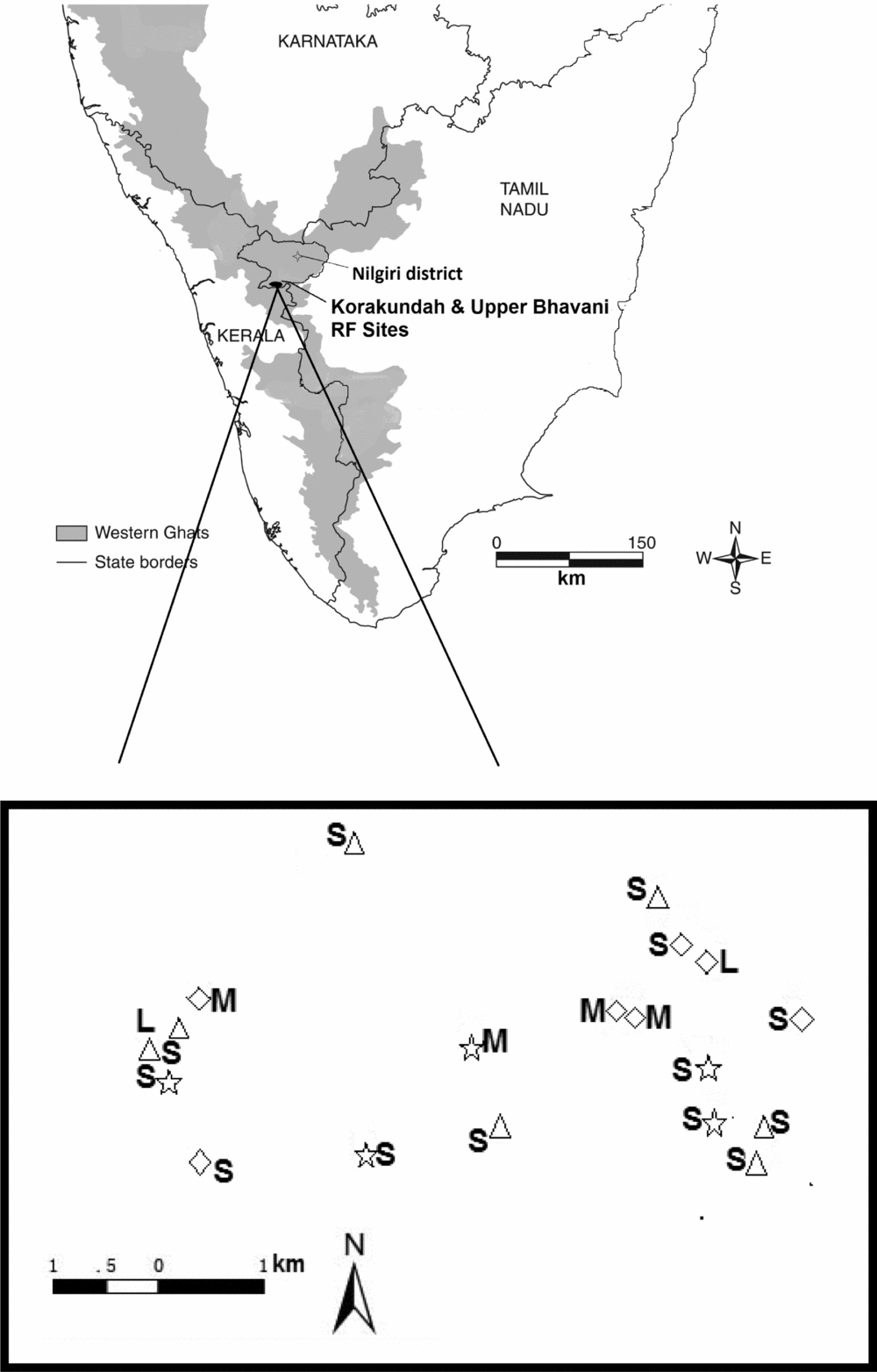
The study occurred in the Nilgiri Biosphere Reserve (NBR), which represents a component of UNESCO's Man and the Biosphere Programme (Puyravaud & Davidar Reference PUYRAVAUD and DAVIDAR2013). The study was carried out in the tropical montane evergreen rain forest of Korakundah (11°13.840′N, 76°35.115′E) and Upper Bhavani Reserve Forest (c. 11°14′N, 76°33′E, Figure 1). We sampled 19 forest patches of various sizes in the Korakundah and Upper Bhavani Reserve Forests (Figure 1). The total area of all 19 patches was 39.2 ha, of which 11.5 ha was sampled.
Map of the study area in Korakundah and Upper Bhavani regions of the Nilgiri Mountains, southern India. Marking points: L, large patches; M, medium patches; and S: small patches. Symbols indicate various disturbance levels: diamond, low disturbance; triangle, moderate disturbance; and star, highly disturbed.

The area ranges from 2200 to 2400 m asl, with varying slope. Climatic and topographic information for this region have been recorded during former studies (Mohandass Reference MOHANDASS2007, Mohandass & Davidar Reference MOHANDASS and DAVIDAR2010).
Montane forests within the Nilgiri region usually exist as small, discrete patches of vegetation, although they do occasionally occur as larger stands. Montane forests in the region are largely evergreen and generally stunted (10–20 m height) with a densely crowned canopy.
Sampling procedure
All sampling occurred between November 2002 and September 2004. The forest patches were selected randomly from across the study region, but were all separated by a minimum distance of 100 m, and fell into three distinct size classes. Selected forest patches were classed as large (> 5 ha), medium (> 1– < 5 ha) or small (< 1 ha). Sampling of lianas was terminated where the species area curves reached their asymptote in the two large (GOLD2 and UPMD1) and three medium (ESHD, GDMD and KOMD) patches.
A quadrat of 30 × 30 m was placed randomly within each medium-large patch, and subdivided into 10 × 10-m subplots. In small patches all lianas were inventoried, and later sampling area was corrected to 30 m2 by removing forest areas of under 30 m2 from analysis. Though forest patches in the area showed a number of different shapes, there were approximately equal numbers of elongated and rounded patches, and we therefore did not differentiate between shapes for the purpose of analysis.
All individual lianas of ≥ 1 cm dbh were measured, tagged, identified to species level, and geo-referenced to the nearest metre. Diameter at breast height of each individual liana was measured at 1.3 m above ground level and each was tagged using sequentially numbered aluminium tags (Gerwing et al. Reference GERWING2006, Muthuramkumar & Parthasarathy Reference MUTHURAMKUMAR and PARTHASARATHY2000). Liana specimens were identified to species using various local and regional floras (Fyson Reference FYSON1932, Gamble & Fischer Reference GAMBLE and FISCHER1915–1935, Matthew Reference MATTHEW1999) and identification of each sample was confirmed by the Botanical Survey of India, Coimbatore. Voucher specimens were deposited at the Department of Ecology and Environmental Sciences, Herbarium section, Pondicherry University.
The effect of total forest patch area
After field sampling, the area of small forest patches were corrected to ensure an equal sample area size (30 m2) and therefore a total of 10.98 ha sampled area was used for data analysis. After the sampled area correction a total of 4.41 ha was sampled from 13 small forest patches (> 1 ha), 4.32 ha from four medium forest patches (> 1 ha to < 5 ha) and 2.25 ha from two large forest patches (> 5 ha). The corrected sampled area was logarithmically transformed for each forest patch.
The effects of edge and forest interior in relation to patch size on liana species richness
Within each forest patch, the liana species richness in the forest edge zone and forest interior zone were recorded separately. The forest edge zone was defined as a 10-m-wide strip starting from the border of each forest patch and extending into the forest, and the forest interior zone as the remaining forest area. The community composition, and selected eco-physiological traits (species shade tolerance, dispersal modes and climbing mechanism) of species within forest edge and forest interiors were also recorded.
Shade tolerance and dispersal mode
Shade tolerance of liana species was divided into three categories, depending on their tolerance to different levels of available light: (a) shade-dependent: species which were only found in the forest interior and shaded conditions; (b) shade-tolerant: species found in both forest interior and edge zones; (c) shade-averse: species only found in edge zones and open conditions.
For data analysis, we used the frequency of occurrence of each liana species (with a minimum of 10 occurrences) found in each forest patch in a particular habitat, and compared abundance in the forest and edge zones to investigate habitat specificity.
The fruit dispersal method of each liana species was categorized as one of four types, depending on the dominant dispersal agent/agents. Mammal dispersal was normally by Nilgiri langur (Trachypithecus johnii) or dhole (Cuon alpinus); bird dispersal was from various frugivorous birds; explosive dispersers used an explosive dehiscent method, and wind-dispersed species relied on air-currents. No water-dispersed species were found within the study region.
Based on climbing guild descriptions in other studies (Muthuperumal & Parthasarathy Reference MUTHUPERUMAL and PARTHASARATHY2009, Muthuramkumar & Parthasarathy Reference MUTHURAMKUMAR and PARTHASARATHY2000) we identified five commonly occurring climbing mechanisms for lianas in this study: hook climbers, root climbers, scramblers, tendril climbers and twiners. The frequency of each of these in both edge and interior zones were inventoried and relative abundance compared.
Effects of disturbance factors
During 1950s, the local government introduced exotic plantations around many of the forest patches across the Nilgiri region. These plantations included a considerable number of species, but Acacia dealbata, Eucalyptus globulus and Pinus patula plantations were among the most common. Between the 1970s and 1990s there was considerable logging of these exotic trees around the montane forests. Remaining forest fragments are now protected under nature reserve forest and protected area network agreements. However, severity and frequency of various forms of disturbance (both present and historical) varies between forest patches in the region. Therefore in the present study we categorized all forest patches within the study area into three distinct current disturbance categories: (1) Low disturbance (LD): past disturbances i.e. exotic tree logging occurred in the 1950s to 1990s, although there was little other human-induced disturbance pressures. Currently there is no longer any overt anthropogenic disturbance in patches defined as LD; (2) Moderate disturbance (MD): past disturbance effects greater than that of LD sites, minimal ongoing disturbance by humans (normally only firewood collection); (3) High disturbance (HD): higher levels of past disturbance than either LD or MD sites; high levels of disturbance continue to the present, with regular tree-cutting and other forms of disturbance. Highly disturbed forest patches are normally smaller and located near human habitation. Species richness of seven relatively undisturbed forest patches (LD), seven moderately disturbed forest patches (MD) and five highly disturbed forest patches (HD) were analysed.
Data analyses
As montane forest fragments represent isolated patches we tested whether liana species richness would increase linearly with area on a log-log scale as assumed by the theory of island biogeography (MacArthur & Wilson Reference MACARTHUR and WILSON1967). Species richness and patch size were log-transformed, and species richness (total and for large lianas separately) of various areas (edge and interior) normalized before further analysis using the arcsine transformation. We also used principal component analysis in Spatial Analysis for Macroecology (Rangel et al. Reference RANGEL, DINIZ-FILHO and BINI2010), followed by ANOSIM to determine if community composition varied significantly in patches of different sizes. Degree of similarity in liana community composition was analysed using ANOSIM in PAST (http://folk.uio.no/ohammer/past/) using the Bray–Curtis metric. Numbers of each species found in the forest edge and interior of different patch sizes (small, medium and large) were compared to examine if patches of different sizes had the same or different species communities in their edge and interior zones.
A Pearson correlation (r) was used to assess the relationship between patch size and species richness of lianas in forest edge and interior zones. The relationship between the number of species of different eco-physiological guilds (i.e. shade tolerance) in forest edge and interior zones in relation to patch size was analysed using a linear regression. An analysis of variance (ANOVA) was used to test whether mean species richness of lianas with different dispersal modes and climbing mechanisms showed any relationship with patch size. A t-test was then used to compare mean species richness of dispersal mode and climbing mechanism in forest edge and interior zones. The relationship between degree of disturbance, species richness and patch size was analysed using a linear regression analysis. All the statistical analyses were performed using the software SPSS® Statistics version. 17.0.
RESULTS
Liana sampling
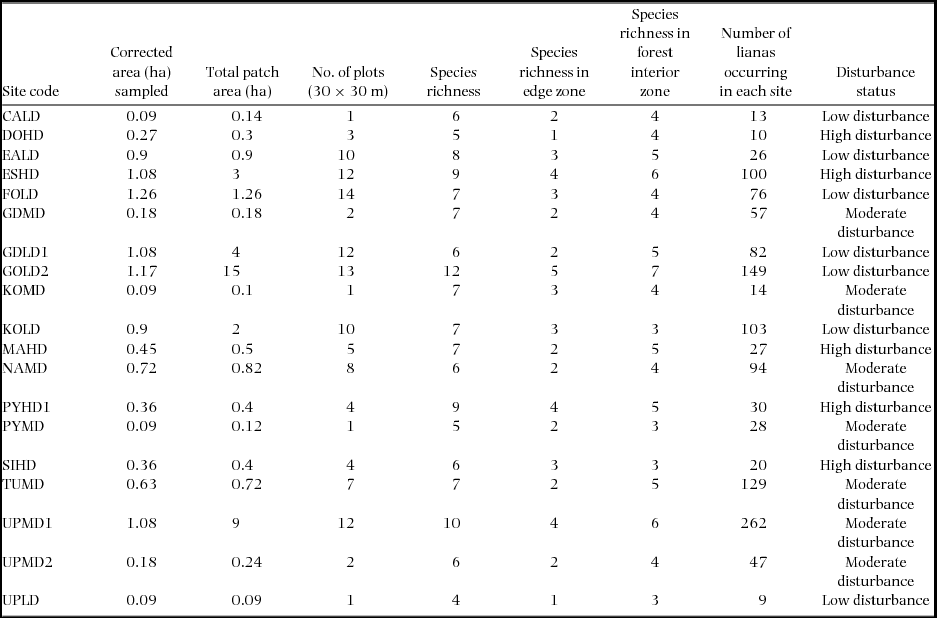
Within the examined 10.98 ha of montane forest from 19 discrete forest patches (Appendix 1) we recorded a total of 1276 individual (≥ 1 cm dbh) woody lianas, belonging to 15 species, 11 genera and 10 families. The number of lianas in each forest patch ranged from 9–262 (Appendix 1). Species richness varied from 12 (in a large patch: 1.17 ha) to four species (in a small patch of 0.09 ha) (Appendix 1).
The effect of patch size on liana species richness
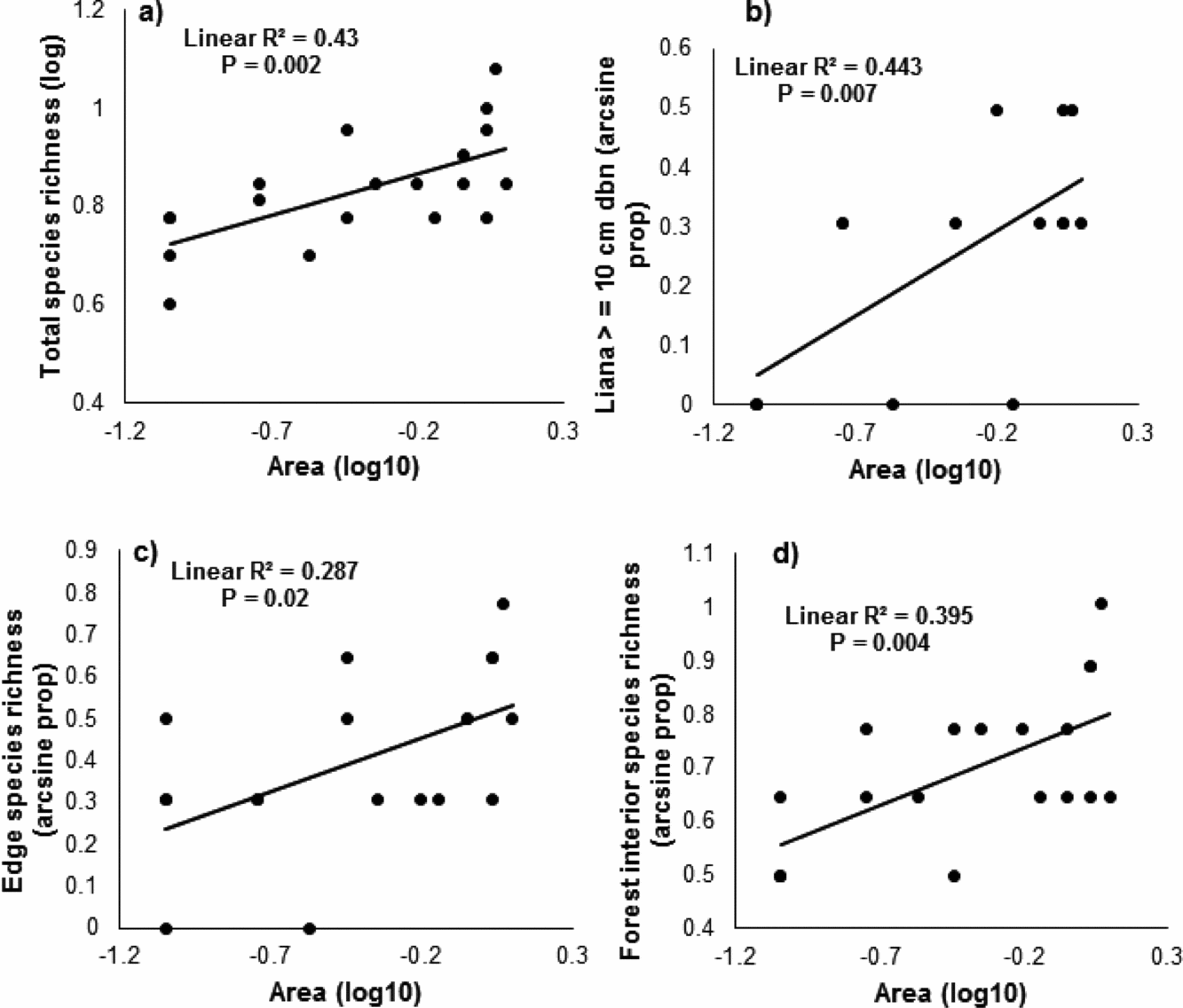
Both total species richness of lianas overall and of large lianas (logn species richness) increased significantly with increasing forest patch size (R2 = 0.43, N = 18, P = 0.002; Figure 2a; R2 = 0.44, N = 11, P = 0.01; Figure 2b). Species richness of lianas in both edge and interior zones also increased significantly with increasing forest patch size (R2 = 0.29, N = 15, P = 0.02; Figure 2c; R2 = 0.395, N = 16, P = 0.004; Figure 2d).
The relationship between total species richness of lianas (≥ 1 cm dbh) (a), larger lianas (≥10 cm dbh) (b), total species richness of lianas in forest edge-zones (c) and interior zones (d), and patch area (log transformed, in ha) were examined in the tropical montane evergreen forest patches of the Nilgiri Mountains, southern India. Significant regression lines are shown.
The effect of edge and forest interior in relation to patch size on liana species richness
Species richness of lianas in forest edge (r = 0.68, P = 0.001) and interior zones (r = 0.74, P = 0.0003) was significantly positively related to patch size. Species richness in the forest edge zones (4.89 ± 0.55) and interior zones (4.94 ± 0.33) do not differ significantly (t = 0.07, df = 28, P = 0.94). The species richness of lianas ranged from 2–11 in edge zones and 2–7 in interior zones in patches overall, therefore edge zones are frequently more diverse than interior zones.
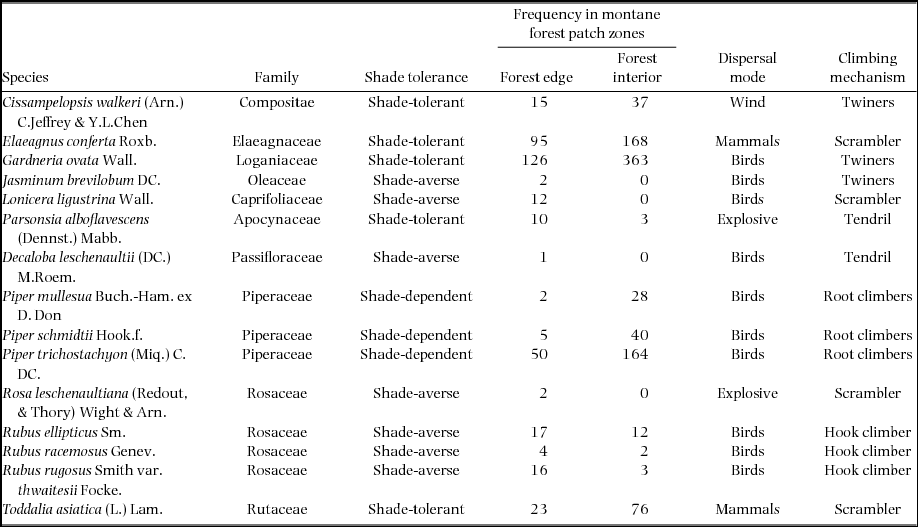
Of the 15 liana species, eight were more frequent in the edge zone than in the interior zone. Of these, four species were found only in the edge zone, and were absent from the forest interior (Jasminum brevilobum, Lonicera ligustrina, Decaloba leschenaultii and Rosa leschenaultiana; Appendix 2). However, seven species were more common in the interior zone than the edge zone, and four species were equally abundant in the edge and interior zones (Cissampelopsis walkeri, Elaeagnus conferta, Gardneria ovata, Toddalia asiatica).
Shade tolerance
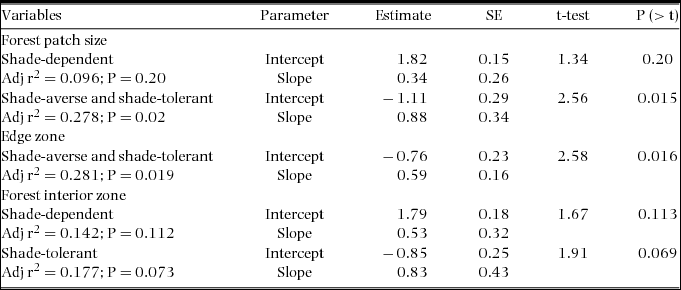
In the edge zone, shade-averse and shade-tolerant species showed significant positive responses to increasing patch area. In the forest-interior zone however, both shade-tolerant species and shade-dependent species showed no significant response to increasing patch area (Table 1). There were more shade-averse and shade-tolerant lianas found in the edge zone (12 species including seven shade-averse and five shade-tolerant) than shade-dependent species found in the interior zone (three species).
Regression statistics of the species-area relationship (with log area) for the examined liana species related to patch size, and the forest edge and interior zones in the tropical montane evergreen forest patches of the Nilgiri Mountains, southern India. Species are grouped according to the shade tolerance (N = 19 patches).
Dispersal mode
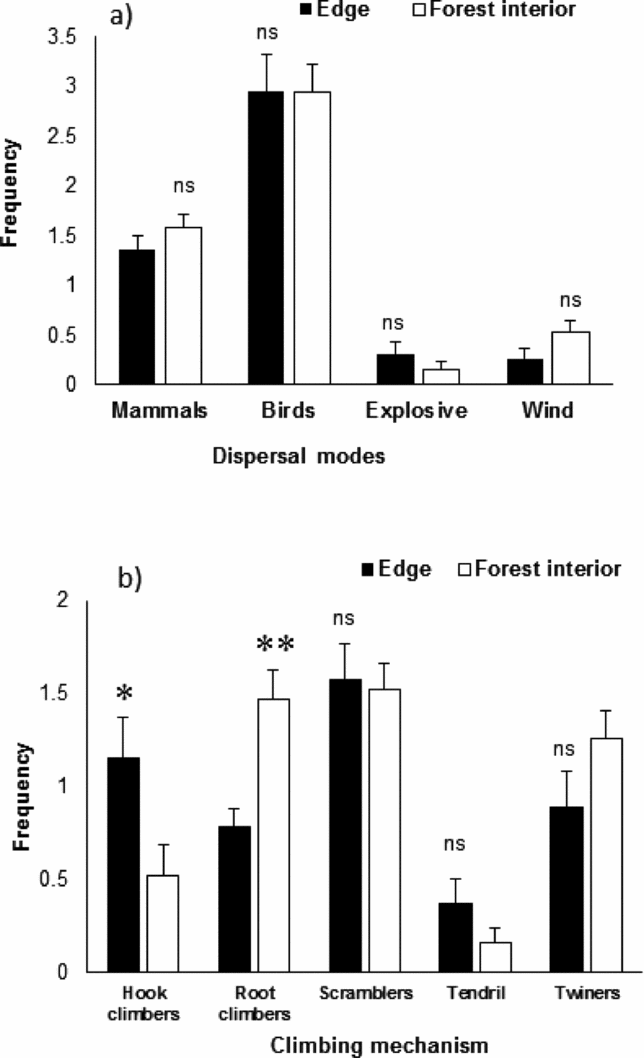
The species richness of lianas with different modes of dispersal was significantly related to patch size (F3, 75 = 13.5, P = 0.0001). Lianas dispersed by mammals and birds were the most species rich in both the edge and interior patch zones, whilst lianas dispersed by the wind or an explosive mechanism were the least diverse (Figure 3a).
Differences in frequency (number of lianas) of different dispersal modes (a) and climbing mechanisms (b) in forest edge-zones (black bars) and the interior zones (white bars) were examined in the tropical montane evergreen forest patches of Nilgiri Mountains, southern India. Significance levels are *P < 0.05; **P < 0.001; and ns = not significant.
Climbing mechanisms
The climbing mechanism used by species of liana also varied significantly with increasing patch area (F3, 11 = 69.7, P = 0.0001). Of the five types of climbing mechanism identified, hook climbers were significantly more abundant in the edge zone, whereas root climbers were more abundant in the forest interior (t = −2.33, df = 36, P = 0.03, t = 3.67, df = 36, P = 0.001; Figure 3b).
The effect of disturbance level and patch size on liana species richness
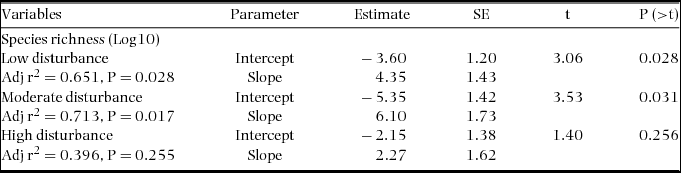
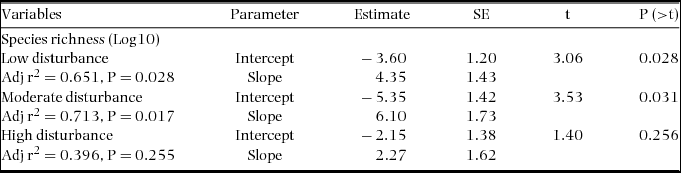
There was no significant difference in liana diversity between each category of habitat disturbance (LD: 7.14 ± 0.94 species; MD: 6.71 ± 0.60; HD: 7.20 ± 0.80: Table 2). However, species richness within areas with low to moderate levels of disturbance significantly increased with increasing patch size, though no significant relationship was found in highly disturbed areas (R2 = 0.40, P = 0.25) (Table 2).
Effect of disturbance on liana species richness related with (log10) forest patch area according to disturbance level: low disturbance (LD), moderate disturbance (MD) and highly disturbed (HD) patches in the tropical montane evergreen forest patches of the Nilgiri Mountains, southern India.
Community compositional change in different-sized patches
Small patches had significantly different liana communities (in both edge and interior zones) from the communities in large and medium patches (forest interior: Bray–Curtis similarity R = 0.52, P = 0.001; Small patch: Medium patch, P = 0.003, small patch: large patch, P = 0.008, medium patch: large patch, P = 0.67) (forest edge zone: R = 0.47, P = 0.002; small patch: medium patch, P = 0.04, small patch: large patch, P = 0.01, medium patch: large patch P = 0.14). This indicates that a size threshold exists between small and medium patches below which a patch can no longer sustain the original community and therefore small patches hold different communities from larger-sized fragments.
DISCUSSION
Species-area relationships
Positive species-area relationships have previously been found in many fragmented forests globally (Gonzalez et al. Reference GONZALEZ, LADET, DECONCHAT, CABANETTES, ALARD and BALENT2010, Laurance Reference LAURANCE2008, Mohandass & Davidar Reference MOHANDASS and DAVIDAR2010). In our study species richness overall, and in both forest edge and interior zones increased with increasing forest patch area, however there was no significant difference in the average diversity of the two zones. Similar trends have been identified in a number of forests in the western hemisphere (Echeverría et al. Reference ECHEVERRÍA, NEWTON, LARA, REY-BENAYAS and COOMES2007, Gonzalez et al. Reference GONZALEZ, LADET, DECONCHAT, CABANETTES, ALARD and BALENT2010, Lawesson et al. Reference LAWESSON, DE BLUST, GRASHOF, FIRBANK, HONNAY, HERMY, HOBITZ and JENSEN1998).
We found significant differences in the communities of liana present between small and larger patch sizes. Small forest patches differ from larger patch sizes due to changes in biotic and abiotic parameters resulting from forest fragmentation (Farmilo et al. Reference FARMILO, NIMMO and MORGAN2013, Laurance et al. Reference LAURANCE, LOVEJOY, VASCONCELOS, BRUNA, DIDHAM, STOUFFER, GASCON, BIERREGAARD, LAURANCE and SAMPIAO2002). These alterations of biotic and abiotic parameters particularly impact the interior regions of small forest patches. These smaller forest patches show the greatest relative loss in interior forest area, whereas edge-zone area is more closely tied to perimeter length. Not only does the creation of a small forest patch dramatically shift the edge: core area ratio, but furthermore it may increase disturbance, vulnerability to invasion, micro-climatic conditions, air currents, light availability and therefore plant species survival and turnover (MacDonald et al. Reference MACDONALD, CHEN, PALIK and PREPAS2014). Smaller forest patches are also at the greatest risk of drying out, and are therefore especially vulnerable to fire during the dry season (Caner et al. Reference CANER, LO SEEN, GUNNELL, RAMESH and BOURGEON2007). The loss of liana interior-specialist species in smaller forest patches may result at least in part from the high frequency of disturbance in addition to the decreased area of suitable forest in many of these smaller fragments (Caruso et al. Reference CARUSO, RUDOLPHI and RYDIN2011, Hill & Curan Reference HILL and CURRAN2003, Laurance Reference LAURANCE2008). Other than species eco-physiology, minimum viable populations for some liana species or dependencies on interacting species such as pollinators which require larger fragments may also require larger fragments to maintain communities over time.
Dispersal agent and distributions
Most liana species were found to require vertebrate dispersal agents, both overall and in edge and interior areas. This may in part be due to the greater dispersal distance possible when a vertebrate disperser is used. Birds often drop seeds and defecate in the forest and are therefore good dispersal agents (Gonzalez et al. Reference GONZALEZ, LADET, DECONCHAT, CABANETTES, ALARD and BALENT2010), thus it is no surprise that 80% of liana species in the study region were dispersed by birds.
Liana species confined to forest-edge regions are likely to be in part the result of the deposition of liana propagules from outside sources, which may in many cases be from avian dispersers (Ewers & Didham Reference EWERS and DIDHAM2006). Birds may therefore facilitate transfer of propagules between forest patches, and thus play a role in maintaining connectivity in a seemingly fragmented landscape, though this may be more evident in edge than interior zones.
Shade tolerance and distributions
Degree of shade tolerance appears to have a major role in determining the distribution of liana species in relation to distance from the forest edge. Shade-tolerant species, such as Cissampelopsis walkeri, Elaeagnus conferta, Gardneria ovata and Toddalia asiatica occurred at much higher frequencies in the forest edge zone, as did species classed as shade-averse. Shade-averse species (though less common than shade-tolerant species) such as Decaloba leschenaultii, Jasminum brevilobum, Lonicera ligustrina, Parsonia alboflavescens and Rosa leschenaultiana were common in edge zones, and occurred at lower frequencies in the forest interior (Laurance et al. Reference LAURANCE, PEREZ-SALICRUP, DELAMONICA, FEARNSIDE, D’ANGELO, JEROZOLINSKI, POHL and LOVEJOY2001). These changing ratios of species in accordance with their light and shade-tolerance levels may have important consequences in forest succession, with the gradual replacement of initially shade averse, and then shade-tolerant species by shade-dependent species with increasing distance from the forest edge.
Diversity of shade-dependent species was lower than either that of shade-tolerant or shade-averse species, and this may in part relate to less access to avian dispersal agents. Smaller patches will suffer disproportionate loss of shade-dependent species due to the greater relative loss of the interior regions of the patch, as the edge zone area relates to the length of the perimeter rather than simply the volume. As patch area decreases, the area of forest core decreases more rapidly than that of forest edge, and therefore species dependent on shady conditions are likely to be rarer overall than those capable of tolerating brighter conditions. As a consequence, overall diversity of shade-dependent species is also likely to be lower.
Climbing mechanism and distributions
Four types of liana climbing mechanisms were common in both edge and interior zones (Figure 3b). At the early stages of liana colonization, species favoured show rapid growth and proliferation which is often determined by their climbing mechanism. In forest edges, tendril and hook climbers are more frequent. Root climbers and twiners were found at greater frequencies in forest interiors, and increased in abundance and diversity with increasing area. Some scramblers (e.g. Elaeagnus conferta) grew well in both edge and interior zones. However other guilds, such as hook climbers, are more abundant at patch edges, and are sensitive to various disturbances.
Disturbance
Lianas show different assemblages in forests with differing degrees of disturbance, depending on the sensitivity of each species and type of disturbance (Rice et al. Reference RICE, BROKAW and THOMPSON2004, Schnitzer & Bongers Reference SCHNITZER and BONGERS2011). Disturbance levels in the study patches were relatively low impact, and caused by the harvesting of plant parts by local people for firewood and other resource harvesting. Human encroachment into montane forest patches (i.e. road and path development) influences liana success by changing light levels and microclimates of areas. The removal of larger trees for firewood collection or for house construction purposes forms larger gaps in the middle of the forests, and thus simulates natural light gaps from tree fall, and initiates natural successional processes.
Liana species richness increased in the low-disturbance patches and moderate-disturbance patches in response to increasing patch area, but did not increase with increasing forest area in the highly disturbed patches (Table 2). Therefore high disturbance and over-usage of montane forests may negatively affect liana species establishment and growth, and therefore may hinder succession.
CONCLUSIONS
We demonstrate that liana species richness of montane forests in the Nilgiri Mountains increases with forest patch size. Liana prevalence and the existence of different species at forest edge zones suggests they play a possible role in forest expansion and forest succession, as has been found in a previous study on trees in the Western Ghats (Mohandass & Davidar Reference MOHANDASS and DAVIDAR2010, Puyravaud et al. Reference PUYRAVAUD, DUFOUR and ARAVAJY2003). Overall, to maintain diversity and aid natural successional processes, the protection of both large and small forest patches is necessary, and additionally the minimization of disturbance in their outer forest margin. In conclusion, lianas play a key ecological role in montane forest ecosystems, however further experimental study is needed to fully understand their ecological role in the processes of patch size expansion and plant community succession.
ACKNOWLEDGEMENTS
Our sincere thanks go to Dr Jean Philippe Puyravaud who provided useful suggestions for experimental design and support for this study. Our sincere thanks also go to Professor Qing-Jun Li who provided logistic support and facilities for writing this paper. We are thankful to anonymous reviewers for helping us improve the manuscript. This study was partially supported by a small grant from the Center for Tropical Forest Science and assistance from Dr Egbert G Leigh Jr. This publication was supported by the National Natural Science Foundation of China (NSFC) through Young Scientist Grant no. 31200173, P.R. China. We thank Mr Hegde and staff of UNITEA Pvt. Ltd, the Tamil Nadu Forest Department and Electricity Board for logistical help and support.
Site code, corrected sampled area (ha), total patch area (ha), species richness of lianas, species richness in edge zone, species richness in forest interior zone, number of occurrence of lianas in each site and the disturbance regime of the studied 19 montane forest patches in the Korakundah and Upper Bhavani Reserve forest, Nilgiri Mountains, southern India.
Frequency of the 15 liana species in forest edge and forest interior zones, including their shade tolerance, dispersal modes and climbing mechanism in the examined tropical montane forest patches of the Nilgiri Mountains, southern India.