THE CHALLENGES OF CONTROLLING GLOBAL DISEASE
Infectious diseases exert a toll on food production in many ways, ranging from causing death or marked morbidity of the host, reducing the efficiency of meat production and wastage of high-quality vegetable protein inputs, to severe barriers in inter-country trade associated with diseases such as foot and mouth disease (FMD). The World Organisation for Animal Health (OIE) lists c. 70 diseases of food animals of global or regional significance (http://www.oie.int/Eng/maladies/en_classification.htm, verified 23 September 2010). It has been speculated that around 0·10 of the potential yield of meat protein is lost because of infectious diseases. Threats from, and likely impacts of, livestock diseases are increasing at a time when the human population is set to reach nine billion within the next 40 years. The demand for animal protein, including eggs and milk, will rise significantly with a concomitant increase in the current world population of livestock: c. 1·3 billion head of cattle, c. 1 billion pigs, c. 2 billion small ruminants and >50 billion poultry reared annually.
Vaccination will remain pivotal to the control of many livestock diseases, especially in view of the ease with which intensive production systems facilitate the easy transmission of pathogens between individual animals, and will be absolutely essential if domesticated livestock are to be reared on a scale and intensity sufficient to feed a significantly high proportion of the world's population. Furthermore, the global spread of many diseases is facilitated through international trade of live animals and animal products. The control of disease is most effective when vaccination is used in concert with effective diagnostics to monitor the epidemiology of the disease, and together with political will/ownership of disease forms the three critical pillars of disease control. The central importance of vaccination and diagnostics as practical technological tools for the control of livestock disease will provide the main focus of the present short review in which some of the generic and disease-specific scientific and technical advances that are likely to enhance the delivery, or potential delivery, of new or better vaccines and diagnostic reagents will be considered.
The rinderpest eradication programme
The rinderpest eradication programme has worked due to the powerful combination of an effective vaccine, reliable diagnostics, targeted control based on sound knowledge of epidemiology and global will to control the disease. The control of the rinderpest virus (cattle plague) was based on efficient diagnosis, effective control and vaccination and political will/ownership of disease (Roeder & Rich Reference Roeder, Rich, Spielman and Pandya-Lorch2009). These three pillars were integrated seamlessly in the campaign against rinderpest and in the near future it is expected that the rinderpest virus will be declared extinct. The Global Rinderpest Eradication Programme offers a template for eradication campaigns against other pathogens in the future. The challenges of controlling a global disease were manifold and the first was to develop a mix of approaches to be used together in a number of countries. Slaughter and quarantine worked well in Europe in the 18th and 19th centuries and succeeded in eradicating the disease from Europe and Russia. The development of live attenuated vaccines, which gave lifelong immunity and provided protection against all circulating virus isolates, combined with zoo sanitary controls, led to the eradication of rinderpest from China in just 7 years (1949–56) and vaccination alone was successful in India but took 40 years. In Africa, mass vaccination under international co-ordination was the preferred solution, but required external funding to succeed. Ultimately, small-scale, intensively focused vaccination guided by the Food and Agriculture Organisation of the United Nations (FAO) succeeded in dealing with the last foci of infection.
Strategically applied vaccination and diagnostic methods were also used very effectively in the final stages of the eradication campaign to eliminate the last foci of lineage 1 in south Sudan and in the Afar region of Ethiopia. These latter programmes of work benefited from the refinement to the vaccine formulation to improve stability during storage. Critically, the eradication of rinderpest was always backed by the availability of reliable diagnostics (starting with the agar gel and virus isolation and later with immuno-capture and polymerase chain reaction (PCR)) and, latterly and most importantly, the empowerment of field workers with pen-side tests so that primary diagnosis of the disease could be made very rapidly.
To provide a framework for considering some of the challenges presented by, and approaches to deal with, livestock diseases, four diseases are listed below as examples of the different types of pathogens involved; ways in which control measures might have to be developed and used and the research directions required. These representative diseases are: (1) East Coast fever (ECF), a long-term disease of African livestock caused by the parasite Theileria parva; (2) African swine fever (ASF), a viral disease that is currently threatening the pig industries within Europe for which there is no vaccine; (3) FMD, a viral disease and an example of a major transboundary disease with significant political and trade implications and (4) haemorrhagic septicaemia (HS), a bacterial disease of significance in Africa and Asia.
FUTURE PROSPECTS FOR THE DEVELOPMENT OF VACCINES AND DIAGNOSTIC TESTS IN THE POST-GENOMIC ERA
Despite extensive research over many years, new effective control measures have not been developed for a number of important livestock diseases, including ECF and ASF virus. T. parva is an apicomplexan protozoan parasite of cattle and transmitted primarily by the tick Rhipicephalus appendiculatus. The parasite undergoes sequential development in leukocytes of the mammalian host and causes an acute, often fatal disease in countries such as Sudan, South Africa, the Democratic Republic of Congo, Swaziland, Zimbabwe, Zambia, Tanzania, Kenya and Uganda. Theileria is a complex parasite and identifying protective antigens in the diverse array of proteins expressed during the life cycle of the parasite is a major challenge for vaccine development. Currently, the only vaccination option available to protect cattle from ECF, known as the infection and treatment method (ITM), is highly effective but complicated, inconvenient and expensive as it involves injecting cattle with live T. parva parasites and then carefully monitoring the animals and treating them with drugs. The T. parva parasites need to be maintained in a liquid nitrogen ‘cold chain’ – which adds to the cost and logistical complexity. Access to the new genome data will be of critical importance to identify the molecules to underpin the development of new vaccines that deliver protection but avoid the problems of live organisms.
Similarly, ASF is a viral disease spreading in Eastern Europe and there are no safe vaccines available for its control (Costard et al. Reference Costard, Wieland, De Glanville, Jori, Rowlands, Vosloo, Roger, Pfeiffer and Dixon2009). Where outbreaks have occurred previously in Europe and elsewhere, there has been great reliance upon expensive eradication programmes. The genome of ASF virus is relatively large, c. 160 kilobases (kb) and it encodes c. 160 genes. Researchers trying to develop effective vaccines are also faced with the challenge of identifying the protective antigens, especially cross-protective antigens for use against a wide range of circulating viruses.
Even in cases where vaccines and diagnostic tests are available, there is considerable scope for improvement to facilitate eradication or control of important diseases, for example, FMD and HS. FMD is endemic in large parts of South America, Africa, The Middle East and Asia and is, globally, the most economically important infectious disease of livestock. The current FMD vaccines are inactivated whole virus preparations which contain an adjuvant to enhance the immune response. There are seven FMD virus (FMDV) serotypes: O, A, Asia1, C and Southern African Territories (SAT)-1, -2 and -3. Each serotype consists of a number of antigenic variants, which may result in a low antigenic cross-reactivity within the FMDV serotypes, necessitating the continual development of new vaccine strains (Paton et al. Reference Paton, Sumption and Charleston2009; Rodriguez & Grubman Reference Rodriguez and Grubman2009).
One of the major current challenges for FMDV research is the development of methods to select vaccine antigen that will provide protection against newly emerging viruses. There are similar vaccine matching challenges for numerous other viral infections, for example influenza. Continued efforts into the future to develop methods to predict the viral antigen structure should ultimately allow a relief map of these viral proteins to be produced from the genomic sequence. Such detailed knowledge of the tertiary structure will allow improved prediction of the protective antigens.
HS causes high mortality in ruminants and is classified in the top 15 diseases impacting on poverty (De Alwis et al. Reference De Alwis1999). It is caused by Pasteurella multocida and is endemic throughout Africa and Asia, with sporadic cases throughout other parts of the world. Currently, the only practical control options are antibiotic treatment or vaccination, such as killed whole-cell-adjuvanted formulations (with either alum or oil adjuvant), as used in Asia. There are drawbacks of these current vaccines and a live attenuated vaccine would potentially provide many advantages, such as longer duration of immunity, ease of administration and reduced local reactions. Genomics approaches to identify key bacterial factors associated with invasion, replication and virulence offer a way to develop live attenuated bacterial marker vaccines with a capability to distinguish infected from vaccinated animals. However, precise targeting of mutations is required to produce vaccine that will invade sufficiently to stimulate a protective immune response without causing disease.
DEVELOPMENT OF NEW AND IMPROVED VACCINES
Complete validation of potential vaccine candidates remains a bottleneck in the application of new products in the field. Protection studies in the target species are inevitably laborious, expensive and require expensive infrastructure. Therefore, the development of pre-screening technologies for vaccine candidates will inevitably lead to more rational use of studies in the target species. Advances in predicting protective antigens from genomic structure and modelling biological systems may be combined to identify the most promising vaccine candidates. The development of in silico models of cells, organs and organisms are at an early stage, but further investment to bring together the various elements of systems biology, experimental work, post-genomic analyses and bioinformatics will make effective models available for vaccine evaluation.
Vaccination in the post-genomics era
The greatest opportunities to advance prospects for both better vaccines and diagnostics are offered by the tools of the genomic era and they are facilitating interrogation of the host–pathogen relationship at a level of detail unimaginable even a few years ago. Attenuated or killed vaccines typically remain a starting point for the development of new vaccines but the use of new methodologies, such as comparative genomics, transcriptomics, proteomics and metabolomics, enable whole genomes to be interrogated for potentially protective antigens or for pathogen proteins that are essential for infection, pathogenesis and interaction with the immune system.
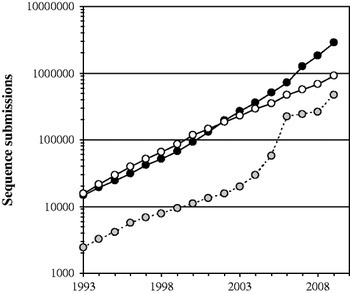
Genome sequences are now available for very many pathogens and their hosts (Fig. 1), and a genome sequencing milestone of more than 1000 complete prokaryotic genomes within the Entrez Genome database was reached recently. More than 2400 and 1500 virus and bacterial genomes, respectively, have now been sequenced (http://www.ncbi.nlm.nih.gov/sites/genome, verified 23 September 2010), along with the genomes of many hosts including cattle, pig and chicken. These genome data now provide a bedrock for a number of complementary technical approaches, including proteomics, transcriptomics, reverse genetics and functional genomics that make possible the rapid and simultaneous screening of many hundreds or thousands of proteins from a pathogen for potential utility as vaccine antigens. Screening approaches are also becoming more useful as the body of data on gene and protein function accumulates such that more ‘intelligent’ searches for potentially protective antigens can be made using a priori knowledge gained from comparable studies on other pathogens. For example, proteins associated with the surface membranes are typically able to induce strong immune responses (some are known to be protective) and in silico analyses of genomes are thus able to quickly identify the first cohort of promising candidates for more detailed studies subsequently.
Increase in nucleotide sequence submissions to public databases (GenBank, EMBL and DDBJ). The graph shows cumulative submissions for bacteria (●), viruses (○) and bovine ( ) over a 17-year period.

A great benefit of the new genomics-based technologies is that they present the best opportunity to date to identify in detail the pathogen molecules that interact with the host during many or most of the different phases of an infection. For example, the proteins that facilitate entry and exit of a pathogen into the host cell, its movement through the host or into different organs, potentially constitute new targets for immune intervention, especially in some of the larger pathogens with complex life cycles. Robinson et al. (Reference Robinson, Menon, Donnelly, Dalton and Ranganathan2009), in a study of larvae of the trematode Fasciola hepatica, for example, used an integrated transcriptomics and proteomics analysis to identify a number of proteases and antioxidants secreted by the fluke to help facilitate their movement through the host tissues and organs during infection.
While the ability to identify potentially useful proteins is now greater than ever before, currently there are no first-pass immuno-screenings available for the identification of antigens that are definitively protective. Thus, vaccine development contains steps to reduce the large number of potential antigens identified in early screenings to a more manageable subset that can be analysed thoroughly, ultimately with an absolute requirement for a more critical in vivo challenge study assessment of the ability of a candidate antigen to protect in the host. The development of assays to predict rapidly which of a potentially large number of proteins within a pathogen are truly protective constitutes an ‘immunological grand challenge’. An ability to identify with complete confidence the protective proteins from a single screening would further revolutionize the development of vaccines, especially those intended to control eukaryotic pathogens defined by large genomes (many megabases) encoding thousands of proteins and characterized by considerable antigenic diversity. Use of a novel genetics/whole-genome scanning approach on the malarial (Martinelli et al. Reference Martinelli, Cheesman, Hunt, Culleton, Raza, Mackinnon and Carter2005; Pattaradilokrat Reference Pattaradilokrat, Cheesman and Carter2007) and avian coccidial (Blake et al. Reference Blake, Hesketh, Archer, Carroll, Smith and Shirley2004, Reference Blake, Shirley and Smith2006) parasites has identified strain-specific antigens associated with protective immunity induced during the course of natural infection. It is possible that the approach could be used more widely, but it depends on the pathogen of interest inducing a strain-specific protective immune response that kills a challenge of homologous-strain pathogens but permits the survival of heterologous strains whose DNA can be collected and fingerprinted to reveal fragments of DNA that are explicitly linked with immunological escape.
ADVANCES IN APPLIED DIAGNOSTICS
Accurate and timely diagnosis is essential for effective control and eradication of livestock diseases. In most cases, this process is initiated by personnel trained to recognize signs of disease (farmers or veterinarians), and is supported by laboratory methods to confirm the presence of infectious pathogens or specific immune markers indicative of exposure to these agents in clinical material. For important notifiable diseases, samples from suspect cases are usually sent to regional or national reference laboratories where validated assays are deployed and results can be reported directly to national competent authorities. Until 15 years ago, the repertoire of tests used in these laboratories typically adopted approaches of culturing the pathogenic agent or use of immuno-assays to either detect specific antibodies generated during the immune response or to detect antigenic proteins of the infectious agent directly. Exploiting the dramatic increase in sequences available for pathogens and hosts (Fig. 1), recent advances in molecular biology have provided new diagnostic tools (such as real-time polymerase chain reaction (rPCR)) that complement or can even replace the established diagnostic assays. For many diseases, including those that affect livestock, the use of molecular assays that amplify or target specific nucleic acid sequences of the pathogen is now considered to be a routine part of the testing of material submitted to the laboratory (Hoffmann et al. Reference Hoffmann, Beer, Reid, Mertens, Oura, Van Rijn, Slomka, Banks, Brown, Alexander and King2009). Although a wide range of tools (including molecular assays) are now available, it is possible to predict that further step-change improvements to our diagnostic capabilities will be achieved in the next 5–10 years. Certainly, Moore's law indicates that computer processing capabilities will continue to increase in an exponential manner into the future. In addition to the ability to process more data, future new technology platforms will also be able to utilize miniaturization of test components as well as more sophisticated ‘next-generation’ sequencing approaches and detector chemistries. There are two principal applied drivers for new assay development: firstly, the development of ‘point of decision’ testing formats that can increase the speed of testing to more effectively support disease control decisions, and secondly the requirement for highly parallel test systems that can provide both differential diagnostic information and strain characterization data. These two different development priorities are not necessarily mutually exclusive and it is possible that generic hardware platforms with these features will be developed that can be used in the laboratory and remote settings.
Tools to support local clinical diagnosis of disease
Although some of the current methods (such as immuno-assays or rPCR) are rapid and can take only a few hours to generate an objective result, the time taken to transport suspect material to a central laboratory can be lengthy. In disease outbreaks, where a rapid decision is critical, this delay can preclude laboratory confirmation such that decisions are made based solely on the presence of clinical signs in the affected animals. Furthermore, in many developing countries, access to advanced laboratories is difficult and as a consequence real-time surveillance and monitoring of disease outbreaks is extremely limited. Away from dedicated laboratory facilities, a number of established and emerging technologies can be deployed close to the suspect case of disease. Assays in this format that aim to provide data to support local decision making are frequently referred to as ‘point-of-care tests’ (POCT), ‘pen-side’, ‘portable’, ‘on-site’ or ‘field’ tests. The potential for these technologies to provide a step change in the way disease diagnosis is done across a broad landscape were discussed during the recent Detection and Identification of Infectious Diseases (DIID) Foresight project (Brownlie et al. Reference Brownlie, Peckham, Waage, Woolhouse, Lyall, Meagher, Tait, Baylis and Nicoll2006). They can speed up decision making in order to reduce the spread of disease, reduce costs associated with laboratory diagnostics and avoid unnecessary slaughter of animals. It is important to recognize that the development of these capabilities for veterinary disease diagnostics have arisen largely due to the investment in these technologies for applications in the human clinical diagnostics, military and homeland security sectors. Of these POC formats, immuno-chromatographic strip tests, also known as lateral-flow devices (LFDs) or dipstick tests, and portable nucleic acid-based tests such as PCR are the two principal assay systems that are currently considered to be suitable for field use to detect infectious agents. As an example, an LFD has been recently developed for the detection of all seven serotypes of FMDV (Ferris et al. Reference Ferris, Nordengrahn, Hutchings, Reid, King, Ebert, Paton, Kristersson, Brocchi, Grazioi and Merza2009). Although the analytical sensitivity of this test appears to be lower than rPCR, the ability to sample multiple animals within a herd increases confidence in the result (at a herd level). These data illustrate the potential for the LFD to be used next to the animal in the pen-side diagnosis of FMD and for providing rapid and objective support to veterinarians in their clinical judgment of the disease. Limited field trials of LFDs were undertaken during the FMD outbreaks in southern England during 2007: positive results were obtained on one of the infected premises within 10 min. Looking to the future, nucleic acid amplification strategies that utilize ‘isothermal’ approaches show considerable promise for use as technologies for livestock disease diagnostics. Unlike PCR, these detection systems do not require precision instrumentation to accurately control the different temperature incubation steps in the reaction. Some of these methods appear to have similar analytical sensitivity to rPCR and can be performed at a single temperature using a simple water bath, or potentially in a disposable thermal device or heat pack. A panel of isothermal assays using Loop-mediated isothermal AMPlification, recombinase-polymerase-amplification and nucleic acid sequence-based amplification are currently under development for many livestock diseases. In order to be robust for field use close to infected animals, these assays need to be incorporated into hardware platforms that are suitable for use by non-specialists (such as veterinarians or farmers without molecular biology training). In addition to target amplification using an isothermal strategy, successful systems are also likely to contain steps for nucleic acid extraction as well as unambiguous product detection (and scoring of results) in a homogeneous format removing the need for multiple steps in the test. Where required, it may also be possible to communicate the results from these tests directly to national disease control networks.
Highly parallel assay formats for detection and characterization of pathogens
A wide range of exotic and zoonotic pathogens pose a continual threat to the agricultural economy, animal welfare and natural environment. Of particular concern is the unpredictable emergence of new diseases (such as arboviruses associated with climate change) into novel host species. Initial outbreaks of these diseases can be difficult to recognize and slow to characterize, since most current diagnostic systems are only able to detect single-priority analytes from submitted samples. In the future, it is likely that highly parallel approaches will be adopted to allow simultaneous detection of a wide range of different pathogen signatures. This strategy will allow differential diagnosis at a grand scale to be achieved (without prior knowledge of the nature of the infectious agent) and will define a clearer role of multiple pathogens in syndromic disease states. Current work in this area is exploring the use of DNA microarray (DNA-Chip) technologies for pathogen discovery and strain characterization. Although suitable for some niche applications, microarrays are yet to be widely used by diagnostic laboratories. In part, this is due to technical complexities in the protocols required to process sample material. In addition, the revolution in the ease by which nucleotide sequence data can now be generated has rendered this approach largely obsolete. Newer ‘next-generation’ sequencing platforms are already used widely for de novo and re-sequencing applications (Ansorge Reference Ansorge2009). These capacities are likely to further increase to >1 Gbases/day via the use of single-molecule third-generation sequencing technologies (such as Pacific Bioscience (Eid et al. Reference Eid, Fehr, Gray, Luong, Lyle, Otto, Peluso, Rank, Baybayan, Bettman, Bibillo, Bjornson, Chaudhuri, Christians, Cicero, Clark, Dalal, Dewinter, Dixon, Foquet, Gaertner, Hardenbol, Heiner, Hester, Holden, Kearns, Kong, Kuse, Lacroix, Lin, Lundquist, Ma, Marks, Maxham, Murphy, Park, Pham, Phillips, Roy, Sebra, Shen, Sorenson, Tomaney, Travers, Trulson, Vieceli, Wegener, Wu, Yang, Zaccarin, Zhao, Zhong, Korlach and Turner2009) and Oxford NanoPore (Clarke et al. Reference Clarke, Wu, Jayasinghe, Patel, Reid and Bayley2009)). Therefore, in the future, it is likely that laboratory protocols required for generating genome sequences from pathogens and hosts will become trivial and that the major bottleneck will become the bioinformatics support and analysis of these data. In addition to using these sequence data for pathogen characterization and molecular epidemiology, they can also be used to generate structural models of critical pathogen and host determinants (such as epitopes and receptor binding sites). Although this work is currently limited by the availability of existing model frameworks and computer capabilities, it may be possible to imagine these analyses being undertaken in real time providing critical data for vaccine selection and design of new therapeutics.
We would like to thank Dr Bill Taylor for helpful discussions relating to the Rinderpest eradication campaign and Michael Watson for help compiling the sequence statistics.