Introduction
Insects live in close association with microbes, both in their substrate and food, and on their surface and in their gut. Most of these microbes are not pathogenic and can even be beneficial to the host (McFall-Ngai et al. Reference McFall-Ngai, Hadfield, Bosch, Carey, Domazet-Loso and Douglas2013; Douglas 2015, Reference Douglas2018b). The insect microbiota includes Bacteria, Fungi, Protozoa, and viruses and encompasses endosymbionts (e.g., Wolbachia Hertig and Wolbach (Anaplasmataceae) and Buchnera Munson et al. (Erwiniaceae)), gut microbes and both surface-associated and epithelia-associated flora (Douglas Reference Douglas2015; Henry et al. Reference Henry, Maiden, Ferrari and Godfray2015; Huang et al. Reference Huang, Jing and Douglas2015; Bahrndorff et al. Reference Bahrndorff, Alemu, Alemneh and Nielsen2016). These microbes can be acquired from the parent(s) (e.g., Hosokawa et al. Reference Hosokawa, Koga, Kikuchi, Meng and Fukatsu2010; Koga et al. Reference Koga, Meng, Tsuchida and Fukatsu2012; Rahman et al. Reference Rahman, Parks, Willner, Engelbrektson, Goffredi and Warnecke2015) or from the diet (Starmer and Fogleman Reference Starmer and Fogleman1986), and be stable (e.g., Rahman et al. Reference Rahman, Parks, Willner, Engelbrektson, Goffredi and Warnecke2015; Pais et al. Reference Pais, Valente, Sporniak and Teixeira2018), seasonally variable (e.g., Ferguson et al. Reference Ferguson, Dhakal, Lebenzon, Heinrichs, Bucking and Sinclair2018), or transient (Wong et al. Reference Wong, Luo, Jing, Franzenburg, Bost and Douglas2015). Drosophila melanogaster Meigen (Diptera: Drosophilidae) has emerged as an important model for understanding the insect-associated microbiota, because of its relatively simple microbiota, a plethora of genetic tools, and because it is possible to rear axenic (with no microbiota) and gnotobiotic (with a known microbiota) individuals (Douglas Reference Douglas2018a).
The Drosophila microbiome includes surface, intracellular (mainly Wolbachia) and gut microbes (Ren et al. Reference Ren, Webster, Finkel and Tower2007) but is mainly dominated by the latter. Whole-fly microbiome extractions can be used to characterise the gut microbiome (Ren et al. Reference Ren, Webster, Finkel and Tower2007), but may overestimate species diversity (Chandler et al. Reference Chandler, Morgan Lang, Bhatnagar, Eisen and Kopp2011, Reference Chandler, James, Jospin and Lang2014) or be dominated by Wolbachia that can mask the presence of less common bacteria (K.D.F., unpublished observations). The gut microbiome originates from the diet, that is, larvae consume the chorion (and associated bacteria) and the gut bacterial biota is maintained by consuming bacteria (Bakula Reference Bakula1969). The Drosophila gut microbiome is transient, with significant flux over time (Wong et al. Reference Wong, Ng and Douglas2011; Blum et al. Reference Blum, Fischer, Miles and Handelsman2013; but see Pais et al. Reference Pais, Valente, Sporniak and Teixeira2018), but generally consists of Acetobacteraceae, Enterobacteriaceae, and Lactobacillales (Chandler et al. Reference Chandler, Morgan Lang, Bhatnagar, Eisen and Kopp2011; Wong et al. Reference Wong, Ng and Douglas2011). There is also a yeast flora, mainly in the genera Hanseniaspora Berkhout, Pichia Hansen, and Saccharomyces Meien (Saccharomycetaceae) (Phaff et al. Reference Phaff, Miller and Shifrine1956; Chandler et al. Reference Chandler, Eisen and Kopp2012), as well as poorly explored fungal endosymbionts and gut Protista (Ebbert et al. Reference Ebbert, Marlowe and Burkholder2003). Within this diverse gut flora, a few species generally dominate, and many phenotypes can be recovered in gnotobiotic flies with a single yeast species (Jiménez Padilla Reference Jiménez Padilla2016) or a small subset of bacteria (Shin et al. Reference Shin, Kim, You, Kim, Kim and Lee2011; Storelli et al. Reference Storelli, Defaye, Erkosar, Hols, Royet and Leulier2011). In other animals, including humans, transitory changes in diet can have long-lasting effects on the gut microbiome (Wu et al. Reference Wu, Chen, Hoffmann, Bittinger, Chen and Keilbaugh2011). In Drosophila Fallén, there are clear phenotypic effects of diet switches (Jehrke et al. Reference Jehrke, Stewart, Droste and Beller2018), and wild Drosophila have different microbiota to laboratory-reared Drosophila (Chandler et al. Reference Chandler, Morgan Lang, Bhatnagar, Eisen and Kopp2011); however, it is not clear how immediate the diet effects on the microbiome are. It is also unclear whether these effects arise because the diet houses a specific microbiome, or – given the broad phenotypic effects of food type; Jiménez-Padilla et al. Reference Jiménez Padilla, Ferguson and Sinclair2020) – because the diet modifies the Drosophila interactions with the microbiome, affecting community assembly (Adair and Douglas Reference Adair and Douglas2017; Jehrke et al. Reference Jehrke, Stewart, Droste and Beller2018).
The spotted-wing drosophila, Drosophila suzukii (Matsumura), is an economically important pest of soft-skinned fruits (Asplen et al. Reference Asplen, Anfora, Biondi, Choi, Chu and Daane2015). Female D. suzukii lay their eggs in ripening fruit; the growing larvae and secondary microbial infections render the fruit unmarketable (Rota-Stabelli et al. Reference Rota-Stabelli, Blaxter and Anfora2013). Drosophila suzukii is polyphagous, and thus flies within a region can have very different diets during development. Diet affects various physiological traits in D. suzukii, such as development time and body size (Jiménez-Padilla et al. Reference Jiménez Padilla, Ferguson and Sinclair2020; but see Jaramillo et al. Reference Jaramillo, Mehlferber and Moore2015) and lifespan (Bing et al. Reference Bing, Gerlach, Loeb and Buchon2018), and the microbiota appears necessary for development in the protein-poor diet of unripe fruit (Bing et al. Reference Bing, Gerlach, Loeb and Buchon2018). The bacterial microbiota of D. suzukii is typically dominated by a few species, and those species appear to vary considerably depending on the collection location, diet, and season (Chandler et al. Reference Chandler, James, Jospin and Lang2014; Fountain et al. Reference Fountain, Bennett, Cobo-Medina, Conde Ruiz, Deakin and Delgado2018; Solomon et al. Reference Solomon, Dodangoda, McCarthy-Walker, Ntim-Gyakari and Newell2019). Yeasts are a consistent component of the D. suzukii microbiota (Hamby et al. Reference Hamby, Hernandez, Boundy-Mills and Zalom2012; Fountain et al. Reference Fountain, Bennett, Cobo-Medina, Conde Ruiz, Deakin and Delgado2018; Solomon et al. Reference Solomon, Dodangoda, McCarthy-Walker, Ntim-Gyakari and Newell2019) and affect larval development (Lewis and Hamby Reference Lewis and Hamby2019), but the biology of yeast-Drosophila interactions has generally been less well explored than the biology of the bacterial flora.
The D. suzukii microbiota reflects the immediate environment of the individual, its physiological state, and also the individual’s history of exposure to microbes. However, the extent to which the microbiota is dependent on diet, and the persistence of those effects across generations is unclear. Given the impacts of the microbiota on a range of physiological and life history traits (Douglas Reference Douglas2018b), diet-related changes in the microbiota could therefore affect the performance of D. suzukii on different crops. In this study, we monitored changes in the gut microbiome of D. suzukii transitioned from a banana-based control diet (see also Jiménez-Padilla et al. Reference Jiménez Padilla, Ferguson and Sinclair2020) onto fruit-based diets of either raspberry (Rubus Linnaeus; Rosaceae), strawberry (Fragaria × ananassa Duchesne; Rosaceae), or blueberry (Vaccinium Linnaeus; Ericaceae) for three generations. Eggs obtained from females of the third generation were then returned back onto the control diet to obtain a fourth generation of adults. For each generation, we characterised the effect of these dietary changes on the microbiota composition of these flies via high-throughput 16S rRNA (bacteria) and ITS (internal transcribed spacer; fungi) DNA sequencing. We hypothesised that the external environment (i.e., the fruit) is the primary determinant of the D. suzukii gut microbiota. We predicted that (1) D. suzukii reared on different diets would have different microbiota, and (2) switching D. suzukii from diverse diets to a common diet would result in a consistent shift in the microbiota.
Methods
Drosophila suzukii rearing and sample collections
We used an outbred Drosophila suzukii population collected in the Halton Hills region, Ontario, Canada (43°37′N, 79°57′W) in 2012 (Jakobs et al. Reference Jakobs, Gariepy and Sinclair2015). The D. suzukii originated from this population maintained under laboratory conditions since 2012, and the same parents were used to generate the different diet groups in this study. Thus, we assume that all groups started with broadly the same microbial community. We reared the D. suzukii on a generic banana (Musa Linnaeus; Musaceae)-based (control) diet (1 L deionised water, 7.25 g agar, 27.5 g active yeast, 2 g methylparaben, 137.5 g organic banana, 47.5 g corn syrup, 30 g liquid malt extract, 3 mL propionic acid; Markow and O’Grady Reference Markow and O’Grady2005), at 25 ± 1 °C, 60 ± 5% relative humidity, and 14:10 light:dark hour cycle for many generations. To begin the diet experiments, we transferred approximately 150 adult D. suzukii (7–10 days old) to egg collection cages (ø = 5.6 cm, h = 7.6 cm) capped with a Petri dish (ø = 6 cm) containing approximately 40 mL of one of the fruit-based diets or the control diet. The fruit-based diets contained 500 mL deionised water, 25 g agar, 4 mL propionic acid, and 500 g mashed organic frozen fruit, either blueberry, raspberry, or strawberry. The D. suzukii laid eggs for three days on the fruit diet, and the Petri dishes were then incubated at standard conditions until eclosion (generation 1); this was repeated with fresh media for two additional generations (generations 2 and 3). After three generations, we transferred eggs back onto the control diet (generation 4) to assess the longevity of microbiomes developed on the previous fruit diets. Thus, each population and generation was founded with an outbred population of eggs of mixed sex. For each combination of diet and generation, we collected adult females 7–10 days post eclosion and rinsed them for one minute with 70% ethanol followed by sterilised deionised water. The flies were then preserved in 95% ethanol for DNA extraction (Li et al. Reference Li, Fields, Pang, Coghlin and Floate2015).
For each combination of diet and generation, we extracted DNA from individual female D. suzukii (1 individual = 1 sample). Drosophila suzukii were surface washed with a 0.6% hypochlorite solution bleach solution, and DNA extracted using a Qiagen DNeasy blood and tissue kit (Qiagen, Toronto, Ontario, Canada) following the manufacturer’s instructions, with the exception of eluting in approximately 30 µL at pH 7. Because the prevalence of Wolbachia can potentially mask bacterial diversity (K.D.F., unpublished observations), we screened the samples for the presence of Wolbachia using primers for the wsp gene as previously described (Li et al. Reference Li, Fields, Pang, Coghlin and Floate2015). Five Wolbachia-free samples for each combination of diet and generation (n = 80 total samples, five individuals/diet/generation) were then shipped to Genome Quebec for sequencing the V4 16S (Caporaso et al. Reference Caporaso, Lauber, Walters, Berg-Lyons, Lozupone and Turnbaugh2011) and ITS1 (Martin and Rygiewicz Reference Martin and Rygiewicz2005) regions for bacterial and fungal identification, respectively, using staggered primers described in Supplementary Table S1.
16S and ITS sequencing and data analysis
Sequencing was performed by Genome Quebec using Illumina MiSeq 300 base pair paired-end sequencing; the initial sequence alignment and cleaning were conducted by the Canadian Centre for Computational Genomics (Montreal, Québec, Canada, www.computationalgenomics.ca). The Canadian Centre for Computational Genomics provided operational taxonomic unit (OTU) tables and taxonomy tables for the bacterial (16S) and fungal (ITS) communities. We matched sequences matched to the Silva (version 132, 16S) and UNITE (version 8.0, ITS) databases using the Dada2 algorithm (Callahan et al. Reference Callahan, McMurdie, Rosen, Han, Johnson and Holmes2016) and clustered into OTUs using a 97% similarity threshold. We used these lists to compare the microbiota among generations and treatments using the marker data profiling tool from the MicrobiomeAnalyst online interface (Dhariwal et al. Reference Dhariwal, Chong, Habib, King, Agellon and Xia2017; Chong et al. Reference Chong, Liu, Zhou and Xia2020). Parametric statistics (analyses of variance) were conducted using GraphPad Prism (version 8.3.0 for Windows; GraphPad Software, San Diego, California, United States of America).
Prior to analysis, we identified OTUs that appeared in only one sample such as artefacts and removed them from further consideration. We removed four 16S and five ITS samples with fewer than 1400 reads (which could lead to inaccurate diversity measurements; Hill et al. Reference Hill, Seipp, Betts, Hawkins, Van Kessel, Crosby and Hemmingsen2002). We also excluded four samples from the 16S analysis and two samples from the ITS analysis that had unusually high species richness (two or more orders of magnitude higher than the median from 16S sequence or > 50 OTUs from ITS; Supplementary Fig. S1). We retained 72 samples in the bacterial microbiome composition analysis and 73 in the ITS analysis (n = 3–5 individuals per diet per generation).
We transformed count data using relative log expression for relative abundance analyses and rarefied to the minimum library count (1006 reads for 16S, 2389 reads for ITS) to allow for direct comparison among groups. We used a Pearson’s product-moment correlation to look for a relationship between (log10-transformed) number of fungal and bacterial OTUs in individual samples across the dataset. We calculated observed richness, Chao1 richness, and Shannon diversity for each sample using the alpha-diversity profiling tools in MicrobiomeAnalyst and compared these values among diets at generations 1 and 4 using a one-way analysis of variance, and among diets across generations 1–3 for the different diets using a two-way analysis of variance. We examined community composition through a principal coordinates analysis (PCoA) at the OTU level with the Bray–Curtis index using the beta-diversity profiling tool in MicrobiomeAnalyst. We used a multivariate analysis of variance (MANOVA) in R to explore the effects of diet and generation on diversity (as explained in the multivariate space of the first two PCoA axes), using the comparisons described above for α-diversity. All data are provided as a spreadsheet in Supplementary Table S2.
Results
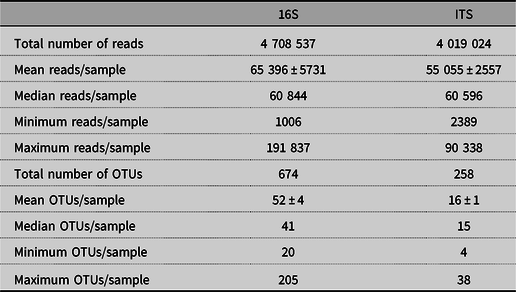
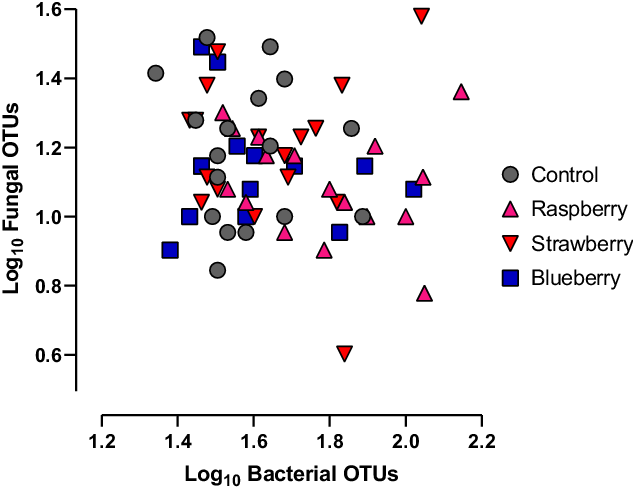
We characterised the bacterial and fungal microbiota of D. suzukii reared on various diets. Illumina sequencing generated an average of 63 400 16S rDNA and 51 137 ITS reads per sample. Removing samples containing extremely low reads and uniquely high species richness gave an adjusted average of 65 296 bacterial and 55 055 fungal reads per sample (Table 1). The number of OTUs was not affected by this adjustment in the data with a total of 2700 bacterial and 350 fungal OTUs at 97% identity cutoff. After removing singletons, 674 bacterial and 258 fungal OTUs (with ≥ 2 counts) remained in the analyses (Table 1; Supplementary Fig. S2). There was no correlation between 16S (bacterial) and ITS (fungal) OTU diversity in the samples (r 66 = 0.16, P = 0.2; Fig. 1).
Summary of sequencing results for 16S and ITS samples from Drosophila suzukii reared on different laboratory fruit-based diets for four generations. Data in this table are after OTUs represented by a single read were removed and after the exclusion of four 16S and two ITS samples that had extremely high diversity and four 16S and five ITS samples that had low total reads. Where provided, means are ± standard error of the mean.

OTU, operational taxonomic unit.
Number of bacterial and fungal operational taxonomic units (OTUs) associated with each Drosophila suzukii tested in the current study, spanning all combinations of generation and diet (control, blueberry, raspberry, strawberry).

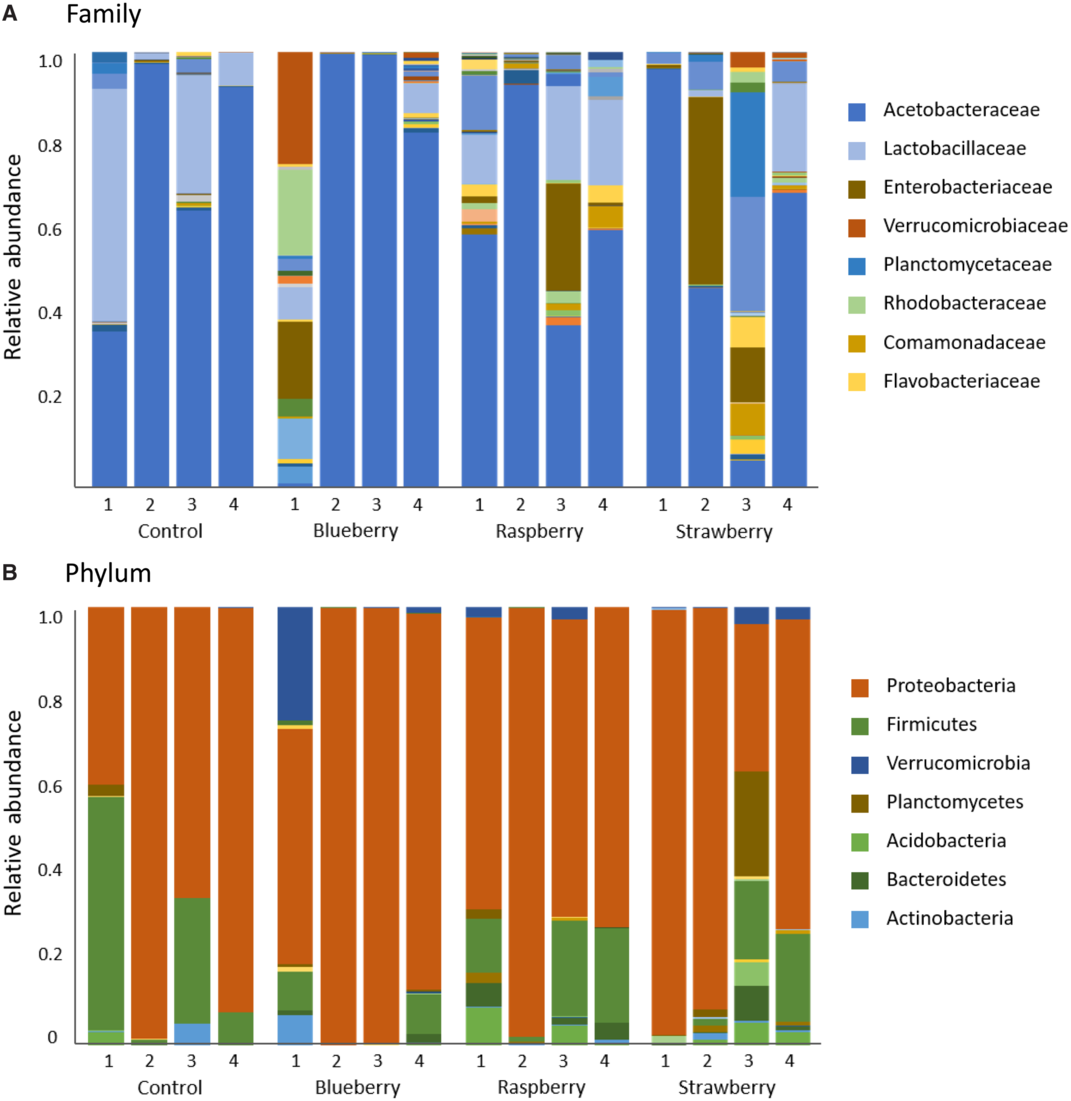
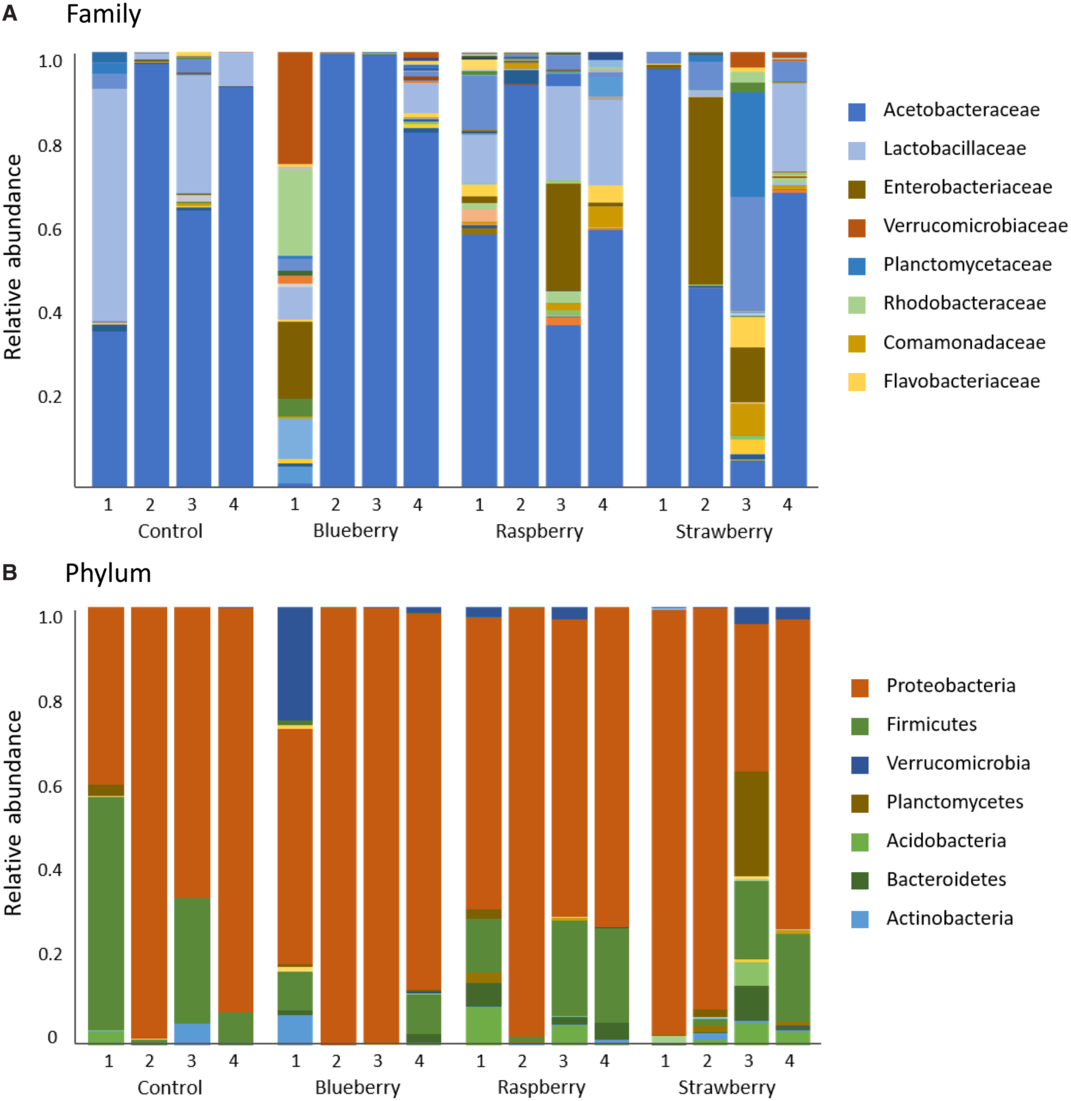
The most abundant members of the bacterial microbiome of Drosophila suzukii adults. A, Reported by family; B, reported by phyla. Results are for D. suzukii reared continuously on a control diet or for three generations on blueberry, raspberry, or strawberry diets and then reared for the fourth generation on the control diet.
Dominant bacterial and fungal taxa
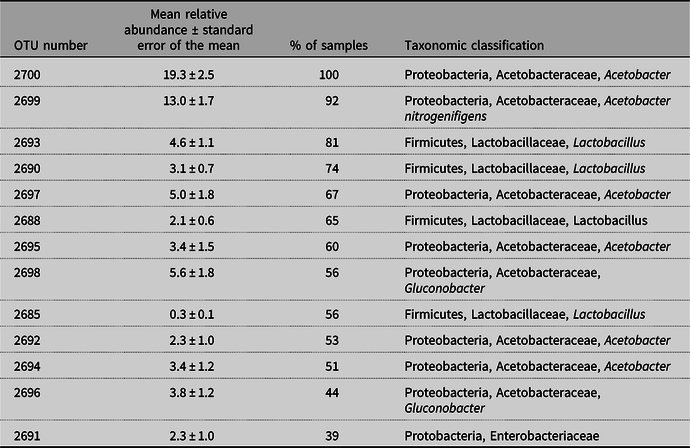
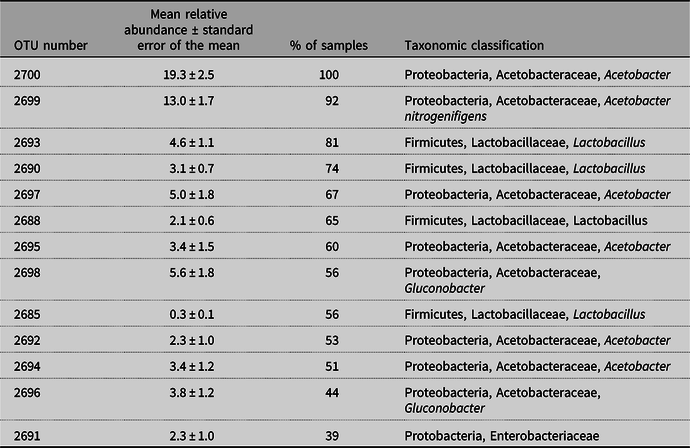
The dominant bacterial taxa are listed in Table 2. We found that even though the bacterial relative abundance varies among generations of D. suzukii reared on different diets, the most abundant taxa in most samples belonged to the phyla Proteobacteria and Firmicutes. In particular, Proteobacteria comprised more than 90% of all taxa for some generations across all diets (Fig. 2). The most abundant proteobacterial family was Acetobacteraceae, comprising more than half of the family-level abundance in all but four treatments (control and blueberry in generation 1 and raspberry and strawberry in generation 3; Fig. 2; full list of taxa in Supplementary Figs. S3–S4).
Relative abundance and prevalence of bacterial OTUs in Drosophila suzukii adults. Listed OTUs were present in at least 50% of all samples or represent at least an average of 2% of the reads across all samples.
OTU, operational taxonomic unit.
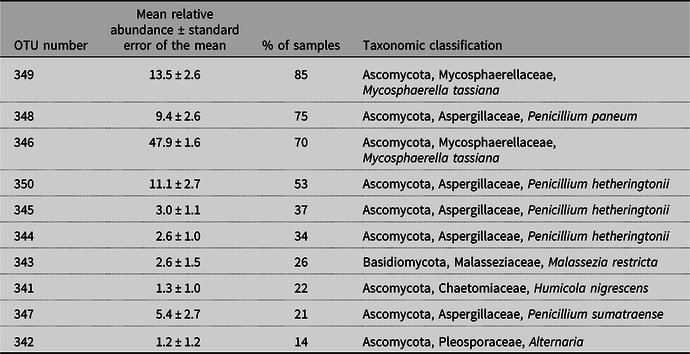
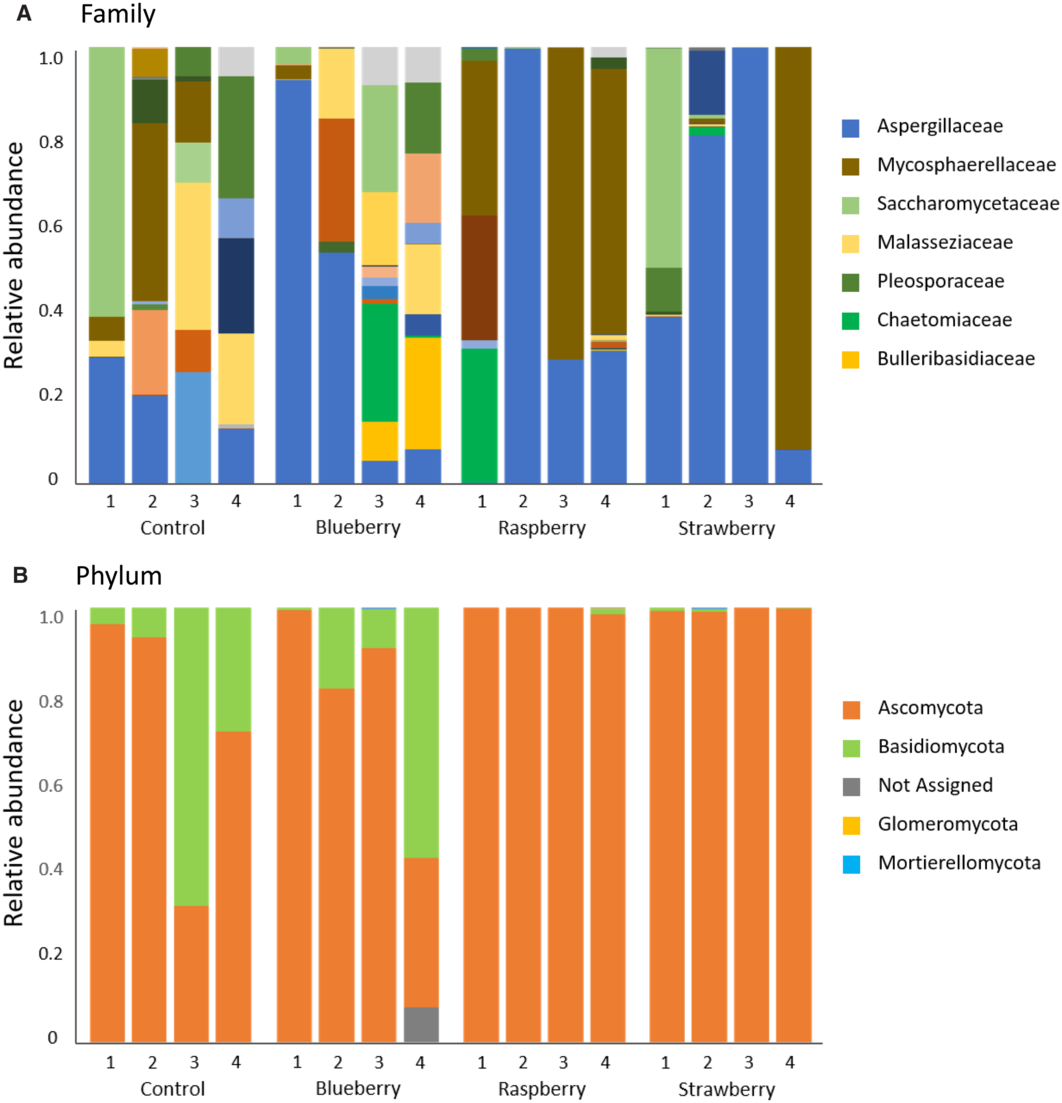
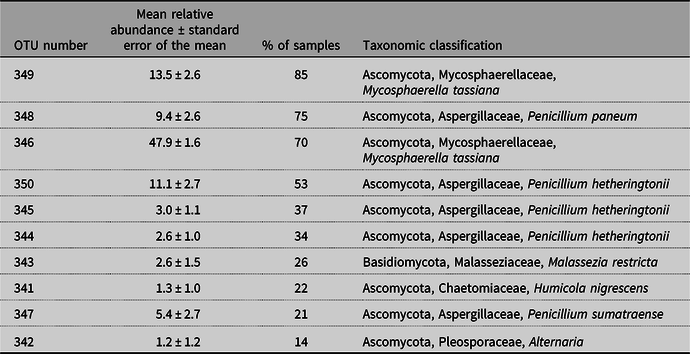
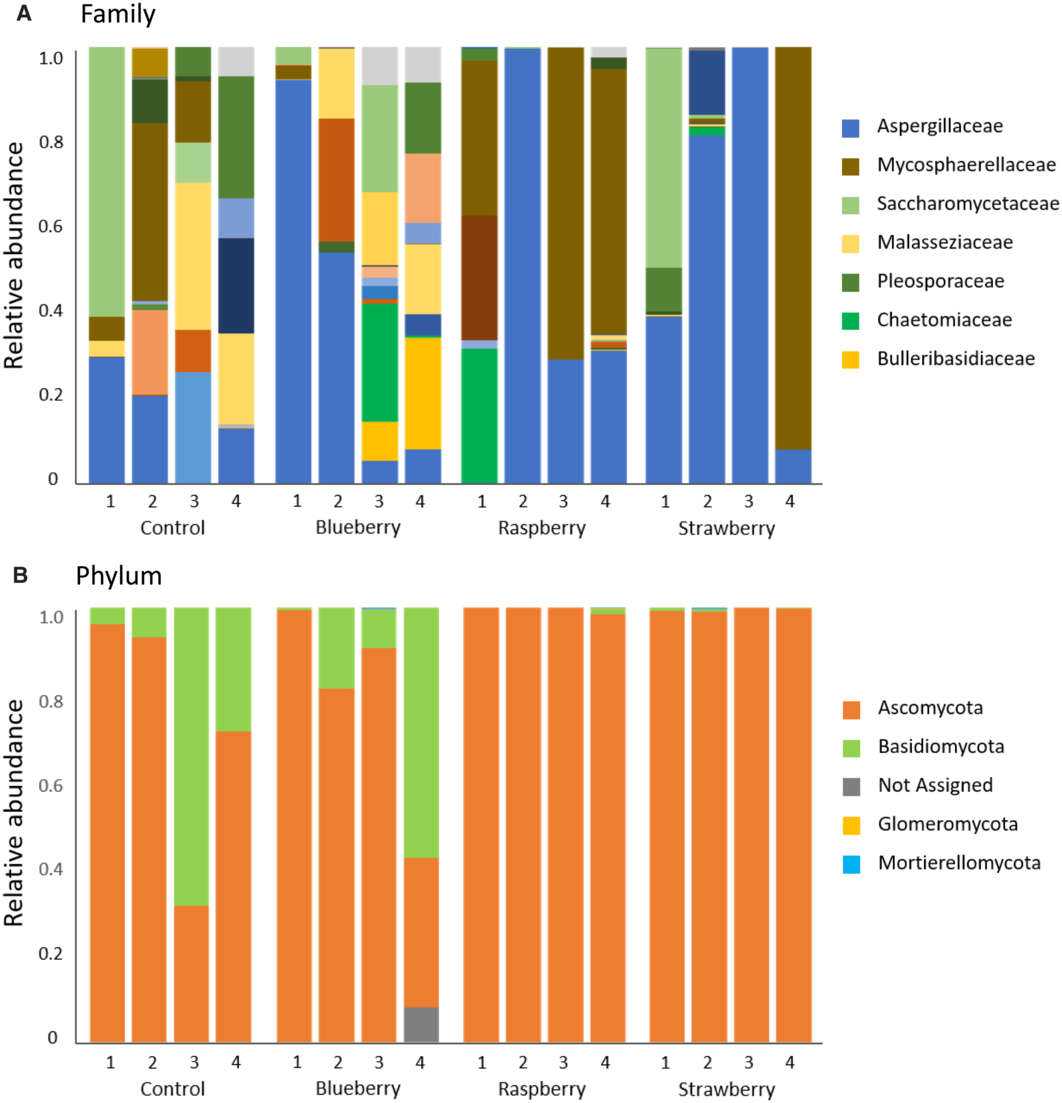
The dominant fungal taxa are listed in Table 3. The fungal microbiota was dominated by the phylum Ascomycota in all but two samples (Fig. 3; full list of taxa in Supplementary Fig. S5). The most abundant families in this phylum were Aspergillaceae, Mycosphaerellaceae, Saccharomycetaceae, Pleosporaceae, and Chaetomiaceae (Fig. 3). The phylum Basidiomycota was also present in all generations and diets and dominated in the two conditions where Ascomycota did not (control generation 3, blueberry generation 4; Fig. 3). The Ascomycete families Malasseziaceae and Bulleribasidiaceae were present in all diets and most generations (Fig. 3).
Relative abundance and prevalence of fungal OTUs in Drosophila suzukii adults. Listed OTUs were present in at least 50% of all samples or averaged at least an average of 2% of the reads across all samples.
OTU, operational taxonomic unit.
The most abundant members of the fungal microbiome of Drosophila suzukii adults. A, Reported by family; B, reported by phyla. Results are for D. suzukii reared continuously on a control diet or for three generations on blueberry, raspberry, or strawberry diets and then reared for the fourth generation on the control diet.
Diversity of bacterial and fungal communities of Drosophila suzukii reared on various diets
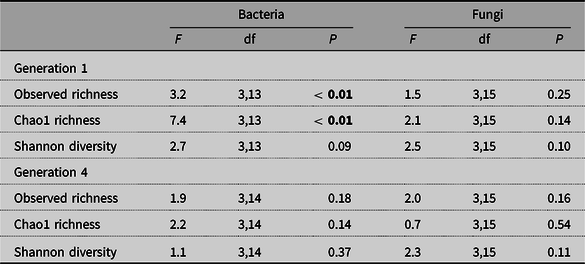
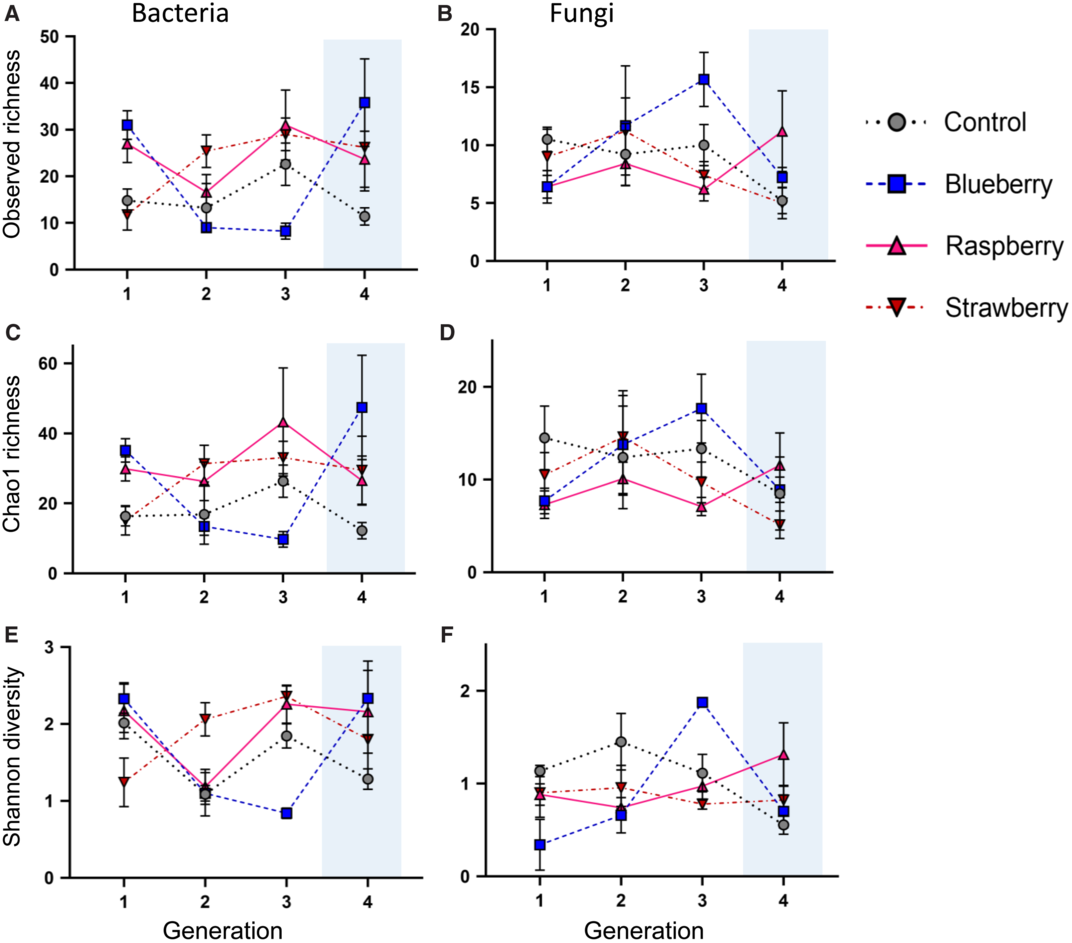
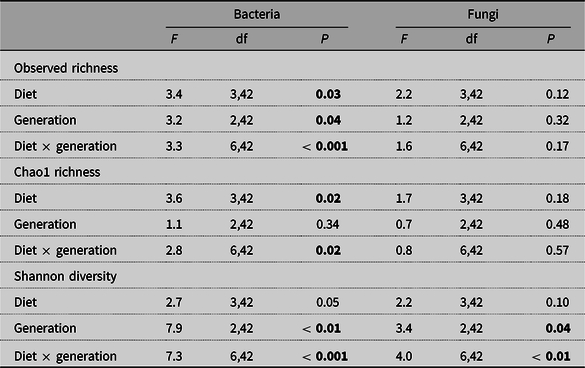
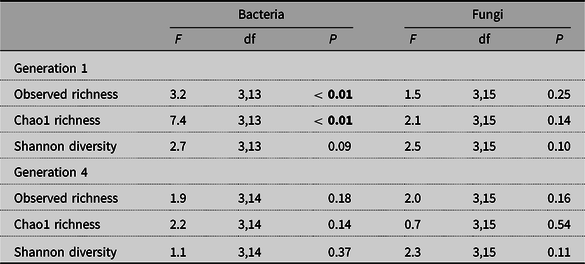
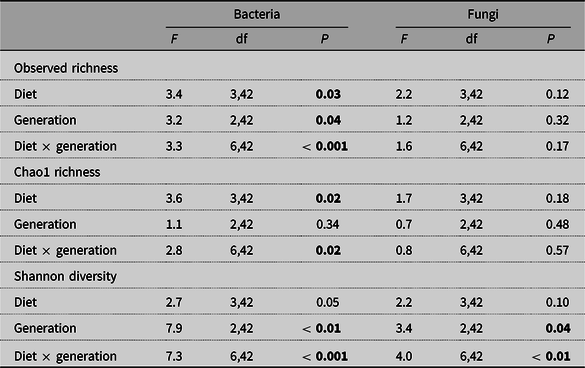
The bacterial species richness and overall diversity were highly variable among D. suzukii reared on different diets and even between generations of flies reared on the same diet. Although the eggs to form the first generation for this study were collected from the same population, the observed and Chao1 richness were significantly different upon transfer to new diets on the first generation (Table 4, Fig. 4), suggesting a dietary effect on bacterial composition; however, the Shannon diversity index did not differ significantly among diets (Table 4, Fig. 4). By contrast, the α-diversity parameters of the fungal microbiome did not vary in generation 1 (Table 4, Fig. 4). Over three generations on the new diets, bacterial diversity changed significantly (significant diet × generation effect for all three α-diversity parameters; Table 5, Fig. 4), whereas this interaction was significant only for Shannon diversity in fungi (Table 5, Fig. 4). Upon return to the control diet, we detected no diet-related differences in diversity in either bacterial or fungal microbiotas (Table 4, Fig. 4).
Summary of analysis of variance of α-diversity measurements for the first and fourth generations of Drosophila suzukii reared on various diets. Drosophila suzukii were reared in their specific diets (control banana-based laboratory diet, blueberry, raspberry, and strawberry) for the first three generations (generation 1 is therefore the first generation in which the diet diverged) and switched to the banana-based control diet for the fourth generation (so generation 4 is the first generation returned to common conditions). See text for details of data treatment; statistically significant values are in bold typeface.
Comparison of α-diversity measurements for the bacterial (A, C, E) and fungal (B, D, F) microbiome of Drosophila suzukii adults reared continuously on a control diet or for three generations on blueberry, raspberry, or strawberry diets and then reared for the fourth generation on the control diet. See Tables 1–2 for statistics.

Summary of two-way analysis of variance of α-diversity measurements of Drosophila suzukii reared on various diets (control banana-based laboratory diet, blueberry, raspberry, and strawberry) for three generations. See text for details of data treatment; statistically significant values are in bold typeface.
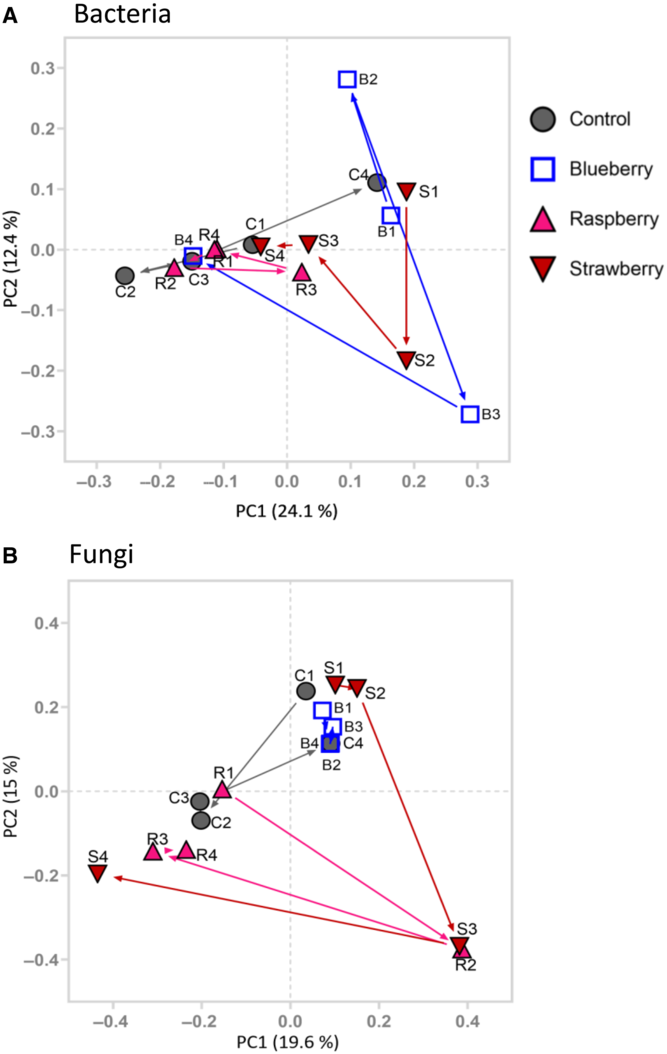
The first two axes of the PCoA explained 36.5% of the variation for the bacterial microbiota (Fig. 5). There was no significant difference among diets in these axes at generation 1 (Pillai’s trace = 0.617, F 6,28 = 2.08, P = 0.088). Both diet and generation significantly affected the position of a sample on PCoA axes 1 and 2, and there was a significant generation × diet interaction (Pillai’s trace = 0.87, F 6,30 = 5.4, P < 0.001), likely driven by significant changes in the microbiota of flies reared on blueberry and strawberry over this period (Fig. 5A). Bacterial community composition along PCoA axes 1 and 2 differed significantly among diet treatments in generation 4, after the D. suzukii had been returned to a common diet (MANOVA: Pillai’s trace = 0.94, F 6,28 = 4.1, P = 0.004); post hoc univariate tests indicate that these differences lie among both PCoA axes (axis 1: F 3,14 = 3.80, P = 0.035; axis 2: F 3,14 = 8.98, P = 0.001), a Tukey’s Range post hoc test on those univariate results showed that the significance was driven by separation between blueberry and control along axis 1, and all the fruit diets and the controls on axis 2.
Principal coordinate analysis of the microbiome composition of Drosophila suzukii adults reared on various diets (C = control, B = blueberry, S = strawberry, R = raspberry). A, Bacterial microbiome; B, fungal microbiome. Drosophila suzukii were reared on their specific diets for three generations (numbered 1–3) and switched to the control diet for the fourth generation (numbered 4); arrows link the samples in order to illustrate the time component within a treatment. Beta-diversity based on operational taxonomic units was calculated using the Bray–Curtis index and expressed as the average of samples (3–5) in a diet-generation combination; percentage variance explained by each axis is indicated.

The first two axes of the PCoA explained 34.6% of the variation in fungal microbiota (Fig. 5). There was no significant difference among diets in these axes at generation 1 (Pillai’s trace = 0.580, F 6,30 = 2.04, P = 0.090). Both diet and generation significantly affected the position of a sample on PCoA axes 1 and 2, and there was a significant generation × diet interaction (Pillai’s trace = 1.0, F 12,84 = 7.0, P < 0.001), likely driven by significant changes in the microbiota of flies reared on strawberry and raspberry over this period (Fig. 5B). Fungal community composition along PCoA axes 1 and 2 differed significantly among diet treatments in generation 4, after the D. suzukii had been returned to a common diet (MANOVA: Pillai’s trace = 0.94, F 6,30 = 4.4, P = 0.003); post hoc univariate tests indicate that these differences lie among both PCoA axes (axis 1: F 3,15 = 23.70, P < 0.001; axis 2: F 3,15 = 13.92, P < 0.001), and a Tukey’s range test on those univariate tests reveals that they are driven by differences between the raspberry and strawberry diets and control and blueberry on both axes.
Discussion
Here we explored the influence of diet on the D. suzukii microbiota and the persistence of any dietary influences on the microbiota. The microbiota differs among seasons and locations in flies collected in nature (Lachance et al. Reference Lachance, Gilbert and Starmer1995; Fountain et al. Reference Fountain, Bennett, Cobo-Medina, Conde Ruiz, Deakin and Delgado2018; Martinez-Sañudo et al. Reference Martinez-Sañudo, Simonato, Squartini, Mori, Marri and Mazzon2018) and is clearly dependent on food in the laboratory (Chandler et al. Reference Chandler, Morgan Lang, Bhatnagar, Eisen and Kopp2011), so we predicted that there should be clear effects of diet on the microbiota, which broadly reflects our results. However, the Drosophila microbiota is thought to be largely transient (Wong et al. Reference Wong, Ng and Douglas2011; Blum et al. Reference Blum, Fischer, Miles and Handelsman2013; but see Pais et al. Reference Pais, Valente, Sporniak and Teixeira2018), leading us to predict that any diet-related differences should not persist when animals are returned to a common diet. We find partial support for this prediction, which we discuss below.
The composition of the bacterial microbiota that we found in D. suzukii is broadly consistent with that reported elsewhere for D. suzukii (Chandler et al. Reference Chandler, James, Jospin and Lang2014; Fountain et al. Reference Fountain, Bennett, Cobo-Medina, Conde Ruiz, Deakin and Delgado2018; Solomon et al. Reference Solomon, Dodangoda, McCarthy-Walker, Ntim-Gyakari and Newell2019), and for Drosophila more generally (Chandler et al. Reference Chandler, Morgan Lang, Bhatnagar, Eisen and Kopp2011; Wong et al. Reference Wong, Ng and Douglas2011, Reference Wong, Chaston and Douglas2013). In particular, we found an abundance of Proteobacteria in the Acetobacteraceae and the Enterobacteriaceae, which are typical Drosophila gut microbes (Chandler et al. Reference Chandler, James, Jospin and Lang2014; Bing et al. Reference Bing, Gerlach, Loeb and Buchon2018; Fountain et al. Reference Fountain, Bennett, Cobo-Medina, Conde Ruiz, Deakin and Delgado2018), and appear to account for many of the phenotypic impacts of the gut microbiota (Shin et al. Reference Shin, Kim, You, Kim, Kim and Lee2011; Storelli et al. Reference Storelli, Defaye, Erkosar, Hols, Royet and Leulier2011; Wong et al. Reference Wong, Dobson and Douglas2014). We note that we did not find the abundance of Tatumella reported by Chandler et al. (Reference Chandler, James, Jospin and Lang2014).
Using ITS sequencing to identify eukaryotes (usually fungi) is less common than using 16S (bacteria) in microbial metagenomics studies (Fricker et al. Reference Fricker, Podlesny and Fricke2019), but the predominance of ascomycete yeasts we found is consistent with both metagenomics (Chandler et al. Reference Chandler, Eisen and Kopp2012; Bing et al. Reference Bing, Gerlach, Loeb and Buchon2018) and culturing (Lachance et al. Reference Lachance, Gilbert and Starmer1995) studies in Drosophila. These yeasts appear to have important phenotypic effects on D. melanogaster biology, both as symbionts (Jiménez Padilla Reference Jiménez Padilla2016) and as a dietary component (Anagnostou et al. Reference Anagnostou, Dorsch and Rohlfs2010; Colinet and Renault Reference Colinet and Renault2014; Solomon et al. Reference Solomon, Dodangoda, McCarthy-Walker, Ntim-Gyakari and Newell2019). The Basidiomycota yeast-like Malasseziaceae has not been reported in Drosophila but has been previously recovered in sequences from Culex pipiens Linnaeus (Diptera: Culicidae) (Chandler et al. Reference Chandler, Liu and Bennett2015) and wood-feeding beetles (Coleoptera: Ciidae, Erotylidae, Passalidae, Tenebrionidae) (Zhang et al. Reference Zhang, Suh and Blackwell2003). Malasseziaceae was present in about 25% of our D. suzukii; however, Chandler et al. (Reference Chandler, Liu and Bennett2015) discounted these sequences (often a human commensal or opportunistic pathogen) as artefacts of handling, which may be the case here as well. Most of the Aspergillaceae were likely present as moulds growing on the food, in spite of the mild anti-mould compounds included in the diet (propionic acid in the fruit diets, and methylparaben in the control diet). Some of the fungal taxa we detected are fairly unusual for a laboratory-based diet. For example, Mycosphaerellaceae and Chaetomiaceae – present in 70 and 22% of the flies we sequenced, respectively – are usually associated with decaying plant tissues (Videira et al. Reference Videira, Groenewald, Nakashima, Braun, Barreto, de Wit and Crous2017; Wang et al. Reference Wang, Yang, Meijer, Kraak, Sun and Jiang2019). We speculate that these have either been maintained in our colonies since their establishment, or were present in the fruit that we used to make the diets.
We found clear, but complex, effects of diet on the microbiota. Upon switching from control to fruit diets, there were immediate impacts of diet on two of three measures of bacterial species richness, such that control and strawberry D. suzukii had lower observed richness and Chao1 richness than those in blueberry and raspberry. However, when accounting for bacterial community composition (via multivariate analyses), we did not detect differences among the bacterial communities in generation 1. Similarly, we saw no differences among diets in either fungal species richness or in the PCoA. Drosophila acquire their microbiota from their environment (Bakula Reference Bakula1969; Blum et al. Reference Blum, Fischer, Miles and Handelsman2013), so the initial microbiota in the different diets is likely a product of any microbiota growing in the diets (although we cooked the food and included propionic acid), as well as those brought in by the adults (Starmer and Fogleman Reference Starmer and Fogleman1986). Given the substantial variation in OTU identity we observed among individuals within a treatment, it is possible that the initial differences in α-diversity are more a product of a founder effect than a direct impact of diet. The microbiota of D. suzukii in different diets followed distinct paths for the next two generations. We also suggest that these processes likely operate in reverse once the D. suzukii were returned to a common diet: although the species richness was similar among the diets, there were still significant differences in community composition. If the main effect of community composition is the diet, then we predict that if we had continued the experiment for a fifth generation, these diet-related differences in community composition would have disappeared.
Although we are confident that diet had a significant effect on the microbiota, we recognise that our findings are limited to one population of D. suzukii for each of the four treatment groups (control, blueberry, raspberry, strawberry). It is possible, therefore, that some of the among-diet differences could be a product of random drift (or neutral processes) in the microbial community development after generation 1 (Adair et al. Reference Adair, Wilson, Bost and Douglas2018). For this reason, we are unwilling to ascribe specific microbiotas to specific food types and do not attempt to interpret microbiota differences to the properties of the different fruits despite some intriguing differences, for example, between raspberry/strawberry and blueberry/control diets in fungal community composition. We conducted our experiments using a diet cooked from ripe fruit, which is different from the unripe fruit in which D. suzukii larvae would normally develop (Asplen et al. Reference Asplen, Anfora, Biondi, Choi, Chu and Daane2015). Thus, although our diets contained varying microbiota (and very different nutrients, see also Jiménez-Padilla et al. Reference Jiménez Padilla, Ferguson and Sinclair2020), we recognise that the identity of those microbes and yeasts is unlikely to be reflective of the microbial flora of those fruits in nature. Future work could include more replicate populations per fruit type to unravel the mechanistic relationship between diet and microbiota, and to explore the ways in which diet and the microbiota interact to influence phenotype.
Flies harbouring infections of Wolbachia were excluded from our study, because the presence of these intracellular bacteria confounds efforts to characterise the gut microbiota of the host (K.D.F., unpublished observations). In doing so, our results do not reflect potential interactions between Wolbachia and members of the gut microbiota or how those interactions may be modified by diet (Fromont et al. Reference Fromont, Adair and Douglas2019). Similarly, we used only female D. suzukii. Female D. suzukii consume more yeast than males (Jiménez Padilla Reference Jiménez Padilla2016), so we have probably captured the broader yeast microbiome in our study, but we will have missed any male-specific flora (Fountain et al. Reference Fountain, Bennett, Cobo-Medina, Conde Ruiz, Deakin and Delgado2018 found a significant sex effect in their study of the microbiota of wild-caught D. suzukii).
In conclusion, we found that rearing D. suzukii on successive generations of fruit-based diet did change the microbiota. These changes appeared to take more than one generation to establish, suggesting at least some persistence of microbial community composition across generations. More work is required to determine the mechanisms by which diet determines the microbiota in Drosophila suzukii.
Acknowledgements
Thanks to Joanne Tang, Adam Smith, Lamees Mohammad, SongMin Lee, Eddy Huang, Xin Wang, and Dina Mostafa for laboratory assistance. We are very grateful to Kurtis Turnbull for assistance with multivariate statistics. The Canadian Center for Computational Genomics is a Genomics Technology Platform supported by the Canadian Government through Genome Canada. This work was supported by Agriculture and Agri-Food Canada Research Grants J-000064, J-001321, and J-002201 to K.D.F., a Natural Sciences and Engineering Research Council Discovery Grant to B.J.S., and an Ontario Graduate Scholarship to Y.J.-P.
Supplementary material
To view supplementary material for this article, please visit https://doi.org/10.4039/tce.2020.37.