The Great East Japan Earthquake (GEJE) and the consequent tsunami struck the northeast district of Japan on March 11, 2011, and caused the reactors at the Fukushima Daiichi Nuclear Power Plant to explode. The surrounding area was contaminated with radioactive material emitted from the damaged power plants. Owing to the radiation exposure risk, entering or residing in that area was prohibited. Moreover, the disaster caused marked deterioration in the clinical parameters associated with lifestyle diseasesReference Tsubokura, Hara and Matsumura 1 as well as psychological distress due to the loss of family, friends, homes, possessions, and jobs.Reference Nohara 2 Evacuation because of the GEJE was reportedly associated with an increase in the incidence of hyperlipidemiaReference Nomura, Blangiardo and Tsubokura 3 and diabetesReference Satoh, Ohira and Hosoya 4 in previous studies, implying a negative impact of mental stress and limited access to medical facilities in the aftermath of the life-threatening disasters on survivors’ health.
Furthermore, this multiple disaster led to a variety of health issues and large-scale movement of local citizens, leaving them living long-term in an unfamiliar environment, especially in severely affected areas.Reference Hasegawa, Tanigawa and Ohtsuru 5 In particular, in the city of Minamisoma, Fukushima Prefecture, the number of residents temporarily decreased from approximately 72,000 to approximately 10,000 just after the disaster. Because of differences in intent to return to their hometown among different age groups, the age distribution has been dramatically altered and the average age has rapidly increased.Reference Ishikawa, Kanazawa and Morimoto 6 Moreover, because Minamisoma City is a rural agriculture-based area,Reference Zhang, Yan and Oba 7 many evacuees have faced difficulties with not being able to continue agricultural work or the same daily routines as those before the disaster. After the GEJE, the Japanese government built temporary housing complexes in affected areas to temporarily accommodate survivors who had to leave their homes as a result of the damage caused by the earthquake, the tsunami, or the restriction order after the nuclear accident. There are possible health-related issues among residents in temporary housing, including lower physical activity and deteriorating health-related quality of life (HRQOL). Physical activity is defined as “any bodily movement produced by the skeletal muscles that results in energy expenditure”.Reference Caspersen, Powell and Christenson 8 A lack of physical activity has been identified as the fourth leading risk factor for global mortality 9 and has been found to contribute to an increased risk of noncommunicable diseases.Reference Lee, Shiroma and Lobelo 10 Furthermore, particularly among older adults, physical inactivity may promote frailtyReference Fried, Tangen and Walston 11 and poor physical performance, such as reduced mobility function and muscle strength.Reference Matta, Mayo and Dionne 12
HRQOL is defined as an individual’s or groups’ perceived physical and mental health over time and is an important assessment parameter for improving population health. 13 HRQOL is usually associated with psychological support, such as the ability to visit relatives and friends.Reference Li, Lin and Lin 14 A reduced HRQOL is associated with greater short-term and long-term mortality.Reference Brown, Thompson and Zack 15 Thus, although the evacuees survived a great disaster, they may have a reduced lifespan due to a lower HRQOL.
Accordingly, it is important to monitor the physical activity level and HRQOL among older evacuees in temporary housing for their health and well-being. Previous studies have found decreased physical activity,Reference Murakami, Yoshimura and Ishikawa-Takata 16 deteriorated static balance,Reference Ishii, Ochi and Tsubokura 17 and reduced HRQOLReference Yabuki, Ouchi and Kikuchi 18 among temporary housing residents after the GEJE. Furthermore, 3 to 5 years after the major earthquake in Italy in 2009, residents in affected areas undertook significantly less physical activity than at an earlier phase of the disaster.Reference Minardi, Gigantesco and Mancini 19 Despite this, no study has specifically focused on the manner in which residence in temporary housing itself affects these variables.
In the present study, we aimed to clarify the impact of residence in temporary housing on both physical activity and HRQOL, as well as the physical performance as a result of the lower physical activity, among older evacuees residing in temporary housing after the GEJE. Therefore, we assessed the physical activity and HRQOL of older people aged ≥65 years who were residing in temporary housing and compared these variables with those of older people who were residing in their own homes and analyzed the degree of correlation between physical activity and the potential factors related to physical activity. We recruited people aged ≥65 years based on the fact that the age of 65 has been adopted as a definition of an older person in a number of contexts. For example, 65 years is a common age for the timing of retirement, 65 years is a category used in statistical and demographic data, and frailty occurs at a certain (high) percentage in populations aged ≥65 years.Reference Fried, Tangen and Walston 11 The study site was Minamisoma City, which was severely affected by the multiple disaster. The findings of this study could provide supporters or health care providers in similarly affected areas with clear guidance for improvement of health outcomes in this unique group.
METHODS
Subjects
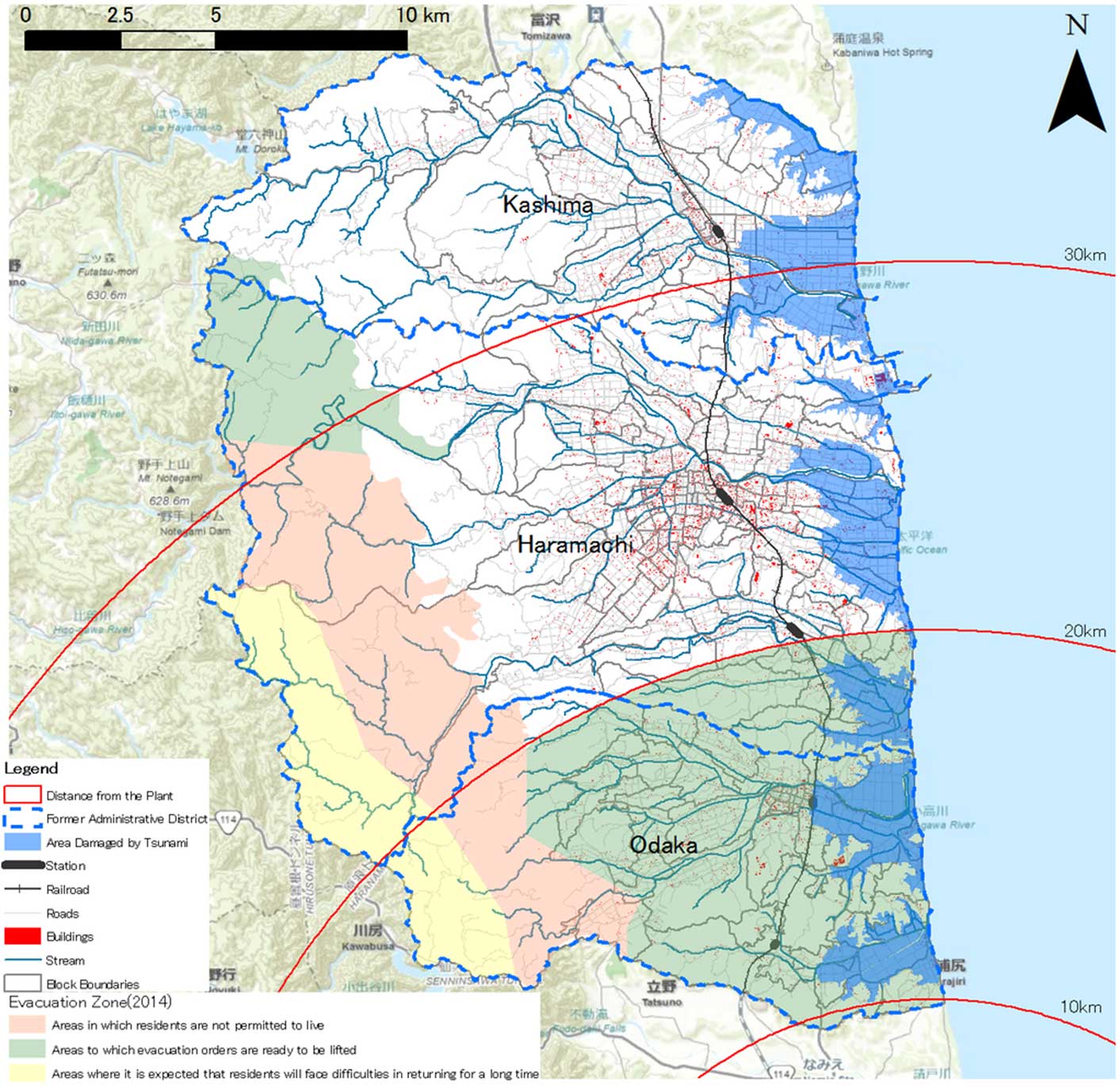
In this cross-sectional study, we collected data from residents who had been evacuated to temporary housing after the GEJE following the directive of the Japanese government (temporary housing group) and from residents who had continued to live in their own houses (control group). The 2 groups were matched by age to exclude the effect of an age difference on the measured variables. Mobility function and muscle strength were measured from December 2, 2014, to January 22, 2015, in Kashima ward, Minamisoma City, which covers the northern part of the city. The branch office of the municipality in Kashima ward is approximately 32 km north of the Fukushima Daiichi Nuclear Power Plant (Figure 1).Reference Zhang, Yan and Oba 7 Because Kashima ward is the only region in Minamisoma City for which a large portion of the population was not ordered to evacuate by the Japanese government, many temporary housing complexes were built there for evacuees from the tsunami or radiation leaks after the GEJE. The subjects in the temporary housing group began residing in the temporary housing complexes from 6 months after the GEJE.
Location of Kashima Ward, Minamisoma City, and Distance From the Nuclear Power Plant. Reprinted from reference 7 (Int J Environ Res Public Health 2014;11:9286-9305) by permission of the copyright holder.

Prior to study initiation, the residents of 5 temporary housing complexes in Kashima ward were informed that a test session would be conducted at the assembly facility within each complex. The shortlisted complexes were chosen on the basis of the recommendation of the Director of the Social Welfare Council, Minamisoma City. The inclusion criteria were age ≥65 years and ability to independently perform daily activities. Exclusion criteria were preexisting heart disease, inability to walk independently, and insufficient cognitive function to appropriately complete the questionnaire. With the assistance of the local government, we also recruited local people who were permitted to reside in the same houses as before the disaster by use of the same criteria.
Measurement Parameters
Procedures
On the measurement day, the subjects were provided with a detailed explanation of the study objective. Researchers obtained written consent. The subjects’ age, sex, height, and body weight were recorded. Physical activity, factors related to physical activity (mobility function and muscle strength), and HRQOL were also measured, as outlined below.
Physical Activity
The level of physical activity was assessed in both groups. The number of steps walked daily was considered to be representative of physical activity in this study and was recorded by using a triaxial accelerometer (e-style2; SUZUKEN Co, Nagoya, Japan). The use of an accelerometer for measuring moderate physical activity has been validated previously.Reference Hendelman, Miller and Baggett 20 All subjects were instructed to clip a triaxial accelerometer on their waist for 9 consecutive days. Previous studies have found that the waist is close to the center of gravity and is therefore highly sensitive to physical activity.Reference Mathie, Coster and Lovell 21 The subjects were instructed to perform daily activities as usual and to wear the accelerometer continuously, except while sleeping, showering, or bathing. The number of steps walked daily was automatically recorded and stored by the device. The values from the second day to the eighth day were averaged and used for data analysis. Furthermore, to clarify the prevalence of low physical activity, the number of subjects who had less than 5000 steps per day in each group by sex was counted in accordance with a previous report describing 2500 to 4999 steps per day as “limited activity level.”Reference Tudor-Locke, Johnson and Katzmarzyk 22
Factors Related to Physical Activity: Mobility Function and Muscle Strength
Mobility function and muscle strength were measured on the first day of the study. The Timed Up and Go (TUG) testReference Podsiadlo and Richardson 23 was performed to assess mobility function. The time taken for each subject to rise from an arm chair, walk at a comfortable and safe pace to a line on the floor 3 m away, turn and walk back, and sit down again was recorded. The test was performed twice. The shorter time, reflecting better mobility function, was used for data analysis.
Muscle strength was determined via the measurement of grasping power, which is reportedly well correlated with muscle massReference Rantanen, Era and Kauppinen 24 and highly predictive of functional limitations and the onset of disability in the future.Reference Rantanen, Guralnik and Foley 25 A dynamometer (GRIP-D, T.K.K 5401; Takei Scientific Instruments, Niigata, Japan) was used to assess grasping power. Each subject was instructed to hold a dynamometer in each of their hands while in the standing position, with their arms hanging freely at their sides. The test was performed twice, with each hand alternately, and with the hand to be tested first chosen randomly. For each hand, the average value of 2 trials was recorded, and the better score achieved between both hands was used for data analysis.
HRQOL
The Medical Outcome Study 36-Item Short- Form Survey v2 (SF-36v2)Reference Fukuhara, Bito and Green 26 questionnaire was administered to assess HRQOL. The SF-36v2 is a well-known, globally used questionnaire with high reliability and validity for the measurement of HRQOL.Reference Ware and Sherbourne 27 Subjects were asked to complete the Japanese version of the SF-36v2. The SF-36v2 consists of 36 questions related to 8 different domains of quality of life: physical functioning (PF), role limitations due to physical illness (RP), bodily pain (BP), general health perceptions (GH), vitality (VT), social functioning (SF), role limitations due to emotional problems (RE), and mental health (MH). Each subject marked the closest answer from among multiple choices. The score in each domain of the SF-36v2 was transformed to a numerical score ranging from 0 to 100, with a higher score reflecting better self-perceived health. The scale of each domain was assessed separately to determine the HRQOL domains that were affected by residence in temporary housing. Furthermore, to clarify prevalence of low HRQOL in each group by sex, the physical component summary (PCS) and mental component summary (MCS) of each subject were calculated by the algorithm. The number of subjects who rated component scores (PCS and MCS) in the bottom tertile was counted in accordance with a previous report,14 considering the top tertile to be aging successfully.
Statistical Analysis
The Shapiro-Wilk normality test was used to assess the normality of the distribution of each variable in both men and women and in the temporary housing and control groups. The significance of the differences between the temporary housing group and the control group was assessed by using a two-sample t-test if the distribution was normal, as determined by the Shapiro-Wilk normality test; if not, the nonparametric Mann-Whitney test was used. The analysis was conducted separately in men and women. Moreover, to assess the relationship between the number of steps walked daily and the other 2 variables (time required to perform the TUG test and grip strength) in the temporary housing group, Pearson’s product-moment correlation coefficient (r) was used. The correlation coefficient was also separately determined for men and women. To examine differences in the prevalence of low physical activity level and low HRQOL between the temporary housing group and the control group, a chi-square statistical test was used and 95% CIs were calculated. A P value<0.05 was considered statistically significant. The parametric data are presented as means and standard deviations, whereas the nonparametric data are presented as medians and interquartile ranges. All of the data were analyzed by using the Statistical Package for Social Sciences (SPSS; IBM Corp, Armonk, NY) version 21.
Ethical Consideration
This study was approved by the ethics committee of Minamisoma Municipal General Hospital (ID: 26-11). Written informed consent was obtained from each subject and all tests were conducted according to the principles expressed in the Declaration of Helsinki.
Results
Demographic Characteristics of the Temporary Housing and Control Groups
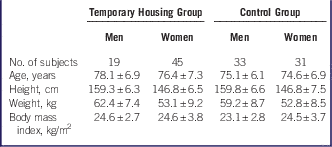
A total of 64 subjects (19 men and 45 women) were included in the temporary housing group and 64 subjects (33 men and 31 women) were included in the control group. Recruitment was continued until the same number of subjects was enrolled in both groups. The demographic characteristics did not differ significantly between the 2 groups according to sex (Table 1).
Demographic Characteristics of the Study PopulationFootnote a

a Temporary housing group: persons who resided in temporary housing complexes owing to the impact of the Great East Japan Earthquake. Control group: persons who were permitted to reside in their own houses, which were the same as those before the disaster. No statistically significant differences were observed.
Physical Activity
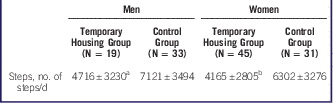
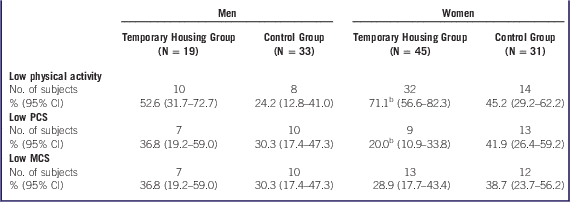
The number of steps walked daily was significantly lower in the temporary housing group than in the control group for both men (P<0.05) and women (P<0.01; Table 2). Specifically, activity was 33.8% and 33.9% lower in the men and women in the temporary housing group, respectively, indicating that the level of physical activity of older people residing in temporary housing was lower by approximately one-third compared with that of people residing in their own homes. The prevalence of low physical activity was higher in women in the temporary housing group (71.1%; 95% CI: 56.6–82.3) than in those in the control group (45.2%; 95% CI: 29.2–62.2; P<0.05; Table 3) but not in men.
Number of Steps Walked Daily in the 2 Groups

a,bSignificant difference between the temporary housing group and the control group: a P<0.05, b P<0.01.
Prevalence of Low Physical Activity Level and Low HRQOL in the 2 GroupsFootnote a

a Abbreviations: HRQOL, health-related quality of life; SF-36v2, Medical Outcome Study 36-Item Short- Form Survey; PCS, physical component summary of SF-36v2, which reflects scores for physical functioning, role limitations due to physical illness, bodily pain, and general health perceptions; MCS, mental component summary of SF-36v2, which reflects scores of vitality, social functioning, role limitations due to emotional problems, and mental health. Low physical activity, subjects who had less than 5000 steps/day. Low PCS, subjects who rated PCS in the bottom tertile within men or women. Low MCS, subjects who rated MCS in the bottom tertile within men or women.
b Significant difference between the temporary housing group and the control group, P<0.05.
Factors related to physical activity and their relationship with physical activity
The TUG test duration was significantly longer in the temporary housing group than in the control group, in both men and women (P<0.01), indicating that the mobility function of both men and women residing in temporary housing was poorer than that of men and women residing in their own houses (Table 4). Moreover, grip strength was significantly lower in the temporary housing group than in the control group in men (P<0.01), although no significant difference in this value was observed in the women between the groups (Table 4).
Time Required to Perform the TUG Test and Grip Strength in the 2 GroupsFootnote a

a Abbreviation: TUG, Timed Up and Go test. The parameters are presented as mean±standard deviation.
b Significant difference between the temporary housing group and the control group, P<0.01.
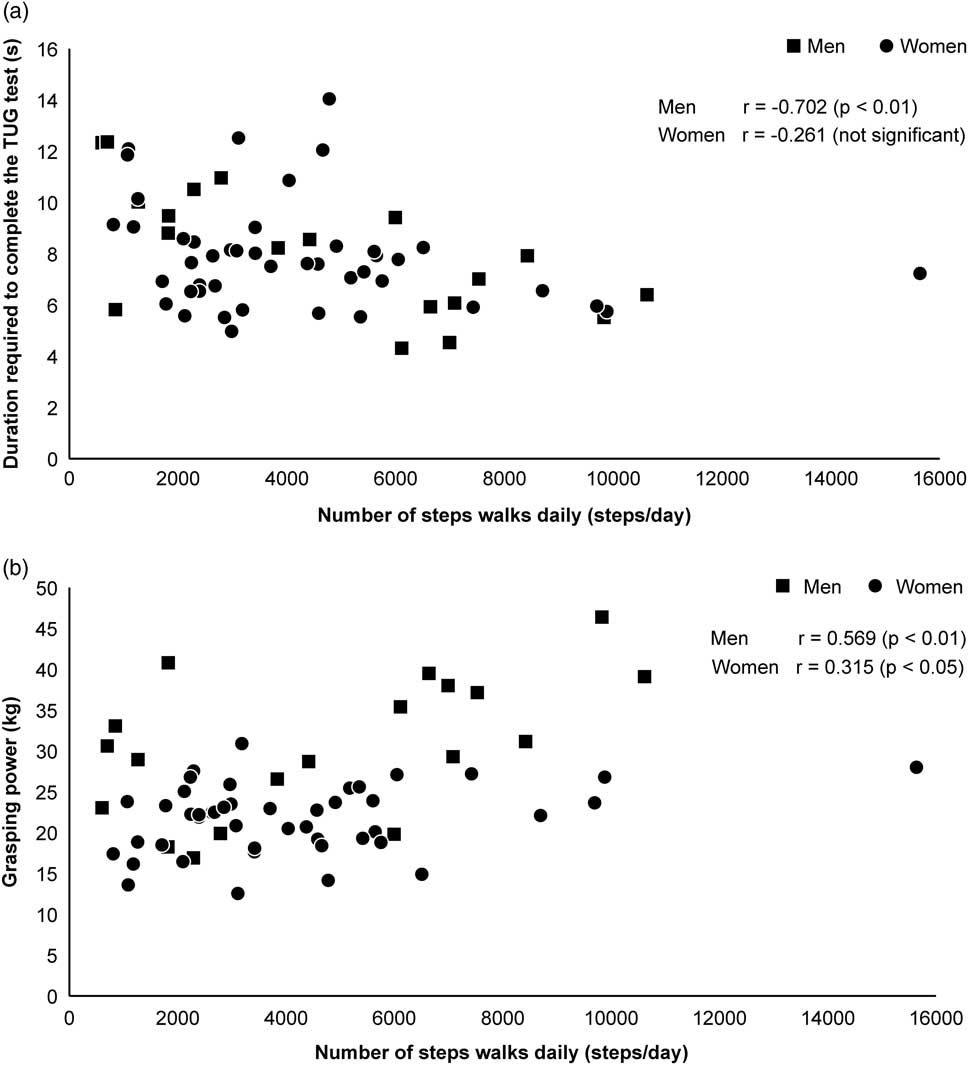
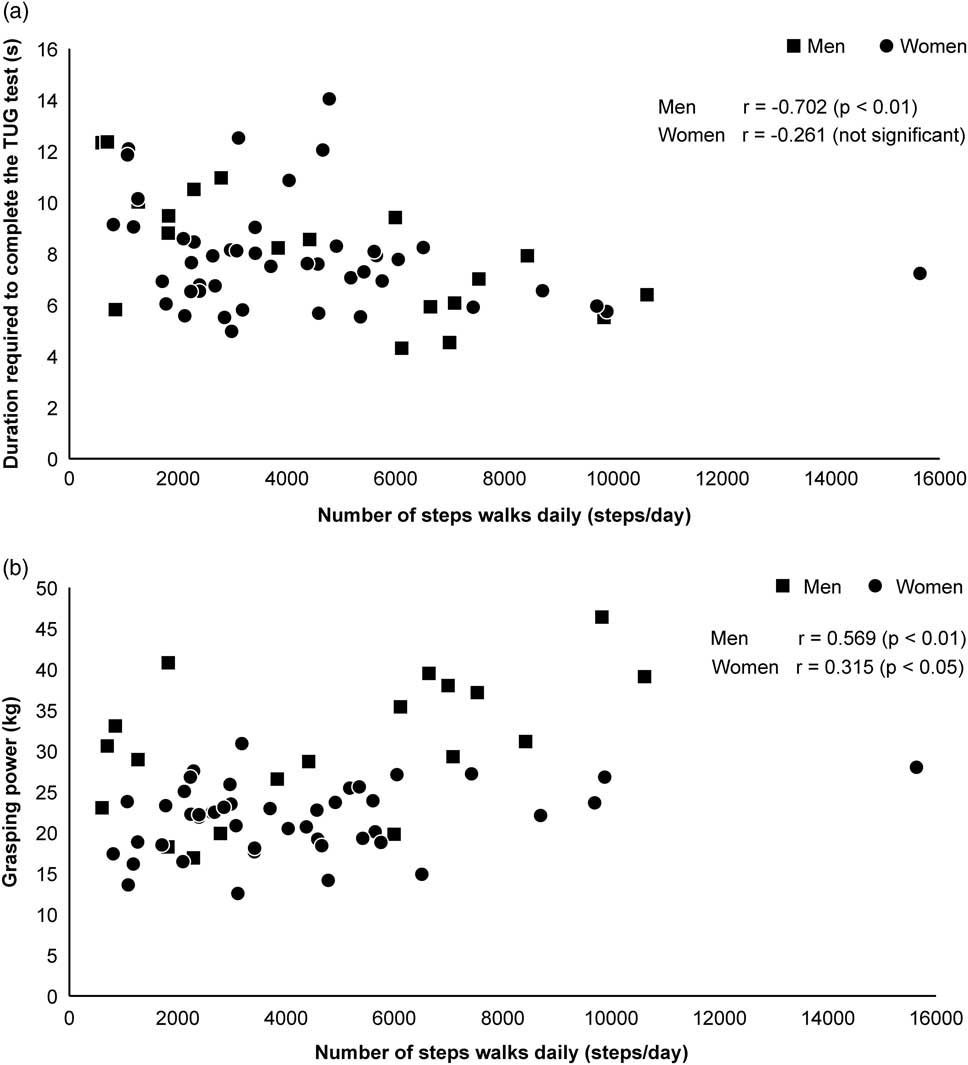
The TUG test duration showed a significant negative correlation with the number of steps walked daily in men (r=-0.702, P<0.01), but not women (r=-0.261, P=0.083), in the temporary housing group (Figure 2A). However, grip strength was correlated with the number of steps walked daily in both men (r=0.569, P<0.01) and women (r=0.315, P<0.05) in the temporary housing group (Figure 2B). These results suggest that mobility function was associated with physical activity only in men, whereas muscle strength was related to physical activity in both men and women.
Scatter Diagram of Number of Steps Walked Daily Plotted Against (a) Time Required to Complete the Timed Up and Go (TUG) Test and (b) Grasping Power.
Health-Related Quality of Life
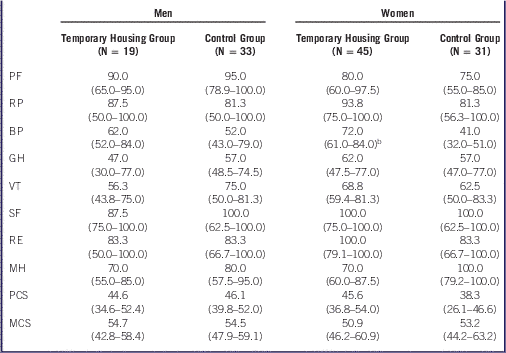
The BP score was higher in women (but not men) in the temporary housing group than in the control group (P<0.01). However, none of the other scores differed significantly in the men and women between the groups. Although the difference was not significant, the RP and BP scores were higher in men in the temporary housing group than in the control group. In contrast, the PF, RP, GH, VT, and RE scores were all higher in the women in the temporary housing group than in the women in the control group (Table 5). Thus, it appears that the HRQOL in the temporary housing group was similar to that in the control group, which suggests that long-term residence in temporary housing does not directly affect the HRQOL of older residents. The prevalence of a low PCS was lower in women in the temporary housing group (20.0%; 95% CI: 10.9–33.8,) than in women in the control group (41.9%; 95% CI: 26.4–59.2; P<0.05; Table 3), but this difference was not seen in men.
Scores of the SF-36v2 Subscales in the Temporary Housing Group and Control GroupFootnote a

a Abbreviations: SF-36v2, Medical Outcome Study 36-Item Short- Form Survey; PF, physical functioning; RP, role limitations due to physical illness; BP, bodily pain; GH, general health perceptions; VT, vitality; SF, social functioning; RE, role limitations due to emotional problems; MH, mental health; PCS, physical component summary; MCS, mental component summary. Data are presented as medians and interquartile ranges.
b Significant difference between the temporary housing group and the control group, P<0.01.
DISCUSSION
The results of the present study showed that physical activity was partially associated with mobility function and muscle strength. This result suggests that the lower physical activity of residents in temporary housing, compared with that among individuals residing in their own houses, could lead to reduced mobility function and muscle strength, which could affect the health of these residents in the future.
To our knowledge, this is the first study to focus on the impact of residence in temporary housing after an unexpected major disaster on the physical activity level and HRQOL of older individuals, in comparison with individuals who also experienced the disaster but were residing in their own houses. In this study, those who were allocated to the control group were also survivors of the disaster. We believe that the findings of such a study can clarify underlying health-related issues in older residents in temporary housing and can offer health care providers and persons involved in disaster management specific information regarding measures to prevent the deterioration of health-related variables in this population.
The results of the present study showed that physical activity was lower in the temporary housing group than in the control group. Aoyagi and colleaguesReference Aoyagi and Shephard 28 found in their study that physical activity in older persons was greater in men than in women, with men averaging 7000 to 8000 steps per day and women averaging 6000 to 7000 steps per day. In our study, the number of steps walked daily in the control group was within this range, which suggests that the physical activity levels of the control group were similar to those of age-matched persons in other locations in Japan. Furthermore, the number of steps walked daily in the temporary housing subjects was 33% lower than in the control group in both men and women. In particular, the lower average number of steps walked daily in the temporary housing group in both men and women, and the higher prevalence of a low physical activity level in women, suggested that older people residing in temporary housing could be at a greater risk of health deterioration. Most evacuees residing in temporary housing had lost their connections with their local communities, which may be one of the major factors for the low physical activity. Moreover, a recent systematic review indicated a positive relationship between physical activity in older adults and the physical environment.Reference Moran, Van Cauwenberg and Hercky-Linnewiel 29 As the areas surrounding the temporary housing complexes did not have an environment that encouraged daily physical activity, the residents would likely have a lower level of physical activity than did those who resided in their own homes.
Regarding mobility function and muscle strength in the temporary housing group, except for mobility function in women, a significant correlation was observed between steps walked daily and these variables, which suggests that physical activity level could affect their mobility function and muscle strength. The reference time value for the TUG test has been reported as 6.72 s in men and 6.64 s in women.Reference Kamide, Takahashi and Shiba 30 The subjects in the present study took longer to perform the TUG test (1.33 s longer in men and 1.27 s longer in women). Because the TUG test includes walking, standing, turning, and sitting, a greater duration required to complete these activities would indicate a poorer ability for daily multiple movement in those cases. Our results were consistent with those of Ishii and colleagues,Reference Ishii, Ochi and Tsubokura 17 who found that the anti-gravity muscles were weaker in temporary housing residents as a result of their physical inactivity. Regarding grip strength, previous studies indicated reference values of 30.2 kg in men and 19.1 kg in women aged 75 to 79 years,Reference Seino, Shinkai and Fujiwara 31 which is similar to the results seen in subjects in the temporary housing group in this study.
We also measured HRQOL as a key factor of the health and well-being of survivors. Because all of the residents in the temporary housing complexes were evacuated from their original homes and were separated from some family members and neighborhoods, it is likely that the HRQOL of these evacuees would deteriorate. Previous articles also reported a poorer HRQOL compared with that in the general population 8 months after the disaster.Reference Ke, Liu and Li 32 However, contrary to our hypothesis, HRQOL did not differ significantly between the groups, although the BP score did show a difference in women. Interestingly, prevalence of low PCS in on the SF-36v2 was lower in the temporary housing group than in the control group in women. Furthermore, the BP score was higher in women in the temporary housing group than in women in the control group, which was similar to the results of a previous study reporting that the BP score of relocated older survivors was higher than that of nonrelocated ones.Reference Cao, Chen, Tian and Jiang 33
There are some possible reasons for this discrepancy. First, perceived BP seemed less affected by evacuation and residence in temporary housing than the other domains. Second, as mentioned previously, the average number of steps walked daily in the temporary housing group was categorized as “limited activity level,” and more than 70% of evacuees were in this level. Therefore, we suggest that the subjects in the temporary housing group were less frequently exposed to events that could cause BP than were those in the control group. Third, the effect of relief measures on pain is possible. In the temporary housing complex, local organizations conducted social events for residents so that they could interact within the neighborhood and participate in hobbies and other activities. Many mental health care professionals were also involved in the management of these social gatherings.Reference Suzuki, Fukasawa and Nakajima 34 The subjects in the present study frequently participated in these social gatherings, which could explain their maintenance of HRQOL. Contrary to the previous study,Reference Ke, Liu and Li 32 the period of our research did not begin at the acute phase of the disaster. Continuous interaction with residents within temporary housing complexes could cause a positive effect on HRQOL represented by relief of BP. In contrast to the MCS, reflecting scores of VT, SF, RE, and MH, the PCS takes scores of PF, RP, BP, and GH into account. As mentioned, HRQOL of the temporary housing groups did not deteriorate, and in fact the perceived BP was less.
In addition, a difference in the BP score and prevalence of low PCS was observed only in women. This fact may reflect the fact that women are more likely to participate in social gatheringsReference Matsuyama, Aida and Hase 35 like social events held in the study site, a phenomenon also seen in a previous study.Reference Ichida, Hirai and Kondo 36 Unlike previous studies reporting a lower quality of lifeReference Cofini, Carbonelli and Cecilia 37 and higher prevalence of post-traumatic stress disorderReference Cofini, Carbonelli and Cecilia 38 in women than in men after the 2009 earthquake in Italy, our data seem to show that the HRQOL of female residents in temporary housing was not lower than that of male residents, although a direct comparison of HRQOL between the sexes was beyond the scope of our study aims. Nonetheless, we believe this result may provide some tentative evidence of our suggestion that social gathering plays an important role for women in overcoming vulnerability to depression and in coping with stress after serious disasters.
Our findings suggest that support for older evacuees residing in temporary housing aimed at maintaining their physical activity level is still insufficient, although support for maintaining their HRQOL has been achieved to some extent. Residents in temporary housing should be encouraged to improve their physical activity level so that they can prevent deterioration of mobility function, deterioration of muscle strength, and subsequent onset of inactivity-related diseases.
Limitations
This study had certain limitations. First, we did not have any comparison data from before the disaster, and the research design was cross-sectional. Hence, we were unable to determine any causal relationships between physical activity and other related factors (mobility function and muscle strength). Second, this study was not a randomized controlled trial. Hence, it is possible that some more active subjects preferred to participate in social events. Accordingly, a selection bias may exist, and these subjects may not be representative of all older people residing in temporary housing. Third, various possible related influences of physical activity level, including the presence of family living together, involvement in social activities, and linkage of individuals with neighborhoods, were not recorded in our study. Moreover, the mental health of subjects was assessed only by using one SF-36v2 domain. It is possible that some factors that influence the evacuee’s physical activity and HRQOL were overlooked. Finally, we chose the number of steps walked daily as a marker of physical activity, and no other actual physical activity was considered. In future studies, all physical activity by temporary housing residents, including those inside the house, should be considered to clearly determine the relationship between total physical activity and its possible related factors.
CONCLUSIONS
We found that the residents in temporary housing were less physically active and had lower physical performance (mobility function and muscle strength) than did older people residing in their own houses. Although HRQOL did not decrease in the temporary housing group, support for older evacuees should focus on maintaining their physical activity level. Nevertheless, further studies are needed to clarify the physical activity levels beyond the measurement of walking steps and to assess whether social networks and an improved physical environment can encourage greater physical activity in older evacuees residing in temporary housing.
Acknowledgments
The authors thank Mr. Monma, Mr. Hirose, Ms. Kuroki, Mr. Murakami, and Ms. Takano from the Social Welfare Council of Minamisoma City for their support in the recruitment of subjects. The authors also thank the members of the department of rehabilitation of Minamisoma Municipal General Hospital for their support in data collection.
Funding
Funded by the “Phoenix Leader Education Program (Hiroshima Initiative) for Renaissance from Radiation Disaster,” graduate school program of Hiroshima University, Japan.
Author Contributions
YU, TO, and NM contributed to study conception and design; SO was involved in data acquisition; NM performed data analysis and interpretation and drafted the manuscript. All authors revised the article critically and approved the final version for publication.