Introduction: What We Write about When We Write about Jews and Cities
Over the past few decades, a wave of works on the urban environment has transformed the way that students and scholars think, research, and write about the modern city. With an emphasis on the urban experience, an eye on the city's streets, and a heavy dose of methodologies developed in related fields like cultural studies, books like those by Judith Walkowitz on Victorian London, Peter Fritzsche on turn-of-the-century Berlin, and Derek Sayer on Prague have laid out a research agenda that diverges from classic studies of the city like those by Robert Park, Jane Jacobs, and others.Footnote 1 Few figures represent this methodological and paradigmatic shift from the study of urban society to discussions of urban culture and liminal spaces more than the German-Jewish icon of cultural studies, Walter Benjamin. Inspired by Benjamin's work on Baudelaire's figure of the flaneur, a vast array of studies have turned to the experience of walking, strolling, or simply being on society's margins as the key to deciphering and representing urbanity.Footnote 2 As a result, the study of the city has passed from a field that focuses on neighborhoods, ethnic communities, and urban conflict, to one that emphasizes the experiences of liminal individuals as well as the elusive but alluring ideal of urban cosmopolitanism.Footnote 3 No longer bound by ethnic communities of fate and hate, the city has been reconceived as the definitive laboratory for societies in which strangers are able to transform and embody the very essence of (post)modernity.Footnote 4
Illustrated Postcard of Nalewki St. in Warsaw (between 1906 and 1914). Europeana.eu. Donated by the National Library of Poland (Poczt. 20561). Public domain, https://commons.wikimedia.org/w/index.php?curid=26801539

As a people long associated with urban modernity—both by themselves and by innumerable observers—there is no lack of important works on Jews in various cities. Indeed, any attempt to enumerate the many studies on Jews in modern cities would be inherently incomplete. That said, key monographs by Hillel Kieval on Prague, Benjamin Nathans on St. Petersburg, Marsha Rozenblit on Vienna, and Steven Zipperstein on Odessa all reflect a specific type of Jewish urban history that has come to dominate the discourse on Jews and cities over the past generation or two.Footnote 5 Focusing on the chronological or continuous history of the Jewish community in a specific city, these studies encapsulate what I refer to here and elsewhere as the communal paradigm of Jewish urban history.Footnote 6 Furthermore, despite the many far-reaching changes in the realm of Jewish studies over the past decade or two, many recent studies on Jews in east European cities, like Elissa Bemporad's discussion of Jewish society in Soviet Minsk, Rebecca Kobrin's analysis of the Jews of Bialystok, Natan Meir's examination of the Jews of Kiev, and my own study on Jews in Warsaw, adopt similar historiographical conceptions, methodological paradigms, and narrative strategies.Footnote 7 Thus, while there are exceptions to every rule, the study of Jews and cities in eastern Europe continues to focus on, be grounded in, and ultimately be bound by an all-encompassing but rather ill-defined concept of “the Jewish community.”Footnote 8
The repeated use of this ostensibly objective term as a defining and organizing principle of Jewish urban history not only lends an a priori sense of continuity, order, and permanence to the history of “the Jews” in various east European cities, but in doing so, the urban environment is very often subsumed if not eclipsed by the overwhelming, at times pervasive, sense of a specific, potentially eternal ethnic collective that many refer to innocuously as “the Jewish community.”Footnote 9 The ongoing historiographical search, if not authorial need, for historiographical and ethnic order and the accompanying series of conceptual and narrative assumptions that these two related forces necessitate are not, I will argue, insignificant. In fact, they lie at the core of the deeply seated methodological tension that this essay seeks to explore and decipher. Can the study of Jews and cities in eastern Europe move beyond the predominant discourse of ethnic community and historiographical order, and begin to examine more ephemeral, nebulous, and contradictory, if not potentially subversive, aspects of the Jewish encounter with the urban arena? If not, what are the methodological, intellectual, and sociological forces at play that inhibit the potential transition of the study of Jews and cities from works that construct communal and ethnic order to those that explore and embrace urban entropy?
Moving beyond the limited realm of east European Jewry, can Jewish studies, an academic field that was born in Emancipation-era apologetics in western Europe, crystallized under the shadow of national regeneration in eastern Europe, and matured during the heady days of American ethnopolitics and post-1967 national euphoria in the State of Israel take part in a discourse that is simultaneously Jewish and urban? Or are Jewish and urban, in fact, two diametrically opposed concepts, the former being grounded in a deep existential, biopolitical drive for ethnic order and the accompanying longing for collective eternity and the latter embodying a phenomenon defined by constant movement, incessant change, and a myriad of contradictory forces?Footnote 10 What happens when an ethnic need for social, political, and personal order meets a historical phenomenon that produces, thrives on, and is defined by perpetual disorder?
In Dubnow's Shadow? The Place of the Community in East European Jewish History and Thought
Although inherent to any work of history, the attempt to wield historiographical order over social disorder characterizes the canonical work of Simon Dubnow, one of the founding figures of Jewish studies in general, and of east European Jewish history in particular. Born in the Russian Empire's Pale of Settlement in 1860, Dubnow came of age during the pogroms of 1881–1882, attained a level of prominence in the tumultuous era of revolution and war, and maintained his influence during the euphoric and ominous period between the two world wars.Footnote 11 Confronted with a world that seemed to be spinning madly off its axis into realms unknown, Dubnow (and many other Jewish intellectuals of the period) repeatedly turned to quintessentially modern means of thinking, organization, and action to create an artifice that would lend intellectual, social, and political order to a particularly disorderly age.Footnote 12 Throughout this larger process, few concepts served Dubnow's personal needs, political goals, and historiographical agenda more than that of the Jewish community. Over time, Dubnow's repeated emphasis on the concept of “the community” would not only help ensure the community's central place and function as a key analytical framework, but in doing so it would also reinforce a pervasive sense of social order and historical continuity to the long history of east European Jewry.Footnote 13 Moreover, while he was certainly not the only scholar to focus on the place of the Jewish community, the pervasive influence of Dubnow's simply unprecedented historiographical oeuvre would ensure that “the community” would become and remain a basic organizing principle in the study of Jewish history and society in eastern Europe.Footnote 14
Dubnow's politically engaged Letters on Old and New Judaism provides one of the clearest examples of how the community repeatedly captivated his imagination, historical and political. Writing about the early modern Jewish communal body the Council of Four Lands, Dubnow highlighted the historical centrality and political role of “the community,” while emphasizing the importance of communal autonomy.
In Poland, the main center of Jewry from the sixteenth to the eighteenth centuries, the Jews created a broad and well-ordered social organization, with communities and associations of communities, and with a complex network of religious, social and cultural institutions….The national and cultural value of this autonomy was very great. The autonomy provided strength and unity to the outcast nation and, at the same time, gave it culture and laws and educated it in the spirit of discipline and self-rule. The Jew felt that he was part of a living national body….Footnote 15
Some thirty years later in time and place that was both strikingly similar and radically different, two other European-born Jewish historians, Yitzhak Baer and Ben-Zion Dinaburg (Dinur), also emphasized the place of the Jewish community in their cowritten manifesto for Zion, the journal of the Historical and Anthropological Society of the Land of Israel. Brief, declarative, and pedantically entitled “Our Direction” (“Magamatenu”), the 1935 Zion manifesto would soon serve as the blueprint for what many scholars would later refer to as “the Jerusalem School” of Jewish history.Footnote 16 Echoing the east European master Dubnow, the Zion platform called for scholars to pay special attention to the place and role of the community as a basic organizing principle in the construction of Jewish history. Adopting the loaded language and tone of the times, Baer and Dinaburg implore their audience: “A topic of much interest of historical research is the autonomous administration of the Jews and their matters. For generation after generation, Jewish communities in the Diaspora maintained Jewish autonomy in regard to the outside world and the fulfillment of religious ideals within the community.”Footnote 17 Time and again, Jewish historians of the Jews would turn to communal institutions, structures, and bodies to create a specific sense of order (and also agency) as a series of once-great European empires teetered on the verge of implosion and dissolution.
Communal Record Books (Pinkasim) and the Drive for Historical Reconstruction
The repeated calls by Dubnow, Dinaburg, Baer, and others to focus on the history of the Jewish community and role of communal autonomy was not lost on later generations of students and scholars. Hence, another key part of this larger ongoing drive to create a specific sociohistorical order was the publication of communal record books that emphasized not only the central place of the community but also the critical role of communal sources in the construction of Jewish history. Moreover, while the various motives for compiling communal record books may have varied, the repeated publication of such volumes—in particular for Jewish communities in eastern Europe—helped ensure the central place of the community in the course of Jewish history. Here, as well, Dubnow played a key role by editing the records of the Council of the Land of Lithuania. Published in 1925 in Berlin, the three-hundred-page Hebrew-language volume further reinforced Dubnow's emphasis on the community and communal records as key historiographical concepts and sources in the construction of Jewish history, especially in eastern Europe.Footnote 18 In fact, Dubnow begins his introduction to the volume by crediting the Jewish community and its institutions with nothing less than having preserved “the Jews” over almost two millennia of exile from the Land of Israel.
The central communal council or “The Council of the Land” in Lithuania is but one link in the chain of autonomy—the self-rule of Jewish communities in all lands. Without this chain—which encompasses all of the communities in the Diaspora—the Jews would have not existed for generations after the destruction of their Kingdom in their land…. In fact, one could say that the Kingdom of Israel never ceased to exist, but that it simply took on a different shape and structure…. And so, the people, wherever they may be, create a sort of kingdom made up of many branches….Footnote 19
Consistent and loyal to his historical theory regarding the rise and fall of great Jewish centers, Dubnow continued the introduction by tracing and creating the very course of Jewish history via the interconnected history of different Jewish communal bodies across time and space.Footnote 20 “In the history of the Jews the chain of autonomy begins in the days of the Sanhedrin in Yavne and the Nesi'im in the Galil, continues through the Heads of the Diaspora and the Geonim of Babel, the rule of the communities in Spain (aljama), the councils of rabbis and parnasim in France and Ashkenaz (takanot shu”m, etc.) up until ‘The Council of Four Lands’ in Poland and alongside it ‘The Council of the Land’ in Lithuania.”Footnote 21 Lastly, lest there be any doubt regarding their central role in the long chain of Jewish history, Dubnow sacralizes the community and its core institutions by stating that: “The history of our autonomy over the ages is our torah, and we must study it.”Footnote 22
As in other cases, Dubnow's strategy of collecting internal communal sources to help create and institutionalize a specific type of Jewish history was adopted by later scholars. Some twenty years after Dubnow published the Lithuanian Council's record book, Israel Halperin, a student of Dinur's and a central figure in the understudied second generation of Jerusalem scholars, amassed hundreds of disparate sources related to the Council of Four Lands.Footnote 23 Published in postwar Palestine and dedicated to the memory of the four mainstays of Jewish historical studies in interwar Poland—Mojżesz (Moshe) Schorr, Majer Bałaban, Ignacy (Yitzhak) Schiper, and Emanuel Ringelblum—Halperin's volume adopted many of the same basic assumptions and editorial strategies that shaped Dubnow's collection. Together with the Lithuanian Council's record book, the publication of the records of the Council of Four Lands in 1945 (and the republication of the volume in 1990 by Halperin's former student and one-time research assistant Israel Bartal) helped ensure that the Jewish community, communal institutions, and their ostensibly internal documents would continue to serve as the very building blocks of east European Jewish history.Footnote 24 As Gershom Scholem would note in a 1934 letter to Walter Benjamin, such sources were the “very content” of Jewish history.Footnote 25
Such efforts to emphasize the place and role of communal institutions and records did not end with the source collections compiled by Dubnow and Halperin. In their wake, many other communal record books were published that helped further underscore the centrality of Jewish communal institutions and the place of communal sources in the construction of Jewish history. Several years after editing the volume on the Council of Four Lands, Halperin returned to the same genre by publishing the records of the Moravian Jewish community.Footnote 26 Soon thereafter, in 1966, one of Halperin's former students, Dov Avron, published the records of the Poznan community (based on the doctoral dissertation that he wrote under Halperin's supervision), and in 1996 Mordechai Nadav published a transcription of the Tykocin community's record book that Halperin had painstakingly copied in the 1920s.Footnote 27 Lastly, while most of these collections focused on intercommunal bodies, the publication of these source volumes repeatedly presented Jewish communal institutions and their institutional records as key resources and organizing principles in the course of Jewish history, and, in doing so, helped ensure that the community, its institutions, and their internal records would serve as the intellectual scaffolding for the construction of a continuous history of “the Jews” in eastern Europe.
From Communal Records to Communal Histories: The Crystallization of a Paradigm
Together with Dubnow's emphasis on the concept of community, the repeated publication of different communal record books contributed immeasurably to the development of a specific type of Jewish urban history that would come of age in the shadow of the Holocaust. While earlier studies of Jewish communities, like Majer Bałaban's volumes on Kraków and Lwów, and Emanuel Ringelblum's examination of Jews in premodern Warsaw, also focused on the history of Jewish communities in specific cities, the publication of such works increased exponentially in wake of the Second World War.Footnote 28 Often written by former residents of the cities themselves, these histories regularly integrated the long-standing focus on the Jewish community and the use of ostensibly internal communal sources to help institutionalize and serialize a specific genre of Jewish urban history in eastern Europe, the communal history. In a somewhat circular intellectual and methodological process, the repeated turn to communal sources would highlight the central role played by communal institutions as well as the prominence of the predominantly male leaders who, in turn, produced many of these same sources. Over time, these research strategies and the accompanying set of source materials would help construct the very type of Jewish communities that many of these same leaders often strived for—cohesive, self-contained communities that protected “the Jews” from many of the potentially harmful, disruptive forces that were often associated with modernity and the city, including the presumably deleterious influence of non-Jewish urbanites. For scholars, readers, and leaders, the nexus between the Jewish community and Jewish history would prove to be an enticing and potent intellectual, scholarly, and existential cocktail.
In addition to focusing on the centrality of the Jewish community and the key role played by communal organizations, many of these works were also constructed as post-Holocaust testimonies or memorials to Jewish urban communities in eastern Europe whose members were killed by the Nazis or local collaborators. This being the case, the burden of memory and the guilt of the historical witness (or survivor) heavily influenced the nature and contents of many communal histories. Conceived and authored as historical tributes, these works frequently touted the prominence and central role of Jewish communal leaders, institutions, and activities. Moreover, as written monuments to Jewish civilization in eastern Europe, many of these communal histories had little choice but to eulogize and sanctify the dead. Never had the life of east European Jewry seemed so pristine, so beautiful, so sublime. However, in their repeated efforts to celebrate “the Jewish community,” these works often ended up overlooking the very phenomenon that enabled tens if not hundreds of thousands of Jews to congregate in one geographic location, the city.Footnote 29 Time and again, the emphasis on communal history, institutions, and leaders would preempt wider discussions of “the city” as an actual factor or agent in Jewish urban history. Ultimately, the historically reconstructed and culturally celebrated Jewish community would eclipse, if not domesticate, the very phenomenon that gave it life, the city.
Few works illustrate this dual drive to commemorate the east European Jewish community and to neutralize the east European city more than the Hebrew-language series ‘Arim ve-’imahot be-Yisra'el (Jewish Mother Cities). Published by the Rav Kook Institute in Jerusalem (in cooperation with the national-religious Zionist World Mizrahi Movement), the very title of the series lends an aura of community and belonging to Jewish life in specific cities.Footnote 30 Far removed from the turn-of-the-century city that was regularly portrayed by Simmel and others as a cruel vacuum of alienation and anomie, these popular histories consistently romanticized and celebrated a domesticated, at times sanitized, version of Jewish life in east European cities. Defined a priori as “Mother Cities,” Jewish communities across the region were repeatedly portrayed as supportive, inclusive entities in which Jewish residents were welcomed and embraced. With their emphasis on continuous historical narratives that centered around the Jewish community and its associated institutions and a noticeable aversion to writing extensively and positively about relations between Jews and non-Jews in the urban sphere, the seven-volume series helped solidify and serialize a specific paradigm for Jewish communal histories. Like many of the series’ recently transplanted Hebrew readers in Mandatory Palestine and the young State of Israel, the Jews of Brody, Budapest, Kraków, Odessa, Vilna, and other cities were no longer portrayed as rootless cosmopolitans or urban flaneurs wandering the cities of eastern Europe in search of a home. Time and again, these works emplotted the Jews of eastern Europe into continuous historical narratives that grounded them as a people that dwelled apart in self-contained urban spaces and communities.Footnote 31 In the process, many of these narratives of communal order would not only lend a sense of continuity to Jewish urban histories but would also overlook or even eclipse many of the centrifugal aspects of the urban environment.
While the seven volumes in the Jewish Mother Cities series were certainly influenced by various memorial books (yizker bikher) that were published during the same period in Israel and the Americas, many of these historical volumes were penned by well-known scholars, thus contributing to their frequent use as key sources in scholarly works as well as their ongoing impact on the study of east European Jewry.Footnote 32 The noted historian of Jewish life in Galicia and of Zionism, Nathan Gelber, wrote the volume on the city of Brody, and the historian Israel Klausner composed the chapter on Vilna that appeared in the series’ first volume.Footnote 33 In fact, many of the volumes from the Jewish Mother Cities series continue to be cited in critical works on the history of the Jews in eastern Europe.Footnote 34 Thus, while these works may have been conceived and written as popular histories, the Jewish Mother Cities series illustrates the extent to which the ostensibly sacrosanct lines between popular and academic histories were often fundamentally fuzzy if not purposely porous.
Lastly, despite their academic aspirations and credentials, the Jewish Mother Cities series was also designed to serve as a set of written memorials that would commemorate, celebrate, and honor what were often viewed—at least in “the West”—as the fundamentally extinct Jewish communities of eastern Europe. As such, the memorial aspect of these studies and its influence on the ways in which these and related historical works were conceived and written should not be underestimated. Hence, the very subtitle of the entire series declares that the seven volumes were intended to serve as nothing less than “A holy gravestone for the communities of Israel that were destroyed by the tyrants and deplorables in the last world war.”
Such statements were not merely declarative acts on the part of the series’ editors or by its engaged publishing house. Similar sentiments were clearly invoked by the editors and by authors of specific volumes in the different prefaces and introductions. For example, the third volume dedicated to the history of the Jews of Warsaw begins with prefatory comments by Rabbi Shlomo David Kahane that emphasize a sense of mourning, the burden of remembrance, and the responsibility of survivors to bear witness to the loss and destruction.Footnote 35 Referred to in the text as the “last rabbi of Warsaw,” Kahane, who would serve as the rabbi of Jerusalem's Old City until 1948, opens his heart and exposes his pain to the otherwise anonymous Hebrew readers whom he assumed would be Jewish. “Oh, all that we had! The very epitome of community among the Jewish communities of our generation, whose Torah and wisdom, prayer and traditions set the standard for all Jewish communities—erased from the face of the earth; and we cannot find even a modicum of consolation for our loss; who has the human strength to tell the coming generations of the absolute evil of the Amalek of our generation, who did as he pleased in front of the Gentiles (goyim) who stood from afar and did not even attempt to save us.” Kahane continues his lamentation by praising the memory of the Jewish residents of Warsaw and reminding the (Jewish) reader of their now sacred status as martyrs. “Never have these words been more true: All of Israel are martyrs.”Footnote 36
The manner in which such postwar communal histories served as acts of memorialization for Jews in east European cities—and not as purely scholarly endeavors—reappears in an additional set of introductory comments to the same volume written by the work's author, the journalist and historian David Flinker. Emphasizing the fundamentally commemorative aspects of writing Jewish urban history after World War II, Flinker declares that: “Jewish Warsaw will not rise again. Jewish Warsaw was torn asunder from its very roots. The great pine of European Jewry has been cut down. Jewish Warsaw has been turned into one huge graveyard. And all that is left for us is to do is to recount and tell the coming generations of its past and its history, its life and its sufferings, its happiness and its pain, and the horrific days of destruction of the largest of all Jewish Mother Cities.”Footnote 37 Here and on many other occasions, Jewish urban residents, their communities, and their histories were very often sacralized by authors, editors, and publishers as part of a larger process of memory and mourning. While such acts of memory would help shine the historian's light on Jewish urban society and culture, the very process of using historical works to remember, mourn, and bind Jewish urbanites to Jewish readers would leave an indelible imprint on the way that generations of scholars would imagine, research, and write about Jews in east European cities.
The prevailing emphasis on the need to mourn for lost communities was exacerbated by the widespread assumption that Jewish society, history, and culture in eastern Europe had come to a sudden halt after the end of the Second World War. In addition to the devastating impact of the war, the consolidation of Communist rule and the onset of the Cold War furthered a growing sense that Jewish civilization in eastern Europe was either lost or buried beneath the gray states and grim societies that arose across the Eastern Bloc, from the Baltic to the Black Sea. By the time most of these popular histories were written and read, the vast majority of the communities memorialized in the Jewish Mother Cities series (eighteen out of twenty-one) were situated beyond Churchill's newly defined Iron Curtain. In a series of prosaic but fundamental ways, the Cold War realignment of Europe's political borders divided the area's remaining Jews and their respective communities from many of the scholars, researchers, and community members who studied, wrote, and read about them in America, Europe, Israel, and other locations. Once established, these geopolitical borders also separated most scholars and researchers from an entire array of documents that could have otherwise been used to help write the history of various Jewish communities across the great expanse of eastern Europe. Without access to government documents, municipal archives, and relevant published sources, scholars of Jewish society and history in eastern Europe were further encouraged to (re)turn to communal records, personal memoirs, and other internal Jewish sources. Thus, larger geopolitical changes and an ensuing set of cultural and intellectual divides contributed greatly to a growing sense of separation from and also romanticization of east European Jewry as a society that remained frozen in a time.Footnote 38
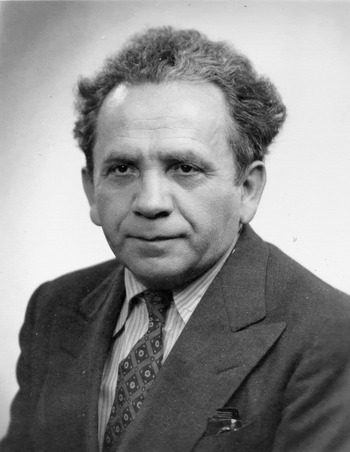
While the Jewish Mother Cities series helped define a particular genre of postwar popular history, many of the same research strategies, broader themes, and narrative arcs that characterized the series were central to other scholarly works on Jews in east European cities, including Jacob Shatzky's three-volume history of the Jews of Warsaw and Israel Klausner's multivolume study of the Jews of Vilna. Much like the works in the Jewish Mother Cities series, Shatzky's Yiddish-language History of the Jews in Warsaw is not only a major work of history but also a labor of love (or perhaps of loves lost).Footnote 39 Furthermore, like many other communal histories written after the Second World War, Shatzky's study of Warsaw Jewry was commissioned by a Jewish communal institution (the YIVO Institute for Jewish Research in New York), and written by a native son with a deep personal attachment to the city and to its Jewish residents. As one astute observer noted, Shatzky regularly pined for “the effervescent and sophisticated cultural environment he had left behind in Warsaw.”Footnote 40 In fact, Shatzky himself would later note that his personal relationship to the city and its Jewish residents contributed directly to the quality of his work. “It was not just biological chance that made it [Warsaw] my city, but emotional attachment. There my historical consciousness had been shaped by attending the funerals of Warsaw's great Jews.”Footnote 41 As in other cases, Shatzky's personal history and experiences as well as the trauma of the war cannot be overestimated when examining how he researched and wrote about Jews in Warsaw.
Dr. Jacob Shatzky, undated photograph. YIVO Archives, RG 121, Jacob Shatzky.

Thus, while it's somewhat difficult to summarize and classify Shatzky's masterwork of three volumes and hundreds of pages of learned text, the study fits the Jewish communal history paradigm. Throughout the work, Shatzky focuses on the continuous history of “the Jews” of Warsaw, highlights the key role played by central communal institutions, and writes extensively about the actions of different (male) community leaders as the concept of the community lends a specific sense of order to a historical narrative that traverses hundreds of years in three detailed volumes. Like the Jewish Mother Cities series and other works, Shatzky also pays relatively little attention to the city's non-Jewish residents, who either provide historical background to Shatzky's authorial act of Jewish self-enclosure or appear as potentially hostile competitors vying for limited urban resources.Footnote 42 Such narrative strategies are particularly prominent in the second two volumes that examine the period during which Warsaw grew to become a metropolis of close to a million residents, the second half of the nineteenth century.Footnote 43 After an introductory chapter on the history of Warsaw and the development of its Jewish population in the early nineteenth century, the second volume, which covers the period between 1831 and 1863, turns to the narrative strategy of implanting Jewish communal order over a potentially disorderly urban environment. As a result, the volume includes no less than four chapters on the Jewish community and its various institutions.Footnote 44 Shatzky continues his emphasis on Jewish communal bodies with a chapter on Jewish educational institutions like the Warsaw Rabbinic Academy, and additional sections on Jewish communal leaders, including a chapter on the Jewish economic elite, another one on Dov Beer Meisels, the chief rabbi of Warsaw between 1854 and 1861, and a lengthy subchapter on the president of the communal board, Mathias Rosen.Footnote 45
Covering the last third of the nineteenth century, the third and last published volume in Shatzky's study adopts many of the same authorial choices and strategies. Thus, while somewhat less attention is paid to the central communal institution, Warsaw's Jewish gmina, Shatzky continues to place his narrative emphasis on various Jewish organizations and institutions in Warsaw. Through these and other authorial acts, the narrativization of a historically continuous and relatively coherent Jewish community in Warsaw lends a specific sense of intellectual order, social cohesion, and potentially redemptive meaning (kelal-Yisra'el) to the otherwise disorienting experience of the modern city. Alongside introductory chapters on the Jewish economic elite and the organization of the Jewish community, Shatzky writes extensively about other communal bodies, including the rabbinate, local synagogues, charitable organizations, the Jewish hospital, and more.Footnote 46 Communal leaders like Yaakov Gesundheit, the last chief rabbi in imperial Warsaw, and Ludwik Natanson, the long-standing president of the gmina board, are also discussed at length.Footnote 47 Moving on to the end of the nineteenth century, Shatzky turns his attention to some of the new political parties—such as Zionist and socialist organizations—that would oftentimes lend a new sense of social and communal order to turn-of-the-century Jewish society.Footnote 48 Lastly, here too, the only sustained discussions regarding non-Jews in the city of Warsaw take place when Shatzky analyzes the anti-Jewish pogrom of December 1881, or the attraction of some Jews to Polish culture.Footnote 49
While the amount of material presented in Shatzky's History of the Jews in Warsaw is simply staggering, and the work remains the most important history on the topic written to date, the overriding narrative framework throughout volumes 2 and 3 is one of Jewish communal organization, order and cohesion.Footnote 50 Ultimately, Shatzky's Warsaw is anything but a maddening maze of modernity in which alienated strangers roam the city's streets in search of existential meaning and collective belonging. In fact, Jewish communal bodies, institutions, and organizations not only flourish in Shatzky's historical Warsaw, but in doing so they repeatedly overshadow, if not displace, the sheer size, masses, and commotion that characterize and define urban arenas. As in many other Jewish communal histories, the Jewish community ultimately supplants and displaces the urban terrain of the city. Throughout this process Shatzky's narrative not only collapses the city of Warsaw into the Jews of Warsaw, but in doing so he essentially fulfills centuries of Jewish attempts to wield control over the urban arena and the modern world that it represented.Footnote 51 Similar to many other histories of Jews in cities, the communal institutions that are placed at the very center of these historical narratives are repeatedly portrayed as the very bodies that protect “the Jews” from the twin threats of urbanization and modernity. Much like Dubnow's discussion of Jewish communal autonomy in Lithuanian lands, Jewish communal bodies repeatedly preserve and maintain “the Jews” as a cohesive ethnic community amid a seemingly endless sea of threats in the inherently hostile urban environment.
Published by Israel's Ghetto Fighters House (Bet Loḥame Ha-geta'ot) in 1983 and 1988, Israel Klausner's three-volume Hebrew study Vilna, The Jerusalem of Lithuania is another example of the genre of postwar Jewish communal histories.Footnote 52 Completed posthumously under the editorial direction of Shmuel Barantchok, Klausner's work employs many of the same organizing principles and narrative strategies that guided both the Jewish Mother Cities series and Shatzky's History of the Jews in Warsaw. As is the case with many other communal histories, the ostensibly sacrosanct lines between academic history and collective memory are repeatedly crossed throughout Klausner's study. Here, too, the editor's introduction to the two-volume set published in 1983 openly states that the work is intended to serve as a written memorial. Barantchok notes that: “The book is a continuation of the memorial project of the Vilna community carried out … in cooperation with the Ghetto-Fighters’ House and the Association of Former Vilna Residents. The early phase of this memorial project was the construction of the ‘Vilna Hall’ in the Ghetto Fighters’ Museum—a permanent exhibit dedicated to the community of Vilna—which is an educational model that brings to life the Jewish community before the Holocaust.”Footnote 53 Several pages later, Klausner's own introduction to the volume notes (in the third person characteristic of the time) that “The author saw it as his moral duty to create a memorial for the community in which he grew up, and dedicated his research to the history of the community, even while he was still living in Vilna. The author hopes that all those who are interested in the history of the Vilna community will gain an accurate image of the lives of the Jews in the city over the generations from the book; this will be his true reward.”Footnote 54
This deeply ingrained sense of an authorial mission stemmed from the fact that Klausner, like Shatzky and the authors of many other communal histories, was a native son with an acute sense of longing and purpose. In fact, examples of Klausner's personal connection and commitment to Vilna, its community, and its oft-celebrated intellectual and political milieu appear throughout the rich and detailed study. Thus, the reader learns (from Klausner) that the author was not only involved in the Vilna branch of the Association for History and Anthropology but that Klausner was also one of the founders of the local Association of Friends of the Hebrew University.Footnote 55 A self-proclaimed Zionist activist, Klausner also served on the editorial staff of the Hebrew journal Zeramim and wrote several different articles and volumes dedicated to the history of the Vilna Jewish community. Repeatedly weaving his narrative between personal experience and the historical record, Klausner claims that these works would later “serve as the origins of a much more encompassing book: The History of the Jewish Community in Vilna. A book that was published by the community in Vilna.…”Footnote 56
Like many other volumes designed to commemorate the memory of specific Jewish communities, Klausner's written memorial to the Jews of Vilna celebrates the political and cultural achievements of the city's Jewish residents. At times, the text is almost boastful. For example, Barantchok proudly notes in the introduction to the two-volume set published in 1983 that Vilna was home to a vast number of Jewish political organizations, including the early Zionist movement; the leading Jewish revolutionary party, the Bund; the Socialist Zionist organization, Po‘ale Zion; the Orthodox political organization, Agudas Yisroel; and more. All this helped ensure that Vilna would be recognized as “the Jerusalem of Lithuania” from the sixteenth century until “its utter destruction in 1942–1943.”Footnote 57
In the second volume, Klausner continues this emphasis on Vilna as a crucible of Jewish politics, nationalism, and culture by starting the study with a long chapter dedicated to “The Jews of Vilna and the National Movement” from 1881–1905.Footnote 58 Themes of political organization and communal autonomy are central throughout the volume, with a chapter on the history of Jewish socialism and the activities of the Bund in Vilna, as well as additional chapters on Jewish literary, journalistic, cultural, and educational achievements in the city.Footnote 59 As in other communal histories, the emphasis on political and cultural achievements lends the impression that Vilna was an environment in which the Jewish community, its various cultural endeavors, and many political activities, not only flourished but also dominated the urban landscape. Hence, much like Shatzky and other authors of postwar communal histories, Klausner pays relatively little attention to the non-Jewish residents of Vilna—Lithuanian, Polish, Russian, or other—except for their role in moments of ethnic violence. Similar to Shatzky's discussion of the Warsaw pogrom of December 1881, Klausner dedicates a lengthy subchapter to the anti-Jewish violence that erupted in Vilna in 1919.Footnote 60 Together with his emphasis on Jewish communal associations, political organizations, and cultural activity, Klausner's willful aversion to writing about the non-Jewish residents of Vilna strengthens the interpretation that the Jews of Vilna were, ultimately, the masters of their fate. Time and again, Jewish communal histories like Klausner's study of Vilna would lend a specific sense of Jewish order and agency to the potentially unwieldly and threatening cities of eastern Europe.
Here, as well, Klausner's turn to the concept of the Jewish community reinforces a particular structural and narrative framework that helps create a sense of scholarly order, social cohesion, and historical continuity. Throughout this study, “the community” is the very intellectual scaffolding that Klausner uses to construct a written monument to the Jews of Vilna. In addition to an entire chapter in the first volume dedicated to “the community's self-rule, 1881–1915,” there are three additional subchapters that focus on the communal council's activities between the two world wars.Footnote 61 The Jewish community also serves as a central organizing concept in the third volume of Klausner's study, published separately in 1988. From 1495 to 1881, the community repeatedly acts like a self-contained protonational body that defends and protects its members from a myriad of hostile external threats. In doing so, the concept of the community helps Klausner create and maintain a narrative sense of social cohesion and historical continuity across almost four hundred years. Hence, the first three chapters in this volume are dedicated, respectively, to “the founding of the community and its development,” “the destruction of the community and its rehabilitation,” and “the community in the eighteenth century.”Footnote 62 Furthermore, even after the Jewish communal body was formally abolished by tsarist authorities in 1844, the community managed to continue its key role as a centralizing social and political force.Footnote 63 Referring to his own study of the General Charity (Ẓedekah Gedolah), which took over many of the kahal’s functions after the latter was abolished, Klausner notes that “The ‘General Charity’ was, essentially, a second community. A historical summary of the ‘General Charity’ that was published in the [local] paper by the student Israel Klausner essentially claims that the institution was nothing less than the continuation of the former ‘Community.’”Footnote 64 Like the Jewish people that it ostensibly preserved and united, Vilna's Jewish communal institutions seemed indestructible, if not practically eternal, as they repeatedly reinforced a specific social order and ethnic unity across the centuries.
Lastly, much like the very title of the Jewish Mother Cities series, the title of Klausner's three-volume set (Vilna, The Jerusalem of Lithuania) implies not only a specific relationship between the Hebrew (read: Jewish) reader and the city's former Jewish residents, but also a clear hierarchy between various Jewish communities across eastern Europe. Throughout the three volumes published by the Ghetto Fighters House outside of Acre (Akko), the city of Vilna is celebrated as nothing less than “the Jerusalem of Lithuania,” a sacred, eternal, and potentially redemptive (capital) city that serves as a unifying force for Jews across eastern Europe, if not worldwide. Many of these parallels between the Jerusalem of Lithuania and the Jerusalem of Gold were further reinforced in the postwar era, when Vilna and its Jews were presented and imagined as a city that had been conquered and whose Jewish community had been forced into exile, either physically or existentially. Like its namesake, Jerusalem, memory and history would together transform the city of Vilna into a sacred site of Jewish longing and mourning. Lastly, the historiographically mandated act of recording, remembering, and commemorating the city and its Jewish residents as a unique if not sacred community further bound the Hebrew (Jewish) reader not only to the city of Vilna but to many other Jewish readers, past and present. As Dubnow noted in his 1925 introduction to the Lithuanian Council's record book, “the history of our autonomy over the ages is our torah.”Footnote 65 Thus, various histories of Jews in different east European cities became both sites and agents of a specific form of Cold War Jewish memory.
Lost? Postwar Archival Collections and the Vicious Circle of Jewish Communal History
While Jacob Shatzky never completed the fourth volume of his History of Jews in Warsaw, which was supposed to continue up until the end of World War I, his personal archive at the YIVO Institute for Jewish Research in New York includes a massive amount of material that he collected and prepared in the United States in anticipation of this volume. As such, the collection (which was organized posthumously under the direction of the YIVO archivist Fruma Mohrer) gives us a fairly good idea of how Shatzky envisioned this particular volume. Shatzky's extensive archival collection also presents a fascinating opportunity to go beyond the written text and to explore how a key scholar planned to write about Jews and cities in eastern Europe. Thus, while the posthumous organization of Shatzky's archival material by the dedicated members of the YIVO staff may not match the exact topics or narrative structure that he himself would have written, the different material amassed in Shatzky's archival collection reflects the themes that interested him, the kinds of sources that he collected, and the type of history that he intended to write. Hence, the source material dedicated to the unwritten volume 4 in Shatzky's collection, YIVO Archive RG 356, is divided along lines that are strikingly similar to those that characterized volumes 2 and 3. Thus, folders 89, 90, and 103 include sources related to the community's organization; folders 97 and 98 are dedicated, respectively, to the rabbinate and synagogues in Warsaw; and folders 99, 103, 107, and 110 are full of sources on different educational institutions.Footnote 66 The archival sources collected for volume 4 also include a great deal of material on Jewish charities and Jewish political organizations, including folders 113–16 and folders 121–27.Footnote 67 Moreover, while the materials that Shatzky collected for his study include several folders on Jewish involvement in Polish culture and politics, as well as material dedicated to assimilation and antisemitism, the vast majority of the sixty-one folders created in anticipation of the fourth volume examine the Jewish community, its various institutions, and their leaders.Footnote 68
Of course, there's a quintessential historiographical illusion unfolding in Shatzky's archival collection, as it's not entirely clear where Shatzky's efforts end and those of the YIVO archivists who organized the material begin. That said, as Shatzky himself collected most of the source material in these files and as many of the topics covered are similar to those that shaped volumes 2 and 3, it is clear that Shatzky himself was, at the very least, responsible for the collection and perhaps even the preliminary organization of the material. Indeed, there is no mistaking the fact that this is Shatzky's archive. Much like Emanuel Ringelblum, another Jewish resident of Warsaw who would leave a massive archival collection chronicling the city's Jewish population, the material amassed in Shatzky's YIVO archive leaves a clear, inescapable imprint regarding the contours, direction, and purpose of the unwritten fourth volume of Shatzky's History of the Jews in Warsaw.Footnote 69
Shatzky's fervent search and pressing need for a particular intellectual, historical, and historiographical order becomes even more apparent when one analyzes the actual materials that fill the hundreds of folders in this collection. When examined as an archival corpus, Shatzky's notes and summaries, the innumerable newspaper clippings, and the seemingly random scraps of paper amassed highlight his unique, personal, and indefatigable process of gathering, editing, and preserving the remaining testimonies to Jewish life in prewar Warsaw. Alongside the many handwritten summaries of documents and articles in Polish, Yiddish, and Hebrew that Shatzky often wrote on the back of light blue paper-thin stationery from his place of permanent employment, the library of the New York State Psychiatric Institute, his papers include innumerable lists. Long before the age of personal computers, digital cameras, and electronic spreadsheets, Shatzky turned to one of the oldest and truest forms of historical record and classification, the beauty, art, and simplicity of composing lists.Footnote 70 Among the many different lists that Shatzky compiled in preparation for volume 4, one finds handwritten records of local synagogues, communal rabbis, charitable organizations, and more.Footnote 71 Time and again, the impression that emerges from the material collected by Shatzky and the research strategies that he employed is one of a historian with a deep faith in the scholar's ability to (re)create a specific social and communal order. Indeed, little reflects Shatzky's own search for historical order in Warsaw and belief in the historiographical process more than the handwritten lists that appear and reappear throughout his archival collection.
Although far less organized than the Jacob Shatzky Papers in the YIVO Archive, the personal archive of Israel Klausner, archival collection P-34 at the Central Archives for the History of the Jewish People (CAHJP) in Jerusalem, reflects many similar research strategies and authorial aspirations regarding the very act of writing the history of the Jews in an east European city.Footnote 72 Like Shatzky's papers, much of the material amassed in Klausner's collection consists of handwritten notes or transcriptions of Jewish communal records, secondhand traces of lost worlds. In Klausner's case, a series of tightly packed and bound black notebooks include copious notes and partial transcriptions from the record book of the Council of the Land of Lithuania as well as voluminous material on other central communal institutions, including the General Charity of Vilna, the communal library, the city's association of ritual circumcisers (mohelim), the small and large prayer circles (kloiz), and more.Footnote 73 In addition to these sources, Klausner's archival collection contains a large amount of material dedicated to other communal institutions, including the Jewish cemetery about which Klausner wrote and published an early study in 1935.Footnote 74 Alongside handwritten summaries, folders, and archival subcollections dedicated to various communal institutions and organizations, Klausner also turned to the power of numbers to help render the history of the Jews in Vilna somewhat more digestible and comprehensible. Thus, one of the many uncatalogued folders in the collection is dedicated to the topic of “Statistics,” and another records the financial debts of the communal council in the late eighteenth century.Footnote 75
While much of the material, notes, and other sources preserved in CAHJP collection P-34 were copied, preserved, and transported to British Mandate Palestine by Klausner before his arrival in 1936 and the completion of his doctorate in 1940 at the Hebrew University under the supervision of Dinaburg (Dinur) on innercommunal conflict in Vilna, a significant portion of the material was amassed in Israel after 1948. Reflecting a wider process implemented to create (or reconstruct) many of the collections at the CAHJP, YIVO, and other Jewish (and also Polish) institutions, such archival collections were very often recreated after World War II, a veritable ingathering of exiled historical sources of the Jews. As part of this larger process, Natan Ben-Zion Havkin contributed in 1952 a set of small watercolors of key landmarks in the city of Vilna (see fig. 3). Like much of the material that was later integrated into Klausner's extensive archival collection, Havkin's paintings were submitted in response to a public call by the Historical Society of the Association of Former Vilna Residents in Jerusalem for material that could be used in a potential museum dedicated to the memory of the Jewish community of Vilna.Footnote 76 Moreover, while the positivist historian and professional archivist Klausner may have had trouble translating Havkin's pastoral renditions of daily life in the city's streets or of the river that gave the city its name into a historical text, the spirit of longing that pervaded Havkin's picturesque renditions infuses Klausner's efforts to record and remember the Jews of Vilna.Footnote 77
Watercolor of landmarks in Vilna by Natan Ben-Zion Havkin. Central Archives for the History of the Jewish People, Jerusalem, Israel Klausner Collection, P-34, box 450, f. 30.

Hence, on this level as well, the foundational level of the archive and of the very creation, collection, and preservation of ostensibly objective primary historical sources, the spirit of longing for the “Jerusalem of Lithuania” appears and reappears in many of the documents scattered throughout Klausner's archive. From the earliest stages of historical research and reconstruction—that of the collection and preservation of appropriate sources—the very playing field of Jewish urban history was skewed in a particular direction. Like Havkin's watercolor rendition of world lost, a Yiddish newspaper clipping in Klaunser's collection of a folk song penned by the Yiddish entertainer and satirist Jevel Katz reflects the same spirit of longing that many of these sources exude. Writing from Buenos Aires in 1939, the former Vilna resident openly pined for “Vilna, my city of birth.” Entitled “Vilne,” the chorus of Katz's folk song is composed of a series of declarations that claim both proprietorship and control over the city. “Vilna, Oy Vilna / Vilna is my little shtetl / Vilna, the land of thousands of beauties / Vilna, Oy Vilna / Vilna my little home / Vilna, Oy Vilna / You are my city.”Footnote 78 While Katz's prewar rendition mixes nostalgia and humor in a way that few postwar accounts would even dare, the folk song reflects the fundamental sense of nostalgia and longing that infused the way that Klausner, Shatzky, and many others would remember, research, and write about Jews in Vilna, Warsaw, and other east European cities. As the postwar series published by the Rav Kook Institute in Jerusalem would maintain, these were Mother Cities (‘Arim ve-’imahot), environments in which the Jewish community not only dominated the urban landscape, but those in which they often transposed it. For Jevel Katz and others, Vilna and many other cities were repeatedly remembered with a mixture of familiarity, nostalgia, and proprietorship as “my little home … my city.”
Found? The Jews of Eastern Europe and the Memory of History
The overriding need to domesticate Vilna and other urban environments by rendering them as peaceful and pastoral as a watercolor or as innocuous as a popular folk tune was exacerbated by both the longing of Diaspora and, soon thereafter, the simply incomprehensible dimensions of the ḥurban (Holocaust). And herein lies the contradiction embedded deep within Jewish urban history as it was repeatedly understood, practiced, and institutionalized by native sons like Shatzky, Klausner, and others who researched and wrote so beautifully about Jews in east European cities. On the one hand, historians of the Jews writing after the Second World War longed to reconstruct lost worlds that had been destroyed over the course of the war. Like the proposal for the creation of a Vilna Hall in the Ghetto Fighters’ House Museum that animated Klausner's project, many of these Jewish communal histories were designed to achieve nothing less than a historiographical miracle, to bring “the Jewish community before the Holocaust” to life.Footnote 79 On the other hand, most of these scholars were professionally trained and passionately dedicated to one of the world's oldest professions, history. As such, they were profound believers in the historian's ability to use the sources and texts available to “reconstruct” these and other lost Atlantises. This underlying faith in the historian's ability to recreate lost worlds is reflected both by the massive amount of source material collected, the level of details embedded in many of these materials, and the conscious effort to include as much detail as possible in volume after volume of Jewish communal history. Despite these efforts, the gap between the personal need for a particular type of memory and the fundamental faith in the sanctity of the historical profession repeatedly proved to be a gap too wide to bridge and too overwhelming to reconcile.
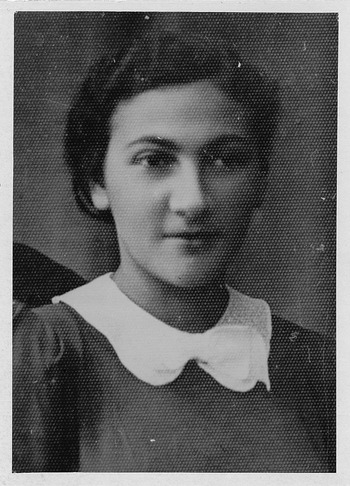
Among the thousands of summaries, documents, and seemingly random scraps of paper included in Klausner's collection in the Central Archives for the History of the Jewish People in Jerusalem, there is a lone pile of black-and-white photos amassed in folders 1–31 of box 450. Collected, apparently, after the war, as part of efforts to encourage former Vilna residents to submit materials and sources that could be used to create a memorial, most of the photos are group shots of communal activities like Zionist schools, nature excursions, summer camps, and other collective endeavors. Unlike many of the published collections of photographs of Jews from interwar eastern Europe, there are relatively few photos of well-dressed families, urban dandies, or young Jewesses whose eyes gaze back at and through the camera's lens.Footnote 80 Amid the hodgepodge collection of photos, there is one remarkably unexceptional photo of a solitary young woman in relatively conservative dress that reflects many of the tensions embedded deep within such projects of history, memory, and reconciliation (see fig. 4). On the back of the otherwise unexceptional photo, in what appears to be Israel Klausner's handwriting, Klausner—ever the professional archivist—left a clue to his Herculean endeavor when he wrote the following matter-of-fact epitaph for the young woman, his younger sister Rasza-Tehila Spokoyni and her young daughter, Silvia, a niece whom Klausner most likely never met. “Rasza-Tehila Spokoyni, (née Klausner), the daughter of R’ Hayim-Shavti and Rahel Lea, wife of Dr. Kalman Spokoyni; killed by Germans in Ponary. Taken with her baby Silvia from her house (Milokaj St., Spokoyni house) during the first great action; on the way to being expelled, she managed to give her child to a Polish woman who passed her onto the community council. Their fate and the fate of her husband were later recorded in a letter by Dr. Mark Rezhitzki to Israel Klausner.”Footnote 81
Rasza-Tehila Spokoyni (née Klausner). Central Archives for the History of the Jewish People, Jerusalem, Israel Klausner Collection, P-34, box 450, f. 5.

Like Klausner, Shatzky's fervent, at times obsessive, pursuit of the Jews of Warsaw was motivated by a similar mixture of these two key driving forces: personal loss and professional dedication (or, perhaps personal loss through professional dedication). Nor should the connection between the two be assumed to be exceptionally random or particularly unique to the study of east European Jewry. Here, too, Shatzky's relentless—at times seemingly quixotic—attempt to bridge the gap between the need for a particular memory and his underlying faith in what he believed was the science of history were not without their price. Tired and worn—by migration and accommodation, by his own confrontation with the events of the Second World War, and by the grinding toll of working as a professional librarian by day and a Jewish historian in his free time—Shatzky seemed overwhelmed by the historiographical task that he had taken upon himself. Like Klausner, Shatzky's attempt to transform urban disorder into intellectual order and intellectual order into collective memory repeatedly exposed a painfully raw nerve that grew out of the very challenges and limits of writing a history that was not only intellectually detached and personally committed but also one that was quintessentially urban and uniquely Jewish. Reflecting on the tensions inherent in the task at hand as well as a gnawing sense of frustration as the amount of source material continued to grow, prospective volumes increased in size, and time, perhaps, seemed to be slipping away, Shatzky suffered what one learned observer has described as “a mental collapse.” In addition to bouts of depression, Shatzky apparently developed “a fear of being alone which compelled him to give up virtually all of his writing.”Footnote 82 In a letter to his colleague Joseph Tenenbaum several years before his death, Shatzky complained bitterly about the Sisyphean nature of the task before him. The looming contradiction between his commitment to commemorating the Jews of Warsaw and the scientific principles of historical evidence that guided his scholarly work led him to an impassable chasm, one that he could neither overcome nor abandon. Writing to Tenenbaum, Shatzky's sense of frustration and his acute fear of failure (scholarly, ethical, and existential) were palpable: “For whom am I slaving? For whom am I writing and about whom? My people is dead, my theme is a dead one and I am dead-tired.”Footnote 83
Klausner's burden of memory and Shatzky's resilient faith in the power of historical reconstruction represent two central competing forces that drove and shaped the way that many scholars have researched, written, read, and taught about Jews and cities in eastern Europe. Time and again, the personal need for a specific type of memory and the desire to create orderly historical narratives led to the construction of Jewish urban histories that placed the Jewish community, its institutions, and their leaders in the very center of a long, continuous history of Jewish presence, if not predominance, in various cities across eastern Europe. The overriding assumption that Jewish urban histories revolved primarily around communal institutions and their many activities demanded an additional intellectual oeuvre, one that privileged narratives of Jewish communal order over those that explored and highlighted moments and forces of urban disorder.Footnote 84 And thus, the long tradition of Jewish communal histories—one that dates back to such masters of Jewish history as Dubnow, Bałaban, and Dinur, was continued a generation later by critical scholars such as Halperin and many of his students, and was later inherited and implemented by leading contemporary historians like Kieval, Nathans, Rozenblit, and Zipperstein—repeatedly turned to the discipline of history to narrativize a specific sense of communal order among Jews in various east European cities.Footnote 85 Time and again, the Jewish drive for community and order would not only render the urban arena silent, but in doing so would transform the urban arena into a warm, supportive environment, a mother city. Of course, the methodological and narrative turn to historiographical order—even when writing about cities—is neither unique nor limited to the study of the Jews (by Jews). However, one wonders about the extent to which larger existential concerns regarding communal order and interpersonal borders and relations continue to influence the manner in which Jews and cities are studied and, ultimately, whether or not an academic discipline like Jewish studies that is grounded in specific intellectual, methodological, and ethnic concepts of order can make room for a discourse that embodies the very essence of disorder, the modern city.