Introduction
In many developed countries, the prevalence of childlessness has increased for cohorts born after the Second World War, and the proportion of childless women at the end of childbearing age is higher than 20 per cent in some European countries (Beaujouan et al., Reference Beaujouan, Sobotka, Brzozowska and Zeman2017). As posited by the second demographic transition theory, industrialisation and modernisation have yielded profound changes in family life, including declining marriages, delays or decreases in fertility, and increased longevity in the most economically developed societies (Lesthaeghe, Reference Lesthaeghe2010). Family size is becoming smaller, while individuals are surviving for longer. These trends pose risks to the support that older adults receive from social networks.
Maintaining social networks is beneficial for individual mental health and overall wellbeing, and social isolation or loneliness is connected to poorer cognitive function in older adults (Shankar et al., Reference Shankar, Hamer, McMunn and Steptoe2013; Lamblin et al., Reference Lamblin, Murawski, Whittle and Fornito2017). Meta-analyses have suggested that social connection also plays a vital role in determining physical wellbeing. For instance, the effects of limited social connections as a risk factor are comparable to other well-established risk factors, such as obesity and smoking 15 cigarettes per day (Holt-Lunstad et al., Reference Holt-Lunstad, Smith and Layton2010; Holt-Lunstad, Reference Holt-Lunstad2017). Yang et al. (Reference Yang, Boen, Gerken, Li, Schorpp and Harris2016) also found that social connections reduced hypertension and obesity in older age. Evidence from China further revealed that a diverse network type yielded more survival benefits than a family-focused network type (Li et al., Reference Li, Yang and Zhang2018). Thus, examining the factors related to older adults’ social networks contributes to the identification of disadvantaged older people and has important policy implications for aged-care provision that can improve older adults’ health and wellbeing.
Most of the existing literature on older adults’ social networks has focused on the United States of America (USA) and European countries, which can probably be explained by the fact that economically advanced societies have experienced population ageing earlier and have a higher proportion of older people than less-advanced societies. One line of research has highlighted the importance of children as old-age support providers and the social networks that develop from parenting (Hoff, Reference Hoff2007; Offer and Schneider, Reference Offer and Schneider2007; Dykstra and Keizer, Reference Dykstra and Keizer2009), while other researchers have argued that childless older adults adapt to the childfree lifestyle and thus actively construct close relationships with extended family and friends as potential support providers (Wenger, Reference Wenger2009; Klaus and Schnettler, Reference Klaus and Schnettler2016). More recent studies have emphasised the cultural context and institutional structure of kinship systems (i.e. matrilineality versus patrilineality) in determining individuals’ social networks and kinship solidarity (e.g. Nauck and Arránz Becker, Reference Nauck and Arránz Becker2013). For older adults, the association between family structures and support from networks outside the family also depends on specific cultural beliefs and social contexts (Tomassini et al., Reference Tomassini, Glaser and Stuchbury2007; Baranowska-Rataj and Abramowska-Kmon, Reference Baranowska-Rataj and Abramowska-Kmon2019; Mair, Reference Mair2019). Overall, no consensus has been reached about the relationship between fertility history and the social networks of older adults. The lack of research on this topic in developing contexts also restricts the development of existing theories and the practical relevance of the existing findings.
Different from most of the extant studies, this article addressed these questions through an explanatory study on the social networks of older adults in China, a developing country with demographic characteristics, economic structures and cultural traditions that are radically different from typically industrialised Western countries. Examining the above topics in China is not only helpful for testing the generalisability of existing theories but also practically relevant, given that China has the largest population in the world.
The Chinese population has witnessed unprecedented changes over the last few decades. Its total fertility rate (TFR) dropped rapidly from about 5 in the early 1970s to replacement level (TFR around 2.1) in the early 1990s and has remained around 1.6 since then (United Nations Department of Economic and Social Affairs, Population Division, 2019). Strict birth control policies began in 1980, primarily spearheaded by the fertility decline and demographic transition (Feeney and Wang, Reference Feeney and Wang1993). The rapid decline of the TFR has ushered in a new era with its own set of challenges, namely population ageing. The proportion of the population older than 60 is now almost 18 per cent (National Bureau of Statistics of China, 2019), and baby-boomers (those born between 1962 and 1970 due to an increase in fertility after the great famine between 1959 and 1961 in mainland China) will enter this group in the next few decades. This challenge, together with the low fertility level, has pushed the government to alter the birth control policy; therefore, since 2016, a second child has generally been allowed. Nevertheless, public responses to the policy change seem timid (National Bureau of Statistics of China, 2018) and have given rise to concerns about the lack of support provided to older adults. The rapid ageing of the population means that China is now facing similar challenges as more economically advanced societies.
Using nationally representative survey data collected from adults aged 60 and over living in 28 provinces in mainland China in 2016, this study examined the influence of family structures and living arrangements on older adults’ support from family and non-relative friend networks. Specifically, we emphasised the power of culture and suggested that filial piety and a preference for sons shaped the social networks of older adults with different family structures and living arrangements. Hence, this paper complements the large body of research on the impact of fertility history, especially childlessness, on older adults’ social networks in economically advanced societies. Further, by differentiating the number of sons from daughters and examining the influence of different living arrangements (e.g. whether or not they co-reside with a son) in China's socio-cultural context, where patriarchal and patrilocal tradition still functions, this study also enriches the extant literature and theoretical discussions about the interplay of macro-level cultures, meso-level families and individual-level social networks.
Parenthood and the social networks of older adults
Early research on social networks emphasised the intergenerational transmission of social capital, focusing on the transmission from parents to their children (Coleman, Reference Coleman1988). However, from the children-as-connectors perspective, children might also serve as social brokers and facilitate their parents’ social networks outside their families. Using data collected from middle-class families in the USA and a child-centred approach, Offer and Schneider (Reference Offer and Schneider2007) argued that ties between children helped connect their parents. Consequently, adolescents’ social involvement might facilitate high-quality friendship ties among parents, which could provide social support for the latter. Evidence from the Netherlands suggested that compared to men aged between 40 and 59 years living with their children, childless men were less likely to turn to their families when they needed help and to provide help to others in their communities (Dykstra and Keizer, Reference Dykstra and Keizer2009). One explanation for this finding is that having children serves as a vehicle for the expansion of parents’ social networks and also as an opportunity for generativity – the concern to support and guide the next generation (Erikson, Reference Erikson1993). Additionally, because of the continuity of social networks across the different stages of life (Bost et al., Reference Bost, Cox, Burchinal and Payne2002; Schwartz and Litwin, Reference Schwartz and Litwin2018), social support and exchange might help prevent parents from becoming socially isolated as they age.
A handful of studies have examined the relationship between fertility history and the social networks of older adults. Some studies suggested that being childless was a disadvantage, as fewer social contacts were available at an older age. As noted in previous literature, parenting might lead to more extensive social networks outside the family as children also act as connectors, contributing to greater social integration (Nomaguchi and Milkie, Reference Nomaguchi and Milkie2003; Dykstra, Reference Dykstra2006). Parents also look for social support and exchange as a coping strategy to adapt to the different stages of parenthood. The accumulation of social networks might result in more support from networks outside families in older age. Adult children are also an essential element of their parents’ networks, as the family acts as a social support system (Shanas, Reference Shanas1979; Wachter, Reference Wachter1997; Grundy and Read, Reference Grundy and Read2012). Across societies, numerous studies have demonstrated the frequent intergenerational contact and exchanges when parents become older (e.g. Furstenberg, Reference Furstenberg2005; Silverstein et al., Reference Silverstein, Cong and Li2006; Hoff, Reference Hoff2007).
However, according to the compensatory theory of social support, the role of children or lineal kin in older age can be substituted by extended family, friends or communities (Cantor, Reference Cantor1989). A number of studies have found that childless older adults have more friends and extended kin than older adults with children (e.g. Schnettler and Wöhler, Reference Schnettler and Wöhler2016; Mair, Reference Mair2019). Childless adults might actively construct close but non-familial networks because they expect less family support as they age and have to adapt to their circumstances (Wenger, Reference Wenger2009). One study based on a German longitudinal survey further demonstrated that childless people did not experience a steeper decline in their network size or social support as they aged than did parents (Klaus and Schnettler, Reference Klaus and Schnettler2016). Consequently, rather than being socially isolated or ageing alone, having no children was often related to older adults having larger social networks outside their family.
Further, there is no guarantee that older parents will receive support from children because intergenerational relationships can be both close and irritating, as suggested by the ambivalence theory (Luescher and Pillemer, Reference Luescher and Pillemer1998; Connidis, Reference Connidis2015). On the one hand, the life problems experienced among both younger and older generations, such as children failing to live to expected norms or declines in parents’ late-life health, might negatively affect the quality of the parent–child tie (Kalmijn and Graaf, Reference Kalmijn and Graaf2012; Igarashi et al., Reference Igarashi, Hooker, Coehlo and Manoogian2013). Providing support to parents with health problems and disability is found to be a stressful experience, especially for daughters, who are often expected to be responsible for assisting their ageing parents (Willson et al., Reference Willson, Shuey and Elder2003; Bangerter et al., Reference Bangerter, Polenick, Zarit and Fingerman2016). Thus, caring for ageing parents could be an extra burden for mid-life adults and impairs intergenerational relationships. On the other hand, the parent–child relationship might be negatively affected by a large family size during parenting. As implied by the resource dilution hypothesis, even after the children grew up, only limited resources and attention would be allocated for or paid to each child in large families (Blake, Reference Blake1989; Vargha and Donehower, Reference Vargha and Donehower2019; Zhao and Zhang, Reference Zhao and Zhang2019). Even if older adults are co-residing with their children, many are assuming responsibility for aiding their children by providing care for their grandchildren rather than receiving support (Zhao and Ji, Reference Zhao and Ji2019; Chen et al., Reference Chen, Short and Entwisle2000). Meanwhile, the lack of privacy or the intergenerational conflict might lead to a negative parent–child relationship.
The power of culture
As argued by Guiso et al. (Reference Guiso, Sapienza and Zingales2006), culture has a long-term influence on individual preferences and values. The role of children in determining older people's social networks outside their families also depends on specific cultural and institutional contexts. A comparative study focusing on 24 European countries revealed that older parents had more frequent social interactions with family members living outside the household, friends and neighbours than childless older people, and the difference was more significant in familistic societies with stronger filial norms (Baranowska-Rataj and Abramowska-Kmon, Reference Baranowska-Rataj and Abramowska-Kmon2019). Tomassini et al. (Reference Tomassini, Glaser and Stuchbury2007) also suggested that in the United Kingdom, where individualistic values dominate, only older parents who were widowed or separated in past three years had significantly higher odds of receiving help from non-co-resident children, while in a strong familistic culture, such as Italy, non-co-resident children tended to support lone widows. Using data from the Survey of Health, Ageing and Retirement in Europe, Djundeva et al. (Reference Djundeva, Dykstra and Fokkema2019) found that friend-oriented networks were more common for older people in countries with more generous welfare systems and a higher trust of individuals in institutions, while older adults in countries with higher levels of familism had a higher proportion of child-based networks. Mair (Reference Mair2019) also argued that older adults without close kin had more friends than their counterparts with kin, and the difference was more pronounced in countries with a higher proportion of people who believed that friends are very important in life.
Recent empirical studies have further examined how older adults’ wellbeing might be affected by the cultural preference regarding children's characteristics. From a comparative study among South-East Asian societies, Teerawichitchainan et al. (Reference Teerawichitchainan, Pothisiri and Long2015) found that co-residence with a child of the culturally preferred gender significantly improved the emotional health of older adults from Vietnam and Thailand. Another study used nationally representative data of Chinese residents aged 45 years or older to test the relationship between having a cadre child, who might be considered as a role model among the children of the parents’ friends or relatives in the Chinese context, and the older adults’ health status (Zhao et al., Reference Zhao, Zhou, Tan and Lin2018). A mediation analysis revealed that because older adults with a cadre child tended to be more comfortable and confident in their daily interactions, they were more involved in social activities and thus had better self-reported health.
Chinese context and research hypotheses
Corresponding to the interplay of parenthood, culture and social networks of older adults, in this section, we provide an overview of the Chinese context based on which hypotheses were drawn.
The development idealism paradigm posits that through globalisation and modernisation, the Western paradigm of the modern family is a powerful homogenising force and has changed gender relations, family structures and intergenerational relationships around the world (Thornton, Reference Thornton2001). Nevertheless, although East Asian societies have gone through rapid social and economic changes in recent decades, marriage persists as a patriarchal, familistic social organisation, and limited changes in family expectations and obligations have occurred (Raymo et al., Reference Raymo, Park, Xie and Yeung2015; Ji, Reference Ji2017). The family norms in South-East and South Asia also remain, such that a majority of older adults still co-reside with their children (Yeung et al., Reference Yeung, Desai and Jones2018). The cultural effect on family expectations and living arrangements has also persisted among older adults of Chinese and Japanese origin in the USA, despite the influence of modernisation and assimilation (Kamo and Zhou, Reference Kamo and Zhou1994).
Older adults’ fertility history largely affects their support from both family and friend networks, especially in societies with strong filial norms. For older adults, the informal support provided by children cannot be compensated by extended kin, close friends or institutional support (Grundy and Read, Reference Grundy and Read2012). Thus, we expected that, compared to childless older adults, older Chinese parents receive more family support. More importantly, as revealed by a recent survey, in the face of the weak institutional support for older people, about half the population of older Chinese adults felt that their adult children should be their main care providers (Du et al., Reference Du, Sun, Zhang and Wang2016). For the oldest old (i.e. 80 years old or older), more than 70 per cent were provided with primary care by their children or children-in-law. Hence, we proposed the first hypothesis about the relationship between parenthood and support from family networks for older persons as follows:
• Hypothesis 1a: Compared to older adults without children, older adults with children receive more support from family networks.
Further, as a core value in East Asian society, filial piety includes an expectation that children or grandchildren will take care of their older parents or grandparents (Whyte, Reference Whyte2004). A comparative study on the overall transfer of resources across generations in Taiwan and the Philippines also revealed the strong concentration of transfers among lineal kin (i.e. parents, children and/or grandchildren) in Chinese families and pointed to the tenacity of filial piety (Agree et al., Reference Agree, Biddlecom and Valente2005). Having no children imposes stigma costs on older adults because they might be perceived by relatives or neighbours as failing to fulfil filial obligations. As a result, childless older adults are less likely to be respected by extended kin or friends in their communities, especially in rural areas. Moreover, intergenerational support has also been mandated recently by legal obligations imposed by the Law of the People's Republic of China on the Protection of the Rights and Interests of Older Adults (Standing Committee of the National People's Congress of China, 2012), which states that adult children have to visit and care for their older parents frequently. Consequently, the support provided by adult children to their parents and filial piety have been further emphasised and praised in recent Chinese public discourse. Based on the previous literature on the positive relationship between having children and social networks, and the culturally and publicly endorsed fertility behaviours (i.e. having children rather than remaining childless) in Chinese circumstances, we proposed a second hypothesis regarding the relationship between fertility history and older adults’ support from friend networks:
• Hypothesis 1b: Compared to older adults without children, older adults with children tend to receive more support from friend networks.
The traditional Chinese family system, which is patriarchal, patrilineal and patrilocal, still largely determines Chinese lives, especially in rural areas. In the tradition of patriarchal norms, sons, rather than daughters, are necessary for funerary rituals and are responsible for perpetuating the patrilineage and providing protection and old-age security (Croll, Reference Croll2000; Tao, Reference Tao2012). Intergenerational wealth-flows used to take place only between male members of the kinship system, while women were expected to leave their lineage of origin after marriage. Therefore, having male offspring is important for being recognised in the community and obtaining higher socio-economic status for the whole family. Using three-wave data from the China Family Panel Studies, Zhang (Reference Zhang2019) found that older respondents living in communities with ancestral temples, which were considered as proxies for patriarchal and patrilineal traditions, tended to have higher probabilities of having sons and co-residing with adult/married sons. Evidence from Taiwan also suggested that sons were the main care providers for their older parents, and daughters only fulfilled the sons’ roles in the absence of sons (Lin et al., Reference Lin, Goldman, Weinstein, Lin, Gorrindo and Seeman2003).
Although Marxist egalitarian gender ideology used to be dominant in Chinese society at the height of the socialist era, several studies have argued that the traditional gender role ideology and patriarchal norms remain unchallenged in Chinese families (S Song, Reference Song2012; Ji et al., Reference Ji, Wu, Sun and He2017), and the position of women in the labour market has dropped recently (Zhao, Reference Zhao2018). Consequently, the entrenched preference for sons over daughters persists with slow attenuation (Guilmoto, Reference Guilmoto2009; Murphy et al., Reference Murphy, Tao and Lu2011; Lu and Tao, Reference Lu and Tao2015). Parents, especially those in rural areas where the modernisation process lags behind urban areas, are often reluctant to stop giving birth until they have a son. This preference for sons has led to an increase in the sex ratio at birth (number of male births to every 100 female births) since 1980, which is concurrent with the rapid decline in the fertility rate. The distorted sex ratio at birth peaked at 118.6 in 2005 and has remained higher than 110 in recent years, which is much higher than the biographically normal level of around 105 (UNICEF, 2018). Thus, given the power of culture, we further propose two sets of hypotheses regarding the relationship between the gender of (co-residing) children and older adults’ social networks:
• Hypothesis 2a: Older adults with son(s) tend to receive more support from family networks.
• Hypothesis 2b: Older adults with son(s) tend to receive more support from friend networks.
• Hypothesis 3a: Older adults co-residing with son(s) tend to receive more support from family networks.
• Hypothesis 3b: Older adults co-residing with son(s) tend to receive more support from friend networks.
Data and methods
Data
We used data from the China Longitudinal Aging Social Survey (CLASS), conducted by the Renmin University of China. This is a longitudinal survey beginning in 2014, covering 28 provinces, autonomous regions and municipalities in mainland China (for detailed information regarding the sampling design and data collection procedures, see http://class.ruc.edu.cn). The survey collected information on older adults’ family structures, living arrangements and functional limitations (activities of daily living (ADL) and instrumental activities of daily living (IADL)), and measured their support from family/non-relative friend networks. In this study, we used data from the second-wave survey conducted in 2016, which was designed to collect a nationally representative sample of 11,900 individuals aged 60 and over living in more than 450 villages or communities. The survey successfully obtained information from 11,471 respondents (response rate of approximately 96%). In this study, observations with missing data for the dependent variables were removed, meaning six observations were deleted. For those with missing values for the independent and control variables, multiple imputation by chained equations (with 20 imputations for each model) was used for the missing data. The final sample size was 11,465, with 5,830 older men and 5,635 older women.
Variables
To test the proposed hypotheses, we constructed the dependent variable – support from social networks – based on the abbreviated version of the Lubben Social Network Scale. The scale consists of two sub-scales measuring support from family and friend networks. This scale and its sub-scales (family and friend) have demonstrated high levels of internal consistency, stable factor structures and high correlations with the criterion variables of European societies (Lubben et al., Reference Lubben, Blozik, Gillmann, Iliffe, von Renteln Kruse, Beck and Stuck2006) and have also been used in the Chinese context (Tang et al., Reference Tang, Lin and Chenin press). For each sub-scale, there are three questions: ‘How many relatives/friends do you see or hear from at least once a month?’, ‘How many relatives/friends do you feel close to such that you could call on them for help?’ and ‘How many relatives/friends do you feel at ease with to talk about private matters?’ Following previous studies, the score was coded as 0 for no relatives/friends, 1 for one, 2 for two, 3 for three or four, 4 for five to eight, and 5 for nine or more relatives/friends. The Cronbach's alpha scores were 0.812 and 0.856 for the family sub-scale and the friend sub-scale, respectively. Following the instructions from Lubben et al. (Reference Lubben, Blozik, Gillmann, Iliffe, von Renteln Kruse, Beck and Stuck2006), we constructed the total scale score for the family/friend networks as the sum of its three items, ranging from 0 to 15. The two scores were the dependent variables in the analysis.
Following the hypotheses, the main independent variables included the number of children alive, the number of sons and daughters alive, and the living arrangements. A set of dummy variables were constructed for fertility history: no children, one child (reference group), two children, and three or more children. For living arrangements, the observations were classified into seven mutually exclusive groups: living alone, living with only a partner (reference group), living with son(s), living with daughter(s), living with partner and son(s), living with partner and daughter(s), and other living arrangements. The last category – other living arrangements – includes living with grandchild(ren) only and living with both son(s) and daughter(s).
The demographic variables, including age and its quadratic term, marital status, household registration (hukou) status and educational attainment (illiterate, primary school as the reference group, middle school, and high school or above), were controlled for in all of the models. Marital status was defined as married versus unmarried. Hukou status is the status of each person registered in the Household Registration System in mainland China. The distinction between ‘agricultural’ (reference group) and ‘non-agricultural’ hukou was first declared officially in 1958. Observations with agricultural/non-agricultural hukou included those who transferred from agricultural/non-agricultural hukou to resident hukou because of recent hukou reform.Footnote 1 We believe that the hukou status is a better proxy for older adults’ urban–rural differences in cultural beliefs than administrative, official definitions of urban or rural areas. This is because, due to the rapid economic development since the 1990s, agricultural land has been converted rapidly to other uses, such as urban construction land (Seto et al., Reference Seto, Kaufmann and Woodcock2000), and the official definition of urban areas has expanded quickly over time. However, as mentioned, culture has a long-term influence on individual preferences or values. Changes in rural people's preferences towards the family structures or living arrangements lag behind the conversion of their rural lands to urban uses. Therefore, the official definition of urban or rural areas might not serve as a useful way to differentiate people's values and cultural beliefs (e.g. son preference). Instead, the agricultural hukou status of people who used to live in rural areas has changed more slowly and thus is a better proxy in our analysis.
Other individual attributes were also controlled for in our analysis. Respondents’ working status included working versus not working (reference group), and their current occupations or occupations before retirement included managers/professionals, agricultural workers (reference group) and others. The pension status (having a pension versus no pension as the reference group), which partially represented respondents’ socio-economic status, and the logarithm of annual income were also included in the model. Variables representing location (central cities as the reference group, suburban and counties, and rural areas) and regions (East coast as the reference group, West, North-East and Central China) were also included to capture regional variations. ADL and IADL were controlled for in the analysis to account for the respondents’ health conditions. ADL included necessary routine activities, such as eating, dressing, toileting, walking indoors, bathing and continence. The scale ranged from 0 to 6, and the Cronbach's alpha score was 0.888. IADL included making a phone call, climbing one flight of stairs, walking outdoors, taking public transportation, shopping, managing money, lifting a 5 kilogram bag of rice, preparing meals and doing housework. The scale ranged from 0 to 9, and the Cronbach's alpha was 0.895. Higher ADL and IADL scores represented higher capacity for independent living.
Analytical approach
As both dependent variables were continuous, we used linear regression models to test the hypotheses, and robust standard errors were obtained by clustering at the provincial level.Footnote 2 In the first model, we only included the variables of the number of children and the control variables. Then, in the second model, we distinguished the sons from daughters. Finally, in the third model, the variables representing different living arrangements were added, after which their interaction terms with hukou status were included.
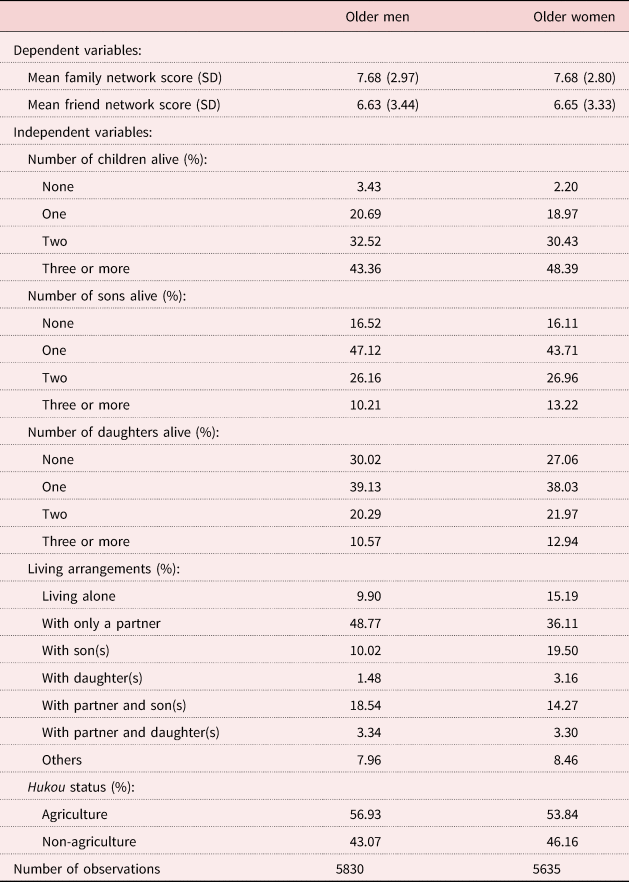
As previous studies have suggested that the effects of the number of children alive on older adults’ contact with non-relative friends varied by gender (Tomassini et al., Reference Tomassini, Glaser and Stuchbury2007) and that the influence of childrearing on parents’ social networks is different for mothers versus fathers (Munch et al., Reference Munch, McPherson and Smith-Lovin1997; L Song, Reference Song2012), all of the models were conducted separately for men and women. The descriptive statistics of the dependent and main independent variables for the analytical sample, tabulated by sex, are illustrated in Table 1.
Descriptive statistics of the dependent and main independent variables

Note: SD: standard deviation.
Results
Descriptive results
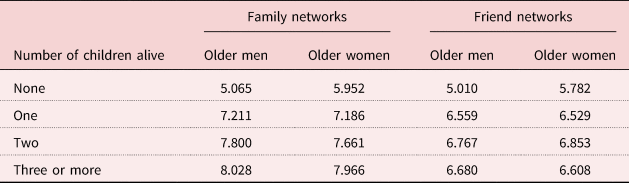
Table 2 presents the older adults’ family network score and friend network score by gender as well as the number of children alive. As illustrated, for both men and women, the family network score was positively related to the number of children alive and was smallest for childless older adults. The gradient of the family network score was steeper for older men than for older women, in that the range of the scores among older men with different family sizes was larger. For the friend networks, the score was also the smallest for childless older adults, while the score was highest for those with two children.
Social network score by respondents’ gender and the number of children alive

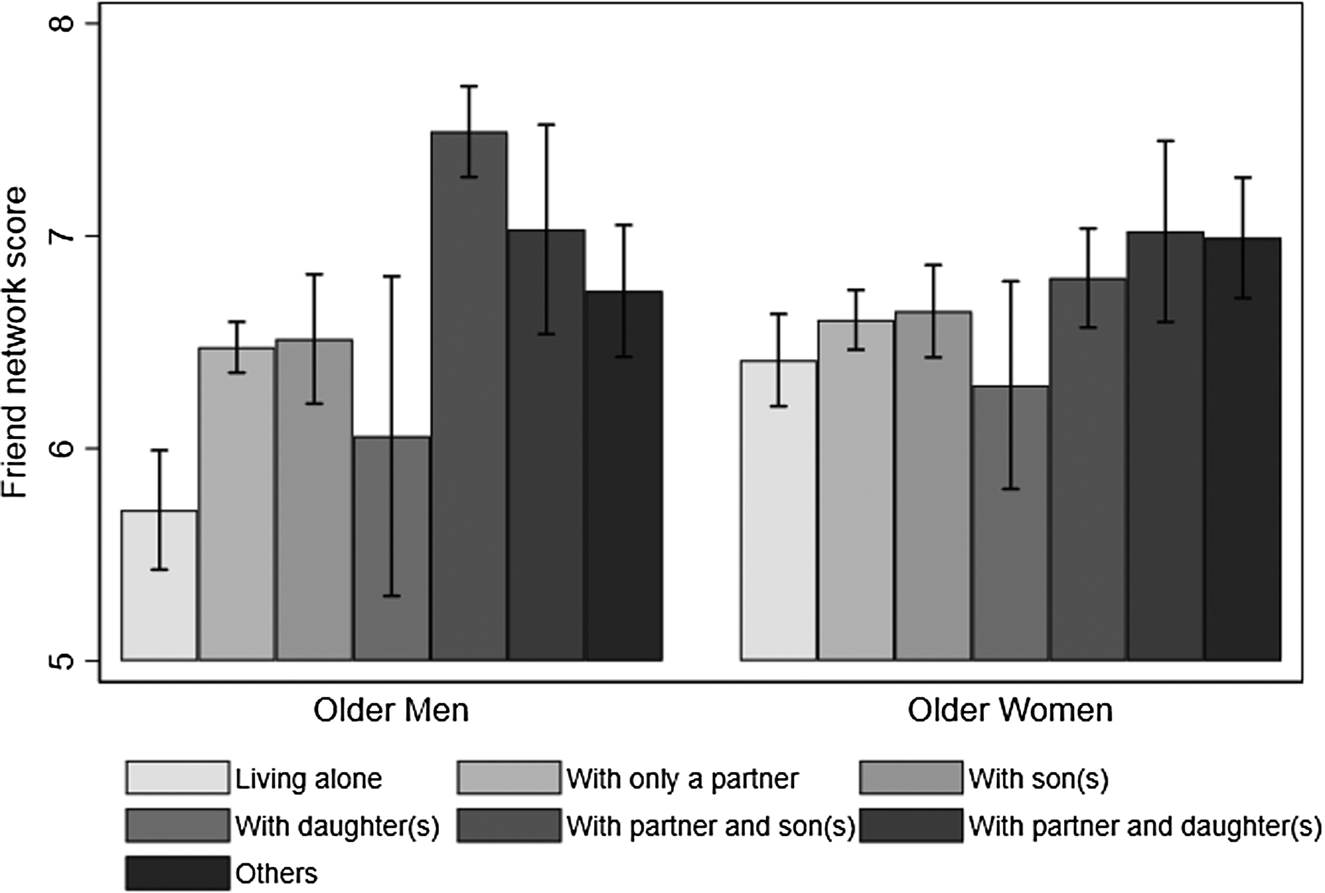
Family network score by living arrangements, as expected, was higher for those living with their partner and son(s), living with their partner and daughter(s) and living with their son(s) than other living arrangements for both older men and women. Nevertheless, for older men, the score was highest for those co-residing with their partner and son(s), and it was highest for women who co-resided with their son(s). Figure 1 illustrates the older adults’ friend network score by gender and living arrangements. As shown, for older men, the score was highest for those living with their partner and son(s), in accordance with Hypothesis 3b. The scores were at a similar level for those living with only their partner and those co-residing with son(s). Older men who lived alone or lived with daughter(s) obtained the least support from friend networks. However, for older women, the differences in the friend networks among the various living arrangements were small, warranting further statistical analyses.
Friend network score, by gender and living arrangements.

Results from the linear regression models
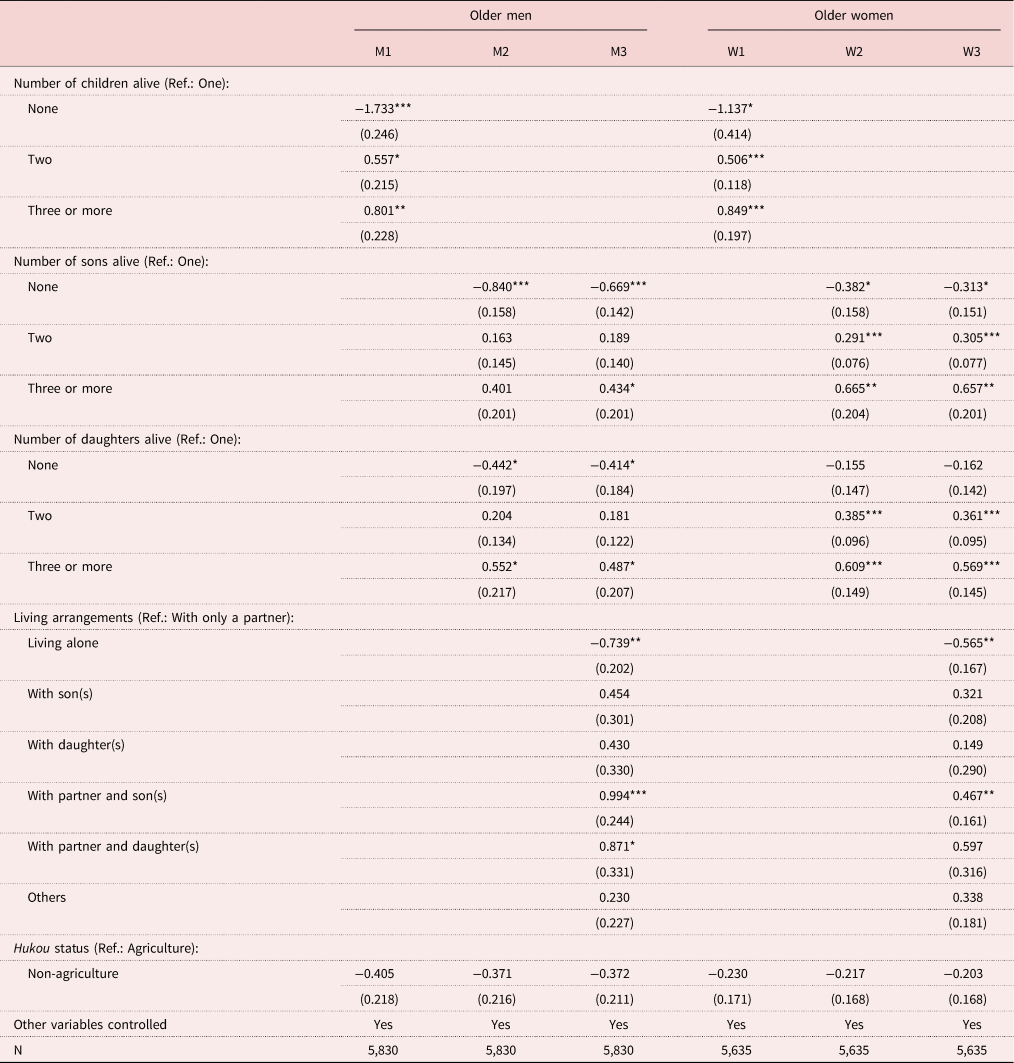
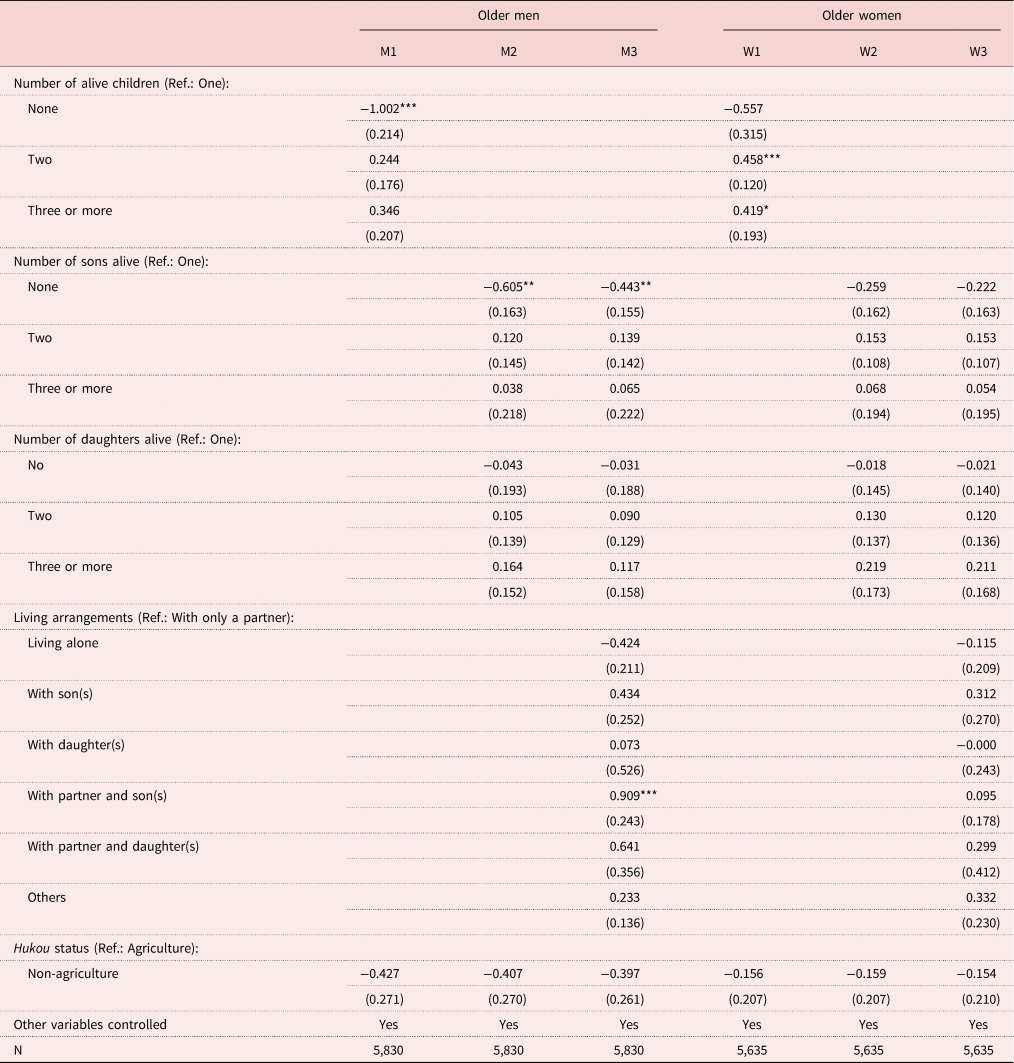
Tables 3 and 4 illustrate the results of the linear regressions of older adults’ social networks on family structures and living arrangements. The results indicated that, for both older men and older women, having more children was correlated with more support from family networks, which was consistent with previous studies and supported Hypothesis 1a (Table 3, M1 and W1). The second model (Table 3, M2 and W2) differentiated the gender of the children. As suggested by the results, in terms of family networks, compared to those with no sons, having sons was positively correlated with more support. For men, those without sons were most disadvantaged, while the number of sons did not have a significant influence. For women, the gradient was clear that older women with more sons tend to have more support from family networks. Overall, the results supported Hypothesis 2a.
Ordinary least-squares: support from the family networks of older adults

Notes: Ref.: reference group. Robust standard errors are in parentheses. Other variables included age and its quadratic term, marital status, educational attainment, working status, current occupations or occupations before retirement, pension status, annual income (logged), location, region, activities of daily living (ADL) and instrumental ADL. For detailed settings of each variable, see the Variables section.
Significance levels: * p < 0.05, ** p < 0.01, *** p < 0.001 (two-tailed tests).
Ordinary least-squares: support from the friend networks of older adults
Notes: Ref.: reference group. Robust standard errors are in parentheses. Other variables were the same as those in Table 3.
Significance levels: * p < 0.05, ** p < 0.01, *** p < 0.001 (two-tailed tests).
However, having daughters also led to more support from family networks, which conflicted with the patrilineal traditions. Compared to mothers with one daughter, mothers with two or more daughters received more support from their family networks. Similarly, compared to fathers with one daughter, those with no daughters had less support from family networks, while those with three or more daughters had more support. The importance of daughters in providing support is partly because, accompanying the decline of fertility, gender inequality has reduced (Wu et al., Reference Wu, Ye and He2014). The higher chances of having only daughters in low-fertility regimes might also challenge gender inequality because parents’ child-rearing experiences might undermine their commitment to the patriarchy (Warner and Steel, Reference Warner and Steel1999). Concurrently, the obligation for parental care has gradually shifted away from only sons towards both sons and daughters (Yan, Reference Yan2003), especially in terms of financial and material support. Further, although the patrilineal tradition remains prevalent in older generations, younger generations’ attitudes and behaviours are less affected because of rapid modernisation and educational expansion. Given the rise of women's economic status and independence, a growing number of studies have suggested that daughters are also important sources of support for older adults (e.g. Zhou et al., Reference Zhou, Verdery and Margolis2019).
The last model added the variables of respondents’ living arrangements (Table 3, M3 and W3). Compared to living with only their partner, older adults had more family networks if they also lived with their son(s) or daughter(s). The effect size of the variable of living with their partner and son(s) was bigger for men than for women, and the difference was significant at the 0.1 level (two-tailed test). The results supported Hypothesis 3a and suggested that co-residing with daughter(s) was also associated with more support for older men. However, no significant difference was found between those living with only a partner and those who did not live with their partner but did live with their son(s) or daughter(s); older adults living alone was the most disadvantaged group.
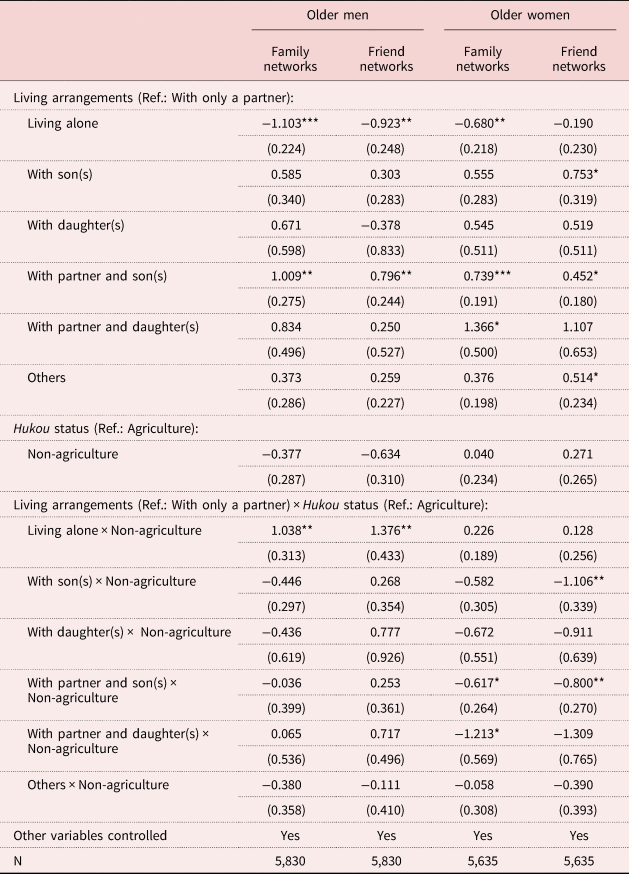
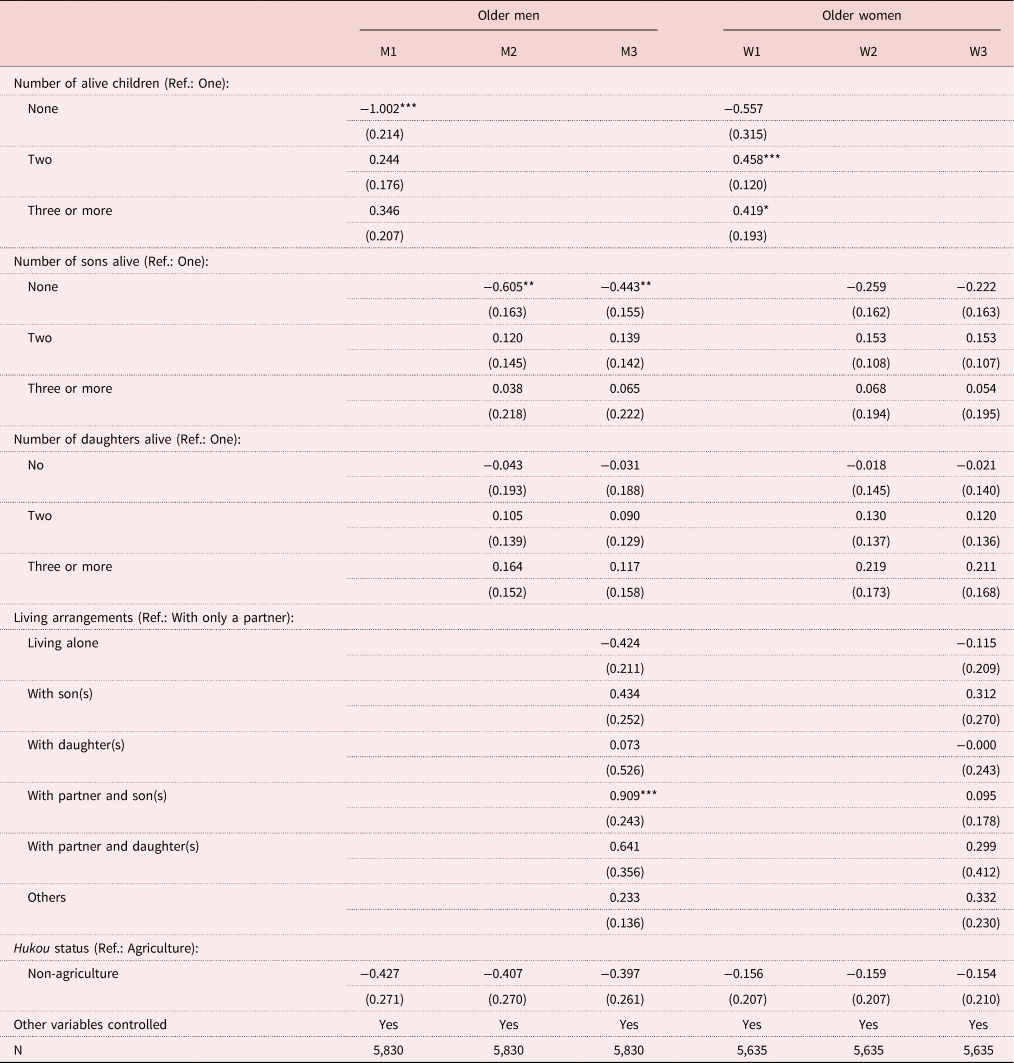
As illustrated in Table 4 (M1 and W1), having children was correlated with more support from friend networks, supporting Hypothesis 1b. Childless men were the most disadvantaged, and women with more than two children tended to receive more support from friends outside their families than women with only one child. After differentiating the gender of the children, the results revealed that, for men, having sons, but not having daughters, was associated with more support. The M3 specification suggested that, compared to living with only his partner, an older man had significantly more support from friend networks if he also lived with his son(s). Nevertheless, for women, neither the number of sons or daughters nor the living arrangements were associated with support from friend networks. Further, from a t-test, the gender difference in the coefficients of living with both partner and son(s) between M3 and W3 in Table 4 was statistically significant at the 0.01 level. Thus, the results supported Hypotheses 2b and 3b only for men.
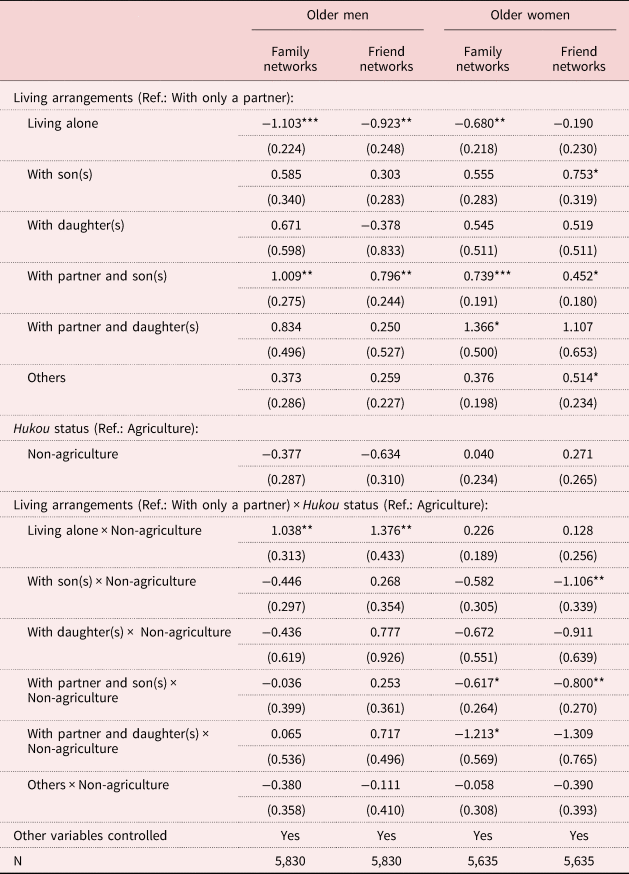
As the preference for sons and the patriarchal tradition are more powerful in determining the lives of rural people than urban residents, and rural China lags behind urban areas in terms of modernisation, we further added the interaction terms between living arrangements and hukou status to the third model specification to see if there was any urban–rural difference in our analysis (Table 5). As illustrated, compared to living with only their partner, living alone was only negatively associated with less support from family or friend networks for rural men (reference group) but not for urban men. This might be due to the urban–rural differences in the availability of communication technology, convenient transportation tools or aged-care services. That is, older men in urban China might still receive support through remote teleconnections with their kin or friends or through frequent visits from their children even if they live alone. The growing numbers of aged-care services in urban areas may also address some of their emotional needs (e.g. chatting with older adults) or provide daily help (e.g. providing cooking services). Thus, the negative influence of living alone on the support networks is less likely to be observed for urban older men. Nevertheless, the advantages of social networks related to living with both partner and son(s) remained for both rural and urban older men.
Ordinary least-squares: support from the social networks of older adults, urban–rural differences
Notes: Ref.: reference group. Robust standard errors are in parentheses. Other variables were the same as those in Table 3.
Significance levels: * p < 0.05, ** p < 0.01, *** p < 0.001 (two-tailed tests).
For women, compared to living with only their partner, living with their partner and son(s) or daughter(s) was only significantly associated with more support from family networks for rural women, while the influence of the living arrangements was trivial for urban women. Further, living with their son(s) or co-residing with both their partner and son(s) was positively related to support from friend networks for rural women. However, no significate impact of the living arrangements was found for urban women. Thus, the results supported Hypothesis 3a and 3b for rural women.
Discussion and conclusion
Given the effects of the specific societal and cultural context, the extant literature on the association between older adults’ fertility history and social networks as they age has demonstrated mixed results. The rapid demographic and socio-economic transitions in contemporary China provide an interesting setting to test how the family structures and living arrangements of older adults, concurrent with cultural persistence and shifts, shape their social networks. Our results demonstrated that family structures and living arrangements largely affected the support that older adults received from family and friend networks. However, the influence also differed by parents’ gender and urban–rural distinction.
Overall, childless older adults were the most disadvantaged group in terms of both family and friend networks. Different from the findings of research on European societies (Grundy and Read, Reference Grundy and Read2012; Baranowska-Rataj and Abramowska-Kmon, Reference Baranowska-Rataj and Abramowska-Kmon2019), the number of children was positively correlated with the older adults’ support from family networks. This might be related to the familistic culture and limited formal support provided by the government. Thus, older adults still largely depend on their children for various types of support, and the additional benefit brought by additional children is significant. Contrary to the patrilineal tradition, further analysis revealed that, in addition to the number of sons, the number of daughters also determined the level of family support for older adults. This might be related to the rise of women's social status and economic independence during the rapid educational expansion and economic transition in China over the last few decades (Lavely et al., Reference Lavely, Xiao, Li and Freedman1990; Hannum, Reference Hannum2005). The fertility decline and the increased chance of having only daughters might also contribute to the importance of daughters in providing family support. As a result, compared to the past, daughters are involved more actively in their family of origin after marriage and tend to continue intergenerational exchanges. This was also reflected in the influence of the living arrangements and compared to living with only their partner, living with their partner and daughter(s) also significantly increased the family support received by older men. For older women, although the benefit of living with a daughter was not statistically significant, it was still positively related to their family support.
Nevertheless, the presence of sons is still important in older adults’ non-relative friend networks, especially for men. For older men, having sons was positively associated with support from non-relative friends, while the number of sons did not lead to further differences. However, no evidence suggested that the presence of daughters or the number of daughters influenced the friend networks of the respondents. This was in concordance with the persistent preference for sons and the abnormally high sex ratio at birth in contemporary China. Having no sons still imposes stigma costs on older adults and can lead to social isolation. As implied by the results, compared to living with only their partner, older men who also co-resided with their son(s) tended to have significantly more support from their friend networks.
On average, we did not find a significant influence of the number of sons or daughters or the living arrangements on older women's support from friend networks. Further analysis revealed that the non-significant results were mainly driven by the urban sample because rural women co-residing with son(s) received significantly more support from non-relative friend networks. This urban–rural difference might be the result of the growing urban–rural gaps in development levels during the economic reforms since the 1980s in mainland China (Xie and Zhou, Reference Xie and Zhou2014). Women in more developed areas are more likely to be affected by the modern ideology that has accompanied the globalisation and modernisation process. For young generations (born after 1980) of urban residents, the number of women with at least vocational college education is parallel to that of men. As education and market opportunities open up new opportunities, women's educational expansion can give rise to their perception of the unfairness of traditional patriarchal norms (McDonald, Reference McDonald2013). Some studies have suggested that the gender revolution began among the most educated group in mainland China (Zhao, Reference Zhao2019). As a result, urban women are more likely to resist and thus are less affected by the traditional patriarchal norms. Another explanation is that women have a longer life expectancy and higher chances of remaining without a partner than their male counterparts, and this may lead them to expand their social networks, which tend to be more supportive and less familial than men's. This can be more easily achieved in modernised urban areas than in rural areas. The findings from European countries also suggested that, compared to older men, older women experienced higher relative growth in their networks as they aged because they added new close ties into their social milieu (Schwartz and Litwin, Reference Schwartz and Litwin2018).
This study suffered from several limitations. Due to the limited data, we did not test the composition of personal networks or the different types of support (e.g. informational, emotional, financial and instrumental support). We also did not have enough information on older adults’ preferences towards their living arrangements, which might be important in determining their wellbeing (Chen, Reference Chen2019). Another limitation of this study was that there might be untested mechanisms underlying the insignificant impact of living arrangements and having no sons on urban older women's friend networks. Thus, this paper also offers rich opportunities for future research to explore the mechanisms and discuss how the demographic trends and cultural shifts might affect future scenarios of social support in later life.
Despite these limitations, the empirical results of this study complement the literature on the relationship between family structures and older adults’ social networks in Western societies. Specifically, we extended the previous research by examining the varying influence of having/co-residing with sons or daughters in a social context with a strong preference for sons and patriarchal norms, and demonstrated how the effect might differ by parents’ gender and the urban–rural distinction. Thus, this research also contributes to the general literature on the interplay among gender, social networks and socio-cultural contexts.
Given the close association between social connections and older adults’ health and wellbeing, our findings also have important practical implications. Patriarchal, patrilineal and patrilocal traditions are still entrenched in older adults’ lives in China. Thus, policy makers should design aged-care programmes that acknowledge the needs of older adults who do not have children and/or sons to achieve healthy ageing. In the long term, women's contributions to socio-economic development should be recognised and praised, gender inequality should be eliminated and women's status in family life must be promoted. Alleviating gender inequalities and the preference for sons will protect sonless older adults and those not co-residing with their sons from being or feeling stigmatised, and they will thus be more likely to actively look for and obtain support from social networks.
Acknowledgements
The authors would like to thank the editor and the anonymous reviewer for their suggestions.
Financial support
This work was supported by the National Natural Science Foundation of China [71490731]; China's National Social Science Foundation [19CRK015, 18ARK003].
Ethical standards
Ethical approval was not required.