Introduction
Segmental mandibular defects are mainly caused by cancer ablation, but can also be caused by osteoradionecrosis, extensive benign disease and trauma.Reference Thorne, Grabb and Smith1 Defects can affect the skin, bone, mucosa or a combination of these. The mandible is important for speech, deglutition, mastication and lower face shape. Mandibular defects and their reconstruction can therefore have a significant impact on quality of life (QoL). QoL scores are subjective and multidimensional, encompassing physical and occupational function, psychological state, social interaction, and somatic sensation.Reference Spilker2 As flap success is similar for most reconstructive options,Reference Cordeiro, Disa, Hidalgo and Hu3 QoL becomes an important consideration in patients undergoing mandibular reconstruction. Of all cancer patients, those with head and neck cancer have the highest rates of depression.Reference Lydiatt, Denman, McNeilly, Puumula and Burke4 Moreover, oral cavity patients rank third among all cancer patients in suicide incidence.Reference Misono, Weiss, Fann, Redman and Yueh5 These findings indicate the important impact of these cancers and their treatment on the mental health of patients.
Osteocutaneous free flaps are the preferred option for reconstruction of segmental mandibular defects.Reference Hayden, Mullin and Patel6 The most common donor sites are the fibula, iliac crest, radius and scapula.Reference Rogers, Lakshmiah, Narayan, Lowe, Brownson and Brown7, Reference Wehage and Fansa8 Several authors have suggested the fibula free flap as the ‘gold standard’ for mandibular reconstruction because of its available length, dual vascularisation, ease of harvest, reliability, and good functional outcomes.Reference Chim, Salgado, Mardini and Chen9 Nevertheless, there are two important unanswered questions. First, is fibula free flap use really reported more frequently than the use of other osteocutaneous free flaps? Second, how does it compare with other flap types in terms of functional and QoL outcomes?
This study therefore has two aims. The first is to systematically review the publication trends in microvascular reconstruction of mandibular defects using osteocutaneous free flaps and thus to assess whether the fibula free flap is really used more frequently than other free flap options. The second is to compare the different free flap options for mandibular reconstruction at our institution in terms of QoL, depression and anxiety. This will enable us to determine whether the fibula free flap has advantages over the other free flap options.
Materials and methods
Systematic review
We conducted a systematic review of articles by searching for relevant titles in the public Medline database (PubMed). The goal was to identify articles describing patients with free flap mandibular reconstruction using an osteocutaneous flap. The initial aim was to conduct a search using medical subject headings (MeSH) because this was shown to be more efficient than using searching text.Reference Chang, Heskett and Davidson10 However, the term ‘Free Tissue Flaps’ and its synonyms (‘Free Flap’, ‘Microsurgical Free Flap’, etc.) were only introduced as MeSH entries in 2011, which limited our strategy to using searching text. The following strategy was used to search for article titles published between January 1948 and December 2012: (mandible[Title] OR mandibular[Title]) AND reconstruction[Title] AND free flap[Title]. We started by excluding all non-English language articles and all articles not describing the use of free flaps. For each retained article, we then counted the number of patients who underwent reconstruction with each type of free flap. Importantly, some articles reported the use of several free flap options, and this was accounted for. The search strategy was conducted separately by two authors, and any classification differences were resolved by obtaining consensus at a group meeting. For clinical studies, the year of publication, number of patients, and whether the indication for reconstruction was oncological or not were recorded.
The study was approved by the Ethics Committee of the Université de Montréal Hospital Center (CER 11.090). Patient consent was not required.
Quality of life analysis
A cross-sectional study was conducted on a convenience sample of oral squamous cell carcinoma patients at least 12 months after diagnosis. Several prospective studies have shown that most functional and QoL scores are stable from 12 months after diagnosis until follow up at five years.Reference Weymuller, Yueh, Deleyiannis, Kuntz, Alsarraf and Coltrera11, Reference Bjordal, Ahlner-Elmqvist, Hammerlid, Boysen, Evensen and Biorklund12 Patients were identified during routine follow-up visits in a busy head and neck oncology clinic at a tertiary referral hospital centre from September 2011 to February 2012. Our centre performed 48 osteocutaneous free flaps for mandibular reconstruction between 2005 and 2010 (approximately 10 per year). During the study enrolment period, a total of 77 oral cavity squamous cell carcinoma patients were identified. Of these, 13 patients had undergone resection with primary one-stage free flap reconstruction and were included in the present study.
We assessed QoL using the European Organisation for Research and Treatment of Cancer (‘EORTC’) head and neck cancer module (i.e. ‘QLQ-H&N35’) and version 3.0 of the Core Questionnaire (i.e. ‘QLQ-C30’). These questionnaires are validated tools for assessing health-related QoL of cancer patients.Reference Bjordal, de Graeff, Fayers, Hammerlid, van Pottelsberghe and Curran13 The QLQ-C30 questionnaire evaluates global health status and includes functional and symptom scales. For each item, the maximal score is 100. The QLQ-H&N35 questionnaire contains 35 questions and evaluates 19 items. It was designed for use in patients with head and neck cancer. Questions assess symptoms, treatment side effects, social function, and body image and sexuality. For each item on this scale, the maximal score is also 100. Anxiety and depression were scored using the Hospital Anxiety Depression Scale. Patients with scores equal to or greater than eight on each subscale (anxiety or depression) were classified as anxious or depressed.Reference Zigmond and Snaith14
Data obtained from patients' medical records included age, gender, diagnosis, date of surgery, history of radiation therapy, location and size of defect, and reconstructive technique. Radial forearm, fibula and subscapular free flap reconstructions are all performed in our health centre. Patients were classified into three groups according to the type of free flap: radial forearm, fibula and subscapular system.
Differences in QoL outcomes between groups were assessed using chi-square tests and analysis of variance (ANOVA). All analyses were conducted using SPSS 17.0 software (SPSS Inc, Chicago, Illinois, USA).
Results
Frequency of osteocutaneous free flap reports
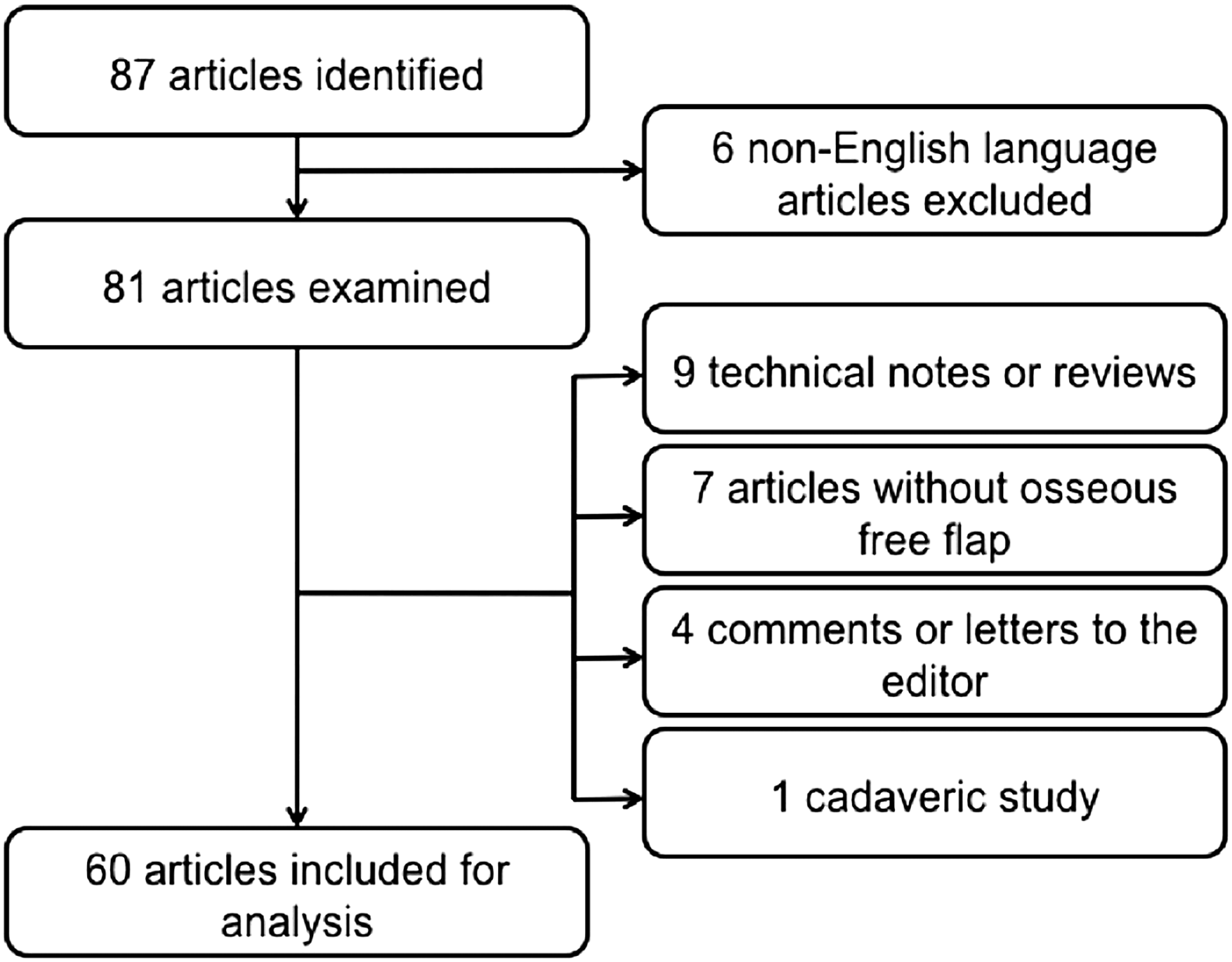
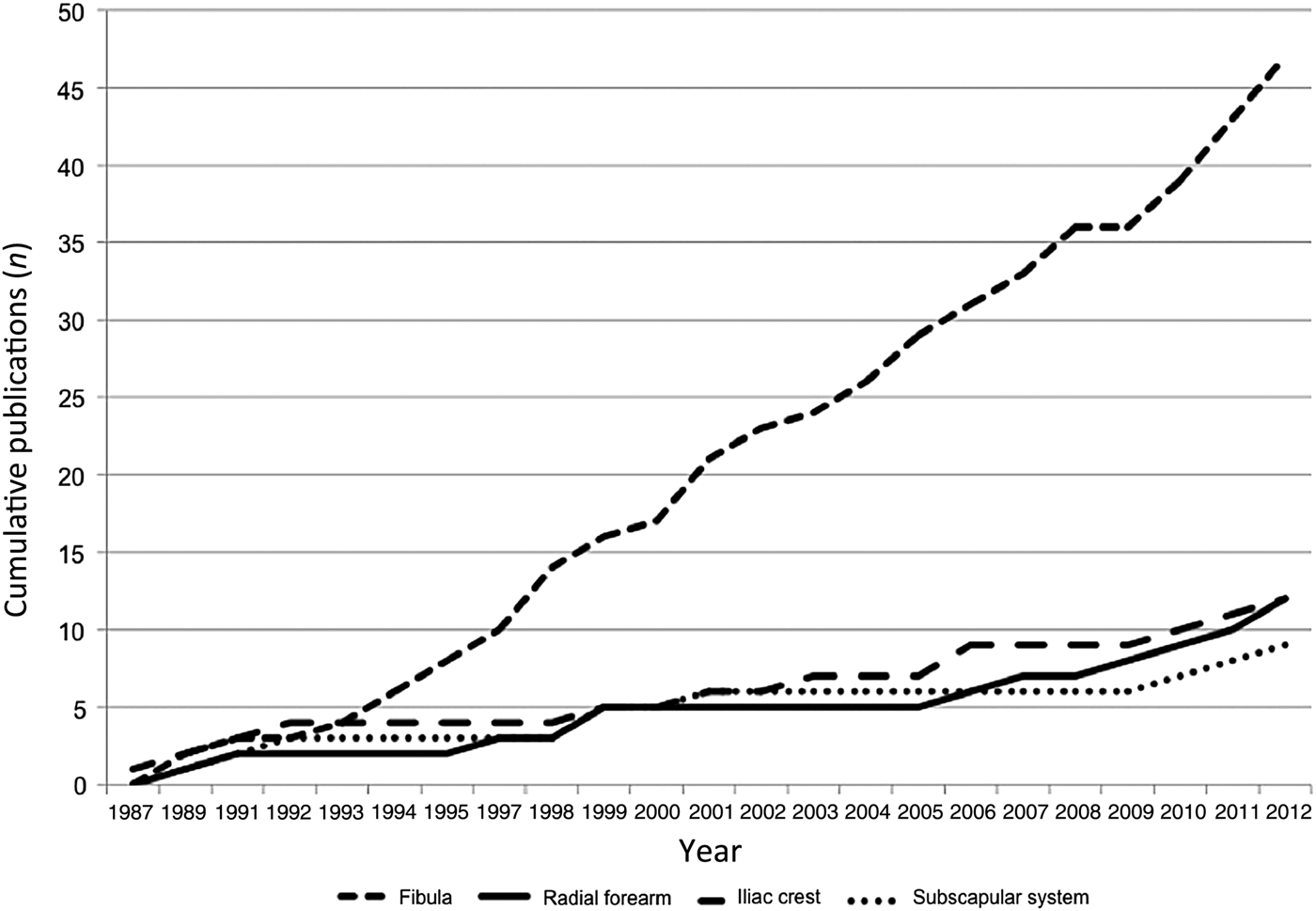
A flowchart showing inclusion and exclusion criteria is presented in Figure 1. A total of 60 articles published between 1987 and 2012 were identified. The main indication for mandibular reconstruction was post-ablative resection for malignancy (43 articles, 71.7 per cent), and the indication was not described in 6 articles. Four types of free flaps were most frequently encountered in our search: fibula, radial forearm, subscapular system and iliac crest. Two articles described vascularised rib and serratus anterior flaps.Reference Penfold, Davies, Cole, Evans and Hobby15, Reference Suh, Blackwell, Sercarz, Cohen, Liu and Tang16 The total number of articles using each flap is shown in Figure 2. The numbers do not add up to 60 because some articles reported the use of several different free flap types.
Flowchart showing inclusion and exclusion criteria

Graph showing cumulative incidence of publications by flap type and publication year
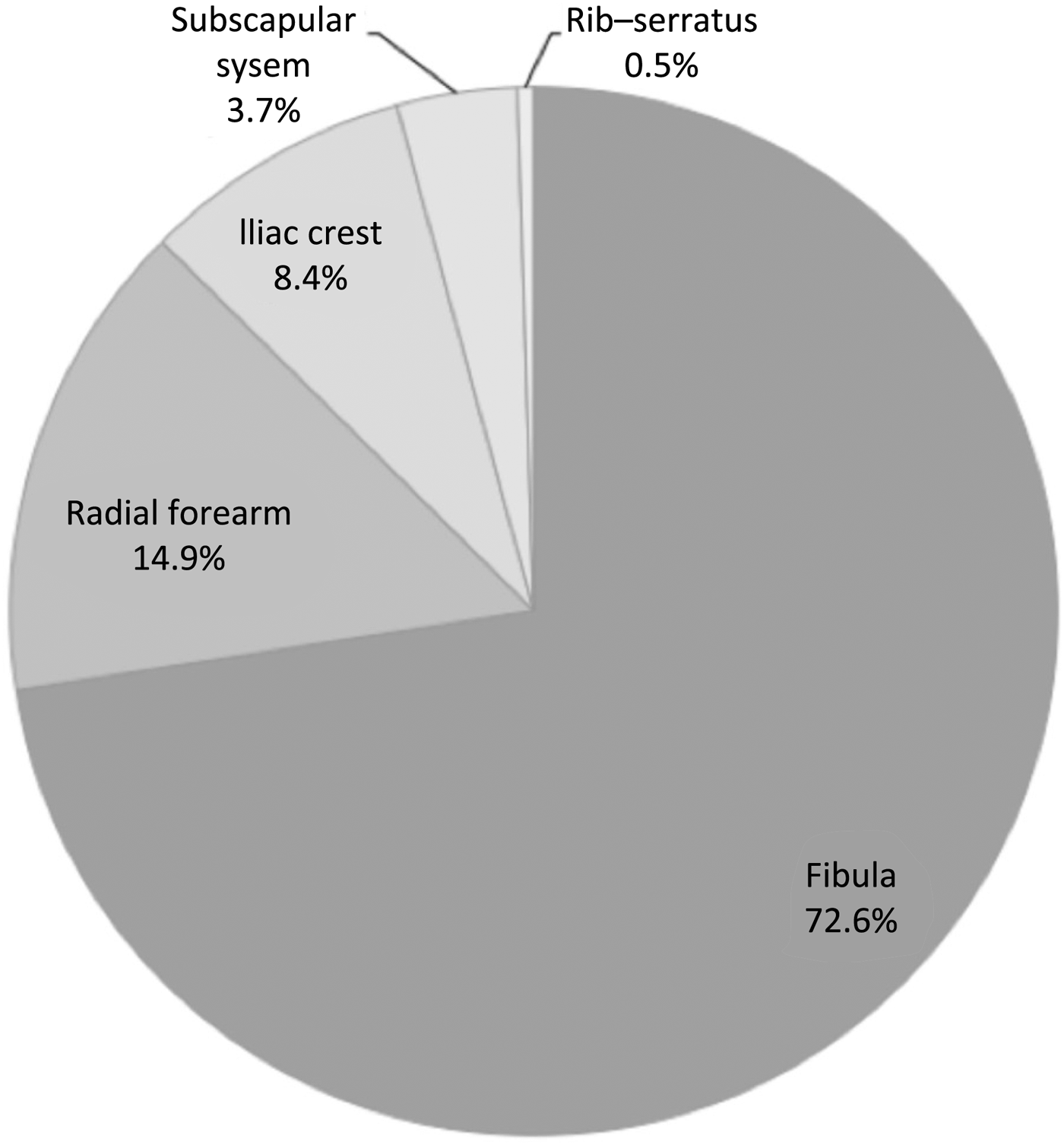
We next examined the number of patients in each article who underwent reconstruction using each free flap option. The total number of patients described in all articles was 1353. In order of decreasing frequency, the most commonly used free flaps were the fibula (n = 982), radial forearm (n = 201), iliac crest (n = 113), subscapular system (n = 50) and rib–serratus (n = 7; percentages shown in Figure 3).
Pie chart showing percentages of reconstructed patients by flap type
Patient characteristics
The characteristics of our patient sample are shown in Table I. The age range at diagnosis was 47–72 years (mean age 58 years, standard deviation 8.3). The mean follow-up period was 58 months (range 15–161 months). A t-test indicated that patients in the fibula free flap group are significantly younger than those in the radial forearm and subscapular system free flap groups combined (53.7 years vs 63.7 years, p = 0.025). There was also a statistically significant difference in follow-up time between the fibula free flap group and the two other groups (94.0 months vs 27.8 months, p = 0.003). Moreover, ANOVA analysis of the number of prescription medications (used as a surrogate of comorbidityReference Perkins, Kroenke, Unutzer, Katon, Williams and Hope17) revealed no statistical difference (p > 0.05) between groups.
Three-dimensional computed tomography scan reconstruction of different free flap options for mandibular reconstruction, including (a) fibula, (b) radial forearm and (c) subscapular system free flaps
Characteristics of free flap mandibular reconstruction patients
M = male; F = female; RT = radiation therapy
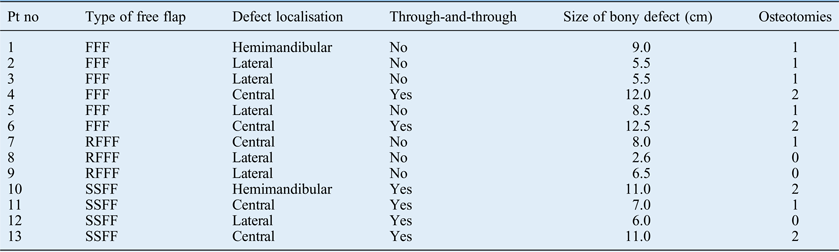
All patients underwent reconstruction with an osteocutaneous or osteomyocutaneous free flap for mandibular segmental defect reconstruction after squamous cell carcinoma resection. Mandibular defects are described in Table II. The size range was 2.6–12.5 cm. All patients in the subscapular system free flap group had large through-and-through defects, unlike patients in the other groups. Figure 4 shows examples of mandibular reconstructions for each free flap.
Characteristics of reconstructed mandibular defects
Pt no = patient number; FFF = fibula free flap; RFFF = radial forearm free flap; SSFF = subscapular system free flap
Quality of life scores
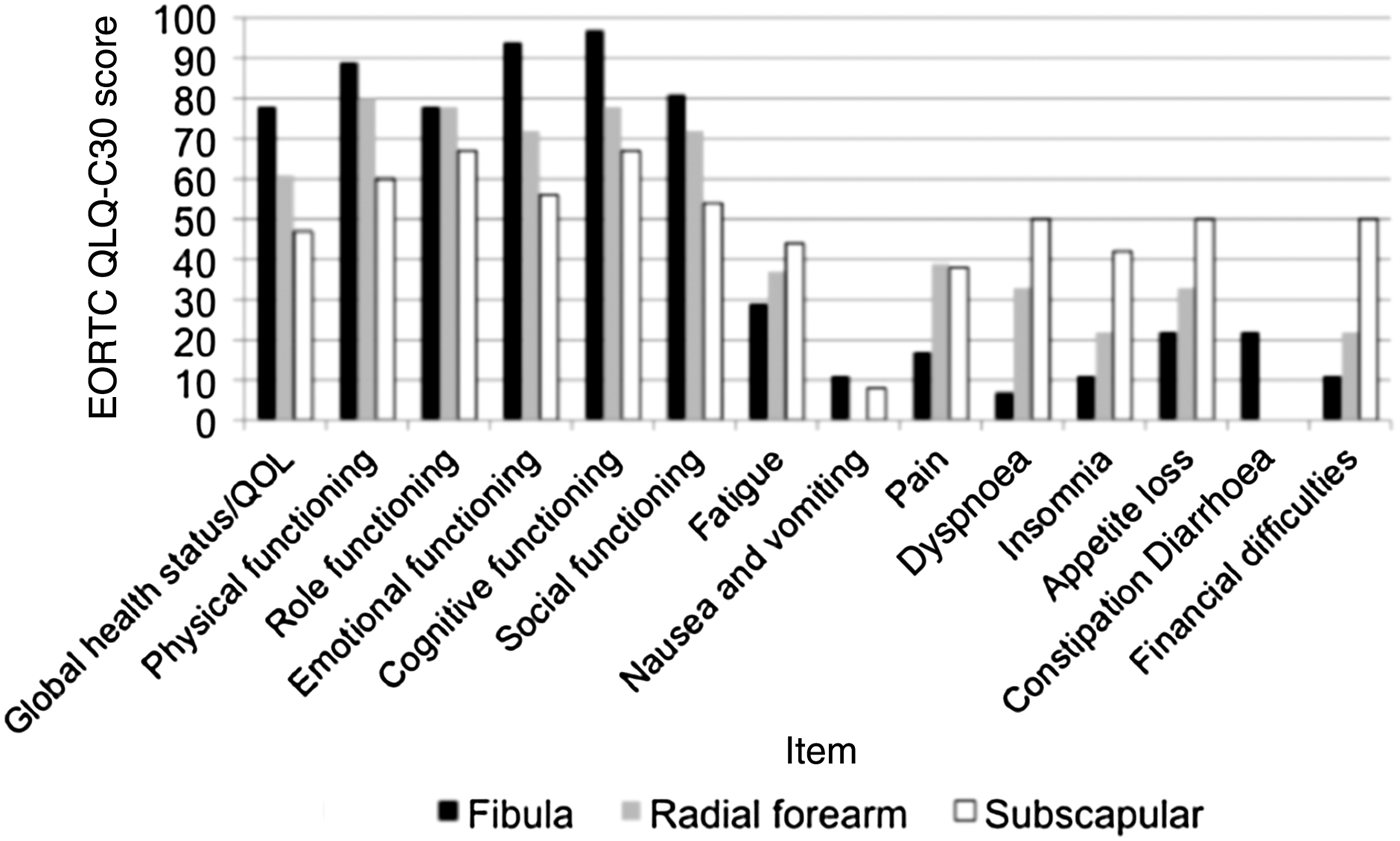
QoL analysis using the European Organisation for Research and Treatment of Cancer questionnaires showed no significant difference between groups. However, there is a definite trend towards better results in the fibula free flap group. Patients in the fibula free flap group had the best global health status scores, followed by those in the radial forearm free flap group and then the subscapular system free flap group. They also scored better on functional and symptom scales. Patients in the subscapular system free flap group had the lowest scores in all three categories (detailed in Figure 5).
European Organisation for Research and Treatment of Cancer (‘EORTC’) QLQ-C30 scores by free flap type. p > 0.05 for all scales (analysis of variants)
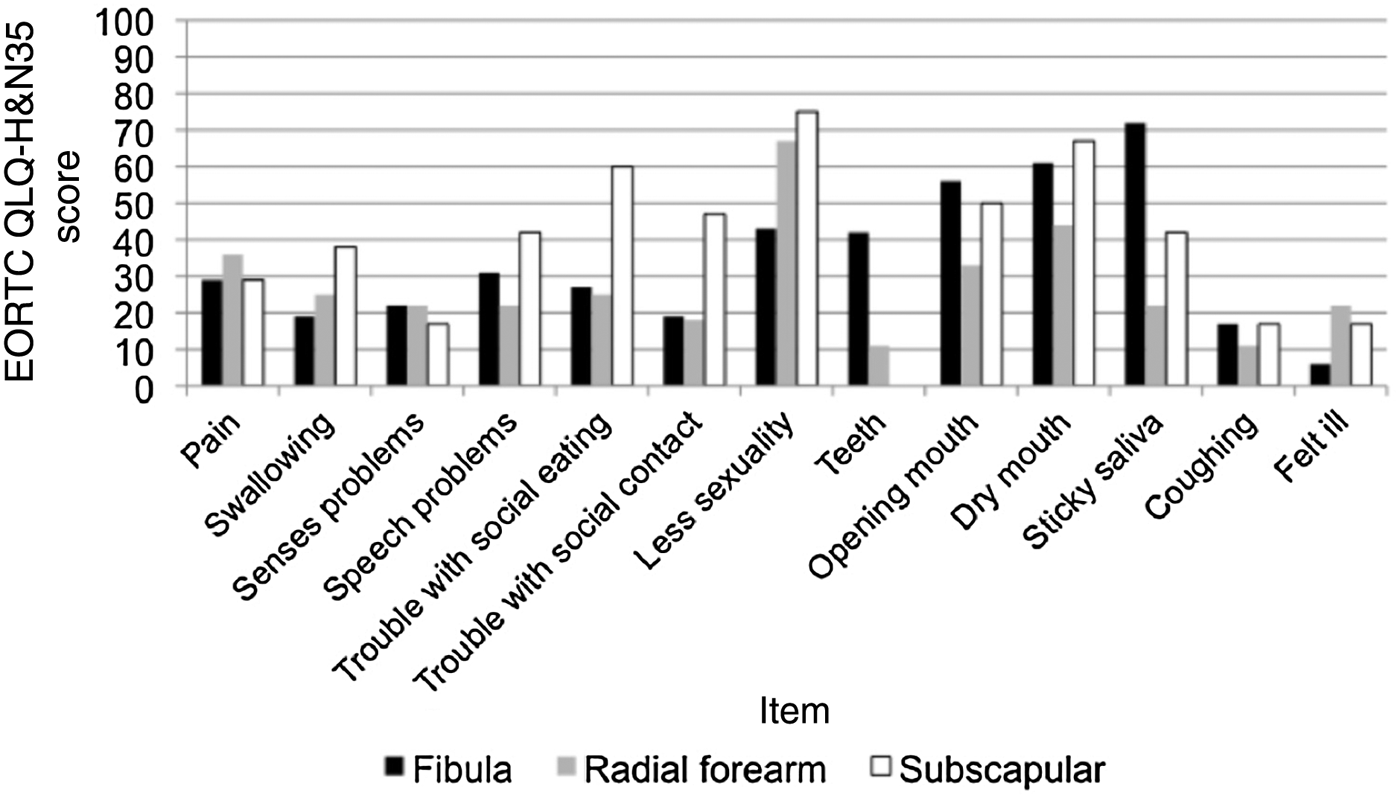
Similar results were obtained for head and neck specific scales. Patients in the radial forearm free flap group had the highest scores for symptoms associated with pain, problems with senses, and feeling ill. Patients in the fibula free flap group had the highest scores for problems with senses, problems opening their mouths, sticky saliva and coughing. Patients in the subscapular system free flap group had higher scores in more symptom categories than patients in the two other groups. These included the highest scores for symptoms associated with swallowing, speech, social eating, social contact, reduced sexuality, dry mouth and coughing (Figure 6).
European Organisation for Research and Treatment of Cancer (‘EORTC’) QLQ-H&N35 scores by type of free flap. p > 0.05 for all scales (analysis of variants)
Anxiety and depression scores
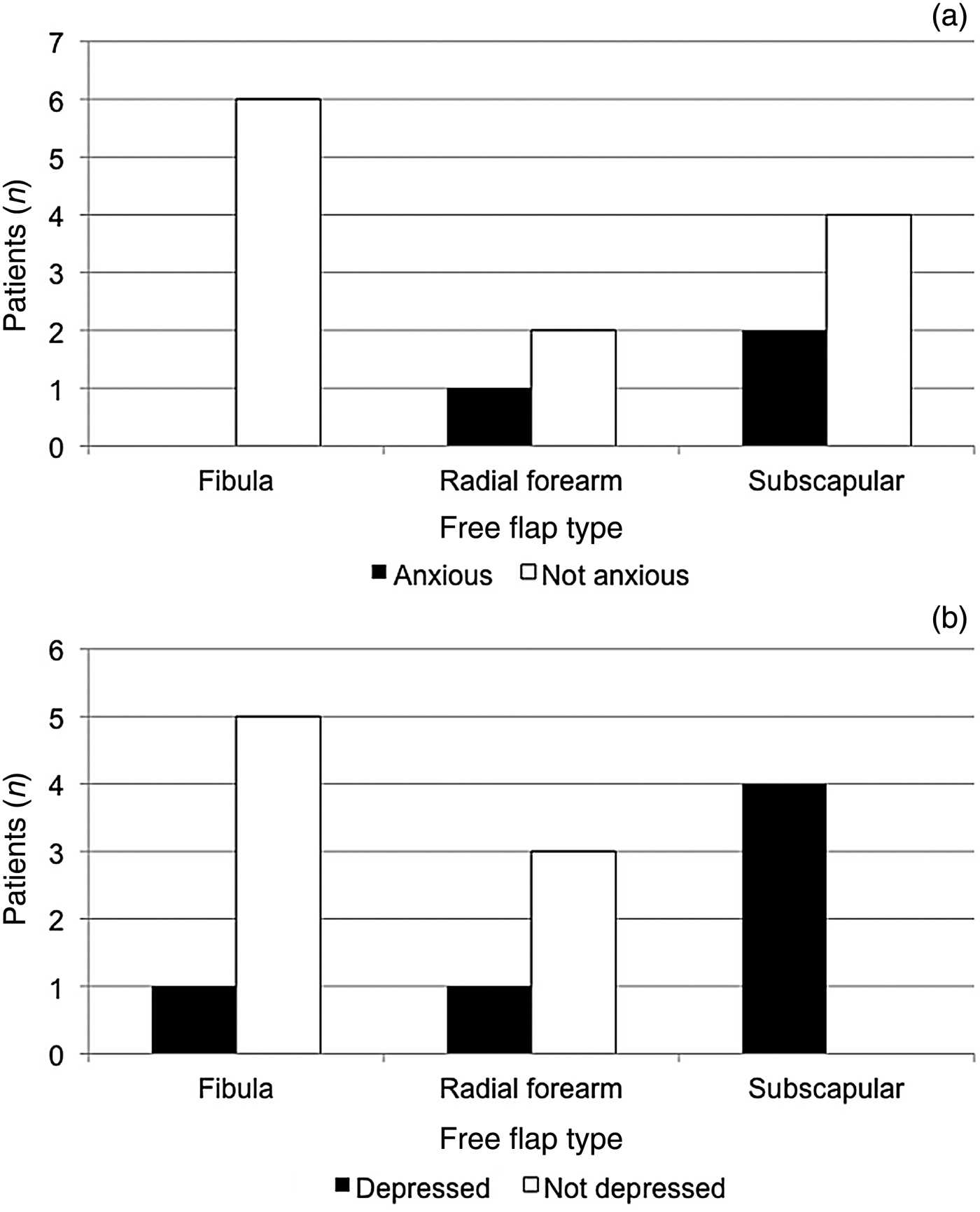
According to results obtained with the Hospital Anxiety Depression Scale, all patients in the subscapular system free flap group had symptoms of depression (score > 8) and half were anxious (score > 8). A chi-square test showed that patients in the subscapular system free flap group were significantly more depressed than patients in the fibula and radial forearm free flap groups (p = 0.031; Figure 7).
Hospital Anxiety and Depression Scale scores by type of reconstruction: (a) anxiety scale, p = 0.16 (chi-square test); (b) depression scale, p = 0.03 (chi-square test)
Discussion
The free flap predominantly used in reports of mandibular reconstruction is the fibula free flap. This is demonstrated not only by the higher number of published studies (Figure 2) compared with other free flap options but also by the higher total number of patients that have undergone this surgical procedure (Figure 3).
Mandibular defects can be classified as central, lateral or hemimandibular (including the condyle).Reference Thorne, Grabb and Smith1 Anterior defects of the mandible result in structural disruption, leading to airway collapse and a profound disturbance in oral function and facial appearance. In contrast, extensive lateral defects lead to shifting of the mandible, resulting in pain and malocclusion.Reference Papel, Frodel, Holt GR Larrabee, Nachlas and Park18 Criteria for the ideal reconstructive option for segmental mandibulectomy are that it should restore bone continuity and oral competency, maintain occlusion, permit dental restoration, and restore facial symmetry and contours.Reference Tucker19 Wound closure should be immediate and complete, and complications such as orocutaneous fistula, infection, and dehiscence or plate exposure should be avoided.Reference Flint and Cummings20 The main reconstructive options are a non-vascularised bone graft, a reconstruction plate alone or with a soft tissue flap, a soft tissue pedicled flap, a soft tissue free flap, or an osteocutaneous free flap with a reconstruction plate.Reference Thorne, Grabb and Smith1, Reference Chim, Salgado, Mardini and Chen9, Reference Flint and Cummings20, Reference Cannon, Strub, Yawn and Day21 Reconstruction plates alone should be reserved for small lateral defects or for patients with severe comorbidity or poor prognosis. An added soft tissue flap can be used when a soft tissue defect needs to be reconstructed.Reference Chim, Salgado, Mardini and Chen9 Otherwise, osteocutaneous free tissue transfer represents the current gold standard for reconstructing large segmental mandibular defects.
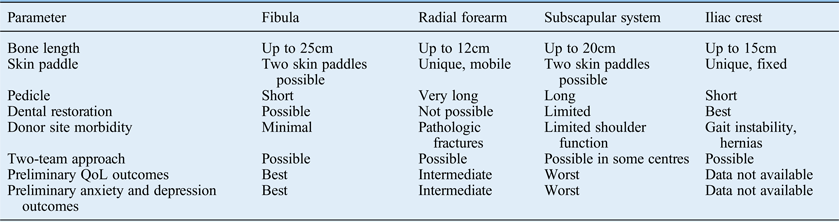
From our literature review, we determined the advantages and disadvantages of each osteocutaneous free flap option. The most salient results are summarised in Table III.
Advantages and disadvantages of the main free flap options for mandibular defect reconstruction
QoL = quality of life
Fibula free flap
The fibula free flap is based on the peroneal artery and associated veins. Since its introduction in 1989 by Hidalgo,Reference Hidalgo22 it has become the gold standard for mandibular reconstruction. Its advantages include excellent bone quantity and quality: it provides up to 25 cm of dense cortical bone that can be used to reconstruct any mandibular defect.Reference Hayden, Mullin and Patel6, Reference Goh, Lee, Tideman and Stoelinga23, Reference Miles, Goldstein, Gilbert and Gullane24 The blood supply is both intra-osseous and segmental and can tolerate multiple contouring osteotomies.Reference Genden25 The skin island can be easily rotated to reconstruct the floor of the mouth, as needed.Reference Thorne, Grabb and Smith1 Moreover, it is well suited to a two-team approach to resection and reconstruction. A vascular pedicle length of 4–8 cm has been reported.Reference Wolff and Hölzle26
One possible disadvantage of the use of this flap is the limited bone availability for osseointegrated implants. To overcome this problem, the use of a ‘double-barrel’ flap and vertical distraction osteogenesis has been advocated.Reference Hayden, Mullin and Patel6, Reference Goh, Lee, Tideman and Stoelinga23, Reference Miles, Goldstein, Gilbert and Gullane24 For larger defects, including soft tissue defects, a two skin island fibular osteocutaneous flap has been described that allows simultaneous intra-oral coverage,Reference Baumann, Yu, Hanasono and Skoracki27 support and external resurfacing. However, the skin island is reported to be insufficient for some larger defects.Reference Deleyiannis, Rogers, Ferris, Lai, Kim and Johnson28 Therefore, a combination of the fibula free flap and a second fasciocutaneous flap, such as the anterolateral thigh or radial forearm flaps, remains a popular option.Reference Wehage and Fansa8, Reference Wong and Wei29 A final disadvantage is the possibility of atherosclerosis and venous insufficiency, which must be considered in the pre-operative assessment.Reference Wolff and Hölzle26
Subscapular system free flap
The scapular donor site for mandibular reconstruction was introduced in 1975 by Ostrup and Fredrickson.Reference Ostrup and Fredrickson30 Its main advantage is that it offers the largest amount of skin for reconstruction, with an available skin island of up to 30 cm long.Reference Wolff and Hölzle26 Moreover, two separate skin paddles with two vascularised bone segments and latissimus dorsi muscle can be based on the same vascular pedicle.Reference Genden25 The chimeric nature of this flap makes it ideal for complex and through-and-through composite defects involving skin, bone and mucosa. The vascular pedicle length can be up to 11–14 cm when following the subscapular vessels to the axillary artery and vein.Reference Wolff and Hölzle26 The angular branch of the thoracodorsal artery is consistently found and can reliably supply bone from the tip and lateral aspects of the scapula.Reference Seneviratne, Duong and Taylor31 Early ambulation is possible with this flap (unlike with the fibula and iliac crest free flaps), thus potentially reducing the incidence of deep venous thrombosis.Reference Genden25 Finally, the subscapular system is less affected by atherosclerosis than the iliac and fibula donor sites.Reference Genden25
A frequently mentioned disadvantage is donor site location, which prevents a two-team approach. However, in our centre we harvested the flap from a dorsal decubitus position, which enables simultaneous ablative and reconstructive approaches. Another disadvantage is that the skin paddle is somewhat thick compared with fibula and radial forearm free flap reconstructive options. Moreover, multiple osteotomies can be hazardous because blood supply is not segmental. The thin bone precludes dental implantation, unless the scapular bone is oriented in a vertical position; however, the scapular bone is generally considered inferior to the iliac crest for this indication.Reference Yoo, Dowthwaite, Fung, Franklin and Nichols32
Radial forearm free flap
The radial forearm free flap is based on the radial artery and its comitant veins. It has a reliable, long pedicle with excellent soft tissue properties for oral lining coverage because of its large, thin, pliable skin paddle (up to 64 cm2).Reference Kim, Rosenthal, Ellis and Wax33 In 1983, Soutar et al. proposed inclusion of the radial bone to reconstruct the mandible with this flap.Reference Soutar, Scheker, Tanner and McGregor34 Up to 10–12 cm of bone can be harvested.Reference Villaret and Futran35 It is an acceptable choice for reconstructing angle or ramus defects comprising non-tooth-bearing segments associated with large soft tissue defects.Reference Villaret and Futran35 It has the longest vascular pedicle of the osteocutaneous free flap options for mandibular reconstruction.Reference Thorne, Grabb and Smith1
Since the blood supply is assured by small perforators from the radial artery, multiple osteotomies may result in a significant risk of ischaemia.Reference Miles, Goldstein, Gilbert and Gullane24 However, satisfactory results have been reported with one or two osteotomies of the bony segment: the success rate was comparable with that of reconstructions not requiring osteotomies.Reference Cordeiro, Bacilious, Schantz and Spiro36, Reference Thoma, Allen, Tadeson, Archibald, Jackson and Young37 Moreover, there is insufficient bone for oral rehabilitation using implants.Reference Hayden, Mullin and Patel6 A major criticism of this flap is the risk of distal radial fracture, which increases when larger bone segments are harvested. Pre-platingReference Waits, Toby, Girod and Tsue38 and keel-shaped osteotomiesReference Weinzweig, Jones, Shestak, Moon and Davies39 have been introduced to avoid this complication.
Iliac crest free flap
This flap is based on the deep circumflex iliac artery. Its main advantage is the quality and quantity of available bone, which can match the vertical height of the mandible because of the similar shapes of the ipsilateral iliac crest and hemimandible.Reference Thorne, Grabb and Smith1 No other source can provide as much bone to accommodate implants.Reference Goh, Lee, Tideman and Stoelinga23 It can provide up to 15 cm of bone.Reference Flint, Haughey, Lund, Niparko, Richardson and Robbins40
The main disadvantage of the iliac crest flap is significant donor site morbidity, such as gait disturbance and hernias, which limited its popularity after the 1980s.Reference Genden25 The thick, immobile skin paddle limits intra-oral reconstruction, although an osteomyocutaneous modification including the internal oblique muscle has been suggested for intra-oral coverage.Reference Urken, Vickery, Weinberg, Buchbinder, Lawson and Biller41 Other disadvantages include the lack of segmental perforating vessels that limit osteotomies, and a short vascular pedicle.Reference Goh, Lee, Tideman and Stoelinga23
Other reconstructive options
A drawback of our search strategy using titles is that some less frequently used flaps were identified in the literature. However, the less common options were identified by careful examination of the articles. For example, the use of free rib or free metatarsus flaps was quickly abandoned in the 1970s because of significant donor site morbidity and inadequate bone quality.Reference Goh, Lee, Tideman and Stoelinga23
Quality of life, anxiety and depression
In our limited patient population, we observed a trend towards better QoL results with the fibula free flap, although this did not reach statistical significance. However, these results are clinically important because the minimal clinically important difference for this questionnaire is 5–10 points for patients reporting at least a small change in QoL.Reference Osoba, Rodrigues, Myles, Zee and Pater42 We observed decreasing clinical outcomes for the fibula, radial forearm and subscapular system free flaps (in that order) for the following QLQ-C30 scales: global health status or QoL, physical functioning, emotional functioning, cognitive functioning, social functioning, fatigue, dyspnoea, insomnia, appetite loss, and financial difficulties. We observed the same decreasing trend in the QLQ-H&N35 subscale scores for swallowing and sexuality. The fibula free flap had better outcomes than the other two flaps in terms of speech, social eating and social contact. Patients with subscapular system free flaps were significantly more depressed than those with other free flaps.
One other study has compared free flaps for mandibular reconstruction in terms of QoL. Politi et al. compared QoL in patients following mandibular reconstruction with iliac crest and fibula free flaps.Reference Politi and Toro43 They found that patients had higher QoL scores and functional scores in terms of speech, eating, aesthetics and donor site morbidity following mandibular reconstruction with an iliac crest free flap. In this study, osteomyocutaneous modification, including the internal oblique, was used. As the iliac free flap is not used in our centre, we could not evaluate and compare this option with the other flap types in terms of QoL.
The differences in QoL and depression scores between our study groups can be explained by four main factors. First, all patients that underwent reconstruction with a subscapular system free flap had through-and-through defects compared with only two out of six patients who underwent fibula free flap reconstruction. Patients in the subscapular system free flap group had more complex defects. The choice of this flap, which provides large amounts of soft tissue and two mobile skin paddles, was mainly motivated by the presence of extensive defects. Other single free flaps do not provide sufficient soft tissue coverage to reconstruct very large defects. Through-and-through defects, despite their reconstruction, are likely to cause more functional problems. The patient's appearance is more strongly affected by those defects, which can influence the patient's QoL and psychological status. Indeed, patients who had undergone subscapular system free flap reconstruction were all depressed, and their depression levels were significantly higher compared with other patient groups.
Second, there was a significant difference in patient age between the fibula free flap group and the other two groups. The younger fibula free flap patients might have less functional, mood, and QoL issues simply because of their age.
Third, there was a significant difference in follow-up times between the fibula free flap group and the two other groups, which might introduce selection bias in favour of fibula free flap patients who have survived for longer periods. These patients might have had more time to cope with their QoL issues, and might therefore complain less.
Fourth, our patient population was very limited in terms of sample size, and represents a preliminary QoL analysis before more extensive studies are undertaken. Our results provide an interesting insight into QoL outcomes in this population, but cannot be used to provide a robust comparison of outcomes between groups.
Owing to these factors, it is difficult to directly compare free flap options using our data. It is necessary to consider many factors, especially the defect type and patient comorbidities, when selecting the optimal reconstructive option. This can be addressed by a multidisciplinary reconstructive team, with input from several experienced surgeons.
Limitations and future perspectives
A limitation of our systematic review is that only article titles were searched. Although it is possible that some published data might have been missed with this strategy, our methodology was systematic and achieved its objective of obtaining a general idea of the usage frequency of each free flap type.
The ideal methodology for evaluating the frequency of use of each flap would be to obtain hospital data from all institutions within a certain geographical area instead of using data reported in the literature. However, this methodology is significantly more complex. In our opinion, a valid surrogate measure was to conduct a systematic review of all studies regardless of country of origin, and to include each osteocutaneous free flap option for mandibular reconstruction and the number of patients included in every study. This systematic methodology enabled us to minimise selection bias.
Another limitation is the lack of pre-operative QoL and depression assessment because pre-treatment depression is a predictor of poor long-term QoL and depression scores.Reference De Graeff, De Leeuw, Ros, Hordijk, Blijham and Winnubst44 However, this is an inherent limitation of the cross-sectional study design. This limitation will be addressed in future studies at our institution, and should be addressed in all other future studies of this kind.
• Fibula, iliac crest, radial forearm and subscapular system free flaps are the osteocutaneous free flaps most commonly used for mandibular reconstruction
• The mandible is essential for speech, mastication, deglutition, airway stability and lower face shape
• Its alteration can have a significant impact on quality of life (QoL)
• The osteocutaneous free flap most frequently used for mandibular reconstruction is the fibula free flap
• Fibula free flaps tend to have better QoL results, although patient selection is probably a confounding factor
• QoL comparison between osteocutaneous free flaps should be conducted on a homogeneous population
A limitation of our QoL analysis is its retrospective nature and the small sample size. However, because treatment is highly individualised, we believe that patient randomisation to different flap types would be practically and ethically difficult. A larger sample size could help achieve statistical significance for QoL scales, control for confounding factors and enable multivariate analyses to be conducted. Another limitation is the lack of uniformity in the time from mandibular reconstruction to questionnaire administration. However, because QoL in head and neck cancer patients has been shown to stabilise one year after diagnosis,Reference Weymuller, Yueh, Deleyiannis, Kuntz, Alsarraf and Coltrera11, Reference Bjordal, Ahlner-Elmqvist, Hammerlid, Boysen, Evensen and Biorklund12 we included only patients diagnosed at least one year before evaluation. In further studies, it will be essential to specifically analyse QoL related to donor site and differences among patients who undergo reconstruction with each free flap type.
Conclusion
In summary, we have shown that the free flap types most frequently reported for mandibular reconstruction are the fibula, radial forearm, iliac crest and subscapular system free flaps. We believe QoL to be an essential treatment outcome in mandibular reconstruction because it provides a more holistic view of the surgical success rate. Our preliminary analysis showed a trend towards better QoL and depression results for the fibula free flap group. However, it is difficult to draw firm conclusions because of heterogeneity in patient age, follow-up times and defect type, and the small sample size. Therefore, both defect type and patient-specific factors play important roles in flap selection, and must be considered in a multidisciplinary fashion so that the optimal flap is selected for each patient. Further studies using larger and more homogeneous samples, and including a consideration of donor site morbidity, are necessary to compare QoL outcomes among groups.
Acknowledgements
We wish to thank Thuy Le, for bibliographical assistance in obtaining the articles in this review. This work was supported by the Canadian Institutes of Health Research (funding reference number MFE-123762) in the form of a PhD grant to Dr Moubayed.