Introduction
Virtually every art historical institution keeps photographic holdings. Elizabeth Edwards describes two main forms of photographic collections within institutions: the collections of photographs recognized for their artistic value and given official status in museum departments; and those that she calls ‘non-collections’ of documentary photographs haphazardly accumulated in museums, universities and research institutes.Footnote 2 These miscellaneous collections consist of masses of often anonymous photographs, of various provenance, representing a wide range of techniques and dating to all historical periods. Many of them seem today to have lost their original value (which had been considered exclusively ‘documentary’), because they seem to have been rendered obsolete by new reproductions produced by more advanced technologies. In art historical and museum operating systems photographs play a role that is as fundamental as it is poorly perceived, precisely because they are ubiquitous. They can be found everywhere (as documentation, in displays, as study material, as tools for the curators), but they are not seen. This is because they are reproducible and hence lack the quality of uniqueness which is the main criterion for assessing objects in museums. Furthermore, they resist conventional art historical approaches that tend to focus on photographic authoriality and indexicality. This uncertain statusFootnote 3 relegates documentary photographs to a very low position in the hierarchy of museum and art historical values.
Photography and art history
Over the last decades there has been a spate of studies on the dynamic interaction between photographic techniques and methods of scientific analysis, especially in the field of art history.Footnote 4 This interaction was based on the presumed neutrality of photographic documents as the products of a chemical-mechanical process: on this premise, positivist scholarship could place photography at the service of ‘science’ as a form of objective evidence. The rhetoric of the objectivity of photography rooted in the 19th century has long been deconstructed but has paradoxically been revived with the advent of digital photography. Digitization is also one of the factors that has drawn renewed attention to private and institutional photographic archives dedicated to the documentation of works of art and architecture; other factors include the growing interest in a critical history of academic disciplines as products of society and culture, and the recognition of photographs as objects of material culture in themselves.
Research on photography and art history was initially influenced by the discourse on the nature of the photographic image as acheiropoieton (not made by human hands) and on its ‘veracity’, that tended to reduce photographs to pure visibility, pure two-dimensionality. A new path was opened by the acknowledgement that a photograph is at the same time ‘a physical object and a visual image’.Footnote 5 Indeed, since the 1990s a strand of trans-disciplinary studies rooted in anthropology and archive studies has distilled from material culture studies the methodological tools to shift attention back to the materiality of photographic objects, overcoming traditional hierarchies of values based on uniqueness and authoriality. According to this research trend, photographs are not only images and visual documents, but also historically shaped three-dimensional objects.Footnote 6 They have a physical presence, bear traces of handling and use, and circulate in social, political, and institutional networks. Beyond their visual content, they have to be acknowledged as material ‘actors’, not only indexically representing the objects they reproduce but also playing a crucial role in the processes of meaning-making within scholarly and scientific practices. The material approach fuelled studies on photography and art history, initiating the exploration of the epistemological potential of documentary photographic archives.Footnote 7 Archives too are more than the sum of the photographs preserved in them. They are dynamic organisms that are endowed with their own materiality. They constitute the environment in which photographs interact with the archive structures and practices, with the taxonomies and technologies used, with the various institutional and academic ideologies that preside over them, and of course with archivists, collectors and users.Footnote 8 One such archive is the Photothek of the Kunsthistorisches Institut in Florenz.
Exemplary photo-objects: the Ludwig bequest in the Photothek
The Kunsthistorisches Institut in Florenz, Max Planck Institute, is one of the oldest research institutions dedicated to the history of Italian art and architecture. The KHI, including its Library and Photothek, was founded in Florence in 1897 on the initiative of a group of art historians from the German-speaking area.Footnote 9 It has been under the auspices of the Max Planck Gesellschaft since 2002, its research activities are now situated at the intersection of European, Mediterranean and global art history. For 120 years the Institute's photographic archive has been collecting, cataloguing, and classifying photographic reproductions of Italian works of art and architecture and placing them at the disposal of scholars for comparative purposes in art-historical research.Footnote 10 In the meantime, the Photothek has established itself also as a research unit on archives and photography, a laboratory that contributes to the international and transdisciplinary debate on the current role of photo archives in 21st-century research and society.Footnote 11
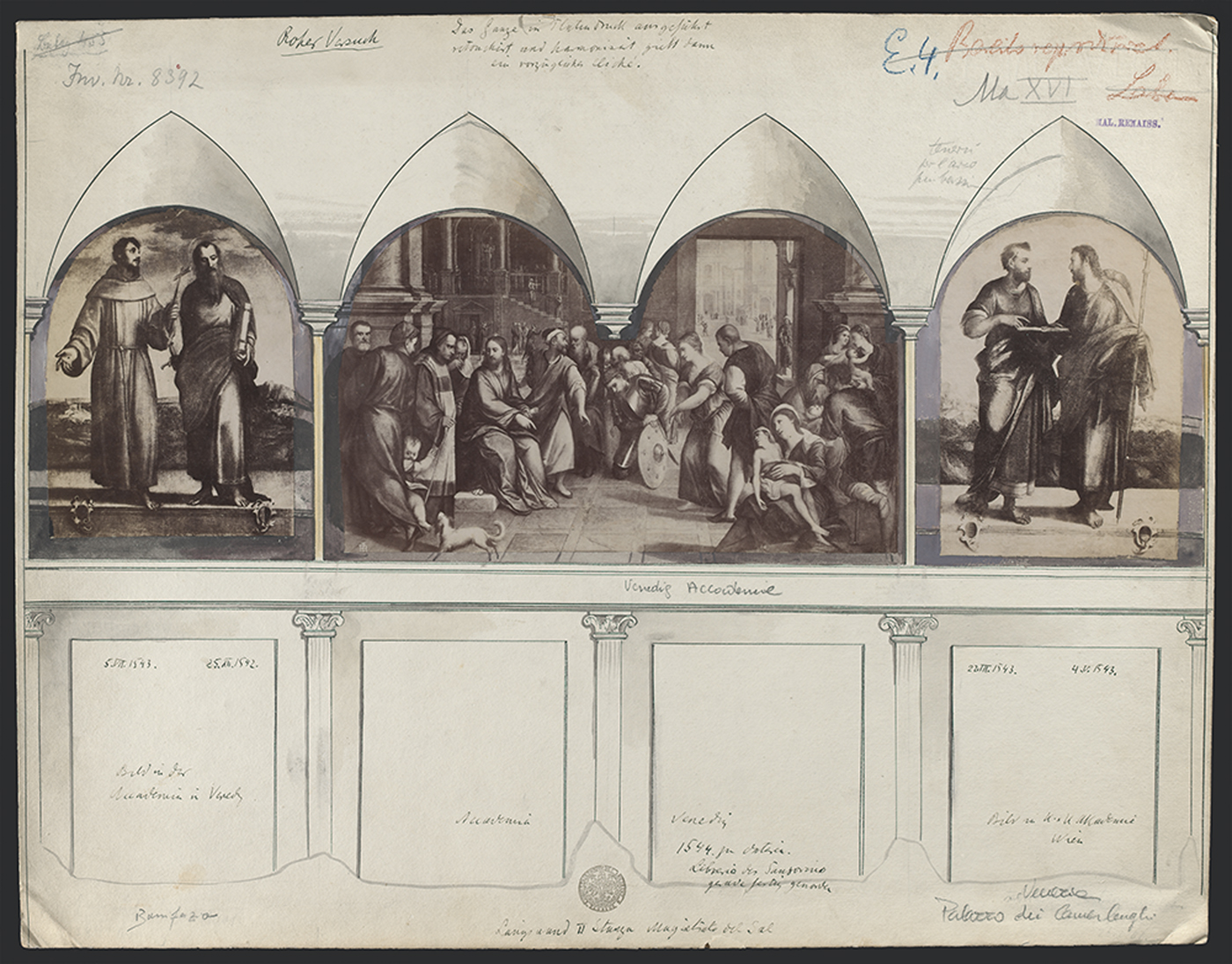
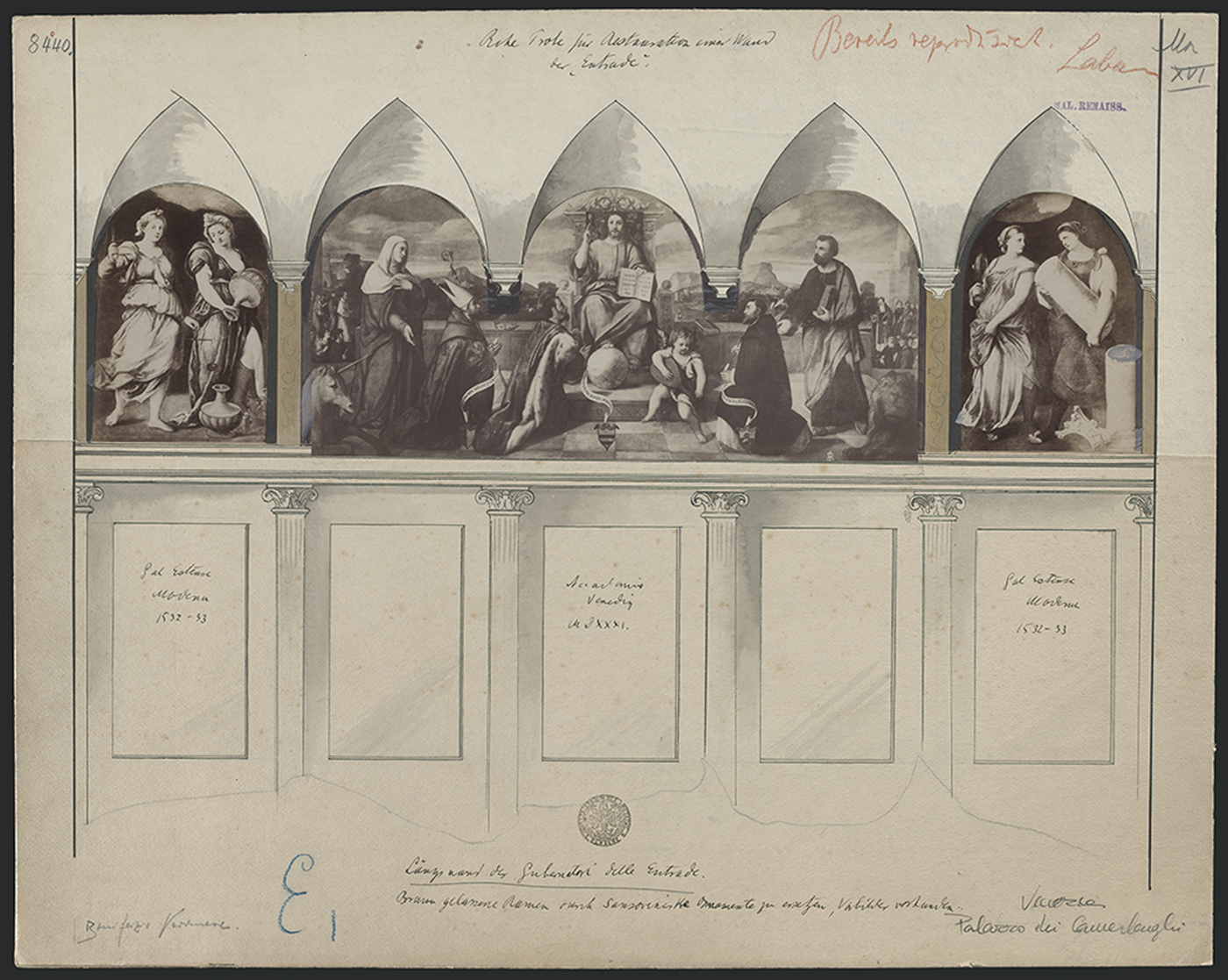
Seen from this new perspective, a series of six large format photographs (or actually photo-objects) that until just a few years ago would have been neglected, now acquire new relevance and can help us to test the material approach. The series of six plates is preserved in a filing cabinet of the ‘Grösstes Format’, the biggest of the three mount board formats used in the Photothek (approximately 40 × 50 cm). As stated by a stamp on the verso ‘Dr. Gustav Ludwigs / Vermächtnis 1905’ the plates come from the bequest of Gustav Ludwig (1854–1905), one of the most outstanding art historians of his generation, although now almost forgotten.Footnote 12 The plates are related to an essay on the Renaissance painter Bonifazio Veronese that Ludwig published 1901–1902 in three parts in the Kunstsammlungen.Footnote 13 In the essay Ludwig not only documented the little known biography of the Veronese Renaissance painter with the help of fresh archival material, but also attempted a reconstruction of Bonifazio's decoration of the Palazzo dei Camerlenghi in Venice (1529 and after). The paintings with biblical scenes and saints that formerly adorned the upper parts of the walls in the various halls of the palazzo were removed in 1806 and are now scattered mainly between Venice, Milan and Modena.Footnote 14 Ludwig tried to reconstruct as exactly as possible the original position in which they were hung in the rooms. To this end he had a copy made of the ground plan of the Palazzo dei Camerlenghi in the Archivio di Stato in Venice and produced wall elevations of the individual rooms – probably with the help of the draughtsman Zaccaria Dal Bo, who assisted him in other projects.Footnote 15 This material gives us a rare insight into the mental and visual laboratory of the art historian. It shows how Ludwig used the photomontage technique to test and to illustrate his proposed reconstruction, pasting photographs (in this case albumen prints) of the individual paintings onto the elevations and annotating in the lower compartments of the walls the current whereabouts of the paintings and his proposed dating for them, based on his archival studies.
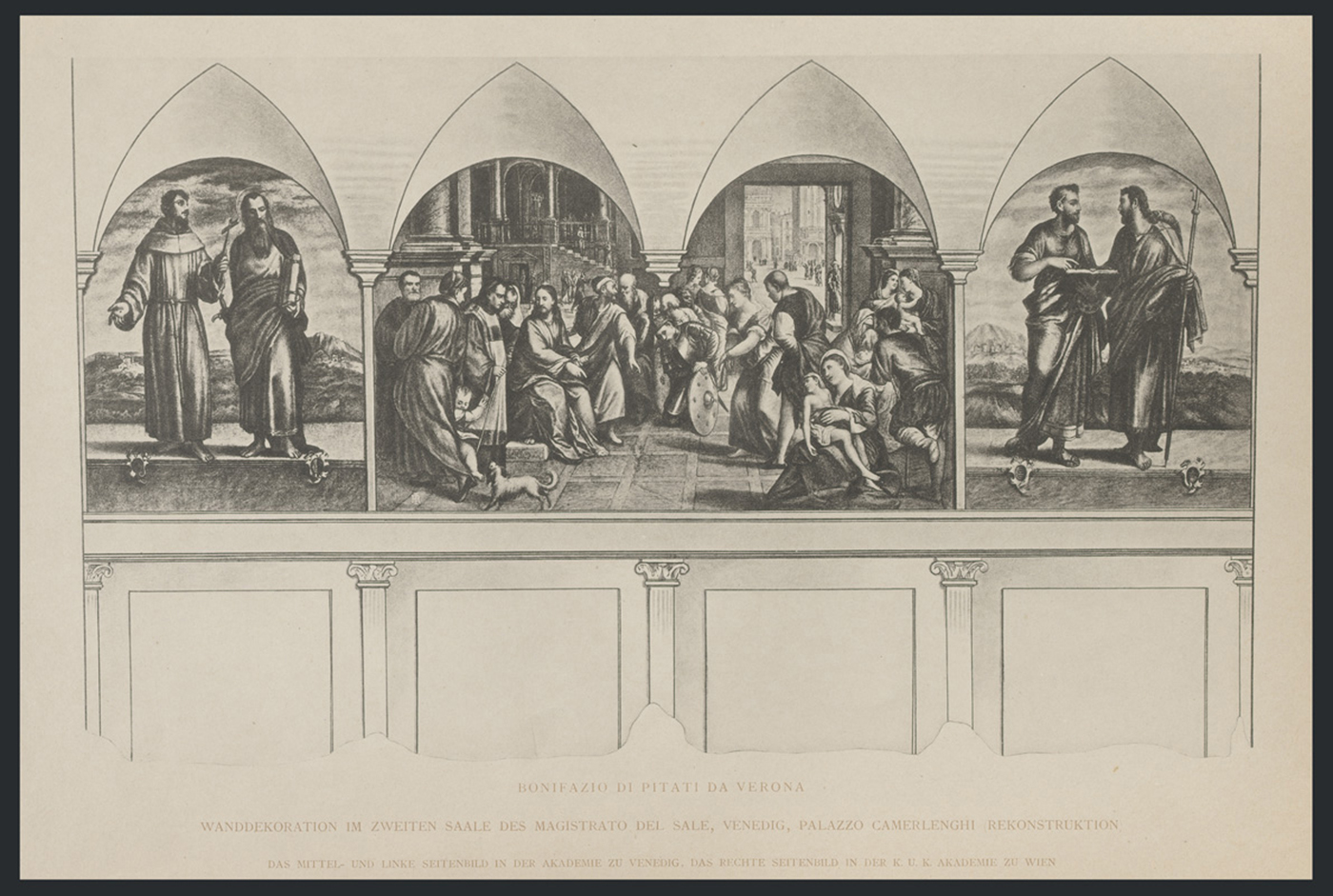
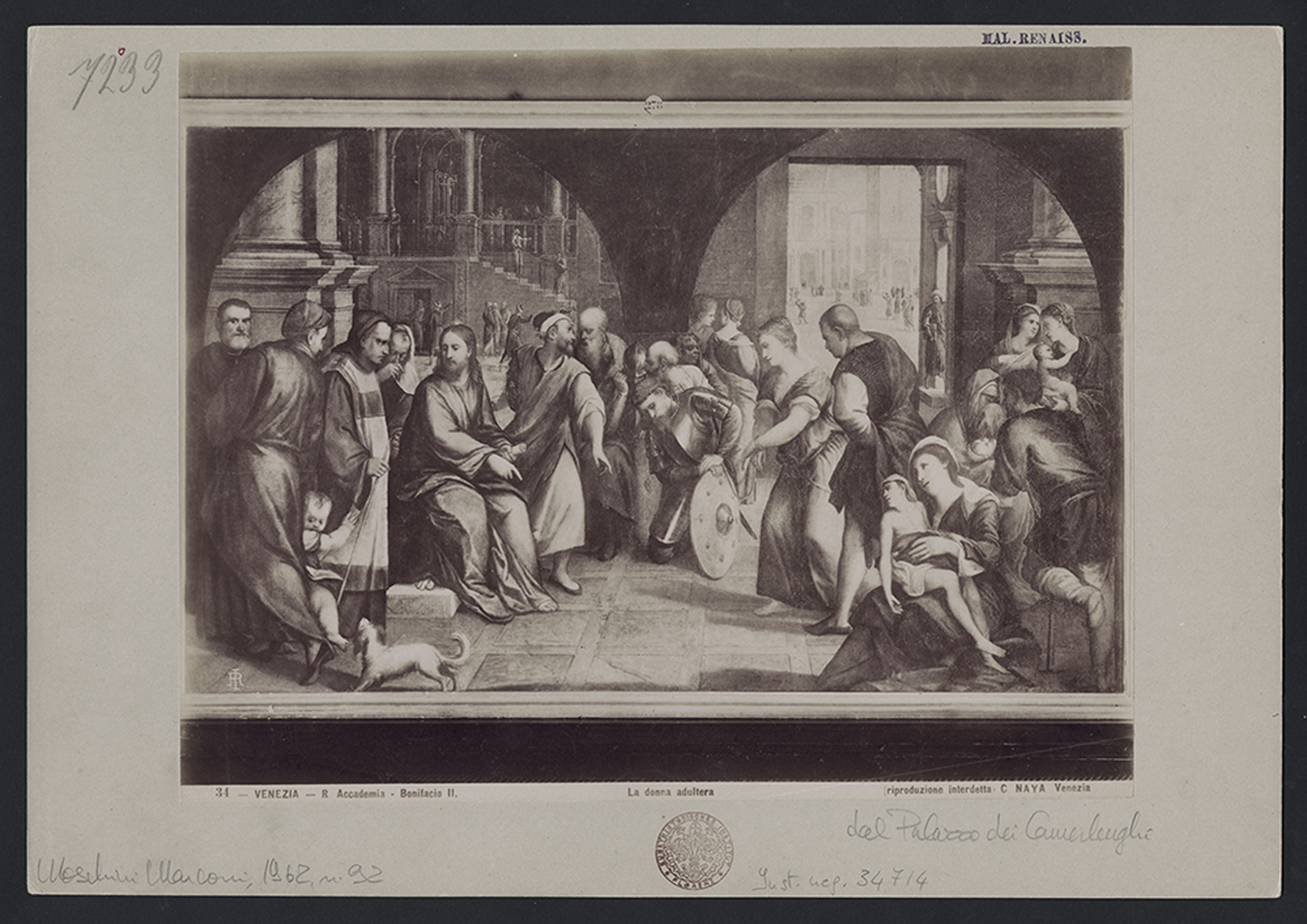
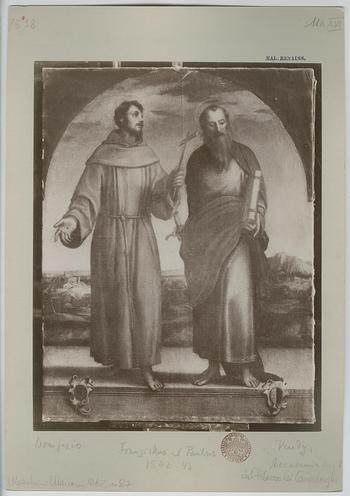
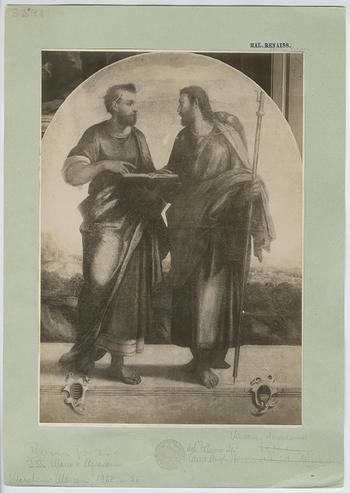
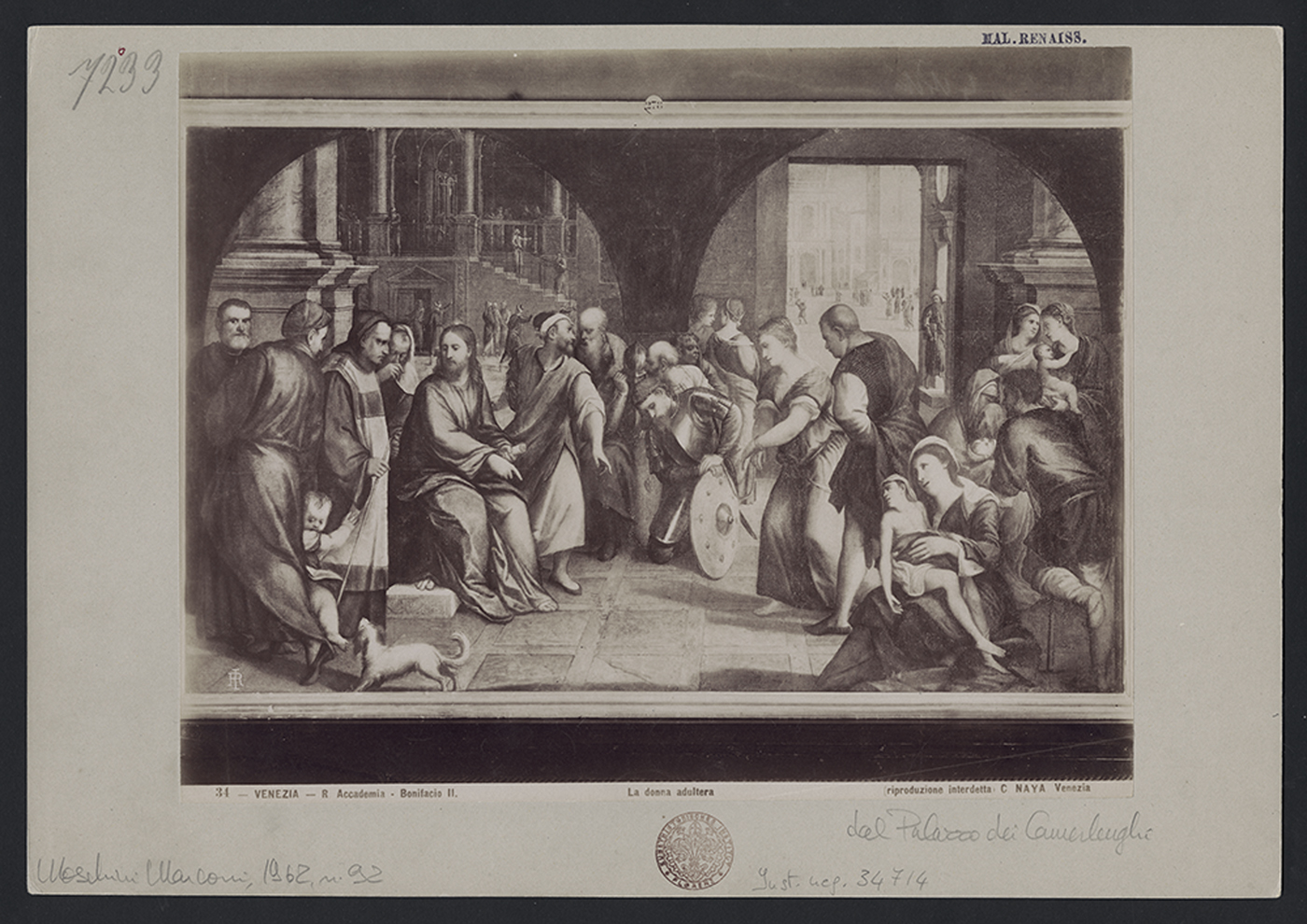
How powerfully Ludwig understood this method as a creative process is shown by the plate with the caption ‘Roher Versuch’ (rough trial) inscribed over it (fig. 1). This kind of ‘trial’ formed the basis for the illustrations of his essay in the Jahrbuch der Preußischen Kunstsammlungen (fig. 2). Browsing the boxes dedicated to Bonifazio in the Painting / Renaissance section we will find another set of photographs on standard format cardboards (c. 24 × 34 cm), also coming from the Ludwig bequest and reproducing the single scenes of the wall decorations in Palazzo dei Camerlenghi (figs. 3–4–6).
Gustav Ludwig's reconstruction of the mural decoration in the second room of the Magistrato del Sale, Palazzo dei Camerlenghi in Venice, before 1901, wash drawing and albumen prints, with Ludwig's handwritten annotations, 41.7 × 53.5 cm (mount), inv. no. 8392. Image copyright Kunsthistorisches Institut in Florenz, Max Planck Institute.

Ludwig's reconstruction of the mural decoration in the second room of the Magistrato del Sale, collotype. From: Jahrbuch der Preußischen Kunstsammlungen, 22/1901, unnumbered plate (before p. 63). Image copyright Kunsthistorisches Institut in Florenz, Max Planck Institute.

Carlo Naya: Bonifazio Veronese, The Judgement of Solomon. Venice, Accademia, before 1901, albumen print, 20.3 × 25.9 cm (photo), inv. no. 7233. Image copyright Kunsthistorisches Institut in Florenz, Max Planck Institute.
Unknown photographer: Bonifazio Veronese, Saints Francis and Paul. Venice, Accademia, before 1901, albumen print, 26 × 20.6 cm (photo), inv. no. 7538. Image copyright Kunsthistorisches Institut in Florenz, Max Planck Institute.
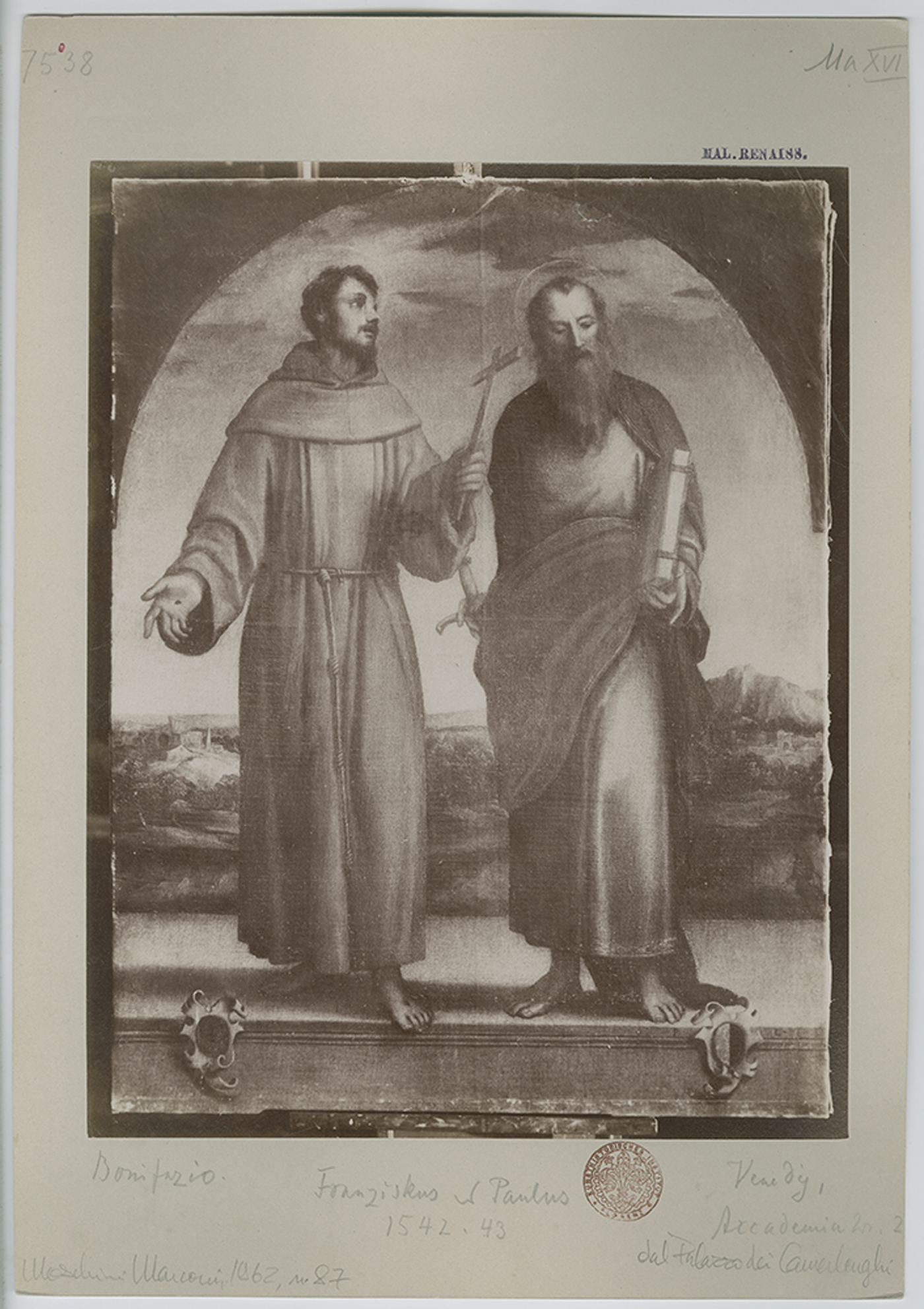
Verso of inv. no. 7538 (fig. 4). Image copyright Kunsthistorisches Institut in Florenz, Max Planck Institute. Image copyright Kunsthistorisches Institut in Florenz, Max Planck Institute.

Unknown photographer: Bonifazio Veronese, Saints Marcus and James. Venice, Accademia (formerly Vienna, Kunsthistorisches Museum), before 1901, albumen print, 26.1 × 18.5 cm (photo), inv. no. 8391. Image copyright Kunsthistorisches Institut in Florenz, Max Planck Institute.
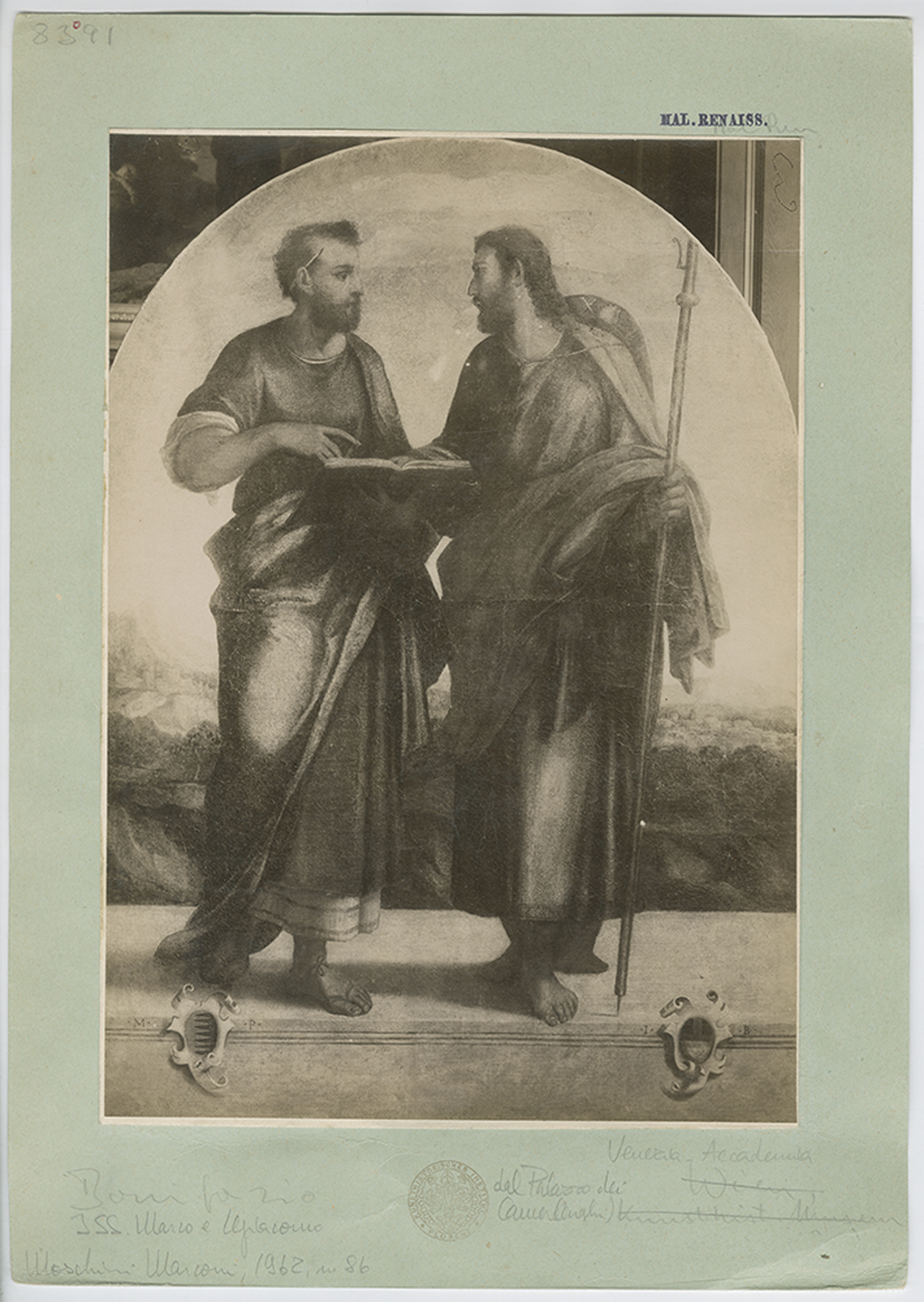
The group of photographs presented here (see also fig. 7), of which the card mounts, stamps, inscriptions etc. are an integral part, provides us with an opportunity to reconstruct the daily routine of the art historian, exceptionally well documented by the fortunate preservation of several stages in the intellectual, but also manual – almost handicraft-like – process that underpinned Ludwig's elucidation of the Camerlenghi cycle (including the reconstruction of the wall architecture).
Ludwig's reconstruction of the mural decoration in the first room of the Magistrato delle Entrate, Palazzo dei Camerlenghi in Venice, before 1901, wash drawing and albumen prints, with Ludwig's handwritten annotations, 38.2 × 48.1 cm (mount), inv. no. 8440. Image copyright Kunsthistorisches Institut in Florenz, Max Planck Institute.

Here the use of photography is directly linked to a precise art-historical enquiry. With the goal of reconstructing the sequence of Bonifazio's cycle, Ludwig abstracted the paintings from the walls of the museums in which they hung and restored them – virtually at least – to their original spatial and functional context. This practice corresponds to a shift in the way photography was used as a tool of art history: after the first generations of art historians had exploited the decontextualization of works of art which the introduction of photography permitted and even encouraged, now the same tool was used in quite the opposite sense – as a way of re-contextualizing works of art and reconstructing the context in which they had originally been displayed. Not only paintings, but photographs were re-situated in space and in history. In some of the Camerlenghi cardboards Ludwig has even added handwritten annotations giving specific instructions for the preparation of the photographic plates and how they should be placed in the publication. The inscription at the upper centre of 8392, for instance, reads as follows: ‘Das Ganze in Platindruck ausgeführt retouchiert und harmonisiert giebt dann ein vorzügliches Cliché’ (‘The whole realized as platinum print, retouched and harmonized will give an excellent printing plate’).Footnote 16
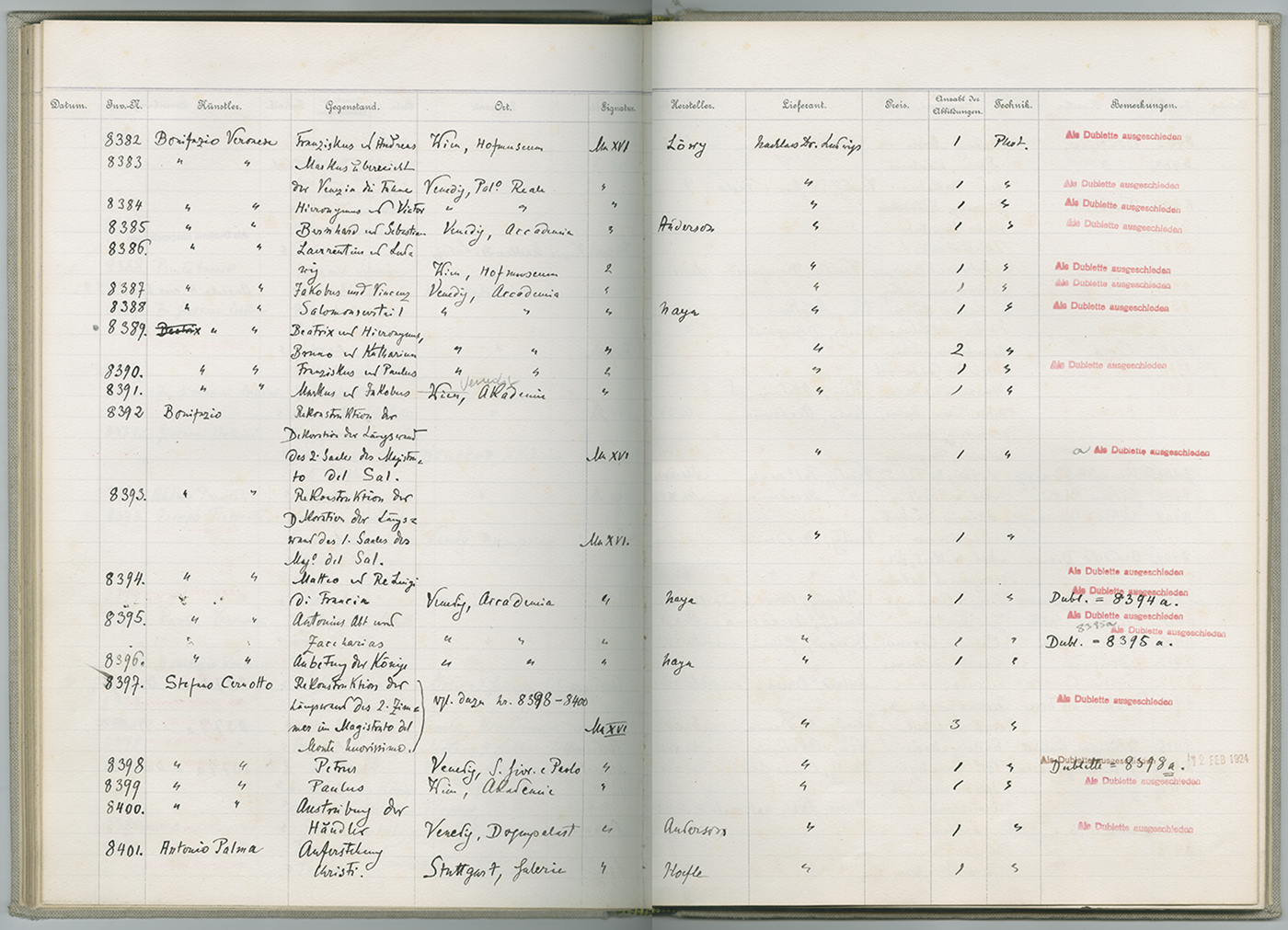
The plate with inventory number 8392 (see fig. 1) is a true palimpsest that records the traces of the original function of the photo-object, including, as we have seen, Ludwig's annotations and instructions for the draughtsman and the printing office. It also documents its biography or itinerary within the Photothek after Ludwig's bequest entered the KHI between 1905 and 1906.Footnote 17 On the card mount in the upper left corner we see among others the inventory number of the Photothek ‘Inv. Nr. 8392’ that was registered in 1908 also in the inventory book (fig. 8). In that same moment the card mount received the KHI stamp at the centre below.
Inventory book no. III of the Photothek, entries from 8382 to 8401, 1908. Image copyright Kunsthistorisches Institut in Florenz, Max Planck Institute.

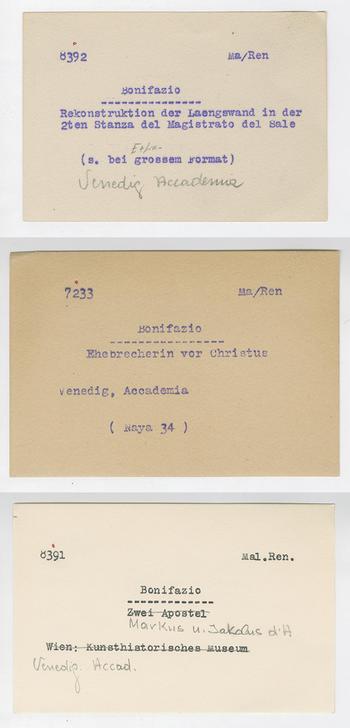
The stamp ‘Mal. Renaiss.’ on the upper right of the card mount indicates that it is part of the section Malerei (painting), sub-section Renaissance. The inscription in pencil ‘Ma XVI’ (painting 16th century) slightly on the left is related to the original classification system used in the Photothek up to 1912–14, based not on art historical epochs but on centuries:Footnote 18 the history of the Photothek and its structures is also inscribed on the cardboard. The red dot above the inventory number means that the plate was catalogued in the database of the Photothek. The plate was digitized in 2011,Footnote 19 but the digital reproduction number ‘fld0004772x_p’ annotated in pencil on the lower right of the card mount is not visible in the illustration published here because the scan was done before. All this knowledge – and not only information – is recorded also in the card catalogues of the Photothek (fig. 9). In the meantimeFootnote 20, the Camerlenghi set has been progressively added to the section Cimelia Photographica (Photographic Treasures) together with other particularly valuable historical photographs.

Analog, digital: material
Using the material approach, the aforementioned set of photographs that at a first glance would not attract art historians in search of visual material started to unfold its agency. It is clear that 8392 has a lot to tell us if we are willing to listen to what it has to say and do not limit ourselves to its visual content. To grasp the complexity and the multiple layers of Ludwig's Camerlenghi plates it was necessary to go beyond visual observation and to consider them as material objects in a spatial and temporal dimension, in social and cultural contexts. Reconstructing the context and aims of their production is as relevant as tracing their (open) itinerary within the Photothek.
What questions are raised by the material approach toward photo-objects such as 8392? The materiality of photo-objects must be considered as products of a particular photographic technique, with particular chemical and physical properties, printed with a particular process on a particular type of paper, with particular dimensions and so on. Also, the materiality of their form of presentation has to be analysed – the card mounts with their stamps and inscriptions and the boxes and folders in which they are contained. Other questions concern the processes linked to their production, diffusion, use, conservation, disposal and recycling. Many of these historical practices have remained in use or been further developed up to the present, and have to some extent been transferred into the digital realm. Photo-objects are dynamic and unstable in their historical as well as their current dimension, and everything we do or say about them will make a further contribution to their formation and transformation.
This approach has consequences for current photo archive practices that include electronic cataloguing and digitization. Photo-objects should be digitized in high resolution, not only the images, but the entire card mounts and if necessary the back too. The cataloguing of photographs as material objects raises specific issues because cataloguing practices and taxonomic systems (be they analogue or digital) are traditionally text based and tend, again, to reduce photographs to their visual content.Footnote 21 In order to consider all the material aspects and layers between the original prints and their digital copies (which are actually new, digital photo-objects), it was necessary to expand the range of fields and categories used in the Photothek database.
All the actions here described were and are done on a daily basis not by ‘the archive’ as an abstract entity, but by individuals: archivists, photographers and scholars, as ‘historically situated’ actorsFootnote 22 who have to make decisions every day, and therefore shape the structure of the archive and the possible meanings and uses of the photographs. They apply different systems of value that are also ‘situated’ in space and time. They create new knowledge. For this reason, a political dimension is always inherent in their activities: archivists should reflect critically upon their working processes and maintain transparency concerning these. This is all the more important (and difficult) now with the coexistence of, and the blurring boundaries between, analog and digital formats. Paolo Favero recommends speaking not about digital images, but instead about ‘images in a digital habitat’.Footnote 23 In this digital habitat, it is essential to extend our attention to the materiality of the digital itself. Digital media shapes the acts of our memory – individual, familial, and collective. Even without considering the problem of digital rubbish,Footnote 24 the use of digital photography presupposes the need to avail ourselves of a variety of objects (for instance tablets and smartphones, but also wearable technologies) whose use is also linked to a specific gestuality. The digital images that circulate in the social networks have the capacity to impact on people's lives and to reunite individuals in communities: they are therefore far from ‘immaterial’.Footnote 25 All this will have and already has consequences for the practices of photo archives, which change over time and are themselves shaped by technologies as well as by systems of value.
Photo archives as ecosystems
This dynamic character of photographic archives may best be explained in terms of an ecosystem.Footnote 26 Photographic archives are open, dynamic and complex systems formed by organisms of different kinds which have a reciprocal action among each other and with their surrounding environment – not only photographs, but also inventory books, card mounts, card catalogues, and even digitalized and electronic records that interact within the archive's habitat. The human agents involved, such as archivists and scholars, as well as academic and archival practices and technologies, are also an essential part of the ecosystem. Above all, thinking of the photographic archive as an ecosystem enables us finally to overcome the hierarchies of value (often linked to authorship) which traditionally determine the status of photographs within an art-historical institution – in an ecosystem the lowest and the highest, the fly and the peacock, are equally indispensable for the system's equilibrium and maintenance. Only by considering 8392 as an individual photograph and also as an organism that interacts with the material context of the Photothek, can we fully explore its epistemological potential. The close examination of this selected photo-object prompts us to reflect on a potential danger that is inherent in the material approach, the ‘museum effect’Footnote 27 linked to its transfer to the Cimelia Photographica. If we concentrate on individual exceptional photo-objects, our aim should not be to extrapolate them from their archive and place them in a glass case, forgetting the rest. If we do so, we end up perpetuating the museographic approach that has hitherto fueled the opposite phenomenon, namely, the low visibility of many ‘functional’ photo collections. Histories like that of 8392 make us understand, on the contrary, that the anonymous mass of the archive is a value in itself, a value to be preserved as part of our cultural heritage.
This close examination of a small group of objects extracted from the photographic archive highlights the interactions within the ecosystem and reflects on the ecosystem as a whole. With its capacity to place in focus ‘big narratives’ on the basis of ‘little narratives’, the technique of close-reading has been championed in studies on photography and materiality.Footnote 28 The ‘little narrative’ I have created around 8392 may help us to grasp a wider context: that of the archive in which this photo-object is active – the Photothek with its indistinct mass of still largely anonymous photographs. The history I have so far recounted is in fact a new narrative, just as much constructed as the traditional one which would have considered 8392 merely in an indexical sense. This new narrative serves various purposes, not least institutional ends, since it produces its own ‘rhetoric of value’.Footnote 29 It may be used as a bargaining chip in the negotiations conducted within institutions themselves or with higher levels of bureaucracy to emphasize the value – and hence the need for conservation – of photo-objects of this kind as pars pro toto of their respective archives. However, the value created by any such intervention cannot be limited to, or exhausted by, the consecration of the individual photograph as a museum piece to the detriment of the ecosystem as a whole. The boxes of the Cimelia Photographica as part of our special collections must not become something extracted from the ecosystem, something outside it. The ecosystem on the other hand cannot maintain its own equilibrium if some species are removed from it. This approach further suggests that the traditional hierarchies of photographic-scholarly value are themselves historical constructs destined to mutate in space and time. Future investigations will be able to focus their attention on other photographs that have yet to emerge from the archive. In conclusion, the first necessary step for the long-term conservation of photo archives is promoting close research on its photographic objects.