



1 Introduction
Motivic homotopy theory is an analogue of homotopy theory in algebraic geometry, where the affine line plays the role of the unit interval. It was introduced by Morel and Voevodsky [Reference Morel and VoevodskyMV99] as a way to import ideas from topology to the study of algebraic varieties, and ultimately led to the proof of the Bloch–Kato conjecture relating Milnor K-theory and Galois cohomology [Reference VoevodskyVoe11].
The basic objects of study in motivic homotopy theory are motivic spaces, i.e.,
$\mathbb {A}^1$
 -invariant Nisnevich sheaves of spaces on smooth schemes over a base. To pass from Nisnevich sheaves to motivic spaces, one typically uses the localisation functor
$L_{\mathrm {mot}}$
 , which is however somewhat inexplicit. In particular, because it enforces simultaneously
$\mathbb {A}^1$
 -invariance (which adds information in the homological direction) and Nisnevich descent (which adds information in the cohomological direction), it may a priori spread in infinitely many degrees in both directions.
This article is motivated by the following conjecture of Morel.
Conjecture 1.1 (Stable
$\mathbb {A}^1$
 -connectivity, [Reference MorelMor05, Conjecture 2] [Reference AyoubAyo06] [Reference Schmidt and StrunkSS18])

Let S be a noetherian scheme of Krull dimension d, and
$n \geqslant 0$
 be an integer. Then for any n-connective space
$E \in \mathcal {P}_{\mathrm {Nis}}(\mathrm {Sm}_S)$
 , the motivic spectrum
$L_{\mathrm {mot}} E \in \mathrm {SH}(S)$
 is
$(n-d)$
 -connective.
When S is the spectrum of a field, this conjecture was proved by Morel in [Reference MorelMor04, Reference MorelMor05], and serves as a foundation for several results in motivic homotopy theory over a field [Reference MorelMor12]. Although Morel’s original conjecture required S to be regular and did not mention the dimension d of S, Ayoub explained why the regularity hypothesis on S should not be related to stable
$\mathbb {A}^1$
 -connectivity, and exhibited counterexamples to this conjecture when S is a scheme of positive dimension [Reference AyoubAyo06]. A corrected version of Morel’s conjecture, where the connectivity bound is now shifted by the dimension of S to take into account Ayoub’s counterexamples, was then formulated by Schmidt and Strunk [Reference Schmidt and StrunkSS18]. This shifted stable
$\mathbb {A}^1$
 -connectivity conjecture was proved when S is a Dedekind scheme with infinite residue fields by Schmidt–Strunk [Reference Schmidt and StrunkSS18], when S is the spectrum of a noetherian domain with infinite residue fields by Deshmukh–Hogadi–Kulkarni–Yadav [Reference Deshmukh, Hogadi, Kulkarni and YadavDHKY21], and for general noetherian schemes S by Druzhinin [Reference DruzhininDru22].
Our main result is an unstable refinement of Druzhinin’s shifted stable
$\mathbb {A}^1$
 -connectivity theorem. We formulate this result using the notion of valuative dimension, which is better-behaved than the Krull dimension for non-noetherian schemes. Note that the valuative dimension of a scheme is always at least equal to its Krull dimension, and that both notions agree on noetherian schemes.
Theorem 1.2 (Shifted unstable
$\mathbb {A}^1$
-connectivity; see Theorem 3.9)

Let S be a qcqs scheme of valuative dimension d, and
$n \geqslant 0$
 be an integer. Then for any n-connective space
$E \in \mathcal {P}_{\mathrm {Nis}}(\mathrm {Sm}_S)$
 , the motivic space
$L_{\mathrm {mot}} E \in \mathrm {H}(S)$
 is
$(n-d)$
 -connective as an object of
$\mathcal {P}_{\mathrm {Nis}}(\mathrm {Sm}_S)$
 .
Theorem 1.2 was previously known when S is the spectrum of a field. For perfect fields, this was first proved by Morel [Reference MorelMor12, Theorem 5.38] as a consequence of the main results of [Reference MorelMor12]. More direct proofs, which also hold for non-perfect fields, were later on provided by Asok [Reference AsokAso09] and Ayoub [Reference AyoubAyo24]. Here, we follow Ayoub’s strategy, and adapt it to the case of an arbitrary base scheme S. The two main ingredients in doing so are the results of Clausen–Mathew [Reference Clausen and MathewCM21] and the presentation lemma over a general base proved in [Reference Bouis and KunduBK25]; see the outline below for more details.
Outline of the proof

In Section 2, we introduce the notion of perverse n-connectivity for spaces, and prove that it is preserved by the motivic localisation functor
$L_{\mathrm {mot}}$
 from spaces to motivic spaces (Corollary 2.6). In Section 3, we use this result to prove the shifted unstable
$\mathbb {A}^1$
 -connectivity theorem (Theorem 3.9), as well as consequences for stable
$\mathbb {A}^1$
 -connectivity (Corollary 3.12) and convergence of the slice filtration on homotopy K-theory (Corollary 3.15).
Notation and Conventions
We use the word ‘anima’ for spaces/
$\infty $
 -groupoids, and we denote by
$\mathrm {Ani}$
 the
$\infty $
 -category of anima. We write
$\mathcal {P}(\mathcal {C})$
 for the
$\infty $
 -category of presheaves of anima on
$\mathcal {C}$
 . If
$\tau $
 is a Grothendieck topology on
$\mathcal {C}$
 , we denote by
$\mathcal {P}_{\tau }(\mathcal {C}) \subseteq \mathcal {P}(\mathcal {C})$
 the full subcategory of
$\tau $
 -sheaves. Following [Reference Morel and VoevodskyMV99] (see [Reference HoyoisHoy14, Appendix C] for a treatment without noetherian hypotheses), given a scheme S, a space is an object of the category
$\mathcal {P}_{\mathrm {Nis}}(\mathrm {Sm}_S)$
 , the category of motivic spaces
$\mathrm {H}(S) \subseteq \mathcal {P}_{\mathrm {Nis}}(\mathrm {Sm}_S)$
 is the full subcategory of
$\mathbb {A}^1$
 -invariant spaces, and the category of motivic spectra
$\mathrm {SH}(S)$
 is obtained by formally inverting
$\mathbb {P}^1_S$
 (seen as a motivic space pointed at infinity) in the category
$\mathrm {H}(S)_\ast $
 of pointed motivic spaces. All spaces
$E \in \mathcal {P}_{\mathrm {Nis}}(\mathrm {Sm}_S)$
 are implicitly extended from smooth to ind-smooth S-schemes by taking cofiltered limits, so that it is possible to evaluate E on (henselian) local ind-smooth S-schemes.
2 Perverse connectivity is preserved by
$\mathbb {A}^1$
-localisation

In this section, we prove that the motivic localisation functor
$L_{\mathrm {mot}}$
 preserves perverse n-connective objects (Corollary 2.6) as a consequence of a variant of a result of Clausen–Mathew (Theorem 2.4). Our definition of perverse connectivity (Definition 2.1) is inspired by the perverse t-structures in stable motivic homotopy theory, as constructed in [Reference AyoubAyo07, Section 2.2.4] and [Reference Bondarko and DégliseBD17, Section 2.3], and by Ayoub’s notion of weak connectivity [Reference AyoubAyo21, Reference AyoubAyo24]. We formulate this definition using the notion of valuative dimension, as introduced by Jaffard for commutative rings [Reference JaffardJaf60, Chapter IV] and generalised to schemes in [Reference Elmanto, Hoyois, Iwasa and KellyEHIK21, Section 2.3]. We refer to these references for the definition and main properties of the valuative dimension. Note that the only property of the valuative dimension that we will use, and which fails for the Krull dimension on general non-noetherian schemes, is the fact that
$\dim _v(\mathbb {A}^1_X)=\dim _v(X)+1$
 for any scheme X.
Definition 2.1 (Perverse connectivity)
Let S be a scheme, and
$n \geqslant 0$
 be an integer. A presheaf
$E \in \mathcal {P}(\mathrm {Sm}_S)$
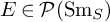 is perverse n-connective if any henselian local essentially smooth S-scheme X of valuative dimension d satisfies that the anima
$E(X)$
 is
$(n-d)$
 -connective. Similarly, a space
$E \in \mathcal {P}_{\mathrm {Nis}}(\mathrm {Sm}_S)$
 (resp. a motivic space
$E \in \mathrm {H}(S)$
 ) is perverse n-connective if its underlying presheaf
$E \in \mathcal {P}(\mathrm {Sm}_S)$
 is perverse n-connective. Note that this notion also makes sense for pointed objects.
Remark 2.2. Let S be a scheme, and
$n \geqslant 0$
 . Being perverse n-connective is a Nisnevich-local condition. In particular, a presheaf
$E \in \mathcal {P}(\mathrm {Sm}_S)$
 is perverse n-connective if and only if the associated space
$L_{\mathrm {Nis}} E \in \mathcal {P}_{\mathrm {Nis}}(\mathrm {Sm}_S)$
 is perverse n-connective.
The following lemma will be used in Theorem 2.4.
Lemma 2.3. Let R be a local ring, and
$I \subseteq R$
 be a finitely generated ideal contained in the maximal ideal of R. If
$\mathrm {Spec}(R)$
 is of valuative dimension d, then
$\mathrm {Spec}(R) \setminus V(I)$
 is of valuative dimension at most
$d-1$
 .
Proof. By [Reference Elmanto, Hoyois, Iwasa and KellyEHIK21, Proposition 2.3.2 (1)], the statement is Zariski-local on
$\mathrm {Spec}(R) \setminus V(I)$
 , so it suffices to prove that
$\dim _v(R[\tfrac {1}{f}]) + 1 \leqslant \dim _v(R)$
 for
$f \in I$
 . Let
$\mathfrak {p}$
 be a prime ideal of
$R[\tfrac {1}{f}]$
 , which restricts to a prime ideal of R, which we also denote
$\mathfrak {p}$
 . Given a valuation ring V of rank r such that
$R[\tfrac {1}{f}]/\mathfrak {p} \subseteq V \subseteq \mathrm {Frac}(R[\tfrac {1}{f}]/\mathfrak {p})$
 , there exists a valuation ring extension
$V'$
 of V of rank
$r+1$
 such that
$R/\mathfrak {p} \subseteq V' \subseteq \mathrm {Frac}(R/\mathfrak {p})$
 . Consequently,

Theorem 2.4. Let S be a qcqs scheme, and
$n \geqslant 0$
 be an integer. Then for every perverse n-connective space
$E \in \mathcal {P}_{\mathrm {Nis}}(\mathrm {Sm}_S)$
 and every essentially smooth S-scheme X of valuative dimension d, the anima
$E(X)$
 is
$(n-d)$
 -connective.
Proof. First note that, replacing valuative dimension by Krull dimension everywhere, this statement is a result of Clausen–Mathew [Reference Clausen and MathewCM21, Theorem 3.30], where we use that
$\dim (\overline {\{x\}}) \leqslant d - \dim (X_x)$
 for every point
$x \in X$
 . We adapt the argument of [Reference Clausen and MathewCM21, Theorem 3.30], and prove the desired statement by induction on the valuative dimension of X.
If the scheme X is local, then the argument of [Reference Clausen and MathewCM21, Theorem 3.30] proves the desired claim, by using Lemma 2.3 to implement the induction step.
In general, the underlying topological space of the qcqs scheme X is a spectral space [Sta25, Tag 094L], which is of Krull dimension at most d by [Reference Elmanto, Hoyois, Iwasa and KellyEHIK21, Proposition 2.3.2 (8)]. The proof of [Reference Clausen and MathewCM21, Theorem 3.14] then implies, using the same argument as in Lemma 2.3 for the induction step, that the anima
$E(X)$
 is
$(n-d)$
 -connective if, for every point
$x \in X$
 , the anima
$E(X_x)$
 is
$(n-\dim _v(X_x))$
 -connective. The desired result is then a consequence of the previous paragraph.
Following [Reference Morel and VoevodskyMV99, Section 2.3] (see also [Reference Antieau and ElmantoAE17, Definition 4.23]), given a scheme S, we denote by

the singular construction, which takes a presheaf of anima E to the presheaf of anima

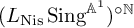
Proposition 2.5. For any qcqs scheme S, the localisation
$L_{\mathrm {mot}} : \mathcal {P}_{\mathrm {Nis}}(\mathrm {Sm}_S) \rightarrow \mathrm {H}(S)$
 is equivalent to the countable iteration
$(L_{\mathrm {Nis}}\, \mathrm {Sing}^{\mathbb {A}^1})^{\circ \mathbb {N}}$
 .
Proof. A classical reference, although stated only in the case where S is the spectrum of a field, is [Reference MorelMor12, Proposition
$5.20$
 ]. The more general case where S is an arbitrary qcqs scheme is [Reference Antieau and ElmantoAE17, Theorem 4.27].
Corollary 2.6. Let S be a qcqs scheme. Then for every integer
$n \geqslant 0$
 , the localisation
$L_{\mathrm {mot}} : \mathcal {P}_{\mathrm {Nis}}(\mathrm {Sm}_S) \rightarrow \mathrm {H}(S)$
 preserves perverse n-connective objects.
Proof. By Proposition 2.5, it suffices to prove that both the Nisnevich sheafification
$L_{\mathrm {Nis}}$
 and the singular construction
$\mathrm {Sing}^{\mathbb {A}^1}$
 preserve perverse n-connective objects. For the Nisnevich sheafification, this is Remark 2.2. For the singular construction, let
${E \in \mathcal {P}(\mathrm {Sm}_S)}$
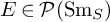 be a presheaf of anima, and X be a henselian local essentially smooth S-scheme of valuative dimension d. By [Reference Elmanto, Hoyois, Iwasa and KellyEHIK21, Proposition 2.3.2 (7)], for every integer
$m \geqslant 0$
 , the scheme
$X \times \Delta ^m$
 is of valuative dimension
$d+m$
 . By Theorem 2.4, this implies that, for every integer
$m \geqslant 0$
 , the anima
$E(X \times \Delta ^m)$
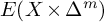 is
$(n-d-m)$
 -connective. By [Reference AyoubAyo24, Lemma 2.4.6] (see also [Reference Bachmann, Elmanto and MorrowBEM25, Page 110, Footnote 41] for a more direct argument in the stable setting), this in turn implies that the geometric realisation
$(\mathrm {Sing}^{\mathbb {A}^1} E)(X) := \vert E(X \times \Delta ^\bullet )\vert $
 is
$(n-d)$
 -connective.
3 Shifted unstable
$\mathbb {A}^1$
-connectivity

In this section, we use Corollary 2.6 and a new Gersten injectivity result (Proposition 3.6) to prove our main result (Theorem 3.9), and review some expected consequences (Corollaries 3.12 and 3.15).
Definition 3.1 (Connectivity)
Let S be a scheme, and n be an integer.
-
(1) For every integer $i \geqslant 0$
, the
$i^{th}$
homotopy sheaf
$\pi _i E$
of a pointed space
${E \in \mathcal {P}_{\mathrm {Nis}}(\mathrm {Sm}_S)_\ast }$
is the Nisnevich sheaf of pointed sets associated with
$U \mapsto \pi _i(E(U))$
. -
(2) A pointed space $E \in \mathcal {P}_{\mathrm {Nis}}(\mathrm {Sm}_S)_\ast $
is n-connective if its
$i^{th}$
homotopy sheaf
$\pi _i E$
vanishes for all integers
$i < n$
. By convention, any pointed space is n-connective if
$n \leqslant 0$
. Similarly, a pointed motivic space
$E \in \mathrm {H}(S)_\ast $
is n-connective if its underlying pointed space
$E \in \mathcal {P}_{\mathrm {Nis}}(\mathrm {Sm}_S)_\ast $
is n-connective. -
(3) A space $E \in \mathcal {P}_{\mathrm {Nis}}(\mathrm {Sm}_S)$
is n-connective if for every scheme
$X \in \mathrm {Sm}_S$
and every point
$x \in E(X)$
, the pointed space
$(E,x) \in \mathcal {P}_{\mathrm {Nis}}((\mathrm{Sm}_S)_{/X})_\ast $
is n-connective. Similarly, a motivic space
$E \in \mathrm {H}(S)$
is n-connective if its underlying space
$E \in \mathcal {P}_{\mathrm {Nis}}(\mathrm {Sm}_S)$
is n-connective.








Remark 3.2. Let S be a scheme, and
$n \geqslant 0$
 be an integer. By definition, if
$E \in \mathcal {P}_{\mathrm {Nis}}(\mathrm {Sm}_S)$
 is an n-connective space and X is a henselian local essentially smooth S-scheme, then
$E(X)$
 is n-connective. In particular, any n-connective space is also perverse n-connective.
The following notion was first introduced in [Reference Colliot-Thélène, Hoobler and KahnCTHK97]. See also [Reference Elmanto and MorrowEM23] for the original reference where this was called deflatability.
Definition 3.3 (Deflatability)
Given a scheme S, a functor
$F \colon \mathrm {Sch}^{\mathrm {qcqs,op}}_S \rightarrow \mathrm {Ani}$
 is called deflatable if for any qcqs S-scheme X, there exists a functorial equivalence between the maps

where the maps
$\infty _X$
 ,
$j_X$
 and
$\pi _X$
 are defined in the following commutative diagram of schemes.

Note that this definition also makes sense for functors taking values in pointed anima.
Example 3.4. If a functor
$F \colon \mathrm {Sch}^{\mathrm {qcqs,op}}_S \rightarrow \mathrm {Ani}$
 is
$\mathbb {A}^1$
 -invariant, then F is deflatable in the sense of Definition 3.3 (see for instance [Reference Bouis and KunduBK25, Remark 3.9]). Note that any family of functors satisfying the
$\mathbb {P}^1$
 -bundle formula is also deflatable [Reference Colliot-Thélène, Hoobler and KahnCTHK97], see also [Reference Bouis and KunduBK25, Lemma 3.12].
The following lemma will be used in Propositions 3.6 and 3.8.
Lemma 3.5. Let S be a scheme, X be a henselian local essentially smooth S-scheme, and
$s \in S$
 be the image of the closed point of X. Then the fibre
$X_s$
 of X over s is irreducible.
Proof. The proof is the same as in the first paragraph of the proof of [Reference Bouis and KunduBK25, Theorem 3.2], where we first reduce to S being the spectrum of a henselian local ring instead of a henselian valuation ring.
Proposition 3.6 (Gersten injectivity over a base)
Let S be a scheme, X be a henselian local essentially smooth S-scheme, and
$s \in S$
 be the image of the closed point of X. Then for every finitary deflatable Nisnevich sheaf
$F : \mathrm {Sch}_S^{\mathrm {qcqs,op}} \rightarrow \mathrm {Ani}_\ast $
 and every integer
$i \geqslant 0$
 , we have that

where
$\eta \in X$
 is the generic point of the irreducible scheme
$X_s$
 (Lemma 3.5), and
$X_\eta $
 is the local scheme of X at
$\eta $
 .
Proof. The main geometric ingredient here is the Nisnevich-local presentation lemma [Reference Bouis and KunduBK25, Corollary 2.25]. The proof that this implies the desired Gersten injectivity statement is classical and goes back to [Reference Colliot-Thélène, Hoobler and KahnCTHK97]; we reproduce the proof here for convenience, following [Reference Bouis and KunduBK25, Theorem 3.2].
Assume that the henselian local essentially smooth S-scheme X is the henselian local scheme
$X_x^h$
 of a smooth S-scheme X at some point
$x \in X$
 . Let
$[\sigma ] \in \pi _i(F(X_x^h))$
 be a class whose image in
$\pi _i(F((X_x^h)_\eta ))$
 vanishes. We want to prove that
$[\sigma ]$
 itself vanishes. The presheaf
$\pi _i(F)$
 commutes with filtered colimits of rings and the statement is Nisnevich local on X, so we can assume that the class
$[\sigma ]$
 comes from a class
$[\sigma ] \in \pi _i(F(X))$
 which vanishes in
$\pi _i(F(X \setminus Z))$
 , for
$Z \hookrightarrow X$
 a closed immersion of S-schemes satisfying
$\dim (Z_s) < \dim (X_s)$
 .
It now suffices to produce a Nisnevich neighbourhood
$x \in X' \rightarrow X$
 such that the pullback
$[\sigma ']$
 of the class
$[\sigma]$
 vanishes in
$\pi _i(F(X'))$
 . By the presentation lemma [Reference Bouis and KunduBK25, Corollary 2.25], there exist a smooth S-scheme T, a Nisnevich neighbourhood
$X' \rightarrow X$
 of x, and a Nisnevich square

such that the induced morphism
$Z' \xrightarrow {\cong } \psi (Z') \rightarrow T$
 is finite. By Nisnevich excision, the class
$[\sigma '] \in \pi _i(F(X'))$
 then lifts to a class
$[\sigma '] \in \pi _i(F(\mathbb {A}^1_T))$
 which vanishes in
$\pi _i(F(\mathbb {A}^1_T \setminus \psi (Z')))$
 . Again by Nisnevich excision (where we use that
$\psi (Z')$
 is finite over T), this class
$[\sigma '] \in \pi _i(F(\mathbb {A}^1_T))$
 further lifts to a class
$[\sigma '] \in \pi _i(F(\mathbb {P}^1_T))$
 which vanishes in
$\pi _i(F(\mathbb {P}^1_T \setminus \psi (Z')))$
 . By construction, the map
$\infty ^\ast _T : \pi _i(F(\mathbb {P}^1_T)) \rightarrow \pi _i(F(T))$
 factors through the map
$\pi _i(F(\mathbb {P}^1_T)) \rightarrow \pi _i(F(\mathbb {P}^1_T \setminus \psi (Z')))$
 , so the pullback class
$\infty ^\ast _T [\sigma '] \in \pi _i(F(T))$
 vanishes. By deflatability (Definition 3.3), this implies that
$[\sigma '] = j^\ast _T [\sigma '] \in \pi _i(F(\mathbb {A}^1_T))$
 also vanishes, which concludes the proof.
Lemma 3.7. Let R be a local integral domain of valuative dimension d, and
$\mathfrak {m}$
 be the maximal ideal of R. Then the localisation
$R':=R[X]_{\mathfrak {m} \cdot R[X]}$
 is also of valuative dimension d.
Proof. Let F be the fraction field of R,
$F':=F(X)$
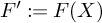 be the fraction field of
$R'$
 , and let
$V'$
 be a valuation ring satisfying that
$R' \subseteq V' \subseteq F'$
 . We want to prove that the rank of
$V'$
 is at most equal to d. Let V be the valuation ring defined as the intersection of
$V'$
 and F. By construction, we know that
$R \subseteq V \subseteq F$
 . In particular, by the assumption that R is of valuative dimension d, this implies that the valuation ring V is of rank at most d. The condition that
$R' = R[X]_{\mathfrak {m}\cdot R[X]} \subseteq V'$
 then implies that the valuation on
$V'$
 is the Gauss valuation induced by V:
$\vert \sum _i a_i X^i \vert _{V'} = \min _i \vert a_i \vert _V$
 (see for instance [Reference KunduKun23, proof of Lemma 3.10]). The value groups of V and
$V'$
 are then naturally isomorphic, and in particular the rank of
$V'$
 is equal to that of V, which is at most equal to d.
Proposition 3.8. Let S be a scheme of valuative dimension d, X be a henselian local essentially smooth S-scheme, and
$s \in S$
 be the image of the closed point of X. Then the henselian local scheme
$X_\eta ^h$
 , where
$\eta \in X$
 is the generic point of the irreducible scheme
$X_s$
 (Lemma 3.5), is of valuative dimension at most d.
Proof. The statement is Zariski-local around
$s \in S$
 , so we can assume that the scheme S is local with closed point s [Reference Elmanto, Hoyois, Iwasa and KellyEHIK21, Proposition 2.3.2 (3)]. By construction, there exists a smooth S-scheme Y and a generic point
$y \in Y_s$
 such that
$X_\eta ^h$
 is the henselisation of the local scheme of Y at y. By [Sta25, Tag 02G8] and [Reference Elmanto, Hoyois, Iwasa and KellyEHIK21, Proposition 2.3.5], if
$Y' \rightarrow Y$
 is an unramified morphism of schemes, then
$\dim _v(Y') \leqslant \dim _v(Y)$
 . In particular, it suffices to prove that the localisation of Y at y is of valuative dimension at most that of S. Zariski-locally around
$y \in Y$
 , the map
$Y \rightarrow S$
 factors as a composite
$Y \rightarrow \mathbb {A}^m_S \rightarrow S$
 for some integer
$m \geqslant 0$
 and where the map
$Y \rightarrow \mathbb {A}^m_S$
 is étale. Using again [Sta25, Tag 02G8] and [Reference Elmanto, Hoyois, Iwasa and KellyEHIK21, Proposition 2.3.5], we can assume that
$Y=\mathbb {A}^m_S$
 and y is the generic point of the special fibre of Y. By induction on the integer
$m\geqslant 1$
 , we can further assume that
$m=1$
 . Finally, in this case, by definition of the valuative dimension, the desired claim is a consequence of Lemma 3.7.
Theorem 3.9 (Shifted unstable
$\mathbb {A}^1$
-connectivity theorem)

Let S be a qcqs scheme of valuative dimension d, and
$n \geqslant 0$
 be an integer. Then for any n-connective space
${E \in \mathcal {P}_{\mathrm {Nis}}(\mathrm {Sm}_S)}$
 , the motivic space
$L_{\mathrm {mot}}\,E \in \mathrm {H}(S)$
 is
$(n-d)$
 -connective.
Proof. By Remark 3.2, the space
$E \in \mathcal {P}_{\mathrm {Nis}}(\mathrm {Sm}_S)$
 is perverse n-connective in the sense of Definition 2.1. By Corollary 2.6, this implies that the motivic space
$L_{\mathrm {mot}} E \in \mathrm {H}(S)$
 is perverse n-connective. In particular, any henselian local essentially smooth S-scheme X of valuative dimension e satisfies that the anima
$(L_{\mathrm {mot}} E)(X)$
 is
$(n-e)$
 -connective. By Example 3.4, the
$\mathbb {A}^1$
 -invariant Nisnevich sheaf
$L_{\mathrm {mot}} E$
 is deflatable. By Proposition 3.6 (applied to the deflatable Nisnevich sheaf
$L_{\mathrm {mot}} E$
 ) and Proposition 3.8, this implies that any henselian local essentially smooth S-scheme X satisfies that the anima
$(L_{\mathrm {mot}}E)(X)$
 is
$(n-d)$
 -connective, i.e., that the motivic space
$L_{\mathrm {mot}} E \in \mathrm {H}(S)$
 is
$(n-d)$
 -connective.
Remark 3.10. As a consequence of Proposition 2.5, one can actually prove a stronger version of Theorem 3.9 when
$n=1$
 . Namely, for any
$1$
 -connective space
$E \in \mathcal {P}_{\mathrm {Nis}}(\mathrm {Sm}_S)$
 , the motivic space
$L_{\mathrm {mot}}\,E \in \mathrm {H}(S)$
 is
$1$
 -connective [Reference Antieau and ElmantoAE17, Corollary
$4.30$
 ].
Corollary 3.11. Let S be a noetherian scheme of Krull dimension d, and n be an integer. Then for any n-connective space
$E \in \mathcal {P}_{\mathrm {Nis}}(\mathrm {Sm}_S)$
 , the motivic space
$L_{\mathrm {mot}} E \in \mathrm {H}(S)$
 is
$(n-d)$
 -connective.
Proof. This is a consequence of Theorem 3.9 and of the fact that the valuative and Krull dimensions agree on locally noetherian schemes [Reference Elmanto, Hoyois, Iwasa and KellyEHIK21, Proposition 2.3.2 (9)].
The following result was previously known, using different techniques, when S is locally noetherian [Reference DruzhininDru22, Theorem 2.7].
Corollary 3.12 (Shifted stable
$\mathbb {A}^1$
-connectivity theorem)

Let S be a qcqs scheme of valuative dimension d, and
$n \geqslant 0$
 be an integer. Then for any n-connective pointed space
$E \in \mathcal {P}_{\mathrm {Nis}}(\mathrm {Sm}_S)_\ast $
 , the motivic spectrum
$L_{\mathrm {mot}} E \in \mathrm {SH}(S)$
 is
$(n-d)$
 -connective.
Proof. This is a consequence of the definition of n-connectivity for a motivic spectrum (see for instance [Reference DruzhininDru22, Section 2.1]) and of the shifted unstable
$\mathbb {A}^1$
 -connectivity theorem (Theorem 3.9). Note that if one rather starts from a spectra-valued sheaf
$E \in \mathcal {P}_{\mathrm {Nis}}(\mathrm {Sm}_S;\mathrm {Sp})$
 , then the same result still holds: either as a consequence of Theorem 3.9 if
$n \geqslant d$
 , or by using Proposition 3.6 to reproduce the classical argument of [Reference MorelMor04] (see also [Reference Schmidt and StrunkSS18, Reference Deshmukh, Hogadi, Kulkarni and YadavDHKY21]).
Remark 3.13. The analogue of Corollary 3.12 for motivic
$S^1$
 -spectra
$\mathrm {SH}^{S^1}(S)$
 , as also studied in [Reference Schmidt and StrunkSS18, Reference Deshmukh, Hogadi, Kulkarni and YadavDHKY21, Reference DruzhininDru22], is similarly a consequence of Theorem 3.9.
Remark 3.14 (Perverse homotopy t-structure)
Let S be a qcqs scheme of finite valuative dimension. The category
$\mathrm {SH}(S)$
 can be equipped with a homotopy t-structure, which is controlled in a nice way, when
$S=\mathrm {Spec}(k)$
 is the spectrum of a field, by Morel’s stable connectivity theorem [Reference MorelMor04, Section 5.2], see also [Reference HoyoisHoy14, Section 2.1]. Over a more general base, the necessity for a shifted stable
$\mathbb {A}^1$
 -connectivity theorem [Reference AyoubAyo06] prevents us from having a similar description of this homotopy t-structure in terms of a vanishing of homotopy sheaves. In this remark, we sketch how to define a perverse homotopy t-structure on
$\mathrm {SH}(S)$
 using the ideas developed in this paper. Let
${}^{p}{}{\mathrm {SH}(S)}_{{\geqslant } 0} \subseteq \mathrm {SH}(S)$
 be the subcategory spanned by motivic spectra E such that, for every henselian local essentially smooth S-scheme X,
$E(X)$
 is
$(-\dim _v(S_s^h))$
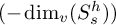 -connective where
$s \in S$
 is the image of the closed point
$x \in X$
 . The category
${}^{p}{}{\mathrm {SH}(S)}_{{\geqslant } 0}$
 is closed under homotopy colimits and extensions, hence it corresponds to the nonnegative part of a t-structure
$({}^ {p}{}{\mathrm {SH}(S)}_{{\geqslant } 0},{}^{p}{}{\mathrm {SH}(S)}_{{\leqslant } 0})$
 on
$\mathrm {SH}(S)$
 [Reference LurieLur17, Proposition 1.4.4.11], which we call the perverse homotopy t-structure on
$\mathrm {SH}(S)$
 . By Gersten injectivity over a base (Proposition 3.6), if
$E \in \mathcal {P}_{\mathrm {Nis}}(\mathrm {Sm}_S)_\ast $
 is n-connective (in the sense of Definition 3.1), then
$L_{\mathrm {mot}} E \in {}^ {p}{}{\mathrm {SH}(S)}_{{\geqslant } n}$
 . This property is a generalisation of Morel’s description of the homotopy t-structure on
$\mathrm {SH}(S)$
 when
$S=\mathrm {Spec}(k)$
 [Reference MorelMor04, Theorem 4.3.4].
We refer to [Reference Bachmann, Elmanto and MorrowBEM25, Section 3.3] for the notation relevant to the following result, which was first obtained by Bachmann–Elmanto–Morrow as a consequence of their main results on
$\mathbb {A}^1$
 -invariant motivic cohomology [Reference Bachmann, Elmanto and MorrowBEM25, Corollary 9.5].
Corollary 3.15 (Convergence of the slice filtration, [Reference Bachmann, Elmanto and MorrowBEM25])
Let S be a qcqs scheme of valuative dimension d. Then the motivic spectrum
$\mathrm {kgl}_S \in \mathrm {SH}(S)$
 is very effective and, for every integer
$n \geqslant 0$
 , the Nisnevich sheaf of spectra
$\omega ^\infty \mathrm {Fil}^n_{\mathrm {slice}} \mathrm {KGL}_S$
 is
$(n-d)$
 -connective. In particular, if S is a qcqs scheme of finite valuative dimension, then the slice filtration
$\mathrm {Fil}^{\star}_{\mathrm {slice}} \mathrm {KGL}_S$
 is convergent.
Proof. The proof is exactly as in [Reference Bachmann, Elmanto and MorrowBEM25, Proposition 3.44 and Lemma 4.8] (where the proof is stated for regular noetherian S of dimension at most one), using the shifted stable
$\mathbb {A}^1$
 -connectivity theorem (Corollary 3.12).
Acknowledgements
The authors would like to express their sincere gratitude to Elden Elmanto for his constant support throughout this project and for sharing many insights, as well as some unpublished notes. We would also like to thank Frédéric Déglise, Marc Hoyois and Brian Shin for related discussions, Neeraj Deshmukh for comments on a draft of this paper and the referee for several helpful comments and suggestions.
This work was done while the first-named author was partially supported by the SFB 1085 Higher Invariants, the Institute for Advanced Study and the Simons Foundation, and while the second-named author received funding from the NSERC Discovery grant RGPIN-2025-07114, ‘Motivic cohomology: theory and applications’ and the PNRR grant CF 44/14.11.2022 ‘Cohomological Hall algebras of smooth surfaces and applications’, and hospitality from Chennai Mathematical Institute.



