Introduction
Seeds will play a decisive role as the foundation of intensifying the sustainable production of food, biomolecules and bioenergy by 2050; they will also contribute to mitigating emissions of CO2 equivalent gases and their derived impacts on climate changes. In 2009, more than 1 billion people were undernourished, their food intake providing less than the minimum daily energy they required (OECD/FAO, 2010). This is not the result of a lack of food, but because these people are too poor to buy it. It will be possible to produce enough food in the future, but doing this while reducing greenhouse gas emissions and impacts on other resources, especially water, is a huge challenge. Accepted data show that current food production could be more than doubled. However, it would be necessary to expand the amount of land under agricultural production by 1.6 billion hectares, most of which would be in Latin America and Africa (Godfray et al., Reference Godfray, Beddington, Crute, Haddad, David Lawrence, Muir, Pretty, Robinson, Thomas and Toulmin2010; OECD/FAO, 2010; Tollefson, Reference Tollefson2010). Producing more food while curbing this increase in agricultural land and at the same time reducing environmental impacts requires what has been called the ‘sustainable intensification of agricultural production’ (Baulcombe, Reference Baulcombe2010). There are indeed opportunities to cultivate more land while reducing the environmental impact. The use of recombinant DNA technology will play a key role in adding many characteristics, such as stress tolerance (for drought, salinity and other stresses) and disease tolerance; crops that return a consistent level of productivity and a reduction in the use of renewal inputs; prevention of wastage of minerals, biodiversity and natural resources; and protection for ecosystems. In the future the monitoring of agricultural systems should be an effective and integral part of food security, of human health and economic prosperity, of social welfare and environmental sustainability, among other concerns. Reaching these objectives will demand new research that will effectively and operationally integrate practices from thoroughly mastered agricultural systems and advanced research technologies in genomics, transgenics, microbiology, synthetic biology and metabolic engineering. It has been proposed that a global network should be established to monitor the effects of agriculture on the environment, across large agricultural, ecological and climatic zones worldwide. This would involve the interested parties – politicians, farmers, consumers, businesses, non-governmental organizations (NGOs) and teaching and research institutions – to jointly develop a set of measures to quantify social, economic and environmental results arising from a range of agricultural strategies. A network of monitoring organizations would be needed to collect the appropriate information and make the data available as agricultural information to support policy management and set out research priorities (Ash et al., Reference Ash, Jasny, Malakoff and Sudgen2010; Fedoroff et al., 2010; Pennisi, Reference Pennisi2010; Sachs et al., Reference Sachs, Remans, Smukler, Winowiecki, Andelman, Cassman, Castle, DeFries, Denning, Fanzo, Jackson, Leemans, Lehmann, Milder, Naeem, Nziguheba, Palm, Pingalli, Reganold, Richter, Scherr, Sircely, Sullivan, Tomich and Sanchez2010).
Seeds in agriculture
A global status report of commercialized biotech genetically modified crops in agriculture has been published recently (James, Reference James2010). Last year (2010) was the fifteenth year that biotech crops, first planted in 1996, were on the commercial market. Millions of large, small and resource-poor farmers around the world continued to plant significantly more hectares of biotech crops in 2010. The growth was from 1.7 million hectares of biotech crops in 1996 to 148 million hectares in 2010. The accumulated hectarage planted during the 15 years, 1996 to 2010, exceeded 1 billion hectares.
These results demonstrate that genetically modified crops are the fastest adopted crop technology in the history of modern agriculture, a reflection of the consistent multiple benefits that biotech crops offer to millions of farmers worldwide. Progress was made on several major fronts: These are very important developments, given that biotech crops already contribute to solving some of the major challenges facing global society, including food security and self-sufficiency, sustainability, alleviation of poverty and hunger, and help in mitigating some of the challenges associated with climate change and global warming (James, Reference James2010). However, it is opportune to add that sustainable agriculture of the future will not be limited to maximizing productivity, but will rely on agricultural systems being routinely fused with the recombinant-DNA-derived products, bringing with it education and social justice by including poor farmers in the economically productive sector.
In this regard, the development of high-frequency plant gene transfer systems is an imperative step for the effective evaluation of different traits and functional efficacy under in vitro, greenhouse and field conditions (McElroy, Reference McElroy2003, Reference McElroy2004). Several studies have been conducted to produce a highly efficient transformation system that is simple to execute, variety independent, and capable of solving the problems associated with host and tissue specificity and/or somaclonal variation, frequently related to plant regeneration from tissue culture. An example of recent progress in this field is the development of a novel system to select transgenic meristematic cells from embryonic axes of mature seeds of soybean (Aragão et al., Reference Aragão, Sarokin, Vianna and Rech2000; Rech et al., Reference Rech, Vianna and Aragão2008), bean (Bonfim et al., Reference Bonfim, Faria, Nogueira, Mendes and Aragão2007) and cotton (Aragão et al., Reference Aragão, Vianna, Carvalheira and Rech2005) after the physical introduction of a mutated AHAS (acetohydroxy acid synthase) gene using a selection system based on the use of the herbicide imazapyr. The mechanism of action of imazapyr is the inhibition of acetohydroxy acid synthase enzymatic activity, which catalyses in the apical meristematic region the initial step in the biosynthesis of three essential amino acids: isoleucine, leucine and valine (Shaner et al., Reference Shaner, Anderson and Stidham1984). The AHAS selectable marker gene, isolated from Arabidopsis thaliana, contains a mutation that confers imidazolinone-specific resistance (Sathasivan et al., Reference Sathasivan, Haughn and Murai1990). As a consequence, after microparticle bombardment, the putative transgenic cells in the apical region of the embryonic axes can be effectively selected among the non-transgenic cells. The utilization of this selectable marker system, combined with multiple shoot induction and biolistics, has resulted in a significant increase in the recovery of fertile transgenic plants and has been introduced in a breeding programme.
In 2010, the first genetically modified crop developed in Brazil, one of the major soybean producers in the world, reached the commercialization stage. This involved a successful public–private partnership between EMBRAPA, Brazil's public agricultural research institute, and the chemical company BASF. The partnership is leading a key contribution for delivering innovative solutions to farmers in the 21st century, which will contribute to developing sustainable agriculture worldwide. After 10 years of developing the project together, BASF and EMBRAPA obtained commercial approval from the Brazilian Biosafety Technical Commission (CTNBIO) for a herbicide-tolerant soybean seed line. The soybean seeds meet the standards and laws of biosafety for the environment, agriculture and human and animal health in Brazil and all the main importer countries.
The new soybean seed line combines genetically modified soybean varieties with a BASF broad-spectrum imidazolinone class of herbicides, tailored to regional conditions. This herbicide-tolerant technology provides farmers with a new weed control system that effectively manages a broad spectrum of weeds. Designed to be applied post-crop emergence, imidazolinone herbicides provide farmers with the flexibility to apply the herbicide as needed to control weeds during the critical first few weeks of crop growth. A single application provides season-long control of both broad leaf and grass weeds. Farmers will also experience logistical and environmental benefits. Fewer herbicide applications per hectare will reduce the use of machinery and labour, reducing costs for growers and the release of CO2 equivalents to the environment (Kovach et al., Reference Kovach, Petzoldt, Degni and Tette1992; Brookes and Barfoot, Reference Brookes and Barfoot2008). We have conducted a recent study to estimate how much the greenhouse gas emission reductions have been facilitated by the adoption of the soybean line herbicide-tolerant. These derive from reduced fuel use due to less frequent herbicide and insecticide applications and a reduction in the energy use in soil cultivation. In addition, the facilitation of reduced and no-tillage production systems by the biotech herbicide-tolerant technology (notably in soybeans) has resulted in less plowing and increased carbon storage in the soil. This additional carbon storage reduces CO2 emissions to the environment.
Results have shown that the potential annual fuel savings from the adoption of the new soybean herbicide-tolerant line will depend on the level of adoption and whether such soybean seeds displace conventional or GM HT (tolerant to glyphosate) soybeans. Using three possible scenarios for adoption levels of between 10 and 30% of market share, the potential annual fuel savings associated with adoption of the imidazolinone-tolerant soybean line falls within a range of 1.2 to 7.24 million litres. The resulting potential annual CO2 savings fall within a range of 3.11 million kg and 19.9 million kg (E. Rech, unpublished).
Overall, these results demonstrate the achievement of another biotech product and should be utilized as an additional model among the other transgenic seeds already commercialized. The importance of intensifying the use of recombinant DNA technology and its derived impact in sustainable agriculture should be emphasized. It should also be pointed out that we must find a way to expand the use of recombinant DNA technology to develop several other transgenic crops, both commodities and non-commodities. This should allow us to really intensify our contribution to the social inclusion of smallholders and the sustainable agriculture of the future.
Seeds and molecular farming
Over the past decade, several studies have shown that plants have already proven to be a viable option for producing functional recombinant proteins within a wide range of structural characteristics (Ma et al., Reference Ma, Drake and Christou2003; Stoger et al., Reference Stoger, Ma, Fischer and Christou2005). In 2010, approximately 30 plant-made pharmaceuticals (PMPs), including vaccines, antibodies, nutraceuticals and therapeutic human proteins entered the final stages of clinical trials prior to commercialization. Four have already been launched on the market in addition to three previously commercialized proteins derived from maize: bovine trypsin, avidin and β-glucuronidase, all of which have been utilized in research laboratories worldwide since 1998 (Ma et al., Reference Ma, Drake and Christou2003; Obembe et al., Reference Obembe, Popoola, Leelavathi and Reddy2011).
The expression of recombinant proteins can be efficiently achieved in a number of plants and plant organs. Although most genes can be expressed in many different recombinant systems, it is crucial to determine the platform that offers the most advantageous conditions for the synthesis of a particular protein (Daniell et al., Reference Daniell, Streatfield and Wycoff2001; Ma et al., Reference Ma, Drake and Christou2003; Streatfield, Reference Streatfield2007; Boothe et al., Reference Boothe, Nykiforuk, Shen, Zaplachinski, Szarka, Kuhlman, Murray, Morck and Moloney2010; Kawakatsu and Takaiwa, Reference Kawakatsu and Takaiwa2010). Because plant pathogenic organisms cannot cause human disease, this opens the possibility of exploiting plants and edible fruits, such as bananas and papaya, as potential candidates for the production of vaccines and orally administered antigens (Daniell et al., Reference Daniell, Streatfield and Wycoff2001; Ma et al., Reference Ma, Drake and Christou2003; Streatfield, Reference Streatfield2007).
Seeds as bioreactors provide a potential economical platform for the large-scale production and storage of many molecules for agriculture and for pharmaceutical and industrial interest. Various cereals (primarily maize, rice and barley) and grain legumes (pea and common bean) have been explored as hosts for production of biopharmaceuticals (Stoger et al., Reference Stoger, Ma, Fischer and Christou2005; Spök et al., Reference Spök, Twyman, Fischer, Ma and Sparrow2008). Recombinant protein production in seeds can even take advantage of the abundance of oil bodies in oilseed rape and safflower. The company SemBioSys Genetics has developed a production platform in which target recombinant proteins are expressed as fusions with a hydrophobic protein called oleosin, which can be recovered from oil bodies by a simple extraction procedure and separated by endoprotease digestion (Boothe et al., Reference Boothe, Saponja and Parmenter1997).
Seed vacuoles are the major sites of protein accumulation in seeds and are also the intracellular endpoints of the plant secretory pathway. They can be divided into two main categories: (1) LVs (lytic vacuoles), the acidic compartments rich in hydrolases that are the equivalent of mammalian lysosomes; and (2) PSVs (protein storage vacuoles), the endoplasmic reticulum (ER)-derived cisternae specialized in storing the large amounts of protein required for seed development (Jolliffe et al., Reference Jolliffe, Craddock and Frigerio2005).
Soybeans [Glycine max (L.) Merrill] have a high seed protein content, mostly because of the abundance of soybean PSVs, which are seed-specific organelles specialized for protein accumulation that serve as the endpoints of the plant secretory pathway (Boothe et al., Reference Boothe, Nykiforuk, Shen, Zaplachinski, Szarka, Kuhlman, Murray, Morck and Moloney2010). Soybean plants also represent an excellent source of abundant and cheap biomass. Under greenhouse conditions and a daily photoperiod of 23 h of light, the soybean plant's vegetative growth can be extended and a consequent flowering period delayed (Cavazzoni et al., Reference Cavazzoni, Volk, Bugbee and Dougher1999; Kantolic and Slafer, Reference Kantolic and Slafer2007), inducing more than a tenfold increase in seed production (above 1000 seeds per plant) when compared with plants cultivated under field conditions. In another experiment, pollen dispersal in the Cerrado region was evaluated by the presence of the dominant genes GUS and AHAS in the progenies of non-transgenic plants. The highest amount of transgenic pollen dissemination was observed in the first row, 0.5 m distant from the central plot (0.44–0.45%). The frequency of pollen dispersion drastically decreased in row 2 (0.04–0.14%), reaching zero by row 13, which was 6.5 m distant from the central plot (Abud et al., Reference Abud, Souza, Moreira, Andrade, Ulbrich, Vianna, Rech and Aragão2003). In addition, similar results were obtained utilizing transgenic soybean plants carrying the CP4 EPSPS gene, which confers herbicide tolerance against glyphosate herbicide (Abud et al., Reference Abud, Souza, Vianna, Leonardecz, Moreira, Faleiro, Junior, Monteiro, Rech and Aragão2007). This fact should minimize the potential occurrence of gene flow to other species even under greenhouse conditions.
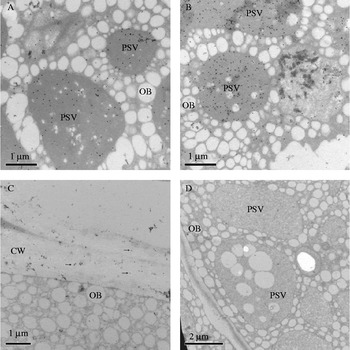
The important intrinsic characteristics of soybean seeds and the possibility of genetically manipulating soybean, utilizing recombinant DNA technology, make this crop an important candidate for production of recombinant molecules (Altpeter et al., Reference Altpeter, Baisakh, Beachy, Bock, Capell, Christou, Daniell, Datta, Datta, Dix, Fauquet, Huang, Kohli, Mooibroek, Nicholson, Nguyen, Nugent, Raemakers, Romano, Somers, Stoger, Taylor and Visser2005; Rech et al., Reference Rech, Vianna and Aragão2008; Boothe et al., Reference Boothe, Nykiforuk, Shen, Zaplachinski, Szarka, Kuhlman, Murray, Morck and Moloney2010). The use of dicot seed-specific regulatory sequences is important for the design of a successful strategy for recombinant protein expression and accumulation in soybean seeds (Chen et al., Reference Chen, Schuler and Beachy1986; Imoto et al., Reference Imoto, Yamada, Kitamura and Kanazawa2008). The β-conglycinin signal peptide from soybeans and the cotyledonary α-coixin signal peptide from the monocot Coix lacryma-jobi were efficient for targeting signals for the functional expression of human growth hormone (Cunha et al., Reference Cunha, Murad, Cipriano, Araújo, Aragão, Leite, Vianna, McPhee, Souza, Waters and Rech2010a) (Fig. 1) and human coagulation factor IX in soybean seeds (Cunha et al., Reference Cunha, Murad, Ramos, Maranhão, Brigido, Araújo, Lacorte, Aragão, Covas, Fontes, Souza, Vianna and Rech2010b), and the correct targeting of human proinsulin in PSVs of transgenic soybean seeds has also been described (Cunha et al., Reference Cunha, Araújo, Leite, Murad, Vianna and Rech2010c).
Protein targeting to protein storage vacuoles (PSV) was evaluated by ultrastructural immunocytochemistry of recombinant human growth hormone (hGH) presence in ultra-thin sections of soybean cotyledons. Subcellular accumulations of recombinant hGH in PSV from transgenic soybean seeds lines are shown in (A) and (B). The punctate accumulation of recombinant hGH in the cell wall (CW) of a transgenic seed line could also be detected, as shown in (C). Recombinant hGH could not be detected in non-transgenic seeds or associated with oil bodies (OB) (D). (Reproduced with permission from Cunha et al., Reference Cunha, Murad, Cipriano, Araújo, Aragão, Leite, Vianna, McPhee, Souza, Waters and Rech2010a).

Some of the genes coding for proteins and antigens which have already proven their efficacy against important human diseases include those listed below. The gene CTAG1, with expression limited to germ cells and not normal somatic tissue, but frequently expressed in cancer, coding for NY-ESO-1, is an important cancer antigen. Its main characteristic resides in its capacity to elicit spontaneous antibody and T-cell responses in a proportion of cancer patients (Gnjatic et al., Reference Gnjatic, Nishikawa, Jungbluth, Gure, Ritter, Jager, Knuth, Chen and Old2003); the PLAC1 gene encodes a putative cell-surface protein that is highly expressed in placenta, testis, cancer cell lines and lung tumours (Silva et al., Reference Silva, Gnjatic, Erika Ritter, Chua, Cohen, Hsu, Jungbluth, Altorki, Chen, Old, Simpson and Caballero2007); the gene GAGE is expressed in a significant proportion of melanomas, sarcomas, non-small cell lung cancers, head and neck tumours, and bladder tumours (Van den Eynde et al., Reference Van den Eynde, Peeters, De Backer, Gaugler, Lucas and Boon1995; Nagel et al., Reference Nagel, Laskawi, Eiffert and Schlott2003); the efficient microbicides against human immunodeficiency virus (HIV) called cyanovirin (Botos et al., Reference Botos, O'Keefe, Shenoy, Cartner, Ratner, Seeberger, Boyd and Wlodawer2002), scytovirin (Xiong et al., Reference Xiong, O'Keefe, Botos, Wlodawer and McMahon2006) and griffithsin (O'Keefe et al., Reference O'Keefe, Vojdani, Buffa, Shattock, Montefiori, Bakke, Mirsalis, d'Andrea, Hume, Bratcher, Saucedo, McMahon, Pogue and Palmer2009), which are potent HIV entry inhibitory molecules that target the high-mannose N-linked glycans (NLG) displayed on the surface of HIV envelope glycoproteins (O'Keefe et al., Reference O'Keefe, Vojdani, Buffa, Shattock, Montefiori, Bakke, Mirsalis, d'Andrea, Hume, Bratcher, Saucedo, McMahon, Pogue and Palmer2009); the anti-Tn monoclonal antibody raised against breast cancer cells (Babino et al., Reference Babino, Pritsch, Oppezzo, Du Pasquier, Roseto, Osinaga and Alzari1997); and the humanized anti-CD18 monoclonal antibody used to treat post-ischaemic reperfusion injuries (Caldas et al., Reference Caldas, Coelho, Kalil, Moro, Maranhão and Brígido2003). However, the lack of economically viable expression systems has limited their wide practical utilization. Using the soybean β-conglycinin regulatory sequences, the above-mentioned molecules could be expressed in transgenic soybean seeds.
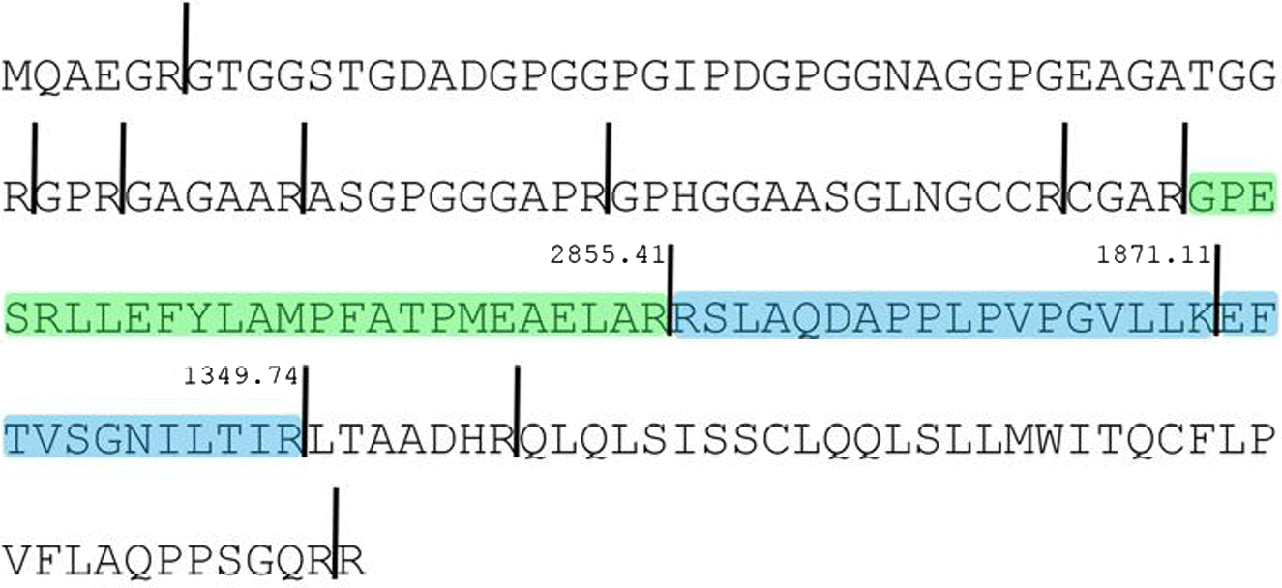
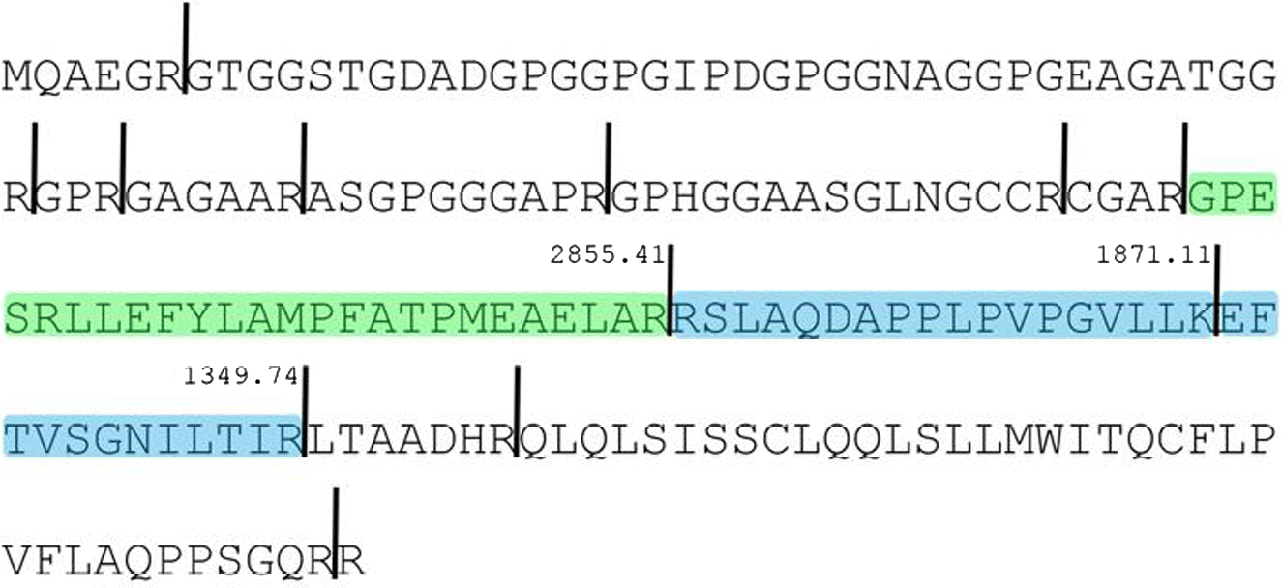
Recombinant proteins present in soybean total soluble protein (TSP) extracts have been detected and identified utilizing a nano-liquid chromatography–mass spectrometry (LC-MS) assay. The results demonstrated the expected, correct, peptide sequences of each recombinant protein expressed in transgenic soybean TSP extracts and their respective mono-isotopic expected masses and positions, with no detection of post-translational modifications in the fragment covered by the spectrum assay (see, for example, CTAG1, Fig. 2). However, these were still at expression levels below 1% of the TSP. Currently, experiments are being carried out to enhance TSP expression levels and the purification protocols, such as the separation of the recombinant proteins from abundant seed endogenous proteins, by exploring different protein solubilities in a variety of extraction buffers, among other factors. This protocol is supported by the results of recent studies evaluating downstream processing steps involved in the purification of β-glucuronidase from transgenic soybean seeds (Robić et al., Reference Robić, Farinas, Rech, Bueno and Miranda2006, Reference Robić, Farinas, Rech and Miranda2010).
Full CTAG1 recombinant protein sequence expressed in transgenic soybean seeds. Vertical black lines: digestion sites of trypsin; blue-shaded boxes: peptide sequences confirmed by tandem mass spectrometry spectra indicating CTAG peptide sequences with expected masses; green-shaded box: indicates sequence with oxidized methionine modification; numbers above the boxes indicate the mono-isotopic mass of the corresponding peptide. (A colour version of this figure can be found online at http://journals.cambridge.org/ssr).
Seeds and biodiversity
The Amazon (Soares-Filho et al., Reference Soares-Filho, Nepstad, Curran, Cerqueira, Garcia, Ramos, Voll, McDonald, Lefebvre and Schlesinger2006) and Cerrado (Ratter et al., Reference Ratter, Bridgewater and Ribeiro2003) basins constitute areas of mega-biodiversity. Different models have been proposed (Peres and Terborgh, Reference Peres and Terborgh1995; Schwartzman et al., Reference Schwartzman, Moreira and Nepstad2000; Merry et al., Reference Merry, Amacher, Lima and Nepstad2003; Nepstad et al., Reference Nepstad, Schwartzman, Bamberger, Santilli, Ray, Schlesinger, Lefebcre, Alencar, Prinz, Fiske and Rolla2006a, Reference Nepstad, Sticker and Almeidab; Soares-Filho et al., Reference Soares-Filho, Nepstad, Curran, Cerqueira, Garcia, Ramos, Voll, McDonald, Lefebvre and Schlesinger2006; Gullison et al., Reference Gullison, Frumhoff, Canadell, Field, Nepstad, Hayhoe, Avissar, Curran, Friedlingstein, Jones and Nobre2007) for the establishment of an effective conservation policy, increasing sustainability (Sachs et al., Reference Sachs, Remans, Smukler, Winowiecki, Andelman, Cassman, Castle, DeFries, Denning, Fanzo, Jackson, Leemans, Lehmann, Milder, Naeem, Nziguheba, Palm, Pingalli, Reganold, Richter, Scherr, Sircely, Sullivan, Tomich and Sanchez2010) and adding value to biodiversity (Rech, Reference Rech2010). However, the real value of biodiversity, directed at potential product development, remains unknown and the estimates are speculative. Evidence-based studies of the Amazon region should be urgently intensified and expanded. These should be based on the evaluation and potential development of sustainable high-value added products. Currently, a broad spectrum of technologies from genomics to synthetic biology is available, and these permit the collection, manipulation and effective evaluation of countless organisms, metabolic pathways and molecules that exist as potential products of a large, biodiverse ecosystem. Recently, a general development cycle has been proposed for any given product arising from the recombinant DNA technology associated with agri-business (McElroy, Reference McElroy2003, Reference McElroy2004). Basically, the development cycle establishes the appropriate nomenclature and lists the interactive stages involved, from the prospecting of candidate molecules through their expression in a suitable organism and characterization, testing and deregulation. Making use of genomics as a template for chemical synthesis and assembly using recombinant DNA technology and synthetic biology allows us to manipulate and create novel metabolic pathways and molecules of choice. The following example describes one of the several possibilities.
Spider silk has been noted for its extraordinary physical and mechanical properties and has recently been recognized as a protein-based nanomaterial. It has had the ability to self-assemble into fibres consisting of antiparallel β-sheets for more than 450 million years (Lewis, Reference Lewis2006). Spider silks are protein-based biopolymers secreted through specialized epithelial cells as concentrated soluble precursors of repetitive building blocks of primary protein structures. These biopolymers are highly flexible and exhibit extraordinary strength and toughness, comparable to high-performance synthetic fibres such as Kevlar®. Despite the high potential of spider silk arising from its mechanical characteristics, the impossibility of domesticating spiders to produce fibres in sufficient quantities has led to the development of alternative strategies for the production of silk proteins using recombinant DNA technology (Teulé et al., Reference Teulé, Cooper, Furin, Bittencourt, Rech, Brooks and Lewis2009). To this end, an on-going initiative is being conducted on the functional genome of Brazilian spider silk glands, studying evolution at the molecular level with the goal of developing novel biopolymers through synthetic biology (Bittencourt et al., Reference Bittencourt, Souto, Verza, Vinecky, Dittmar, Silva, Andrade, da Silva, Lewis and Rech2007, Reference Bittencourt, Dittmar, Lewis and Rech2010). The spiders Nephilengys cruentata, Avicularia juruensis and Parawixia bistriata were collected and prospected in the Brazilian biomes. Out of the genomics, different spidroin sequences produced by the major ampullate, minor ampullate, flagelliform and tubulliform silk glands from spiders were identified. Drawing on genome and transcriptome data, de novo proteins could be designed to produce synthetic spider-like fibres in bacteria (Teulé et al., Reference Teulé, Cooper, Furin, Bittencourt, Rech, Brooks and Lewis2009). Transgenic soybean lines have been developed, expressing de novo-designed recombinant spider silk-like proteins under the control of soybean tissue-specific regulatory sequences. Transgenic R0 plants were cultivated under greenhouse conditions to produce seed progenies. Currently, studies on the purification of synthetic proteins from soybean seeds are being carried out for the production of recombinant spider silk-like proteins for artificial fibre spinning (data not shown).
In addition to the efforts made to conserve biodiversity, an effective, evidence-based method for estimating biodiversity value is necessary. The use of genomics to metabolomics, through seed metabolic engineering and synthetic biology (Endy, Reference Endy2005; Barrett et al., Reference Barrett, Kim, Kim, Palsson and Lee2006; Weber and Fusseneger, Reference Weber and Fusseneger2009), may constitute an important tool and be a viable option for the prospecting, evaluation and manipulation of biodiversity, as advocated, as well as having a role in the development of methods for sustainable use and production of novel molecules (Rech, Reference Rech2010).
Remarks on the regulatory framework
It is crucial to re-evaluate the current regulatory framework involving genetically modified crops (GMO) and access to, and use of, the knowledge and potential products derived from biodiversity. Regarding GMO, despite the outstanding efficacy and safety of the regulatory issues of GM crops, the current procedures are complex and costly, which, in turn, induces a limited utilization of genetic engineering to develop products associated with a large number of non-commodity crops of importance for farmers and which contribute to the sustainable intensification of food production. In addition, these procedures also impose a constraint on the public research institutes developing GMO products. Regulatory issues of GMO constitute part of a dynamic and evolutionary process and ought to be re-evaluated, maintaining their current and intrinsic safety efficiency. The establishment of public facilities may contribute to reducing the total cost of a GMO crop, making deregulation globally accepted and implemented. More than 15 years since the first GMO crop was launched, there is significant molecular, biochemical and environmental data to support the discussion about the complexity and cost of the current regulatory framework and its further impacts.
Regarding the access and utilization of biodiversity in Brazil, the current regulatory apparatus induces a virtual exclusion of public companies and also private-sector researchers, universities and institutes aiming to study and add value to biodiversity. The policies are more firmly based on punishing private companies and researchers from the public sector (De Castro, Reference De Castro2011), than on stimulating research and development. So it is also urgent to re-evaluate the existing policies for access to and exploitation of biodiversity's potential.
For molecular farming, a suitable regulatory framework, including scale-up, upstream and downstream processing, among others, has been defined to demonstrate that plant-derived recombinant protein products can be made to meet the existing standards of quality for protein pharmaceuticals produced in micro-organisms and/or animal cell lines, and that they perform equivalently in clinical trials (Boothe et al., Reference Boothe, Nykiforuk, Shen, Zaplachinski, Szarka, Kuhlman, Murray, Morck and Moloney2010).