Introduction
Follicular fluid (FF) forms the main environment that supports oocyte development and contains a myriad of hormones, proteins, ions, DNA and RNA (Hennet and Combelles, Reference Hennet and Combelles2012; Da Broi et al., Reference Da Broi, Giorgi, Wang, Keefe, Albertini and Navarro2018). Cell-free DNA (cfDNA) is double-stranded DNA (dsDNA) found in blood and body fluids including FF. Nuclear- or mitochondria-derived cfDNA (n- or mt-cfDNA) is detected in the culture medium of embryos, oocyte granulosa cell complexes (OGCs) and granulosa cells (GCs) (Stigliani et al., Reference Stigliani, Anserini, Venturini and Scaruffi2013; Kansaku et al., Reference Kansaku, Munakata, Itami, Shirasuna, Kuwayama and Iwata2018). Accumulating evidence has shown that cfDNA is derived from secretions of both live as well as dead and apoptotic cells (Bronkhorst et al., Reference Bronkhorst, Wentzel, Aucamp, van Dyk, du Plessis and Pretorius2016; Hayakawa et al., Reference Hayakawa, Esposito, Wang, Terasaki, Liu, Xing, Ji and Lo2016; Wang et al., Reference Wang, Kong, Ma, Li, Zhu, Xia, Xie, Zhou and Wang2017). As the nature of FF reflects oocyte quality (Munakata et al., Reference Munakata, Ueda, Kawahara-Miki, Kansaku, Itami, Shirasuna, Kuwayama and Iwata2018; Zheng et al., Reference Zheng, Tong, Li, Chen and Zhang2018), cfDNA in FF and the medium has been an attractive biomarker for selecting good oocytes and embryos. For example, high cfDNA levels in FF are associated with poor oocyte quality and, subsequently, pregnancy rate (Traver et al., Reference Traver, Scalici, Mullet, Molinari, Vincens, Anahory and Hamamah2015; Guan et al., Reference Guan, Zhang, Wang, Cai, Jia and Zhao2017). In addition, when the amounts of n-cfDNA and mt-cfDNA in FF were estimated by real-time PCR targeting one copy gene and the mitochondrial genome, the estimated amount of mt-cfDNA, but not nucleic-cfDNA, closely reflected the concentration of cfDNA in FF (Kansaku et al., Reference Kansaku, Munakata, Itami, Shirasuna, Kuwayama and Iwata2018). Therefore, mt-cfDNA level is a measurable biomarker for oocyte and embryo quality. Previously we have found that secretion of mt-cfDNA from GCs increased in response to induced mitochondrial dysfunction (Kansaku et al., Reference Kansaku, Munakata, Itami, Shirasuna, Kuwayama and Iwata2018). In addition, suboptimal culture conditions may damage mitochondria, increasing the dsDNA content in cytosol, and therefore activating cellular stress through the cGAS-STING pathway (Mao et al., Reference Mao, Luo, Zhang, Wu, Yuan, Xu, Song, Fujiwara, Abe, LeMaire, Wang and Shen2017). Damaged cellular organelles and proteins are sterilized by autophagosomes. cGAS-STING pathways recognize extracellular DNA and promote the clearance of invading DNA by selective autophagy (Wassermann et al., Reference Wassermann, Gulen, Sala, Perin, Lou, Rybniker, Schmid-Burgk, Schmidt, Hornung, Cole and Ablasser2015; Watson et al., Reference Watson, Bell, MacDuff, Kimmey, Diner, Olivas, Vance, Stallings, Virgin and Cox2015). However, the mechanism underlying intracellular mt-cfDNA clearance and secretion from GCs is unclear.
In the present study, oocyte and cumulus cell complexes (COCs) or GCs were cultured in vitro, and n- or mt-cfDNA contents in the spent culture medium were measured by real-time PCR. The effects of culture medium supplementation with proteasome inhibitors, cytosolic envelope creation or autophagy on the amount of mt-cfDNA in spent culture medium were examined.
Materials and Methods
Chemicals and media
All chemicals were purchased from Nacalai Tesque (Kyoto, Japan) unless otherwise indicated. The medium used for in vitro maturation (IVM) was porcine oocyte medium supplemented with 3 mg/ml polyvinyl alcohol (Yoshioka et al., Reference Yoshioka, Suzuki and Onishi2008), 0.5 mM l-cysteine, 10 ng/ml epidermal growth factor (Sigma-Aldrich), 10 IU/ml equine chorionic gonadotropin (ASKA Pharma Co. Ltd, Tokyo, Japan), and 10 IU/ml human chorionic gonadotropin (Fuji Pharma Co. Ltd, Tokyo, Japan). The medium used for GC culture was TCM199 (Gibco, Grand Island, NY, USA) supplemented with 5% FCS. GW4869, bafilomycin, and MG132 were purchased from Sigma (Sigma-Aldrich, St. Louis, MO, USA) and diluted in DMSO (1000×, 10,000× and 100,000×, respectively). Control medium contained the same volumes of DMSO.
Ovary collection
Gilt ovaries were collected from a local slaughterhouse (Kanagawa Meat Center, Kanagawa, Japan), placed in phosphate-buffered saline (PBS) containing 10 IU/ml penicillin G potassium and 0.1 mg/ml streptomycin sulfate, and transported to the laboratory within 1 h. During transport, the temperature of the ovaries was maintained at 37°C.
Oocyte–cumulus cell complexes, FF and granulose cell preparation
Follicular contents were carefully collected from antral follicles (3–5 mm in diameter) of the gilt ovaries, and COCs were selected under a stereoscopic microscope. The remaining follicular contents were centrifuged (3000 g for 3 min) to obtain GC pellets and FF. GC pellets were resuspended and passed through a 40-μm nylon mesh (BD Falcon, Bedford, MA, USA) to remove cellular debris, after which the cellular suspension was centrifuged to obtain the GC pellets again. GCs were further dispersed by Accumax (Innovative Cell Technologies, San Diego, CA, USA) treatment, following three washes with PBS and subsequently used for in vitro culture. Collected FF was centrifuged at 10,000 g for 10 min and the supernatant were stored at −20°C until future use.
Culture of cumulus cells and oocyte complexes and medium collection
Cumulus cells and oocyte complexes were cultured in IVM medium (10 COCs/100 μl) for 44 h at 38.5°C in an atmosphere containing 5% CO2 and 95% air. After incubation, the IVM media were collected from each droplet and centrifuged (3000 g, 3 min) to remove cellular debris. The supernatants were used for DNA extraction.
Granulosa cell culture and medium collection
Granulosa cells were incubated in a 96-well plate (Falcon; Cat. No. 353072; BD Biosciences, Franklin Lakes, NJ, USA) at a concentration of 2.0 × 10⁵ cells/ml (100 μl/well) for 24 h. After incubation, medium from each well was collected and centrifuged to remove cellular debris (3000 g for 3 min), and the supernatants were used for DNA extraction.
DNA extraction from spent culture medium
Culture media were mixed with equal volumes of extraction buffer (Tris–HCl, 40 mM; Nonidet -40 and Tween 20, 1.8%; and Proteinase K, 0.8 mg/ml), heated at 55°C for 30 min and then incubated at 98°C for 5 min.
Western blot analysis
Granulosa cells were incubated in 50 μl cell lysis buffer (Complete Lysis-M, Roche, Basel, Switzerland), containing protease inhibitor (Complete protease inhibitor cocktail; 1 tablet/10 ml, Roche) and phosphatase inhibitor (PhosSTOP; 1 tablet/10 ml, Roche), for 10 min on ice. Cell lysates were sonicated (TOMY sonicator UD-100; TOMY, Tokyo, Japan) and centrifuged at 15,000 rpm for 20 min. After centrifugation, supernatants were collected and frozen at −80°C until analysis. Protein concentration was determined by BCA assay (Pierce, Rockford, IL, USA), according to the manufacturer’s instructions. Protein concentrations of samples were adjusted to 10 μg with cell lysis buffer. Loading samples were prepared using Laemmli sample buffer with 2-meracaptoethanol and boiled at 95°C for 5 min. Loading samples were then separated by SDS-PAGE and transferred onto a PVDF membrane (Trans-Blot Turbo Mini Transfer Packs; Bio-Rad) using a Trans-Blot Turbo Transfer System (Bio-Rad). The primary antibody was rabbit polyclonal anti-ubiquitin (1:1000; Cell Signaling Technology, Inc., San Diego, CA, USA) and it was diluted with TBS-T (pH 7.2). The secondary antibody was donkey anti-rabbit IgG conjugated with horseradish peroxidase (Abcam, Cambridge, UK), which was diluted in TBS-T (1:10,000). Specific bands were detected, using Western BLoT Quant HRP Substrate (GE Healthcare UK Ltd, Little Chalfont, UK), and digitized using an ImageQuant LAS 4000 Biomolecular imager and ImageQuant software (GE Healthcare).
Immunostaining
Granulosa cells were cultured and fixed with 4% paraformaldehyde in PBS for 15 min, followed by permeabilization in 0.25% Triton X-100 in PBS for 30 min. Cells were blocked by incubating them in PBS, containing 5% BSA, for 1 h and then staining with the primary antibody (rabbit anti-p62, 1:200 v/v; Abcam, Cambridge, UK; rabbit anti-TOMM20, 1:200 v/v, Santa Cruz Biotechnology, Texas, USA; and mouse anti-dsDNA, 1:1000 v/v, Abcam) and secondary antibody [Alexa Fluor 555-conjugate anti-rabbit IgG (H+L), 1:1000 v/v, Cell Signalling, Massachusetts, USA; and Alexa Fluor 488-conjugate anti-mouse IgG (H+L), 1:1000 v/v, Invitrogen, California, USA]. Cells were counter-stained with Hoechst 33342 stain (1.0 μg/ml; Sigma-Aldrich, St. Louis, MO, USA) and mounted using Mounting Medium (Vector Laboratories, Burlingame, CA, USA). Signals were captured using an LAS AF system with a Leica DMI 6000B microscope (Leica, Wetzlar, Germany).
Survival rate and number of the GCs and cumulus cells
In total, 60 COCs were cultured for 44 h, then the number and survival rate of the cumulus cells, as well as the maturation rate of the oocytes, were examined, and the experiment was repeated six times. GCs (2.5 × 10⁵ cells) were cultured for 24 h, their survival rates were examined and the experiment was repeated four times. Cumulus cells and GCs were enzymatically dispersed in Accumax solution (Innovative Cell Technologies, San Diego, CA, USA) and stained with trypan blue. Cell concentration and the rate of trypan blue-positive and -negative cells were determined under a microscope, using a haemocytometer. (Olympus, Tokyo, Japan). The total number of the cells was calculated using the concentrations and volumes of the cell suspensions.
Real-time PCR to predict mitochondrial DNA content in FF and GCs
PCR was performed using the CFX Connect™ Real-Time system (Bio-Rad, Hercules, CA, USA) with primer sets and Ssofast™ EvaGreen Supermix (Bio-Rad). The primers set used for mitochondrial DNA was 5´-atccaagcactatccatcacca-3´ and 5´-ccgatgattacgtgcaaccc-3´ (155 bp). These primers were designed using Primer3Plus (http://sourceforge.net/projects/primer3/) and the NCBI database (NC_000845.1 Sus scrofa mitochondrion, complete genome). The primer set used for nucleic DNA was 5´-agcagaatcaacaccatcggt-3´ and 5´-tggctccacccatagaatgc-3´ (154 bp), designed using Primer 3 Plus and the NCBI database (GCG glucagon, a single-copy gene, Refseq NC_010457). PCR conditions were: initial denaturation step 95°C 3 min; then 40 cycles of 97°C 6 s; and 60°C 10 s. To quantify the mt and nucleic DNA copy numbers, a standard curve was generated for each run using 10-fold serial dilutions representing the copy number of the external standard. The external standard was the PCR product of the corresponding gene cloned into a vector using the Zero Blunt TOPO PCR cloning kit (Invitrogen, Carlsbad, CA, USA). The PCR product was sequenced before use. Amplification efficiencies obtained for all the trials were >1.98.
Filtration and centrifugation of spent culture medium to remove small molecules possibly containing cfDNA
Granulosa cells were cultured in plastic bottles (1.0 × 10⁵ cells/ml and 10 ml/bottle, AGC Techno Glass Co., Ltd, Shizuoka, Japan). At 24 h after cell seeding, culture medium was displaced with fresh medium and subsequently cultured for 24 h. The culture medium was collected and centrifuged at 3000 g for 3 min to remove cellular debris. In addition, the medium was divided into three groups, each undergoing either (i) additional centrifugation for 10 min at 23000 g, (ii) filtration through a 0.22-μm filter or (iii) no treatment. The DNA content in the medium was then extracted as described above. Subsequently, the copy number of mt-cfDNA was examined using real-time PCR.
Experimental design
COCs and GCs were cultured separately for 44 h in IVM medium containing MG132, GW4869 or bafilomycin, and the DNA was extracted from the medium. Then, GCs, cumulus cells and oocytes were subjected to other experiments. Measurement of nt- or mt-cfDNA copy number was conducted 12 times using differential oocyte and granulosa cell series. GCs were also cultured in medium containing MG132, GW4869, or bafilomycin for 24 h and the DNA was extracted from the medium. GCs were then subjected to other experiments. Measurements of nt- or mt-cfDNA copy numbers were conducted 12 times using differential granulosa cell series.
Statistical analysis
All data were analysed using analysis of variance (ANOVA) followed by post-hoc Tukey’s test. Percentages were arcsine transformed before analysis. P-values < 0.05 were considered to be significantly different.
Results
Proteasomal degradation is a primary stage of mt-cfDNA secretion
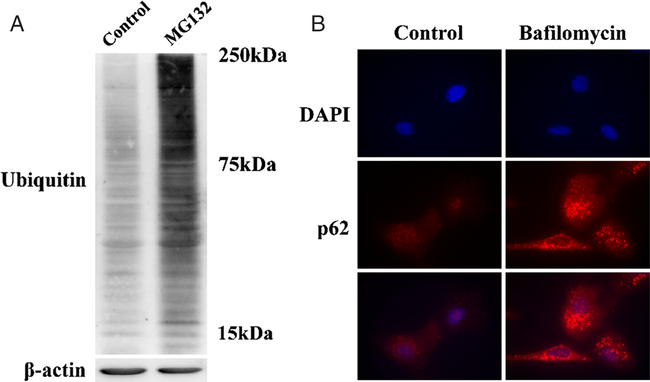
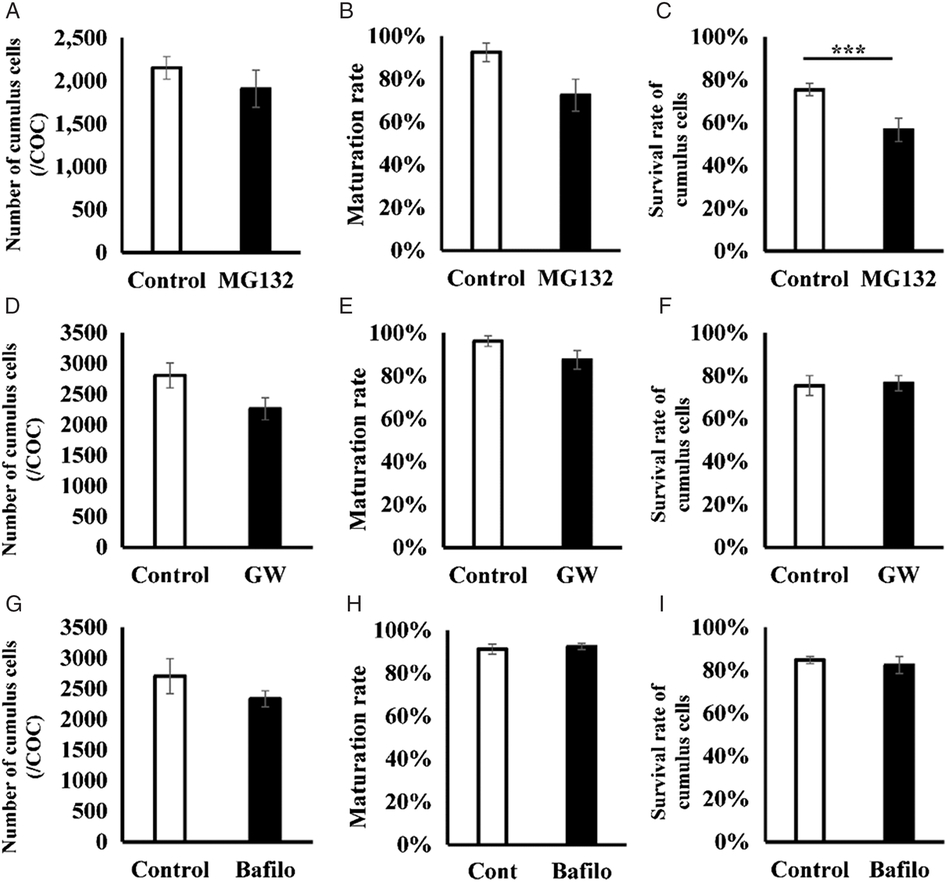
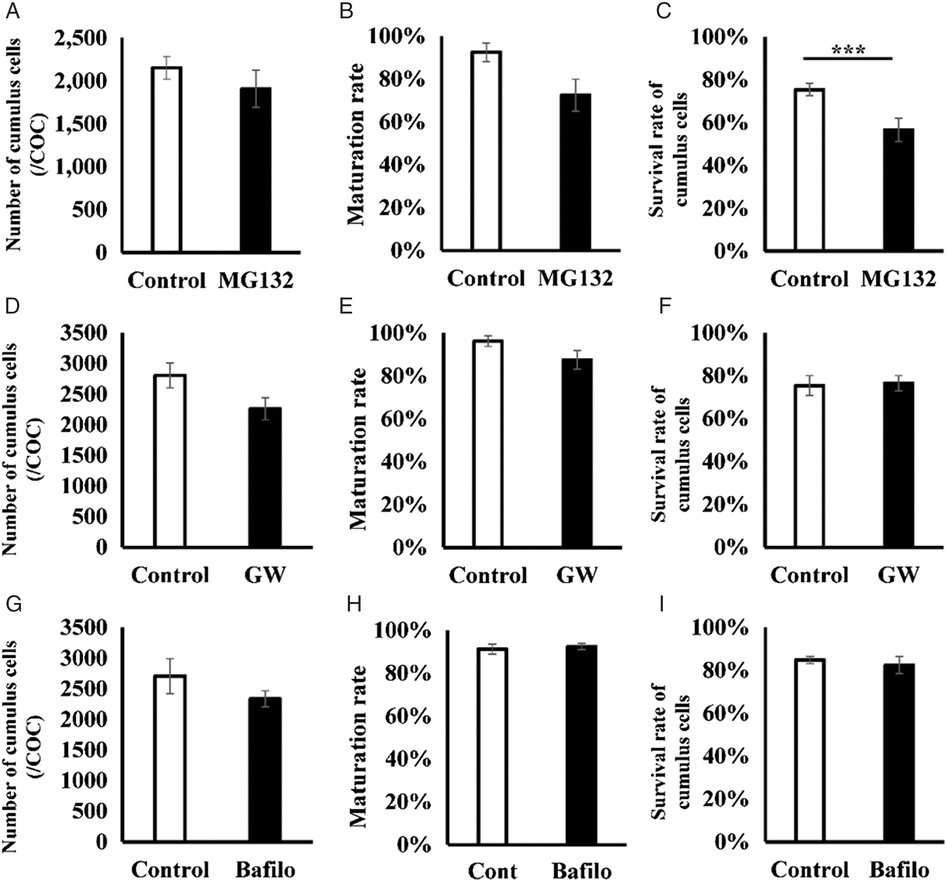
Proteasomal degeneration is a crucial step in mitochondrial quality control (Tanaka et al., Reference Tanaka, Cleland, Xu, Narendra, Suen, Karbowski and Youle2010; Chan et al., Reference Chan, Salazar, Pham, Sweredoski, Kolawa, Graham, Hess and Chan2011), and it has been reported that MG132, an inhibitor of proteasomal degradation, inhibits mitochondrial degeneration in porcine oocytes (Sato et al., Reference Sato, Itami, Tasaki, Takeo, Kuwayama and Iwata2014). Here, we examined whether MG132-mediated inhibition of mitochondrial degeneration affects the amount of mt-cfDNA in culture medium. Firstly, using western blot, we confirmed the MG132- induced inhibition of proteasomal degradation by the accumulation of ubiquitinated proteins in GCs (Fig. 1 A). COCs were incubated in culture medium containing vehicle (DMSO) or 10 μM of MG132 for 44 h (10 COCs/100 μl), following which the number and survival of the cumulus cells along with the n- or mt-cfDNA content in the spent culture medium were examined. As seen in Fig. 2, the number of cumulus cells surrounding the oocytes and the maturation rate of the oocytes did not differ between vehicle and MG132 treated conditions (Figure 2 A, B). In contrast, the survival rate of the cumulus cells was lower for MG132 treated-COCs compared with vehicle-treated COCs (Fig. 2 C).
Effect of MG132 or bafilomycin supplementation of the medium on the accumulation of ubiquitinated protein levels or p62 in granulosa cells. Granulosa cells were cultured with vehicle, 10 μM of MG132 or 100 nM of bafilomycin for 24 h. Accumulation of ubiquitinated protein levels in the granulosa cells was compared using western blotting (A) and accumulation of p62 was compared using immunostaining (B).

Number and survival rate of cumulus cells surrounding oocytes and the maturation rate of the oocytes. Oocytes and cumulus cell complexes (COCs) were incubated with 10 μM of MG132 (A–C), 10 μM of GW4869 (D-F), or 100 nM of bafilomycin (G–I). DMSO vehicle controls were added at the same volumes. Data are represented as mean ± standard error of the mean (SEM) of six trials. * * * P < 0.001.
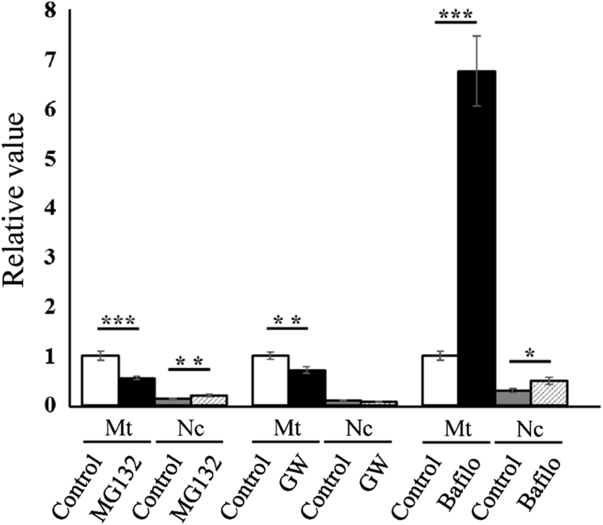
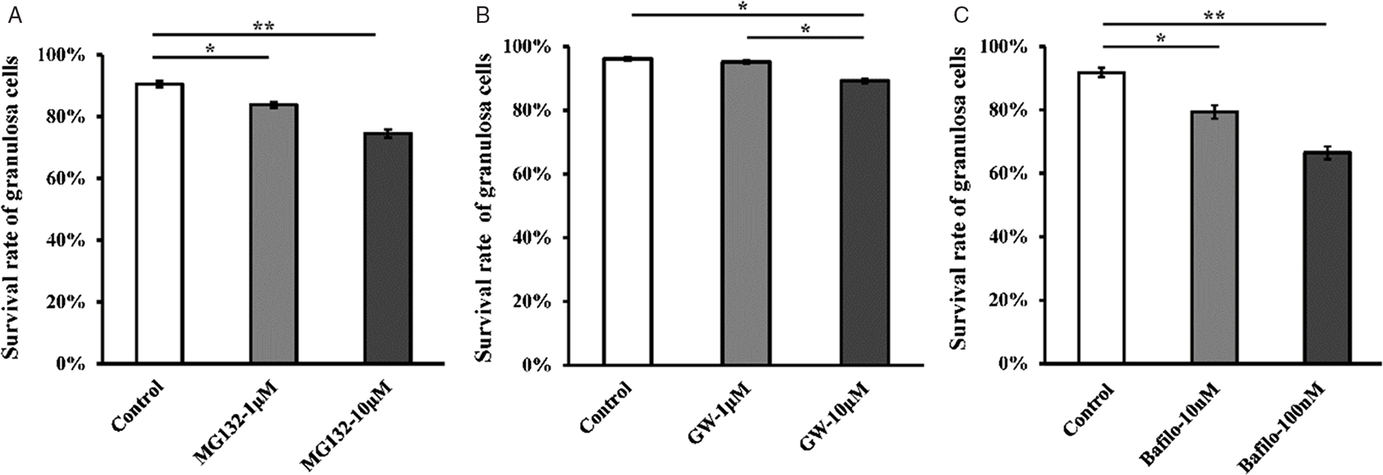
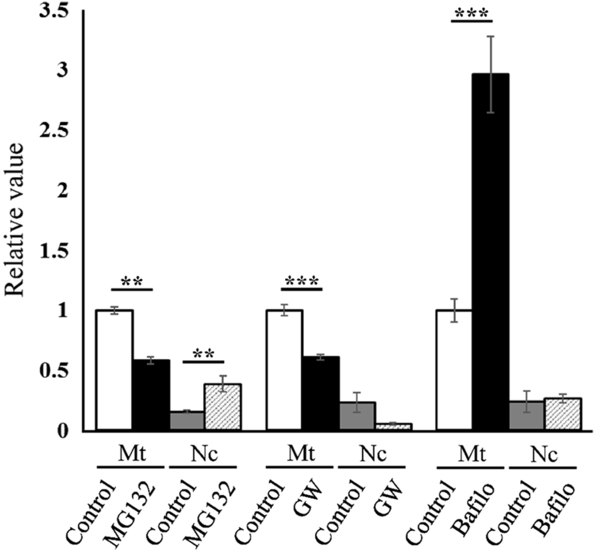
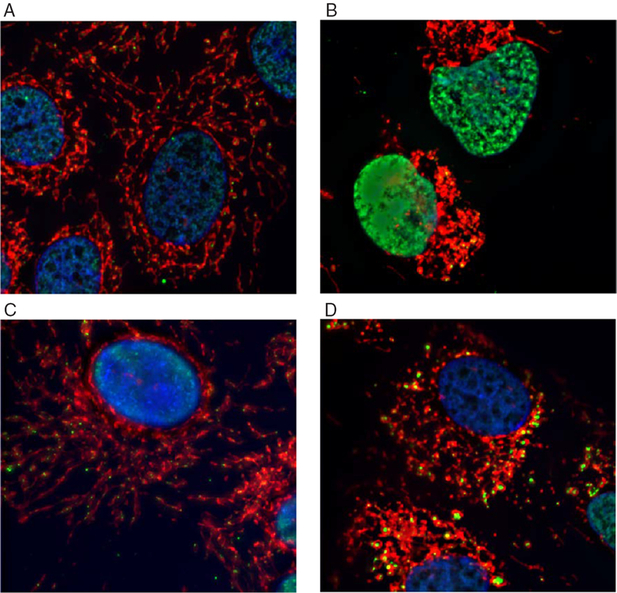
MG132 treatment significantly increased the amount of n-cfDNA, but decreased mt-cfDNA (Fig. 3). Furthermore, the result was validated by incubation of GCs with or without MG132 for 24 h. MG132 significantly reduced cellular viability (Fig. 4 A) and the amount of mt-cfDNA in the culture medium, while increasing the nucleic-cfDNA in parallel (Fig. 5). Treatment of GCs with MG132 changed the morphology of mitochondria from filamentous to fragmented and the positive signal for dsDNA located near mitochondria (Fig. 6)
Relative mitochondrial or nuclear DNA copy numbers in the spent culture medium. Oocyte and cumulus cell complexes were incubated with either 10 μM of MG132, 10 μM of GW4869 or 100 nM of bafilomycin for 44 h, and DNA extracted from the medium was used for real-time PCR. In the control medium, DMSO (vehicle) was added at the same volume. The mitochondrial DNA copy numbers in the control medium (Control Mt) were 11557.7 ± 972.1, 10696.3 ± 794.2 and 8660.6 ± 1066.5 (in 100 μl medium) for the experimental groups, MG132, GW4869, and bafilomycin, respectively. Each value was defined as 1.0. Mt, mt-cfDNA; Nc, n-cfDNA. Data are represented as mean ± standard error of the mean (SEM) of 12 trials. * P < 0.05, * * P < 0.01, * * * P < 0.001.

Survival rates of granulosa cells. Granulosa cells were incubated in medium containing 0 (control), 1 and 10 μM MG132 (A); 0 (control), 1 and 10 μM GW4869 (B); or 0 (control), 10 and 100 nM of bafilomycin (C), respectively, and survival rates of the granulosa cells were examined. In the control medium, DMSO vehicle was added at the same volumes. Data are represented as mean ± standard error of the mean (SEM) of four trials. * P < 0.05; * * P < 0.01.

Relative mitochondrial or nucleic DNA copy numbers in the spent culture medium. Granulosa cells were incubated with 10 μM MG132, 10 μM GW4869, and 100 nM bafilomycin for 24 h, and DNA extracted from the medium was used for real-time PCR. In the control medium, DMSO (vehicle) was added at the same volume. The mitochondrial DNA copy numbers in the control medium were 7721.0 ± 763.2, 7606.5 ± 390.2 and 7011.6 ± 621 (in 100 μl medium) for experimental groups MG132, GW4869, and bafilomycin, respectively. Each value was defined as 1.0. Mt, mt-cfDNA; Nc, n-cfDNA. Data are represented as mean ± standard error of the mean (SEM) of 12 trials. * * P < 0.01, * * * P < 0.001.

Representative pictures of granulosa cells cultured in medium containing vehicle (A), MG132 (B), GW4869 (C) or bafilomycin (D). Blue represents DAPI, red represents TOMM20 and green represents dsDNA.

GW4869 reduced mt-cfDNA in medium
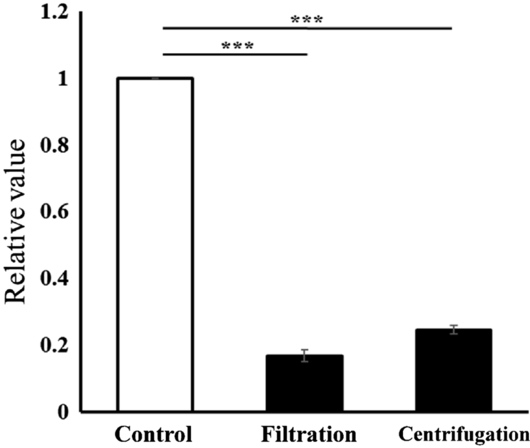
There has been a lack of information about the regulation of the mt- double-stranded DNA (dsDNA) in the cytoplasm, and its secretion into the culture medium. It is speculated that the dsDNA may be packed into intracellular lipid vesicles or directly released from cells into the culture medium (Wydooghe et al., Reference Wydooghe, Vandaele, Heras, De Sutter, Deforce, Peelman, De Schauwer and Van Soom2017). GW4869, a sphingomyelinase inhibitor, blocks the secretion of extracellular vesicles (Kosaka et al., Reference Kosaka, Iguchi, Yoshioka, Takeshita, Matsuki and Ochiya2010). Therefore, this experiment examined the effect of GW4869 on the amount of mt-cfDNA in the medium. COCs were cultured in a medium containing the vehicle (DMSO) or 10 μM of GW4869 for 44 h (10 COCs/100 μl) and the amount of either n-, or mt-cfDNA in the medium was examined. Number and survival rate of cumulus cells surrounding the oocytes, and the maturation rate of the oocytes remained unchanged between GW4869-treated and vehicle-treated groups (Fig. 2 D-F). The amount of mt-cfDNA was significantly reduced upon GW4869 treatment, while the amount of n-cfDNA was unaffected (Fig. 3). We further repeated the experiment using GCs that were cultured with or without GW4869 for 24 h. GW4869 significantly diminished the viability of the GCs (Fig. 4 B) but induced a significant decrease in mt-cfDNA content in the medium (Fig. 5). Based on these results, we hypothesized that dsDNA was encapsulated by vesicles in the cytoplasm and might be released into the medium in the form of vesicles. When conditioned medium formed by GC culture was centrifuged or filtered (0.22 μm), mt-cfDNA content was significantly reduced (Fig. 7). Furthermore, mitochondrial morphology of GCs was not affected by GW4869 treatment (Fig. 6).
Relative mitochondrial DNA copy numbers in the spent culture medium. Five different batches of granulosa cells were cultured for 24 h. These culture medium were treated by filtering (0.22 μm) or centrifugation. The mitochondrial DNA copy number in non-treatment media was defined as 1.0. * * * P < 0.001.

Inhibition of autophagy increases mt-cfDNA content in the medium
Cells have a mechanism in which cellular debris is digested. In this process, autophagy plays a crucial role. We therefore addressed how autophagy affects mt-cfDNA secretion in the GCs. COCs were treated with bafilomycin, an inhibitor of autophagy (100 nM or vehicle: DMSO) for 44 h, after which the amount of cfDNA in the medium was examined. The inhibitory effects of bafilomycin on autophagy were confirmed by the accumulation of p62 in the GCs by immunostaining (Fig. 1 B). We did not detect any significant effect of bafilomycin on the number and survival rate of the cumulus cells or on oocyte maturation (Fig. 2 G–I). Treatment of COCs with bafilomycin extraordinarily increased the amount of both n- and mt-cfDNA in the medium (Fig. 3). Treatment of GCs with bafilomycin significantly reduced their cellular viability (Fig. 4 C). Bafilomycin induced an extraordinary increase in mt-cfDNA in culture, but not n-cfDNA (Fig. 5). Treatment of GCs with bafilomycin changed the morphology of mitochondria from filamentous to fragmented and large dsDNA. Positive dots were observed in the cytoplasm (Fig. 6).
Discussion
The present study showed that proteasomal mitochondrial degeneration is a primary event in mt-cfDNA secretion, and that intracellular cargo production and autophagy play a key role in regulating the mechanism of mt-cfDNA secretion from GCs.
Mitochondrial quality is maintained through a quality control system that includes degeneration, de novo synthesis, and fusion and fission of mitochondria. CCCP, a mitochondrial uncoupler, treatment induced mitochondrial degeneration (Yoshii et al., Reference Yoshii, Kishi, Ishihara and Mizushima2011); when GCs were treated with CCCP, mt-cfDNA in the medium increased without any detectable cellular death (Kansaku et al., Reference Kansaku, Munakata, Itami, Shirasuna, Kuwayama and Iwata2018). In addition, the amount of mt-cfDNA in spent culture medium was closely associated with competence of oocytes grown in vitro. The study shows that upregulation of glycolysis in GCs is related to low mt-cfDNA content in medium (Munakata et al., Reference Munakata, Shirasuna, Kuwayama and Iwata2019). Therefore, it was speculated that amount of mt-cfDNA was related to activity of both mitochondria and mitochondrial quality control. There has been, however, little information about mechanisms underlying mt-cfDNA secretion from cells.
Mitochondrial degradation is conducted by proteasomal machinery and mitophagy, and proteasomal degradation is the primary step of mitochondrial degeneration (Tanaka et al., Reference Tanaka, Cleland, Xu, Narendra, Suen, Karbowski and Youle2010; Sato et al., Reference Sato, Itami, Tasaki, Takeo, Kuwayama and Iwata2014). Treatment of GCs with MG132 was shown to be toxic, as shown by a decrease in the survival rate of GCs and cumulus cells. The higher number of dead cells was reflected by increased n-cfDNA content in the spent culture medium. However, MG132 reduced the amount of mt-cfDNA in the spent culture medium. In our previous study, the survival rate of GCs was negatively related to n-cfDNA in the medium, but not mt-cfDNA, indicating that mt-cfDNA was derived from live cells (Munakata et al., Reference Munakata, Shirasuna, Kuwayama and Iwata2019). From these results, it is suggested that proteasomal mitochondrial degradation occurs upstream of mt-cfDNA secretion in the cells. Furthermore, mitochondrial morphology changed with MG132 treatment. It has been reported that mitochondrial fragmentation is associated with inhibition of the mitochondrial membrane uncoupler-induced STING activation (Kwon et al., Reference Kwon, Parkm, Sesaki and Kang2017). Therefore, proteasome-mediated mitochondrial regulation and cytosolic mt-dsDNA production might be linked to mitochondrial morphological changes.
GW4869, an inhibitor of sphingomyelinase, is reported to decrease exosome secretion from HEK293 cells (Kosaka et al., Reference Kosaka, Iguchi, Yoshioka, Takeshita, Matsuki and Ochiya2010). In the present study, GW4869 treatment of the OGCs and the GCs reduced cellular viability and mt-cfDNA content in the medium indicating that cytoplasmic mt-dsDNA molecules are encapsulated in vesicles during their processing. In this context, the present study found a reduction in cfDNA content by centrifugation and filtration of the spent culture medium (Fig. 7). The result suggests that part of the cfDNA was secreted by GCs in the form of mt-cfDNA encapsulated by a membrane or attached to small molecules in the medium. In the cytoplasm, multi-vesicular bodies are transferred to the outer membrane or subjected to autophagic degradation (Baixauli et al., Reference Baixauli, López-Otín and Mittelbrunn2014). When bafilomycin inhibited autophagy, the amount of mt-cfDNA in the medium significantly increased to a great extent in both COC and GC cultures. Treatment of GCs with bafilomycin increased and aggregated dsDNA contents in the cytoplasm (Fig. 6). Therefore, we hypothesize that, in the cytoplasm, cellular dsDNA is continuously digested through autophagy, and suppression of autophagy leads to the accumulation of dsDNA concomitant with the secretion of the dsDNAs into the medium.
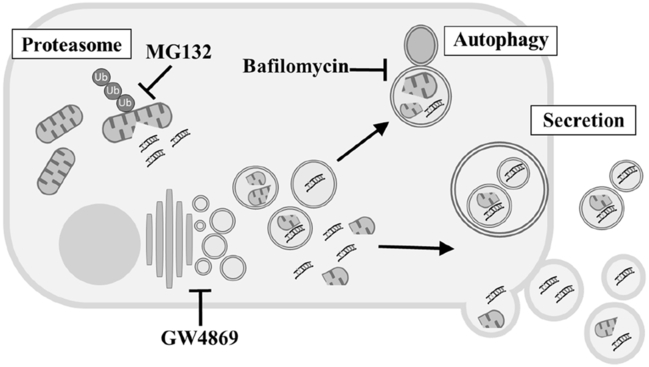
In conclusion, this study shows that the proteasome plays a role in the production of mt-dsDNA in the cytoplasm, and that these dsDNAs are encapsulated into vesicles and are likely to be processed through autophagy (Fig. 8).
Schematic representation of the factors involved in mitochondrial cell-free DNA regulation in the medium. Mitochondrial degeneration by the proteasome is the first step towards obtaining double-stranded DNA (dsDNA) in the cytoplasm. dsDNA is then encapsulated into lipid vesicles that are subjected to autophagic degeneration or secretion from cells. MG132 and GW4869 reduced the amount of mt-cfDNA, whereas bafilomycin increased mt-cfDNA in the medium.

Financial support
This study was supported by a Grant-in-Aid for Scientific Research C (KAKENHI, grant number: 16K07996) and a Grant-in-Aid for JSPS Fellows (KAKENHI, grant number: 18J12261) from the Japan Society for the Promotion of Science.
Conflict of interest
The authors declare that there is no conflict of interest
Ethical standards
Not applicable.