





Rationale
Numerous reviews have examined school-based food and nutrition education (SBFNE) across diverse educational contexts(Reference Jacobson, Boyd and Hill1–Reference Omidvar, Doustmohammadian and Shakibazadeh44). Collectively, this body of work reflects growing concern about poor diet quality among children and adolescents and its contribution to diet-related chronic diseases worldwide. As nutrition science and food environments have evolved, SBFNE has increasingly shifted from a sole emphasis on information dissemination towards approaches that prioritise dietary behaviour change, reflecting broader shifts in public health and education priorities(Reference Whitehead2,Reference Gussow and Contento45–Reference Juul, Parekh and Chang49) .
Poor dietary behaviours among children – characterized by low fruit and vegetable intake and high consumption of energy-dense, nutrient-poor and highly processed foods – contribute to rising rates of obesity and other chronic conditions later in life(Reference Baker, Machado and Santos47–Reference Juul, Parekh and Chang49). These dietary behaviours are shaped early in life and are further reinforced by food environments that disproportionately expose children, particularly those in underserved communities, to aggressive marketing of unhealthy food products(50,51) .Schools represent a critical setting for early intervention, given their reach, structure and potential to influence dietary behaviours across developmental stages.
SBFNE programs aim to equip children and adolescents with the knowledge, skills and decision-making capacities needed to develop healthier eating behaviours(Reference Hayes, Contento and Weekly52). However, despite a substantial body of review-level evidence, findings are dispersed across diverse intervention types, populations and study designs. As a result, the educational and programmatic components associated with effectiveness are often reported as part of bundled, multilevel interventions rather than examined individually, limiting cross-study comparison(Reference Contento, Manning and Shannon4,Reference Roseman, Riddell and McGee32) .
Given the increasing complexity of modern food environments and the growing interest in scaling effective school-based strategies, there is a pressing need to move beyond individual interventions and identify the cross-cutting components that underpin successful SBFNE programs. This umbrella review addresses this gap by synthesising evidence across existing literature reviews to identify educational and programmatic components associated with effective SBFNE. By consolidating findings across diverse intervention contexts, this study provides a component-level perspective on what contributes to successful SBFNE implementation.
Objectives
This umbrella review seeks to systematically identify and evaluate the educational and programmatic components that contribute to the effectiveness of SBFNE programs delivered to children and adolescents in primary and secondary education settings worldwide. By synthesising findings from existing literature reviews, this study aims to clarify which components are most consistently associated with positive dietary behaviour change and to inform future research, practice and policy.
Methods
Eligibility criteria
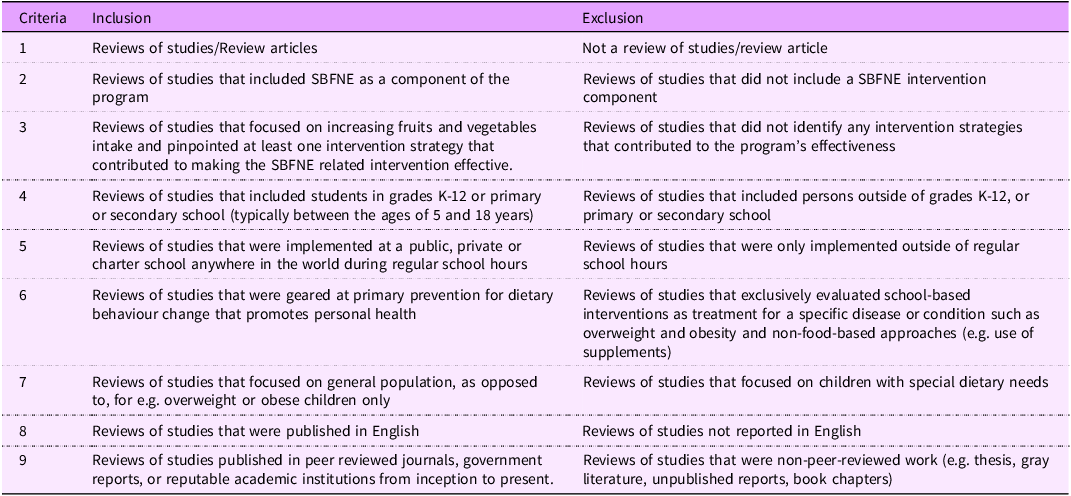
We included literature reviews and meta-analyses examining SBFNE programs delivered primarily during regular school hours to students enrolled in primary and secondary education (approximately ages 5–18 years) in public, private or charter schools worldwide. Eligible reviews examined programs integrated into the general school curriculum or school environment with the aim of promoting healthier dietary behaviours.
Included interventions encompassed classroom-based nutrition curricula; experiential learning approaches (e.g. school gardens, cooking or culinary education); food and nutrition literacy interventions; multicomponent programs combining education with environmental or policy strategies and programs incorporating family or community engagement. Reviews were eligible if interventions were delivered within the regular school day and evaluated students on at least one dietary or diet-related behavioural outcome, regardless of whether the intervention also targeted nutrition knowledge, food literacy skills or dietary decision-making.
Outcomes of interest included changes in fruit and vegetable intake and/or reductions in consumption of foods described across reviews using varied terminology, including ultra-processed foods, highly processed foods, foods high in fat, sugar and salt, snack foods, junk food, sugar-sweetened beverages, soda or vending machine offerings; terminology varied across reviews, reflecting shifts in nutrition science and measurement over time. Reviews were eligible regardless of whether reported effects were positive, null, negative or mixed and were not excluded based on statistical significance. Instead, outcomes were extracted and categorised to characterise the direction and consistency of reported effects across reviews.
We defined a component as a distinct educational or programmatic feature considered essential to the design, implementation, sustainability or evaluation of a primary or secondary (K-12) SBFNE program. Educational components refer to instructional content and pedagogical strategies intended to influence student knowledge, skills, attitudes or dietary behaviours. Programmatic components refer to structural, organisational, environmental or implementation-related features that support, enable or sustain the delivery of food and nutrition education within school settings. Only English-language reviews published in peer-reviewed journals, government reports or accredited academic institutions were included.
We excluded reviews that focused exclusively on specialised populations (e.g. children with clinical conditions or specific dietary needs), evaluated non-food-based interventions, targeted activities conducted primarily outside regular school hours, were unpublished, or non-peer-reviewed or reported in languages other than English. Full inclusion and exclusion criteria are provided in Table 1.
Umbrella review inclusion/exclusion criteria

Table 1. Long description
A table with nine rows and three columns detailing the criteria for including and excluding studies in an umbrella review. The columns are labeled Inclusion, Criteria, and Exclusion. Row 1: Reviews of studies or review articles are included, while not a review of studies or review article is excluded. Row 2: Reviews of studies that included SBFNE as a component of the program are included, while reviews of studies that did not include a SBFNE intervention component are excluded. Row 3: Reviews of studies that focused on increasing fruits and vegetables intake and pinpointed at least one intervention strategy that contributed to the SBFNE related intervention effectiveness are included, while reviews of studies that did not identify any intervention strategies that contributed to the program’s effectiveness are excluded. Row 4: Reviews of studies that included students in grades K-12 or primary or secondary school are included, while reviews of studies that included persons outside of grades K-12, or primary or secondary school are excluded. Row 5: Reviews of studies that were implemented at a public, private or charter school anywhere in the world during regular school hours are included, while reviews of studies that were only implemented outside of regular school hours are excluded. Row 6: Reviews of studies that were geared at primary prevention for dietary behavior change that promotes personal health are included, while reviews of studies that exclusively evaluated school-based interventions as treatment for a specific disease or condition such as overweight and obesity and non-food-based approaches are excluded. Row 7: Reviews of studies that focused on general population, as opposed to, for example, overweight or obese children only are included, while reviews of studies that focused on children with special dietary needs are excluded. Row 8: Reviews of studies that were published in English are included, while reviews of studies not reported in English are excluded. Row 9: Reviews of studies published in peer reviewed journals, government reports, or reputable academic institutions from inception to present are included, while reviews of studies that were non-peer-reviewed work are excluded.
Information sources
To identify relevant literature, we searched CLEO, EDUCAT+, PubMed and Google Scholar to capture educational, health and nutrition-related research relevant to school-based interventions across diverse contexts. The final database search was on 31 December 2022. We also screened the reference lists of included reviews to identify additional eligible records. The Cochrane Database of Systematic Reviews was searched as part of the screening process; however, no Cochrane reviews met the predefined eligibility criteria.
Search strategy
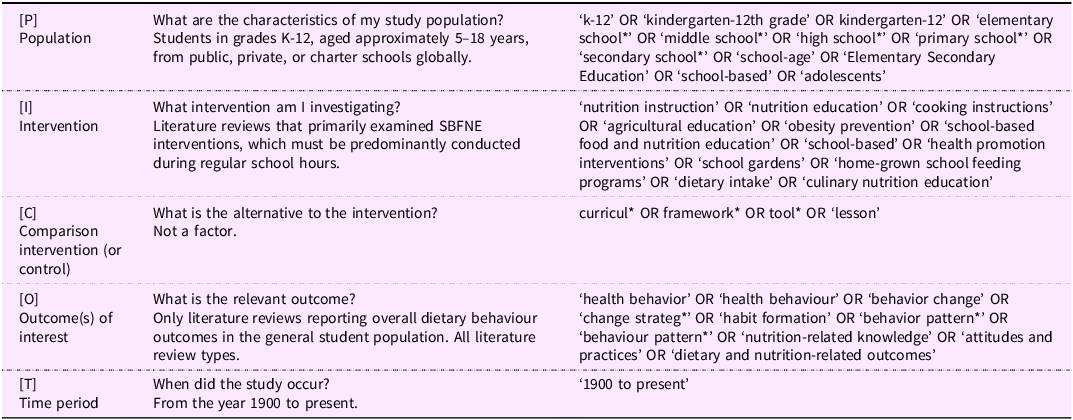
We developed the search strategy using the Population, Intervention, Comparison, Outcomes and Time (PICO[T]) framework in collaboration with a research librarian(53). Search terms were designed to identify literature reviews and meta-analyses on SBFNE programs; the full strategy (including keywords and Boolean operators) is provided in Table 2. Where available, database filters were used to limit results to English-language reviews published between 1900 and 2022 and to restrict publication type to literature reviews and meta-analyses. Search terms and screening procedures were pilot-tested on a small set of records prior to full screening.
PICO(T) search strategy

Table 2. Long description
A table with six rows and six columns detailing the PICO(T) search strategy framework. The columns are labeled P, I, C, O, T, and empty. The rows are labeled Population, Intervention, Comparison intervention, Outcomes of interest, and Time period. Each row contains specific search terms and descriptions related to the study population, intervention, comparison, outcomes, and time period. The table provides detailed search terms and conditions for identifying literature reviews and meta-analyses on school-based food and nutrition education programs.
Screening and selection process
We used a two-step screening approach. The primary reviewer (NGP) screened titles and abstracts for relevance and retrieved full-text for records deemed relevant or unclear. A second reviewer (PAK) independently verified the inclusion and exclusion decisions at the full-text stage. Disagreements were resolved through discussion to reach a consensus. No automation tools were used. Screening decisions and reasons for exclusion were documented using a standardised screening template.
Data collection process
Data were extracted using a standardised template based on the PICO(T) framework. The template was pilot-tested on three reviews and refined prior to full extraction. Extracted data were used to support component-level quantitative and qualitative synthesis, as well as descriptive assessment of review-level characteristics. The final data extraction template is provided in the online Supplementary Material.
To support reliability, both reviewers independently extracted data for the first ten reviews. For the remaining reviews, NGP conducted extraction and PAK verified accuracy and consistency. Ambiguities or discrepancies (e.g. differences in how reviews operationalised Family Engagement v. Multicomponent Approach, evolving terminology such as ‘experiential learning’ or limited outcome reporting in lower-quality reviews) were resolved through discussion to ensure consistent coding and interpretation.
Data items
Data items extracted from each included review included population characteristics, intervention type and setting, dietary and diet-related behavioural outcomes (as defined in the eligibility criteria) and the educational or programmatic components explicitly linked to those outcomes. We also extracted review-level methodological characteristics (e.g. design, conduct and quality appraisal methods) and reported funding sources to assess potential conflicts of interest.
To identify programme components, we examined all included reviews and generated an initial components set based on recurring themes, which was iteratively refined through comparison across the full review sample. Component definitions were standardised to improve coherence and reduce redundancy while preserving meaning as reported in the source reviews. As part of this process, an AI-assisted language tool (ChatGPT) was used to flag unclear phrasing and redundancies in draft component definitions; all suggested edits were reviewed by the research team and incorporated only when consistent with the original literature(54). Final component definitions were confirmed through reviewer consensus.
Study risk of bias assessment
We assessed the methodological quality of included reviews using a structured quality appraisal framework that combined Snyder’s guidelines with additional SBFNE-specific criteria. Snyder’s framework contributed twenty-one core criteria across four phases: Design (Criteria 1–6), Conduct (8–12), Data Abstraction and Analysis (15–19) and Structuring and Writing (20–24)(Reference Snyder55). To ensure relevance to SBFNE, we supplemented these with additional criteria assessing the use of psychosocial theory and evidence-based educational strategies. In total, twenty-four criteria were applied. The quality assessment template is provided in the online Supplementary Material.
Reporting bias assessment
We assessed potential reporting bias by examining whether the included reviews transparently reported intended outcomes or selectively emphasized favourable findings(Reference Snyder55,Reference Boutron, Page and Higgins56) . We also considered publication bias, recognising that reliance on published studies may overrepresent positive findings and examined discrepancies between the stated objectives and reported outcomes(Reference Snyder55,Reference Boutron, Page and Higgins56) . As this was a qualitative synthesis, we did not apply formal statistical tests for reporting bias; instead, we conducted a narrative assessment of how missing or selectively reported results might influence interpretation(Reference Snyder55,Reference McKenzie and Brennan57) .
Effect measures
Given that most included reviews did not report pooled effect estimates, we conducted a qualitative synthesis based on review authors’ reported associations between components and dietary behaviour outcomes. Reported effects were categorised as positive, negative, no effect or mixed based on the direction and consistency of outcomes described within each review:
-
• Positive effect: improved dietary behaviour (e.g. increased fruit and vegetable intake and/or reduced consumption of foods described as highly processed/unhealthy).
-
• Negative effect: adverse dietary changes or unintended consequences counteracting intended behaviour change goals.
-
• No effect: no measurable changes in dietary behaviours.
-
• Mixed effect: inconsistent findings across included primary studies (e.g. a combination of positive, null or negative results).
These classifications were applied consistently across reviews during synthesis to characterise patterns of effects rather than to determine study eligibility.
Synthesis methods
We synthesised findings by identifying and standardising educational and programmatic components and summarising their prevalence and reported direction of effect across included reviews. Using thematic analysis, we compared component descriptions and reported outcomes across reviews and tabulated results to summarise prevalence and effectiveness(Reference McKenzie and Brennan57). Visual diagrams were developed to illustrate component frequency and trends.
To explore heterogeneity, we examined whether reported effectiveness varied across program characteristics (e.g. setting, target population and programme duration) and whether patterns differed by review quality or reporting standards. A sensitivity analysis restricted the synthesis to high-quality reviews to assess robustness of the findings(Reference Snyder55,Reference McKenzie and Brennan57) .
Certainty assessment
Following the Preferred Reporting Items for Systematic Reviews and Meta-Analyses (PRISMA) 2020 guidelines, we assessed certainty of evidence by considering the consistency with which components were reported across the included reviews and alignment in reported direction of effects(Reference Schünemann, Higgins and Vist58,Reference Moher, Liberati and Tetzlaff59) . Components frequently reported across multiple reviews with consistent findings were interpreted as having stronger supporting evidence, whereas components with limited representation or inconsistent findings were interpreted with greater caution.
As detailed above, we also conducted a structured quality evaluation of the included reviews. Reviews meeting at least ≥ 21 of the twenty-four criteria were classified as high quality, those meeting 18–20 as medium quality and those meeting < 18 as low quality. These thresholds align with established practices in systematic reviews, where predefined cut-offs enhance reproducibility and comparability(Reference Hoffmann-Eßer, Siering and Neugebauer60). Consistent with the GRADE framework, we interpreted certainty along a spectrum; to align with our predefined quality thresholds, we consolidated ‘low’ and ‘very low’ into a single ‘low’ category to maintain consistency with our predetermined quality assessment criteria(Reference Schünemann, Higgins and Vist58,Reference Hoffmann-Eßer, Siering and Neugebauer60) .The primary reviewer (NGP) conducted quality assessment and the second reviewer (PAK) independently verified them; discrepancies were resolved through discussion.
Results
Study selection
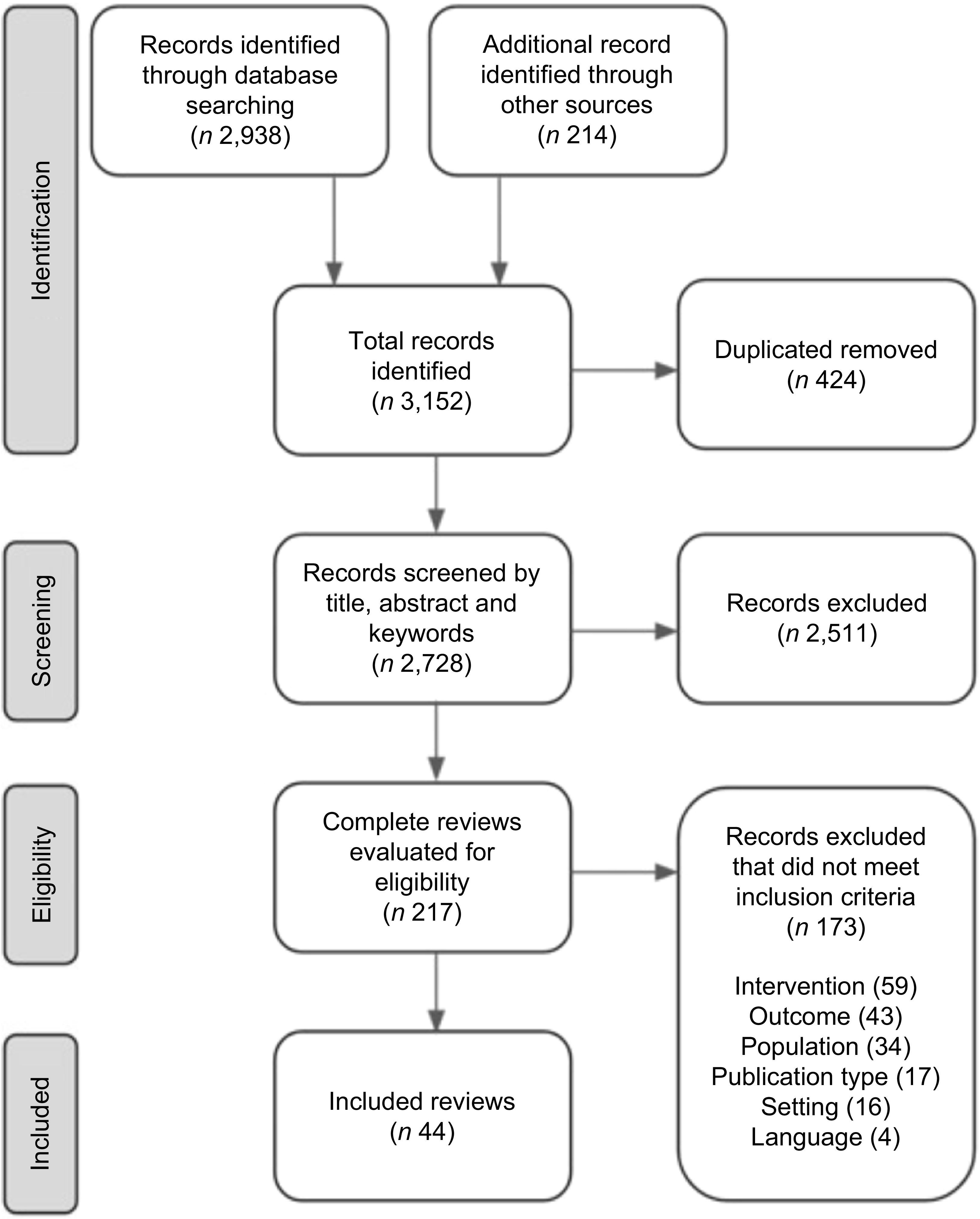
The study selection process is summarised in the PRISMA flow diagram (Figure 1)(Reference Moher, Liberati and Tetzlaff59). An initial search across selected databases yielded 2938 records, with an additional 214 records identified through reference list screening and other sources, resulting in 3152 total records. After removing 424 duplicates, 2728 records were screened by titles, abstracts and keywords. Of these, 2511 records were excluded for not meeting eligibility criteria. A total of 217 records underwent full-text review. Following this stage, 173 records were excluded for reasons including inappropriate intervention type (n 59), outcomes not aligned with the study objectives (43), unsuitable population (34), incorrect publication type (17), setting mismatch (16) and language barriers (4). Ultimately, forty-four literature reviews were included in this umbrella review(Reference Jacobson, Boyd and Hill1–Reference Omidvar, Doustmohammadian and Shakibazadeh44).
PRISMA flow diagram.

Figure 1. Long description
The flowchart illustrates the process of identifying, screening, and including reviews in a study on school-based food and nutrition education. The process begins with the identification phase, where records are identified through database searching (2,938) and additional sources (214), totaling 3,152 records. Duplicated records (424) are removed, leaving 2,728 records. These records are then screened by title, abstract, and keywords, resulting in the exclusion of 2,511 records. The remaining 217 records undergo a complete review for eligibility. Of these, 173 records are excluded for not meeting inclusion criteria, categorized by intervention (59), outcome (43), population (34), publication type (17), setting (16), and language (4). Finally, 44 reviews are included in the study.
Study characteristics
The forty-four included literature reviews, published between 1959 and 2022, are summarised chronologically in Table 3. Although the search window extended from 1900 to 2022, no eligible reviews were published prior to 1959. Together, these reviews synthesise evidence from forty-six countries across six continents, reflecting a broad geographic scope and increasing international representation over time(Reference Jacobson, Boyd and Hill1–Reference Omidvar, Doustmohammadian and Shakibazadeh44). Across reviews, SBFNE programs most commonly incorporated curriculum-based instruction, experiential learning approaches (e.g. gardening or cooking) and multicomponent strategies integrating educational, environmental and family-engagement elements.
Characteristics of the 44 included literature reviews

Table 3. Long description
A table summarizing characteristics of literature reviews published between 1959 and 2022. The table has 44 rows and 10 columns. Column headers are: Author, Year, Country, Continent, Program Type, Instruction Type, Learning Approach, Components, Outcomes, and Notes. Row 1: Author, Smith; Year, 1959; Country, United States; Continent, North America; Program Type, School-based; Instruction Type, Curriculum-based; Learning Approach, Experiential; Components, Educational, Environmental; Outcomes, Improved knowledge; Notes, N/A. Row 2: Author, Johnson; Year, 1965; Country, United Kingdom; Continent, Europe; Program Type, Community-based; Instruction Type, Curriculum-based; Learning Approach, Experiential; Components, Educational, Family-engagement; Outcomes, Improved behavior; Notes, N/A. Row 3: Author, Williams; Year, 1972; Country, Canada; Continent, North America; Program Type, School-based; Instruction Type, Curriculum-based; Learning Approach, Experiential; Components, Educational, Environmental; Outcomes, Improved knowledge; Notes, N/A. Row 4: Author, Brown; Year, 1978; Country, Australia; Continent, Oceania; Program Type, Community-based; Instruction Type, Curriculum-based; Learning Approach, Experiential; Components, Educational, Family-engagement; Outcomes, Improved behavior; Notes, N/A. Row 5: Author, Davis; Year, 1984; Country, Germany; Continent, Europe; Program Type, School-based; Instruction Type, Curriculum-based; Learning Approach, Experiential; Components, Educational, Environmental; Outcomes, Improved knowledge; Notes, N/A. Row 6: Author, Miller; Year, 1990; Country, Japan; Continent, Asia; Program Type, Community-based; Instruction Type, Curriculum-based; Learning Approach, Experiential; Components, Educational, Family-engagement; Outcomes, Improved behavior; Notes, N/A. Row 7: Author, Wilson; Year, 1996; Country, Brazil; Continent, South America; Program Type, School-based; Instruction Type, Curriculum-based; Learning Approach, Experiential; Components, Educational, Environmental; Outcomes, Improved knowledge; Notes, N/A. Row 8: Author, Moore; Year, 2002; Country, South Africa; Continent, Africa; Program Type, Community-based; Instruction Type, Curriculum-based; Learning Approach, Experiential; Components, Educational, Family-engagement; Outcomes, Improved behavior; Notes, N/A. Row 9: Author, Taylor; Year, 2008; Country, China; Continent, Asia; Program Type, School-based; Instruction Type, Curriculum-based; Learning Approach, Experiential; Components, Educational, Environmental; Outcomes, Improved knowledge; Notes, N/A. Row 10: Author, Anderson; Year, 2014; Country, India; Continent, Asia; Program Type, Community-based; Instruction Type, Curriculum-based; Learning Approach, Experiential; Components, Educational, Family-engagement; Outcomes, Improved behavior; Notes, N/A.
* Number of primary studies.
To contextualise findings, study characteristics are described below in terms of study design populations and settings and methodological trends.
Range of study designs used
The included reviews employed diverse study designs (Table 3). Several reviews synthesised randomised controlled trials (RCT) and quasi-experimental studies to assess intervention effectiveness(Reference AlMarzooqi and Nagy14,Reference Verstraeten, Roberfroid and Lachat18,Reference Dudley, Cotton and Peralta21) . Others incorporated non-randomised pre-post designs, observational studies, qualitative evaluations or mixed-methods evidence(Reference Contento12,Reference Gonzalez-Jaramillo, Greca and González31,Reference Tallon, Saavedra Dias and Costa41) . Early reviews were predominantly narrative in nature, summarising programmatic trends without systematic selection or appraisal criteria(Reference Jacobson, Boyd and Hill1–Reference White-Stevens3). Over time, systematic review methodologies became common, with meta-analyses emerging in later decades to provide pooled estimates of intervention effects(Reference Evans, Christian and Cleghorn17,Reference Dudley, Cotton and Peralta21,Reference Cotton, Dudley and Peralta29,Reference Dabravolskaj, Montemurro and Ekwaru30,Reference Ismail, Seabrook and Gilliland37,Reference Singhal, Herd and Adab40,Reference Medeiros, Azevedo and Garcia43) .
More recent reviews expanded beyond traditional synthesis approaches, incorporating realist reviews to examine intervention mechanisms of action across contexts and scoping reviews to map emerging domains such as food literacy and digital learning approaches(Reference Ijaz, Nobles and Johnson36,Reference Kelly and Nash38) . This diversity of methodological approaches reflects both the complexity of SBFNE programs and differences in review objectives and outcome measurement strategies.
Populations and settings covered
The populations examined across reviews varied in age groups, geographic focus and educational settings (Table 3). Some reviews focused primarily on primary school children(Reference Jacobson, Boyd and Hill1,Reference Dudley, Cotton and Peralta21,Reference Charlton, Comerford and Deavin35,Reference Omidvar, Doustmohammadian and Shakibazadeh44) , others examined adolescents(Reference Hoelscher, Evans and Parcel6,Reference Meiklejohn, Ryan and Palermo24,Reference Rose, O’Malley and Eskandari39,Reference Medeiros, Azevedo and Garcia43) and several synthesised evidence across both primary and secondary school populations(Reference Lytle5,Reference Yip, Gates and Gates23,Reference Dabravolskaj, Montemurro and Ekwaru30,Reference Aceves-Martins, López-Cruz and García-Botello42) . Most reviews emphasised universal, prevention-oriented SBFNE programs delivered to general student populations and explicitly excluded studies targeting clinical or high-risk subgroups(Reference Knai, Pomerleau and Lock9,Reference Sharma10,Reference Contento12,Reference Shirley, Rutfield and Hall22) .
Geographically, early reviews were concentrated in high-income countries, particularly the United States and Europe(Reference Jacobson, Boyd and Hill1,Reference White-Stevens3–Reference Lytle5) . Over time, the scope broadened to include research from low- and middle-income countries and region-specific synthesis, including reviews focused on Latin American(Reference Verstraeten, Roberfroid and Lachat18,Reference Chaudhary, Sudzina and Mikkelsen27,Reference Chavez and Nam28,Reference Aceves-Martins, López-Cruz and García-Botello42) . While all reviews centred on school-based interventions, several also examined programs that incorporated home(Reference AlMarzooqi and Nagy14,Reference Hackman and Knowlden19,Reference Ijaz, Nobles and Johnson36,Reference Aceves-Martins, López-Cruz and García-Botello42) , community(Reference Hackman and Knowlden19,Reference Rush and Knowlden20,Reference Shirley, Rutfield and Hall22,Reference Shapu, Ismail and Ahmad33) or digital(Reference Tallon, Saavedra Dias and Costa41,Reference Aceves-Martins, López-Cruz and García-Botello42) components alongside school-based delivery.
Variation in evidence synthesis approaches across reviews
Across the included reviews, evidence synthesis approaches varied substantially, contributing to heterogeneity in how intervention effectiveness was assessed and reported (Table 3)(Reference Langford, Bonell and Jones61,Reference Guerra, da Silveira and Salvador62) . Reviews synthesised a range of primary study designs, including randomised trials, quasi-experimental studies, pre–post evaluations and qualitative investigations. Some reviews emphasised outcome effectiveness, while others focused on implementation processes, contextual factors or theoretical underpinnings.
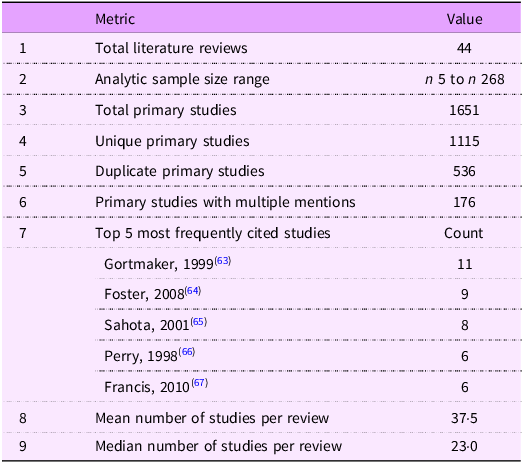
This methodological diversity underscores the importance of interpreting reported effects in relation to study design, implementation context and review quality. To support this, Table 4 provides a high-level overview of the 1651 primary studies synthesised across reviews, of which 1115 were identified as unique. Several primary studies – such as those by Gortmaker(Reference Gortmaker, Peterson and Wiecha63), Foster(Reference Foster, Sherman and Borradaile64), Sahota(Reference Sahota, Rudolf and Dixey65), Perry(Reference Perry, Bishop and Taylor66) and Francis(Reference Francis, Nichols and Dalrymple67) – were repeatedly cited across reviews, reflecting their foundational influence within the SBFNE literature.
Quantitative summary of primary studies included in the forty-four literature reviews

Table 4. Long description
A table summarizing primary studies included in literature reviews, detailing metrics and values. The table has 9 rows and 2 columns. The columns are labeled Metric and Value. Row 1: Total literature reviews, 44. Row 2: Analytic sample size range, n 5 to n 268. Row 3: Total primary studies, 1651. Row 4: Unique primary studies, 1115. Row 5: Duplicate primary studies, 536. Row 6: Primary studies with multiple mentions, 176. Row 7: Top 5 most frequently cited studies, Count. Gortmaker, 1999, 11. Foster, 2008, 9. Sahota, 2001, 8. Perry, 1998, 6. Francis, 2010, 6. Row 8: Mean number of studies per review, 37.5. Row 9: Median number of studies per review, 23.0.
Risk of bias across included reviews
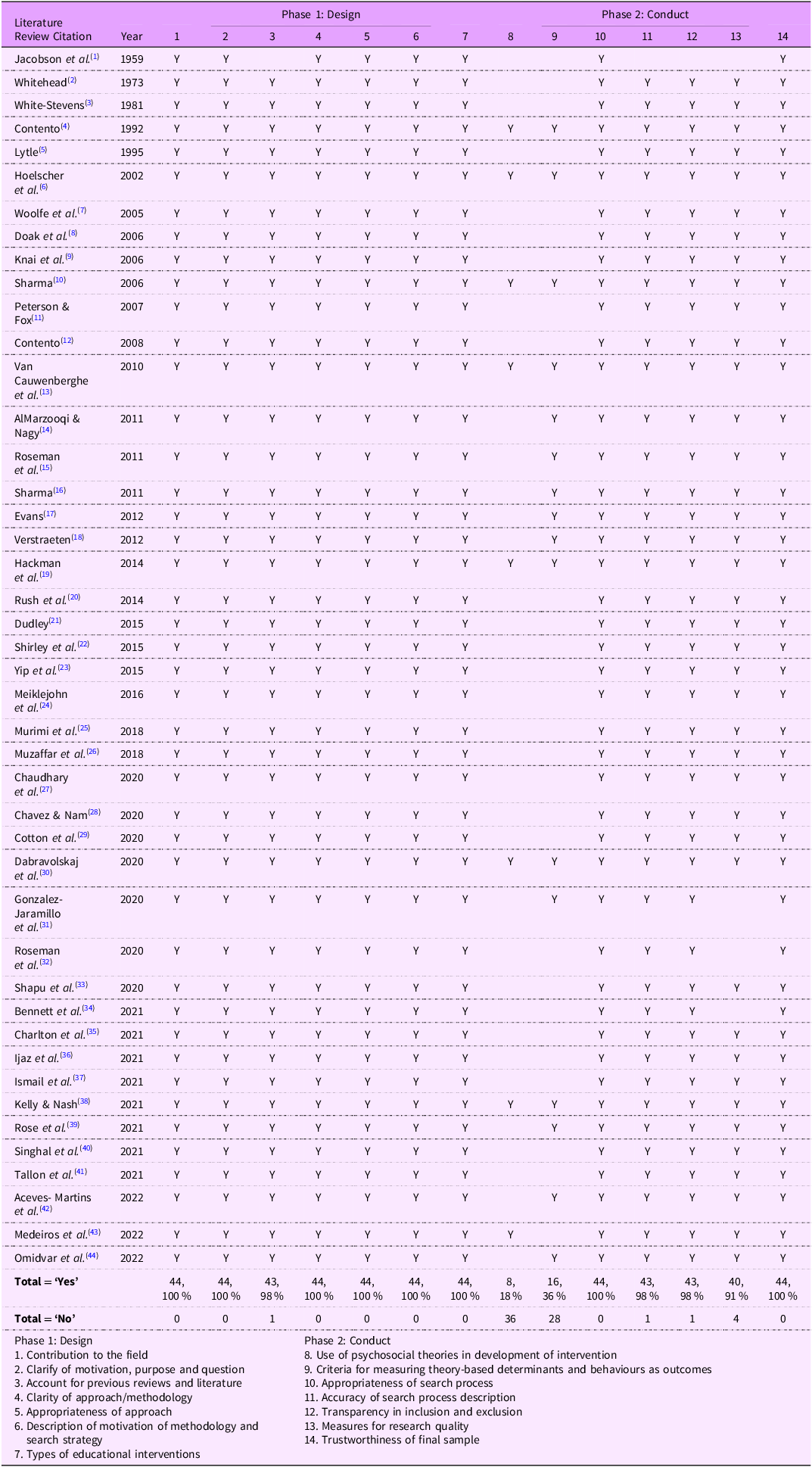
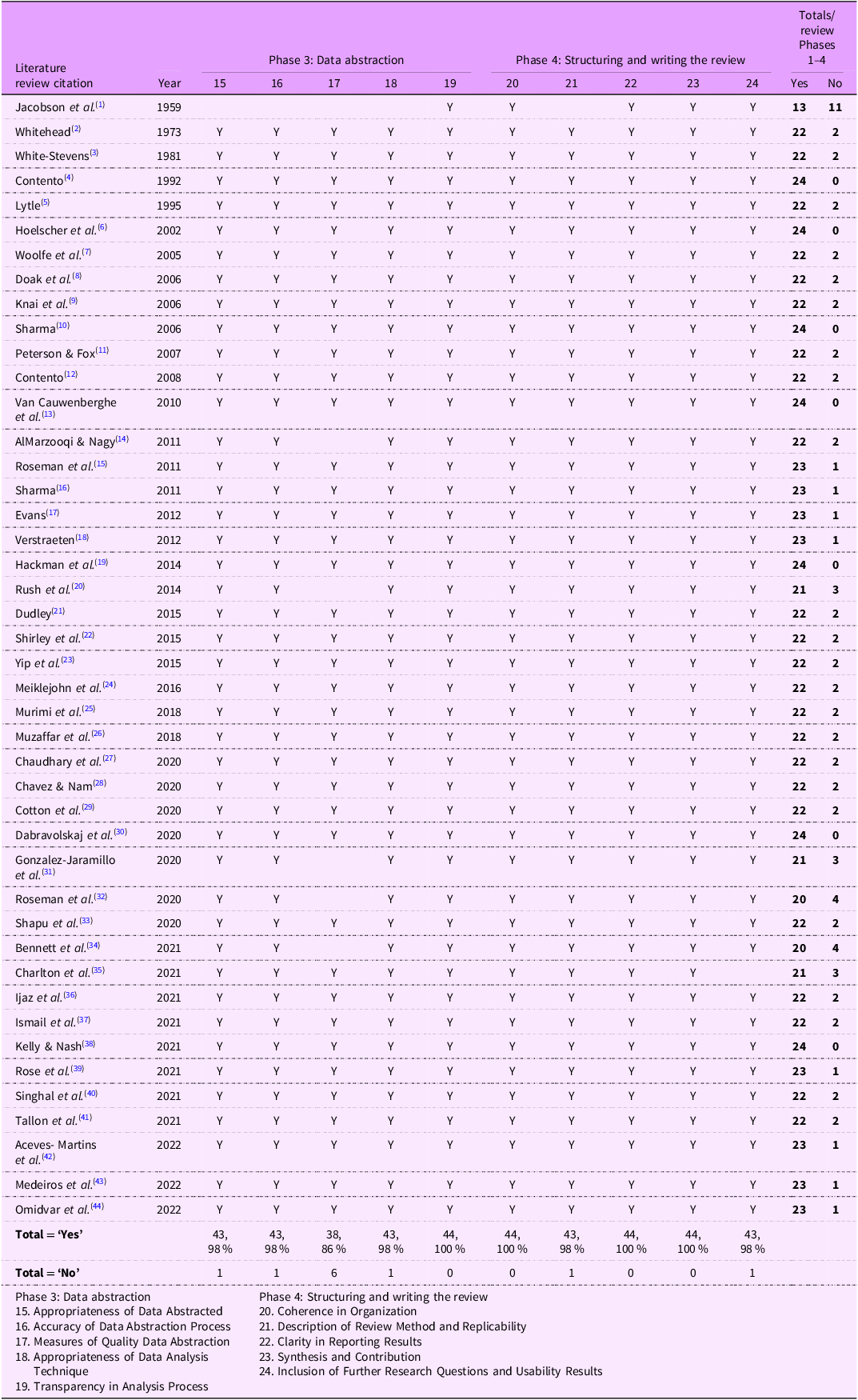
Overall, forty-one reviews (93 %) were classified as high quality(Reference Whitehead2–Reference Gonzalez-Jaramillo, Greca and González31,Reference Shapu, Ismail and Ahmad33,Reference Charlton, Comerford and Deavin35–Reference Omidvar, Doustmohammadian and Shakibazadeh44) , two (5 %) as medium quality(Reference Roseman, Riddell and McGee32,Reference Bennett, Mockler and Cunningham34) and one (2 %) as low quality(Reference Jacobson, Boyd and Hill1). Across the Snyder quality appraisal phases, reviews demonstrated particularly strong performance in Design and Structuring and Writing with 99·7 % and 99·1 % of applicable criteria, respectively, scoring as ‘Yes,’ i.e. criterion met. This indicates that most reviews clearly articulated their purpose, methods and reporting structure. In contrast, greater variability was observed in the Conduct phase (67 % of criteria scored ‘Yes’), with lower compliance for criteria related to the use of psychosocial theories (18 % ‘Yes’) and theory-based outcomes (36 % ‘Yes’).
Detailed results of the risk of bias assessment are presented in Tables 5 and 6. These assessments informed subsequent synthesis by emphasising findings from higher-quality reviews and supporting sensitivity analyses to assess robustness.
Quality assessment of included literature reviews (phases 1 and 2)

Table 5. Long description
The table assesses the quality of included literature reviews across two phases, Design and Conduct, with rows representing different studies and columns representing various criteria. The table has 41 rows and 14 columns. The columns are labeled as Phase 1: Design and Phase 2: Conduct, with specific criteria under each phase. The rows are labeled with the literature references. Each cell in the table contains a Y or N indicating the presence or absence of the criterion. The table includes a total count of Yes and No responses at the bottom for each criterion. The criteria assessed include contribution to the field, clarity of motivation, use of psychologically based theories, criteria for measuring theory-based determinants, clarity of approach, appropriateness of approach, transparency in inclusion and exclusion, accuracy of search process description, use of psychologically based theories in development of intervention, criteria for measuring theory-based determinants and behaviors as outcomes, transparency of methodological and search strategies, types of educational interventions, and trustworthiness of final sample.
Quality assessment of included literature reviews (phases 3 & 4)

Table 6. Long description
The table presents a quality assessment of literature reviews across phases 3 and 4. It includes columns for literature review citation, year, and phases 14, 3, and 4, with each phase containing multiple criteria. The rows list various literature reviews with their respective years and a series of ‘Y’ or ‘N’ indicating the presence or absence of specific criteria. The table also includes totals for ‘Yes’ and ‘No’ responses for each phase, summarizing the overall quality assessment. Notable trends include a high percentage of ‘Yes’ responses in phase 3 and varying percentages in phase 4.
Identification and definition of key educational and programmatic components
Across the included literature reviews, synthesis of reported intervention characteristics enabled the identification and consolidation of twenty distinct educational and programmatic components associated with SBFNE effectiveness. Components were defined as core educational or programmatic features considered essential to program design, implementation, sustainability or evaluation and were identified based on repeated inclusion across reviews and explicit linkage to dietary behaviour outcomes.
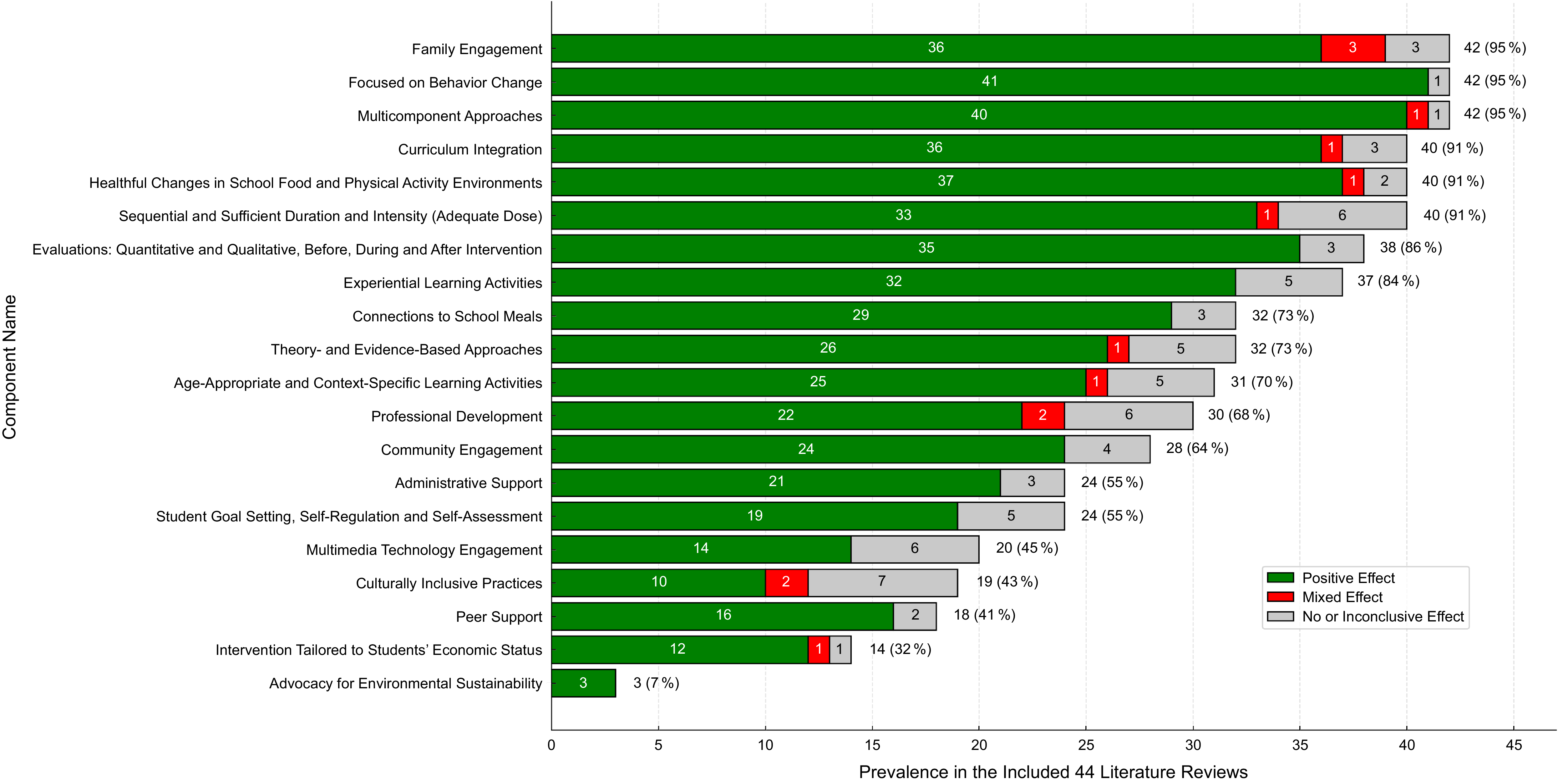
The twenty identified components are: Family Engagement (identified in forty-two of forty-four reviews); Focused on Behaviour Change (identified in forty-two reviews); Multicomponent Approaches (identified in forty-two reviews); Curriculum Integration (identified in forty reviews); Healthful Changes in School Food & Physical Activity Environments (identified in forty reviews); Sequential and Sufficient Duration and Intensity [Adequate Dose] (identified in forty reviews); Evaluations: Quantitative and Qualitative, Before, During and After Intervention (identified in thirty-eight reviews); Experiential Learning Activities (identified in thirty-seven reviews); Connections to School Meals (identified in thirty-two reviews); Theory- and Evidenced Based (identified in thirty-two reviews); Age-Appropriate & Context-Specific Learning Activities (identified in thirty-one reviews); Professional Development (identified in thirty reviews); Community Engagement (identified in twenty-eight reviews); Administrative Support (identified in twenty-four reviews); Student Goal setting, Self-Regulation & Self-Assessment (identified in twenty-four reviews); Multimedia Technology Engagement (identified in twenty reviews); Culturally Inclusive Practices (identified in nineteen reviews); Peer Support (identified in eighteen reviews); Intervention Tailored to Students’ Economic Status (identified in fourteen reviews); and Advocates for Environmental Sustainability (identified in three reviews).
The full set of identified components and their standardised operational definitions are presented in Table 7. Definitions were refined to ensure consistency across reviews that varied widely in terminology, scope and methodological approach, allowing components to be systematically compared and synthesised across diverse intervention contexts.
Names and definitions of the twenty key educational and programmatic components that make SBFNE effective

Table 7. Long description
Panel A: Table with 20 rows and 3 columns. The columns are labeled Component name, Definition, and EDH. Each row lists a component name, its definition, and whether it is evidence-driven and highly recommended. Panel B: Detailed descriptions of each component, including culturally inclusive practices, intention tailored to students’ economic status, advocates for environmental sustainability, focused on behavior change, and more.
Note: Components are listed in the order in which they were identified during synthesis and are numbered for reference only; numbering does not indicate relative importance, prevalence or strength of evidence.
Quantitative synthesis of component prevalence and reported effects
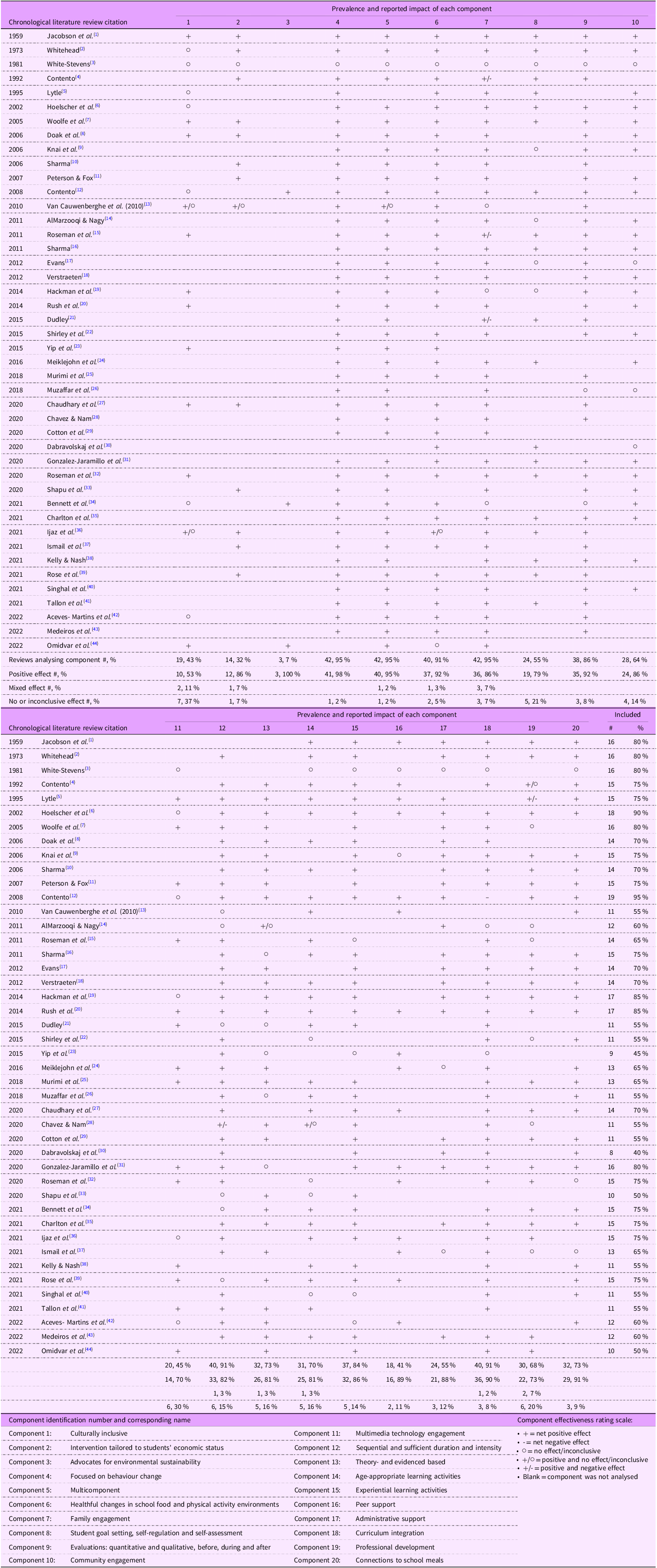
A quantitative synthesis was conducted to examine the prevalence of each component across the included reviews and the reported direction of associated dietary outcomes. Table 8 presents a matrix indicating whether each component was addressed within a given review and the direction of its reported effect on dietary behaviour. Symbols denote effect classification, where ‘+’ indicates a net positive effect, ‘O’ indicates no effect or an inconclusive effect, ‘−’ indicates a net negative effect and a blank cell indicates that the component was not analysed within that review.
Quantitative synthesis of component prevalence and reported effects

Table 8. Long description
The table presents a matrix indicating whether each component was addressed within a given review and the direction of its reported effect on dietary behavior. The table has 48 rows and 21 columns. Column headers include years ranging from 1984 to 2021. Row labels include various studies or reviews. Symbols denote effect classification, where a plus sign indicates a net positive effect, a circle indicates no effect or an inconclusive effect, and a minus sign indicates a net negative effect. A blank cell indicates that the component was not analyzed within that review. Each row lists the study or review, followed by symbols indicating the effect of each component on dietary behavior. The table provides a detailed overview of the prevalence and reported effects of different components across various studies.
Components such as Focused on Behaviour Change, Multicomponent Approaches, Family Engagement and Integration into the School Curriculum were among the most frequently identified across reviews and were consistently associated with positive dietary behaviour change. In contrast, components including Advocates for Environmental Sustainability and Interventions Tailored to Students’ Economic Status appeared less frequently, although they demonstrated positive effects in the reviews in which they were examined. Several components, including Culturally Inclusive Practices and Professional Development, showed mixed or inconclusive findings, often reflecting variability in implementation fidelity, programme duration or outcome measurement across studies. Figure 2 illustrates the distribution of the twenty identified SBFNE components across included reviews, highlighting differences in the extent to which components were addressed.
Frequency of components discussed in literature reviews.

Among the components most frequently identified across reviews, Multicomponent Approaches and Family Engagement are expanded on here because reviews consistently described substantial variability in how these components were operationalised, warranting brief narrative clarification beyond tabular definitions.
Multicomponent approaches
Across included reviews, ‘multicomponent’ referred to programs that combined SBFNE with at least one additional component – most commonly Experiential Learning Activity (e.g., cooking or gardening), Healthful Changes in School Food & Physical Activity Environments and/or Family Engagement. Across the evidence, such combinations were more consistently associated with improvements in dietary behaviours than education delivered in isolation, likely because skills and messages introduced in lessons were reinforced through opportunities to practice, observe and access healthier options within the school context. Where reviews commented on variation, Multicomponent Approaches appeared most effective when components were intentionally aligned rather than simply co-occurring, such that educational content, environmental supports and reinforcement activities targeted the same behavioural goals.
Family engagement
Family Engagement was described across reviews as a spectrum, ranging from low-intensity strategies (e.g. newsletters or take-home materials) to more active approaches (e.g. interactive home activities, caregiver participation in school-based events or structured parent sessions). Reviews generally indicated that more participatory forms of family engagement were more consistently associated with dietary behaviour change than passive information-sharing alone, while also acknowledging challenges related to feasibility and reach. Several reviews further noted that the influence of Family Engagement varied by student age, with stronger and more consistent effects reported in interventions targeting younger children compared with adolescents, underscoring the importance of aligning family strategies with developmental stage and implementation constraints.
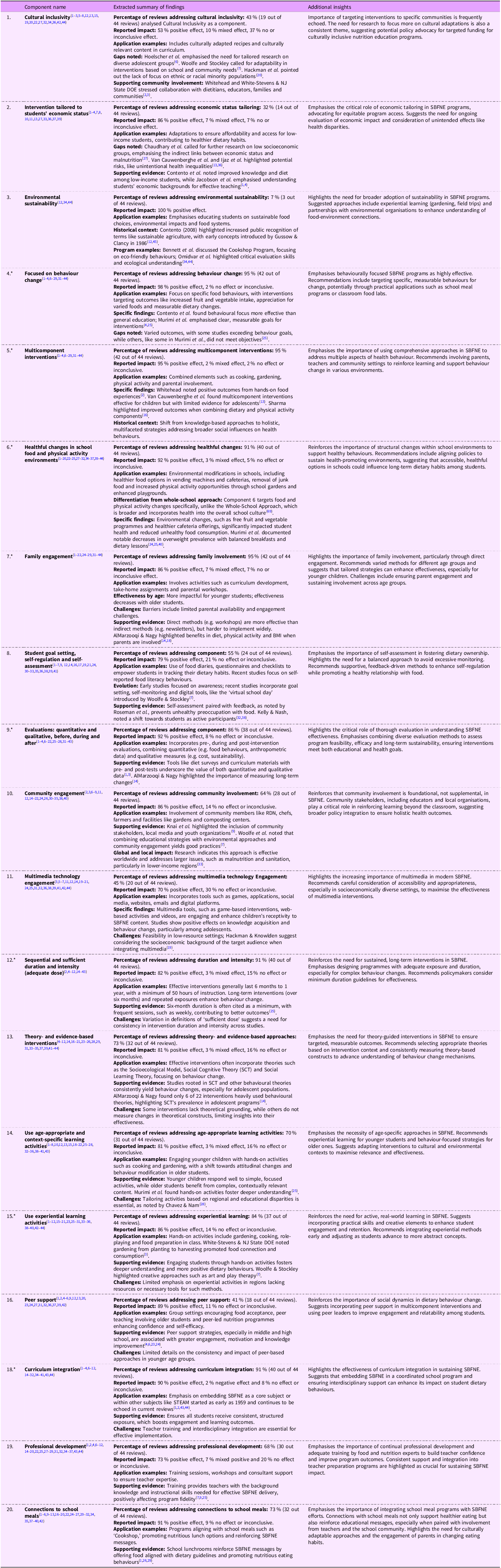
Other highly prevalent components – such as Focused on Behaviour Change, Curriculum Integration, Healthful Changes in School Food and Physical Activity Environments and Adequate Program Dose – were more consistently defined across reviews and are therefore fully detailed in Tables 7, 8 and 9.
Discussion
Interpretation of findings
This umbrella review identified twenty key educational and programmatic components that contribute to effective school-based food and nutrition education (SBFNE) programs(Reference Jacobson, Boyd and Hill1–Reference Omidvar, Doustmohammadian and Shakibazadeh44). Components most consistently linked to positive dietary behaviour change – such as Family Engagement, Focused on Behaviour Change, Multicomponent Approaches and Curriculum Integration – were highly prevalent across reviews and align with prior evidence emphasising comprehensive, behaviour-focused strategies in health education(Reference Dudley, Cotton and Peralta21,Reference Singhal, Herd and Adab40,Reference Medeiros, Azevedo and Garcia43) .
Other components, including Environmental Sustainability and Cultural Inclusivity, were examined less frequently across reviews, but were consistently associated with positive dietary outcomes in the studies that assessed them(Reference Contento12,Reference Bennett, Mockler and Cunningham34,Reference Omidvar, Doustmohammadian and Shakibazadeh44) . These components have been more explicitly examined in more recent SBFNE literature, which may partially explain their lower representation across the full review sample. Although the evidence base for these components is smaller than for more established approaches, the findings to date suggest they can support dietary behaviour change in contextually relevant ways when intentionally integrated into programmes(Reference Gussow and Contento45).
Importantly, no component was consistently linked to negative outcomes. However, some exhibited inconclusive or variable effectiveness, particularly when implementation fidelity varied or when programme durations were too short to observe sustained changes(Reference Hackman and Knowlden19,Reference Muzaffar, Metcalfe and Fiese26,Reference Bennett, Mockler and Cunningham34) . Multimedia Technology Engagement yielded mixed results across multiple reviews, likely due to variability in implementation quality, differences in student access to digital resources or inconsistencies in how multimedia tools were integrated into instruction(Reference Ijaz, Nobles and Johnson36,Reference Aceves-Martins, López-Cruz and García-Botello42) . This variability underscores the need to consider the context: programmes using technology or culturally tailored approaches must ensure appropriate implementation for their specific student populations.
Outcome-specific effects
Findings also indicate that some components were more strongly associated with particular dietary outcomes. Experiential Learning Activities and Family Engagement were frequently linked to increased fruit and vegetable consumption, while Healthful Changes in School Food and Physical Activity Environments (policy changes) were more associated with reducing highly processed food intake(Reference Evans, Christian and Cleghorn17,Reference Meiklejohn, Ryan and Palermo24,Reference Roseman, Riddell and McGee32) . However, a subset of components – including Multicomponent Approaches and Focused on Behaviour Change – demonstrated positive effects across both dietary outcomes, suggesting their broad applicability(Reference Contento12,Reference Murimi, Moyeda-Carabaza and Nguyen25) .
Strengths
This umbrella review has several notable strengths. First, it synthesises evidence across diverse SBFNE programs, populations and methodological approaches. Second, the use of PRISMA 2020 guidelines and a structured risk-of-bias assessment enhances methodological rigor and transparency. By synthesising evidence at the level of educational and programmatic components rather than individual interventions, this review provides insight into transferable features of effective SBFNE programs. Despite variation in study design and geographic context, the consistency with which core components emerged across reviews strengthens confidence in their relevance. Finally, the findings are relevant to educators, program developers and policymakers, offering practical insights to inform program design and decision-making.
Limitations
Several limitations should be considered when interpreting the findings of this umbrella review, many of which are inherent to synthesising evidence across existing reviews rather than primary studies(53,Reference McKenzie and Brennan57,Reference Fusar-Poli and Radua68) . Umbrella reviews aggregate findings across reviews that vary widely in scope, inclusion criteria, study design and analytic approach, which introduces challenges in comparability and interpretation. Substantial heterogeneity existed across the included reviews with respect to intervention content, intensity, duration, target populations and outcome measurement, limiting the ability to draw uniform conclusions across programs.
Overlap of primary studies across reviews represents an additional challenge as frequently cited interventions may be disproportionately represented in the synthesis, potentially inflating the apparent strength of evidence for certain components(Reference Fusar-Poli and Radua68). Reliance on peer-reviewed literature may also contribute to publication bias, underrepresenting community-based or practice-driven interventions that are less likely to be formally published(Reference Snyder55,Reference Boutron, Page and Higgins56) . In addition, most reviews focused on high-income settings, and few disaggregated findings by socio-demographic characteristics, constraining conclusions about equity and generalisability.
Interpretation is further complicated by variability in implementation fidelity and contextual factors across programmes. For example, there were differences in how dietary outcomes were measured and how programme components were defined and operationalised across reviews – including the use of varied terminology to describe unhealthy or highly processed foods. For programmes targeting adolescents, variability in developmental stage, autonomy and school environments may have strongly influenced engagement and outcomes. Together, these factors underscore the need for cautious interpretation of effect consistency across reviews and highlight the importance of context when translating findings into practice.
Implications for practice, policy and future research
Practice and policy
Findings from this umbrella review reinforce the importance of embedding the components Family Engagement, Focused on Behaviour Change and Multicomponent Approaches into school wellness policies and nutrition education initiatives(Reference Koch, McCarthy and Raffel70,Reference Koch, Wolf and Graziose71) . These components consistently emerged across reviews as central to effective dietary behaviour change and are well suited for integration into existing school health frameworks. Policymakers should consider incorporating these elements into national and regional food and nutrition education standards to support programme sustainability and scalability(72–Reference Langford, Bonell and Jones75).
The underrepresentation of diverse student populations across the reviewed literature further highlights an important limitation of the existing evidence base. Schools and education systems should explicitly address socio-economic context, cultural relevance and neurodiversity when designing and implementing programmes, ensuring that identified components are applied in ways that promote equitable access, engagement and effectiveness across diverse learning environments.
Future research
Several priorities for future research emerge from this component-level synthesis. First, there is a need to expand research evaluating SBFNE components in low- and middle-income countries, where food environments, educational infrastructure and implementation constraints may differ substantially from those in high-income settings. Broadening the geographic and socio-economic scope of future studies will improve the generalisability of component-level findings and support more globally relevant guidance.
Second, while many reviews reported short-term improvements in dietary behaviours, relatively few examined whether these changes were sustained over time. Longitudinal studies are needed to assess the durability of behaviour change associated with specific components and to determine how program duration, intensity and reinforcement influence long-term outcomes.
Finally, this review shows that SBFNE research would benefit from clearer and more consistent use of theory and from greater consistency in how outcomes and components are measured. Building on the component framework identified here, future work should focus on developing and validating practical tools that allow practitioners and researchers to assess whether key components are present, how well they are implemented and with what level of fidelity. These tools would support more systematic evaluation, allow clearer comparisons across programs and help identify where targeted improvements are most needed.
Conclusion
This umbrella review synthesises evidence across forty-four literature reviews to identify twenty educational and programmatic components associated with effective SBFNE. By shifting the analytic focus from individual interventions to cross-cutting components, this study brings together evidence that has previously been distributed across diverse intervention types and study designs, clarifying which features are most consistently linked to positive dietary behaviour change across educational contexts.
Across reviews spanning more than six decades and multiple geographic regions, components such as Family Engagement, Focused on Behaviour Change, Multicomponent Approaches and Curriculum Integration emerged as both prevalent and consistently associated with improved dietary outcomes. Other components – including Cultural Inclusivity, Environmental Sustainability and Interventions Tailored to Students’ Economic Status – were less frequently examined but demonstrated positive effects when implemented, highlighting important opportunities for future research and programme development. Notably, no component was consistently associated with adverse dietary outcomes, underscoring the overall promise of well-designed SBFNE strategies.
By providing standardised definitions and a systematic synthesis of component prevalence and reported effects, this review offers a practical framework to support program design, evaluation and policy decision-making. Rather than prescribing a single intervention model, the component-level perspective presented here enables educators, practitioners and policymakers to assess and strengthen existing programmes by identifying which elements are present, how they are implemented and where gaps remain. As schools continue to serve as critical settings for promoting healthy dietary behaviours, this synthesis contributes actionable guidance for advancing equitable, evidence-informed and context-responsive SBFNE initiatives.
Summary of core components for effective SBFNE programs: findings from forty-four literature reviews

Table 9. Long description
A table summarizing core components for effective school-based food and nutrition education programs, based on findings from forty-four literature reviews. The table has 20 rows and 4 columns. The columns are labeled Component name, Extracted summary of findings, Additional insights, and Percentage of reviews addressing component. Each row provides detailed information about a specific component, including the percentage of reviews addressing it, the reported impact, application examples, gaps noted, and supporting evidence. The components include cultural inclusivity, intervention tailored to students’ economic status, environmental sustainability, focus on behavior change, multicomponent interventions, healthful changes in school food and physical activity environments, family engagement, student goal setting, self-regulation and self-assessment, evaluations, community engagement, multimedia technology engagement, sequential and sufficient duration and intensity, theory- and evidence-based interventions, use of age-appropriate and context-specific learning activities, use of experiential learning activities, peer support, curriculum integration, professional development, and connections to school meals.
*Denoted components that met the threshold of certainty of having positive outcomes in ≥ 80 of reviews.
Supplementary material
For supplementary material accompanying this paper visit https://doi.org/10.1017/S1368980026103024
Acknowledgements
The authors would like to thank Maelee Sutton for her contributions to organising and structuring the primary studies into a comprehensive table, which facilitated the identification of study overlap across multiple reviews.
Financial support
This review was conducted as part of Natalie Greaves-Peters’ doctoral dissertation in the Program in Nutrition at Teachers College, Columbia University. She was supported by a Laurie M. Tisch Center for Food, Education & Policy student fellowship grant during her graduate studies.
Competing interests
There are no conflicts of interest.
Authorship
N.H.G-P.: Conceptualisation-Equal, Data curation-Lead, Formal analysis-Lead, Investigation-Lead, Methodology-Lead, Project administration-Lead, Validation-Lead, Visualisation-Lead, Writing – original draft-Lead, Writing – review & editing-Lead; P.A.K.: Conceptualisation-Equal, Data curation-Supporting, Formal analysis-Supporting, Funding acquisition-Lead, Investigation-Supporting, Methodology-Supporting, Resources-Lead, Supervision-Lead, Validation-Supporting, Visualisation-Supporting, Writing – original draft-Supporting, Writing – review & editing-Supporting; R.W.: Formal analysis-Supporting, Methodology-Supporting, Supervision-Supporting, Validation-Equal, Writing - original draft-Supporting, Writing – review & editing-Supporting; J.W.C.: Formal analysis-Supporting, Methodology-Supporting, Supervision-Supporting, Validation-Supporting, Writing – original draft-Supporting, Writing – review & editing-Supporting. All authors reviewed and approved the final manuscript.
Ethics of human subject participation
This study did not involve human participants or primary data collection. All data analysed were obtained from previously published systematic reviews and meta-analyses.
Registration and protocol: This umbrella review was not registered in a formal review registry. The review protocol and extracted data used for the analysis are available in the supplemental material accompanying this paper. No amendments were made to the review protocol during this study.
Availability of data, code and other materials: The Data Collection Template, Extracted Data File, Risk of Bias and Quality Appraisal Template and completed Risk of Bias and Quality Appraisal for each of the forty-four reviews are publicly available in the supplemental material accompanying this paper.




 Open access

