Introduction
The number of reported herbicide-resistant weeds continues to rise globally at an increasing rate, despite current efforts to tank mix and rotate herbicides to mitigate this issue (Heap Reference Heap2019). Weed management is reliant upon herbicides; however, the problem of herbicide resistance cannot be solved solely through use of more herbicides (Gressel Reference Gressel1992; Norsworthy et al. Reference Norsworthy, Ward, Shaw, Llewllyn, Nichols, Webster, Bradley, Frisvold, Powles, Burgos, Witt and Barrett2012). In the United States, the repeated use of glyphosate resulted in the first reports of glyphosate-resistant (GR) horseweed [Conyza canadensis (L.) Cronquist] in Delaware in 2001 (VanGessel Reference VanGessel2001). In 2010, GR C. canadensis was documented in Essex County, Ontario (Byker et al. Reference Byker, Soltani, Robinson, Tardif, Lawton and Sikkema2013a). To date, GR C. canadensis has been observed in 30 counties across Ontario. Furthermore, 23 counties have GR C. canadensis populations that also exhibit resistance to acetolactate synthase (ALS)-inhibiting herbicides, specifically cloransulam-methyl (Budd et al. Reference Budd, Soltani, Robinson, Hooker, Miller and Sikkema2018).
The occurrence of GR and ALS inhibitor–resistant C. canadensis in Ontario has created unique challenges for soybean [Glycine max (L.) Merr.] producers (Byker et al. Reference Byker, Soltani, Robinson, Tardif, Lawton and Sikkema2013c). First, Conyza canadensis seedlings that emerge with soybean are very competitive, reducing yields by 60% to 90% (Bruce and Kells Reference Bruce and Kells1990; Byker et al. Reference Byker, Soltani, Robinson, Tardif, Lawton and Sikkema2013a). Second, although several PRE and POST herbicide treatments involving dicamba or 2,4-D in combination with crop-specific herbicides can be applied to dicamba or 2,4-D–resistant cultivars (Budd et al. Reference Budd, Soltani, Robinson, Hooker, Miller and Sikkema2016; Byker et al. Reference Byker, Soltani, Robinson, Tardif, Lawton and Sikkema2013a, 2013b; Kruger et al. Reference Kruger, Davis, Weller and Johnson2010), later-emerging seedlings continue to escape the residual control provided by these herbicide treatments. These escaped seedlings can complete their life cycles and produce thousands of wind-disseminated seeds per plant (Davis and Johnson Reference Davis and Johnson2008). Despite the confirmed utility of selected herbicides for control of C. canadensis, further research is required to explore alternative integrated strategies that utilize a combination of complementary selection pressures to reduce the selection intensity of relying solely on herbicides for control (Swanton et al. Reference Swanton, Mahoney, Chandler and Gulden2008; Swanton and Weise Reference Swanton and Weise1991).
Alternative strategies including crop rotation and the potential for cover crops have been reported to reduce C. canadensis density and biomass. In a 4-yr crop rotation study, Davis et al. (Reference Davis, Gibson, Bauman, Weller and Johnson2009) reported a reduction in field and seedbank densities of C. canadensis in a soybean–corn (Zea mays L.) rotation compared with continuous soybean. Cholette et al. (Reference Cholette, Soltani, Hooker, Robinson and Sikkema2018) reported that the residue of a crimson clover (Trifolium incarnatum L.)/cereal rye (Secale cereale L.) cover crop seeded after winter wheat (Triticum aestivum L.) harvest was effective in reducing density and biomass of C. canadensis the following year in a succeeding corn crop. A recent paper by Wallace et al. (Reference Wallace, Curran and Mortensen2019) observed that a monoculture of cereal rye had the highest and most consistent reduction in seedling density relative to the control before spring burndown herbicide application. Similar results have been reported by Pittman et al. (Reference Pittman, Barney and Flessner2019) and Sherman et al. (Reference Sherman, Haramoto and Green2019). Although these studies have reported on cereal rye’s ability to reduce seedling density, height, and biomass, no study has determined a possible mechanism that would account for this response.
Cereal rye is well known to produce allelopathic compounds (Barnes and Putman Reference Barnes and Putnam1987). Przepiorkowski and Gorski (Reference Przepiorkowski and Gorski1994) observed aqueous extracts of cereal rye tissues inhibited germination of C. canadensis by 50%. Cereal rye produces a group of compounds called benzoxazinones (Barnes and Putman Reference Barnes and Putnam1987; Schulz et al. Reference Schulz, Marocco, Tabaglio, Macias and Molinillo2013). Two specific benzoxazinones produced by cereal rye are 2,4-dihydroxy-1,4(2H)-benzoxazin-3-one and 2-benzoxazolinone (BOA). BOA was reported to inhibit the germination and root-and-shoot length of lettuce (Lactuca sativa L. var. iceberg) (Barnes and Putman Reference Barnes and Putnam1987). It is unknown whether BOA has a similar effect on C. canadensis.
To the best of our knowledge, no research has explored the possible complementary interactions that may occur when shallow tillage, cereal rye cover crops, and herbicides are used as a multiple selection strategy to control C. canadensis. Tillage is an effective method of reducing seedling emergence and controlling established C. canadensis seedlings. Tillage has been reported to disrupt the recruitment, dormancy, and viability of seed through burial (see Cici and Van Acker Reference Cici and Van Acker2009). Furthermore, fall tillage may be useful to control fall-emerged C. canadensis by uprooting the rosettes. Managing fall-emerged C. canadensis rosettes is essential, as it controls the individuals that have a competitive advantage and are more likely to escape herbicide treatments in the following spring. To reduce the adverse effects deep tillage has on soil health, shallow tillage was used in this study. Shallow tillage, defined in this experiment as tillage less than 5-cm depth in the soil profile, was considered appropriate, as C. canadensis is a surface-germinating species, with 80% of the germinated seeds located in the top 2 cm of the soil profile (Bhowmik and Bekech Reference Bhowmik and Bekech1993). In addition, numerous studies have reported on the effectiveness of spring-applied herbicides to control emerged seedlings. Research performed by Chahal and Jhala (Reference Chahal and Jhala2019), Kruger et al. (Reference Kruger, Davis, Weller and Johnson2010), and Soltani et al. (Reference Soltani, Brown and Sikkema2017) highlighted saflufenacil at 25 g ai ha−1, dicamba at 280 g ae ha−1, and 2,4-D ester at 560 g ae ha−1 as chemical options with good to excellent activity on C. canadensis populations. With the exception of dicamba, this collective research, however, displays considerable variability in the reported control of C. canadensis by these herbicides.
To address this variability in control, we tested the hypothesis: if fall-seeded cereal rye can reduce C. canadensis seedling density and suppress seedling growth, then the interaction(s) of complementary selection pressures of tillage, cereal rye, and herbicides would improve the level of C. canadensis control. The specific objectives were, first, to confirm that fall-seeded cereal rye alone could reduce C. canadensis seedling biomass, density, and height. Second, to explore whether shallow fall tillage followed by fall-seeded cereal rye reduced spring seedling biomass, density, and height of C. canadensis, thereby reducing the variability in control with spring-applied herbicides. Finally, in an effort to explain the reported reduction in seedling density, height, and biomass of C. canadensis seedlings when grown in the presence of a cereal rye cover crop, studies were conducted to determine whether the allelopathic compound BOA affected seedling root development of C. canadensis seedlings. This research was conducted to explore these complementary selection pressures in an effort to develop a more preemptive herbicide-resistant weed management strategy.
Materials and Methods
Field Experiments
Field experiments were initiated in the fall of 2017 and 2018 and continued throughout the growing seasons of 2018 and 2019. The soil type was a sandy soil with 1.8% organic matter and a pH of 5.4. At this experimental site, the previous cropping system consisted of a no-till corn–soybean rotation with repeated applications of glyphosate, which led to the occurrence of GR C. canadensis. This was first observed on this site in 2015 (S Rupert, personal communication).
Soil cores from across the experimental area were collected in both years to discern the existing amount of C. canadensis seed present in the soil profile. Seventy cores from each experimental area were collected randomly from two soil depths (0 to 5 cm and 5 to 10 cm). A 2-cm-diameter soil corer was used to collect 10-cm cores of the soil profile. The cores were then halved, and the 0 to 5 and 5 to 10 cm halves separated. The samples were placed in a freezer set at −4 C for 3 mo to simulate winter. Afterward, the seedling emergence method (Ter Heerdt et al. Reference Ter Heerdt, Verweij, Bekker and Bakker1996) was utilized to estimate the C. canadensis seedbank. The two soil segments were thinly layered in separate 26 cm by 52.5 cm by 6 cm potting trays. The trays were placed in a growth room with 16-h daylength, 25 C daytime temperature, 20 C nighttime temperature, 75% relative humidity, 275 µmol photons m−2 s−1, and water as needed. Daily counts of emerged C. canadensis seedlings were made, and the counted individuals were immediately removed from the sample. The trays were left in the growth room until the emergence of C. canadensis ceased. The samples were then placed again in the freezer. After 3 mo, the samples were placed in the growth room again. This cycle was repeated three times in total. The seed count data results were then scaled to a square meter basis for each soil depth. The seedbank was found to contain approximately 910 C. canadensis seeds m−2 in the top 10 cm of the soil profile (Table 1). It is recognized that this method may underestimate the actual number of seeds in the seedbank.
Conyza canadensis seedbank distribution within the soil profile.

In the fall of 2017 and 2018, trials were established as a randomized complete block design with three replicates and strip plots. The plots were 1 m by 4 m, with each plot halved, containing a 2-m strip of fallow and a 2-m strip of cereal rye cover. This experimental design was chosen to ensure that all possible treatment combinations of fall tillage, cereal rye cover crops, and spring-applied herbicide treatments were contained within the experimental area. Shallow fall tillage treatments consisted of two levels of disturbance, passive tillage and aggressive tillage. A no-tillage control was included in this study. The tillage implement used was sold commercially as a CurseBuster (Soil Regeneration Unlimited, 4560 S 390E, Wabash, IN, USA). This implement allowed for a shallow tillage of approximately 2.5-cm depth and easy adjustment of the harrow settings. The shallow depth was important, because the majority, 80% of the seed, was located within the top 5 cm of the soil profile (Table 1). Fall tillage was implemented to reduce the occurrence of fall-established C. canadensis rosettes. To facilitate control of fall-established C. canadensis rosettes, the angle of the harrows was adjusted relative to the soil surface. There were two angles that the harrows could be set to, either perpendicular to the ground or at approximately 45°. These two settings were referred to as passive and aggressive tillage and specify the intensity of soil disturbance caused by each setting, respectively. Immediately following fall tillage, Common No. 1 winter cereal rye ‘AC® Hazlet’ was planted at 67 kg ha−1, approximately 19-cm row spacing, using an eight-row no-till Tye seed drill on November 8 in 2017 and 2018. No fertilizer was applied in the fall or spring to any of the treatments.
On May 31, 2018, and June 5, 2019, populations of C. canadensis were sufficiently established to perform the initial assessment before the herbicide burndown treatments. Across the entire experimental plot area, seedling densities ranged from 0 to 2,241 and 0 to 474 plants m−2, heights of individual seedlings ranged from 0.5 to 16.4 and 0.5 to 16.2 cm for 2018 and 2019, respectively. In both years, the established populations were considered to have emerged in the spring, as no fall rosettes were present at the time of assessment; only spring-emerged seedlings, which do not develop initially as rosettes, were present. The cereal rye cover crop at this time was in Feekes growth stages 10.1 to 10.5 and 9 to 10.1 in 2018 and 2019, respectively. Herbicide treatments were applied the day after this assessment.
All herbicide treatments were applied POST on June 1, 2018 and June 6, 2019. Herbicide treatments included 2,4-D ester at rates of 350, 600, and 850 g ae ha−1; saflufenacil at rates of 25.2, 74.8, and 101.1 g ai ha−1; and dicamba at rates of 300 and 600 g ae ha−1 (Table 2). The rates selected were based on the labeled rates recommended for different crops and fallow ground. These herbicides were applied using a 50-cm-spaced two-nozzle boom with flat-fan AIXR11002 TeeJet® nozzles (TeeJet®Technologies, 1801 Business Park Dr, Springfield, IL, USA) and pressure set to 207 kPa. A no-herbicide treatment control was included in both years. The herbicides used in this study had no impact on the growth of the cereal rye cover. On June 19 in 2018 and 2019, 2 wk after the herbicide treatment, visual control ratings were recorded for all treatments. Density counts and height measurements of C. canadensis were recorded only in the no-herbicide treatment controls. The population counts were performed by randomly placing a 232-cm2 quadrat in the plot and counting the number of plants in the quadrat. Height measurements of the tallest and smallest plants within the quadrat were recorded. At 4 wk after treatment, on July 4 in 2018 and 2019, visual control ratings, population per square meter counts, and plant height measurements were collected from all treatments. Immediately following this assessment, C. canadensis plants growing within the quadrat were hand harvested by clipping the shoots at the soil surface. Plants were then placed into a paper bag and dried to a constant weight at 80 C.
List of herbicides and rates applied for control of Conyza canadensis.

Throughout the experiment, the growth of the cereal rye was left uncontrolled, although it is recognized that a grower would terminate the cereal rye cover crop before planting. This was done to observe the effect of standing cereal rye on C. canadensis throughout the growing season. The height of individual cereal rye plants was measured weekly in both years. Light measurements of the photosynthetic photon flux density (PPFD) above and below the cereal rye canopy were recorded in 2018 only, weather permitting. Light measurements were collected using a Li-1400 DataLogger (Li-Cor® Biosciences, 4647 Superior Street, Lincoln, NE, USA). A light bar was placed on the ground beneath the cereal rye canopy, and a light point sensor was placed above the canopy. No light measurements were recorded before the herbicide treatment, because the cereal rye at this time was too short, and no shade was present. Furthermore, no biomass measurements of the cereal rye cover crop were collected in either year of study.
Allelopathy Bioassays
Laboratory experiments were conducted to determine the dose response of C. canadensis and lettuce to varying doses of BOA. BOA has been identified as a compound strongly associated with cereal rye’s allelopathic characteristics (Barnes and Putnam Reference Barnes and Putnam1987; Chiapusio et al. Reference Chiapusio, Pellissier and Gallet2004; Schulz et al. Reference Schulz, Marocco, Tabaglio, Macias and Molinillo2013). As well, BOA was commercially readily available and was purchased from Sigma-Aldrich (2149 Winston Park Drive, Oakville, ON, Canada).
Doses of BOA were selected based on previous allelopathic studies involving lettuce (Hussain et al. Reference Hussain, González, Chiapusio and Reigosa2011). Lettuce was included in this experiment to act as a positive control. The doses included 0.0 (untreated control), 0.01, 0.1, 0.5, 1.0, 2.5, 5.0, and 10.0 mM of BOA. For each BOA treatment concentration, 0.8 g of water agar was mixed with 90 ml of water and brought to a boil in a microwave. As the solution cooled, 10 ml of an appropriate stock concentrated BOA solution was added to the agar to create the desired treatment concentrations. Four Fisherbrand square disposable petri dishes with grids (Fisher Scientific, 112 Colonnade Road, Ottawa, ON, Canada) received 25 ml of the treated agar solution for each BOA dose, which was left to solidify. Following solidification of the agar, 10 seeds of C. canadensis or lettuce were placed onto the upper grid line of the dish and sealed with self-sealing thermoplastic (Parafilm® M, Bemis Company, Neenah, WI, USA). The petri dishes were then placed randomly into a tray; the tray contained every treatment once. These trays held the dishes upright along the narrow edge, thus ensuring that the seedling roots would grow down the surface of the petri dish. Two trays were then placed in a growth chamber set to 25 C daytime and 20 C nighttime temperature, with 16 h of light at 350 μmol m−2 s−1 PPFD. These conditions were selected based on previous C. canadensis germination studies (Buhler and Owen Reference Buhler and Owen1997). Within this temperature range, lettuce germination was >90%. This was repeated six times for a total of 12 replications. After 3 d, root length measurements of the lettuce seedlings were recorded. The lettuce was measured at this time because of its rapid seed germination and root growth compared with C. canadensis. At 7 d after planting, the same measurements were collected from the C. canadensis seedlings only.
Statistical Analysis
Field Experiments. The trial was set as a randomized complete block design with strip plots, with each possible treatment combination replicated three times. Weed seedbank measurements were scaled to a square meter area per 5 cm of soil depth. A PROC TTEST was computed using SAS® v. 9.4 (SAS, 100 SAS Campus Drive, Cary, NC, USA) to perform a test of heterogeneity. This test determined that no data sets from the 2018 and 2019 trials could be pooled. Data variance was divided between random and fixed effects. Random effects included replication, replication by tillage, replication by herbicides, and replication by tillage by herbicides. Fixed effects included tillage, herbicide, cereal rye, cereal rye by herbicides, cereal rye by tillage, tillage by herbicides, and cereal rye by tillage by herbicides. An ANOVA was calculated using PROC GLIMMIX. An alpha value was set ≤0.05 to determine significant interactions among the fixed effects and differences among treatment groups. Tukey’s multiple comparison test was used to determine differences among the treatment means. Finally, to test the fit of the regression model, the normality of the residuals was tested by graphing the studentized residuals and performing a univariate test. If the analyzed data set’s residuals had a poor gaussian distribution, when appropriate, the data set was transformed into the log scale to improve the distribution of the residuals. All transformed data were back-transformed for presentation in the tables. As a result of the significant interactions that occurred between years, the interactions will be addressed first, followed by the individual selection pressures.
Allelopathy Bioassays. The experiment was designed as a randomized complete block design with 12 replications. The average percent root length reduction for each petri dish was calculated. Random effects included the tray and growth chamber. Dose of BOA was the only fixed effect. PROC GLM (SAS v. 9.4) was used to generate an ANOVA and graph the dose–response curve. Due to the linear response within the biologically effective doses of BOA, PROC REG was used to determine the regression parameters in lieu of other procedures. The relationship between BOA and root length was modeled using the following equation:
 $$Y = mx + b$$
where Y is the percent reduction in root length compared with the untreated control, m is the slope of the line, x is the dose of BOA, and b is the y-axis intercept. The procedure was instructed to calculate the IC50, the concentration of BOA required to decrease the average root length by 50% compared with the untreated control. The IC50 of C. canadensis was compared with that of lettuce to gauge its relative sensitivity to BOA. Finally, an adjusted R2 value was calculated to test the fit of the model.
Results and Discussion
Interactions of Alternative Selection Pressures under Field Conditions
The interactions of tillage by cereal rye and tillage by herbicides on aboveground C. canadensis biomass were inconsistent between the 2 yr of study (Table 3). In 2018, these two interactions were found to be significant at P < 0.0001 and P = 0.0133, respectively. In 2019, however, there were no significant interactions between tillage by cereal rye or tillage by herbicides. In 2018, the addition of cereal rye to the no-tillage treatment reduced biomass of C. canadensis by 96% (Table 4). Passive or aggressive tillage with no cereal rye reduced total aboveground biomass per square meter by 100% compared with the no cereal rye, no-till control. When passive or aggressive tillage was paired with cereal rye, there were no further biomass reductions than tillage alone. Pairing passive or aggressive tillage in combination with herbicides reduced biomass of C. canadensis compared with the no-till, no-herbicide treatment (Table 5). Tillage enhanced control (i.e., reduced plant biomass) notably for all rates of 2,4-D and dicamba treatments and the 25.2 g ha−1 rate of saflufenacil. No benefit to control was observed when tillage was paired with the 74.8 and 101.1 g ha−1 rates of saflufenacil, because both rates provided a 100% reduction in plant biomass compared with the no-tillage, no-herbicide control. In 2019, cereal rye averaged across all treatments reduced the aboveground biomass of C. canadensis by 94% compared with the no cereal rye control (Table 6). Passive or aggressive tillage had no effect on the biomass of C. canadensis compared with the no-tillage control. Dicamba at 600 g ha−1 was the most efficacious herbicide (Table 7), on average, resulting in a 100% reduction in biomass of C. canadensis compared with the no-herbicide control.
Results of fixed effects from ANOVA (linear mixed model) of Conyza canadensis biomass, population, and height metrics for 2018 and 2019.

a *, Significant at P ≤ 0.05; ns, nonsignificant
b Height measurement analysis did not include data on herbicide treatments; n/a, not available.
Response of Conyza canadensis biomass to fall-planted cereal rye cover crops and shallow fall tillage treatments by July 4, 2018.

a The 2018 biomass measurements tillage by cereal rye interaction significant at P < 0.0001.
b Log-scale was applied to the data set; means presented are back-transformed log values. Means with the same lowercase letter in the same column are not significantly different at P ≤ 0.05 using Tukey’s multiple comparison test.
Response of Conyza canadensis biomass to shallow fall tillage and spring-applied herbicide treatments at 4 wk after herbicide treatment in 2018.

a The 2018 biomass measurements tillage by herbicide interaction significant at P = 0.0133.
b Log-scale was applied to the data set; means presented are back-transformed log values. Means with the same lowercase letter in the same column are not significantly different at P ≤ 0.05 using Tukey’s multiple comparison test.
Response of Conyza canadensis biomass to fall-planted cereal rye cover crops by July 4, 2019.

a The 2019 biomass measurements cereal rye did not interact with tillage or herbicide treatments.
b Log-scale was applied to the data set; means presented are back-transformed log values. Means with the same lowercase letter in the same column are not significantly different at P ≤ 0.05 using Tukey’s multiple comparison test.
Response of Conyza canadensis biomass at 4 wk after spring-applied herbicide treatment in 2019.

a The 2019 biomass measurements for herbicide treatments did not interact with cereal rye or tillage treatments.
b Log-scale was applied to the data set; means presented are back-transformed log values. Means with the same lowercase letter in the same column are not significantly different at P ≤ 0.05 using Tukey’s multiple comparison test.
The interactions of tillage by cereal rye, tillage by herbicides, and herbicides by cereal rye on C. canadensis population per square meter counts were also inconsistent between the 2 yr of study (see also Table 3). In 2018, significant interactions between tillage by cereal rye and tillage by herbicides were observed at P < 0.0001 and P = 0.00033, respectively. In 2019, tillage did not interact with cereal rye or herbicides to reduce the overall C. canadensis population. Herbicide by cereal rye was the only interaction observed in 2019, P = 0.00033. In 2018, adding cereal rye to the no-tillage treatments reduced the population of C. canadensis by 48% compared with the no cereal rye, no-tillage control (Table 8). Passive or aggressive tillage reduced the population by more than 82% compared with the no cereal rye, no-tillage control. Adding cereal rye to either passive or aggressive tillage did not result in any further reduction in the C. canadensis population. All herbicide treatments, when paired with tillage, resulted in a further decrease in the population of C. canadensis, except for saflufenacil applied at 74.8 and 101.1 g ha−1 (Table 9). These higher rates of saflufenacil provided >75% reduction in population compared with the no-herbicide, no-till control. Within the 2019 herbicide by cereal rye interaction, there were no reductions in population among the cereal rye, no-herbicide treatment compared with the no cereal rye, no-herbicide control (Table 10). All rates of 2,4-D resulted in a further population reduction when paired with cereal rye. No rate of saflufenacil or dicamba resulted in any further reduction in population with the addition of cereal rye. All rates of saflufenacil or dicamba provided >80% reduction in the population of C. canadensis compared with the no cereal rye, no-herbicide control.
Response of Conyza canadensis population per square meter counts to fall-planted cereal rye cover crops and shallow fall tillage treatments by July 4, 2018.

a The 2018 population per square meter count measurements for tillage by cereal rye interaction significant at P < 0.0001.
b Means with the same lowercase letter in the same column are not significantly different at P ≤ 0.05 using Tukey’s multiple comparison test.
Response of Conyza canadensis population per square meter counts to shallow fall tillage and spring-applied herbicide treatments at 4 wk after herbicide treatment in 2018.

a The 2018 population per square meter count measurements for tillage by herbicide interaction significant at P = 0.00033.
b Means with the same lowercase letter in the same column are not significantly different at P ≤ 0.05 using Tukey’s multiple comparison test.
Response of Conyza canadensis population per square meter counts to fall-planted cereal rye cover crops and spring-applied herbicide treatments at 4 wk after herbicide treatment in 2019.

a The 2019 population per square meter count measurements for herbicide by cereal rye interaction significant at P < 0.0001.
b Means with the same lowercase letter in the same column are not significantly different at P ≤ 0.05 using Tukey’s multiple comparison test.
Response of Individual Selection Pressures
Over the 2 yr of study, the most consistent herbicide treatments were the 600 g ha−1 rate of dicamba and saflufenacil applied at rates of 74.8 and 101.1 g ha−1 when paired with tillage treatments or cereal rye cover crops. Crespo et al. (Reference Crespo, Bernards, Kruger, Lee and Wilson2013) developed a dose–response equation evaluating dicamba’s effect on 10 Nebraskan C. canadensis populations. They calculated that, on average, to achieve 90% visual control, a rate of dicamba of 560 g ha−1 or more was required. Alternatively, Kruger et al. (Reference Kruger, Davis, Weller and Johnson2010) noted that 280 g ha−1 of dicamba, applied POST to C. canadensis 7 to 15 cm in height, consistently reduced the biomass of C. canadensis by 81% compared with the no-herbicide control. Saflufenacil at 25.2 g ha−1 was found to be inconsistent in reducing the population counts and plant biomass of C. canadensis. Previous research has suggested that rates of 25 g ha−1 were sufficient to provide commercially acceptable control (Budd et al. Reference Budd, Soltani, Robinson, Hooker, Miller and Sikkema2016; Soltani et al. Reference Soltani, Brown and Sikkema2017; Waggoner et al. Reference Waggoner, Mueller, Bond and Steckel2011). For example, Budd et al. (Reference Budd, Soltani, Robinson, Hooker, Miller and Sikkema2016) conducted a dose–response experiment and calculated that the biologically effective rate of saflufenacil to achieve a 90% reduction in biomass of C. canadensis was 25 g ha−1. All treatments of 2,4-D did not provide a consistent reduction in plant biomass or population of C. canadensis. This concurs with the conclusions drawn by Mahoney et al. (Reference Mahoney, McNaughton and Sikkema2016) and Byker et al. (Reference Byker, Soltani, Robinson, Tardif, Lawton and Sikkema2013b). In both studies, for 2,4-D ester applied at 528 and 500 g ha−1, respectively, at 4 wk after treatment, visual control ratings ranged from and 78% to 82% and 74 to 92%, respectively.
Shallow fall tillage did not consistently control fall-established C. canadensis seedlings. This result contrasted with the research performed by Brown and Whitwell (Reference Brown and Whitwell1988) and Chahal and Jhala (Reference Chahal and Jhala2019). Both groups of researchers looked at fall tillage’s ability to control C. canadensis in the following growing season. The former study performed tillage with a disk cultivator at a depth of 10 cm in the soil profile, while the latter study rototilled to a depth of 10 cm. Both groups observed that tillage consistently controlled C. canadensis. In these studies, the effectiveness of deep fall tillage may be attributed to the large number (68% to 95% of the seedbank) of the C. canadensis seedlings emerging and establishing rosettes in the fall (Buhler and Owen Reference Buhler and Owen1997). In the present study, however, seedlings and rosettes were identified at the time of fall tillage; by spring, there was no evidence of fall-emerged rosette survival at the time of pre-spray assessment. According to Tozzi et al. (Reference Tozzi, Beckie, Weiss, Gonzalez-Andrujar, Storkey, Cici and Van Acker2013), southern Ontario populations of C. canadensis required 94 growing degree days (GDD, T base = 0 C) to stimulate 50% germination of C. canadensis seed. In the fall of 2017, at 4 wk before the tillage treatments, a total of 255 GDD accumulated compared with 156 GDD over the same period in 2018 (Government of Canada 2019). This difference in GDD between the 2 yr would suggest that in the fall of 2017, more seedlings of the C. canadensis emerged before tillage than in 2018. This difference in seedling emergence patterns between years may have contributed to the inconsistency in the reduction of both biomass and population of C. canadensis by tillage. Therefore, the 2017 tillage treatments may have disrupted a larger proportion of emerging C. canadensis seedlings than in 2018.
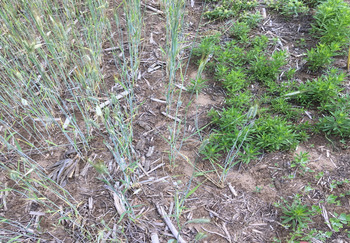
The fall-planted cereal rye cover crop was consistent in reducing both biomass and height of C. canadensis over the two growing seasons (Figure 1). Biomass, on average, was reduced by 96% and 94%, as well as individual plant height by 61% and 88%, in 2018 and 2019, respectively (Tables 4, 6, and 11). These results support the conclusions drawn from research conducted by Pittman et al. (Reference Pittman, Barney and Flessner2019) and Sherman et al. (Reference Sherman, Haramoto and Green2019). Possible mechanisms accounting for these observations would be either a change in PPFD as the cereal rye canopy developed or allelopathy. In 2018, light measurements recorded at the soil surface underneath the cereal rye canopy ranged from 1,431 to 1,599 µmol photons m−2 s−1 (Table 12). This range exceeded the light required for successful germination and seedling establishment of C. canadensis (Main et al. Reference Main, Mueller, Hayes and Wilkerson2004; Nandula et al. Reference Nandula, Eubank, Poston, Koger and Reddy2006). If not due to light interception, the observed reduction in plant biomass and height was likely caused by the allelopathic compound BOA.
Cereal rye suppression of Conyza canadensis (left) compared with the uncontrolled C. canadensis in the adjacent untreated (no rye; right) area in 2018.

Response of Conyza canadensis height to fall-planted cereal rye cover crop by July 4 in 2018 and2019.

a No significant tillage by cereal rye interaction was observed among 2018 and 2019 height measurements.
b Log-scale was applied to the data set; means presented are back-transformed log values. Means with the same lowercase letter in the same column are not significantly different at P ≤ 0.05 using Tukey’s multiple comparison test.
c Calculations made within the same year of data.
Photosynthetic photon flux density (PPFD) measurements above and below the fall-planted cereal rye canopy each week from June 5 to July 4, 2018.

a Means (± SE).
Allelopathy Bioassay
Exposure of C. canadensis and lettuce seedlings to varying rates of BOA reduced root length by 50% at doses of 0.25 mM and 0.28 mM, respectively (Table 13). These results suggested that C. canadensis seedlings were as sensitive to BOA as lettuce. Lettuce, when exposed to BOA, is known to undergo a reduction in photosynthetic capability, water retention, and growth of the shoots and roots (Hussain et al. Reference Hussain, González, Chiapusio and Reigosa2011). At the cellular level, BOA decreased the mitotic activity in root tips, increased the cytoplasmic vacuolation, decreased the number of mitochondria, and reduced lipid degradation (Burgos et al. Reference Burgos, Talbert, Kim and Kuk2004; Singh et al. Reference Singh, Batish, Kaur, Setia and Kohli2005). Furthermore, BOA has been detected in roots and cotyledons of radish (Raphanus sativus L.) seedlings and is known to decrease the overall efficiency of photosystem II (Chiapusio et al. Reference Chiapusio, Pellissier and Gallet2004; Sánchez-Moreiras et al. Reference Sánchez-Moreiras, Oliveros-Bastidas and Reigosa2010). This allelopathic effect on the roots of C. canadensis seedlings may be considered as a possible mechanism contributing to the observed reduction in C. canadensis seedling biomass and height. Research by La Hovary et al. (Reference La Hovary, Danehower, Ma, Reberg-Horton, Williamson, Baerson and Burton2016) demonstrated that cereal rye produced BOA throughout the plant’s entire life cycle, with a cereal rye stand (Feekes growth stage 5) capable of producing 5 kg ha−1 of total BOA and its chemical derivatives. It is recognized, however, that other mechanisms, such as light quality and nutrient competition, may also contribute to the observations discovered within the field trials.
The half maximal inhibitory concentration (IC50) of 2-benzoxazolinone (BOA) required to reduce the root length of lettuce and Conyza canadensis seedlings and their linear relationships.

a The half maximal inhibitory concentration: concentration of BOA required to decrease the average root length compared with the untreated control by 50%.
b Y, percent root length reduction; x, concentration of BOA.
In summary, we had hoped that the complementary selection pressures of fall tillage, a cereal rye cover crop, and herbicides would interact consistently in a synergistic manner to facilitate the management of herbicide-resistant C. canadensis. This did not occur in this study. These interactions, for example, may be initially influenced by the fall and spring environmental conditions and timing and depth of the tillage relative to seedling emergence of C. canadensis. A monoculture of cereal rye seeded in the fall, however, did reduce plant height and biomass of C. canadensis consistently, but not density. This reduction in seedling height and biomass was likely caused by the allelopathic compound BOA, which reduced seedling root development. Control of C. canadensis seedlings in the spring required the higher rates of dicamba or saflufenacil. The addition of shallow fall tillage and the presence of cereal rye did not reduce variability in the control, although this was observed notably with the 2,4-D or the lower rates of saflufenacil or dicamba. The hypothesis “if fall-seeded cereal rye can reduce C. canadensis seedling density and suppress seedling growth, then the interaction(s) of complementary selection pressures of tillage, cereal rye and herbicides would improve the level of C. canadensis control” is therefore rejected. Although this hypothesis is rejected, it is recognized that the interactions and effectiveness of each individual selection pressure will vary among years. With the implementation of complementary weed management strategies, environmental variables in any given year will likely have a direct influence on whether these interactions are additive or synergistic.
Acknowledgments
This research would not have been possible without the contributions of the University of Guelph and the Ontario Ministry of Agriculture, Food and Rural Affairs through the Highly Qualified Personnel Scholarship Program, Grain Farmers of Ontario, and the Canadian Agricultural Partnership (CAP). The CAP is a federal–provincial–territorial initiative. The Agricultural Adaptation Council assists in the delivery of CAP in Ontario. Finally, a special thanks to Michelle Edwards for all her help with the statistical analysis. No conflicts of interest have been declared.