




No CrossRef data available.
Article contents
Emotional relationships between mothers and infants: Knowns, unknowns, and unknown unknowns
Published online by Cambridge University Press: 31 January 2012
Abstract
An overview of the literature pertaining to the construct of emotional availability is presented, illustrated by a sampling of relevant studies. Methodological, statistical, and conceptual problems in the existing corpus of research are discussed, and suggestions for improving future investigations of this important construct are offered.
Information
- Type
- Special Section Commentaries
- Information
- Copyright
- Copyright © Cambridge University Press 2012
References
Aviezer, O., Sagi, A., Joels, T., & Ziv, Y. (1999). Emotional availability and attachment representations in Kibbutz infants and their mothers. Developmental Psychology, 35, 811–821.CrossRefGoogle ScholarPubMed
Barnard, K. E., & Solchany, J. E. (2002). Mothering. In Bornstein, M. H. (Ed.), Handbook of parenting: Vol. 3. Status and social conditions of parenting (2nd ed., pp. 3–25). Mahwah, NJ: Erlbaum.Google Scholar
Barratt, M. S., & Roach, M. A. (1995). Early interactive processes: Parenting by adolescent and adult single mothers. Infant Behavior and Development, 18, 97–109.CrossRefGoogle Scholar
Berlin, L. J., Brady-Smith, C., & Brooks-Gunn, J. (2002). Links between childbearing age and observed maternal behaviors with 14-month-olds in the Early Head Start Research and Evaluation Project. Infant Mental Health Journal, 23, 104–129.CrossRefGoogle Scholar
Biringen, Z. (2000). Emotional availability: Conceptualization and research findings. American Journal of Orthopsychiatry, 70, 104–114.CrossRefGoogle ScholarPubMed
Biringen, Z. (2005). Training and reliability issues with the Emotional Availability Scales. Infant Mental Health Journal, 26, 404–405.CrossRefGoogle Scholar
Biringen, Z., Altenhofen, S., Aberle, J., Baker, M., Brosal, A., Bennett, S., et al. (2012). Emotional availability, attachment, and intervention in center-based child care for infants and toddlers. Development and Psychopathology, 24, 23–34.CrossRefGoogle ScholarPubMed
Biringen, Z., Brown, D., Donaldson, L., Green, S., Krcmarik, S., & Lovas, G. (2000). Adult attachment interview: Linkages with dimensions of emotional availability for mothers and their pre-kindergarteners. Attachment & Human Development, 2, 188–202.CrossRefGoogle ScholarPubMed
Biringen, Z., Damon, J., Grigg, W., Mone, J., Pipp-Siegel, S., Skillern, S., et al. (2005). Emotional availability: Differential predictions to infant attachment and kindergarten adjustment based on observation time and context. Infant Mental Health Journal, 26, 295–308.CrossRefGoogle ScholarPubMed
Biringen, Z., & Easterbrooks, M. A. (2012). Emotional availability: Concept, research, and window on development and psychopathology. Development and Psychopathology, 24, 1–8.CrossRefGoogle Scholar
Biringen, Z., Emde, R. N., Campos, J. J., & Appelbaum, M. I. (1995). Affective reorganization in the infant, the mother, and the dyad: The role of upright locomotion and its timing. Child Development, 66, 499–514.CrossRefGoogle ScholarPubMed
Biringen, Z., Emde, R. N., Brown, D., Lowe, L., Myers, S., & Nelson, D. (1999). Emotional availability and emotion communication in naturalistic mother–infant interactions: Evidence for gender relations. Journal of Social Behavior and Personality, 14, 463–478.Google Scholar
Biringen, Z., Fidler, D. J., Barrett, K. C., & Kubicek, L. (2005). Applying the Emotional Availability Scales to children with disabilities. Infant Mental Health Journal, 26, 369–391.CrossRefGoogle ScholarPubMed
Biringen, Z., Matheny, A., Bretherton, I., Renouf, A., & Sherman, M. (2000). Maternal representation of the self as parent: Connections with maternal sensitivity and maternal structuring. Attachment & Human Development, 2, 218–232.CrossRefGoogle ScholarPubMed
Biringen, Z., & Robinson, J. (1991). Emotional availability in mother–child interactions: A reconceptualization for research. American Journal of Orthopsychiatry, 6, 258–271.CrossRefGoogle Scholar
Biringen, Z., Robinson, J. L., & Emde, R. N. (1994). Maternal sensitivity in the second year: Gender-based relations in the dyadic balance of control. American Journal of Orthopsychiatry, 64, 78–90.CrossRefGoogle ScholarPubMed
Biringen, Z., Skillern, S., Mone, J., & Pianta, R. (2005). Emotional availability is predictive of the emotional aspects of children's “school readiness.” Journal of Early Childhood and Infant Psychology, 1, 81–97.Google Scholar
Biringen, Z., Vliegen, N., Bijttebier, P., & Cluckers, G. (2002). Werkversie EAS Selfreport—Niet gepubliceerd werkdocument [The Emotional Availability—Dutch Self-Report–pilot version]. Unpublished manuscript.Google Scholar
Bornstein, M. H. (2000). Infancy: Emotions and temperament. In Kazdin, A. E. (Ed.), The encyclopedia of psychology (Vol. 2, pp. 278–284). New York: American Psychological Association and Oxford University Press.Google Scholar
Bornstein, M. H. (2009). Toward a model of culture↔parent↔child transactions. In Sameroff, A. (Ed.), The transactional model of development: How children and contexts shape each other (pp. 139–161). Washington, DC: American Psychological Association.CrossRefGoogle Scholar
Bornstein, M. H., & Bornstein, L. (2008). Psychological stability. In Darity, W. A. Jr. (Ed.), International encyclopedia of social sciences (2nd ed., Vol. 8, pp. 74–75). Detroit, MI: Macmillan Reference USA.Google Scholar
Bornstein, M. H., Gini, M., Putnick, D. L., Haynes, O. M., Painter, K. M., & Suwalsky, J. T. D. (2006). Short-term reliability and continuity of emotional availability in mother–child dyads across contexts of observation. Infancy, 10, 1–16.CrossRefGoogle ScholarPubMed
Bornstein, M. H., Gini, M., Suwalsky, J. T. D., Putnick, D. L., & Haynes, O. M. (2006). Emotional availability in mother–child dyads: Short-term stability and continuity from variable-centered and person-centered perspectives. Merrill–Palmer Quarterly, 52, 547–571.CrossRefGoogle Scholar
Bornstein, M. H., Hahn, C.-S., & Haynes, O. M. (2011). Maternal personality, parenting cognitions, and parenting practices. Developmental Psychology, 47, 658–675.CrossRefGoogle ScholarPubMed
Bornstein, M. H., Hahn, C.-S., Suwalsky, J. T. D., & Haynes, O. M. (2011). Maternal and infant behavior and context associations with mutual emotional availability. Infant Mental Health Journal, 32, 70–94.CrossRefGoogle Scholar
Bornstein, M. H., Hendricks, C., Haynes, O. M., & Painter, K. M. (2007). Maternal sensitivity and child responsiveness: Associations with social context, maternal characteristics, and child characteristics in a multivariate analysis. Infancy, 12, 189–223.CrossRefGoogle ScholarPubMed
Bornstein, M. H., Mayes, L. C., & Park, J. (2011). Language, play, emotional availability, and acceptance in cocaine exposed and non-cocaine exposed young children and their mothers. Manuscript in preparation.Google Scholar
Bornstein, M. H., Putnick, D. L., Heslington, M., Gini, M., Suwalsky, J. T. D., Venuti, P., et al. (2008). Mother–child emotional availability in ecological perspective: Three countries, two regions, two genders. Developmental Psychology, 44, 666–680.CrossRefGoogle ScholarPubMed
Bornstein, M. H., Putnick, D. L., & Suwalsky, J. T. D. (in press). A longitudinal process analysis of mother–child emotional relationships in a rural Appalachian European American community. American Journal of Community Psychology.Google Scholar
Bornstein, M. H., Putnick, D. L., & Suwalsky, J. T. D. (2011a). Mutual emotional availability in mother–infant and caregiver–infant dyads: Process analyses of interactions in three childcare arrangements. Manuscript in preparation.Google Scholar
Bornstein, M. H., Putnick, D. L., & Suwalsky, J. T. D. (2011b). Mutual emotional availability in mother–infant firstborn and secondborn dyads: A within-family study. Manuscript in preparation.Google Scholar
Bornstein, M. H., Putnick, D. L., Suwalsky, J. T. D., & Gini, M. (2006). Maternal chronological age, prenatal and perinatal history, social support, and parenting of infants. Child Development, 77, 875–892.CrossRefGoogle ScholarPubMed
Bornstein, M. H., Scrimin, S., Putnick, D. L., Capello, F., de Falco, S., Carli, M., et al. (2011). Neurodevelopmental functioning in very young children undergoing treatment for non-CNS cancers. Manuscript in preparation.Google Scholar
Bornstein, M. H., Suwalsky, J. T. D., Putnick, D. L., Gini, M., Venuti, P., de Falco, S., et al. (2010). Developmental continuity and stability of emotional availability in the family: Two ages and two genders in child–mother dyads from two regions in three countries. International Journal of Behavioral Development, 34, 385–397.CrossRefGoogle ScholarPubMed
Bretherton, I. (2000). Emotional availability: An attachment perspective. Attachment & Human Development, 2, 233–241.CrossRefGoogle ScholarPubMed
Brim, O. G., Baltes, P. B., Bumpass, L. L., Cleary, P. D., Featherman, D. L., Hazzard, W. R., et al. (1996). National Survey of Midlife Development in the United States (MIDUS), 1995–1996 [Computer File] (2nd ICPSR version). Ann Arbor, MI: Inter-university Consortium for Political and Social Research. Retrieved from http://sodapop.pop.psu.edu/codebooks/midus/1995-96/02760-0001-Codebook.pdfGoogle Scholar
Burchinal, M. R., & Cryer, D. (2003). Diversity, child care quality, and developmental outcomes. Early Childhood Research Quarterly, 18, 401–426.CrossRefGoogle Scholar
Campbell, J. (2007). Understanding the emotional needs of children who are blind. Journal of Visual Impairment & Blindness, 101, 351–355.CrossRefGoogle Scholar
Campbell, J., & Johnston, C. (2009). Emotional availability in parent–child dyads where children are blind. Parenting: Science and Practice, 9, 216–227.CrossRefGoogle Scholar
Chaudhuri, J. H., Easterbrooks, M. A., & Davis, C. R. (2009). The relation between emotional availability and parenting style: Cultural and economic factors in a diverse sample of young mothers. Parenting: Science and Practice, 9, 277–299.CrossRefGoogle Scholar
Cicchetti, D., & Pogge-Hesse, P. (1982). Possible contributions of the study of organically retarded persons to developmental theory. In Zigler, E. & Balla, D. (Eds.), Mental retardation: The developmental-difference controversy (pp. 277–318). Hillsdale, NJ: Erlbaum.Google Scholar
Cicchetti, D., & Toth, S. L. (2009). The past achievements and future promises of developmental psychopathology: The coming of age of a discipline. Journal of Child Psychology and Psychiatry, 50, 16–25.CrossRefGoogle ScholarPubMed
Coley, R. L., & Chase-Lansdale, P. L. (1998). Adolescent pregnancy and parenthood: Recent evidence and future directions. American Psychologist, 53, 152–166.CrossRefGoogle ScholarPubMed
Cost Quality & Child Outcomes Study Team. (1995). Cost, quality, and child outcomes in child care center, public report (2nd ed.). Denver, CO: University of Colorado at Denver, Economics Department.Google Scholar
Culp, R. E., Appelbaum, M. I., Osofsky, J. D., & Levy, J. A. (1988). Adolescent and older mothers: Comparison between prenatal maternal variables and newborn interaction measures. Infant Behavior and Development, 11, 353–362.CrossRefGoogle Scholar
Culp, A. M., Osofsky, J. D., & O'Brien, M. (1996). Language patterns of adolescent and older mothers and their one-year-old children: A comparison study. First Language, 16, 61–75.CrossRefGoogle Scholar
de Falco, S., Cimmino, M., La Femina, F., & Venuti, P. (2008). Qualità della relazione affettiva madre-bambino e abilità di gioco in bambini con sindrome di Down. [Quality of affective mother–child relations and game play ability in children with Down's syndrome.] Infanzia e Adolescenza, 7, 124–137.Google Scholar
de Falco, S., Esposito, G., Venuti, P., & Bornstein, M. H. (2008). Fathers’ play with their Down Syndrome children. Journal of Intellectual Disability Research, 52, 490–502.CrossRefGoogle ScholarPubMed
Dolev, S., Oppenheim, D., Koren-Karie, N, & Yirmiya, N. (2009). Emotional availability in mother–child interaction: The case of children with autism spectrum disorders. Parenting: Science and Practice, 9, 183–197.CrossRefGoogle Scholar
Easterbrooks, M. A., Biesecker, G., & Lyons-Ruth, K. (2000). Infancy predictors of emotional availability in middle childhood: The roles of attachment security and maternal depressive symptomatology. Attachment & Human Development, 2, 170–187.CrossRefGoogle ScholarPubMed
Easterbrooks, M. A., Biesecker, G., Lyons-Ruth, K., & Carper, A. (1996, April). Infancy predictors of emotional availability in middle childhood: The role of attachment and maternal depression. Paper presented at the 10th Biennial Meeting of the International Conference on Infant Studies, Providence, RI.CrossRefGoogle Scholar
Easterbrooks, M. A., & Biringen, Z. (2000). Guest editors’ introduction to the special issue: Mapping the terrain of emotional availability and attachment. Attachment & Human Development, 2, 123–129.CrossRefGoogle Scholar
Easterbrooks, M. A., & Biringen, Z. (2005a). The Emotional Availability Scales: Methodological refinements of the construct and clinical implications related to gender and at-risk interactions. Infant Mental Health Journal, 26, 291–294.CrossRefGoogle ScholarPubMed
Easterbrooks, M. A., & Biringen, Z. (Eds.). (2005b). Emotional availability: Extending the assessment of emotional availability to include gender, culture, and at-risk populations. Infant Mental Health Journal, 26, 291–405.CrossRefGoogle Scholar
Easterbrooks, M. A., Bureau, J.-F., & Lyons-Ruth, K. (2012). Developmental coherence in predictors and correlates of emotional availability in mother–child interaction: A longitudinal study from infancy to late adolescence. Development and Psychopathology, 24, 65–78.CrossRefGoogle Scholar
Easterbrooks, M. A., Chaudhuri, J., & Gestsdottir, S. (2005). Patterns of emotional availability among young mothers and their infants: A dyadic, contextual analysis. Infant Mental Health Journal, 26, 309–326.CrossRefGoogle ScholarPubMed
Emde, R. (1980). Emotional availability: A reciprocal reward system for infants and parents with implications for prevention of psychosocial disorders. In Taylor, P. M. (Ed.), Parent–infant relationships (pp. 87–115). Orlando, FL: Grune & Stratton.Google Scholar
Emde, R. N. (2000). Next steps in emotional availability research. Attachment & Human Development, 2, 242–248.CrossRefGoogle ScholarPubMed
Emde, R. N., & Easterbrooks, M. A. (1985). Assessing emotional availability in early development. In Frankenburg, W. K., Emde, R. N., & Sullivan, J. W. (Eds.), Early identification of children at risk: An international perspective (pp. 79–102). New York: Plenum Press.CrossRefGoogle Scholar
Esposito, G., Venuti, P., de Falco, S., & Bornstein, M. H. (2009). Maternal emotional availability and infant smiling and crying at 5 months of age. In Krause, P. H. & Dailey, T. M. (Eds.), Handbook of parenting: Styles, stresses, and strategies (pp. 30–46). Hauppauge, NY: Nova Science Publishers, Inc.Google Scholar
Field, T. (1981). Infant arousal, attention, and affect during early interactions. In Lipsitt, L. & Rovee-Collier, C. K. (Eds.), Advances in infancy research (Vol. 1, pp. 58–100). Norwood, NJ: Ablex.Google Scholar
Field, T., Vega-Lahr, N., Scafidi, F., & Goldstein, S. (1986). Effects of maternal unavailability on mother–infant interactions. Infant Behavior and Development, 9, 473–478.CrossRefGoogle Scholar
Frankel, K. A., Lindahl, K., & Harmon, R. J. (1992). Preschoolers’ response to maternal sadness: Relationships with maternal depression and emotional availability. Infant Mental Health Journal, 13, 132–146.3.0.CO;2-C>CrossRefGoogle Scholar
Fraser, J. G., Harris-Britt, A., Thakkallapalli, E. L., Kurtz-Costes, B., & Martin, S. (2010). Emotional availability and psychosocial correlates among mothers in substance-abuse treatment and their young infants. Infant Mental Health Journal, 31, 1–15.CrossRefGoogle Scholar
Garvin, M. C., Tarullo, A. R., Van Ryzin, M., & Gunnar, M. R. (2012). Post-adoption parenting and socioemotional development in post-institutionalized children. Development and Psychopathology, 24, 35–48.CrossRefGoogle Scholar
Hartmann, D. P., Pelzel, K. E., & Abbott, C. B. (2011). Design, measurement, and analysis in developmental research. In Bornstein, M. H. & Lamb, M. E. (Eds.), Developmental science: An advanced textbook (6th ed., pp. 109–195). New York: Taylor & Francis.Google Scholar
Howes, C., & Obregon, N. B. (2009). Emotional availability in Mexican-heritage low-income mothers and children: Infancy through preschool. Parenting: Science and Practice, 9, 260–276.CrossRefGoogle Scholar
Killeen, L. A., & Teti, D. M. (2012). Prefrontal cortical asymmetry in mothers to infant emotional states predicts maternal emotional availability with their 6-month-old infants. Development and Psychopathology, 24, 9–21.CrossRefGoogle Scholar
Koester, L. S., Brooks, L. R., & Traci, M. A. (1996, April). Mutual responsiveness in deaf and hearing mother–infant dyads. Poster presented at the meetings of the International Conference of Infant studies, Providence, RI.CrossRefGoogle Scholar
Kogan, N., & Carter, A. S. (1996). Mother–infant reengagement following the stillface: The role of maternal emotional availability in infant affect regulation. Infant Behavior and Development, 19, 359–370.CrossRefGoogle Scholar
Koren-Karie, N., Oppenheim, D., Dolev, S., & Yirmiya, N. (2009). Mothers of securely attached children with autism spectrum disorder are more sensitive than mothers of insecurely attached children. Journal of Child Psychology and Psychiatry, 50, 643–650.CrossRefGoogle ScholarPubMed
Lovas, G. S. (2005). Gender and patterns of emotional availability in mother–toddler and father–toddler dyads. Infant Mental Health Journal, 26, 327–353.CrossRefGoogle ScholarPubMed
Luster, T., & Dubow, E. (1990). Home environment and maternal intelligence as predictors of verbal intelligence: A comparison of preschool and school-age children. Merrill–Palmer Quarterly, 38, 151–175.Google Scholar
Maccoby, E. E., & Martin, J. A. (1983). Socialization in the context of the family: Parent–child interaction. In Hetherington, E. M. (Ed.) & Hetherington, E. M. (Series Ed.), Handbook of child psychology: Vol. 4. Socialization, personality, and social development (4th ed., pp. 1–101). New York: Wiley.Google Scholar
Magnusson, D., & Allen, V. L. (1983). Implications and applications of an interactional perspective for human development. In Magnusson, D. & Allen, V. L. (Eds.), Human development: An interactional perspective (pp. 469–387). New York: Academic Press.Google Scholar
Martin, S. E., Clements, M. L., & Crnic, K. A. (2002). Maternal emotions during mother–toddler interaction: Parenting in an affective context. Parenting: Science and Practice, 2, 105–126.CrossRefGoogle Scholar
McCall, R. B. (1981). Nature–nurture and the two realms of development: A proposed integration with respect to mental development. Child Development, 52, 1–12.CrossRefGoogle Scholar
Moore, K. A., Morrison, D. R., & Greene, A. D. (1997). Effects on the children born to adolescent mothers. In Maynard, R. A. (Ed.), Kids having kids: Economic costs and social consequences of teen pregnancy (pp. 145–180). Washington, DC: Urban Institute Press.Google Scholar
Moore, M. R., & Brooks-Gunn, J. (2002). Adolescent parenthood. In Bornstein, M. H. (Ed.), Handbook of parenting: Vol. 3. Status and social conditions of parenting (2nd ed., pp. 173–214). Mahwah, NJ: Erlbaum.Google Scholar
NICHD Early Child Care Research Network, National Institute of Health. (2006). The NICHD Study of Early Child Care and Youth Development: Findings for children up to age 4 1/2 Years (NIH Publication No. 05-4318). Research Triangle Park, NC: United States Department of Health and Human Services, NICHD.Google Scholar
Oppenheim, D., Koren-Karie, N., Dolev, S., & Yirmiya, N. (2009). Maternal insightfulness and resolution of the diagnosis are associated with secure attachment in preschoolers with autism spectrum disorders. Child Development, 80, 519–527.CrossRefGoogle ScholarPubMed
Osofsky, H. J., & Osofsky, J. D. (1970). The adolescent mother: Factors related to their children's development. American Journal of Orthopsychiatry, 40, 825–834.CrossRefGoogle Scholar
Oyen, A.-S., Landy, S., & Hilburn-Cobb, C. (2000). Maternal attachment and sensitivity in an at-risk sample. Attachment & Human Development, 2, 203–217.CrossRefGoogle Scholar
Pettit, G. S., & Bates, J. E. (1989). Family interaction patterns and children's behavior problems from infancy to 4 years. Developmental Psychology, 25, 413–420.CrossRefGoogle Scholar
Pianta, R. C., Smith, N., & Reeve, R. E. (1991). Observing mother and child behavior in a problem-solving situation at school entry: Relations with classroom adjustment. School Psychology Quarterly, 6, 1–15.CrossRefGoogle Scholar
Pipp-Siegel, S., & Biringen, Z. (1998). Assessing the quality of relationships between parents and children: The Emotional Availability Scales. Volta Review, 100, 237–249.Google Scholar
Pipp-Siegel, S., Blair, N. L., Deas, A. M., Pressman, L. J., & Yoshinaga-Itano, C. (1998). Touch and emotional availability in hearing and deaf or hard of hearing toddlers and their hearing mothers. Volta Review, 100, 279–298.Google Scholar
Pomerleau, A., Scuccimarri, C., & Malcuit, G. (2003). Mother–infant behavioral interactions in teenage and adult mothers during the first six months postpartum: Relations with infant development. Infant Mental Health Journal, 24, 495–509.CrossRefGoogle Scholar
Pressman, L., Pipp-Siegel, S., Yoshinaga-Itano, C., & Deas, A. M. (1999). Maternal sensitivity predicts language gain in preschool children who are deaf and hard of hearing. Journal of Deaf Studies and Deaf Education, 4, 294–304.CrossRefGoogle ScholarPubMed
Pressman, L. J., Pipp-Siegel, S., Yoshinaga-Itano, C., Kubicek, L., & Emde, R. N. (1998). A comparison of the links between emotional availability and language gain in young children with and without hearing loss. Volta Review, 100, 251–277.Google Scholar
Robinson, J. L., & Biringen, Z. (1995). Gender and emerging autonomy in development. Psychoanalytic Inquiry, 15, 60–74.CrossRefGoogle Scholar
Robinson, J. L., & Little, C. (1994). Emotional availability in mother–twin dyads: Effects on the organization of relationships. Psychiatry, 57, 22–31.CrossRefGoogle ScholarPubMed
Robinson, J. L., Little, C., & Biringen, Z. (1993). Emotional communication in mother–toddler relationships: Evidence for early gender differentiation. Merrill–Palmer Quarterly, 39, 496–517.Google Scholar
Rowe, M. L., Pan, B. A., & Ayoub, C. (2005). Predictors of variation in maternal talk to children: A longitudinal study of low-income families. Parenting: Science and Practice, 5, 285–310.CrossRefGoogle Scholar
Sagi, A., Koren-Karie, N., Gini, M., Ziv, Y., & Joels, T. (2002). Shedding further light on the effects of various types and quality of early child care on infant–mother attachment relationship: The Haifa Study of Early Child Care. Child Development, 73, 1166–1186.CrossRefGoogle ScholarPubMed
Sagi, A., Tirosh, E., Ziv, Y., Guttman, S., & Lavie, P. (1998, April). Attachment and sleep patterns in the first year of life. Paper presented at the Meeting of the International Conference on Infant Studies, Atlanta, GA.CrossRefGoogle Scholar
Sameroff, A. J., & Emde, R. N. (Eds.). (1989). Relationship disturbances in early childhood: A developmental approach. New York: Basic Books.Google Scholar
Sander, L. (2000). Where are we going in the field of infant mental health? Infant Mental Health Journal, 21, 1–18.3.0.CO;2-S>CrossRefGoogle Scholar
Sorce, J., & Emde, R. N. (1981). Mother's presence is not enough: Effect of emotional availability on infant exploration. Developmental Psychology, 17, 737–745.CrossRefGoogle Scholar
Sorce, J. F, Emde, R. N., Campos, J. J., & Klinnert, M. D. (1985). Maternal emotional signaling: Its effect on the visual cliff behavior of one-year-olds. Developmental Psychology, 21, 195–200.CrossRefGoogle Scholar
Sroufe, L. A. (1996). Emotional development: The organization of emotional life in the early years. New York: Cambridge University Press.CrossRefGoogle Scholar
Stack, D. A., Serbin, L. A., Girouard, N., Enns, L. N., Bentley, V. M. N., Schwartzman, A. E., et al. (2012). The quality of the mother–child relationship in high-risk dyads: An intergenerational, longitudinal study. Development and Psychopathology, 24, 93–105.CrossRefGoogle ScholarPubMed
Stern, D. N. (1985). The interpersonal world of the infant: A view from psychoanalysis and developmental psychology. New York: Basic Books.Google Scholar
Swanson, K., Beckwith, L., & Howard, J. (2000). Intrusive caregiving and quality of attachment in prenatally drug-exposed toddlers and their primary caregivers. Attachment & Human Development, 2, 130–148.CrossRefGoogle ScholarPubMed
Trevarthen, C., & Aitken, K. J. (2001). Infant intersubjectivity: Research, theory and clinical applications. Journal of Child Psychology and Psychiatry, 42, 3–48.CrossRefGoogle ScholarPubMed
van den Dries, L., Juffer, F., van IJzendoorn, M. H., Bakermans-Kranenburg, M. J., & Alink, L. R. A. (2012). Infants’ responsiveness, attachment, and indiscriminate friendliness after international adoption from institutions or foster care in China: Application of the emotional availability scales to adoptive families. Development and Psychopathology, 24, 49–64.CrossRefGoogle ScholarPubMed
Van Egeren, L. A., Barratt, M. S., & Roach, M. A. (2001). Mother–infant responsiveness: Timing, mutual regulation, and interactional context. Developmental Psychology, 37, 684–697.CrossRefGoogle ScholarPubMed
Venuti, P., de Falco, S., Giusti, Z., & Bornstein, M. H. (2008). Play and emotional availability in young children with Down syndrome. Infant Mental Health Journal, 29, 133–152.CrossRefGoogle ScholarPubMed
Venuti, P., Giusti, Z., Gini, M., & Bornstein, M. H. (2008). La disponibilità emotiva madre-gemelli in bambini italiani nel secondo anno di vita [Emotional availability in mothers and twins in the second year of life]. Psicologia Clinica dello Sviluppo, 12, 41–67.Google Scholar
Vliegen, N., Bijttebier, P., Boulpaep, N., Luyten, P.M., Cluckers, G., & Biringen, Z. (2005). De EA-DSR. Een zelfrapporteringsschaal voor het meten van emotionele beschikbaarheid bij ouders van jonge kinderen (0–1 jaar). [The EA-DSR. A parental self report scale measuring emotional availability in interaction with infants (0–1 year)]. Jaargang, 8, 137–147.Google Scholar
Volling, B. L., McElwain, N. L., Notaro, P. C., & Herrera, C. (2002). Parents’ emotional availability and infant emotional competence: Predictors of parent–infant attachment and emerging self-regulation. Journal of Family Psychology, 16, 447–465.CrossRefGoogle ScholarPubMed
Weinberg, M. K., & Tronick, E. Z. (1996). Infant affective reactions to the resumption of maternal interaction after the still-face. Child Development, 67, 905–914.CrossRefGoogle Scholar
Wiefel, A., Wollenweber, S., Oepen, G., Lenz, K., Lehmkuhl, U., & Biringen, Z. (2005). Emotional availability in infant psychiatry. Infant Mental Health Journal, 26, 392–403.CrossRefGoogle ScholarPubMed
Zimmerman, L., & Fassler, I. (2003). The dynamics of emotional availability in childcare: How infants involve and respond to their teen mothers and childcare teachers. Infants & Young Children, 16, 258–269.CrossRefGoogle Scholar
Zimmerman, L., & McDonald, L. (1995). Emotional availability in infants’ relationships with multiple caregivers. American Journal of Orthopsychiatry, 65, 147–152.CrossRefGoogle ScholarPubMed
Ziv, Y., Aviezer, O., Gini, M., Sagi, A., & Koren-Karie, N. (2000). Emotional availability in the mother–infant dyad as related to the quality of infant–mother attachment relationship. Attachment & Human Development, 2, 149–169.CrossRefGoogle Scholar
Ziv, Y., Gini, M., Guttman, S., & Sagi, A. (1997, April). Dyadic emotional availability and quality of infant–mother attachment: A three point longitudinal study. Paper presented at the Society for Research in Child Development Biennial Meeting, Washington, DC.Google Scholar
Ziv, Y, Sagi, A., Gini, M., Karie-Koren, N., & Joels, T. (1996, April). Emotional availability as related to quality of infant-mother attachment. Paper presented at the 10th Biennial Meeting of the International Conference on Infant Studies, Providence, RI.Google Scholar
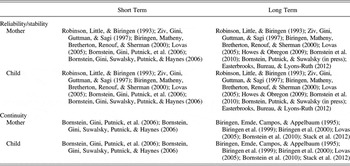
Table 1. Reliability and stability of the Emotional Availability Scales (illustrative, not exhaustive)
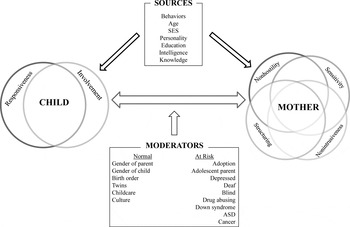
Figure 1. The emotional availability in mothers and children: a guide to their associations, sources, and moderators. SES, socioeconomic status; ASD, autism spectrum disorder.
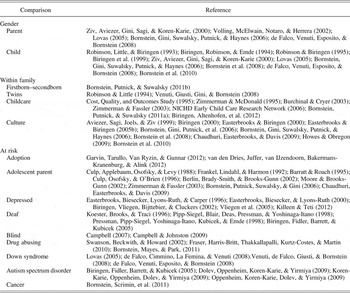
Table 2. Group comparisons of Emotional Availability Scales (illustrative, not exhaustive)
 You have
Access
- 84
- Cited by
Consider three studies of young infants and the implications they hold for early and enduring emotional relationships:
1. Four-month-olds are more distressed during a maternal still-face than during physical separation, suggesting that mothers’ emotional unavailability is more troubling to young infants than their physical absence (Field, Vega-Lahr, Scafidi, & Goldstein, Reference Field, Vega-Lahr, Scafidi and Goldstein1986).
2. Social referencing demonstrates that very young children use parents’ emotional expressions as guides in approaching or withdrawing from both physical and social stimuli (Sorce, Emde, Campos, & Klinnert, Reference Sorce, Emde, Campos and Klinnert1985).
3. In an ambiguous situation, a mother's physical presence but emotional unavailability engenders displeasure and inhibits her child's exploration, whereas her emotional availability (EA) has a significant effect on the child's affective, social, and exploratory behaviors (Sorce & Emde, Reference Sorce and Emde1981).
Consider also the following:
4. In a sample of 3000 adults, ages 25–74, from the US National Survey of Midlife Development, early parental emotional support (acts of caring, acceptance, and assistance) proved a principal predictor of mental and physical health in adulthood, associations that persisted into the seventh decade of life (Brim et al., Reference Brim, Baltes, Bumpass, Cleary, Featherman and Hazzard1996).
A substantial (and ever enlarging) body of research exists on the emotional relationship that develops between a mother and her infant. A baby comes into the world totally dependent on adults for survival but also equipped with a set of characteristics and behaviors capable of eliciting attention and care from them. In addition to having a mother, it is necessary that the baby establish a focused relationship with her. Above and beyond the mere existence of that relationship, however, its quality is critical to fostering multiple developmental achievements in the child: solid senses of self, trust in others, and effectance. Relationship quality in turn depends on the fit among the infant's needs and capacities to respond, the mother's provision of necessary experiences, and the emotional tone of their interactions. Preverbal infants and mothers normally use emotional cues as primary sources of information when relating to each other. Seen in this light, emotional exchanges constitute mothers’ and children's “first (extremely complex) language” with one another. The emotional availability (EA) construct is intended to capture the degree to which both mother and infant are accessible and able to respond appropriately to one another's emotional signals (Biringen & Robinson, Reference Biringen and Robinson1991). Furthermore, because emotional relationships unfold over time it is critical to adopt a developmental perspective to understand processes underlying individual pathways to adaptive and maladaptive outcomes.
In this article, we attempt to connect emotions to emotional relationships and to their measurement and meaning. A wealth of information on EA in mother–child relationships now exists. We touch on what is now known as well as on the large gray area beyond current knowledge of unknowns and unknown unknowns.
Knowns
Emotions and emotional relationships
Human experience is inherently emotional, and human beings experience the world and others in it emotionally. Emotions arise from and form the foundation for many aspects of human attachments, social communication, and prosocial encounters (Emde, Reference Emde and Taylor1980). Contagion, instigation, and exchange of emotions are core features of human interaction, and emotions are powerful intra- and interpersonal regulators of behavior. Children's ability to regulate attention, emotion, and arousal develops in the context of their primary caregiving relationships during infancy and appears to be fundamental for the balance of the life span in organizing behavior, social relationships, and adaptive functioning (Sameroff & Emde, Reference Sameroff and Emde1989; Sroufe, Reference Sroufe1996). In consequence, EA constitutes a key feature of both parenting and children's development (Bornstein, Reference Bornstein and Kazdin2000).
Emotional interactions normally include both signaling and understanding in each partner, resulting in the emotional accessibility of one to the other (Biringen & Robinson, Reference Biringen and Robinson1991; Emde, Reference Emde and Taylor1980, Reference Emde2000; Emde & Easterbrooks, Reference Emde, Easterbrooks, Frankenburg, Emde and Sullivan1985). Expressing emotions through their voices, faces, and gestures, mothers engage their children, direct and maintain child attention, and build rhythms of expectable dyadic interaction (Bornstein, Gini, Putnick, et al., Reference Bornstein, Gini, Putnick, Haynes, Painter and Suwalsky2006; Martin, Clements, & Crnic, Reference Martin, Clements and Crnic2002; Weinberg & Tronick, Reference Weinberg and Tronick1996). Reciprocally, children provide multiple cues that express their emotional states and needs to their mothers (Barnard & Solchany, Reference Barnard, Solchany and Bornstein2002). Reciprocal positive emotional sharing is indispensable to healthy caregiving and wholesome mother–child relationships and provides an important context for nurturing positive development in children (Aviezer, Sagi, Joels, & Ziv, Reference Aviezer, Sagi, Joels and Ziv1999; Biringen & Robinson, Reference Biringen and Robinson1991; Bretherton, Reference Bretherton2000; Lovas, Reference Lovas2005).
EA
Dyadic EA (Biringen, Reference Biringen2000; Biringen & Robinson Reference Biringen and Robinson1991), an operationalization of shared emotional processes, refers to the quality of emotional exchanges between mothers and their children. EA encompasses both emotional signaling and emotional understanding in the partners as well as the emotional accessibility of one to the other (Biringen & Robinson, Reference Biringen and Robinson1991; Emde, Reference Emde2000; Emde & Easterbrooks, Reference Emde, Easterbrooks, Frankenburg, Emde and Sullivan1985). EA likely arises from constitutional needs and organismic development on the one hand and is shaped by situation-specific experiences and contexts on the other. A relationship construct, EA has been referred to as the “connective tissue” in mother–child relationships (Easterbrooks & Biringen, Reference Easterbrooks and Biringen2000, p. 123). Focus on EA constitutes a process-level understanding of adaptive and maladaptive, normal and abnormal, trajectories of development (Cicchetti & Toth, Reference Cicchetti and Toth2009). The emotionally available dyad is one in which both mother and infant recognize the other partner's signals and affirm them. If a mother approaches her infant psychologically in a respectful, accepting, contingent manner, the infant enjoys interacting with her. This openness (reciprocity) on the infant's part encourages continued interaction of the same quality from the mother.
A mother and her baby are partners in the child's socialization. The basic behavioral agenda involved in the socialization process is common to all human mothers and infants, unfolds in part automatically, and hopefully results in healthy child outcomes. Regardless of the set of circumstances in which mother and infant find themselves, they must and do interact with each other from the moment the child is conceived. An Eskimo baby who trusts his mother will learn from her whatever she needs to teach him to survive and prosper in the Eskimo culture, just as the trusting baby in Seoul will learn how to function in Korean society. An Eskimo or Korean dyad with a less harmonious emotional exchange climate will be hampered in achieving desired socialization goals. EA conceptualizes a fluid two-way exchange where signals and behaviors from both partners constantly affect each other in bidirectional transaction (Bornstein, Reference Bornstein and Sameroff2009; Sander, Reference Sander2000; Stern, Reference Stern1985; Trevarthen & Aitken, Reference Trevarthen and Aitken2001; Van Egeren, Barratt, & Roach, Reference Van Egeren, Barratt and Roach2001; Venuti, de Falco, Guisti, & Bornstein, Reference Venuti, de Falco, Giusti and Bornstein2008). EA describes the open, eager, collaborative, reciprocal communication that can occur between a mother and infant under optimal conditions, regardless of their culture, place of residence, or socioeconomic status.
Measuring EA: The EA Scales
EA is evaluated through observations and ratings of mother–infant interaction using the EA Scales. The EA Scales assess specific behaviors of individuals but at the same time are meant to constitute global ratings of dyads that capture joint interactional style. The scales are flexible with respect to age of child, relationship between child and caregiver, and setting. The EA Scales have been used with children of different ages (e.g., Biringen, Brown, et al., Reference Biringen, Brown, Donaldson, Green, Krcmarik and Lovas2000; Easterbrooks, Biesecker, & Lyons-Ruth, Reference Easterbrooks, Biesecker and Lyons-Ruth2000); with mothers, fathers, and other caregivers in low and high social-risk populations (e.g., Oyen, Landy, & Hilburn-Cobb, Reference Oyen, Landy and Hilburn-Cobb2000; Swanson, Beckwith, & Howard, Reference Swanson, Beckwith and Howard2000); and in a wide variety of different nations, including Argentina, Australia, Belgium, Canada, Finland, Germany, Israel, Italy, Latvia, The Netherlands, Portugal, Sweden, and Turkey (Biringen, Reference Biringen2005; Bornstein et al., Reference Bornstein, Putnick, Heslington, Gini, Suwalsky and Venuti2008; Oyen et al., Reference Oyen, Landy and Hilburn-Cobb2000; Sagi, Koren-Karie, Gini, Ziv, & Joels, Reference Sagi, Koren-Karie, Gini, Ziv and Joels2002; Ziv, Aviezer, Gini, Sagi, & Koren-Karie, Reference Ziv, Aviezer, Gini, Sagi and Koren-Karie2000).
The EA Scales consist of six globally rated dimensions concerned with emotional communication and interaction. Four scales assess maternal behavior: sensitivity, structuring, nonintrusiveness, and nonhostility. Two scales capture infant/child behavior: responsiveness and involvement of mother. Although descriptive of the behavior of one actor, each scale is coded by observing that actor in interaction with the second actor, so the rating of one actor's behavior takes the partner's responses to it into account. Together, EA ratings yield assessments of the dyad's level and style of emotional functioning from six different behavioral perspectives. Each scale has a cut-point above which the dyad is presumed to be functioning in a manner sufficient to meet each partner's emotional needs and below which the dyad is believed to be at risk for negative sequelae. A more complete description of the EA Scales can be found in Biringen and Easterbrooks (Reference Biringen and Easterbrooks2012).
Psychometrics
Reliability, stability, and continuity
Reliability and stability are defined as consistency across time or context in the relative ranks of individuals in a group in the short- and long-term, respectively. Continuity describes group mean level comparison. Reliability/stability and continuity are statistically independent and reflect conceptually distinct realms of development (Bornstein & Bornstein, Reference Bornstein, Bornstein and Darity2008; McCall, Reference McCall1981; Wohlwill, Reference Wohlwill1973); that is, rank order and mean level analyses assess different features of development across time or context. Studies employing multiple assessments of the EA Scales across time or context have shed light on the reliability/stability and continuity of EA, although not all investigators report both rank order and mean level, and few have studied context (see Table 1 for illustrations). Reliable individual differences in EA across shorter periods of time are conceived to reflect characteristics of the dyad. The extant literature supports short-term reliability of EA both in infancy and in toddlerhood. EA is also moderately stable from infancy to toddlerhood. EA evidences short-term continuity in infancy (Bornstein, Gini, Putnick, et al., Reference Bornstein, Gini, Putnick, Haynes, Painter and Suwalsky2006) and toddlerhood (Bornstein, Gini, Suwalsky, Putnick, & Haynes, Reference Bornstein, Gini, Suwalsky, Putnick and Haynes2006) and long-term continuity between infancy and toddlerhood in the child, but maternal sensitivity, structuring, and nonintrusiveness change across this developmental period (Bornstein et al., Reference Bornstein, Suwalsky, Putnick, Gini, Venuti and de Falco2010).
Reliability and stability of the Emotional Availability Scales (illustrative, not exhaustive)
Validity
Validity is the extent to which an instrument measures what it claims to measure. A growing body of literature using the EA Scales shows that both mother and child components of EA relate to key aspects of the mother–child relationship (for reviews, see Biringen, Reference Biringen2000; Pipp-Siegel & Biringen, Reference Pipp-Siegel and Biringen1998) as well as to maternal characteristics (Biringen, Matheny, Bretherton, Renouf, & Sherman, Reference Biringen, Matheny, Bretherton, Renouf and Sherman2000; Easterbrooks, Chaudhuri, & Gestsdottir, Reference Easterbrooks, Chaudhuri and Gestsdottir2005; Ziv, Sagi, Gini, Karie-Koren, & Joels, Reference Ziv, Sagi, Gini, Karie-Koren and Joels1996) and child behaviors (Pressman, Pipp-Siegel, Yoshinaga-Itano, & Deas, Reference Pressman, Pipp-Siegel, Yoshinaga-Itano and Deas1999; Sagi, Tirosh, Ziv, Guttman, & Lavie, Reference Sagi, Tirosh, Ziv, Guttman and Lavie1998; Wiefel et al., Reference Wiefel, Wollenweber, Oepen, Lenz, Lehmkuhl and Biringen2005). Notably, the EA Scales have been examined in relation to concurrent and longitudinal measures of attachment (see Easterbrooks & Biringen, Reference Easterbrooks and Biringen2000, Reference Easterbrooks and Biringen2005a, Reference Easterbrooks and Biringen2005b).
Analysis
The EA Scales lend themselves to complementary analyses from “variable” (individual) and (two types of) “person” (dyad) perspectives (Bornstein, Gini, Suwalsky, Putnick, & Haynes, Reference Bornstein, Gini, Suwalsky, Putnick and Haynes2006). The more common variable approach to assessment uses single variables or combinations of variables as the main conceptual and analytical units (Hartmann, Pelzel, & Abbott, Reference Hartmann, Pelzel, Abbott, Bornstein and Lamb2011). Here, a single datum for an individual derives psychological meaning from its position relative to the positions of data from other individuals on a given dimension. Some mothers are high in sensitivity, others low. However, the configuration of multiple individual variables in a system also has meaning and yields unique information about the individual or dyad. The person approach to analysis is based on a wholistic–interactionistic perspective on development and functioning that sees the dyad as an organized whole, developing and functioning as a totality (Magnusson & Allen, Reference Magnusson, Allen, Magnusson and Allen1983). In the person approach, each datum derives its psychological meaning from its place in a pattern of data representing positions on latent dimensions under study. The totality derives its characteristic features and properties from interactions among its elements rather than from the effect of isolated parts of the totality or as an integration of variables. At the individual level, a person analysis would focus on the combination of maternal or child scale scores; at the dyad level, such an analysis would focus on combinations of maternal and child scale scores.
Findings
Illustrative examples from the existing EA literature appear in Figure 1 and Table 2. Taken together, these studies establish EA as an important factor in mother–child relationships that can be reliably and validly assessed with the EA Scales.
The emotional availability in mothers and children: a guide to their associations, sources, and moderators. SES, socioeconomic status; ASD, autism spectrum disorder.
Group comparisons of Emotional Availability Scales (illustrative, not exhaustive)
Sources of EA
Infant behaviors
For infants, facial expression, vocalization, and exploration serve as principal behavioral expressions of state of arousal as well as cognitive, communicative, emotional, and social functioning. These behaviors are frequent and prominent, ones that mothers monitor closely and to which they respond. Bornstein, Hahn, Suwalsky, and Haynes (Reference Bornstein, Hahn, Suwalsky and Haynes2011) reported that infant looking at mother, smiling, and efficient exploration of objects within reach correlate with responsiveness. Both negative facial expression and distress vocalization are inversely related to responsiveness. Amount of infant smiling also differentiates dyads with varying levels of maternal EA. The more infants smile, the more emotionally available are their mothers. In contrast, no association obtains between infant cry and maternal EA (Esposito, Venuti, de Falco, & Bornstein, Reference Esposito, Venuti, de Falco, Bornstein, Krause and Dailey2009). Responsiveness also correlates with maternal age (Bornstein, Hahn, Suwalsky, et al., Reference Bornstein, Hahn, Suwalsky and Haynes2011).
Maternal behaviors and characteristics
Bornstein, Hahn, Suwalsky, et al. (Reference Bornstein, Hahn, Suwalsky and Haynes2011) reported that maternal bathing and child grooming and language correlate with sensitivity. Parenthood at young ages is generally associated with less favorable maternal behavior (Barratt & Roach, Reference Barratt and Roach1995; Coley & Chase-Lansdale, Reference Coley and Chase-Lansdale1998; Moore & Brooks-Gunn, Reference Moore, Brooks-Gunn and Bornstein2002; Pomerleau, Scuccimarri, & Malcuit, Reference Pomerleau, Scuccimarri and Malcuit2003). For example, teen mothers are less verbal, less sensitive, and less responsive to their children than older mothers, and they tend to provide a less stimulating home environment (Culp, Appelbaum, Osofsky, & Levy, Reference Culp, Appelbaum, Osofsky and Levy1988; Luster & Dubow, Reference Luster and Dubow1990; Moore, Morrison, & Greene, Reference Moore, Morrison, Greene and Maynard1997), but maternal age is positively associated with richer, more responsive, and more abundant speech to infants and toddlers (e.g., Berlin, Brady-Smith, & Brooks-Gunn, Reference Berlin, Brady-Smith and Brooks-Gunn2002; Field, Reference Field, Lipsitt and Rovee-Collier1981; Osofsky & Osofsky, Reference Osofsky and Osofsky1970; Rowe, Pan, & Ayoub, Reference Rowe, Pan and Ayoub2005). Regardless of maternal age, most mothers and children fall into adequately functioning ranges of the EA Scales (Bornstein, Hahn, Suwalsky, et al., Reference Bornstein, Hahn, Suwalsky and Haynes2011). However, maternal age correlates with maternal EA Scales: as maternal age increases, so do sensitivity and structuring (Bornstein, Hahn, Suwalsky, et al., Reference Bornstein, Hahn, Suwalsky and Haynes2011; Bornstein, Putnick, Suwalsky, & Gini, Reference Bornstein, Putnick, Suwalsky and Gini2006). Controlling for several demographic characteristics, teenage mothers are more intrusive than adult mothers (Bornstein, Putnick, et al., Reference Bornstein, Gini, Putnick, Haynes, Painter and Suwalsky2006).
Other maternal characteristics are associated with EA. Maternal education and intelligence correlate positively with sensitivity (Bornstein, Hahn, Suwalsky, et al., Reference Bornstein, Hahn, Suwalsky and Haynes2011; Bornstein, Hendricks, Haynes, & Painter, Reference Bornstein, Hendricks, Haynes and Painter2007), as do maternal intelligence and family socioecononic status to responsiveness. Mothers’ openness in personality as well as their knowledge of child development and parenting relate to both maternal sensitivity and infant responsiveness (Bornstein et al., Reference Bornstein, Hendricks, Haynes and Painter2007). These findings illustrate some of the (surely many) conditions and factors that influence the development and expression of EA between a mother and her baby and demonstrate the necessity of investigating contextual facilitators of and constraints on the quality of early emotional relationships.
Unknowns
The study of mother–infant EA has still many unresolved issues. In research to date, some important assumptions about and fundamental characteristics of EA have been glossed over and need to be addressed. The following issues are some that call for future work.
Measurement
Biringen and Easterbrooks (Reference Biringen and Easterbrooks2012) suggest that dyads should be observed for a minimum of 20 min before ratings with the EA Scales are made. However, observation periods reported in the EA literature range from 5 to 60 min. The findings of previous studies using 10- to 15-min observations lend credence to the validity of these temporal parameters in measuring EA (see Easterbrooks et al., Reference Easterbrooks, Biesecker and Lyons-Ruth2000; Swanson et al., Reference Swanson, Beckwith and Howard2000; Ziv et al., Reference Ziv, Aviezer, Gini, Sagi and Koren-Karie2000), although longer observations might be recommendable (Biringen, Damon, et al., Reference Biringen, Damon, Grigg, Mone, Pipp-Siegel and Skillern2005). Investigators must allow mother–child dyads enough time to settle into their typical interaction style before assessing EA if they seek valid data. The context of the interaction (e.g., home vs. laboratory) has been shown so far to be less important to the expression of EA than are individual differences in dyads (Bornstein, Gini, Putnick, et al., Reference Bornstein, Gini, Putnick, Haynes, Painter and Suwalsky2006; Bornstein et al., Reference Bornstein, Putnick, Heslington, Gini, Suwalsky and Venuti2008).
Because of their dyadic nature, the EA Scales are correlated to varying degrees. On the one hand, empirical evidence seems to suggest that two of the four maternal scales (at least sensitivity and structuring) as well as the two child scales (responsiveness and involvement of mother) correlate highly with one another. In most studies, mother and child scales also intercorrelate. This covariation has been ignored, and statistical analyses have been reported as though the scales were independent. On the other hand, it appears that sensitivity sometimes gives a pattern of results that is not the same as structuring, or vice versa. Why such “unique” relations should emerge when component scales are correlated is unclear but worthy of investigation. Future studies should consistently report correlations among scales and consider their meaning when interpreting results. This issue also raises the question of whether researchers should continue to emphasize and use all scales, select one or another as representative of the dyad, or (perhaps) create composites of them. Consensus on this score would greatly strengthen future research.
Interpretation
The same behavior or set of behaviors can enhance dyadic functioning or impede it depending on how both partners experience it. The “both” is critical. Caregiving ministrations or interaction sequences believed by a mother to be appropriate may not be if her infant does not respond positively to them. The tickling mother is a delight for the baby with a high sensory threshold, but a source of pain for the baby with a threshold that is low. The tickles may be the same in both relationships, but emotional reactions to these may differ dramatically. The baby who vocalizes frequently is perceived by the mother who seeks stimulation as a source of fascination and endless amusement, whereas the mother who feels overwhelmed by a perceived need to respond to every signal of her baby will hear those vocalizations with irritation and despair. The dyadic nature of the EA Scales sets them apart from single-actor coding systems. However, deep tensions between dyadic versus monadic operationalization, analysis, and interpretation of data pervade the extant EA literature. The confusion is not just that scales are labeled “mother” or “child,” but (echoing an earlier critique) analyses consistently treat them independently. How the scales are construed makes a critical difference in how results based on them are interpreted. Sensitivity cannot be construed as a maternal characteristic or responsiveness as a quality of the child. Rather, both scales assess behavioral manifestations of the mutuality that has developed between a particular mother and a particular child. Moving forward, it behooves investigators to be more precise and consistent in the way they conceptualize and interpret measures of EA. Increased rigor in this respect will benefit the entire field and deepen our understanding of this very complex construct.
Predictive validity
The value of EA as a developmental construct will turn to a large degree on its long-term meaning. Developmental analysis highlights the critical role of timing in the organization of behavior and it underscores multiple determinants (Cicchetti & Pogge-Hesse, Reference Cicchetti, Pogge-Hesse, Zigler and Balla1982). The literature to date generally supports the important role that EA in mother–child relationships plays for children's healthy development, although much research remains to be done in this regard.
Socioemotional status in children
Maternal sensitivity has been linked to a host of positive child characteristics and outcomes in domains such as independence, social responsibility, self-confidence, self-esteem, and aggression (Maccoby & Martin, Reference Maccoby, Martin, Hetherington and Hetherington1983; Pettit & Bates, Reference Pettit and Bates1989). Pianta, Smith, and Reeve (Reference Pianta, Smith and Reeve1991) found that aspects of observed mother–child interaction prior to school entry (particularly maternal supportive presence and quality of instruction, and child affection to mother and task orientation) predicted children's adjustment and competence in kindergarten as rated by teachers. Kogan and Carter (Reference Kogan and Carter1996) found that EA during free play is associated with reunion behavior after the still-face situation.
Cognitive status in children
Pressman, Pipp-Siegel,Yoshinaga-Itano, Kubicek, and Emde (2000) reported that maternal as well as child EA in a group of mother–toddler pairs predicted children's language gains 2 years later in a sample of deaf/hard of hearing children. EA has also been shown to predict variance in “school readiness” (Biringen, Skillern, Mone, & Pianta, Reference Biringen, Skillern, Mone and Pianta2005).
Unknown Unknowns
We pose the following questions for the next generation of scientists as they pursue a more in-depth understanding of the origins, mechanisms, and developmental consequences of varying degrees of EA in the mother–child relationship. What is experienced of an emotional nature by each partner when interactions are synchronous and when they are not? How do emotional responses shape continuing interactions? What are the emotional characteristics and mechanisms involved in dyadic disjoint? What characteristics of the mother and child enable him or her to “read” the other's signals accurately so as to contribute to emotionally satisfying interactions? A frontier in the study of EA will be to grasp these emotional processes at the physiological level. In another area, work lies ahead in probing the deeper constructs underlying EA. What, for example, is the nature of hostility and how do variations in its expression influence children's behavior and development? The levels of the EA Scale need to be more precisely delineated so as to help generate more focused research questions and assist with the interpretation of results. The highest level of sensitivity, for example, is “optimal.” What does optimal mean? Definitional consensus will contribute to comparability across investigations. Several editions of the EA Scales have been published, with wide variation in which versions are used, often without clear citation, across studies. How will the new 4th edition fare? How will the EA Scales behave with proper statistical controls? How do family socioecononic status and/or parental education affect EA within dyads? How do parental beliefs and behaviors correlate with EA? How does social support affect EA? What are the origins of EA in mothers and children? Can we successfully intervene to enhance EA? All of these and other questions remain unanswered, calling for thoughtful investigation.
Conclusions
The construct of EA and its operationalization in the EA Scales is appealing. The scales place primary emphasis on the mother–infant dyad and the relationship that develops within it; they focus research attention on the centrality of emotional influences in early development; they also differentiate among various behavioral domains that contribute to the emotional climate that develops within the dyad. The qualitative nature of the scales captures the subtle nuances and coloring of behavior. The scales highlight individual differences in relationships and promote appreciation of the wide range of conditions under which adaptive functioning in children can and does develop. The fact that the burgeoning literature on EA addresses the issue from multiple perspectives (as demonstrated by studies in this Special Section)—from maternal brain activity through contextual influences like parental abuse, the experience of child care, and the pervading effects of culture—is heuristic and helps consolidate what we know about EA while also exposing areas still needing research.
One can think of the mother–child dyad as a sort of docking mechanism that generates energy both for parenting and for child development. A new infant must connect to a parent figure to ignite the potential to develop. The process is reciprocal; the (developing) infant stimulates the mother who in turn nurtures the baby. Energy for one partner or process does not exist without energy for the other. But the quality of the energy and its optimal generation will vary depending on the “fit” of infant and mother with one another. The fit need not be perfect (and never is), but the nature of the dyadic relationship that is established depends on the goodness of the fit.
Emotions are presumably adaptive and guide survival strategies in parenting and development. Experiences that function to promote the survival of the infant should (and will) be experienced as positive (a loving touch, a soft voice, a full tummy, a dry diaper, a colorful mobile, a soothing lullaby), and the infant's behavioral response will reflect his or her acceptance of them. Experiences that endanger survival should (and will) be experienced as negative (hunger, a protracted wait for mother to appear when she is needed, absence of maternal affect, intrusive handling, overstimulation) and will elicit distress or withdrawal in the baby. The infant is designed to find the human face, voice, and touch interesting and pleasurable but will stop responding to them positively if the mother does not tailor her ministrations to the infant's capacity to receive them. The infant's response in turn engenders emotional reactions in the mother that shape her ongoing parenting. In this way, mother and infant take each other's measure and jointly shape the dyadic path they travel together.
EA appears to be a universal aspect of interactions between parents and their children. Although the human infant possesses many inborn capacities and is resilient to an astonishing degree, the course of his or her development depends, from the very beginning, on the set of dyadic circumstances that fate provides. The same newborn, placed into different dyadic contexts, will achieve different variants of his or her potential. The study of EA is, thus, perhaps best understood in a framework of necessary versus desirable demands for development. A necessary demand is that parents and children be adequately emotionally available to one another so that the child can survive. A desirable demand is that the emotional relationship they coconstruct allows the child, beyond surviving, to thrive, prosper, and achieve his or her full potential.