





Disparities in mental health service access are a persistent global public health concern. Minorities and culturally distinct populations consistently encounter substantial barriers to care, resulting in higher rates of untreated illness and poorer outcomes. Reference Alegría, NeMoyer, Falgàs Bagué, Wang and Alvarez1,Reference Cook, Trinh, Li, Hou and Progovac2 These disparities stem from a complex interplay of individual and structural factors, including stigma, socioeconomic disadvantages, systemic discrimination, limited trust in healthcare institutions and a shortage of culturally and linguistically competent providers. Reference Clement, Schauman, Graham, Maggioni, Evans-Lacko and Bezborodovs3–Reference Limiri5 Such challenges are especially critical in multicultural societies, where health systems often fail to meet the specific needs of culturally distinct and minority populations. Reference Alegría, NeMoyer, Falgàs Bagué, Wang and Alvarez1,Reference Cook, Trinh, Li, Hou and Progovac2,Reference Limiri5–Reference Andary, Bassani, Burrell, Cole, Evans and Redman7
Stigma remains a major barrier to mental healthcare, rooted in cultural biases and misconceptions about mental illness and those who seek help. Reference Clement, Schauman, Graham, Maggioni, Evans-Lacko and Bezborodovs3,Reference Thornicroft, Sunkel, Alikhon Aliev, Baker, Brohan and el Chammay4,Reference Andary, Bassani, Burrell, Cole, Evans and Redman7 Mental illness is often seen not as a clinical condition but as a personal weakness, spiritual punishment or threat to family honour, Reference Fahoum and Al-Krenawi8–Reference Al Laham, Ali, Mousally, Nahas, Alameddine and Venables10 contributing to shame, fear of social exclusion and, as a result, delayed help-seeking. Reference Clement, Schauman, Graham, Maggioni, Evans-Lacko and Bezborodovs3,Reference Hatzenbuehler, Phelan and Link11 This stigma is especially intense in collectivist societies, where concerns about family reputation and marriage prospects, particularly for women, further discourage engagement with mental health services. Reference Said, Boardman and Kidd9,Reference Papadopoulos, Foster and Caldwell12 In many communities, informal or spiritual support provided by religious leaders, traditional healers or community elders frequently serves as a primary source of mental health guidance, especially where trust in formal systems is limited. Reference Khatib, Alyafei and Shaikh13,Reference Malviya14
Discrimination within health systems also contributes to service disparities. Implicit biases in diagnosis and care delivery lead to disengagement and inequitable outcomes. Reference Hwang and Kong15–Reference Shim17 Structural factors, such as long wait times, bureaucratic hurdles, geographic isolation and financial barriers, further compound these inequities, particularly in minority communities that often reside in ‘mental health deserts’ with shortages of culturally competent professionals. Reference Mongelli, Georgakopoulos and Pato18,Reference Alegría, Nakash and NeMoyer19 These patterns are well documented: in the UK, systemic exclusion has been linked to psychological distress in Pakistani communities, Reference Wallace, Nazroo and Bécares20 and both the American Psychological Association and Lancet Commission have acknowledged stigma and discrimination as deeply embedded barriers to mental health equity. Reference Thornicroft, Sunkel, Alikhon Aliev, Baker, Brohan and el Chammay4,16
In Israel, these global patterns are mirrored in the experiences of two culturally distinct populations: Arab citizens and Ultra-Orthodox (Haredi) Jews face unique and persistent barriers to mental healthcare shaped by their distinctive sociocultural characteristics. Arab citizens, who make up about 21% of the population, are an ethnic and linguistic minority often affected by service shortages, stigma and mistrust in institutions. Reference Khatib, Abo-Rass and Khatib21 Ultra-Orthodox Jews, comprising roughly 13% of the population, adhere to distinct religious and communal norms that shape help-seeking behaviour, often prioritising spiritual or informal support over professional treatment. Reference Serfaty, Biran-Ovadia and Strous22 These factors contribute to lower utilisation of mental health services in both groups, despite universal health coverage.
Israel’s 1995 National Health Insurance Law provided universal coverage for all legal residents through four public health maintenance organisations (HMOs), leaving mental health services outside the scope of coverage and under the Ministry of Health (MOH). In 2015, a major reform transferred responsibility for provision of mental health services from the MOH to HMOs. This reform integrated mental health into the broader community healthcare system, aiming to reduce fragmentation, improve accessibility and promote parity between psychological and physical care.
To our knowledge, no studies have been conducted to comprehensively evaluate the impact of mental health reforms on the utilisation of mental health services among ethnic or cultural minorities. Therefore, this study used all four Israeli HMOs’ administrative and clinical data to examine trends in mental health service utilisation and psychiatric medication issue rates in the Arab and Ultra-Orthodox Jewish populations before and after the 2015 mental health reform in Israel, as compared with the general population. Additionally, the research aimed to uncover differences between men and women.
Method
Study design and data sources
This retrospective cohort study used administrative and clinical data extracted from the four HMOs’ electronic health records and administrative data between 2012 and 2019. The study period was selected to capture changes surrounding the 2015 mental health reform.
The study data included the following: (a) sociodemographic variables: gender (male/female); age (categorised by capitation bands, defined as of 1 January 2012 for prevalent mental health service consumers, or the date of first diagnosis for incident cases identified between 2012 and 2019); age at first mental health–related diagnosis, population and mortality status; (b) medical comorbidities, identified using ICD-9 codes for diabetes mellitus, obesity, hypertension, ischaemic heart disease, cerebrovascular disease, chronic obstructive pulmonary disease (COPD), congestive heart failure and pulmonary hypertension; (c) psychiatric service utilisation (number of mental health visits); and (d) psychiatric medication issued: medications were categorised using the Anatomical Therapeutic Chemical-3 classification into 5 main groups: anti-epileptics, antipsychotics, anxiolytics, antidepressants and psychostimulants (attention-deficit hyperactivity disorder (ADHD) medications) and nootropics.
Gender was recorded in the administrative data as male/female. In tables and figures this variable is presented as ‘sex’ to preserve the original wording.
Participants
The study population consisted of individuals identified as mental health service users who were continuously enrolled in Israeli HMOs between 2012 and 2019 (or until death). Individuals were identified as mental health service users if they met at least one of the 3 inclusion criteria: (a) a documented mental or behavioural disorder diagnosis (ICD-10: F00–99; ICD-9: 290–319); (b) a prescription issued for psychiatric medication; and (c) a mental health service encounter in a community-based setting.
Diagnoses were grouped according to ICD-10 major diagnostic categories by a panel of 5 senior psychiatrists from the Israeli HMOs.
Participants were categorised into three population groups: Arab population, Ultra-Orthodox Jewish (Haredi) population and non-Ultra-Orthodox Jewish population (hereafter referred to as the general population). Classification was based on HMO administrative registry indicators derived from the Central Bureau of Statistics geographic and residential classifications, consistent with previous studies using Israeli HMO data. Reference Riklin, Friger, Shoham-Vardi, Golan and Wainstock23 Information on population group classification was unavailable for 0.07% of the sample (n = 1899), resulting in the exclusion of these individuals.
Statistical analysis
Descriptive statistical methods were used to examine trends in mental health service utilisation across the study period (2012–2019). Temporal trends were examined using two primary outcomes: (a) mental health service utilisation as measured by annual community visits to mental health professionals, and (b) issued prescriptions for psychiatric medications. These variables were selected because they directly reflect service utilisation volume and help-seeking behaviours over time. Annual community visits were defined as the total number of clinical encounters within community-based HMO clinics (excluding hospital-based out-patient care) in a given calendar year. These visits included encounters with psychiatrists, psychologists and other professionals (specifically social workers, nurses and nutritionists). The latter category represents services that were not available within the HMO setting prior to the reform, and that were introduced as part of the integration of mental healthcare into community-based services beginning in 2014. Outcomes were based on the total number of utilisation events rather than the number of unique service users. Accordingly, each recorded visit was counted as a separate encounter, including repeat visits by the same individual to the same provider. Similarly, prescription rates reflected the total number of psychiatric medication prescriptions dispensed, with each dispensed prescription counted as a separate event, including repeat prescriptions for the same medication issued to the same individual.
To account for differences in population size across groups, annual visit rates were calculated for each population by dividing the total number of visits by the number of individuals in the relevant study population and multiplying by 1000; these rates are reported as visits per 1000 population. Similarly, medication rates were calculated as the total number of prescriptions issued per year divided by the total number of individuals in the respective population group, multiplied by 100. Rates, therefore, reflect medication issue volume per 100 individuals. Data were aggregated annually and stratified by population group (general, Arab, Ultra-Orthodox Jewish) and gender (male/female). Crude rates were computed using yearly population estimates for each population group, obtained from the Israel Central Bureau of Statistics.
We calculated absolute counts, crude rates per 1000 population and relative changes from 2012 values to illustrate temporal trends before and after the 2015 mental health reform. All results are presented descriptively. Because the available data were aggregated annually by population, analyses are limited to descriptive trend assessments. No inferential statistical tests or multivariable modelling were conducted. Analyses were performed using SAS software, version 9.4 M6 for Windows (SAS Institute Inc., Cary, North Carolina, USA; https://www.sas.com).
Results
Demographic characteristics
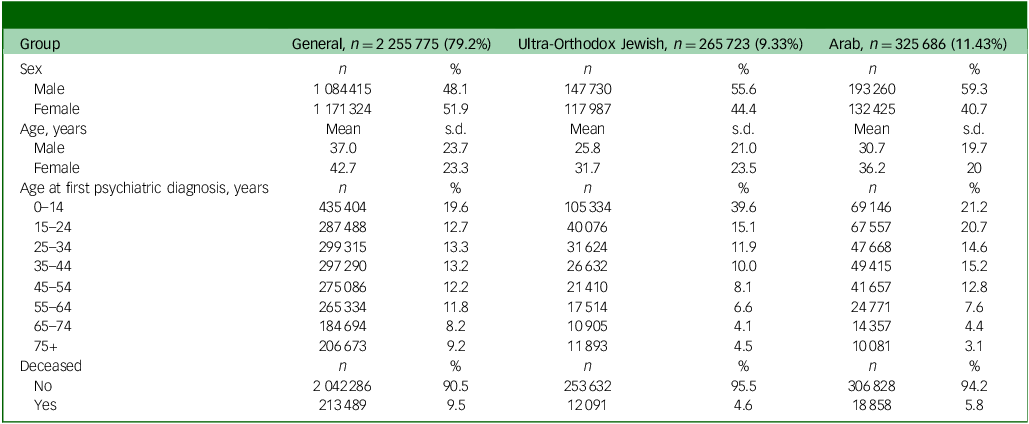
The study population comprised 2 847 184 individuals, stratified into general (79.2%), Ultra-Orthodox Jewish (9.33%), and Arab (11.43%) population groups (Table 1). The Ultra-Orthodox Jewish and Arab populations had higher proportions of men, whereas the general group was more balanced. Mean age was lowest in the Ultra-Orthodox Jewish population, followed by the Arab population; in all groups, women were older than men on average. Age at first mental health-related diagnosis also varied: nearly 40% of Ultra-Orthodox Jewish individuals were diagnosed between ages 0–14 years, compared with 21% among Arabs. By contrast, diagnoses in the general population were more broadly distributed, with a higher proportion occurring in later adulthood.
Demographic characteristics of the study population, Israel, 2012–2019

Table 1 Long description
The table presents demographic characteristics of three population groups in Israel from 2012 to 2019: General, Ultra-Orthodox Jewish, and Arab. It includes data on sex distribution, age, and age at first psychiatric diagnosis. The table has 12 rows and 12 columns. Column headers are Group, General, N, General, %, Ultra-Orthodox Jewish, N, Ultra-Orthodox Jewish, %, Arab, N, and Arab, %. Row labels include Sex, Male, Female, Age, years, Mean, s.d., Age at first psychiatric diagnosis, years, 0-14, 15-24, 25-34, 35-44, 45-54, 55-64, 65-74, 75+, and Deceased. Notable trends include higher proportions of men in the Ultra-Orthodox Jewish and Arab populations, a lower mean age in the Ultra-Orthodox Jewish population, and variations in the age at first psychiatric diagnosis across groups.
Clinical characteristics: physical/chronic and psychiatric diagnoses
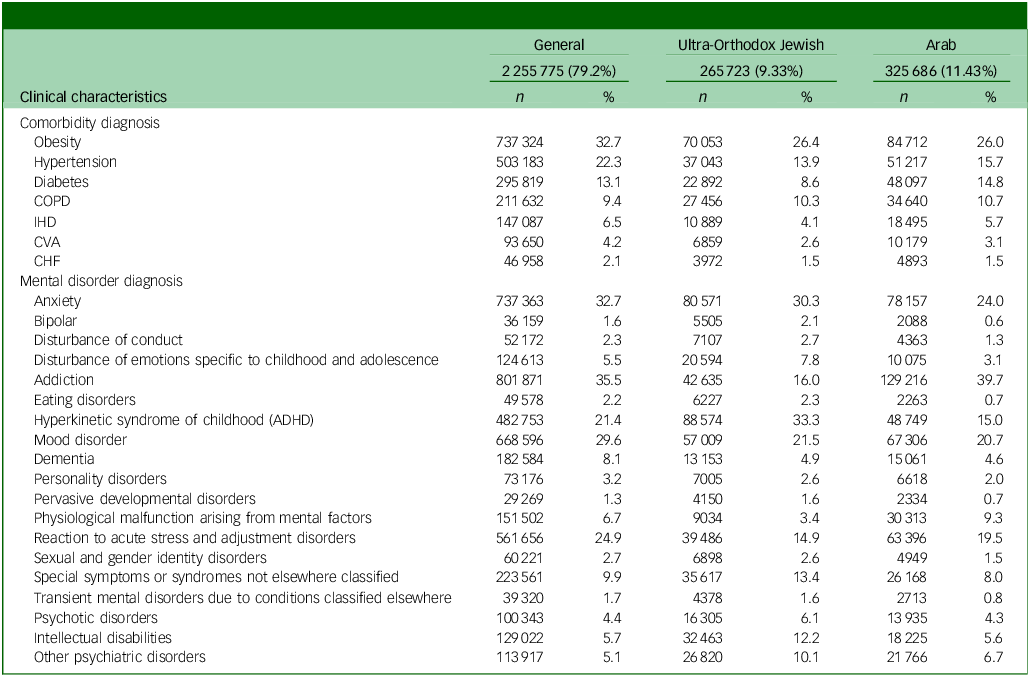
Table 2 presents physical comorbidities and mental health diagnoses by population. In the general population, obesity, hypertension and diabetes were most common. Among Arabs, obesity (26%) and hypertension (15.7%) were less prevalent than in the general population, whereas diabetes (14.8%) and COPD (10.7%) were slightly higher. The Ultra-Orthodox Jewish group had obesity rates similar to Arabs (26.4%), but lower rates of hypertension (13.9%) and diabetes (8.6%) and with cardiovascular conditions least frequent.
Clinical characteristics of the study population: physical comorbidities and mental health diagnoses, 2012–2019

Table 2 Long description
A table comparing clinical characteristics of the general, Ultra-Orthodox Jewish, and Arab populations. The table has 20 rows and 7 columns. Column headers are General, Ultra-Orthodox Jewish, and Arab, each with sub-columns for N and percent. Row labels include various clinical characteristics such as obesity, hypertension, diabetes, COPD, IHD, CVA, CHF, anxiety, bipolar disorder, disturbance of conduct, disturbance of emotions specific to childhood and adolescence, addiction, eating disorders, hyperkinetic syndrome of childhood (ADHD), mood disorder, dementia, personality disorders, pervasive developmental disorders, physiological malfunction arising from mental factors, reaction to acute stress and adjustment disorders, sexual and gender identity disorders, special symptoms or syndromes not elsewhere classified, transient mental disorders due to conditions classified elsewhere, psychotic disorders, intellectual disabilities, and other psychiatric disorders. Each row lists the number and percentage of individuals with each characteristic in the three populations.
COPD, chronic obstructive pulmonary disease; IHD, ischaemic heart disease; CVA, cerebrovascular disease; CHF, congestive heart failure; ADHD, attention-deficit hyperactivity disorder.
Regarding mental health diagnoses, addiction was the most prevalent diagnosis among mental health service users of Arab origin (39.7%), exceeding rates in both the general (35.5%) and Ultra-Orthodox Jewish (16%) groups. Mood and anxiety disorders were less prevalent in Arabs than in the general group. In the Ultra-Orthodox Jewish population, ADHD was most common (33.3%) followed by anxiety disorders (30.3%), whereas mood and addiction diagnoses were less frequent than in the general group. Intellectual disabilities were diagnosed in 12.2% of Ultra-Orthodox Jewish individuals, over twice the rate observed in the general (5.7%) and Arab (5.6%) populations.
Trends among mental health service users
Between 2012 and 2019, the number of community mental health service users increased across all populations, with the highest growth in the Ultra-Orthodox Jewish and Arab populations (approximately 1.9-fold in both), compared with 1.6-fold in the general group. Growth rates were similar for men and women in the general and Ultra-Orthodox Jewish groups. In the Arab population, the number of women users increased by 2.1-fold, compared with a 1.8-fold increase among men.
Trends in community visits to mental health professionals
During the study period, community mental health service utilisation increased across all populations, with a marked acceleration observed following the 2015 reform. In the general population, annual visits to all mental health professionals (psychiatrists, psychologists and other mental health providers) increased from 238.0 to 562.7 per 1000 residents (2.4-fold), with the sharpest growth between 2014 and 2016. Among Arabs, who had the lowest baseline rates, mental health-related visits increased 3.7-fold, the largest relative increase. Among Ultra-Orthodox Jewish individuals rates rose 2.2-fold, reaching absolute levels in 2019 slightly below those of the Arab population – 329.1 and 336.5 per 1000 residents, respectively (Fig. 1).
Between 2012 and 2019, across all populations, psychiatrists remained the most frequently consulted providers, although psychologist visits showed the largest relative increases. In the general population, psychiatrist visits rose 1.7-fold and psychologist visits 2.0-fold. In the Arab population, psychiatrist visits nearly tripled (from 80.8 to 236.8 per 1000), reaching the general population’s psychiatrist visit rate (250.2) by 2019; psychologist visits increased 5.3-fold – the sharpest rise among all groups. In the Ultra-Orthodox Jewish population, psychologist and psychiatrist visits increased 2.2- and 1.7-fold, respectively.
A distinct trend was observed for other mental health providers, a category that includes social workers, nurses and nutritionists within the HMOs, whose services were largely unavailable before 2014 and became accessible only following the reform. Using 2014 as a baseline, visit rates to these providers had risen sharply by 2019: 23.1-fold among Arabs, 6.1-fold in the Ultra-Orthodox Jewish population and 5.2-fold in the general population.
Provider utilisation patterns among men and women
Throughout the study period, women generally exhibited higher utilisation rates of mental health-related services than men across all populations, with a few exceptions in specific years and provider categories (Fig. 1). Among women, Arab women showed the largest increases across all provider types: from 2012, psychiatrist visits rose 2.8-fold, psychologist visits 5.0-fold and, from 2014, visits to other mental health providers surged 60.5-fold. Women in the general and Ultra-Orthodox Jewish populations displayed similar trends, with psychiatrist visits rising 1.6-fold in both groups, psychologist visits increasing 2.1- and 2.7-fold and other provider visits rising 5.9- and 4.7-fold, respectively.
Among men, Arab men showed the highest increases: 3.0-fold for psychiatrist visits, 5.5-fold for psychologist visits and 13.5-fold for other providers. General and Ultra-Orthodox Jewish men followed, with identical increases of 1.7-fold in psychiatrist visits, 1.8-fold in psychologist visits and 4.5- and 8.4-fold, respectively, for other providers.
Annual mental health-related visit rates (per 1000 individuals), by mental health professional, population and sex, 2012–2019. (a) Annual visit rates to all mental health professionals (psychiatrists, psychologists and other licensed providers, including social workers and mental health nurses), by population and sex; (b) Annual visit rates to psychiatrists, by population and sex; (c) Annual visit rates to psychologists, by population and sex; (d) Annual visit rates to other licensed providers (social workers and mental health nurses), by population and sex.

Trends in psychiatric medication issue rates, 2012–2019
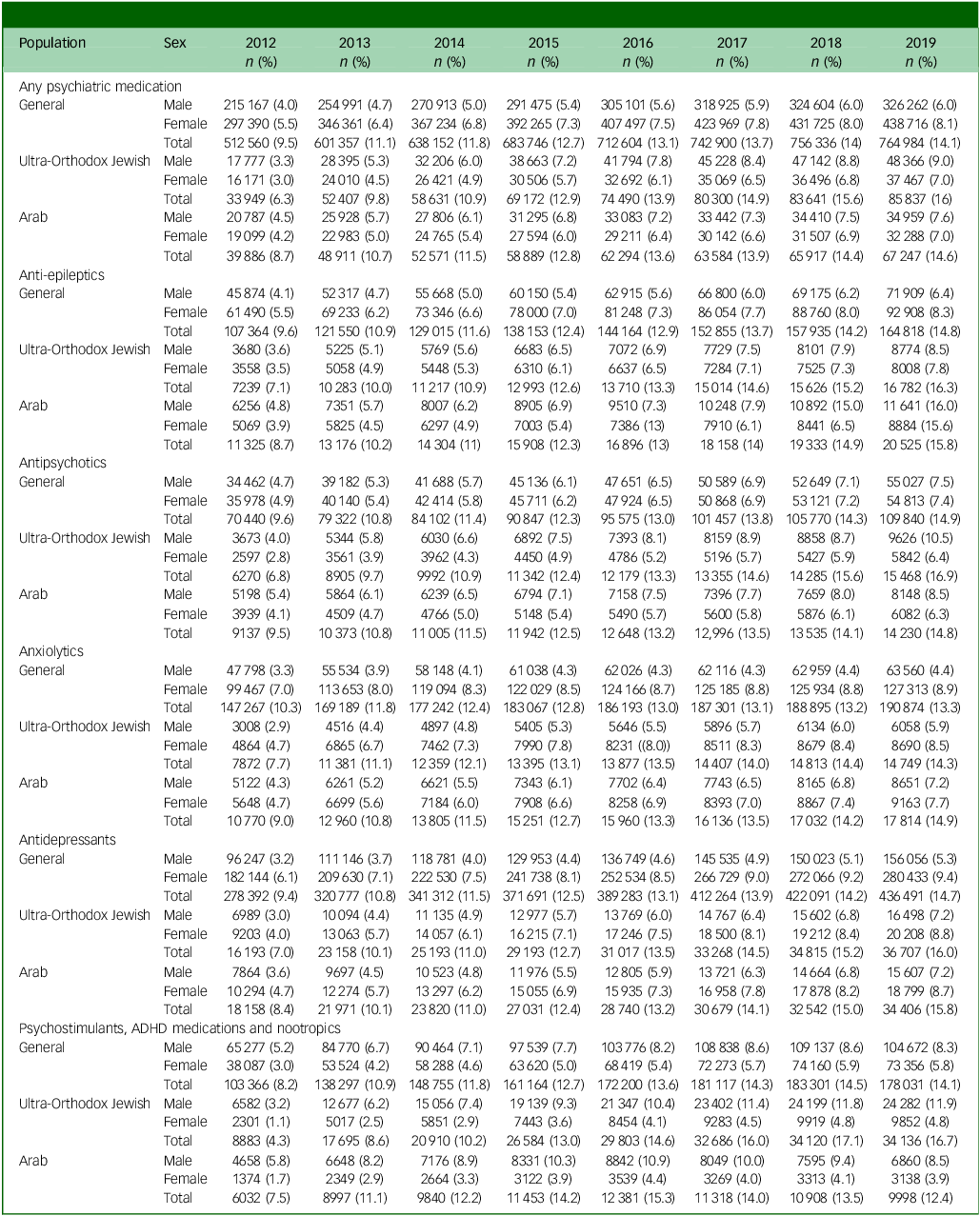
Between 2012 and 2019, the issue rate for psychiatric medications increased across all populations, with variations by medication category and population (Table 3). The Ultra-Orthodox Jewish population exhibited the most substantial relative growth, with the overall issue rate increasing 2.5-fold over the study period, from 6.3% in 2012 to 15.9% in 2019. By comparison, the rates increased from 8.7 to 14.6% (a 1.7-fold increase) in the Arab population and from 9.5 to 14.1% (1.5-fold) in the general population.
Annual rate of psychiatric prescriptions issued, by population, sex and medication category, 2012–2019

Table 3 Long description
The table presents data on the annual rate of psychiatric prescriptions issued, categorized by population (General, Ultra-Orthodox Jewish, Arab), sex (Male, Female, Total), and medication category (Any psychiatric medication, Anti-epileptics, Antipsychotics, Anxiolytics, Antidepressants, Psychostimulants, ADHD medications and nootropics) from 2012 to 2019. The table has 19 rows and 9 columns. Column headers are: Population, Sex, 2012 (%), 2013 (%), 2014 (%), 2015 (%), 2016 (%), 2017 (%), 2018 (%), 2019 (%). Row labels include categories like Any psychiatric medication, Anti-epileptics, Antipsychotics, Anxiolytics, Antidepressants, and Psychostimulants, ADHD medications and nootropics, each further divided by population and sex. Notable trends include an overall increase in the issue rate for psychiatric medications across all populations, with the Ultra-Orthodox Jewish population showing the most substantial relative growth.
ADHD, attention-deficit hyperactivity disorder.
Values are presented as n and %, where n is the total number of prescriptions dispensed annually and % indicates the issue rate per 100 individuals in the respective population subgroup.
Relative increases in several specific medication categories were most pronounced in the Ultra-Orthodox Jewish population, particularly antipsychotics (2.5-fold) and psychostimulants (3.8-fold). By contrast, the general population maintained the highest issue rates (per 1000 individuals) across all medication categories, despite exhibiting more modest relative increases.
In the Arab population, absolute rates typically fluctuated between those of the other two populations. Notably, psychostimulant use plateaued or declined after 2016 among Arabs and the general population, while continuing to rise among the Ultra-Orthodox Jewish, reaching a rate of 16.7% in 2019.
Psychiatric medication issue rates in men and women
Women across all population groups exhibited higher absolute issue rates for anxiolytics and antidepressants compared with men. Among men, the Ultra-Orthodox Jewish population consistently displayed the highest relative increases across nearly all medication categories. In this population, medication issue rates more than doubled for antipsychotics (from 4.0 to 10.6%), antidepressants (from 3.0 to 7.4%) and anti-epileptics (from 3.6 to 8.5%). The sharpest increase was observed for psychostimulants, which rose 3.7-fold over the study period. Ultra-Orthodox Jewish women also demonstrated a marked rise in the issue rate of psychostimulants, with a 4.3-fold increase – the highest relative growth across all groups.
By contrast, among Arab women the increase in total issue rates was more modest – 1.7-fold, whereas in Arab men it was 2.3-fold. Among the general population, relative increases were lower (1.3- to 1.7-fold in both men and women for most medication categories).
Discussion
This study provides the first comprehensive national assessment of changes in mental health service utilisation before and after Israel’s 2015 mental health reform among Arab and Ultra-Orthodox Jewish populations, two culturally distinct populations that have historically faced barriers to accessing mental health services. Our findings reveal substantial increases in community mental health service utilisation and psychiatric medication issue rates across all populations, with particularly pronounced relative growth among Arab citizens and Ultra-Orthodox Jews. These findings may be related to efforts undertaken as part of the 2015 mental health reform; however, alternative explanations cannot be excluded.
During the study period, the number of community mental health service users increased across all populations, outpacing population growth. Although the general population in Israel increased 1.13-fold between 2012 and 2019, 24 the number of mental health service users from this population increased 1.55-fold. Among Arabs and Ultra-Orthodox Jews, whose population in Israel grew 1.18- and 1.23-fold, respectively, 24 the number of mental health service users nearly doubled (1.91- and 1.94-fold, respectively). These trends may reflect improvements in geographic, cultural and linguistic accessibility, increased mental health awareness and a gradual decline in stigma, all of which were among the core objectives of the 2015 mental health reform.
Across all populations, the number of mental health-related community visits rose steadily, particularly after the reform. The largest relative increase was among Arab citizens (3.7-fold), suggesting a narrowing of previously documented disparities in access. Although absolute utilisation rates in this population remained lower than in the general population, the growth observed may reflect both improved access and a reduction in stigma-related barriers. Previous research has documented structural and cultural barriers to care in Arab communities, including a chronic shortage of Arabic-speaking providers, limited clinic availability in Arab-majority areas, deep-rooted stigma and a cultural framing of mental illness as a threat to family honour. Reference Khatib, Abo-Rass and Khatib21,Reference Al-Krenawi25–Reference Abo-Rass, Abu-Kaf and Nakash28 Against this background, the observed increase may be related to initial initiatives to expand culturally adapted services, recruit Arabic-speaking staff and establish local community-based clinics. Reference Elroy and Samuel29
These findings align with international evidence showing that integrating mental health into primary care systems, locating clinics within underserved communities and employing culturally and linguistically concordant providers can increase engagement among marginalised populations. Reference Healey, Stager, Woodmass, Dettlaff, Vergara and Janke30,Reference Holden, McGregor, Thandi, Fresh, Sheats and Belton31 Similar outcomes have been observed in the UK, Australia and the USA, where culturally competent outreach and localised service delivery have improved uptake in ethnic minority groups and those facing access barriers. Reference Thornicroft, Sunkel, Alikhon Aliev, Baker, Brohan and el Chammay4,Reference Mongelli, Georgakopoulos and Pato18,Reference Alegría, Nakash and NeMoyer19
In the Ultra-Orthodox Jewish and general populations, the increase in service use was steady but less pronounced – 2.2- and 2.4-fold, respectively – suggesting a gradual convergence in access and willingness to seek care. Although baseline utilisation rates in the Ultra-Orthodox Jewish population were lower, the gap with the general population appears to be narrowing.
Both Arab and Ultra-Orthodox Jewish users demonstrated a sharper increase in visits to psychologists compared with psychiatrists. This pattern may partly reflect the persistent stigma surrounding mental illness and psychiatric treatment. According to previous research, in the Arab population mental illness is often concealed to avoid social labelling, Reference Abo-Rass, Abu-Kaf, Matzri and Braun-Lewensohn6,Reference Khatib, Abo-Rass and Khatib21,Reference Nakash and Levav26–Reference Abo-Rass, Abu-Kaf and Nakash28 and individuals frequently turn to religious leaders or traditional healers rather than engage with professional mental health services. Reference Ayalon, Karkabi, Bleichman, Fleischmann and Goldfracht27,Reference Al-Krenawi, Graham, Al-Bedah, Kadri and Sehwail32,Reference Khatib and Abo-Rass33 In this context, the sharper increase in visits to psychologists may reflect the lower level of social stigma associated with psychological consultations compared with psychiatric care, because seeing a psychiatrist is often more strongly linked to severe mental illness and social labelling.
In the Ultra-Orthodox Jewish community, mental illness is often interpreted through religious or moral frameworks, with spiritual practices and communal interventions perceived as being more appropriate than clinical treatment. Reference Serfaty, Biran-Ovadia and Strous22,Reference Nakash and Levav26,Reference Rohr and Whitley34 Based on past studies, rabbinical authorities often serve as the first or only sources of support, Reference Nakash and Levav26,Reference Rohr and Whitley34 whereas professional services may be rejected as culturally or religiously incompatible, particularly if delivered by secular providers. Reference Serfaty, Biran-Ovadia and Strous22,Reference Greenberg and Witztum35 Mental distress is often concealed to avoid communal shame for the entire family, leading to reduced marriage prospects or social exclusion. Reference Serfaty, Biran-Ovadia and Strous22,Reference Nakash and Levav26,Reference Rohr and Whitley34,Reference Whitley, Jarvis, Le Blanc and Rohr36 This may lead individuals to seek mental healthcare outside their immediate neighbourhoods to ensure greater privacy and discretion, Reference Stolovy, Levy, Doron and Melamed37 and may partly explain the sharper increase in visits to psychologists than to psychiatrists, because psychological consultations may be perceived as less indicative of severe mental illness and therefore carry a lower risk of social labelling and stigma.
Our findings support this interpretation: 40% of diagnoses in this population occurred between ages 0 and 14, with ADHD the most prevalent condition. This may be rooted in the Ultra-Orthodox Jewish community’s cultural and educational settings that encourage intensive, highly structured learning and behavioural conformity from an early age. As a result, even mild attentional or hyperactive behaviours may prompt early referral and evaluation. At the same time, ADHD may be perceived as a more socially acceptable diagnosis framed in educational or behavioural terms, compared with stigmatising psychiatric labels. Reference Budman and Maeir38
Another pattern observed in both the Arab and Ultra-Orthodox Jewish populations is the start of the increase in mental health-related service utilisation in 2014, before the reform’s official enactment. One possible explanation is that this pattern reflects the HMOs’ preparatory efforts to expand infrastructure, recruit culturally competent staff and establish new community clinics in Arab and Ultra-Orthodox Jewish areas. Reference Elroy and Samuel29 Based on our findings, these preparatory activities, initiated in 2014, may have increased accessibility and laid the groundwork for the reform’s broader objectives of improving service delivery and cultural adaptation.
In 2012–2019 we also registered a sharp rise in psychiatric medication issue rates among the study populations. In the Arab population, despite lower therapeutic service utilisation, these rates increased 1.7-fold and surpassed those of the general population. Although this may reflect improved access and growing acceptance of medication, it also raises concerns about overreliance on medication as a substitute for psychotherapy. In contexts where therapy is stigmatised or unavailable, medication may be perceived as a more acceptable or expedient option for both patients and providers. A national survey conducted 6 months post-reform found Arab respondents reporting lower willingness to seek mental healthcare through HMOs and holding more negative beliefs about mental illness than Jewish respondents. Reference Ben Natan, Drori and Hochman39 Persistent difficulties in recruiting Arabic-speaking professionals Reference Elroy and Samuel29 and limited clinic availability, with Arab communities having only a tenth the number of clinics found in Jewish areas, probably contribute to this imbalance. Reference Hadad Haj Yahya, Azgad and Tamuz40,Reference Daoud and Geraisy41
A similar, though even more pronounced, trend was observed in the Ultra-Orthodox Jewish population. Having the lowest baseline issue rates, this group exhibited the steepest relative increase, reaching the highest rates by 2019, particularly for antipsychotics and psychostimulants. Despite fewer therapeutic encounters than the general and Arab populations (from 2018 onwards), Ultra-Orthodox Jewish individuals were more likely to be issued psychiatric medications. In a community where secular services may be viewed as culturally incompatible or socially risky, due to concerns about stigma, marriage prospects and communal reputation, Reference Serfaty, Biran-Ovadia and Strous22,Reference Nakash and Levav26,Reference Rohr and Whitley34–Reference Stolovy, Levy, Doron and Melamed37 medication may be accepted as a more private and less threatening intervention.
Our findings also uncovered higher utilisation of mental health services in women compared with men across all populations, with Arab women showing the largest relative increases, particularly in regard to visits to psychologists and other allied providers. This pattern mirrors international evidence showing that women are generally more likely than men to seek professional mental health support. Reference Milner, Disney, Byars, King, Kavanagh and Aitken42 The fact that Arab women not only engaged more frequently with services but also showed the most dramatic increases is consistent with the possibility that subgroups that have historically faced substantial structural and cultural barriers to accessing mental health services, such as Arab women, benefited disproportionately during the post-reform period. Although their preference for psychologists and allied providers probably reflects enduring concerns about stigma and labelling, Reference Serfaty, Biran-Ovadia and Strous22,Reference Ayalon, Karkabi, Bleichman, Fleischmann and Goldfracht27 it nonetheless indicates meaningful progress in normalising help-seeking and expanding culturally acceptable pathways into care. At the same time, it is important to ensure that these pathways are supported by a full range of non-pharmacological interventions, particularly in minority communities where such services remain limited.
Differences in the trends in mental health service utilisation and psychiatric medication issue rates observed among the Arab and Ultra-Orthodox Jewish populations may have meaningful implications for mental health policy. Aiming to promote the population’s mental well-being, policymakers should consider personalised, culturally tailored interventions that respect community-specific beliefs and structures in both Arab and Ultra-Orthodox Jewish populations. Expanding the availability of mental health clinics in Arab communities and ensuring that services are delivered by a more diverse and culturally competent workforce, including Arabic-speaking professionals and female providers where appropriate, could help further reduce existing gaps in access. Integrating cultural competence training into psychiatry and psychology residency programmes would ensure that future professionals are better equipped to serve minority populations. At the same time, policies should prioritise greater access to non-pharmacological and rehabilitative care, thereby countering the current reliance on medication and supporting holistic recovery. Incorporating gender-sensitive initiatives, such as women-only services and targeted stigma-reduction campaigns, could further lower barriers to care and encourage help-seeking among underrepresented groups. Finally, to monitor effectiveness, equity-focused audits should be introduced to provide ongoing assessments of reform outcomes and ensure that progress in reducing disparities is being achieved in both Arab and Ultra-Orthodox Jewish populations.
Limitations
This descriptive study examined national trends in community mental health service use and psychiatric medication issue before and after Israel’s 2015 mental health reform. Although it analysed community mental health utilisation trends across broad population groups, the study did not account for potential heterogeneity within each group. Additionally, this study lacks data on private mental health service use. Because individuals may seek care from private providers, the exclusion of this sector could have led to an underestimation of overall service utilisation. Changes in the use of private mental health services over time may have introduced a substitution effect, whereby some individuals shifted from public to private care. Because private sector data were not available, we could neither assess whether such changes occurred nor evaluate their potential impact on the observed temporal trends in public sector utilisation. Finally, the results of this research should be interpreted with a degree of caution, because they do not conclusively prove that the observed changes were caused by mental health reform alone. Additional secular trends, such as improvements in educational attainment, health literacy and exposure to mental health information (e.g. through digital media), particularly within traditionally underserved populations, may have contributed to reduced stigma and increased help-seeking over time. Further complementary research, such as controlled or longitudinal studies, could help to better isolate the reform’s impact.
Population group classification was based on administrative registry data and geographic proxies rather than on individual self-identification. Although this approach is widely used in Israeli health services research, it may be subject to misclassification, particularly among Arab and Ultra-Orthodox Jewish individuals residing outside predominantly Arab or Haredi localities. In addition, the sensitivity and specificity of the HMO registry classification algorithm were not available to the investigators and thus could not be assessed. Therefore, the potential for non-differential misclassification should be considered when interpreting subgroup comparisons.
In conclusion, by examining longitudinal trends in community mental health service utilisation and medication issue rates in diverse populations, this study provides descriptive evidence of changes in service use during the period 2012–2019, encompassing the pre-and post-implementation phases of the 2015 mental health reform. The substantial increases observed during this period, particularly among Arab and Ultra-Orthodox Jewish populations, occurred alongside the implementation period of the 2015 mental health reform and may be associated with system-wide efforts to expand access to mental health services among historically underserved groups. At the same time, despite these improvements, certain disparities in access and utilisation persist in both the Arab and Ultra-Orthodox Jewish populations. Their effective elimination will require continuous evaluation and policies designed to address emerging challenges and the distinct needs of each population.
Data availability
The data used in this study are not publicly available due to data governance, confidentiality and data-sharing restrictions. The study used data obtained from multiple healthcare organisations, including the four Israeli HMOs and the MOH. The data are securely maintained by the national organisation responsible for their management, and are not held by the authors. Therefore, the authors are unable to share the underlying data-set.
Acknowledgements
We thank Lizie Kimron and Liraz Olmerto from the Data and Analytics Division at Sheba Medical Centre for their contribution to the statistical analysis, and Iryna Rudyk from Bar-Ilan University for her support with language editing. No artificial intelligence tools were used to assist in the preparation, writing, analysis or editing of this manuscript.
Author contributions
All authors have contributed to and approved the final version of the manuscript. R.S. interpreted the results, wrote the first draft of the manuscript and edited the final version. A.E.A.C. devised the study concept and design, collected data, coordinated data collection and revised the final version of the article. A.K., G.B., J.L., T.S. and M.S.V. coordinated data collection and revised the final version of the article. A.Z. managed statistical analysis and revised the article. O.W. and R.M. devised the study concept and design, coordinated data collection, supervised the project and revised the final version of the article.
Funding
This research was funded by the Israel National Institute for Health Policy Research (no. R/126/2018). The funder had no role in the design and conduct of the study; collection, management, analysis and interpretation of the data; or preparation, review or approval of the manuscript.
Declaration of interest
None.
Ethical standards
This study was approved by the Helsinki Committees of the Israeli MOH and HMOs. All data were de-identified before analysis. Because this was a secondary analysis of anonymised data, informed consent was not required.


 Open access


eLetters
No eLetters have been published for this article.