Teachers and researchers have long recognized that “lexical competence is at the heart of communicative competence” (Meara, Reference Meara, Brown, Malmkjær and Williams1996a, p. 35) and that vocabulary knowledge is a reliable predictor of learners’ proficiency in a second or foreign language (L2). Yet, research on vocabulary and language ability has almost exclusively focused on the skill of reading. To fully uncover the role of vocabulary knowledge in L2 proficiency, an empirical investigation of the extent to which vocabulary knowledge contributes to other language skills is needed. The present study reports on such an investigation that explored the contribution of depth and breadth of vocabulary knowledge to advanced L2 learners’ listening comprehension in English.
Although a considerable number of studies have found vocabulary knowledge to be a significant determinant of reading success in the L2 and have established specific vocabulary size and lexical coverage targets for adequate comprehension (e.g., Hazenberg & Hulstijn, Reference Hazenberg and Hulstijn1996; Hirsh & Nation, Reference Hirsh and Nation1992; Hu & Nation, Reference Hu and Nation2000; Laufer, Reference Laufer, Lauren and Nordman1989, Reference Laufer, Arnaud and Béjoint1992), little research has addressed such issues with regard to listening (e.g., Bonk, Reference Bonk2000). The present study is thus motivated by a lack of empirical research on the role of vocabulary knowledge in listening comprehension and by the ensuing need to explore the extent to which different dimensions of learners’ vocabulary knowledge will contribute to L2 learners’ listening success.
THEORETICAL BACKGROUND
Vocabulary Knowledge
The theoretical point of departure for this study is the construct of receptive vocabulary knowledge and the basic distinction between breadth and depth of vocabulary. Although the field suffers from a lack of consensus on the manner by which to capture the multidimensional nature of vocabulary knowledge, this distinction appears to be commonly accepted (e.g., Anderson & Freebody, Reference Anderson, Freebody and Guthrie1981; Qian, Reference Qian1999, Reference Qian2002; Read, Reference Read1993; Wesche & Paribakht, Reference Wesche and Paribakht1996).
Breadth of vocabulary knowledge is defined as the size of a learner’s vocabulary—that is, the number of words for which the learner has at least some knowledge of meaning. Meara (Reference Meara, Brown, Malmkjær and Williams1996a) argued that vocabulary size is the basic dimension of a learner’s lexical competence and emphasized that learners with large vocabularies are more proficient language users than learners with smaller vocabularies. Because vocabulary size is such a critical part of language proficiency, it is important to develop tests that can provide reliable estimates of the number of words learners know. Although no standardized vocabulary test exists, considerable progress has been made in developing and validating test formats that can provide an indication of the level of a learner’s overall vocabulary knowledge based on sample words from frequency lists (e.g., the Vocabulary Levels Test, the Productive Levels Test, the Eurocentres Vocabulary Size Test, and the Vocabulary Size Test). Breadth or size tests provide basic measures of a learner’s overall vocabulary knowledge, but they do not give clear indications of how well individual words are known.
In contrast, depth of vocabulary knowledge is defined as the quality of lexical knowledge that reflects how well a learner knows individual words or how well words are organized in the learner’s mental lexicon. Researchers have noted the complexity and multidimensionality of word knowledge and have approached the construct of depth in a number of different ways (see Read, Reference Read, Bogaards and Laufer2004).
In some studies, depth of vocabulary knowledge has been defined in relation to stages or degrees on a scale or continuum. Researchers who adopted this approach have essentially attempted to capture degrees of word knowledge with a primary focus on meaning through the use of vocabulary measures with varying degrees of sensitivity (e.g., Haastrup & Henriksen, Reference Haastrup, Henriksen, Haastrup and Viberg1998; Joe, Reference Joe1995) or through self-assessment scales (e.g., Wesche & Paribakht, Reference Wesche and Paribakht1996).
Another approach to the construct of depth offers a more extensive view of word knowledge by incorporating not only knowledge of semantic features but also of a wide range of other aspects of the word, such as its orthographic, phonological, morphological, syntactic, collocational, and pragmatic characteristics. Frameworks that specify multiple components of word knowledge (e.g., Nation, Reference Nation1990, Reference Nation2001) have then served as the theoretical underpinning for studies that address learners’ depth of vocabulary knowledge (e.g., Schmitt, Reference Schmitt1998, Reference Schmitt1999; Schmitt & Meara, Reference Schmitt and Meara1997; Webb, Reference Webb2005, Reference Webb2007).
A third approach to depth conceptualizes the construct as the degree to which words are integrated into the learner’s mental lexicon and reflects the learner’s ability to link the word to other related words. Learners’ associative behavior is perceived as a reflection of their depth of vocabulary knowledge, and researchers have taken the degree of nativelikeness in learner responses in word association tests as an indication of depth. However, it seems that studies of word association have approached the construct of depth from two different perspectives: a word-oriented perspective that defines depth in relation to individual words (e.g., Haastrup & Henriksen, Reference Haastrup and Henriksen2000; Henriksen, Reference Henriksen1999; Wolter, Reference Wolter2001) and a holistic, lexicon-oriented perspective that defines depth as a property of the lexicon as a whole (e.g., Meara, Reference Meara, Brown, Malmkjær and Williams1996a, Reference Meara1996b; Meara & Wolter, Reference Meara and Wolter2004; Read, Reference Read1993, Reference Read and Kunnan1998; Wilks & Meara, Reference Wilks and Meara2002).
From an assessment perspective, the fundamental question is whether the particular words included in a vocabulary test are interesting in their own right or whether they comprise a sample that allows for more general inferences about the state of a learner’s vocabulary knowledge. A widely adopted research tool used to investigate L2 learners’ depth of vocabulary knowledge is Read’s (Reference Read1993, Reference Read and Kunnan1998) Word Associates Test. Although the format measures knowledge of individual words through a receptive word association task, it is essentially an attempt to assess learners’ general qualitative knowledge of the lexicon in a practical fashion. This tool has been used in studies of L2 vocabulary knowledge, either in its original form (e.g., Nurweni & Read, Reference Nurweni and Read1999; Qian, Reference Qian1999, Reference Qian2002) or in modified versions (e.g., Greidanus, Bogaards, van der Linden, Nienhuis, & de Wolf, Reference Greidanus, Bogaards, van der Linden, Nienhuis, de Wolf, Bogaards and Laufer2004; Greidanus & Nienhuis, Reference Greidanus and Nienhuis2001; Schoonen & Verhallen, Reference Schoonen and Verhallen1998).
The present study addresses vocabulary knowledge from the dimensions of breadth and depth in the vocabulary and operationalizes depth of vocabulary knowledge as the scores on a modified version of the Word Associates Test.
Listening Comprehension
It is generally acknowledged that understanding aural text is an inferential process in which the listener actively constructs meaning through the employment of two major knowledge sources: linguistic (e.g., phonological, lexical, syntactic, semantic, or pragmatic knowledge) and nonlinguistic (e.g., knowledge of the context, topic, or general knowledge of the world) (Buck, Reference Buck2001; Rost, Reference Rost2002; Vandergrift, Reference Vandergrift2007). To make sense of spoken input, the listener applies a variety of the different types of knowledge through top-down and bottom-up processes, and it is assumed that successful listening comprehension is the result of a complex interaction between top-level and bottom-level cues.
The degree to which top-down or bottom-up processes are applied is believed to depend on factors such as the purpose for listening, language proficiency, and the context of the listening activity (Vandergrift, Reference Vandergrift2007), and the success of the processing is arguably affected by the speed and automaticity with which it happens (Buck, Reference Buck2001; Segalowitz, Reference Segalowitz, Doughty and Long2003). In real time, there is little time for conscious and controlled processes in listening comprehension. Given the real-time nature and online demands of listening as well as the limited processing capacity of working memory, L2 learners who are unable to process the input automatically and to efficiently integrate top- and bottom-level cues may experience listening difficulties.
There is evidence to suggest that low-proficiency language learners with limited knowledge of the L2 favor a bottom-up approach in which they attempt to construct meaning by exclusively focusing on smaller units (e.g., lexical or syntactic) in the input (Conrad, Reference Conrad1985; Lynch, Reference Lynch1998; Rubin, Reference Rubin1994). However, such a narrow focus on bottom-level cues may cause processing to break down and comprehension to suffer (Buck, Reference Buck2001), as listeners who fail to integrate top-level cues have no access to contextual information that might be crucial to their comprehension (Vandergrift, Reference Vandergrift2007). Furthermore, these learners, who focus exclusively on bottom-level cues, deprive themselves of the opportunity to compensate for lack of linguistic knowledge through the use of cognitive and metacognitive strategies. This observation is supported by research findings that indicate that less skilled listeners tend to approach the input through mental word-to-word translation (Vandergrift, Reference Vandergrift2003b), whereas more skilled listeners appear to make greater use of cognitive and metacognitive strategies; that is, they draw on top-level cues (Chamot, Reference Chamot2005; Vandergrift, Reference Vandergrift2003a). The importance of metacognition for L2 listening is further supported by the findings of Vandergrift, Goh, Mareschal, and Tafaghodatari (Reference Vandergrift, Goh, Mareschal and Tafaghodatari2006).
As emphasized by Bonk (Reference Bonk2000), however, top-level processing depends, to some degree, on the information obtained through bottom-level processing. If listeners have not recognized a certain number of words in the input though bottom-level processing, they will not be able to draw on top-level cues, access the relevant contextual information, and construct an adequate meaning representation of the text. Thus, word segmentation and recognition form the basis of spoken language comprehension (Rost, Reference Rost2002).
Word recognition essentially involves isolating groups of sounds in the stream of speech (i.e., word segmentation) and accessing knowledge of word meanings (Buck, Reference Buck2001; Rost, Reference Rost2002). Spoken language is often characterized by assimilation as well as unclear articulation, and lexical units are not necessarily as clearly marked as in written text, which means that the listener is often forced to make inferences about word boundaries based on incomplete acoustic information. This lack of clarity of spoken language makes word segmentation an extremely challenging task for L2 listeners. The findings of Goh (Reference Goh2000) clearly emphasize the difficulty of the task: This study investigated listening problems of English as a foreign language (EFL) learners and found that failure to recognize known words in the input is one of the most significant obstacles to comprehension identified by the listeners themselves.
In light of the fact that word recognition is a prerequisite for spoken language comprehension, it may be hypothesized that learners’ knowledge of words will be strongly associated with their listening success. However, knowledge of a word is no guarantee that the word will actually be recognized in continuous speech. Moreover, recognizing most of the words in the input does not guarantee comprehension, as many other factors also affect L2 listening comprehension. Some additional factors have been shown to be the following: first language (L1) listening ability (Vandergrift, Reference Vandergrift2006), text type (Shohamy & Inbar, Reference Shohamy and Inbar1991), background knowledge and topic familiarity (e.g., Schmidt-Rinehardt, Reference Schmidt-Rinehart1994), and purpose of listening (e.g., whether learners listen for local or global information in the input; Shohamy & Inbar).
This review of the listening comprehension literature informs the present study in at least two ways. First, it demonstrates that the listening test should cover a variety of text types and topics and should, at a minimum, address the ability to (a) process samples of realistic spoken language, automatically and in real time; (b) understand linguistic information in the texts (e.g., specific words and phrases); (c) understand the gist of the texts; and (d) understand inferred meanings and nonstated implications in the texts. To some extent, this ability reflects what Buck (Reference Buck2001) defined as a default listening construct. The listening test used in the present study clearly involves such a construct.
Second, it is emphasized in the review of the listening comprehension literature that vocabulary knowledge is just one of several factors that contribute to successful listening comprehension. However, it is important to explore precisely how strong the association is between vocabulary knowledge and listening: This is the focus of the present study. Some studies (e.g., Bonk, Reference Bonk2000; Mecartty, Reference Mecartty2000) have addressed this issue from different perspectives, but, in general, little research has been conducted on the role of vocabulary in listening. For this reason, the role of vocabulary in L2 reading will also be considered.
The Role of Vocabulary Knowledge in Reading and Listening
Results from reading research have documented a strong relationship between vocabulary knowledge and reading comprehension and have stressed that vocabulary size is an instrumental factor for reading success in the L2. In general, studies have found significant correlations between vocabulary size and reading comprehension tests in the range from .50 to .85 for EFL learners from different proficiency levels (e.g., Henriksen, Albrechtsen, & Haastrup, Reference Henriksen, Albrechtsen and Haastrup2004; Laufer, Reference Laufer, Arnaud and Béjoint1992; Qian, Reference Qian1999, Reference Qian2002; Stæhr, Reference Stæhr2008). Moreover, Qian’s (Reference Qian1999, Reference Qian2002) studies indicate that, in addition to the prediction provided by vocabulary size, depth of vocabulary knowledge can contribute significantly to predict levels of academic reading comprehension in the L2.
Other studies have attempted to estimate how many words learners need to know to obtain adequate reading comprehension of various kinds of texts. Laufer (Reference Laufer, Arnaud and Béjoint1992) found that knowing 3,000 word families represents an absolute minimum for reading unsimplified text,Footnote 1 whereas Hirsh and Nation (Reference Hirsh and Nation1992) estimated that a vocabulary of 5,000 words would be needed to read shorter novels. Several other studies have similarly investigated the notion of a lexical coverage threshold for reading to determine what percentage of words in a given text learners would need to recognize to achieve adequate or reasonable comprehension of the text. These studies have found that learners needed to reach a threshold of 95% word token coverage (Laufer, Reference Laufer, Lauren and Nordman1989), 98–99% coverage in shorter novels (Hirsh & Nation), and 98% coverage in a fiction text (Hu & Nation, Reference Hu and Nation2000). Schmitt, Jiang, and Grabe (Reference Schmitt, Jiang and Grabein press) explored the relationship between the percentage of vocabulary known in a text and the level of reading comprehension of that text. In this study, 661 participants completed a yes/no vocabulary test based on words drawn from two texts, then read the two texts, and completed a reading comprehension test for each text, which contained multiple-choice and information transfer items. The findings suggest a linear relationship between lexical coverage and degree of comprehension within the coverage range of 90–100%, but no evidence of a vocabulary threshold was found. Additionally, the results indicate that a lexical coverage of 98% might be a reasonable target for readers of academic text.
Nation (Reference Nation2006) similarly argued that 98% text coverage would be needed for most learners to obtain adequate reading comprehension. Taking 98% as the ideal coverage for text comprehension and using frequency lists from the British national corpus (BNC), Nation estimated that a vocabulary of 8,000–9,000 word families would be needed to understand written texts (i.e., novels and newspapers).
Although the results from these studies emphasize that vocabulary knowledge is a determining factor for reading success, such findings simply cannot be transferred to listening; that is, it cannot be assumed that vocabulary knowledge plays an equally significant role and that identical vocabulary size or lexical coverage thresholds will apply to listening comprehension. There is no doubt that listening involves a set of skills in its own right (Lund, Reference Lund1991) and that “listening is not merely an auditory version of reading” (Lynch & Mendelsohn, Reference Lynch, Mendelsohn and Schmitt2002, p. 194). Although some of the same processes are believed to underlie reading and listening comprehension (Bejar, Douglas, Jamieson, Nissan, & Turner, Reference Bejar, Douglas, Jamieson, Nissan and Turner2000) and although empirical studies have reported considerable degrees of similarity between reading and listening ability (e.g., Buck, Reference Buck1992), the two skills are different in terms of both the linguistic characteristics of the input and the processing conditions.
The notion that there is a difference between the role of vocabulary in reading and in listening is suggested by Mecartty (Reference Mecartty2000), who found lexical knowledge to be more highly correlated with reading than with listening in a study of Spanish as a L2. However, only a few studies (e.g., Bonk, Reference Bonk2000; Kelly, Reference Kelly1991) have explicitly investigated the degree to which vocabulary knowledge is important for successful listening comprehension in EFL and whether there is a lexical threshold for adequate listening comprehension.
Kelly (Reference Kelly1991) analyzed listening errors made by advanced EFL learners when transcribing passages from BBC radio news recordings and concluded that lack of vocabulary knowledge is the main obstacle to successful listening comprehension for these learners. However, it is questionable whether Kelly’s conclusion can be sufficiently supported by error analysis research and by a corpus of only 148 listening errors of which 100 were produced by a single participant.
Bonk (Reference Bonk2000) similarly investigated the relationship between vocabulary knowledge and listening comprehension in EFL but attempted to determine a lexical coverage threshold below which it would be impossible for learners to achieve good listening comprehension. Fifty-nine Japanese learners of English listened to four text passages of increasing lexical difficulty, and Bonk examined the relationship between the amount of familiar lexis in the listening texts (through dictation) and gist comprehension (through recall protocols) of the texts. The recall protocols were rated on a holistic scale from 1 (inferior comprehension) to 4 (good comprehension), the latter being assigned to participants who “clearly had a complete understanding of the entire story, mentioning the important main idea and several correct details” (p. 21). A definite minimum vocabulary threshold for listening comprehension was not found, but the study showed that participants who recognized fewer than 80% of the different lexical words (nouns, verbs, adjective, and adverbs) in the input texts were unlikely to achieve high comprehension scores. Additionally, the data revealed that 60% of the participants who knew more than 90% of the lexical word types achieved good comprehension. According to Schmitt (Reference Schmitt2008), these figures suggest that 95% of the running words (i.e., word tokens) in the texts had to be known to enable most of the participants to obtain good comprehension scores. In general, high dictation scores were associated with better comprehension, although the data only produced a modest, but significant, Kendall’s tau correlation of .45 between dictation scores and comprehension scores. The reason for this modest correlation was the fact that some participants were able to achieve good comprehension on the basis of recognizing less than 75% of the lexical word types in a text. In contrast, there were several examples of participants who recognized more than 90% of lexical words but did not achieve good comprehension. These results indicate that the relationship between vocabulary knowledge and listening comprehension is complex and by no means an unequivocal one and that further investigation into thresholds of lexical coverage and vocabulary size for adequate listening comprehension is necessary.
Other studies of listening have attempted to determine such thresholds through the analysis of spoken corpora. Schonell, Meddleton, and Shaw (Reference Schonell, Meddleton and Shaw1956) investigated Australian spoken English and found that 2,000 word families provided as high as 99% lexical coverage of spoken discourse. On the basis of this study, a vocabulary size of 2,000 word families has generally been believed to be sufficient for a learner to understand everyday spoken discourse in English. However, a more recent analysis of the Cambridge and Nottingham corpus of discourse in English (CANCODE) conducted by Adolphs and Schmitt (Reference Adolphs and Schmitt2003) revealed that 2,000 word families provided a lexical coverage of less than 95% and that 3,000 word families would result in a lexical coverage of around 96%. These results led Adolphs and Schmitt to conclude that “more vocabulary is necessary in order to engage in everyday spoken discourse than was previously thought” (p. 425). This conclusion was reinforced by Nation’s (Reference Nation2006) study of two parts of the Wellington corpus of spoken English. Using frequency lists from the BNC, he estimated that 6,000–7,000 word families are needed to cope with unscripted spoken English. These figures are based on the notion that a lexical coverage of 98% is needed to understand spoken and written texts.Footnote 2
These studies on the role of vocabulary in reading and listening point to the need to recognize that at least two factors complicate a direct comparison of the findings: (a) different criteria for what constitutes adequate, reasonable, or good comprehension have been applied and (b) different types of written and spoken input have been used. Both of these issues will be dealt with in the presentation and discussion of the results of the present study.
RESEARCH QUESTIONS
The current study builds on previous research on vocabulary knowledge and its role in reading and listening, with the aim of contributing to the currently underresearched picture of the relationship between EFL learners’ vocabulary knowledge and their listening success. The study was designed to address the following research questions:
1. To what extent are vocabulary size and depth of vocabulary knowledge associated with listening comprehension?
2. To what extent does depth of vocabulary knowledge, in addition to vocabulary size, contribute to successful listening comprehension?
3. How much vocabulary is needed for adequate listening comprehension?
The design of the present study was inspired by Qian (Reference Qian1999, Reference Qian2002), who investigated the relationship between vocabulary and reading comprehension. The instruments used to tap depth and breadth of vocabulary knowledge are similar to the ones used by Qian, and the analyses carried out for the first two research questions resemble those of Qian.
METHOD
Participants
The study comprised 115 Danish EFL learners (90 female and 25 male) who were first-year students of English at the Copenhagen Business School. The participants had similar educational backgrounds, and, being at the university level, they had received at least 8 years of formal English instruction in primary and secondary school. At the start of their English studies at the Copenhagen Business School, students are expected to be at least a B2 (i.e., upper intermediate) on the common European framework of reference for languages (CEFR). Additionally, 40% of the participants had lived for more than 5 months in an English-speaking country, which means that the participants were expected to be fairly advanced learners of English.
Instruments
The participants were given three paper-and-pencil tests: a listening comprehension test, a vocabulary size test, and a depth of vocabulary knowledge test.
Listening Comprehension Test. To assess the participants’ listening comprehension, a standardized listening test from the Cambridge certificate of proficiency in English (CPE) (2002) was used. The CPE listening test is designed for the C2 (i.e., very advanced) level of the CEFR and is comprised of different target-language situations that address a wide range of skills involved in listening comprehension at the most advanced level (e.g., listening for gist, detail, stated and nonstated opinion, as well as making inferences). The test, which takes approximately 40 min to complete, contains 28 questions and consists of four parts that cover a variety of different text types. Part 1 consists of one short dialogue and three short monologues of an informal and semiformal nature (they last from 45 s to 1 min and contain between 142 and 195 words). Part 2 is composed of a semiformal monologue in the form of a radio broadcast of an informative nature (it lasts 3.25 min and contains 558 words). Part 3 consists of a radio broadcast interview of an informal nature (it lasts 3.15 min and contains 665 words). Part 4 contains an informal discussion (it lasts 3.30 min and contains 665 words). Each text, which was recorded on a CD, was played twice. Additionally, the recordings contained a variety of accents. The task types used in the test were multiple choice, sentence completion, and three-way matching.
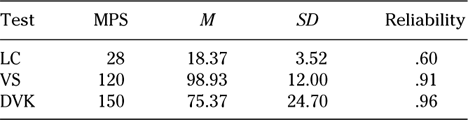
The rationale for selecting this particular test was threefold. First, this test belongs to the well-established Cambridge CPE examination and has therefore undergone thorough validation in order to be part of this program (see Boroughs, Reference Boroughs, Weir and Milanovic2003). Second, the participants in the study were advanced learners of English and required a high-proficiency listening test. Because this test was designed for the highest CEFR level, it appeared to cover the appropriate proficiency level. The statistics, which are provided in Table 1, support this assumption. Third, because this test had to function as a general measure of advanced listening comprehension, it needed to address different listening skills and to contain a wide range of different text types and target-language situations. The CPE listening test appeared to meet these goals.
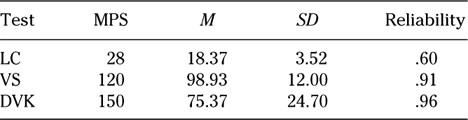
Means, standard deviations, and reliability coefficients (N = 115)
Note
MPS = maximum possible score, LC = listening comprehension, VS = vocabulary size, and DVK = depth of vocabulary knowledge.
Vocabulary Levels Test. This test (version 2; developed by Schmitt, Schmitt, & Clapham, Reference Schmitt, Schmitt and Clapham2001) was used to assess the learners’ vocabulary size or breadth of vocabulary knowledge. The test is composed of five separate sections, which represent four levels of word frequency and one level of academic words. In other words, this test measures learners’ receptive knowledge of word meaning at these distinct vocabulary frequency levels: the 2,000 level, the 3,000 level, the 5,000 level, and the 10,000 level, as well as academic words from the Academic Word List (Coxhead, Reference Coxhead2000). Each vocabulary level contains 60 words and 30 definitions presented in groups of 6 words and 3 definitions. For each of these groups, participants were to match the words to the definitions. The test results thus provide an indication of the proportion of the total number of words at each frequency level that the learner knows and can provide a profile of a learner’s vocabulary.
For the purpose of this study, it was decided to exclude the participants’ scores on the academic word level from the final analysis. The words at this level were identified based on a separate academic corpus (see Coxhead, Reference Coxhead2000) and have general English frequencies that range from the 2,000 band to the 10,000 band. These words thus occur within the other frequency bands in the Vocabulary Levels Test and should not be seen as adding to the overall vocabulary size.
There were two reasons for selecting the Vocabulary Levels Test as a measure of vocabulary size in the study. First, as noted by several researchers (e.g., Meara, Reference Meara, Brown, Malmkjær and Williams1996a; Schmitt et al., Reference Schmitt, Schmitt and Clapham2001), this test is the closest thing we have to an accepted vocabulary test in English, which is evidenced by the fact that it has been widely used in vocabulary research contexts (e.g., Laufer, Reference Laufer, Arnaud and Béjoint1992; Qian, Reference Qian1999, Reference Qian2002; Schmitt & Meara, Reference Schmitt and Meara1997). Second, the particular version of the test adopted here has undergone an extended validation process by Schmitt et al.: They found that this version of the test can provide a valid estimate of learners’ vocabulary knowledge at the different frequency levels.
Depth of Vocabulary Knowledge Test. This test was specifically developed in a format similar to the Word Associates Test (Read, Reference Read1993, Reference Read and Kunnan1998). Read (Reference Read2000) noted that a guiding principle for the selection of target words used in the Word Associates Test is “the frequency and usefulness of the words in the language” (p. 185). Because the participants were all university students, words from the Academic Word List (Coxhead, Reference Coxhead2000) were believed to be useful for these particular learners. The test thus contained 50 adjectives and verbs selected from among the headwords in the Academic Word List. To obtain a representative sample of these words, five words from each of the 10 sublists were selected. The target words are mainly high-frequency words that appear in the 1,000–7,000 ranges in the BNC frequency lists. (Two words are in the BNC 1,000 list, 14 words are in the BNC 2,000 list, 8 words are in the BNC 3,000 list, 15 words are in the BNC 4,000 list, 8 words are in the BNC 5,000 list, 2 words are in the BNC 6,000 list, and 1 word is in the BNC 7,000 list.Footnote 3)
The Word Associates Test format proposed by Read (Reference Read1993), and on which the depth of vocabulary knowledge test is based, has been adopted by a number of researchers (e.g., Greidanus et al., Reference Greidanus, Bogaards, van der Linden, Nienhuis, de Wolf, Bogaards and Laufer2004; Greidanus & Nienhuis, Reference Greidanus and Nienhuis2001; Schoonen & Verhallen, Reference Schoonen and Verhallen1998). Read (Reference Read1993, Reference Read and Kunnan1998) developed two formats of the Word Associates Test. In the first format, four associates (i.e., words related to the target word) were to be identified among eight options. To reduce guessing, in the second format the eight associates and distracters were split into two groups of four, and the distribution of the associates was randomized in the two groups. However, Read’s validation of both versions of the test suggested that learners’ willingness to guess may play a significant role in their test performance. Subsequent versions of the format developed by Schoonen and Verhallen, Greidanus and Nienhuis, and Greidanus et al. have all been based on the 1993 version of the Word Associates Test and have attempted to address the guessing problem by providing fewer associates or by varying the number of associates. Therefore, the depth of vocabulary knowledge test was similarly based on Read’s Reference Read1993 version of the Word Associates Test and contained fewer associates and more distracters to minimize the chance of guessing.
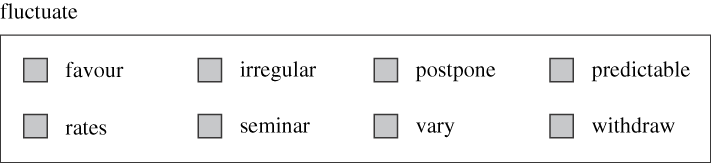
As illustrated in Figure 1, each stimulus word was accompanied by eight potential associates, three of which were more closely related to the stimulus word than the other five. Participants were required to select the three associates by making a mark in the relevant boxes. Similar to Read’s Word Associates Test (1993, 1998) and to later versions of this test (e.g., Greidanus et al., Reference Greidanus, Bogaards, van der Linden, Nienhuis, de Wolf, Bogaards and Laufer2004; Greidanus & Nienhuis, Reference Greidanus and Nienhuis2001; Schoonen & Verhallen, Reference Schoonen and Verhallen1998), possible relations between the stimulus word and the associates were syntagmatic (e.g., fluctuate and rates), paradigmatic (e.g., fluctuate and vary), and analytic (e.g., fluctuate and irregular). Additionally, if the stimulus word was polysemous, the associates comprised at least two different meanings of the stimulus word. This was the case in 22 of the 50 items. Participants were awarded 1 point for each correctly selected associate, for a maximum possible score of 150.
Example item from the depth of vocabulary knowledge test.

The depth of vocabulary knowledge test was pretested with 11 native speakers of English in two phases. In the first phase, six native speakers took the test and were interviewed about their responses afterward. Two of the native speakers were interviewed together, allowing them to discuss the problematic items with each other, whereas the rest of the participants were interviewed individually. For each test item, a high level of native-speaker agreement on the associates was required for the item to remain in the test. Test items were revised on the basis of responses and interviews with these six native speakers. In the second phase, five native speakers took the revised version of the test and chose the expected associates for almost all of the items. Minor adjustments were made to a few items and this led to the final version of the depth of vocabulary knowledge test.
Procedure
The three tests were administered to the participants in one session, which lasted about 2 h. A large number of testing sessions were held, which involved groups of different sizes, ranging from 1 to 18. All of the testing sessions were administered by the researcher, who made sure that the participants received the same amount of time as well as identical instructions.
RESULTS
Descriptive and Reliability Statistics
Table 1 presents the means and standard deviations of the test results. Additionally, this table reports Cronbach’s alpha reliability coefficients for the tests as a measure of their internal consistency.
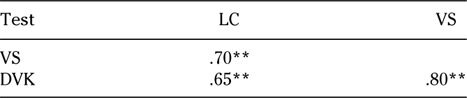
As Table 1 illustrates, the mean score for the vocabulary size is fairly high, amounting to 82% of the maximum possible score. This high mean score for vocabulary size might reflect a potential ceiling effect; yet, the rather large standard deviation indicates a reasonable spread in the scores and thus suggests that this should not be cause for concern. The standard deviation may simply reflect the fact that a small proportion of the participants achieved a relatively low score, whereas the majority achieved scores near the top of the scale, in which case a ceiling effect is still likely to be a problem. Therefore, an important question is whether such a potential ceiling effect had the result of depressing the correlations of the vocabulary size test with other measures: As Table 2 illustrates, this did not appear to be the case.
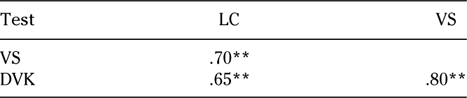
Pearson correlations among listening comprehension, vocabulary size, and depth of vocabulary knowledge (N = 115)
Note
** indicates that the result is significant at p < .01 (two tailed). LC = listening comprehension, VS = vocabulary size, and DVK = depth of vocabulary knowledge.
It is worth noting that the listening comprehension test appears to have an appropriate level of difficulty for the participants but that it displays a relatively low reliability coefficient. Given the fact that the listening comprehension test is a standardized test administered according to the guidelines provided by Cambridge ESOL, this degree of reliability may seem rather surprising. However, one reason for this low alpha coefficient might be that the group of participants was very homogenous and did not produce much variance in the listening scores (SD = 3.52), which could contribute to a deflation of the reliability estimate (Davies et al., Reference Davies, Brown, Elder, Hill, Lumley and McNamara1999). Additionally, the Cambridge ESOL examinations, which include the CPE listening test, are designed to cover a relatively narrow proficiency range. Cambridge ESOL recognizes this narrow proficiency range as a problem in applying conventional reliability statistics to particular exams such as the CPE, but this does not necessarily compromise the quality of the test (Jones, Reference Jones2001).
To What Extent Are Vocabulary Size and Depth of Vocabulary Knowledge Associated with Listening Comprehension?
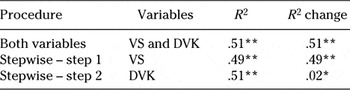
To determine the relationship between the two dimensions of vocabulary knowledge and listening comprehension, Pearson product-moment correlations were computed between the scores on vocabulary size and depth of vocabulary knowledge and the scores on listening comprehension. Table 2 displays the results of this analysis. Additionally, a multiple regression analysis was conducted to determine the extent to which the independent variables of vocabulary size and depth of vocabulary knowledge can explain the variance in the dependent variable—listening comprehension; these results are provided in Table 3.
Multiple regression analysis (N = 115)

Note
** indicates that the result is significant at p < .01, and * indicates that the result is significant at p < .05. VS = vocabulary size and DVK = depth of vocabulary knowledge. VS and DVK are the independent variables and listening comprehension is the dependent variable.
As illustrated in Table 2, vocabulary size and depth of vocabulary knowledge are both significantly correlated with listening comprehension (p < .01). Vocabulary size produced a correlation of .70, which indicates a strong relationship between the size of a learner’s receptive vocabulary and the quality of this learner’s listening comprehension. Depth of vocabulary knowledge displayed a slightly lower correlation of .65, but there is no statistically significant difference in the strength with which these two variables correlate with listening comprehension.Footnote 4 Therefore, according to this analysis, the two dimensions of vocabulary knowledge must be regarded as having equally strong associations with listening comprehension. The multiple regression analysis (Table 3) shows that vocabulary size and depth of vocabulary knowledge together account for 51% of the variance in the listening scores. This result represents a significant contribution and indicates a strong relationship between a learner’s vocabulary knowledge and the quality of the learner’s listening comprehension.
To What Extent Does Depth of Vocabulary Knowledge, in Addition to Vocabulary Size, Contribute to Successful Listening Comprehension?
From the multiple regression analysis (Table 3), it appears that the two variables—vocabulary size and depth of vocabulary knowledge—together can predict half of the variance in the listening scores. To determine the unique contribution of each of these two independent variables, a stepwise multiple regression analysis was conducted. Such an analysis may help establish whether depth of vocabulary knowledge can make a significant contribution to the prediction of the listening comprehension scores in addition to the contribution afforded by vocabulary size. The analysis was based on the theoretical assumption that vocabulary size is the basic dimension of a learner’s vocabulary knowledge (Meara, Reference Meara, Brown, Malmkjær and Williams1996a) and that depth will refine the learner’s vocabulary knowledge and facilitate automaticity of access in comprehension (Henriksen, Reference Henriksen1999; Qian, Reference Qian1999, Reference Qian2002).
The results from the stepwise procedure show that vocabulary size alone accounts for a significant 49% of the variance in listening comprehension when it is entered into the regression model at the first step (F change = 106.45, p < .01).Footnote 5 When depth of vocabulary knowledge is put into the equation, it adds 2% to the variance already explained by vocabulary size (F change = 6.13, p < .05). Although this change is statistically significant (at the .05 level), it represents a very small increase, which suggests that depth of vocabulary knowledge adds very little to the variance already accounted for by vocabulary size. In general, these results indicate that, in addition to vocabulary size, depth of vocabulary knowledge contributes very little to successful listening comprehension. This suggests that vocabulary size is the basic component of vocabulary knowledge in listening comprehension and that depth of vocabulary knowledge does not play a separate role.
A note of caution is necessary here because the results may reflect a case of multicollinearity between vocabulary size and depth of vocabulary knowledge.Footnote 6 Taken individually, each of the variables is a reliable predictor of the listening comprehension scores and can explain a significant portion of the variance in listening comprehension (R 2 = .49 and .43, respectively). However, when these two variables appear in the same linear regression model, they explain much of the same variance in listening comprehension: This is supported by their high intercorrelation (r = .80).
How Much Vocabulary Is Needed for Adequate Listening Comprehension?
Hu and Nation (Reference Hu and Nation2000) found that a text coverage of 98% is necessary for reasonable reading comprehension, and Nation (Reference Nation2006) used this percentage as the critical coverage figure when determining the vocabulary size needed for comprehension of written and spoken texts. However, the vocabulary size or lexical coverage required for comprehension will always depend on the degree of comprehension needed (see Schmitt et al., Reference Schmitt, Jiang and Grabein press). In the present study, the goal is to explore the relationship among vocabulary size, degree of lexical coverage in the listening input texts, and degree of listening comprehension.
First, it was necessary to determine a cutoff point for mastering a specific vocabulary level in the Vocabulary Levels Test. Nation (n.d.) argued that what constitutes an adequate score is a matter of judgment, but, nonetheless, he indicated that a score of 27 out of 30 is likely to represent satisfactory mastery of the vocabulary at a given level. Read’s (Reference Read1988) validation of an earlier version of the test involved a mastery criterion of 16 out of 18, whereas Schmitt et al. (Reference Schmitt, Schmitt and Clapham2001) were slightly more lenient and used a criterion of 26 out of 30. Following Nation’s more conservative cutoff point, the score for mastering a specific vocabulary level was set at 27 out of 30.
Second, a lexical frequency analysis of the input texts from the listening comprehension test needed to be performed. This analysis was carried out by means of the Vocabulary Profiler on the Compleat Lexical Tutor Web site (Cobb, Reference Cobb2000). This program currently contains 20 frequency lists adopted from the BNC, and each list is comprised of 1,000 word families. Before conducting the analysis, all proper nouns were excluded from the texts, because most proper nouns, such as people’s names, the names of cities, and the names of mountain ranges, are not included in the BNC lists. The lexical coverage analysis thus assumes that participants understand the proper nouns in the texts. The proper nouns accounted for around 2.8% of the tokens in the original texts. The revised input texts consisted of 2,537 tokens, 840 different word types, and 689 different word families, which, according to a study by Chujo and Utiyama (Reference Chujo and Utiyama2005), exceed the minimum text length required to obtain reliable text coverage information.
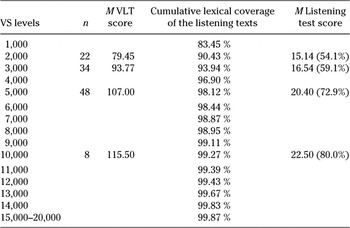
Table 4 summarizes the results for the analysis of the relationship among vocabulary size, lexical coverage in the input texts, and degree of listening comprehension. First, the results of the lexical frequency analysis of the listening input texts are presented in Table 4. For example, the analysis reveals that learners who only know the most frequent 1,000 word families in English will have approximately 83% text coverage of the listening input. However, knowing the most frequent 4,000 word families will increase text coverage by approximately 14 percentage points, which corresponds to a total text coverage of 97%. In contrast, if the learners are highly advanced learners of English and know the most frequent 10,000 word families, they are likely to know as much as 99% of the words in the listening input.
Relationship among vocabulary size, lexical coverage, and degree of listening comprehension (N = 112)

Note
VS = vocabulary size and VLT = Vocabulary Levels Test.
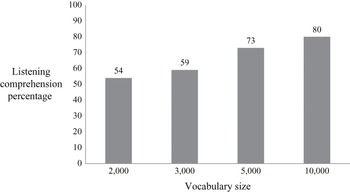
Table 4 also displays the results from the Vocabulary Levels Test: The participants have been divided into vocabulary size groups based on their scores on the four levels in this test (2,000, 3,000, 5,000, and 10,000). It can be observed from the first column that 22 participants mastered only the 2,000 vocabulary level, 34 participants mastered the 2,000 and 3,000 levels, 48 participants mastered the 2,000, 3,000, and 5,000 levels, and 8 participants mastered all four vocabulary levels in the test.Footnote 7 Additionally, Table 4 shows that knowing the most frequent 2,000 word families in English provides learners with a lexical coverage of 90% of the listening input texts and that the group of participants who only mastered the 2,000 vocabulary level obtained a mean score of 54% in the listening test. At the 3,000 vocabulary level, knowledge of the most frequent 3,000 word families in English appears to lead to a lexical coverage of 94% in the input texts, and the participants who mastered both the 2,000 and 3,000 vocabulary levels reached a mean score of 59% in the listening test. Moreover, it can be observed that the most frequent 5,000 words provide a lexical coverage of 98% of the input texts in the listening test. This means that if learners know the most frequent 5,000 word families and understand the proper nouns in the texts, they will in fact reach the critical text coverage of 98%, which has been identified as necessary for reasonable comprehension (Hu & Nation, Reference Hu and Nation2000; Nation, Reference Nation2006). Additionally, it is interesting to note that the participants who master the 5,000 vocabulary level obtain a mean comprehension score of as high as 73%. Based on these results, it seems that an increase in vocabulary size from 3,000 to 5,000, and in lexical coverage from 94% to 98%, has a considerable effect on the degree of comprehension. Whereas a text coverage of 94% leads to a mean comprehension score of 59%, a text coverage of 98% leads to a significantly higher comprehension score of 73%. Finally, Table 4 also illustrates that knowledge of the most frequent 10,000 word families leads to a lexical coverage of 99% and that the 8 participants who obtained this level reached a mean score of 80% in the listening comprehension test. The relationship between vocabulary size, lexical coverage, and mean score in the listening test is illustrated in Figure 2.
The relationship among vocabulary size, lexical coverage, and degree of listening comprehension. A vocabulary size of 2,000 corresponds to a lexical coverage of 90%, 3,000 corresponds to 94%, 5,000 corresponds to 98%, and 10,000 corresponds to 99% in the listening texts.

In sum, these results show that larger vocabulary size and more lexical coverage will lead to better comprehension and suggest that the relationship between the two is linear. Listening comprehension increases from 54% at the 90% coverage level (or 2,000 vocabulary size level) to 80% at the 99% coverage level (or 10,000 vocabulary size level), which represents an increase of 26 percentage points. It is worth noting in particular that the results show a greater increase in comprehension from 94% to 98% lexical coverage (i.e., from the 3,000 to the 5,000 vocabulary level) than from 90% to 94% lexical coverage (i.e., from the 2,000 to the 3,000 vocabulary level). A one-way ANOVA showed that the difference in the listening comprehension score means of the four vocabulary groups was statistically significant, F(3, 108) = 30.06, p < .0001, η 2 = .46. When comparing consecutive levels, only the difference between the listening scores of the 3,000- and 5,000-level groups was statistically significant (at the .01 level), F(1, 80) = 32.52, p < .0001, η 2 = .29. This significant change in comprehension is not dramatic enough to suggest a vocabulary threshold, but it indicates that receptive knowledge of the most frequent 5,000 word families, which results in a lexical coverage of 98%, led the participants to significantly better comprehension. If adequate listening comprehension is defined as scoring higher than 70% on an advanced listening test, a lexical coverage of at least 98% is needed to obtain adequate comprehension. Moreover, given the fact that it seems necessary to know 5,000 word families to reach a lexical coverage of 98%, the results of the present study tentatively suggest that 5,000 word families might be a useful vocabulary size target for advanced foreign language listeners. However, the degree of lexical coverage required and the vocabulary size needed to reach this coverage will always depend on the input text and the degree of comprehension required.
Given this interpretation of learners’ vocabulary size and their degree of text coverage in the listening input, it is important to recognize that the analysis is based on the assumption that the levels in the Vocabulary Levels Test equate to the same levels in the BNC lists. However, the words in the Vocabulary Levels Test have been sampled from the frequency levels in Thorndike and Lorge’s (Reference Thorndike and Lorge1944) list and the general service list (West, Reference West1953), not the BNC frequency lists. Nevertheless, it is assumed that the word frequency lists overlap to a large degree.
DISCUSSION
A strong relationship between vocabulary knowledge and listening comprehension was found with advanced foreign language learners of English. The results showed that depth and breadth of vocabulary knowledge were highly correlated with listening comprehension and together predicted half of the variance in the listening scores. This significant contribution indicates that these dimensions are important factors for successful listening comprehension in English.
In the present study, a significant correlation of .70 was found between vocabulary size and listening comprehension, producing a covariance of 49%. These results tentatively suggest that receptive vocabulary knowledge is almost as important for listening as it is for reading, although stronger relationships have been found between vocabulary size and reading tests (e.g., Henriksen et al., Reference Henriksen, Albrechtsen and Haastrup2004; Qian, Reference Qian1999, Reference Qian2002).
At this juncture, it is worth noting that the Vocabulary Levels Test measures knowledge of the written form of the word, whereas listening involves recognizing the spoken form of the word. This might constitute a potential problem given the fact that a word recognized in its written form will not necessarily also be recognized in its spoken form. Moreover, orthographic word knowledge is undoubtedly a prerequisite for the ability to read and write but is less important for listening and speaking, whereas phonological word knowledge is highly important for listening and speaking but is less important for reading and writing. Therefore, it might be argued that a study of the relationship between vocabulary size and listening should ideally be based on a vocabulary test that involves hearing the target words rather than reading them. However, when this study was carried out, no suitable test of phonological vocabulary size existed that could be used with fairly advanced learners of English. Furthermore, it was decided to use a standardized measure of vocabulary size that was comparable to other vocabulary studies. Thus, the question is to what extent using a vocabulary test that involves knowing the written form of the words had an effect on the results. It might be hypothesized that it could have had a depressing effect on the correlation between vocabulary size and listening comprehension and that if the study had involved a test of phonological vocabulary size, it might have produced an even higher correlation. In light of this hypothesis, a correlation of .70 between the Vocabulary Levels Test and the listening test might be somewhat higher than expected.
In a study that investigated the relationship between vocabulary size scores and International English Language Testing System (IELTS) subskills scores with 29 EFL students, Milton, Wade, and Hopkins (Reference Milton, Wade, Hopkins, Chacón-Beltrán, Abello-Contesse, Torreblanca-López and López-Jiménezin press) addressed this interesting crossmodality issue by using yes/no measures of orthographic vocabulary size as well as of phonological vocabulary size (the X_Lex and the A_Lex tests, respectively). In terms of reading and listening, they found that the orthographic vocabulary size test produced similar significant correlations with reading and listening (.54 and .52, respectively) but that the phonological vocabulary size test only correlated significantly with listening. Thus, these results do not show a difference in the strength with which orthographic vocabulary size correlates with reading and listening. This interesting finding suggests that the relationship between orthographic and phonological vocabulary knowledge and reading and listening is not as straightforward as one might think. Much more research using multiple measures of vocabulary size is needed to uncover this relationship. In other words, this crossmodality issue may have had some effect on the results of the current study, but it does not appear to directly compromise the overall empirical finding that receptive vocabulary size contributes significantly and substantially to foreign language learners’ listening comprehension.
It seems plausible to assume that the reasons for the strong relationship between vocabulary size and listening comprehension are somewhat similar to those related to reading—namely, that knowing a large number of words will provide the learner with a large lexical coverage of any given text and that, with a large text coverage, the learner will be more likely to achieve adequate listening comprehension. According to the short-circuit hypothesis (Clarke, Reference Clarke1980), L2 learners need to reach a certain level of vocabulary knowledge before L1 skills can be efficiently transferred to the L2. For listening comprehension, this threshold hypothesis can be used to describe what happens when a listener processes a L2 input in a language of which he or she has only limited knowledge. According to this hypothesis, the listener must reach a certain level of declarative knowledge to process the acoustic input rapidly and effectively (Lynch, Reference Lynch1998). Adopting this view, it seems reasonable to assume that a L2 listener needs a certain lexical coverage of a text to be able to make use of contextual information and guess the unknown words in the text as well as to conduct automatic and efficient processing of the input leading to successful comprehension. A large vocabulary size will lead to a high degree of text coverage and will thereby strengthen learners’ ability to successfully cope with the heavy online processing demands of listening.
Overall, the present study found that larger vocabulary size and more lexical coverage will lead to a higher degree of comprehension. Although the results showed a statistically significant increase of comprehension from the 3,000 to the 5,000 vocabulary level (or from 94% to 98% lexical coverage), this change was not dramatic enough to suggest a vocabulary size threshold. Instead, the findings indicate a linear relationship and that the vocabulary size needed depends on the degree of comprehension required. If comprehension in the area of 55% (as measured by an advanced listening test) is considered acceptable, then a lexical coverage of 90%, or knowledge of the most frequent 2,000 word families, will suffice. However, if comprehension closer to 60% is needed, then learners need to know 94% of the words in the input, equivalent to knowledge of the most frequent 3,000 word families. Additionally, the data suggest that if a degree of comprehension higher than 70% is required, then learners need 98% lexical coverage, equivalent to a vocabulary size of a least 5,000 word families. Finally, it was found that 80% comprehension would require a lexical coverage of 99% or knowledge of as much as 10,000 word families in English. These results, to some extent, mirror Schmitt et al.’s (in press) findings for reading comprehension.
The question is, however, what in fact constitutes adequate or acceptable listening comprehension. It is obviously impossible to define a generic cutoff score for adequate comprehension in a listening or reading test, but it might be useful to briefly consider earlier studies by Laufer (Reference Laufer, Lauren and Nordman1989) and Hazenberg and Hulstijn (Reference Hazenberg and Hulstijn1996), who attempted to determine minimal vocabulary size or lexical coverage requirements for adequate reading comprehension. Laufer set the cutoff point for reasonable comprehension at 55% in a reading comprehension test. Laufer’s aim was to determine what percentage of word tokens in a text needed to be understood to ensure reasonable reading comprehension. The rationale for the 55% cutoff point was that this percentage represented the lowest passing grade in the Haifa University system. In comparison, the Hazenberg and Hulstijn study defined the criterion for acceptable reading comprehension as the pass or fail cutoff score in a reading test from a Dutch language university entry examination. In this exam, the students needed to score a minimum of 70% to pass.
If, for exploratory reasons, the passing levels of the CPE examination, from which the listening comprehension test is taken, are considered, a score of 70% would similarly lead to a pass (with the grade C).Footnote 8 The discourse and target-language situations found in this test represent a listening comprehension at the most advanced level outside a specialist domain. The CPE listening test is designed for the highest level at the CEFR and, as stated by Cambridge ESOL, “the range of texts and task types reflects the variety of listening situations which candidates at this level need to be able to cope with” (CPE Handbook, 2002, p. 82). This involves discourse found in informal interactions as well as in semiformal monologues such as documentaries and news broadcasts. If passing this kind of advanced listening test represents adequate listening skills for EFL learners, then a vocabulary size of 5,000 word families appears to be a useful vocabulary target: This is indicated by the fact that the group of learners (N = 48) who mastered the 2,000, 3,000, and 5,000 vocabulary levels obtained a mean score of 73% in the listening test. Moreover, when analyzed further, these scores reveal that 91% of the learners who did not master the 5,000 vocabulary level (N = 56) obtained a score lower than 70% on the listening test and that 71% of the learners who mastered the 5,000 vocabulary level or higher (N = 56) obtained a score higher than 70% on the listening test. Although there is no exact threshold, the findings still indicate that a vocabulary size of 5,000 word families might be an important learning goal for advanced learners of English.
A vocabulary size of 5,000 word families for adequate listening is somewhat larger than the estimates for reading suggested by Laufer (Reference Laufer, Arnaud and Béjoint1992) and Hirsh and Nation (Reference Hirsh and Nation1992), which indicates that more vocabulary is needed for text comprehension than previously thought. However, it needs to be recognized that different criteria for adequate comprehension were applied.
Nation (Reference Nation2006) calculated that a vocabulary of 8,000–9,000 word families is needed for comprehension of written text, whereas a vocabulary of 6,000–7,000 word families is needed for spoken text. These estimates for coping with spoken text appear to be more similar to the results of the present study. The difference between the size figures suggested by Nation and the ones indicated here might be attributed to the fact that Nation used a larger and more diverse corpus that may have been more representative of spoken text than the texts from the CPE listening test, which means that more words were needed to obtain the required lexical coverage. This observation is supported when the lexical coverage figures of the texts from the listening test are examined. The present study crucially found that a vocabulary size of 5,000 word families led to a lexical coverage of 98% in the input texts. Given the fact that the 5,000 word level might be a good indicator of adequate comprehension, this is a very interesting result, as it clearly reinforces Hu and Nation’s (Reference Hu and Nation2000) findings that a text coverage of 98% will be needed by most learners to achieve adequate comprehension. Their results were obtained in relation to reading, but Nation argued that a coverage figure like this might also apply to listening. The results from the present study indicate that a text coverage of 98% might in fact be a sufficient coverage for dealing with spoken texts.
In addition to degree of comprehension, the nature of the texts will also affect the amount of vocabulary needed. Although a text coverage of 98% appears to be sufficient for coping with the listening tasks here, it is likely that the lexical coverage and vocabulary size needed for comprehension will vary according to type and purpose of the listening activity as well as text type. For instance, it is possible that listeners would need a lower lexical coverage in conversational listening situations in which they have access to a range of contextual clues (e.g., gestures) and can rely more on communication strategies (e.g., asking for repetition, negotiating for meaning), whereas certain types of one-way listening (e.g., an academic lecture that involves technical language) require a higher lexical coverage due to heavy online processing demands (Adolphs & Schmitt, Reference Adolphs and Schmitt2003). Furthermore, the simpler syntax and redundancy often found in conversational listening may facilitate comprehension and result in listeners needing a lower lexical coverage of the input than when listening to, for example, an academic lecture.
Adolphs and Schmitt (Reference Adolphs, Schmitt, Bogaards and Laufer2004) have provided some evidence for the fact that the lexical coverage and vocabulary size needed for spoken comprehension are likely to vary according to different contexts. Adolphs and Schmitt distinguished among five different conversational context types in their analysis of the CANCODE corpus (transactional, professional, sociocultural, intimate, and pedagogic) and found that the amount of vocabulary required to operate successfully in a spoken environment depended on the specific spoken context. It is interesting to note that the results indicated that less vocabulary is needed to engage in the more goal-oriented discourse found in professional and transactional interaction than in more casual interaction. Adolphs and Schmitt indicated that the reasons for this difference might be the wide range of topics discussed in private situations as opposed to the more focused topics in professional and transactional discourse. These results clearly emphasize the complexity of the matter and, thus, the danger of determining generic vocabulary thresholds for comprehension of spoken discourse. More research into lexical coverage in different types of spoken discourse (one way as well as two way) is undoubtedly needed before more specific proposals can be put forward about what vocabulary size is needed to carry out different listening activities.
Apart from the findings on vocabulary size and lexical coverage, the data of the current study revealed that depth of vocabulary knowledge, operationalized through a word associates test, correlated significantly with listening comprehension (r = .65) and could contribute significantly to the prediction of the listening scores, in addition to vocabulary size, adding 2% to the explained variance. However, although significant, this contribution is very small. Additionally, it was found that the two dimensions of vocabulary knowledge were highly correlated and explained much of the same variance in listening comprehension. There may be several potential reasons as to why depth of vocabulary knowledge—in addition to breadth—did not make a more substantial contribution.
On the one hand, it might be argued that the vocabulary size and depth of vocabulary knowledge measures may have tapped into the same dimension of vocabulary knowledge because both targeted knowledge of word meaning and thereby created a partial construct overlap. Whereas the vocabulary size test was uniquely concerned with word meaning (i.e., participants were matching words with their definitions), the depth of vocabulary knowledge test addressed this aspect of vocabulary knowledge through two of the three kinds of associative relationships represented in the test (i.e., the paradigmatic and analytic associates).
On the other hand, it might be argued that the two tests were in fact different enough to measure different constructs because the depth of vocabulary knowledge test also tested knowledge of different meanings for the same word as well as knowledge of collocations (i.e., syntagmatic associates). The high correlation between the two measures does not necessarily mean that the two constructs are identical but may simply reflect the fact that the development of depth and breadth of vocabulary knowledge is somewhat interdependent and that a person who knows many words is also likely to know much about each word. This interpretation, however, contradicts Vermeer’s (Reference Vermeer2001) conclusions in a study of Dutch L1 and L2 learners’ vocabulary knowledge. Given the high correlations found between breadth and depth measures, Vermeer argued that the constructs are not clearly distinct and that there is no conceptual distinction between the dimensions of breadth and depth. Additionally, he interpreted his findings as indicative of an intricate and reciprocal relationship among the number of words in the lexical network, the density of the network, and the richness of connections between words. In this view, depth is a consequence of knowing many words in the sense that the more words a person knows, the more links there will be between words in the mental lexicon and, thus, the more elaborate and extended the structure of the network is likely to be. This interpretation of the relationship between breadth and depth appears plausible, but it does not necessarily mean that breadth and depth constitute a single construct and that they should not be measured separately.
Empirical studies that operationalize depth through a word associates test have generally found high correlations between depth and breadth of vocabulary knowledge (from .62 to .82; Greidanus et al., Reference Greidanus, Bogaards, van der Linden, Nienhuis, de Wolf, Bogaards and Laufer2004; Nurweni & Read, Reference Nurweni and Read1999; Qian, Reference Qian1999, Reference Qian2002). However, Nurweni and Read found that the relationship between breadth and depth varies according to proficiency level, as illustrated by a strong relationship between the two dimensions for advanced learners of English and a very weak relationship for less advanced learners.
Because the participants of the current study were advanced EFL learners, this may explain why the results revealed a high correlation between their breadth and depth of vocabulary knowledge and may partly explain why depth, in addition to breadth, could only predict very little of the variance in the listening scores. However, it is worth noting that Qian (Reference Qian1999, Reference Qian2002), using similar vocabulary measures, found that depth, in addition to vocabulary size, could contribute significantly and rather substantially to the prediction of reading scores, despite a high correlation between the two dimensions of vocabulary. This finding might suggest that, if the relationship between vocabulary depth and listening had been strong enough, depth, in addition to vocabulary size, would also have contributed substantially to the variance in the listening scores.
In sum, the findings of the current study tentatively suggest that vocabulary size is the basic component in listening and do not seem to support the hypothesis that depth of vocabulary knowledge, in addition to vocabulary size, can play a separate role in listening. However, the results similarly indicate that, to uncover the role of depth in listening, more research is needed on the relationship between breadth and depth of vocabulary knowledge and such investigations should take into account different conceptualizations of depth.
CONCLUSION AND PERSPECTIVES
It is now commonly recognized and empirically supported that vocabulary knowledge is “a major direct factor in reading comprehension” (Qian & Schedl, Reference Qian and Schedl2004, p. 28). It has been assumed that this might also be the case for listening comprehension, but it has never been fully empirically documented. The present study has provided empirical evidence of a strong association between L2 learners’ vocabulary knowledge and their listening comprehension, and the findings suggest that vocabulary size might be a major contributing factor to successful listening comprehension.
The results presented here have direct implications for language teaching. The findings draw attention to the need for an explicit focus on expanding learners’ vocabulary size in the L2 classroom, to enable them to reach a lexical coverage of the input texts of around 98%. Moreover, the study indicates that a vocabulary size of at least 5,000 word families might be a useful learning target for fairly advanced learners. It seems that such a lexical basis will facilitate L2 learners’ listening comprehension to a considerable extent and will help other aspects of the language as well. However, although this study has found vocabulary knowledge to be an important factor for listening success in EFL by showing that it can explain half of the variance in the listening scores, it must also be acknowledged that a range of other linguistic and nonlinguistic factors contribute to L2 listening success.
Here, 56 participants did not master the 5,000 word level; nonetheless, some of these participants were still able to perform relatively well in the CPE listening test. Twenty-one participants reached a score of 60% in the listening test without mastering the 5,000 vocabulary level, and 5 participants reached a score of 70% in the listening test without mastering the 5,000 vocabulary level. This may indicate that efficient use of compensation strategies can make some contribution to listening comprehension and can facilitate learners’ listening comprehension to a considerable extent by helping them move beyond their lexical level. Although this was not directly addressed in the study, these findings seem to suggest that, in addition to an explicit focus on vocabulary learning, it might be useful to teach receptive compensation strategies in the L2 classroom as part of developing learners’ strategic competence.