


Introduction
Cognitive behaviour therapy (CBT) typically has only a small effect size on delusions, be it in individual format, e.g. 0.36 (van der Gaag et al. Reference van der Gaag, Valmaggia and Smit2014) or group format for positive symptoms, e.g. 0.38 (Wykes et al. Reference Wykes, Steel, Everitt and Tarrier2008), so further treatment innovations may enhance theory and practice (Garety & Freeman, Reference Garety and Freeman2013). A combination of early intervention (Jackson & Birchwood, Reference Jackson and Birchwood1996) and a group CBT format (EI-GCBTp) is speculated to be of greater benefit than individual CBT due to the group therapeutic processes such as increased normalization, de-stigmatization, shared learning, and peer encouragement to complete between-session tasks (Saska et al. Reference Saska, Cohen, Srihari and Woods2009).
Two EI-GCBTp controlled studies (one randomized, one quasi, total n = 149) targeted a wide range of psychotic symptoms and found total-score positive symptom reductions, but failed to examine delusions in particular (Lecompte et al. Reference Lecompte, Leclerc, Corbiere, Wykes, Wallace and Spidel2008; Gaynor et al. Reference Gaynor, Dooley, Lawlor, Lawoyin and O'Callaghan2011). However, two other small uncontrolled EI-GCBTp studies (total n = 29) examined delusions in addition to a total positive symptoms score and found reductions in delusional severity (Lecompte et al. Reference Lecompte, Leclerc, Wykes and Lecompte2003; Chung et al. Reference Chung, Yoon, Park, Yang and Oh2013). Moreover, in samples of chronic psychosis patients, two small GCBTp studies have specifically targeted delusions and found reductions in delusion severity [total n = 17: Landa et al. Reference Landa, Silberstein, Schwartz and Savitz2006, uncontrolled trial; Levine et al. Reference Levine, Barak and Granek1998, randomized control trial (RCT)]. However, an RCT examining a specific reasoning bias intervention failed to find statistically significant improvements in delusional severity (n = 154, van Oosterhout et al. Reference van Oosterhout, Krabbendam, de Boer, Ferwerda, van der Helm, Stant and van der Gaag2014). Despite this, overall, these studies highlight potential benefits of GCBTp for psychosis patients.
Crucially, no GCBTp study to date has yet employed a delusion-specific approach for patients presenting with early psychosis. The lack of evidence to date for a delusion-specific EI-GCBTp approach may reflect the challenges inherently linked to engaging this clinical group. For example, patients' current symptomatology such as suspiciousness may impact on the patients’ ability to trust other members of a group, while negative symptoms may affect their motivation to attend.
Suggestions for improving evaluation of GCBTp
A delusion-specific approach may enhance group cohesion and normalization and may also yield greater effect sizes compared to the examination of a total positive symptom score (Turner et al. Reference Turner, van der Gaag, Karyotaki and Cuijpers2014, p. 12). Thus far, no study has included a pre-baseline design, a feature which can further elucidate whether the introduction of an EI-GCBTp intervention exerts any beneficial effects. Further, to date no delusion assessments have been made during EI-GCBTp therapy (Lecompte et al. Reference Lecompte, Leclerc, Wykes and Lecompte2003, Reference Lecompte, Leclerc, Corbiere, Wykes, Wallace and Spidel2008; Gaynor et al. Reference Gaynor, Dooley, Lawlor, Lawoyin and O'Callaghan2011; Chung et al. Reference Chung, Yoon, Park, Yang and Oh2013), nor in the key delusion-focused studies in chronic psychosis (Levine et al. Reference Levine, Barak and Granek1998; Landa et al. Reference Landa, Silberstein, Schwartz and Savitz2006; van Oosterhout et al. Reference van Oosterhout, Krabbendam, de Boer, Ferwerda, van der Helm, Stant and van der Gaag2014). This lack of assessment during therapy obscures the examination of possible symptom-fluctuation treatment effects between pre- and post-assessments and so the speed and duration of any treatment effects is unknown. Multi-dimensional assessments of delusions have also been lacking (carried out by only one study to date: Chung et al. Reference Chung, Yoon, Park, Yang and Oh2013), which would potentially highlight which particular delusional dimensions might be amenable to GCBT interventions. Moreover, a ‘positive symptoms’ score has typically been presented (only Lecompte et al. Reference Lecompte, Leclerc, Wykes and Lecompte2003 and Chung et al. Reference Chung, Yoon, Park, Yang and Oh2013 present a separate delusion score, but then only one or two dimensions), which again potentially obscures delusion-specific changes. In summary, these studies’ lack of comprehensive and detailed measurement of the possible effects of EI-GCBTp on dimensional delusion change means that we still do not know how fast, durable or specific any treatment effects actually are.
It has also meant that it has not been possible to relate psychosis symptom changes to the timing of any particular CBT intervention strategy (Pfammatter et al. Reference Pfammatter, Jungham and Brenner2006, p. S74), which would provide an evidence base for specific CBT methods.
EI-GCBTp studies have also not yet harnessed a wider range of contemporary CBT targets and methods (e.g. meta-cognitive techniques, sleep, worry, etc.; Garety & Freeman, Reference Garety and Freeman2013; Steel, Reference Steel2013) into a single GCBTp specifically on delusions. Moreover, the actual number of patients who improved is unreported, and untried is a briefer approach without simultaneous individual CBT (as in Levine et al. Reference Levine, Barak and Granek1998 and Landa et al. Reference Landa, Silberstein, Schwartz and Savitz2006).
Medication-resistant delusions are a common problem in early course psychosis (Leucht et al. Reference Leucht, Corves, Arbter, Engel, Li and Davis2009), yet are typically rejected from RCTs (e.g. Lincoln et al. Reference Lincoln, Ziegler, Mehl, Kesting, Lullmann, Westermann and Rief2012, p. 682) and when included they respond less favourably to CBT (van der Gaag et al. Reference van der Gaag, Valmaggia and Smit2014). Medication-resistant delusions therefore represent one important type of stringent test of EI-GCBTp treatment. Therefore our aim in the present service evaluation was to complement existing G-CBTp studies by examining if the combination of early intervention plus an exclusive focus on single delusional beliefs, is feasible, acceptable, safe, and is capable of achieving an appreciable effect size. We included methodological improvements in the comprehensiveness, timing, and frequency of delusion measurement in order to find out the speed and stability of any delusion changes during EI-GCBTp treatment. If sufficient numbers of patients with medication-resistant delusions can be engaged and benefit from EI-GCBTp, this might suggest a valuable additional CBT intervention for Early Intervention in Psychosis services.
Method
Setting
The EI-GCBTp groups took place in an Early Intervention in Psychosis service which accepts cases of first-episode psychosis where the duration of untreated psychosis (DUP) is less than 12 months. The service includes care coordination, medication, activity coordinator, employment specialist, and individual CBT. The NHS Trust Research and Development Department classified our work as a service evaluation but stated that informed consent to publish was required, and this was completed on standard Trust forms.
Service evaluation design
This service evaluation employed a within-patient repeated-measures design testing for change in a 4-week pre-baseline-to-baseline treatment-as-usual (TAU) period; and then change during an 8-week, sessions 1–8 treatment period. Three separate EI-GCBTp groups of eight sessions each were run, each set of eight sessions comprised a different cohort of patients. All groups ran weekly for eight sessions except for group 1 (session 6), which was postponed to the following week, as was session 4 of group 3, both due to patients’ physical illnesses. All delusion measures were completed at nine time-points: pre-baseline, session 1, and then for seven further weeks until session 8.
Participants
The inclusion criteria was the presence of at least one persistent delusional belief for at least 6 months scoring at least 2 on the Present State Examination (WHO, 1992). All participants had been assessed by a psychiatrist as having psychosis and a delusion. Patients could be either medication-resistant or have refused medication; however, all patients in the outcome analysis were medication-resistant. Medication resistance was defined as the presence of the chosen delusion despite antipsychotic medication for at least 2 months, as judged using patients’ health records and interviewing them, with current severity obtained face-to-face using the Psychotic Symptom Rating Scale (PSYRATS) – delusion dimension (Haddock et al. Reference Haddock, McCarron, Tarrier and Faragher1999).
Eighteen patients initially attended an eligibility screening assessment to check delusion presence and severity (see Measures section below), and a total of 11 patients went on to attend at least 50% (4/8) of the therapy sessions, and provide outcome data with permission to publish; these 11 were included in the analysis. Of the seven patients not included in the effectiveness analysis, one patient attended the screening assessment but never attended the group (group 2); one patient did attend 50% (4/8) of the therapy sessions but was not available to provide outcome data (group 3); two patients refused consent to publish (group 3); and three patients (3/18, 16%) dropped out after commencing therapy (i.e. attended the group at least once but less than four sessions, two from group 1 and one from group 2).
DUP was calculated from the date of the onset of the first psychotic episode until the commencement date of antipsychotic medication. Two patients had previously received some brief individual CBT sessions which included their delusion and four other patients were currently in individual CBT for other non-delusion specific difficulties.
Measures
Feasibility. Feasibility was measured by counting the number of patients who attended each group.
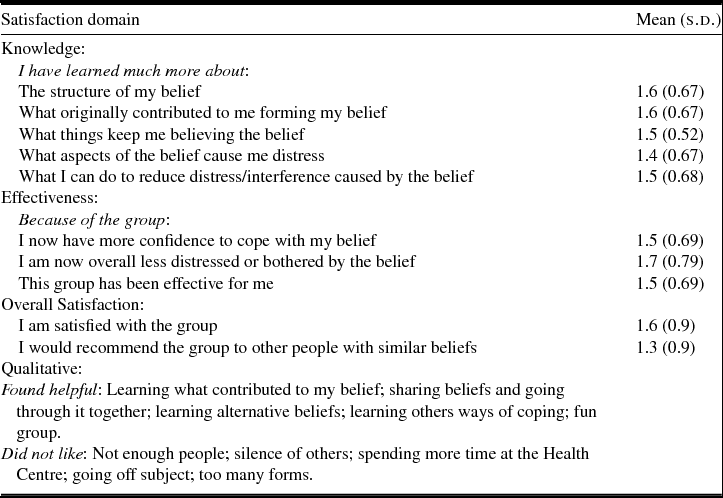
Satisfaction. Satisfaction was measured by 10 questions covering the domains of Knowledge, Effectiveness and Overall Satisfaction (Table 3), all scored on a 5-point range (1, strongly agree; 2, slightly agree; 3, unsure; 4, slightly disagree; 5, strongly disagree). Plus a qualitative section asking what was helpful and what the patient did not like.
Safety. Safety was monitored by asking patients directly plus weekly monitoring of their delusion dimensions, and regularly liaising with relevant clinical staff.
Effectiveness. All six delusion items from the PSYRATS were included. The PSYRATS scores symptoms on a scale of 0–4 and has good retest reliability and validity at first-episode psychosis (Drake et al. Reference Drake, Haddock, Tarrier, Bentall and Lewis2007). Four items from the Characteristics of Delusion Rating Scale (CDRS; Garety & Hemsley, Reference Garety and Hemsley1987) were included. Selected items were dropped to avoid repetition with the PSYRATS. The CDRS has good retest reliability and validity (Gentner et al. Reference Gentner, Büche, von Bock, Rückl, Marx, Kaiser, Barthel, Vedder, Mundt and Kronmüller2010). Items included were ‘Resistance’, ‘Dissmissibility’, ‘Absurdity’ and ‘Pervasiveness’. Three items from the Belief Rating Scale (BRS; Jones & Watson, Reference Jones and Watson1997) were included: ‘Influence on Behaviour’, ‘Influence on Thinking’ and ‘Importance of Belief’. Remaining items were dropped to avoid repetition with the PSYRATS and CDRS. The BRS has good reliability and validity (Forgacova, Reference Forgacova2008). The original BRS questionnaire used a 5-point scale, but a 10-point scale was used in this service evaluation for consistency with the CDRS items, which allowed for greater sensitivity to change. All original wordings of the two end-dimensional anchor points were retained for the CDRS and BRS. Delusion assessments took place individually before each session, except the final assessment which took place as a group immediately after session 8 (or individually soon after if the patient did not attend session 8).
EI-GCBTp intervention
Group name. The group was known as the ‘Distressing Beliefs Group’ and was devised by the clinical psychologist who is an accredited cognitive therapist and supervisor (BABCP).
Therapists. The three cohorts of EI-GCBTp groups were all run by the clinical psychologist with help from assistant or trainee clinical psychologists.
Belief assessment. Data were collected by the therapists. The first three patients in group 1 were collected by the clinical psychologist and thereafter data for the other nine includable patients were collected by assistant psychologists and trainee clinical psychologists. Along with a staff member at the pre-baseline assessment session, each patient chose a specific delusional belief they wanted to address.
Group structure. The group structure followed standard CBT (Bieling et al. Reference Bieling, McCabe and Anthony2006). Importantly, at the start of every session, each patient would verbally state the exact wording of their delusion for the whole group to hear and patients were encouraged to use Guided Discovery and Socratic questioning among themselves in a compassionate way. A variety of worksheets were used by patients to evaluate their delusion and its bio-psychosocial context. Homework was set every week.
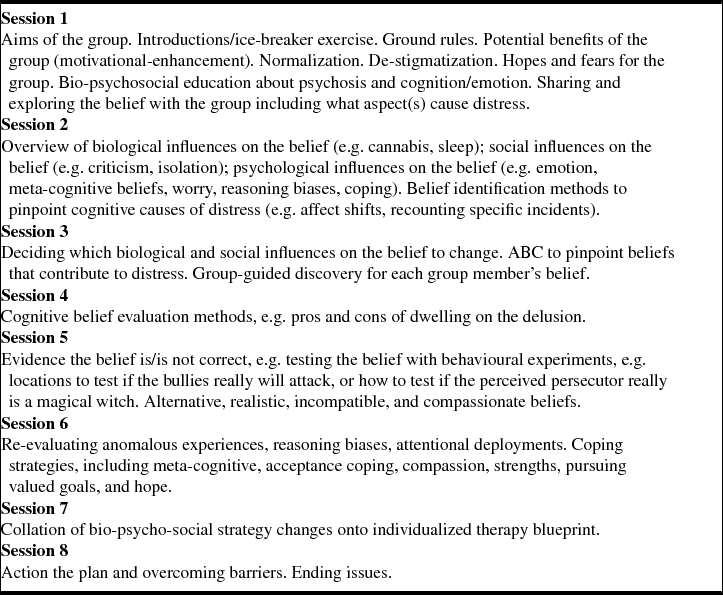
Group CBT methods and therapeutic targets. Table 1 summarizes the intervention content. The group CBT methods and therapeutic targets were informed by theoretical models and reviews of delusions (e.g. Garety and Freeman, Reference Garety and Freeman2013), and their CBT treatment (e.g. Steel, Reference Steel2013).
Session content key points for early intervention group CBT solely for single delusional beliefs

Analysis
Sample characterization. The sample was characterized demographically and clinically and their delusions classified by ICD-10.
Feasibility. Feasibility was analysed by calculating if every group session had an attendance of at least three patients.
Acceptability. Satisfaction was calculated using means and standard deviations. Also using the number of patients who dropped out, and recording of qualitative comments.
Safety. Relevant clinicians and the patients themselves were asked weekly about any serious untoward incidents and delusion score deterioration.
Effectiveness. Cohen's d was used to estimate overall effect size of the PSYRATS total [mean1 – mean2/baseline s.d., since Grissom & Kim (Reference Grissom and Kim2011) recommends that the baseline s.d. is a more valid denominator than a pooled baseline-including outcome denominator]. Mean scores were calculated for the three time-points of the pre-baseline assessment, sessions 1 and 8, for the PSYRATS total and six PSYRATS individual dimensions, and the CDRS and BRS dimensions. Wilcoxon signed ranks tests were used to test for within-patient differences across TAU and also across the treatment period. Any statistically significant results were explored for clinical significance using the criteria that at least half the patients changed (increased/decreased) at least 25% (Leucht et al. Reference Leucht, Kane, Etschel, Kissling, Hamann and Engel2006; Morrison et al. Reference Morrison, Pyle, Chapman, French, Parker and Wells2014).
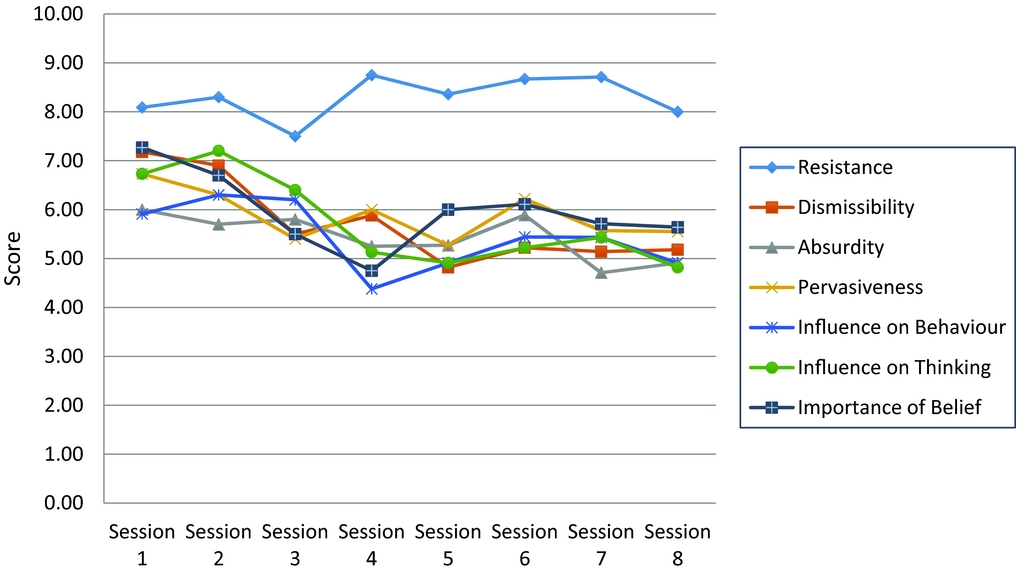
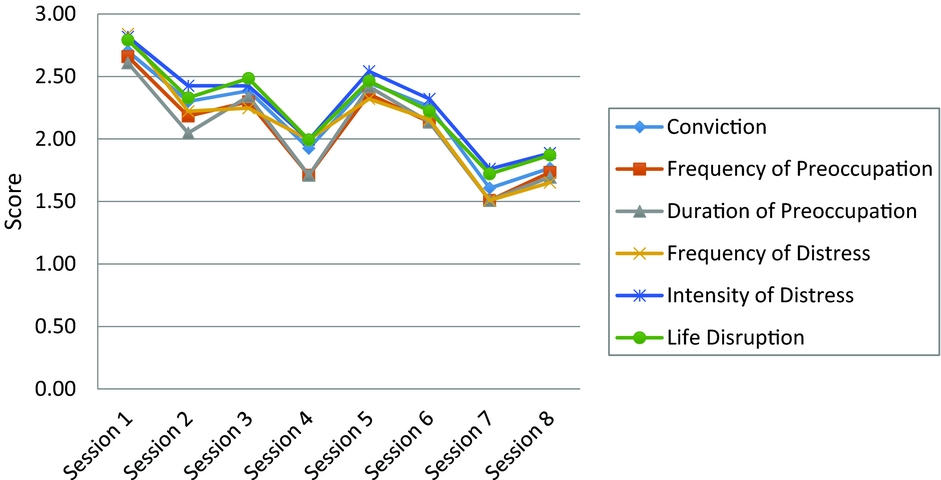
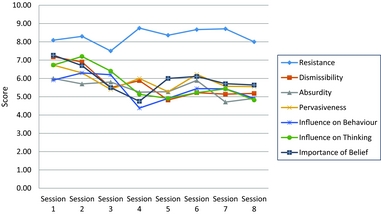
Delusion dimensions. The delusion dimensions were graphically charted to identify if any dimensions changed during treatment, and if so, by how much, when, and for how long.
Results
Sample characterization (n = 11)
Demographics. Patients’ mean age was 21 years (s.d. = 2.04, range = 19-25). Five were female (45.5%), seven were white British (63.6%), three were black British-African (27.3%), and one was Asian British (9.1%). All three drop-outs (attended only 1–3 times) were males, whereas 45.5% (5/11) of those with an outcome analysed were female.
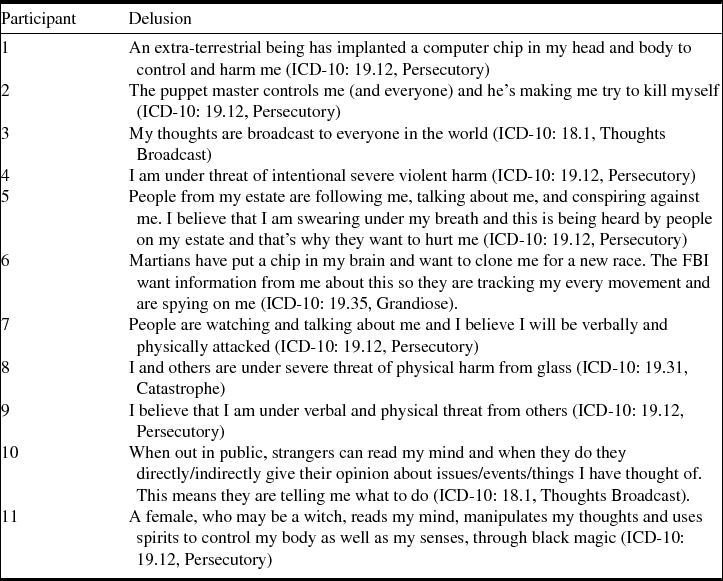
Illness-related. Diagnostically, nine patients had a schizophrenia spectrum disorder, one was acute and transient psychosis, and one was bipolar with psychotic features. Delusion content classification comprised four ICD-10 content items (Table 2). Mean length of untreated psychosis was 4 months (s.d. = 3.74, range = 0-11), mean length of psychotic illness until EI-GCBTp session 1 was 19 months (s.d. = 8.8, range = 10-40), and mean duration of the chosen delusions was also 19 months (s.d. = 9.99, range = 3–40). At the time of the first EI-GCBTp session patients in the effectiveness analysis (n = 11) were taking olanzapine (n = 3), risperidone (n = 2), aripiprazole (n = 3), haloperidol (n = 1), clozapine (n = 1), and quetiapine (n = 1). The duration of antipsychotic medication until the first EI-GCBTp treatment session was (in months): mean = 15, median = 18, s.d. = 10.3, range = 2–38. Seven (63.6%) out of 11 patients were taking their second or third consecutive antipsychotic medication. All patients stated that they continued to be adherent to their medications but their delusions remained problematic.
The specific single delusional beliefs patients chose (total n = 11) (n = 7 persecutory, n = 1 catastrophe, n = 1 grandiose, n = 2 thoughts broadcast)
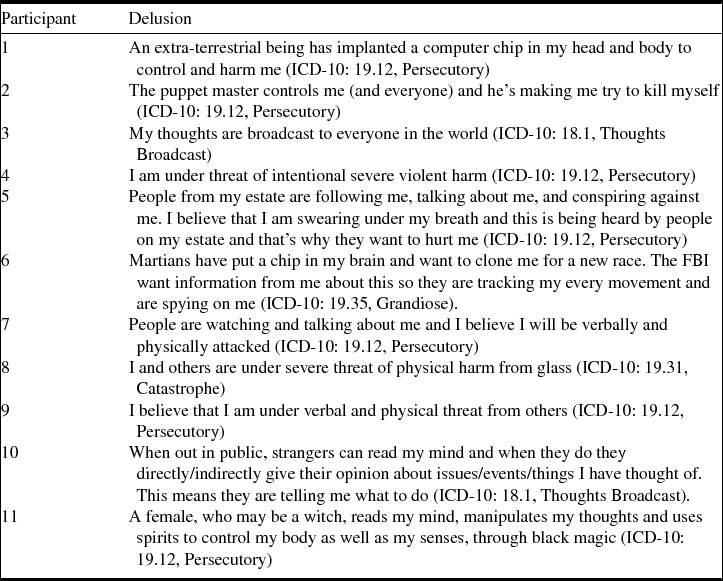
Feasibility: attendance
Each group had a minimum of three patients in attendance. The overall mean group attendance was three patients (group 1: four patients, 32 attendances; group 2: four patients, 32 attendances; group 3: three patients, 24 attendances), and the total number of sessions attended across the three groups and 24 sessions was 88. (Note: Patients only attended group 1 sessions or group 2 sessions or group 3 sessions, no patient ever attended more than one episode of sessions). Attendance figures include six patients not included in the effectiveness analysis or sample characteristics results: three drop-outs, one lost to follow-up, and two refused publication (one other patient never attended at all).
Acceptability: satisfaction
Table 3 shows that satisfaction scores were high (all means were between 1 ‘agree strongly’ and 2 ‘agree slightly’) for all 10 items across the three domains of Knowledge, Effectiveness and Overall Satisfaction. Table 3 also shows qualitative information.
Patient satisfaction (n = 11)
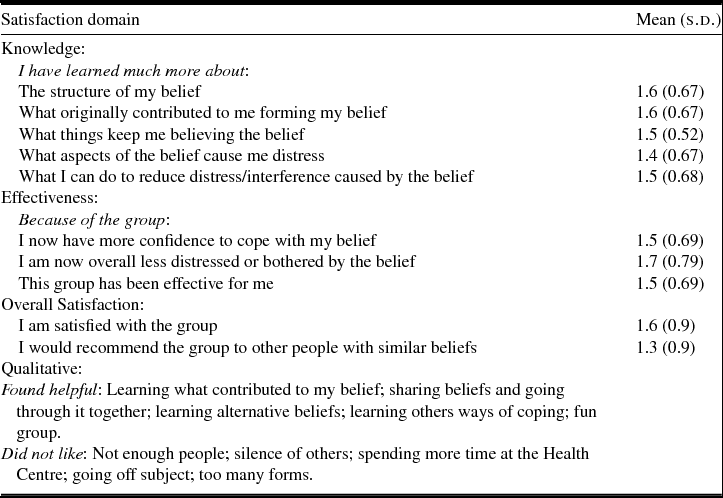
1, Strongly agree; 2, slightly agree; 3, unsure; 4, slightly disagree; 5 strongly disagree.
Safety
No adverse effects as a result of attendance to the group were found.
Delusion dimensions
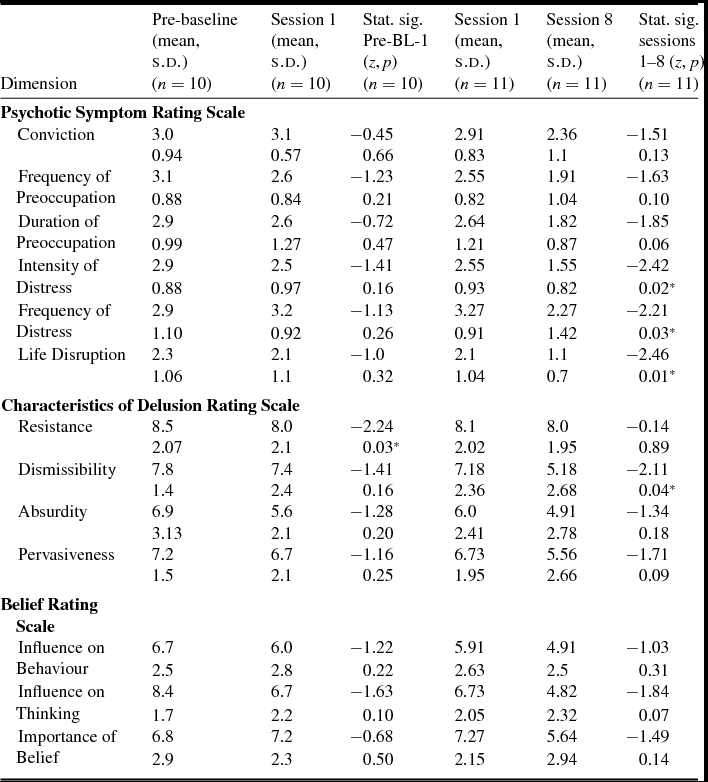
TAU period. One patient attended for the first time at session 1 so missed any pre-baseline assessment, hence the TAU period is n = 10 not n = 11. The mean length of time between pre-baseline assessment and session 1 (TAU period, n = 10) was 23.9 days (s.d. = 12.8, range = 1-49). The PSYRATS total pre-baseline (n = 10) vs. session 1 (n = 10) was non-statistically significant [pre-baseline mean = 17.1 (s.d. = 5.0) vs. session 1 mean = 16.1 (s.d. = 4.2); Wilcoxon mean rank 4.8 vs. 5.8, z = -1.32, p = 0.19]. Resistance was the only statistically significant change, a reduction of 6% (pre-baseline mean = 8.5 vs. session 1 mean = 8.0).
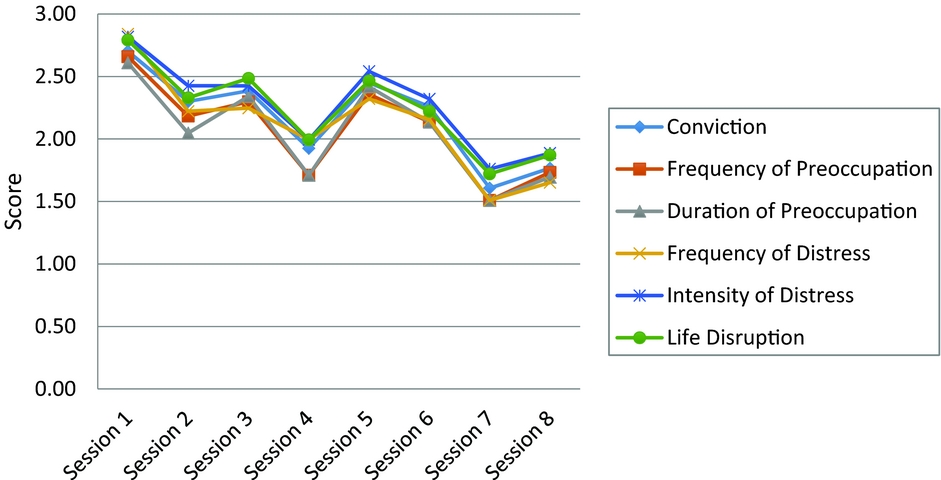
Group CBT treatment. General timing and pattern of change across treatment period. Table 4, and Figures 1 and 2 show that all 13 delusion dimensions, except ‘Resistance’, showed reductions in mean scores between treatment sessions 1–8. Figures 1 and 2 show that mean scores for all delusion dimensions, except ‘Resistance’ tend to decline from sessions 1 to 4, then increase slightly between sessions 5 and 6, before decreasing again at sessions 7 and 8.
Delusion dimension scores
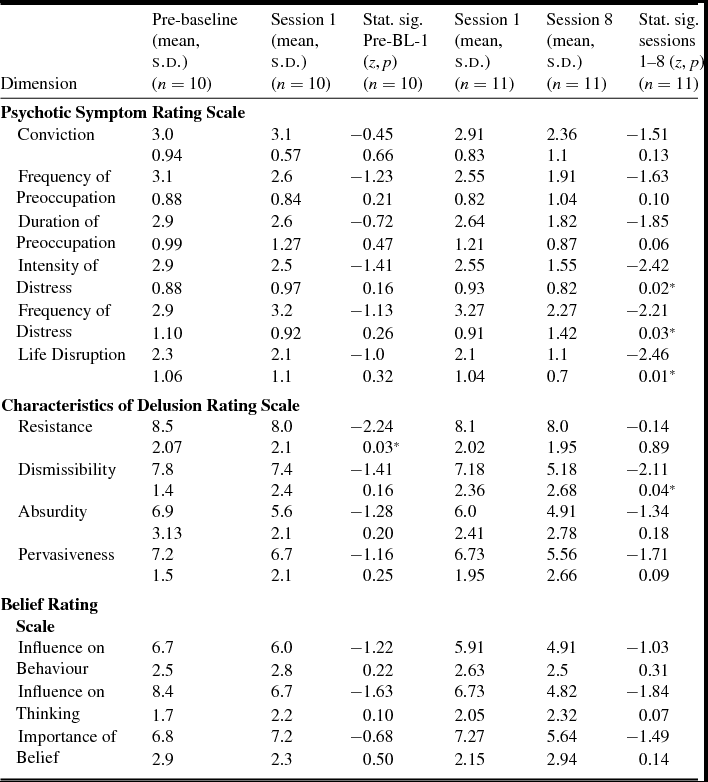
s.d., Standard deviation; Stat. sig., statistical significance.
* p < 0.05.
Psychotic Symptom Rating Scale delusion dimension mean changes across eight treatment sessions (n = 11). Group 1 (session 6) and group 3 (session 4) had a 2-week gap.
Characteristics of Delusion Rating Scale (CDRS) and Belief Rating Scale (BRS) delusion dimension changes across eight sessions (n = 11). Group 1 (session 6) and group 3 (session 4) had a 2-week gap. CDRS: Resistance, Dismissibility, Absurdity, Pervasiveness; BRS: Influence on Behaviour, Influence on Thinking, Importance of Belief.
Statistically significant reductions. The main aim of this service evaluation relates to specific delusion dimensions, but we also report that the PSYRATS total reduced significantly during the treatment period [n = 11: session 1 mean = 16.0, s.d. = 4.0 vs. end-of-treatment session 8 mean = 11.0 (s.d. = 4.7); Wilcoxon repeated measures mean rank: 5.9 vs. 1.5, z = -2.7, p = 0.008]. There was an overall 31.25% reduction in PSYRATS score and this equates to a large Cohen's d effect size of d = 1.2 (95% confidence interval = -2.53 to 0.05; session 1, mean = 16; session 8, mean = 11; baseline s.d. = 4.02).
Table 4 shows that four delusion dimensions displayed statistically significant reductions between sessions 1 and 8: PSYRATS ‘Intensity of Distress’ (p = 0.02), a 39% reduction, seven patients reduced at least one level; PSYRATS ‘Frequency of Distress’ (p = 0.03), a 30% reduction, seven patients reduced at least one level; PSYRATS ‘Life Disruption’ (p = 0.01), a 48% reduction, seven patients reduced at least one level; for CDRS ‘Dismissibility’ (p = 0.04) there was a 28% score reduction and seven patients reduced by at least 25%. All statistically significant reductions were also clinically significant (≥25% reduction in at least 50% of the sample). Table 4 also shows two statistical trends for delusion reduction (p = 0.05-0.09). No dimensions became statistically significantly increased comparing session 1 with session 8.
Discussion
The feasibility, acceptability, safety and effectiveness of an EI-GCBTp with an exclusive focus on single medication-resistant delusional beliefs was examined via a service evaluation. Methodological enhancements over previous studies, such as a pre-baseline design and more comprehensive and frequent dimensional assessment of the delusions, provided an opportunity to identify the speed, timing and duration of any dimensional changes of the delusions during the treatment.
Feasibility
EI-GCBTp exclusively focused upon single delusional beliefs is feasible even with medication-resistant patients. Further, nearly half of patients were non-white, so our sample was more representative of UK routine clinical care services than most other studies of CBT for medication-resistant patients (Rathod et al. Reference Rathod, Kingdon, Weiden and Turkington2008, p. 31), lending weight to external validity.
Acceptability
Satisfaction scores were high. Qualitatively, patients valued the sharing, discussion and alternative ideas about their previously highly private delusional beliefs. Peer-Socratic questions were common, three examples are given: first, one patient asked the patient who believed that their thoughts were broadcast to everyone in the world, whether the patient was waking up people in Australia during the group, which appeared to help the patient to more easily dismiss the delusional belief when it occurred. Second, the patient who believed the FBI were after him was asked by another patient if the FBI were only allowed to operate in America, and the patient said they had never thought of this, and it appeared to increase doubt in the belief. Third, one patient wanted to know what another patient could have possibly done to merit the perceived risk of being violently harmed, and the absence of any reason appeared to help the patient become more realistic about the likelihood of continuing and future persecution.
Given that the drop-out rate was 3/14 (21%, for patients who attended, but for less than four sessions) or 4/15 (26%, including the one patient who was screened but who never attended the group at all) the treatment format may not be acceptable/feasible for about a quarter of early course patients who hold persistent delusions (comparable to medication non-adherence rates, e.g. Nose et al. Reference Nose, Barbui and Tansella2003). The drop-out patients were all males, so men may require greater attention to sustain engagement. Suspiciousness was certainly not a barrier to attendance since most patients held persecutory beliefs. Anecdotally, it appeared that the reasons for dropping out may have been quite diverse (e.g. negative symptoms, substance abuse, lack of insight, and lack of engagement with the early intervention team generally).
Safety
Despite intervening early there were no serious untoward incidents or delusional deteriorations sufficient to remove patients from this service evaluation.
Effectiveness
There was virtually no change in the TAU period but during the treatment period there was a statistically significant large effect size (d = 1.2) on the PSYRATS total score which was reduced by 31% (session 1, mean = 16; session 8, mean = 11; difference mean = 5), a magnitude considered to be clinically significant (Leucht et al. Reference Leucht, Kane, Etschel, Kissling, Hamann and Engel2006; Morrison et al. Reference Morrison, Pyle, Chapman, French, Parker and Wells2014). This pre/post-effect size is more than EI-GCBTp studies that included multiple therapeutic targets [0.89 (Gaynor et al. Reference Gaynor, Dooley, Lawlor, Lawoyin and O'Callaghan2011), 0.45 (Chung et al. Reference Chung, Yoon, Park, Yang and Oh2013)] and a recent study of individual CBT for medication-resistant psychosis in a chronic sample [0.51 (Morrison et al. Reference Morrison, Pyle, Chapman, French, Parker and Wells2014)] where a 22% reduction in delusion severity was achieved. Despite the PSYRATS baseline total severity score in our service evaluation being higher than other early intervention and non-EI-GCBTp studies (Chung et al. Reference Chung, Yoon, Park, Yang and Oh2013; van Oosterhout et al. Reference van Oosterhout, Krabbendam, de Boer, Ferwerda, van der Helm, Stant and van der Gaag2014) and similar to the individually delivered CBT medication-resistant study of Morrison et al. (Reference Morrison, Pyle, Chapman, French, Parker and Wells2014), clinical improvements were nevertheless found by the end of the group.
Reductions on four specific delusion dimensions were statistically and clinically significant (≥25% reduction in at least 50% of the sample). Our findings of statistical significance for the dimensions of ‘Intensity of Distress’ (PSYRATS) and ‘Dismissibility’ (CDRS) concur with those of Landa et al. (Reference Landa, Silberstein, Schwartz and Savitz2006). Additional to this, at the early intervention stage, statistically significant improvements can also be shown in PSYRATS ‘Frequency of Distress’, and ‘Life Disruption’. However, unlike Landa et al. (Reference Landa, Silberstein, Schwartz and Savitz2006), we did not find a statistically significant improvement in PSYRATS delusional ‘Conviction’, although 6/11 patients improved to a clinically significant degree. The meta-analysis by van der Gaag et al. (Reference van der Gaag, Valmaggia and Smit2014) suggests that medication-resistant delusions would be less responsive to CBT. However, our combination of early intervention plus an exclusive focus on single delusions may be one way of providing the requisite focused intensity on this entrenched symptom, and showing an earlier effect on the delusional beliefs by the end of therapy rather than only at long-term follow-up (Bird et al. Reference Bird, Premkumar, Kendall, Whittington, Mitchell and Kuipers2010, p. 353; Pfammetter et al. Reference Pfammatter, Jungham and Brenner2006, p. S73).
Efficiency
With the shortest reported DUP to date of any EI-GCBTp study (e.g. Lecompte et al. Reference Lecompte, Leclerc, Wykes and Lecompte2003, Reference Lecompte, Leclerc, Corbiere, Wykes, Wallace and Spidel2008; Gaynor et al. Reference Gaynor, Dooley, Lawlor, Lawoyin and O'Callaghan2011; Chung et al. Reference Chung, Yoon, Park, Yang and Oh2013), the delusion improvements were obtained within a shorter time-frame (eight sessions) than the successful EI-GCBTp studies that targeted more than one symptom in the same study (Lecompte et al. Reference Lecompte, Leclerc, Wykes and Lecompte2003, Reference Lecompte, Leclerc, Corbiere, Wykes, Wallace and Spidel2008; Chung et al. Reference Chung, Yoon, Park, Yang and Oh2013; 12–24 sessions); the most similar study on chronic delusions (Landa et al. Reference Landa, Silberstein, Schwartz and Savitz2006, 13 sessions); and without simultaneous delusion-focused individual CBT (Levine et al. Reference Levine, Barak and Granek1998; Landa et al. Reference Landa, Silberstein, Schwartz and Savitz2006). Thus the combination of early intervention and a singular-symptom focus appears to augment clinical efficiency.
Despite initial reductions in intensity, delusion severity did generally increase slightly between weeks 4–6 before reducing back down again, coinciding with missed sessions due to patients’ physical illnesses and the more challenging cognitive strategies introduced at this time (Table 1). This example shows that our novel ‘during-therapy-assessments’ design permitted for the first time a matching between CBT intervention content with a specific psychosis outcome, something noted by Turner et al. (Reference Turner, van der Gaag, Karyotaki and Cuijpers2014, p. 10) as lacking in the evaluation evidence base.
Limitations
Further to our small sample size and one-quarter drop-out rate (noted above), our service evaluation did not contain a control group. Moreover, the pre-baseline period was shorter than the treatment period, which arguably permitted less time for the severe delusions to reduce. So while we can say that delusions improved, we cannot be sure the intervention was responsible, or whether progress would have been sustained beyond eight sessions. Our preliminary outcome data are also seriously limited because the assessors were the therapists, which may have created demand effects, and they were not blinded (Wykes et al. Reference Wykes, Steel, Everitt and Tarrier2008; van der Gaag et al. Reference van der Gaag, Valmaggia and Smit2014). Further, four patients had also received individual CBT, albeit for problems other than the chosen delusion. Given the small sample size, we judged that it was not possible to rerun the analyses to determine whether the pattern of changes remained if these four patients were excluded. Adapting the three BRS items and using only selected dimensions from the BRS and CDRS means that the supporting psychometric data for those instruments can no longer be assumed. Overall, the design limitations of our service evaluation cautions us against generalizing these results to the wider population without further more extensive RCT designs to confirm our findings, even though the patients may have been more representative of patients in routine care than those participating in most research studies.
Future
Future research could investigate EI-GCBTp in larger-scale and under more rigorous designs (e.g. larger sample, randomization, blinded assessors, etc.), incorporating also the new methodological improvements we advocate here (e.g. frequent multi-dimensional assessments), as part of a more comprehensive intervention evaluation template.
Conclusion
The primary findings of our service evaluation are that EI-GCBTp for medication-resistant delusional beliefs appears to be feasible, acceptable and safe. Our service evaluation also highlights the possibility patients may be able to reduce the intensity of several key delusion dimensions during brief group cognitive behaviour therapy if intervention is early and focuses exclusively on single delusional beliefs. The new treatment format may be suitable for about three-quarters of patients who have medication-resistant delusions, and males may require more intensive engagement. This service evaluation suggests that EI-GCBTp for medication-resistant delusions warrants larger-scale more rigorous testing.
Main points
-
(1) CBT for delusions has a low effect size, so further innovations in treatment are needed.
-
(2) We present a new group CBT treatment format which combines early intervention with a specific targeting of medication-resistant single delusions.
-
(3) The new treatment format was feasible and acceptable with about three-quarters of medication-resistant patients, it was safe, and it was associated in our small uncontrolled service evaluation with a rapid and large effect size comprising improvement on several delusion dimensions.
-
(4) Future studies could now test the treatment with larger-scale more rigorous designs.
Ethical statement
The authors assert that all procedures contributing to this work comply with the ethical standards of the relevant national and institutional committees on human experimentation and with the Helsinki Declaration of 1975, as revised in 2008.
Acknowledgements
For additional data collection and/or group support, thanks are due to EIPS assistant psychologists Suzanne Law, Sanna Khan and Raythe Harvey; and trainee clinical psychologist Alison Griffiths (UCL Doctorate in Clinical Psychology). For medication advice thanks are due to consultant psychiatrist Dr Saal Seneviratne. Sandra Kiryate (University of Hertfordshire MSc Research Methods) contributed editorial support. For managerial support thanks are due to Leanne Frizzel and Chris Ugochukwu. The data in this manuscript appears in unpublished Doctorate in Clinical Psychology Service-Related Research projects from Royal Holloway, University of London and University College London, University of London.
This service evaluation received no specific grant from any funding agency, commercial or not-for-profit sectors.
Declaration of Interest
The authors have no conflict of interests with respect to this publication.
-
(1) Knowledge of the current evidence base of group CBT for delusions.
-
(2) Learning a new treatment format and content for group CBT for delusions.
-
(3) Knowledge of a more comprehensive method of service evaluation for group CBT for delusions.



Comments
No Comments have been published for this article.