Introduction
The DSM-5 states that ‘ADHD begins in childhood’ (American Psychiatric Association, 2013). The age-of-onset criterion (AoO) was established based on empirical data suggesting that almost 90% of the childhood ADHD cases start until the age of twelve (Kieling et al., Reference Kieling, Kieling, Rohde, Frick, Moffitt, Nigg, Tannock and Castellanos2010). Thus, to diagnose adults with ADHD, DSM criteria advise clinicians to certify that several ADHD symptoms were present before the age of twelve, without the requirement of a full syndrome, in order to improve recall sensitivity (American Psychiatric Association, 2013). However, the neurodevelopmental concept of ADHD was challenged by findings demonstrating that ADHD could begin later in adolescence (Todd et al., Reference Todd, Huang and Henderson2008; Lecendreux et al., Reference Lecendreux, Konofal, Cortese and Faraone2015) or even in adulthood, with three longitudinal population studies demonstrating that the vast majority of adults with ADHD did not present the disorder in childhood (Moffitt et al., Reference Moffitt, Houts, Asherson, Belsky, Corcoran, Hammerle, Harrington, Hogan, Meier, Polanczyk, Poulton, Ramrakha, Sugden, Williams, Rohde and Caspi2015; Agnew-Blais et al., Reference Agnew-Blais, Polanczyk, Danese, Wertz, Moffitt and Arseneault2016; Caye et al., Reference Caye, Rocha, Anselmi, Murray, Menezes, Barros, Gonçalves, Wehrmeister, Jensen, Steinhausen, Swanson, Kieling and Rohde2016). The late-onset hypothesis was also opposed by findings associating late-onset symptoms with the co-occurrence of other psychiatric disorders (Sibley et al., Reference Sibley, Rohde, Swanson, Hechtman, Molina, Mitchell, Arnold, Caye, Kennedy, Roy, Stehli, Vitiello, Severe, Jensen, Hoagwood, Richters, Vereen, Hinshaw, Elliott, Wells, Epstein, Murray, Conners, March, Wigal, Cantwell, Abikoff, Greenhill, Newcorn, Hoza, Pelham, Gibbons, Marcus, Hur, Kraemer, Hanley and Stern2018). In this complex scenario, to determine the validity of the adult recall of childhood symptoms is crucial to develop valid diagnostic criteria for the adult population.
It is known that the information on events that occurred in childhood, gathered from adults, presents poor precision and should be used with caution (Henry et al., Reference Henry, Moffitt, Caspi, Langley and Silva1994). Existing data on the recall of childhood ADHD is scarce, but it seems that the recall is more accurate in clinical settings than in population-based ones. The first clinical study assessing this issue in adults showed that the retrospective recall of ADHD symptoms had a substantial agreement with the actual information collected in childhood, with a kappa value of 0.67 (Mannuzza et al., Reference Mannuzza, Klein, Klein, Bessler and Shrout2002). On the other hand, Barkley et al. (Reference Barkley, Fischer, Smallish and Fletcher2002) observed a moderate correlation around 0.4 between the adult recollection and the data assessed in childhood for both patients and controls. Also, Miller et al. (Reference Miller, Newcorn and Halperin2010) observed an agreement of only 27% when comparing the adolescent recall and the information on ADHD collected in childhood, with current symptoms improving the overall accuracy of the recall. The existing population-based studies are more consistent regarding the weak correlation between adult recall and actual events in childhood. Henry et al. (Reference Henry, Moffitt, Caspi, Langley and Silva1994) demonstrated a very weak correlation around 0.06 between the self-reported recall at the age of 18 and the presence of childhood symptoms collected with parents of the probands at the age of 10. Moreover, in a cohort of twins (Todd et al., Reference Todd, Huang and Henderson2008), only 54% of the individuals accurately recalled their ADHD status assessed 5 years earlier. Despite the observed unreliability of the retrospective recall of self- and even of collateral-reports (Loney et al., Reference Loney, Ledolter, Kramer and Volpe2007; Dias et al., Reference Dias, Mattos, Coutinho, Segenreich, Saboya and Ayrão2008; Miller et al., Reference Miller, Newcorn and Halperin2010; Moffitt et al., Reference Moffitt, Houts, Asherson, Belsky, Corcoran, Hammerle, Harrington, Hogan, Meier, Polanczyk, Poulton, Ramrakha, Sugden, Williams, Rohde and Caspi2015; Breda et al., Reference Breda, Rovaris, Vitola, Mota, Blaya-Rocha, Salgado, Victor, Picon, Karam, Silva, Rohde, Bau and Grevet2016), the DSM-5 still considers the retrospective information useful to establish the diagnosis in adults (American Psychiatric Association, 2013).
It is well known that the ADHD prevalence is highly dependent on the criteria used to determine cases in epidemiologic studies (Polanczyk et al., Reference Polanczyk, Willcutt, Salum, Kieling and Rohde2014). Two recent birth cohorts studies of adults divided the diagnosed individuals with ADHD as current ADHD syndrome (presence of at least five chronic, pervasive and impairing symptoms regardless of positive or negative recall of several symptoms in childhood) or as full DSM-5 ADHD (current syndrome plus the positive recall of several ADHD symptoms in childhood). By proceeding in this way, authors found an ADHD prevalence of 12% (at the age of eighteen) and 5.8% (at the age of thirty) when considering a current syndrome regardless of AoO, and of 3.5% and 2.1% for full DSM-5 criteria, respectively (Matte et al., Reference Matte, Rohde and Grevet2012; Vitola et al., Reference Vitola, Bau, Salum, Horta, Quevedo, Barros, Pinheiro, Kieling, Rohde and Grevet2017). Thus, the age-of-onset criterion was responsible for bringing the prevalence to the expected rates of ADHD in the adult population (Simon et al., Reference Simon, Czobor, Bálint, Mészáros and Bitter2009; Willcutt, Reference Willcutt2012). However, some questions remain in this regard: are we preventing false-positive diagnosis by strictly applying the AoO criterion, or are we excluding from diagnosis and treatment a considerable number of individuals who present ADHD impairing symptoms? Could we consider individuals who negatively endorse childhood symptoms as late-onset ADHD? Are there clinical factors that could help clinicians to enhance recall accuracy? To test the accuracy of self-reported childhood ADHD symptoms is crucial to start answering these questions.
In this context, it is fundamental to test the accuracy of the retrospective recall of childhood symptoms, since this is frequently the only approach available to define childhood symptoms when assessing adults. This issue is of great clinical relevance if we consider that we are dealing with a criterion that may be unreliable, and that determines the positive or negative ADHD diagnosis and treatment of an individual. Using the retrospective and prospective data on the presence of childhood ADHD symptoms from a birth cohort of individuals in their twenties, we tested the accuracy of the recall of several symptoms before the age of twelve. More specifically, the resulting confusion matrix created by crossing prospective and retrospective information allowed us to determine the performance of this criterion concerning true and false positive and negative rates, the sensitivity and specificity, the positive and negative predictive values, as well as the overall accuracy of the criterion. We also tested factors associated with recall accuracy to identify ‘red flags’ that could help clinicians to decide when to rely more or less on patients' self-report retrospective information.
Methods
Sample and design
The study was carried out with data on mental health from the 1993 Pelotas Birth Cohort (Gonçalves et al., Reference Gonçalves, Wehrmeister, Assunção, Tovo-Rodrigues, de Oliveira, Murray, Anselmi, Barros, Victora and Menezes2017). The original cohort included 5249 participants, representing 99.1% of all live-born children from maternity hospitals in the urban area of Pelotas, Brazil during 1993 (340 000 inhabitants). From 1993 to 2015, several waves of evaluation were carried out, initiating in the perinatal period and repeated at the ages of eleven, fifteen, eighteen and twenty-two. For detailed information on the cohort characteristics, see Victora et al. (Reference Victora, Araújo, Menezes, Hallal, de Vieira, Neutzling, Gonçalves, Valle, Lima, Anselmi, Behague, Gigante and Barros2006) and Gonçalves et al. (Reference Gonçalves, Wehrmeister, Assunção, Tovo-Rodrigues, de Oliveira, Murray, Anselmi, Barros, Victora and Menezes2017).
In 2015, at the age of twenty-two, 4003 individuals were traced, representing a retention rate of 76.3%, including 193 deceased subjects. From the 3810 individuals, 3781 underwent a comprehensive psychiatric evaluation, including an assessment for ADHD. For the current analysis on the validity of retrospective information on the presence of ADHD childhood symptoms, we also used the available data on the presence of ADHD symptoms assessed at the age of eleven. Since 180 subjects from the 3781 individuals presenting psychiatric evaluation at the age of twenty-two did not have information on ADHD at the age of eleven, the final sample comprised 3601 individuals. The profile of the losses is presented in the online supplementary material.
The 1993 Pelotas Birth Cohort study was approved by the institutional review board of the Federal University of Pelotas, and all participants provided written informed consent. All data were de-identified.
Clinical assessment
Sociodemographic characteristics and perinatal information
Participants' information included gender, birth weight, exposure to tobacco during pregnancy and skin color. Specific and confidential questionnaires regarding years of schooling and child abuse were applied.
Assessment of ADHD symptoms at the age of eleven
Mental health evaluation at the age of eleven was assessed with the self- and parent-report Brazilian Portuguese version of the Strengths and Difficulties Questionnaire (SDQ) applied by trained psychologists. The SDQ is a diagnostic screening tool for general psychopathology that was used in diverse cultures and languages demonstrating good psychometric properties and clinical utility. The SDQ consists of 25 items divided into five subscales assessing emotional symptoms, conduct problems, hyperactive behavior, peer relationships, and prosocial behavior. Each subscale has five statements with three possible answers (‘not true’, ‘somewhat true’, or ‘certainly true’, scored from 0 to 2), resulting in a score that ranges from 0 to 10. In the Brazilian population, the validity of the SDQ was tested by (1) comparing scores from clinical and population-based samples; (2) testing sensitivity and specificity for parent, teacher, and adolescent difficulties score predicting psychopathology; and (3) comparing the prevalences of the DSM-IV disorders with the United Kingdom (UK) normative SDQ sample. The comparison between population-based and clinical samples showed that clinical scores were around one standard deviation above population-based scores for both parent and teacher informants but with smaller differences for self-reported scores. These results were similar in urban and rural communities, and slightly higher in the favela community. The comparison between SDQ-based positive and negative diagnosis status with the diagnosis reached using the Development and Well-Being Assessment – DAWBA (Goodman et al., Reference Goodman, Ford, Richards, Gatward and Meltzer2000a) demonstrated a PPV of 60% and an NPV of 85%. Finally, the prevalence of DSM-IV disorders driven from the SDQ was tested in the Brazilian population, and the sample presented slightly higher disorder prevalences when compared to the UK original data (Woerner et al., Reference Woerner, Fleitlich-Bilyk, Martinussen, Fletcher, Cucchiaro, Dalgalarrondo, Lui and Tannock2004). The SDQ had a similar performance in the Pelotas Cohort Population for detecting ADHD symptomatology as well (Anselmi et al., Reference Anselmi, Fleitlich-Bilyk, Menezes, Araújo and Rohde2010a, Reference Anselmi, Menezes, Barros, Hallal, Araujo, Domingues and Rohde2010b).
Data from the hyperactive behavior subset of the SDQ (SDQ-H) was used to confirm the presence of several ADHD symptoms in childhood. The hyperactive behavior subset has five affirmatives regarding (1) restlessness; (2) fidgeting; (3) poor concentration; (4) impulsivity; and (5) finishing tasks. Individuals with a score of 7 or higher (by either self- or parent-report) were considered to have ‘several ADHD symptoms’ in childhood. Formally, individuals with scores of seven points are classified in the ‘abnormal’ category of the original three-band classification of the SDQ for children between 5–15 years of age in the British population, or classified as ‘slightly higher’ probability of ADHD according to the four-band categorization of SDQ (http://www.sdqinfo.org) (Goodman et al., Reference Goodman, Ford, Simmons, Gatward and Meltzer2000b; Algorta et al., Reference Algorta, Dodd, Stringaris and Youngstrom2016; Cooper et al., Reference Cooper, Hammerton, Collishaw, Langley, Thapar, Dalsgaard, Stergiakouli, Tilling, Davey Smith, Maughan, O'Donovan, Thapar and Riglin2018). Besides, despite DSM-5 criteria lack a clear threshold for the number of symptoms in childhood to be regarded as ‘several’, we could consider that the minimum number of symptoms is three since the minimum number of current symptoms necessary to diagnose an adult with ADHD is five. In this sense, we could consider that subjects with an SDQ-H score of 7 at the age of eleven had the minimum number of symptoms needed, since, to reach that score, the individual or his/her relative had to have endorsed at least two SDQ hyperactive items as ‘certainly true’ and the other three items at least as ‘somewhat true’.
Psychiatric assessment at twenty-two years of age
At 22 years of age, subjects underwent face-to-face interviews performed by trained psychologists to obtain information on health, schooling, and behavior (Gonçalves et al., Reference Gonçalves, Wehrmeister, Assunção, Tovo-Rodrigues, de Oliveira, Murray, Anselmi, Barros, Victora and Menezes2017). The psychiatric assessment was based on the Brazilian version of the Mini-International Neuropsychiatric Interview (M.I.N.I.) (Amorin, Reference Amorin2000) and included psychiatric disorders highly associated with ADHD. The M.I.N.I. specific modules were applied for Major Depressive Disorder (MDD), Bipolar Disorder (BD), Social Anxiety Disorder (SAD), Generalized Anxiety Disorder (GAD), Post-Traumatic Stress Disorder (PTSD) and Antisocial Personality Disorder (ASPD). For ADHD assessment, a questionnaire presenting the exact wording from the DSM-5 diagnostic criteria for ADHD in adults was used (American Psychiatric Association, 2013). Individuals were asked about the presence of each of the nine symptoms of inattention and hyperactivity/impulsivity in the last 6 months (criterion A). A specific question on the pervasiveness of symptoms inquired whether these symptoms were present in more than one setting in academic, occupational or social life (criterion C). A subsequent question about the presence of symptoms before the age of twelve was made in an in gradient or ordinal sequence to facilitate the understanding of this subjective question. Thus, four answers were possible: ‘none’, ‘some’, ‘several’ and ‘many’ (criterion B). A final question was made to inquire how much the current symptomatology was causing impairment. Four answers were possible: ‘none’, ‘some’, ‘a lot’ or ‘very much’ (criterion D). Therefore, to reach the DSM-5 ADHD diagnostic status, subjects had to present: at least five symptoms of inattention and/or hyperactivity/impulsivity in the last 6 months; symptoms in two or more settings; ‘a lot of’ or ‘very much’ impairment; and recall of at least several symptoms before the age of twelve. Those cases not endorsing the age-of-onset (criterion B) were defined as with a currently-impairing ADHD syndrome, or Other-Specified ADHD.
Statistical analyses
In order to evaluate the accuracy of the self-reported retrospective recall of the presence or absence of childhood symptoms collected at the age of 22 years, we constructed a confusion matrix comparing this data with the one obtained at the age of 11 years using the SDQ-H (cross-tabulation of the data from the assessment at 22 v. the assessment at 11). To avoid spectrum effect, where the results are biased in low prevalence settings by obtaining high negative predictive values and low positive predictive values (Mannuzza et al., Reference Mannuzza, Klein, Klein, Bessler and Shrout2002; Mulherin and Miller, Reference Mulherin and Miller2002), we performed the analysis only for individuals presenting all DSM-5 ADHD criteria regardless of age-of-onset criterion (individuals with a current ADHD syndrome at the age of 22 years). This approach also emulates clinical practice, when clinicians face individuals presenting a current ADHD syndrome and the only available retrospective data on childhood ADHD symptoms is the patients' self-retrospective recall.
We calculated sensitivity, specificity, positive and negative predictive values, and overall accuracy through cross-tabulation between the positive and negative endorsement in the self-reported recall of childhood symptoms at 22 years of age and the actual presence or absence of several ADHD symptoms according to the defined SDQ-H threshold score used at 11 years of age.
Univariable and multiple Poisson regression analyses with robust standard errors were used to test possible psychosocial and clinical predictors of false-positive and false-negative recall in order to ascertain factors associated with improvement in recall accuracy that could help clinicians decide how to deal with the self-reported retrospective information on the presence of several ADHD childhood symptoms. Those clinical characteristics presenting significant prevalence ratios could function as ‘red flags’ for the correct or incorrect self-reported recall of symptoms. A significance level of 5% and two-tailed tests were used in the analyses. All analyses were conducted with SPSS statistical software, version 18.0 (SPSS Inc. Released, 2009).
Results
ADHD prevalence
Five hundred and eighteen individuals from 3601 (14.4%) presented a current ADHD syndrome at the age of 22 regardless of the endorsement of childhood symptoms. From those, 162 individuals positively endorsed the presence of several childhood symptoms by retrospective self-reported recall (ADHD prevalence of 4.5%). If we consider the information collected at the age of 11 years on the presence of childhood symptoms, instead of the retrospective self-reported recall in order to follow a more conservative way to characterize the neurodevelopmental trajectory to establish the ADHD diagnosis, 201 individuals were considered cases, reaching an ADHD prevalence of 5.6%.
Demographics and comorbidities
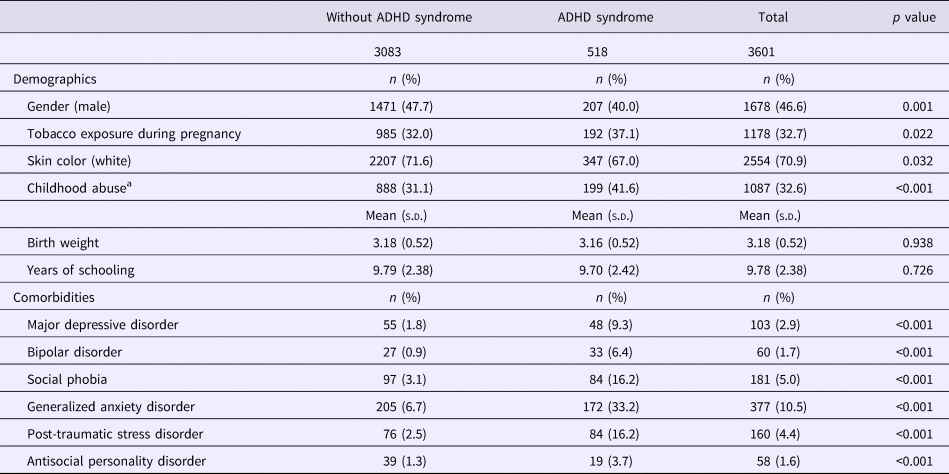
The comparison between demographic and comorbidity characteristics of individuals with and without an ADHD syndrome at 22 years of age are described in Table 1. Individuals with current ADHD syndrome were more frequently women, had more tobacco exposure during pregnancy, suffered more frequently child abuse and had a higher prevalence of comorbidities when compared to those without a current ADHD syndrome (Table 1).
Demographic and comorbidity characteristics of Cohort individuals at 22 years of age

Data are expressed as N and (%) or mean and (standard deviation)
a Data available for 3334 individuals
Accuracy of the retrospective recall of childhood ADHD symptoms
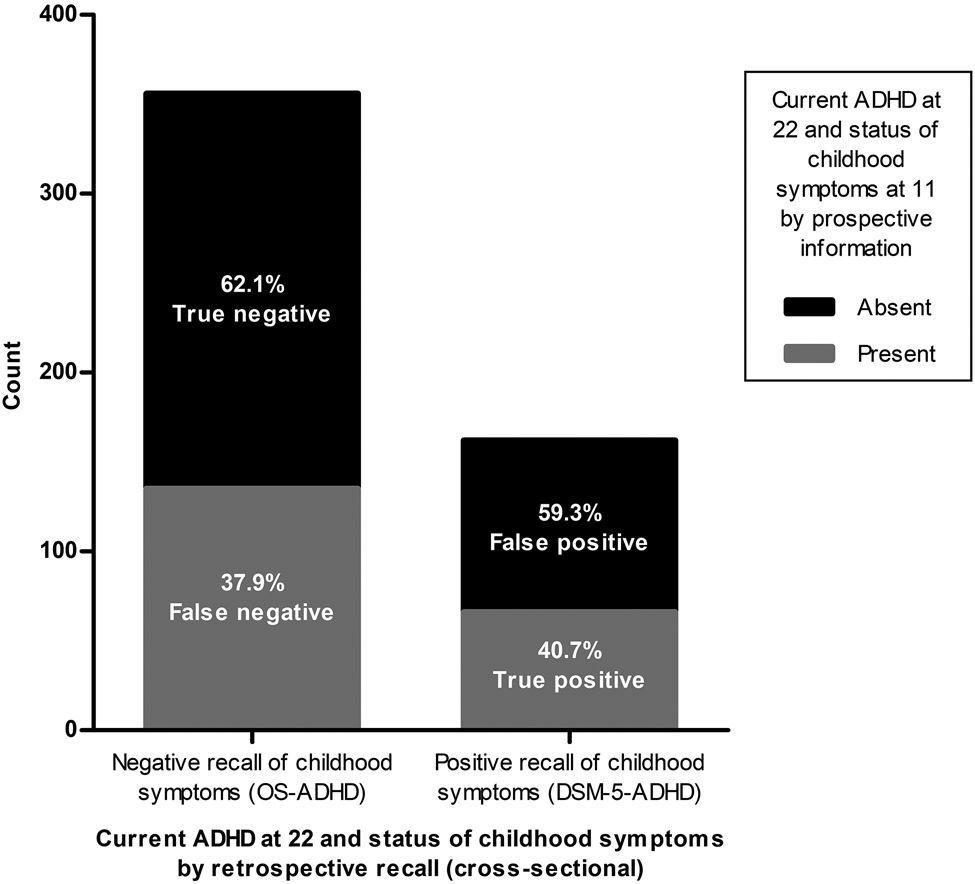
When comparing the self-reported recall at the age of 22 years with the available information at the age of 11 for the 518 individuals presenting a current ADHD syndrome, 162 individuals positively endorsed the presence of childhood symptoms, but only 66 (40.7%) were true-positive cases. From the 356 individuals that negatively endorsed the presence of childhood symptoms, only 221 (62.1%) individuals were true-negative cases (see Figure 1). Sensitivity, specificity, positive predictive value (PPV), negative predictive value (NPV) and overall accuracy are described in Table 2.
Recall-based versus trajectory-based ADHD.

Recall accuracy in individuals with current ADHD syndrome

In order to avoid biases caused by the inclusion of subthreshold cases in the calculations, we also performed the analyses considering only ADHD cases with severe impairment. Despite a consequent decrease in prevalence to 4.0% (n = 145), the results regarding accuracy did not differ, and accuracy remained poor (55.9%). The sensitivity observed was 40.4%, specificity 65.9%, PPV 43.4%, and NPV 63.0% (online Supplementary material, Table S2). Also, we performed analyses using SDQ cut-offs ranging from 3 to 10 as definers of several ADHD symptoms in childhood. Again, recall accuracy remains poor, with some artificial improvement in accuracy due to an increase in the NPV in a setting with a low prevalence of the disorder (online Supplementary material, Table S5).
Factors associated with retrospective recall inaccuracy
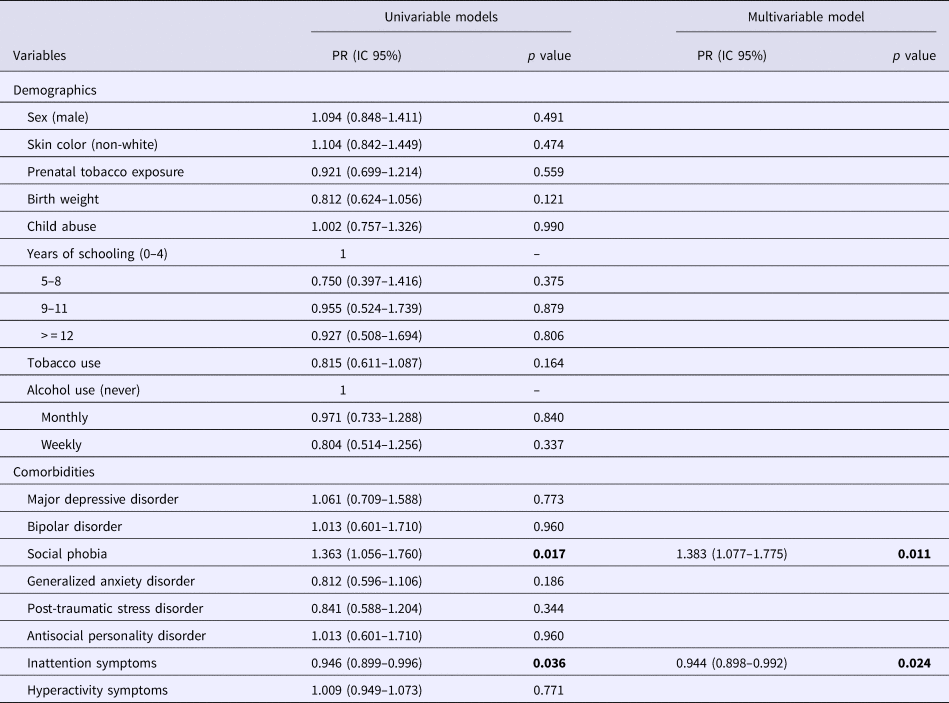
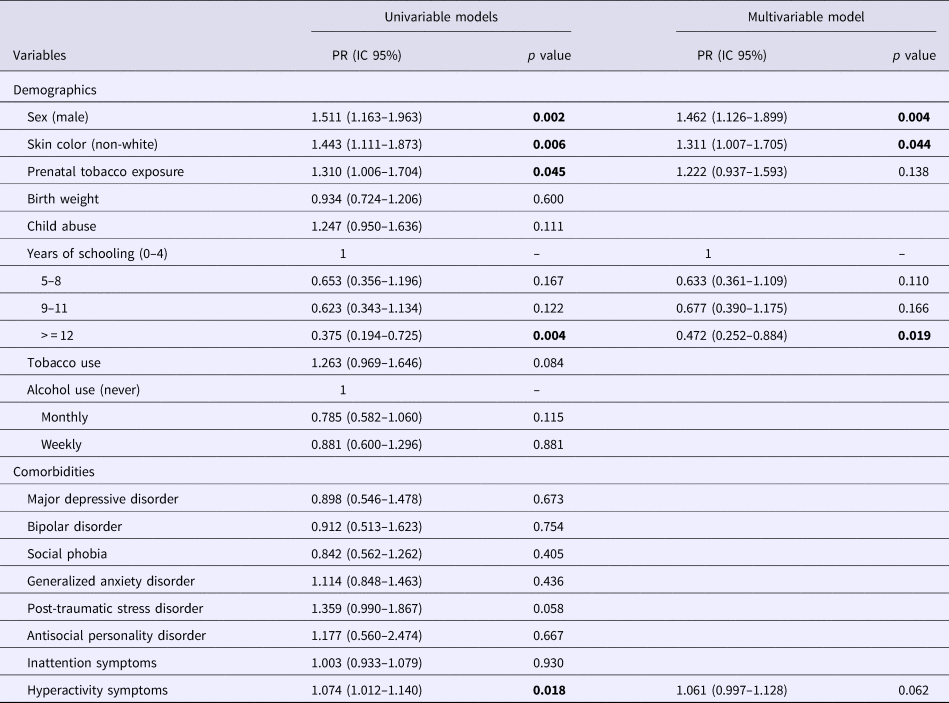
From those variables used in the regression analysis, the false positive endorsement of childhood symptoms was positively associated with social phobia, and negatively associated with current inattention symptoms in multivariate analyses. The false negative endorsement of childhood symptoms was positively associated with male gender and non-white individuals, and it was negatively associated with higher levels of schooling (Tables 3 and 4).
Characteristics associated with false positive recall (n = 162)

Characteristics associated with false negative recall (n = 356)

Discussion
To our knowledge, this is the first study determining both the recall accuracy of childhood ADHD symptoms and factors associated with true- and false-recall in a large population-based sample of young adults. The performance of the self-report recall to define the presence of several symptoms before the age of twelve in an individual presenting a currently-impairing ADHD syndrome was extremely poor, demonstrating both low sensitivity and specificity due to high false positive and false negative rates. Also, there were no clinical characteristics strongly associated with false or true-recall of childhood symptoms that could help clinicians to raise red flags in order to judge the quality of the self-reported retrospective remembrance better.
The recall accuracy of ADHD symptoms was reported as moderate or poor in clinical and population studies (Mannuzza et al., Reference Mannuzza, Klein, Klein, Bessler and Shrout2002; Loney et al., Reference Loney, Ledolter, Kramer and Volpe2007; Todd et al., Reference Todd, Huang and Henderson2008; Miller et al., Reference Miller, Newcorn and Halperin2010; Moffitt et al., Reference Moffitt, Houts, Asherson, Belsky, Corcoran, Hammerle, Harrington, Hogan, Meier, Polanczyk, Poulton, Ramrakha, Sugden, Williams, Rohde and Caspi2015). Since the characterization of a neurodevelopmental trajectory is a crucial step to diagnose ADHD in adults (American Psychiatric Association, 2013), the inaccuracy of the recall of childhood symptoms in adulthood might jeopardize the construct validity of the DSM-5 criteria when assessing adults.
Two factors were responsible for compromising this construct validity in our study. First, respectively only 40.7% and 62.1% of positive and negative endorsers answered correctly regarding their past ADHD symptoms and, with these performances, the final prevalence of ADHD included 60% of false-positive cases. Second, the proportion of individuals with evidence of a neurodevelopmental trajectory was almost the same (around 40%) in the group of individuals endorsing and in the group not endorsing the presence of symptoms in childhood. Therefore, the clinical effort to distinguish between persistent ADHD cases from ‘current cases of adult ADHD’ (also called new-onset/late-onset ADHD) based on the recall of childhood symptoms is probably a pitfall. Also, the high rate of false-negative answers observed is in line with previous findings demonstrating that ADHD individuals under-recognize current and past symptoms (Sibley et al., Reference Sibley, Pelham, Molina, Gnagy, Waschbusch, Garefino, Kuriyan, Babinski and Karch2012).
A recent study showed that most of the symptoms of ADHD that initiated after the age of twelve in the MTA local normative control group subjects could be better explained by other psychiatric disorders (Sibley et al., Reference Sibley, Rohde, Swanson, Hechtman, Molina, Mitchell, Arnold, Caye, Kennedy, Roy, Stehli, Vitiello, Severe, Jensen, Hoagwood, Richters, Vereen, Hinshaw, Elliott, Wells, Epstein, Murray, Conners, March, Wigal, Cantwell, Abikoff, Greenhill, Newcorn, Hoza, Pelham, Gibbons, Marcus, Hur, Kraemer, Hanley and Stern2018). It is noteworthy that, in our sample, the false-positive recall of childhood symptoms was associated with social phobia. In this regard, it is possible that the presence of social anxiety may be related to a false notion of the childhood onset of ADHD or may be related to an emotional interference in cognitive performance. However, the effort of Sibley et al. (Reference Sibley, Rohde, Swanson, Hechtman, Molina, Mitchell, Arnold, Caye, Kennedy, Roy, Stehli, Vitiello, Severe, Jensen, Hoagwood, Richters, Vereen, Hinshaw, Elliott, Wells, Epstein, Murray, Conners, March, Wigal, Cantwell, Abikoff, Greenhill, Newcorn, Hoza, Pelham, Gibbons, Marcus, Hur, Kraemer, Hanley and Stern2018) to differentiate between ‘primary’ and ‘secondary’ disorders is not free of criticisms, since a restrictive polythetic notion of psychopathology is not supported in the lack of reliable biomarkers (Parnas, Reference Parnas2015). Recent genomic findings are in the opposite direction of a strict categorical proposition for psychiatric disorders, that frequently share genetic underpinnings, as is the case of the strong genetic correlation observed between ADHD and major depression (Anttila et al., Reference Anttila, Bulik-Sullivan, Finucane, Walters, Bras, Duncan, Escott-Price, Falcone, Gormley, Malik, Patsopoulos, Ripke, Wei, Yu, Lee, Turley, Grenier-Boley, Chouraki, Kamatani, Berr, Letenneur, Hannequin, Amouyel, Boland, Deleuze, Duron, Vardarajan, Reitz, Goate, Huentelman, Kamboh, Larson, Rogaeva, St George-Hyslop, Hakonarson, Kukull, Farrer, Barnes, Beach, Demirci, Head, Hulette, Jicha, Kauwe, Kaye, Leverenz, Levey, Lieberman, Pankratz, Poon, Quinn, Saykin, Schneider, Smith, Sonnen, Stern, Van Deerlin, Van Eldik, Harold, Russo, Rubinsztein, Bayer, Tsolaki, Proitsi, Fox, Hampel, Owen, Mead, Passmore, Morgan, Nöthen, Rossor, Lupton, Hoffmann, Kornhuber, Lawlor, McQuillin, Al-Chalabi, Bis, Ruiz, Boada, Seshadri, Beiser, Rice, van der Lee, De Jager, Geschwind, Riemenschneider, Riedel-Heller, Rotter, Ransmayr, Hyman, Cruchaga, Alegret, Winsvold, Palta, Farh, Cuenca-Leon, Furlotte, Kurth, Ligthart, Terwindt, Freilinger, Ran, Gordon, Borck, Adams, Lehtimäki, Wedenoja, Buring, Schürks, Hrafnsdottir, Hottenga, Penninx, Artto, Kaunisto, Vepsäläinen, Martin, Montgomery, Kurki, Hämäläinen, Huang, Huang, Sandor, Webber, Muller-Myhsok, Schreiber, Salomaa, Loehrer, Göbel, Macaya, Pozo-Rosich, Hansen, Werge, Kaprio, Metspalu, Kubisch, Ferrari, Belin, van den Maagdenberg, Zwart, Boomsma, Eriksson, Olesen, Chasman, Nyholt, Avbersek, Baum, Berkovic, Bradfield, Buono, Catarino, Cossette, De Jonghe, Depondt, Dlugos, Ferraro, French, Hjalgrim, Jamnadas-Khoda, Kälviäinen, Kunz, Lerche, Leu, Lindhout, Lo, Lowenstein, McCormack, Møller, Molloy, Ng, Oliver, Privitera, Radtke, Ruppert, Sander, Schachter, Schankin, Scheffer, Schoch, Sisodiya, Smith, Sperling, Striano, Surges, Thomas, Visscher, Whelan, Zara, Heinzen, Marson, Becker, Stroink, Zimprich, Gasser, Gibbs, Heutink, Martinez, Morris, Sharma, Ryten, Mok, Pulit, Bevan, Holliday, Attia, Battey, Boncoraglio, Thijs, Chen, Mitchell, Rothwell, Sharma, Sudlow, Vicente, Markus, Kourkoulis, Pera, Raffeld, Silliman, Boraska Perica, Thornton, Huckins, William Rayner, Lewis, Gratacos, Rybakowski, Keski-Rahkonen, Raevuori, Hudson, Reichborn-Kjennerud, Monteleone, Karwautz, Mannik, Baker, O'Toole, Trace, Davis, Helder, Ehrlich, Herpertz-Dahlmann, Danner, van Elburg, Clementi, Forzan, Docampo, Lissowska, Hauser, Tortorella, Maj, Gonidakis, Tziouvas, Papezova, Yilmaz, Wagner, Cohen-Woods, Herms, Julià, Rabionet, Dick, Ripatti, Andreassen, Espeseth, Lundervold, Steen, Pinto, Scherer, Aschauer, Schosser, Alfredsson, Padyukov, Halmi, Mitchell, Strober, Bergen, Kaye, Szatkiewicz, Cormand, Ramos-Quiroga, Sánchez-Mora, Ribasés, Casas, Hervas, Arranz, Haavik, Zayats, Johansson, Williams, Dempfle, Rothenberger, Kuntsi, Oades, Banaschewski, Franke, Buitelaar, Arias Vasquez, Doyle, Reif, Lesch, Freitag, Rivero, Palmason, Romanos, Langley, Rietschel, Witt, Dalsgaard, Børglum, Waldman, Wilmot, Molly, Bau, Crosbie, Schachar, Loo, McGough, Grevet, Medland, Robinson, Weiss, Bacchelli, Bailey, Bal, Battaglia, Betancur, Bolton, Cantor, Celestino-Soper, Dawson, De Rubeis, Duque, Green, Klauck, Leboyer, Levitt, Maestrini, Mane, De-Luca, Parr, Regan, Reichenberg, Sandin, Vorstman, Wassink, Wijsman, Cook, Santangelo, Delorme, Rogé, Magalhaes, Arking, Schulze, Thompson, Strohmaier, Matthews, Melle, Morris, Blackwood, McIntosh, Bergen, Schalling, Jamain, Maaser, Fischer, Reinbold, Fullerton, Guzman-Parra, Mayoral, Schofield, Cichon, Mühleisen, Degenhardt, Schumacher, Bauer, Mitchell, Gershon, Rice, Potash, Zandi, Craddock, Ferrier, Alda, Rouleau, Turecki, Ophoff, Pato, Anjorin, Stahl, Leber, Czerski, Cruceanu, Jones, Posthuma, Andlauer, Forstner, Streit, Baune, Air, Sinnamon, Wray, MacIntyre, Porteous, Homuth, Rivera, Grove, Middeldorp, Hickie, Pergadia, Mehta, Smit, Jansen, de Geus, Dunn, Li, Nauck, Schoevers, Beekman, Knowles, Viktorin, Arnold, Barr, Bedoya-Berrio, Bienvenu, Brentani, Burton, Camarena, Cappi, Cath, Cavallini, Cusi, Darrow, Denys, Derks, Dietrich, Fernandez, Figee, Freimer, Gerber, Grados, Greenberg, Hanna, Hartmann, Hirschtritt, Hoekstra, Huang, Huyser, Illmann, Jenike, Kuperman, Leventhal, Lochner, Lyon, Macciardi, Madruga-Garrido, Malaty, Maras, McGrath, Miguel, Mir, Nestadt, Nicolini, Okun, Pakstis, Paschou, Piacentini, Pittenger, Plessen, Ramensky, Ramos, Reus, Richter, Riddle, Robertson, Roessner, Rosário, Samuels, Sandor, Stein, Tsetsos, Van Nieuwerburgh, Weatherall, Wendland, Wolanczyk, Worbe, Zai, Goes, McLaughlin, Nestadt, Grabe, Depienne, Konkashbaev, Lanzagorta, Valencia-Duarte, Bramon, Buccola, Cahn, Cairns, Chong, Cohen, Crespo-Facorro, Crowley, Davidson, DeLisi, Dinan, Donohoe, Drapeau, Duan, Haan, Hougaard, Karachanak-Yankova, Khrunin, Klovins, Kučinskas, Lee Chee Keong, Limborska, Loughland, Lönnqvist, Maher, Mattheisen, McDonald, Murphy, Nenadic, van Os, Pantelis, Pato, Petryshen, Quested, Roussos, Sanders, Schall, Schwab, Sim, So, Stögmann, Subramaniam, Toncheva, Waddington, Walters, Weiser, Cheng, Cloninger, Curtis, Gejman, Henskens, Mattingsdal, Oh, Scott, Webb, Breen, Churchhouse, Bulik, Daly, Dichgans, Faraone, Guerreiro, Holmans, Kendler, Koeleman, Mathews, Price, Scharf, Sklar, Williams, Wood, Cotsapas, Palotie, Smoller, Sullivan, Rosand, Corvin, Neale, Schott, Anney, Elia, Grigoroiu-Serbanescu, Edenberg and Murray2018). Also, the association between ADHD and social phobia was previously reported in a cross-sectional evaluation in the National Comorbidity Survey Replication by Kessler et al. (Reference Kessler, Adler, Barkley, Biederman, Conners, Faraone, Greenhill, Jaeger, Secnik, Spencer, Ustün and Zaslavsky2005), and this comorbidity could portray a current adult ADHD presentation.
Regarding factors associated with recall accuracy, our data is in accordance with previous findings demonstrating that higher levels of current inattention symptoms were associated with a more accurate recall of childhood symptoms (Miller et al., Reference Miller, Newcorn and Halperin2010). Besides, in our study, male gender was associated with false-negative endorsement of childhood symptoms, what is in accordance with Fivush and Schwarzmueller (Reference Fivush and Schwarzmueller1998). They showed that girls might present a more detailed and coherent recall of past information.
It is important to highlight that, despite statistically significant, all factors related to better or worse recall accuracy found in our analyses were of small clinical relevance, since they explained just a little of the variability of an accurate response.
The interpretation of our results may require some considerations regarding its limitations. The 1993 Pelotas Birth Cohort Study presented a 26.4% attrition rate in the 2015 wave (Gonçalves et al., Reference Gonçalves, Wehrmeister, Assunção, Tovo-Rodrigues, de Oliveira, Murray, Anselmi, Barros, Victora and Menezes2017). However, the follow-up rate is higher than that reported by similar studies in low- and middle-income countries (Richter et al., Reference Richter, Victora, Hallal, Adair, Bhargava, Fall, Lee, Martorell, Norris, Sachdev and Stein2012) and the retention rates obtained in the Cohort could still be considered representative of the original sample (Horta et al., Reference Horta, Gigante, Gonçalves, Dos Santos Motta, Loret De Mola, Oliveira, Barros and Victora2015). Besides, there was a slightly higher percentage of retained women than men (79.9 v. 72.6), but, in absolute terms, the final sample had a relatively balanced proportion of women and men (53.2% v. 46.8%). Still, regarding gender, we also found a predominance of females in the ADHD subjects, while the literature shows a more balanced male: female ratio in adult populations (Agnew-Blais et al., Reference Agnew-Blais, Polanczyk, Danese, Wertz, Moffitt and Arseneault2016). However, this predominance of females occurs not only in the Pelotas Cohorts (Matte et al., Reference Matte, Rohde and Grevet2012; Vitola et al., Reference Vitola, Bau, Salum, Horta, Quevedo, Barros, Pinheiro, Kieling, Rohde and Grevet2017) but also in the Netherlands population (Kooij et al., Reference Kooij, Buitelaar, van den Oord, Furer, Rijnders and Hodiamont2005). One of the possible explanations for this phenomenon could be related to a tardive perception of ADHD in inattentive women, despite controversy (Tu et al., Reference Tu, Owens and Hinshaw2019).
Furthermore, diagnostic process in population studies differs from the ‘gold standard’ for diagnosing ADHD that is the clinical evaluation, and our methodology could be related to increased false-negative or false-positive rates. We minimized this effect by using structured interviews applied by trained psychologists at the age of 22, what has been demonstrated to improve diagnostic accuracy (Sibley et al., Reference Sibley, Swanson, Arnold, Hechtman, Owens, Stehli, Abikoff, Hinshaw, Molina, Mitchell, Jensen, Howard, Lakes, Pelham, Vitiello, Severe, Eugene Arnold, Hoagwood, Richters, Vereen, Elliott, Wells, Epstein, Murray, Keith Conners, March, Wigal, Cantwell, Greenhill, Newcorn, Hoza, Gibbons, Marcus, Hur, Kraemer, Hanley and Stern2017). Second, to avoid false-positive results in population-based samples due to lack of clinical significance on those individuals presenting symptoms of the disorder (Spitzer and Wakefield, Reference Spitzer and Wakefield1999), we also ran the same analysis with data from severe ADHD cases, but recall accuracy did not change. At the age of eleven, a screening evaluation for ADHD symptoms was applied to individuals and their relatives, but not a full clinical ADHD evaluation, what might hinder the validity of the ADHD status at this age. Although, as we were interested in detecting an ADHD trait in order to test the recall of ‘several symptoms’ accuracy at the age of 22 and not the ADHD diagnosis per se, the use of the SDQ screener is justifiable. Another limitation is that, as our data represent only the results of two cross-sectional evaluations at the age of eleven and twenty-two, the number of individuals considered in the present analyses may not express the whole ADHD population of the cohort, since remission is an important characteristic of the disorder in adolescence (Faraone et al., Reference Faraone, Biederman and Mick2006) and adulthood (Karam et al., Reference Karam, Breda, Picon, Rovaris, Victor, Salgado, Vitola, Silva, Guimaraes-Da-Silva, Mota, Caye, Belmonte-De-Abreu, Rohde, Grevet and Bau2015). For example, those not having several ADHD symptoms at 11 years of age might have had several symptoms at any time before this age. However, it is before the age of twelve that the vast majority of ADHD cases with onset in childhood unfolds (Kieling et al., Reference Kieling, Kieling, Rohde, Frick, Moffitt, Nigg, Tannock and Castellanos2010). Still, it is after the age of eleven that the age-dependent decline of symptoms and ADHD remission in adolescence occurs (Faraone et al., Reference Faraone, Biederman and Mick2006). Despite a definitive answer to this issue might only be addressed in longitudinal studies with multiple assessments in childhood, it is not probable that it substantially impacts our findings. Another possible limitation is the sample age and its implication in the generalization of our result to older adults. Nonetheless, if someone at 22 could not recall the presence of past symptoms accurately 10 years after childhood evaluation, it would not be expected that this accuracy would improve over time. We also do not have information regarding collateral data on ADHD at the age of twenty-two, but the validity of collateral recall also seems to be low (Loney et al., Reference Loney, Ledolter, Kramer and Volpe2007; Dias et al., Reference Dias, Mattos, Coutinho, Segenreich, Saboya and Ayrão2008; Moffitt et al., Reference Moffitt, Houts, Asherson, Belsky, Corcoran, Hammerle, Harrington, Hogan, Meier, Polanczyk, Poulton, Ramrakha, Sugden, Williams, Rohde and Caspi2015; Breda et al., Reference Breda, Rovaris, Vitola, Mota, Blaya-Rocha, Salgado, Victor, Picon, Karam, Silva, Rohde, Bau and Grevet2016).
Finally, our findings on the recall accuracy should be translated with caution to clinical settings since epidemiologic evaluations are less comprehensive than clinical ones and prone to false results. Regarding epidemiologic consequences, the prevalence of 14.4% of current ADHD diagnosis could indicate a trend towards over diagnosis in the cohort. However, this effect was also observed when Other-Specified (OS) and Not Otherwise Specified forms are considered in prevalence calculation of other psychiatric disorders (Pagan et al., Reference Pagan, Oltmanns, Whitmore and Turkheimer2005; Keel et al., Reference Keel, Brown, Holm-Denoma and Bodell2011; Coccaro et al., Reference Coccaro, Nayyer and McCloskey2012; Hammerle et al., Reference Hammerle, Huss, Ernst and Bürger2016). For example, the prevalence of depression increased from 28 to 37.1% when counting OS cases, reaching the astonishing 54% when all forms of lifetime presentations were included (Vandeleur et al., Reference Vandeleur, Fassassi, Castelao, Glaus, Strippoli, Lasserre, Rudaz, Gebreab, Pistis, Aubry, Angst and Preisig2017). Still, it is important to consider that in our study the 14.4% rate comprised 9.9% of individuals not endorsing AoO (Other-Specified ADHD) added to 4.5% of individuals presenting full DSM-5 ADHD. The latter prevalence rate is within the expected for the formal definition of ADHD in adults (Simon et al., Reference Simon, Czobor, Bálint, Mészáros and Bitter2009; Willcutt, Reference Willcutt2012). Regarding extrapolation of our data to clinical settings, we used two strategies to analyze data in the sense of emulating the clinical situation. First, we analyzed only the accuracy from individuals with a current ADHD syndrome in order to avoid the halo effect that is an increase on accuracy based on higher negative predictive values of low prevalence settings (Spitzer and Wakefield, Reference Spitzer and Wakefield1999; Mannuzza et al., Reference Mannuzza, Klein, Klein, Bessler and Shrout2002; Mulherin and Miller, Reference Mulherin and Miller2002). Second, we also analyzed data from cases with severe impairment, avoiding inclusion of false-positive cases. Even taking into account these assumptions, the recall accuracy in this group of individuals was poor. In addition, most of the results from epidemiological and clinical samples are in line with our findings (Henry et al., Reference Henry, Moffitt, Caspi, Langley and Silva1994; Barkley et al., Reference Barkley, Fischer, Smallish and Fletcher2002; Zucker et al., Reference Zucker, Morris, Ingram, Morris and Bakeman2002; Todd et al., Reference Todd, Huang and Henderson2008; Miller et al., Reference Miller, Newcorn and Halperin2010; Moffitt et al., Reference Moffitt, Houts, Asherson, Belsky, Corcoran, Hammerle, Harrington, Hogan, Meier, Polanczyk, Poulton, Ramrakha, Sugden, Williams, Rohde and Caspi2015).
In conclusion, the self-reported recall on the presence of childhood symptoms collected from an adult with current ADHD symptoms seems to be an invalid method to characterize a persistent neurodevelopmental trajectory as proposed by the DSM-5. In addition, there are no clinical characteristics with strong impact in improving the validity of the recall. Taking into account the low accuracy and the lack of useful clinical factors in improving recall reliability, clinicians should concentrate efforts in characterizing the current ADHD syndrome rather than trying to define cases based on the imprecise remembrance of a neurodevelopmental trajectory.
Supplementary material
The supplementary material for this article can be found at https://doi.org/10.1017/S003329171900076X
Author ORCIDs
V. Breda, 0000-0002-1349-5220; L. A. Rohde, 0000-0002-4552-4188; E. H. Grevet, 0000-0002-6898-7126.
Conflict of interest
EHG has served as a speakers' bureau/advisory board for Shire Pharmaceuticals in the past 3 years. He also received travel awards from Shire and Novartis for taking part in two psychiatric meetings.
LAR reported receiving honoraria, serving on the speakers' bureau/advisory board, and/or acting as a consultant for Eli-Lilly, Janssen-Cilag, Novartis, and Shire in the last 3 years; receiving authorship royalties from Oxford Press and ArtMed; and receiving travel awards from Shire for his participation in the 2015 WFADHD meetings and from Novartis to take part of the 2016 AACAP meeting. The ADHD and juvenile bipolar disorder outpatient programs chaired by him received unrestricted educational and research support from the following pharmaceutical companies in the last 3 years: Janssen-Cilag, Novartis, and Shire.
No other disclosures were reported.
Financial support
This research was supported by grants from Conselho Nacional de Desenvolvimento Científico e Tecnológico (CNPq), scholarships from Coordenação de Aperfeiçoamento de Pessoal de Nível Superior (CAPES, Finance Code 001), Fundação de Amparo à Pesquisa do Estado do Rio Grande do Sul (FAPERGS-PRONEX), Fundo de Incentivo à Pesquisa e Eventos do Hospital de Clínicas de Porto Alegre (FIPE-HCPA), Porto Alegre, Brazil.
This article is based on data from the Pelotas Birth Cohort study, 1993 conducted by the Postgraduate Program in Epidemiology at Universidade Federal de Pelotas with the collaboration of the Brazilian Public Health Association (ABRASCO). The Welcome Trust supported the 1993 birth cohort study through grant 086974/Z/08/Z from the program entitled Implications of Early Life and Contemporary Exposures on Body Composition, Human Capital, Mental Health, and Precursors of Complex Chronic Diseases in Three Brazilian Cohorts (1982, 1993, and 2004). The European Union, National Support Program for Centers of Excellence, the Brazilian Ministry of Health supported previous phases of the study.
Ethical standards
The authors assert that all procedures contributing to this work comply with the ethical standards of the relevant national and institutional committees on human experimentation and with the Helsinki Declaration of 1975, as revised in 2008.