Dismembered heads are a powerful and iconic symbol of violence and power in the Andes. Their presence has been associated with ancestor veneration (Neira and Coelho Reference Neira and Coelho1972; Verano Reference Verano and Dillehay1995), agricultural fertility, and cycles of community renewal (Arnold et al. Reference Arnold, Naumova, Koloda and Gaengler2007). They have also been interpreted as a sign of victory and power over defeated enemies (Proulx Reference Proulx1989; Verano Reference Verano2003, Reference Verano, Silverman and Isbell2008) and protection against the energy of enemies (Nielsen Reference Nielsen2007). Nevertheless, despite some ethnohistorical references to the display of body parts by the Incas as a sign of victory and power over defeated enemies (Ogburn Reference Ogburn, Chacon and Dye2007), there has not been much empirical evidence of their presence during the Late Horizon. In the marginal provinces of the Inca Empire, profound economic changes and multiple political agendas produced social stresses that may have favored the use of physical and highly meaningful modes of expressing power and authority. In this article, we examine new evidence from Copiapó Valley in northern Chile: severed heads that were interred in isolation, without grave goods, among domestic refuse. They present modifications that include orifices in the cranium vault and defleshing marks in the mandible. The evidence suggests that they probably performed the role of trophy heads, used in ritualistic displays of power over local subjects of the new imperial provinces.
This case of trophy heads is unprecedented for northern Chile during the Late Horizon, likely reflecting the transmission of an ancient Andean practice that was of great ideological significance. Classic examples of trophy heads come from Paracas and Nasca, but there are earlier examples dating from the Initial period of iconographic representations of severed heads and mutilated bodies in stone carvings and friezes in public buildings in sites such as Cerro Sechin and Sechin Bajo in Casma Valley (Moore Reference Moore1996; Pozorski and Pozorski Reference Pozorski and Pozorski2018). Nevertheless, during the Early Intermediate period, pictorial representations in pottery and textiles of supernatural agents holding severed heads increased exponentially, suggesting the ubiquity of this practice in Paracas and Nasca societies (Proulx Reference Proulx, Benson and Cook2001). In the region between the Ica and Acarí Valleys, archaeologists have found hundreds of trophy heads; these finds have enabled the characterization of their main attributes. The most relevant features are a perforation in the frontal bone from which a rope would have been tied, textile wrapping as part of burial preparation, removal of the vertebrae and enlargement of the foramen magnum, and the artificial preparation of facial soft tissues that could include the sewing of the mouth and the closing of the eyes (Baraybar Reference Baraybar1987; Browne et al. Reference Browne, Silverman and Garcia1993; Forgey and Williams Reference Forgey and Williams2003; Proulx Reference Proulx, Benson and Cook2001; Silverman and Proulx Reference Silverman and Proulx2002; Verano Reference Verano and Dillehay1995, Reference Verano, Silverman and Isbell2008; Williams et al. Reference Williams, Forgey and Klarich2001). In general, Nasca trophy heads were meant to represent the living expression of the individual, thereby capturing their essence.
In addition to the famous Paracas and Nasca cases, other trophy heads were found for the Early Intermediate period in contexts such as Nawinpukio in Ayacucho (Finucane Reference Finucane2008) and for the Middle period in sites such as Conchopata, which belonged to the Wari Empire. At the Middle period sites, the skulls had evidence of defleshing and perforations so they could be held by a rope (Tung Reference Tung2007; Tung and Knudson Reference Tung and Knudson2008). In the Moche Valley, next to the pyramid of the moon, buried skulls were also found with perforations in the upper part of the craniums and defleshed mandibles, in a similar pattern to that of the Wari case (Verano et al. Reference Verano, Uceda, Chapdelaine, Tello, Paredes and Pimentel1999). Decapitated bodies were found in a few contexts in northwestern Argentina. During the Formative period, a group of five skulls were found in Condorhuasi-Alamito, one of the main sites with severed heads. These were associated with a ritual pit and had perimortem modifications, including enlargement of the foramen magnum (Roldán and Sampietro Reference Roldán and Sampietro2011). In Humahuaca and Calchaqui Valleys, Argentina, 16 skulls dating to the Late Intermediate period also had perforations (Gheggi and Seldes Reference Gheggi and Seldes2012; Seldes and Botta Reference Seldes and Botta2014); most belonged to male individuals. These skulls form part of a larger sample that shows signs of interpersonal violence related to local political conflicts during a period of increasing social complexity and territoriality before Inca influence.
In Chile, severed heads have been found inside net bags dating to the Formative period in Azapa Valley, Arica, in the AZ-70 tumuli cemetery (Muñoz Reference Muñoz1987). This practice of decapitation seems to have been a postmortem ritual based on evidence of secondary interment of the rest of the body. Another case is from cemetery Quitor 6 from San Pedro de Atacama during the Late Intermediate period, where four beheaded bodies were found with their heads placed next to them, wrapped together in a piece of cloth (Le Paige Reference Le Paige1964). In terms of iconography, in the Atacama Desert, there are representations of severed heads in snuffing tablets from the Middle and Late Intermediate periods, which were partially influenced by Tiwanaku designs (Berenger Reference Berenger1998; Llagostera Reference Llagostera2006; Nielsen Reference Nielsen2007; Torres Reference Torres1984). In rock art, there are also representations of a standing figure holding an ax present at sites such as Santa Barbara in the Loa River dating to the Late Intermediate period (Berenger Reference Berenger2004; Nielsen Reference Nielsen2007) and at Quebrada de las Pinturas, north of Copiapó Valley, dating to the Middle period (Cervellino Reference Cervellino1992).
During the Late Horizon, evidence for the use of human body parts as trophies relies mainly on ethnohistorical sources. For example, Guamán Poma de Ayala describes head taking from defeated enemies (Reference Poma de Ayala1980 [1615]:135), illustrating an Inca warrior, or aucacamayoc, holding and displaying the head of an enemy, reinforcing a message of fear and victory. The same chronicler (Reference Poma de Ayala1980 [1615]:132) writes that the heads of people who rebelled against the Inca could be transformed into drinking cups, as a form of humiliation and an expression of power. Sarmiento de Gamboa (Reference Sarmiento de Gamboa1942 [1572]:89–91) mentions that Pachacuti Inga Yupanqui cut off—with an ax—the head of Astoyguaraca, lord of the Chancas, during the second campaign against them. The head was then displayed in the battlefield to induce fear in enemy troops. The chronicler also mentions that Pachacuti Inga Yupanqui ordered the head of his own brother Capac Yupanqui to be cut off after the latter disobeyed his orders (Reference Sarmiento de Gamboa1942 [1572]:106–119). He also sent for the head of Chuchi Capac, lord of Collasuyu, and had it displayed in Cuzco in a building called Llacsahuasi, alongside the heads of other Inca enemies (Reference Sarmiento de Gamboa1942 [1572]:102–105). Finally, Sarmiento mentions that Atahualpa cut off the head of an old man who had predicted that the leader would be eventually defeated by his brother Guascar (Reference Sarmiento de Gamboa1942 [1572]:156–159). In another account, Betanzos (Reference Betanzos2004 [1551]:254–257) writes how Atahualpa punished three Cañari lords by ordering the removal of their hearts to be eaten by their own people. Ethnohistorical sources mention that in 1542 some captive Spanish soldiers saw a religious specialist performing ceremonies to the sun in Copiapó Valley: he was dressed in a long tunic and had a knife for the purposes of ritual beheading (Bibar Reference Bibar1966 [1558]:66). Generally, ethnohistorical sources illustrate the ubiquity of human trophies displayed by the Inca Empire during their expansion campaigns (Ogburn Reference Ogburn, Chacon and Dye2007), despite the paucity of actual material archaeological evidence regarding these rituals.
In this article, we present and discuss new evidence of modified severed heads from Copiapó Valley during the Late Horizon, which is unprecedented for the southern Andes during this period. These dismembered heads were found in Iglesia Colorada, a prehispanic village located in the upper course of Copiapó Valley, 200 km from the coast. The Incas established their dominion in this valley by focusing on the metallurgical production of copper. This is evidenced by the large foundry of Viña del Cerro and the significant amount of Inca-style metal artifacts that circulated among local elites to ensure their political alliance (Garrido and Li Reference Garrido and Li2017; Niemeyer Reference Niemeyer1986, Reference Niemeyer1993). In Copiapó Valley, they also established significant administrative and logistical infrastructure, such as administrative centers and the Qhapaq Ñan network (Castillo Reference Castillo, Cervellino and Hans Niemeyer1998; Garrido Reference Garrido2016; Niemeyer Reference Niemeyer1993), although the integration of local polities into the imperial economy was selective: not everyone was incorporated into the labor tax system, and some economic activities were developed outside state control (Garrido Reference Garrido2016; Garrido and Salazar Reference Garrido and Salazar2017). Current interpretations of the archaeological and ethnohistorical record support the narrative that Inca dominion in Copiapó Valley was implemented in alliance with Diaguita groups when the Inca conquest moved from the Elqui Valley to the north (Berenger Reference Berenger2009; Cornejo Reference Cornejo and de Arte Precolombino2001; Uribe Reference Uribe2000). It was during this time that the practice of head manipulation and display emerged in Iglesia Colorada, thus suggesting the development of new forms of symbolism and expressions of power during moments of profound social and political changes in the region. This seems to have been a novel practice in Copiapó Valley, with no earlier physical evidence found in the area.
The Iglesia Colorada Village under Inca Rule
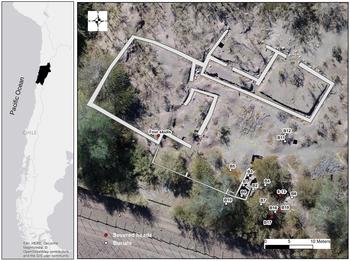
Iglesia Colorada is the largest Late Horizon settlement in Copiapó Valley and the one with the most notable evidence of Inca-style constructions (Figure 1). Its architecture comprises a series of large rectangular double-faced stone buildings, which could have served as an Inca administrative center to control the upper part of the valley (Castillo Reference Castillo, Cervellino and Hans Niemeyer1998; Niemeyer Reference Niemeyer1993). After it was abandoned, a thick layer of alluvial sediment facilitated its preservation. Archaeologist Hans Niemeyer discovered this site in 1968, and his team excavated it on several occasions between 1972 and 2003. His research contributed to our understanding of the sites’ architectural layout and the styles of artifacts. His team also uncovered a large burial area concentrated at the southeastern corner of the site's Potrero El Damasco area, which was associated with an open patio and square mud rooms.
Map of Iglesia Colorada site, Potrero El Damasco sector.

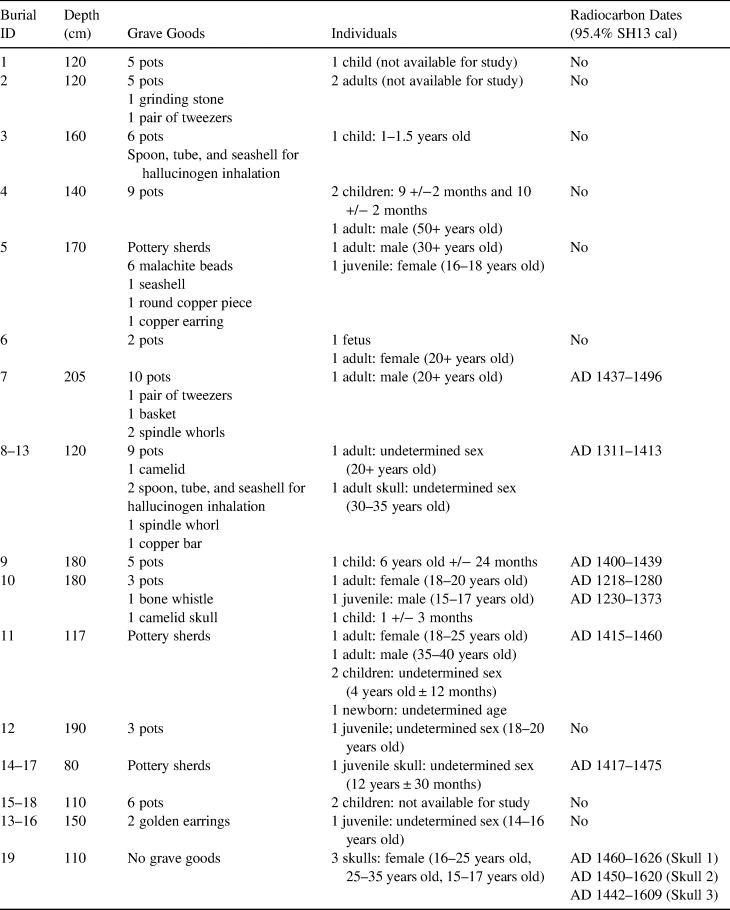
The material evidence at Iglesia Colorada points to the presence of local Copiapó pottery styles, alongside foreign Diaguita and Inca ones, which were discarded as part of the domestic refuse at the residential area of the site. This situation radically contrasts with the funerary pattern, which incorporated only Copiapó and Diaguita pots as grave goods, thereby excluding Inca pots. The 19 burials excavated between 1995 and 2003 were interred in round-shaped graves with a small access tunnel, excavated about 1 m to 2 m deep from the current surface (Table 1). The roof of the grave was protected with logs to maintain the structural integrity of the internal space. The bodies were arranged in horizontal positions and were accompanied by caches of pottery, each having from 3 to 10 vessels per burial. With the exception of a few cases where there were greenstone beads and metal artifacts such as earrings, generally we did not observe patterns of strong social differentiation among these individuals.
List of Burials, Grave Goods, and Radiocarbon Dates from Iglesia Colorada.

Right next to the cemetery area lies a large concentration of refuse derived from domestic consumption, including sherds, animal bones, and fire pits. In 2003, during the last excavation season of Hans Niemeyer's team, a cache of three skulls lined up in a row was found 70 cm deep; it was named Burial 19. Some cervical vertebrae are attached to the skulls, suggesting that they were decapitated either during a peri- or postmortem event when they still had tissue around the neck. Due to preservation conditions, their facial bones have deteriorated, and the cranium vault is partially eroded and fragmented. Two of the mandibles are incomplete, and one of them has cut marks in the insertion area of masseter muscle, related to defleshing. The three skulls have circular perforations, two of them in the frontal bone and the other in the parietal. Despite the bad preservation, it was possible to estimate that the skulls belonged to young females aged between 16 and 30 years old. A few meters to the southwest, another skull belonging to an individual of about 11–13 years old was found at a similar depth within the domestic refuse deposit. It also has circular perforations. These skulls are currently preserved in the collection of the Museo Regional de Atacama in Copiapó. In addition to the four skulls that we analyzed, Niemeyer and his team reported finding at least five other severed heads in previous field seasons in the same archaeological site, which unfortunately are not currently available for research.
In contrast to the other individuals at the site, who were buried in proper tombs with plenty of grave goods, these heads were interred alone in a place filled with pottery sherds, animal bones, and lithic debris. Thus, they did not receive a proper burial like the other members of the community. There is also no evidence that the heads were taken from disturbed burials given that there are no reports of beheaded skeletons anywhere within the site or in the region during this period.
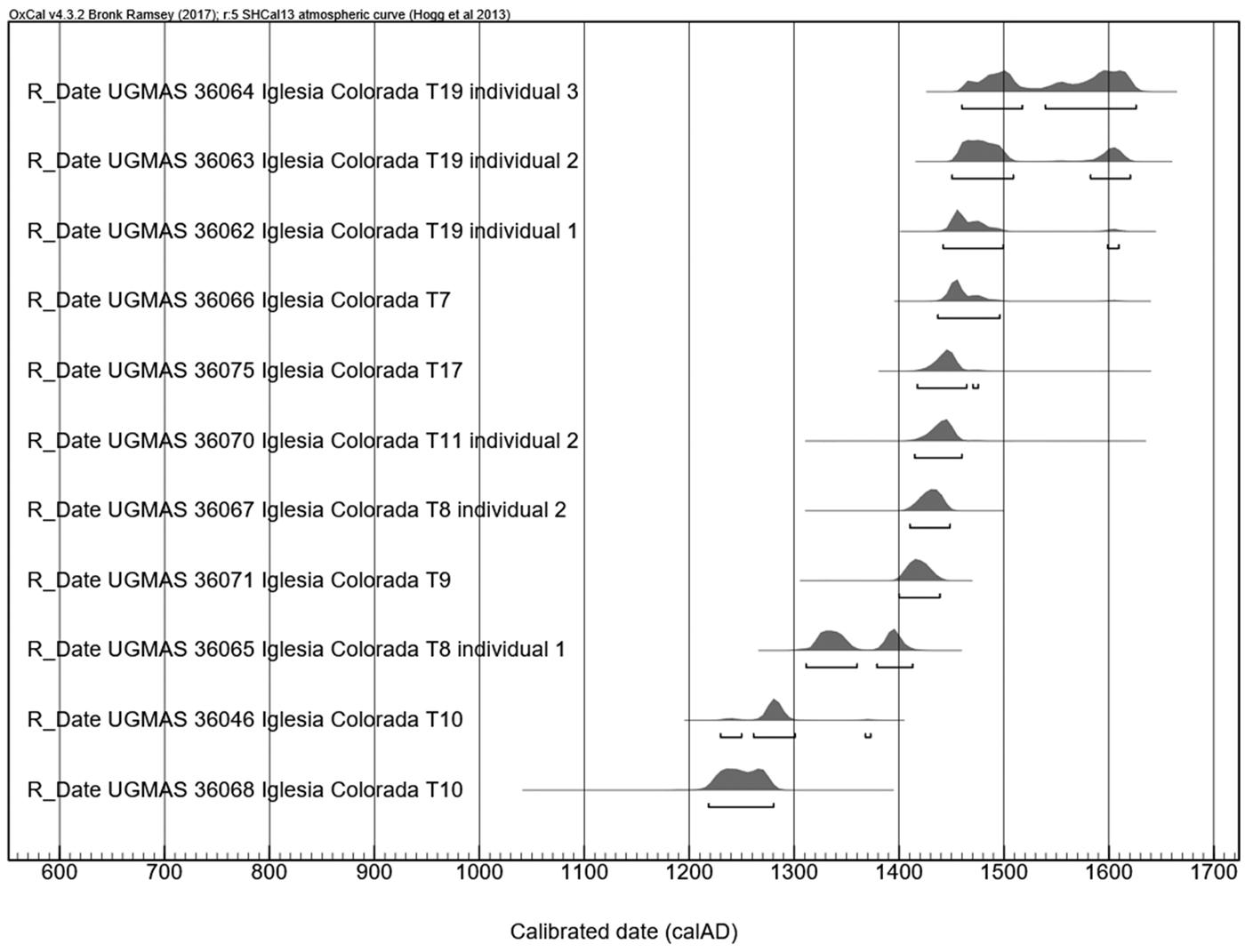
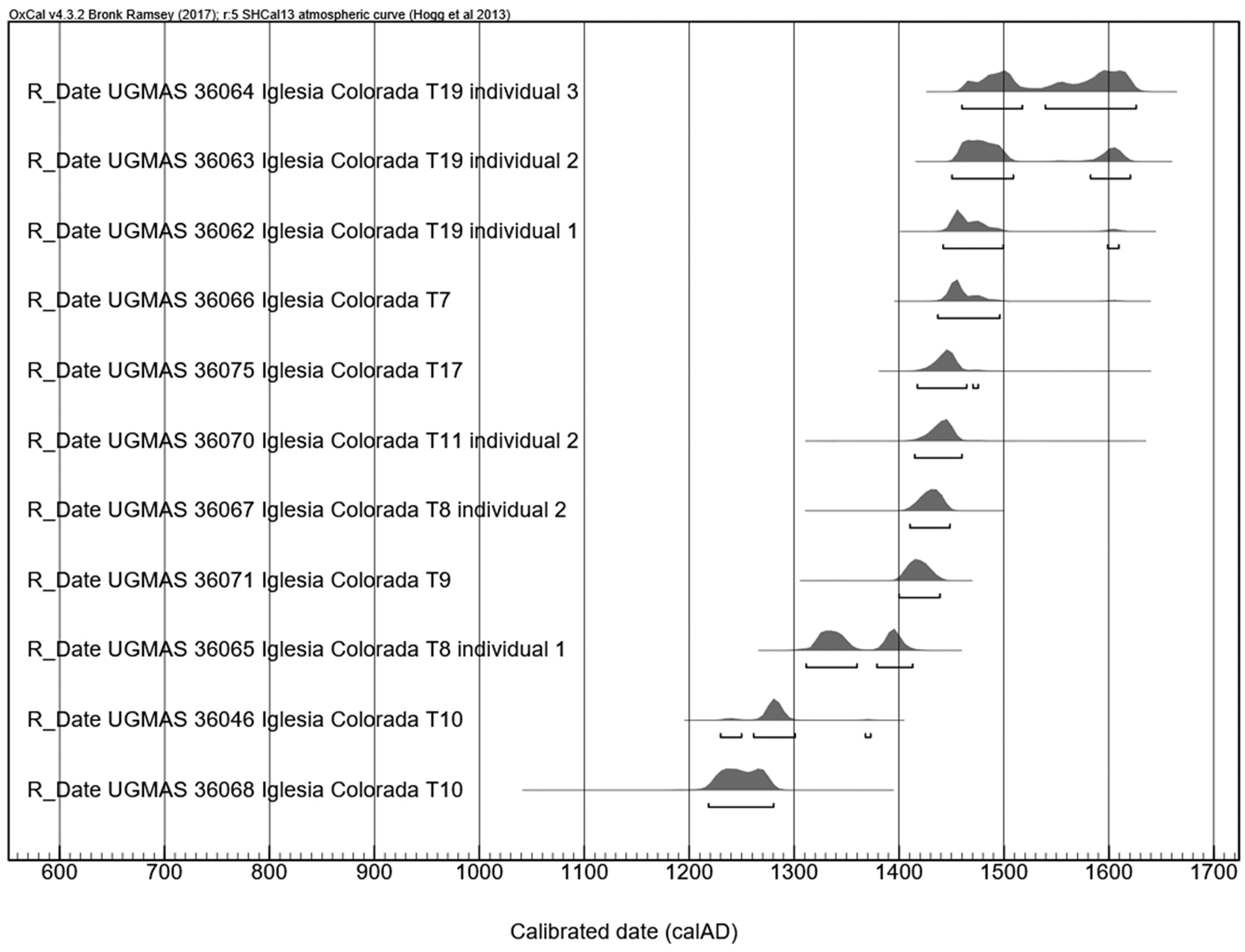
The authors recently obtained 11 radiocarbon dates from bones belonging to individuals buried at Potrero El Damasco in Iglesia Colorada (Table 1; Figure 2). Although one of the burials belonged to the Late Intermediate period, the rest are consistent with the Late Horizon chronology during the period of Inca expansion in the region. The three skulls from Burial 19 and the one from Burial 17 are contemporaneous with the rest of the cemetery, suggesting that two forms of funerary practices coexisted during the same period. Although most individuals from the village were buried following the pattern of dome-vaulted graves observed elsewhere in the valley during this period, there were others whose bodies are not accounted for. The question therefore arises about the purpose of such different postmortem treatments. In a village under Inca and Diaguita rule, we argue that the observed pattern of severed head modification may represent new ideological efforts for controlling possible social unrest, which was especially likely considering the distance of the site from major imperial centers. Thus, the performative use of shocking and powerful displays of violence may have helped demonstrate political control and ensured compliance with Inca rule. Although we cannot be certain that the heads were removed and modified exclusively by the Incas, we believe that this practice was at least overseen or sanctioned by them given both the context where this took place and the lack of evidence for this practice before the Late Horizon.
Radiocarbon dates from Iglesia Colorada.
The Severed Heads from Iglesia Colorada
For this research, we analyzed the four skulls with perforations from Iglesia Colorada that were available for study in museum collections. Three come from a single burial, whereas the other was excavated a few meters away in the same area of the site. All the skulls are fragmented due to preservation issues and are missing some parts. All four also exhibit the presence of some vertebrae, either physically attached to the skull or recovered from the same context, which implies the presence of soft tissue around the neck. It is not clear if the individuals were decapitated peri- or postmortem because there is no evidence of cut marks in the vertebrae attached to the skulls. In general, we have insufficient evidence to establish their cause of death. In all cases, we determined sex by observing cranial landmarks and the angle of the mandible ramus (Acsadi and Nemeskeri Reference Acsadi and Nemeskeri1970; Isaza Reference Isaza2015; Loth and Henneberg Reference Loth and Henneberg1996; Steele and Bramblett Reference Steele and Bramblett2012). Age was determined by observing the fusion of cranial sutures and dental development (Buikstra and Ubelaker Reference Buikstra and Ubelaker1994; Kumar et al. Reference Kumar, Agarwal, Bastia, MG and Honnungar2012; Szilvássy Reference Szilvássy and Knussmann1988).
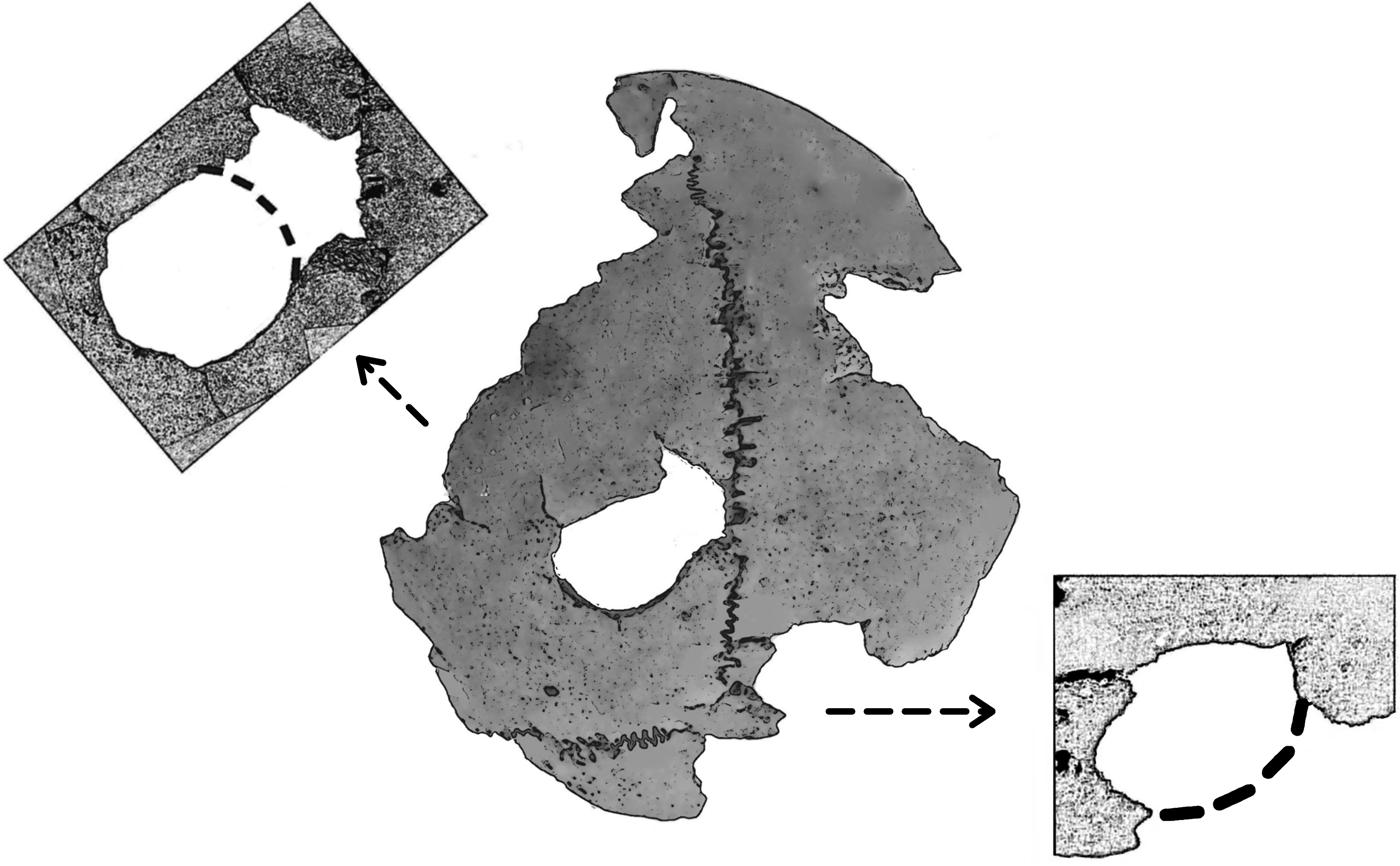
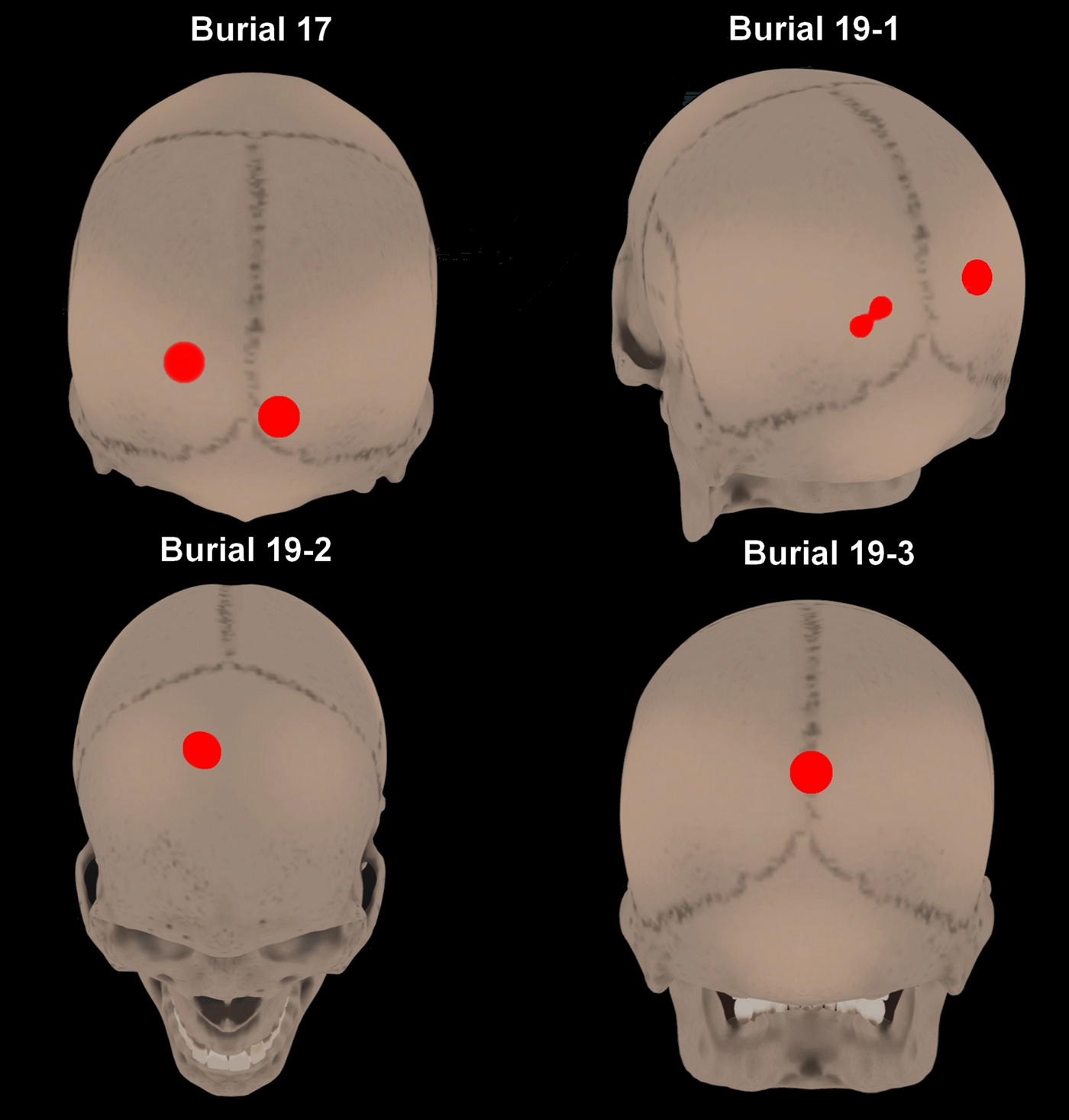
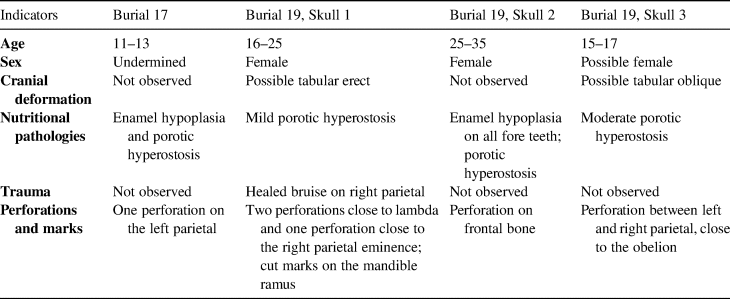
The skull from Burial 17 belonged to a young individual with a dental age between 11 and 13 years. Because of its age and poor preservation, it was not possible to determine the sex of this individual. In terms of stress indicators, it presents porotic hyperostosis in the parietal and occipital bones, as well as enamel hypoplasia. The porotic hyperostosis is also present in two other burials in the cemetery, indicating that it was a relatively common pathology in the population. In the left parietal, there is a circular perforation of 20.1 mm in diameter after the obelion, whereas in the right parietal there is another perforation of 19.3 mm in diameter close to the lambda (Figure 3). This skull is associated with fragments of the three first vertebrae.
Reconstruction of the skull from Burial 17 and close-up of the perforations at both parietal bones.

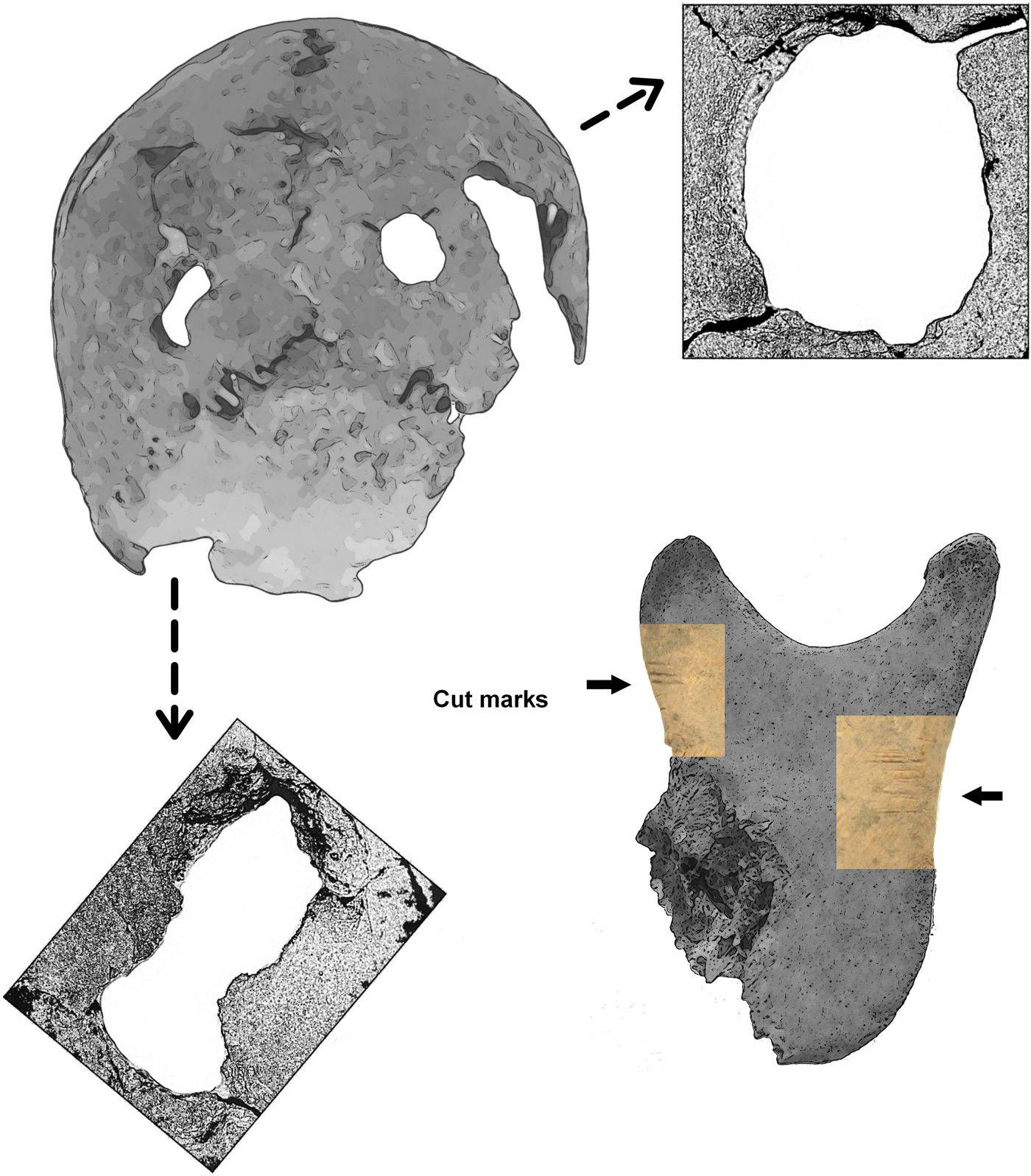
In Burial 19, as mentioned, there were three skulls, all with perforations in their cranium vaults. Skull 1 belongs to a young female 16–25 years old and presents a perforation of 13.1 mm in diameter in the right parietal. At 7 mm from the parietal eminence, there is a second perforation of 10 mm in diameter in the same bone. In the left parietal, there are two 9 mm perforations next to each other, joined in the middle (Figure 4). It seems that the perforations were executed postmortem given the lack of fissures or deformations in the bone. In the parietal, occipital, and frontal bones, a mild porotic hyperostosis is also visible. In the right parietal, in proximity to the eminence, there is a half-moon–shaped low depression, which corresponds to a healed blunt blow (Krenzer Reference Krenzer2008; Lovell Reference Lovell, Katzenberg and Saunders2008). This type of trauma is commonly associated with interpersonal violence, resulting from a weapon attack (Alvrus Reference Alvrus1999; Lovejoy and Heiple Reference Lovejoy and Heiple1981; Lovell Reference Lovell1997; Wedel and Galloway Reference Wedel and Galloway2014). Given the location of the injury, the cause is not likely to have been accidental; violence-related injuries are usually located in the frontoparietal region (Walker Reference Walker, Martin and Frayer1997). This is the only evidence of interpersonal violence observed in Iglesia Colorada.
Top left, reconstruction of Skull 1 from Burial 19 and close-up of the perforations at both parietal bones. Bottom right, view of the mandible ramus with cut marks.

There are parallel cut marks at both sides of the left mandible ramus of Skull 1. These marks were possibly executed by a stone knife and might be related to defleshing, specifically the removal of masseter muscle (Botella et al. Reference Botella, Aleman and Jiménez1999). There are also four complete vertebrae and a fragment of a fifth attached to the skulls.
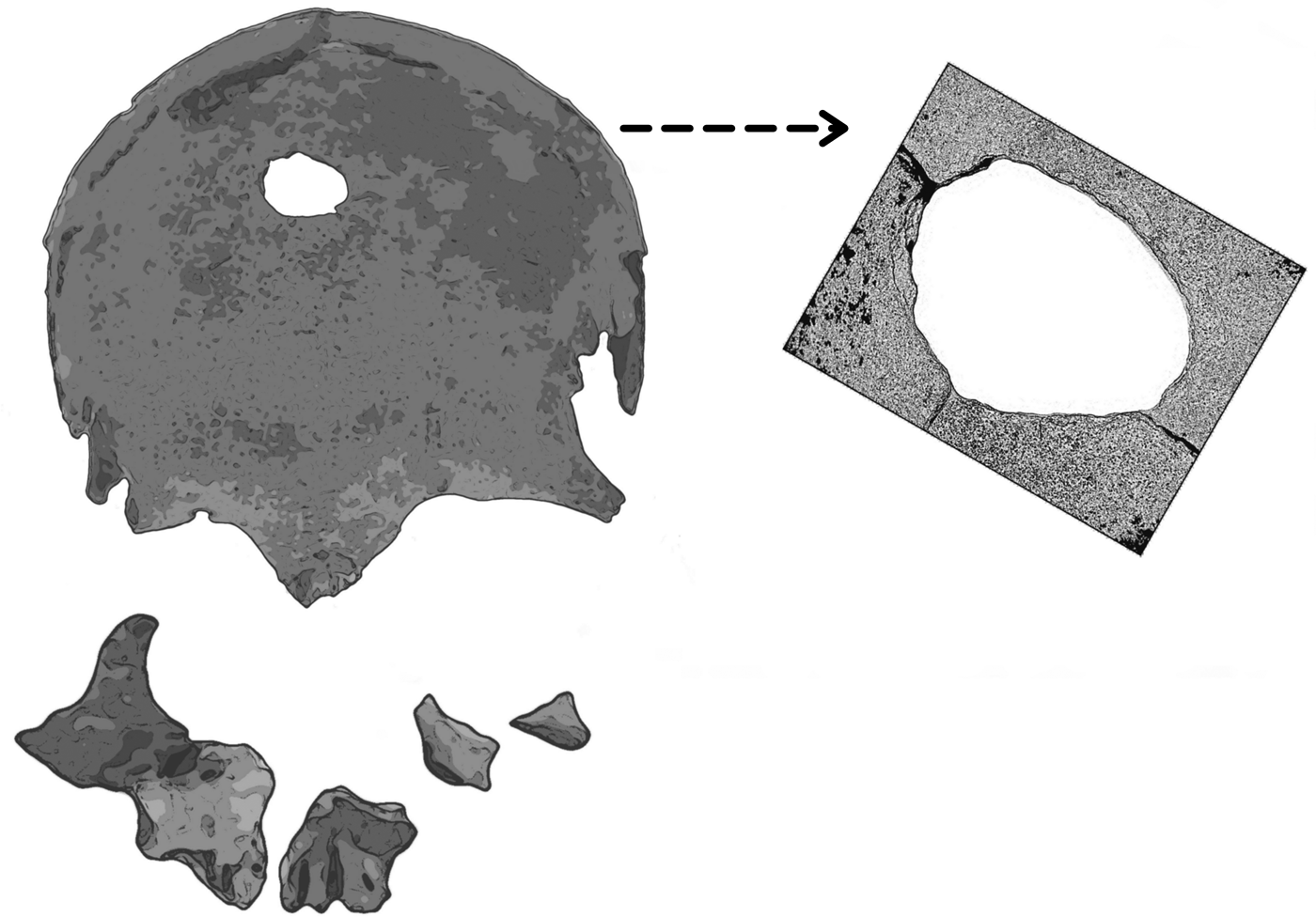
Skull 2 from Burial 19 belongs to a young female 25–35 years old; this age was determined by the observation of cranial sutures and the third molar eruption. The skull presents a tabular erect deformation and a mild porotic hyperostosis on the parietal, frontal, and occipital bones. The frontal bone has a circular perforation of 17.2 mm in diameter at its top right (Figure 5). On the mandible, there is evidence of the early loss of 11 teeth, as indicated by alveolar bone resorption. This condition may be related to a precarious diet, which might also be linked to the enamel hypoplasia observed in the individual. Loss of teeth can be also caused by some parafunctional activity that stressed the dent-alveolar junction (Molnar Reference Molnar2008). Four cervical vertebrae are present, as well as a fragment of the fifth. In contrast to Skull 1, there is no evidence of cut marks on the mandible.
Reconstruction of Skull 2 from Burial 19 and close-up of the perforation on the frontal bone.

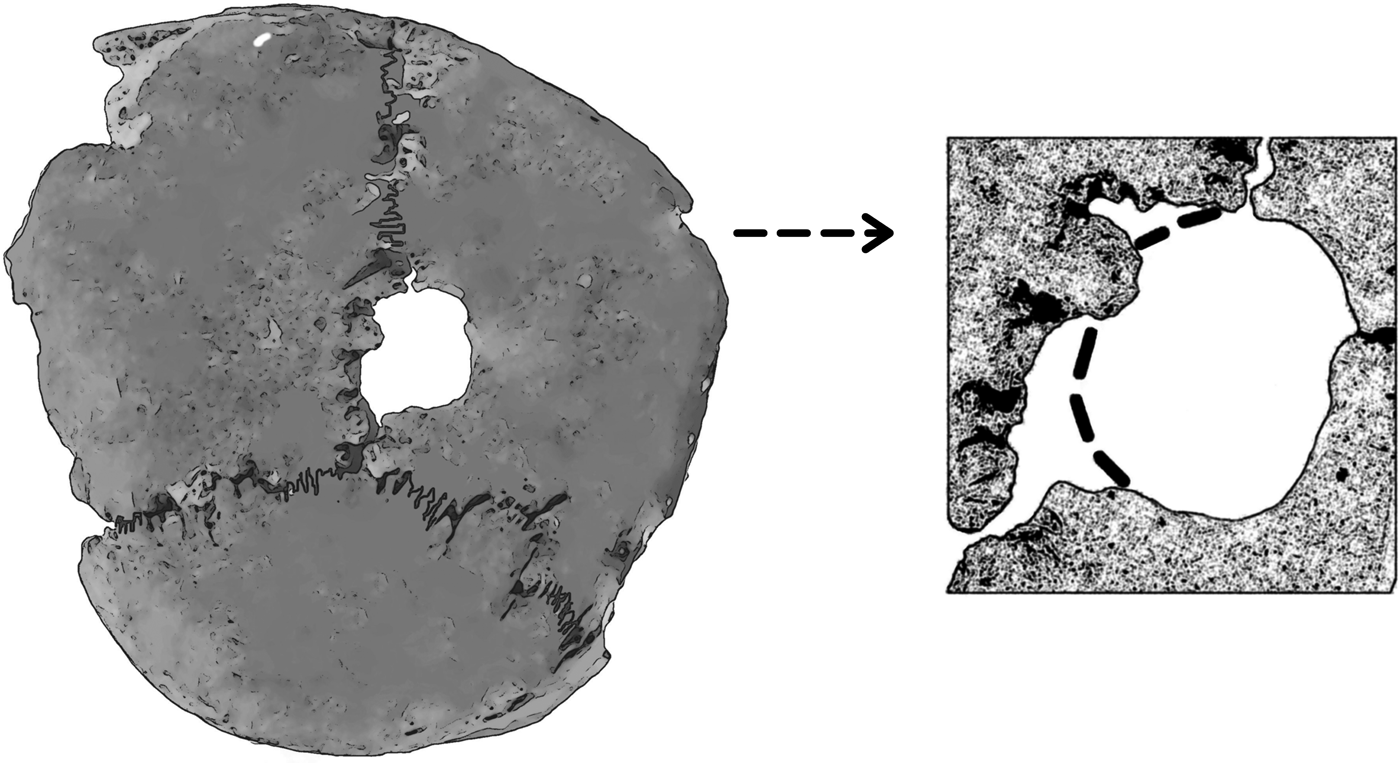
Finally, Skull 3 from Burial 19 corresponds to a possible female individual about 15–17 years old based on the observation of the fusion of cranial sutures. It is the most deteriorated of all the skulls, and its left side could not be reconstructed. The parietal, occipital, and frontal bones also present mild porotic hyperostosis. It seems to present a tabular oblique deformation. The cranial vault shows a perforation between both parietal bones of 15 mm in diameter around the obelion (Figure 6). The mandible is represented only by a fragment of the left ramus and does not have cut marks. There are fragments of the four first cervical vertebrae that must have been attached to the skull when it was buried.
Reconstruction of Skull 3 from Burial 19 and close-up of the perforation between both parietal bones.

In summary, the four skulls present porotic hyperostosis in various degrees. Although the cause of this disease is not entirely clear, it has commonly been associated with iron-deficiency anemia (Angel Reference Angel1966; Ortner and Turner-Walker Reference Ortner, Turner-Walker and Ortner2003; Roberts and Manchester Reference Roberts and Manchester2010; Stuart-Macadam Reference Stuart-Macadam, Iscan and Kennedy1989); however, new studies recognize other possible causes such as infections, metabolic disorders such as vitamin C and D deficiency (scurvy and rickets, respectively), congenital anemia, tumors, hemorrhage processes, and cranial deformation (Aufderheide and Rodríguez Reference Aufderheide and Rodríguez2000; Ortner and Turner-Walker Reference Ortner, Turner-Walker and Ortner2003; Resnick Reference Resnick1984; Rothschild Reference Rothschild2012). For prehispanic populations from northern Chile, porotic hyperostosis has been related to parasite infections related to diet (Arriaza Reference Arriaza2005). At the same time, evidence from prehispanic cemeteries such as Punta Teatinos indicates that this pathology may be more prevalent in women, possibly related to differential access to food resources (Quevedo Kawasaki Reference Quevedo Kawasaki2000).
Similarly, the presence of enamel hypoplasia in Skull 2 from Burial 19 seems to be correlated either with bad nutrition, infectious diseases, or metabolic problems (Goodman and Rose Reference Goodman, Rose, Kelley and Larsen1991; Lallo et al. Reference Lallo, Armelagos and Mensforth1977). The dental loss in Skull 2 is a clear result of poor health. At least 11 teeth were lost during the individual's lifetime, with evidence of alveolar resorption, which is an unexpected condition for a person under 35 years old. No cavities were observed in the few remaining teeth, coinciding with their low prevalence in the population of Iglesia Colorada. Tooth loss could have been caused by calcium deficiency due to malnutrition, pregnancy (Hillson Reference Hillson2005:290–291; Šlaus Reference Šlaus2003), or the parafunctional use of the teeth (Molnar Reference Molnar2008).
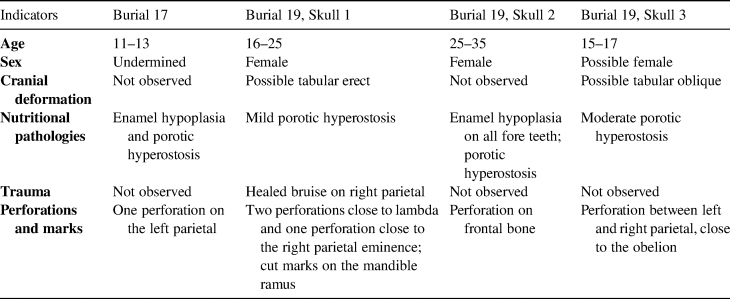
Thus, we can see that the four individuals whose skulls were severed and perforated had a similar pathological profile, produced either by nutritional stress, infections, or genetic causes (Table 2). Of those who had a proper burial at the site, only 3 out of 21 analyzed individuals had similar pathologies: one individual with porotic hyperostosis, one with cribra orbitalia, and another with periostitis. Thus, the individuals from Burials 17 and 19 evidenced a differential pathological pattern from the rest of the population buried there.
Main Indicators of the Four Modified Skulls from Iglesia Colorada.
Stable δ18O Isotope Analysis
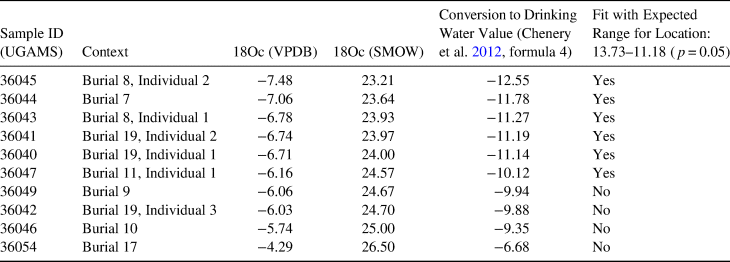
To determine if the four skulls from Burials 17 and 19 belonged to the local population of the valley, we compared their oxygen isotope data with a sample of six individuals buried in Iglesia Colorada and with the isotopic water values for Copiapó Valley. The δ18O values from bioapatite carbonate were obtained from dental enamel and were analyzed at the Center for Applied Isotope Studies at the University of Georgia. Dental δ18O values correspond to the early childhood of individuals between two and eight years, with the exception of Individual 1 from Tomb 8, whose estimated age is between one to five years old based on its isotopic value, which corresponded to the lactation period.
Oxygen isotope values in human body tissue relate proportionally to the composition of drinking water and, to a lesser extent, to oxygen in air and food sources. The δ18O in body water equilibrates with the δ18O in hydroxyapatite during its formation; therefore, dental enamel isotope values become fixed during the permanent teeth development stage (Chenery et al. Reference Chenery, Pashley, Lamb, Sloane and Evans2012; Daux et al. Reference Daux, Lécuyer, Héran, Amiot, Simon, Fourel, Martineau, Lynnerup, Reychler and Escarguel2008; Knudson Reference Knudson2009; Longinelli Reference Longinelli1984; Luz et al. Reference Luz, Kolodny and Horowitz1984; Pellegrini et al. Reference Pellegrini, Lee-Thorp and Donahue2011; Pollard et al. Reference Pollard, Pellegrini and Lee-Thorp2011; Ugan et al. Reference Ugan, Neme, Gil, Coltrain, Tykot and Novellino2012). Considering that the isotopic composition of groundwater varies according to latitude, altitude, aridity, seasonal temperature change, and rainfall, those variations make δ18O a geographical marker to assess people's mobility (Gil et al. Reference Gil, Neme, Ugan and Tykot2014; Knudson et al. Reference Knudson, Williams, Osborn, Forgey and Williams2009; Turner et al. Reference Turner, Collyer and Krabbenhoft2010). An accurate interpretation, however, of the relationship between isotope values and human mobility is not possible without an adequate knowledge of the variation and distribution of water sources in the area under study.
To estimate the geographic relationships between the individuals from Iglesia Colorada, we converted δ18O (SMOW) dental enamel carbonate values into “drinking water” values by using the following formula: δ18ODW = 1.786 × δ18Ocap – 54.005 (Chenery et al. Reference Chenery, Pashley, Lamb, Sloane and Evans2012:316). To correlate our data with a geographical origin, we used more than 150 georeferenced water sample points from the Copiapó River, obtained from a survey commissioned by the National Geological Service (Sernageomin) and published by Troncoso and colleagues (Reference Troncoso, Espinoza, Pérez, Castro, Lorca, Vega, Feuker, Arévalo, Mercado, Creixell, Ortiz and Wall2012). Collected data included both surface water and groundwater. Like other Andean rivers, the main source of water for the Copiapó River is snow with very low δ18O values at high mountain elevations. These values increase as altitude declines because of evaporation: the water is enriched with heavy isotopes on its way downstream to the coast (Aguirre et al. Reference Aguirre, Hauser and Schwardtfeger1999). Because of its location within the Atacama Desert, rainfall is almost nonexistent and does not influence the isotopic values of the Copiapó River, thus presenting a gradual east–west variation from the mountains to the coast.
We used Copiapó River isotopic data to create an interpolated surface raster of 1 km2 per pixel using empirical Bayesian kriging in ArcGis 10.5 software. Thus, we could determine the expected local isotopic water values, including the standard error associated with each specific geographical point. We then compared the range of expected δ18O water values for Iglesia Colorada at the 95% confidence level to the converted isotopic values of the individuals buried in the site (Table 3). The values of 6 of 10 analyzed individuals, including Skulls 1 and 2 from Burial 19, fall perfectly within the expected range for Iglesia Colorada located in the upper course of the river. The individuals of Burial 9 and Burial 10 and Skull 3 from Burial 19 present higher than expected values for their location that nevertheless coincide with the expected δ18O range for the middle-lower course of the Copiapó River, which reaches δ18O values up to −8 (SMOW). This demonstrates that most individuals fit within the expected values for the middle and upper river watershed, in contrast with the highly enriched isotope values of the coast and the desert area north of the valley and with the low values of the Andes mountains at this latitude.
δ18O Values for Individuals from Iglesia Colorada.
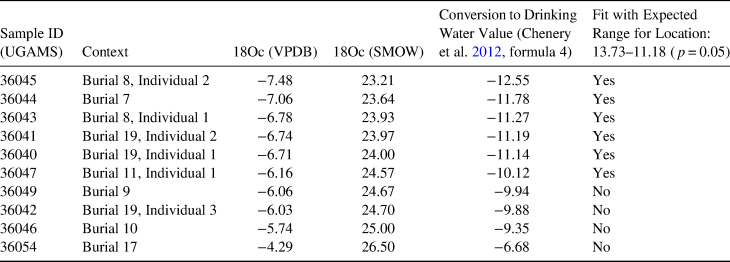
Only the skull from Burial 17 differs from the rest of the sample, presenting even higher δ18O values than the ones observed on the coast. Its values coincide with those observed in the desert area in the north of the valley, influenced by the underground water system of the Paipote watershed. The mixture of these enriched waters with the Copiapó River also results in an increase in the values of δ18O at the current Copiapó city area in the middle course of the valley (Troncoso et al. Reference Troncoso, Espinoza, Pérez, Castro, Lorca, Vega, Feuker, Arévalo, Mercado, Creixell, Ortiz and Wall2012). Thus, it is possible that this individual, whose age of death was between 11 and 13 years old, lived somewhere in the desert north of Copiapó Valley during the age of enamel formation (4–6 years old). Regarding the three skulls of Burial 19, the results confirm that their δ18O values do not significantly differ from properly buried individuals at Iglesia Colorada. In general, the evidence suggests that the people buried there were not foreigners to the valley.
Artificial Modification of Heads at Iglesia Colorada
The skulls from Iglesia Colorada were modified following a pattern that differs from Nasca and Wari trophy head cases, particularly in the absence of foramen magnum enlargement. These heads kept their necks partially in position while in use, possibly keeping the brains inside. The circular orifices in the skulls (Figure 7) seem consistent with the practice of holding them by a rope for ritual display or carrying purposes, but there is no standardization of the location of the perforations, suggesting that they were hastily made or that it was not a common practice in the region. The preservation of part of the neck suggests that the heads were buried not long after their use.
Positioning of the perforations on the four severed heads from Iglesia Colorada.

The perforations on the heads were probably made by a direct blow with a heavy pointed object, considering the rounded shape of the punctures, the internal beveling of the orifices, and the patterns of skull fracture radiating from the perforations. Although these effects could be caused perimortem by a weapon such as an Inca star-shaped mace, the absence of deformation in the fractures suggests that the perforations were executed postmortem. Only Skull 1 from Burial 19 presents a different pattern: a second double perforation with an external beveling. This perforation is smaller and could be caused by drilling. The manipulation and display of these heads before discarding them could have contributed to the decay of the facial region; however, we cannot exclude the possibility of intentional defacing as a way to eliminate the identities of the ritual victims. Unfortunately, because of the bad preservation and partial absence of the facial bones, it is impossible to determine the likelihood of this scenario.
Despite the difficulties caused by the skulls’ poor preservation and young age, we know at least that the three skulls from Burial 19 were from female individuals. In contrast with a scenario of male warriors engaged in warfare (cf. Forgey and Williams Reference Forgey and Williams2003; Verano Reference Verano and Dillehay1995), these skulls indicate the targeting of young women for this ritual practice. Two of the skulls show a possible cranial deformation, which is also recognizable in at least another burial of Iglesia Colorada and is also present in earlier periods in the region, such as the Middle period represented by La Puerta cemetery (Niemeyer Reference Niemeyer, Cervellino and Niemeyer1998) and the Formative period represented by the El Torin site (Niemeyer and Cervellino Reference Niemeyer and Cervellino1982). It is also relevant that the four skulls show signs of nutritional stress, which suggests the selection of weak individuals among the group. Trophy heads in other contexts have been placed in association with building features (Neira and Coelho Reference Neira and Coelho1972; Valdez Reference Valdez2009; Verano Reference Verano, Silverman and Isbell2008), as grave goods (Forgey and Williams Reference Forgey and Williams2003; Williams et al. Reference Williams, Forgey and Klarich2001), ceremonial refuse deposits (Nielsen Reference Nielsen2007; Roldán and Sampietro Reference Roldán and Sampietro2011), or among domestic refuse (Neira and Cohelo Reference Neira and Coelho1972). At Iglesia Colorada, the heads were discarded at the edge of the main funerary area, at least 1 m above the rest of the burials. They were disposed among the domestic refuse, without grave goods. This burial pattern is contemporaneous with the rest of the cemetery, showing the existence of two contrasting ways of marking status and ideology after death.
Conclusions
During the Late Horizon, there were important changes in the political relationships between local societies and the Inca Empire that shaped the ideological and physical expressions of these relations. The display of body parts, particularly heads, became a form of (1) marking differences in burial rituals for certain individuals, (2) displaying violence and power in a provincial imperial setting, and (3) signaling tension in relation to local communities. Although we cannot confirm that the four severed heads belonged to the same community, the isotopic evidence shows that, like the rest of the people buried there, they were not outsiders who lived far from Copiapó Valley. This situation differs from other major Inca sites in the Central Andes, where isotopic evidence has shown a wide variation in the provenance of the buried individuals, possibly as an effect of the state labor mobilization (Turner et al. Reference Turner, Kamenov, Kingston and Armelagos2009). Moreover, the radiocarbon dates support the argument for their contemporaneity with the rest of the individuals buried in the site, making clear that there were relevant differences in the symbolism of veneration-desecration of deceased individuals during Inca times. In general, the capture and killing of enemies were common practices in many Andean prehispanic societies, which occurred either in association with highly ritualized practices or as simple executions (Verano Reference Verano, Silverman and Isbell2008). The use of severed heads in Copiapó likely reinforced a cultural pattern with powerful significance in the settlements along the Andes, which could have served as a form of ideological coercion, perturbing the domestic and funerary spaces of local populations subject to the Inca Empire. In contrast to highly elaborated state rituals with human sacrifice associated with sacred shrines, such as the capacocha (Bray et al. Reference Bray, Minc, Ceruti, Chávez, Perea and Reinhard2005; Cerutti Reference Cerutti2015; Wilson et al. Reference Wilson, Taylor, Ceruti, Chavez, Reinhard, Grimes, Meier-Augenstein, Cartmell, Stern, Richards, Worobey, Barnes and Gilbert2007), in this case we have the opposite extreme: no offerings, no special burial place, no ritual victims chosen from elites, and only local individuals.
Although Incas did not always alter preexisting ritual practices of sacrifice, and even gave certain autonomy to local cults (D'Altroy Reference D'Altroy2015; Klaus and Toyne Reference Klaus, Toyne, Klaus and Toyne2016), in the case of Copiapó there has not been any reported evidence from previous periods of similar rituals associated with decapitated bodies or isolated skull burials. Thus, the evidence suggests that these changes were an effect of the new social conditions that developed after the incorporation of this region into the empire, either performed by regional incanized elites or Inca administrators. In contrast to other cases of social change in the Andes, where commoners experienced an increase in violence, such as in the case of Wari (Tung Reference Tung2007), San Pedro de Atacama (Lessa and Mendonça De Souza Reference Lessa and de Souza2004, Reference Lessa and de Souza2006; Torres-Rouff and Costa Junqueira Reference Torres-Rouff and Junqueira2006), and northwestern Argentina (Gheggi and Seldes Reference Gheggi and Seldes2012; Seldes and Botta Reference Seldes and Botta2014), we have not found evidence of violence among the rest of the individuals from Iglesia Colorada. Only one of the heads from Burial 19 shows healed trauma on her parietal bone, but this is not a common pattern in the site. The emergence of this practice in Copiapó does not correlate with a general increase of violence in the population; it is a very specific and concentrated form of ritual exercise, where inhabitants of the site may have witnessed how some of their members were beheaded after death, their bodies manipulated and displayed in ways that were neither traditional nor proper for them.
People from Iglesia Colorada were already excluding Inca symbolism from their burial practices. None of the grave goods include Inca pottery, despite the fact that the remains of the residential occupation show an important extent of the use of aryballos and shallow plates. The absence of Inca pots in burials may be interpreted as a form of resistance to domination, similar to the case of La Cortadera Derecha site in northwestern Argentina (Acuto Reference Acuto, Malpass and Alconini2010). There, the inhabitants of a village located in proximity to an Inca administrative center used and discarded Inca pottery in their daily lives but did not incorporate it in their burials, thereby preserving their identity by using their own grave goods. Despite the Inca-style architecture of the site, Iglesia Colorada inhabitants selectively adopted certain Inca-style elements in their daily practices, leaving aside direct imperial influences in their funerary assemblage. This situation is particular to this site, considering that Inca-shaped pottery is found consistently in other contemporaneous burials within Copiapó Valley (Castillo Reference Castillo, Cervellino and Hans Niemeyer1998) and elsewhere in northern and central Chile (Cantarutti and Mera Reference Cantarutti and Mera2004; Sanhueza Reference Sanhueza2001; Stehberg Reference Stehberg1995; Uribe and Sánchez Reference Uribe, Sánchez, Falabella, Uribe, Sanhueza, Aldunate and Hidalgo2016).
The severed heads were a violent alteration to a burial pattern that is consistent across the valley, signaling a significant change in how dead bodies were ritualized and manipulated after death. The heads belonged to local people of the valley, although we cannot determine if they were captured from a nearby village or were part of the same political community. At the same time, we have insufficient evidence to determine their exact cause of death due to the absence of evident physical markers and of the rest of the body. The fact remains that some individuals were desecrated and cast out from the proper local funerary rituals, being discarded among the garbage after the physical use of their manipulated heads.
As a foreign empire that was newly established in a distant province, the Inca state, we argue, made use of trophy head displays as specific coercive devices with high symbolic meaning. The selection of female individuals with nutritional stress, in preference to young males in good health condition, may be related to the state's interest in not affecting the labor structure of the population serving as taxpayers in their corvée labor system. This possible fear tactic may signal the efforts required to rule a noncompliant population who clearly excluded Inca state material culture from their funerary rituals. Thus, trophy heads could be a mode of repressing this internal tension and conflict, before it increased to levels that could threaten the imperial rule in this far provincial context.
Acknowledgments
We acknowledge the financial support of Fondecyt Project 11170010 and the sponsorship of the Museo Nacional de Historia Natural in Santiago and the Museo Regional de Atacama in Copiapó, institutions that facilitated the study of their archaeological collections for this research.
Data Availability Statement
The archaeological collections that were used for this research are available in the Museo Regional de Atacama located in Copiapó, Chile.