Implications
Rumen microbes are essential for ruminant production. They allow ruminants to transform plant forages, inedible for humans, into high-quality foods. However, they are also responsible for methane production. Recent developments in the study of gut microbial communities (microbiomes) through genomics and metagenomics are revolutionising our understanding of the functions of the ecosystem and the interactions among their members and the host animal. A better knowledge of the rumen microbiome and its underlying functions through the construction of a gene catalogue can inform strategies to improve feed digestion efficiency and reduce enteric methane production, meeting the challenge of sustainability.
Introduction
The term ‘superorganism’ is used to describe the intimate association between a higher animal and its symbiotic microbiota (Lederberg, Reference Lederberg2000; Goodacre, Reference Goodacre2007). The gastrointestinal microbiota exerts protective, immunological, developmental and nutritional functions that benefit the host (Hooper, Reference Hooper2004) and can be justly considered an ‘organ’ with far more metabolic functions and capabilities than the host's tissues (Xu and Gordon, Reference Xu and Gordon2003; Egert et al., Reference Egert, de Graaf, Smidt, de Vos and Venema2006; Gill et al., Reference Gill, Pop, Deboy, Eckburg, Turnbaugh, Samuel, Gordon, Relman, Fraser-Liggett and Nelson2006). In humans, it has been shown that there are at least 3.3 million non-redundant microbial genes, a staggering number that is up to 150 times greater than the number of genes in the human genome (Qin et al., Reference Qin, Li, Raes, Arumugam, Burgdorf, Manichanh, Nielsen, Pons, Levenez, Yamada, Mende, Li, Xu, Li, Li, Cao, Wang, Liang, Zheng, Xie, Tap, Lepage, Bertalan, Batto, Hansen, Le Paslier, Linneberg, Nielsen, Pelletier, Renault, Sicheritz-Ponten, Turner, Zhu, Yu, Li, Jian, Zhou, Li, Zhang, Li, Qin, Yang, Wang, Brunak, Dore, Guarner, Kristiansen, Pedersen, Parkhill, Weissenbach, Bork, Ehrlich and Wang2010). In domestic herbivores, particularly in ruminants, the importance of symbiotic gastrointestinal microorganisms for nutrition, health and well-being of the host was recognised long before the equivalent benefit was apparent in man. Ruminants harvest energy from otherwise indigestible structural plant polysaccharides by providing a suitable environment for symbiotic gastrointestinal microbes. This is regulated so that only a partial, fermentative, degradation of the feed occurs, and the ruminant host can use the fermentation end products for its own nutrition. The host also profits from microbial metabolites such as vitamins and the high-quality proteins contained in microbes for its nutritional needs. From a microbiological point of view, the domestication of ruminants is a successful use of microorganisms by humans (Russell et al., Reference Russell, Muck and Weimer2009). Farming of ruminants allowed earlier cultures and civilisations to have a stable food supply and to expand their living ranges to regions not suitable for crop production. These features are arguably attributed to ruminants’ abilities to utilise the structural carbohydrates of plant fibres, making them both robust and adaptable to different climatic and feeding conditions. For instance, archaeological evidence from a neolithic farming site suggests that the number of domesticated ruminants rose, whereas that of pigs decreased, during a period of climate hardship that may have reduced the availability of other food resources (Balter, Reference Balter2010).
The worldwide head count of domestic ruminants is 1.38 × 10⁹ cattle, 1.96 × 10⁹ sheep and goats and 2.21 × 10⁸ buffaloes and camelids (FAO, 2009), which sustain directly or indirectly the livelihood of hundreds of millions of people worldwide. The economic value of ruminant products is important in both developing and developed countries. Ruminant meat and/or milk ranks at the top of the most important agricultural foods and commodities produced in every continent except in Asia, where the value of buffalo and cow milk is surpassed only by rice (FAO, 2009). Because of human population growth and increases in food consumption, the demand for meat and milk is expected to double in the next 40 years (FAO, 2006), inevitably boosting the number of ruminants on earth and posing a challenge to global resources and food security (World Bank, 2008). The rumen microbial symbionts give ruminants the capacity to feed on forages and other food not suitable for human consumption, therefore potentially allowing use of agricultural land not suitable for crops directly eaten by humans. However, the same ruminants are also responsible for producing the potent greenhouse gas methane and other pollutants such as nitrogen-rich wastes. Thus, the rumen microbiota epitomises both the good and the bad of ruminant production.
There is still a disconnection between rumen microbiology on the one hand and ruminant nutrition and production research on the other, with few studies addressing both aspects. It is true that knowledge of rumen microbes is not strictly necessary to feed and raise ruminants. However, a thorough understanding of the functions of the gastrointestinal microbiota and its interactions with the host animal is needed to produce meat and milk in a sustainable and environmentally sound way. The unprecedented wealth of information that can be generated using high-throughput ‘omics’ methods (second-generation genomic and metagenomic sequencing technologies, metatranscriptomics, metaproteomics and metametabolomics) to characterise the microbial component of the rumen ecosystem, combined with the sequenced genomes of cattle and sheep (The Bovine Genome Sequencing Analysis Consortium et al., Reference Elsik, Tellam, Worley, Gibbs, Muzny, Weinstock, Adelson, Eichler, Elnitski, Guigo, Hamernik, Kappes, Lewin, Lynn, Nicholas, Reymond, Rijnkels, Skow, Zdobnov, Schook, Womack, Alioto, Antonarakis, Astashyn, Chapple, Chen, Chrast, Camara, Ermolaeva, Henrichsen, Hlavina, Kapustin, Kiryutin, Kitts, Kokocinski, Landrum, Maglott, Pruitt, Sapojnikov, Searle, Solovyev, Souvorov, Ucla, Wyss, Anzola, Gerlach, Elhaik, Graur, Reese, Edgar, McEwan, Payne, Raison, Junier, Kriventseva, Eyras, Plass, Donthu, Larkin, Reecy, Yang, Chen, Cheng, Chitko-McKown, Liu, Matukumalli, Song, Zhu, Bradley, Brinkman, Lau, Whiteside, Walker, Wheeler, Casey, German, Lemay, Maqbool, Molenaar, Seo, Stothard, Baldwin, Baxter, Brinkmeyer-Langford, Brown, Childers, Connelley, Ellis, Fritz, Glass, Herzig, Iivanainen, Lahmers, Bennett, Dickens, Gilbert, Hagen, Salih, Aerts, Caetano, Dalrymple, Garcia, Gill, Hiendleder, Memili, Spurlock, Williams, Alexander, Brownstein, Guan, Holt, Jones, Marra, Moore, Moore, Roberts, Taniguchi, Waterman, Chacko, Chandrabose, Cree, Dao, Dinh, Gabisi, Hines, Hume, Jhangiani, Joshi, Kovar, Lewis, Liu, Lopez, Morgan, Nguyen, Okwuonu, Ruiz, Santibanez, Wright, Buhay, Ding, Dugan-Rocha, Herdandez, Holder, Sabo, Egan, Goodell, Wilczek-Boney, Fowler, Hitchens, Lozado, Moen, Steffen, Warren, Zhang, Chiu, Schein, Durbin, Havlak, Jiang, Liu, Qin, Ren, Shen, Song, Bell, Davis, Johnson, Lee, Nazareth, Patel, Pu, Vattathil, Williams, Curry, Hamilton, Sodergren, Wheeler, Barris, Bennett, Eggen, Green, Harhay, Hobbs, Jann, Keele, Kent, Lien, McKay, McWilliam, Ratnakumar, Schnabel, Smith, Snelling, Sonstegard, Stone, Sugimoto, Takasuga, Taylor, Van Tassell, MacNeil, Abatepaulo, Abbey, Ahola, Almeida, Amadio, Anatriello, Bahadue, Biase, Boldt, Carroll, Carvalho, Cervelatti, Chacko, Chapin, Cheng, Choi, Colley, de Campos, De Donato, Santos, de Oliveira, Deobald, Devinoy, Donohue, Dovc, Eberlein, Fitzsimmons, Franzin, Garcia, Genini, Gladney, Grant, Greaser, Green, Hadsell, Hakimov, Halgren, Harrow, Hart, Hastings, Hernandez, Hu, Ingham, Iso-Touru, Jamis, Jensen, Kapetis, Kerr, Khalil, Khatib, Kolbehdari, Kumar, Kumar, Leach, Lee, Li, Logan, Malinverni, Marques, Martin, Martins, Maruyama, Mazza, McLean, Medrano, Moreno, More, Muntean, Nandakumar, Nogueira, Olsaker, Pant, Panzitta, Pastor, Poli, Poslusny, Rachagani, Ranganathan, Razpet, Riggs, Rincon, Rodriguez-Osorio, Rodriguez-Zas, Romero, Rosenwald, Sando, Schmutz, Shen, Sherman, Southey, Lutzow, Sweedler, Tammen, Telugu, Urbanski, Utsunomiya, Verschoor, Waardenberg, Wang, Ward, Weikard, Welsh, White, Wilming, Wunderlich, Yang and Zhao2009; The International Sheep Genomics Consortium et al., Reference Archibald, Cockett, Dalrymple, Faraut, Kijas, Maddox, McEwan, Hutton Oddy, Raadsma, Wade, Wang, Wang and Xun2010), presents the opportunity to consider the ruminant superorganism as a whole system. This allows us to address, in a holistic way, important issues related to animal production such as the efficiency of forage digestion and ruminant methane emissions.
The purpose of this paper was to summarise recent advances in microbial genomics and metagenomics applied to the rumen, and to identify the necessary data that are still required to better comprehend its functioning and productivity.
The ruminant superorganism
The ruminant superorganism is a complex and interrelated system composed of many parts. The host and its microbiota are two major components that have co-evolved during millions of years, ensuring an increased fitness and increased chances of mutual survival. The composition of feed is another factor that profoundly influences the microbiota and host physiology (Ley et al., Reference Ley, Hamady, Lozupone, Turnbaugh, Ramey, Bircher, Schlegel, Tucker, Schrenzel, Knight and Gordon2008b; Clauss et al., Reference Clauss, Müller, Fickel, Streich, Hatt and Südekum2011). Herbivory is a successful strategy that has allowed mammals to expand the range of their habitat. In mammals, the diversification of modern herbivore lineages – the ancestors of our livestock – increased dramatically with the appearance of grasses ∼25 million years ago (Hume and Warner, Reference Hume and Warner1980). As a result, herbivore species predominate among the total number of extant mammals and are among the largest terrestrial species (Stevens and Hume, Reference Stevens and Hume1998). Within herbivores, ruminants have enlarged their gastrointestinal tracts and increased the retention time of forages to facilitate the fermentation of feeds by their symbiotic microbes. Ruminants have evolved the most sophisticated system to harbour and take advantage of microbes in their forestomach (Stevens and Hume, Reference Stevens and Hume1998; Clauss et al., Reference Clauss, Hume and Hummel2010), making them very adaptable to a large variety of diets. This is a characteristic that was certainly an important domestication trait (Diamond, Reference Diamond1997 and Reference Diamond2002) and that can be attributed directly to microbes. The stratification of the rumen contents into gas, solid and liquid layers allows retention of particulate feeds for further processing while at the same time optimising the collection of microbial protein due to the high liquid turnover (Clauss et al., Reference Clauss, Hume and Hummel2010). Ruminants also have a strong innate immunity in the digestive surfaces of the remainder of the gastrointestinal tract, and have recruited and duplicated enzymes such as lysozymes and ribonucleases to play a digestive role, allowing a better utilisation of the microbial biomass leaving the rumen (Benner et al., Reference Benner, Caraco, Thomson and Gaucher2002; The Bovine Genome Sequencing Analysis Consortium et al., Reference Elsik, Tellam, Worley, Gibbs, Muzny, Weinstock, Adelson, Eichler, Elnitski, Guigo, Hamernik, Kappes, Lewin, Lynn, Nicholas, Reymond, Rijnkels, Skow, Zdobnov, Schook, Womack, Alioto, Antonarakis, Astashyn, Chapple, Chen, Chrast, Camara, Ermolaeva, Henrichsen, Hlavina, Kapustin, Kiryutin, Kitts, Kokocinski, Landrum, Maglott, Pruitt, Sapojnikov, Searle, Solovyev, Souvorov, Ucla, Wyss, Anzola, Gerlach, Elhaik, Graur, Reese, Edgar, McEwan, Payne, Raison, Junier, Kriventseva, Eyras, Plass, Donthu, Larkin, Reecy, Yang, Chen, Cheng, Chitko-McKown, Liu, Matukumalli, Song, Zhu, Bradley, Brinkman, Lau, Whiteside, Walker, Wheeler, Casey, German, Lemay, Maqbool, Molenaar, Seo, Stothard, Baldwin, Baxter, Brinkmeyer-Langford, Brown, Childers, Connelley, Ellis, Fritz, Glass, Herzig, Iivanainen, Lahmers, Bennett, Dickens, Gilbert, Hagen, Salih, Aerts, Caetano, Dalrymple, Garcia, Gill, Hiendleder, Memili, Spurlock, Williams, Alexander, Brownstein, Guan, Holt, Jones, Marra, Moore, Moore, Roberts, Taniguchi, Waterman, Chacko, Chandrabose, Cree, Dao, Dinh, Gabisi, Hines, Hume, Jhangiani, Joshi, Kovar, Lewis, Liu, Lopez, Morgan, Nguyen, Okwuonu, Ruiz, Santibanez, Wright, Buhay, Ding, Dugan-Rocha, Herdandez, Holder, Sabo, Egan, Goodell, Wilczek-Boney, Fowler, Hitchens, Lozado, Moen, Steffen, Warren, Zhang, Chiu, Schein, Durbin, Havlak, Jiang, Liu, Qin, Ren, Shen, Song, Bell, Davis, Johnson, Lee, Nazareth, Patel, Pu, Vattathil, Williams, Curry, Hamilton, Sodergren, Wheeler, Barris, Bennett, Eggen, Green, Harhay, Hobbs, Jann, Keele, Kent, Lien, McKay, McWilliam, Ratnakumar, Schnabel, Smith, Snelling, Sonstegard, Stone, Sugimoto, Takasuga, Taylor, Van Tassell, MacNeil, Abatepaulo, Abbey, Ahola, Almeida, Amadio, Anatriello, Bahadue, Biase, Boldt, Carroll, Carvalho, Cervelatti, Chacko, Chapin, Cheng, Choi, Colley, de Campos, De Donato, Santos, de Oliveira, Deobald, Devinoy, Donohue, Dovc, Eberlein, Fitzsimmons, Franzin, Garcia, Genini, Gladney, Grant, Greaser, Green, Hadsell, Hakimov, Halgren, Harrow, Hart, Hastings, Hernandez, Hu, Ingham, Iso-Touru, Jamis, Jensen, Kapetis, Kerr, Khalil, Khatib, Kolbehdari, Kumar, Kumar, Leach, Lee, Li, Logan, Malinverni, Marques, Martin, Martins, Maruyama, Mazza, McLean, Medrano, Moreno, More, Muntean, Nandakumar, Nogueira, Olsaker, Pant, Panzitta, Pastor, Poli, Poslusny, Rachagani, Ranganathan, Razpet, Riggs, Rincon, Rodriguez-Osorio, Rodriguez-Zas, Romero, Rosenwald, Sando, Schmutz, Shen, Sherman, Southey, Lutzow, Sweedler, Tammen, Telugu, Urbanski, Utsunomiya, Verschoor, Waardenberg, Wang, Ward, Weikard, Welsh, White, Wilming, Wunderlich, Yang and Zhao2009). These adaptive characteristics evolved both to tolerate and make use of the products of this ‘microbial organ’.
If the microbiome is considered as a single component from a nutritional perspective, the metabolic functions it can perform are bestowed by its different individual microbial members.
Microbes present in different anatomical parts of the gastrointestinal tract of animals were first described in 1843. The ‘animalcules’ observed by Gruby and Delafond (Reference Gruby and Delafond1843) with the techniques of their time were protozoa. Studies on gastrointestinal symbionts started in earnest 50 years ago with the development of anaerobic microbiology techniques by Robert E. Hungate, the father of modern anaerobic microbiology (Hungate, Reference Hungate1966). In addition to isolating and identifying microorganisms, Hungate also developed the concept of microbial ecology as his pioneering work on the rumen set the basis for the description and functional analysis of complex microbial ecosystems in situ (Konopka, Reference Konopka2006). Hungate's work is compiled in the classic text, The Rumen and its Microbes. The rumen is a complex ecosystem harbouring hundreds of phylotypes of bacteria, protozoa, fungi, methanogens and bacteriophages. These organisms interact with each other and with their environment, namely the host and feeds as stated above. Their concentration (up to 1011, 106, 106, 109 and 1010 cells or particles/ml for bacteria, protozoa, fungi, methanogens and bacteriophages, respectively) and hydrolytic activity is exceptionally high compared with terrestrial and aquatic ecosystems (Williams and Coleman, Reference Williams and Coleman1992; Hobson and Stewart, Reference Hobson and Stewart1997; Mackie et al., Reference Mackie, McSweeney and Klieve2002; Weimer et al., Reference Weimer, Russell and Muck2009). Similar to other ecosystems, the number of microbial species isolated and characterised from the rumen is low. It is estimated that less than 15% of rumen bacteria can be cultured using standard techniques (Teather, Reference Teather2001; Edwards et al., Reference Edwards, McEwan, Travis and Wallace2004), highlighting the importance of molecular biology approaches to sidestep this limitation and study the rumen system in toto. The huge diversity of species in the rumen means that cultivation-based methods are simply not suited to follow changes in community structure, even if all the species could be cultured. The importance of molecular biology approaches becomes even more apparent when the intrinsic animal-to-animal variation is also considered. To make meaningful studies that uncover trends, large numbers of samples may need to be analysed at once.
Is there a need to completely characterise the microbiome?
It is worth considering the diversity of the ecosystem and the difficulty of the challenge of understanding it. What will be the benefits to ruminant production of characterising the rumen microbiome? The basic functions of the rumen microbiome relevant to ruminant's nutrition and health, such as feed degradation, detoxification of plant toxins and feed contaminants, biotransformation of molecules of nutritional interest for humans or the production of methane, have been described (Hobson and Stewart, Reference Hobson and Stewart1997). Likewise, some dietary practices, supplements and additives that modulate the rumen microbiota for increasing feed digestion and/or decreasing inefficient processes are recognised and are applied in some production systems (Nagaraja et al., Reference Nagaraja, Newbold, Van Nevel and Demeyer1997; Jouany and Morgavi, Reference Jouany and Morgavi2007; Chaucheyras-Durand et al., Reference Chaucheyras-Durand, Walker and Bach2008; Martin et al., Reference Martin, Morgavi and Doreau2010). For instance, the rationale of using microbes with specific functions as probiotics (Ghorbani et al., Reference Ghorbani, Morgavi, Beauchemin and Leedle2002; Weiss et al., Reference Weiss, Wyatt and McKelvey2008) to improve the efficacy of rumen fermentation or the development of a vaccine against Streptococcus bovis (Gill et al., Reference Gill, Shu and Leng2000) for reducing lactic acidosis are based on the knowledge gathered using traditional methods. However, despite the accumulated body of information, there is still an incomplete understanding of the functioning and ecology of the rumen microbiome and its behaviour cannot yet be accurately predicted. For instance, the complete mechanism of plant polysaccharide degradation, the quintessential rumen function, is not yet elucidated (Morrison et al., Reference Morrison, Pope, Denman and McSweeney2009; Wilson, Reference Wilson2011). Most of the work on fibre degradation in the rumen is based on three cultivable bacteria: Fibrobacter succinogenes, Ruminococcus albus and Ruminococcus flavefaciens. Because they are able to hydrolyse crystalline cellulose, they were considered to be important in the rumen (Flint et al., Reference Flint, Bayer, Rincon, Lamed and White2008; Wallace, Reference Wallace2008; Russell et al., Reference Russell, Muck and Weimer2009). The genomes of these three bacteria have been sequenced (see ‘Rumen microbial genome projects section’) and the enzymatic strategies to hydrolyse cellulose used by each species have been partially unravelled. Information on other rumen bacteria able to attack structural plant polysaccharides such as Prevotella and Butyrivribrio (Kelly et al., Reference Kelly, Leahy, Altermann, Yeoman, Dunne, Kong, Pacheco, Li, Noel, Moon, Cookson and Attwood2010; Purushe et al., Reference Purushe, Fouts, Morrison, White, Mackie, Coutinho, Henrissat and Nelson2010), as well as on some protozoa (Bera-Maillet et al., Reference Bera-Maillet, Devillard, Cezette, Jouany and Forano2005) and the anaerobic fungi (Griffith et al., Reference Griffith, Baker, Fliegerova, Liggenstoffer, van der Giezen, Voigt and Beakes2010), also exist. However, the microbial community performing the complex deconstruction of plant cell walls and how the components of the community interact cannot be fully described at the moment. F. succinogenes, R. flavefaciens and R. albus have been found to account for a mere 1% to 3% of the total bacteria in the rumen (Stevenson and Weimer, Reference Stevenson and Weimer2007; Mosoni et al., Reference Mosoni, Martin, Forano and Morgavi2011). The primers used for quantification could be too specific to detect all members of these genera (Russell et al., Reference Russell, Muck and Weimer2009); however, recent evidence also suggest that microbes attached to plant substrates and the glycosyl hydrolases associated with them belong largely to bacteria that are phylogenetically distinct from these three species (Brulc et al., Reference Brulc, Antonopoulos, Miller, Wilson, Yannarell, Dinsdale, Edwards, Frank, Emerson, Wacklin, Coutinho, Henrissat, Nelson and White2009; Hess et al., Reference Hess, Sczyrba, Egan, Kim, Chokhawala, Schroth, Luo, Clark, Chen, Zhang, Mackie, Pennacchio, Tringe, Visel, Woyke, Wang and Rubin2011).
Another area that is exclusively related to the activity of the microbiota, and for which more information is needed, is the production of enteric methane. Methane is produced by a specialised group of microorganisms, the methanogenic archaea (Liu and Whitman, Reference Liu and Whitman2008). The metabolic function of this group is known, the methanogenic community has a limited diversity compared with that of bacteria, and their numbers can be estimated at different rumen locations and followed in time (Janssen and Kirs, Reference Janssen and Kirs2008). In addition, the genome sequence of the common rumen methanogen, Methanobrevibacter ruminantium, is available (Leahy et al., Reference Leahy, Kelly, Altermann, Ronimus, Yeoman, Pacheco, Li, Kong, McTavish, Sang, Lambie, Janssen, Dey and Attwood2010) and sequencing of the genomes of other rumen methanogens is under way (see ‘Rumen methanogen genome sequencing projects subsection’). However, in spite of all this information, methanogenesis in the rumen cannot be correlated to the number of methanogens (Yanez-Ruiz et al., Reference Yanez-Ruiz, Hart, Martin-Garcia, Ramos and Newbold2008; Mosoni et al., Reference Mosoni, Martin, Forano and Morgavi2011; Popova et al., Reference Popova, Martin, Eugène, Mialon, Doreau and Morgavi2011) or unequivocally assigned to a particular community structure (Zhou et al., Reference Zhou, Hernandez-Sanabria and Guan2010; Morgavi et al., Reference Morgavi, Martin, Jouany and Ranilla2012). Methane production is intimately associated with the concentration of hydrogen and the interactions of methanogens with other microbes producing and consuming hydrogen in the rumen (Janssen, Reference Janssen2010; Morgavi et al., Reference Morgavi, Forano, Martin and Newbold2010).
The metabolism of complex carbohydrates and pathways leading to hydrogen disposal are two salient characteristics that have been identified in gut microbiomes (Brulc et al., Reference Brulc, Antonopoulos, Miller, Wilson, Yannarell, Dinsdale, Edwards, Frank, Emerson, Wacklin, Coutinho, Henrissat, Nelson and White2009; Qin et al., Reference Qin, Li, Raes, Arumugam, Burgdorf, Manichanh, Nielsen, Pons, Levenez, Yamada, Mende, Li, Xu, Li, Li, Cao, Wang, Liang, Zheng, Xie, Tap, Lepage, Bertalan, Batto, Hansen, Le Paslier, Linneberg, Nielsen, Pelletier, Renault, Sicheritz-Ponten, Turner, Zhu, Yu, Li, Jian, Zhou, Li, Zhang, Li, Qin, Yang, Wang, Brunak, Dore, Guarner, Kristiansen, Pedersen, Parkhill, Weissenbach, Bork, Ehrlich and Wang2010; Arumugam et al., Reference Arumugam, Raes, Pelletier, Le Paslier, Yamada, Mende, Fernandes, Tap, Bruls, Batto, Bertalan, Borruel, Casellas, Fernandez, Gautier, Hansen, Hattori, Hayashi, Kleerebezem, Kurokawa, Leclerc, Levenez, Manichanh, Nielsen, Nielsen, Pons, Poulain, Qin, Sicheritz-Ponten, Tims, Torrents, Ugarte, Zoetendal, Wang, Guarner, Pedersen, de Vos, Brunak, Dore, Weissenbach, Ehrlich and Bork2011; Hess et al., Reference Hess, Sczyrba, Egan, Kim, Chokhawala, Schroth, Luo, Clark, Chen, Zhang, Mackie, Pennacchio, Tringe, Visel, Woyke, Wang and Rubin2011; Muegge et al., Reference Muegge, Kuczynski, Knights, Clemente, Gonzalez, Fontana, Henrissat, Knight and Gordon2011). These two activities are linked as the use of plant structural carbohydrates and the removal of hydrogen are both significant elements in the efficient use of forage feed resources and the optimisation of fermentation in the anaerobic conditions of the rumen (Wolin et al., Reference Wolin, Miller and Stewart1997). In addition, hydrogen is the central element influencing enteric methane production (Janssen, Reference Janssen2010). The incomplete knowledge of the microbiological controls of plant fibre degradation and methane production highlights the importance of an integrated approach to understand the function of the community and assess the importance of its members to the productivity of the rumen and the host animal. The application of second-generation sequencing technologies, the already-available single molecule sequencing technology (Schadt et al., Reference Schadt, Turner and Kasarskis2010) and the future advent of fourth generation sequencing technologies with ever decreasing costs, longer reads and faster outputs (Perkel, Reference Perkel2011) makes possible the task of exploring the intricacy of the rumen using a systems biology approach (Raes and Bork, Reference Raes and Bork2008). Raes and Bork stated that such an approach requires a comprehensive catalogue of the species and particularly the genes present in the system, along with an understanding of how these species/genes interact and fluctuate in time and space. In the following sections, we will summarise the main information available for the rumen ecosystem and propose areas where data have to be obtained to fill the gaps.
Rumen microbial diversity
The evolution of the study of rumen microbial diversity is similar to that of other microbial ecosystems, moving from culture-based and microscopic observations to the use of culture-independent, molecular techniques. The small-subunit ribosomal RNA gene (rrs) is the most commonly used target for characterising this diversity. For methanogens, the methyl coenzyme-M reductase (mcrA) gene of the methanogenesis pathway is also a phylogenetic marker (Luton et al., Reference Luton, Wayne, Sharp and Riley2002) that has been used in rumen studies (Denman et al., Reference Denman, Tomkins and McSweeney2007). Recently, the diversity of rumen methanogens was investigated using the gene encoding type II chaperonins (Chaban and Hill, Reference Chaban and Hill2012). Less universally distributed genes, indicative of certain functions, have also been used to study the parts of the microbial community. For example, the genes encoding the formyltetrahydrofolate synthetase (fhs) and the acetyl-CoA synthase (acsB) have been used to survey the range of potential homoacetogens in the rumen (Gagen et al., Reference Gagen, Denman, Padmanabha, Zadbuke, Al Jassim, Morrison and McSweeney2010; Henderson et al., Reference Henderson, Naylor, Leahy and Janssen2010).
Monitoring particular microbial species using PCR-based amplification of rrs generates information on the presence and density of the target microbes in the rumen. Temporal and spatial changes in rrs copy numbers induced by different conditions can then be associated with biochemical and functional parameters of the ecosystem. This approach can provide useful information for evaluating the effect of dietary treatments on the rumen microbiome, for example, the changes associated with acidogenic diets in dairy cows (Khafipour et al., Reference Khafipour, Li, Plaizier and Krause2009). However, the species for which primers are available are generally those that can be cultured and these are not necessarily those that are most abundant. Indeed, it has been shown that most rumen bacterial species previously thought to be important represent only a small proportion of the total bacterial community (Stevenson and Weimer, Reference Stevenson and Weimer2007). In addition, there is no evidence that the ability to cultivate a given species is correlated with its functional importance in the ecosystem. The growth requirements of microbes and their ability to make the transition from their natural system to the laboratory are dependent on the intrinsic characteristics of a particular isolate. Recently, the application of simple existing methods has shown that a wider variety of rumen microbes can be cultured than previously realised (Kenters et al., Reference Kenters, Henderson, Jeyanathan, Kittelmann and Janssen2010; Koike et al., Reference Koike, Handa, Goto, Sakai, Miyagawa, Matsui, Ito and Kobayashi2010), opening up the possibility that the pure culture approach is still useful for understanding the properties of individual taxa. In particular, controlled experimentation to test hypotheses relating to gene function and microbial response to stimuli is greatly simplified when cultures are available. Rather than seeing molecular biological tools that allow community structure analyses and metagenomic investigations as invalidating culture-based investigations, we should use each approach for what it is best suited.
The use of fingerprinting techniques, of which the more commonly used in the rumen are single-strand conformation polymorphism (Michelland et al., Reference Michelland, Monteils, Zened, Combes, Cauquil, Gidenne, Hamelin and Fortun-Lamothe2009), denaturing gradient gel electrophoresis (DGGE; Kittelmann and Janssen, Reference Kittelmann and Janssen2011; Popova et al., Reference Popova, Martin, Eugène, Mialon, Doreau and Morgavi2011), restriction fragment length polymorphism (RFLP) and its variant terminal-RFLP (t-RFLP; Khafipour et al., Reference Khafipour, Li, Plaizier and Krause2009; Yáñez-Ruiz et al., Reference Yáñez-Ruiz, Macías, Pinloche and Newbold2010) and automatic ribosomal intergenic spacer analysis (Sundset et al., Reference Sundset, Edwards, Cheng, Senosiain, Fraile, Northwood, Præsteng, Glad, Mathiesen and Wright2009; Welkie et al., Reference Welkie, Stevenson and Weimer2010), can provide more information on the structure of the rumen microbiome. These methods using a non-targeted approach are able to pick up differences and similarities in the community of different microbial groups in the rumen associated with host ruminant species, diet and feed efficiency (Larue et al., Reference Larue, Yu, Parisi, Egan and Morrison2005; Sadet et al., Reference Sadet, Martin, Meunier and Morgavi2007; Guan et al., Reference Guan, Nkrumah, Basarab and Moore2008 and references above; Suen et al., Reference Suen, Weimer, Stevenson, Aylward, Boyum, Deneke, Drinkwater, Ivanova, Mikhailova, Chertkov, Goodwin, Currie, Mead and Brumm2011) but they do not provide direct sequence information. In addition, the number of bands or peaks detected by these techniques is several orders of magnitude lower than the estimated diversity in the rumen (Hess et al., Reference Hess, Sczyrba, Egan, Kim, Chokhawala, Schroth, Luo, Clark, Chen, Zhang, Mackie, Pennacchio, Tringe, Visel, Woyke, Wang and Rubin2011; Kim et al., Reference Kim, Morrison and Yu2011). As for all PCR-based techniques, the selection of primers and inherent problems during amplification can distort the diversity profiles obtained (Kanagawa, Reference Kanagawa2003; Huws et al., Reference Huws, Edwards, Kim and Scollan2007). In spite of these shortcomings, fingerprinting techniques will continue to be used as they provide a quick snapshot of the microbiota. They can show that there are differences between various treatments, but they cannot be used to catalogue the ‘part list’ necessary for a system biology approach (Raes and Bork, Reference Raes and Bork2008).
Microbial diversity is better represented by the construction of libraries of conserved phylogenetic marker genes, commonly rrs, and sequencing them, which has allowed the accumulation of a vast number of rumen-derived sequences (Kim et al., Reference Kim, Morrison and Yu2011). The number of clones analysed per study increased exponentially with the refinement and decreasing cost of the Sanger DNA sequencing technique, for example, from 133 sequences examined by Whitford et al. (Reference Whitford, Forster, Beard, Gong and Teather1998) in one of the first studies using clone libraries in the rumen to 11 171 produced by Durso et al. (Reference Durso, Harhay, Smith, Bono, Desantis, Harhay, Andersen, Keen, Laegreid and Clawson2010) from cattle faecal samples. However, the production of data has been revolutionised by the availability of second-generation sequencing techniques, particularly pyrosequencing. This technique, although it has the limitations inherent to the PCR as stated above, can produce thousands of sequence tags in a single run at a fraction of the cost of traditional dye-terminator sequencing. The use of bar coding allows the use of multiple samples in the same run when applied to a single gene such as rrs (Tringe and Hugenholtz, Reference Tringe and Hugenholtz2008) and makes the technique even more affordable. The rrs has become the phylogenetic marker par excellence, with a vast coverage of sequences spanning all phyla known and from which inferences on the classification of novel sequences can be made (Head et al., Reference Head, Saunders and Pickup1998). In this paper, we will not discuss all the advantages and disadvantages of using rrs for phylogenetic classification of microbes, but there are a few aspects that should not be overlooked as they can affect diversity estimation. One of them is the presence of multiple rRNA operons in bacteria and archaea and the fact that not all operons present in a microbial genome are identical. This can lead to an overestimate of the total diversity, which has been calculated to be about 2.5-fold (Acinas et al., Reference Acinas, Marcelino, Klepac-Ceraj and Polz2004). In addition, when quantification is performed, microbes that have high copy numbers of rRNA operons will be overestimated to the detriment of species possessing fewer copies than the community average (Crosby and Criddle, Reference Crosby and Criddle2003). Other aspects, more on the technical side, are that primer selection may affect amplification of the community differently and the error attributed to the pyrosequencing technique itself that can lead to an overestimation of taxon abundance. If not corrected, this can be as much as 35% of the sequences (Gomez-Alvarez et al., Reference Gomez-Alvarez, Teal and Schmidt2009; Quince et al., Reference Quince, Lanzen, Curtis, Davenport, Hall, Head, Read and Sloan2009). Recently, the overestimation of taxa was illustrated when a single genome generated hundreds of different sequence types, leading to recommendations of strict quality filtering and careful application of sequence difference cut-offs for grouping sequences into operational taxa (Pukall et al., Reference Pukall, Lapidus, Nolan, Copeland, Del Rio, Lucas, Chen, Tice, Cheng, Chertkov, Bruce, Goodwin, Kuske, Brettin, Detter, Han, Pitluck, Pati, Mavrommatis, Ivanova, Ovchinnikova, Chen, Palaniappan, Schneider, Rohde, Chain, D'Haeseleer, Goker, Bristow, Eisen, Markowitz, Kyrpides, Klenk and Hugenholtz2009; Purushe et al., Reference Purushe, Fouts, Morrison, White, Mackie, Coutinho, Henrissat and Nelson2010).
We have compared a pyrosequencing approach with study rumen fungi with parallel clone libraries of the internal transcribed spacer (ITS-1) gene region and found that, in general, the same community pattern is found using both techniques (S. Kittelmann et al., unpublished). In addition, comparison with DGGE also revealed that communities could be differentiated by any of the three methods (DGGE, clone libraries, pyrosequencing). Rarer members of the community were more easily detected in the larger pyrosequencing datasets. This study also revealed that more than 27% of reference rumen fungal sequences retrieved from GenBank was misnamed at the genus level, which confounds efforts to compare communities.
In-depth rrs sequencing shows that the community structure of rumen bacteria is affected by changes in diet composition (Callaway et al., Reference Callaway, Dowd, Edrington, Anderson, Krueger, Bauer, Kononoff and Nisbet2010; Pitta et al., Reference Pitta, Pinchak, Dowd, Osterstock, Gontcharova, Youn, Dorton, Yoon, Min, Fulford, Wickersham and Malinowski2010). The community structure in the lower gastrointestinal tract is, as expected, different from that of the rumen (Callaway et al., Reference Callaway, Dowd, Edrington, Anderson, Krueger, Bauer, Kononoff and Nisbet2010) but also greatly influenced by diet (Callaway et al., Reference Callaway, Dowd, Edrington, Anderson, Krueger, Bauer, Kononoff and Nisbet2010; Durso et al., Reference Durso, Harhay, Smith, Bono, Desantis, Harhay, Andersen, Keen, Laegreid and Clawson2010; Shanks et al., Reference Shanks, Kelty, Archibeque, Jenkins, Newton, McLellan, Huse and Sogin2011). The complexity of the feed seems to favour diversity. Rumen communities associated with bermudagrass diets, rich in structural carbohydrates and secondary compounds, were more diverse than those associated with growing wheat forage (Pitta et al., Reference Pitta, Pinchak, Dowd, Osterstock, Gontcharova, Youn, Dorton, Yoon, Min, Fulford, Wickersham and Malinowski2010), and the presence of highly degradable carbohydrates in the diet such as starch decreased bacterial diversity in faeces (Shanks et al., Reference Shanks, Kelty, Archibeque, Jenkins, Newton, McLellan, Huse and Sogin2011). As in other mammalian gastrointestinal microbiomes (Ley et al., Reference Ley, Hamady, Lozupone, Turnbaugh, Ramey, Bircher, Schlegel, Tucker, Schrenzel, Knight and Gordon2008b), the predominant phyla are the Bacteroidetes and the Firmicutes (Brulc et al., Reference Brulc, Antonopoulos, Miller, Wilson, Yannarell, Dinsdale, Edwards, Frank, Emerson, Wacklin, Coutinho, Henrissat, Nelson and White2009; Callaway et al., Reference Callaway, Dowd, Edrington, Anderson, Krueger, Bauer, Kononoff and Nisbet2010; Durso et al., Reference Durso, Harhay, Smith, Bono, Desantis, Harhay, Andersen, Keen, Laegreid and Clawson2010). The microbial diversity in the gastrointestinal tract of ruminants is estimated to be higher than that of humans (Eckburg et al., Reference Eckburg, Bik, Bernstein, Purdom, Dethlefsen, Sargent, Gill, Nelson and Relman2005; Brulc et al., Reference Brulc, Antonopoulos, Miller, Wilson, Yannarell, Dinsdale, Edwards, Frank, Emerson, Wacklin, Coutinho, Henrissat, Nelson and White2009; Durso et al., Reference Durso, Harhay, Smith, Bono, Desantis, Harhay, Andersen, Keen, Laegreid and Clawson2010), with a few predominant genera (20 to 25), representing up to 90% of the total number of sequences (Callaway et al., Reference Callaway, Dowd, Edrington, Anderson, Krueger, Bauer, Kononoff and Nisbet2010; Durso et al., Reference Durso, Harhay, Smith, Bono, Desantis, Harhay, Andersen, Keen, Laegreid and Clawson2010). Depending on the anatomical site, rumen or caecum, and probably also on the technical approach, the relative proportion of genera may change. However, most studies identified Prevotella as an important, if not the predominant, genus in the community. These studies also confirm that the cultivated cellulolytic bacterial genera Ruminococcus and Fibrobacter are not among the most abundant members of the community, but detected instead the presence of various other fibre-degrading genera (Brulc et al., Reference Brulc, Antonopoulos, Miller, Wilson, Yannarell, Dinsdale, Edwards, Frank, Emerson, Wacklin, Coutinho, Henrissat, Nelson and White2009; Pitta et al., Reference Pitta, Pinchak, Dowd, Osterstock, Gontcharova, Youn, Dorton, Yoon, Min, Fulford, Wickersham and Malinowski2010).
Deep sequencing produces useful and extensive coverage of the microbial diversity, allowing us to identify the prevalent ‘core’ members of the community but also ‘rare’ community members that could be associated with feeding practices (Shanks et al., Reference Shanks, Kelty, Archibeque, Jenkins, Newton, McLellan, Huse and Sogin2011). The rare members are otherwise not detectable using less sensitive techniques (Pedros-Alio, Reference Pedros-Alio2006). Notwithstanding, this expanded rrs dataset generally confirms information that was suggested by fingerprinting approaches or shallow sequencing of clone libraries. The rrs gene sequencing approach is a good method for making an initial phylogenetic classification of novel, not yet cultured microbes down to the genus level. However, the information contained in this single gene does not have enough resolution to define a species (Rosselló-Mora and Amann, Reference Rosselló-Mora and Amann2001). The use of an expanded set of marker genes gives a better qualitative and quantitative picture of natural communities than rrs-based approaches (von Mering et al., Reference von Mering, Hugenholtz, Raes, Tringe, Doerks, Jensen, Ward and Bork2007). Importantly, these authors also determined that there is no automatic parallel between phylogenetic similarity and microbial phenotype or function. Microbes that are phylogenetically close can often have different functions and metabolic characteristics (Achenbach and Coates, Reference Achenbach and Coates2000; von Mering et al., Reference von Mering, Hugenholtz, Raes, Tringe, Doerks, Jensen, Ward and Bork2007), highlighting the importance of characterising the functional properties of the ecosystem.
Analysing communities at the phylogenetic level is useful in those cases where we can correlate function and identity, or where the aim is simply to show that there has been a change in community structure. However, because of the limitations in culturing rumen microbes, many marker genes indicate the presence of uncharacterised groups, and their physiologies have to be estimated because they are not yet known. By combining different approaches, investigation at a functional level (e.g. cellulose degradation, hydrogen metabolism) rather than a phylogenetic one is more readily possible. We can then start to (better) assign function, role and significance to differences in microbial community structure. Genome sequences from new cultures of rumen microbes offer the advantage that genes and phenotype can be experimentally linked. The range of genomes can be increased by selecting single cells. Using metagenomics, genome information from entire communities can be gathered and eventually reconstructed. Transcriptomics allows an estimation of expression of genes under the prevailing conditions, which in the end determines whether an activity or phenotype is actually present in the rumen, rather than just being detected as a gene or observed in laboratory cultures. Below, we discuss how these ‘omics’ approaches are starting to be applied to the rumen to improve our understanding of this important ecosystem.
Rumen microbial genome projects
Initial studies on individual genes of rumen microorganisms relied on retrieval of genes from libraries of genomic DNAs via functional screens or, more latterly, via PCR amplification of genes and their homologues. Gene expression was detected by heterologous expression in (mainly) Escherichia coli and sequencing was carried out on clones using Sanger dideoxy chain termination reactions separated in DNA sequencing gels and read from autoradiographs, 300 bp at a time (Sanger et al., Reference Sanger, Nicklen and Coulson1977). Only the activities of those genes expressed in E. coli were detected, inevitably leading to a vast underestimate of the genes present. The first genes retrieved via these approaches encoded cellulases from F. succinogenes (Crosby et al., Reference Crosby, Collier, Thomas, Teather and Erfle1984). Subsequently, seven F. succinogenes genes encoding fibre-degrading enzymes were found using these conventional genetic approaches (Forsberg et al., Reference Forsberg, Forano and Chesson2000). This of course was a great advance, but when the genome of F. succinogenes S85 was sequenced, it revealed 104 open reading frames predicted to be involved in plant cell wall breakdown, including 33 cellulases, 24 xylanases and 14 carbohydrate esterases (Jun et al., Reference Jun, Qi, Ha and Forsberg2007). The power of genome sequencing is therefore apparent from this case; several-fold more enzymes were identified in the F. succinogenes genome than that were known from all previous studies in this organism.
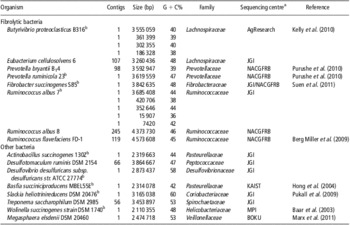
Advances in technology have seen genome sequencing become easier and more affordable. The pace of genome sequencing of individual rumen bacteria has continued to accelerate and has added significant impetus to rumen microbiology in recent years. There are currently 16 publicly available genome sequences from rumen microorganisms (Table 1), of which half are closed genomes. These sequencing projects have differing objectives, from discovering new genes encoding fibre-degrading activities for enhancing animal production or for feedstock depolymerisation for biofuel production, through to ruminant methane mitigation via interventions against methanogens. These projects are also adding functional ‘omics’ technologies to gain a better understanding of gene function in these organisms. Differential gene expression (transcriptomics) and protein expression (proteomics) or production of metabolites (metabolomics) are being used to confirm the functions of annotated genes and to test hypotheses around the role of ‘unknown’ or ‘conserved hypothetical’ genes. These initial rumen microbial genomes were produced from type strains that were maintained as single cultures for years. It has to be noted that these type strain might have some differences with strains evolving in their natural habitat, as their genetic makeup can change over generations (Papadopoulos et al., Reference Papadopoulos, Schneider, Meier-Eiss, Arber, Lenski and Blot1999) and mutations can arise induced by the culture media (Deng and Fong, Reference Deng and Fong2011). In addition, variability within single species also exists (Hansen et al., Reference Hansen, Lozupone, Rey, Wu, Guruge, Narra, Goodfellow, Zaneveld, McDonald, Goodrich, Heath, Knight and Gordon2011). Sequencing newly obtained isolates and single cells from the rumen will both determine the validity of type strains as models and inform the intra-species variation in the wild population.
Publically available genome sequences of rumen bacteria

aJGI, Joint Genome Institute; NACGFRB, North American Consortium for the Genomics of Fibrolytic Rumen Bacteria; KAIST, Korea Advanced Institute of Science and Technology; MPI, Max Planck Institute; BOKU,University of Natural Resources and Life Sciences, Vienna, Austria.
bClosed genomes.
The bacterial genome sequences completed to date have added a tremendous amount of gene sequences to the growing database of rumen microbial genes. The closed bacterial genomes alone have so far identified over 27 000 protein coding sequences, and this is likely to double in the near future with the closure of several draft genomes and the instigation of new rumen microbial genome projects. This knowledge is likely to contribute beneficially to aspects of ruminant digestive processes and may also positively influence ruminant products, for example, by suggesting how to increase conjugated linoleic acid levels in milk or meat. Structural carbohydrates form complex arrangements within the plant cell wall, and rumen microbes need a correspondingly elaborate array of enzymatic activities to degrade them. These enzymatic activities are found in a wide variety of phylogenetically distinct microbes, mainly in the bacteria, but also within fungi and to a lesser degree in protozoa. As indicated in Table 1, the majority of the current genome sequencing projects target cellulose- and hemicellulose-degrading bacteria, and one would expect the maximum benefit to ruminant production to occur by enhancing ruminal fibre degradation after enzymatic pretreatment of supplemental feeds. Other manipulations may become apparent from better knowledge of the microbes themselves.
What do the genomes of fibre-degrading rumen bacteria reveal about their strategies for polysaccharide degradation?
The different species of bacteria responsible for plant polysaccharide solubilisation each appear to have a different approach to fibre breakdown. F. succinogenes S85 appears to specialise as a cellulose degrader. Although its genome encodes a variety of enzymes capable of hydrolysing a wide range of plant cell wall polysaccharides, F. succinogenes lacks genes encoding transporter proteins or the enzymes involved in metabolising non-cellulose polysaccharides. Thus, it appears to encode enzymatic activities targeting non-cellulose polysaccharides only to clear its way to its primary substrate – cellulose. Only small amounts of extracellular cellulase activity can be detected in the supernatant from F. succinogenes cultures (Groleau and Forsberg, Reference Groleau and Forsberg1981), and adherence to solid cellulosic substrates appears to be a prerequisite for cellulose degradation (Kudo et al., Reference Kudo, Cheng and Costerton1987; Weimer and Odt, Reference Weimer and Odt1995). F. succinogenes also lacks the cellulosome components such as dockerins, cohesions and scaffoldins that are found in Clostridium thermocellum and R. flavefaciens (Doi and Kosugi, Reference Doi and Kosugi2004). Thus, it appears that cellulose degradation by F. succinogenes involves significant interaction between the cell and its enzymes (Lynd et al., Reference Lynd, Weimer, van Zyl and Pretorius2002) and it may well involve a cell-based, non-enzymatic process (Brumm et al., Reference Brumm, Mead, Boyum, Drinkwater, Gowda, Stevenson and Weimer2011).
Ruminococcus species, on the other hand, encode a wide variety of enzymes predicted to be secreted from the cell and assembled into a highly organised enzyme scaffold, called a cellulosome, which mediates plant fibre degradation. The genes identified within the genome of R. flavefaciens FD-1 indicates that it can use a range of plant cell wall polysaccharides (Berg Miller et al., Reference Berg Miller, Antonopoulos, Rincon, Band, Bari, Akraiko, Hernandez, Thimmapuram, Henrissat, Coutinho, Borovok, Jindou, Lamed, Flint, Bayer and White2009). It also confirms the presence of a multi-enzyme cellulosome complex in which enzymes are linked to a non-catalytic scaffold structure via dockerin domains. The cellulosome organisation in FD-1 is extremely complex and more than 200 dockerin-containing proteins have been identified from the draft genome sequence (Rincon et al., Reference Rincon, Dassa, Flint, Travis, Jindou, Borovok, Lamed, Bayer, Henrissat, Coutinho, Antonopoulos, Berg Miller and White2010). Analysis of gene expression in this organism indicates that the type of substrate used by R. flavefaciens FD-1 can influence the enzymatic composition of the cellulosome.
The R. albus 7 genome is now closed and has been deposited on the US Department of Energy Joint Genome Institute website (http://genome.jgi-psf.org/rumal/rumal.info.html). Its genome is organised into a ∼3.7 Mbp chromosome, two megaplasmids of 420 kbp and 352 kbp and two smaller plasmids of 15.9 kbp and 7.4 kbp. On the basis of our analysis of the R. albus 7 genome sequence, it contains far fewer dockerin-like proteins than R. flavefaciens FD-1. R. albus 7 has 29 dockerin-containing proteins, of which 25 are on the main chromosome, three are on the 420 kbp plasmid and one is located on the 352 kbp plasmid. Several of these dockerin proteins contain polysaccharide-degrading domains. The genome sequence of another strain, R. albus 8, is less well annotated, but it seems to have ∼40 proteins identified as containing Type I dockerins (http://www.jcvi.org/rumenomics). The smaller number of dockerin proteins presumably indicates that R. albus has a less well-developed cellulosome compared with R. flavefaciens. The draft R. albus 8 genome sequence has been used previously to identify proteins involved in cellulose adhesion and degradation (Devillard et al., Reference Devillard, Goodheart, Karnati, Bayer, Lamed, Miron, Nelson and Morrison2004). Compared with the wild-type strain, mutant strains of R. albus 8 that are defective in cellulose degradation lack two large-molecular-weight proteins, which were identified as endocellulases Cel48A and Cel9B. A Type III glutamine synthetase, an enzyme involved in the assimilation of nitrogen in R. albus, has also been shown to be important in cells growing under low-nitrogen conditions (Amaya et al., Reference Amaya, Kocherginskaya, Mackie and Cann2005).
Butyrivibrio and Pseudobutyrivibrio species have come to prominence recently because of their strong xylan-degrading abilities and the prevalence of their rrs genes in pyrotag sequence libraries derived from rumen contents (Attwood et al., Reference Attwood, Cookson and Kelly2004; C.D. Moon, personal communication). The recent genome sequencing of Butyrivibrio proteoclasticus B316 has identified a large number of genes involved in the use of plant polysaccharides, particularly hemicelluloses (Kelly et al., Reference Kelly, Leahy, Altermann, Yeoman, Dunne, Kong, Pacheco, Li, Noel, Moon, Cookson and Attwood2010). These included glycosyl hydrolases (mainly from glycoside hydrolase (GH) families 2, 3, 5, 10, 13 and 43), carbohydrate esterases attacking ferulic acid and acetylxylan linkages and a variety of pectate lyases. Many of the B. proteoclasticus B316 GHs are annotated as belonging to various classes of xylanases, xylosidases or arabinosidases, consistent with its ability to grow well on xylan. However, despite B. proteoclasticus B316 being unable to grow on cellulose as a carbon source, two cellulase genes were identified. Proteomic analysis has shown that at least one of these cellulases is expressed constitutively during growth on xylan or xylose (Dunne et al., Reference Dunne, Li, Kelly, Leahy, Bond, Jordan and Attwood2007). Although the exact activities of these enzymes have not been defined, it seems likely that they contribute by improving access to hemicelluloses and pectins, which appear to be the preferred substrates of B. proteoclasticus B316. An interesting characteristic of the B. proteoclasticus enzymes involved in polysaccharide breakdown is that, based on signal peptide analysis, most are predicted to be found within the cell. The predicted enzyme localisation suggests that a limited number of secreted enzymes generate a variety of complex oligosaccharides that are then transported into the cell for further breakdown and metabolism. The clustering of genes encoding intracellular polysaccharide-degrading enzymes with genes encoding for transporters, transcriptional regulators and environmental sensors in polysaccharide utilisation loci (Kelly et al., Reference Kelly, Leahy, Altermann, Yeoman, Dunne, Kong, Pacheco, Li, Noel, Moon, Cookson and Attwood2010) supports this model. Gene expression data also suggest co-expression of genes within these clusters when the B. proteoclasticus is grown on the insoluble substrate, xylan. Coordinated expression of polysaccharide-degrading enzymes with sugar transporters is likely to be a mechanism to reduce competition from saccharolytic microbes by limiting the amount of readily useable saccharides released into the surrounding environment. B. proteoclasticus has also been shown to adhere to plant material and this, combined with its extensive hemicellulose-degrading abilities, implies that it is capable of plant colonisation and breakdown in the rumen environment. Given that hemicellulose is predicted in most models of plant cell walls to surround cellulose, and thus one of the first plant polysaccharides encountered by invading bacteria, it is possible that B. proteoclasticus is an initial coloniser and degrader of plant material in the rumen, clearing the hemicellulose and allowing access to the cellulose by the primary cellulolytic microbes.
Rumen methanogen genome sequencing projects
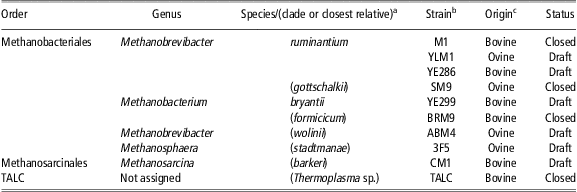
Methane is an important greenhouse gas and emissions from agricultural sources account for ∼40% of total anthropogenic methane, of which 25% is directly from enteric fermentation in livestock (Olivier et al., Reference Olivier, Van Aardenne, Dentener, Pagliari, Ganzeveld and Peters2005). There are several rumen methanogen genome sequencing projects either completed or underway that are improving our understanding of the diversity and metabolic capacity of methanogenic archaea in the rumen (Table 2).
Rumen methanogen genome sequencing projects
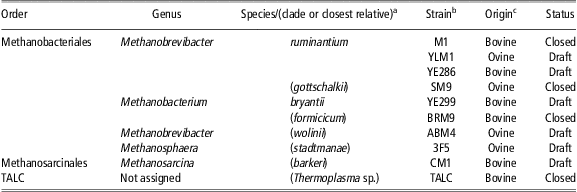
TALC = Thermoplasmales-associated lineage C.
aValidly assigned species, or clade after Janssen and Kirs (Reference Janssen and Kirs2008) or closest cultured relative as determined by small subunit ribosomal RNA gene sequence similarity.
bMethanogen species sequenced as part of the following programmes: M1 and SM9, NZ Pastoral Greenhouse Gas Research Consortium; YLM1 and BRM9, NZ Ministry of Agriculture and Forestry Sustainable Land Management and Climate Change Fund; 3F5 and ABM4, NZ Agricultural Greenhouse Gas Research Centre; YE 286 and YE299, Commonwealth Scientific and Industrial Research Organisation-Queensland Department of Primary Industry and Beef Cooperative Research Centre; TALC, Commonwealth Scientific and Industrial Research Organisation, Livestock Industries.
cAll strains were originally isolated from rumen contents, except ABM4, which was isolated from ovine abomasal contents.
M. ruminantium M1 was the first rumen methanogen to have its genome sequenced. This sequence information confirmed the hydrogenotrophic lifestyle of M. ruminantium M1, although gene expression studies indicated that formate may be an important substrate for methanogenesis during syntrophic growth with rumen bacteria (Leahy et al., Reference Leahy, Kelly, Altermann, Ronimus, Yeoman, Pacheco, Li, Kong, McTavish, Sang, Lambie, Janssen, Dey and Attwood2010). Short-chain alcohols were also predicted and were shown to stimulate growth on hydrogen, but not to support growth alone. A noticeable omission from the M. ruminantium genome was the lack of genes encoding the methyl coenzyme-M reductase II enzyme system (Mcr II), an isoenzyme of the Mcr I enzyme that is usually found in hydrogenotrophic methanogens. In other methanogens, the Mcr II system is differentially regulated during growth (Reeve et al., Reference Reeve, Nolling, Morgan and Smith1997; Luo et al., Reference Luo, Zhang, Suzuki, Hattori and Kamagata2002) and is thought to mediate methane formation at high hydrogen partial pressures. In the rumen, methanogens depend on fermentative microbes to supply hydrogen, which is usually kept at very low concentrations (Janssen, Reference Janssen2010). The absence of a Mcr II system in M. ruminantium suggests that it is adapted for growth under low levels of hydrogen using the Mcr I system only.
As in the genomes of the human gut methanogens Methanosphaera stadtmanae (Fricke et al., Reference Fricke, Seedorf, Henne, Kruer, Liesegang, Hedderich, Gottschalk and Thauer2006) and Methanobrevibacter smithii (Samuel et al., Reference Samuel, Hansen, Manchester, Coutinho, Henrissat, Fulton, Latreille, Kim, Wilson and Gordon2007), the M. ruminantium genome encodes large surface proteins that have features similar to bacterial adhesins. The role of such proteins is not known; however, in co-culturing experiments, genes encoding several of these adhesin-like proteins were upregulated and microscopic examination showed co-aggregation of M. ruminantium with B. proteoclasticus cells (Leahy et al., Reference Leahy, Kelly, Altermann, Ronimus, Yeoman, Pacheco, Li, Kong, McTavish, Sang, Lambie, Janssen, Dey and Attwood2010). The abundance of genes encoding such adhesin-like proteins in the M. ruminantium genome indicates a significant ability to modulate cell surface topology and point to a likely role in mediating close associations with hydrogen producing bacteria, fungi and protozoa. In addition to adhesin-like proteins, M. ruminantium encodes more than 50 genes involved in the synthesis and export of exopolysaccharides. This is consistent with previous reports that M. ruminantium produces a capsule layer (Kandler and König, Reference Kandler and König1978; Kandler and König, Reference Kandler and König1985).
An unexpected finding from the M. ruminantium genome sequence was the discovery of a methanogen prophage sequence, designated φmru (Attwood et al., Reference Attwood, Kelly, Altermann and Leahy2008; Leahy et al., Reference Leahy, Kelly, Altermann, Ronimus, Yeoman, Pacheco, Li, Kong, McTavish, Sang, Lambie, Janssen, Dey and Attwood2010). Analysis of the φmru prophage sequence identified genes encoding cell lysis function. One of these genes, encoding an endoisopeptidase designated PeiR, was sub-cloned and expressed in E. coli and shown to mediate M. ruminantium cell lysis in vitro (Leahy et al., Reference Leahy, Kelly, Altermann, Ronimus, Yeoman, Pacheco, Li, Kong, McTavish, Sang, Lambie, Janssen, Dey and Attwood2010). The discovery of two non-ribosomal peptide synthetases (NRPS) genes was also surprising, as they were the first to be reported in an archaeal genome. Non-ribosomal peptides (NRPs) have been attributed a wide range of activities, notably toxic, antimicrobial and iron chelating, but in this case their functions are unknown.
Recently, the fields of rumen genomics and metagenomics have begun to overlap with the reconstruction of individual bacterial genomes from metagenomic data. The deep metagenomic sequencing study by Hess et al. (Reference Hess, Sczyrba, Egan, Kim, Chokhawala, Schroth, Luo, Clark, Chen, Zhang, Mackie, Pennacchio, Tringe, Visel, Woyke, Wang and Rubin2011) was able to initially assemble 179 092 scaffolds out of the 268 Gbp of metagenomic sequence. After further analyses to verify scaffold integrity, 26 042 scaffolds greater than 10 kbp were identified. These validated scaffolds were binned by tetranucleotide frequencies and read coverage, giving 446 genome bins. After assignment to the closest phylogenetic order, each genome bin was compared with minimal set of core genes derived from all available reference genomes of that order. This produced 15 genome bins, which contained between 60% and 93% of their respective core genes. Further gene copy number analysis was carried out on the genes that were present only in single copy in all reference genomes of the respective phylogenetic order. These analyses suggested that near-complete draft genomes were successfully assembled. Genome sequence data from individual uncultured microbial cells isolated directly from the same complex rumen community were obtained using single-cell isolation techniques. Following whole-genome amplification, their DNAs were screened for rrs sequences and one of the single cells analysed matched to genome bin APb, one of the largest bins assembled from metagenomic data. The rrs sequence indicated that the organism was related to Butyrivibrio fibrisolvens. We have subsequently analysed the bin APb genome (2.41 Mbp) and found that it is a close match to the draft genome of a Butyrivibrio hungatei strain (3.37 Mbp, N. Palevich et al., unpublished).
The quest for functions through metagenomics
Metagenomics is the culture-independent genomic analysis of microbial communities and comprises the functional and sequence-based analysis of the collective microbial genomes contained in an environmental sample. Its application started using the functional screening approach and was mainly used to discover novel biological activities in complex ecosystems (Handelsman et al., Reference Handelsman, Rondon, Brady, Clardy and Goodman1998). With the development of high-throughput DNA sequencing technologies, this functional metagenomic approach has been complemented by sequence-based metagenomics, where metabolic activities are identified by comparison with various databases. As for any molecular biology technique, care in the steps preceding the application of metagenomics protocols, for example sampling procedure, sample handling and nucleic acid extraction, is crucial for obtaining good and reliable data.
Functional metagenomics
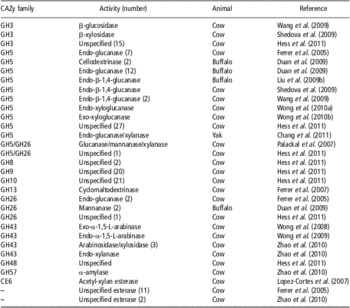
Because the rumen has evolved to be an efficient and complex lignocellulose degradation system, this process has been the focus of metagenomic studies aimed at determining and capturing the diversity of enzyme activities present. Functional metagenomics has been used to identify hydrolytic enzymes of biotechnological interest using specific substrates, particularly enzymes involved in the deconstruction of structural plant polysaccharides. This approach was pioneered by Ferrer et al. (Reference Ferrer, Golyshina, Chernikova, Khachane, Reyes-Duarte, Santos, Strompl, Elborough, Jarvis, Neef, Yakimov, Timmis and Golyshin2005), who detected 9 endoglucanases, 12 esterases and 1 cyclodextrinase from a dairy cow rumen metagenomic library. Subsequently, several groups have used metagenomic libraries to isolate specific polysaccharide-degrading enzymes from the rumen (Table 3 and Supplementary Table 1). This approach is dependent on the availability of suitable bioassays for the activities of interest, and to date most attention has been focussed on cellulose and hemicellulose degradation mediated by enzymes belonging to GH family 5. Rumen metagenome libraries have also been used to screen for other bioactivities, including novel lipases (Liu et al., Reference Liu, Wang, Bu, Zhao, McSweeney, Yu and Li2009a; Bayer et al., Reference Bayer, Kunert, Ballschmiter and Greiner-Stoeffele2010), polyphenol oxidase (Beloqui et al., Reference Beloqui, Pita, Polaina, Martinez-Arias, Golyshina, Zumarraga, Yakimov, Garcia-Arellano, Alcalde, Fernandez, Elborough, Andreu, Ballesteros, Plou, Timmis, Ferrer and Golyshin2006) and an enzyme capable of degrading 3,5,6-trichloro-2-pyridinol, a degradation product of the organophosphorus insecticide chlorpyrifos (Math et al., Reference Math, Islam, Cho, Hong, Kim, Yun, Cho, Heo, Lee, Kim and Yun2010). In addition, cysteine phytases have been isolated by screening ruminal genomic DNA from cows and goats using degenerate primer sets (Huang et al., Reference Huang, Zhang, Fu, Luo, Li, Luo, Shi, Yang, Diao and Yao2010).
Plant polysaccharide-degrading enzymes identified from rumen metagenomic libraries

Functional metagenomics has the potential to uncover new enzymes and metabolic pathways in the rumen if innovative strategies for screening are developed. The enzymatic machinery necessary to hydrolyse structural plant polysaccharides is an obvious target; however, although a new carbohydrate-binding domain has been reported (Duan et al., Reference Duan, Xian, Zhao, Feng, Pang, Bai, Tang, Ma and Feng2009), the catalytic domains observed to date all fall into known families. Other potential targets include the biotransformation of compounds of interest for the animal or the consumer, such as antioxidants and conjugated linoleic acids or the detoxification of plant toxins, mycotoxins and xenobiotics. Other strategies used in functional metagenomic screening are the heterologous complementation of host strains and mutants and induction of reporter genes (Simon and Daniel, Reference Simon and Daniel2011). A drawback of this technique is that expression microbial hosts do not always express the proteins from other taxonomic groups in a functional form.
Sequence-based metagenomics
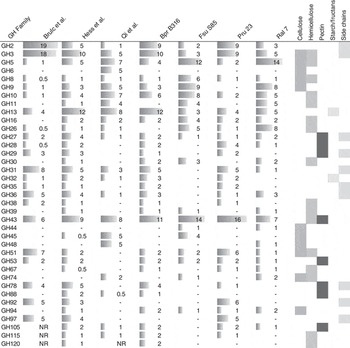
The exploration of mammalian gut microbiomes through sequence-based metagenomics is a recent development and reflects the increasing attention being given to the role that gut microbial communities have on health and disease of the host. The impetus comes from large sequencing projects on human gut microbial communities backed by the European Union (www.metahit.eu) and the National Institutes of Health in the United States of America (Human Microbiome Project, https://commonfund.nih.gov/hmp). We are aware of many ongoing projects using a metagenomic approach on the rumen microbiome, but there are still few published reports. Although different approaches have been used, large sequence-based studies have begun to catalogue the genes present and investigate rumen processes involved in fibre degradation (Brulc et al., Reference Brulc, Antonopoulos, Miller, Wilson, Yannarell, Dinsdale, Edwards, Frank, Emerson, Wacklin, Coutinho, Henrissat, Nelson and White2009). The value of exploring the rumen environment in this way has been shown by the Joint Genome Institute study focussing on the microbial community attached to switchgrass incubated in the dairy cow rumen (Hess et al., Reference Hess, Sczyrba, Egan, Kim, Chokhawala, Schroth, Luo, Clark, Chen, Zhang, Mackie, Pennacchio, Tringe, Visel, Woyke, Wang and Rubin2011; Table 3), and by the metatranscriptomic analysis of the rumen of the muskox, which focussed on anaerobic fungi and protozoa (Qi et al., Reference Qi, Wang, O'Toole, Barboza, Ungerfeld, Leigh, Selinger, Butler, Tsang, McAllister and Forster2011). Table 4 compares the distribution of the main GH families involved in plant polysaccharide degradation in these metagenomic/metatranscriptomic studies, and in the four rumen fibrolytic bacteria whose genomes have been completely sequenced. It is notable that GH families involved in cellulose degradation are well represented in the two cellulolytic bacteria (F. succinogenes and R. albus) and in the muskoxen microbial eukaryotic metatranscriptome, but are less prevalent in the other studies. The metagenomic profiles appear more similar to those shown by hemicellulose- and pectin-degrading organisms (Butyrivibrio and Prevotella). Overall the main GH activities found (GH43, GH3, GH2, GH13) correlate with those detected in metagenomes from a range of other microbial environments (Li et al., Reference Li, Wang, Zhang, Rantalainen, Wang, Zhou, Zhang, Shen, Pang, Zhang, Wei, Chen, Lu, Zuo, Su, Qiu, Jia, Xiao, Smith, Yang, Holmes, Tang, Zhao, Nicholson, Li and Zhao2009).
Profile of the main GH families involved in plant polysaccharide degradation in the rumen. Values shown represent the percentage of the total GHs found in each species/metagenome/metatranscriptome

GH = glycoside hydrolase; NR = not reported.
Data from the two bovine metagenome studies (Brulc et al., Reference Brulc, Antonopoulos, Miller, Wilson, Yannarell, Dinsdale, Edwards, Frank, Emerson, Wacklin, Coutinho, Henrissat, Nelson and White2009; Hess et al., Reference Hess, Sczyrba, Egan, Kim, Chokhawala, Schroth, Luo, Clark, Chen, Zhang, Mackie, Pennacchio, Tringe, Visel, Woyke, Wang and Rubin2011), the muskoxen microbial eukaryotic metatranscriptomic study (Qi et al., Reference Qi, Wang, O'Toole, Barboza, Ungerfeld, Leigh, Selinger, Butler, Tsang, McAllister and Forster2011), and the completed genome sequences of four representative fibrolytic rumen bacteria. These are Butyrivibrio proteoclasticus B316 (Kelly et al., Reference Kelly, Leahy, Altermann, Yeoman, Dunne, Kong, Pacheco, Li, Noel, Moon, Cookson and Attwood2010), Fibrobacter succinogenes S85 (Suen et al., Reference Suen, Weimer, Stevenson, Aylward, Boyum, Deneke, Drinkwater, Ivanova, Mikhailova, Chertkov, Goodwin, Currie, Mead and Brumm2011), Prevotella ruminicola 23 (Purushe et al., Reference Purushe, Fouts, Morrison, White, Mackie, Coutinho, Henrissat and Nelson2010) and Ruminococcus albus 7. Information on their GH profiles was obtained from the CAZy database (http://www.cazy.org/). Analysis of GH families not included in the original publications was carried out as described by Warnecke et al. (Reference Warnecke, Luginbuhl, Ivanova, Ghassemian, Richardson, Stege, Cayouette, McHardy, Djordjevic, Aboushadi, Sorek, Tringe, Podar, Martin, Kunin, Dalevi, Madejska, Kirton, Platt, Szeto, Salamov, Barry, Mikhailova, Kyrpides, Matson, Ottesen, Zhang, Hernandez, Murillo, Acosta, Rigoutsos, Tamayo, Green, Chang, Rubin, Mathur, Robertson, Hugenholtz and Leadbetter2007).
It would be helpful if the sequence-based metagenomic data could be placed in a taxonomic context. Analysis of metagenomic data would be facilitated by a reference set of rumen microbial genome sequences, analogous to the catalogue of reference genomes from the human microbiome (The Human Microbiome Jumpstart Reference Strains, 2010), being used to underpin analysis of human gut metagenomic datasets. The value of reference genomes for this type of analysis is seen in the rapid progress that is being made in this research area (Arumugam et al., Reference Arumugam, Raes, Pelletier, Le Paslier, Yamada, Mende, Fernandes, Tap, Bruls, Batto, Bertalan, Borruel, Casellas, Fernandez, Gautier, Hansen, Hattori, Hayashi, Kleerebezem, Kurokawa, Leclerc, Levenez, Manichanh, Nielsen, Nielsen, Pons, Poulain, Qin, Sicheritz-Ponten, Tims, Torrents, Ugarte, Zoetendal, Wang, Guarner, Pedersen, de Vos, Brunak, Dore, Weissenbach, Ehrlich and Bork2011). New software can now handle RNA sequence data without the need for reference genomes (Grabherr et al., Reference Grabherr, Haas, Yassour, Levin, Thompson, Amit, Adiconis, Fan, Raychowdhury, Zeng, Chen, Mauceli, Hacohen, Gnirke, Rhind, di Palma, Birren, Nusbaum, Lindblad-Toh, Friedman and Regev2011), but has yet to be tested in complex ecosystems such as the rumen. Notwithstanding, the availability of more genomes and a good-quality metagenome reference gene catalogue can only enhance the promises of metatranscriptomics to uncover functional traits. Coupled with the availability of cultures, this allows functions to be linked to genes in laboratory experiments using reference organisms.
Linking genomics and metagenomics data to nutrition and other animal production features
Cataloguing the genes and functions of the microbiome is the step necessary for modelling and linking the rumen microbial metabolism to that of the host (Raes and Bork, Reference Raes and Bork2008; Karlsson et al., Reference Karlsson, Nookaew, Petranovic and Nielsen2011).
Traditionally, nutrition and production traits in ruminants were assessed without consideration of the rumen microbiome. At present, the inclusion of this ‘component’ of the superorganism is a great opportunity to improve our understanding of the digestion and biological characteristics of the host. As stated in previous sections, the rumen microbiome is complex, hugely diverse and its gene catalogue is incomplete. On the basis of ecological concepts, the taxonomical and functional diversity of the microbiome should provide high levels of redundancy and, consequently, stability (Konopka, Reference Konopka2009). Stability results in the maintenance of functions following changes in diet or other environmental stresses. However, there are many basic ecological questions not yet answered. Key community members and functions have to be conclusively defined in order to answer simple yet relevant questions, such as whether all numerically dominant rumen microbes are key members of the community? Perhaps key functions are carried out by rare members. Rare members constitute an ‘insurance’ to the host during changes in the environment, as has been described for some specialised microbes degrading plant toxins (Weimer, Reference Weimer1998), but many more functions may be hidden within members of the rare community (Pedros-Alio, Reference Pedros-Alio2006).
Recently, Muegge et al. (Reference Muegge, Kuczynski, Knights, Clemente, Gonzalez, Fontana, Henrissat, Knight and Gordon2011) showed that mammalian microbiomes have in common a large set of functions, implying that insights obtained from human and other animal studies can inform general concepts applied to ruminants. Microbial lineages remain associated with a given environment (von Mering et al., Reference von Mering, Hugenholtz, Raes, Tringe, Doerks, Jensen, Ward and Bork2007) and those present in the gut are not usually found in other environments (Ley et al., Reference Ley, Lozupone, Hamady, Knight and Gordon2008a). In addition, gut microbes are largely shared between mammals (Ley et al., Reference Ley, Hamady, Lozupone, Turnbaugh, Ramey, Bircher, Schlegel, Tucker, Schrenzel, Knight and Gordon2008b), reinforcing the idea that some concepts are universally applicable across humans and livestock species. In humans, a minimal metagenome core for the proper function of the microbiome and the minimal set of genes required for a bacterium to inhabit the gut have been identified (Qin et al., Reference Qin, Li, Raes, Arumugam, Burgdorf, Manichanh, Nielsen, Pons, Levenez, Yamada, Mende, Li, Xu, Li, Li, Cao, Wang, Liang, Zheng, Xie, Tap, Lepage, Bertalan, Batto, Hansen, Le Paslier, Linneberg, Nielsen, Pelletier, Renault, Sicheritz-Ponten, Turner, Zhu, Yu, Li, Jian, Zhou, Li, Zhang, Li, Qin, Yang, Wang, Brunak, Dore, Guarner, Kristiansen, Pedersen, Parkhill, Weissenbach, Bork, Ehrlich and Wang2010). In addition, within human hosts, a reduced number of microbial clusters, called enterotypes, were identified (Arumugam et al., Reference Arumugam, Raes, Pelletier, Le Paslier, Yamada, Mende, Fernandes, Tap, Bruls, Batto, Bertalan, Borruel, Casellas, Fernandez, Gautier, Hansen, Hattori, Hayashi, Kleerebezem, Kurokawa, Leclerc, Levenez, Manichanh, Nielsen, Nielsen, Pons, Poulain, Qin, Sicheritz-Ponten, Tims, Torrents, Ugarte, Zoetendal, Wang, Guarner, Pedersen, de Vos, Brunak, Dore, Weissenbach, Ehrlich and Bork2011). These enterotypes are characterised by the prevalence of different trophic chains, reflecting distinctive capacities of the host to extract energy from foods, and this concept may be applicable to ruminants (Arumugam et al., Reference Arumugam, Raes, Pelletier, Le Paslier, Yamada, Mende, Fernandes, Tap, Bruls, Batto, Bertalan, Borruel, Casellas, Fernandez, Gautier, Hansen, Hattori, Hayashi, Kleerebezem, Kurokawa, Leclerc, Levenez, Manichanh, Nielsen, Nielsen, Pons, Poulain, Qin, Sicheritz-Ponten, Tims, Torrents, Ugarte, Zoetendal, Wang, Guarner, Pedersen, de Vos, Brunak, Dore, Weissenbach, Ehrlich and Bork2011). Interestingly, not all important microbial functions were provided by dominant bacteria and Arumugam et al. (Reference Arumugam, Raes, Pelletier, Le Paslier, Yamada, Mende, Fernandes, Tap, Bruls, Batto, Bertalan, Borruel, Casellas, Fernandez, Gautier, Hansen, Hattori, Hayashi, Kleerebezem, Kurokawa, Leclerc, Levenez, Manichanh, Nielsen, Nielsen, Pons, Poulain, Qin, Sicheritz-Ponten, Tims, Torrents, Ugarte, Zoetendal, Wang, Guarner, Pedersen, de Vos, Brunak, Dore, Weissenbach, Ehrlich and Bork2011) suggest that functional biomarkers are more robust than phylogenetic biomarkers for identifying enterotypes associated with host phenotype characteristics. The complementary metabolic pathways provided by the microbiome influence the phenotype of animals and humans and make them react differently to diet and drugs (Nicholson et al., Reference Nicholson, Holmes and Wilson2005; Li et al., Reference Li, Wang, Zhang, Rantalainen, Wang, Zhou, Zhang, Shen, Pang, Zhang, Wei, Chen, Lu, Zuo, Su, Qiu, Jia, Xiao, Smith, Yang, Holmes, Tang, Zhao, Nicholson, Li and Zhao2008; Claus et al., Reference Claus, Ellero, Berger, Krause, Bruttin, Molina, Paris, Want, de Waziers, Cloarec, Richards, Wang, Dumas, Ross, Rezzi, Kochhar, Van Bladeren, Lindon, Holmes and Nicholson2011).
Understanding microbial processes
The interactions among genes and functions present in the catalogue have to be interpreted, and complementary approaches should be used to address fundamental questions of rumen microbial ecology. Some examples of topics where further information is needed are listed below. This information will be useful to modulate the capabilities of the microbiome for improving ruminant production.
The repercussions of the microbiome on the phenotype of the superorganism can be found at different levels, spanning from the single microbial population up to the microbial community and host–microbial interactions. The gastrointestinal environment is perpetually changing (diet, feed and water consumption, peristaltic action, etc.), and symbionts are constantly adapting to be at their optimal fitness (Dethlefsen et al., Reference Dethlefsen, McFall-Ngai and Relman2007). Variants from the same species can arise through mutations or acquisition of genetic material through horizontal gene transfer (HGT). These variants will occupy different trophic niches and can coexist (Rosenzweig et al., Reference Rosenzweig, Sharp, Treves and Adams1994). In humans producing methane, a single methanogen, M. smithii, is often found (Eckburg et al., Reference Eckburg, Bik, Bernstein, Purdom, Dethlefsen, Sargent, Gill, Nelson and Relman2005). A single microbe for a unique function could be regarded as straightforward. However, there exists a great diversity of strains differing in their use of formate and the presence of adhesin-like proteins, which hypothetically allow these variants to interact with different bacteria and occupy different niches (Hansen et al., Reference Hansen, Lozupone, Rey, Wu, Guruge, Narra, Goodfellow, Zaneveld, McDonald, Goodrich, Heath, Knight and Gordon2011). Considering the complexity and selection pressure prevailing in the rumen, it is certain that multiple ecotypes of methanogens, fibrolytic microbes and other microbes exist and play a functional role in the microbiome.
The rumen microbiome is rich in microbial interactions between members, such as metabolic cooperation, synergism, predation, cell–cell signalling and structural organisation such as biofilms (McAllister et al., Reference McAllister, Bae, Jones and Cheng1994; Hobson and Stewart, Reference Hobson and Stewart1997; Erickson et al., Reference Erickson, Nsereko, Morgavi, Selinger, Rode and Beauchemin2002). Genomic information, bioinformatic tools for the phylogenetic assignment of sequences (Weber et al., Reference Weber, Teeling, Huang, Waldmann, Kassabgy, Fuchs, Klindworth, Klockow, Wichels, Gerdts, Amann and Glockner2011) and the application of techniques that can provide information on direct interactions between microbes in the environment, such as fluorescence in situ hybridization and single-cell sequencing, will provide invaluable insights of the ecosystem.
A fundamental agent of change and adaptation in microbial communities are phages (Clokie et al., Reference Clokie, Millard, Letarov and Heaphy2011). Indeed, in gut metagenomes, viral sequences are important, and represent nearly 6% of the total sequences found in the human microbiome (Arumugam et al., Reference Arumugam, Raes, Pelletier, Le Paslier, Yamada, Mende, Fernandes, Tap, Bruls, Batto, Bertalan, Borruel, Casellas, Fernandez, Gautier, Hansen, Hattori, Hayashi, Kleerebezem, Kurokawa, Leclerc, Levenez, Manichanh, Nielsen, Nielsen, Pons, Poulain, Qin, Sicheritz-Ponten, Tims, Torrents, Ugarte, Zoetendal, Wang, Guarner, Pedersen, de Vos, Brunak, Dore, Weissenbach, Ehrlich and Bork2011). In addition, they are vectors of HGT, for which there is ample evidence in gut bacterial genomes and metagenomes. The rumen is not an exception and bacteriophage and viral sequences have been described (Klieve and Bauchop, Reference Klieve and Bauchop1988; Dinsdale et al., Reference Dinsdale, Edwards, Hall, Angly, Breitbart, Brulc, Furlan, Desnues, Haynes, Li, McDaniel, Moran, Nelson, Nilsson, Olson, Paul, Brito, Ruan, Swan, Stevens, Valentine, Thurber, Wegley, White and Rohwer2008). The virome is a fundamental agent of change of the microbiome dynamics and should not be overlooked in the study of complex communities (Rohwer and Youle, Reference Rohwer and Youle2011).
Future prospects
It is clear from the preceding discussion that a catalogue of rumen microbial genes and assignment of functions to these genes are required to link the rumen microbiome to nutritional and production practices in ruminants. What is needed is an initiative within the rumen microbial community, similar to the Human Microbiome Project (Turnbaugh et al., Reference Turnbaugh, Ley, Hamady, Fraser-Liggett, Knight and Gordon2007), to produce a reference set of rumen microbial genomes that would support the analysis and comprehension of large metagenomic datasets. It would also help form testable hypotheses that could direct experimentation and lead to a better understanding of rumen biology. This could be achieved by sequencing the genomes of the available cultivated rumen bacteria and methanogenic archaea (∼1000 cultures), together with representative cultures of rumen anaerobic fungi and protozoa. We have estimated, on the basis of an average bacterial and archaeal genome size of ∼3.5 and ∼2.5 Mbp, respectively, and sequencing coverage of ∼100×, that 300 to 400 Gbp of Illumina sequencing would be required to achieve this goal. With each Illumina HiSeq paired end 100-bp sequence run now approaching 500 Gbp of sequence data above Q30, this is clearly attainable with current technology. The initial focus might be on culturable bacteria and archaea; however, new single-cell genome sequencing technologies may allow individual cells of uncultivated organisms to be sequenced if analysis of available metagenomic data consistently shows that taxa believed to be important in the rumen cannot be linked with cultured representatives. This would be a large project that would require significant funding, coordination and planning, but which would underpin and greatly enhance the understanding of the increasingly large amounts of metagenomics data that are being generated from the rumen.
Acknowledgements
The authors gratefully acknowledge the financial support for the methanogen genome sequencing and metagenomics projects from the following New Zealand funding agencies: the NZ Pastoral Greenhouse Gas Research Consortium, NZ Ministry for Agriculture and Forestry Sustainable Land Management Mitigation and Adaptation to Climate Change (SLMACC), New Economy Research Fund of the NZ Foundation for Research, Science and Technology and the NZ Agricultural Greenhouse Gas Research Centre. INRA's work in rumen metagenomics is funded by the French Ministry of Higher Education and Research and the French Ministry of Food, Agriculture and Fisheries.
Supplementary materials
For supplementary material referred to in this article, please visit http://dx.doi.org/doi:10.1017/S1751731112000419