INTRODUCTION
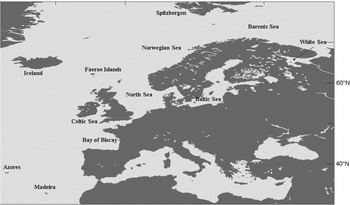
This paper reviews the use of parasites as biological tags in studies of the population structure of marine fish, mammals and invertebrates in the European Atlantic, including the North, Baltic, Barents and White Seas and Icelandic waters, but excluding the Mediterranean and Black Seas (Fig. 1). This region supports some of the oldest and most valuable fisheries in the world, most of which are currently in a precarious state due to overexploitation. The need for more information on the stock structure of the exploited organisms is therefore more acute than ever. In this paper we treat each host species or ecological group separately and critically review and evaluate parasite tagging studies that have been carried out on them, taking into account advances in our knowledge of marine parasite biology that have taken place since the studies were published.
Map of the Northeast Atlantic region showing the main seas and islands referred to in the text.

Herring Clupea harengus L. and Clupea pallasii marisalbi Berg
More parasite tag studies have investigated the complex relationships between different populations of herring than of any other marine fish in European waters. The first attempt to use parasites in this way was that of Shulman and Shulman-Albova (Reference Shulman and Shulman-Albova1953), who recorded marked differences in the parasite faunas of different sub-populations of the White Sea herring C. pallasii marisalbi. They particularly noted that the parasite fauna of one sub-population from an estuary had a distinctly marine character, indicating that they had migrated to the more saline parts of the White Sea to feed. Kulachkova (Reference Kulachkova1977) used differences in the relative proportions of 11 species of gyrodactylid monogeneans as evidence that herring populations sampled from different parts of the White Sea belonged to different stocks. The sensitivity of these monogeneans to environmental conditions, combined with their short lifespans, makes it likely that herring migrating from one area to another may lose their infections very quickly, which casts doubt on the value of gyrodactylids as tags. Kulachkova (Reference Kulachkova1989) summarized the work done by Russian scientists on parasites as biological tags for White Sea herring.
Until around the 1960s the Baltic herring (C. harengus) were thought to form a closed group; some ichthyologists even considered them to be a distinct sub-species. Parasitological studies then revealed that some populations made feeding migrations outside the Baltic, and a number of different sub-populations and stocks are now recognized. Some of these are resident year-round, while others migrate seasonally to feeding grounds in the sounds (Kattegat and Skagerrak) of the western Baltic and beyond into the North Sea. Some of these different populations mix on the spawning or feeding grounds and some areas have a mixture of autumn and spring-spawning populations. One of the earliest indications of migration outside the Baltic came from a study by Reimer (Reference Reimer1970), who investigated the parasite fauna of the Rügen herring of the southern Baltic and identified two stocks of spring-spawners differing in their seasonal migratory behaviour. One component was characterized by infections of cestode larvae and adult hemiurid digeneans which could only be acquired by feeding in higher salinity areas to the north, and the other by infections of digenean metacercariae of fresh or brackish water origin, indicating feeding in less saline eastern parts.
Grabda (Reference Grabda1974) was the first to recognize the value of larvae of the nematode Anisakis simplex as indicators of the extent of seasonal migrations outside the main body of the Baltic. This nematode is a purely marine species and can only be acquired in areas of high salinity where its euphausiid intermediate hosts occur, so its appearance in herring spawning in spring off the coasts of Poland and Germany was a clear indication of a feeding migration to the western Baltic or North Sea. To the east of Grabda's (Reference Grabda1974) study area, the herring population spawning in the Vistula lagoon were the subject of a study by Gaevskaya and Shapiro (Reference Gaevskaya and Shapiro1981), using host morphometrics and parasite tags. These authors also found evidence of feeding migrations to higher salinity regions in the form of infections with parasites of marine origin, particularly the hemiurid digeneans Hemiurus luhei and Brachyphallus crenatus previously used as tags by Reimer (Reference Reimer1970). They did not, however, find A. simplex larvae, indicating that the Vistula fish do not migrate as far west as the populations studied by Grabda (Reference Grabda1974). In the western part of the Baltic, Kühlmorgen-Hille (Reference Kühlmorgen-Hille1983) found spring-spawning herring to be more heavily infected with Anisakis sp. larvae than autumn-spawners, suggesting that the latter group are more limited to that area and do not migrate into the western sounds as much as spring-spawners.
Podolska et al. (Reference Podolska, Horbowy and Wyszynsky2006), Podolska (Reference Podolska2009) and Horbowy and Podolska (Reference Horbowy and Podolska2011) sought to further define the stock structure and seasonal migrations of herring spawning along the coasts of Poland and Germany. The meristic and morphometric characters of individual herring were measured and the data analysed using Discriminant Analysis to assign individuals to either the western or central stock. Anisakis simplex was then used as a marker for feeding migration outside the Baltic. Podolska et al. (Reference Podolska, Horbowy and Wyszynsky2006) sampled fish from three locations along the coast of Poland and concluded that infected herring represented a mixed group of western and central Baltic herring, with the proportion of western herring decreasing from 40 to 13% from west to east. Podolska (Reference Podolska2009) and Horbowy and Podolska (Reference Horbowy and Podolska2011) calculated the proportions of western and central stocks on different spawning grounds along the coasts of Poland and Germany and described the timing and extent of seasonal migrations along the coast by herring of both stocks. Further north in the transition zone between the Baltic and North Seas, Van Deurs and Ramkær (Reference Van Deurs and Ramkær2007) used Anisakis larvae to show that herring of spring-spawning populations in that area also engage in a northward feeding migration into high salinity waters instead of feeding locally in the Baltic Sea.
Outside the Baltic, MacKenzie (Reference MacKenzie1985) traced the recruitment migrations of herring in the North Sea and to the north and west of Scotland using two species of digenean metacercariae of the genus Renicola and the plerocercoid of the cestode Lacistorhynchus tenuis. The digeneans infected juvenile herring in their first year of life, after which there was no further infection, and they had a lifespan equal to that of the herring. They were commonly found infecting juvenile herring in Scottish coastal waters, but were very rarely found in those from the Bløden nursery ground in the eastern North Sea. Conversely, the equally long-lived L. tenuis infected Bløden juveniles only. These biological markers provided a means of tracing migrations of herring populations from nursery grounds to adult spawning and feeding grounds in the study area. The same tag parasites were used again by Campbell et al. (Reference Campbell, Cross, Chubb, Cunningham, Hatfield and MacKenzie2007a , Reference Campbell, MacKenzie, Zuur, Ieno, Smith, Zuur, Ieno and Smith b ) as part of a multidisciplinary study (WESTHER) of herring populations to the west of the British Isles. Remarkably, it was found that prevalences of Renicola metacercariae infection in juvenile herring from west of Scotland nursery areas were almost identical to those recorded by MacKenzie (Reference MacKenzie1985) over 30 years earlier, suggesting very stable host-parasite relationships. Significant differences in prevalence and abundance of the three tag parasites and comparisons of parasite infracommunity structures enabled the identification of a number of separate putative herring stocks west of the British Isles. They also provided evidence of a complex pattern of recruitment and feeding migrations in the area. Infections with A. simplex larvae were also recorded in WESTHER. This provided an opportunity for Cross et al. (Reference Cross, Collins, Campbell, Watts, Chubb, Cunningham, Hatfield and MacKenzie2007) to test the temporal stability of a potential genetic marker in the form of the cytochrome oxidase-1 (CO1) region. Nematodes from herring caught in the same area over three spawning periods exhibited a degree of temporal stability that indicated the potential of this region as a genetic marker in future studies of host stock structure, not only for herring but also for other fish that serve as hosts for A. simplex.
The discovery of the adult digenean Aponurus laguncula in herring – a new host record – provided a serendipitous example of the use of a tag parasite to trace host seasonal migrations (Bray and MacKenzie, Reference Bray and MacKenzie1990). Aponurus laguncula was only found in herring caught in the English Channel and was not present in any North Sea samples, but two samples taken from the same spawning ground in the English Channel only 6 days apart showed very different levels of infection: in the first sample 44% of fish were infected, whereas no infected fish was found in the second. This suggested that the two samples were taken from different herring populations that, while spawning on the same ground at about the same time, had been feeding in different areas, the infected one in the English Channel and the uninfected one further north in the southern North Sea. Similar mixing of different populations of herring on the same spawning ground was described by Johannessen et al. (Reference Johannessen, Nøttestad, Fernö, Langørd and Skaret2009).
The stock structure of herring in the Northeast Atlantic is very complex and subject to change with changing environmental conditions and fishing pressure (Schmidt et al. Reference Schmidt, Van Damme, Roeckmann and Dickey-Collas2009; Thurstan and Roberts, Reference Thurstan and Roberts2010). Herring stocks that once supported major fisheries have all but disappeared and the balance between races spawning at different times of the year have changed over relatively short time scales (Harma et al. Reference Harma, Brophy, Minto and Clarke2012). It cannot therefore be assumed that stock structure established by studies carried out over a limited period will remain unchanged for long. The stock structure of Northeast Atlantic herring needs to be continuously monitored and the above review shows that parasites can continue to play an important role as tags to help reveal these changes.
Cod Gadus morhua L.
The use of parasites as biological tags for cod was reviewed by Hemmingsen and MacKenzie (Reference Hemmingsen and MacKenzie2001).
As with herring, environmental conditions in the Baltic Sea lend themselves particularly well to the use of parasites as biological tags for cod. Shulman (Reference Shulman1950) was the first to observe the gradual reduction in the parasite fauna of Baltic cod from west to east, marked by the progressive disappearance of parasites of marine origin. Based on the knowledge of life cycles and ecology existing at the time, Reimer (Reference Reimer1970) drew approximate boundary lines marking the eastern limits of these endemic areas. Since then the life cycles of some of the digeneans named by Reimer have been described (Køie, Reference Køie1981, Reference Køie1992, Reference Køie1995), so it would now be possible to define these limits more accurately, although seasonal and annual variations in salinity would have to be taken into account. One of the parasites listed by Reimer was the digenean Cryptocotyle lingua, and Buchmann (Reference Buchmann1986) suggested that the low level infection of cod with metacercariae of C. lingua in the Bornholm basin was the result of mixing of the uninfected resident stock with migrants from more saline waters further west.
In the Barents Sea, Polyansky and Kulemina (Reference Polyansky and Kulemina1963) found significant differences in the parasite communities of juvenile cod under 2 years old from different inshore areas, indicating that juvenile cod form local stocks with little migration between them. Along the north Norwegian coast of the Barents Sea, two distinct types of cod are recognized – coastal and Arcto-Norwegian – identifiable by differences in their otolith structure and differing in their migratory behaviour. These two types of cod form mixed populations in the fjords and offshore. Hemmingsen et al. (Reference Hemmingsen, Lombardo and MacKenzie1991) found significant differences in the prevalences of seven parasite species in samples of cod caught at three locations in this area – two fjords and one offshore. Their results suggested that cod in one of the fjords may represent a population separate from the other two. In a follow-up study in the same general area, Larsen et al. (Reference Larsen, Hemmingsen, MacKenzie and Lysne1997) used four parasite species – two myxosporeans, an adult digenean and a parasitic copepod – to investigate the stock structure and migrations of coastal and Arcto-Norwegian cod from two fjords and one offshore location. They found evidence that the fjords contained local resident populations of Arcto-Norwegian cod and that only the coastal cod migrated between the fjords and offshore. Karasev (Reference Karasev and Karasev1998) reviewed the literature on parasites of Arcto-Norwegian cod in Norwegian and Russian coastal waters of the Barents Sea but failed to find any good tag parasites for identifying local stocks.
Platt (Reference Platt1976) found that larvae of the nematode Pseudoterranova decipiens were abundant in cod caught in Icelandic waters but absent from those caught at Greenland. He attributed a reduction in the level of infection of Icelandic cod to immigration of uninfected cod from Greenland and was able to estimate the relative proportions of the two components on spawning grounds to the southwest of Iceland. Since then genetic evidence has revealed the existence of three sibling species within P. decipiens in the North Atlantic (Paggi et al. Reference Paggi, Nascetti, Cianchi, Orecchia, Mattiucci, D'Amelio, Berland, Brattey, Smith and Bullini1991, Reference Paggi, Mattiucci, Gibson, Berland, Nascetti, Cianchi and Bullini2000). Two of these species, P. decipiens (sensu stricto) and Pseudoterranova krabbei, occur around Iceland. This new information could be used to add further detail to our knowledge of cod migrations in the Greenland–Iceland area.
Variations in the parasite fauna of cod along the west coast of Norway prompted Hemmingsen and MacKenzie (Reference Hemmingsen and MacKenzie2013) to suggest the use of four helminth parasites as biological tags for cod in the area. Infection data revealed discontinuous distributions of these parasites, while information on the life cycles and geographical distributions of their intermediate and final hosts enabled the authors to identify the approximate geographical boundaries of their endemic areas. Metacercariae of the digenean Prosorhynchoides borealis and plerocercoids of the cestode Diphyllobothrium phocarum are long-lived in cod and could be used for stock identification and to follow migrations. The short-lived adult digeneans Hemiurus communis and Hemiurus levinseni could be used to follow seasonal migrations.
Blue whiting Micromesistius poutassou (Risso)
The start of the commercial fishery for blue whiting in the Northeast Atlantic in the early 1970s prompted several studies of the parasite fauna of the species (MacKenzie, Reference MacKenzie1979; Højgaard, 1980; Kusz and Treder, Reference Kusz and Treder1980; Karasev, Reference Karasev and Monstad1990). In the period 1973 to 1986, Karasev (Reference Karasev and Monstad1990) carried out complete parasitological studies of 1210 blue whiting from 15 sub-regions covering much of the geographical distribution of the species in the Northeast Atlantic. He reported 36 species of parasites and found significant differences in the composition of the parasite communities between fish from different areas. These differences suggested that populations of blue whiting in the North Sea and the Celtic Sea-Bay of Biscay regions were different stocks from the main body of the Hebrido-Norwegian population.
Karasev (Reference Karasev1989) reported on examinations of 2600 blue whiting caught in March–April of 1983, 1984 and 1986 from an area to the southwest of Ireland. Between 1 and 11% of fish in catches taken south of 51°30N were infected with the myxosporean parasite Myxobolus aeglefini, but only 1% were infected in catches taken north of this, and in 1984 only. Parasite infection data, length and age composition and gonad maturities all indicated the presence of two separate stocks in the area, with the Hebrido-Norwegian stock spawning on Porcupine Bank and the Biscay stock present south of this as post-spawners and immature fish. Support for the use of M. aeglefini as a tag for the Biscay stock is to be found in the studies of MacKenzie (Reference MacKenzie1979), Kusz and Treder (Reference Kusz and Treder1980) and Højgaard (1980), none of whom reported M. aeglefini from blue whiting of the Hebrido-Norwegian stock caught to the north and west of Scotland and at the Faeroe islands. Raitt (Reference Raitt1965), however, found Norway pout Trisopterus esmarkii (Nilsson) caught off the west and north-west coasts of Scotland infected with M. aeglefini. This parasite has been reported from a number of fish species of disparate groups in North European waters (Lom and Dykova, Reference Lom and Dykova1992), which suggests the possibility that M. aeglefini may be a collective name for a complex of similar species.
In the period from 1979 to 1984, Dumke (Reference Dumke1988) examined 2107 blue whiting caught in an area from the Skagerrak to Spitzbergen and to the west of the British Isles for infections in the muscle with Anisakis sp. larvae. He reported a general increase in infection levels from south to north and divided his study area into three zones according to intensity of infection. Whether or not the different zones represent different stocks of blue whiting, however, would have required further data on infection levels at different seasons. Also, the numbers of Anisakis larvae in the viscera were not counted.
Whiting Merlangius merlangus (L.)
Kabata (Reference Kabata1963, Reference Kabata1967) identified two stocks of whiting in the North Sea on the basis of significant differences in prevalence of two myxosporean parasites infecting the gall bladder. Ceratomyxa arcuata was the dominant species in the northern North Sea and Myxidium sphaericum in the southern, with the Dogger Bank identified as an area of mixing. Kabata (Reference Kabata1967) added a third myxosporean species – Leptotheca informis – as a tag to help identify four stocks of whiting to the west of the British Isles. With the stated purpose of eliminating the possibility of environmental factors excluding M. sphaericum from the northern North Sea, Kabata (Reference Kabata1963) searched for this parasite in other gadoid species in the area and found a high prevalence of infection in saithe Pollachius virens (L.). Kabata sought to explain this apparent anomaly by suggesting the possibility of differences in susceptibility between the northern and southern whiting stocks. Since then it has been shown that the species of Myxidium infecting saithe is not M. sphaericum but Myxidium gadi (see MacKenzie and Kalavati, Reference MacKenzie and Kalavati1995), thereby apparently vindicating Kabata's use of M. sphaericum as a tag. However, MacKenzie et al. (Reference MacKenzie, Collins, Kalavati and Hemmingsen2010) published molecular evidence that some Myxidium samples from whiting, cod and saithe in the North Sea were very similar and may be conspecific. Myxidium sphaericum was originally described from the garfish Belone belone (L.) and subsequently reported from a wide range of teleost species; some of these reports were regarded as doubtful by MacKenzie and Kalavati (Reference MacKenzie and Kalavati1995). To add to the taxonomic confusion, the original species from garfish has recently been redescribed, renamed and transferred to the new genus Sigmomyxa (see Karlsbakk and Køie, 2012). Meanwhile the true identity of the Myxidium sp. infecting North Sea whiting remains uncertain. These recent discoveries, however, do not invalidate Kabata's conclusions regarding stock identification of North Sea whiting.
Arntz (Reference Arntz1972) found the parasitic copepod Lernaeocera branchialis on a small percentage of young whiting in Kiel Bay in the western Baltic Sea. He used this as evidence that these fish originated in areas of higher salinity to the north and west, but did not check the occurrence of larval stages of the copepod in all possible intermediate hosts in the area. In the Irish Sea, Shotter (Reference Shotter1973) found L. branchialis on juvenile whiting from inshore waters, but not on those from offshore. He used this difference, together with differences in prevalence of three helminth parasites, as evidence of the separate nature of the two populations of young fish. Hislop and MacKenzie (Reference Hislop and MacKenzie1976) used the plerocercus of the trypanorhynch cestode Gilquinia squali as a biological tag, combined with data from artificial tagging experiments, to follow age-related migrations of whiting in the northern North Sea. This plerocercus satisfied the main criteria for a good biological tag by being long-lived, site-specific and easily identified.
Other gadoid species
Two biological tag studies on Norway pout T. esmarkii (Nilsson) suggested that stocks of this fish in the North Sea and in the area to the north and west of Scotland may be separate. Raitt (Reference Raitt1965) used the myxosporean M. aeglefini, and Smith (Reference Smith1972) the monogenean Diclidophora esmarkii. In both studies infected pout were found to the north and west of Scotland but not in the northern North Sea. Smith (Reference Smith1972) pointed out that neither study warranted the conclusion that the stocks were distinct, but that they did point strongly to there being little or no movement of pout eastwards from the north and west of Scotland into the North Sea.
There have also been two biological tag studies on haddock Melanogrammus aeglefinus (L.) in the Northeast Atlantic. Kabata (Reference Kabata1963) used differences in the prevalences of two myxosporean gall bladder parasites to show that the haddock populations on the Faeroe Islands plateau and its offshore banks were separate stocks. Haddock from the plateau were infected with both Leptotheca and Myxidium, whereas Myxidium was absent from those on the offshore banks. The plerocercoid of the trypanorhynch cestode Grillotia erinaceus was used as a tag for haddock by Lubieniecki (Reference Lubieniecki1977). Significant regional variations in prevalence of infection indicated the existence of several stocks of haddock in an area including the northern North Sea, the Faeroe Islands and west of the Hebrides. Around the Faeroe Islands, Lubieniecki's results supported those of Kabata (Reference Kabata1963) in indicating separate stocks of haddock on the plateau and offshore banks.
Comiskey and MacKenzie (Reference Comiskey and MacKenzie2000) examined samples of juvenile saithe P. virens (L.) from inshore waters on the east coast of Scotland and the west and southeast coasts of Norway. They found that while almost 20% of those from Scottish waters were infected with encysted juveniles of the acanthocephalan genus Corynosoma, none of the Norwegian fish was infected. The definitive hosts of Corynosoma spp. are mainly pinnipeds and the first intermediate hosts are amphipods. Mature saithe are found offshore and feed almost entirely on fish, so further infection with Corynosoma is unlikely. Encysted juvenile Corynosoma are easily observed and identified and are likely to have long lifespans in saithe, so the fish are effectively tagged for a number of years and possibly for life. It was therefore suggested that Corynosoma could be a useful biological tag for tracing movements of saithe from their Scottish inshore nurseries to their offshore feeding and spawning grounds.
Mattiucci et al. (Reference Mattiucci, Abaunza, Ramadori and Nascetti2004) demonstrated the value of using different species of Anisakis larvae, identified genetically, as tags for hake Merluccius merluccius (L.). They examined hake from 14 different localities, 10 of them in the Mediterranean, and identified seven species of Anisakis with markedly different geographical distributions. In the Atlantic samples, A. simplex sensu stricto was the dominant species in three samples taken north of the Straits of Gibraltar, with Anisakis pegreffii also present, whereas in the sample taken off Morocco, mixed infections of all seven species of Anisakis were found, with more than 22% of individual hake parasitized by five species. This profusion of Anisakis species can be explained by the fact that the coast of Morocco is within the geographical range of various cetacean species, each of which carries its own species of Anisakis. The results suggest the existence of at least two stocks of hake in the Atlantic part of the study area, a northern one off Galicia and up to the southwest of England, and another off the coast of Morocco.
Horse mackerel Trachurus trachurus L.
Three species of the genus Trachurus occur in European waters: T. trachurus, Trachurus mediterraneus and Trachurus picturatus. The last-named – the oceanic horse mackerel – has its main distribution offshore and to the west of Africa, while T. mediterraneus is found only in the Mediterranean, so only T. trachurus is considered in this review.
Gaevskaya and Kovaleva (Reference Gaevskaya, Kovaleva and Overko1980) investigated the parasite fauna of T. trachurus in samples taken from the North Sea and to the west of the British Isles southwards to Northwest Africa. They noted that some parasites were found only in certain parts of their study area while others showed significant geographical variation in their levels of infection. They concluded that T. trachurus forms separate local stocks in European waters, but with considerable mixing between stocks. The occurrence of some parasites in the Bay of Biscay was interpreted as evidence of migration from other areas, the acanthocephalan Rhadinorhynchus cadenati from African waters and the myxosporean Kudoa quadratum and the digenean Aphanurus stossichi from the Mediterranean.
Anisakis simplex is a common parasite of T. trachurus, but its abundance varies significantly between fish caught in different areas. Abaunza et al. (Reference Abaunza, Villamor and Pérez1995) found significant differences between the abundances of A. simplex larvae from T. trachurus caught off Galicia (Northwest Spain) and those caught in the adjacent southern Bay of Biscay area off the north coast of Spain – a result that cast doubt on the current definition of stocks in the region. Anisakis simplex (sensu stricto) is one of a number of sibling species now known to infect T. trachurus. Using genetic markers, Mattiucci et al. (Reference Mattiucci, Farina, Campbell, MacKenzie, Ramos, Pinto, Abaunza and Nascetti2008) identified three species of Anisakis in T. trachurus caught in European waters outside the Mediterranean: A. simplex (s.s.), A. pegreffii and Anisakis sp. As part of the multidisciplinary project HOMSIR, geographical variations in the occurrence of these species helped to define stocks of T. trachurus in European waters (Abaunza et al. Reference Abaunza, Murta, Campbell, Cimmurata, Comesaña, Dahle, Gallo, Garcia Santamaria, Gordo, Iversen, MacKenzie, Magoulas, Mattiucci, Molloy, Nascetti, Pinto, Quinta, Ramos, Ruggi, Sanjuan, Santos, Stransky and Zimmerman2008). Also in HOMSIR, MacKenzie et al. (Reference MacKenzie, Campbell, Mattiucci, Ramos, Pinto and Abaunza2008) found the proportions of larvae of the nematode genera Anisakis and Hysterothylacium in T. trachurus caught in the North Sea to be significantly different to those taken in other areas. This supported the prevailing management strategy that treated the North Sea population as a separate stock. The same authors interpreted the occurrence of the acanthocephalan R. cadenati in T. trachurus caught off the south coast of Portugal as evidence of migration from further south off the coast of Africa. The results from HOMSIR confirmed the value of the multidisciplinary approach to fish stock identification (Abaunza et al. Reference Abaunza, Murta, Campbell, Cimmurata, Comesaña, Dahle, Gallo, Garcia Santamaria, Gordo, Iversen, MacKenzie, Magoulas, Mattiucci, Molloy, Nascetti, Pinto, Quinta, Ramos, Ruggi, Sanjuan, Santos, Stransky and Zimmerman2008).
Mackerel Scomber scombrus L.
Three main spawning stocks of mackerel – Southern, Western and North Sea – have traditionally been recognized in the Northeast Atlantic, but there is evidence of considerable mixing between them (Jansen and Gislason, Reference Jansen and Gislason2013). Three studies have investigated the potential of using parasites to identify the nursery areas of origin, and subsequent movements, of mackerel within the area. Eltinck et al. (Reference Eltinck, Wamerdam and Heinen1986) used differences in levels of infection with A. simplex larvae to reveal recruitment of Western stock mackerel to the North Sea stock via the English Channel. MacKenzie (Reference MacKenzie1990) used the plerocercoids of two trypanorhynch cestodes encysted in the visceral cavity as tags. One of these cestodes – Grillotia angeli (syn. Grillotia smaris-gora) – is found as an adult in elasmobranch fish of the genus Squatina (angel sharks). The only member of this genus present in the Northeast Atlantic is Squatina squatina, which is rarely found in Scottish waters or in the North Sea, but is common to the southwest of the British Isles and to the west of Ireland. This area includes the spawning and nursery grounds of Western stock mackerel, so any mackerel found infected with G. angeli outside this area could be identified as being of Western stock origin. A total of over 13 000 mackerel were examined over a 9-year period and the results indicated substantial recruitment of Western stock mackerel to the North Sea via both the English Channel and the north of Scotland. Another cestode, Nybelinia sp., was found in only 10 mackerel, six of them caught off the coast of Portugal. Its occurrence in a mackerel caught to the north of the Outer Hebrides indicated migration to this area from southern European waters. Ectoparasites of mackerel, including three species of monogeneans and five of parasitic copepods, were investigated as potential biological tags by Somdal and Schram (Reference Somdal and Schram1992). None was found to be of value as a tag, but the authors suggested that variations in hamuli length of the monogenean Kuhnia scombri might be used to identify mackerel of different stocks.
Redfishes, Sebastes spp. and Helicolenus dactylopterus (Delaroche, 1809)
Redfishes of the family Scorpaenidae are host to a number of large conspicuous parasitic copepods that have been used as biological tags for Sebastes spp., mainly in the Northwest Atlantic. Williams (Reference Williams1963) examined more than 2000 specimens of Sebastes marinus and Sebastes mentella caught in the Northeast Atlantic for infections with three species of these copepods. He concluded that Chondracanthus nodosus (as Chondracanthopsis nodosus) and Sphyrion lumpi were suitable for more detailed and extensive study as potential indicators of different stocks of redfish. These copepods are likely to be short-lived, but the cephalothorax of S. lumpi remains visibly embedded in the fish muscle long after the parasite has died. In a detailed study of S. lumpi infections in S. mentella, Gaevskaya (Reference Gaevskaya and Batalyants1984) reported marked variations in prevalence with host age and sex, season and depth. Any proposed use of this copepod as a tag must therefore take account of all these factors.
Bakay (Reference Bakay1999) identified five main stocks of S. mentella in the North Atlantic from the Barents Sea to the coast of Canada on the basis of differences in their parasite faunas. In the Northeast Atlantic the stock in the Norwegian and Barents Seas was identified as separate from that in Icelandic waters, while stocks on the Faeroe-Iceland Ridge and the slopes of the Faeroe Islands were identified as two separate stocks.
Another scorpaenid fish, the bluemouth H. dactylopterus, was the subject of a study by Sequeira et al. (Reference Sequeira, Gordo, Neves, Paiva, Cabral and Marques2010), who examined 91 fish from three localities – Azores, Madeira and off mainland Portugal – all sampled in the same month. Twenty taxa of macroparasites were identified, of which 13 were identified as good tags, including the larvae of nine species of the genus Anisakis. Ten taxa, including eight of the Anisakis species, were selected for a discriminant analysis, the criteria being their presence in more than one of the localities sampled and showing prevalences greater than 10%. All of the taxa used in the discriminant analysis except one – Gnathia sp. – were long-lived larval helminths. Gnathia sp. larvae are ubiquitous and very temporary ectoparasites of fish, with attachment times often measured only in hours (Smit and Davies, Reference Smit and Davies2004), so the justification for their inclusion in the discriminant analysis is questionable. The results showed a high degree of differentiation between the three localities, suggesting the presence of at least three different bluemouth stocks in Portuguese waters. Given the distances separating the three localities, such a result is perhaps to be expected, but nevertheless this study provides a sound basis for using some of the same parasite taxa as tags in further studies over smaller geographical scales.
Flatfish
Parasite tag studies have been directed at three species of flatfish in the Northeast Atlantic: plaice Pleuronectes platessa L., flounder Platichthys flesus (L.) and common sole Solea solea (L.).
Gibson (Reference Gibson1972) examined 140 flounders from three localities within a 40-mile range – two in estuaries and one in the open sea – in Northeast Scotland, and reported 15 taxa of endoparasitic helminths. The parasite communities from the three localities were markedly different and the author identified two adult digeneans as useful tags. Podocotyle sp. (probably Podocotyle staffordi) was characteristic of one estuary where its intermediate hosts were abundant, in contrast to the other two localities. The other digenean, Zoogonoides viviparus, has a subtidal gastropod as first intermediate host, so it was characteristic of flounders caught in the open sea.
Wickins and Macfarlane (Reference Wickins and Macfarlane1973) reported the levels of infection of five endoparasitic helminths and one ectoparasitic copepod in 257 plaice caught on three spawning grounds in the southern North Sea. Marked differences were found between plaice from different spawning grounds in prevalence and intensity of two nematode taxa – Cucullanus heterochrous and Anisakidae larvae – and the authors suggested that they could perhaps be useful as tags. It has to be pointed out, however, that the plaice examined covered a wide length (and hence age) range of 19–41 cm. The myxosporean parasite M. aeglefini was suggested as a possible tag for plaice in the eastern North Sea by Van Banning et al. (Reference Van Banning, De Veen and Van Leeuwen1978). They identified the Skagerak–Kattegat as the focal geographical area of infection. Myxobolus aeglefini is a known pathogen, causing serious damage to the head and gill cartilage (Kinne, Reference Kinne1984), and Van Banning et al. (Reference Van Banning, De Veen and Van Leeuwen1978) acknowledged that research was needed into the possibility of selective mortality and abnormal behaviour of heavily infected plaice.
The use of digenean metacercariae to investigate habitat use and movements of O age-group common sole at a relatively small spatial scale was investigated by Durieux et al. (Reference Durieux, Bégout, Pinet and Sasal2010). The study area was an embayment complex on the French Biscay coast which consisted of two main straits with a total surface area of 1300 km2. The juvenile fish were sampled from April to October of their first year of life from nine different sites. Infections with metacercariae of four species of digeneans began in May–June and increased throughout the summer, with significant variations between sampling sites reflecting the distributions of the mollusc first intermediate hosts. The results suggested that O-group sole during their first period of growth are mainly sedentary with limited movements between different parts of the study area. These metacercariae are likely to be long-lived in sole and further infection with host age is probably not possible after the fish recruit to offshore feeding and spawning grounds outside the distributions of the mollusc intermediate hosts. Adult sole caught in offshore areas could thus be traced back to their nursery grounds of origin using these metacercariae as tags. This approach has considerable potential for identifying stocks and following movements of sole and other flatfish species, such as plaice and turbot, that use shallow inshore areas as nursery grounds.
Marques et al. (Reference Marques, Rego, Costa, Costa and Cabral2006a ) used a combination of morphometrics, meristics and parasite tags in a stock identification study of seven species of commercially important flatfish along the coast of Portugal. Fish were sampled from three areas – north, centre and south – between January 2003 and June 2005. The results showed a generally low differentiation between areas, but with some differentiation between the west coast (north and centre areas) and the south coast (south area) of Portugal. In total, 45 parasite taxa were found in the seven host species and a discriminant analysis was performed to find differences between areas and to identify which parasites were mainly responsible for the differences. The authors did not categorize the parasites according to residence time in the fish host, which casts doubt on the value of the discriminant analysis, but they did identify some larval stages of helminths that could be of value as tags for some of the host species.
Tunas
In the only biological tag study on albacore Thunnus alalunga (Bonaterre) in the region, the stomach digenean Hirudinella ventricosa was proposed (as Hirudinella fusca) by Aloncle and Delaporte (Reference Aloncle and Delaporte1974) as a tag to characterize the Northeastern Atlantic population. This large site-specific parasite is easily detected and identified, but it is likely to be short-lived in albacore. In addition, Calhoun et al. (Reference Calhoun, Curran, Pulis, Provaznik and Franks2013) showed, based on ribosomal DNA, that H. ventricosa represents a species complex and they advised caution when using hirudinellids as biological tags.
Walters (Reference Walters1980) examined bluefin tuna Thunnus thynnus (L.) aged from 0 to 9+ years of age from both sides of the Atlantic for ectoparasites. His data suggested that the monogenean Nasicola klawei was acquired only in tropical waters of the western Atlantic and that it may have a lifespan of several years in tuna. The copepod Elytrophora brachyptera, on the other hand, was found in younger tuna only from the Bay of Biscay, so he considered it to be acquired only in temperate waters of the eastern Atlantic. He suggested that both parasites could be used to trace tuna back to their areas of origin on either side of the North Atlantic. MacKenzie (Reference MacKenzie1983), however, pointed out that N. klawei had been reported from other tuna spp. on both sides of the Atlantic as well as in the Pacific Ocean, and that Walters’ assumption about its lifespan was not confirmed. Elytrophora brachyptera had also been reported from tuna spp. in all oceans, is pathogenic (causes extensive gill damage) and can move readily from one host to another. MacKenzie recommended that special attention instead be paid to trypanorhynch cestode plerocercoids and juvenile acanthocephalans found in juvenile tuna as more suitable tags to follow migrations. More recently, Rodriguez-Marín et al. (Reference Rodriguez-Marín, Barreiro, Montero and Carbonell2008) examined the skin and gills of bluefin tuna caught in the Bay of Biscay for parasites that might be used as tags. Ten species of didymozoid digeneans were found. The skin didymozoids can easily become detached during fish capture and handling, so they were discounted, but three didymozoid species that encyst in the gill filaments and opercula were identified as potentially useful tags because of the following features of their biology: (1) they are very abundant with high biodiversity in tuna, (2) they are not considered to be seriously pathogenic, (3) their life cycles are indirect, which implies the need for the presence of suitable intermediate hosts in each study area, and (4) although they have lifespans in tuna of probably less than 1 year, the remains of the dead parasites are recognizable in host tissues long after the death of the parasite. We suggest that any future study on stock identification of bluefin and other tuna species which includes the use of parasites as tags should focus on didymozoid digeneans, trypanorhynch cestode plerocercoids and juvenile acanthocephalans.
Anadromous fish
Using parasites as tags is particularly useful for following the movements of anadromous fish that pick up parasites of both freshwater and marine origin during their migrations. Those parasites that are capable of surviving the transition from one environment to the other can be used to trace these migrations and to differentiate between anadromous and freshwater resident populations. Thus Mitenev and Zubchenko (Reference Mitenev and Zubchenko1975) were able to distinguish anadromous from freshwater resident whitefish Coregonus lavaretus L. in rivers of the Kola Peninsula in Northwest Russia by the presence or absence of parasites of marine origin – digeneans, a larval cestode, an acanthocephalan and larval anisakid nematodes. In a similar study in the northern Baltic Sea, Fagerholm and Valtonen (Reference Fagerholm and Valtonen1980) examined 169 migratory C. lavaretus from two areas 700 km apart in the Bothnian Bay, separated by a salinity gradient. They recorded 19 parasite species and selected five of freshwater origin and one of marine origin as warranting further investigation as tags for tracing the migrations of C. lavaretus in the Bay. Kennedy (Reference Kennedy1977) investigated the parasite fauna of Arctic char Salvelinus alpinus (L.) in Arctic Norway and compared his results with the parasite faunas of char reported in Russian studies. The parasite faunas of returning char in North Norway and the Murmansk area of Russia were very similar, but the marine component in that of char from Novaya Zemlya was much greater, indicating that char in the latter area penetrated further out to sea and fed more extensively there.
Elasmobranchs
Sharks and rays are not obvious candidates for the use of parasite tags for stock identification because they tend to be top predators in their ecosystems. As such, they are not suitable intermediate hosts for long-lived helminth larval stages that depend on predation to complete their life cycles. Elasmobranch parasite faunas are dominated by adult cestodes and parasitic copepods (Caira et al. Reference Caira, Healy, Jensen, Carrier, Musick and Heithaus2012), which tend to be short-lived in their final hosts. However, a positive aspect is that most of these parasites are very host-specific and so have considerable potential for following seasonal migrations of their hosts.
There appears to have been only one study on parasites as tags for elasmobranch fishes in the region. Moore (Reference Moore2001) surveyed the metazoan parasites of the lesser-spotted dogfish Scyliorhinus caniculus (L.) from locations off the coast of England and Wales and assessed their potential as biological tags. He found 10 parasite species and identified larvae of the nematodes A. simplex and P. decipiens as potentially useful tags for stock identification. The parasitic copepod Lernaeopoda galei, because of its shorter lifespan, could be useful for following seasonal migrations.
Other fish species
Kennedy (Reference Kennedy1979) investigated the possible use of the adult cestode Eubothrium parvum as a tag for capelin Mallotus villosus (Müller) in North Norway and the Barents Sea. The frequency distribution of the parasite in capelin from a north Norwegian fjord, Balsfjord, was overdispersed, whereas in the Barents Sea it was underdispersed. The difference in frequency distribution and the failure to find any heavily infected fish in the Barents Sea strongly suggested that the capelin of Balsfjord form an isolated population that does not migrate into the Barents Sea. Kennedy further suggested that differences in infection levels within the Barents Sea indicated the existence of at least two stocks there, but that this required further investigation.
The garfish B. belone (L.) that spawn in the southern Baltic Sea were shown by Grabda (Reference Grabda1981) to originate from the more saline waters of the North Sea by their infections with two purely marine parasites – the plerocercus of the trypanorhynch cestode L. tenuis and larvae of the nematode A. simplex.
Bamber et al. (Reference Bamber, Glover, Henderson and Turnpenny1983) and Bamber and Henderson (Reference Bamber and Henderson1985) examined sand smelt Atherina presbyter Cuvier from two inshore locations less than 100 km apart on the south coast of England for metacercarial infections causing the condition known as ‘black spot’ or diplostomiasis. They reported marked size-related differences between the two locations in prevalence and intensity of infection and concluded that the two populations did not mix and that sand smelt live in discrete semi-isolated populations centred on sheltered inshore breeding grounds. The metacercariae were tentatively identified as being of a species of Neodiplostomum. Neither the mollusc intermediate nor the avian definitive hosts were identified.
Sanmartín et al. (Reference Sanmartín, Alvarez, Peris, Iglesias and Leiro2000) compared the metazoan parasite faunas of conger eel Conger conger (L.) from two adjacent estuaries and two offshore localities within a small area of Northwest Spain and found significant differences between the two estuaries and the open sea. They concluded that the variations depended more on conger population isolation and differences in trophic chains than on the particular environmental conditions at each site. Some features of the study, however, make it difficult to accept this conclusion based on the parasite data. These are: (1) sampling of conger from different sites took place over different time scales, (2) some of the parasites used in the analyses were adult helminths which are likely to be short-lived in conger, and (3) host length and age were not taken into account. This study is best regarded as a useful preliminary investigation of the parasite fauna of conger in the study area. As such it has indicated certain parasites that could be selected as potential tags to investigate conger population structure and migrations under a carefully planned sampling programme.
Marques et al. (Reference Marques, Santos, Costa, Costa and Cabral2005) examined 366 toadfish Halobatrachus didactylus (Bloch and Schneider) from eight locations along the southwestern and southern coasts of Portugal. They reported three species of parasite: Hysterothylacium aduncum larvae, Progrillotia dasyatidis plerocercoids and the isopod Nerocila orbigyni. Hysterothylacium aduncum was found at all locations sampled, whereas the others had more limited distributions. Significant differences in prevalence and mean abundances were found, which did not appear to be related to differences in fish length between samples. A cluster analysis indicated two major clusters, one composed of mainly estuarine samples and one that grouped offshore coastal samples. This analysis was in agreement with the results of morphological and genetic analyses carried out on the same individual fish but presented in a separate publication (Marques et al. Reference Marques, Teixeira and Cabral2006b ).
The deep-water species black scabbardfish, Aphanopus carbo Lowe, was the subject of a biological tag study in Portuguese waters by Santos et al. (Reference Santos, Saraiva, Cruz, Eiras, Hermida, Ventura and Soares2009). Fish were caught in all four seasons from Madeira, the Azores and near Sesimbra off the coast of mainland Portugal. Fish were divided into five length classes, but statistical analyses were restricted to the three classes that were represented at all three localities. Seventeen parasite taxa were found, five of which occurred exclusively in fish from Madeira and one each exclusively from the Azores and Sesimbra, while others were found to have significantly different prevalences or intensities of infection between localities. Six helminth taxa, all present as larval stages, were selected as tags for stock identification – three trypanorhynch cestodes, two acanthocephalans and one nematode. The results suggested that fish from the three localities represented different stocks. As with the study on bluemouth by Sequeira et al. (Reference Sequeira, Gordo, Neves, Paiva, Cabral and Marques2010) referred to above, such a result is perhaps to be expected given the distances separating the three localities, but the abundance of long-lived helminth larvae found in black scabbardfish shows great potential for their further use as tags for stock identification of this fish. The Anisakis spp. larvae were not identified to species in this study, so further refinement of the use of these nematodes as biological tags is possible through their genetic identification.
A recent study used parasite tags for stock identification of blackspot seabream, Pagellus bogaraveo (Brünnich), in Portuguese waters (Hermida et al. Reference Hermida, Cruz and Saraiva2013). A total of 348 fish were caught from 2009 to 2011 at four localities along the west coast of Portugal and at the Azores and Madeira. Thirty-six parasite taxa were recorded from these fish, including nine species of the nematode genus Anisakis, identified molecularly. From this parasite fauna, five taxa were selected as useful biological tags based on differences in their prevalence and abundance values between localities. All of these were long-lived endoparasitic larval helminths, except for the endoparasitic adult digenean Diphterostomum vividum, which was selected because it was not present in the Azores sample, but occurred at prevalences of from 8·9 to 23·8% at all the other localities. The other selected tag parasites were the larval nematodes A. simplex sensu lato, Anisakis physeteris and Anisakis sp. PB-2010, and the juvenile acanthocephalan Bolbosoma sp. Infection levels of the selected tag parasites were remarkably homogeneous between samples from the Portuguese coast, whereas differences between these and the two island samples were clear and statistically significant, indicating the existence of three separate stocks of P. bogaraveo off Portugal, at the Azores and at Madeira. As with the studies on bluemouth and black scabbardfish referred to above, such a result is perhaps to be expected given the distances separating the three localities, but the selected parasites show further potential for use as tags for P. bogaraveo at a more local level. Comparing the different geographical distributions of the nine sibling species of Anisakis alone should prove rewarding.
Marine mammals
There has been one study in the region on parasites as biological tags for marine mammals. Balbuena and Raga (Reference Balbuena and Raga1994) examined the intestines of 101 specimens of the long-finned pilot whale Globicephalus melas (Traill, 1809) caught around the Faeroe Islands on seven sampling dates over a period of almost one year. They selected as potentially useful tags four adult helminths found at prevalences of 10% or more. This group consisted of the digeneans Hadwenius subtilis and Hadwenius delamurei, the cestode Trigonocotyle globicephalae and the acanthocephalan Bolbosoma capitatum. Significant differences were found between mean abundances of these parasites among the seven pods of whales sampled, differences which remained when mature males, which may move between pods, were excluded. A canonical cluster analysis showed that the pods could not be clearly separated when all the whales were considered, as they exhibited considerable overlap, with only 43·6% of whales correctly assigned to their pods. Improved separation of the pods was achieved when mature males were omitted, when 50·6% were correctly classified. However, the analysis did show pods 1, 2 and 3 to be closer to one another than the remaining four, which formed a more heterogenous group. When the pods were divided into two groups, 1–3 and 4–7, the percentages of whales correctly classified rose to 89·2 and 85·9% respectively. The results of this study supported those of previous pollutant and genetic studies in suggesting a certain degree of segregation, whether geographical, seasonal or behavioural, between pods of pilot whales. They were not conclusive enough, however, to confirm the existence of separate stocks or populations.
Marine invertebrates
Worldwide, most studies on parasites as tags for marine invertebrates have been on cephalopods, particularly squid, one of which was carried out in the Northeast Atlantic. Pascual et al. (Reference Pascual, Gonzalez, Arias and Guerra1996) examined 1200 specimens of two sympatric species of squid – Illex coindetti (Verany) and Todaropsis eblanae (Ball) – caught off the northwest coast of Spain between latitudes 42° and 44°N. They were found to be infected with five taxa of larval cestodes and one species of larval nematode. The nematode was identified by molecular methods as A. simplex B. Another species of Anisakis, Anisakis typica, is found in warmer waters further south between 36° and 40°N. The fact that these squid were infected only with A. simplex B indicated that they did not undertake long north-south migrations reaching as far south as around 40°N – a conclusion that agreed with the results of other studies of squid biology in this region.
One parasite tag study was carried out on a crustacean host, the copepod Calanus finmarchicus (Gunnerus), one of the dominant components of the zooplankton in the Northeast Atlantic. Timofeev (Reference Timofeev1997) examined 766 and 6683 specimens of C. finmarchicus from the Norwegian Sea and the Arctic Ocean, respectively for infection with the parasitic dinoflagellate Ellobiopsis chattoni. The highest prevalences of infection, of 20·0–45·5%, were recorded in the Norwegian Sea, while around Spitzbergen in the Arctic Ocean the prevalence was less than 0·1%. The difference was impressive enough for the author to suggest the use of E. chattoni as a biological tag for identifying different local populations of C. finmarchicus but, as far as we are aware, it was not followed up.
CONCLUSIONS, CAUTIONS AND FUTURE PROSPECTS
This region has a long history of the use of parasites as biological tags, and there have been marked changes in methodology along the way. Earlier studies used single or few parasite species selected according to specified criteria and the infection data were analysed using relatively simple statistical methods, whereas many recent studies have used entire assemblages of parasites and analysed the data using more sophisticated statistical methods developed for use in general ecological research. While the latter approach can be very valuable, it must be borne in mind that the end result will only be as good as the parasites selected to provide the input data and the suitability of the method selected to carry out the analysis. All too often we see studies where the initial objective of clarifying host stock structure has been lost sight of and the methodology itself appears to have assumed greater importance. Other studies have attempted to draw conclusions regarding stock structure from insufficient data derived from inadequate or poorly designed sampling programmes. Whatever approach is used, the general principles of biological tagging established by the early pioneers of the method remain valid and should be adhered to. These problems were highlighted by Lester and MacKenzie (Reference Lester and MacKenzie2009), who pleaded for researchers planning biological tagging projects to be more rigorous in their selection of suitable parasite taxa. All available information on the biology of each parasite being considered for use as a tag must be carefully considered, with its residence time in the target host being of prime importance. Short-lived parasites, such as most ectoparasites and adult helminths in the gut lumen, can be useful for following seasonal migrations, but only those with lifespans of several years, such as encysted helminth larvae, should be considered for stock identification. Only by providing conclusions based on sound biology backed up by the appropriate statistical methods can we expect to have the results of biological tagging studies accepted by fishery managers.
As research provides more information on the life cycles and basic biology of marine parasites, the efficiency and value of parasites as tags will continue to increase. An important development in recent decades has been the increased use of parasite genetics in biological tagging, where at least one study has shown that parasite genotypes can be more useful than host genotypes for tracing fish migration routes (Criscione et al. Reference Criscione, Cooper and Blouin2006). Some taxa once considered to be single species have been shown to be complexes of a number of cryptic or sibling species, each with its own distinct life cycle and geographical distribution. These revelations make one of the basic rules of biological tagging all the more relevant today: the parasite being considered for use as a tag must be clearly identifiable and not easily confused with any other.
Climate change alters the geographical distributions of marine fish and consequently may also change their stock structure and migratory behaviour (Perry et al. Reference Perry, Low, Ellis and Reynolds2005; Brander, Reference Brander2010; Jansen and Gislason, Reference Jansen and Gislason2013). The distributions of their parasites will also be affected both by the changes in environmental conditions and by changes in the distributions of other hosts in their life cycles. These changes are likely to be more marked in the Northeast Atlantic than in most other areas because the area around the British Isles is recognized as being at the extreme of warming (ICES, 2008). Parasites previously used as tags may become rarer or disappear from certain areas due to climate change or fishing activities (MacKenzie, Reference MacKenzie1987). Conversely, it is possible that others may present themselves as changing conditions bring hosts into contact with the endemic areas of parasites they previously had no contact with.
This review has highlighted some host-parasite relationships that show considerable promise for further research. A few studies have suggested that parasites could be very useful in helping to reveal the complex stock structure of cod (and other gadoid species) in the Barents Sea and in the fjords of northern and western Norway. The use of long-lived digenean metacercariae could prove valuable for tracing connectivity between juvenile flatfish on inshore nursery areas and adult fish on offshore grounds. Deepwater fish are difficult to tag using mechanical tagging, but commercially important species such as the black scabbardfish have been shown to host a variety of long-lived larval cestodes and juvenile acanthocephalans that make them ideal subjects for parasite tag studies. Parasite tags are also likely to continue playing an important role in monitoring the complex and constantly changing stock structure of some pelagic fishes, such as herring and mackerel.
Finally, recent studies have confirmed that the best approach to stock identification is the multidisciplinary one, in which parasite tags are used in combination with a variety of other methods, all of which are applied to the same individual fish. This approach requires careful planning, but ultimately it provides the best results.
ACKNOWLEDGEMENTS
We thank Frøydis Strand for assisting with the preparation of the map for Fig. 1. Thanks also to the anonymous reviewers for their valuable comments on an earlier draft of this paper.