INTRODUCTION
Sleep is a vital and complex process, with adequate restorative sleep being essential for optimal health and well-being. Sleep disturbances appear to be a common phenomenon experienced by the friends, family, or partners who provide unpaid informal care for someone living with a chronic or life-limiting condition (Bramwell et al., Reference Bramwell, MacKenzie and Laschinger1995; Berger et al., Reference Berger, Parker and Young-McCaughan2005; Aslan et al., Reference Aslan, Sanisoglu and Akyol2009). Sleep disturbances encompass both an actual and/or perceived difficulty with sleep, resulting in impairment for the caregiver (Berger et al., Reference Berger, Parker and Young-McCaughan2005; Creese et al., Reference Creese, Bédard and Brazil2008; Carney et al., Reference Carney, Koetters and Cho2011; Cora et al., Reference Cora, Partinico and Munafo2012). As the needs of a patient change along the disease trajectory, there is often an associated increase in the sleep disturbances experienced by a caregiver. An increased prevalence rate (42–95%) of sleep disturbances is seen in caregivers of advanced cancer patients compared to the 36–80% caregivers of patients with earlier stages of cancer (Kotronoulas et al., Reference Kotronoulas, Wengstrom and Kearney2013). Common sleep disturbances experienced by caregivers include difficulty falling asleep and maintaining sleep due to frequent disruptions caused by assisting the patient, and hypervigilance at night due to constant monitoring of the patient, or the caregiver's own worries (McCurry et al., Reference McCurry, Logsdon and Teri2007; Harding et al., Reference Harding, Epiphaniou and Hamilton2012). Caregivers also express concerns over the consequences of their poor sleep, its impact on the patient's quality of care, their ability to continue work, undertake other everyday demands/chores and maintain their caregiving role (Berger et al., Reference Berger, Parker and Young-McCaughan2005; Stenberg et al., Reference Stenberg, Ruland and Miaskowski2010). Caregivers' sleep disturbances often persist after the patient's hospitalization or death and can prevent them from resuming their pre-caring commitments (Carter, Reference Carter2005; Carter et al., Reference Carter, Mikan and Simpson2009). Prolonged poor sleep patterns and habits can also lead to chronic insomnia, create ongoing health issues, and may potentially prolong grief (Carter, Reference Carter2005; Carter et al., Reference Carter, Mikan and Simpson2009, Monk et al., Reference Monk, Germain and Reynolds2010).
Sleep in Non-Advanced Cancer Groups
The evidence from studies on non-cancer caregivers suggests that just over a quarter (27%) of caregivers of patients with Parkinson's disease (Happe & Berger, Reference Happe and Berger2002) and two-thirds of caregivers of patients with dementia report sleep disturbances (McCurry et al., Reference McCurry, Vitiello and Gibbons2006; Castro et al., Reference Castro, Lee and Bliwise2009; McCurry et al., Reference McCurry, Gibbons and Logsdon2009). The Pittsburgh Sleep Quality Index (PSQI), a self-rated sleep quality questionnaire has been the most commonly used tool in assessing sleep, with global scores of 5 or more indicating moderate to severe sleep disturbances (Buysse et al., Reference Buysse, Reynolds and Monk1989). PSQI global scores among younger (<71 years) caregivers of patients with mild to moderate Alzheimer's disease had a global average score of 4.4 (mild sleep disturbance), whereas caregivers of patients with moderate to severe cases of dementia had an average score of 9.1 (moderate to severe sleep disturbance) (McKibbin et al., Reference McKibbin, Ancoli-Israel and Dimsdale2005). Interestingly, for those caregivers over the age of 71, global scores dropped to 2.2 (no sleep disturbances) in those caring for patients with moderate to severe dementia symptoms and remained the same at 4.4 in caregivers of patients with mild to moderate dementia symptoms. There were two PSQI subscales where older dementia caregivers indicated fewer issues in their perceived sleep quality and sleep latency scales. Just over half (54%) of primary caregivers of patients with secondary progressive multiple sclerosis had PSQI scores indicating poor sleep, with a global PSQI rating of 6 (Argyriou et al., Reference Argyriou, Karanasios and Assimakopoulos2011).
Recent research has suggested a strong correlation between disrupted and/or restricted sleep and increased morbidity (Ferrie et al., Reference Ferrie, Shipley and Cappuccio2007; Cappuccio et al., Reference Cappuccio, D'Elia and Strazzullo2010a ) and all-cause mortality (Kojima et al., Reference Kojima, Wakai and Kawamura2000; Kripke et al., Reference Kripke, Garfinkel and Wingard2002; Heslop et al., Reference Heslop, Smith and Metcalfe2002; Youngstedt & Kripke, Reference Youngstedt and Kripke2004; Ferrie et al., Reference Ferrie, Shipley and Cappuccio2007; Cappuccio et al., Reference Cappuccio, D'Elia and Strazzullo2010b ). Studies investigating the consequences for caregivers experiencing some form of sleep disturbance identified an increased risk of clinical depression (Kochar et al., Reference Kochar, Fredman and Stone2007; Rittman et al., Reference Rittman, Hinojosa and Findley2009); anxiety (Happe & Berger, Reference Happe and Berger2002; McCurry et al., Reference McCurry, Logsdon and Teri2007; Creese et al., Reference Creese, Bédard and Brazil2008; Chiu et al., Reference Chiu, Lee and Wang2014); cardiovascular disease (von Känel et al., Reference von Känel, Dimsdale and Ancoli-Israel2006); caregiver burden (Pollak & Perlick, Reference Pollak and Perlick1991, Happe & Berger, Reference Happe and Berger2002); immune dysfunction (Spiegel et al., Reference Spiegel, Leproult and van Cauter1999); memory impairment (McEwen, Reference McEwen2006; Alhola & Polo-Kantola, Reference Alhola and Polo-Kantola2007); increased risk of accidents (Grandner et al., Reference Grandner, Patel and Gehrman2010); and other cognitive issues (Harrison & Horne, Reference Harrison and Horne2000; McEwen, Reference McEwen2006; Ratcliff & van Dongen, Reference Ratcliff and van Dongen2009). Caregivers who experienced disturbed sleep also underwent various physiological changes. Dementia caregivers suffering from sleep disturbances were found to have increased levels of C-reactive protein (CRP) and plasma pro-inflammatory cytokine interleukin-6 (IL-6) (von Känel et al., Reference von Känel, Ancoli-Israel and Dimsdale2010). Levels of CRP are markers of sleep quality (Fonareva et al., Reference Fonareva, Amen and Zajdel2011), with increased levels of CRP seen in people suffering chronic insomnia or during periods of sleep deprivation (Parthasarathy et al., Reference Parthasarathy, Vasquez and Halonen2014). Increased levels of CRP and IL-6 lead to an increased risk of atherosclerosis and heart disease (Bermudez et al., Reference Bermudez, Rifai and Buring2002).
Common Subjective and Objective Sleep Measures
The most commonly used subjective (participant-reported outcomes) and objective sleep measures include the PSQI, the Epworth Sleepiness Scale, and actigraphy.
Subjective Measures
The PSQI consists of 19 self-rated questions that assess several sleep-related variables over the previous month's sleep, using Likert-type and open-ended responses (Buysse et al., Reference Buysse, Reynolds and Monk1989). These questions combine into seven subscales (i.e., sleep latency, sleep quality, sleep medication, daytime dysfunction, sleep disturbances, sleep duration, and habitual sleep efficiency), which have a range of 0 to 3 points, with 0 reflecting no sleep disturbances and 3 indicating severe disturbances on the related subscale. These scores combine for an overall global score ranging from 0 to 21, with global scores equal to or greater than 5 demonstrating severe sleep difficulties on two or more subscales or moderate sleep difficulty on more than three subscales. The PSQI has a diagnostic sensitivity of 89.6% and specificity of 86.5% when distinguishing good and poor sleepers (Buysse et al., Reference Buysse, Reynolds and Monk1989). The PSQI has been validated in caregivers of oncology patients, with a Cronbach's α of 0.68 (Carney et al., Reference Carney, Koetters and Cho2011), 0.69 in 90 female caregivers of dementia patients (Wilcox & King, Reference Wilcox and King1999), and between 0.83 and 0.89 in healthy and chronically ill individuals (Buysse et al., Reference Buysse, Reynolds and Monk1989).
The Epworth Sleepiness Scale (ESS) is a self-administered tool with a 4-point Likert-type scale that measures the chances of falling asleep in eight everyday situations (Johns, Reference Johns1991). Scores per question range from 0 (no chance of falling asleep) to 3 (high chance of falling asleep). The overall score, out of 24, indicates the level of daytime sleepiness, with a score of 10 or more indicating excessive daytime sleepiness (Johns, Reference Johns1992). The ESS has shown adequate reliability and validity, with a Cronbach's α of 0.77 for female caregivers (Castro et al., Reference Castro, Lee and Bliwise2009) and 0.73 in older adult dementia caregivers (Rowe et al., Reference Rowe, McCrae and Campbell2008).
Objective Measures
Actigraphy is a valid and reliable sleep/wake measure and is frequently utilized to objectively measure caregivers' rest and activity for prolonged periods and to compare against self-reported sleep measures of sleep onset latency (period of time it takes to fall asleep), total sleep time, sleep efficiency (percentage of time spent asleep) and periods of disturbed sleep against established normative values (Ferrie et al., Reference Ferrie, Shipley and Cappuccio2007; Cappuccio et al., Reference Cappuccio, D'Elia and Strazzullo2010a ; Reference Cappuccio, D'Elia and Strazzullo2010b ). This sensitive and non-invasive measure of activity is captured by placing an accelerometer on a participant's wrist. Actigraphy facilitates the identification of sleep and wake periods through differing levels of activity (Lichstein et al., Reference Lichstein, Stone and Donaldson2006). Actigraphy is a valid and reliable measure of sleep in a variety of populations (Wilson et al., Reference Wilson, Watson and Currie1998; Berger et al., Reference Berger, VonEssen and Kuhn2003). Compared to the gold standard of polysomnographic recordings, actigraphy exhibits a 90% agreement (de Souza et al., Reference de Souza, Benedito-Silva and Pires2003).
Rationale
Given the risks to caregivers' health and well-being, a better understanding of the sleep patterns of caregivers of patients with advanced cancer is required to identify any gaps in the literature and inform further research in order to help improve caregivers' sleep patterns.
Aim
The aim of the present systematic review was to compare and examine all of the empirical literature reporting on the sleep of the caregivers of patients with advanced cancer in order to determine the sleep patterns of caregivers of patients with advanced cancer.
METHODS
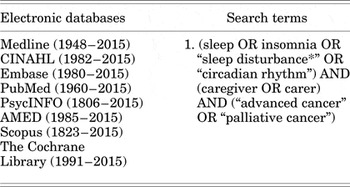
This systematic review set out to determine the sleep patterns of caregivers of patients with advanced cancer. The review adheres to the Preferred Reporting Items for Systematic Reviews and Meta-Analysis (PRISMA) Statement. An electronic database search was conducted on the following databases: MEDLINE (1948–2015), CINAHL (1982–2015), Embase (1980–2015), PubMed (1960–2015), PsycINFO (1806–2015), AMED (1985–2015), Scopus (1823–2015), and the Cochrane Library (1991–2015). The final database search was conducted on May 23, 2015. No date restrictions were imposed on the database searches, which ensured that all relevant studies were identified.
The following search terms were used: “sleep,” “insomnia,” “sleep disturbance,” “circadian rhythm,” “caregiver,” “carer,” “advanced cancer,” and “palliative cancer,” including suggested MESH terms from the databases (see Table 1). The inclusion criteria required studies to be published in an English peer-reviewed journal and to have reported empirical objective and/or subjective sleep data from informal adult caregivers of patients with advanced cancer. The relevant reference lists of selected studies that met the inclusion criteria were hand-searched to allow for a more comprehensive search. Unpublished studies, conference papers, and dissertations were excluded from our systematic review.
Electronic databases search and search terms used

Two reviewers (KM and CS) screened the studies in a blinded fashion, checking the retrieved studies against the inclusion criteria. In the case of discrepancies, a third arbitrator (EL) helped the group reach a consensus.
Data Extraction
Available participant information, subjective and objective sleep measures, and questionnaire scores were extracted (KM), including age, gender, relationship to the patient, whether they resided with the patient, employment, duration of caregiving, and the amount of time per day spent caregiving. The sleep data extracted included subjective and objective total sleep time, sleep onset latency, and sleep efficiency.
Quality Assessment
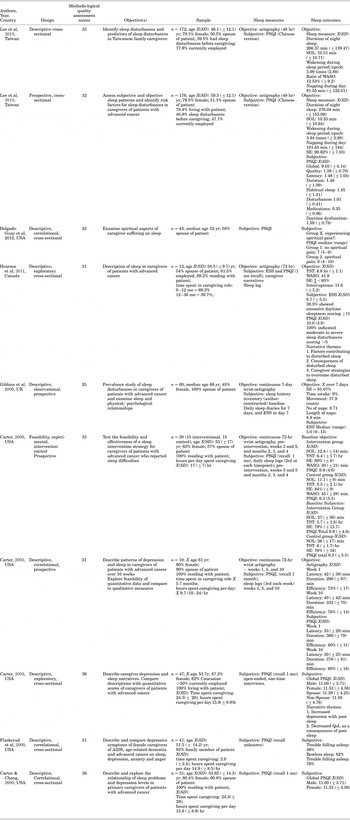
A systematic appraisal of the methodological quality of the included studies was conducted using a validated scoring system developed by Hawker et al. (Reference Hawker, Payne and Kerr2002) (see Table 2). This methodological quality system was used due to the heterogeneous data and the variety of methodologies among the studies (Appendix A). This nine-item critical appraisal tool allows a score between 1 (“very poor”) and 4 (“good”), with explicit detail of the requirements for each score to be assigned to each study: abstract and title, introduction and aims, methods and data, sampling, data analysis, ethics and bias, results, transferability/generalizability, and implications. The final result, out of 36 (maximum), is calculated by totalling each section, with higher scores reflecting higher study quality.
Summary of methodological characteristics of studies included regarding sleep patterns in caregivers of patients with advanced cancer

PSQI = Pittsburgh Sleep Quality Index; ESS = Epworth Sleepiness Scale; mo = month; yr = year; hr = hour; WASO = wake after sleep onset; SE = sleep efficiency; SOL = sleep onset latency, TST = total sleep time
Normal sleep values
Sleep onset latency <20 min; total sleep time >420 min; sleep efficiency >75–80%, WASO (epoch) <6 times; ratio of wake after sleep onset <10%.
ANALYSIS
Weighted means and standard deviations were utilized to calculate the age of the caregiver and patient, the months and hours spent caregiving, PSQI values, subjective sleep times (total sleep time, sleep onset latency, and sleep efficiency), and actigraphy values (total night sleep time, sleep onset latency, sleep efficiency, wake after sleep onset and nap times). Overall percentages were calculated for data on spouses, gender, employment, and sleep efficiency. Calculation of an overall mean was carried out on studies that presented more than one dataset in the above measures (i.e., several days worth of data) before the calculation of weighted averages was conducted (Carter, Reference Carter2003; Gibbins et al., Reference Gibbins, McCoubrie and Kendrick2009). In the intervention study, the baseline measures for both the intervention and control datasets were averaged to create an overall average for that study (Carter, Reference Carter2006).
Thematic content analysis (KM and JP) of the published qualitative quotes allowed for the generation of major themes (Carter, Reference Carter2002; Hearson et al., Reference Hearson, McClement and McMillan2011). Each quote was read and categorized into the causes or consequences of poor sleep until major themes emerged in each section and a consensus was reached. In addition, examples of caregiver narratives from each major theme were provided from the identified papers.
RESULTS
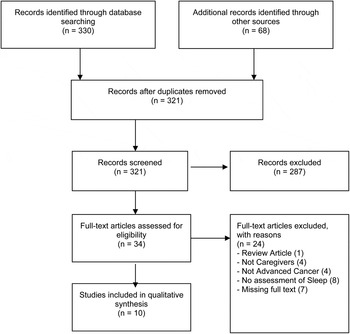
An initial search identified 330 studies, which was reduced to 287 studies once duplicates were eliminated. A review of titles and abstracts identified 256 studies that did not meet the inclusion criteria and were excluded, leaving 31. A further seven studies were excluded as full-text versions were unavailable—manuscript requests were sent to the library at The University of Notre Dame Australia, which was unable to obtain the required studies at that time, leaving 24 studies, which were examined in detail. A further 16 studies were excluded after an investigation of the full text identified that they did not meet the inclusion criteria, leaving 8 studies. The bibliographies of these 8 studies were hand-searched for titles that met the inclusion criteria. Abstracts and full text were then obtained and analyzed, resulting in the inclusion of 3 additional studies that met the inclusion criteria, for a total of 11 studies.
A final review of these 11 studies identified three manuscripts (Carter & Chang, Reference Carter and Chang2000; Carter, Reference Carter2002; Carter & Acton, Reference Carter and Acton2006) that reported on the same dataset. Confirmation from the author was sought, as well as identification of the primary study. The sleep data reported in the primary study (Carter & Chang, Reference Carter and Chang2000) were used in this systematic review, and the secondary paper provided additional analysis of the primary data, which was included separately in the results and qualitative narratives of caregivers' sleep (Carter, Reference Carter2002). The final manuscript was excluded as no further caregiver sleep data were provided (Carter & Acton, Reference Carter and Acton2006), At the end of this process, 10 studies were included in our systematic review (see Figure 1).
PRISMA 2009 flow diagram.

Study Design and Methodological Quality
A majority of the studies were cross-sectional in design (n = 7) (Carter & Chang, Reference Carter and Chang2000; Flaskerud et al., Reference Flaskerud, Carter and Lee2000; Carter, Reference Carter2002; Reference Carter2003; Hearson et al., Reference Hearson, McClement and McMillan2011; Delgado-Guay et al., Reference Delgado-Guay, Parsons and Hui2013; Lee et al., Reference Lee, Yiin and Lin2015), with the remainder including prospective studies (n = 2) (Gibbins et al., Reference Gibbins, McCoubrie and Kendrick2009; Lee et al., Reference Lee, Yiin and Lu2014) and one repeated-measures experimental design interventional study (Carter, Reference Carter2006). The quality assessment scores ranged between 25 and 36 (fair to good), with a mean of 32 (±3.09), demonstrating good overall methodological quality (Hawker et al., Reference Hawker, Payne and Kerr2002). Due to the limited number of studies, none were excluded based on methodological quality.
Characteristics of the Sample
The included studies involved 596 caregivers based in five Northern Hemisphere countries classified as middle or high-income (see Table 2). Study sample sizes ranged widely from 10 to 176. The weighted average age of caregivers in the eight studies reporting a mean age was 47.9 (±3.51) years (Carter & Chang, Reference Carter and Chang2000; Flaskerud et al., Reference Flaskerud, Carter and Lee2000; Carter, Reference Carter2002; Reference Carter2003; Reference Carter2006; Hearson et al., Reference Hearson, McClement and McMillan2011; Lee et al., Reference Lee, Yiin and Lu2014; Reference Lee, Yiin and Lin2015), while a higher median age was reported in two studies (66 and 52 years) (Gibbins et al., Reference Gibbins, McCoubrie and Kendrick2009; Delgado-Guay et al., Reference Delgado-Guay, Parsons and Hui2013). The majority of caregivers (75%) were females (Flaskerud et al., Reference Flaskerud, Carter and Lee2000; Carter, Reference Carter2003; Reference Carter2006; Gibbins et al., Reference Gibbins, McCoubrie and Kendrick2009; Hearson et al., Reference Hearson, McClement and McMillan2011; Delgado-Guay et al., Reference Delgado-Guay, Parsons and Hui2013; Lee et al., Reference Lee, Yiin and Lu2014; Reference Lee, Yiin and Lin2015); spouses (57%) (Flaskerud et al., Reference Flaskerud, Carter and Lee2000; Carter, Reference Carter2003; Reference Carter2006; Hearson et al., Reference Hearson, McClement and McMillan2011; Delgado-Guay et al., Reference Delgado-Guay, Parsons and Hui2013; Lee et al., Reference Lee, Yiin and Lu2014; Reference Lee, Yiin and Lin2015); caring for a male patient (60%) (Carter, Reference Carter2003; Hearson et al., Reference Hearson, McClement and McMillan2011; Lee et al., Reference Lee, Yiin and Lu2014; Reference Lee, Yiin and Lin2015) who was aged 60.2 (±3.2) years (Carter, Reference Carter2003; Hearson et al., Reference Hearson, McClement and McMillan2011; Lee et al., Reference Lee, Yiin and Lu2014; Reference Lee, Yiin and Lin2015) with advanced cancer.
These caregivers had been providing care for 22.45 (±5.55) months (Carter & Chang, Reference Carter and Chang2000; Flaskerud et al., Reference Flaskerud, Carter and Lee2000; Carter, Reference Carter2003) and spent more than half of each day (X = 16.08 hours/day, ±1.29) on caregiving duties (Carter & Chang, Reference Carter and Chang2000; Flaskerud et al., Reference Flaskerud, Carter and Lee2000; Carter, Reference Carter2003; Reference Carter2006). In three studies, 23–53% of caregivers were also in paid employment (Hearson et al., Reference Hearson, McClement and McMillan2011; Delgado-Guay et al., Reference Delgado-Guay, Parsons and Hui2013; Lee et al., Reference Lee, Yiin and Lu2014), and 16% also had primary homemaker responsibilities (Delgado-Guay et al., Reference Delgado-Guay, Parsons and Hui2013). More than a third (38.5%) of caregivers had to adapt their work schedule to cope with the demands of caregiving (Hearson et al., Reference Hearson, McClement and McMillan2011). Some caregivers had to reduce their work hours (59%) or leave work (15%) as a result of taking on the role of unpaid caregiving (Carter, Reference Carter2002).
Two studies excluded participants with known major sleep disorders (sleep apnea, periodic limb movement disorders) (Carter, Reference Carter2003; Reference Carter2006). Three studies noted that more than a third (36%) of caregivers experienced premorbid sleep disorders but did not specify the type of sleep disorders experienced (Gibbins et al., Reference Gibbins, McCoubrie and Kendrick2009; Lee et al., Reference Lee, Yiin and Lu2014; Reference Lee, Yiin and Lin2015). Only one study investigated sleeping arrangements and found that 90% (n = 9) of caregivers still slept in the same bed as their spouse (Carter, Reference Carter2003).
Objective Sleep Results
Some 6 of the 10 studies used actigraphy as an objective measure of caregivers' sleep. The length of actigraphy data collection ranged from 48 (Lee et al., Reference Lee, Yiin and Lu2014; Reference Lee, Yiin and Lin2015) to 72 hours (Carter, Reference Carter2003; Reference Carter2006; Hearson et al., Reference Hearson, McClement and McMillan2011) and up to several days (Gibbins et al., Reference Gibbins, McCoubrie and Kendrick2009). The average total nightly sleep was 270.14 minutes (4.5 hours) (± 53.76) (Carter, Reference Carter2003; Reference Carter2006; Hearson et al., Reference Hearson, McClement and McMillan2011; Lee et al., Reference Lee, Yiin and Lu2014; Reference Lee, Yiin and Lin2015), which is a 43.7% reduction from the recommended 8 hours. Mean sleep onset latency was 11.35 minutes (±5.06) (Carter, Reference Carter2003; Reference Carter2006; Lee et al., Reference Lee, Yiin and Lu2014; Reference Lee, Yiin and Lin2015). However, one study (Carter, Reference Carter2003) reported a markedly increased sleep onset latency ranging from 40 to 45 minutes over a 10-week period. The percentage of time spent sleeping (sleep efficiency) ranged from 73 to 92% and had an average of 84.27% across five studies (Carter, Reference Carter2003; Reference Carter2006; Gibbins et al., Reference Gibbins, McCoubrie and Kendrick2009; Lee et al., Reference Lee, Yiin and Lu2014; Reference Lee, Yiin and Lin2015). Two-thirds of caregivers (n = 9) in one study (Hearson et al., Reference Hearson, McClement and McMillan2011) met a higher sleep efficiency threshold of 85%. Caregivers on average spent 38.57 minutes (±0.91) awake after sleep onset (Carter, Reference Carter2006; Hearson et al., Reference Hearson, McClement and McMillan2011; Lee et al., Reference Lee, Yiin and Lu2014) and 96.58 minutes (±4.94) napping during the day (Lee et al., Reference Lee, Yiin and Lu2014; Reference Lee, Yiin and Lin2015).
Subjective Sleep Results
The PSQI (Buysse et al., Reference Buysse, Reynolds and Monk1989) was the most frequently used subjective assessment scale (n = 8) (Carter & Chang, Reference Carter and Chang2000; Flaskerud et al., Reference Flaskerud, Carter and Lee2000; Carter, Reference Carter2002; Reference Carter2003; Reference Carter2006; Delgado-Guay et al., Reference Delgado-Guay, Parsons and Hui2013; Lee et al., Reference Lee, Yiin and Lu2014; Reference Lee, Yiin and Lin2015). The ESS was employed in two studies (Gibbins et al., Reference Gibbins, McCoubrie and Kendrick2009; Hearson et al., Reference Hearson, McClement and McMillan2011). Two qualitative studies utilized open-ended semistructured interview questions to obtain caregiver perceptions about their sleep (Carter, Reference Carter2002; Hearson et al., Reference Hearson, McClement and McMillan2011).
Across studies, the mean global PSQI score was 9.04 (±0.92) (Carter & Chang, Reference Carter and Chang2000; Carter, Reference Carter2006; Hearson et al., Reference Hearson, McClement and McMillan2011; Delgado-Guay et al., Reference Delgado-Guay, Parsons and Hui2013; Lee et al., Reference Lee, Yiin and Lu2014; Reference Lee, Yiin and Lin2015). In these studies, 72.2–100% of caregivers had a moderate to severe level of sleep disturbance (PSQI global scores ≥5) (Carter, Reference Carter2003; Reference Carter2006; Hearson et al., Reference Hearson, McClement and McMillan2011; Delgado-Guay et al., Reference Delgado-Guay, Parsons and Hui2013; Lee et al., Reference Lee, Yiin and Lu2014; Reference Lee, Yiin and Lin2015). The PSQI subscales (0 = no difficulty, 3 = severe difficulty) revealed that caregivers had moderate difficulties in the following sleep domains: quality (X = 1.60 ± 0.04), duration (X = 1.63 ± 0.37), daytime dysfunction (X = 1.61 ± 0.08), sleep onset latency (X = 1.5 ± 0.02), efficiency (X = 1.43 ± 0.05), and disturbances (X = 1.19 ± 0.45) (Carter & Chang, Reference Carter and Chang2000; Lee et al., Reference Lee, Yiin and Lu2014; Reference Lee, Yiin and Lin2015). Sleep medication usage subscale scores were consistently low in all studies (0.42 ± 0.16) (Carter & Chang, Reference Carter and Chang2000; Lee et al., Reference Lee, Yiin and Lu2014; Reference Lee, Yiin and Lin2015).
A secondary study did further subanalysis (Carter, Reference Carter2002) from previously published PSQI values collected during a primary study (Carter & Chang, Reference Carter and Chang2000). This analysis found that, while men claimed to have better sleep quality (X = 11.0 ± 3.71) compared to women (X = 11.53 ± 4.56), there was no statistical difference between genders (Carter, Reference Carter2002). There was also no statistical difference between the sleep quality of spousal (X = 11.39 ± 4.25) and non-spousal (X = 11.50 ± 4.76) caregivers (Carter, Reference Carter2002).
Caregivers' subjective total sleep time was calculated at 355.83 minutes (±8.48; 5.93 hours) (Carter, Reference Carter2003; Reference Carter2006; Lee et al., Reference Lee, Yiin and Lin2015). Sleep onset latency was on average 27.45 minutes (±1.67) (Carter, Reference Carter2006; Reference Carter2003). Sleep efficiency was reported to be 78% (Carter, Reference Carter2003; Reference Carter2006). Studies using the ESS found that 15 to 38.5% of caregivers experienced daytime sleepiness, with an elevated score of ≥11 (Gibbins et al., Reference Gibbins, McCoubrie and Kendrick2009; Hearson et al., Reference Hearson, McClement and McMillan2011).
Caregiver Narratives
The five themes generated by the thematic content analysis of the two included qualitative studies (Carter, Reference Carter2002; Hearson et al., Reference Hearson, McClement and McMillan2011) were patient-related factors, hypervigilance, depression, fatigue, and quality of life. These themes revealed caregivers' perceptions of the causative factors and the impact of their sleep disturbances.
Caregivers described how patient-related disturbances directly impacted their own sleep:
Four minutes and then a cough again, and so he literally just never slept, and neither did I. (Carter, Reference Carter2002, p. 1280)
The patient's health at the time also influenced sleeping arrangements:
So I have to judge how she is before I go to bed, whether I can go to sleep without worrying … you know, sleep in my bed, or is it a couch night? If I sleep on the couch, I hardly get any sleep. (Hearson et al., Reference Hearson, McClement and McMillan2011, p. 73)
Caregivers felt that sleep disturbances directly impacted their ability to perform day-to-day activities for themselves and for the patient:
If I sleep on the couch, I hardly get any sleep, and that's when I was closing my eyes [while driving] on my way home from work, or even on the way to work. I'd come to a stop sign and my eyes would be closing. So that was scary. (Hearson et al., Reference Hearson, McClement and McMillan2011, p. 74)
Despite caregivers acknowledging the myriad consequences of their disturbed sleep, they also minimized the significance of their accumulating sleep deficit, believing they could manage with less sleep, or perhaps catch up later on (Hearson et al., Reference Hearson, McClement and McMillan2011):
I sort of sacrifice myself at this point. I'm not as important here. Right now, I feel I have enough sleep. Even if I don't sleep soundly, at least I'm reclining and resting. I cheer myself on … as long as I get one good night's sleep a week, or maybe I'll be able to make up for it in the next week or so. (Hearson et al., Reference Hearson, McClement and McMillan2011, p. 73)
Caregivers noted the impact that their sleep patterns had on their mood:
I notice in myself if I don't get enough rest, then I am more stressed, and I get more depressed. (Carter, Reference Carter2002, p. 1280)
Feelings ranged from sadness, depression, to stress, and even anger toward the patient due to disrupted sleep:
Sleep deprivation is something. Yesterday and the day before were the first two days that I felt angry with her for getting me up … I felt so sad afterwards. She can't help her disease. (Carter, Reference Carter2002, p. 1280)
DISCUSSION
Our systematic review identified 10 studies that provided empirical data concerning the sleep of informal caregivers of advanced cancer patients. The main outcome found in all of these studies was that a high percentage of caregivers experienced sleep disturbances, with large reductions seen in total sleep time. While there were no major differences between objective and subjective sleep values, caregivers tended to overestimate the total amount of sleep they achieved each night. Caregivers' perceptions about their sleep onset differed between studies. This difference in sleep perception may come down to caregivers feeling like they are awake despite being in the lighter stages of sleep. Sleep efficiency was the one area where caregivers' subjective assessments were similar to the objective measures.
The subjective sleep quality seen in PSQI scores highlighted that most caregivers experienced moderate to severe sleep disturbances with issues in the subsections related to total sleep time, quality of sleep, and daytime dysfunction. The objective measurement of sleep through actigraphy was able to support these difficulties with reductions in total sleep time seen in all studies and variations of sleep onset. Interestingly, despite the reported daytime dysfunction, caregivers did not report a high level of daytime sleepiness on the Epworth Sleepiness Scale. This discrepancy may come down to the focus of the questions between the two different tests. As the ESS questions focus on specific scenarios, like falling asleep while driving, some participants may assign a score of zero to scenarios in which they didn't participate. This can result in scores that do not reflect a participant's true level of sleepiness. Furthermore, the ESS questions reflect the participant's degree of fatigue in several scenarios at the moment, compared to the PSQI, where there are only two questions used to investigate daytime dysfunction over the previous month. Caregivers' narratives supported the results from the PSQI over the ESS, showing that they did feel that their sleep disturbances had a negative impact on their ability to function during the day. When considering either the PSQI or ESS as a tool for measuring caregivers' fatigue, the PSQI seems to yield a more consistent outcome validated by caregivers' own descriptions.
Another subsection of interest on the PSQI was sleep medication usage. Caregivers consistently had low scores, indicating that few caregivers used sleeping tablets to assist with their sleep difficulties. Caregivers' narratives gave insight into this in that they tended to avoid sleep medications due to their sedative effects and the impact these could have on their ability to respond to the needs of the patient during the night (Carter, Reference Carter2002).
Of the sleep disturbances observed in caregivers, total sleep time fell considerably below the recommended healthy sleep time of 7 to 9 hours, with older adults needing around 7 hours of sleep (National Sleep Foundation, 2015), and with caregivers getting on average only 270.14 minutes per night (4.5 hours; ±53.76) (Carter, Reference Carter2003; Reference Carter2006; Hearson et al., Reference Hearson, McClement and McMillan2011; Lee et al., Reference Lee, Yiin and Lu2014; Reference Lee, Yiin and Lin2015). This large reduction in sleep time could have a negative consequence on caregivers' health and well-being (Banks & Dinges, Reference Banks and Dinges2007). Caregivers did acknowledge this reduction in sleep time, but most believed that they could deal with it or catch up later.
When investigating areas of sleep that might cause a reduction in total sleep time, sleep onset in all but one study fell within normal limits (10–20 minutes) (Ohayon et al., Reference Ohayon, Carskadon and Guilleminault2004). The sleep onset in one study (Carter, Reference Carter2003) was up to double the time in both objective and subjective measures. When comparing the participant information and study methods, there was no obvious reason for this discrepancy. This shows that they did not have difficulty falling asleep when the caregiver did go to bed for sleep.
Finally, caregivers' sleep efficiency fell mostly within the normative range of 80–85% (Ohayon et al., Reference Ohayon, Carskadon and Guilleminault2004) when measured objectively. However, it should be noted that sleep efficiency was calculated differently between studies, with some including any daytime sleep (Carter, Reference Carter2003). When sleep efficiency during the night was calculated, caregivers fared quite well. It was only when caregivers' sleep efficiency was calculated for all sleep periods over 24 hours (i.e., naps) that it dropped below normal (Lee et al., Reference Lee, Yiin and Lu2014). One study measured both subjective and objective sleep efficiency, with caregivers slightly underestimating their sleep efficiency (Carter, Reference Carter2003). However, it can be seen that during the night most caregivers did not experience any significant sleep disturbances according to these measures and that this doesn't account for the reduction in total sleep time.
Caregiver narratives offered some interesting insights showing that caregivers acknowledge that they suffer from sleep issues and the consequences for themselves and the patient. However, the perceptions gleaned from the narrative examples given and overview from the authors show that caregivers see sleep disturbances as something that they just have to accept, and that they will catch up on their sleep deficit later on. However, they do not seem to believe that this period of poor sleep will have long-term health consequences. There is also no research on these caregivers in the future to examine if their sleep has reverted to pre-caregiving levels. Learned sleep habits may continue even in the absence of the patient-related factors that caused the hypervigilance, which requires intervention to assist in improving quality of sleep.
Compared to other caregiving groups, caregivers of advanced cancer patients had a similar or higher level of subjective sleep disturbances. With a global PSQI of 9.04, caregivers of patients who have advanced cancer expressed a similar level of sleep disturbances as caregivers of patients with moderate to severe Alzheimer's disease (PSQI = 9.1; McKibbin et al., 2095). However, the proportion of caregivers experiencing some level of sleep disturbances was much higher in this group, with studies ranging from 72 to 100% of participants reporting moderate to severe sleep disturbances compared to only a third of caregivers of Parkinson's disease patients (Happe & Berger, Reference Happe and Berger2002), half of multiple sclerosis caregivers (Argyriou et al., Reference Argyriou, Karanasios and Assimakopoulos2011), and two-thirds of dementia caregivers (McCurry et al., Reference McCurry, Logsdon and Teri2007; Reference McCurry, Gibbons and Logsdon2009). There is no current research that compares these groups and the reasons behind these differing levels. The age of caregivers could have an effect on the level of sleep disturbances. The weighted average age of the caregivers in this systematic review was 47.9 (±3.51) years (Carter & Chang, Reference Carter and Chang2000; Flaskerud et al., Reference Flaskerud, Carter and Lee2000; Carter, Reference Carter2002; Reference Carter2003; Reference Carter2006; Hearson et al., Reference Hearson, McClement and McMillan2011; Lee et al., Reference Lee, Yiin and Lu2014; Reference Lee, Yiin and Lin2015), with up to half (23–53%) still employed in other roles (Hearson et al., Reference Hearson, McClement and McMillan2011; Delgado-Guay et al., Reference Delgado-Guay, Parsons and Hui2013; Lee et al., Reference Lee, Yiin and Lu2014). This middle-aged working group of caregivers may account for the increased level of sleep disturbances compared to older adults who are retired and can have more flexibility in their sleep schedule, and sleep disturbances may have less of an impact on their daily routine. Caregivers of patients with Parkinson's and Alzheimer's disease were significantly older, with mean ages of 62.3 (Happe & Berger, Reference Happe and Berger2002) and 71.1 (McKibbin et al., Reference McKibbin, Ancoli-Israel and Dimsdale2005), respectively. Further research is required to understand whether the main causes of sleep disorders are the differing age groups of caregivers, differences in caregiving duties required, or specific patient symptoms.
While this systematic review did not investigate the effect of sleep disturbance on mood, some studies highlighted a connection between caregivers' poor sleep and levels of depression (Carter & Chang, Reference Carter and Chang2000; Carter, Reference Carter2002; Lee et al., Reference Lee, Yiin and Lu2014). Caregivers in descriptions of their sleep described mood disturbances such as depression, anxiety, and anger as a result of poor sleep. Caregivers did acknowledge that they were having issues due to their poor sleep, with the resulting negative effects on their mood and well-being (Hearson et al., Reference Hearson, McClement and McMillan2011).
LIMITATIONS OF THE STUDY
This review has a number of limitations due to the limited number of articles available. Several articles identified in the electronic search were inaccessible, and there is the possibility of relevant data being missed. Some studies did not clearly state whether patients with advanced cancer were included; we thus may have inadvertently omitted studies that were reporting on the target population. The different actigraphy data collection sampling rates and reporting information limited our ability to compare data. Due to the heterogeneous nature of the outcome measures used and the reporting of the study results, it was difficult to completely compare and contrast the data presented in these studies.
CONCLUSIONS
For caregivers looking after patients with advanced cancer, a majority suffered from moderate to severe sleep disturbances with a substantial reduction in total sleep time. While caregivers acknowledge the negative impact of sleep disturbances on their mood, the decrease in total sleep time puts caregivers at risk for developing medical issues and can have a negative impact on their mood. A logical step for future research would be a longitudinal assessment of caregivers' sleep to investigate the changes that might occur over the entire cancer trajectory and specific changes during the end of life. A better understanding of the development and continuation of sleep disturbances and which factors have the biggest impact could be helpful in predicting potential negative changes in sleep patterns that might be preventable. The development of screening tools could also assist clinicians in ascertaining if and when assistance may need to be provided to improve caregivers' sleep. Finally, and most importantly, interventions need to be created that take into consideration the limitations that the caregiving role may have in terms of preventing them from attending more traditional therapy programs that run for several weeks.
ACKNOWLEDGMENTS
We would like to thank the librarians at The University of Notre Dame Australia for their assistance in retrieving electronic journals.
CONFLICTS OF INTEREST
The authors hereby declare that there are no financial or personal conflicts of interest in the present study or in the development of this submission.
FUNDING
This review was supported through the Australian Government's Collaborative Research Networks program.
APPENDIX A
Critical Appraisal Tool
(see Hawker et al., Reference Hawker, Payne and Kerr2002)
-
1 Abstract and title: did they provide a clear description of the study?

-
2 Introduction and aims: was there a good background and clear statement of the aims of the research?
-
3 Method and data: is the method appropriate and clearly explained?
-
4 Sampling: was the sampling strategy appropriate to address the aims?
-
5 Data analysis: was the description of the data analysis sufficiently rigorous?
-
6 Ethics and bias: have ethical issues been addressed? What has necessary ethical approval gained? Has the relationship between researchers and participants been adequately considered?
-
7 Results: Is there a clear statement of the findings?
-
8 Transferability or generalizability: are the findings of this study transferable (generalizable) to a wider population?
-
9 Implications and usefulness: how important are these findings to policy and practice?