Introduction
In the nineteenth century, in an increasingly industrial and democratic society, a novel institution appeared in both towns and villages throughout England. This was the reading room, which was founded as an organisation for educational and social purposes. Little research on this subject has been carried out, although Jeremy Burchardt has suggested that reading rooms foreshadowed the future village halls, by accommodating ‘gatherings of a cross-section of the population’.Footnote 1 This article will argue, with particular reference to Norfolk, that this is debatable, in that the people catered for by reading rooms were restricted in terms of gender, finance and class and it will explore the thinking behind the foundation of reading rooms.
The movement to establish reading rooms was an extensive national phenomenon during the second half of the nineteenth and early twentieth century, but the concept was known even before Victoria came to the throne. One of the earliest references is in a Parliamentary Paper of 1834 on the administration of Poor Laws:
In the parish of Edgbaston Dr. Johnstone . . . established an adult school, with the view, by teaching the labourers to read, of affording them a rational occupation and diverting them from mere sensual indulgence; . . . nearly 80 adult persons are now subscribers to a room which he has provided for them, and where they are engaged during their leisure moments in reading. Not one of these men now ever apply to the overseer for relief, though many amongst them were formerly paupers and notorious drunkards. . . . they do now maintain themselves, and subscribe to the reading room instead of the alehouse.Footnote 2
This sounds like an ideal state of affairs, with the reading room as the answer to the social problems of poverty and drunkenness. But not all reading rooms received an enthusiastic reception. Many men objected to being dictated to, as in this example from Yorkshire:
I have a reading-room open one night in the week, where the members have access to a number of cheap monthly and weekly periodicals. . . . Though I have chess-boards, &c., in the reading-room, some of the young men say they would rather give 2d. for a pint of ale than pay this small subscription for books.Footnote 3
The idea of instituting reading rooms as a direct alternative to the public house was attractive to those in authority. The objective was frequently emphasised by expanding the particular institution's name as, for example, in the Swaffham Coffee Tavern and Reading Rooms for Working Men,Footnote 4 the Lord Nelson Coffee Tavern, Reading Rooms and Public Hall (Cromer),Footnote 5 and the Swanton Abbott Coffee and Reading Room.Footnote 6
Intemperance, however, was not the only incentive for the foundation of reading rooms. Jeremy Burchardt suggests that ‘stemming the decline of the rural population was the main motive for their establishment’,Footnote 7 but the original intentions were also bound up with contemporary attitudes to philanthropy, recreation and self-help. Many rural reading rooms were founded not only to provide alcohol-free recreation but also to furnish the working man with educative materials unobtainable elsewhere. In 1862 A Plea for Reading Rooms in Rural Parishes was published anonymously by ‘a Country Curate’. He appreciated the establishment of Mechanics’ Institutes and lecture rooms in towns but appealed for the provision of a similar type of institution ‘for the adult rustic’.Footnote 8
Let a reading room be provided and he will have a refuge from these evils [idle thoughts and temptations, and intoxication], he will have a place where he can spend his evenings in a quiet, rational and improving manner . . . The night school acts as a feeder to the reading room. Their functions are entirely distinct the one from the other, and they both work together for good.Footnote 9
One interesting feature of his argument was slipped in almost unnoticed in the description of the ideal premises:
Anyone with a cottage larger than his neighbour would gladly lend a room for the purpose; a few well chosen books, a good fire, and plenty of light, the weekly penny (for it should not be gratuitous) [my italics] would go some way towards firing and light, and the rest would be readily provided by subscription.Footnote 10
There is perhaps a suggestion that a free reading room would be demeaning for the potential user. This may be informed by a sense that one values what one pays for, and self-respect is kept intact. Self-help was a popular concept at this time, as promoted by Samuel Smiles,Footnote 11 and the involvement of the user of the reading room in its upkeep, even if only through his weekly payment of a penny, was important.
The lack of premises was not to stand in the way. A cottage room would be suitable, again suggesting that mutual help rather than self-help is evident here. In fact this was rare, if not unknown in Norfolk. The Rector of Swanton Abbott allowed the use of two rooms in a cottage belonging to him,Footnote 12 but no record has been found of a reading room being set up in a villager's home. This is entirely understandable in the context of a contemporary description:
Men often return home in the winter evenings at between 5 and 6 o'clock. In some cases they find an uncomfortable, small and crowded room, with, perhaps, a small fire, parents unhappily married, ill-behaved children, and other discomforts. Here they would naturally have to sit till bed-time, say three or four hours of the coldest part of the day.Footnote 13
This may be an exaggerated portrayal, but it indicates some of the potential difficulties of using such premises for public purposes.
The school might be pressed into service, as at Tittleshall, where the Infants’ School was used as a reading room every evening.Footnote 14 One ironic provision of premises occurred in Scole, as described by Jessie Mallows:
Growing lads finding no room in the cottage would drift into the public house, and often into bad habits. . . . Two rooms in the southern portion of the Inn were available for hire. The upper room was equipped as a Reading Room and fulfilled its purpose. From that came the desire and determination to build a Reading Room.Footnote 15
The ‘Country Curate’ took it for granted that money would be available without difficulty, and ‘the rest would be readily provided by subscription’. This suggests that philanthropy was an accepted custom.
The necessity for reading rooms is becoming more and more apparent. There is in many a desire for books, and the cheap literature of the day is fostering and encouraging this desire. Food, intellectual food, the people will have. . .Footnote 16
But it is debatable how far this assertion is true. The example above of the young men's preference for ale over books or games such as chess is not isolated:
We have established in this very place [South Durham] a reading-room, to which the men may have free access at a penny a week; none of the workmen subscribe to it. It is supported with works intended for the improvement of the people, some magazines, Chambers’ Journal, Chambers’ Instruction for the People, and useful and easily intelligible productions, but the workmen will not read. They find more amusement at bowling and at quoits, and gossiping together. . . . Many who once could read have lost the power to do so for want of practice.Footnote 17
At Cawston in Norfolk in 1863, the local landowner, W.E.L. Bulwer, on donating a reading room to the village, hoped that:
They [the villagers] will be enabled to pass some of their evenings rationally and profitably, without being driven to the bar or to the tap room as the only place of resort. . . . [books of simple and useful information] will supply the means . . . of carrying on the great work of SELF-INSTRUCTION. . . . And now let me say that the share I have taken in this undertaking – namely the providing this room – will be of little avail, unless the frequenters of it are prepared to take a permanent interest in maintaining its purpose and carrying out its objects. . . . An undertaking of this sort, in order to be successful, must be self-supporting. . .Footnote 18
Here are expressed the archetypal Victorian attitudes to paternalism and philanthropy (‘providing this room’), recreation (‘pass some of their evenings rationally and profitably’), alcohol and the working classes (‘without being driven to the bar or to the tap room’), and self-help (‘an undertaking of this sort, in order to be successful, must be self-supporting’).
The church was very involved in improving the lot of the working classes. As elsewhere in England, most village reading rooms in Norfolk were set up either by Anglican clergy or by a local philanthropic landowner. No record has been found of participation by the Dissenting clergy in the creation of reading rooms, although they were very involved in the education of the poor, establishing schoolrooms in many chapels, and also playing an important part in the social life of the community in a variety of ways.Footnote 19
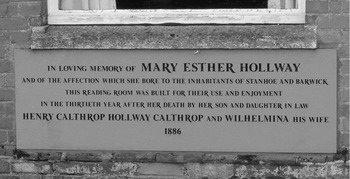
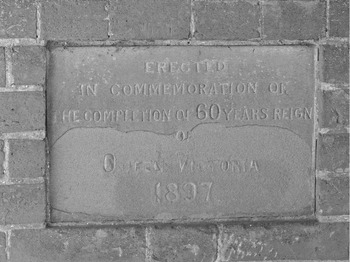
Reading rooms were sometimes founded by public subscription (as at Bradwell,Footnote 20 RoughtonFootnote 21 and ScoleFootnote 22), although not as often as urban reading rooms, where the greater population made appeals for money more feasible. Occasionally they were built as a memorial to a local person, as at Stanhoe (Figure 1), where in 1886 the Mary Esther Hollway Reading Room was established thirty years after her death by her son, Henry Calthrop Hollway Calthrop, a principal landowner in the area.Footnote 23 At times they were created to celebrate a national cause for rejoicing. At Salhouse (Figure 2), Edward Foote Ward of Salhouse Hall presented the village with the site for a reading room.Footnote 24 This was erected in 1897 ‘in commemoration of 60 years reign of Queen Victoria’.
Plaque on Stanhoe Reading Room.

Plaque on Salhouse Reading Room.

Five years later a new king was crowned, and ‘as a permanent memorial of the Coronation’ Lord Stafford decided to donate one hundred pounds towards the erection of a reading room in the village of Costessey. Unfortunately the cost of the proposed building amounted to considerably more than his donation, and contributions were sought from local people, one of the few examples of village subscription. This eventually raised sixty-two pounds. As this sum was still not enough, it was suggested that approaches should be made to Mr. Andrew Carnegie (1835–1919), and also Mr. Passmore Edwards (1823–1911), both great benefactors of the time. Passmore Edwards responded promptly, regretting that he could not help, while Andrew Carnegie replied that he would only grant money to parishes who had adopted the Libraries Act of 1892. Administrative difficulties over this and also over the proposed site for the reading room then led to a considerable delay. Eventually in 1907 Carnegie donated £195, and the building became known as the Reading Room and Library.Footnote 25
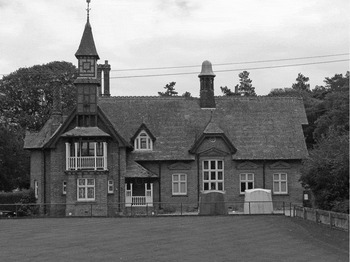
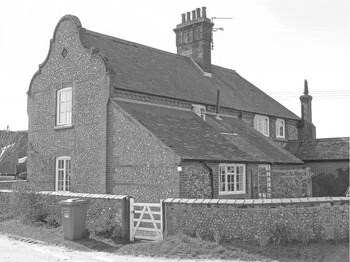
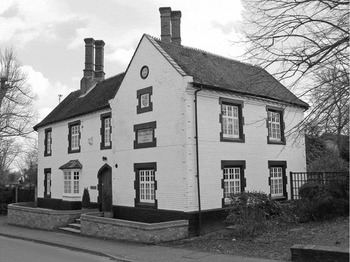
Some landowners were concerned with the welfare of the workers on their estates. At Holkham (Figure 3) in 1886, the Earl of Leicester, the principal landowner in Norfolk with 44,090 acres,Footnote 26 constructed ‘a beautiful building in the Swiss cottage style, with a tower . . . at the cost of £1,500, as a reading-room and library for the workmen and labourers on the Holkham estate’. Similarly, on 5th December 1893, the Prince of Wales, also a great landowner in Norfolk, with 8,079 acres,Footnote 27 opened a reading room in the village of Wolferton, three miles from his estate at Sandringham, for the use of ‘the servants and workmen employed on the Sandringham estate’.Footnote 28 Even if there is no documentary evidence, certain reading rooms have obviously been provided by the local landowner, since the buildings match the style of the dwellings made available for workers. An example of this, now converted into a private house, can be seen at Glandford (Figure 4), where a rather impressive edifice complete with shaped gables resembles the surrounding cottages exactly in design. In this particular case, there is documentary evidence that Sir Alfred Jodrell (1847–1929),Footnote 29 ‘lord of the manor and owner of the parish’,Footnote 30 had the reading room erected about 1900 ‘for the use of the Parishioners’.Footnote 31 With money earned from the cotton industry in the north of England, he completely rebuilt the whole of the rather ramshackle village, and it would seem that the reading room was part of the building programme.Footnote 32
Holkham Reading Room.

Glandford Reading Room.

These last three locations, Holkham, Sandringham and Glandford, could be described as ‘closed’ parishes, in which one or two powerful landowners wielded almost complete power over their tenants and provided material benefits such as housing, schools and clubs.Footnote 33 The ‘open-closed’ model is a useful way of describing ‘the differential distribution of power within different types of village social structures’.Footnote 34 In ‘open’ parishes, authority and control were exercised by several landowners, a situation which contemporary commentators identified as a cause of poverty, insanitary conditions and discontent. As one would expect, the reading rooms in such places differed greatly from the imposing buildings described above, being cheap and small but still functional, as in the examples at Buxton, Ingworth and Roughton. Of the ‘closed’ communities in Norfolk, that is estates of 2,000 acres or more where the owner was resident, sixty-four had reading rooms, in contrast to ninety-six reading rooms in non-estate or ‘open’ parishes, indicating that landowners, while interested contributors, did not lead the reading room movement.Footnote 35
In exceptional circumstances, a reading room might be lent to the village. This was the case in Haddiscoe, where the reading room was founded in 1906.Footnote 36 Three years later correspondence with the Charity Commissioners mentioned that the Provost and Fellows of Kings College, Cambridge were lending it to the village presumably free of charge ‘on condition that it is used and kept in repair’.Footnote 37 Furthermore, some reading rooms were hired for the purpose, as at Hockwold-with-Wilton, where the village Temperance Hall was ‘let to the vicar for a parish reading room’.Footnote 38
National distribution of reading rooms
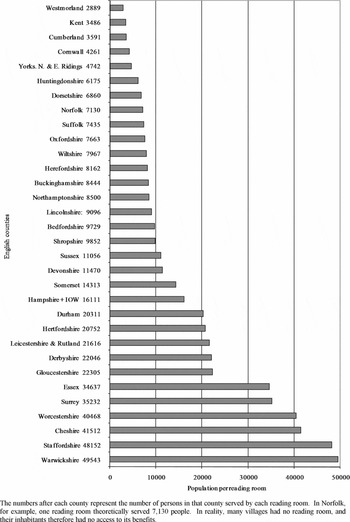
Village reading rooms were set up nationwide, and by counting the reading rooms listed in the trade sections of the available Kelly's Directories between 1911 and 1914, and comparing the figures with population statistics recorded in the 1911 census, it is possible to calculate the ratio of reading rooms to population, giving a ‘snapshot’ of reading room provision throughout the country at that time. As can be seen in Figure 5, the county best served was Westmorland, with Norfolk coming eighth out of a list of thirty-three counties. Directories for this particular period were not available online for every county, Cambridgeshire, Lancashire and Nottinghamshire for example are missing, but this representative list gives a good indication of comparative provision. The statistics seem to indicate that rural counties were better supplied with reading rooms than those in the neighbourhood of great cities, e.g. Warwickshire and Staffordshire (both influenced by Birmingham), or Cheshire (Liverpool and Manchester), although there is a danger of overstating this.
Population served by each reading room between 1911 and 1914.

Distribution in Norfolk
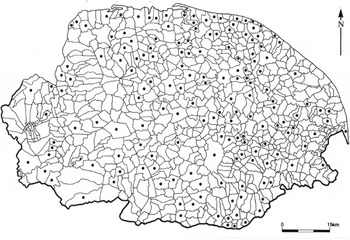
In Norfolk the distribution of reading rooms was reasonably widespread (Figure 6). Country people were used to walking everywhere, and the remote location of a desired destination was no deterrent. It is recorded that in 1884 among the seventeen members of Swanton Abbott reading room were men from Worstead (2.6 miles away), Sloley (2.2 miles), Skeyton (1 mile) and Westwick (1.3 miles).Footnote 39 Occasionally a reading room might become too popular, with people joining from quite distant villages. In 1921 at East Barsham, for example, it was decided ‘that for the present outside members shall be admitted from West and North Barsham, Houghton and Great Snoring only’.Footnote 40 Another explanation of this ruling could be that there was a strong sense of community here, and only people who ‘belonged’ to the village were allowed membership. Strangers were not welcome. The distance of these other villages from East Barsham varied from one to just over two miles, suggesting that previously would-be members had come from further afield. Occasionally reading rooms were to be found in adjacent villages, as in Strumpshaw and Lingwood, or Mulbarton and Bracon Ash, where the two buildings were about a mile apart, but this is unusual.
Distribution of reading rooms in Norfolk.

Local circumstances inevitably ensured that not every village had a reading room. Sometimes, as at AshillFootnote 41 and Witton (1909), the local landowner was interested in the welfare of the people of the neighbourhood and philanthropic enough to donate a piece of ground and/or the building.Footnote 42 Sometimes, as at Gressenhall in 1904, the Rector felt that it was important to try to keep his parishioners out of the public house by providing an alternative meeting place.Footnote 43 On other occasions, if the people themselves really wanted the facilities which would be provided by a reading room, they contributed their own hard-earned money towards the project. And sometimes the necessary finance came from outside the county, as at Burgh, where the War Office donated a timber army hut at the end of the First World War, to be used as a reading room for ex-soldiers.Footnote 44 If none of these conditions pertained, the village had to suffer the lack of the amenities that a reading room would have provided.
The earliest reading rooms
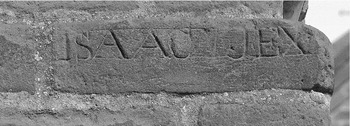
The earliest extant reading room discovered in Norfolk is in Marsham. This was set up as a Mutual Improvement Institution in 1857, but local people state that it used to be known as ‘the reading room’, although now it is used as a village hall. There was obviously an overlap of intention between the two. Mutual improvement societies were characteristic institutions for self-helpFootnote 45 and were set up by individual groups of working men.Footnote 46 Most had small libraries and were created principally to advance aptitude in the three Rs. They existed in many places alongside mechanics’ institutes and evening schools but were more informal in their organisation. Because of this informality, few records of their activities survive, and these can only be discovered in the autobiographical writings of working men.Footnote 47 No early records have been found for Marsham, but the very existence of a designated building points to the spontaneous enthusiasm of the villagers. This enthusiasm was presumably fostered by a local farmer and miller, George Shreeve, and Captain John Henry Warnes of Bolwick Hall,Footnote 48 one of the principal landowners in the area, whose names are inscribed on stones on the front of the building. Besides the formal stones, some of the bricks have been carved with names (Figure 7):

Footnote 49Footnote 50Footnote 51Footnote 52Footnote 53Footnote 54Footnote 55 These are not hasty graffiti, but have been carefully inscribed, and it is probable that they record the names of those who supported the new venture financially. Not all of these names are traceable, but their very presence on the building testifies to the interest of a substantial section of the local population in the enterprise.Footnote 56
Carved brick in the wall of Marsham Reading Room.

In 1861 a much grander building altogether appeared in the village of Necton. This was founded by William Mason of Necton Hall, the lord of the manor, and was not only a reading room but also a ‘young men's home’. William Mason was an active philanthropist, having previously donated a new organ to the church and built a National School for the village.Footnote 57 The ‘Church Reading Room and Library’ (Figure 8) was situated immediately opposite the church and was doubtless meant for the use of all parishioners. This is the most elaborate reading room discovered in Norfolk, with the possible exception of the one in Holkham.
Necton Church Reading Room and Library.

The location of a particular reading room within the village varies from place to place. Some were placed in the very centre, as at Brinton, Great Hockham, Gressenhall, Stanhoe and Weybourne. Others were near the centre but in a side road, as at Northwold and Overstrand. Reading rooms were built on the edge of the village at Glandford, Letheringsett, Thorpe Market and Wroxham. As indicated above, distance was no deterrent, and occasionally a reading room was isolated from its village, as at Sidestrand and Suffield. There is no easy explanation for this variation in situation. It does not seem to relate to any contemporary fashion. Land may have been cheaper at the edge of the village,Footnote 58 it may have depended on the land that was available at the time, or it may have been the consequence of the landowner's whim as to where in his estate he wished to position the building. An interesting example of the latter can be found at Hilborough, where the reading room was next to a loose box as part of the glebe farm and presumably established by the church.Footnote 59
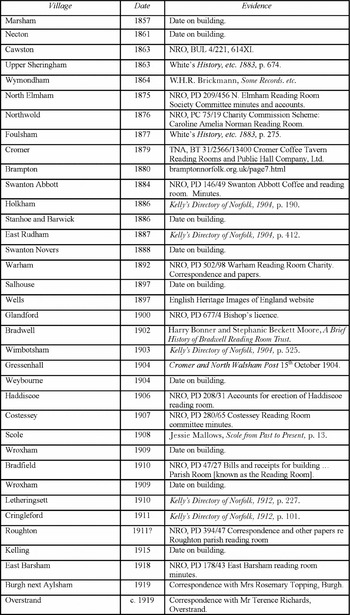
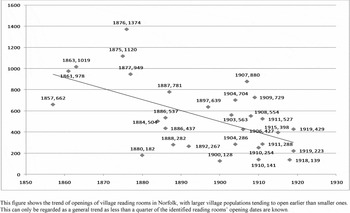
The concept of a reading room as an alternative meeting place gradually spread. It is not always possible to find accurate dates for specific openings, but an impression of the speed with which the idea was taken up can be gained from the dates which are known. Out of a total of over 160 reading rooms known to exist at some period in Norfolk, only thirty-six opening dates have been determined (Figures 9 and 10), and as the scatter graph in Figure 11 demonstrates, villages with larger populations tended to open reading rooms earlier than smaller villages, although the reason for this is unclear.
List of reading rooms with opening dates.

Rate of opening of reading rooms in Norfolk according to known dates.

Opening dates of reading rooms with village populations (statistics taken from closest census returns).

Architectural styles of reading rooms
Where the buildings have survived, a picture emerges of the general architectural design of a reading room, extending into the early twentieth century. This was greatly dependent on the original method of foundation, or, in other words, on how much money was available. As a general rule, where money was almost no object and was supplied by the local landowner, grandiose buildings were erected, as at Necton and Holkham, or the slightly less imposing structure at Glandford. Where the local clergyman was responsible for the finance, more modest premises were donated, typified by Gressenhall and Warham. If the building had been funded by public subscription, the style tended to be utilitarian, as at Scole.
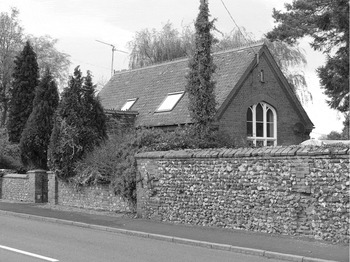
Not all reading rooms were purpose-built. Sometimes use was made of a building which had outlived its original function. According to Kelly's Directory, for example, Northwold reading room was previously an old farmhouse,Footnote 60 while Wells reading room was converted from the southern half of a lifeboat house.Footnote 61 Other examples include the reading room in Buxton, which was formerly a laundry,Footnote 62 and in Eaton, where again an old farmhouse was given a new function.Footnote 63 Some purpose-built reading rooms followed the architectural fashion of the period. This can be seen at East Rudham (Figure 12), where the Marquess of Townshend gave the building to the village in 1887, when the Gothic Revival movement in architecture was at its height, with its emphasis on neo-medieval rather than classical styles. Traces of this are found in the pointed windows of East Rudham reading room, and also at Paston, although there is none of the excessive flamboyance typified in other Norfolk buildings of the genre such as Beeston Hall or Heacham watermill.
East Rudham Reading Room.

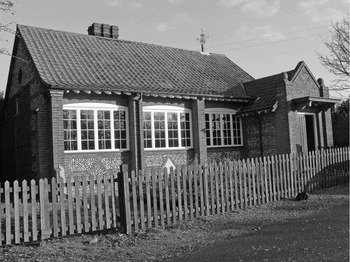
If the Gothic Revival movement was the style of paternalism, the Arts and Crafts style of architecture could be said to be a symbol of a secular, anti-urban society. The influence of this movement on Norfolk reading rooms can be seen in such features as simpler windows, as at Letheringsett (Figure 13), and Sidestrand, both of which are constructed from flint, an extremely durable and easily obtainable local material which has been used for building in Norfolk since Roman times.Footnote 64 Other examples are at Crossdale Street, Glandford, Kelling and Roughton. The other very common construction material was brick, used in Norfolk since the fifteenth century. In the early nineteenth century there were around two hundred brickyards in the county,Footnote 65 and consequently brick was the most popular material used for reading rooms. Examples include Barsham, Bradfield, Brinton, Briston, Gressenhall, Ingworth, Keswick, Marsham, Salhouse, Stanhoe, Swanton Novers, Thorpe Market, Warham, Weybourne and Wroxham. These brick buildings had very few architectural pretensions. They were built for a specific purpose, and the result was a utilitarian style. From this appeared what could be termed a ‘typical’ reading room, with one storey, a porch and inside either one or two rooms. A perfect example of this can be seen in the surviving plan for Keswick reading room,Footnote 66 which was opened in 1887.Footnote 67 Apart from the porch and the large end window, the building is completely plain. Inside along the walls there was to be ‘filleted boarding’, or matchboarding, which was frequently used in reading rooms.
Letheringsett Reading Room.

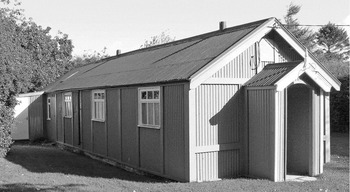
A more unusual type of building was constructed of corrugated iron, following improvements in the use of timber and steel and better techniques of mass production. These structures were popular in the early twentieth century, particularly for ‘tin tabernacles’,Footnote 68 but they were occasionally also used for reading rooms, as at Dickleburgh,Footnote 69 Overstrand and Suffield (Figure 14). They were provided by the flourishing Norwich firm of Boulton and Paul Ltd.,Footnote 70 which supplied buildings of this kind throughout England.
Suffield Reading Room.

A few reading rooms had an adjoining house or cottage, which was used to accommodate the caretaker, as at Thorpe Market, Stanhoe and Overstrand. The architecture of the cottage sometimes matched the reading room, as at Stanhoe, where both structures are brick built and tiled. This was not invariably the case, however. At Overstrand, for example, the reading room is constructed of corrugated iron, while the attached cottage has walls of flint. This raises the question of whether the caretaker's accommodation predated the reading room and was used for convenience.
Financing of reading rooms
The everyday running of the reading room was financed by the subscriptions of the members and also by donations from local wealthy patrons and several accounts have survived to give a reasonably accurate explanation of how much money was available and how it was spent. Particularly interesting are the accounts for the setting up of a reading room, since they give details of what was thought necessary for the first year. The village had doubtless never had such an institution before, and so this was a completely new idea. Accordingly, at Swanton Abbott, the first expenditure in 1884, apart from such necessary items as furniture and lamps, was on eight spittoons, two boxes of draughtsmen and newspapers.Footnote 71 Word of mouth seems to have been the principal method of publicising new reading rooms, but here the committee was progressive enough to issue notices and twenty-five handbills ‘in the neighbourhood stating that any one of the committee will receive the names of those who desire to be members of the temporary Reading and Coffee rooms’.Footnote 72 In the following four years four pairs of quoits and billiard cues were bought. The idea of billiards was short-lived, however, as the proceeds of the sale of the billiard table were put towards the purchase of a piano, with the income from concerts, sales of programmes and a magic lantern exhibition. At Haddiscoe in 1906 the Reverend Lawson selected for the new reading room four draughts boards, four draughtsmen, four dominoes, two dozen cribbage pegs and four cribbage boards. Also The Eastern Daily Press was taken.Footnote 73 From the first, therefore, games were seen as an integral part of the raison d'être of a reading room, although they were not always introduced without controversy. At North Elmham, for instance, where chess and draughts were already offered, it was proposed in 1876 to procure a bagatelle board ‘with the understanding that playing for money be strictly prohibited’. But this proviso was not enough for one member, who proposed an amendment to the effect that ‘a bagatelle board be not purchased’. In committee this amendment was rejected by six to two.Footnote 74
Newspapers were essential, and some details of those taken have survived. The most comprehensive list records the Swanton Abbott subscriptions in 1884: Farm and Home; Cassell's Saturday Journal; The Argus; The Daily Press; Rare Bits; The Penny Illustrated; The English Mechanic; The Alliance; The Standard and The Graphic, an ambitious list for such a small village. This initial enthusiasm did not last, because in 1887 subscriptions to all the periodicals were cancelled and replaced by a single newspaper, the Eastern Daily Press. The decision was taken to pay 10/6d annually to Jarrold's lending library for three books for the use of members, these books to be regularly changed. Later it was found that no one wanted to read the books, and Jarrold's supplied an English Dictionary, an atlas and a map of Norfolk instead. These examples show that no one had any idea how successful the reading room would be, and therefore any initiative tended to be experimental.Footnote 75
Income also accrued from other sources. At Great Melton in 1922 these included social evenings, fêtes, lantern lectures, whist drives, Red Cross lectures and the hire of chairs.Footnote 76 In Litcham in 1887Footnote 77 and Helhoughton in 1901Footnote 78 funds were raised by the sale of old papers. The use of the billiard table generated income at Northwold from 1914Footnote 79 and at Belton in 1917Footnote 80 and from 1876 Northwold also profited from allotment rents.Footnote 81 The hire of the room itself could also raise revenue, as at Necton where it was used by the Oddfellows in 1874,Footnote 82 or Great Melton where it was used by the Women's Institute in 1921 and 1922.Footnote 83 In 1940 the room at Overstrand was used by Norfolk County Council evacuee school, the ARP (air-raid precautions), and a clinicFootnote 84 while the Home Guard used Overstrand in 1941 and Great Melton in 1943.Footnote 85
The idea was that the reading room should be self-supporting, as emphasised by Mr. Bulwer at Cawston in 1863,Footnote 86 but this was not always achieved. Helhoughton recorded a deficit of five shillings in 1901, for example.Footnote 87 On the whole, however, fund-raising and regular subscriptions kept the reading rooms running smoothly. There is certainly no record of serious financial difficulties.
Membership profile
The membership of almost all reading rooms was entirely male. This is logical, as the rooms were predominantly thought of as an alternative to public houses, which were primarily a male preserve.Footnote 88 One exception to this general rule occurred at Necton, where the reading room was founded in 1861. Eleven years later it was decided to admit women, and in May 1872 five women paid their quarterly subscription of 6d and became full members. By the following May two had dropped out. During the next five years female membership decreased still further, until in 1878 there was only one brave woman left. Although the decision to admit female members had been taken, the atmosphere in the reading room must have been uncomfortable for them. There is no record of any particular concessions being made to make them feel welcome. No women's papers were taken, for example. The typical reading room games of billiards, draughts, etc. may not have appealed to them. The only other case where women may have had the opportunity to become involved in a reading room was at Cromer. There the rules of the Cromer Working Men's Reading Room Mutual Improvement Society (1880) stated:
XXV That Ladies be allowed to become Subscribers to the Library . . . a quarterly subscription of one shilling and sixpence.Footnote 89
This of course is a limited form of membership, and it is not known whether the invitation was taken up. Mulbarton Reading Room's change of name in 1925 to ‘The Mulbarton Men's Club’ underlines the contemporary attitude.Footnote 90
General rules of membership included prohibition of ‘intoxicating liquors’, as would be expected.Footnote 91 They also banned swearing and bad language, disorderly conduct and gambling of any sort.Footnote 92 This last rule was taken to extremes in Swanton Abbott, where in 1885:
It was brought before the committee that a majority of members wished to adopt the plan of playing games for cups of cocoa, and the committee at once decided . . . that such a plan was contrary to the rule against gambling . . . and therefore could not be allowed.Footnote 93
Disorderly conduct sometimes happened in spite of the rules. In 1895 at Swanton Abbott, the manager complained that some members were unable to use the room because of others’ misbehaviour.Footnote 94 He was authorised to exclude any offenders. Other reading rooms solved the problem of noise by erecting a partition ‘for the comfort of those who may choose to amuse themselves with games, apart from those who prefer reading’,Footnote 95 or by keeping the piano locked, rather defeating the object of its purchase!Footnote 96 The problem of noise was recognised at Cromer, with an uncompromising rule stating that ‘no music or singing shall be continued if a majority of those present object to it,Footnote 97 while at Mulbarton ‘all loud talking to the annoyance of others’ was ‘strictly forbidden’.Footnote 98
In order to encourage membership, in 1879 the committee of Cromer reading room decided to form a Cricket Club, which would be open only to reading room members, unless an annual subscription of five shillings was paid, two-fifths of which would go to the funds of the reading room. This venture met with some success.Footnote 99 This idea of a sporting connection is not unique. Owen Stinchcombe reports a similar situation in Gloucestershire, where rifle club membership in some villages was open only to reading room members.Footnote 100
For some places (Litcham 1887, Necton 1871, North Elmham c.1875, Northwold 1884) lists or partial lists of members have survived, and it is possible to analyse their social composition by relating these lists to contemporary directories and census returns. At Litcham only the important members are listed, in other words those who gave donations. The Reverend W. A. W. Keppel, who owned 1300 acres in the district, donated one pound, while John Ward, grocer, draper and wines and spirits agent, paid four shillings.Footnote 101 The amount received from monthly members is recorded as one total. The list records an average of twenty-one monthly members over twelve months, the population totalling 801 inhabitants in 1881. Thus ordinary membership was 2.6% of the village population.Footnote 102 But this is misleading, as women and children were not eligible for membership. Another approximate way of gauging local interest is to look at the census returns for 1881, which show that in Litcham there were 157 households with a male head.Footnote 103 Accordingly, membership of the reading room was 13.4% of those villagers entitled to join, assuming one adult male per household. The reading room obtained its newspapers from Mr. Nicholas Polkinhorne,Footnote 104 who was also a general stationer, tobacconist, confectioner, National schoolmaster, assessor and collector of taxes, poor's rate collector and postmaster. He was obviously a good diversifier. The secretary and treasurer of the reading room was Alfred Hopson, a farmer.Footnote 105
Necton's list names individual members, including six farmers, two shoe makers, a blacksmith, a farm bailiff, a grocer and draper, a miller and an organist and teacher of music, an eclectic group of people, with the expected emphasis on rural employment.Footnote 106 It is interesting to note that several members are not present in the relevant census returns. This suggests that they lived outside Necton, perhaps travelling some distance to visit the reading room, suggesting that remoteness did not preclude membership. At North Elmham the list of members is divided into honorary and ordinary members. The honorary members donated ten shillings or one pound and included Lord Sondes, the local vicar, a surgeon, a corn, cake and coal merchant and four farmers. The ordinary members paid a subscription of five shillings and again earned their livelihoods in various ways. In a list of nineteen members there were a draper and tailor, a farmer, a gardener, an innkeeper and farmer, a butcher and dealer, a grocer, a draper and insurance agent, a schoolmaster and organist and a carpenter and wheelwright.Footnote 107
Finally a partial list is extant for Northwold. The members here included a miller and farmer, a blacksmith and a shoe maker.Footnote 108 Interestingly, this is the only membership list which includes agricultural labourers, of whom there were three.Footnote 109 This suggests that on the whole, the reading room appealed to the lower middle class rather than to the working class. The list, compiled in 1884, was produced fourteen years after education had been provided on an unprecedented scale by the Elementary Education Act of 1870, which although imperfect, nevertheless helped to create an essentially literate working class.Footnote 110 In spite of this, it seems evident that towards the end of the nineteenth century, the reading room was not the favourite leisure venue of the rural working man.
Decline of reading rooms
As the twentieth century progressed with its increasingly wide choice of diversions, reading rooms became an old-fashioned concept. If they were large enough, they were converted into village halls and usually renamed. Of the remainder, many were transformed into residential accommodation, but large numbers have disappeared completely. The reading room as an institution was viewed in different ways by landowners and the church, who provided the facility, and the users, who were usually lower middle or working class. The former, by supplying an alternative to the public house, frequently regarded the reading room as a means of controlling the leisure time of their tenants or parishioners and persuading them to avoid the demon drink, although philanthropic intentions also played a part.Footnote 111 Reading room members had to abide by strict rules of behaviour, which they initially accepted. Gradually, however, especially after the First World War, they began to assert their desire to be self-governing. The enfranchisement of the middle and lower classes by the Representation of the People Act in 1918Footnote 112 helped them to realise that they had a voice which mattered, and this spilled over into a wish to be involved in the management of local affairs. ‘Ordinary’ people came to realise that they could take control of their own lives without direction from their ‘betters’. This was a momentous move away from the hitherto passive acceptance of charitable hand-outs, and the idea of improvement became steadily subordinate to that of recreation. There was also the strongly contrasting example of the democratic organisation of the village halls, which were springing up at this time.Footnote 113 Slowly but surely, the pre-war patriarchal system of squire and peasant became a thing of the past. There is a fine line between leadership and dictatorship, and although paternalism was still active in the countryside, it gradually gave way to the people's wish for self-government, as society in general moved towards full democracy. The reading room as an institution has passed into history but has left both tangible proof of its existence in the form of surviving buildings and records, and also interesting evidence of former lifestyles and attitudes.