Introduction
Transmission of COVID-19, influenza, and other respiratory illness in health care settings from patients to staff and staff to patients occurs annually and poses a higher risk as community prevalence increases. Reference Hatfield, Baggs and Maillis1–Reference Naudion, Lepiller and Bouiller3 Hospital-acquired respiratory illnesses result in longer lengths of stay, increased morbidity, and increased mortality. Reference Naudion, Lepiller and Bouiller3–Reference Chow and Mermel6 Centers for Disease Control and Prevention (CDC) COVID-19 guidelines note that masking for source control can be used during periods of high transmission of COVID-19 or during outbreaks to prevent transmission from presymptomatic or mildly symptomatic individuals. 7 The CDC shifted away from classifying COVID-19 rates as low, moderate, substantial, and high shortly after the end of the public health emergency in 2023, thus leaving the statement “high levels of transmission” ill-defined. There are no recommendations for universal masking in Infection Prevention and Control Strategies for Seasonal Influenza in Healthcare Settings, 8 however, the draft 2024 Guideline to Prevent Transmission of Pathogens in Healthcare Settings 9 recommends that facilities consider implementing either health care provider masking when interacting with patients or having all individuals mask upon entry to the facility or clinical area during periods of elevated community respiratory virus transmission. Following the end of the COVID-19 Public Health Emergency, several authors discussed the future of masking in health care and indicated mask use should remain a mitigation strategy, especially during times of high levels of community illness. Reference Shenoy, Babcock and Brust10–Reference Chow, Lynch and Zerr12
Persons with influenza may be infectious without displaying symptoms, and persons with COVID-19 can be infectious prior to development of symptoms. Reference Byambasure, Cardona, Bell, Clark, McLaws and Glasziou13–Reference Cohen, Kleynhans and Moyes15 In addition to the risk of asymptomatic and presymptomatic respiratory viral shedding, studies show that health care workers frequently work while experiencing respiratory symptoms. Reference Kuster, BÖni and Kouyos16–Reference Li, Guo and Wang19 Studies have demonstrated that universal masking reduces the risk of transmission of respiratory illness from health care workers to patients and from patients to health care workers. Reference Cash-Goldwater, Reingold and Luby20–Reference En Wee, Venkatachalam and Sim22
Lack of clear thresholds or guidelines for masking leaves decisions to individual health care systems and can result in differences across health care systems and regions. Inconsistency in masking requirements from heath system to health system can lead to patient and visitor confusion and engender further mistrust of public health recommendations.
One recently published paper described a regional consensus approach to developing community respiratory viral metrics to guide masking in health care settings. Reference Chow, Lee and Lenahan23 That paper used emergency department discharge diagnoses for COVID-19, influenza, and respiratory syncytial virus (RSV) and calculated alert levels using the moving epidemic method (MEM). The MEM can be used to calculate a point that differentiates periods of low viral levels from periods of increased activity. Reference Vega, Lozano and Meerhoff24 The MEM provides a data-driven way to define thresholds; however, its use requires knowledge of statistical methods and statistical software programming which may not be available at all facilities.
Health care systems in Minnesota followed federal guidance during the public health emergency to limit visitors and enforce universal masking requirements. In September of 2022, the CDC updated their COVID-19 guidance to only require masking in areas with high COVID-19 transmission. Most Minnesota hospitals relaxed mandatory masking requirements in April of 2023. At that time, many health system leaders expressed an interest in aligning masking recommendations for future respiratory illness seasons.
A group of infection preventionists, infectious disease physicians, employee occupational health specialists, and representatives from the Minnesota Department of Health (MDH) developed consensus-based masking threshold recommendations that could be used by health care systems in MN. Representatives from MDH contributed data and feedback to the workgroup; however, they did not directly participate in development of the masking thresholds. In total, ten health systems and one individual hospital were involved in developing the thresholds. The group represented approximately 78% of the staffed hospital beds in MN. 25 This paper presents the process used to develop and adjust masking thresholds throughout three respiratory seasons.
Methods
In developing the consensus thresholds, the MN masking consensus workgroup reviewed literature and guidelines around masking and reviewed respiratory illness data available from the CDC, 26,27 MDH, 28 and the University of Minnesota Wastewater Surveillance. 29 Data reviewed during threshold development included hospitalization rates, test positivity, influenza-like illness (ILI) levels, and deaths for COVID-19, influenza, and RSV, as well as SARS-CoV-2 wastewater levels.
While developing recommendations, health systems shared masking experiences from the past respiratory season and discussed desired elements for masking thresholds. Masking workgroup members shared feedback from staff that past masking experiences resulted in confusion amongst staff and patients around when masking would end as perceptions about the presence of respiratory illness in the community differed from continued masking recommendations in health care. Implementing masking policies when community illness rates were not perceived as high led to dissatisfaction among patients, visitors, and staff, who questioned the necessity of masking. Additionally, staff expressed frustration with the responsibility of enforcing these requirements during periods when the need for masking was not evident.
Desired elements identified by the workgroup included thresholds that encompassed COVID-19, influenza, and RSV; reflected illness burden across both metropolitan and greater MN; were applicable to pediatric and adult acute care settings; were supported by reliable data; were not influenced by self-testing practices or public perception; were appropriately timed to avoid triggering masking too early or too late; were set at levels expected to show sustained increases to prevent frequent threshold crossings; and could be easily communicated and understood by health care staff, patients, and visitors.
Results
2023– 24 threshold development and assessment
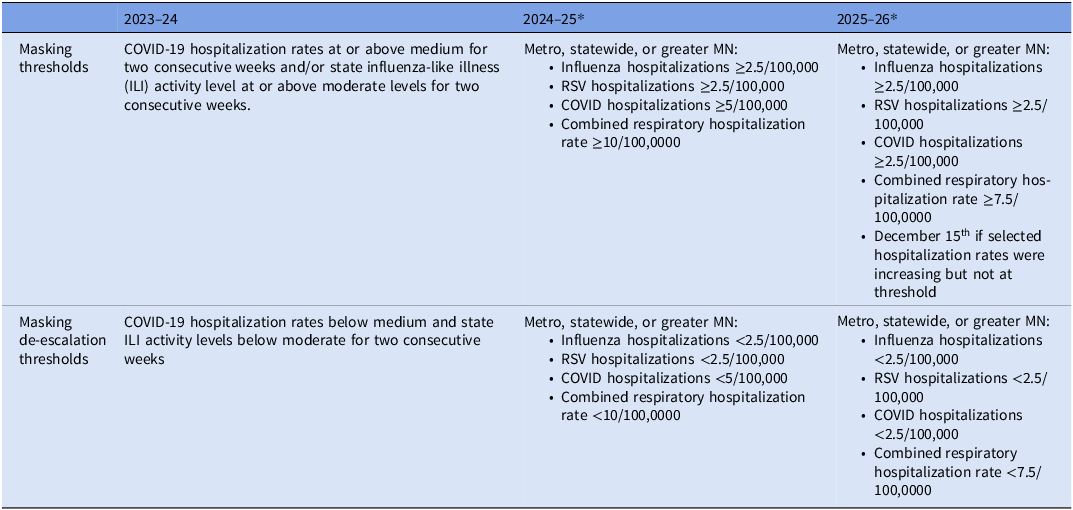
In developing the masking threshold recommendations for the 2023–24 respiratory season, the workgroup focused on state and county levels of COVID-19 hospitalization 27 as well as the state levels of respiratory illness as reported on ILINet. 26 Although CDC COVID-19 guidance recommends masking at high levels of transmission, through the multisystem discussion and consensus process the group determined that a moderate transmission threshold was more appropriate given known data reporting lags. To fully capture respiratory illness prevalence outside COVID-19, a threshold around general respiratory illness levels was also created using ILINet levels for MN. Final recommendations for masking and masking de-escalation are listed in Table 1.
Masking threshold recommendations developed by the MN masking workgroup

Table 1. Long description
The table compares masking thresholds and de-escalation thresholds for respiratory seasons from 2023 to 2026. It includes three columns for the years 2023-24, 2024-25, and 2025-26, and two rows for masking thresholds and masking de-escalation thresholds. For 2023-24, masking thresholds are based on COVID-19 hospitalization rates and influenza-like illness activity levels. For 2024-25 and 2025-26, thresholds are based on specific hospitalization rates for influenza, RSV, COVID-19, and combined respiratory hospitalizations. Masking de-escalation thresholds are based on lower hospitalization rates and ILI activity levels. The table provides specific hospitalization rates per 100,000 for each category and year.
* Data reported from MDH. 25
Note. Except for the 2023–24 thresholds where use of both ILI and COVID-19 metrics were recommended, health care systems and individual hospitals were encouraged to select the threshold(s) that worked best for their facilities.
A data capture issue with outpatient ILI surveillance for MN in ILINet became apparent during the 2023–24 season. As a result of the data capture issue, the ILI level for MN did not move beyond “minimal” levels of transmission. 26 MDH analysis later determined the issue was likely driven by a lack of inclusion of hospital emergency department data throughout the state. With the MN ILI levels not moving past minimal, the masking threshold set forth in the recommendations were not met. The analysis of the COVID-19 threshold noted that hospitalization levels did not reach “medium” levels until late December and only remained at that level for two weeks. 27
Many in the workgroup felt that the data reported was not reflective of the actual levels of community respiratory illness and resulted in implementing masking after respiratory illness in the community was already widespread. Some chose to implement and continue masking even when the chosen thresholds (COVID-19 and ILI levels) were not met. Those health systems based their decision on internal data (e.g., test positivity rates and/or employee absence data) that indicated respiratory illnesses were still present in the community. Sites that implemented masking despite unmet thresholds reported staff confusion when masking decisions appeared discordant with the established thresholds communicated to staff.
2024– 25 threshold development and assessment
The workgroup met monthly beginning in early summer of 2024 to review what went well and what could have been improved with the thresholds developed for the 2023–24 season. All but one health system reported implementing some form of universal masking during the respiratory season. The consensus was that having consistent thresholds used across health systems was very helpful for staff buy-in and leader support. Having clear thresholds to begin and end masking that could be communicated to staff up front increased staff support of masking as the “why” could be easily communicated and understood. Due to issues noted with the selected thresholds for the prior respiratory season, the group sought alternative thresholds for the 2024–25 season.
After review of available data sources for 2024–25 threshold development, the workgroup decided to exclude SARS-CoV-2 wastewater data. 29 Early in the pandemic, wastewater data increases appeared to precede an increase in hospitalization; however, that effect was tempered by late 2023. 29 Additionally, while wastewater data was helpful for monitoring trends, there are no definitions for high levels of SARS-CoV-2 in wastewater to guide masking recommendations. The CDC data from ILINet was also removed from consideration. 26 While the data provides respiratory illness activity levels, it does not differentiate between specific respiratory pathogens. Additionally, the group was concerned that data capture issues noted in 2023–24 might persist into the 2024–25 respiratory season. Lastly, positive test count data was excluded as it was noted that test positivity data trends and epi-curves did not differ greatly from hospitalization rate trends and could be influenced by variation in testing. 28
After reviewing the remaining data sources, the team opted to focus on data available from MDH. 28 The data included influenza, RSV, and COVID-19 hospitalization rates for the metro areas for 2022–23 and 2023–24.
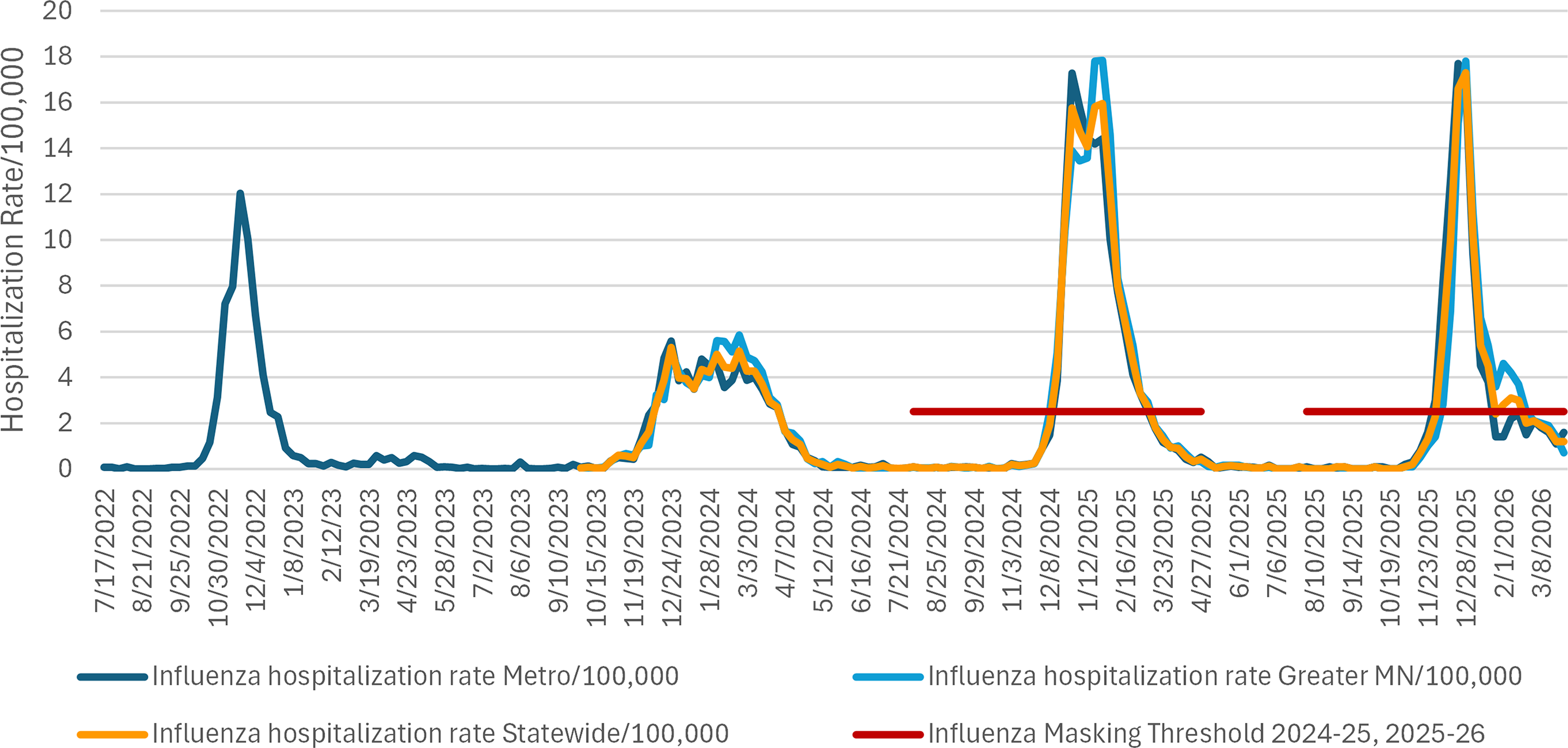
Thresholds were developed by reviewing the hospitalization rate epi-curves for each respiratory illness. When reviewing the influenza hospitalization epidemiologic curves for 2022–24 (Figure 1), the group used analysis of historical trends along with multisystem discussion and consensus to identify a threshold that avoided triggering masking during periods of low influenza activity while accounting for known reporting lags and the potential for rapid increases in influenza activity (Table 1).
Minnesota influenza hospitalization rate and masking threshold.

Figure 1. Long description
The line graph displays influenza hospitalization rates per 100,000 people in Minnesota from July 2022 to March 2026. The x-axis represents the timeline, while the y-axis shows the hospitalization rate. Three data lines are present: one for the Metro region, one for Greater Minnesota, and one for the statewide average. Additionally, two horizontal red lines indicate the influenza masking thresholds for the periods 2024-25 and 2025-26. The graph shows peaks in hospitalization rates at various points, particularly around late 2022, early 2024, and late 2024 to early 2025. The masking thresholds are set at a consistent rate during these periods. All values are approximated.
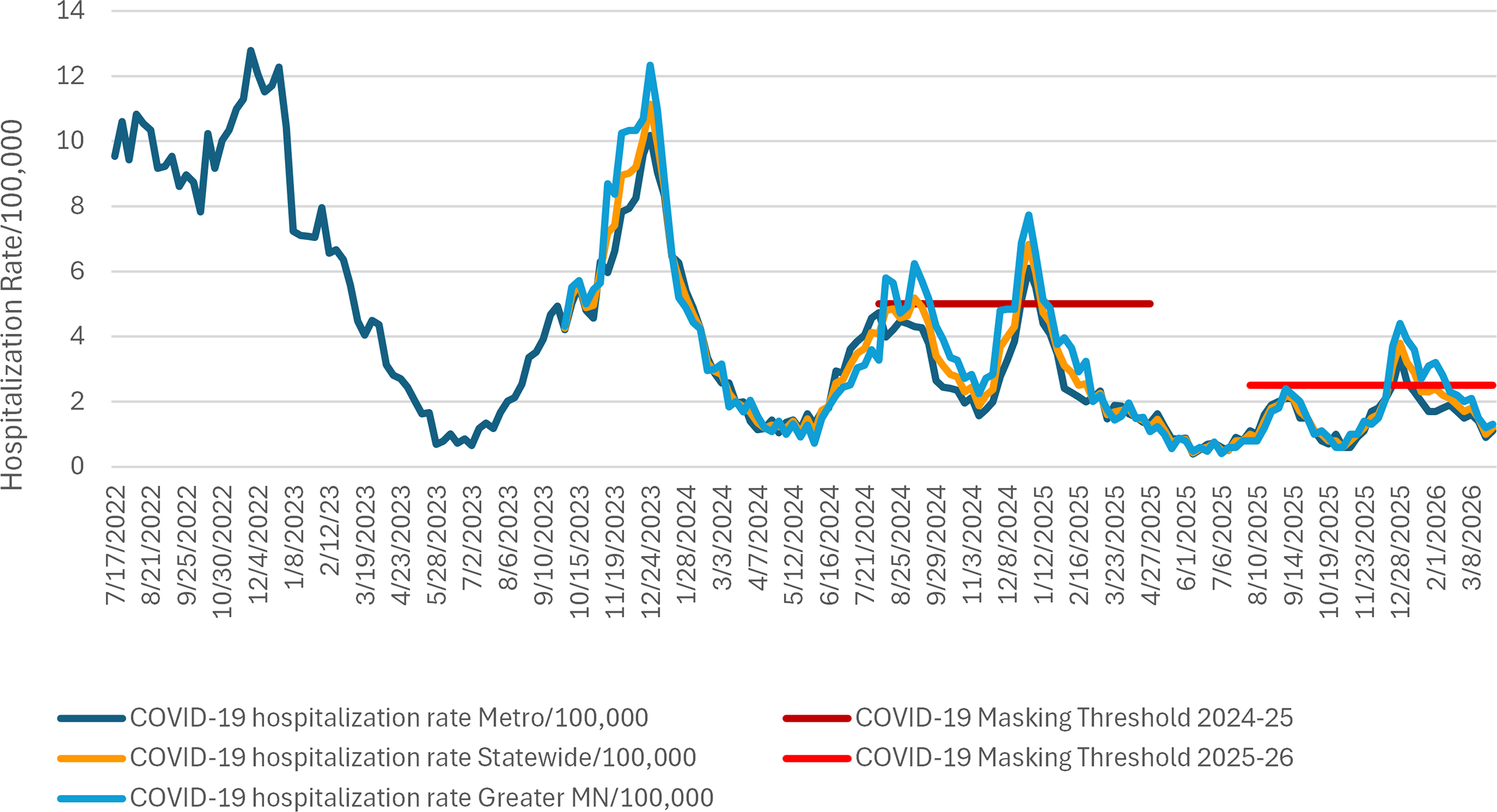
Determining a threshold for masking for COVID-19 was more difficult as the 2023–24 season was the first year that a notable epi-curve was seen in hospitalization rates in MN during the traditional respiratory illness season since the start of the pandemic (Figure 2). Group members were concerned that COVID-19 hospitalization may continue to remain endemically high and did not want to set a threshold that would result in masking being indicated for a prolonged period due to concerns over staff masking fatigue. For that reason, the group set the COVID-19 threshold at twice the level of influenza hospitalization (Table 1).
Minnesota COVID-19 hospitalization rate and masking threshold.
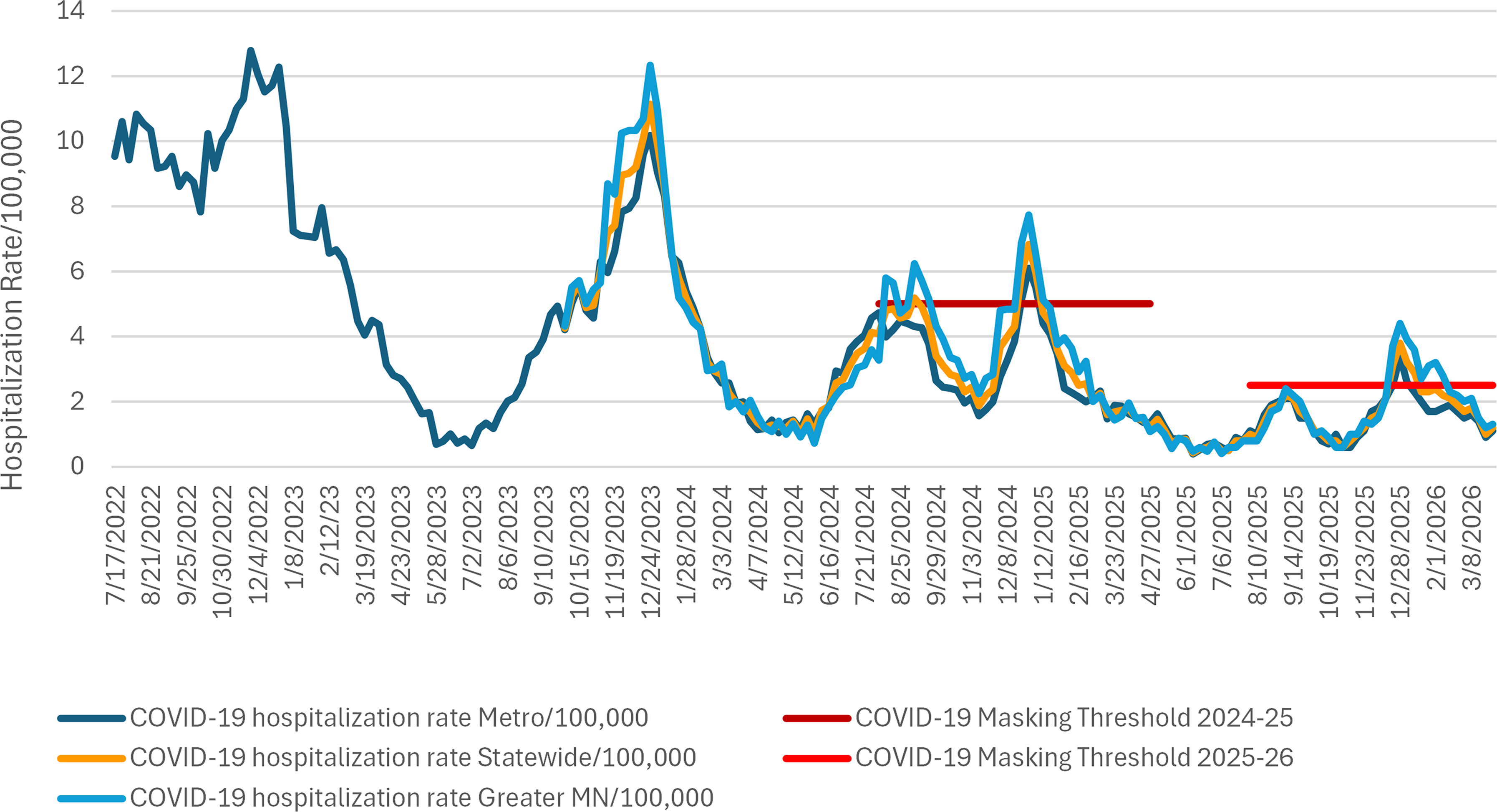
Figure 2. Long description
The line graph displays COVID-19 hospitalization rates per one hundred thousand people in Minnesota from July 2022 to March 2026. The x-axis represents the timeline, while the y-axis indicates the hospitalization rate. Three lines represent different regions: Metro, Statewide, and Greater Minnesota. The graph also includes two horizontal lines indicating COVID-19 masking thresholds for the years 2024-25 and 2025-26. The hospitalization rates fluctuate over time, with notable peaks and troughs. The masking thresholds remain constant for each respective period. All values are approximated.
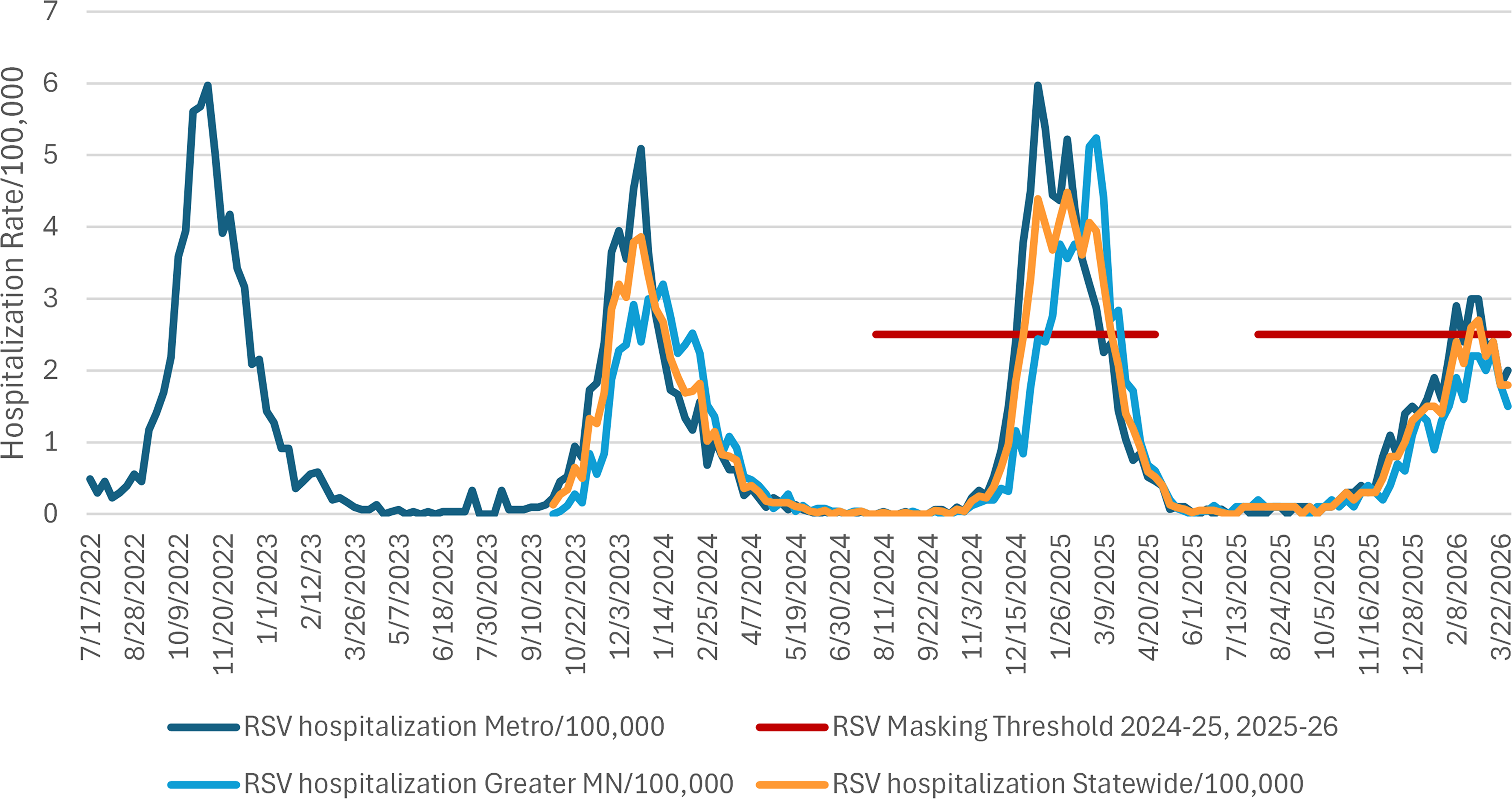
RSV epi-curve analysis demonstrated lower rates of hospitalization compared to influenza; however, activity appeared to start several weeks earlier than influenza for the two years of data included in the analysis (Figure 3). The group felt that it was important to include an RSV masking threshold in the recommendations to give additional guidance to pediatric hospitals and the workgroup also wanted to limit the introduction of another new threshold number. The group recommended using the same hospitalization rate for RSV as was used for influenza (Table 1).
Minnesota RSV hospitalization rate and masking threshold.
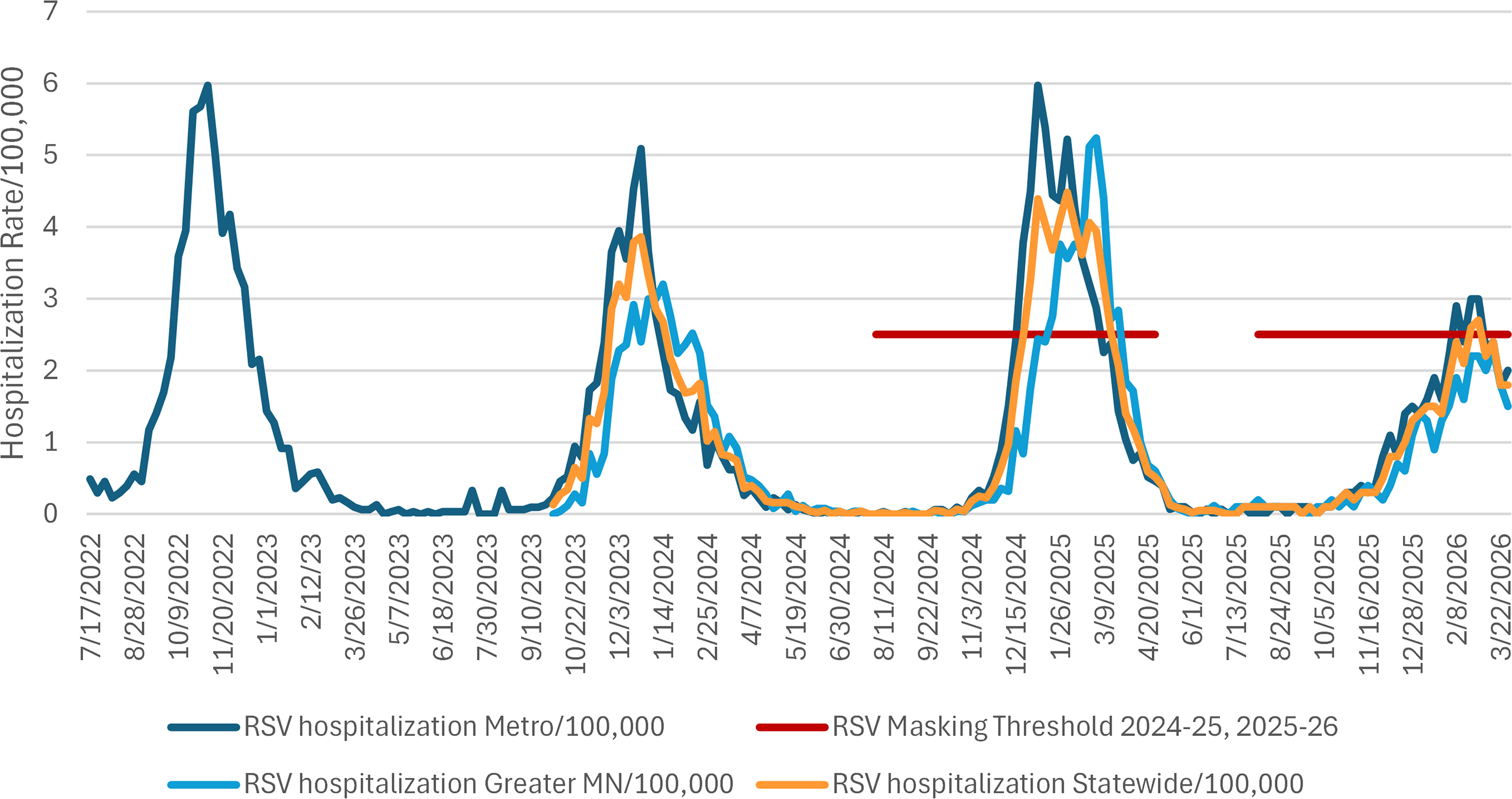
Figure 3. Long description
A line graph displays RSV hospitalization rates per one hundred thousand people in Minnesota from July 2022 to March 2026. The x-axis represents the timeline, while the y-axis indicates the hospitalization rate. Three data lines are present: RSV hospitalization in the Metro area, Greater Minnesota, and statewide. The graph shows peaks and troughs in hospitalization rates over time. The RSV masking threshold for the years 2024-25 and 2025-26 is also indicated by a horizontal red line. The hospitalization rates fluctuate, with notable peaks around late 2022, early 2024, and early 2025. All values are approximated.
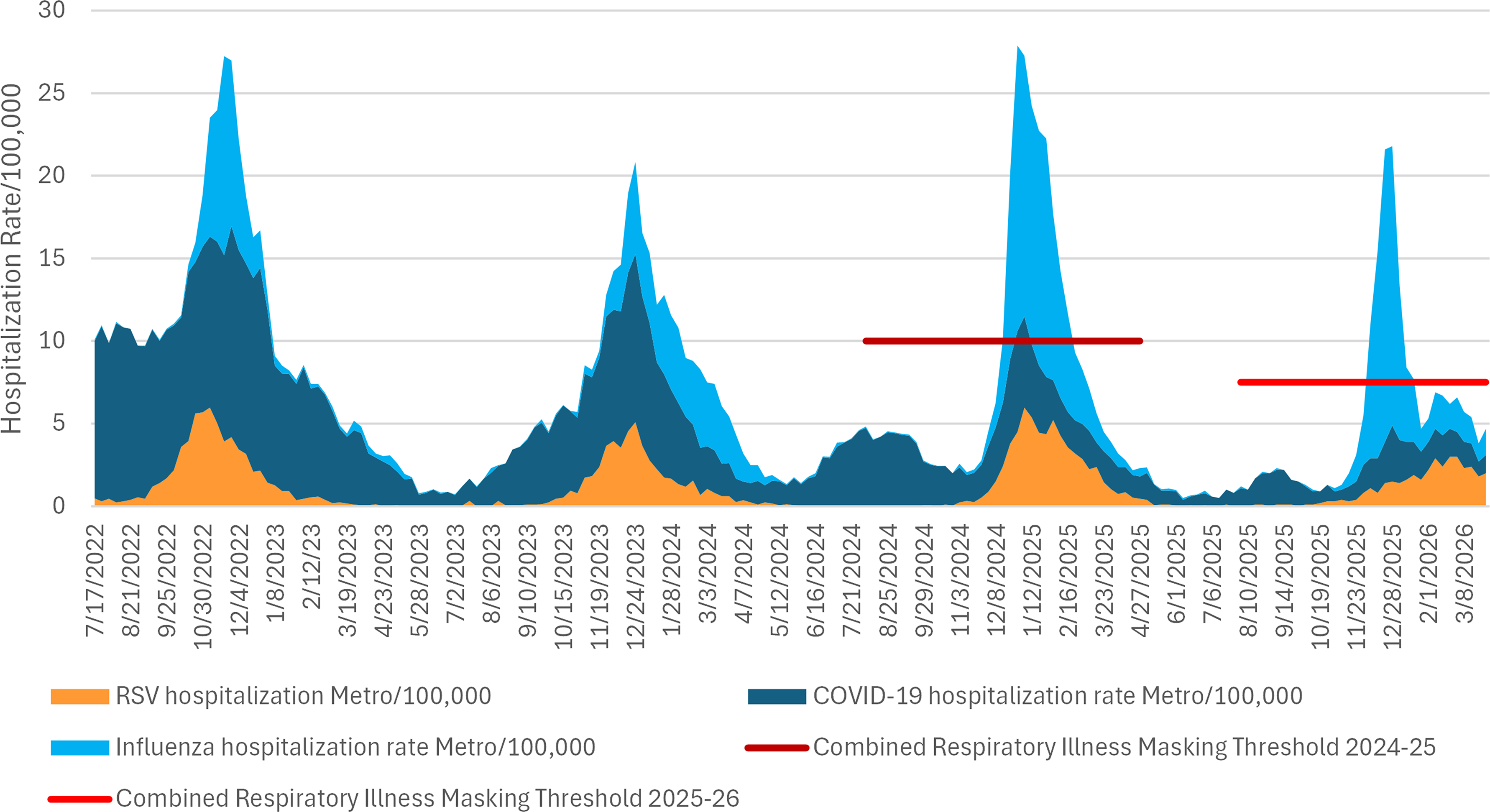
For simplicity, several members requested an overall respiratory illness threshold. The individual masking threshold rates for influenza, RSV, and COVID-19 were added to create an overall respiratory illness threshold (Table 1 and Figure 4).
Minnesota metro area combined COVID-19, influenza, and RSV hospitalization rate and masking threshold.
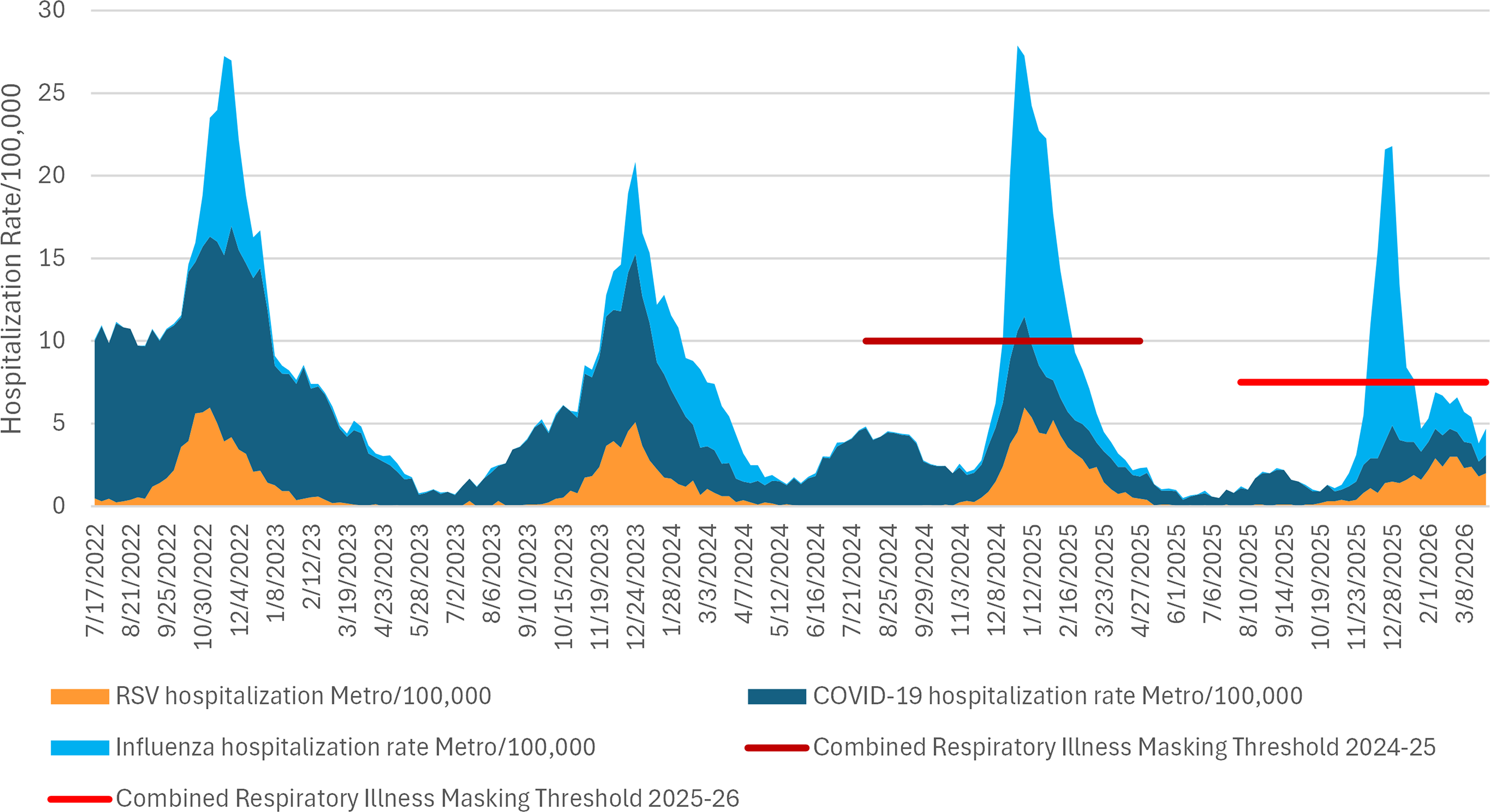
Figure 4. Long description
The line graph illustrates the hospitalization rates per one hundred thousand people for respiratory syncytial virus (RSV), COVID-19, and influenza in the Minnesota metro area from July 2022 to March 2026. The x-axis represents the timeline, while the y-axis shows the hospitalization rate per one hundred thousand people. The graph includes three data lines: RSV hospitalization rate in orange, COVID-19 hospitalization rate in dark blue, and influenza hospitalization rate in light blue. Additionally, two red horizontal lines indicate the combined respiratory illness masking thresholds for the years 2024-25 and 2025-26. The graph shows multiple peaks and troughs, reflecting the fluctuating hospitalization rates over the specified period. All values are approximated.
The rates were initially generated using the past two respiratory season hospitalization data for the MN metro area. To confirm the thresholds would result in similar masking dates for the state of MN and greater MN, the proposed thresholds were applied to the single respiratory season data (2023–24) available for greater MN and statewide data. Appling the thresholds to those epi-curves resulted in masking dates similar to what was noted in the metro data (Figures 1–3).
The work group did not specify which masking threshold or geographic area (metro, greater MN, or statewide) hospitals or health care systems should select to guide masking but allowed individual hospitals and health systems to select what made the most sense for their patient population and settings.
While not available at a state level, some individual health systems had the ability to analyze employee absence information. A benefit to the absence information is that the data was available real-time. Some health systems added this as an additional threshold to use when determining when to require masking. Health systems choosing to use that data determined what level of absence calls would be used as a threshold for masking.
Thresholds for masking de-escalation for the 2024–25 season are listed in Table 1.
The group met to review performance of the recommended masking thresholds during the summer of 2025. All but one health system reported implementing some form of universal masking during the respiratory season. Members reported that senior leadership found the standardized thresholds helpful in coordinating similar approaches to masking. Staff appreciated the thresholds and sites reported receiving minimal negative feedback from staff about reinstating masking when thresholds were met.
Opportunities to improve the thresholds were noted. A large issue was the timing of when thresholds were met for the 2024–2025 respiratory season. The data indicating that influenza rates were above the threshold was released on December 23rd. Many sites delayed implementation of masking until after the new year due to the challenges of implementing masking with many unit and department leaders out of office for the winter holidays. In addition to concerns around timing of implementing masking, it was noted that the hospitalization rate selected for the COVID-19 hospitalization masking threshold was only met for three weeks.
2025 –26 threshold development
Based on the opportunities noted from the 2024–25 metric discussion, the masking group adjusted the COVID-19 hospitalization masking threshold to align with the other illness thresholds (Table 1). An additional tactic added included implementing masking on December 15th if selected hospitalization rates were increasing but not at threshold. This would allow implementation of masking prior to the end of the year (when fewer leaders are around to help with implementation).
Recommendations for masking de-escalation for the 2025–26 season are listed in Table 1.
Although the workgroup has not yet met to formally review 2025–26 threshold performance, early feedback from group members indicated that the addition of a defined masking implementation date helped mitigate the impact of data reporting lags and allowed sites to better plan and coordinate staff communication relating to masking implementation.
Discussion
In health care settings, masking remains a crucial preventive measure. Unvaccinated individuals are at increased risk of severe outcomes of influenza and COVID-19 Reference Naudion, Lepiller and Bouiller3,Reference Cummings, O’Halloran and Azenkot4 and with possible declining COVID-19 and influenza vaccination rates in the community due to vaccine recommendation changes and vaccine hesitancy, the potential implications for hospital-associated outbreaks and transmission of these illnesses is heightened. While data looking at the rates of hospital-acquired respiratory infections in the institutions that implemented universal masking were not available for this study, masks serve as a barrier to protect both health care workers and patients from respiratory pathogens and reduces the spread of infections. Reference Cash-Goldwater, Reingold and Luby20–Reference En Wee, Venkatachalam and Sim22 Universal masking during periods of high levels of respiratory illness can help safeguard vulnerable populations, maintain the integrity of health care workforce staffing, and contribute to overall public health efforts.
To our knowledge, this is the first publication outlining a process for a statewide workgroup consisting of multidisciplinary members from infection prevention, employee occupational health, infectious disease, and hospital epidemiology meeting to set masking thresholds using data readily available from public health agencies.
Planned updates to isolation precaution guidance from CDC has been paused with the dissolution of the Healthcare Infection Control Practices Advisory Committee (HICPAC) in 2025. Federal changes to CDC structure and budget have increased the need to partner with state and local public health departments for data and public health recommendations. Additionally, collaboration amongst health care systems has also become increasingly important for monitoring and aligning community standards on infection prevention activities, including masking.
In the absence of strong recommendations from national agencies, developing statewide standard thresholds for health care systems to guide masking recommendations during high levels of respiratory illness offers numerous benefits. The methods described in this paper offer an easy way for health systems interested in developing data-driven thresholds to guide masking decisions without requiring complex statistical analysis. Our work group found value in developing several masking thresholds that could be used which allows for customization by health care systems where any or all the thresholds could be selected to guide masking. This allowed pediatric hospitals to have more flexibility with masking if RSV rates were high, but other illness levels were low.
To maintain focus on threshold development rather than operational implementation, the workgroup did not prescribe specific mask types. Instead, masking was defined using the CDC definition of source control 7 (respirators, well-fitting facemasks, or cloth masks) while allowing individual health systems to determine the specific masking modalities required within their facilities.
The data used by the authors was obtained from reports developed by MDH; however, others wishing to replicate our process can find similar hospitalization rates for COVID-19, 27 influenza, 26 and RSV 30 on CDC websites.
Setting thresholds with basic epidemiology tools offers several advantages: it eliminates the need for advanced statistical software, enables easy replication by other groups, and facilitates clear communication with health system leaders and frontline staff. However, this approach is limited by data reporting lags, which may result in delayed masking when respiratory illness rapidly increases over a short period of time. To address this, the workgroup used lower thresholds and recommended ongoing annual refinement of thresholds by analyzing performance of selected thresholds and including new data sources as they become available.
Standard statewide thresholds ensure consistency in the application of preventive measures, reducing confusion among health care staff and patients who may work or seek care in different health care systems. Alignment reinforces the critical role of masking in protecting vulnerable individuals from respiratory infections.
Acknowledgements
The authors would like to acknowledge the participants in the Statewide masking thresholds group:
Allina Health: Abby Beer, Lisa Frantz, Dr. Ashley Husebye, Dr. Michael Klevay, Nicole Loduha, Dr. Ashley Newberry, Dr. Ayesha Rashid, Dr. Steve Sonnesyn. CentraCare: Ellen Simonson, Lori Steffen. Children’s Minnesota: Jane Rasner. Essentia Health: Kari Russell, Dr. Aaron Phillipps. Gillette Children’s: Patty Willeman, Joseph Kurland. Health Partners: Katherine Kellett, Jim Oukrop, Amy Priddy, Boyd Wilson, Dr. Greg Siwek, Dr. Nila Suntharam. Hennepin Healthcare: Julie Curti, Dr. Caitlin Eccles-Radtke, Jessica Swanson. Mayo Clinic: Jean Barth, Michelle L. Meyer. M Health Fairview: Donna Budde, Dr. Peter Bornstein, Dr. Elizabeth Swanson. Meeker Memorial: Vicki Engmark. Minnesota Department of Health: Kari Bergman, Tammy Hale, Jeff Sanders. North Memorial Health: Jennifer Boe. University of Minnesota Boynton Health: Lesley Gray, Caitlin Spooner. Minneapolis VA Health Care System: Dr. Jonathan Alpern, Stacy Buschmann-Ford, Dr. Aaron DeVries, Meagan Hedin, Joseph Kurland
Financial support
There was no external funding supporting this work.
Competing interests
No authors report conflicts of interest.
Declaration of generative AI and AI-assisted technologies in the manuscript preparation process
During the preparation of this work, the authors used Microsoft 365 Copilot to suggest alternative sentence structures to improve the flow of the manuscript. While Copilot provided suggestions, the core content and conclusions remain the original work of the authors. The use of Copilot was intended to enhance readability and coherence, with all final decisions on the text made by the author. After using this tool, the authors reviewed and edited the content as needed and take full responsibility for the content of the published article.