Introduction
Although they are among the most diverse ecosystems of the world and deserve preservation (Myers et al. Reference Myers, Mittermeier, Mittermeier, da Fonseca and Kent2000), tropical forests are threatened by increasingly frequent and intense disturbance regimes (Wright & Muller-Landau Reference Wright and Muller-Landau2006). In order to define appropriate management and restoration strategies, understanding ecological succession of tropical tree communities following disturbance events is crucial (Van Breugel et al. Reference Van Breugel, Martinez-Ramos and Bongers2006). Previous research has exposed potential mechanisms and trajectories of ecological succession, depending on spatial gap dynamics (Denslow Reference Denslow1987), human land-use history (Swaine & Hall Reference Swaine and Hall1983) and drought events (Fauset et al. Reference Fauset, Baker, Lewis, Feldpausch, Affum-Baffoe, Foli, Hamer and Swaine2012). Nevertheless, ecological succession in wet evergreen forests of West Africa remains little documented. In the context of Côte d’Ivoire, studies referring to the structure and succession of forest communities are very rare. Furthermore, previous ecological research was focused on the dynamics of old-growth forests devoid of human activities, although they have been severely damaged during the last decades. We address here the imprint of successional dynamics in wet evergreen forests in Côte d’Ivoire, West Africa, following natural and anthropogenic disturbances (Chatelain et al. Reference Chatelain, Gautier and Spichiger1996), to better understand, predict and manage their dynamics.
Ecological succession involves changing environmental conditions, species strategies and community assembly processes in space and time (Shipley Reference Shipley2010). Disturbances such as storms, fires, logging and other human activities open up the forest canopy, leading to increased light penetration and greater regeneration of pioneer species (Sheil & Burslem Reference Sheil and Burslem2013), and thereby triggering ecological succession. To assess the imprint of past disturbances on forest composition and the successional state of tree communities, ecologists used to refer to broad functional categories of young and old-growth types of vegetation, or to calculate indices based on the relative proportions of functionally pioneer and late-successional species (Bongers et al. Reference Bongers, Poorter, Hawthorne and Sheil2009). Among these indices, the Pioneer index (PI; Hawthorne Reference Hawthorne1996) is based on the classification of tree species into five regeneration guilds, namely (1) pioneers that need gaps for establishment, (2) non-pioneer light demanders that can establish in the shade but need a gap to attain larger sizes, (3) shade bearers that can fully develop under a canopy, (4) cryptic pioneers that establish in gaps but typically develop in the understorey and (5) swamp species. Several studies used this index to infer the imprint of past disturbances in West and Central African forests (Denguéadhé et al. Reference Denguéadhé, Decocq, Adou Yao, Blom and Van Rompaey2006; Poorter et al. Reference Poorter, Hawthorne, Bongers and Sheil2008). We examined the variation of the Pioneer index across forest plots with different disturbance histories, to characterize the imprint of successional dynamics on rainforest tree communities. Specifically, we addressed three basic questions.
First, several processes can influence successional dynamics, and we asked what their relative importance is. Disturbance regimes are known to play a key role (Guitet et al. Reference Guitet, Sabatier, Brunaux, Couteron, Denis, Freycon, Gonzalez, Hérault, Jaouen, Molino, Pélissier, Richard-Hansen and Vincent2018), but abiotic soil conditions could also affect successional trajectories (Boukili & Chazdon Reference Boukili and Chazdon2017). Multivariate statistical analyses allow identification of major components of floristic variation across communities, and these components can be related to the variation in environmental conditions (Dray et al. Reference Dray, Pélissier, Couteron, Fortin, Legendre, Peres-Neto, Bellier, Bivand, Blanchet, De Cáceres, Dufour, Heegaard, Jombart, Munoz, Oksanen, Thioulouse and Wagner2012), and/or to successional dynamics (Raevel et al. Reference Raevel, Violle and Munoz2012). We addressed how soil physico-chemical properties and successional status measured with the Pioneer index affected the main components of floristic variation in a correspondence analysis of tree community composition.
Second, the way taxonomic diversity varies after disturbance in tropical forest remains much debated. On one hand, the Intermediate Disturbance Hypothesis (IDH) predicts that the coexistence of early and late successional species is possible at an intermediate level of disturbance, which entails a peak of taxonomic diversity (Connell Reference Connell1978). This theory considers that pioneer taxa are progressively excluded, and only fewer competitive species can be maintained in later-successional forest (Bongers et al. Reference Bongers, Poorter, Hawthorne and Sheil2009, Connell Reference Connell, Den Boer and Gradwell1971, Reference Connell1978; Sheil & Burslem Reference Sheil and Burslem2013). Following the IDH, we expected taxonomic diversity to peak at an intermediate level of the Pioneer Index. On the other hand, neutral models of biodiversity dynamics predict that many species can coexist in mature tropical rainforests insofar as competitive interactions do not prevail. Neutral theory then supports that many species can coexist at equilibrium in mature forests and challenges the idea of competition-related impoverishment (Hubbell Reference Hubbell2001).
Third, communities subject to comparable disturbance regimes are expected to converge toward similar composition at later successional stages. However, contingent variation in dispersal and demographic events across communities can maintain variation in taxonomic composition across communities (Norden et al. Reference Norden, Boukili, Chao, Ma, Letcher and Chazdon2017), while their functional composition becomes more similar due to common environmental constraints (Jenkins & Buikema Reference Jenkins and Buikema1998). Consistent variation from pioneer-dominated communities to slow growing and competitive species in mature forests reflects a directional change in species dynamics and interactions along the succession (Lasky et al. Reference Lasky, Uriarte, Boukil, Erickson, John Kress and Chazdon2014). However, local environmental conditions can lead to divergent successional trajectories among communities (Boukili & Chazdon Reference Boukili and Chazdon2017). We analysed whether and how floristic dissimilarity across communities of similar successional stage decreased from early to late succession.
We analysed the composition of 38 tropical forest plots in the Taï National Park of Côte d’Ivoire, covering a range of situations with more or less recent disturbances and varying abiotic conditions, to answer the following questions: (i) How do the disturbance history and abiotic conditions influence taxonomic composition and functional structure, as measured by the Pioneer index? (ii) How does local species richness change depending on successional stage, with either a peak or a monotonic variation? (iii) Was the composition more similar across communities in late succession?
Methods
Study area
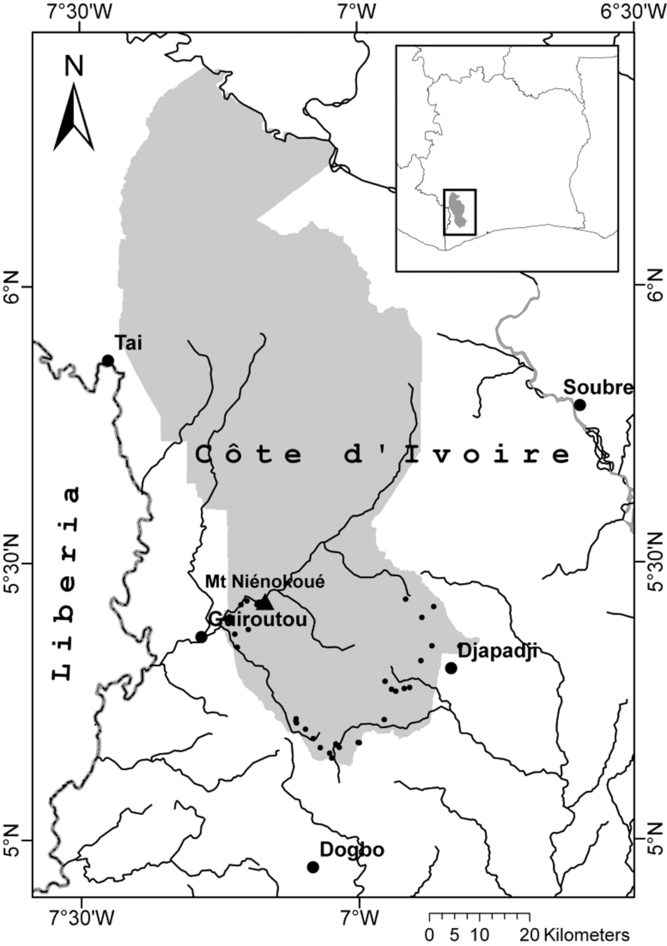
The Taï National Park (TNP) is the largest rain forest under protection in the Upper Guinea region (10 000 km2 when created in 1926). The study area (Figure 1) was restricted to the southern part of the park (5°10′–6°50′N, 6°50′–7°50′W, 160–396 m asl), which is the most moist and species-rich (Alexandre Reference Alexandre1982), especially for the Fabaceae family. This evergreen rain forest belongs to the Guinea-Congo regional centre of endemism and ‘The Guinean Forests of West Africa’ hotspot. There have been 1231 plant species reported in the park, among which 150 are endemic to the West African forests (Adou Yao et al. Reference Adou Yao, Blom, Denguéadhé, Van Rompaey, N’Guessan, Wittebolle and Bongers2005), 21 are endemic to the Upper Guinea phytogeographic region and 14 are rare or threatened at the international level (IUCN classification). Among the tree species encountered in the southern part, some are known to be more common and dominant, such as Diospyros sanza-minika, Strombosia pustulata, Funtumia africana, Calpocalyx brevibracteatus and Xylopia quintasii. The southern part of the park was selectively logged before being included, in 1972, within the limits of TNP. Although three ethnic groups live near the forest edges in the villages of Guiroutou, Djapadji and Dogbo, their impact on the forest has been marginal. Overall, human pressure on the forest is currently very low, mainly consisting of illegal activities of hunting, logging small trees, farming and gold mining, and is limited to the forest margins.
Location map of the Taï National Park in south-west Côte d’Ivoire (Projection – WGS84, Zone UTM x 29N).

The climate is characterized by two rainy seasons (March–June and September–October) and two dry seasons (July–August and November–February). There is a NE–SW gradient of annual rainfall, ranging from 1500 to 2150 mm (Adou Yao et al. Reference Adou Yao, Blom, Denguéadhé, Van Rompaey, N’Guessan, Wittebolle and Bongers2005), with an average of 1800 mm. The average annual temperature is 26°C and remains quite constant throughout the year, thanks to the influence of the ocean and the presence of forests. The relative air moisture content is always high (85–90%). The soil is ferralitic and generally nutrient-poor (Ferric Acrisols according to the FAO), although more fertile waterlogged soils (Gleysols according to the FAO) occur in the southern part of TNP.
Sampling design and environmental information
We applied the sampling procedure of Hawthorne (Reference Hawthorne1996) in Ghana. We randomly located 13, 14 and 11 25 × 25 m plots along the peneplain catena of Guiroutou, Dogbo and Djapadji, respectively. Within the Guiroutou area, three plots (numbered 22, 23 and 24) were established along the inselberg catena of Mont Niénokoué. The plots were chosen so that vegetation, soil and relief were as uniform as possible over the area of the quadrat. The sampling design and environmental information can be found in Adou Yao et al. (Reference Adou Yao, Blom, Denguéadhé, Van Rompaey, N’Guessan, Wittebolle and Bongers2005). A vegetation survey was conducted from February 1998 to January 2000. All the vascular plant species were recorded (presence-absence information), except epiphytes. We further counted in each plot all the individuals with diameter at breast height (dbh) >10 cm (abundance information). The trees were identified to species by an experienced team supervised by a botanist familiar with the Ivorian flora. The vouchers were deposited and are conserved at the Ivorian National Herbarium (UCJ) of Félix Houphouët-Boigny University. Identifications were made according to a reference flora and the nomenclature was adapted from APG IV (Angiosperm Phylogeny Group 2016).
Each forest plot was associated with a set of ecological descriptors: topographical position (six classes: shallows, plain, low-slope, mid-slope, high-slope, summit, from low-lying areas to the summit), geological substrate (gneiss, schist, granite and amphibolite), average slope angle, soil texture (friableness) and information on the A-horizon (depth in cm, colour and profile morphology). A soil sample was collected for analysis of organic matter content, pH-H2O, at the laboratory. In addition, we gathered information on previous land-use and protection, as some plots were subjected to utilization until more recently (plots 1; 2; 3; 4; 5; 6; 8; 9; 10; 11; 30; 32; 34), while other plots were located in a longer-protected area.
Pioneer indices (PI)
The Pioneer index (PI; Hawthorne Reference Hawthorne1996) of forest plots,  $PI{\rm{ }} = 100{\rm{ }} \times {{\left( {2{\rm{pi}} + {\rm{npld}}} \right)} \over {\left( {{\rm{pi}} + {\rm{npld}} + {\rm{sb}}} \right)}}$
, quantifies the relative importance of pioneer (pi) and non-pioneer light demanders (npld, shade-intolerant), against shade bearers (sb, shade-tolerant). Poorter et al. (Reference Poorter, Hawthorne, Bongers and Sheil2008) and Bongers et al. (Reference Bongers, Poorter, Hawthorne and Sheil2009) calculated PI based on the number of species >10 cm dbh. For each of the three categories, we calculated the index based on the number of individuals >10 cm dbh in each category (Molino & Sabatier Reference Molino and Sabatier2001). Tree species were assigned one of the three categories based on available reference lists (Adou Yao et al. Reference Adou Yao, Blom, Denguéadhé, Van Rompaey, N’Guessan, Wittebolle and Bongers2005, Hawthorne Reference Hawthorne1996).
Data analyses
We performed correspondence analyses (CA) of the species by plot table (abundances of tree species >10 cm dbh), to identify the main components of floristic variation across tree communities. We assessed whether and how the components of floristic variation were related to abiotic variables and Pioneer indices P1, P2 and P3 by performing Spearman rank correlation tests for quantitative variables, and Kruskal–Wallis tests for categorical variables.
We assessed the rarefied species richness of plots including 20 individuals and more, using the approach of Hurlbert (Reference Hurlbert1971). We tested if the rarefied richness in communities peaked at an intermediate value of the Pioneer indices, as expected under the Intermediate Disturbance Hypothesis (IDH), by performing a robust linear model of rarefied richness with the Pioneer indices and the square of Pioneer indices as predictors (Yohai Reference Yohai1987).
Based on the quartiles of Pioneer indices, we defined one early-successional, two mid-successional and one late-successional groups of forest plots. Then we calculated the average floristic dissimilarity of each pair of communities within each group (Jaccard index). We analysed the variation of beta diversity among groups by performing Kruskal–Wallis tests.
We performed all the statistical analyses using the basic functions of R software (R_Development_Core_Team 2016), with additional packages ade4 (correspondence analysis), robust base (robust regression) and vegan (local richness and diversity calculation).
Results
The 38 forest plots included 631 vascular plant species overall, without the epiphytes. Altogether 1160 tree and liana stems belonging to 150 species (7 lianas (4.7%) and 143 shrubs and trees (95.3%)), 113 genera and 40 botanical families reached a dbh ≥10 cm. The overall plot density was 483 individuals ha−1 and the mean basal area was 31.5 m2 ha−1. The average species richness was 13.4 ± 4.8 per plot.
Floristic background
Forty-four tree species (6.9%) were Guineo-Congolian endemics, among which 40 (6.3%) were endemic to West Africa (e.g. Androsiphonia adenostegia Stapf., Bussea occidentalis Hutch., Brachystegia leonensis Hutch. & Burtt Davy) and 4 (0.6%) to Côte d’Ivoire (e.g. Cassipourea nialatou Aubrév. & Pellegr., Piptostigma fugax A.Chev. ex Hutch. & Dalz.). There were 32 (5.1%) species endemic to Upper Guinea region and 17 (2.7%) ‘Sassandrian species’ sensu Guillaumet (Reference Guillaumet1967) endemic to the extreme south-west Côte d’Ivoire, such as Anthonotha sassandraensis Aubrév. & Pellegr., Keayodendron bridelioides Léandri and Chrysophyllum taïense Aubrév. & Pellegr. Finally, 15 species (2.4%) were listed in the IUCN red list for Côte d’Ivoire (one endangered (Placodiscus attenuatus J. B. Hall) and 14 vulnerable). The species-richest families were Fabaceae (25 spp.), Euphorbiaceae (18 spp.), Annonaceae (12 spp.), Malvaceae (9 spp.) and Apocynaceae (8 spp.). The most frequent genera were Diospyros (5 spp.), Xylopia (5 spp.), Cola (4 spp.) and Drypetes (4 spp.). The five most abundant species overall were Hymenostegia afzelii (Oliv.) Harms (116 individuals), Diospyros sanza-minika (71), Strombosia pustulata (69), Funtumia africana (Benth.) Stapf. (63) and Calpocalyx brevibracteatus (55).
Successional changes in floristic composition
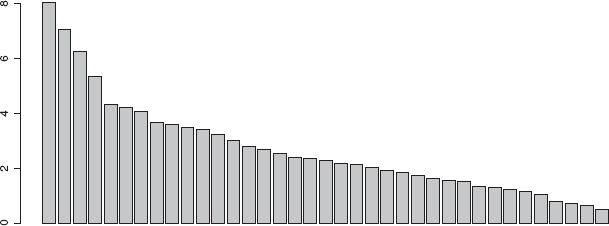
The correspondence analysis (CA) of community composition yielded four main axes (Figure A1), which together represented 26% of the overall floristic variation. The Pioneer index was significantly related to the community scores on the two first axes (Spearman correlations, P <0.01). In addition, we found that geology, slope, topographical and geographic position did not influence the variation in floristic composition along the two first CA axes (Spearman and Kruskal–Wallis tests, all P >0.05). The main components of floristic variation in the CA thus reflected changes in community composition basically related to successional dynamics.
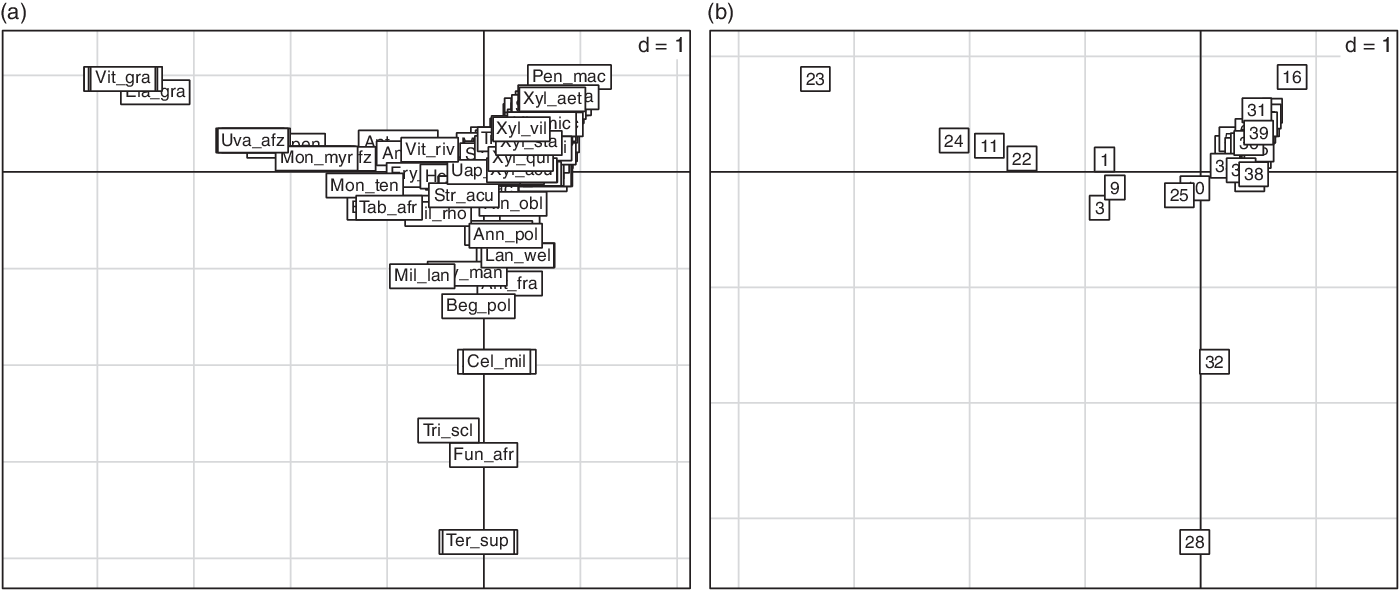
The first axis of the CA was negatively related to the Pioneer index (Spearman P <0.001) and hence represented an overall turnover of composition from pioneer to mature forests from left to right (Figure 2b). The most dominant species in mature forest plots were Diospyros sanza-minika, Strombosia pustulata, Calpocalyx brevibracteatus, Scottellia klaineana, Xylopia quintasii and Scytopetalum tieghemii, all with positive scores on the first CA axis. These species were found in closed canopy forest contexts, and a few pioneer species occurred in some gaps. Moreover, many endemic species were present in mature forest and thus also had a positive score on the first CA axis (such as Calpocalyx brevibracteatus and Bussea occidentalis).
Correspondence analysis (CA) of tree species abundances. (a) The scores of forest plots 1–38 on the CA axes 1 and 2, respectively; (b) the species scores on the axes.

Two plots, 28 and 32, negatively and strongly contributed to the second axis. Many scarce pioneer species such as Terminalia superba Engl. & Dalz. (n = 1 individual) and Nesogordonia papaverifera (A.Chev.) Capuron (n = 1) occurred in these plots, but the shade-intolerant Funtumia africana was remarkably abundant here (n = 41 and 14, respectively) and very rare elsewhere. Therefore, the second axis differentiated types of early stage communities differing in composition from the ones on the negative side of axis 1.
Successional changes in species richness and beta diversity
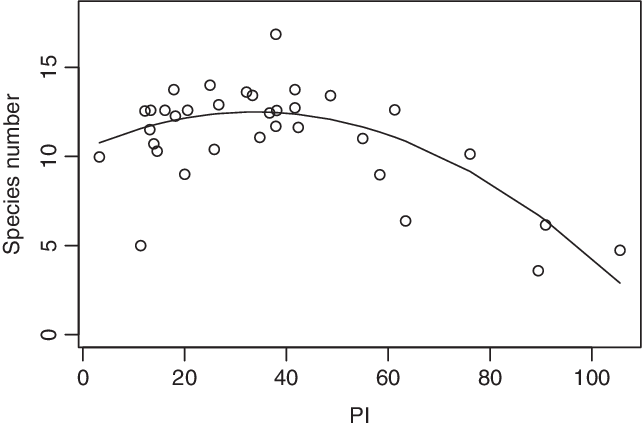
We found a significant parabolic relationship between rarefied plot richness and the Pioneer index (robust linear models, all P <0.05, illustrated in Figure 3 for PI), with a maximum for intermediate values of PI. In late successional communities, richness thus tended to decrease. Rarefied richness was closely correlated to Pielou’s equitability (Spearman ρ = 0.85, P <0.001), so that the richest communities were also characterized by more balanced species abundances.
Relationship between species richness assessed using rarefaction analysis (20 individual subsamples), for trees >10 cm dbh. The parabolic curve was fitted by performing a robust regression including both PI and PI2 as predictors. Both predictors were significant.

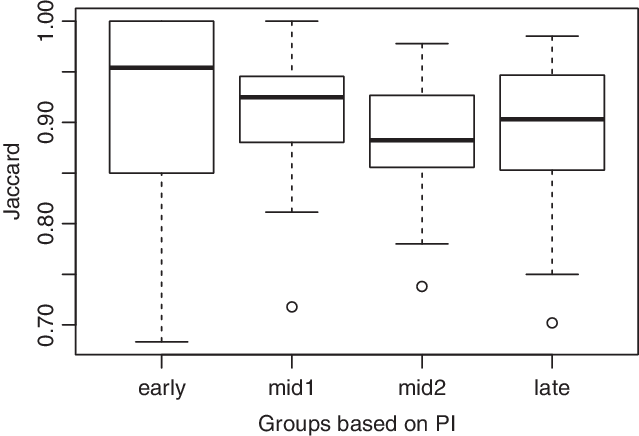
Late-successional communities dominated by shade-tolerant species were globally less variable in floristic structure than early-successional communities, leading to lower beta diversity among communities with lower Pioneer index values (all Kruskal–Wallis P < 0.01; Figure 4, second and third boxplots).
Beta diversity among pairs of communities within four successional stages. The four stages were defined based on the quartiles of the Pioneer index, and labelled as ‘early’, ‘mid1’, ‘mid2’ and ‘late’ with increasing value of the index. Each box summarizes the variation in Jaccard dissimilarity among pairs of communities within each stage.

Discussion
We investigated floristic variation among rainforest communities in Ivory Coast, West Africa. The Pioneer index (PI), reflecting disturbance age and severity, and successional status of communities were related to the main components of floristic variation (Figure 2). The relationship between rarefied richness and the Pioneer index supported the Intermediate Disturbance Hypothesis (Bongers et al. Reference Bongers, Poorter, Hawthorne and Sheil2009, Molino & Sabatier Reference Molino and Sabatier2001), insofar it hypothesized that maximum richness is attained when the community comprises a mixture of early- and late-successional (Figure 3). In addition, our results supported the hypothesis that communities become more similar in composition when succession goes on, since beta diversity was lower among late-successional than among early-successional communities (Figure 4).
Imprint of successional dynamics across forest communities
Variation in abiotic environmental conditions can filter different sets of species, meaning that only species with suited ecological adaptations can survive (environmental filtering; Kraft et al. Reference Kraft, Adler, Godoy, James, Fuller and Levine2015). Here we found that abiotic variables related to soil physical properties and to topography did not influence the floristic variation across forest communities in the area, while the Pioneer indices (PI) based on three main regeneration guilds of species (pioneer, shade-intolerant and shade-tolerant) were related to the main components of variation (CA analysis; Figure 2).
Although we could not assess the temporal variation of communities after disturbance, the variation of PI across communities could reflect different successional stages depending on disturbance frequency and severity. Early-successional communities were characterized by high values of Pioneer Indices (left side of CA axis 1, Figure 2a). These forest plots were in gaps (plot 24), exposed to sun on hilltop or upper slope (plots 11, 22, 23, 32), or disturbed by the local population in the recent past (plot 28). In any case, increased light penetration allowed greater regeneration of pioneer and shade-intolerant species (Sheil & Burslem Reference Sheil and Burslem2013). The late-successional communities (right side of CA axis 1, Figure 2a) were mainly found in the area of Guiroutou, which is historically least disturbed by the local population. Communities dominated by Funtumia africana and Hymenostegia afzelii were located at an intermediate position on CA axis 1, supporting that these species were more frequent at an intermediate successional stage. Furthermore, some big pioneer and shade-intolerant trees were found (Ricinodendron heudelotii, dbh = 110 cm; Entandrophragma cylindricum, dbh = 100 cm; Pycnanthus angolensis and Triplochiton scleroxylon, dbh = 80 cm), indicating that many pioneer species are represented by large trees persisting even in closed canopies (Poorter Reference Poorter2007).
Intermediate Disturbance Hypothesis
Species interactions determine community assembly and composition (Lortie et al. Reference Lortie, Brooker, Choler, Kikvidze, Michalet, Pugnaire and Callaway2004), and competitive strategies should become more frequent as succession goes on and biomass increases (Grime Reference Grime, Gottlieb and Jain1988). Greater competitive exclusion and community impoverishment is then expected in later succession. The Intermediate Disturbance Hypothesis (IDH) states that changes in functional strategies entail a variation in community richness and structure (Bongers et al. Reference Bongers, Poorter, Hawthorne and Sheil2009, Connell Reference Connell1978). Earlier and later communities should both be strongly biased towards a predominant strategy, either pioneer or competitive, respectively, while mid-successional communities can encompass more diverse strategies and therefore more species (Sheil & Burslem Reference Sheil and Burslem2013).
Here we found that richness (Figure 3) peaked at an intermediate value of the Pioneer indices. It suggests that more species with less variable abundances can coexist at an intermediate successional stage, with a mixture of early and late-successional species yielding an intermediate value of the Pioneer indices. Our results thus support IDH and contradict the alternative hypothesis that mature forests would be richest. Conversely, IDH proved to be weakly detected in 1-ha wet evergreen forest plots in Ghana (Bongers et al. Reference Bongers, Poorter, Hawthorne and Sheil2009; R2 = 0.16 vs. 0.60 in our study). The 625 m2 plots could be more suited to acknowledge the extent of natural and/or anthropogenic disturbances, which would then explain why the effect of IDH was clearer in our study. The applicability of the IDH may thus depend on the spatial extent of the plots.
Heterogeneity across early-successional communities
Beta diversity measures the degree of dissimilarity in plot composition across communities. Stochastic colonization events can entail greater dissimilarity across the earliest communities (Munoz et al. Reference Munoz, Couteron and Ramesh2008), while the gradual establishment and dominance of later successional species can entail biotic homogenization and decreasing beta diversity over time among communities of the same age. Whether and how composition converges or diverges across communities of the same age along the succession is still debated and context-dependent (Arroyo-Rodríguez et al. Reference Arroyo-Rodríguez, Melo, Martínez-Ramos, Bongers, Chazdon, Meave, Norden, Santos, Leal and Tabarelli2017).
The contingent history of earlier species establishment and community assembly can have a long-lasting and pervasive influence on community composition, so beta diversity can remain high although the functional composition becomes more homogeneous across late successional communities (Jenkins & Buikema Reference Jenkins and Buikema1998). In addition, the sequence of species establishment and replacement is highly dependent upon sources of immigrants in surrounding landscapes, influencing mature forest composition (Dent et al. Reference Dent, DeWalt and Denslow2013, Norden et al. Reference Norden, Boukili, Chao, Ma, Letcher and Chazdon2017).
Earlier-stage communities showed very diverse composition, as expressed by the dispersion of their scores on the negative sides of both CA axes 1 and 2 (Figure 2). Funtumia africana was dominant in two earlier communities while absent elsewhere, so dissimilarity across earlier communities could reflect different and contingent colonization events. Likewise, Hymenostegia afzelii is often gregarious (116 individuals ≥10 cm dbh in 11 plots), and formed roughly pure stands with abundant regeneration, where all diameter classes were represented. Contingence in colonization events and rapid demographic growth could contribute to increase beta diversity among communities occupied by different pioneer species, while these species subsequently disappeared and were replaced by more homogeneously distributed and less dense late-successional species (Belyea & Lancaster Reference Belyea and Lancaster1999). Nevertheless, the initial conditions could also be heterogeneous according to (i) varying contexts of human (plot 28) and natural (plot 24) disturbances, yielding gaps of varying sizes and environmental conditions (Jans et al. Reference Jans, Poorter, van Rompaey and Bongers1993), (ii) the topographic position influencing exposure to the sun and soil quality (upper slopes plots: 3, 11, 22, 23). Therefore, land-use legacy (Mesquita et al. Reference Mesquita, Massoca, Jakovac, Bentos and Williamson2015) and initial environmental conditions (Boukili & Chazdon Reference Boukili and Chazdon2017) could play and explain community variation in early succession.
Late-successional communities are more but not very similar
Our results support the hypothesis that beta diversity is higher across early-successional plots (large PIs) than late-successional communities (small PIs), and thus suggest some convergence in floristic composition toward a typical structure of mature forests (Figure 4).
However, although it decreased in late succession, beta diversity remained high (Jaccard dissimilarity index around 0.85). Small sample size could entail greater change in composition across samples, compared with composition variation across larger plots. In addition, mature rain forests classically include many rare species (Hubbell Reference Hubbell2001), and high beta diversity can reflect such turnover. Our results support other studies showing that rare old-growth specialists contribute to maintain high beta diversity in late succession (Norden et al. Reference Norden, Boukili, Chao, Ma, Letcher and Chazdon2017). Thirty per cent of the large tree species were represented by a single individual, which is typical in African tropical forests. Limited establishment abilities and great demographic stochasticity can maintain species-rich communities with many rare species (Hubbell Reference Hubbell2001), and thus higher beta diversity across communities even at equilibrium (Munoz et al. Reference Munoz, Couteron and Ramesh2008). Apart from dispersal limitation, greater predation of tree seedlings closer to mother trees could prevent dense populations from occurring and favour scattered species distributions, a case of density-dependent dynamics (Janzen–Connell theory; Wills et al. Reference Wills, Condit, Foster and Hubbell1997).
The results support that successional dynamics is a primary driver of the structure of forest communities in the area, and the first axes of the CA analysis represented basic gradients from communities dominated by light-demanding species to communities including more shade-tolerant, understorey species. This result supports other studies showing a key role of disturbance regimes in shaping rainforest diversity of tropical rainforests (Guitet et al. Reference Guitet, Sabatier, Brunaux, Couteron, Denis, Freycon, Gonzalez, Hérault, Jaouen, Molino, Pélissier, Richard-Hansen and Vincent2018). However, we measured only a few indices of abiotic conditions, and further investigation would be needed to more precisely investigate the roles of light conditions, soil nutrients and soil water availability (see for instance Holl Reference Holl1999).
Conclusion and perspectives
We found that successional dynamics, more than the abiotic environment, shape biodiversity and vegetation patterns in very diverse rain forest in south-west Côte d’Ivoire. Species richness peaked at intermediate value or Pioneer index, supporting the Intermediate Disturbance Hypothesis. Beta diversity decreased in later succession, although many late-successional trees remain scarcely distributed. Greater beta diversity at early stages could reflect both contingent colonization events, and heterogeneous gap conditions in terms of light and water resources. Our results globally point to a key role of disturbances in structuring diversity in West African rain forests.
The Tai National Park is close to Dogbo, a major centre of endemism (Maley Reference Maley, In Alexander, Swaine and Watling1996) in West Africa. Our work and further studies on forest dynamics should help in better protection of the rich heritage of TNP forests, by devising efficient management and restoration strategies.
Acknowledgements
We thank Prof. Frans Bongers of Ecosyn Project and Forest Ecology and Forest Management Group of Wageningen University, Mr Denguéadhé Steve, late Assi Y. Jean, and Pierre Polé who helped in data collection, and Guy Wittebolle, Kouakou E. N’Guessan for assistance during fieldwork. We thank Lourens Poorter for insightful comments on the manuscript. We are grateful to IRD (DPF) who funded our stay in Montpellier and UMR AMAP where we prepared this manuscript. We are grateful to the directors (old and new) for their hospitality. Thanks to other team members of AMAP who helped in mapping the study area, and with whom this paper was discussed at length. Special thanks to Ruksan Bose for the correction of the language.
Eigenvalues of the correspondence analysis (CA) of floristic variation across the 38 sampled tree communities. Each eigenvalue reflects the amount of overall floristic variation explained by a given CA axis (percentage on ordinates). The first axes are those explaining most variation. The first break in the profile of decreasing eigenvalues allows identification of the number of relevant axes best summarizing the floristic variation (broken-stick criterion). A break is visible after the fourth axis, meaning that four axes could be considered in subsequent analyses.