Isolated fossa ovale atrial septal defects are usually well tolerated during infancy or early childhood, and elective repair is generally planned around 3–5 years of age. However, left-to-right shunt at atrial level may impact the clinical status and increase the risk of pulmonary hypertension in infants with additional comorbidities such as genetic syndromes, lung parenchyma abnormalities or chronic lung disease including bronchopulmonary dysplasia in prematurely born babies.Reference Choi, Jung and Kim1–Reference Deddy, Chilakala and Rana4 In such cases, the benefit of atrial septal defect repair within the first year of life is often the subject of debate among paediatric cardiologists and referring specialists.
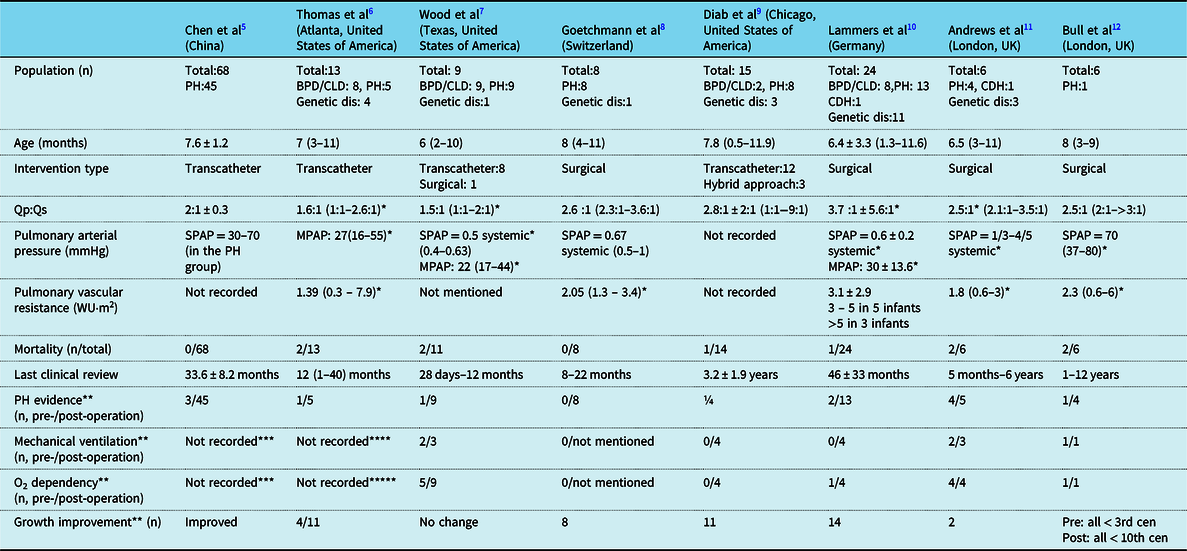
The degree to which atrial shunting may contribute to the clinical instability of infants with several comorbidities is not easy to define. However, eliminating the impact of extra pulmonary blood flow may be useful in an effort to improve respiratory function, decrease the risk of pulmonary vascular disease, optimise somatic growth and, therefore, simplify the long-term management of fragile infants. It may also allow a more aggressive targeted pulmonary hypertension therapy, which is controversial in the presence of an haemodynamically significant left-to-right shunt. Current evidence on the benefits of early atrial septal defect repair is sparse, most often reflecting the individual experience of a limited number of institutes (Table 1). These reports suggest that atrial septal defect closure during the first year of life is feasible and may improve the respiratory and growth outcomes of infants with chronic lung disease or refractory congestive heart failure.Reference Lim and Matherne3–Reference Bull, Deanfield, de Leval, Stark, Taylor and Macartney12 Chen et al also showed improvement of the pulmonary hypertension status in 68 infants who underwent uncomplicated transcatheter atrial septal defect closure, although they did not mention if infants with chronic lung disease or other co morbidities were included in their study.Reference Chen, Cao, Zhang, Chen, Xu and Zhang5
Early atrial septal defect repair studies including more than one infant

BPD = bronchopulmonary dysplasia; cen = centile; CDH = congenital diaphragmatic hernia; CLD = chronic lung disease; MPAP = mean pulmonary artery pressure; PH = pulmonary hypertension; SPAP = systolic pulmonary arterial pressure; WU = Woods Units.
* Invasive measurement
** At last clinical review
*** The study reports improvement in respiratory status (based on parents’ reports)
**** The study reports post-operative respiratory status improvement in 10 infants
***** Described as six infants showing post-operative decrease in O2 requirements
In this study, we present our institute’s 10 years’ experience with surgical atrial septal defect repair in infants less than 12 months of age. Our study aims to examine:
the characteristics and comorbidities of the infants who underwent early atrial septal defect repair;
their pulmonary hypertension incidence;
the need for respiratory support pre-operatively; and
the impact of early atrial septal defect closure in their clinical status and outcomes.
Methods
Study population
We retrospectively reviewed the medical records of 56 consecutive infants who underwent surgical repair of atrial septal defect within their first year of life during a 10-year period (2006–2016). The study protocol complied with the ethical guidelines of the 1975 Declaration of Helsinki. The study was considered a retrospective clinical audit using anonymised data that were obtained as part of the regular patient care. We excluded patients with pulmonary venous abnormalities (pulmonary vein stenosis, anomalous pulmonary venous connection) or other structural CHD.
Data collection
Patient characteristics including gestational age at birth, corrected age and weight at time of surgery, non-cardiac comorbidities, and underling genetic disorders were recorded. Surgical notes were reviewed for intervention indications, complications, and outcomes. Clinical data (weight percentile for age, systemic blood pressure, supplemental oxygen therapy, ventilatory support, medical therapy) and echocardiography recordings were collected from serial assessments performed within 24 hours prior to atrial septal defect repair, at approximately 15 days and 6 months post-operatively and at the last paediatric follow-up.
Echocardiography
Echocardiography studies were performed on a Vivid 7 (GE) system with transducer frequencies appropriate for patient size. Atrial shunt was identified on colour flow Doppler recordings as blood flow at atrial level through a secundum atrial septal defect or patent foramen oval or through a primum atrial septal defect in the absence of additional cardiac abnormalities (including significant atrioventricular valve regurgitation). However, in our cohort of infants who were referred and assessed for early surgical repair of an interatrial communication, there were no cases with isolated primum atrial septal defect. Thus, the study is restricted to cases with secundum atrial septal defect or patent foramen oval. The interatrial communication diameter was measured in subcostal and parasternal short-axis two-dimensional echocardiography views and the largest diameter was noted. The direction of atrial shunt and the presence of patent ductus arteriosus with its flow direction were also recorded. The ratio of pulmonary to systemic blood flow (Qp:Qs) was estimated non-invasively using the American Society of Echocardiography guidelines.Reference Silvestry, Cohen and Armsby13
Views with the best alignment for the tricuspid valve regurgitation jet were used to measure the maximum tricuspid valve regurgitation velocity, and systolic pulmonary artery pressure was estimated from the modified Bernoulli equation.Reference Rudski, Lai and Afilalo14 Right ventricular size, left ventricular ejection fraction, right ventricular fraction area change, tricuspid annular plane systolic motion, and right ventricular myocardial performance index were estimated according to the American Society of Echocardiography guidelines.Reference Rudski, Lai and Afilalo14 Right ventricular systolic duration was defined as the time period from onset to termination of the tricuspid regurgitation jet trace. Right ventricular diastolic duration was measured from termination of the tricuspid regurgitation jet to onset of the following tricuspid regurgitation jet trace. These two intervals were subsequently used to calculate the systolic over diastolic duration ratio.Reference McCrary, Malowitz and Hornick15
The above indices were analysed after examining the actual echocardiography images obtained within 24 hours pre-operatively and at 15 days and 6 months post-operatively. In our institution, a uniform echocardiography protocol is followed for each patient; this has enabled the analysis of the stored images. For each quantitative echo parameter, we used the average of three measurements. Follow-up reviews at later stages occurred at local paediatric units and not all of these measurements were available.
Cardiac catheterisation was intentionally not performed in this group of patients; joint cardiology–cardiothoracic management decisions were based on the interpretation of echocardiography findings and on sufficient clinical information. This practice was followed after taking into consideration the frequent limitations of obtaining meaningful catheter data in the setting of chronic or acute lung disease and the increased anaesthetic risks of an additional invasive diagnostic procedure in such patients.
Indications for early atrial septal defect repair
The decision to proceed to early atrial septal defect repair was based on the presence of haemodynamically significant left-to-right shunt at atrial level, as indicated by the clinical status of the patients and relevant echocardiography findings.
Clinical indications of significant atrial shunt included 1) persistent supplemental oxygen dependency and/or inability to wean from respiratory ventilator support despite optimal medical management of acute or chronic lung disease; 2) pulmonary hypertension evidence (suboptimal arterial oxygen saturation, pulmonary hypertension crisis events, need for inhaled nitric oxide/sildenafil) with or without background history of chronic lung disease;Reference McQuillan, Picard, Leavitt and Weyman16 and 3) refractory congestive heart failure with failure to thrive despite optimal dietary input and or repeated hospital admissions due to respiratory tract infections. Echocardiography findings supportive of haemodynamically significant atrial septal defect were 1) right heart dilatation; 2) elevated estimated Qp:Qs (>1.5:1); and 3) direct or indirect signs of elevated pulmonary artery pressure.Reference Farquhar and Fitzgerald17–Reference Bossone, D’Andrea and D’Alto19
Echocardiographic evidence of pulmonary hypertension included pulmonary artery pressure above 35 mmHg as estimated by the tricuspid valve regurgitation jet. In the absence of adequate tricuspid regurgitation Doppler envelope, a combination of indirect pulmonary hypertension echo signs was used including right-to-left atrial shunt, flat or left-deviated intraventricular septum, and right ventricular hypertrophy with right heart dilatation.Reference Bossone, D’Andrea and D’Alto19
Failure to thrive was defined as a fall across at least two centile spaces in infants with birth weight between the 9th and 91st centiles or weight less than the 2nd percentile for age irrespective of birth weight.20 Serial weight measurements were obtained from the documented growth charts included in patients’ files.
In our study, the infants who are classified as having underlying chronic lung disease were born prematurely and required more than 21% oxygen therapy for at least 28 days.Reference Kinsella, Greeough and Abman21 Patients with bronchopulmonary dysplasia are included in the chronic lung disease group as we were unable to review diagnostic classification of bronchopulmonary dysplasia in all referred patients.
Outcome parameters
Outcomes included adverse events related to the surgical procedure and post-operative improvement in respiratory support, pulmonary hypertension status, and growth (weight percentile for age).
Statistical analysis
Statistical analysis was performed using Statistical Package of Social Science for windows (version 13.0, SPSS Inc., Chicago, Illinois, United States of America). Continuous variables were expressed as mean ± sd or median (range) as appropriate. Categorical variables were expressed as absolute number and percentage (%). Comparison of groups was made using Student’s t-test for normally distributed variables or Mann–Whitney U-test for variables non-normally distributed. A p value of <0.05 was considered statistically significant.
Results
Population characteristics
We identified 56 patients (male, n = 28) who underwent surgical atrial septal defect repair in the first year of life. Fenestrated atrial septal defect closure was performed in 20 of them. In nine infants, there was also a patent ductus arteriosus. In the presence of significant shunt at atrial level, it is often challenging to delineate the contribution of an additional ductus arteriosus to pulmonary overcirculation. Relevant echocardiography surrogates may be affected when there is offloading of the left atrium in the presence of an atrial septal defect. In all nine cases, the ductus arteriosus was very small, and there was no evidence of diastolic blood flow reversal in the descending aorta. All nine infants underwent duct ligation at the time of the atrial septal defect repair according to the joint cardiothoracic decision.
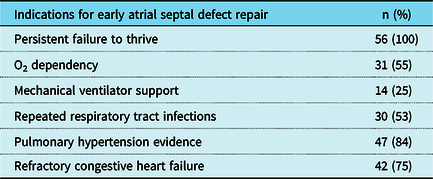
Patients’ corrected gestational age at the time of the procedure ranged from 1.5 to 12 months (median, 8 months). Infants weighted 2.8–9.2 kg (median, 6 kg). The atrial septal defect diameter on transthoracic echocardiogram was 5–15 mm (median, 7 mm), and the echocardiographically estimated Qp:Qs was 1.9 ± 0.1. Table 2 shows the indications for proceeding to early surgical atrial septal defect closure, as stated in the joint cardiothoracic decision reports.
Indications for surgical atrial septal defect repair within the first 12 months of life based on joint cardiothoracic decision reports

O2=oxygen.
Additional non-cardiac comorbidities were present in a significant number of the patients. The median gestational age at birth was 37 weeks (24–41 weeks). However, 27 (48%) infants were born very prematurely at less than 32 weeks’ gestational age with 21 of them (38% of total population) being born at less than 30 weeks’ gestational age. Genetic disorders were confirmed in 26 infants (46%) with 19 of them having trisomy 21 (34% of total population). Nearly half of the studied population (n = 27, 48%) were already under regular respiratory review due to chronic lung disease. More than half of the patients (n = 31, 55%) were oxygen-dependent pre-operatively (35–346 days) with 14 of them (25% of total population) requiring invasive ventilator support (5–145 days).
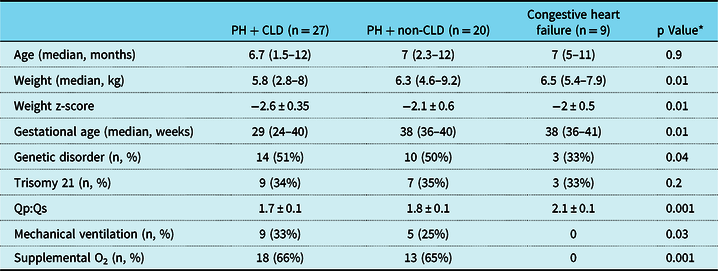
Based on the presence of pulmonary hypertension evidence pre-operatively and on existing underlying chronic lung disease, we identified three groups of infants who underwent early atrial septal defect repair: 1) infants with underlying diagnosis chronic lung disease and pulmonary hypertension evidence (pulmonary hypertension + chronic lung disease group), n = 27 (48%); 2) infants without history of chronic lung disease but who presented acutely unwell and were noted to have pulmonary hypertension signs (pulmonary hypertension + non-chronic lung disease group), n = 20 (36%); and iii) infants with refractory congestive heart failure but without pulmonary hypertension evidence or underlying chronic lung disease (congestive heart failure group), n = 9 (16%). The baseline characteristics and comorbidities for the three groups are shown in Table 3. Between the three groups, there was no statistically significant difference in the prevalence of Trisomy 21, although the total incidence of genetic abnormalities was higher in the pulmonary hypertension groups. Additionally, failure to thrive was more prominent in infants with pulmonary hypertension evidence pre-operatively. Finally, more infants in the pulmonary hypertension-chronic lung disease group were oxygen-dependent or required mechanical ventilator support pre-operatively.
Baseline characteristics and comorbidities

CLD=chronic lung disease; O2=oxygen; PH=pulmonary hypertension; Qp:Qs=ratio of pulmonary to systemic blood flow.
* Comparisons refer to all three groups
Pulmonary hypertension status prior to the procedure
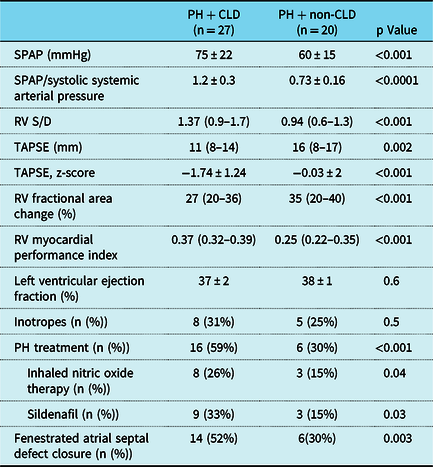
In total, clinical and/or echocardiography signs of raised pulmonary artery pressure were found in a significant percentage of the studied population (84%, 47 patients). Baseline echocardiographic parameters and medical treatment for the two pulmonary hypertension groups are shown in Table 4.
Pre-operative echocardiographic parameters and anti-pulmonary hypertension treatment for the two pulmonary hypertension groups

CLD=chronic lung disease; PH=pulmonary hypertension; RV=right ventricle; S/D=ratio of systole over diastole duration ratio; SPAP=systolic pulmonary artery pressure; TAPSE=tricuspid annular plane systolic excursion.
Among infants with evidence of raised pulmonary artery pressure, those with underlying chronic lung disease had higher estimated systolic pulmonary artery pressure and more often required inhaled nitric oxide therapy pre-operatively than non-chronic lung disease patients (59 versus 30%, p < 0.001) (Table 4). In 63% of the chronic lung disease infants, echo-estimated systolic pulmonary artery pressure was higher than the measured systolic arterial pressure, whereas this was the case in only 30% of the pulmonary hypertension-non-chronic lung disease patients (p < 0.0001). Moreover, the right ventricular performance was more affected in the pulmonary hypertension-chronic lung disease group as evidenced by lower tricuspid annular plane systolic excursion z-scores and right ventricular fractional area change as well as by higher right ventricular myocardial performance index and right ventricular systolic over diastolic duration ratio (Table 4). There were no statistically significant differences in the left ventricular ejection fraction between the two pulmonary hypertension groups or in the pre-operative use of inotropes (Table 4). All patients from both pulmonary hypertension groups were on appropriate diuretic therapy pre-operatively. Finally, pulmonary-chronic lung disease infants underwent fenestrated patch atrial septal defect closure more often than the pulmonary hypertension-non-chronic lung disease group (52% versus 30%, p = 0.003), in an effort to decrease the risk of compromised cardiac output from elevated pulmonary artery pressure post-operatively.
Pre-operatively, heart failure patients had no echocardiographic evidence of pulmonary hypertension and did not require any anti-pulmonary hypertension treatment. They all had good biventricular function (left ventricular ejection fraction: 38 ± 2%; right ventricular systolic over diastolic duration ration: 0.65 ± 0.1; tricuspid annular plane systolic excursion z-score: +1 ± 0.44; right ventricular fractional area change: 36 ± 2%; right ventricular myocardial performance index: 0.18 ± 0.1). None of them required inotropic or ventilatory support prior to atrial septal defect closure; they were all on maximal diuretic therapy.
Outcomes
Surgical outcomes and follow-up
All patients survived to be discharged from the tertiary paediatric cardiology unit. There were no major adverse events related to the surgical procedure. Over a median follow-up of 1.4 years (0.2–8.5), three patients (pulmonary hypertension-chronic lung disease group: two patients, pulmonary hypertension-non-chronic lung disease group: one patient) died at 6, 6.8, and 7 months after the surgical procedure due to complications from multiple congenital extracardiac abnormalities (renal, tracheobronchial, or gastrointestinal malformations). The rest 53 infants remained well at their last follow-up.
Respiratory support and growth response to atrial septal defect closure
All ventilator (n = 14, 25%) or oxygen-dependent (n = 31, 55%) patients could be weaned within 2 weeks after atrial septal defect closure, including those with underlying diagnosis of chronic lung disease. None of the survived patients required oxygen therapy, invasive, or non-invasive respiratory support at their last follow-up.
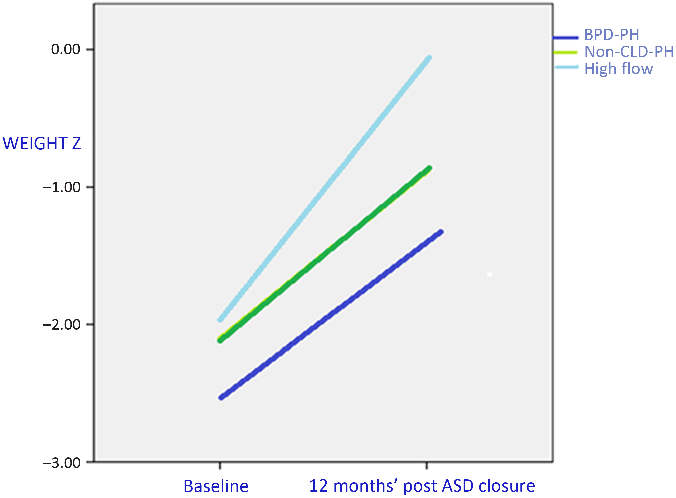
Additionally, all infants showed significant catch-up growth post-operatively. One year after atrial septal defect repair, weight z-score increased in all patients and more specifically by +1 (0.5–1.5) in the pulmonary hypertension-chronic lung disease group, by +1.3 (0.7–1.7) in pulmonary hypertension-non-chronic lung disease patients and by +2(1–2) in the congestive heart failure group (Fig 1).
Pulmonary hypertension status response to atrial septal defect closure
Weight gain after early atrial septal defect (ASD) surgical closure.

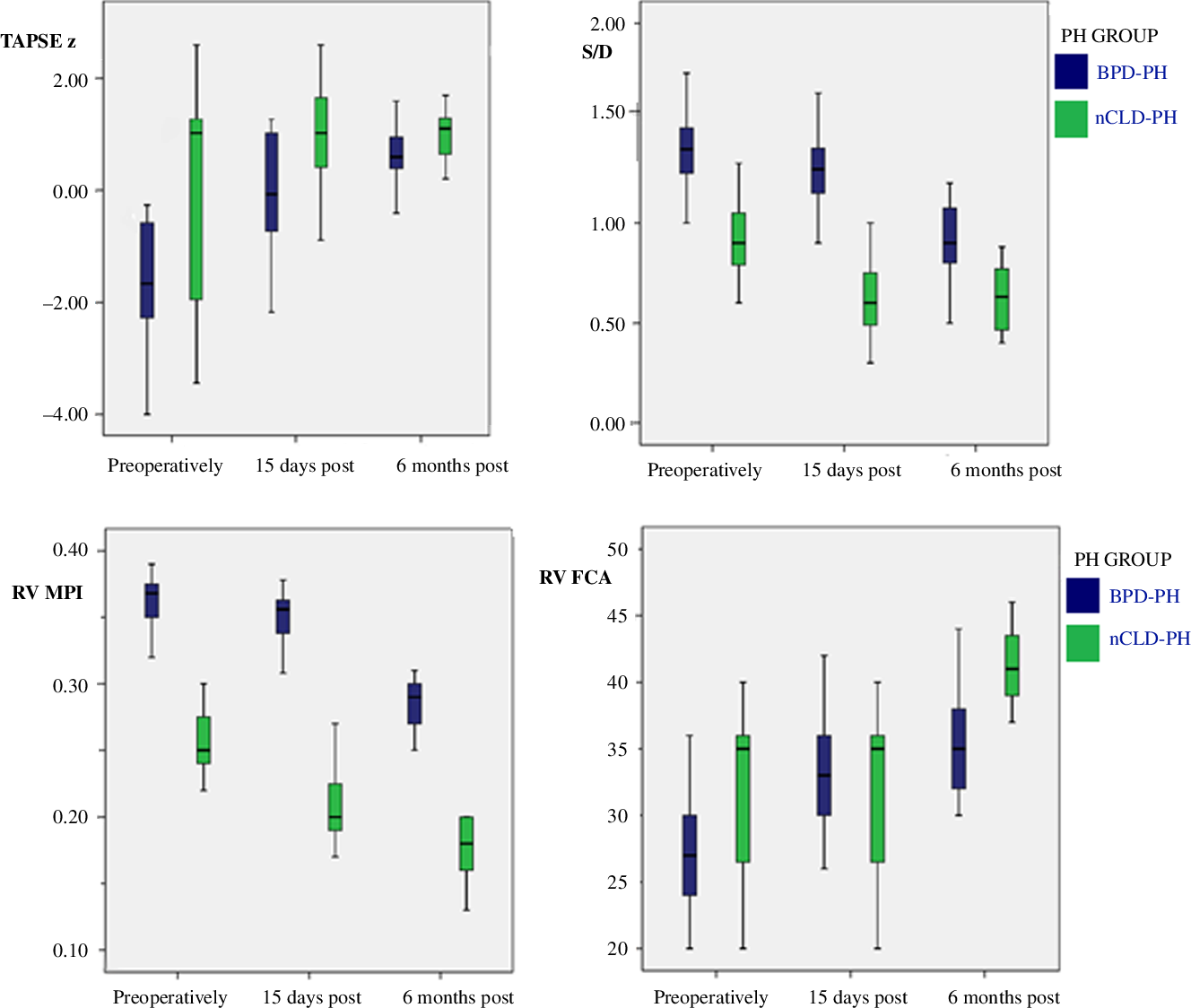
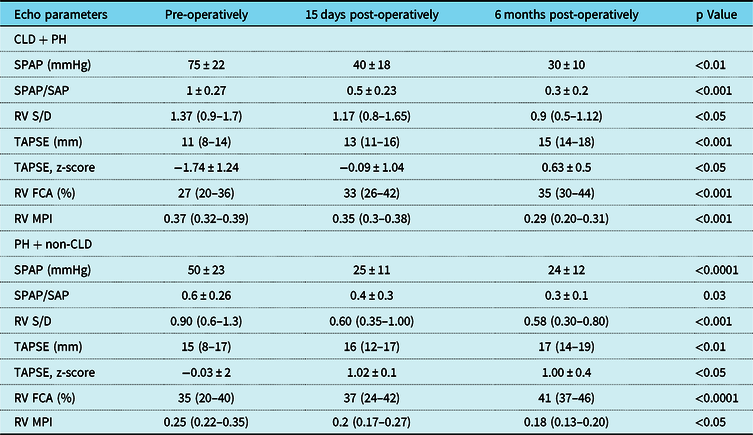
Post-operatively, there was a significant decrease in the incidence and severity of pulmonary hypertension in both the chronic lung disease and the non-chronic lung disease patients (Table 4, Fig 2). Sixteen (34%) of the pulmonary hypertension infants continued to have clinical or echocardiographic evidence of raised pulmonary artery pressure 2 weeks post atrial septal defect closure (Table 4, Fig 2) and only four of them at their last follow-up.
Right ventricular (RV) function response to early atrial septal defect surgical closure.

Among the pulmonary hypertension-chronic lung disease infants (n = 12, 44%), less than half of them had pulmonary hypertension evidence at 2 weeks post atrial septal defect closure and remained on Sildenafil therapy (Table 4, Fig 2). Only three (11%) of them continued to have echo evidence of pulmonary hypertension at their last follow-up (3.5 years, 2 years, 2 years). These patients are under regular follow-up by the institute’s specialised pulmonary hypertension team and have undergone additional right heart haemodynamic studies. In two of them, systolic pulmonary artery pressure remains less than 2/3 systemic and pulmonary vascular resistance is low with noted left-to-right residual shunt at atrial level. In the third patient, there is evidence of pulmonary vascular disease with raised pulmonary vascular resistance and mean pulmonary artery pressure above 25 mmHg. This patient remains on oral Sildenafil therapy.
Pulmonary hypertension-non-chronic lung disease infants also demonstrated significant improvement of their pulmonary hypertension status (Table 4, Fig 2). Pulmonary hypertension echocardiographic evidence was noted in only four of them (20%) at 2 weeks post atrial septal defect closure and only in one of them during their last follow-up (1 year post-operatively). This patient has evidence of pulmonary vascular disease with raised pulmonary vascular resistance and is currently on Sildenafil treatment.
Right ventricular performance
Post-operatively, pulmonary hypertension infants of both groups showed improvement in ratio of systole over diastole duration, tricuspid annular plane systolic excursion z-score, right ventricular fractional area change, and right ventricular myocardial performance index (Table 5, Fig 2). However, at 6 months post-operatively, these right ventricle performance indices remained more impaired in the infants with pulmonary hypertension and chronic lung disease than in those with pulmonary hypertension but without underlying chronic lung disease (p < 0.05, Fig 2).
Patency of atrial fenestration at last follow-up
Post-operative progression of pulmonary hypertension status and right ventricular function

CLD=chronic lung disease; FCA=fractional change area; MPI=myocardial performance index; PH=pulmonary hypertension; RV=right ventricular function; SAP=systolic arterial pressure; S/D=systolic over diastolic duration ratio; SPAP=systolic pulmonary artery pressure; TAPSE=tricuspid annular plane systolic excursion.
In our cohort, 20 patients underwent fenestrated atrial septal defect repair. In eight of these infants, fenestration flow was still evident on colour Doppler at their last post-operative follow-up (range: 3 months–3.5 years). Fenestration was patent in all four patients who continued to have evidence of raised pulmonary artery pressure at their last review.
Discussion
Findings
Our study suggests that early repair of an haemodynamically significant atrial septal defect can be safely performed and is associated with improved clinical outcomes in symptomatic infants with chronic lung disease, evidence of elevated pulmonary artery pressure, and/or growth failure, who do not respond to medical therapy. Although a large percentage (84%) of the infants had clinical or echocardiographic signs of pulmonary hypertension pre-operatively, there was no evidence of elevated pulmonary artery pressure in the majority of them during their last follow-up. All ventilated infants were able to be weaned off respiratory support and oxygen therapy post atrial septal defect repair, even those with chronic lung disease. All survivors remained self-ventilating in air at their last follow-up. Growth rate was also shown to improve significantly after the procedure. To the best of our knowledge, this study examined the characteristics and outcomes of the largest cohort so far of infants with multiple comorbidities, including chronic lung disease, who underwent early surgical repair of atrial septal defect.
Effect of early atrial septal defect repair on clinical outcomes
Early atrial septal defect repair in infants with chronic lung disease and evidence of pulmonary hypertension
Our study suggests that atrial septal defect repair during the first year of life may be of benefit in preterm infants with chronic lung disease and evidence of elevated pulmonary artery pressure. Our results showed significant clinical improvement in these patients post-operatively with no procedural complications and low morbidity. In fact, all chronic lung disease infants with pulmonary hypertension managed to be weaned from any respiratory support within 2 weeks after eliminating the atrial shunt; they remained self-ventilating in air at their last follow-up. Pulmonary hypertension status and right ventricular performance also improved post-operatively, and only one patient has been shown to have evidence of pulmonary vascular disease during the invasive haemodynamic assessment. Additionally, catch-up in growth has been recorded post-operatively in these patients. Previously published case series have also reported improvement in the respiratory status and growth of older children with chronic lung disease after atrial septal defect repair.Reference Wood, Holzer and Texter7,Reference Lammers, Hager, Eicken, Lange, Hauser and Hess10,Reference Mainwaring, Mirali-Akbar, Lamberti and Moore22,Reference Wyss, Quandt and Weber23 However, our study included the largest so far studied cohort of preterm infants with chronic lung disease who underwent atrial septal defect repair at less than 1 year of age. Indeed, almost half of the included in our study infants (48%) had an underlying diagnosis of prematurity and chronic lung disease.
The contribution of interatrial shunt in the respiratory status of infants with underlying chronic lung disease is not completely understood. Although these infants are expected to improve gradually as lungs grow, they continue having reduced alveolar–capillary surface area. Also, they are often exposed to several factors (infections, hyperoxia, mechanical injury from aggressive respiratory support) which may induce pulmonary vascular remodelling.Reference Choi, Jung and Kim1,Reference Del Cerro, Sabaté Rotés and Cartón24,Reference Cantinotti, Assanta, Murzi and Lopez25 . As a result, they may be more sensitive to the effects of any left-to-right intracardiac shunt.Reference Del Cerro, Sabaté Rotés and Cartón24,Reference Cantinotti, Assanta, Murzi and Lopez25 Lee et al in their study have shown the need for oxygen dependency among premature infants to be higher in those with interatrial communications.Reference Lee, Lim, Kim and Han26 Several case reports have also indicated an association between left-to-right shunt at atrial level and persistent respiratory support in the setting of chronic lung disease.Reference Evans and Iyer27,Reference Motz, Grassl and Trawoger28 It has been suggested that in these cases, increased pulmonary blood flow may exacerbate pulmonary oedema, commonly seen in such infants, aggravate endothelial injury and contribute to the development of pulmonary vascular disease.Reference Choi, Jung and Kim1,Reference Motz, Grassl and Trawoger28,Reference Chess, D’Angio, Pryhuber and Maniscalco29 The significant improvement in the respiratory status of our chronic lung disease cohort and the absence of pulmonary hypertension evidence in the majority of them during their last follow-up also suggest that elimination of atrial shunt at an early stage may allow symptomatic ex-premature infants to follow a less complicated chronic lung disease course.
Early atrial septal defect repair in infants with pulmonary hypertension evidence but no underlying chronic lung disease
Our results also showed significant improvement in the respiratory status of infants with no underlying chronic lung disease but with evidence of elevated pulmonary artery pressure. In our study, 65% of such infants remained oxygen-dependent and 25% could not be weaned off mechanical ventilation despite optimal medical management. However, all of them were weaned off any respiratory support within 2 weeks of atrial septal defect repair, and only one had persistent evidence of pulmonary vascular disease. The rapid post-operative improvement and the long-term absence of pulmonary hypertension evidence in the majority of these patients may suggest that pulmonary hypertension in this group was related to elevated pulmonary flow in the setting of normal pulmonary vascular resistance. Of note, the infants of this group were referred for cardiology assessment when they presented acutely unwell during a course of severe respiratory tract infection. Previous studies have shown that infectious respiratory illness may act as triggers of pulmonary hypertension, especially in infants with decreased respiratory reserve.Reference Farquhar and Fitzgerald17,Reference Kumar, Hutchison, Lakshminrusimha, Morin, Wynn and Ryan30 It may be that increased frequency of respiratory tract infections as a result of increased pulmonary blood flow due to significant left-to-right atrial shunt may increase susceptibility to pulmonary hypertension development.Reference Farquhar and Fitzgerald17 Therefore, early atrial septal repair may be of benefit in such infants and may improve their long-term prognosis.
Early atrial septal defect repair and failure to thrive
In our study, all infants had inadequate growth gain pre-operatively despite maximal dietary support. It is though difficult to differentiate between atrial shunt and involved comorbidities as the main cause of failure to thrive. However, significant catch-up growth was recorded post-operatively, irrespective of the presence of additional comorbidities. These results suggest that atrial septal defect closure may be of benefit in refractory cases. In fact, atrial septal defect has been previously related to failure to thrive even in asymptomatic children, and catch-up growth has been shown for them after atrial septal defect repair.Reference Wyss, Quandt and Weber23,Reference Rhee, Evangelista and Nigrin31,Reference Bishnoi, Everett and Ringel32 Interestingly, Rhee et al showed that children who had atrial septal defect repair at an older age had a lesser degree of height improvement when compared with those who had the same procedure during infancy.Reference Rhee, Evangelista and Nigrin31
Early atrial septal defect repair and genetic syndromes
Infants with trisomy 21 or other genetic syndromes often present multi-system abnormalities including respiratory dysfunction and poor growth. The ongoing presence of an intracardiac left-to-right shunting, even at atrial level, may affect their clinical status, increase the risk of developing pulmonary vascular obstructive disease and complicate their management.Reference Thomas, Vincent, Raviele, Diehl, Qian and Kim6 Previous reports have suggested that early atrial septal defect repair in such infants may be beneficial.Reference Wyss, Quandt and Weber23 In our study, 48% of the infants had an underlying genetic disorder including trisomy 21 (34% of the total population). With the exception of three of these infants who had unfavourable outcome due to multiple and complex congenital defects, the rest remain well. In fact, none of them has had evidence of raised pulmonary artery pressure at their last follow-up even those with elevated estimated pulmonary artery pressure pre-operatively. Additionally, they all showed significant improvement of their growth rate post atrial septal defect repair.
Fenestrated atrial septal defect closure
Not all infants with evidence of elevated pulmonary artery pressure can be suitable candidates for early atrial septal defect repair, especially when there is underlying respiratory insufficiency. Such infants are at risk of having already developed pulmonary vascular disease, and right-to-left atrial shunting may allow for decompression of the right heart and preservation of the right ventricular output during a pulmonary hypertension crisis.Reference Andrews, Tulloh, Magee and Anderson11 Therefore, it is prudent to carefully select those infants who can safely undergo atrial septal defect repair. Invasive haemodynamic assessment of pulmonary vascular resistance is not routinely preformed in our institute for infants with multiple comorbidities, chronic lung disease, and pulmonary hypertension evidence as they are at higher risk of adverse events during a general anaesthesia procedure. Moreover, these patients remain clinically and ventilator unstable and cardiac catheterisation may not give reliable data. Therefore, defining selection criteria remain a challenge.
In cases where early atrial septal defect closure is considered but there is concern about potential for sustained elevation in pulmonary artery pressure, fenestrated atrial septal defect closure may be an option. In our institution and upon completion of this retrospective study, there has been no uniform protocol regarding selection criteria for fenestrated atrial septal defect closure. The decision to proceed with fenestrated atrial septal defect closure depended on clinical or echocardiographic indications of suprasystemic pulmonary artery pressure, on the severity of clinical status (mainly unstable patients on mechanical ventilator support) and on the judgement of each cardiothoracic surgeon during surgery. In this study, all infants with estimated pulmonary artery pressure at suprasystemic levels (52% of the pulmonary hypertension-chronic lung disease and 30% of the pulmonary hypertension-non-chronic lung disease infants) underwent fenestrated atrial septal defect surgical closure with no complications. They were all off oxygen therapy or ventilator support within 2 weeks post atrial septal defect repair and remained well at their last follow-up. The selection of which patients will most benefit from fenestrated repair needs to be studied further.
During the last echocardiogram, fenestration did not appear to be patent in 12 of the 20 infants who underwent fenestrated atrial septal defect repair. This outcome is based on post-operative follow-up range between 0.2 and 8.5 years. No patent fenestration was seen in any of the infants who, during our study period, were more than 3.5 years after the surgical repair.
Early atrial septal defect repair and right ventricular performance
Our study demonstrates a significant improvement in the right ventricular performance of all infants with evidence of elevated pulmonary artery pressure. This may well be the result of decreased right ventricular afterload due to lower pulmonary artery pressure and improved respiratory function after atrial septal defect repair. Pre-operatively, both right ventricular myocardial performance index and systole over diastole duration ratio were elevated in pulmonary hypertension patients, although in a greater degree in the chronic lung disease infants. Tricuspid annular plane systolic excursion was also decreased, and right ventricular function did not appear to be as hyperdynamic as often seen in cases with large left-to-right atrial shunts. These findings may reflect the response of the right ventricular myocardium to increased afterload in cases of elevated pulmonary artery pressure.Reference Malowitz, Forsha, Smith, Cotten, Barker and Tatum33 Our results are in agreement with the study of McCrary et al who have shown the ratio of systole over diastole duration to be higher in chronic lung disease patients with pulmonary hypertension than those without.Reference McCrary, Malowitz and Hornick15 The fact that echo parameters of right ventricular performance improved quickly post-opertively in our pulmonary hypertension infants may indicate the contribution of a significant atrial shunt to elevated pulmonary artery pressure and impaired right ventricular contractility.Reference Malowitz, Forsha, Smith, Cotten, Barker and Tatum33 This improvement may also suggest that right ventricular contractility was still preserved at the time of repair and able to recover in both pulmonary hypertension groups, although to a lesser extent in chronic lung disease preterm infants. The latter may be analogous to the results of a study which showed evidence of right ventricular systolic dysfunction in young adults born preterm.Reference Lewandowski, Bradlow and Augustine34
Limitations of the study
Our study has the limitations of a retrospective study. It is also limited by relatively small number of patients and the short follow-up period. Pulmonary artery pressure was estimated using echocardiography and was not measured invasively during right heart catheterisation, the gold standard for assessing pulmonary artery pressure and pulmonary vascular resistance. Similarly, there are several difficulties, limitations, and potential errors when trying to estimate the pulmonary-to-systemic flow ratio (Qp:Qs) by echocardiography although previous studies have shown reasonable correlation between Doppler and invasively derived Qp:Qs.Reference Silvestry, Cohen and Armsby13 The patients of our cohort were selectively referred for intervention and a control group of infants with similar comorbitidies and a conservatively managed atrial septal defect could not be identified through a retrospective search of our institute’s database. Larger, multi-centre prospective studies are needed so as to determine the benefits of early atrial septal defect closure in the clinical status and growth of patients with chronic lung disease, pulmonary hypertension or refractory heart failure and to help define patients’ selection criteria.
Conclusions
Left-to-right shunt at atrial level may impact on the respiratory functional status and growth of infants with multiple non-cardiac comorbidities including chronic lung disease, signs of elevated pulmonary artery pressure, or genetic abnormalities. Early atrial septal defect repair in such infants, who do not respond to optimal medical management, may improve their clinical status, diminish the need for respiratory support, and decrease the pulmonary artery pressure. Prospective, long-term follow-up studies of larger number of infants may help to assess outcomes and to define selection criteria.
Financial Support
This research received no specific grant from any funding agency, commercial or not-for-profit sectors.
Conflicts of Interest
None.
Ethical Standards
The study complied with the ethical guidelines of the 1975 Declaration of Helsinki.