Introduction
The genus Peltigera Willd. (Lecanoromycetes: Peltigerales) includes terricolous and muscicolous, foliose lichens that normally occupy moist habitats and are widespread on most continents (Miadlikowska & Lutzoni Reference Miadlikowska and Lutzoni2000; Martínez et al. Reference Martínez, Buggazo, Vitikainen and Escudero2003; Han et al. Reference Han, Zhang and Guo2013, Reference Han, Zheng and Guo2015; Manoharan-Basil et al. Reference Manoharan-Basil, Miadlikowska, Goward, Andrésson and Miao2016; Magain et al. Reference Magain, Miadlikowska, Mueller, Gajdeczka, Truong, Salamov, Grigoriev, Dubchak, Goffinet and Sérusiaux2017). Peltigera is characterized by the absence of a lower cortex, with numerous rhizines and veins running along the undersurface, and with most species containing cyanobacteria, with some containing green algae and producing cephalodia that contain cyanobacteria (Miadlikowska & Lutzoni Reference Miadlikowska and Lutzoni2000; Magain et al. Reference Magain, Miadlikowska, Mueller, Gajdeczka, Truong, Salamov, Grigoriev, Dubchak, Goffinet and Sérusiaux2017). Peltigera is one of the earliest circumscribed lichen genera with three species formally described by Linnaeus (Reference Linnaeus1753), two of them reclassified by Willdenow (Reference Willdenow1787) in the new genus Peltigera (P. aphthosa (L.) Willd. and P. canina (L.) Willd., the type of the genus). Although the genus is readily recognized in the field by its large, rather soft, leafy appearance, it is nonetheless often difficult to distinguish species since the diversity and variation is still poorly understood.
The traditional taxonomy of Peltigera relied on vegetative features of the thallus, and sometimes on profiles of secondary chemistry (Miadlikowska & Lutzoni Reference Miadlikowska and Lutzoni2000). The genus has been relatively well studied in the Northern Hemisphere and may include at least 90 species worldwide (Goward et al. Reference Goward, Goffinet and Vitikainen1995; Kirk et al. Reference Kirk, Cannon, Minter and Stalpers2008; Han et al. Reference Han, Zhang and Guo2013, Reference Han, Zheng and Guo2015; Manoharan-Basil et al. Reference Manoharan-Basil, Miadlikowska, Goward, Andrésson and Miao2016). Peltigera was among the earliest lichen-forming taxa subjected to molecular phylogenetic studies (e.g. Goffinet & Miadlikowska Reference Goffinet and Miadlikowska1999) and sequences of ITS and LSU nrDNA have been commonly used in phylogenetic analyses (e.g. Goffinet et al. Reference Goffinet, Miadlikowska and Goward2003; O'Brien et al. Reference O'Brien, Miadlikowska and Lutzoni2009; Sérusiaux et al. Reference Sérusiaux, Goffinet, Miadlikowska and Vitikainen2009; Han et al. Reference Han, Zhang and Guo2013, Reference Han, Zheng and Guo2015; Manoharan-Basil et al. Reference Magain, Miadlikowska, Mueller, Gajdeczka, Truong, Salamov, Grigoriev, Dubchak, Goffinet and Sérusiaux2016).
Phylogenetic inferences from LSU nrDNA sequences combined with morphological and chemical characters led to an infrageneric classification of the genus by Miadlikowska & Lutzoni (Reference Miadlikowska and Lutzoni2000). A study assessing the reproductive isolation of Peltigera based on sequence data of the three loci (ITS nrDNA, β-tubulin and RPB1) indicated that the genus is more diverse in western North America than originally perceived, and that morphological diversity probably reflects the presence of undescribed species rather than evidence of hybridization or intraspecific variation (O'Brien et al. Reference O'Brien, Miadlikowska and Lutzoni2009). Recently, eight new species from the Eastern Hemisphere (Papua New Guinea and China) were described (Sérusiaux et al. Reference Sérusiaux, Goffinet, Miadlikowska and Vitikainen2009; Han et al. Reference Han, Zhang and Guo2013, Reference Han, Zheng and Guo2015) with c. 40 species reported in Asia in total (Martínez et al. Reference Martínez, Buggazo, Vitikainen and Escudero2003; Han et al. Reference Han, Zhang and Guo2013, Reference Han, Zheng and Guo2015; Niu et al. Reference Niu, Zhu, Wang, Shi, Bai and Zheng2016).
Thirty species of Peltigera have been recorded from China (Chen Reference Chen1986; Vitikainen Reference Vitikainen1986; Wei Reference Wei1991; Stenroos et al. Reference Stenroos, Vitikainen and Koponen1994; Wu & Liu Reference Wu and Liu2012; Han et al. Reference Han, Zhang and Guo2013, Reference Han, Zheng and Guo2015; Niu et al. Reference Niu, Zhu, Wang, Shi, Bai and Zheng2016). Of these, 15 species belong to section Peltigera (i.e. the P. canina-group). Two species, P. meridiana Gyeln and P. subincusa (Gyeln.) Inum, which were reported from Taiwan (Catalogue of Life in Taiwan 141456 & 141463, http://taibif.tw/zh/namecode/), require critical evaluation but voucher specimens are not available for examination. As part of an ongoing study of Peltigera species in China, we discovered an apparently new species based on its morphological characteristics, and we confirmed its monophyly using nrDNA ITS sequence data. We formally describe Peltigera shennongjiana below. Recently, the ITS2 region has been widely used for low-level phylogenetic analyses and distinguishing closely related species. Case studies have revealed that a compensatory base change (CBC) in the helix II or helix III ITS2 secondary structure between two organisms correlated with sexual incompatibility (Müller et al. Reference Müller, Philippi, Dandekar, Schultz and Wolf2007). Usually, if a CBC or more than four hemi-compensatory base changes (hCBCs) are found between organisms classified within the same genus, they are likely to belong to different species (Hershkovitz & Lewis Reference Hershkovitz and Lewis1996; Coleman Reference Coleman2007; Müller et al. Reference Müller, Philippi, Dandekar, Schultz and Wolf2007). Including ITS2 secondary structure information along with the primary sequence data can provide a further dimension for resolving the inherent problems in distinguishing closely related fungal species, including for lichen forming fungi (Piercey-Normore et al. Reference Piercey-Normore, Coxson, Goward and Goffinet2006; Han et al. Reference Han, Zheng and Guo2015). In the present study, we also compared the secondary structure of the nrDNA ITS2 of the new species with the potentially closest related species based on the sequence similarity, P. ‘neorufescens’, (GenBank AY257916, Miadlikowska & Lutzoni Reference Miadlikowska and Lutzoni2000).
Materials and Methods
Specimens and morphology
All specimens were collected from forest in the Shennongjia region of Central China and were deposited in the Herbarium Mycologicum Academiae Sinicae-Lichenes (HMAS-L) and the Herbarium of Hebei Normal University (HBNU). Specimen examination was undertaken with a Motic SMZ-140 dissecting microscope and an Olympus CH compound microscope. Asci and ascospores were observed in cross-sections of apothecia cut by hand with a razor blade and mounted in water. Thin-layer chromatography (TLC) was performed for all specimens studied, following Orange et al. (Reference Orange, James and White2010) and using solvent systems C and G. For the terminology used in the descriptions, we followed Vitikainen (Reference Vitikainen1994, Reference Vitikainen, Nash III, Ryan, Diederich, Gries and Bungartz2004).
DNA extraction, PCR amplification and sequencing
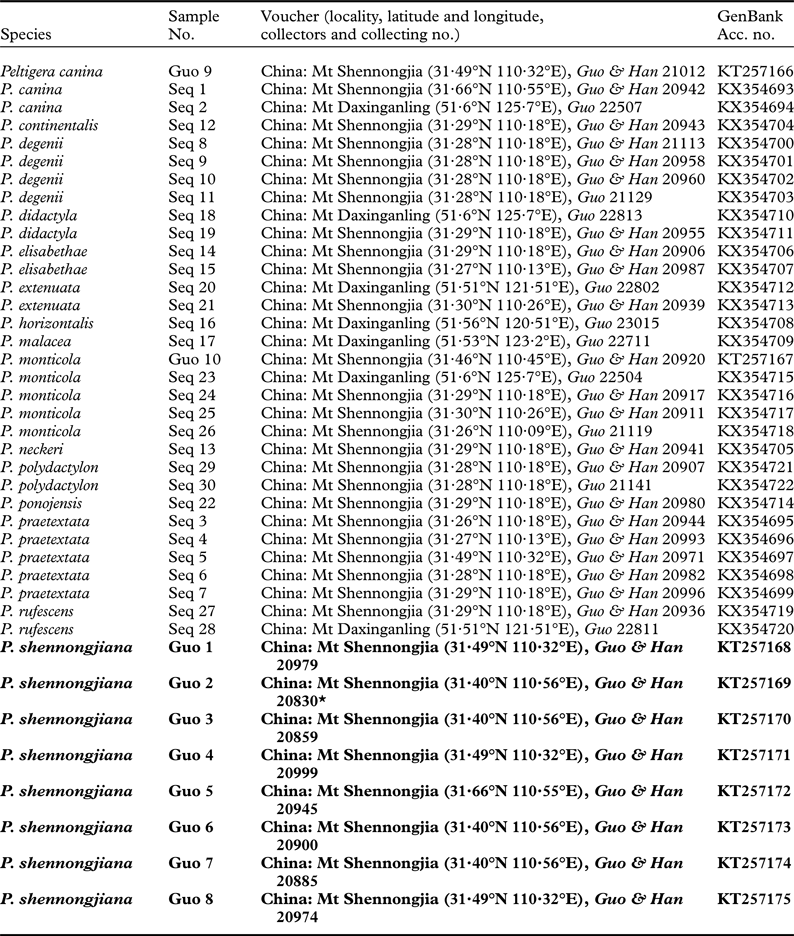
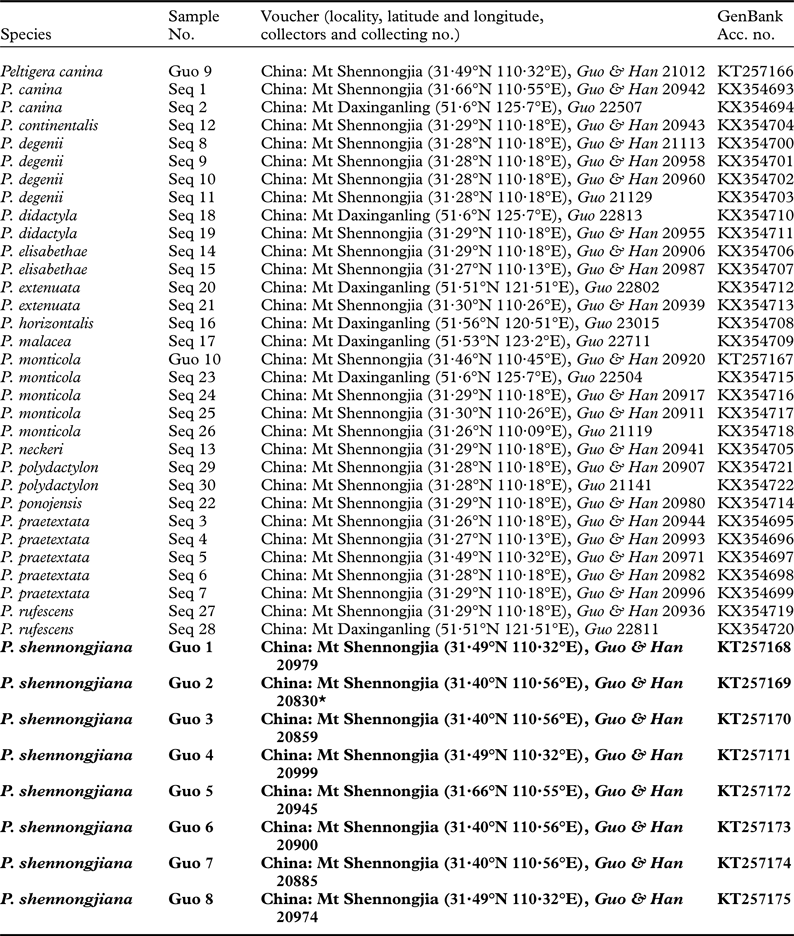
Lobe tips were removed from 40 specimens selected for DNA extraction (including eight of the new species and 32 of known species in the Peltigera canina-group). DNA was extracted using the DNAsecure Plant DNA Kit (Tiangen, China) following the manufacturer's protocol. Amplification of the ITS region followed methods described in Han et al. (Reference Han, Zhang and Guo2013, Reference Han, Zheng and Guo2015). The entire ITS region (ITS1, 5.8S and ITS2) of the nrDNA repeat tandem was targeted for PCR using the primers ITS1F (5’- CTT GGT CAT TTA GAG GAA GTA A -3’, 22 nt; Gardes & Bruns Reference Gardes and Bruns1993) and ITS4 (5’- TCC GCT TAT TGA TAT GC -3’, 20 nt; White et al. Reference White, Bruns, Lee, Taylor, Innis, Sninsky and White1990). The amplification reaction was performed in a 25 µl volume containing 0·75 units of TransStart Taq Polymerase (Tiangen, China), 2·5 µl of the manufacturer's buffer, 0·5 µl of each primer (5 µM), 2 µl (2 5 mM) deoxyribonucleotide triphosphate (dNTP mix), and 1 µl of genomic DNA. The conditions for thermocycling of the ITS region were as follows: 95 °C for 3 min followed by 35 cycles at 94 °C for 30 s, 54 °C for 30 s and 72°C for 1 min, with a final extension at 72 °C for 10 min. PCR products were screened on 1% agarose gels stained with ethidium bromide and sequenced by Genewiz Inc. (Beijing).
Forty newly obtained sequences were submitted to GenBank (see Table 1 & Fig. 1A & B for Accession numbers). The starting and end spacers of ITS1 and ITS2 were determined by comparison with sequences available from GenBank (e.g. AY257890 Peltigera continentalis Vitik. and JX181776 P. membranacea (Ach.) Nyl.). The 3′ end of the small subunit (SSU) gene and the 5′ end of the large subunit (LSU) gene were excluded from the analyses. Sequences of the new species were aligned with representatives of the most similar taxa for which the ITS sequences were accessible from GenBank. The representative taxa were selected mainly according to morphological characters, sequence similarity from Blast searches in GenBank, and references (e.g. Miadlikowska & Lutzoni Reference Miadlikowska and Lutzoni2000; Goffinet et al. Reference Goffinet, Miadlikowska and Goward2003; Miadlikowska et al. Reference Miadlikowska, Lutzoni, Goward, Zoller and Posada2003; Sérusiaux et al. Reference Sérusiaux, Goffinet, Miadlikowska and Vitikainen2009; Anstett et al. Reference Anstett, O'Brien, Larsen, McMullin and Fortin2013; Han et al. Reference Han, Zhang and Guo2013, Reference Han, Zheng and Guo2015). The Accession numbers of the representative taxa obtained are provided in the trees (Fig. 1A & B).
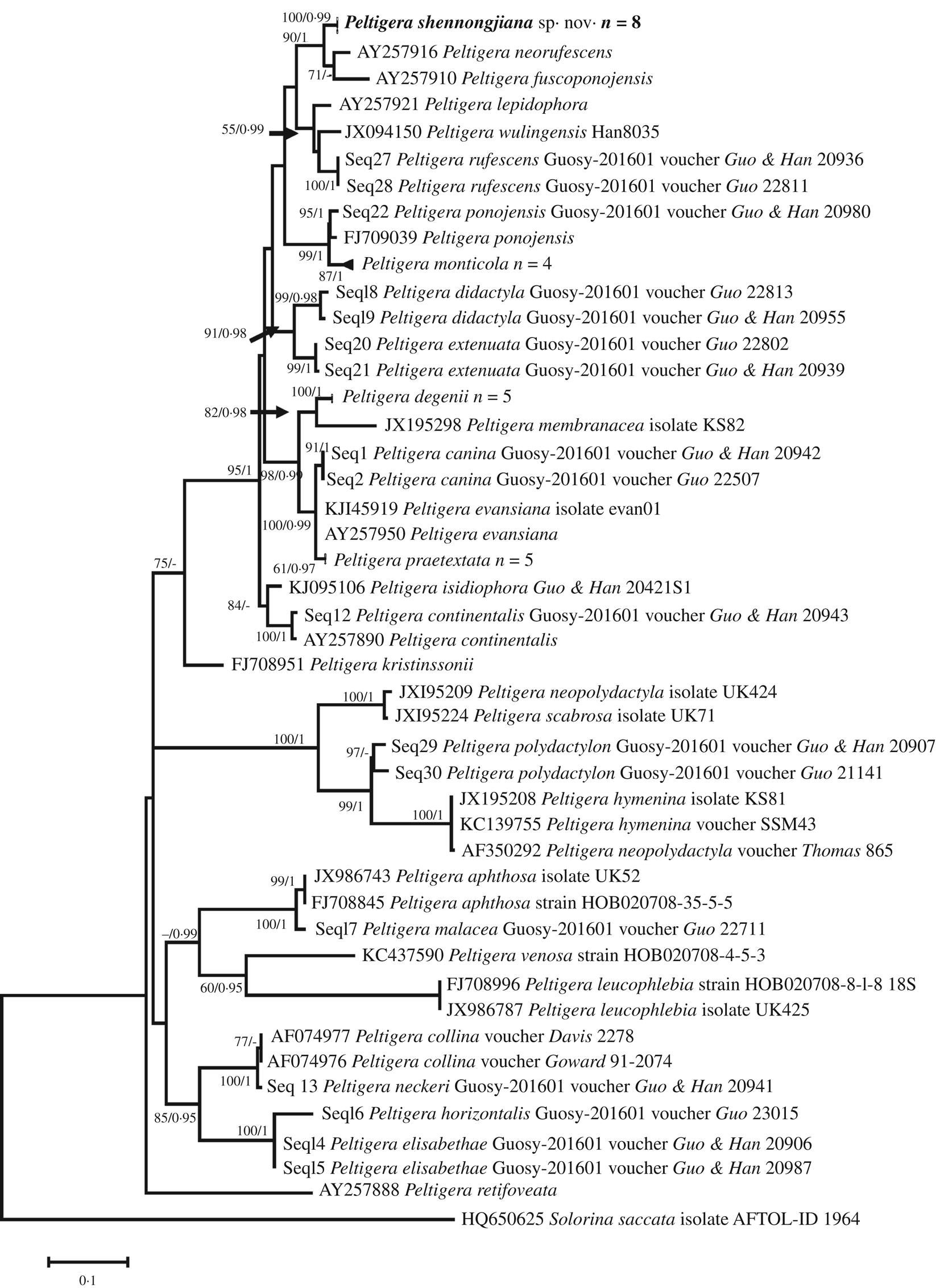
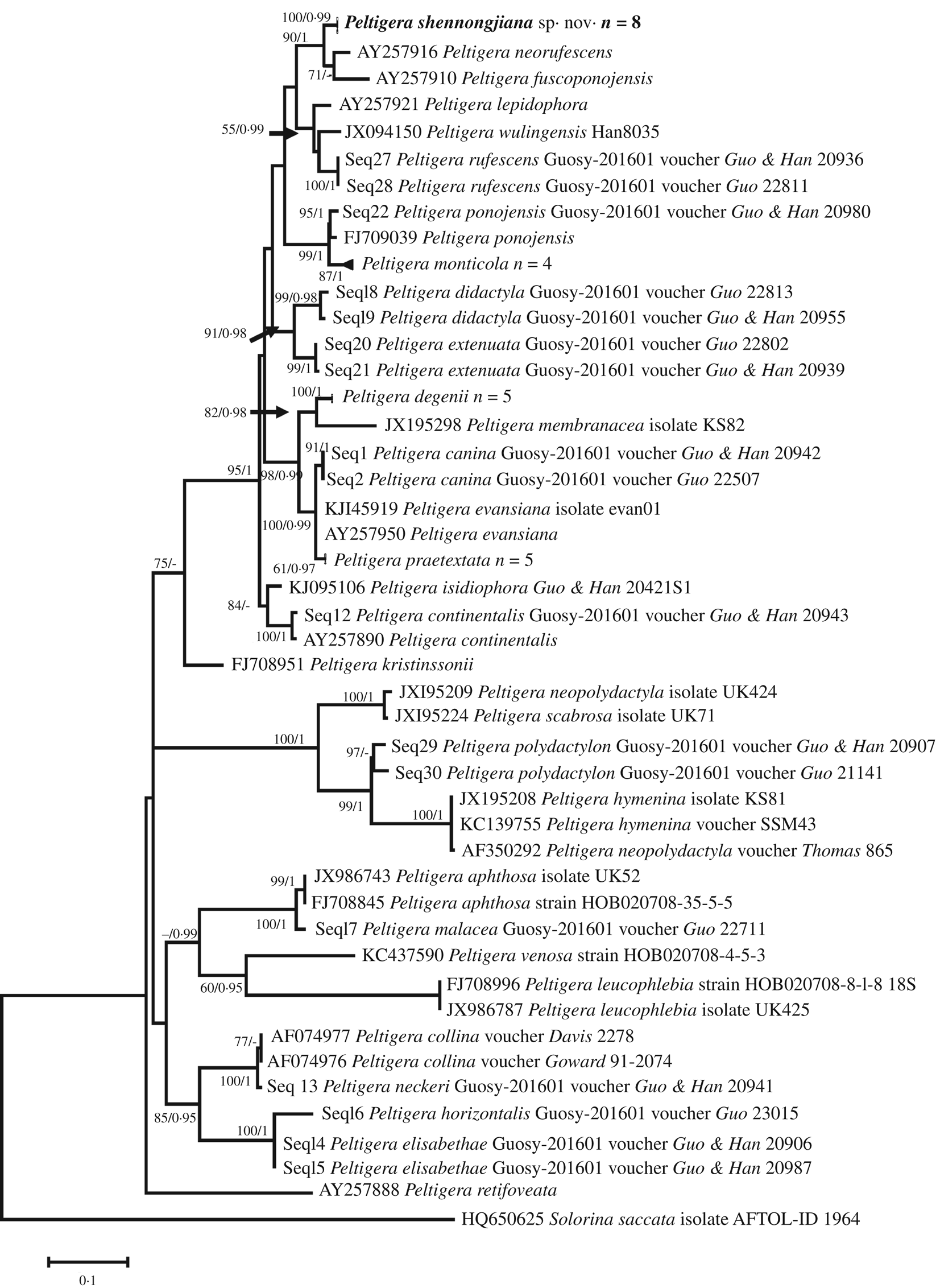
Phylogenetic relationships of species in the Peltigera canina- and related groups sharing high similarity with Peltigera shennongjiana sp. nov. inferred from the ITS region. Support is indicated for branches with Maximum Likelihood (ML) bootstrap values > 50% (left of slash) and Bayesian posterior probabilities > 0·95 (right of slash). The analysis was based on 64 ITS sequences with 540 nucleotides (63 sequences from 31 species in Peltigera, with Solorina saccata as outgroup). Sequences obtained from GenBank are provided with Accession numbers and information for the remainder is given in Table 1. Individuals representing identical ITS sequences are indicated with ‘n’. The new species is indicated in bold.
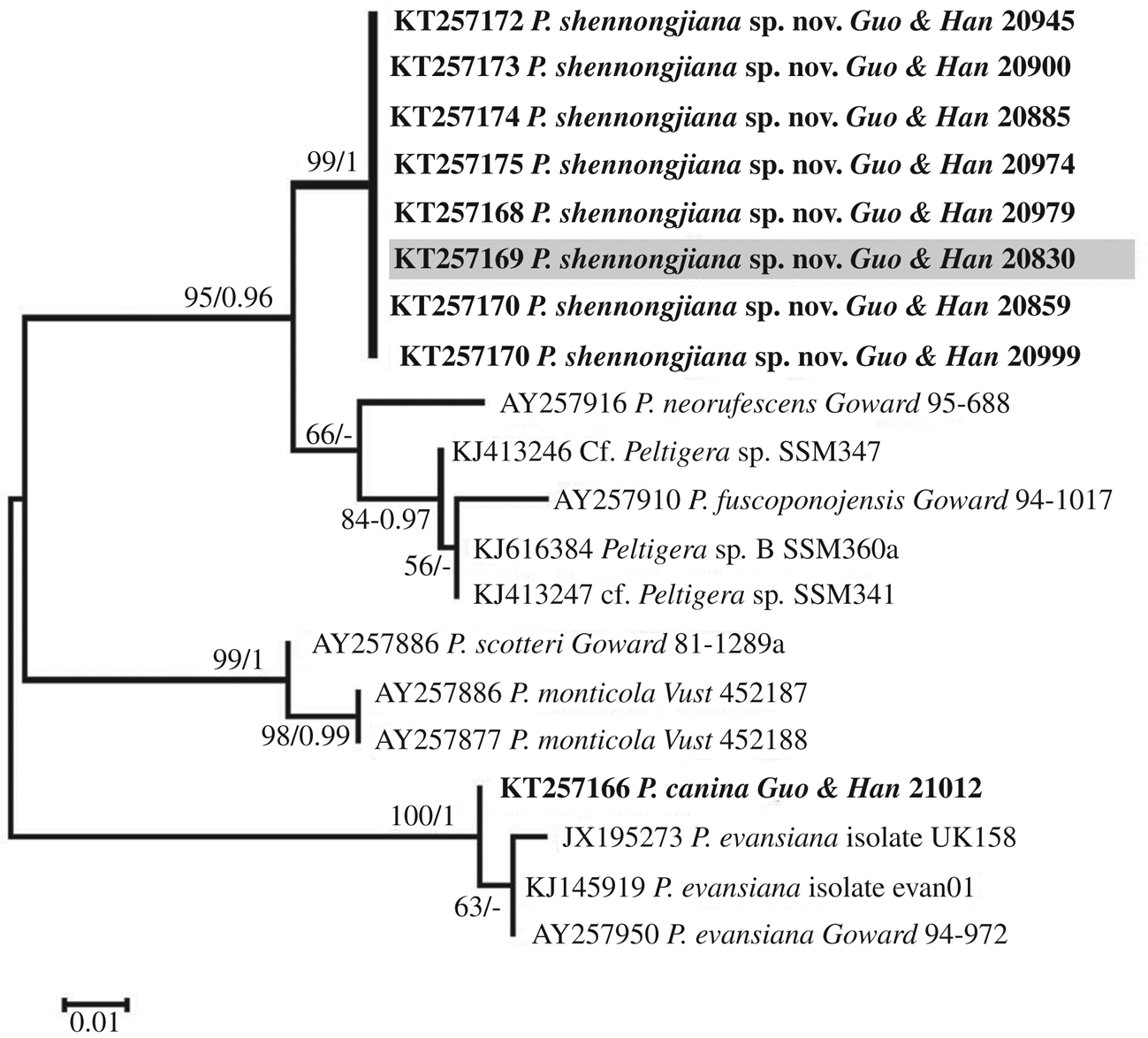
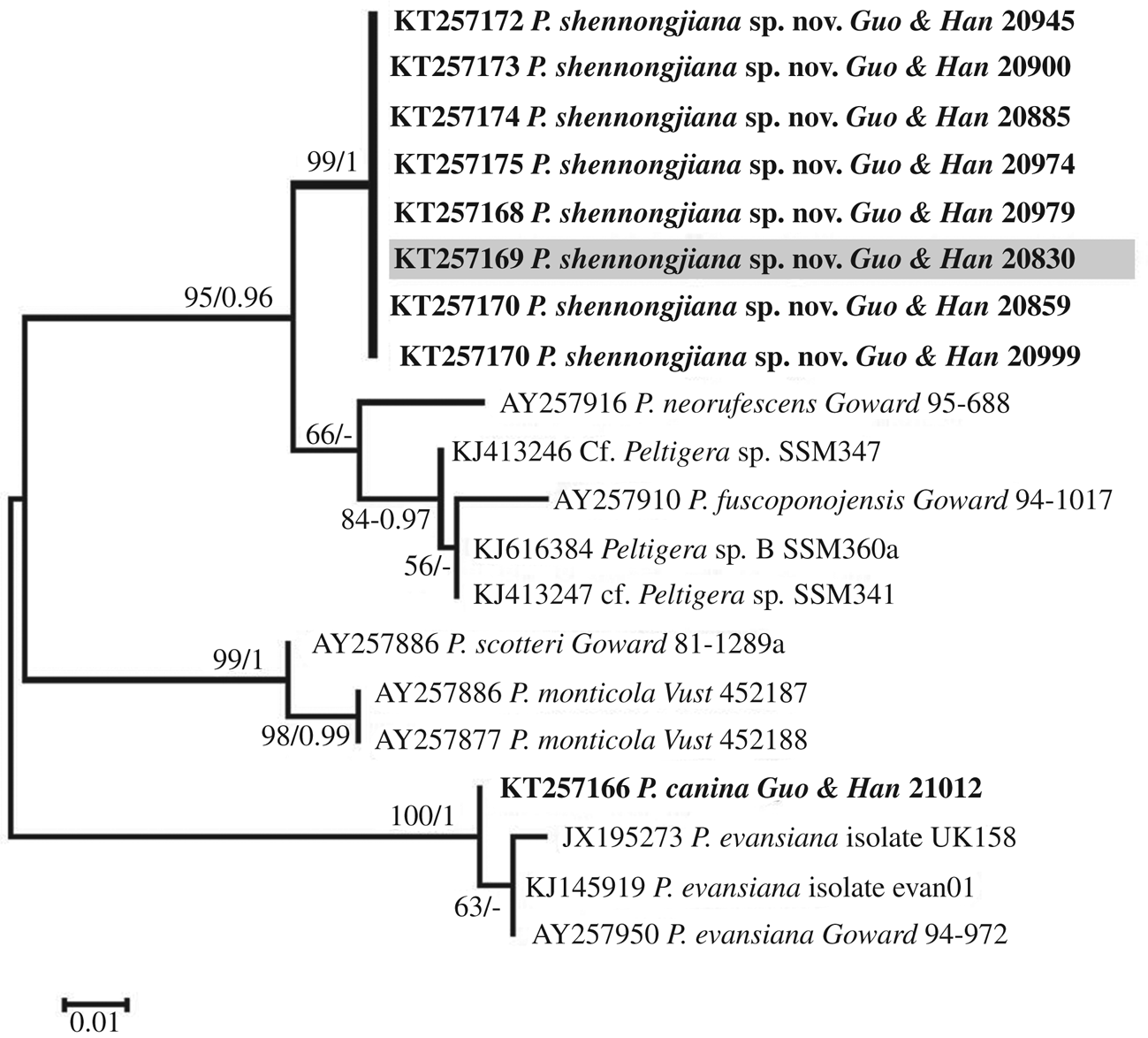
Phylogenetic relationships inferred from ITS region sequences of Peltigera shennongjiana sp. nov. and the most closely related species from the analysis in Fig. 1A. Support is indicated for branches with Maximum Likelihood (ML) bootstrap values > 50% (left of slash) and Bayesian posterior probabilities > 0·95 (right of slash). Branch lengths are calculated from the number of substitutions per site. Sequences obtained from GenBank are provided with Accession numbers and those from this study are indicated in bold. The holotype specimen is highlighted.
Phylogenetic analysis and sequence comparing
The entire ITS sequences of the eight samples examined and 56 selected representatives were aligned using both ClustalW and Muscle implemented in MEGA v6 (Tamura et al. Reference Tamura, Stecher, Peterson, Filipski and Kumar2013). Ambiguously aligned regions, sensu Lutzoni et al. (Reference Lutzoni, Wagner, Reeb and Zoller2000) and Manoharan-Basil et al. (Reference Manoharan-Basil, Miadlikowska, Goward, Andrésson and Miao2016), were delimited manually and excluded from the phylogenetic analyses. We used PAUP* 4.0b10 (Swofford Reference Swofford2002) to detect the constant and parsimony-informative characters.
Phylogenetic relationships were inferred using the maximum probability method based on the GTR + G+I model in MEGA6, and Bayesian inference (Huelsenbeck & Ronquist Reference Huelsenbeck and Ronquist2001) also based on the GTR model with rates = Invgamma. The nucleotide substitution model parameters were estimated for the whole ITS region using the Akaike Information Criterion (AIC) as implemented in MrModeltest 2.3 (Nylander Reference Nylander2004) and MEGA6. The analyses involved two data matrices containing 64 nucleotide sequences with 540 positions, and 20 nucleotide sequences with 412 positions, respectively. The secondary structures of the ITS2 sequences for the new species and its most related species were predicted by the ITS2 Database III (Koetschan et al. Reference Koetschan, Förster, Keller, Schleicher, Ruderisch, Schwarz, Müller, Wolf and Schultz2010) and illustrated with PseudoViewer3 (Byun & Han Reference Byun and Han2009).
Results and Discussion
Phylogenetic analysis and secondary structure of ITS2
The entire ITS region was successfully sequenced for 40 samples (including eight for the new species) of the collections from the Shennongjia forest region, Central China. Sequence length for the eight samples of the new species was an almost constant 637–638 bp for the entire ITS region (ITS1: 252–253 bp, 5.8S: 158 bp, ITS2: 226–227 bp). The ITS sequences of the new species, as well as those of 30 reference taxa of Peltigera in the P. canina- and related groups, were included in the phylogenetic analysis. The alignment of sequences from 64 taxa comprised 540 characters.
The Maximum Likelihood (ML) tree comprising all known species in Central China with bootstrap values (1000 replicates) and Bayesian posterior probabilities (BPP) at branches is shown in Fig. 1A. In the phylogenetic tree, the new species formed a clade with a group consisting of P. ‘neorufescens’ and P. ‘fuscoponojensis’ (Miadlikowska & Lutzoni Reference Miadlikowska and Lutzoni2000) with relatively strong support (ML = 90%, BPP = 1).
In order to demonstrate clearly the relationship between the new species and closely related taxa, an additional phylogenetic analysis including only eight ITS sequences of the new species and 12 reference sequences of Peltigera in the P. canina-group was performed. The data matrix comprised 20 taxa and 412 characters, of which 345 (83·74%) were constant and 58 (14·08%) were parsimony-informative.
The aligned dataset was analyzed using MrBayes for the Bayesian inference and MEGA6 for the maximum likelihood method. The ML tree with bootstrap values (1000 replicates) and Bayesian posterior probabilities (BPP) at branches is shown in Fig. 1B. In the phylogenetic tree, the new species formed a clade with the group consisting of P. ‘neorufescens’ and P. ‘fuscoponojensis’ with relatively strong support (ML = 95%, BPP = 0·96). The samples of the new species formed a clade with support of 99% (ML) and 1 (BPP).
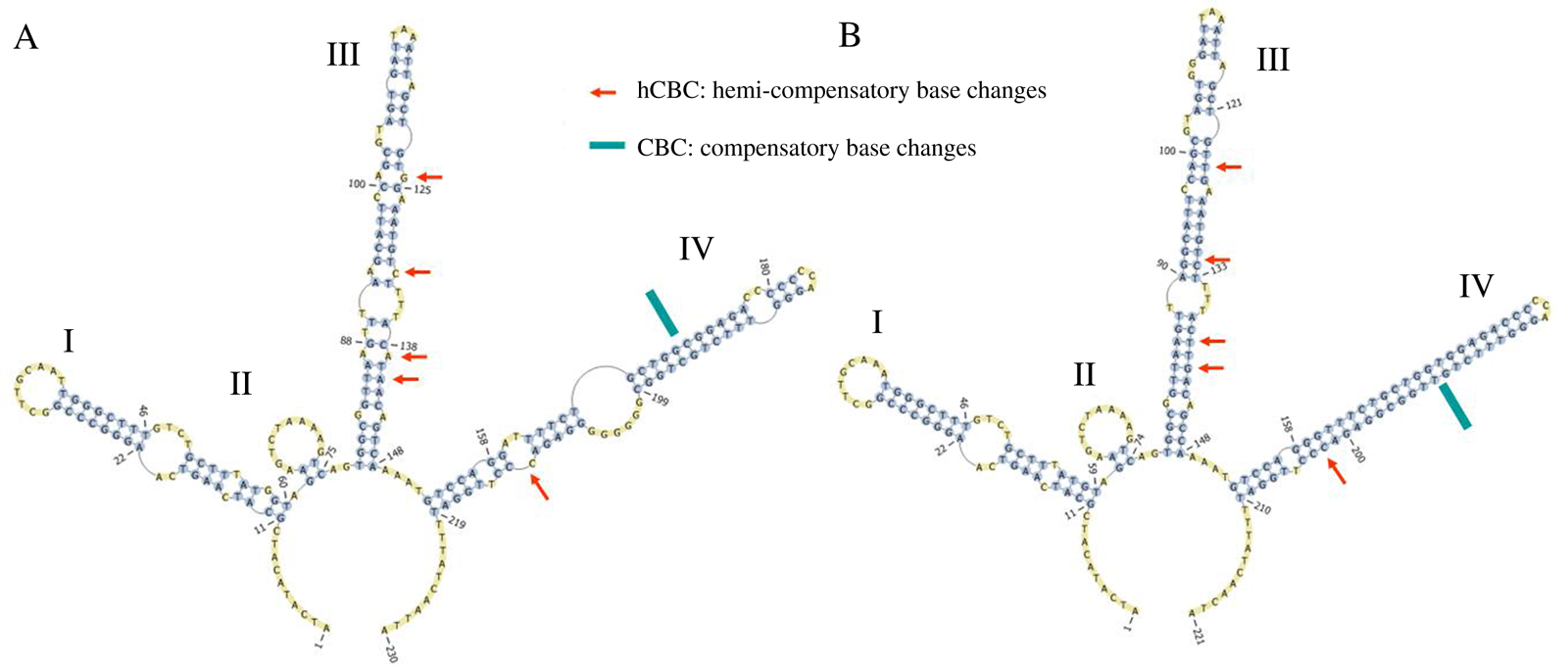
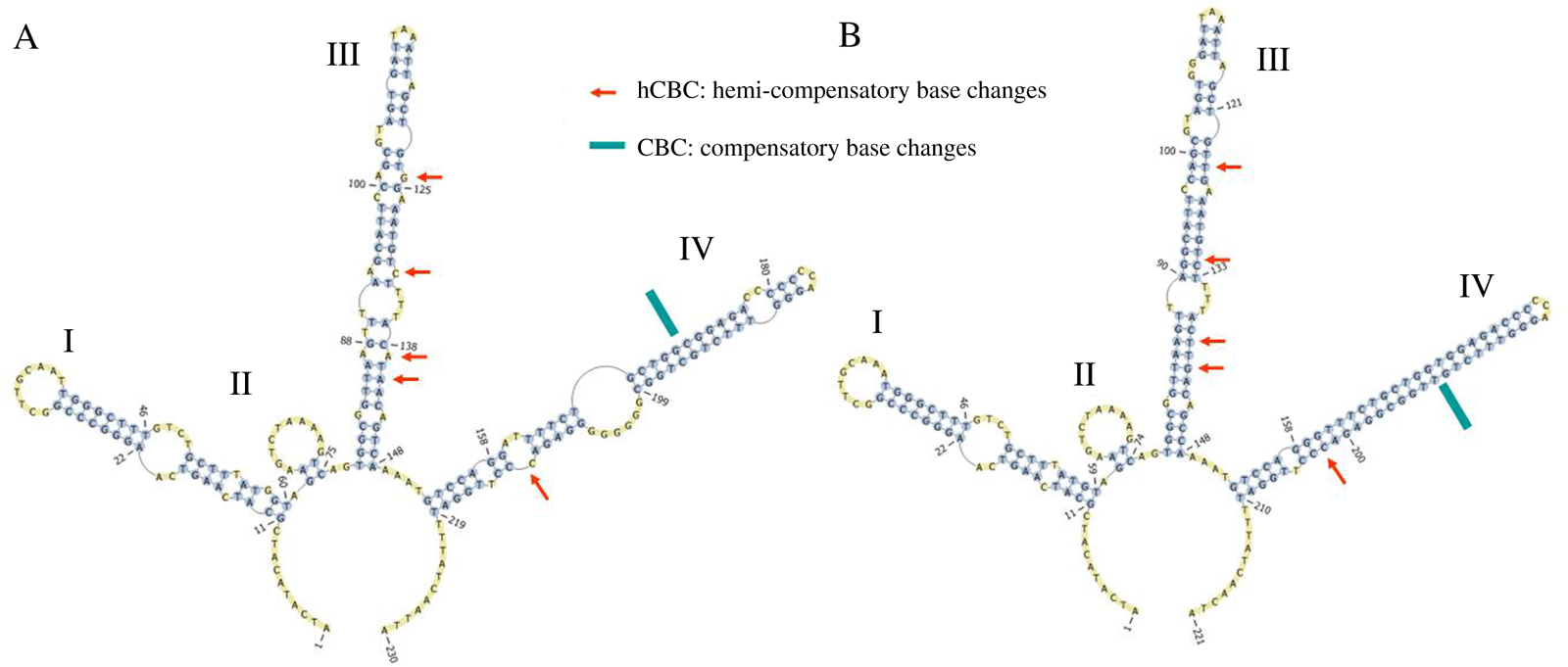
A high-quality secondary structure model for the ITS2 sequence of the new species (KT257169, holotype) was derived from template GI32364223 (AY257916 Peltigera ‘neorufescens’). The structure shown in Fig. 2 is the computed structure. The calculated free energy (used to predict nucleic acid secondary structure) is −28·60 kcal mol−1 and −78·2 kcal mol−1 for P. shennongjiana and P. ‘neorufescens’, respectively. Percentages of helix transfer are /100/100/89/96/ for four helices. The obvious differences of the ITS2 secondary structure can be observed when compared with the structural model of the closely related species. There are four and one hCBCs in the conserved part of helix III and helix IV, respectively, as well as three CBCs of helix IV for the new species and its template P. ‘neorufescens’, which we interpret as support for the new taxon as a distinct species.
The secondary structure models for an ITS2 sequence of the new species Peltigera shennongjiana (KT257169, holotype) (A), and one of its closest relatives P. ‘neorufescens’ (AY257916) (B). The four helices are labelled (I-IV) and differences in ITS2 secondary structure are indicated. In colour online.
Therefore, we consider the clade comprising the phyllidiate specimens from Central China to represent a distinct species and so provide a formal description.
The Species
Peltigera shennongjiana L. F. Han & S. Y. Guo sp. nov.
MycoBank No.: MB 813433
The new species is allied to Peltigera wulingensis L.F. Han & S.Y. Guo. It can be distinguished from other members of the P. canina-group by the presence of abundant isidia, phyllidia and flat, branched lobules along the margin or laminal cracks. Thallus usually pruinose and tomentose above. Apothecia and lobes erect; discs brown; spores 3–6 septate, 32·0–58·0 × 2·0–6·0 µm.
Type: China, Hubei Province, Shennongjia forest region, Laojunshan Mountain, Jiuchong, 31°40′N, 110°56′E, on mosses over rock and soil, alt. 900 m, 23 April 2014, Shou-Yu Guo & Liu-Fu Han 20830 (HMAS-L—holotype; GenBank KT257169).
(Fig. 3)
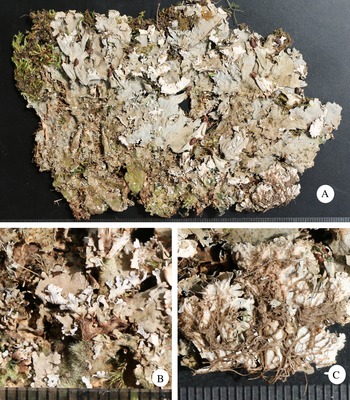
Thallus foliose, thin, rather fragile and easily broken apart when dry, approximately circular in outline, to 15 cm diam. Lobes flattened or crisped, imbricate or separate, 0·6–1·0 cm wide and 2·5 cm long. Lobe extremities rounded, often dentate and ascending, occasionally with tufts of tiny grey-whitish to pale brown hairs. Lateral margins usually becoming lacerated, with abundant phyllidia and flattened lobules. Phyllidia along the margin, few on laminal cracks, branched, becoming dorsiventral, spreading laterally, forming branched lobules. Upper surface grey, dark grey to greyish brown or dark brown when dry, blackish green to greyish brown when wet, pruinose; tiny white-grey tomentum present on the marginal parts of the lobes, which are otherwise smooth and occasionally somewhat shiny towards the centre; soredia absent. Medulla white, thin, loose. Photobiont Nostoc. Lower surface ecorticate, tomentose, white or pale near lobe tips, pale brown towards the centre, with anastomosing, elevated and narrow brown veins. Rhizines more or less abundant, white to brown, irregular, simple, bushy or rarely fasciculate, to 7·0 mm long.
Peltigera shennongjiana (holotype, Guo & Han 20830). A, upper surface and apothecia (dry); B, upper surface and marginal phyllidia (dry); C, lower surface and rhizines (dry). Scales = 1 mm. In colour online.

Apothecia terminal on lobes, erect, saddle-shaped, to 4·0 mm diam. Apothecial margin smooth to crenulate. Disc red-brown to dark brown, rarely black, smooth, somewhat shiny. Paraphyses simple, septate. Asci clavate, 40·0–76·0 × 5·5–12·0 µm, Peltigera-type, colourless or pale green, 8-spored. Ascospores acicular, 3–6-septate, 32·0–58·0 × 2·0–6·0 µm.
Pycnidia not seen.
Chemistry
One unnamed triterpenoid was found in specimens of the new species by TLC in both solvent systems C (R f = 39) and G (R f = 50). The substance could not be identified despite comparing it with triterpenoids from reference samples of other species in the P. canina-group.
Etymology
The specific epithet refers to the type locality in Hubei Province, Central China.
Ecology and distribution
The new species grows on moss over rock and soil in a mountain forest. At present, the specimens of Peltigera shennongjiana are known only from Hubei Province, Central China.
Discussion
The specimens of Peltigera shennongjiana were obtained from the transitional region of the northern subtropical and warm temperate zone, which is also the transitional zone of the south-western high mountains and the low hilly land of Central China. It is readily distinguished by its abundant phyllidia and branched lobules along the margin or laminal cracks, short lobes, pruinose and usually greyish upper surface, and the presence of an unnamed triterpenoid substance.
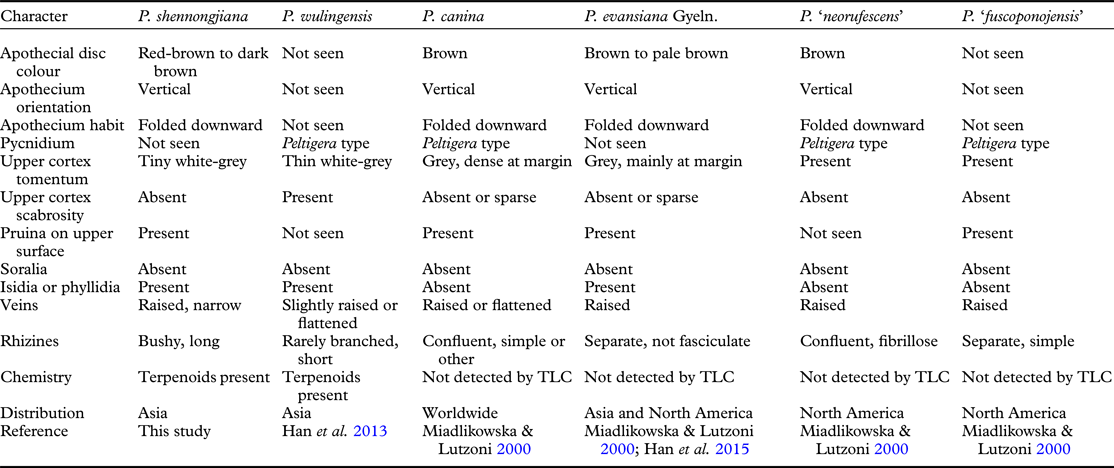
Peltigera shennongjiana resembles P. wulingensis in the presence of phyllidia along the lobe margins and laminal cracks but differs by the broader lobes (1·5–2·5 cm vs. 0·3–0·8 cm); meanwhile, P. wulingensis lacks branched lobules and apothecia (Han et al. Reference Han, Zhang and Guo2013). For the ITS sequence data, however, the identity between them was 92%, with only 61% of query cover and a high E value (1e−145).
DNA sequences that support a close relationship may also exhibit similar secondary structures. The new species is sister to a clade including P. ‘neorufescens’ in the phylogenetic trees (Fig. 1A & B) and has similar secondary structure models for ITS2 sequences (Fig. 2.). The new species might also resemble P. ‘neorufescens’, which is also tomentose and esorediate, but it is readily distinguished from the latter by the pruina and phyllidia, and the presence of terpenoids. Previous studies have distinguished species of Peltigera on the basis of monophyly in single locus (ITS) phylogenies as well as diagnostic morphological features (Goffinet & Miadlikowska Reference Goffinet and Miadlikowska1999; Goward & Goffinet Reference Goward and Goffinet2000; Goffinet et al. Reference Goffinet, Miadlikowska and Goward2003; Miadlikowska et al. Reference Miadlikowska, Lutzoni, Goward, Zoller and Posada2003; Han et al. Reference Han, Zhang and Guo2013, Reference Han, Zheng and Guo2015). In this study, we additionally provide the secondary structure models for ITS2 sequences, which should also be regarded as useful characters to differentiate species of lichens (Piercey-Normore et al. Reference Piercey-Normore, Coxson, Goward and Goffinet2006; Liu & Guo Reference Liu and Guo2009; Cao et al. Reference Cao, Liu, Zhou and Guo2011; Guo Reference Guo2013; Han et al. Reference Han, Zheng and Guo2015). The threshold range between intraspecific and interspecific percentages of helix transfer was 90–95% for at least one of the four helices (I–IV), especially in the helices II and III (Schultz et al. Reference Schultz, Maisel, Gerlach, Müller and Wolf2005; Guo Reference Guo2013). In our case, the new species lacks three pairs of the compensatory bases in the conserved part of helix IV, and there was one percentage of helix transfer less than 90% and 5 hCBCs in the conserved part of helix III and helix IV for the new species and its template P. ‘neorufescens’.
In conclusion, the distinctive morphology and monophyly of the phyllidiate specimens from Hubei Province support their recognition as a new species.
Additional specimens examined (all samples are housed in HMAS-L and HBNU). China:Hubei Province: Shennongjia forest region, Laojunshan Mountain, Jiuchong, 31°40′N, 110°56′E, on mosses over rock and soil, alt. 900 m, 2014, Shou-Yu Guo & Liu-Fu Han 20859, 20885, 20900; Yunpanling, 31°66′N, 110°55′E, on mosses over soil, alt. 1800 m, 2014, Shou-Yu Guo & Liu-Fu Han 20945; Dalongtan, 31°49′N, 110°32′E, on mosses over rock and soil, alt. 2100 m, 2014, Shou-Yu Guo & Liu-Fu Han 20974, 20979, 20999.
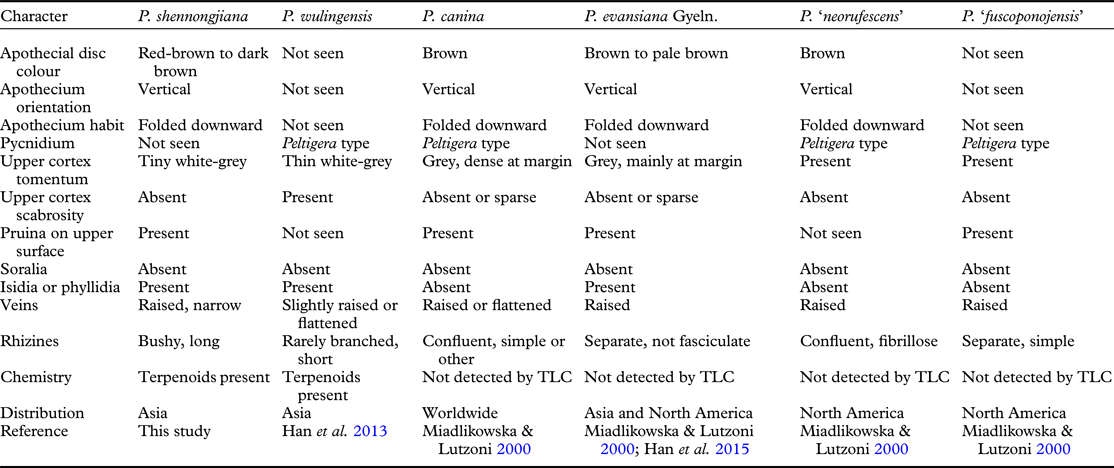
A summary of the characteristics of Peltigera shennongjiana and morphologically similar species is provided in Table 2, and a key to all 31 species from mainland China (15 from Shennongjia) is provided below.
A comparison of Peltigera shennongjiana with morphologically similar species.
Key to species of Peltigera in mainland China
1 Main photobiont a green alga; cephalodia containing a cyanobacterium present ……… 2
Main photobiont a cyanobacterium; cephalodia containing a cyanobacterium absent ……… 5
2(1) Thallus small, averaging <2 cm across, and attached by a single point along the
margin; cephalodia present on lower surface; rhizines absent ……… P. venosa
Thallus large, averaging <2 cm across; cephalodia present on upper surface ……… 3
3(2) Apothecia horizontal; lower surface veins distinct ……… P. nigripunctata
Apothecia vertical; lower surface veins distinct or indistinct ……… 4
4(3) Lower surface veins indistinct; rhizines separate and distinct; apothecia corticated on
lower surface ……… P. aphthosa
Lower surface veins distinct; rhizines forming an intricately branched and anastomosing mat; apothecia ecorticated or poorly corticated on lower surface ……… P. leucophlebia
5(1) Upper surface tomentose, at least at the margins ……… 6
Upper surface smooth or scabrose, lacking tomentum ……… 21
6(5) Upper surface sorediate; soralia orbicular and laminal ……… 7
Upper surface esorediate ……… 8
7(6) Lobes elongate and confluent, rhizines fasciculate to fibrillose, brush-like at the tips ……… P. extenuata
Lobes round and separate, rhizines simple to loosely branched, not fibrillose ……… ……… P. didactyla
8(6) Isidia or phyllidia present ……… 9
Isidia or phyllidia absent ……… 16
9(8) Isidia laminal, dorsiventral, peltate, more or less appressed; lobes usually under 1 cm
wide; apothecia uncommon ……… P. lepidophora
Isidia not peltate, more or less vertical ……… 10
10(9) Isidia cylindrical and laminal, rarely dorsiventral; lobe tips downturned ……… P. evansiana
Isidia phyllidiate, laminal or marginal, dorsiventral ……… 11
11(10) Isidia mainly laminal, clustered isidia grow in pits of the upper surface ……… P. isidiophora
Isidia marginal ……… 12
12(11) Upper surface scabrose, dull, epruinose; apothecia not seen ……… P. wulingensis
Upper surface smooth, somewhat shiny towards the centre, pruinose or epruinose; apothecia saddle-shaped ……… 13
13(12) Upper surface pruinose; lobes less than 1 cm wide ……… 14
Upper surface epruinose; lobes often over 1 cm wide ……… 15
14(13) Flat branched lobules along the margin or laminal cracks; rhizines simple, fasciculate, penicillate or flocculent, often confluent ……… P. shennongjiana
Lobules not branched; rhizines fasciculate, little branched, discrete ……… P. monticola
15(13) Lower side dark brown to black; rhizines richly branched ……… P. continentalis
Lower side pale to brownish; rhizines simple ……… P. praetextata
16(8) Upper surface scabrose; veins with tomentum near centre of thallus ……… P. kristinssonii
Upper surface smooth ……… 17
17(16) Lobe tips upturned ……… 18
Lobe tips downturned ……… 20
18(17) Upper surface epruinose; rhizines mostly discrete ……… 19
Upper surface often pruinose; rhizines becoming confluent towards thallus centre ……… P. rufescens
19(18 Lower surface white or pale; veins narrow and raised; rhizines white, simple or
irregularly branched ……… P. ponojensis
Lower surface whitish or pale tan; veins absent or with few and very broad veins,
rhizines sparse, fasciculate ……… P. malacea
20(17) Rhizines squarrosely branched; medulla c. 150 µm thick ………P. membranacea
Rhizines simple to confluently branched; medulla 300–500 µm thick………P. canina
21(5) Marginal and laminal soredia present; rhizines bushy or penicillate branched; flattened veins ……… P. collina
Soredia never present ……… 22
22(21) Upper surface scabrose ……… 23
Upper surface smooth ……… 25
23(22) Upper surface indistinctly scabrose or in patches; lower surface with simple or fasciculate rhizines, elongate; apothecia vertical ……… P. neopolydactyla
Upper surface distinctly scabrose; lower surface with fasciculate rhizines, proportionally short ……… 24
24(23) Lower surface with indistinct veins; apothecia vertical ……… P. scabrosa
Lower surface with darker colour, more prominent veins; apothecia horizontal ……… P. dolichospora
25(22) Isidia, phyllidia or schizidia present ……… 26
Isidia, phyllidia or schizidia never distinctly present ……… 28
26(25) Veins broad and indistinct; apothecia horizontal; with schizidia or frequently lobulate ……… P. elisabethae
Veins broad or narrow, distinct; apothecia vertical ……… 27
27(26) Veins narrow and raised, pale or pale brown towards centre; marginal lobules
poorly developed ……… P. degenii
Veins broad and flattened, dark brownish towards centre; margins often dilacerate and lobulate ……… P. polydactylon
28(25) Rhizines arranged in concentric circles; apothecia horizontal ……… P. horizontalis
Rhizines not arranged in concentric circles; apothecia vertical ……… 29
29(28) Upper surface epruinose ……… 30
Upper surface pruinose ……… 31
30(29) Lower surface brownish, rhizines <5 mm long, veins indistinct ……… P. hymenina
Lower surface brown to black, rhizines >5 mm long, veins distinct and wide……… ……… P. neopolydactyla
31(29) Veins distinct and wide; apothecial disc brown to dark brown ……… P. pruinosa
Veins indistinct; apothecial disc dark brown to black ……… P. neckeri
Prof. Dr Orvo Vitikainen is gratefully acknowledged for providing literature and comments. We are particularly grateful to Dr Irwin M. Brodo for improving the English and providing comments. This study was supported by the Key Technologies R&D Program of China (2013BAD03B03) and the Key Laboratory Open Foundation of Hubei Province (No. 2012snjAB001). S. Y. Guo received grants from the National Natural Science Foundation of China (31750001, 31370067) and L. F. Han received a grant from the Natural Science Foundation of Hebei Province (C2016205201).
Supplementary Material
For supplementary material accompanying this paper visit https://doi.org/10.1017/S0024282919000355