Stunting, when a child is short for his or her age [having a height-for-age z score of ≥2 standard deviations below the WHO standard median (Reference Black, Victora and Walker1)], is a sign of chronic undernutrition that starts in utero and continues throughout early childhood (2;3). Beyond reduced physical height, stunting negatively affects a child's cognitive ability, leading to impaired educational outcomes and reduced productivity over the entire lifespan (Reference Shekar, Dayton Eberwein and Kakietek4). Stunting also increases a child's susceptibility to acute infections and, in later life, to chronic diseases such as obesity and non-communicable disease (1;2). Globally, stunting is estimated to contribute to 15–17 percent of deaths among under-five children (Reference Black, Victora and Walker1). Despite its importance, in parts of the world where stunting is common, families and even healthcare providers often fail to recognize it as a problem, resulting in its receiving less attention than other nutritional deficiencies (5;6).
The critical period for stunting starts during pregnancy, with malnutrition of the mother leading to low birthweight infants, and continues through 24 months of age (7;8). Risk factors for stunting are well-understood: these include poor maternal nutrition, poor infant and young child feeding (IYCF) practices (9;10), low birthweight (9–Reference Danaei, Andrews and Sudfeld11), recurrent infections, and poor environmental sanitation leading to chronic diarrhea (Reference Danaei, Andrews and Sudfeld11). Poor IYCF comprises lack of exclusive breastfeeding up to 6 months of age, inappropriate amounts or diversities of complementary foods, and inadequate frequency of complementary food from 6 to 24 months of age (Reference Hawkes6).
There is strong evidence that multifaceted nutritional interventions for both pregnant women and children can significantly reduce stunting. Such interventions improve the health and nutrition of pregnant women, improve infant and child care behaviors, address health-related causes of undernutrition, and improve the quantity and quality of a child's diet (2;12). Although addressing disease (i.e., chronic diarrhea) and recurrent infections is likely also relevant, the nature of such interventions relate to improvements and infrastructure outside the feasibility of a policy brief.
A widely-agreed-upon package of ten nutrition-related interventions has been shown to be effective at reducing both stunting and severe wasting (4;7): if implemented at 90 percent coverage, these interventions can reduce stunting by 20 percent, reduce severe wasting by 61 percent, and reduce under-five deaths by 15 percent (Reference Bhutta, Das and Rizvi12). Cost-benefit analysis suggests that interventions leading to 40 percent reductions in the number of stunted children would yield USD 45 for every dollar spent by 2030 (Reference Shekar, Dayton Eberwein and Kakietek4). Other overall benefits, such as improved cognitive development and socioemotional development, would also result from these interventions (Reference Bhutta, Das and Rizvi12). The World Health Organization (WHO) has targeted a 40 percent reduction from 2012 to 2025 in the number of children <5 years who are stunted (Reference Hawkes6).
In Myanmar, 29 percent of children under 5 years of age are stunted (9). This corresponds to an estimated 300,000 disability-adjusted life-years lost per year (Reference Shekar, Dayton Eberwein and Kakietek4). Myanmar has already implemented some of the ten above-mentioned interventions and has seen resulting declines in stunting between 2010 and 2015 from 35 to 29 percent (9;10). However, the coverage of these interventions is incomplete, currently ranging from 8.0 to 64 percent of the population (9), depending on the intervention, and Myanmar is not projected to meet WHO targets of 0.88 million children (prevalence: 19.9 percent) stunted in Myanmar in 2025 (Supplementary Figure 1) (6;13). To achieve this target, additional efforts would be needed. We aimed to evaluate potential policy options to reduce the stunting prevalence in Myanmar and approach the WHO targets by 2025.
Methods
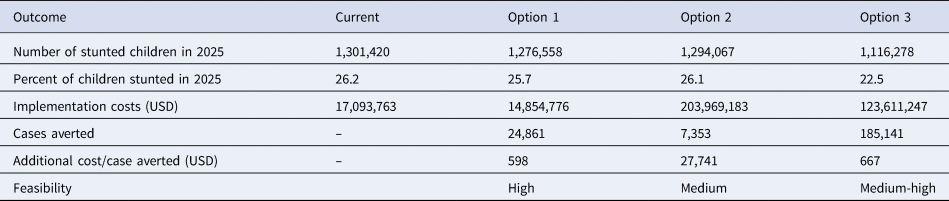
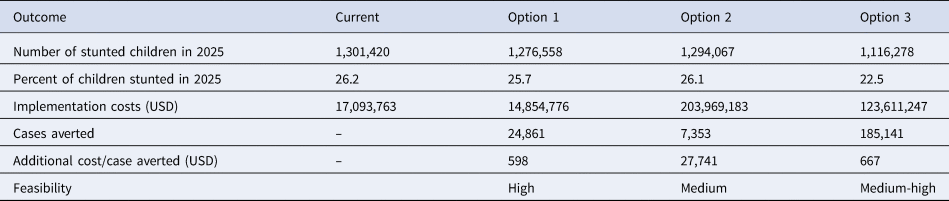
We performed a literature review using PubMed (Medline) and other sources, including the WHO Web site, country reports, and Myanmar-specific governmental reports, to identify all studies on stunting prevalence and the effectiveness of different interventions to combat stunting, up to October 2018. Based on these studies, we developed a conceptual framework for the root causes of stunting and identified possible interventions to reduce stunting in Myanmar. We identified three possible interventions and performed a cost-effectiveness analysis of each, with projected cases of stunting by 2025 and cost per case averted as the primary outcomes (Table 1). Decision trees were used to estimate outcomes, and sensitivity analysis was used to explore changes in outcomes based on changes in inputs. The economic analysis was conducted from the government perspective. Details of cost calculations are available in Supplementary Tables 1–4. Costs for all three policy options for the projected cases of stunting were calculated based on the current intervention programs for stunting in Myanmar.
Economic and feasibility analysis: cost, cost-effectiveness, and feasibility of three policy options after 5 years’ implementation compared to current situation (2020–5) (Government perspective) (WHO stunting targets by 2025: 19.9 percent)
The exchange rate at the time of evaluation was 1 USD for 1,500 MMK. Costs were based on the current or estimated costs from the Supply Section UNICEF Country Office in Myanmar, the National Nutrition Center, and the Myanmar Radio and Television, Ministry of Information, Naypyitaw, Myanmar at the time of the evaluation. For interventions including trainings, trainings were considered at three levels: central level, 17 State/Regional levels, and 330 township levels. Quantities and costs for mid-upper arm circumference (MUAC) measuring tapes, incentives for volunteers, vitamin A, and zinc and micronutrient tablets were estimated for 5 years (Supplementary Tables 1–4). We calculated the target population (such as the number of pregnant women, pregnant women with undernourished, under-five children, and under-five children with diarrhea) based on the 2014 Myanmar Census Report (14), the Myanmar Demographic and Health Survey 2015–6 (9), and the Department of Public Health and National Nutrition Center, Naypyitaw. All costs described in the three policy options were additional costs beyond the current interventions. We did not include building cost, clinic maintenance costs, utilities, and staff time to implement these options. The models were based on the existing Community Support Groups and volunteers supporting the appointed Basic Health Staff (BHS), which has been used in immunization and malaria control programs in Myanmar; therefore, it was expected that no additional staff would be needed to implement these options (Supplementary Tables 1–4).
Results
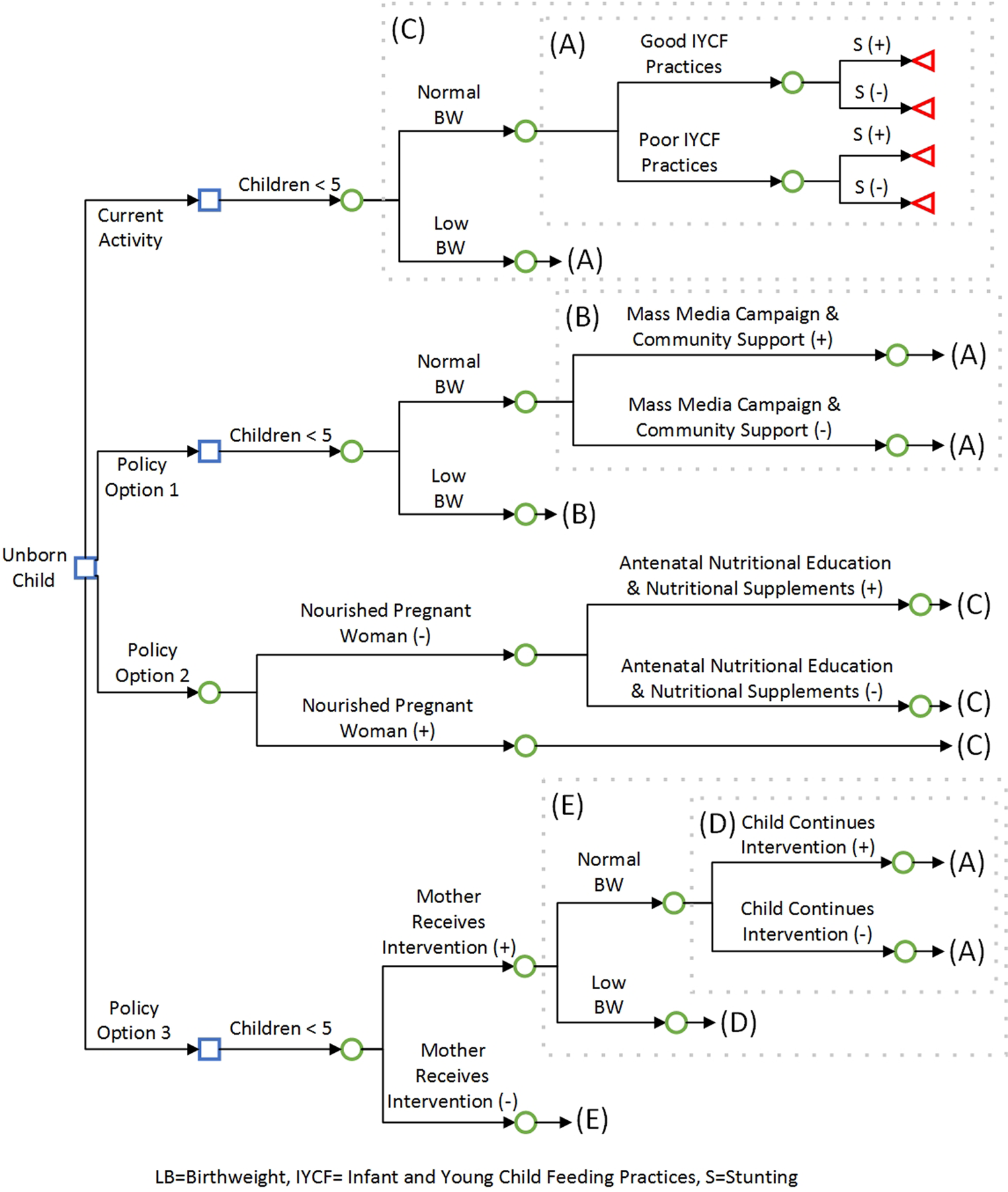
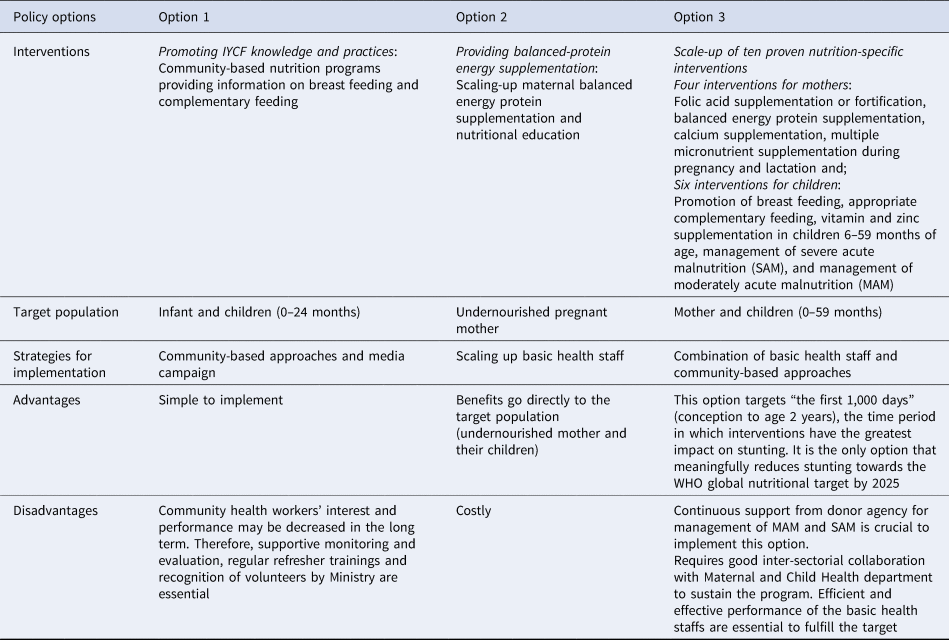
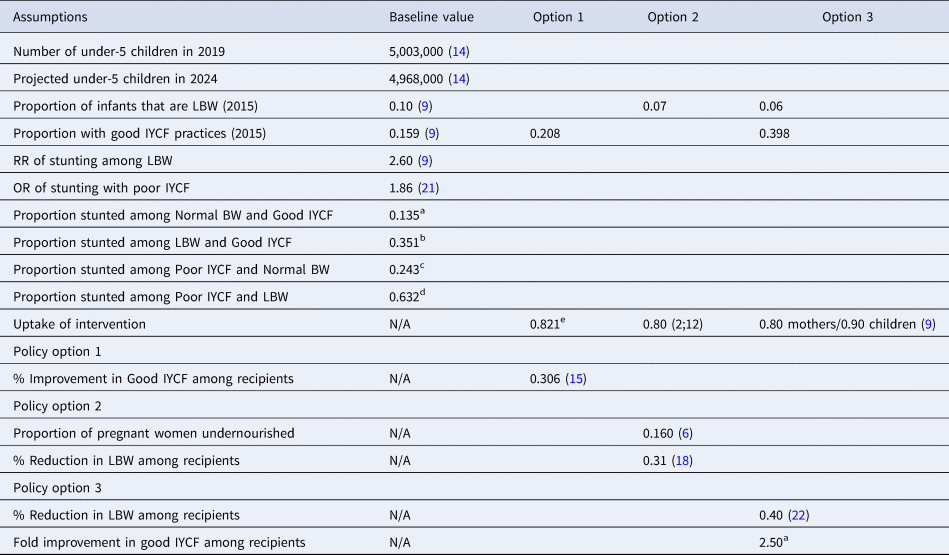
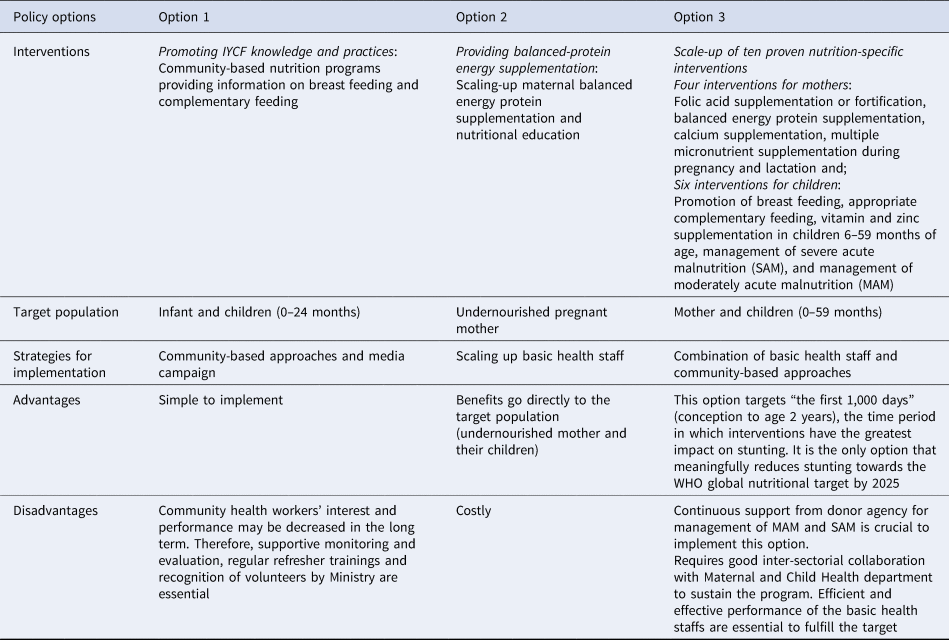
Strengthening the current nutrition interventions and improving their coverage would further the Ministry of Health and Sports’ (MOHS) goal of reducing stunting in Myanmar to 19.9 percent by 2025. Policy options evaluated include promotion of IYCF knowledge and practices, provision of balanced protein energy supplementation to undernourished pregnant mothers, and expanded implementation of a package of ten nutrition-specific interventions (Table 2). We used a decision tree to compare the cost and effectiveness of each of these interventions; assumptions for the decision tree are described in Table 3 and the decision tree of three policy options described in Figure 1.
Decision tree for three policy options to address stunting. Dotted gray squares with letters [e.g., (A)] indicate branches of the tree that are replicated at other termini with the same letter. For example, the smaller gray square with (A) at the top is also the terminus for the two branches of policy option 1.
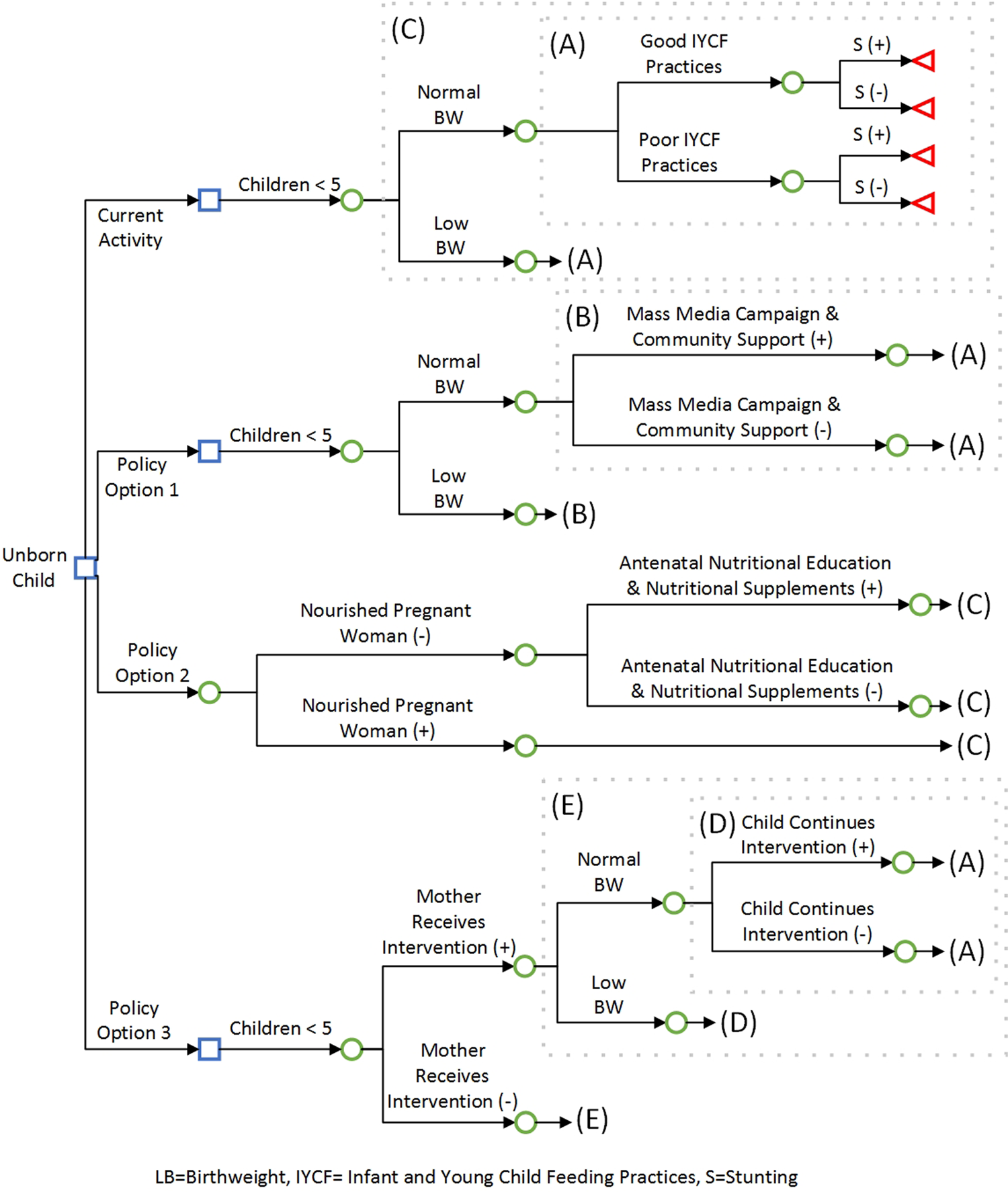
Description of the three policy options
IYCF, infant and young child feeding; WHO, World Health Organization.
Assumptions used to evaluate policy options in decision tree
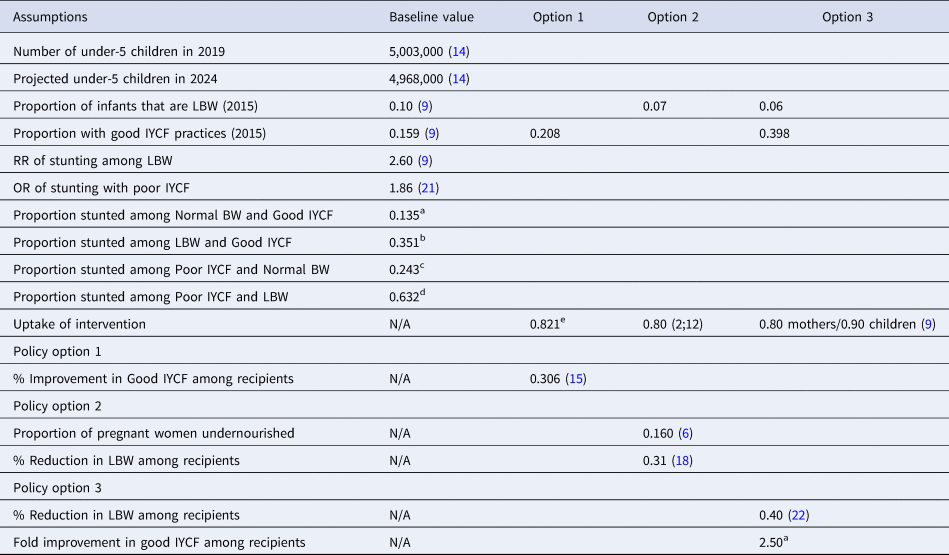
OR, odds ratio; RR, risk ratio; BW, birthweight; LBW, low birthweight; IYCF, infant and young child feeding.
Proportion of infants that are low birthweight or mothers with good infant and young child feeding practices with each option are shown in the columns. Assumptions used to calculate those changes are shown in the bottom portion of the table, for each policy option. Numbers in brackets indicate references for each option.
a Estimate.
b RR of stunting from LBW × baseline stunting rate.
c RR of stunting from poor IYCF × baseline stunting rate.
d Combined effects of LBW and poor IYCF on the baseline stunting rate.
e Health literacy survey Myanmar from eight states and region, 2017 (unpublished data).
Option 1: Promotion of Infant and Young Child Feeding (IYCF) Knowledge and Practices by Mass Media and Community Support Group
How: Train community health workers (CHW) from every village and ward and provide them with guidelines and materials to educate mothers on appropriate IYCF practices, including exclusive breastfeeding for children <6 months, and minimum acceptable diet (acceptable dietary diversity and acceptable frequency of feeding in accordance of age of children) for children aged 6–23 months. Implement nationwide media campaign about proper IYCF practices through television, radio, and printed media.
Why: Several IYCF practices are critical to reduce stunting, including exclusive breastfeeding before age of 6 months, complementary breastfeeding from 6 months to 2 years, and appropriate quantity, diversity, and frequency of complementary foods during this time. In Myanmar, only 16 percent of children received the minimum standards for good IYCF as a whole (9;10). Combined CHW education and mass media campaigns can increase mothers’ knowledge on IYCF by 9–18 percent and practices of optimal IYCF by 14–57 percent (Reference Mashreky, Rahman, Rahman, Talab and Rahman15).
Feasibility: High. Myanmar already has experience with CHW as well as with media campaigns in public health areas such as immunization. Evidence showed that combined CHW initiatives and mass media campaigns would be effective methods for promoting behavior change with regard to IYCF practices (16;17). See Table 2 for additional details.
Option 2: Provide Balanced Protein Energy Supplementation to Undernourished Pregnant Mothers to Reduce Low Birth Weight
How: Provide refresher training of the BHS (midwives, public health supervisors, lady health visitors, and health assistants) to conduct nutritional assessments of pregnant mothers at antenatal clinics or outpatient clinics. Women with mid-upper arm circumference <210 mm would be referred to the Supplementary Feeding Program, provided with balanced protein energy supplementation and nutritional education, and followed-up every 2 weeks to monitor their nutrition status. Women who do not gain enough weight would be referred to the nearest hospital for further treatment.
Why: In Myanmar, 16 percent of reproductive-aged women are undernourished (Reference Hawkes6). Evidence shows that balanced protein energy supplementation among undernourished pregnant mothers can significantly reduce low birthweight (18;19), reducing the risk of stunting in the long run by two to threefold (Reference Aguayo, Nair, Badgaiyan and Krishna20).
Feasibility: Medium. Providing balanced protein energy supplementation together with nutritional education is a newly introduced pilot program in Magway Region, Kayin, and Rakhine States in 2018. Nationwide coverage would expand the benefits of this pilot program. See Table 2 for additional details.
Option 3: Expansion of Current Implementation of Package of Ten Proven Nutrition-specific Interventions Addressing Both Low Birth Weight and Nutrition After Birth
How: Provide refresher training of BHS to implement a package of ten nutrition-specific interventions that promote maternal and child nutrition as a whole.
Why: Myanmar already implements most of these interventions; however, coverage of the intervention (the number of people to whom it is provided) ranges from 8.4 to 63.5 percent for each intervention (9). Implementation of the package of ten interventions at 90 percent coverage has been estimated to reduce stunting by 20 percent and under-five deaths by 15 percent (Reference Bhutta, Das and Rizvi12).
Feasibility: Medium-high. Evidence suggests that broad support for this strategy is important for its success. This policy option would be the only strategy to approach the WHO target for reductions in stunting by 2025. See Table 2 for additional details.
Sensitivity Analyses
We conducted sensitivity analysis to evaluate the sensitivity of the outcomes to uncertainty in our assumptions with the fewest underlying data points. To do this, we varied the estimated proportion of stunted children among those with normal birthweight and exposed to good IYCF practice from 10 to 14 percent. With these variations, the estimated proportion of stunted children in 2025 would range from 19.0 to 26.7 percent and cost an additional USD 576.2–806.6 per case averted for policy option 1, 19.3–27.0 percent and cost an additional USD 26,750.4–37,450.0 per case averted for policy option 2, and 16.6–23.3 percent and cost an additional USD 643.8–901.0 per case averted for policy option 3. See Supplementary Table 5 for more information.
We also performed sensitivity analysis on option 3, varying antenatal coverage from 70 to 90 percent and varying the increase in “good” IYCF practices from 1.5- to 3.0-fold higher than the baseline rate. We estimated that the stunting prevalence outcomes could range from 20.0 to 25.2 percent and cost an additional USD 449–1525 per case averted with 70 percent uptake by the pregnant mother; from 19.9 to 25.0 percent and cost an additional USD 440–1,401 per case averted with 80 percent uptake by the pregnant mother and from 19.8 to 24.9 percent and cost and additional USD 431–1,296 per case averted with 90 percent uptake by the pregnant mother. See Supplementary Table 6 for additional information.
Discussion
We compared reduction in stunting prevalence and cost per stunting case averted for three policy options in Myanmar. Option 1 includes promotion of good infant and young child feeding knowledge and practices through use of mass media and community support; option 2 dealt with nutrient supplementation to undernourished pregnant women to reduce low birth weight; and option 3 included expansion of the current implementation of a package of nutrition-specific interventions that address both low birthweight and nutrition for children after birth. All three options included trainings at central, state/regional levels, and township levels. At the township level, the main difference of costing for policy options 1 and 2 was due to the difference in number of the participants: 74,021 volunteers for option 1 and 26,270 BHS for option 2 (Supplementary Table 3).
Option 2 is strongly dominated by options 1 and 3, which have similar cost-effectiveness to each other. Although option 3 is marginally less cost-effective than option 1 (an additional USD 667 vs. USD 598 per case averted), only this option provides a meaningful reduction in the proportion of children stunted nationally. Beyond this, option 3 is the only option for which the outcome (projected proportion of children stunted) approaches the WHO 2025 target of 19.9 percent of children stunted.
There are some limitations to our evaluation. We assumed that coverage of the interventions for pregnant mothers was 80 percent, which was based on the antenatal care coverage of the pregnant mother (9), and that coverage of services for children was 90 percent, which was based on Universal Children Immunization in Myanmar (9). We assumed that uptake would be complete where coverage was present. However, these coverages varied at the state and regional levels, and actual uptake could be influenced by multiple external factors, including the health literacy and socioeconomic status of the community.
Beyond this, in the absence of relative risk data, we used odds ratios to estimate the risk of stunting among children with poor IYCF. The odds may overestimate the relative risk and lead to an overestimation of the effectiveness of the interventions. Finally, we could not include the fixed costs such as cost of building, clinic maintenance costs, utilities, and staff time, which could have potentially overestimated the cost-effectiveness if new infrastructure and staff are needed to carry out the selected policy option. However, these costs are likely to be small, relative to the intervention costs.
Conclusions
Based on our analyses, we recommend policy option 3. This option can reduce stunting prevalence meaningfully by 2025 and will do so in a cost-effective manner. The Myanmar government and partners are currently implementing all the nutrition-specific interventions shown in Table 2 at a cost of USD 17 million over 5 years. However, at present most only reach 10–50 percent of targeted populations. Full rollout of these interventions would cost USD 123.6 million, which comprises a large proportion of the national health budget. However, two interventions – supplementation for moderately and severely malnourished children – comprise the majority of the cost of policy option 3 (approximately USD 83 million of the 123 million needed to implement the option). These two components are currently implemented in three states and regions of Myanmar, supported by UNICEF. If donor agencies could support nationwide coverage for just this component of the intervention, the Myanmar government would only need to invest additional 23 million USD beyond current investments to fully rollout policy option 3. This would result in a cost-effectiveness (from the government perspective) of an additional 124 USD per case averted rather than 667 USD per case averted.
Expanding the implementation of the package of ten nutrition-specific interventions (policy option 3) is feasible and, with expanded donor support for existing programs, has the potential to be the most cost-effective option. This option will have the greatest impact on reaching the WHO targets for stunting in Myanmar by 2025. Additional investment for the highest-resource component of the intervention – for example, through funding from relevant donor agencies such as UNICEF, the Access to Health Fund, World Health Organization, World Food Program (WFP), and World Bank – could help achieve the target coverage (at least 80 percent) and reach WHO targets. In addition, basic health staff will need to receive refresher training regarding nutrition-specific interventions. Evidence strongly supports this option as having the highest public health and economic impact in the long run.
Supplementary material
The supplementary material for this article can be found at https://doi.org/10.1017/S0266462319003520
Acknowledgments
We sincerely thank Deputy Director General Daw Aye Aye Sein, Dr San Hone, Dr Tay Za Kyi Win, and all the mentors who supported us throughout the data to policy training. Our thanks also go to Bloomberg Philanthropies, Vital Strategies, and U.S. Centers for Disease Control and Prevention who provided financial and technical support to develop this policy brief during the training.
Conflict of interest
The authors declare that they have nothing to disclose.
Financial support
This research received no specific funding from any agency, commercial, or not-for-profit sectors.
Disclaimer
The conclusions, findings, and opinions expressed by authors contributing to this article do not necessarily reflect the official position of the U.S. Department of Health and Human Services, the Public Health Service, the Centers for Disease Control and Prevention, or the authors’ affiliated institutions.