Diabetes is a group of metabolic diseases that affects 415 million of the total adults worldwide and which is estimated to increase to 642 million in 2045 (1). In Central and South Americas, the prevalence of diabetes is around 8.0 percent. In Brazil, 14.2 million people had a diagnosis of diabetes in 2015, which is the fourth highest number for a country in the world (1;Reference Bertoldi, Kanavos and França2). This disease is considered the fifth and tenth major cause of hospitalization and death, respectively. A sedentary lifestyle, unhealthy eating habits, and obesity are well-established risk factors for its development (3–Reference de Almeida-Pititto, Dias and de Moraes5).
Type 2 diabetes mellitus (T2DM) accounts for 90 percent of cases of diabetes around the world and is characterized by slow progression and premature mortality, manly related to cardiovascular disease (CVD) (Reference Borges, Ferraz and Chacra6). Microvascular (such as retinopathy and nephropathy) and macrovascular complications of T2DM appear when the disease is not well controlled. Blood glucose levels are recognized as indicators of the quality of the management of diabetes, and a glycated hemoglobin (HbA1c) test result above 7.0 percent (53 mmol/mol) generally indicates suboptimal control and may be associated with the development of complications (Reference Bertoldi, Kanavos and França2;4).
The management of diabetes in Brazil is, on average, suboptimal. A Brazilian study of 6,700 diabetic patients showed that only 25 percent had an HbA1c below the 7.0 percent target (Reference Dominguez7). Similarly, only around 30 percent of patients with T2DM achieved the goal of glycemic control in an observational study of 732 patients conducted in Curitiba, southern Brazil (Reference Baptista, Thieme, Reis, Pontarolo and Correr8). Another nationwide cross-sectional study that evaluated 5,750 T2DM individuals attending the Sistema Único de Saúde (SUS, Brazil's Public Health Care System) between 2006 and 2011, reported a mean HbA1c of 8.6 percent ± 2.2 percent and a median of 8.1 percent among study participants (Reference Viana, Leitão and Kramer9).
The International Diabetes Federation estimated that the costs of treating diabetes and diabetes related problems in 2015 corresponded to 12 percent of the total health related costs in the world (1). Similarly, the World Health Organization (WHO) estimated that the costs related to diabetes was 13 percent of the annual health costs in some countries in 2009, depending on the prevalence and treatment patterns (Reference Dominguez7;Reference Caporale, Pichón-Riviere, Beratarrechea, VonSchulz-Hausmann and Augustovski10). Other studies across the United States (11), Europe (Reference Domeikiene, Vaivadaitė, Ivanauskienė and Padaiga12), and Brazil (Reference Bahia, Araujo and Schaan13) report high levels of expenditure associated with the treatment of diabetes and associated complications. Systematic reviews from 2004 and 2015 report that the economic burden of the management of diabetes and related problems is increasing over time (Reference Seuring, Archangelidi and Suhrcke14;Reference Ettaro, Songer, Zhang and Engelgau15).
Cost-of-illness studies provide reliable information for decision makers to properly allocate resources to diseases or conditions with high financial burdens (Reference Pradelli and Wertheimer16;Reference Byford, Torgerson and Raftery17). Considering the importance of understanding the economic burden of diabetes mellitus and the need to improve decision making around resources allocation, especially in developing countries, our goal is to assess the direct costs of T2DM in patients attending the SUS in the city of Curitiba, Brazil.
METHODS
Study Design
This was an exploratory retrospective observational T2DM cost-of-illness (COI) study conducted in Hospital de Clínicas, Universidade Federal do Paraná, city of Curitiba, state of Paraná, Brazil. This hospital is a large federal institution in the southern region of Brazil, to which an average of 95,834 patients present per month.
Patient Selection and Inclusion Criteria
Medical records were reviewed for all T2DM patients who attended the endocrinology unit of Hospital de Clínicas do Paraná over two years (between January 2012 and January 2014). Patients were identified in the unit when an electronic summary of their attendance indicated they had a diagnosis of T2DM. All individuals who were 18 years or older with at least one consultation in the endocrinology clinic during the study period who had a diagnosis of T2DM were included in the study. The Brazilian Diabetes Society criteria were used to determine a diagnosis of T2DM; these were: symptoms of polyuria, polydipsia, and weight loss plus a casual blood glucose result of ≥ 200 mg/dl; or, fasting glycemia ≥ 126 mg/dl; or 2 hours postoverload glycemia of 75 g glucose ≥ 200 mg/dl (Reference Milech, Angelucci and Golbert18). Inclusion of patients was not restricted by any other factor, such as type of treatment or comorbidities.
Data extraction and Costs Assessment
Once the most recent (reference) consultation was identified, data were retrospectively collected for the preceding 12 months. For instance, if the patient's reference consultation was in February 2012, data were collected from February 2011 to provide 12 months of follow-up. These data were used to estimate the annual costs for each patient.
Demographic details, laboratory results (including HbA1c and lipid profiles), and direct medical costs were retrieved from the medical records. Costs retrieved were related to the cost of medications, laboratory tests, exams, consultations, and hospitalizations. When the patient attended consultations, exams and used medications that are described in the Brazilian’ guidelines of Diabetes (Sociedade Brasileira de Diabetes) (19), the costs of these procedures were included in the analyses. All hospitalizations were reviewed and included in the study if they were due to T2DM or its complications, and these costs were considered.
This study was conducted from the SUS perspective and did not include out-of-pocket expenses, patient copayments, or indirect costs associated with T2DM.
The costs of consultations and laboratory exams were calculated based on the SUS Unified Table of Procedures (SIGTAP), a list of prices used as a national reference. Medications were divided into (i) antidiabetics; (ii) related to CVD, because diabetes is a major risk factor for CVD (Reference Dixit, Dey and Suresh20); and (iii) to dyslipidemia, because statins are widely recommended for diabetic patients, especially for those with history of atherosclerotic CVD or with CVD risk factors, like hypercholesterolemia (Reference Stone, Robinson and Lichtenstein21;22). Costs were calculated based on the table of medications prices from Consórcio Paraná Saúde and the Center of Basic Medications from the state of Paraná (CEMEPAR). These two organizations are responsible for the distribution of medications in the entire region.
Prescribed medications were extracted from each patient's medical record. The cost was estimated by multiplying the unitary value by the dose. Costs associated with hospitalization were calculated using the mean hospitalization daily costs for each ambulatory attendance for 2014. The daily costs were calculated by the hospital using the absorption costing method. The exchange rate adopted in this study was United States dollar (USD) 1 = Brazilian Real (BRL) 3.45, which was the average exchange rate reported by Brazil's Central Bank for December 2016.
Values of some laboratory tests were also collected (HbA1c; LDL, low density lipoprotein cholesterol; HDL, high density lipoprotein cholesterol; cholesterol; and triglycerides). The first HbA1c value of the past 12-month period was considered for analysis. For the values of blood pressure and lipid profile, the mean of the results for exams conducted in the previous 12 months was used. Information about coronary heart disease, history of stroke, and other comorbidities were extracted from the medical records. The total costs were calculated as the sum of medications, laboratory tests, consultations, and hospitalizations related to diabetes.
Costs were analyzed according to glycemic control, using HbA1c thresholds of 7 percent (therapeutic goal) or 8 percent (less stringent target) (23).
Because all the variables were determined as nonnormal (using the Kolmogorov-Smirnov test), the Mann-Whitney test was used, and data were reported as median and interquartile range (IQR). The Spearman test was used to assess correlations. Statistical analysis was performed using SPSS v. 22.0. Statistical significance was set at p < .05.
The study was undertaken according to the ethical standards of the relevant national and institutional committees on human experimentation and with the Helsinki Declaration of 1975 (24). This study was approved by the Ethics Committee from Hospital de Clínicas, Universidade Federal do Paraná, city of Curitiba, state of Paraná, Brazil, register number 411.484/2013-09.
RESULTS
Participants’ Characteristics
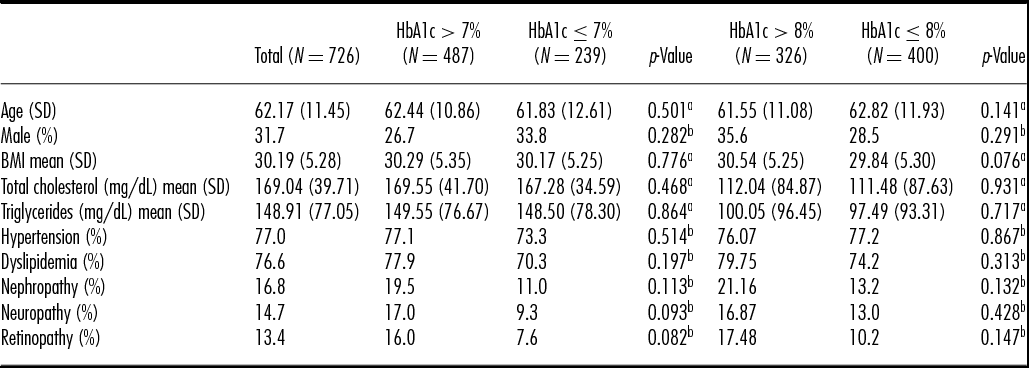
Overall, 726 patients with a diagnosis of T2DM had at least one consultation in the endocrinology unit of Hospital de Clínicas between January 2012 and January 2014 and were recruited to the study. Patients were, on average, 62.17 years old and 68.3 percent were female (Table 1). Median body mass index (BMI) was 29.6 kg/m2 for the 65.3 percent of patients with data.
Patients’ Baseline Characteristics

SD, standard deviation; BMI, body mass index; N, number of patients; HbA1c, glycated hemoglobin.
a Comparison of continuous variables of HbA1c categories using t-test.
b Comparison of the frequencies (proportions) of the HbA1c categories using binomial test.
The median of HbA1c was 7.8 percent (6.7–9.1 percent) and patients with HbA1c higher than 7 percent represented 67.2 percent of the study population. Most patients had hypertension and dyslipidemia, representing 76.9 percent and 76.5 percent of the included patients, respectively. Other CVDs were reported in 19.9 percent of patients, hypothyroidism in 27.2 percent of patients, nephropathy in 16.8 percent of patients, neuropathy in 14.7 percent of patients, and retinopathy in 13.3 percent of patients. HbA1c>7 percent was significantly associated with dyslipidemia, neuropathy, nephropathy, and retinopathy.
Direct Costs
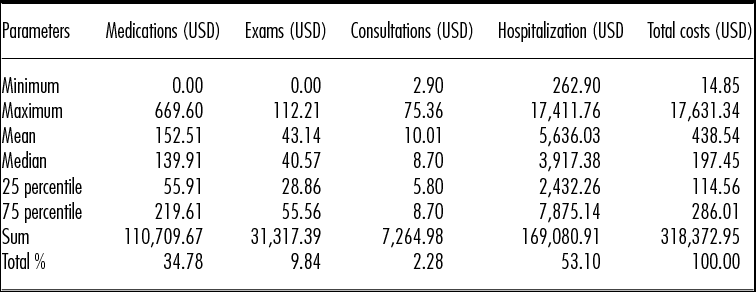
A mean cost per patient per year (pppy) was USD 438.54. The majority of costs incurred were from hospitalizations (53.1 percent), followed by 35 percent for medications, 9.6 percent for laboratory exams, and 2.3 percent for consultations.
Medications
The cost of medications was, on average USD 152.49 pppy. Medications were divided into antidiabetics and those related to dyslipidemia and CVD problems. Antidiabetics made up 73.9 percent of the total cost of medications, with insulin being the major contributor.
Insulin was used by 455 patients (62.3 percent). A total of 108 patients (15 percent) used insulin alone, while 251 patients (34.6 percent) took oral antidiabetics alone and 20 patients (2.7 percent) were being managed using lifestyle modifications. Among patients taking insulin, most were receiving NPH (neutral protamine Hagedorn) insulin (n = 208) or NPH insulin in combination with regular insulin (n = 250) (Supplementary Table 1).
Several medications for dyslipidemia and CVD were prescribed to 690 patients. The most common medications for dyslipidemia or CVD captured by the study were atorvastatin (32 patients), bezafibrate (60 patients), simvastatin (505 patients), and enalapril (355 patients) (Supplementary Table 2). The cost pppy for drugs used for dyslipidemia or CVD was USD 481.54 (N = 690). While simvastatin was the most commonly prescribed drug for dyslipidemia or CVD, atorvastatin had a greater impact on costs, despite being prescribed for only 32 patients (4.4 percent) of the study population due to its higher unit cost (Supplementary Table 2).
Costs for Patients with Poor and Good Glycemic Control for the Evaluated Components for HbA1c Threshold 7 or 8%

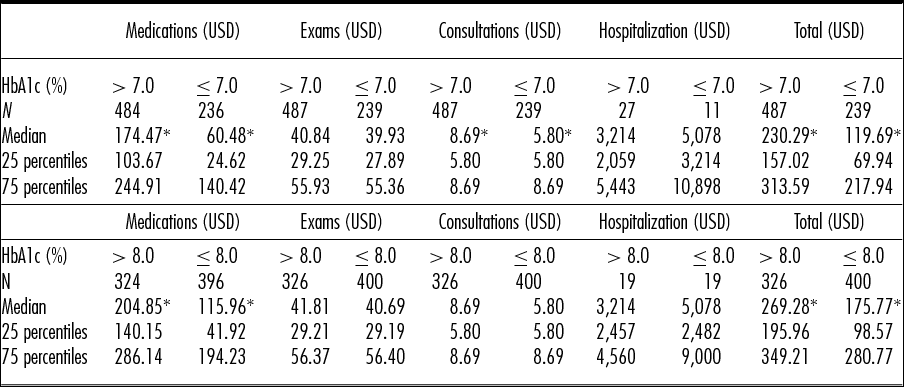
N, number of patients; USD, United States dollar.
*Significant values with p < 0.05 (Mann-Whitney U test)
The median cost pppy of medications was USD 139.91 (IQR USD 55.91, USD 219.61), representing around 35 percent of the total costs included in this study.
Laboratory Exams and Consultations
In our study, a total of USD 31,317 was spent on laboratory tests with a median cost of USD 40.57 pppy (IQR USD 28.86, USD 55.56), which represented 9.8 percent of total costs included in the study. USD 7,264.98 was spent on ambulatory consultations, directly and indirectly related to T2DM (USD 10 pppy). The laboratory exams performed for more than 90 percent of patients were HbA1c, total cholesterol, LDL, HDL, triglycerides, and creatinine (Supplementary Table 3). Among the exams performed, the most expensive was the parathyroid hormone blood test, USD 12.50 per test, which was done for 341 patients.
Costs (USD) for the Evaluated Components in T2DM

T2DM, type 2 diabetes mellitus; USD, United States dollar.
Hospitalizations
Thirty patients (4.1 percent) were hospitalized due to problems related to diabetes, which was estimated to cost USD 169,080.91 or an average of USD 5,636 per patient. Hospitalizations were categorized by: cardiac disorders, diabetes treatment, kidney disorders, cerebrovascular problems, and other problems related to T2DM. Cardiac disorders were the main cause of hospitalizations, contributing to 58 percent of the total costs related to hospitalizations, followed by other problems (27 percent), diabetes treatment (6 percent), kidney disorders (5 percent), and cerebrovascular problems (4 percent). Other problems related to the T2DM group included one hospitalization for anemia, one for lower member amputation, one for a penile implant (due to impotency), one for pancreas complications, and one for mesenteric ischemia. Diabetes represented an important risk factor for all included hospitalizations. The median cost per hospitalized person was USD 3,917 (IQR USD 2,432, USD 7,875), representing around 53 percent of the total costs of the management of T2DM collected in our study.
Costs for Diabetes Control
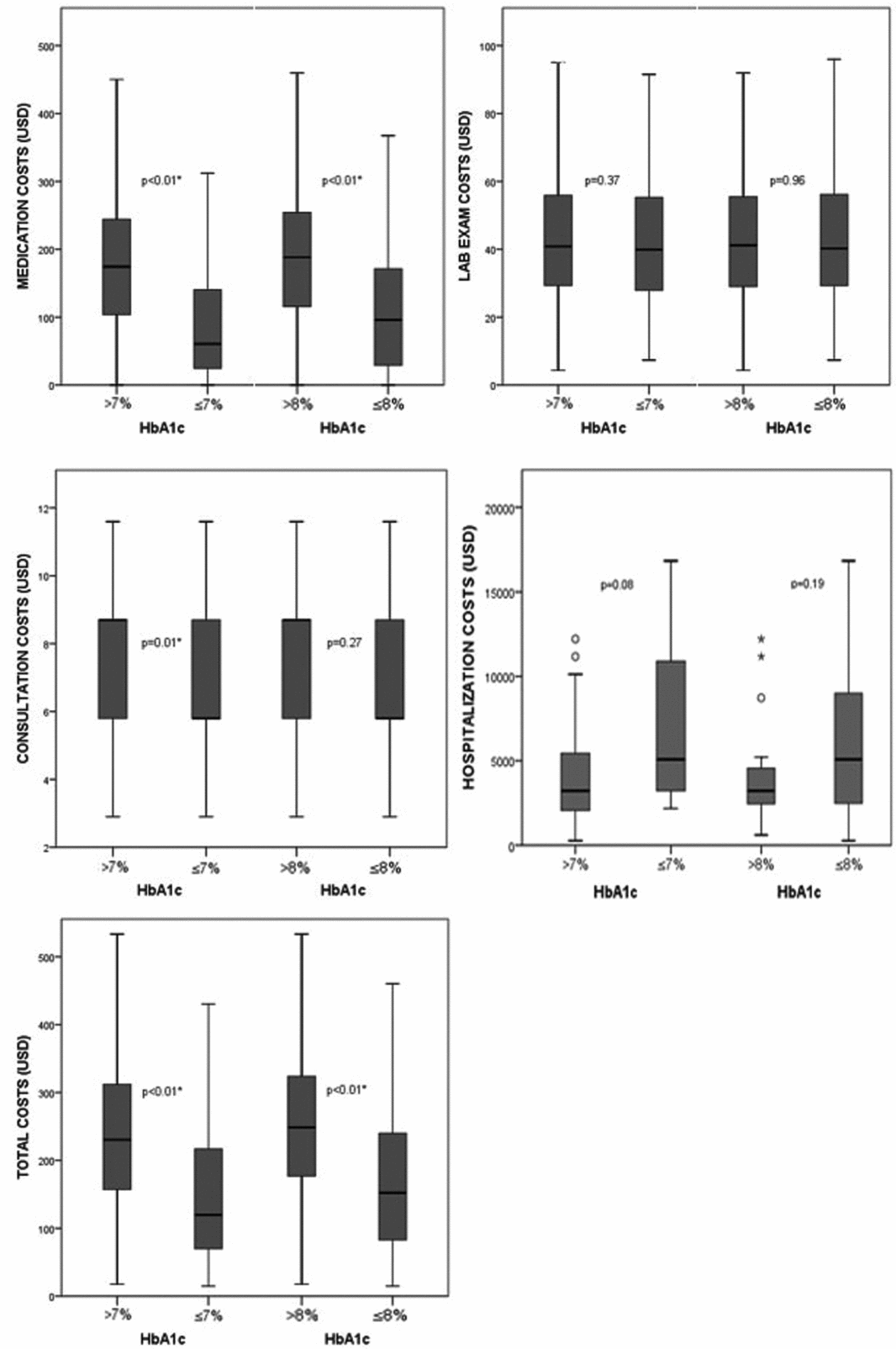
The cost associated with the management of diabetes was higher for patients with HbA1c > 7 percent compared with HbA1c ≤ 7 percent and when using a threshold of 8 percent, total costs of patients with HbA1c > 8 percent were higher than those with HbA1c ≤ 8 percent (Figure 1). Age, gender, BMI, total cholesterol, triglycerides, hypertension, dyslipidemia, nephropathy, neuropathy, and retinopathy did not differ between groups with HbA1c thresholds of 7 or 8 percent, although small numbers may have resulted in nonsignificant differences (Table 1).
Boxplots of comparisons according to patient's glycated hemoglobin (HbA1c) values (using thresholds of 7 percent and 8 percent) for the major direct components of type 2 diabetes mellitus (T2DM) costs (medications, laboratory exams, consultations, and hospitalizations) and total costs (United States dollar, USD). Outliers were removed from the boxplots. Values of p < .05 are statistically significant.

The pppy costs of medications, consultations, and total costs were higher in patients with HbA1c > 7 percent compared with HbA1c ≤ 7 percent values (see Table 2). The pppy cost of laboratory exams and hospitalizations did not differ between patients with HbA1c > 7 percent compared with patients with HbA1c ≤ 7 percent. Using the threshold of 8 percent, only medications and total costs were significantly higher in patients with HbA1c > 8 percent, whereas exams, consultations, and hospitalizations were not significantly different between groups (HbA1c > or ≤ 8 percent).
Using a less rigorous diabetes control threshold (HbA1c of 8 percent), medication costs were USD 188 (IQR 1115 – 254) versus USD 95 (IQR 29–171) for patients with HbA1c > 8 percent and ≤ 8 percent, respectively (p < .01). Laboratory exams’ median cost for HbA1c > 8 percent patients was USD 41 (IQR 29–56) versus USD 40 (IQR 29–56) for HbA1c ≤ 8 percent patients, with no significant difference (p = .96). The same was observed for HbA1c > 8 percent patients’ median consultation cost, USD 9 (IQR 6–9) versus USD 6 (IQR 6–9) for HbA1c ≤ 8 percent patients, with no statistic difference (p = .27).
After combining costs for medications, consultations, laboratory exams and hospitalizations, the total median costs of USD 230.29 pppy (IQR 157.02–313.59) for patients with HbA1c > 7 percent were significantly higher than patients with HbA1c ≤ 7 percent, which had a median cost of USD 119.69 (IQR 69.94–217.94). Total median costs were USD 249 (IQR 177–324) versus USD 152 (IQR 82–240) for patients with HbA1c > 8 percent and ≤8 percent, respectively (p < .01). The costs of patients with diabetes complications grouped by HbA1c values (HbA1c thresholds 7 and 8 percent) are shown in Figure 1 (p < .05).
Total costs for all assessed components are shown in Table 3. The total cost for all study patients (n = 726) reached USD 318,372 and the median cost pppy was USD 197.45.
DISCUSSION
The current study included patients with T2DM who attended an outpatient clinic of a large hospital in the southern region of Brazil. T2DM can be prevented or even delayed through lifestyle changes that include changes to diet and exercise (3). However, when required, medications commonly include oral antidiabetic drugs or insulin (Reference Meah and Juneja25).
Although metformin is one of the most used oral glucose-lowering medications and is widely considered to be the optimal initial therapy for patients with T2DM (Reference Holman26;Reference Sanchez-Rangel and Inzucchi27), insulins represented 82.4 percent of the costs of antidiabetics in this study. This may be due to the high unit cost of insulin and the added costs of the syringes for administration. Another factor that may contribute to this result is the clinical condition of patients who attend the endocrinology unit of a public hospital, which usually demands treatments that are more expensive. These patients tend to have poorer controlled disease or greater complications (advanced diabetes) when compared with those who attend a general practice (Reference Liebl, Khunti, Orozco-Beltran and Yale28;Reference Kalkan, Bodegard and Sundström29). In our study, the proportion of patients using insulin was higher than reported in other studies (Reference Sharma, Nazareth and Petersen30–Reference Liatis, Dafoulas and Kani33). This may be due to the characteristics of the patient sample of our study, which included an outpatient clinic (secondary healthcare level), which may not be representative of all T2DM patients from southern Brazil.
In this study, only costs of diabetes were included. However, it is estimated that 44–70 percent of diabetic patients have at least some type of comorbidity at the time of diagnosis of diabetes (Reference Luijks, Schermer and Bor34;Reference Struijs, Baan, Schellevis, Westert and van den Bos35), which could lead to an increase in the total costs of these patients. Between comorbidities, CVDs are the major mortality cause in diabetic patients and contribute to direct and indirect costs of diabetes (4).
In 2009, Brazil spent BRL 92 million on HMG-CoA reductase inhibitors (statins) of which 96 percent of the costs were attributable to the use of atorvastatin. In the current study, this statin was used by 4.4 percent of the patients but had an overall financial impact almost three times higher than simvastatin, which was used in 69.6 percent due to its higher unit cost. Studies showed that clinically, there are differences of safety profile between atorvastatin and simvastatin, and this should be evaluated, especially considering the stages of the disease, needs of each patient and the lower price of the drug (Reference Araujo, Ribeiro de Souza and Bahia36–Reference Marsola39).
The cost of medications (35 percent) as a proportion of total costs for managing T2DM in our study is similar to other studies. In a recent study from Spain, medications represented 29.7 percent of the total direct costs of managing T2DM (Reference Mata-Cases, Casajuana and Franch-Nadal40). In Greece, medications represented 35.9 percent of the total direct costs (Reference Migdalis, Rombopoulos and Hatzikou41), while in Iran and Colombia, proportions were of 46 percent and 47 percent, respectively. Other Brazilian studies showed medications representing 48 percent (Reference Bahia, Araujo and Schaan13) and 42 percent (Reference Borges, Ferraz and Chacra6) of the total direct costs of T2DM.
In our study, 2.3 percent of total costs were related to consultations. In the CODE-2 study, more than 7,000 patients with T2DM in eight European countries were evaluated regarding total healthcare direct costs. The median costs of consultations was USD 8.70 pppy (IQR USD 5.80 – USD 8.70), representing 2.3 percent of the costs collected in the study. In a Brazilian study, data from 209 patients were collected during the years 2009 and 2010 and direct costs were evaluated, finding that consultations represent 4 percent of the total costs (Reference Borges, Ferraz and Chacra6, Reference Jonsson42).
Regarding laboratory exams, in the CODE-2 study, they represented 21 percent of total costs in patients with T2DM (Reference Jonsson42), while in the Brazilian study, it represented 7 percent of the total costs (Reference Borges, Ferraz and Chacra6). In this study, 9.6 percent of total costs were related to exams.
In many studies, hospitalizations accounted for most of the total costs (Reference Cao, Wang, Zhang, Zhao and Li43–Reference Rasekaba, Lim and Hutchinson46). Our results are similar to those published by the CODE-2 study, where 55 percent of costs were designated to hospitalizations (Reference Jonsson42). In Spain, hospitalizations accounted for 41.9 percent (Reference Mata-Cases, Casajuana and Franch-Nadal40) of the total costs. In a Brazilian study by Borges et al in 2014, hospitalizations represented only 14 percent of the total direct costs of managing T2DM (Reference Borges, Ferraz and Chacra6). This is substantially lower than the 53 percent estimated from the current study. However, Borges used the reimbursement values of the government for hospitalization, whereas we used data from the real costs of hospitalizations for a public hospital that receives government incentives to cover the expenses. The lack of more COI studies of T2DM in Brazil did not allow for further comparisons.
Total costs and costs of medications were higher in patients with higher HbA1c values, whereas costs of exams and hospitalizations were similar in groups using HbA1c thresholds of 7 or 8 percent. It is important to note that data of a single observation year were collected, yet costs related to T2DM complications likely require a history of uncontrolled disease and it was unclear whether observed values of HbA1c would be a good proxy for historical values of HbA1c. Considering the high costs of hospitalizations, it is important to cite that some of the assessed hospitalized patients presented adequate glycemic control. Possibly, HbA1c value in the time of the hospitalization does not reflect a previous period of uncontrolled of diabetes, which led to hospitalization or, despite adequate glycemic control, diabetes may remain a risk factor for hospitalization.
As previously highlighted by other studies, the costs associated with the management of diabetes was higher for patients with HbA1c > 7 percent values compared with HbA1c ≤ 7 percent values. Migdalis et al., which evaluated costs for management of diabetes and its comorbidities, reported a 22 percent increase in the cost of managing diabetes in patients with HbA1c > 7 percent compared with ≤7 percent. Athanasakis et al. related that patients with HbA1c > 7 percent increased annual costs by 59 percent, compared with patients with HbA1c ≤ 7 percent, whereas in the study by Mata-Cases et al., the increase in costs were 15 percent (HbA1c > 7 percent versus ≤7 percent (Reference Mata-Cases, Casajuana and Franch-Nadal40;Reference Migdalis, Rombopoulos and Hatzikou41;Reference Athanasakis, Ollandezos and Angeli47). Previous studies and meta-analyses, including those conducted in Brazil, have already demonstrated that diabetic patients with HbA1c > 7 percent are more susceptible to micro and macrovascular complications, hence increased patient costs (Reference Baptista, Thieme, Reis, Pontarolo and Correr8;Reference Viana, Leitão and Kramer9;Reference Hoffmann, Claessen and Morbach45;Reference Bash, Selvin, Steffes, Coresh and Astor48;Reference Hemmingsen, Lund and Gluud49).
Two studies conducted in Brazil presented total cost pppy results of USD 855.42 (Reference Bahia, Araujo and Schaan13) and USD 981.86 (Reference Borges, Ferraz and Chacra6). However, these studies also included indirect costs during analysis which represented 33.7 percent and 45.0 percent of the total costs, respectively, while our study accounted only for direct costs. Comparing our mean value of costs pppy (USD 438.54) with the direct costs of the other two studies (USD 411.48 referred by Bahia et al. (Reference Bahia, Araujo and Schaan13), and USD 500.51 referred by Borges et al. (Reference Borges, Ferraz and Chacra6)) the results are similar. Furthermore, differences in study design, methodology, characteristics of the evaluated population, and healthcare system need to be considered for robust comparisons between studies to be made.
There is a lack of published COI studies for T2DM in Brazil that would enable a better understanding of the financial impact of diabetes nationally and contribute toward evidence internationally.
Limitations
COI studies may be highly heterogeneous and tend to have different results due mainly to the methodology used, which limits comparisons across studies. This study was conducted in one hospital from a Brazilian capital city, but results may not be generalizable to other countries, Brazil as a whole or other regions in Brazil. If the patient was admitted to another hospital, this information could not be traced. Because treatment adherence was not evaluated in this study, it was considered that all the assessed patients had good therapy adherence and had obtained their medications from the public health system. Only ambulatory costs (public health clinic and hospitalizations) were assessed; thus, costs associated with primary care or private health care were not captured. The costs of managing CVD or risk factors were not included in this study.
In our study, we collected only the first value of HbA1c from the past 12 months. If there were newly diagnosed patients, they may have had time to adjust their treatment (pharmacological or nonpharmacological) and lower HbA1c levels in the coming months.
The selected patients from our study were those attended in the ambulatory of endocrinology of the Hospital de Clínicas. Other ambulatories, emergency services, or further hospitals/healthcare units were not included in the analyses. Correlations between the time of diagnosis and the disease's cost could not be performed due the lack of information.
In conclusion, our study shows the important financial burden that diabetes can have on the public health system of a country. Medications and hospitalizations were the major contributor of diabetes expenses, representing together 88 percent of the total costs. Preventing T2DM, or reducing its complications through adequate control, may help avoid the substantial costs related to this disease. As most healthcare systems are increasingly financially unable to meet the healthcare demands of their populations, identifying costly areas, such as T2DM, may help decision makers more efficiently allocate resources.
SUPPLEMENTARY MATERIAL
Supplementary Table 1: https://doi.org/10.1017/S026646231800017X
Supplementary Table 2: https://doi.org/10.1017/S026646231800017X
Supplementary Table 3: https://doi.org/10.1017/S026646231800017X
CONFLICTS OF INTEREST
The authors have nothing to disclose.