Introduction
International law is a fluid and evolving body of jurisprudence that is being applied through a new, hybrid, and dynamic set of rules and procedures to prosecute those suspected of the most heinous international crimes. The application of international law in international criminal trials has raised a host of questions regarding the fairness of trials (Gallant Reference Gallant2003; Meernik Reference Meernik2003; Knoops Reference Knoops2004; Negri Reference Negri2005; Groome Reference Groome2006; Megret Reference Megret2009), appropriate punishment for the guilty (Meernik and King Reference Meernik and King2001; Drumbl Reference Drumbl2007; Harmon and Gaynor Reference Harmon and Gaynor2007; Sloane Reference Sloane2007; Ewald Reference Ewald2010; Hola, Smeulers, and Bijleveld Reference Hola, Smeulers and Bijleveld2011; Meernik Reference Meernik2011), and the determinants of judicial decision making (Jodoin Reference Jodoin2010; Meernik Reference Meernik2011). To date, however, there have been few studies that have sought to develop a theory of international judicial decision making and empirically model judicial outcomes, especially at the appellate level. I focus on judicial decision making at the international criminal tribunals to understand how judges reach decisions in an environment in which the relevant law is often being applied for the very first time. No one had ever before been tried for the crime of genocide in an international courtroom. No one had defined crimes like ethnic cleansing. How then do judges reach decisions, particularly at the international appellate level, across a diverse range of comparatively undefined issues involving embryonic jurisprudence? I argue that where international law is comparatively underdeveloped, judges will be more likely to grant the appeals of both the prosecution and the defense; but where such laws have greater jurisprudential development, they will be more likely to uphold the decisions of the trial chambers.
Judicial decision making at the appellate level in international criminal tribunals occurs in the context of conflicting interpretations of this emerging international law. Judges must determine how to resolve these questions over international laws that were generally set aside, or rarely engaged since the Nuremberg and Tokyo tribunals of World War II. Indeed, until the establishment of the International Criminal Tribunal for the former Yugoslavia (ICTY) in 1993 and the International Criminal Tribunal for Rwanda (ICTR) in 1994, some international laws, such as the Genocide Convention, had never been applied in an international courtroom. I argue that in such a decision-making environment, appeals are most likely to be granted when the parties dispute over “contested zones” of international law where differences of opinion among judges are more likely to exist. Analogously, when the prosecution or the defense grounds its appeals in issues that are relatively more settled and defined in international law, appellate judges should be less likely to uphold their claims and overturn the decisions of the trial court.
The article is organized into five sections. First, I review the workings of the international criminal tribunals and, in particular, the appellate processes of the ICTY and the ICTR. Second, I analyze the germane literature on judicial decision making at the international tribunals. Third, I develop my theory of judicial decision making on issues at appeal before the appeals chambers of the two tribunals. In the theory section of the article I explore why and where contested zones of international law are most likely to occur and why such areas are likely to favor the appellant. I also explore why some more settled areas of international law exist. In the fourth secion I first describe a new database on the outcomes of every extant appeal filed by both the prosecution and the defense at the international criminal tribunals for the former Yugoslavia and Rwanda and conduct the analysis. In the concluding section, I discuss the fascinating and divergent outcomes for the prosecution and defense that are contingent on the tribunal, the issue, and the party making the appeal.
The Appellate Process
The ICTY was created in 1993 by the United Nations Security Council to prosecute crimes committed during the Balkan wars of the 1990s, while the ICTR, created in 1994 by the UN Security Council, prosecutes crimes committed during the Rwandan genocide in 1994. The ICTY has jurisdiction over (1) grave breaches of the Geneva Conventions of 1949, (2) violations of the laws and customs of war, (3) violations of the 1948 Genocide Convention, and (4) crimes against humanity that occurred in the former Yugoslavia since 1991. The ICTR possesses jurisdiction over crimes against humanity, genocide, and those war crimes that pertain to intrastate conflicts.
The judges of the ICTY and ICTR sit on three-judge trial panels that hear cases brought forward in a largely adversarial proceeding. The Office of the Prosecutor (OTP) and the defense call witnesses, present exhibits, offer theories, and contest the evidence of the other side. At the conclusion of this process the trial chamber judges review the evidence and assess its probative value; they analyze the relevant international law in order to determine if crimes were committed that meet the general criteria required for war crimes, crimes against humanity, and genocide and whether the defendant(s) possessed the appropriate bias, intent, and liability to be held responsible. Their judgments provide a recitation and evaluation of an often mountainous evidentiary record and conclude with a disposition that formally announces the verdicts and the sentences for those found guilty. Verdicts are issued on each count, although most sentences reflect the totality of the guilty conduct and do not provide a specific penalty for each proven charge. The affirmative votes of two of three judges are required for a guilty verdict.
Almost all those found guilty appeal their verdicts, with the exception of those who have pled guilty. Typical appellate procedures, from the ICTY statute, article 25, are as follows: “The Appeals Chamber shall hear appeals from persons convicted by the Trial Chambers or from the Prosecutor on the following grounds: (a) an error on a question of law invalidating the decision; or (b) an error of fact which has occasioned a miscarriage of justice.” Defendants appeal everything from judicial misconduct to lack of a reasoned opinion, misapplication of command and control doctrine, and failure to consider their mitigating circumstances properly when sentencing, inter alia. The OTP can appeal verdicts and sentences as well and has often argued against sentences perceived as too lenient. Each side submits its own series of specific appeals and may argue against the specific appeals of the opposing side. Judges on the appeals chamber reach conclusions on all of the grounds of each and every separate ground of appeal submitted by the prosecution and by the defense in every case.
The common appeals chamber of the ICTY and ICTR comprises seven judges in total, with five coming from the ICTY and two from the ICTR. When appeals arise from the ICTY, five of these judges make up what is officially known as the appeals chamber of the ICTY. The same process occurs with regard to the ICTR. After a review of the record, the appeals chambers issue their decisions detailing the submissions and arguments and their evaluations of such for every ground of appeal raised by each party. The votes of the judges are recorded, and if three or more of the five appellate judges agree, they may grant a particular appeal by the prosecution or defense. By granting an appeal the judges agree with the interpretation of law offered the appellant(s) and thus decide against the decision of the trial chamber on a point of law. Granting a specific appeal may, but often does not, result in a change in a verdict or sentence.
Judicial Decision Making at the International Tribunals
Research on international judicial decision making at the appellate level and in particular empirical analysis of decisions is just now gaining traction in studies of international criminal courts (e.g., Drumbl Reference Drumbl2007; Terris, Romano, and Swigart Reference Terris, Romano and Swigart2007; Darcy and Powderly Reference Darcy and Powderly2010; Meernik Reference Meernik2011; Sluiter, Swart, and Zahar Reference Sluiter, Swart and Zahar2011). One body of research has focused on evaluating the determinants of sentencing (Meernik, King, and Dancy Reference Meernik, King and Dancy2005; Hola et al. Reference Hola, Smeulers and Bijleveld2011; Meernik, Aloisi, and Ding Reference Meernik, Aloisi and Ding2012), while others have begun to develop more generalized models of judicial decision making (Jodoin Reference Jodoin2010) that are informed by studies of the US Supreme Court or focus on the use of precedent (Fleming Reference Fleming2002; Terris et al. Reference Terris, Romano and Swigart2007). This research, while focused on the international tribunals, has remained fairly diverse in its foci and methods. Legal research and textual analyses have examined the nature of appellate decision making, but often with a taxonomic purpose. The empirical research regarding sentencing has evaluated the broader purposes of international justice but is more often focused on trial chamber decision making.
As the “justice cascade” (Sikkink Reference Sikkink2011)—the increasing attention to human rights violations and the efforts to end impunity for such abuses—strengthens and endures, researchers have begun to analyze international tribunals as part of the fabric of international relations. At this level of generality one line of inquiry has involved the analysis of the use of citations in judicial opinions. In particular, scholars have examined whether through citations of other tribunals’ judgments and the development of precedents there is evidence of institutional, jurisprudential development (Fleming Reference Fleming2002; Guillaume Reference Guillaume2011; Borda Reference Borda2013). Indeed, there is evidence to indicate that the use of citations across tribunals has been expanding as courts develop an increasingly interconnected body of international jurisprudence on human rights, the laws of war, and modes of liability. More specifically, Fleming (Reference Fleming2002) argues that appellate review by the international tribunals is based on the need to maintain consistency across judgments, the development of the law, justice, and even broader tribunal goals such as deterrence and peace. As researchers describe and assess the use of citations, some see increasing fragmentation in judicial decision making in the use of precedent (Fleming Reference Fleming2002), while others find that such diversity can be productive (Nerlich Reference Nerlich2013). Some argue, like Judge Orie of the ICTY, that appellate judges have considerable freedom not only to interpret the law but to determine when and where principles of stare decisis may apply (Orie Reference Orie2012), while others find less discretion apparent in judicial decision making (Guillaume Reference Guillaume2011).
If we wish to explain the nature and direction of appellate decision making rather than charting its macro-level development, there is a body of scholarship regarding the potential for bias in international jurisprudence that touches on such matters. This research focuses on judicial decision making as a product of inherent biases built into the system of international justice. Some scholars have argued that there is a general predisposition in decision making at the international tribunals that privileges the prosecution over the defense. Megret (Reference Megret2009, 76) writes, “The hydraulic pressure of judging some of the worst crimes, often committed by individuals who will have been abundantly associated with them in public opinion, may have taken its toll on the most liberal aspects of criminal procedure, as it is sometimes conceived domestically.” Similarly, DeGuzman (Reference DeGuzman2012, 61–62) argues that because judges and prosecutors have paid such prominent attention to the gravity of the crimes in selecting cases, bringing charges, and rationalizing punishment for the guilty, this will affect defendants’ rights: “The concept of gravity is also invoked to justify relaxing the legal rules that protect defendants. Indeed, a Latin maxim holds that ‘in delictis atrocissimus Jura transgredi liceat’ (with atrocious crimes, legal rules can be relaxed). Thus, for example, courts have invoked gravity to reject defenses based on the principle of legality—or nullum crimen sine lege. That principle is designed to provide notice to defendants of the types of conduct that are punishable and thus ensure the fair application of the law.” Damaska (Reference Damaska2011) argues that the international tribunals face considerable pressure to obtain convictions while at the same time they confront numerous difficulties in mounting cases given their lack of enforcement mechanisms and recalcitrant governments. Such pressures and problems may create an environment in which international courts may be less likely to afford defendants the full panoply of protections provided in domestic courts. This, in turn, suggests that judicial decision making is affected by these external, political considerations. While there may well be such bias in favor of conviction that influences judicial decision making, such theories are not precise enough to help us determine where and when outcomes will be influenced by these pressures. Rather than asserting that there is an (in)variable bias against the defense, I argue that it is the law that is most influential in determining which side wins an appeal.
Of all the germane research on appellate decision making, Jodoin (Reference Jodoin2010) is the most appropriate to the present study. Jodoin’s research suggests that there are two possible frameworks for analyzing international appellate decision making. The attitudinal model (see especially Segal and Spaeth Reference Segal and Spaeth1993, Reference Segal and Spaeth2002) suggests that judges have policy preferences they seek to advance through interpretation of the law. Jodoin argues that because judges of the international criminal tribunal appeals chambers share many of the same characteristics as judges of the US Supreme Court (e.g., they lack electoral accountability; they are a court of last resort), they may seek to advance their own policy objectives. Jodoin contends that the principal ideological division is not over left/right issues strictly speaking, but rather concerns the relationship between state sovereignty and international law. Some judges are reluctant to set aside sovereignty concerns and use judicial remedies to confront internal political matters, while others, in the name of advancing international jurisprudence and human rights, do not have the same compunction. They more often believe that human rights trumps concerns for state sovereignty. Jodoin’s research begins to move us away from more descriptive analysis to begin the process of building models of judicial decision making that can be applied and empirically tested.
Finally, the study of sentencing at the international tribunals has attracted the most empirical attention of the literature on judicial decision making (e.g., Hola et al. Reference Hola, Smeulers and Bijleveld2009, Reference Hola, Smeulers and Bijleveld2011; Meernik Reference Meernik2011). In evaluating the determinants of sentencing, Meernik argues that retribution, deterrence, and the need to advance peace have informed the punishments handed down by the ad hoc tribunals. Some research has looked at the background characteristics of judges (Meernik et al. Reference Meernik, King and Dancy2005; King and Greening Reference King and Greening2007) but has not found substantial evidence to suggest that professional career paths or country of residence characteristics significantly and consistently influence sentencing practices. The most important factors in determining sentences are those that pertain to the conduct of the accused. Thus, while the emphasis on understanding the role of these factors as stemming from a more general decision-making concern for justice, peace, and deterrence is helpful, it does not provide a strong theoretical linkage with more general appellate-level decision making.
I argue that we should begin by assessing the impact of the law itself on appellate decisions and develop models of judicial decision making that can be tested using data on judicial outcomes. I ground my model in the nature of the legal issues raised on appeal, and in particular the level of clarity or confusion in the law, and argue that appeals are most likely to succeed, regardless of which side files them, when there is more of the latter and less of the former. I describe below how this model is conceptualized.
International Jurisprudence and Contested Zones in Judicial Decision Making
International law evolved unevenly over the last 100 years, with advancements occurring at critical times in history, such as the years immediately after World War II and the end of the Cold War. Because the ICTY and ICTR were the first international tribunals since World War II, judges are applying many heretofore untested areas of international law. Judges found themselves thrust into adjudicating complicated conflicts hundreds of miles away using law that had often never been applied before. As Freeland (Reference Freeland2015, 65) writes, “the initial phases of judicial decision-making were characterised by what could be termed ‘law-creation on the run.’ This involved a departure from well-established principles of national criminal law, due to the unique aspects of this (re)new(ed) area of international legal practice. This is, in part, a reflection of the fact that this regulatory regime for international crimes was initially developed in reaction to, rather than in anticipation of, horrendous events, including those that could not have possibly been foreseen.” As a result, we find that there have been concerns and jurisprudential ferment regarding (1) definitions of key terms in the law, (2) ambiguous language in the law, and (3) gaps in the law. There are some areas of the law in which these problems have been particularly acute and judges have offered conflicting interpretations of key elements and definitions. I argue that in those areas of international law that are the least developed—what I term “contested zones”—we should find that there is a greater likelihood of success for appellants, prosecution, or defense whose appeals are premised on engaging these diverse interpretations of current jurisprudence. I argue that these contested zones are areas of law in which ambiguity, lack of definition, and conflicting interpretation exist and thus provide fertile ground for appellants to raise objections to decisions made in the trial chambers.
This is a critical topic for researchers and the future of international justice. The appellate decisions of these tribunals are final and thus provide the world with the most critical precedents in international jurisprudence. Just as the Nuremberg and Tokyo tribunals contributed greatly to the post–Cold War system of international law, so too will the judgments of these tribunals lay the foundation for future interpretation and application of the law. Understanding which factors are more likely to lead the judges to reverse or affirm the decisions of the trial chambers helps us better understand the meaning and the direction of international law. For example, are novel forms of liability, such as joint criminal enterprise, gaining traction as appropriate and legally grounded theories, or is there evidence that rulings on such matters are still in flux? Explaining when appellate judges are more apt to overturn lower court decisions helps us understand which areas of law are relatively settled and which are still in the process of development.
Understanding how appellate judges reach decisions is also critical for determining whether these international tribunals demonstrate a pro-prosecutorial bias. As some research referenced earlier makes clear, many scholars and observers have concluded that the tribunals are stacked against the defendants and that there is pressure on judges to ensure convictions lest criminals go unpunished and the entire judicial apparatus be judged a failure by the states that created these institutions and the peoples whose conflicts they adjudicate. Thus, by demonstrating that the issues are what largely determine appellate outcomes, and not necessarily bias against defendants, we have a much clearer picture of judicial decision making and the legacy of the tribunals.
I next explain what is meant by, and why we should expect to find, contested zones of international law. Subsequently I discuss why raising these contested zones of international law on appeal will more likely lead judges to uphold an appellant’s arguments. I then offer several hypotheses regarding which particular issues should be classified as part of these contested zones. First, however, I define what I mean by “contested zones” of international law.
Defining Contested Zones
I define “contested zones” of international law as those broad categories of substantive law (e.g., war crimes, genocide) and modes of liability (e.g., joint criminal enterprise) in which there has been a lack of prior decisions from the World War II tribunals or existing international law has not been codified into an international treaty. The Nuremberg and Tokyo tribunals adjudicated matters involving the crime of aggression (not at issue with the latter-day tribunals), war crimes, and crimes against humanity; but because crimes against humanity have not been codified in an international treaty, I still consider it to fall within the contested zone. The tribunals also considered matters relating to command and control doctrine and the responsibility of military leaders to prevent or punish subordinates who violated the law. Regarding the second element, I find that those areas of international law that have been codified are war crimes, violations of the laws and customs of war, and genocide. Because genocide had never been applied until the ICTR was created, however, I consider it to fall into the contested zone.
Categorizing an issue as falling within this contested zone or not obviously involves a certain degree of subjectivity, but I believe the definition provided gives us the opportunity to analyze the impact of issues on outcomes, albeit at a fairly general level. The other, important, caveat to this definition is that it is static. I do not take into consideration whether some issues have become relatively more settled with the passage of time. However, I do include a measure in the model for the year in which a decision was handed down to determine if the likelihood of success on appeal decreases with the passage of time and (presumably) the development of law.
Definitional Issues
Contested zones of international law are likely to be fraught with definitional issues since much of this international jurisprudence has only recently been applied. There is generally an economy of language used both in the relevant treaties (e.g., the Genocide Convention) and in the founding documents of the tribunals and a dearth of precedent to fill in these gaps in the law. For example, the term “protected groups” within the Genocide Convention contains no definitions of what is meant by the adjectives “national, ethnical, racial, or religious” groups. It was not until 1998, when the ICTR first convicted someone of genocide, that international judges were forced to grapple with the meaning of these often-antiquated words (Schabas Reference Schabas2009). The disagreements over the meaning of this critical element of the Genocide Convention are mirrored in debates over other contested zones of international law, such as the definition of sexual assault, persecution, and other terms. We should expect then that when such definitional issues arise, there will be more room for disagreement and thus a greater likelihood of reversal on appeal.
Gaps in International Law
All tribunals have jurisdiction over three broad areas—crimes against humanity, war crimes, and genocide—but only the last two have even been codified in international treaties and conventions. Even within codified laws gaps still exist that have yet to be filled to the satisfaction of all sides. For example, judges have been forced to ascertain to what extent the protections afforded civilians during international law should be extended to protect them during civil wars. The term “ethnic cleansing” came into parlance only with the wars of the former Yugoslavia in the 1990s but is not present in the UN Security Council statute creating the ICTY. Judges have had to consider whether such actions were more properly characterized as war crimes, crimes against humanity, or genocide. In all these cases it has fallen to the judges to make such determinations where the law is mostly silent.
Ambiguity in International Law
Of all the problematic elements of international jurisprudence that create fertile grounds for appeals, the ambiguous nature of much of the language is perhaps the most prevalent. There is ambiguity in the overarching criteria that define international crimes (such as the differing characterization of crimes against humanity in the ICTY and ICTR statutes), in the types of behaviors that are to be prohibited (whether the use of what might be termed “hate speech” constitutes incitement to genocide), and in their applicability in internal versus international conflicts. Judges have assessed whether the spare international jurisprudence on such subjects as well as national laws and rulings can provide guidance, but not surprisingly, there are no clear answers. Perhaps the best illustration of where ambiguity in the law has affected its interpretation has been in punishment of those convicted. The tribunals have been variously charged with providing retribution, advancing deterrence, and even promoting peace and reconciliation. The statutes do not elaborate any further on how to pursue those goals. Indeed, many, including those working in the OTP (Harmon and Gaynor Reference Harmon and Gaynor2007), have recommended that the judges develop something like sentencing guidelines to address these ambiguities.
Contested Zones and Appellate Decision Making
It is my central contention that judges will be more likely to uphold appellant claims and reverse trial chamber decisions in these contested zones of the law that are characterized by definitional problems, ambiguities, and gaps in jurisprudence. Why exactly should these contested zones result in greater likelihood of appellate reversals?
Contested zones of law are typically characterized by a lack of critical or generally accepted precedent. The lack of explicit guidance creates opportunities for multiple interpretations by the trial chambers. Appellate judges can then choose among earlier interpretations; they may choose to apply analogous national laws on such subjects, or they may choose to utilize other sources to justify their decisions, such as scholarly writings. Because there is a diversity of prior judgments rather than a dominant precedent, there should be a greater likelihood that judges will issue conflicting opinions regarding such areas of law, which should open the way for greater levels of success for those appellants who raise issues involving contested zones of international law. Conversely, on those areas of the law that are relatively more enduring and stable, appellants should be less likely to find success on appeal because questions have been settled and appropriate precedents have solidified: the trial chambers are more likely to have issued a judgment that reflects accepted jurisprudence. The lack of controlling precedent frees the judges from relying on any one interpretation of the law, such as the trial chambers. Instead, lack of precedent allows judges to examine closely these trial chamber decisions, utilize their own judgment in applying what law does exist to the case at hand, and reverse the trial chamber without having to contradict precedent as well.
Because contested zones of law are areas of law in flux, there are a broader range of unsettled legal and procedural issues on which defense and prosecution attorneys can base their appeals. The fast-moving application of international law over the last several decades has provided fertile grounds for the development of arguments and appeals designed to exploit this uncertainty. After the trial chambers have issued their judgments, the prosecution and the defense can tailor their appeals to exploit the lack of clarity or precedent on these issues as raised by the trial chambers. Therefore, because contested zones provide judges with opportunities for judicial creativity (Darcy and Powderly Reference Darcy and Powderly2010) and attorneys with opportunities to exploit the lack of clarity in the law, there exists greater potential for lower court decisions to be overruled. For all these reasons, I contend that the appeals chambers will be more likely to grant appeals that are grounded in the contested zones of international law. My hypotheses regarding which particular issues fall into these contested zones and which are relatively more settled follow.
Joint Criminal Enterprise
One of the most controversial issues in international criminal law has been the use of the concept of a joint criminal enterprise to prosecute individuals involved in organizations that have violated international law. There are three types of joint criminal enterprise: (1) “common design plans,” where an individual enters into an agreement with others to commit criminal actions; (2) “systems of ill treatment,” primarily detention camps where there is organized repression in which the accused takes part; and (3) criminal acts that are not part of a common design “if such acts are a natural and foreseeable consequence of the effecting of that common purpose” (Bassiouni Reference Bassiouni2008, 485). For example, while a military force is engaged in forcibly expelling people from their homes, some soldiers may also rape, steal, or murder. While such acts may not have been part of a planned military operation, nonetheless they are foreseeable consequences that are likely to occur under such fraught circumstances. This third or extended form of joint criminal enterprise allows those who took part in the planned action to be held liable for the criminal acts committed by others in their group. There has been a fair amount of debate over this doctrine, which is not nearly so utilized in many national, criminal justice systems. Indeed as Danner and Martinez (Reference Danner and Martinez2005, 104) write in their analysis of joint criminal enterprise, “Joint criminal enterprise … has largely been created by the judges and prosecutors of the Yugoslav Tribunal.” There has also been division between common law judges who are more familiar with its basic tenets and civil law judges for whom other modes of liability are more appropriate (e.g., co-perpetration). Thus, there are substantial grounds on which to expect that those who raise such issues on appeal will be more likely to meet with success.
Hypothesis 1: Specific appeals involving issues of joint criminal enterprise will more likely be granted.
Genocide
Of all the embryonic areas of international law, few are as lacking in prior jurisprudence as the issue of genocide. The lack of legal development has meant that the judges of the international tribunals have had to confront numerous issues of definition, interpretation, and liability. First, before the existence of the ICTY and ICTR, international tribunals had never prosecuted individuals for taking part in criminal behavior that is characterized by special intent—dolus specialis—to target a protected population (e.g., national, ethnical, racial, or religious groups). Determining when an individual possesses such intent, determining whether the accused must share in the intent of his superiors, and ascertaining what indicators might be used to determine intent have all proven to be vexing and controversial issues. For example, in the absence of hard evidence of a planned genocidal campaign such as written orders or verbal intercepts, judges have addressed whether intent could be determined by the quantitative and qualitative characteristics of those targeted for murder. Not surprisingly, the use of circumstantial evidence in ascertaining intent has led to much debate. Second, the language of the Genocide Convention contains numerous terms and clauses that have required further definition and explication (Schabas Reference Schabas2007). The tribunals have focused considerable attention in developing an appropriate understanding of the terms “national, ethnical, racial, and religious groups” and with the “in whole or in part” portion of the crime of genocide. Especially since it was not clear that the Rwandan Tutsi and the Bosnian Muslim populations fell under the protection of the Genocide Convention because they do not neatly qualify as any of the protected groups, there has been a great deal of judicial ferment.Footnote 1 Given the comparative lack of development in the law on genocide, we should find that there are opportunities for attorneys to exploit such problems and convince appellate judges to reverse the decisions of the trial chambers.
Hypothesis 2: Specific appeals that involve issues regarding genocide will more likely be granted.
Crimes against Humanity
Crimes against humanity have yet to be collectively and officially codified in a single comprehensive international treaty, although several of these crimes, such as torture, have been utilized and refined since World War II. There have been numerous controversies regarding not just the specific crimes but the more general definition of what a crime against humanity is. Must crimes against humanity be related in some manner to an ongoing war, as occurred at Nuremberg and as one finds in the statute of the ICTY? Or is such a connection no longer necessary, as one finds in the statute of the ICTR that does not require a linkage to war? In addition, there has been ongoing discussion over the scale of the crimes that must occur to meet the general criteria of a crime against humanity. The ICTY statute makes no mention of the scale of the attack, while the ICTR statute states that such crimes occur when they are “committed as part of a widespread or systematic attack.” There are also concerns over whether there must be some form of bias on the part of the perpetrator, as we see in the language of the Rwandan tribunal statute, which requires that all crimes against humanity must target a “civilian population on national, political, ethnic, racial or religious grounds.” Such a requirement does not appear in the ICTY statute. Such disparities in language and definition would seem to indicate that such matters were not settled elements of international law and thus were open to further refinement and interpretation.
Hypothesis 3: Specific appeals that involve issues regarding crimes against humanity will more likely be granted.
Sentencing
Because there is so much symbolism and value inherent in sentences and because they are expected to fulfill the broad mandates of the tribunals to advance the cause of justice, deterrence, and peace, we should find that issues pertaining to sentencing fall into the zone of contested law. There are several aspects of sentencing that have generated debate and diverse interpretation and practice. There has been controversy over whether some aggravating factors that characterize the crimes themselves can also appropriately be used as aggravating factors in sentencing. Both tribunals also engage in the practice of cumulative convictions. Cumulative convictions can be entered for the same criminal actions if it can be proven that there are materially distinct elements present in one conviction that are not present in another. It raises the possibility that individuals may be convicted more than once for the same criminal action.
Perhaps most importantly, judges have been granted significant discretion in the manner in which they interpret the goals of the tribunals as they pertain to punishment, as well as the specific determinants of sentencing, on which their statutes and Rules of Procedure and Evidence have been mostly bereft of guidance (Drumbl Reference Drumbl2007; Harmon and Gaynor Reference Harmon and Gaynor2007; Sloane Reference Sloane2007; Ewald Reference Ewald2010; Hola et al. Reference Hola, Smeulers and Bijleveld2011; Meernik Reference Meernik2011). For example, while some judges may wish to advance deterrence through lengthy sentences intended to communicate the hazards of violating international law to other, would-be, war criminals, a defendant is likely to challenge the use of his judgment to communicate to a global audience. In general, anchoring punishment to the subjective values and goals of international justice may well lead to disparate legal and factual justifications of sentences that can create doctrinal confusion and disparate outcomes, both of which are likely to encourage appeals. The diversity of sentencing determinants (e.g., type of liability, extent of the crimes) may also give rise to perceptions of unequal and unfair treatment as it allows judges to choose, as they see fit, which criteria to apply.
Hypothesis 4: Specific appeals that involve issues regarding sentencing will more likely be granted.
More Settled Issues of International Law
In general, international criminal law, international humanitarian law (the label typically used to describe the laws of war), and customary international law regarding human rights are all relatively new and have been systematically and substantially interrogated only since the establishment of the ICTY in 1993. Nonetheless, there are some areas of international law that are relatively more established or have extensive precedents in domestic laws. I focus on two, general, areas of international law that we might expect would be more settled and less likely to be the focus of a successful ground of appeal.
First, the law of war crimes (including the Geneva and Hague Conventions) has been around for well over 100 years and was also applied at the Nuremberg and Tokyo tribunals. War crimes were codified in the Geneva Conventions of 1949 and have had a comparatively long history of debate and interpretation. While their application to internal conflicts has been of relatively recent origin and is comparatively underdeveloped, in general, there are substantially more precedents, jurisprudence, and scholarly writing on the subject to make its application less fraught with potential for error or substantially diverse interpretations. Also, these matters have been extensively debated and defined nationally as states have had decades to incorporate the relevant language from the Geneva Conventions into their own codes of conduct regarding the conduct of war.
Second, the issues pertaining to command and control doctrine were also extensively used during the post–World War II tribunals. Language on superior liability also appears in the statutes of the modern tribunals. Command liability also has its counterparts in domestic military justice systems. Command and control was extensively debated at both the Nuremberg and especially the Tokyo tribunals. Thus, there is extensive national and international jurisprudence on this subject. I argue that they are relatively more settled than the four types of laws described previously and that this will make such issues more likely to be resolved in favor of the trial chamber rulings.
Hypothesis 5: Specific appeals that involve issues regarding war crimes will be less likely to be reversed.
Hypothesis 6: Specific appeals that involve issues regarding command and control will be less likely to be reversed.
Analysis
To analyze appellate judicial decision making at the ICTY and the ICTR, I collected data on every ground of appeal advanced by both the prosecution and the defense for every appellate final judgment issued from 1997 through February 2014. This results in a data set of 3,100 specific appeals (the unit of analysis) proffered by either the prosecution or the defense across 75 trials at the ICTY and ICTR (many trials involve multiple defendants). Data were collected on the votes of the individual judges as well as the overall outcome of each ground of appeal, the issues raised by the appellants, and which party was appealing a particular outcome.Footnote 2 All data were obtained from the judgments of the tribunals, which are publicly available online.Footnote 3 The dependent variable is a dichotomous variable that is coded 1 when a party, regardless of whether the party is the prosecution or the defense (only those two parties make appeals at the ad hoc tribunals), wins a particular appeal and 0 otherwise. I do not assume, however, that a loss for one side (prosecution or defense) is, ipso facto, a victory for the other side. In most cases this will be so, but I code as “wins” only those occasions when the party directly making a specific appeal is granted the appeal by the judges.
I found 150 different issues raised on appeal, which I have categorized for this analysis into several, larger groups. The issues I examine below are (1) command and control, (2) joint criminal enterprise, (3) war crimes, (4) crimes against humanity, (5) genocide, and (6) sentencing. Many of the issues brought on appeal concern the standard of review for appeals, requirements for a reasoned opinion, the necessity of following proper procedures, and other such issues. These issues are part of the reference category, along with other, miscellaneous, issues.
Finally, other factors that are not necessarily related to the appellant briefs may also influence judicial decision making. First, I control for the party that put forward the appeal (defense is coded 1) and where the appeal was lodged (the variable is coded 1 for the ICTY). I include measures of the number of mitigating and aggravating factors found relevant by the trial chamber judges in sentencing to determine if the conduct of the accused, before, during, or after the trial, influences appellate decision making. I also include in the analysis a measure of the length of the defendants’ sentences issued by the trial chamber.Footnote 4 Finally, I include a variable measuring the year in which the appellate case was decided to determine if there are any temporal trends in the data. I use probit analysis with standard errors clustered around the trial.
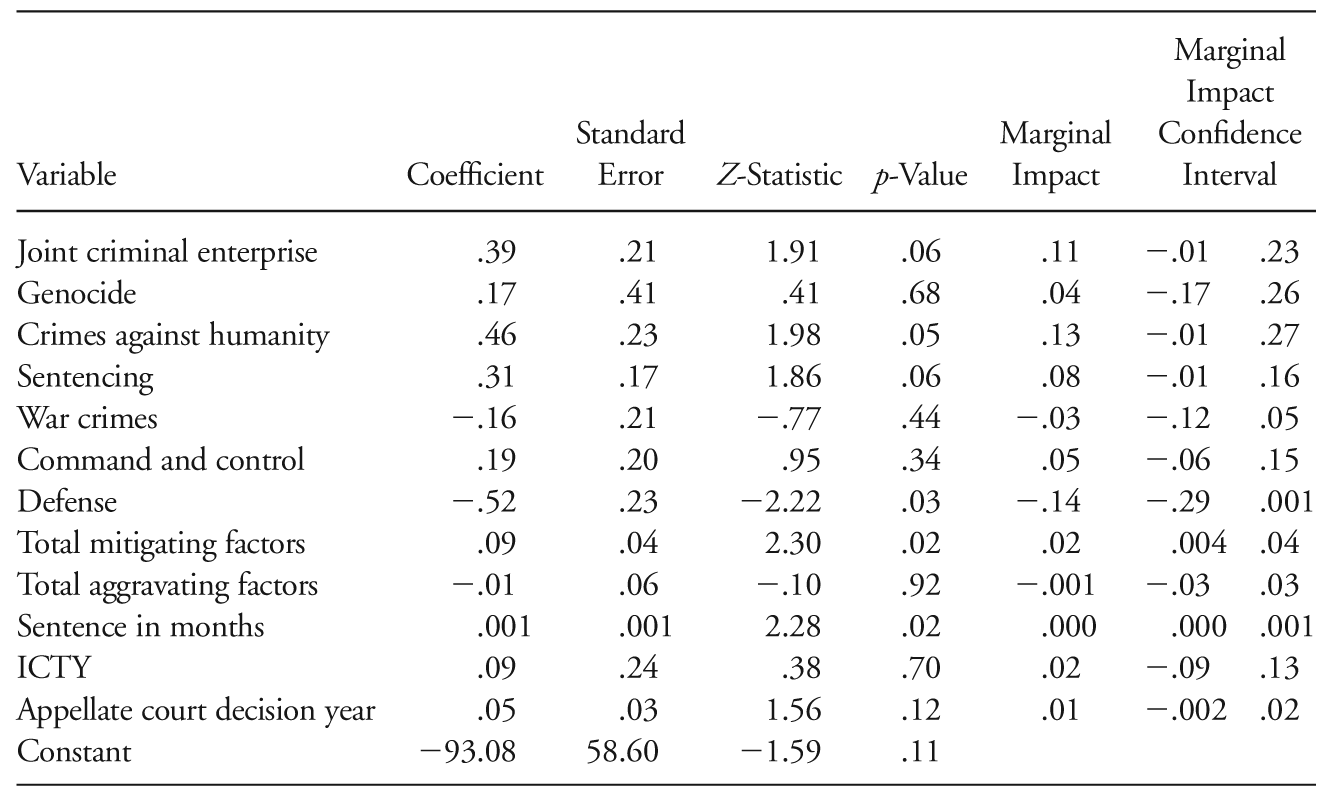
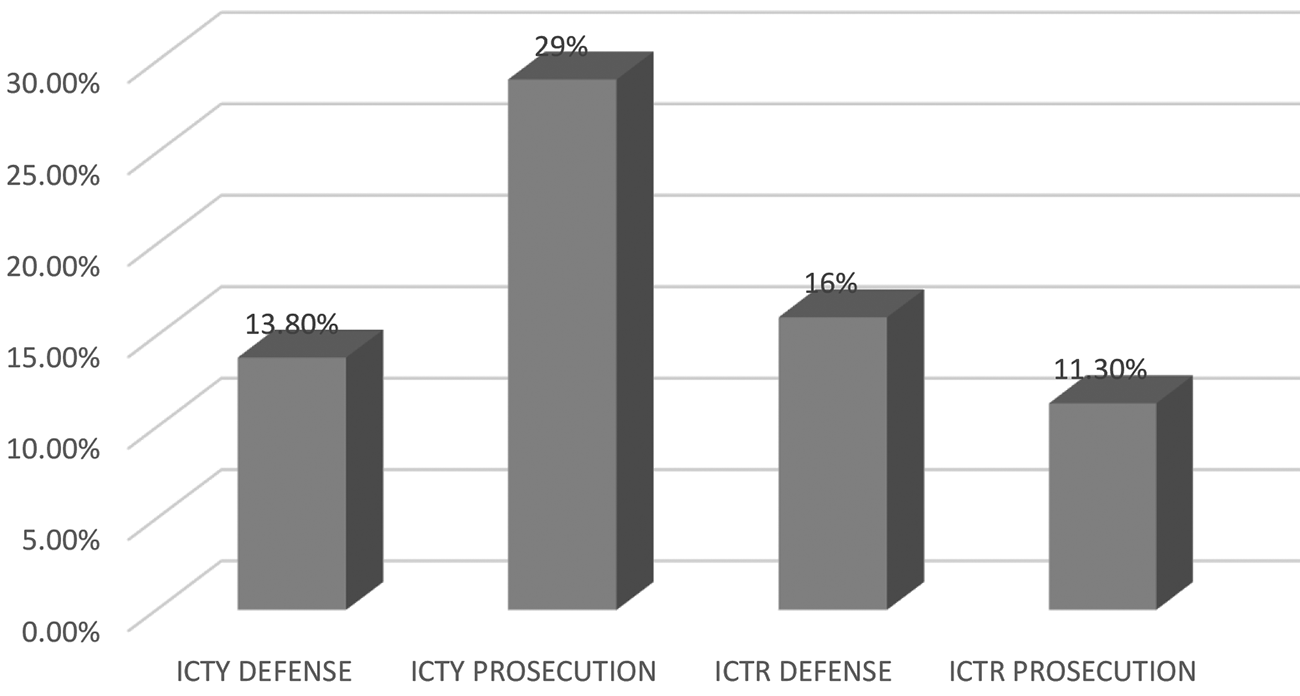
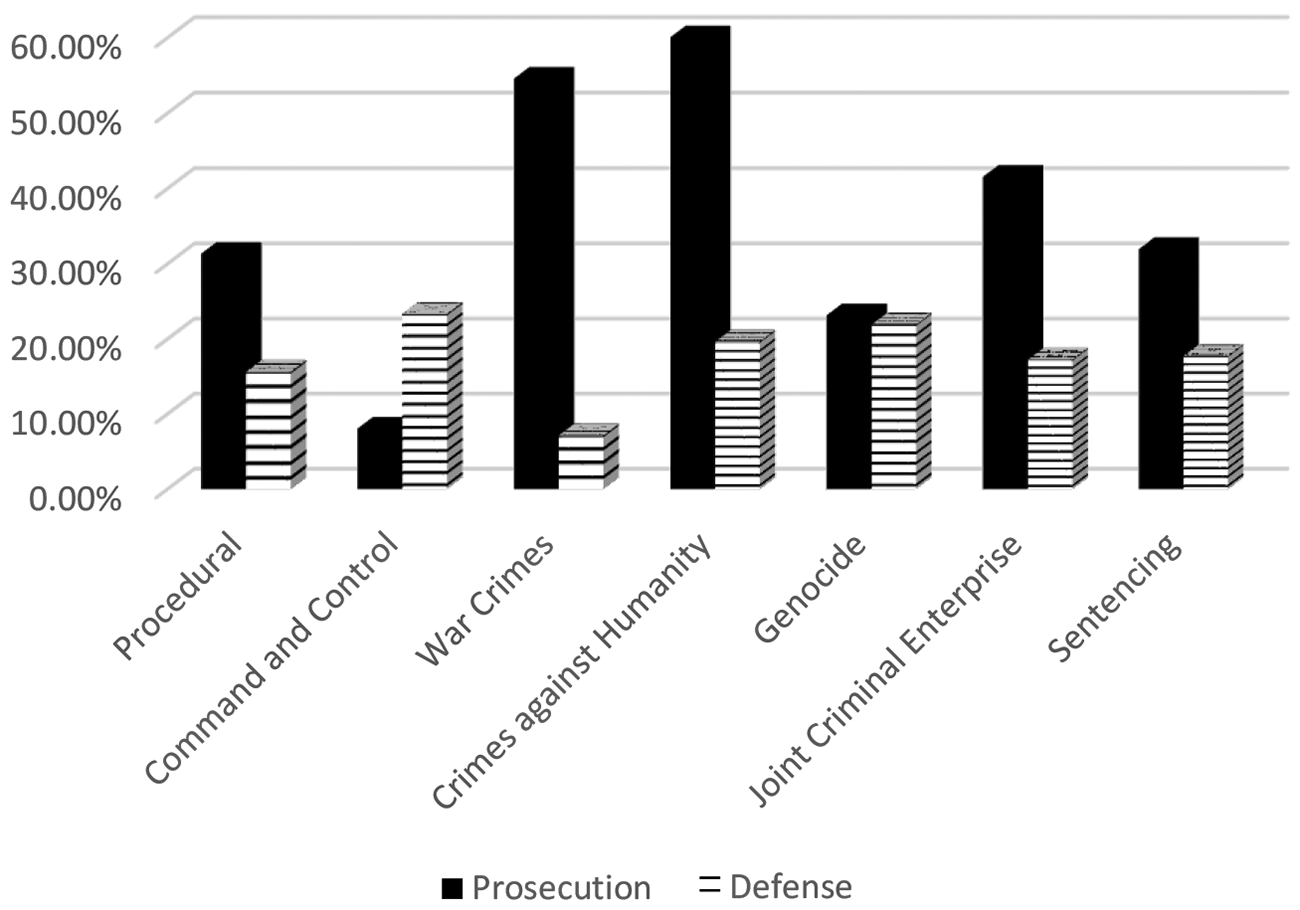
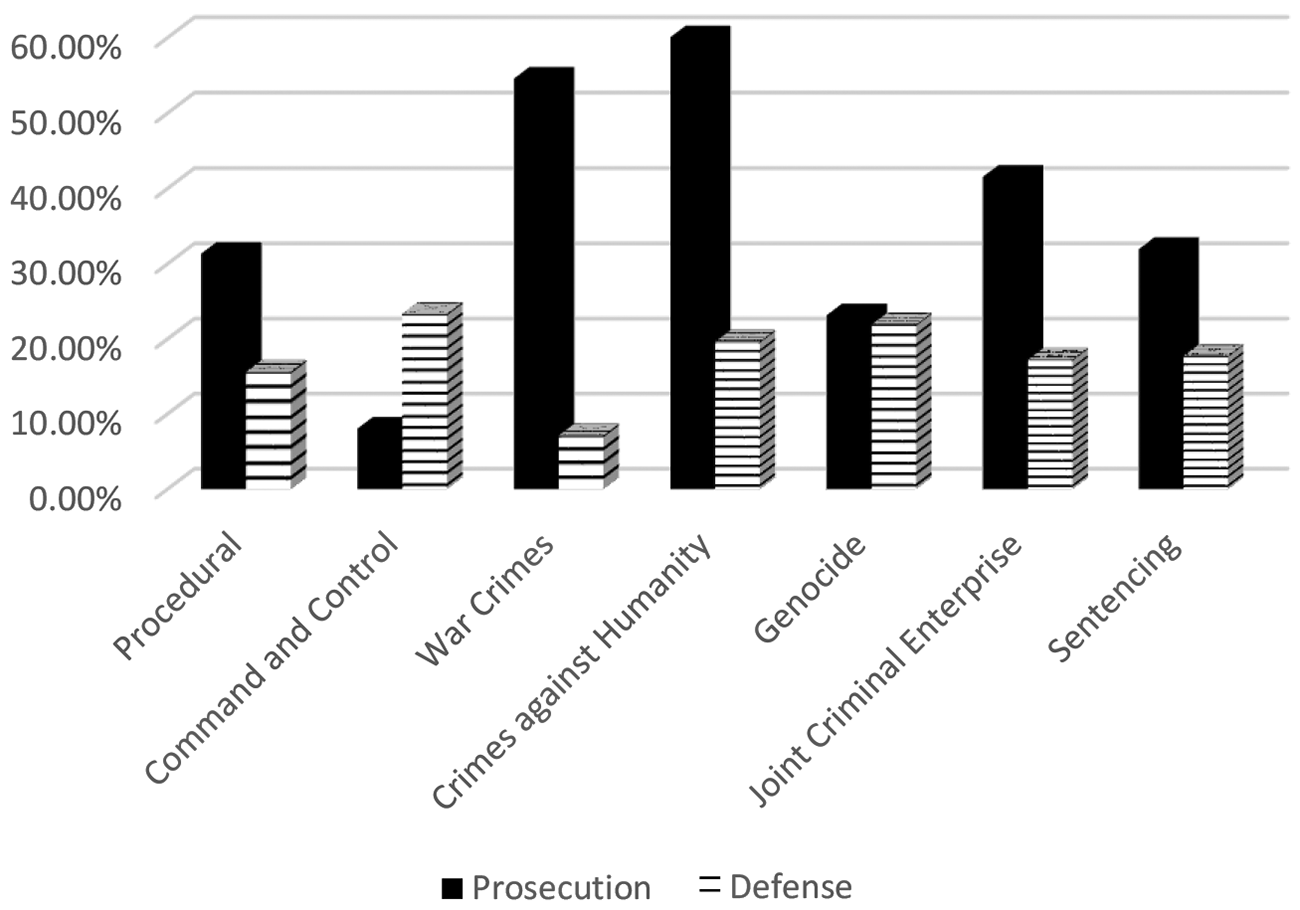
Table 1 provides the results for all appeals filed by the prosecution and defense. We see that most of the hypotheses are supported. When the issue pertains to joint criminal enterprise, crimes against humanity, or sentencing, appeals are more likely to succeed and the impacts are substantial (see also figs. 1 and 2). The marginal impact coefficient tells us the decreased/increased probability of the outcome of interest occurring (granting an appeal) for every one-unit increase in the independent variable, holding all other variables at their mean value. We find that when issues pertain to joint criminal enterprise, the likelihood of appellate reversal increases by approximately 11% according to the marginal impact coefficient. If the issue concerns crimes against humanity, the marginal impact is approximately 13%: when appellants are contesting over an issue involving a crime against humanity, they are 13% more likely to succeed, holding all other variables constant at their mean value. The coefficient for the variable measuring sentencing issues is also statistically significant and indicates that when either the defense or the prosecution raises this issue, the likelihood of a reversal on a specific ground of appeal increases by approximately 8%, ceteris paribus. Among the issue variables I had argued would increase the likelihood of judicial support on appeal, only the coefficient for the genocide variable is statistically insignificant. In general, however, I had argued that because many international laws lacked definitional clarity and application and were rather ambiguous, we would find that there would be a greater likelihood of reversal on a number of contested issues, and this is largely what we find.
Modeling Appeals at the ICTY and ICTR
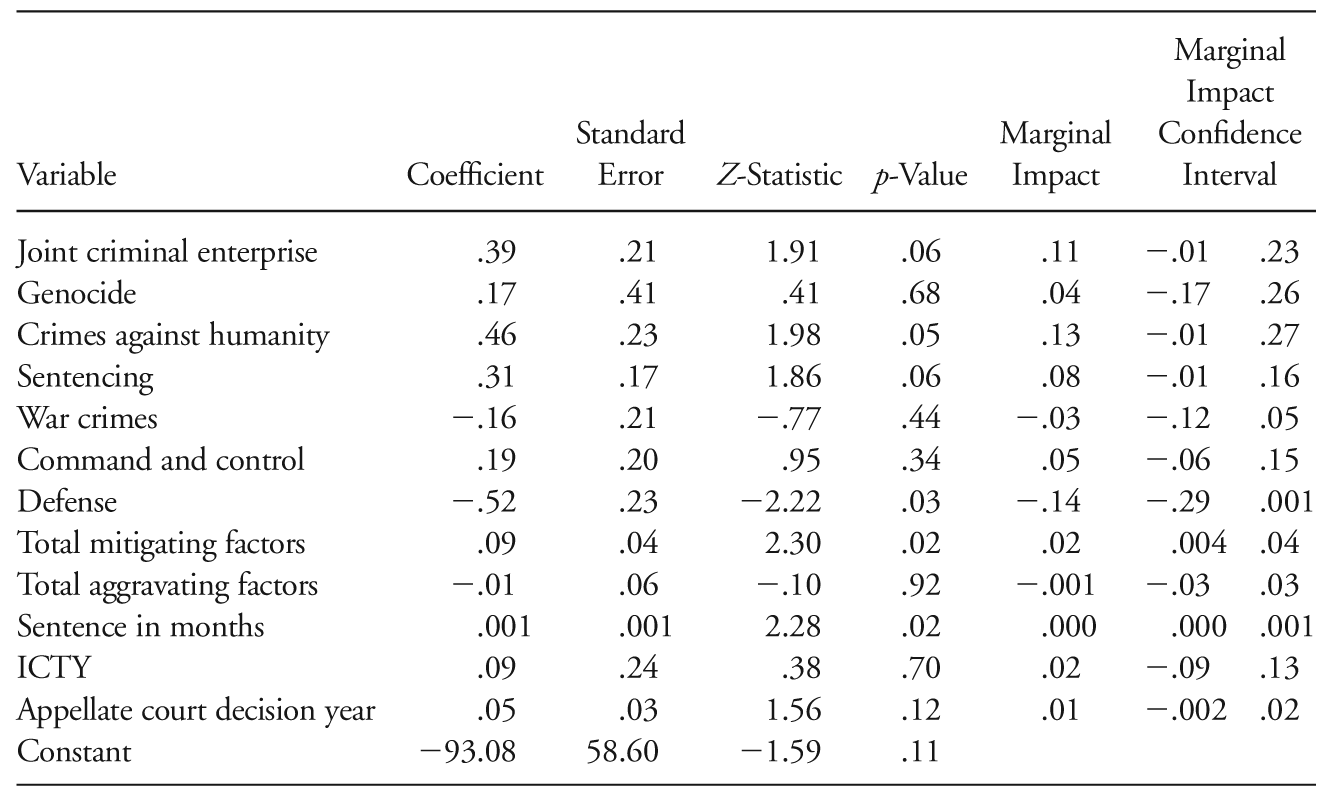
Note.—N = 2,825. Percent correctly predicted = 83.3%; reduction of error over the modal category = 0%. Standard errors are robust, clustered on the trial (which may include multiple defendants).
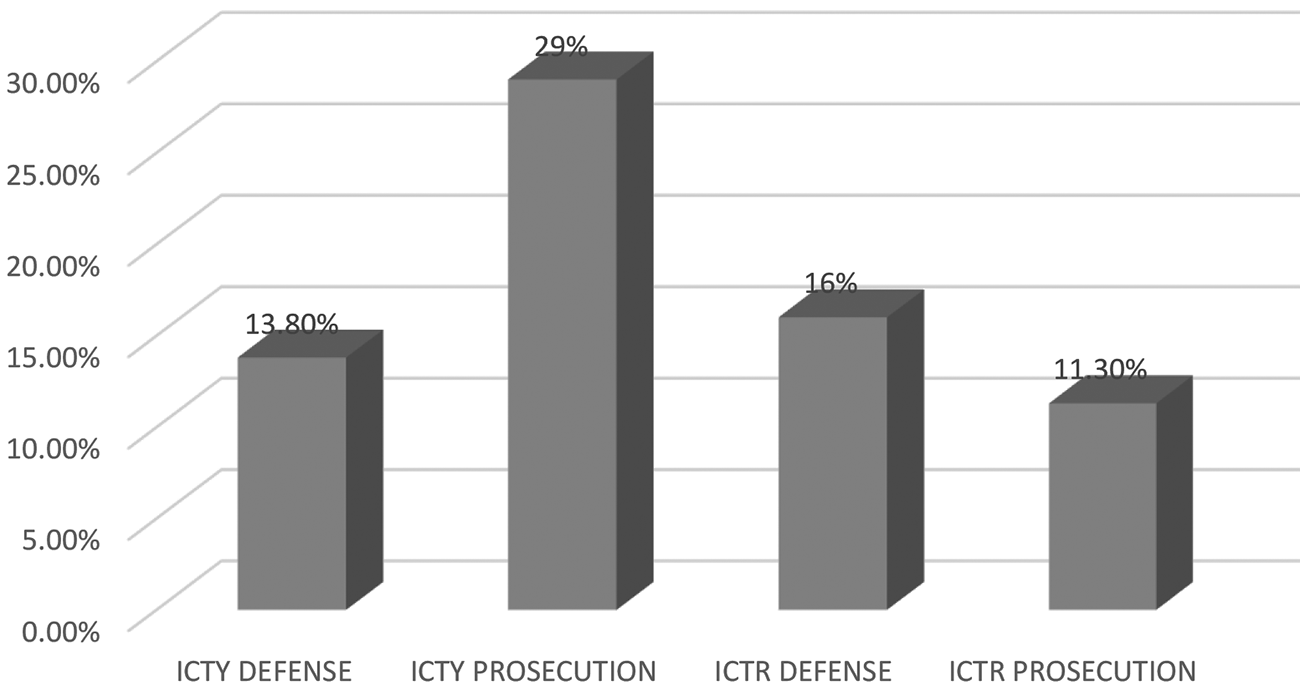
Success of appeals at ICTY and ICTR
Success of appeals for prosecution and defense by issue
Conversely, we see that neither of the coefficients for the variables measuring issues that pertain to relatively more settled parts of international criminal and international humanitarian law is statistically significant. In this model of appeals from both sides (table 1) there appears to be no advantage or disadvantage to appealing on the basis of issues pertaining to these more settled areas of international law. Had the results indicated a positive relationship, this would have been a strong disconfirmation of the hypothesis.
In general, the theoretical framework I have developed that emphasizes the role of international laws that are still developing and fall into contested zones of jurisprudence in explaining appellate judicial decision making is supported mostly, but not entirely. Raising certain issues—namely, joint criminal enterprise, crimes against humanity, and sentencing matters—provides an advantage to the appellant, while grounding an appeal on genocide, war crimes, or command and control seems to neither help nor hurt the appellants’ cases. Such qualified support may indicate a need to more closely examine the parties making the appeals and the specific issues over which they are contesting. I turn to the former in the next section but save the latter for future research.
Appeals are also more likely to be granted the greater the number of circumstances judges cite in sentencing judgments as tending to mitigate punishment. The number of aggravating factors does not exercise a statistically significant impact on appellate outcomes. Thus, we cannot rule out the possibility that judges may be influenced by the conduct of the accused and not just the nature of his appeal. We also see that the variable measuring the length of the sentence handed down by the trial chamber is positive and statistically significant. Cases involving defendants who receive lengthy sentences are often ones in which appeals are more likely to win in general. It may be that trial chamber judges are more apt to sentence defendants to lengthier terms of incarceration because they are more focused on witness testimony and forensic evidence that vividly communicates the brutality of the defendant’s conduct. The more removed appellate judges may be less swayed by such subjective factors and “correct” what they perceive as extreme sentences.
We also see in table 1 that the defense is less likely to emerge victorious on any given appeal. When the defense appeals, it is 14.2% less likely to win, holding other factors constant at their mean value. Figure 2 separates out defense and prosecution appeals at each of the tribunals. In general, the defense wins approximately 16% on its appeals, while the prosecution emerges with a victory on 26% of its specific appeals. Breaking it down even further, we find that there were a total of 1,366 appeals lodged by defense attorneys at the ICTY. The defense won 189 of these specific appeals, or 13.8% as we see in figure 1. The ICTY Prosecutor’s Office filed 310 appeals and won 90, or 29%, the highest proportion of any actor before either appeals chamber. ICTR defendants did slightly better than ICTY defendants and won approximately 16% of their 1,001 appeals while the ICTR prosecution won nine of their 79 appeals for a track record of 11.3%, the lowest of any group.
I also find that the coefficient for the ICTY variable is statistically insignificant. Controlling for other factors, there is not any greater likelihood of the appellants winning at either tribunal. Finally, the variable for the year in which the appellate decision was handed down is positive, but its coefficient is not statistically significant.
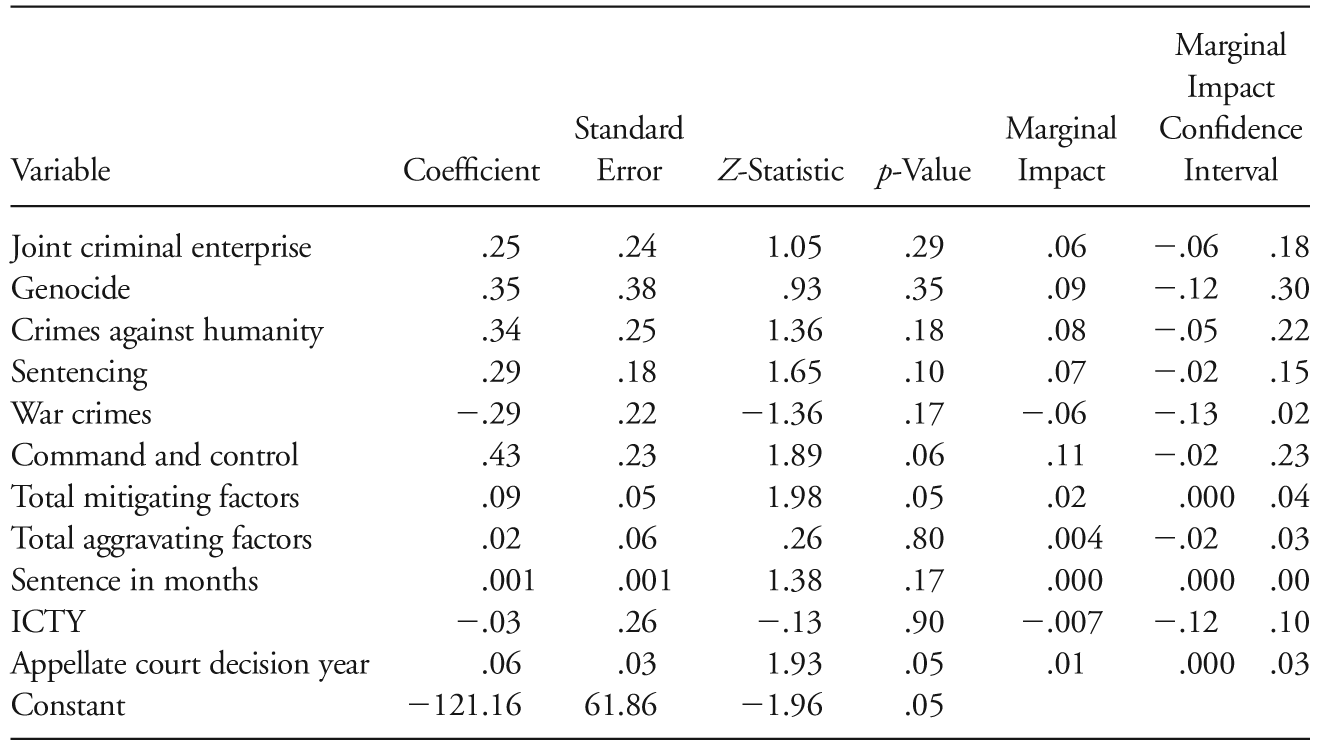
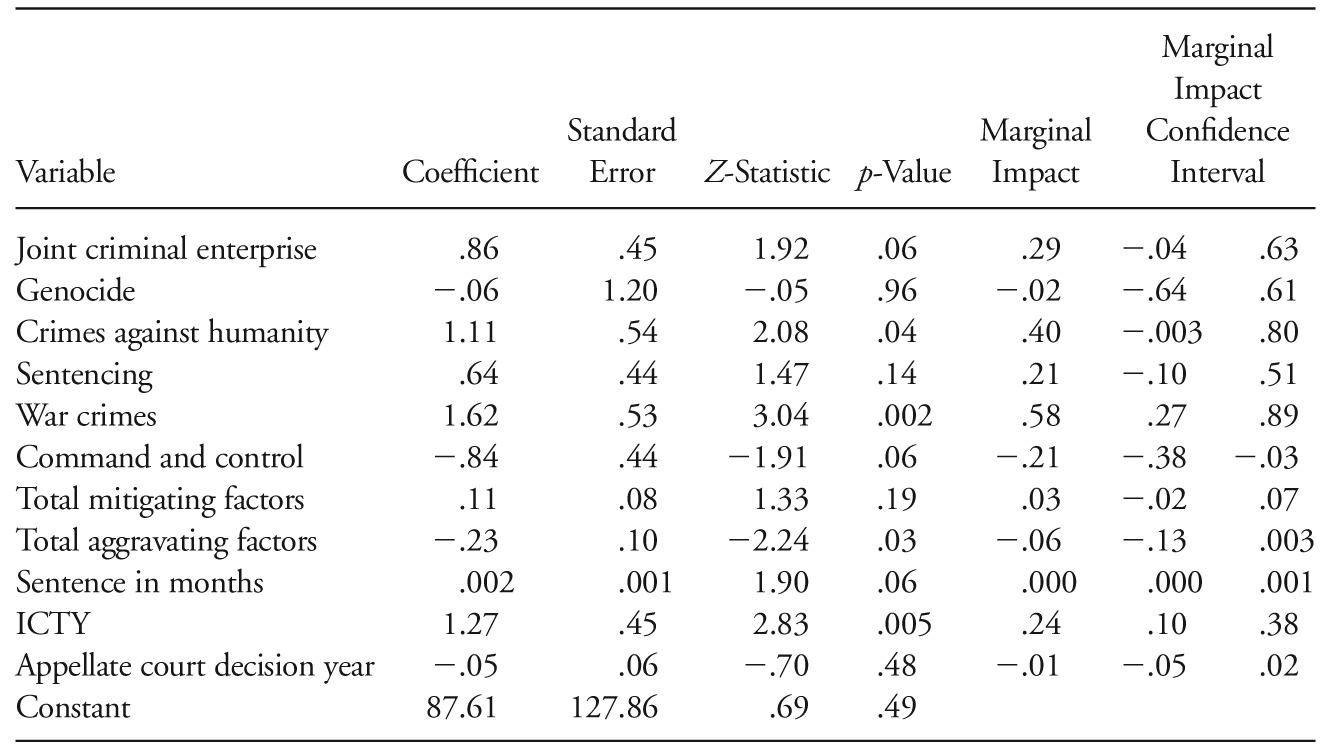
I next separate out the defense and prosecution appeals and run separate models for each (see tables 2 and 3). These results would suggest on the surface that the prosecution often fares better than the defense, as those who believe there is a pro-prosecution bias at the tribunals would argue. Yet, it is also possible as I stated above that the prosecution is more strategic and selective in choosing issues on which to appeal. I return to this issue later.
Defense Appeals at the ICTY and ICTR
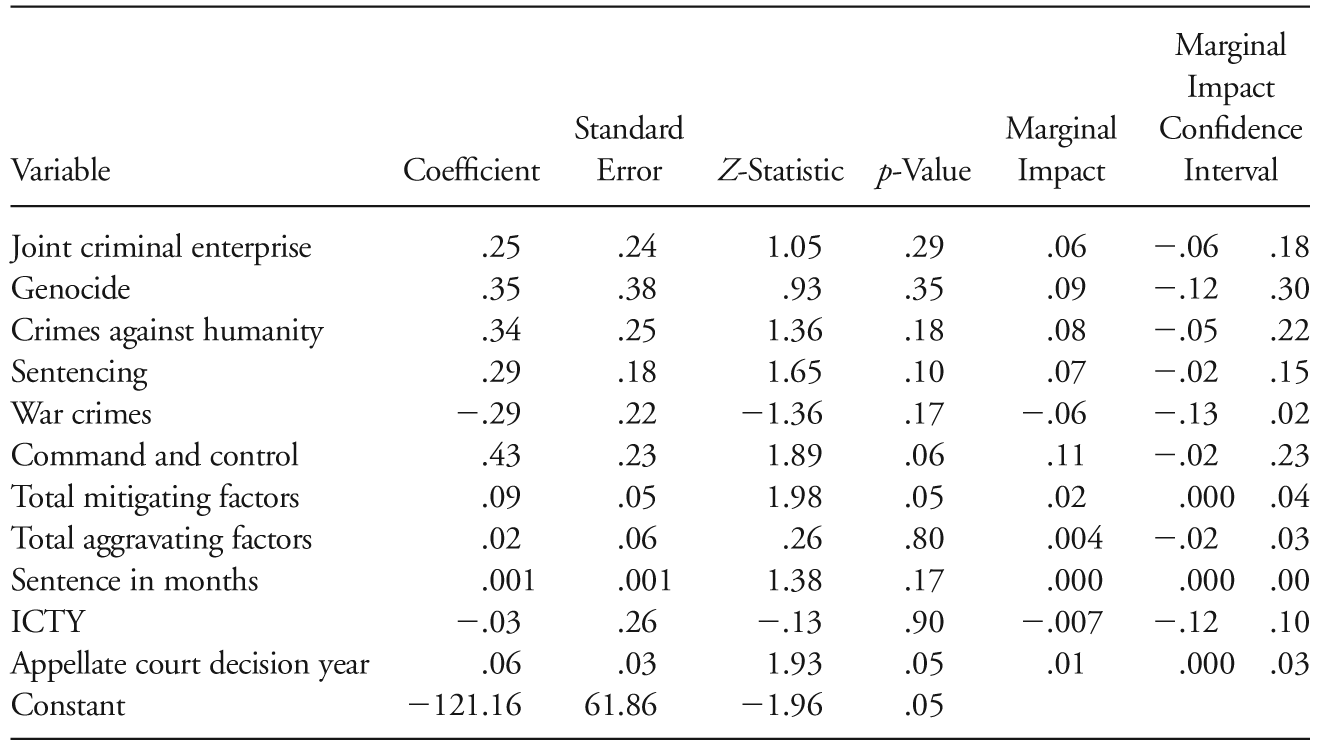
Note.—N = 2,367. Percent correctly predicted = 85.2%; percent reduction of error over the modal category = 0%. Standards errors are robust, clustered on the trial (which may include multiple defendants).
Prosecution Appeals at the ICTY and ICTR
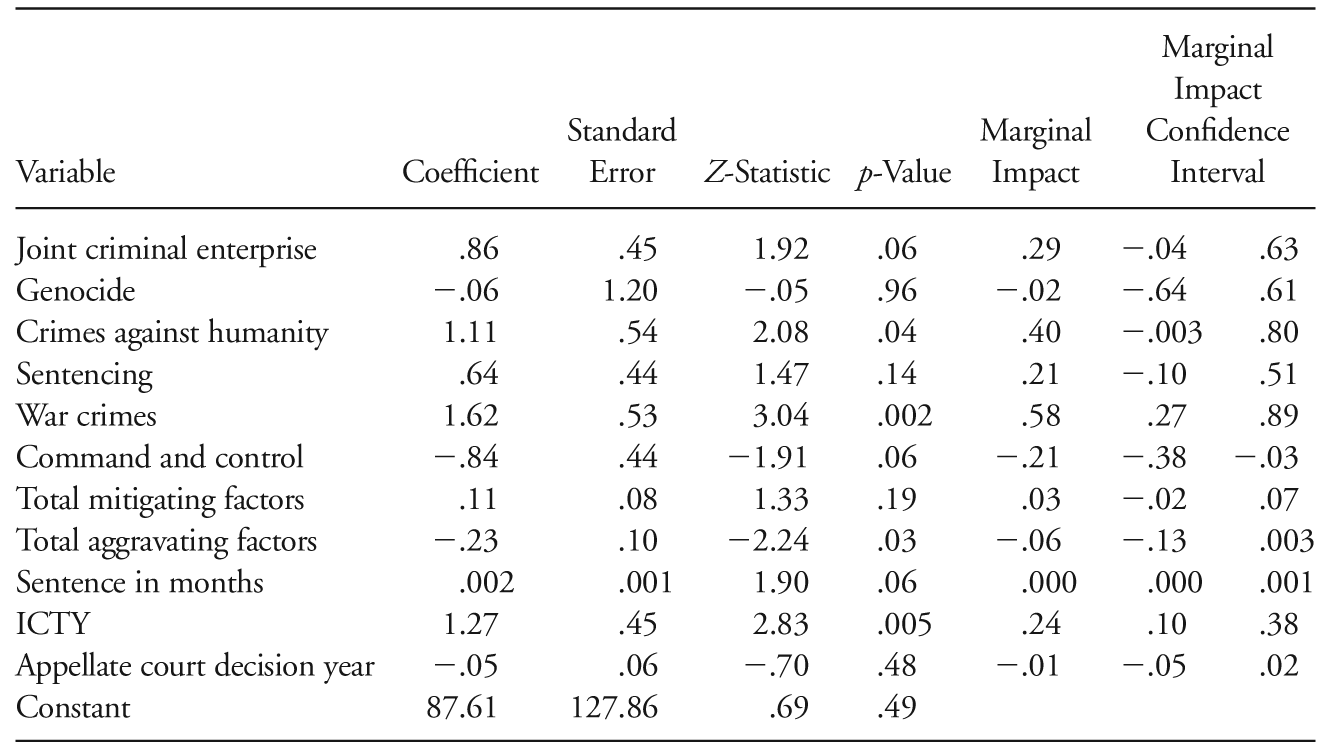
Note.—N = 458. Percent correctly predicted = 78.8%; percent reduction of error over the modal category = 6%. Standard errors are robust, clustered on the trial (which may include multiple defendants).
The results are quite different when we examine the model’s performance on just cases of defense appeals at the ICTY and ICTR. Raising an issue pertaining to joint criminal enterprise, crimes against humanity, and genocide does not confer any advantage on the defense. There is a positive impact on outcomes when the issue concerns sentencing, but the statistical significance of the coefficient just barely crosses the bar for a one-tailed test. They are also more likely to win on command and control issues—a finding that does not support my hypothesis. On such fairly litigated issues I argued that both sides would be less likely to score a victory on appeals, but in fact the defense is approximately 10.7% more likely to see appeals on such matters upheld, holding all other variables constant at their mean value. On issues relating to war crimes, however, defendants are neither more nor less likely to see their claims upheld; the coefficient is statistically insignificant. We also continue to find that the more mitigating circumstances cited by the judges in the sentencing phase, the more likely a defendant’s appeal will be upheld. For every additional mitigating circumstance cited in the trial chamber judgment, the likelihood of reversal of an appeal increases by 2%. Neither sentence length nor the number of aggravating circumstances exercises a statistically significant impact.
Interestingly, we see that the coefficient measuring the year in which the decision was handed down is positive and statistically significant. With each passing year, defendants become more likely to win a specific appeal. This may be the result of several factors. Over time judges may develop more rationales and precedents on all issues that create more rather than less certainty in the interpretation of the law. Defense and prosecution attorneys may be improving their skills at advocacy over time and write better on appeals and avoid appeals on some issues in which the likelihood of victory is low.
When we examine the results for just those appeals lodged by the OTP in table 3, we see mostly the same results that we see in table 1, although with a few twists. First, the coefficients for the variables regarding joint criminal enterprise and crimes against humanity are still positive and statistically significant. For the prosecution, there is a 29% greater probability of winning on joint criminal enterprise issues and a 40% increase in the odds of success on crimes against humanity issues. The prosecution was not more likely to win on appeal when the issue concerned sentencing. The OTP is also more likely to win when the issue pertains to war crimes. The marginal impact coefficient here is 58%. While such issues do not appear to help the defense, when the prosecution appeals what I have characterized as a relatively more settled area of international law, it is more likely to find its appeals upheld. Not so with command and control issues, where the prosecution is less likely to win. When the appeal concerns this issue, the OTP is 20.7% less likely to win according to the marginal impact coefficient. While command and control issues had been litigated in the World War II tribunals, such issues may have continued to remain in flux as the tribunals have attempted to sort out the ambiguous nature of command within the various state and nonstate forces that fought in Bosnia, the relationship between such forces and foreign sponsors, and the general lack of documentary evidence that World War II tribunals enjoyed. The OTP is also more likely to win as sentence length increases and when the case is argued at the ICTY. ICTY prosecution attorneys are 23.7% more likely to win. I chose not to separate out prosecution appeals by tribunal as the number of such cases at the ICTR was quite small (fewer than 100), and several of the issues germane to this analysis were not appealed by the ICTR prosecution.
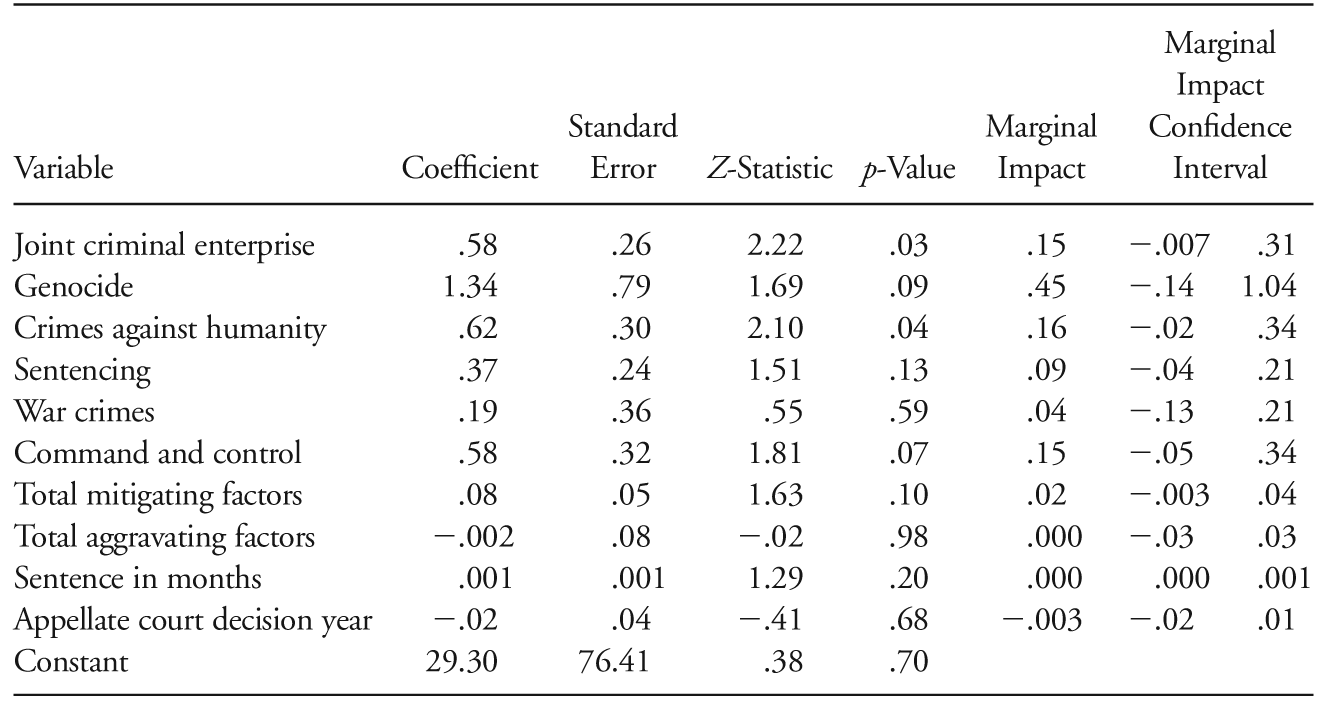
Because the results in table 2 pertaining only to defense appeals are fairly distinct from those in the general model in table 1, I elected to separate out the analysis of the defense appeals into those argued at the ICTY and those appeals made to the ICTR appeals chamber. The results further refine the story of judicial outcomes at the appellate level. First, we see in the ICTY defense model in table 4 that the coefficients for the joint criminal enterprise and crimes against humanity variables are once again positive and statistically significant. When the latter is argued on appeal, the odds of victory increase by 15%, while the likelihood of success rises by 16% when the former is at issue. The coefficient for the sentencing variable is positive but just misses statistical significance. In this model we see that when ICTY defendants raise issues regarding genocide, they are more likely to meet with success: such issues increase the probability of appellate affirmance by nearly 45%. The only other issue variable that is statistically significant is the positive coefficient for command and control matters. The variables measuring mitigating and aggravating factors, sentence length, and the year the appellate decision was announced are all statistically insignificant.
Defense Appeals at the ICTY
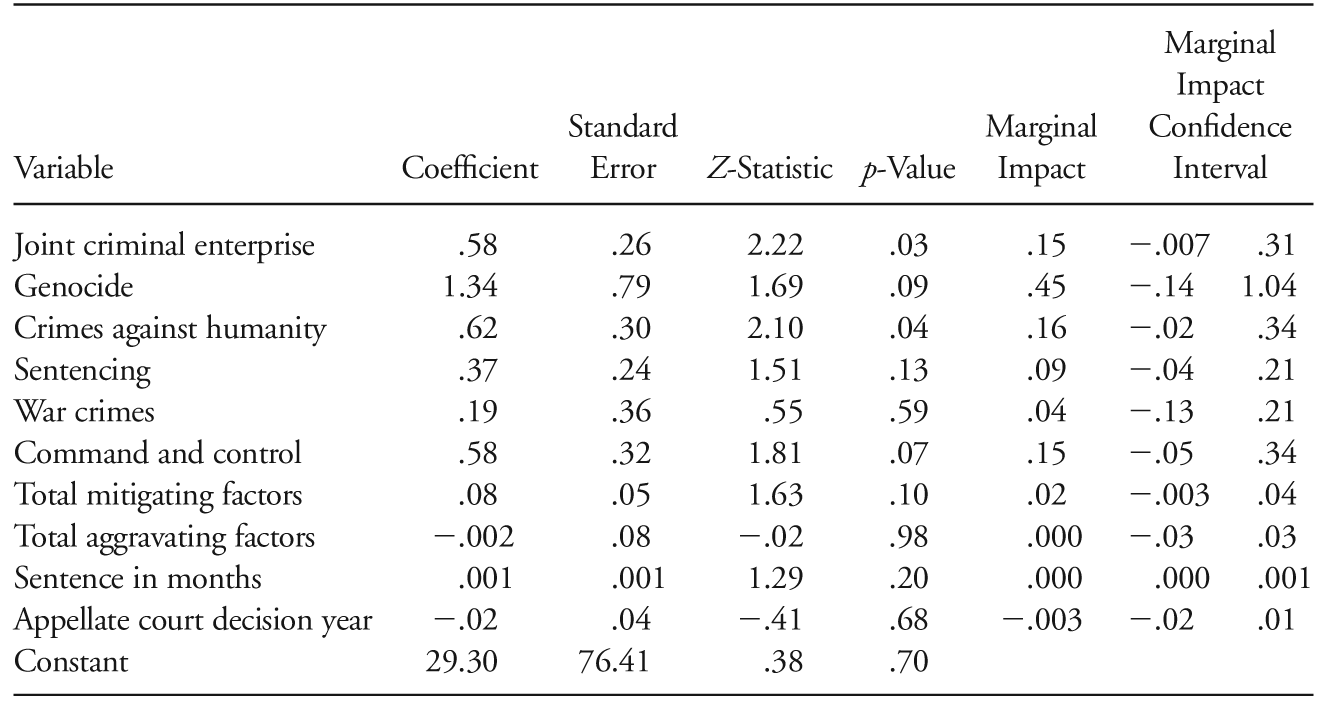
Note.—N = 1,366. Percent correctly predicted = 86%; percent reduction of error over the modal category = 0%. Standard errors are robust, clustered on the trial (which may include multiple defendants).
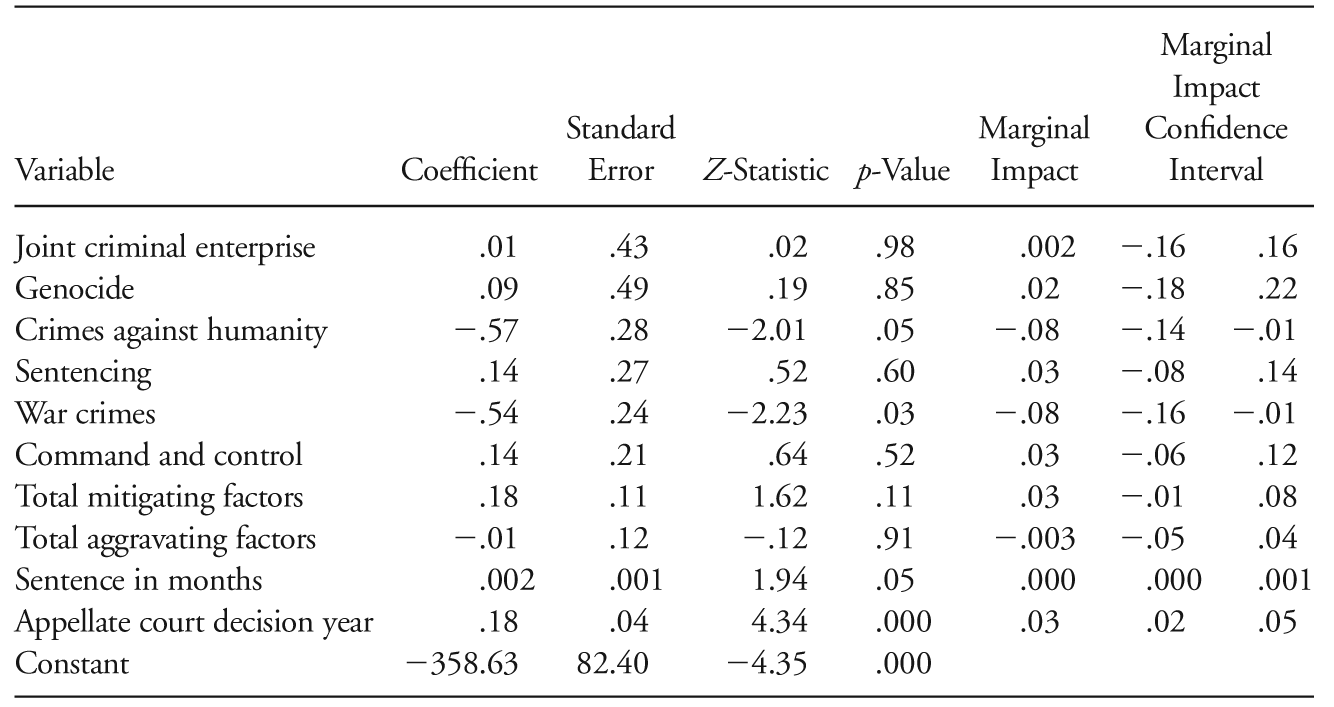
There is little evidence in table 5 to suggest that defendants at the ICTR might enjoy advantages of any kind because of the nature of the issue or factors relevant to sentencing. In fact, we see that the coefficients for both the crimes against humanity and war crimes variables are statistically significant but negative. In fact, the only variables with positive and statistically significant coefficients are sentence length and the year the appellate decision was handed down. In fact, in the case of the latter variable, we see that according to the marginal impact coefficient, with each passing year, ICTR defendants are 3% more likely to win any given, specific appeal. Thus, timing does matter, but principally for Rwandan defendants.
Defense Appeals at the ICTR
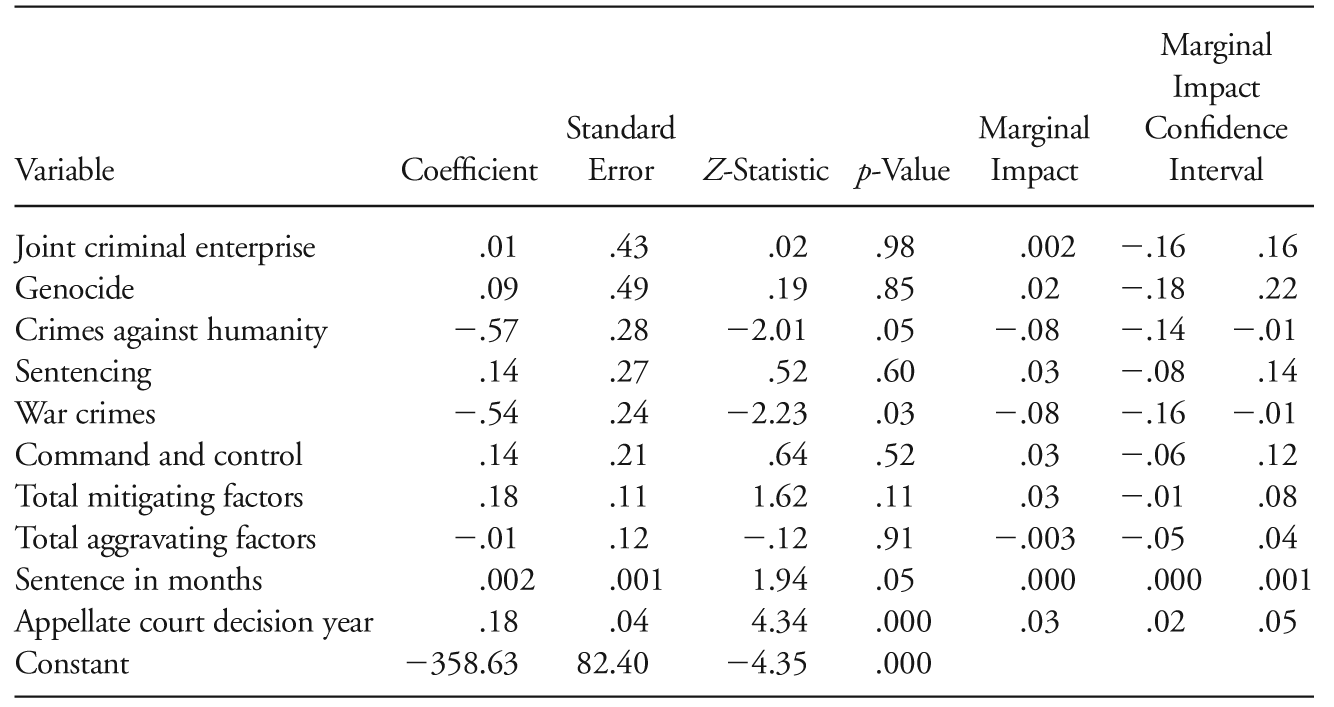
Note.—N = 1,001. Percent correctly predicted = 84.2%; percent reduction of error over the modal category = 0%. Standard errors are robust, clustered on the trial (which may include multiple defendants).
Discussion and Conclusions
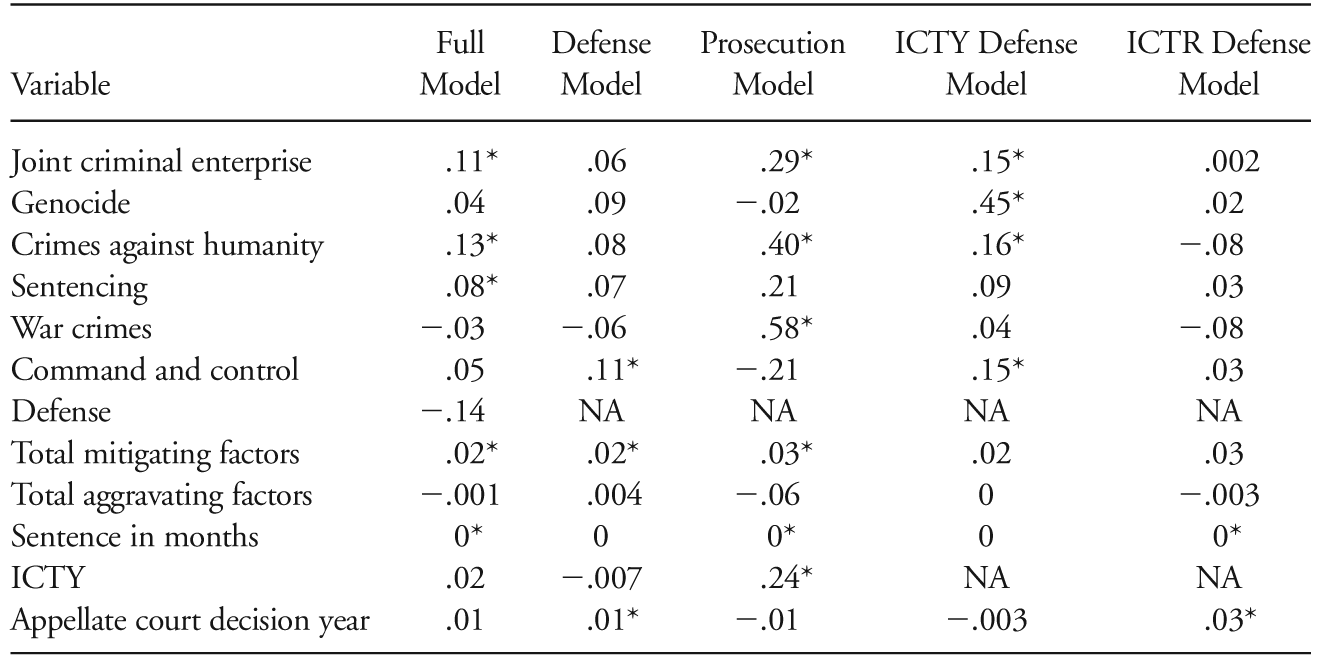
I present the marginal impacts of all variables in all the models in table 6 to guide the reader through the findings. These results are somewhat diverse and do not always leave us with a clear and consistent picture regarding the outcomes of appeals at the international criminal tribunals. When taken as a whole, however, they do present a perspective of international tribunals that breaks new ground in our understanding of judicial decision making. I argued that international appellate outcomes would be influenced by varying interpretations of embryonic and dynamic international law. The results generally, but not always, support this general theoretical supposition. It should first be emphasized as well that both the defense and the prosecution lose the vast majority of their specific appeals. Hence, the likelihood of success on these specific issues must begin from a baseline where success is already unlikely.
Marginal Impacts across All Models
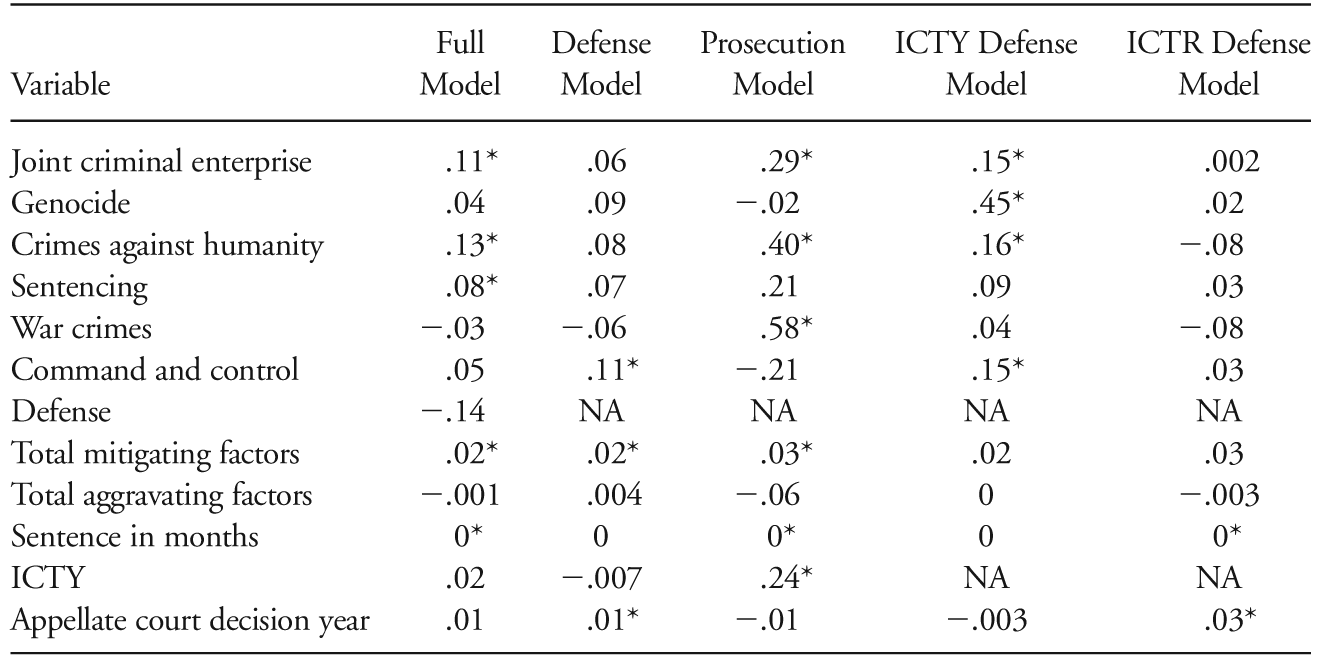
* Statistically significant at the .05 level.
First, there was clear and consistent evidence that, regardless of which side brought a particular appeal, if the issue concerned joint criminal enterprise, crimes against humanity, and often, but not always, sentencing, appellants were more likely to win. These are all developing new issues in international criminal justice, and given the relative lack of jurisprudence, I argued that judges would be less restricted in the interpretation of the law and thus more likely to reverse a trial chamber. Also, because such issues are only now receiving intense judicial scrutiny, I argued that the novelty of these matters would embolden the appeals chambers to scrutinize trial chamber decisions more closely and perhaps reverse them. The results for the other variables are mixed. The genocide variable is never a powerful explanatory factor in any of the models and was statistically significant only when the ICTY defense appeals were separated out. The war crimes variable was negative only in the model for the ICTR; raising such issues made it more likely the defendant would lose on appeal. On the other hand, the variable was positive in the prosecution model. The coefficient for the command and control variable was positive and statistically significant in the model of all defense appeals and the model of ICTY defense appeals, while it was negative in the prosecution model and Rwanda defense model. It is not clear if this is a more or less settled area of international law. That may well hinge on whether the trial chamber adopted a more conservative or expansionist view of the law. Liability issues continue to perplex the tribunal and lead to diverse outcomes at all levels, as is evident in the recent conflicting interpretations of the concept of “specific direction” in aiding and abetting (Ventura Reference Ventura2013). Some appellate decisions have argued that there must be evidence to indicate that superiors, especially foreign sponsors and others removed from the battlefield, gave specific orders to carry out activities that resulted in violations of international law (and have ordered the release of several high-profile defendants where they found such evidence lacking), while other judgments insist there is no such requirement necessary to convict superiors of aiding and abetting violations of international law.
The qualified support given to the theory of “contested zones” in international law indicates that there is some reason to believe appellate judges are influenced by the newness and novelty of the legal issues before them. But while some issues were clearly ones in which both the defense and the prosecution were more likely to win, we did not find the same level of consistency on those issues in which I argued that the appellants would more often be met with defeat. Overall, however, neither side was likely to win very much of the time. This suggests that while raising some issues rather than others can marginally improve an appellant’s chances of success, the appeals judges tend to defer to their counterparts in the trial chambers.
Do the appeals rulings systematically favor the dominant power—the prosecution? The answer would have to be “it depends” principally on the tribunal. In general, the results suggest that the defendants are sometimes at an advantage and sometimes at a disadvantage vis-à-vis the prosecution. ICTY defendants do not succeed at nearly the same rate as the prosecution, but ICTR defendants have a better track record on appeals than does the ICTR prosecution. It has long been the case that the ICTR was perceived as lacking in the quality and quantity of resources and expertise compared to the ICTY (because of its location in a more remote and less developed country, Tanzania), which may have played a role in the greater success of the ICTY prosecution on appeals. There are less readily obvious explanations that would suggest why then the ICTR defendants fare better on appeal than ICTY defendants. It may, however, be the same lack of resources that might be affecting the effectiveness of the ICTR prosecution that explains why ICTR defendants do better. Perhaps at the trial chamber level the ICTR prosecution does not generally argue cases with the same effectiveness as does the ICTY prosecution and thus creates more opportunities for ICTR defendants to launch successful appeals. This suggests that in the future it will be important to investigate more critically the different institutional contexts at the tribunals. These findings regarding the overall level of success of ICTR defense appeals must also be viewed in light of the lack of model fit to that case. Whatever may be causing such successes, the model is generally not picking it up, although it is clear that as time went on, ICTR defense appeals were increasingly likely to be met with success. Perhaps ICTR defense appeals became more effective as ICTR jurisprudence developed in quantity and quality over time.
While there is certainly evidence that the prosecution does fare better at the appellate level at the ICTY, these findings do not confirm claims made by some of a systemic bias (Megret Reference Megret2009; Damaska Reference Damaska2011; DeGuzman Reference DeGuzman2012). Indeed, the variable measuring sentence length is positive and indicates that the lengthier the punishment, the greater the likelihood appellate judges will support the defendant on some grounds of appeal. Far from wishing to ensure that those who are judged by the trial chambers as deserving of the harshest sanction spend the full measure of their sentence in prison, appellate judges have found problems with these decisions and granted appeals. Taken collectively these findings strongly suggest that context matters a great deal and that even though the two tribunals share a common body of appellate judges, there are different factors at work in explaining the relative success of the prosecution and the defense.
Where does this leave us? Future research should focus on much deeper analyses of individual appeals to determine which specific legal arguments are more persuasive, whether certain counsel has a better track record of success, and how the composition of the bench influences outcomes. The composition of the judicial bench in particular should be investigated to understand the influence exerted by coalitions of like-minded judges, particular judges who may exert disproportionate influence because of their frequent involvement at the appellate level, and the role of the presidents and vice presidents of the tribunals in determining outcomes (Meernik et al. Reference Meernik, King and Dancy2005). Jodoin’s (Reference Jodoin2010) theoretical work in particular on the ideology and strategy of judges could be applied to explain appellate decision making. Scholars should endeavor to determine if there is any method of assessing the quality of the individual grounds of appeals. It is clear in reading the judges’ opinions that some appeals are addressed in a serious and deep manner while others are dismissed much more readily. Some appeals may be frivolous, some may be without merit, or some may possess fatal flaws. Understanding how the quality of appeals affects the quantity of their success is the next major step in this research agenda. I argue that it is especially critical to engage in such studies as the jurisprudence from the Yugoslav and Rwandan tribunals is likely to resonate far into the future, especially as the International Criminal Court struggles to gain traction.