Introduction
Extensive research documents the health and other benefits of breastfeeding for both the infant and the mother (Chowdhury et al., Reference Chowdhury, Sinha, Sankar, Taneja, Bhandari and Rollins2015; Khan, et al., Reference Khan, Vesel, Bahl and Martines2015) and highlights persistent economic class and race disparities in families in the United States (US) despite these benefits (Jones et al., Reference Jones, Power, Queenan and Schulkin2015; CDC, 2017). Compared with middle- and high-income families, rates of breastfeeding within both Caucasian and African-American families in the US are lowest for low-income families, though this is not true for Mexican-American families, for whom breastfeeding rates tend to be similar across economic classes (Singh et al., Reference Singh, Kogan and Dee2007). Further, African-American families tend to breastfeed at lower rates compared with Caucasian families (CDC, 2017), leading to particularly low breastfeeding rates in low-income African-American families. These class and racial differences constitute significant health disparities with critical public health consequences for mothers and infants.
Evidence suggests that mothers who do not breastfeed often lack critical education, information and encouragement from friends and family members, including the father of the infant, to support breastfeeding (Persad & Mensinger, Reference Persad and Mensinger2008). Research with mothers suggests that fathers’ support of breastfeeding may increase maternal confidence and thereby improve breastfeeding rates (Mannion et al., Reference Mannion, Hobbs, McDonald and Tough2013). However, less is known about fathers’ own knowledge and opinions concerning breastfeeding, especially in low-income groups.
Breastfeeding in low-income populations
Despite its economic benefits, breastfeeding rates for African-American and Caucasian families are consistently lower in low-income US families (CDC, 2008). When they do breastfeed, low-income mothers tend to breastfeed less frequently and they maintain breastfeeding for shorter periods of time (Coulibaly et al., Reference Coulibaly, Seguin, Zunzunegui and Gauvin2006). The factors that contribute to this health disparity probably include a dynamic combination of environmental, individual and cultural barriers to successful breastfeeding. For example, short maternity leaves and paid employment are significant barriers to breastfeeding. Despite the US Surgeon General recommendations that employers provide workplace lactation support to mothers returning to work, low-income mothers typically find that returning to work and lack of maternity leave are significant barriers to breastfeeding (US Department of Health and Human Services, 2011). Moreover, mothers in low-income populations experience shorter maternity leaves and inflexible employment environments, which ultimately shorten breastfeeding duration (US Department of Health and Human Services, 2011). This effect is especially true for women experiencing high psychosocial distress (Guendelman et al., Reference Guendelman, Kosa, Pearl, Graham, Goodman and Kharrazi2009) and for those who lack lactation support (Wouk et al., Reference Wouk, Chetwynd, Vitaglione and Sullivan2017). For women, factors that are associated with higher levels of breastfeeding include whether the mother was breastfed herself (Dunn et al., Reference Dunn, Kalich, Fedrizzi and Phillips2015), whether the father of the infant is supportive of breastfeeding (Alexander et al., Reference Alexander, O’Riordan and Furman2010b) and availability of lactation support (Wouk et al., Reference Wouk, Chetwynd, Vitaglione and Sullivan2017). Lack of education about the benefits of breastfeeding is another possible contributor to low breastfeeding rates in low-income populations. However, in a sample of low-income African-American mothers, Alexander et al. (Reference Alexander, O’Riordan and Furman2010b) found that mothers were relatively well informed about the benefits of breastfeeding for the infant. These researchers also found, however, that mothers were less informed about the breastfeeding process itself and, therefore, maintained specific fears about their ability to breastfeed that were often unfounded or, at the very least, could be minimized with proper intervention and postnatal care. Less is known about whether this may also be true for fathers. Furthermore, the specific factors that contribute to the breastfeeding views of fathers – especially low-income fathers – are not fully understood. Since father support of breastfeeding is known to improve breastfeeding initiation and success, understanding paternal knowledge and views about breastfeeding, and what factors contribute to these views, is a critical next step in improving public health messaging and early interventions that aim to encourage paternal support of breastfeeding.
Breastfeeding in African-American and Caucasian families
Breastfeeding rates in Caucasian families are consistently higher than in African-American families (CDC, 2017). In light of this fact, the US Surgeon General’s Blueprint for Action on Breastfeeding has recognized that there are unique challenges affecting breastfeeding rates in African-American families (US Department of Health and Human Services, 2011). For example, specific issues that shape breastfeeding capacity for African-American women are associated with the racialized socio-historical context of African-American women’s lives that highlight their limited access to structures of economic, political and social opportunities in the US. Further, although low-income status is associated with decreased breastfeeding rates in both Caucasian and African-American families, rates are lower in African-American families even when controlling for income. Low-income African-American women are especially vulnerable to lower breastfeeding initiation and continuation for the numerous reasons associated with barriers to positive breastfeeding behaviour (Johnson et al., Reference Johnson, Kirk, Rosenblum and Muzik2015b). Low-income African-American mothers often lack adequate levels of personal social support from family and friends (Bentley et al., Reference Bentley, Dee and Jensen2003), and they experience shorter maternity leave and occupational segregation, which both negatively impact breastfeeding. On average, they return to work at 8 weeks postpartum, which is earlier than Caucasian women in the US, and once they return to work they encounter less-flexible work conditions (Johnson et al., Reference Johnson, Kirk and Muzik2015a). In addition, low-income African-American women disproportionately experience poor perinatal health outcomes (Mullings, Reference Mullings2005), chronic illness (Williams et al., Reference Williams, Mohammed, Leavell and Collins2010), psychosocial stress (Giscombe & Lobel, Reference Giscombe and Lobel2005) and depression (Canady et al., Reference Canady, Bullen, Holzman, Broman and Tian2008), which are all known risk factors associated with low breastfeeding initiation and continuation. This problem is compounded by perceptions that health care systems and clinician support are biased or unhelpful (Johnson et al., Reference Johnson, Kirk, Rooks and Muzik2016) and further perpetuates a pervasive mistrust of the medical establishment and ultimately shapes frequency and context of health care access throughout the African-American community in a vicious cycle of inadequate care and persistent disparate health outcomes. To mitigate these effects, the US Surgeon General’s Blueprint for Action on Breastfeeding has expressed the need for culturally appropriate breastfeeding promotion strategies for African-American women, describes this as an urgent public health challenge and specifically recommends the development of breastfeeding programmes that engage fathers (US Department of Health and Human Services, 2011).
Father support of breastfeeding
Numerous studies have identified father support of breastfeeding as a key predictor of maternal breastfeeding (Mahoney & James, Reference Mahoney and James2000). Emotional support, in particular from the infant’s father, positively impacts breastfeeding (Wolfberg et al., Reference Wolfberg, Michels, Shields, O’Campo, Bronner and Bienstock2004) and can effectively support breastfeeding initiation (Bar-Yam & Darby, Reference Bar-Yam and Darby1997; Stremler & Lovera, Reference Stremler and Lovera2004). However, fathers are often unprepared to adequately support breastfeeding (Stremler & Lovera, Reference Stremler and Lovera2004) and existing models of father support tend to focus on caring for the infant postpartum rather than educating fathers about the importance of breastfeeding during pregnancy, when parents typically make initial breastfeeding decisions (Avery & Magnus, Reference Avery and Magnus2011).
In African-American communities, specifically, there has been some effort to engage fathers in maternal health supportive practices (Threlfall et al., Reference Threlfall, Seay and Kohl2013). However, very few interventions have examined the impact that low-income African-American fathers have on breastfeeding behaviour nor the barriers that may prevent them from doing so. There is some evidence that African-American fathers, when engaged in a comprehensive programme of breastfeeding education and support, enhance the positive breastfeeding perceptions and knowledge of mothers (Wolfberg et al., Reference Wolfberg, Michels, Shields, O’Campo, Bronner and Bienstock2004). However, they similarly experience an ‘overwhelming constellation’ of psycho-social risk factors that contribute to lower socioeconomic status, higher disease rates, lower life expectancies, higher mortality rates (Cheatham et al., Reference Cheatham, Barksdale and Rodgers2008) and higher rates of incarceration (Pettit & Western, Reference Pettit and Western2004), which may diminish their involvement in central aspects of early family life, including breastfeeding.
Aims of the current study
An important first step in designing programmes to increase father support of breastfeeding in low-income Caucasian and African-American communities is to identify the specific worries and concerns that fathers, themselves, identify as influential to their feelings about breastfeeding and their propensity to support breastfeeding of their infant. The primary aims of the current work were to (1) elicit, using qualitative methodology, the worries, barriers and promotive factors for breastfeeding that expectant mothers and fathers identify as they prepare to parent a new infant, and (2) to examine factors that influence the parental breastfeeding intentions of both mothers and fathers using quantitative methodology.
Using a unique sample of both mothers and fathers who were expecting an infant, the current qualitative study provides critical information from fathers themselves, which has the potential to inform interventions designed to increase breastfeeding rates in vulnerable populations.
Methods
Study design and setting
The majority of the study participants were living in an impoverished urban environment in a large, urban metropolitan area in Midwestern US. Parents were recruited through online advertisements and flyers at social service agencies, obstetric clinics and local community centres from September 2013 to January 2015 by trained research assistants. Participating expectant parents were considered at risk for poor breastfeeding initiation rates due to their low-income status (46% were living below the US Federal Poverty Line). The parents were interviewed using qualitative methodology and quantitative data were gathered from both parents. A mixed methods approach to data analysis was employed.
Study sample
Adult parents (aged 18 years or older) who were expecting a singleton, medically uncomplicated birth, and who were fluent in English were eligible to participate in the study. The mother had to be in her third trimester. Participation of both biological parents in the study was also required. Parents were not, however, required to be in a romantic relationship with each other at the time of study participation.
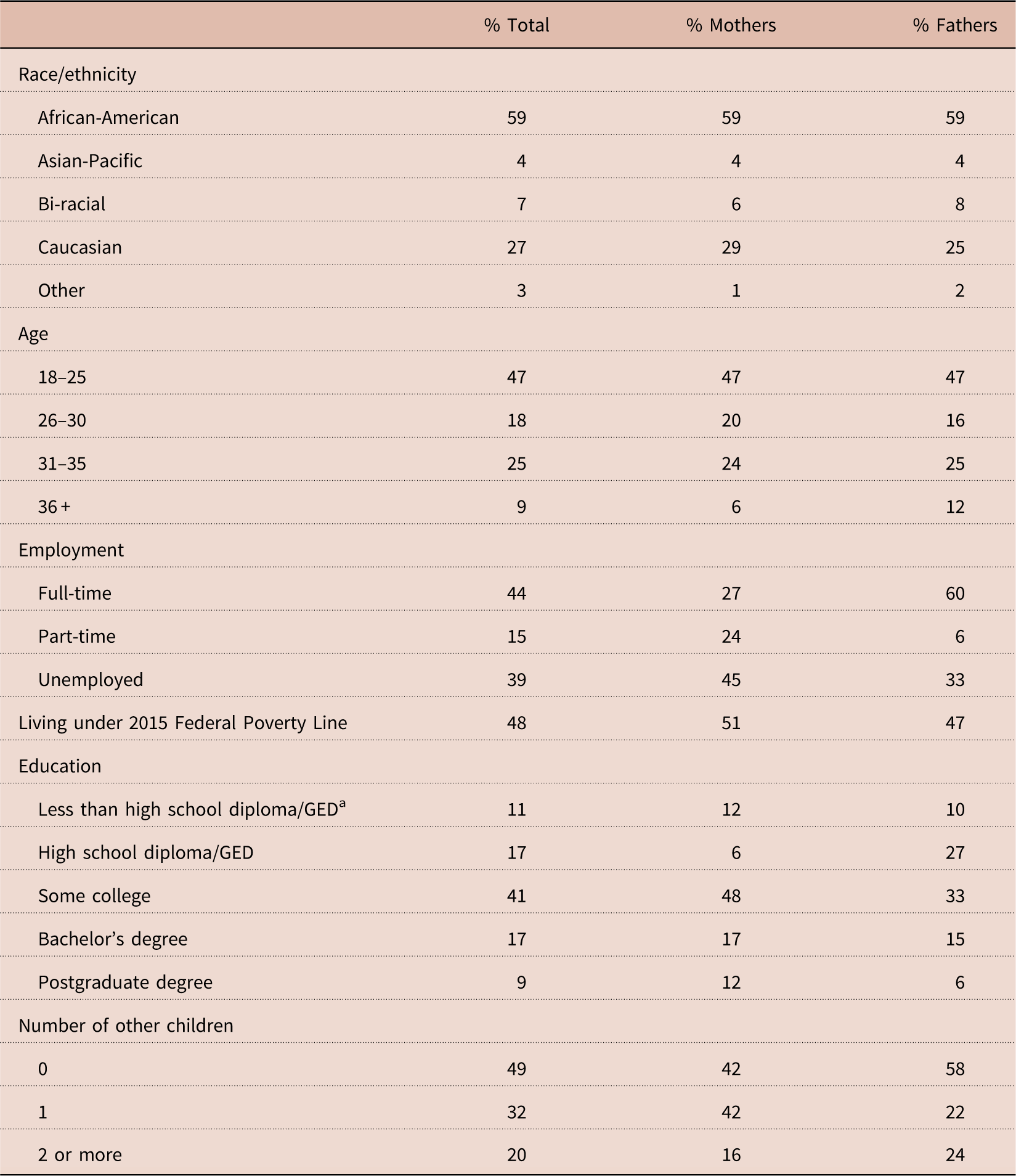
A total of 102 parents were initially enrolled in the larger study from which the present data sample was drawn. The breastfeeding interview was implemented in the protocol after the first two sets of parents had completed a prenatal laboratory visit (n=4 parents). One set of parents (n=2 parents) were not able to complete their interviews because the mother went into labour. Finally, one father’s interview was not properly recorded due to technical difficulties with the audio-recording equipment. The final sample was, therefore, comprised of 95 expectant parents (48 mothers and 47 fathers). The parents ranged in age from 18 to 44 years (mean=27.03, SD=6.308). The demographic characteristics of the sample are presented in Table 1. Parents in this sample experienced relatively high rates of exposure to poverty and community and interpersonal violence and suffered from relatively high rates of symptoms of mental illness (e.g. depression, anxiety, post-traumatic stress disorder; see Dayton et al. (Reference Dayton, Matthews, Hicks and Malone2017) for a detailed description of violence exposure and psychiatric symptom rates for the sample).
Demographic characteristics of study participants (N=95)

a General Education Diploma.
Data collection
Eligible parents were invited to a developmental research laboratory where they provided informed consent and participated in semi-structured interviews. Interviews were conducted with each parent separately and were audio-recorded, transcribed verbatim and coded from transcripts. Upon completion of the study, parents were provided with monetary compensation for their participation.
Demographic interviews
Each parent participated separately in an interview to collect basic demographic information. During this interview parents were asked whether they were planning to breastfeed their infant or not.
Semi-structured breastfeeding interviews
Expectant parents also participated in a semi-structured interview designed to explore their thoughts, feelings and attitudes about infant feeding, with an emphasis on breastfeeding intentions. Questions were developed based on the second author’s extensive research with samples of pregnant and parenting African-American mothers and the identified gap in the literature regarding fathers’ attitudes about breastfeeding. Questions probed parental thoughts about infant feeding, the infant feeding attitudes and practices of their extended family, knowledge about whether or not they were breastfed as infants, the support for breastfeeding they were aware of within their own communities and the barriers to breastfeeding they perceived. Interviewers were trained and supervised by the first author, who reviewed audio-tapes and transcripts to check for bias. A standardized set of interview questions and probes were administered to each parent. Questions included: Do you (or does the baby’s mother) plan on breastfeeding this new baby? Do you (or does the baby’s mother) have support with breastfeeding? What do you feel are barriers to breastfeeding? Did you (or did the baby’s mother) breastfeed your/her other children? Additional probes were standardized and administered as necessary.
Data analysis
Qualitative data analysis
A grounded theory approach to analysis of the interview data was employed (Corbin & Strauss, Reference Corbin and Strauss2008). This approach uses inductive reasoning and analysis and is designed to develop deeper theoretical insights about important psychosocial processes in specific contexts and populations (Elliott et al., Reference Elliott, Fischer and Rennie1999). Two research assistants were trained in the grounded theory approach to data analysis by the first author. Training included a detailed explanation of the techniques of coding by the first author, the reading of assigned literature that described the grounded theory approach, and observing the first author coding one interview. Finally, the first five interviews were coded independently by each coder and the first author. Results were compared and discussed and feedback to the research assistants was provided. Once the coders were fully trained, a process of open coding was employed wherein, under the supervision of the first author, two research assistants independently reviewed each transcript and identified and described emergent themes in the data. Each coder recorded the themes that they identified in each of the transcripts and these themes were then compared and contrasted in a coding meeting where meta- and sub-themes were identified and labelled. As described by Charmaz (Reference Charmaz2014), this type of coding involves, ‘ … naming segments of data with a label that simultaneously categorizes, summarizes, and accounts for each piece of data,’ (p. 111). An iterative process of review and revision of the identified themes was then conducted until saturation (i.e. the point at which no new themes were identified) was achieved. Themes were then compiled into a coding manual and each research assistant independently re-examined and coded each transcript using NVivo version 10 data analysis software (QSR International, 2012). In this way, each interview was independently double-coded. Codes assigned for each interview by each coder were then compared as a reliability check. Percentage agreement across all interviews for the two coders was 92%. Coding discrepancies were reviewed with the principal investigator and resolved by consensus.
Quantitative data analysis
Chi-squared analyses were conducted to test whether three demographic factors (race, age and poverty status) and two variables that were extracted from the interviews and coded dichotomously (parental history of being breastfed themselves and support for breastfeeding within the parent’s family system) were related to infant feeding intention (i.e. breast or bottle). Participants who indicated on the demographics form that they planned to breastfeed their infant were compared with those who either did not plan to breastfeed their infant or had not yet decided. Prior work has suggested that certainty about breastfeeding during pregnancy is associated with higher rates of breastfeeding initiation and with sustaining breastfeeding for longer periods of time (Baisch et al., Reference Baisch, Fox, Whitten and Pajewski1989).
Results
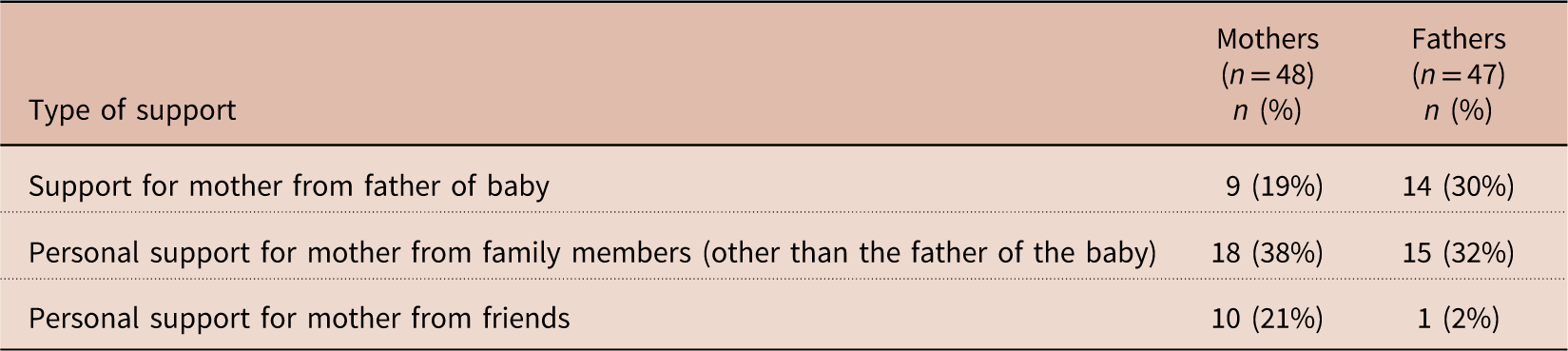
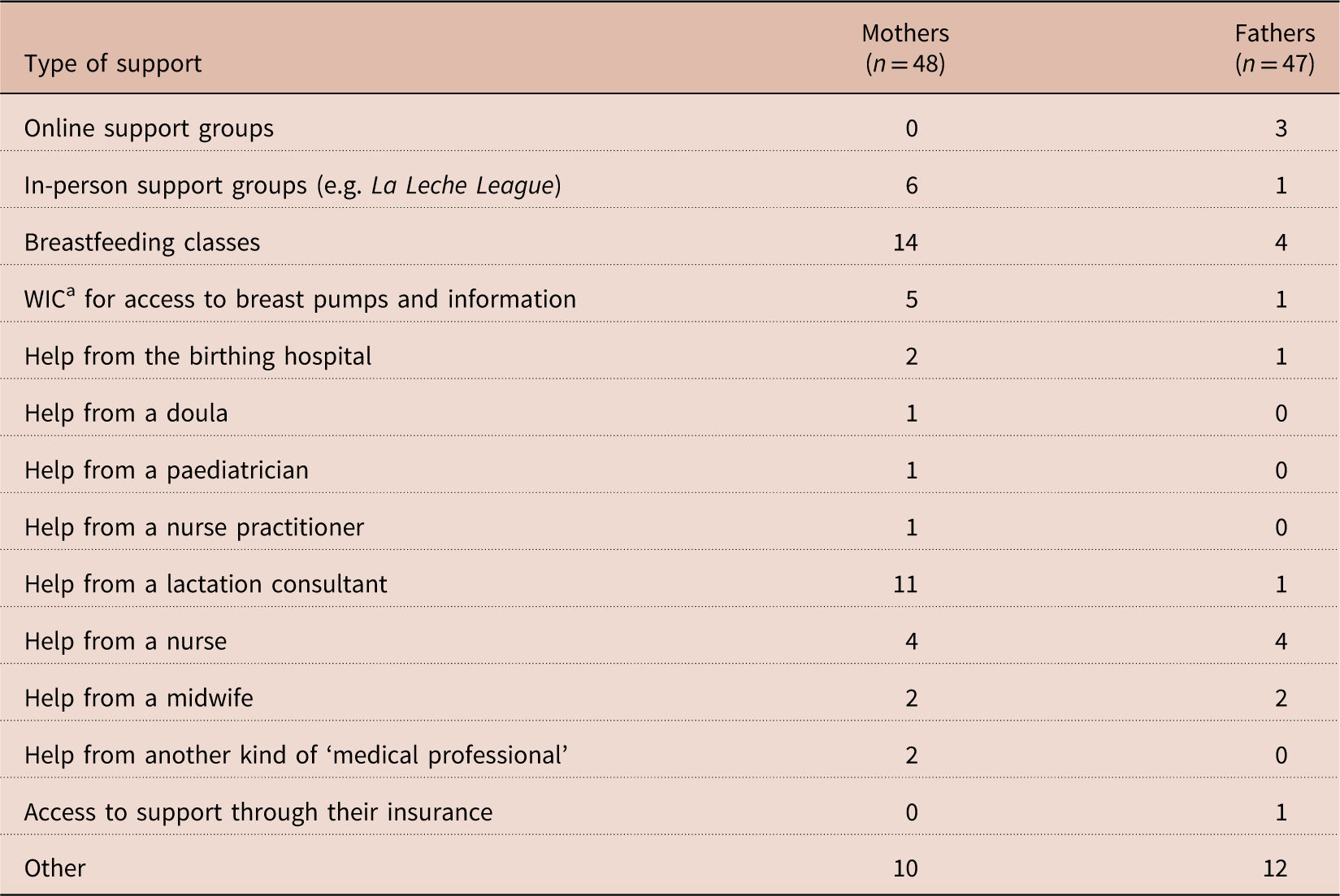
During the demographic interview, 84% of mothers and 84% of fathers (not fully overlapping) indicated that they planned to breastfeed their infant. When provided with the chance to elaborate during the interview, 21% of fathers indicated that they were leaving the decision about whether or not to breastfeed to the infant’s mother. None of the mothers, however, reported that they were deferring to the infant’s father. In addition, over the course of the interviews parents mentioned a variety of resources that they could access for breastfeeding education and support. These are presented in Tables 2 and 3. Compared with mothers, fathers more frequently indicated their own support of the mother in facilitating a successful breastfeeding experience. Compared with fathers, mothers more frequently identified breastfeeding support from friends, in-person support groups, breastfeeding classes and lactation consultants as important breastfeeding supports.
Frequency of participant support for breastfeeding from friends and family (N=95)

Frequency of participants identifying categories of community, medical and professional support for breastfeeding (N=95)

a Women, Infants and Children (WIC) Food and Nutrition Service.
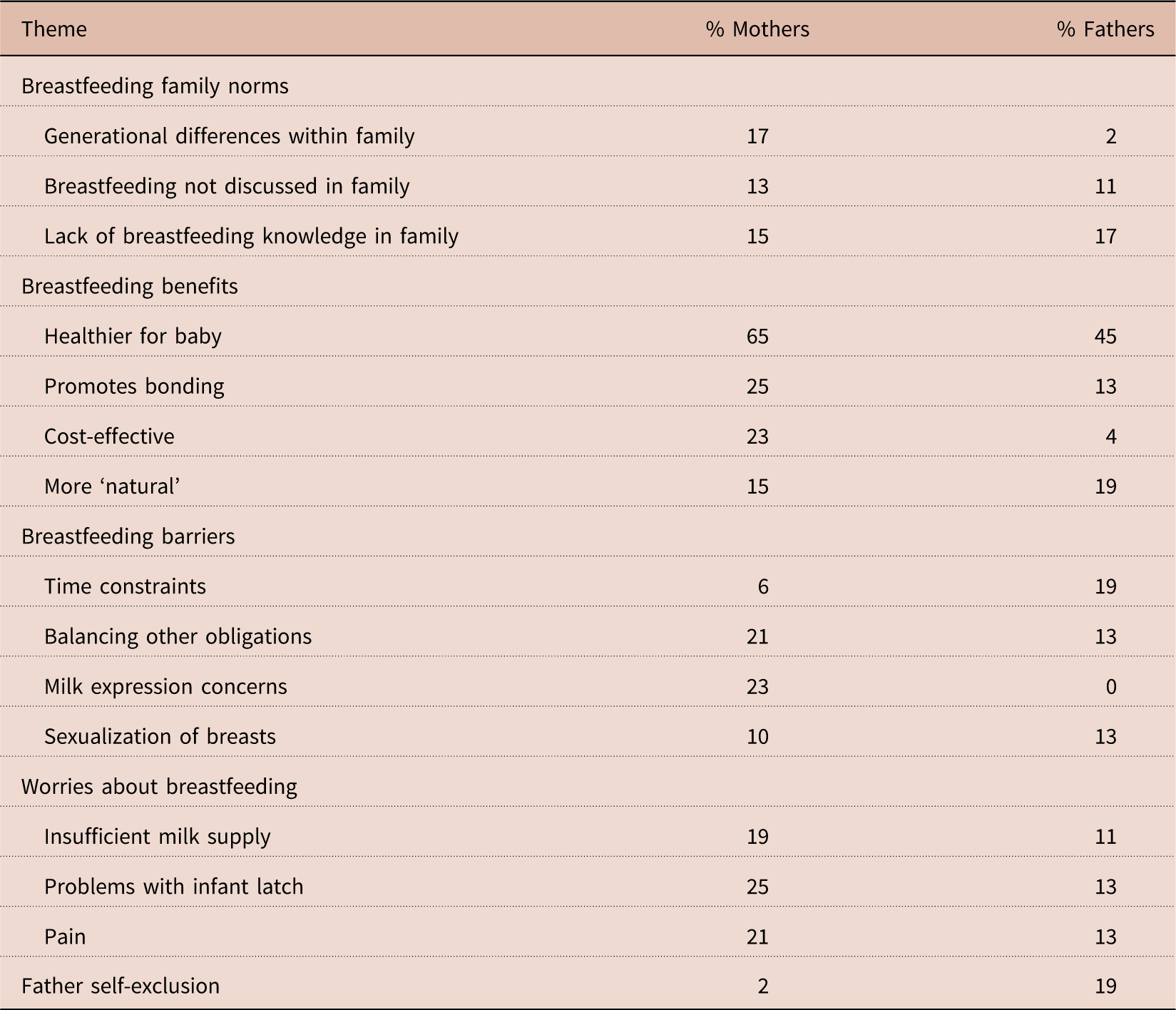
The qualitative themes that emerged from these data (see Table 4 for a summary) suggest important ways in which expectant mothers and fathers differed in their knowledge about breastfeeding benefits, available resources to support breastfeeding and in their concerns about barriers to breastfeeding. Overall, five meta-themes emerged: (1) breastfeeding norms within families; (2) beliefs about the benefits of breastfeeding; (3) logistical barriers to breastfeeding; (4) worries about the breastfeeding process; and (5) fathers’ exclusion from the breastfeeding decision-making process.
Frequency of mothers and fathers identifying individual breastfeeding themes

Breastfeeding norms within families
When reflecting on the views that their family members held about breastfeeding, expectant parents described perspectives that ranged from the view that breastfeeding is a normal and natural part of early childrearing, to a sense that breastfeeding is something of an awkward or taboo subject that is not openly discussed in their families. Three subthemes were associated with this meta-theme and are described below.
Generational differences in breastfeeding norms
In describing the degree to which breastfeeding was an accepted practice within their extended families, eight mothers (17%) and one father (2%) described their observation that breastfeeding is much more accepted now than it was in their parents’ and grandparents’ generations.
Breastfeeding is not openly discussed
Approximately equal numbers of mothers and fathers (six mothers, 13%; five fathers, 11%) stated that breastfeeding was not discussed in their families at all. There was often a sense that the topic was considered ‘off limits’. For instance, a mother in her early twenties who was planning to breastfeed described the way in which her family’s lack of discussion about breastfeeding left her feeling worried that she would not have support if she had any trouble breastfeeding after her infant was born.
Oh man … I don’t know … We don’t really talk about it [in my family]. It’s kind of like … it’s weird. I’ve never really talked to anyone about it before. It’s just something [that my family doesn’t] talk about because it’s like just something that you just do [if you want to] … which kinda stresses me out because it’s like well, what if it’s not easy for me? …
Lack of breastfeeding knowledge and support from family members
Several parents (seven mothers, 15%; eight fathers, 17%) stated that breastfeeding was not commonly practised in their families. Sometimes parents described a sense that family members who didn’t breastfeed also didn’t understand the reasons that it might be important. For example, a mother in her early thirties, who was expecting her first child and planning to breastfeed, shared:
Some people [in my family] … didn’t [breastfeed], so they don’t really ‘get it’. They didn’t do it, so they just don’t get it …
For fathers, there was often a sense of uncertainty about breastfeeding. For instance, a father in his early thirties who was expecting his first child and reported that he and the infant’s mother had not yet decided whether the child would be breastfed had this to say:
Shoot don’t nobody I know ever breastfed. My sister didn’t breastfeed. My cousins didn’t breastfeed. No one breastfed in my family that I know of.
While almost equal numbers of mothers and fathers described a lack of breastfeeding knowledge within their family system, a subtle but important sex difference in the content of this aspect of the narratives was also evident and is representative within the sample as a whole. Specifically, as described above, one mother suggested that she felt a disconnect with members of her family who didn’t seem to understand the reasons that breastfeeding might be important to her. The father’s comment above, in contrast, did not reflect a sense of a disconnect with his own beliefs but, instead, suggested a more profound lack of knowledge about breastfeeding in general within his family system.
Positive benefits of breastfeeding
In describing their thoughts about whether they were planning to breastfeed their infant or not, four primary themes were identified by parents regarding the positive qualities of breastfeeding: (1) it’s healthier for the infant; (2) it promotes bonding; (3) it’s cost-effective; and (4) it’s more ‘natural’. As described below, there were important sex differences evident within the majority of these themes, with mothers more often identifying specific benefits of breastfeeding, compared with fathers.
Healthier for infant
Many parents described their belief that breastfeeding would be healthier than formula feeding for their infant. More mothers than fathers identified this as a positive benefit of breastfeeding (31 mothers, 65%; 21 fathers, 45%). For fathers, there was often a sense that they were somewhat unsure about what the benefits were, and that they were deferring to the opinions of others–often to the infant’s mother. Mothers, on the other hand, were frequently more certain about the benefits to the infant. For example, a mother of two who was in her mid-twenties and indicated that she planned to breastfeed her new infant, had this to say:
I feel actually [that breastfeeding] makes the kids smarter and makes you closer to the kids and it helps with their health … like with ear infections and things like that … [and with] their teeth and just everything. I feel like it’s a total better way period … [It’s better] on their stomach, on their bowels … on everything [compared with] formula.
Promotes bonding
Twice as many mothers (twelve, 25%) than fathers (six, 13%) indicated that breastfeeding would promote mother–infant bonding. Conversely, fathers often had very little to say beyond the fact that breastfeeding was ‘good for bonding’. Additionally, mothers described perceptions and prior experiences in greater detail.
[I want to breastfeed this new baby] because of the bond I had with my son. I breastfed him for 6 months and actually I feel [that breastfeeding] actually makes … [you] closer to the kids …
Cost-effective
Far more mothers (eleven, 23%) than fathers (two, 4%) shared the belief that a benefit of breastfeeding was that it was cost-effective. For example, a mother in her late thirties who had six other children described her intention to breastfeed her new infant this way:
In our culture, we don’t joke [around] with [breastfeeding]. Unless, the mom is not [able to breastfeed], then the mom is there breastfeeding for more than one year. Some people breastfeed up to 2 years more than that, because not everybody can afford formula.
More natural
Approximately equal numbers of mothers and fathers (seven mothers, 15%; nine fathers, 19%) indicated that they felt that breastfeeding was the more natural type of infant feeding. Further, when parents described breastfeeding as ‘more natural’, they often explained breastfeeding as beneficial for multiple reasons. For example, some parents explicitly connected the idea that breastfeeding was ‘more natural’ than infant formula by citing the higher nutritional value of human milk. Other parents who described breastfeeding as more natural also described the ways in which it could promote a closer mother–infant bond. Thus, the idea that breastfeeding was ‘more natural’ seemed to mean different things to different parents.
Logistical barriers to breastfeeding
Participants were asked explicitly to describe the barriers to breastfeeding that they perceived. As described below, some sex differences emerged.
Time constraints
Interestingly, fathers (nine, 19%) cited time constraints as a barrier to breastfeeding more often than mothers did (three, 6%). For example, one father, who was expecting his first child, described that he felt that breastfeeding might place an additional burden on the time and energy his wife had to hold down a job.
Like, what if your wife works or something … and maybe you’re out with your kids. Like, if I was at home, she would have to [pump] a bunch of milk [to have enough for when she was away]. Like, [she’d have to pump] the night before. That would probably make her real tired and even [make it hard for her to] get up and go wherever she’s gotta go the next day. You know what I’m sayin’? So it’s probably time consuming, you know?
Balancing obligations
Related in many ways conceptually to the barrier of time constraints, many parents felt that breastfeeding might make it more difficult to meet other obligations. Mothers (ten, 21%) more often cited this as a barrier than did fathers (six, 13%). A mother in her early twenties, who was expecting her first infant and had not yet decided whether to breastfeed her infant, described her concerns this way:
Breastfeeding [is] a full time job … I mean wanting to [be able to go to] work the way I do … I don’t know, [I think that breastfeeding] is probably going to hurt me. It’s going to push me back [from being able to] work. I have to wait to work [if I’m breastfeeding], because I don’t know how it’s going to be. It’s a possibility that I can get a pump and freeze the milk, but what if I don’t pump a lot, and what if I only pump at a certain time, you know? It’s just a lot to [do to be able to breastfeed], so … and I really want to get back working because I’m trying to move [out of my parent’s house] so.….
Milk expression concerns
Several mothers (eleven, 23%) and no fathers identified the need to pump mother’s milk as a barrier to breastfeeding. In some cases, mothers indicated that the WIC programme (Women, Infants and Children (WIC) Food and Nutrition Service) was going to provide them with a breast pump. Other mothers, however, described the expense of renting or buying a breast pump as a significant barrier to their ability to breastfeed. In addition, having dedicated time at work and the ability to store the milk in an appropriate place when expressing milk away from home was a concern. For example, a mother in her early thirties, who was expecting her first infant and was planning to breastfeed, described her worries this way:
Yeah the whole like, having a place I feel comfortable doing pumping … and when I’m at work and I need to find time on a regular basis to schedule to [pump] and to keep [the milk] cold and … yeah, I need to figure that out.
Sexualization of women’s breasts
Approximately equal numbers of mothers (five, 10%) and fathers (six, 13%) felt that the socio-cultural sexualization of women’s breasts was a barrier to breastfeeding. For example, a father of two who was in his late twenties and planning that his new infant would be breastfed had this to say:
Like what if someone sees [my partner breastfeeding the baby]. Like, there’s an awkwardness to it. [Other guys] don’t connect to [the fact that] she’s feeding her child when they see that going on. I think [it’s because] they’re thinking more sexually at times. And whenever they see that it’s like ‘whoa, whoa!’ instead of it being a natural thing. I’m with them, I still have problems with that. I am the one to say ‘hey, keep that blanket up’ … [laughs].
Worries and concerns about the breastfeeding process
Participants were asked explicitly to describe the barriers to breastfeeding that they perceived. These concerns fell into three categories: worries about having an adequate milk supply (nine mothers, 19%; five fathers, 11%); worries about problems with the infant latching on to nurse (twelve mothers, 25%; six fathers, 13%); and worries about the pain and discomfort associated with breastfeeding (ten mothers, 21%; six fathers, 13%). In each case mothers tended to identify these concerns more often than fathers.
Fathers’ exclusion from the breastfeeding decision-making process
Consistent with the fact that 21% of fathers said that they were leaving the ultimate decision about infant feeding up to the infant’s mother, several fathers (n=9; 19%) indicated during their interviews that they excluded themselves from the breastfeeding process. Often this manifested as a lack of interest on the part of the father. Fathers made comments such as, ‘I don’t really think about breastfeeding to be honest with you,’ and ‘[breastfeeding’s] got nothin’ to do with me’. Other times fathers conveyed a sense that they avoided becoming involved. One father put it this way:
Honestly, I never asked [her about breastfeeding]. She just said she didn’t want to [breastfeed] so I just rolled with it.
Quantitative analysis of the relation between socio-demographic factors and intention to breastfeed
A chi-squared test of independence was performed to examine the relation between socio-demographic factors and intention to breastfeed. The relation between being Caucasian vs non-Caucasian and intention to breastfeed was not significant for the sample as a whole (χ 2 (1, n=95)=2.86, p=ns), for mothers (χ 2 (1, n=48)=2.73, p=ns) or for fathers (χ 2 (1, n=47)=0.58, p=ns) (see Table 5). A further test of independence was performed to examine the relation specifically between Caucasian and African-American parents (Table 6), and these results were also not significant for the group as a whole (χ 2 (1, n=81)=3.57, p=ns), for mothers (χ 2 (1, n=42)=3.36, p=ns) or for fathers (χ 2 (1, n=39)=0.66, p=ns).
Association between breastfeeding intention and race (Caucasian vs non-Caucasian)

Numbers in parentheses indicate percentages.
Full: χ 2=2.86, df=1, ns. Mothers: χ 2=2.73, df=1, ns. Fathers: χ 2=0.58, df=1, ns.
Association between breastfeeding intention and race (Caucasian vs African-American)

Numbers in parentheses indicate column percentages.
Full: χ 2=3.57, df=1, ns. Mothers: χ 2=3.36, df=1, ns. Fathers: χ 2=0.66, df=1, ns.
The relation between the age of the parent-to-be (younger [18–21 years] versus older [>21 years]) and intention to breastfeed was not significant for the sample as a whole (χ 2 (1, n=95)=0.04, p=ns), for mothers (χ 2 (1, n=48)=0.33, p=ns) or for fathers (χ 2 (1, n=47)=0.13, p=ns) (Table 7). Table 8 shows that the relation between poverty status and intention to breastfeed was significant (χ 2 (1, n=88)=5.21, p<0.05). Parents living under the Federal Poverty Line were less likely to state that they planned for their infant to be breastfed. However, when tested separately for each sex the results were non-significant for mothers (χ 2 (1, n=45)=2.04, p=ns) and for fathers (χ 2 (1, n=43)=3.32, p=ns).
Association between breastfeeding intention and age of parent

Numbers in parentheses indicate column percentages
Full: χ 2=0.04, df=1, ns. Mothers: χ 2=0.33, df=1, ns. Fathers: χ 2=0.13, df=1, ns.
Association between breastfeeding intention and poverty status

Numbers in parentheses indicate column percentages.
Full: χ 2=5.21, p<0.05, df=1. Mothers: χ 2=2.04, df=1, ns. Fathers: χ 2=3.32, df=1, ns.
The relation between a parent’s own history of being breastfed and their intention to breastfeed their infant was significant: χ 2 (2, n=82)=9.32, p<0.01 (Table 9). Participants who had themselves been breastfed were more likely to state that they planned for their own infant to be breastfed. This was additionally analysed by sex and the significance was retained for both mothers (χ 2 (2, n=41)=8.26, p<0.05) and fathers (χ 2 (2, n=41)=12.18, p<0.01).
Association between breastfeeding intention and breastfeeding history

Numbers in parentheses indicate column percentages.
Full: χ 2=9.32, *p<0.05, df=1. Mothers: χ 2=8.26, p<0.05, df=1, ns. Fathers: χ 2=12.18, *p<0.05, df=1, ns.
The relation between a family norm of breastfeeding within the parent’s family and their intention to breastfeed was not significant (χ 2 (2, n=75)=3.92, p=ns) and were also non-significant when analysed separately by sex: mothers, χ 2 (2, n=36)=3.95, p=ns; fathers, χ 2 (2, n=39)=1.23, p=ns (Table 10).
Association between breastfeeding intention and breastfeeding family norms

Numbers in parentheses indicate column percentages.
Full: χ 2=3.92, df=1, ns. Mothers: χ 2=3.95, df=1, ns. Fathers: χ 2=1.23, df=1, ns.
Discussion
The maternal and infant health benefits of breastfeeding have been well documented (Chowdhury et al., Reference Chowdhury, Sinha, Sankar, Taneja, Bhandari and Rollins2015; Khan et al., Reference Khan, Vesel, Bahl and Martines2015). Unfortunately, rates of breastfeeding initiation and duration in the US are lowest in the populations that need it most; low-income Caucasian and African-American mothers are less likely than other groups to breastfeed their infants and infant mortality rates are high in these groups (CDC, 2008). Father involvement and support of their young children, beginning in pregnancy, confers positive effects for women and children in many areas of early development, beginning in pregnancy (Alio et al., Reference Alio, Salihu, Kornosky, Richman and Marty2010), and breastfeeding is no exception (Bentley et al., Reference Bentley, Caulfield, Gross, Bronner, Jensen, Kessler and Paige1999; Mahoney & James, Reference Mahoney and James2000). When fathers encourage and support maternal breastfeeding, mothers are more likely to initiate and sustain breastfeeding over the first few postnatal months (Bar-Yam & Darby, Reference Bar-Yam and Darby1997; Healthy People 2020, 2018). However, to the extent that father support of breastfeeding has been investigated in the literature, it has mainly been assessed via maternal report (see Freed et al., Reference Freed, Fraley and Schanler1993, for a notable exception), and when they are measured directly, maternal reports of fathers’ ideas about breastfeeding have been found to be inaccurate (Freed et al., Reference Freed, Fraley and Schanler1993). This leaves a critical gap in the literature; although it is clear that father support of breastfeeding is crucial, the factors that contribute to fathers’ support – including their thoughts, feelings and beliefs about breastfeeding – are not well understood, especially in the high-risk groups for whom breastfeeding can literally have lifesaving effects for the infant.
The current study sought to fill this gap in the literature. Using a unique sample of expectant mothers and fathers, both parents of the infant were interviewed. Further, employing a mixed methods approach, the factors associated with infant feeding intentions for this group of parents were also examined. Although a grounded theory approach to data analysis was utilized and, therefore, initial hypotheses were not made, the data fitted well with the social ecology of breastfeeding model identified by Roll and Cheater (Reference Roll and Cheater2016) and is discussed here using their model. Further, important differences in the support for breastfeeding identified by mothers versus fathers in this sample were identified and, therefore, the application of this model to fathers is described.
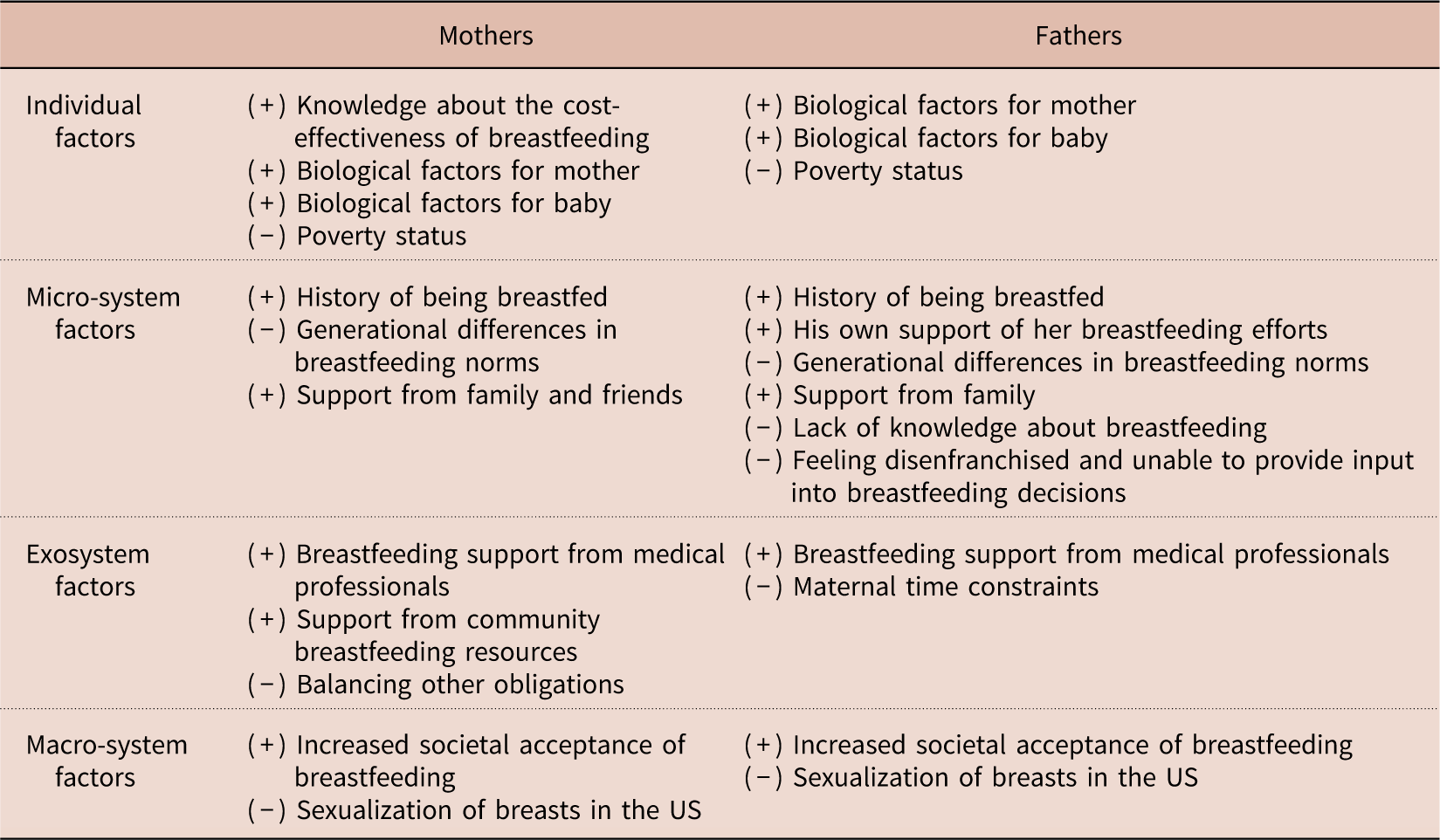
Breastfeeding is a relationship-based behaviour. It supports and enhances the mother–infant relationship and it is tied, in fundamental ways, to the supportive relationships and social systems in the mother’s life. As outlined recently by Roll and Cheater (Reference Roll and Cheater2016) with respect to infant feeding, the social–ecological model posits that the relationships and systems influencing infant feeding beliefs and intentions include the following factors: (1) individual factors such as the biology and psychology of the parent and the infant; (2) micro-systems including family and friend relationships; (3) the exosystem, including community and health care systems ; and (4) the macro-system comprised of societal and cultural systems. Findings from the current study are consistent with this model as it relates to breastfeeding intentions for both mothers and fathers and suggest that the social–ecological ‘maps’ of influence on infant feeding beliefs and intentions may be different for mothers and fathers (see Table 11)
The social ecology of breastfeeding for mothers and fathers

(−)=a factor having a negative influence on pro-breastfeeding sentiments; (+)=a factor having a positive influence on pro-breastfeeding sentiments.
Based on Roll and Cheater’s (Reference Roll and Cheater2016) Social–Ecological Model of Breastfeeding.
.
Prior work has demonstrated that older mothers tend to breastfeed at higher rates than younger mothers (Dunn et al., Reference Dunn, Kalich, Fedrizzi and Phillips2015). However, in the current study the intention to breastfeed was not different for older versus younger expectant parents. One reason may be that prior work has most often compared adolescent mothers with adult mothers and the current study did not include mothers under the age of 18 years. Poverty status, however, was significantly associated with infant feeding intentions such that parents living below the Federal Poverty Line were less likely to indicate that they planned to breastfeed their infants. This difference retained significance in separate analyses conducted with mothers and fathers. Living in poverty confers a range of negative effects on the biological health and well-being of adults and children. Because of this, poverty status was included as an individual factor within the social ecology model. Related to the issue of poverty, one surprising finding of the current study was that, although many mothers (23%) identified the cost-effectiveness of breastfeeding versus formula, very few fathers (4%) identified this as a benefit. Given that, from a socio-cultural perspective, fathers are expected to be the breadwinners of the family, this is an important finding and suggests that education for fathers about the economic value of breastfeeding may be a way in which to engage fathers in supporting the breastfeeding of their babies.
Consistent with prior work, mothers (Alexander et al., Reference Alexander, Dowling and Furman2010a) – and also fathers – in this study cited individual biological factors of both the mother and the newborn such as potential maternal pain associated with breastfeeding, inadequate milk supply and problems with infant latch as barriers to breastfeeding. It is important to highlight the fact that these barriers included both maternal and infant factors, suggesting that parents are considering infant characteristics as key contributors to the early care-giving relationship. This inclusion of infant capacities, in addition to maternal factors, in parents’ understanding of the delicate maternal–infant co-ordination that allows a mother to successfully breastfeed her infant, suggests that parents are accurately and realistically anticipating potential barriers to breastfeeding. In terms of benefits, a majority of parents noted that breastfeeding would be healthier for the infant and a few commented that breastfeeding was the ‘more natural’ infant feeding type. Throughout the interviews, mothers cited these benefits and barriers more often than fathers. Thus, these data suggest that individual factors associated with infant feeding intentions may be more salient for mothers compared with fathers. This makes sense from a purely physiological standpoint in that the prenatal experience of mothers includes her physical experience of carrying the infant (Slade et al., Reference Slade, Cohen, Sadler and Miller2009). Fathers’ connection to their infants must necessarily be less connected to a physical interaction with the infant and may therefore be more strongly related to distal social–ecological factors at the micro-, exo- and macro-system levels.
Micro-system factors were also identified by both mothers and fathers in this sample at relatively equal rates overall and included support for breastfeeding from family members and friends (see Table 2). Fathers, however, identified their own support of maternal breastfeeding more often than mothers, whereas mothers identified support from their friendship networks more often than fathers. In addition, consistent with prior work (Isabella & Isabella, Reference Isabella and Isabella1994), the current study found that a parent’s history of being breastfed was associated with their intentions to breastfeed–and this was true for both mothers and fathers. This finding is consistent with attachment theory, which argues that the type and quality of early relationships are transmitted across generations via processes of early parenting (Bowlby, Reference Bowlby1982). Further, the social support literature has demonstrated that a history of exposure to positive early parenting is associated with increased social support from friends and family members in adulthood (Sarason et al., Reference Sarason, Pierce, Shearin, Sarason, Waltz and Poppe1991; Wallace & Vaux, Reference Wallace and Vaux1993). As parents prepare to parent a new infant, they often turn to others with whom they have a close relationship for support. Prior work has demonstrated that support from the infant’s father, in particular, is associated with higher rates of breastfeeding (Mahoney & James, Reference Mahoney and James2000).
Family norms related to infant feeding may also be influential in parental intentions about whether to breastfeed their own infant. Indeed, prior work has identified breastfeeding support from family and friends as having a positive influence on breastfeeding rates, especially in vulnerable populations (Hannon et al., Reference Hannon, Willis, Bishop-Townsend, Martinez and Scrimshaw2000). However, many mothers, and a few fathers, in the current study described a lack of breastfeeding knowledge in their families, and they identified a generational difference in how breastfeeding is understood and whether it is an accepted form of infant feeding within their extended family systems. Some parents, for example, described that breastfeeding was more accepted in their own generation than it was in their parents’ and grandparents’ generations. This is not inconsistent with prior findings, but it suggests that parents may experience more positive breastfeeding support from their contemporaries versus elders in their families and communities. Perhaps because it was understood as ‘old fashioned’ thinking, quantitative analyses demonstrated that parental intentions about whether to breastfeed were not, in fact, related to acceptance of breastfeeding within the larger family system – for mothers or for fathers.
For fathers there was a sense of a lack of knowledge and discussion about breastfeeding in their families that seemed to leave them somewhat puzzled about what to expect from the breastfeeding process. Rather than feeling that they were moving beyond the beliefs of prior generations, many fathers described feeling confused by the lack of breastfeeding support and knowledge in their families. Further, many fathers reported that they excluded themselves from discussions about breastfeeding with the mother of their infant, suggesting that they did not feel that they had – or did not want to have – a voice within their family system with regard to infant feeding. Given the importance of father support of maternal breastfeeding, helping fathers to participate in discussions about infant feeding may be a useful target for interventions designed to increase breastfeeding rates.
With respect to the exosystem factors of social and community resources and influences, parents identified several forms of contemporary breastfeeding support that were available to them such as breastfeeding classes and access to lactation consultants. Sex differences were also identified; for nearly every type of community breastfeeding resource, fewer fathers identified the resource compared with mothers (Table 3). However, equal numbers of mothers and fathers identified help from a nurse and help from a midwife as potential breastfeeding resources. This suggests that fathers are equally aware of more traditional, medical forms of support but that they are less aware than mothers about other community-based programmes that provide breastfeeding support. Because these kinds of supports are relatively more prevalent than medical services for breastfeeding within most US communities, information provided to fathers about available resources are indicated and may allay paternal fears about maternal capacities to deal with breastfeeding barriers.
With respect to their other roles in the community and society, parents identified maternal time constraints and balancing other obligations as barriers to breastfeeding. Interestingly, more fathers than mothers identified time constraints as influential, and more mothers than fathers identified balancing obligations as an important factor. This finding warrants further investigation in subsequent studies for a number of reasons. For instance, it is not entirely clear from the current data which obligations were perceived as most influential. Further, breastfeeding tends to be less time-intensive than bottle feeding for most women, yet fathers identified time as a barrier. A more careful analysis of the tasks and associated time requirements of each type of infant feeding that are perceived by fathers will help to elucidate this discrepancy. Similarly, the particular obligations that mothers identify as impeding their ability to breastfeed will provide the data necessary to help mothers figure out ways to effectively balance breastfeeding with their other important obligations.
With respect to the macro-system factors of cultural and societal norms, findings point to a societal shift in breastfeeding knowledge and acceptance wherein, at least in this sample, parents believe that breastfeeding is becoming more socially accepted. However, parents – both mothers and fathers – also voiced concerns about the sexualization of breasts in US society, which deterred some fathers from supporting the breastfeeding of their infant. Further, regarding cultural norms, quantitative analyses revealed no significant differences in breastfeeding intentions between Caucasian and African-American parents. These data contradict postnatal breastfeeding data from a large number of studies that have demonstrated lower breastfeeding rates in African-American compared with Caucasian families (CDC, 2008; Jones, et al., Reference Jones, Power, Queenan and Schulkin2015). The current study is unique in that it included both maternal and paternal reports of breastfeeding intentions. However, because the sample included expectant parents, it is not known whether these parents actually initiated breastfeeding, and rates of actual breastfeeding initiation, if they had been gathered postnatally in this sample, may be more similar to national rates.
The inclusion of fathers in the current sample represents a unique contribution to our knowledge about breastfeeding in low-income samples of parents. With respect to African-American families specifically, it is worth noting that the US mass incarceration phenomenon has had particularly deleterious effects on African-American men and, consequently, on their families. A disproportionate number of low-income African-American men make up about 36% of the current US prison population though they comprise only 13.3% of the US population (US Bureau of Justice Statistics, 2014). The ‘over-incarceration’ and harsher sentencing of African-American men are not attributable to higher rates of criminal behaviour. In fact, when compared across race, arrest rates among African-American men and other US men are comparable, though conviction and sentencing occur with far more frequency and severity for African-American men than any other men (Wooldredge et al., Reference Wooldredge, Frank, Goulette and Travis2015). Moreover, a criminal background or history means a potential long-term ‘cumulative disadvantage’ of social stigma (even within his own community), under-employment and subsequent likelihood of being re-convicted. Alexander (Reference Alexander2012) argued that this marginalizes and stigmatizes African-American men making it especially less likely that they find legitimate employment that pays well and offers benefits including health care. This has important implications for the health care of African-American families in general, and for breastfeeding decisions within families in particular. Specifically, African-American families suffer substantially from the absence of male support due to mass incarceration resulting in lower levels of child and family involvement and, therefore, lowered potential for breastfeeding support from fathers.
Data from this study suggest that the factors influencing parental thoughts and feelings about breastfeeding in mothers vs fathers are overlapping in some cases, and unique in others. Professionals and policymakers are encouraged to take these differences into account when designing programmes and policies that affect breastfeeding intentions in mothers vs fathers. For instance, fathers reported lower levels of support from friends and family members and were less aware than mothers about community-based breastfeeding support. At the same time, fathers view their own support of mother’s breastfeeding efforts as very important. Programmes, therefore, could capitalize on fathers’ desires to be supportive of breastfeeding, and could provide education about available services and help fathers to identify and develop their own networks of friend and family supports. In many ways, and despite recent efforts at the research and policy levels to change this, fathers continue to be an under-recognized protective factor in the lives of mothers and babies. Although they view themselves as important supports for mothers, they sometimes exclude themselves from discussions about breastfeeding, they report less knowledge about, and access to, breastfeeding support services and, within the African-American community in particular, fathers are excluded from providing financial, health and daily support to their families by societal-level inequalities. Policies that work to rectify barriers at each of these levels hold the potential to increase father involvement and support of their young families, and thereby improve the health and well-being of infants and mothers.
The study had some limitations. A primary limitation is that it did not assess the postnatal infant feeding behaviours of these parents. The ability to assess parental thoughts and feelings about infant feeding intentions during the prenatal period, when parents are typically making decisions about infant care, is a strength of the study. To extend these findings, future work should follow families – both mothers and fathers – longitudinally to capture the ways in which infant feeding intentions are implemented, or not, over time. In addition, in line with tenets of qualitative data analyses, it should be noted that these results are specific to this sample and cannot be generalized. They do, however, shed light on a relatively understudied area of research and thereby inform future work in this area of study.
Conclusion and relevance to clinical practice
This study aimed to assess the thoughts, feelings and opinions about breastfeeding in a sample of primarily African-American and Caucasian expectant mothers and fathers who were considered at risk for low rates of breastfeeding due to their low income status. The results confirmed prior work with mothers, identified new themes including maternal impressions of a generational difference in breastfeeding views within their families, and demonstrated both similarities and differences in factors associated with breastfeeding intentions for fathers compared with mothers. Overall, fathers tended to have less knowledge about the benefits of, barriers to and supports available for breastfeeding. Combined with the finding that fathers tend to exclude themselves from conversations about breastfeeding, that they do not feel knowledgeable about breastfeeding beliefs in their own families and that they expressed a certain amount of confusion about the process of breastfeeding itself, these results point to an overall sense of exclusion and uncertainty about breastfeeding in fathers. Each of these factors represents potential targets for interventions with fathers and suggests that a co-parenting approach to breastfeeding initiatives may be useful. Results from the current work suggest that interventions that: (1) increase fathers’ knowledge about breastfeeding supports, (2) help fathers to participate actively in discussions about breastfeeding and, 3) help mothers and fathers to fully understand the benefits and barriers to breastfeeding, may help to increase breastfeeding rates.
Ethical Approval
The authors assert that all procedures contributing to this work comply with the ethical standards of the relevant national and institutional committees on human experimentation and with the Helsinki Declaration of 1975, as revised in 2008. The study was approved by the institutional review board of Wayne State University.
Conflicts of Interest
The authors have no conflicts of interest to declare.
Funding
This research was funded by a grant from the International Lactation Consultant Association awarded to the first and second authors and by Wayne State University.