

Pre-industrial craft—why urbanize?
Specialized crafts are a leitmotif in archaeological discussions of urbanism. Craft specialists are assumed to figure among the defining elements of urban life, the ‘relatively large, dense, and permanent settlement of socially heterogeneous individuals’ of urban communities, cf. the often-quoted definition proposed by Wirth (Reference Wirth1938, 8). Their products were movables in the ‘close interrelationship of services’ between ‘the city and the surrounding countryside,’ as emphasized by other definitions of urbanism (Pirenne [1927] Reference Pirenne2014, 84; cf. also Smith Reference Smith, Fernández-Götz and Krausse2017). Further, the capacity of urban economies to afford the emergence of full-time craft specialists is a pivotal feature of Childe's model of ‘urban revolution’ (Childe Reference Childe1950, 8; cf. Renfrew Reference Renfrew and Harris1994; Smith Reference Smith2009; Taylor Reference Taylor2012; Trigger Reference Trigger1986; Wailes Reference Wailes and Wailes1996).
In Childe's view, urbanism served to ‘rescue such specialists from nomadism and to guarantee them security in a new social organization’ (Childe Reference Childe1950, 8). Urban communities thus provided a matrix for the development of crafts, by affording skilled artisans a range of advantages, including social protection through civic organization, access to traded raw materials, learning opportunities and wider markets for their products. These dynamics remain central in contemporary archaeological approaches to urbanism as an aspect of social complexity (e.g. Costin Reference Costin, Feinman and Douglas2001; Cowgill Reference Cowgill2004, 527; Hill Reference Hill, Hill and Cowie2001; Renfrew Reference Renfrew, Marcus and Sabloff2008, 47; Trigger Reference Trigger2003, 121; Ur Reference Ur2014, 258).
The dynamics of this relationship are commonly explained with reference to social connections: in an agent-based perspective, the urbanization of specialized crafts is explained as a response by individuals to the opportunities provided by a market of consumers (Parkinson et al. Reference Parkinson, Nakassis and Galaty2013; Taylor Reference Taylor2012). From an institutionalist view, the centralization of specialized production at urban sites is suggested to reflect political coercion and control by an elite group in society (Clark Reference Clark2007; Flad & Hruby Reference Flad and Hruby2007; Linaa Reference Linaa, Hansen, Ashby and Baug2015; Schortman & Urban Reference Schortman and Urban2004). Recent challengers to the institutionalist view assert that early urban societies retained a high level of egalitarian and group-oriented cooperation, yet the question of why they chose to live in larger settlements is only addressed in vague terms as ‘a combination of push and pull factors’ (Jennings & Earle Reference Jennings and Earle2016, 477).
The relationship between crafts and early urbanism is highlighted in research on the trading ports or emporia that emerged from the seventh century ad onwards, along the seaboards of northern Europe. The emporia were specialized coastal settlements, which acted as nodal points for maritime trade in materials and commodities (Clarke & Ambrosiani Reference Clarke and Ambrosiani1991; Hodges Reference Hodges2012, 93; Sindbæk Reference Sindbæk2007; Skre Reference Skre and Skre2007a). A conspicuous feature of their archaeology is the volume of workshop debris from crafts including iron working, bone and antler carving, glass-bead making and, notably, non-ferrous metal working (Callmer Reference Callmer2007, with further references; Hodges Reference Hodges2000, 83; Pedersen Reference Pedersen2016).
Craftspeople in emporia were long viewed as itinerants, who operated seasonally from simple workshops in shifting sites (Ambrosiani Reference Ambrosiani1981, 157; Christophersen Reference Christophersen1982; Madsen Reference Madsen and Bencard1984, 95, pace Jankuhn Reference Jankuhn, Jankuhn, Janssen, Schmidt-Wiegand and Tiefenbach1983, 9f; Ulbricht Reference Ulbricht1978, 118). Increasing publication of workshop assemblages since the 1990s, however, has made it clear that the complexity and scale of production almost certainly points to work of a more permanent and organized nature (Andrews Reference Andrews1997; Callmer Reference Callmer, Larsson and Hårdh2003; Jensen Reference Jensen1991; Mainman & Rogers Reference Mainman and Rogers2000). Recent studies demonstrate that the non-ferrous metalwork practised in some emporia sustained long-standing regional traditions (Sindbæk Reference Sindbæk and Sigmundsson2011) and involved a diversity of metal-working techniques and materials, which would have called for deep experience and long-term collaboration between masters and apprentices (Pedersen Reference Pedersen, Hansen, Ashby and Baug2015, 55). This suggests that craftspeople were settled permanently, or at least for longer than a single market season in particular sites.
Despite the often-assumed links between urbanism and crafts, this choice of location presents a puzzle: why would a specialized artisan choose to practise in maritime enclaves, sometimes settling along the waterfronts of small harbour towns with only a few hundred inhabitants? While the emporia were located in sites geographically favourable for merchants and seafarers, their attraction to craftspeople is less obvious. The emporia could offer privileged access to imported raw materials and to consumers through sea trade (e.g. Ashby et al. Reference Ashby, Coutu and Sindbæk2015; McCormick Reference McCormick2007, 47; Sindbæk Reference Sindbæk2007). However, the work of craftspeople and their families also required the provision of bulk resources such as fuel, building materials and food. Elsewhere in early medieval Europe, complex production was often organized as cottage industries through redistributive or commercial networks in non-urban settings such as manorial estates, monasteries, or ‘commodity villages’ (Hodges Reference Hodges2012, 60; Verhulst Reference Verhulst2002, 72–84). Specialized workshops might be conveniently located in hinterland villages from which rare imported materials and finished products could be exchanged with merchants elsewhere. And yet, in the emporia, production as well as the exchange of goods was focused at harbour sites on the margins of settled regions.
One explanation commonly proposed is that the concentration of craft activities in emporia was the effect of a political monopoly: a forced settlement of craft workers in confined locations ‘in order strategically to control the production and distribution of a region’ (Hodges Reference Hodges2000, 80; cf. also Bencard & Jørgensen Reference Bencard, Jørgensen, Bencard, Jørgensen and Madsen1990, 146). Yet, as others have argued, a ruler might have been far better placed to control production in a manorial centre than in a port of constant maritime traffic (McCormick Reference McCormick2007; Skre Reference Skre and Skre2007a, 459). Alternatively, craftspeople and merchants might have actively chosen to co-locate because both groups were set apart from rural society by their lifestyle and culture, and by shared mutual solidarity and economic interest (Callmer Reference Callmer, Hårdh and Larsson2002, 156; Skre Reference Skre and Skre2007b, 46). This bottom-up model prefigures a common view of European urbanism in the High Middle Ages as being grounded in the actions and aspirations of a middle class (cf. Pirenne [1927] Reference Pirenne2014; Weber Reference Weber1921). However, this view may be questioned if the relatively small and necessarily fluid groups that gathered in early medieval emporia had the scale, coherence and power to foster and maintain institutional and civic solidarities.
A factor curiously neglected in the models discussed above is the actual relationship of craftspeople to others by way of their raison d’être: the manufacturing process and its outcome. Craftspeople are mediators in a technical process, which required the mobilization of materials, skills and resources. It is through the process of making and using objects that they simultaneously ‘create, reaffirm, and contest relationships both with the raw materials they are working and with macro-scale systems of trade and exchange’ (Dobres Reference Dobres, Rebay-Salisbury, Brysbaert and Foxhall2014, 200).
More intricate, composite products placed greater practical demands on the social context of production. In these circumstances, a unique set of constraints and opportunities would have prompted very specific interdependencies. In this paper, we argue that these dynamics would have incited particular gatherings of people or things towards the formation of urban communities. Our argument is based on the reassessment of a non-ferrous metal workshop from the mid eighth century, excavated in Ribe, Denmark. Such a contextual analysis is key to reconstructing the contributing factors for the development of urbanization in the middle ages.
The réseau opératoire—a theoretical outline
The complex process of mobilizing materials, skills and resources, of which craftspeople are the mediators, was famously conceptualized by André Leroi-Gourhan (Reference Leroi-Gourhan1964) as the operational sequence or chaîne opératoire: the technical processes and social acts involved in the step-by-step production, use and eventual disposal of artefacts. The concept has been widely adopted in archaeology as an analytical tool and conceptual framework for the study of prehistoric crafts (Dobres Reference Dobres2000, 127ff).
By extension, we may term the manufacture of more complex products a réseau opératoire, or operational network. The idea of a network is pertinent for several reasons: First, it provides a conceptual framework that unites the sum of technical processes and social acts, which constitute a distributed production process. Second, it emphasizes non-linear and non-hierarchical aspects of organization and workflow, in which processes and actors are interdependent. And third, the concept takes into account the life history of these highly complex products (i.e. their conception, use and final disposal).
Compared to a chaîne, the concept of a réseau opératoire, or operational network, highlights the relational and collective character of composite crafts as they exist in complex societies. Organized production demands the collaboration of multiple specialists and the allocation of various materials, and is inadequately described by the mental schemes of a step-by-step production, as implied by the operational sequence. The réseau opératoire, however, focuses on the organization and sustained interaction of specialists and their resource networks.
As a concept, réseau opératoire transcends chaîne opératoire, not only in pointing to the increasingly entangled operations implied by complex forms of production, but also by the fact that such operations cannot be rooted in individual mental templates. They transcend the capacity of individuals, and must be negotiated in collective practice, in which the availability of materials and skills play a decisive part. From an archaeologist's point of view, a réseau opératoire may thus offer a framework that operationalizes Actor-Network-Theory to trace the agency of material objects and humans, and to ‘follow the actors themselves’ into heterogeneous and fluctuating ‘associations’ (Latour Reference Latour2005, 12).
Following an actor-network approach, we argue that, in addition to social relations, we also need to acknowledge the concrete materials, activities and interactions of craft specialists, in order to understand how an urban setting reassembled ‘associations between heterogeneous elements’ (Latour Reference Latour2005, 5; cf. also Rebay-Salisbury et al. Reference Rebay-Salisbury, Brysbaert, Foxhall, Rebay-Salisbury, Brysbaert and Foxhall2014). As recently argued, urbanization needs to be approached as ‘bundles of interactions between people and materials’ (Jervis Reference Jervis2016, 383). The demands of production sequences could be a catalyst for the process of gathering specialized production in an urban environment, and thus of the process of urbanization. We propose that the interconnections between artisanal specializations were conditioned upon a complex operational network or réseau opératoire, which could best be obtained in an urban community.
Shadows of an early workshop
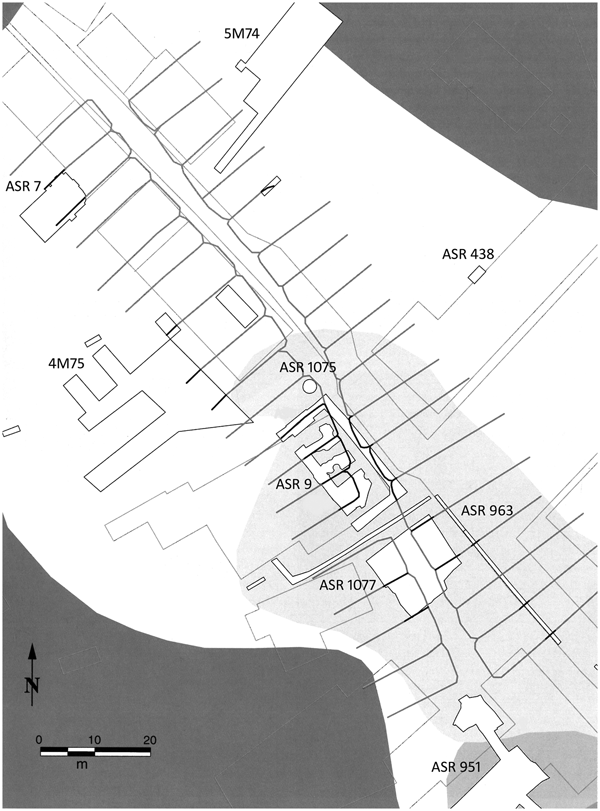
The Danish vicus (town or emporium) known as Ripa in the ninth-century Vita Anskarii (Rimbert Reference Rimbert, Trillmich and Buchner1961, 102) is characterized archaeologically in the form of thick, well-stratified anthropogenic sediments, embedded with wooden structures and a large number of finds (Bencard & Jørgensen Reference Bencard, Jørgensen, Bencard, Jørgensen and Madsen1990; Feveile Reference Feveile2006c). A number of excavations since 1972 have demonstrated that a wide range of products were imported or manufactured on site (Fig. 1). Documented activities include glass-bead manufacture, non-ferrous metal working, amber working, bone/antler working for the manufacture of combs and gaming pieces, carpentry, textile production and iron working (cf. overview in Feveile Reference Feveile and Feveile2006a).
Map of the central part of the emporium in Ribe (the ‘Market place’) with excavation campaigns before 2006 outlined. The excavations at Sct Nicolajgade 8 (1985–86) at the top left-hand corner. (Modified from Feveile Reference Feveile and Feveile2006a, fig. 10. By permission of Sydvestjyske Museer.)

Finds from Ribe have been seminal to the study of early medieval non-ferrous metal working in Scandinavia, and a series of important studies focus on workshops from the last quarter of the eighth century into the mid ninth century (Feveile Reference Feveile and Henriksen2002; Lønborg Reference Lønborg1994; Reference Lønborg1998; Madsen Reference Madsen and Bencard1984). A large number of casting-mould fragments from this period have survived, the vast majority of which are for individual dress ornaments, including pins, equal-armed brooches and oval brooches – staple accessories for Scandinavian women's dress (Jansson Reference Jansson1985).
Production from this phase is well understood since the objects are easily identified by comparing impressions in casting moulds with preserved female jewellery found in graves. This is consistent with a view that urban artisans supplied simple, well-defined products to their consumers (Madsen Reference Madsen and Bencard1984, 95). By contrast, Ribe's earliest non-ferrous metal production from the early and mid eighth century is more difficult to understand. Workshop evidence from this earlier period is rare in Ribe and has attracted less attention. Unlike the ninth century, many moulds remain unidentified and apparently do not relate to female jewellery. The marked difference thus raises the question of whether these later workshops represent a valid point of departure for assessing the conditions that first drew artisans to the emporium.
One of the most informative campaigns is a small-scale (73 sq. m) excavation conducted in 1985–86 at Sct Nicolajgade 8 (Frandsen & Jensen Reference Frandsen and Jensen1988; Reference Frandsen, Jensen and Feveile2006). This investigation uncovered two partial plots along the central market street and yielded an extensive assemblage of finds attesting to both domestic life and production at the site in the eighth and early ninth centuries. Finds relating to a wide range of crafts occur in stratified layers throughout all phases, often in combination with one another. While some material may be redeposited, the relative concentration of finds and the nature of the deposits allow us to interpret a number of contexts as workshops in the form of craft-related waste deposits in middens and ditches. A number of clay floors and hearths are also preserved (Croix Reference Croix, Raja and Sindbækforthcoming).
Non-ferrous metalworking is relatively well attested through fragments of crucibles, casting moulds and metal waste, albeit only occasionally by final products. Most metal fragments are badly corroded due to the acidic soil conditions. Technical analyses of the metal finds and metallurgical ceramics (Orfanou & Birch Reference Orfanou, Birch, Raja and Sindbæk2018) indicate the occurrence of tin bronze, leaded bronze and brass. Analysis of metal droplets on crucible fragments using μXRF demonstrates that copper alloy and gold were both worked during Phase 2 (Barfod Reference Barfod2016). The crucibles are small, cylindrical clay vessels, ranging from thimble-sized to the size of a small drinking cup. The light-fired clay used for the crucibles was almost certainly imported (cf. Pedersen Reference Pedersen2016, 128). Casting moulds were made of very fine-grained clay and used for lost wax-casting, and hence could only be used once.
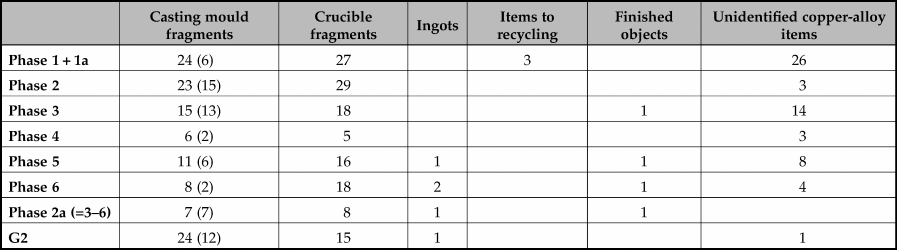
Casting-mould impressions provide the best evidence of the objects produced (Table 1). The diversity of production is notable and the mould fragments indicate the manufacture of a variety of objects. Evidence for non-ferrous metal working occurs sparsely during Phase 1 (c. 700–725), as is the case elsewhere in the emporium in this period (see Madsen Reference Madsen and Bencard1984, 79–83). The few mould fragments from this first phase bear impressions of keys and belt buckles (Frandsen & Jensen Reference Frandsen, Jensen and Feveile2006, 26–7, fig. 7.19). Finds of raw materials from this phase indicate recycling of imported items, including a small fragment of a Roman copper-alloy statue and two pieces from copper-alloy vessels (Frandsen & Jensen Reference Frandsen, Jensen and Feveile2006, 32), suggesting ad hoc supply networks.
Chronological distribution of finds relating to non-ferrous metalworking and copper-alloy finds at Sct Nicolajgade 8 arranged by phase. In brackets: number of casting moulds with impressions. Porous slag/sintered clay/sand is not included as it might relate to other fire-related activities. (Modified by the authors after Frandsen & Jensen Reference Frandsen, Jensen and Feveile2006, figs. 7.19, 7.21 & 7.26.)

Copper-alloy working is most clearly present during Phases 2–3 (the second and third quarter of the eighth century), including the contemporary contexts from Phase 2a in the eastern part of the excavation area, and these will be the focus of the discussion below. The subsequent Phase 4 has few finds relating to non-ferrous metalworking. From the end of Phase 5 and throughout Phase 6 (late eighth to early ninth century), a slight increase can be observed. A fragment of a casting mould from this phase bears the impression of a Berdal-type oval brooch (Frandsen & Jensen Reference Frandsen, Jensen and Feveile2006, fig. 7.19), which dates the end of the preserved stratigraphy to c. 800. The finds from the plot-separating area G2, in use from Phase 3 onwards, cannot be correlated with certainty to contemporary activities on the plots, and many of them are likely to belong to later, truncated phases (Frandsen & Jensen Reference Frandsen, Jensen and Feveile2006, 17). Casting-mould fragments indicate the deposition of non-ferrous metal working waste in this area from the first half of the ninth century, as moulds for Berdal-type brooches are well represented (Frandsen & Jensen Reference Frandsen, Jensen and Feveile2006, 26, fig. 7.19).
Thus, an overview of the material from Sct Nicolajgade 8 shows two main waves of production: an early phase (Phase 2, part of Phase 2a, and Phase 3) and a later phase (Phase 6 onwards), the latter showing a focus on the production of female jewellery, as seen in other well-studied contexts in Ribe. The early phase, however, allows a rare closer look at the organization of production in the mid eighth century.
Apart from objects relating to non-ferrous metal working, finds relating to other activities occur modestly in Phases 2, 2a and 3. They include a few (probably residual) finds relating to glass-bead manufacture, together with ceramic sherds, loom-weight fragments, bits of amber, coins (sceattas), some iron objects and sherds from glass beakers. Preservation conditions for iron are extremely poor, and only a few iron objects have been identified. A total of 14 nails were found in Phases 2, 2a and 3, four of which were of a length suitable for the fabrication of furniture (e.g. chests, hinges, or other bindings: Ottaway Reference Ottaway, Bencard, Rasmussen and Madsen2004, 109). An intriguing group of finds is represented by a number of metallurgical ceramics identified as Schmelzkugeln, i.e. containers for welding complex iron objects such as padlocks (Holback Reference Holback1999). They indicate that sophisticated ferrous metal working was practised along with the working of non-ferrous metal, perhaps even in the same workshop.
As no floor or fireplace was found, the assemblages are probably waste deposits from a workshop that was destroyed by subsequent activity or located outside the excavated area. The repeated occurrence of moulds for particular types of cast objects in several episodes of deposition indicates a heterogeneous production resulting from a single workshop. How long this production lasted, however, is unknown. Are we dealing with a few weeks of production, or activity over a number of years? Some fragments belonging to discrete casting moulds could be reassembled during post-excavation, but the large majority remained as individual finds. A number of moulds could not be identified with known object types, and we are unable to establish their use. To do so requires effective ways to reconstruct objects from negative, partial impressions.
Light on the shadows: 3D laser scanning
Three-dimensional (3D) laser scanning has recently been introduced as a useful tool to study and reconstruct degraded mould impressions. It has previously been used for shape analysis of Viking-age brooches (Neiß et al. Reference Neiß, Wärmländer and Sholts2012; Reference Neiß, Wärmländer, Sholts and Hookk2013). Here, we used 3D modelling to examine mould fragments as part of our analysis of production in Ribe. We performed scans with a portable NextEngine laser scanner, using MeshLab to remove minor flaws from the models and for object analysis. To compare mould imprints, the model of the mould surface was in most cases turned inside out, producing a ‘virtual cast’ (Fig. 2).
Reconstructed mould and ‘virtual cast’ of the ‘mask’ object based on comparison of 3D laser scans of moulds excavated at Sct Nicolajgade 8, Ribe. (Graphics: M. Neiß.)

Before presenting the results, a few notes on the casting process are required. The clay moulds of the Ribe workshops were obtained by the so-called imprint method. The sequence of the work would have been as follows:
• The artisan presses a solid model (e.g. of wood or metal) into a lump of damp clay, producing an imprint
• The imprint is then used to cast either a wax copy (for further processing) or a metal copy (cf. Oldeberg Reference Oldeberg1966, 83)
• If the entire model is to be copied, the artisan leaves the model in the clay (which will become the first part of the mould), applies a release agent (e.g. grease) and covers the protruding model parts with a second layer of soft clay (which will become the second part of the mould)
• After drying, the two halves can be parted, the model extracted, and the mould prepared for casting.
Note that the second mould part copies not only the model, but also surface features from the first mould part. Experience shows that the imprint method will usually result in different thicknesses for each individual mould. As a result, the distance between the inner partition line and the outer mould surface will vary, both between one cast and the next, and within the same cast (i.e. in between the first and the second mould half). Clay moulds are one-time products, as the material is broken down during the firing, and the mould structure is easily destroyed when the metal object is revealed (Lønborg Reference Lønborg1998, 16–32, 111–15). Also note that fired mould fragments are very fragile and will erode quickly under poor preservation conditions (Pedersen Reference Pedersen2016, 98).
This leads to some source critical considerations on the limitations of 3D-based comparisons. First, damp clay forms are easily deformed, especially during imprint duplication. Second, many of our moulds suffer from surface erosion, whereby ‘virtual casting’ produces an enlarged volume and a somewhat blurred structure. Third, some fragmented moulds were reassembled with glue, which presumably led to small measurement discrepancies compared to their original models (which are often lost). To compensate for problem three, we have virtually split and reassembled all scans made from glued moulds, in hope of achieving greater accuracy within our comparisons. However, we were unable to compensate for potential measurement discrepancies caused by deformation and erosion (cf. Lønborg Reference Lønborg1994, 374; Reference Lønborg1998, 25f.).
Re-materializing casts
The Phase 2–3 workshop at Sct Nicolajgade 8 produced 31 fragments of casting moulds with impressions. Of these, 26 were identified by the excavators as pertaining to four recognizable types of objects: keys, belt buckles, strap-ends and the so-called ‘mask’ objects. Here, we applied 3D ‘virtual casts’ to reconstruct the cast objects and to compare each mould individually. As a result, we discuss properties of the cast object and present new parallels and functional identifications. This leads to a more precise evaluation of the structure of the assemblage and the scale of the production, and to a reassessment of the chronological relationship between the phases.
‘Mask’ objects
An intriguing group of products from the workshop is the group of so-called ‘mask’ objects (Fig. 2). The small (c. 36 mm long and c. 12 mm wide) elongated pieces consist of a vaulted, teardrop-shaped middle part, decorated as a human face or mask. There is a loop below the chin and a crest composed of two bird figures surrounding another loop above the face. The design corresponds to a group of ornaments found in Scandinavia and surrounding countries in the eighth–ninth centuries and is tentatively identified as the god Odin and his two ravens (cf. Helmbrecht Reference Helmbrecht2011, 140–46). The features of the face—with teardrop outline, round eyes and a prominent moustache—resemble other contemporary images in Ribe, including designs on strap-ends (see below) and the obverse images on early coins (the series X or Wodan/monster sceattas and KG 5–6 pennies: Feveile Reference Feveile2008).
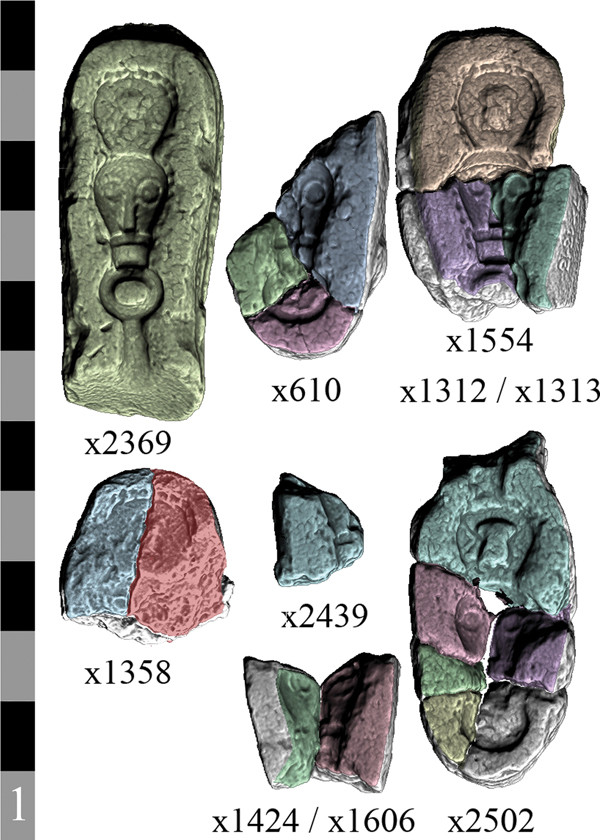
Previous studies identified 20 mould fragments from the workshop as pertaining to ‘mask’ objects (Feveile Reference Feveile2006c, vol. 2, table 15). The excavators reconstructed four obverse and three reverse mould sides, and offered one association between an obverse and a reverse, creating one complete mould (Frandsen & Jensen Reference Frandsen, Jensen and Feveile2006, 24). Our virtual analysis enables five new identifications of individual fragments as ‘mask’ objects, as well as one new refitting of a mould side. Most importantly, it offers four new matches between obverse and reverse mould sides (cf. Appendix 1). These associations were established through a number of 3D-based methods (Fig. 3). Most fragments show a breaking line that is typical for a two-part mould. As the line happens to coincide with the partition line between the obverse and reverse of the mould, a new strategy was needed to identify matching sides. We did this by producing virtual casts from mould obverses that also rendered the structure of the breaking line. These structures were then compared to the breaking line of the digitized mould reverses. Potential matches in the breaking lines were then confirmed by virtually merging those structures.
Reassembled fragments of at least six obverse moulds for ‘mask’ objects excavated at Sct Nicolajgade 8, Ribe. (Graphics: M. Neiß.)
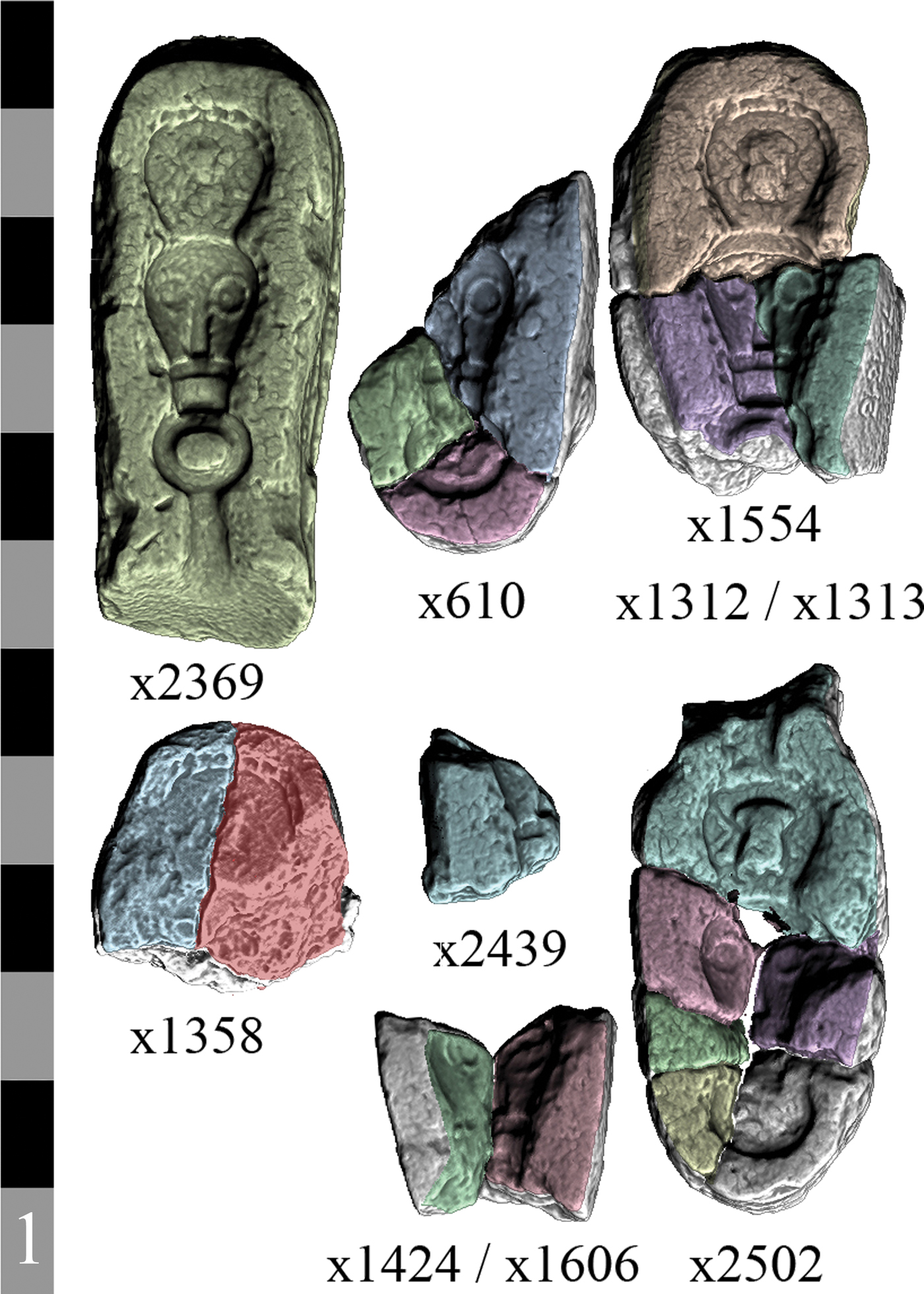
We identified 12 mould sides, six obverses and six reverses. The fact that more new reverses could be identified through virtual analysis shows the ability of the method to make use of details not readily visible to the naked eye—in contrast to the obverse, which displays richer ornamental details. While three or perhaps four complete (obverse+reverse) moulds could be reconstructed, the matching number of reverses and obverses suggests the existence of six complete moulds.
However, the function of the ‘mask’ objects remains unclear. Despite repeated searches, we have not identified any preserved metal object corresponding to these fittings, and previous attempts to identify their function were unsuccessful (Frandsen & Jensen Reference Frandsen, Jensen and Feveile2006, 24–5). The detailed virtual cast resulting from the 3D reconstruction of all known fragments and matching of both sides of the two-part moulds now offers a better basis for drawing comparisons (Fig. 2).
As the design may be assessed from the virtual cast, the flat, undecorated backside seems designed to be hidden against a flat surface, e.g. wood or leather. The flat edges suggest an object that would have been fixed rather than movable. There are no visible remains of cast pegs for a fastening mechanism. The thin (less than 2 mm thick) crest above the head could easily bend or break; hence, it would presumably have been designed to take only light pressure. The transition between the chin and the loop below the head is only slightly thicker (less than 2 mm). The topside of the loop appears to have been rounded in section, possibly allowing a freely moving object to be attached.
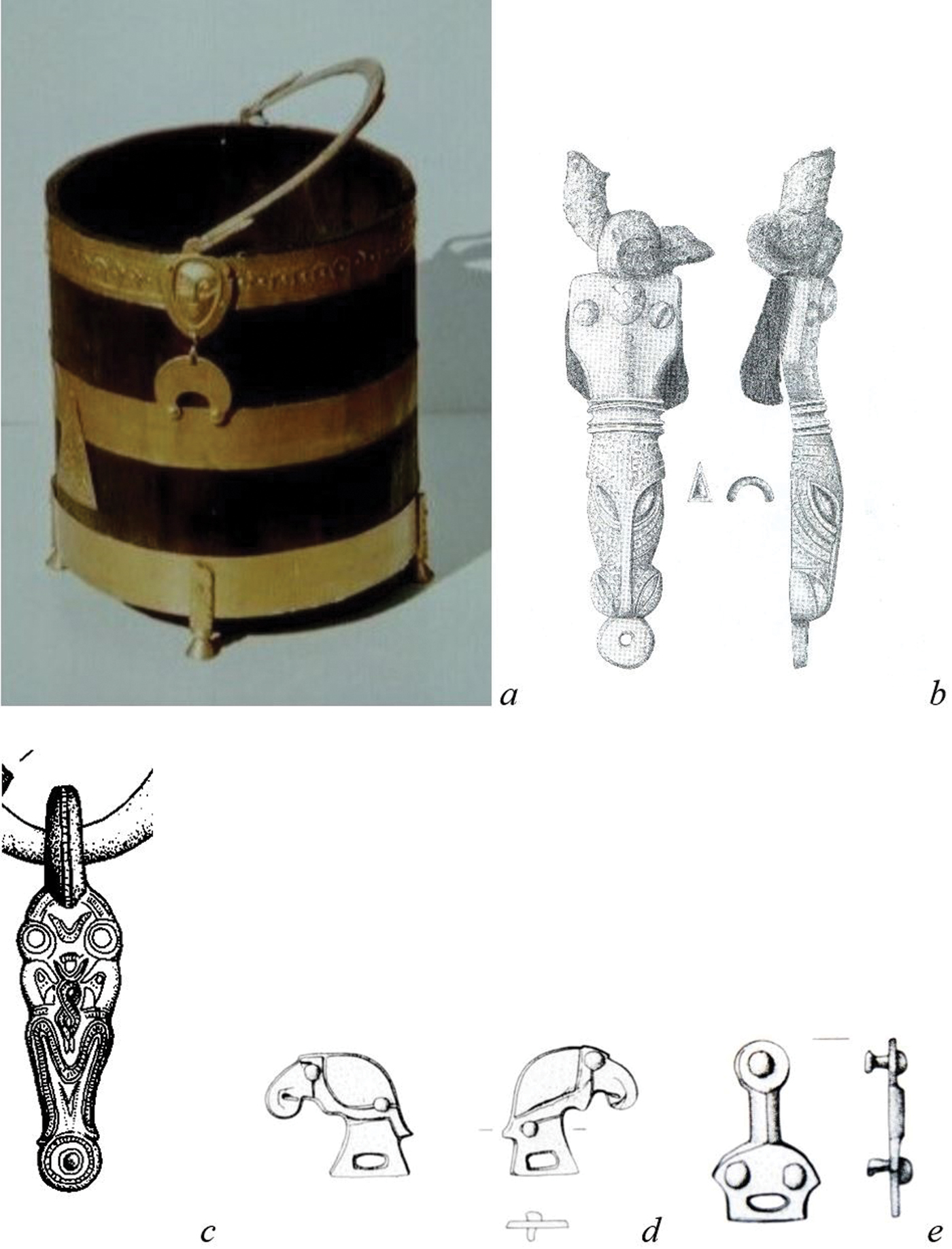
In light of parallel finds, we may consider four possible functions for the ‘mask’ objects. The first possibility is that they were used as fittings or hasps for caskets or chests (cf. also the occurrence of casting moulds for keys among our workshop debris). The small size of the objects renders this the least probable suggestion, and while remains of near-contemporary chests are known from Ribe (Feveile Reference Feveile and Feveile2006b, 282 & pls 61–63) and elsewhere in Scandinavia (e.g. Arbman Reference Arbman1940, figs. 259–72; Christensen et al. Reference Christensen, Ingstad and Myhre1992, 91), their fittings offer no convincing parallels for the ‘mask’ objects. A second option is that they could have served as escutcheons on a vessel, e.g. a bowl, bucket or drinking horn. Yet, while objects of comparable shape (e.g. Arbman Reference Arbman1940, fig. 203) and even design (Fig. 4a, showing the bucket fittings from Anglo-Saxon Fetcham: Cotton Reference Cotton1933) are noted, these are substantially larger than the ‘mask’ objects.
Comparisons for the ‘mask’ objects: (a) bucket fittings from Fetcham, England (Cotton Reference Cotton1933); (b) sixth-century strap mount from Högom, North Sweden (after Ramquist Reference Ramquist1992, 71); (c) seventh-century strap mount from Regensburg, Germany (after Oexle Reference Oexle1992, pl. 102); (d, e) sixth-century mounts from Altenerding 467 in Oberbayern (after Sage et al. Reference Sage, Helmuth, Ankner and Hundt1984, pl. 63).

A group of copper-alloy fittings for horse bridles also have a similar morphology of a flat object attached to a leather strap with a sturdy ring in one end, made to hold a movable cord or metal ring. Some of these objects share ornamental traits with the ‘mask’ objects from Ribe, e.g. strap mounts from Högom, north Sweden, and Regensburg, Germany (Fig. 4b–c; Oexle Reference Oexle1992, 190, pl. 102 & kat. no. 222; Ramquist Reference Ramquist1992, 71; compare also with the shape of ornaments from the third-century ad weapon sacrifice at Illerup, Denmark: von Carnap-Bornheim & Ilkjær Reference von Carnap-Bornheim and Ilkjær1996, 33 & pl. 20). In all cases, however, the objects are almost twice the size of the Ribe mounts. As previously noted, the ‘mask’ objects were not/unlikely suitable as movable objects.
Finally, and most convincingly, the objects may be compared to mounts fastened to a belt set as strap fittings or attachment points for loose hanging objects. They are similar in function to mounts from Altenerding grave 467 in Oberbayern, from a belt set, which are also a combination of a strap-end and a buckle from a bag, and can be compared to the Ribe moulds (Fig. 4d and 4e: Sage et al. Reference Sage, Helmuth, Ankner and Hundt1984, pl. 63).
Buckles and strap-ends
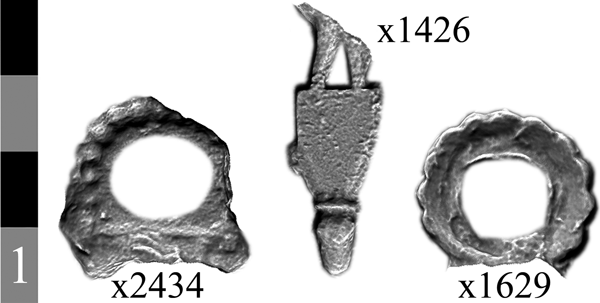
Mould fragment x1426 was possibly used in a strap-end (Frandsen & Jensen Reference Frandsen, Jensen and Feveile2006, 26), as confirmed by 3D analyses. From the reconstructed impression, the obverse side of a strap-end emerged, with a crowning beast head at one end and a double sprue on the other (Fig. 5). The design of the beast head has contemporary regional parallels from the Rullstorf cemetery, near Hamburg (Gebers Reference Gebers2004). The length and width of the original cast was measured from the virtual cast (i.e. 24.7×10.6 mm). However, since one half of the mould was lost, we needed an alternative device to estimate the thickness of the original cast. As a first clue in the reconstruction process, we noted that the cone-shaped sprues that run along the mould partition line appeared to be split in half. This would indicate that the mould maker covered both sides of the original model evenly with casting clay (cf. above). Secondly, the average depth of the mould cavity varied between 1.7 mm at the trapezoid end and 2.8 mm at the beast's forehead. As strap-ends tend to be flat on the reverse (cf. Klindt-Jensen & Wilson Reference Klindt-Jensen and Wilson1965, pl. XXVII h), it is reasonable to assume that the thickness of the original cast was between 3.4 mm (i.e. 1.7 + 1.7 mm) and 5.5 mm (i.e. 2.8 + 1.7 mm).
‘Virtual casts’ based on laser-scanned moulds for strap-end and buckles excavated at Sct Nicolajgade 8. (Graphics: M. Neiß.)

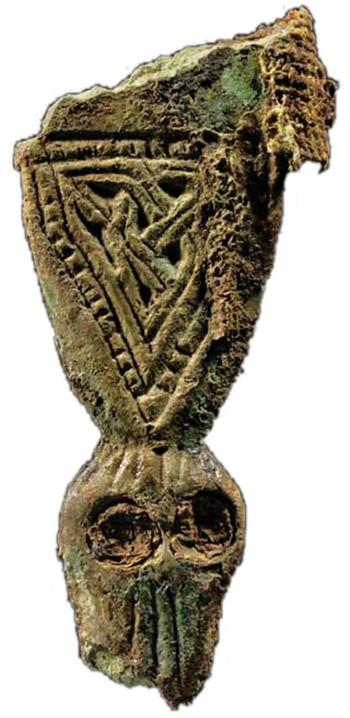
As with the ‘mask’ object, there had been no parallels for the animal-head strap-end for a long time. Then an example was discovered in 2015 in an eighth-century grave excavated at Rosen Allé in Ribe (Fig. 6: unpublished excavation SJM 348). This piece was found in the pelvic region of an inhumation burial and showed traces of attached leather and remains of cloth; hence, it was almost certainly part of a waist belt. The piece cast in the workshop at Sct Nicolajgade 8 was almost identical in shape; however, it was significantly smaller (the grave find was c. 45 mm long and 20 mm wide), and was likely not used for exactly the same purpose. Its size would suggest a use with slim straps, as in a bag, cf. the find in Altenerding grave 467 (see above).
Comparison for the strap-end mould excavated at Sct Nicolajgade 8: the strap-end excavated 2015 from Rosen Allé, Ribe. (Photograph: Moesgaard Photolab.)

The finds also comprised two mould fragments with imprints of what seemed to be buckle obverses, each with a beaded rim décor (Fig. 5). The larger fragment (x2434) is 21.7×22.8 mm (with a cavity depth of 3 mm), and the smaller one (x1629) is 19.9×23.4 mm (with a cavity depth of 0.8 mm). In both cases, the breaking line indicated a two-part mould. Unfortunately, without knowing the exact position of the mould partition line, we were unable to estimate the thickness of the original casts. The internal width of the buckles would originally have been c. 15 mm—just wide enough to make a good match with the animal-head strap-ends discussed above. We therefore suggest that the two types of objects belonged together, presumably as parts of a small, adjustable strap.
Key parts
Three mould fragments were previously identified as parts of key handles (x175 & x1367) and a key bit (x1549: Frandsen & Jensen Reference Frandsen, Jensen and Feveile2006, 25). 3D laser scanning enabled us to identify a new key shaft imprint (x1347), and we now know that the fragments likely derived from the same mould (Fig. 7).
Reassembled fragments of two moulds for keys excavated at Sct Nicolajgade 8 and, for comparison, key from Sct Nicolajgade 8 x2370. (Graphics: M. Neiß; photograph: Museum of South West Jutland.)
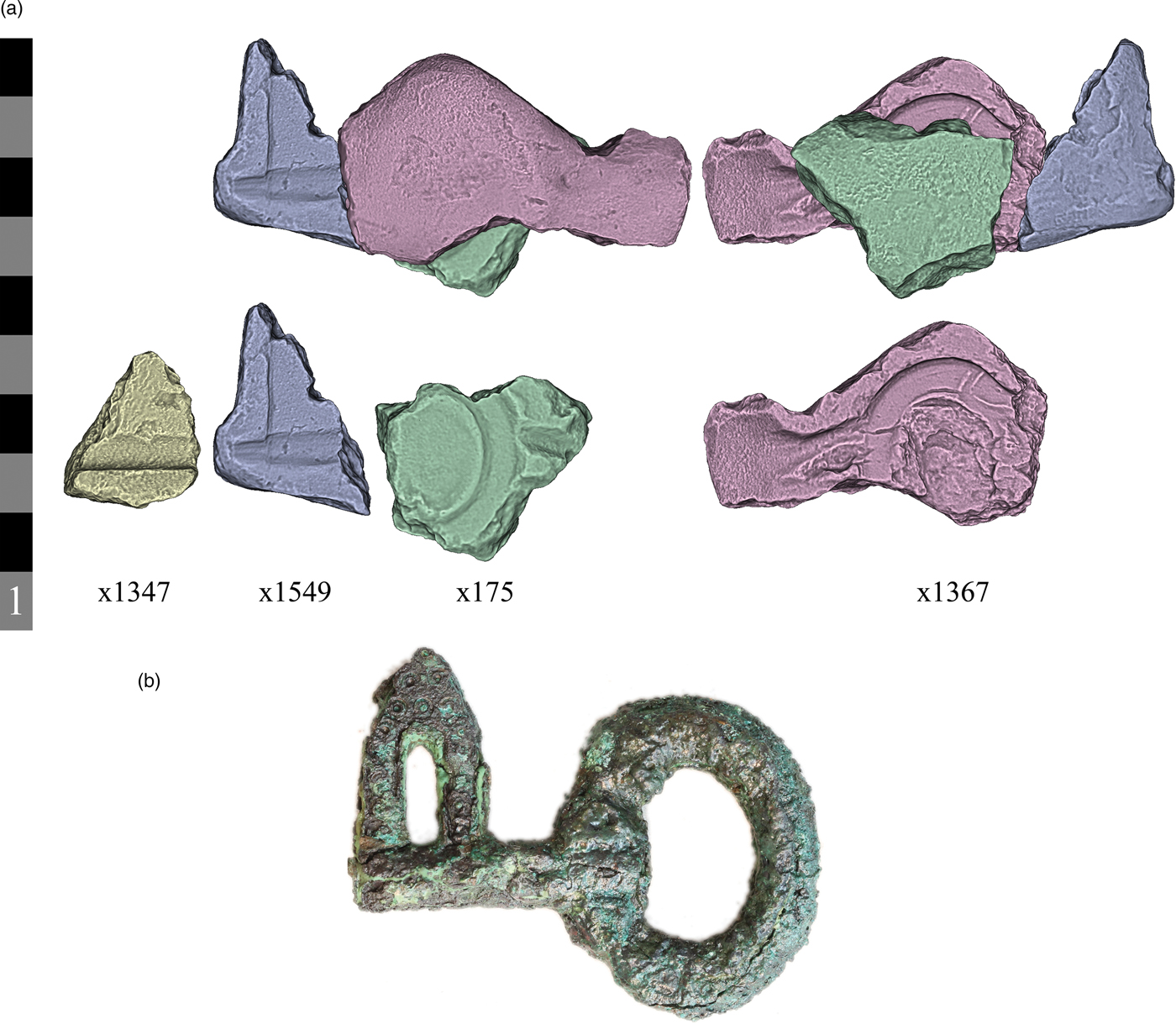
We did this by virtually aligning x175 and x1549, which revealed corresponding shapes: both the inner mould cavities and the outer surfaces fall in line with their counterparts. This match is unlikely to have occurred if the fragments had derived from different moulds (cf. above on mould making). The 3D model provided a clearer picture of the key bit, which is pointed, like a key found in the same excavation; x2370 (cf. Fig. 7). 3D measurements of the newly identified shaft imprint also showed that it aligns closely with the key from the excavation. As with the ‘mask’ moulds above, given that the second part of a two-part mould copies features from the first part, we were able to demonstrate that our key handle impressions x175 and x1367 derive from the same mould.
Chronology and scale of production
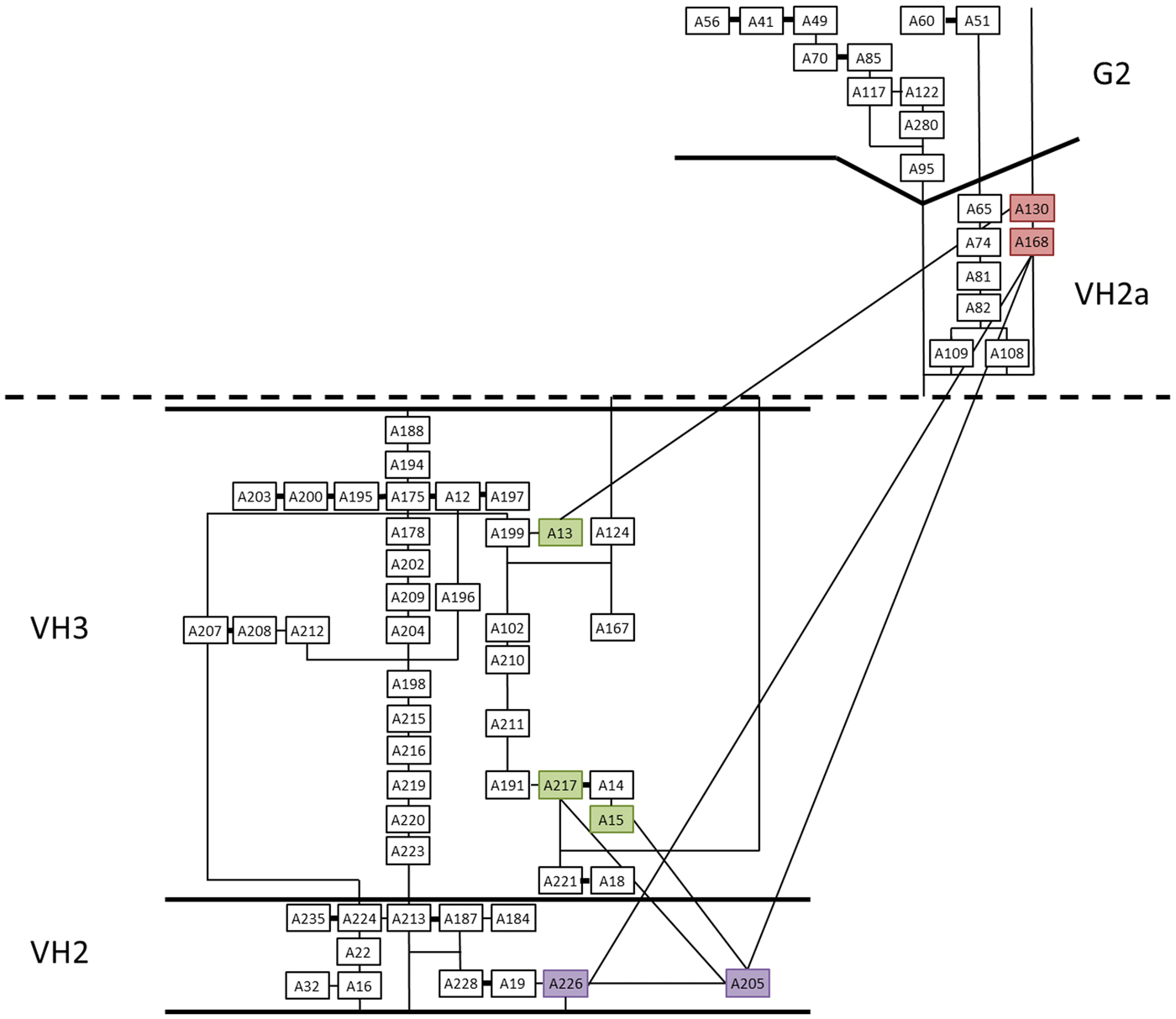
By using 3D-based methods, we are able to establish commonalities between mould fragments, which turn out to have been derived from a few original casts. Interestingly, the fragments involved do not only come from different excavation contexts, but from contexts assigned to different Phases (Fig. 8). This has important implications for our understanding of the temporary nature of the production process. As mentioned earlier, none of the deposits with finds relating to non-ferrous metal working could be identified with certainty as a working area; instead, they probably represent episode(s) of waste deposition/accumulation in connection with episode(s) of production. The many associations established between the 31 preserved fragments with impressions show that we are dealing with a rather small set of original casts. Including fragments without impressions, the total number of casting-mould fragments from Phases 2, 2a and 3 is 40. And, as we have seen, it is often possible to reassemble complete moulds based on three to five fragments. Furthermore, the find assemblages that have yielded casting-mould fragments are quite similar in composition, i.e. dominated by artefacts relating to non-ferrous metal working. We are thus likely dealing with a single, short-lived, specialized workshop, which produced a wide variety of objects. This already seemed plausible due to the presence of mould fragments for various objects in individual contexts, but it is now confirmed by the fact that moulds for two different objects (’mask’ and key) follow the same pattern of deposition, implying that they were produced and discarded in the same episode of production.
The fragments used to reassemble moulds for the ‘mask’ objects and for the key have been found in distinct archaeological contexts. The number of contexts with reassembled fragments is small and the contexts tend to be in close stratigraphic relation, but they have been attributed by the excavators as belonging to different site-phases in the published matrix. (Graphics: S. Croix.)

This conclusion is surprising in light of the established chronology of the site. Phase 2 is dated to c. 725–760 (Feveile Reference Feveile and Feveile2006a, 15; Feveile & Jensen Reference Feveile, Jensen and Feveile2006, 124–30). Phases 3 and 2a are not as precisely dated, but the material considered in this study is assumed to belong to the earliest part of the period c. 760–800. How are we to reconcile these facts?
As mentioned earlier, stratigraphic relations for these phases are not always clear. Phase 2 has been a conundrum since the earliest excavations at the site in the 1970s, when it was described as a thick deposit, organically rich in some parts and highly mineralized in others (Feveile Reference Feveile and Feveile2006a, 77–8), making it difficult to separate the stratigraphic units with any certainty. This also meant it was difficult to draw connections between the contexts excavated during the trial excavation in 1985 (A13, A15) and those excavated during the main excavation in 1986.
Drawing on the original documentation (Antikvarisk Samling Journal nr. 7, notebook 1 and 2), the succession of deposits should appear as follows: A205–A226 > A130 (Phase 2 and Phase 2a) >> A15 > A217 > A13 (Phase 3). This does not fit the contemporaneity implied by the moulds reassembled based on fragments from these different contexts. The relatively good state of preservation characterizing the mould fragments indicates that redeposition must have occurred only to a limited extent. Therefore, movement of finds between phases seems unlikely, and it cannot be the cause of the chronological contradictions which appear from the reassembling of fragments. Our results suggest that what was thought to be plot 2 (vh2a) was actually part of plot 1, and that the established site-phases are problematic. We can probably attribute the inconsistencies between the stratigraphy, chronology and the very short episode of production observed here to preservation conditions.
Craft collaborations and urbanization
Reassessment of the Sct Nicolajgade 8 workshop has produced a substantially clearer image of this rare episode of early medieval urban production. Studying craft technology based on 3D laser scanning allows us to revaluate the scale and duration of activity, and the details of site-formation processes. This in turn provides a new view on the nature of trade and urban development implied by that process.
At some point, in the mid eighth century, a skilled artisan set up a workshop in Ribe to produce cast keys, strap-ends, buckles and fittings from copper alloy. The scale of this copper-alloy work may have been limited, given the proportion of mould fragments that could either be refitted or have been shown to derive from impressions of the same model. Objects of gold were also cast. Delicate iron objects, presumably padlocks, were welded, either in the same workshop or nearby, as shown by the finds of Schmelzkugeln and the clay packages for welding. The impressions of the cast objects show a high level of technical proficiency as well as artistic skill. The production thus bears the hallmark of a highly trained and versatile practitioner or practitioners.
The deposits containing waste from non-ferrous metalworking include only small amounts of finds relating to other craft activities or domestic life. Finds relating to other crafts (glass-bead manufacture, amber working and comb manufacture) are represented in contexts that are stratigraphically more closely related to deposits associated with non-ferrous metal working. However, they are not present in any significant concentration which would indicate clear workshop activity. The metal worker thus appears to have been a specialist in one particular craft, rather than a generalist.
The 31 mould fragments with impressions of cast objects are evidence of the production of at least one strap-end, two buckles, one key and six ‘mask’ objects. The small buckles, strap-ends and ‘mask’ objects were apparently all intended to be fixed onto leather straps. They could have served a variety of purposes, but given their small size and association, the most plausible explanation is that all pieces represent fittings for belts or possibly horse harnesses.
The task of putting together a high-quality belt or horse harness required numerous purpose-made objects of iron, non-ferrous metal and select leather, as well as skills to adapt all of these to a common end. Likewise, a key was only a useful tool if accompanied by a matching lock and an object onto which the two were fitted, in order to lock and unlock. Constructing a lock from many carefully shaped and welded pieces of iron called for the skills of a highly trained blacksmith. As noted above, Ribe presents evidence for both the manufacture of built-in locks and padlocks. Furthermore, it is reasonable to assume that the lock (in particular a built-in lock) was constructed together with the chest or casket for which it was intended. Thus, in addition to the skills of a blacksmith and a non-ferrous metal worker, we may add those of a carpenter.
Contemporary finds from other excavations in Ribe with a similar combination of casting moulds, featuring (among others) early oval brooches, keys, pins and ‘mask’ objects, support our observations at Sct Nicolajgade 8 (Feveile & Jensen Reference Feveile, Jensen and Feveile2006, figs. 9.56–9.68, 9.70–9.73, 9.75–9.77; Madsen Reference Madsen and Bencard1984, 79–83). Furthermore, tools and workshop debris attest to the presence of other specialized craftspeople including blacksmiths, carpenters, comb makers, glass workers, etc., and a diverse range of workshops on one site (Bencard & Jørgensen Reference Bencard, Jørgensen, Bencard, Jørgensen and Madsen1990, 144). Evidence suggests that they were already working in a permanently settled community, as opposed to a seasonal market, by the mid eighth century (Croix Reference Croix2015).
Few objects produced here would be functional on their own, but were parts of composite objects that required other parts worked from a range of materials. In this respect, the setting and interactions of the eighth-century workshop was different from at least some of those producing copper-alloy dress ornaments in Ribe two or three generations later. The early production involved a complex chaîne opératoire connecting a number of different crafts and materials. The products—quality dress items, horse-gear, locked chests, etc.—would have been in demand from a broad section of the rural population in southern Scandinavia. Many potential consumers would have been unable to afford to maintain private groups of craftspeople, of the type that might have been available to lords and magnates. So the urban market would have made complex, composite objects of specialist manufacture available to groups who might not otherwise have had access to such things.
The collaboration between specialized artisans in emporia has been noted elsewhere. Henderson (Reference Henderson2000, 76) suggested that shared facilities, raw materials and fuel supplies contributed to the co-location of pyrotechnical crafts in emporia. Hodges (Reference Hodges2000, 81–2) points to the ‘interdependent, multi-craft activities’ in both Hamwic and Ribe and explains this as a result of an organizing authority. Yet, as suggested here, this pattern can in fact be predicated on the multi-craft nature of the intended products.
The réseau opératoire of urbanism
The processes of metal casting as described here represent a highly specialized craft, and it appears unlikely that the average artisan would have been able to specialize equally in other crafts, such as tanning, coopering or woodworking. Therefore, it is a reasonable assumption that complex multi-material products, such as belts, bridles, buckets and chests, were constructed through joint ventures between multiple craft specialists, rather than by a single ‘jack of all trades’. In other words, the production of complex artefacts did not take place in one operational sequence, but rather within a larger operational network.
The réseau opératoire, the interlocking, co-located, skilled crafts required in order to produce objects, along with the networks of raw material supply and access to consumers which enabled these to function, might explain why production attracted a permanent population to a trading site such as Ribe, which might not otherwise have developed beyond seasonal fairs. Unlike artisans operating jointly in an urban community, an itinerant craftsperson working at a seasonal site might not be able to depend on other specialists for the production of complex, composite objects like high-standard harness, saddles, caskets, or dress sets.
The interdependence of crafts may thus have had a more direct implication for the development of urbanism than simply to ‘rescue’ specialists by affording them social protection or providing them with access to raw materials and markets (cf. Childe's model). The constraints and opportunities of the production network could be seen as a bottom-up driver, which would have stimulated the formation of urban communities through the distributed practice of the manufacturing process and its outcome. This process would gather the skills of many to produce an emerging opportunity, and democratize products which would otherwise have been exclusively available to those able to enforce coercive work. In other words, the entanglements of practices which arose as a necessary component of specialized craft production could explain why Ribe and other emporia began to develop into ‘relatively large, dense, and permanent settlements of socially heterogeneous individuals’ and develop ‘specialized functions in relation to a broad hinterland’ (Pirenne [1927] Reference Pirenne2014, 84; Wirth Reference Wirth1938, 8).
The approach presented in this study offers a way to explore how relational practices may contribute to the shaping of new social assemblages such as urban centres. Most approaches to understanding urbanization emphasize what is ‘already assembled’ (a city), and tend to ignore emerging urban centres such as early Ribe. By contrast, the focus on réseau opératoire highlights the process of urban genesis, which characterizes the first stages of the existence of the early medieval emporia.
It is also difficult to assess how such networks were formed and organized without heavy speculation. For example, the craftsmen ‘in residence’ could have taken measures to control the competition by only allowing in itinerant craftsmen, who specialized in a skill that they themselves lacked. This makes room for both permanent and itinerant craftsmen, where established networks could be renegotiated on an ad hoc basis, and it could also explain why our case study seems to illustrate rather short-term activity.
The ‘bottom-up’ and relational dynamics implied by this model emphasize what urban geographers call ‘the generative capacity’ of urban environments, i.e. the way in which urban life creates incentives ‘as a way of living with others’ (Latham Reference Latham and Hutchison2009, 892, our emphasis). The operational networks of the eighth-century workshops in Ribe are a case in point of how, by means of ‘specialisation, the unexpected mixtures, the concentration of resources, and the challenges of living in a dense, heterogeneous environment, urban life creates a productive dynamic that transcends the sum of its parts’ (Latham Reference Latham and Hutchison2009, 893). Despite a long tradition of research in urban studies (e.g. Jacobs 1969), this capacity has been neglected in archaeological research.
Parallels can be drawn elsewhere in the medieval world, where the role of craft-collaborations appears as a driver for emerging urbanization and permanent settlements, not just well-connected markets. For example, in Anglo-Saxon emporia in England, ‘the greater part of the economic activity’ is described as ‘the work of local artisans’ (Wickham Reference Wickham2009, 230). Similarly, written sources describe craft collaborations in medieval towns as part of the social practice of urbanity (Christophersen Reference Christophersen2015; Hybel & Poulsen Reference Hybel and Poulsen2007, 225).
Operational networks are insufficiently explored as a dynamic that stimulates the emergence of urban communities. Along with the ‘communication advantage of cities’ (Taylor Reference Taylor2012, 416), such networks point to factors that make urbanization more than ‘an appendage to the concept of “the state”’ (Cowgill Reference Cowgill2004, 526). The interdependence of heterogeneous practices offers a promising framework for exploring how and why urban characteristics emerged in such a diverse form and varied contexts throughout history.
Acknowledgements
This research was supported by a grant from the Danish National Research Foundation (DNRF grant no. 119) and by a Danish Council for Independent Research Sapere Aude research grant for the project ‘Entrepot—Maritime Networks Urbanism in the Early Medieval World’. Further support was obtained from Gästrike-Hälsinge nation (GW Ekmans stipendium), The Helge Ax:son Johnson Foundation, The Norden Association (Helsingborgsfirmaet Evers & Co:s fond, Svensk-danska kulturfonden), The Nordic Council (Fondet for Dansk-Svensk Samarbejde), The Royal Gustavus Adolphus Academy, and Uplands nation (Doris & Gustaf Holmgrens stipendium, Bertha och Idolf Rosengren stipendium). We wish to thank the Museum of South West Jutland for access to the materials and Mette Højmark Søvsø and Morten Søvsø for generous assistance in the analyses. We are grateful to Claus Feveile and anonymous peer reviewers for valuable comments on the draft and to Catherine Jex for language revision.
Appendix 1
Associations between different ‘mask’ mould fragments. !=certain association.? = tentative association

Appendix 2
List of single fragments, refitting of mould-sides, and obverse/reverse matches through virtual analysis—new identifications
New fragment identifications
1) x260 (1 fragment) (=reverse)
2) x1251 (1 fragment) (=reverse)
3) x1358 (3 fragments) (=obverse)
4) x2439 (1 fragment) (=reverse)
5) x-nr ? (1 fragment) (=obverse)
New refitting
1) x1358 + x1424/x1606 (=obverse)
New obverse/reverse matches
1) x1251 (=reverse) for x1312/x1313/x1554 (=obverse) [mistakenly named x1313 in Feveile 2006c, table 15]
2) x2502 (= obverse) for x260 (= reverse)
3) x610 (= obverse) for x1573 (= reverse) [uncertain, as x610 also fits extremely well with x1313]
4) x-nr? (=obverse) + x2439 (= reverse) [uncertain]