Introduction
Global philanthropic and aid organizations believe they have a solution for Africa’s development and food insecurity woes: high-input agriculture combined with market integration. If one accepts their analysis, then African small-scale subsistence farmers represent a developmental hurdle to be overcome. Furthermore, female farmers, who are often characterized as underproductive, destined to a life of poverty, and implicitly responsible for the continent’s unacceptably high levels of food insecurity, are ground zero for the New Green Revolution for Africa (GR4A). GR4A advocates argue that better incorporation into the global food economy can be achieved via a value chain approach (Sanchez et al. Reference Sanchez, Denning and Nziguheba2009; Otsuka & Larson Reference Otsuka and Larson2013). While value chains are often imagined as inherently market driven, well-orchestrated, linear connections between input suppliers, farmers, agroprocessors, wholesalers, and retailers, the reality is often much messier.
This study focuses on a rice commercialization project supported by the Alliance for a Green Revolution in Africa (AGRA) (hereafter known as the project), which has sought to improve the rice value chain and thereby improve household food security and nutrition in Southwestern Burkina Faso by working to build links between rice wholesalers, agroprocessors, and farmers. This article explores the characteristics and nature of this GR4A value chain, the degree to which it is impacting the food security and nutrition of participating women, and the influence of village-level gender dynamics on project outcomes. The study’s findings are based on semi-structured interviews with key informants, as well as food security and dietary diversity surveys conducted both during the hungry season and after the harvest, with female rice farmers in 2016 and 2017.
Based on our findings, we argue that GR4A food security advocates are facilitating change in Burkina Faso, but these efforts have scarcely impacted the food security and dietary diversity of the rural poor and women to date. We observe that the attention of project staff to GR4A activities increases as one moves away from rural communities and up the value chain. While private sector actors are central to the GR4A, their presence and engagement must often be orchestrated by donors rather than unfolding naturally via the “invisible hand” of the market. As such, the GR4A in Burkina Faso is often focused on building demand, constructing markets, and persuading people to behave in a certain way, which is reminiscent of colonial-era efforts to introduce capitalist rationality as a learned behavior (Scott Reference Scott1976; Bassett Reference Bassett2001). The influence of agronomists and plant breeders pervades the GR4A rice initiative in Burkina Faso. Despite a lack of demand from farmers and consumers, using certified seed, pushing for standardization, and developing a high-quality Burkina rice are paramount to the program, suggesting that this is a quintessential “modernization” project above all else (Tripp Reference Tripp2001). Despite the project’s discursive attention to gender and awareness of the centrality of women to revitalizing African agriculture, the project’s uniform implementation across the several different cultural environments has led to highly variable outcomes for the participating female farmers. This suggests that the focus on gender, and nutrition also for that matter, is an add-on at best. We spend the rest of this article contextualizing the study in the scholarly literature, offering relevant background information on Burkina Faso, explaining our research methodology, and sharing our findings. We conclude with implications for scholarly and policy debates.
Context in the literature
While funding for international agricultural development languished on the back burner for several decades, the situation shifted dramatically after the global food crisis of 2007–2008 and the associated social unrest (Giller et al. Reference Giller, Andersson, Sumberg, Thompson and Sumberg2017); and it will likely receive further donor interest in the wake of the food insecurity created by the COVID-19 pandemic (WFP 2020; Clapp & Moseley Reference Clapp and Moseley2020; Moseley & Battersby Reference Moseley and Battersby2020). Africa, in particular, garnered attention due to its relatively high levels of both food insecurity and child malnutrition. By the UN Food and Agriculture Organization’s most recent estimate, 821 million people suffer from chronic hunger (FAO 2019), and micronutrient deficiencies affect over two billion people worldwide. Africa South of the Sahara remains the region with the highest prevalence of undernourishment. There has been modest progress, but Africa lags behind other regions in reducing hunger rates. The latest statistics suggest that the number of hungry persons in Africa has increased due to insecurity and conflict as well as the lock-downs related to COVID-19 (WFP 2020).
Aiming to replicate what the first Green revolution had done for Asia and Latin America, the GR4A seeks to boost food production on the continent by introducing improved seeds and facilitating the use of inorganic fertilizers, herbicides, and insecticides (Toenniessen et al. Reference Toenniessen, Adesina and DeVries2008). This effort is supported by a host of donors, governmental actors, and corporations (Schurman Reference Schurman2017). Critical to this process is the increased commercialization of food crop production so that farmers have the revenue needed to purchase inputs. This commercialization is often conceptualized in terms of value chains, a linear set of connections between input suppliers, farmers, agroprocessors, wholesalers, and retailers (Sanchez et al. Reference Sanchez, Denning and Nziguheba2009; Otsuka & Larson Reference Otsuka and Larson2013). Private sector actors, such as seed companies, fertilizer manufacturers, and agroprecessors, are also seen as critical actors in this agricultural development paradigm (Holt-Giménez Reference Holt-Giménez2008; Gengenbach et al. Reference Gengenbach, Schurman, Bassett, Munro and Moseley2018). Donors also aim to scale up, or mass replicate, this approach across the continent (Moseley Reference Moseley and Sumberg2017). The value chain approach bills itself as a new conceptual model for agricultural development which effectively integrates the modernist ambitions of the first Green Revolution with the market orientation that reigned during subsequent decades of neoliberalism.
Female farmers represent a particular conundrum for the African agricultural development community. On the one hand, it is believed that women farmers produce the majority of food in Africa South of the Sahara (although this has been contested more recently, e.g., Palacios-Lopez et al. Reference Palacios-Lopez, Christiaensen and Kilic2017). In many areas of the region, women are clearly the major laborers in cropping systems, are largely responsible for food preparation, and play a huge role in child nutrition. On the other hand, despite the central role that women play in African farming and household nutrition, they have eluded notice, or been ignored (intentionally or not), by many agricultural development efforts. Some of this is not surprising, as many past efforts simply targeted men interested in cash cropping. However, several decades of gender-cognizant development efforts have done little to change this picture (Doss Reference Doss2000; Doss et al. Reference Doss, Meinzen-Dick, Quisumbing and Theis2018). Nevertheless, GR4A advocates have increasingly incorporated gender, along with a focus on female farmers, in their work (Negin et al. Reference Negin, Remans, Karuti and Fanzo2009).
African female farmers are simultaneously held up as an agricultural development problem and as the solution to unleashing Africa’s agricultural potential. Much of the work of presenting the female farmer’s role in market-based solutions has been discursive in nature. Organizations such as AGRA produce studies, reports, and films depicting African women as savvy commercial farmers who deftly navigate markets using cell phone technology, earning tidy profits which they use to provide nutritious food for their children, pay school fees, and invest in health care (AGRA 2017). As such, if the GR4A can sufficiently orchestrate value chains that enmesh female farmers in the appropriate markets, then they believe that they will unleash the agricultural potential of the continent, foster economic growth, and dramatically improve the nutrition of women and their families (Toenniessen et al. Reference Toenniessen, Adesina and DeVries2008).
Using the conceptual tools of political ecology and post-structuralism, critical scholars have increasingly questioned the simplistic assumptions undergirding the gendered GR4A approach and associated value chain model (Bezner-Kerr Reference Bezner-Kerr2012; Moseley et al. Reference Moseley, Schnurr and Bezner-Kerr2015; Gengenbach et al. Reference Gengenbach, Schurman, Bassett, Munro and Moseley2018). Value chains do not exist in a vacuum, but rather they are embedded in social networks involving actors with various motivations, capabilities, and constraints. Furthermore, there is a significant amount of feminist political ecology scholarship demonstrating that socially constructed gender roles have a profound impact on agricultural and food security outcomes in the African context (Carney Reference Carney1993; Schroeder Reference Schroeder1999; Rousseau, Gautier, & Wardell Reference Karen, Gautier and Wardell2015; Fehr & Moseley Reference Fehr and Moseley2019; Gengenbach Reference Gengenbach2019; Morgan & Moseley Reference Morgan and Moseley2020). While the gendered GR4A model is unfolding in various locations across the African continent with an intended set of outcomes, the reality is that we have a limited understanding of how this model is actually being received, acted upon, and potentially changed in the communities where it is being initiated. Furthermore, we don’t even know if this latest attempt at market expansion into African subsistence and smallholder farming represents a neoliberal revolution that will transform and marketize African farming, or if it is just another ill-conceived development effort that will have little to no effect on male and female African farmers who are too busy navigating other obstacles to give this effort any more attention than it deserves.
Background on Burkina Faso
Located in West Africa and land locked, Burkina Faso has a population of 19 million people, who are largely rural and 73 percent dependent on agriculture (FAO 2018). Despite the fact that 45 percent of the population live below the poverty line and 26 percent of children are underweight, the country has had reasonable governance capacity and economic performance, given its relatively meager resource base (Englebert Reference Englebert1996). Burkina Faso’s long-standing dictator, Blaise Compaore (in power 1987–2014) left power in 2014 in response to popular uprisings. The country subsequently held democratic elections in late 2015, with Roch Kaboré becoming the country’s new leader. Despite concerns that nothing has significantly changed from the former regime (Hagberg et al. Reference Hagberg, Kibora, Barry, Gnessi and Konkobo2017), Burkina Faso was attractive to international donors, given its commitment to democratic principles and its relative stability in a region plagued by insecurity and sporadic terrorism (Moseley & Hoffman Reference Moseley and Hoffman2017). Unfortunately, the security situation has degraded significantly since 2019, especially in the northern and eastern parts of the country (International Crisis Group 2020). However, the GR4A project has continued to function, as it has no expatriate staff and operates in the southwestern part of the country where terrorist attacks have been less frequent.
Burkina Faso has two distinct agricultural development traditions or histories. On the one hand, there is an agricultural development legacy privileging self-sufficiency, agroecology, and agroforestry that is sometimes associated with the short-lived Marxist regime of Thomas Sankara. Sankara ruled from 1983 to 1987, during the height of the Sahelian drought, and he made it a major priority to address soil degradation, help poor farmers, and improve agrarian self-sufficiency (Harsch Reference Harsch2014). Sankara’s efforts were continued by some members of the NGO community even after his death in a coup d’état in 1987 (Dembele Reference Dembele2013). For example, the Six-S movement, emphasizing local control and empowerment in addressing development and environmental degradation, dates from this time period (Lecompte & Krishna Reference Lecompte, Krishna, Krishna, Uphoff and Esman1997). On the other hand, Burkina also has an agricultural development history emphasizing cash crops, export orientation, and high external input approaches to farming. This approach was encouraged by the structural adjustment policies adopted by the Blaise Compaore regime, including the early adoption of Bt cotton (Dowd Reference Dowd2008; Schnurr Reference Schnurr2019). Following this plan, Burkina Faso was Africa’s leading exporter of cotton for several years running.
Today, Burkina Faso finds itself at somewhat of an agricultural crossroads, with the second or market-oriented agricultural tradition continuing to dominate. This dominance is supported by increasing donor interest in Burkina Faso following its democratic transition. This is not to suggest, however, that no concerns have been raised regarding the country’s market-oriented agricultural trajectory. One of the most significant shifts in recent years has been the government of Burkina Faso’s decision to abandon GMO or Bt cotton. The major reason for this action was the declining quality of Burkinabe cotton produced from Bt seeds (mainly due to decreasing fiber length), which was a problem for a country previously known for producing some of the highest quality cotton in the world (Dowd-Uribe & Schnurr Reference Dowd-Uribe and Schnurr2016; Luna & Dowd-Uribe Reference Luna and Dowd-Uribe2020). Another implicit critique of commercial agriculture is a problem known as the “Paradoxe des Hauts-Bassin” or the Upper Basin Paradox (Ruiz & Maugérard Reference Lourme-Ruiz and Maugérard2014). The Hauts-Bassin, or upper basin of the Mouhoun River, is a region in Southwestern Burkina Faso known for its high levels of cash crop production and wealth. Despite its wealth and greater levels of agricultural commercialization, this region also suffers from some of the highest levels of child malnutrition in the country. A similar paradox has been identified just across the border in neighboring Mali’s Sikasso region (Cooper & West Reference Cooper and West2017). These experiences suggest that new seed technologies often have their shortcomings, and that the path to improving household nutrition is more complicated than simply increasing the area devoted to commercial agriculture.
Burkina Faso is a portfolio 1 country for the Gates Foundation-funded Alliance for a Green Revolution in Africa (AGRA) and is supported by USAID’s Feed the Future Program. The Burkina Faso government, for its part, is also eager to increase domestic rice production. This concern rose following the global food crisis of 2007–2008, when increasing food prices, especially for rice, sparked food demonstrations across the region (Moseley et al. Reference Moseley, Carney and Becker2010; Berazneva & Lee Reference Berazneva and Lee2013; Engels Reference Engels2015). Spurred by a growing urban population, demand for rice continues to rise in Burkina Faso, yet the country only produces 30 percent of what it consumes (CARD 2019). It is estimated that some 324,000 smallhold farmers grow rice in Burkina Faso. Rice is the fourth most cultivated crop in the country, both in terms of land area and of production (Government of Burkina Faso 2011).
Research Methods
We employ a mixed method approach, which includes open-ended interviews with policy-makers and surveys with farmers, to analyze the international aid efforts in southwestern Burkina Faso that employ a value chain model to target female smallholder farmers growing rice. We specifically explore three key questions. First, what is the nature of the GR4A rice value chain in Burkina Faso? Second, to what degree does a GR4A Project impact the food security and dietary diversity of participating women? Third, how do gender roles influence the impacts of a GR4A rice project? Theoretically, our analysis is guided by feminist political ecology, a framework that is attentive to how socially constructed gender roles and gender politics shape peoples’ interactions with the resource base and influence the ways in which they experience environmental change and engage in agriculture (Carney Reference Carney1993; Rocheleau et al. Reference Rocheleau, Thomas-Slayter and Wangari1997; Schroeder Reference Schroeder1999; Nyantakyi-Frimpong Reference Nyantakyi-Frimpong2017; Fehr & Moseley Reference Fehr and Moseley2019).
This study focuses on an AGRA-supported GR4A rice commercialization project which has sought to improve the rice value chain and household food security and nutrition in Southwestern Burkina Faso by working to build links between rice wholesalers, agroprocessors, and farmers. The project is implemented by four organizations: 1) a lead consulting firm that coordinates the four implementing organizations and develops the rice market; 2) the public agronomic research service which develops new rice seeds; 3) an NGO that provides training to farmers; and 4) a farmer’s union that trains villagers on cooperative organization. In order to understand the GR4A approach, agricultural policy, and value chain dynamics in Burkina Faso, we conducted twenty-five semi-structured interviews with key informants up and down the rice value chain, including donors, project implementing personnel, ministry-level government officials, plant breeders, seed companies, agro-dealers, agro-processors, and grain merchants (Patton Reference Patton1990). These interviews occurred in 2016, 2017, and 2019 in Ouagadougou, Bobo Dioulasso, Bama, and Banfora. Initial interviews were undertaken with project officials, but then we used a “snowballing” technique to gain entrée to other key actors enmeshed in GR4A networks and the rice value chain.
In order to understand female farmer dynamics, we conducted baseline surveys in 2016 (in June/July) and two rounds of nutrition and food security surveys in 2017 (in June/July during the hungry season and November/December after the harvest) with 161 female rice farmers in southwestern Burkina Faso. The women farmers surveyed included: 86 women involved to varying degrees with the GR4A value chain project; 36 women living in a community with the GR4A value chain project but who were not project participants, and 39 women living in a community where no such project was occurring (this was our “control” group).Footnote 1 These 161 female rice farmers were spread across five different villages to the north and south of Bobo Dioulasso, Burkina Faso’s second largest city and a regional capital. The villages may be found on the map (Figure 1 below) and include (from north to south): Medina Coura, Seguere, Yeguere, Saki, and Siniena. The women farmers interviewed were selected in a quasi-random manner, with village leadership helping the research team identify potential interviewees who fell into the three categories discussed above (following which the team selected a random sample from this pool of possible informants). The research villages were selected with the help of the government agricultural research service. Eleven rice farming villages were initially visited in 2016, from which five were selected after village meetings. In selecting our research villages, the research team considered not only the presence or non-presence of a GR4A rice project but also year-round accessibility and security concerns. Of the five villages, Medina Coura (40 women) and Yeguere (50 women) were GR4A project villages, Saki (31 women) started out as a project village and was subsequently dropped, and Seguere (20 women) and Siniena (20 women) were non-project villages. Interviewees were dispersed across these five villages, based on the research design criteria of women farmers involved or not involved with a GR4A project (as outlined previously).
Location of Research Sites

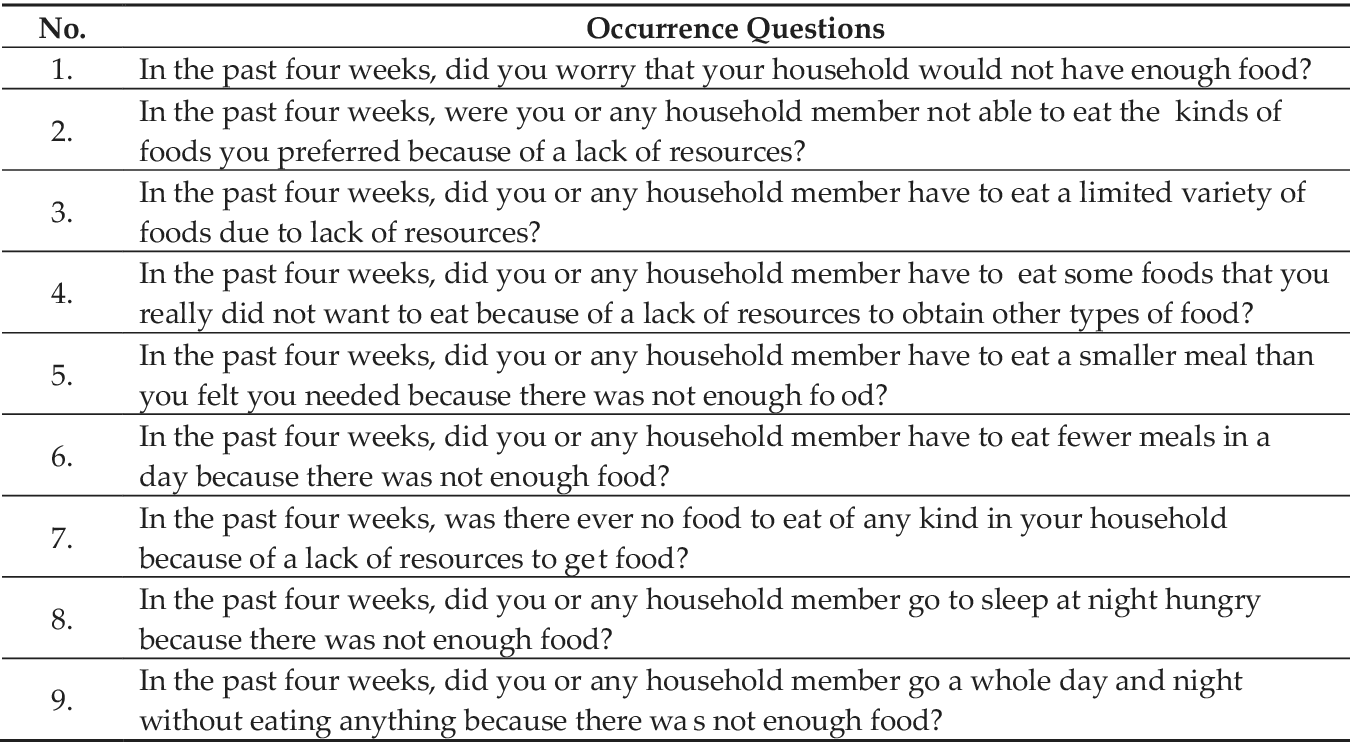
Baseline surveys included collecting information on a woman’s social standing, household size, crops farmed and sold, approach to rice farming, and wealth status. Wealth status (and the wealth groups used in this study) was determined from an inventory of household goods (e.g., livestock, plows, bikes, motorcycles, etc.) and local definitions of wealth. Regarding the dietary diversity and food security surveys, we used three tools developed by the FAO: 1) the household dietary diversity score (HDDS); 2) the minimum dietary diversity for women measure (MDDW); and 3) the household food insecurity access scale (HFIAS). In order to collect information for the first two measures, we asked for a 24-hour recall of all the foods consumed by the household, and then of all foods consumed by the woman in the reproductive age cohort being interviewed (with the two usually being similar). These foods were then categorized and scored according to the HDDS or MDDW. The HFIAS involves asking a series of questions concerning the last four weeks (see Figure 2). The HFIAS questions range—in increasing severity—from asking whether or not the interviewee was concerned about having sufficient food to inquiring as to the number of days in the four-week period when nothing was consumed over 24 hours. Each question is scored from 1 to 4. The answers to more dire questions are weighted more heavily than less dire ones. Higher total scores indicate greater food insecurity.
Household food insecurity access scale [HFIAS]
Notes: Each question is scored for 0–3, with 0 = never, 1 = rarely (once or twice in past four weeks), 2 = sometimes (three to ten times in past four weeks); and 3 = often (more than ten times in past four weeks). The household food insecurity access score, or HFIAS, (1 = food secure, 2 = mild food insecurity, 3 = moderate food insecurity and 4 = severe food insecurity) is tabulated based on the scores to the nine questions in Table 1. A score of 1 to 4 is based on the following: HFIA category = 1 if [(Q1a = 0 or Q1a = 1) and Q2 = 0 and Q3 = 0 and Q4 = 0 and Q5 = 0 and Q6 = 0 and Q7 = 0 and Q8 = 0 and Q9 = 0]; HFIA category = 2 if [(Q1a = 2 or Q1a = 3 or Q2a = 1 or Q2a = 2 or Q2a = 3 or Q3a = 1 or Q4a = 1) and Q5 = 0 and Q6 = 0 and Q7 = 0 and Q8 = 0 and Q9 = 0] HFIA category = 3 if [(Q3a = 2 or Q3a = 3 or Q4a = 2 or Q4a = 3 or Q5a = 1 or Q5a = 2 or Q6a = 1 or Q6a = 2) and Q7 = 0 and Q8 = 0 and Q9 = 0] HFIA category = 4 if [Q5a = 3 or Q6a = 3 or Q7a = 1 or Q7a = 2 or Q7a = 3 or Q8a = 1 or Q8a = 2 or Q8a = 3 or Q9a = 1 or Q9a = 2 or Q9a = 3].

Findings
This section is organized in terms of our three research questions. In addressing the first question, we mainly focus on value chain issues outside of the village. In exploring the second and third questions, we deal with village-level dynamics.
What is the nature of the GR4A rice value chain in Burkina Faso?
The GR4A value chain model calls for building linear connections between input providers, producers, agro-processors, and consumers, as a means of integrating farmers into markets, creating added value, fostering rural development, and building food and nutrition security. Unlike value chain projects in other parts of Africa (e.g. Bassett, Koné, & Pavlovic Reference Bassett, Koné and Pavlovic2018; Gengenbach Reference Gengenbach2019), the GR4A rice value chain project in Burkina Faso is primarily an import substitution effort, aiming to make Burkina Faso more self-sufficient with regard to rice production and less dependent on imports. Developing a capacity to export is not a part of the game plan and is even viewed as undesirable.
After undertaking market surveys in 2015 to determine the types of rice varieties and characteristics preferred by Burkinabe urban consumers (which is a critical step if locally produced rice is to supplant imported rice), the project began to actively build links between plant breeders, seed companies, herbicide dealers, agroprocessors (mainly millers and parboilers), and farmers. Even before the launching of the rice commercialization project that is the focus of this study, AGRA trained and supported plant breeders who work for the state agricultural research institute. These plant breeders now are tasked with creating improved seeds that will produce rice with qualities that correspond to the characteristics consumers identified in the project’s market research. These improved seeds are sold to private seed companies that work with a network of approved outgrowers to replicate the seed. Examples of these private Burkinabe companies include Neema Agricole du Faso SA (NAFASO) and Faso Agriculture (FAGRI). This certified seed is then either sold directly to farmers via local kiosks, or to agrodealers or agroprcessors who sell the seeds to the farmers (often on credit). Agrodealers and millers may also acquire other inputs (such as fertilizers and herbicides) and sell these to farmers. After the harvest, farmers are supposed to sell their rice to the millers and parboilers for processing (oftentimes on contract). The finished product is packaged and sold to retailers, which then sell the finished product to the public.
We present here five brief examples of actors who hold different positions in the GR4A rice value chain in Burkina Faso. Of note are the different levels of risk they are taking on, their varying levels of support from AGRA, and their relative power within the value chain. These examples are meant to be representative of the situations we encountered among a broader group at each level of the value chain. First, a plant breeder we interviewed had his graduate education funded by AGRA, as well as his ongoing rice seed development research with the state agricultural research institute. He knew most of the other actors in the value chain and was well networked with other AGRA grantees in Burkina Faso as well as in other African countries. His relative power lay in his ability to push out new seeds with certain specified characteristics. Second, NAFASO is a private seed company which began operating in 2008. The company was AGRA’s first grantee in Burkina Faso, and today it is a major private sector actor in the country and regionally. It oversees 1000 outgrowers who produce certified seed for local farmers and for export. While this was not always the case, the company’s financial position is now very solid, and its size means that it has a fair degree of power in the local as well as the regional seed markets. The company’s CEO is well networked with other AGRA grantees in and outside the country. Third, we looked at the herbicide industry, which has flourished at the village level in Burkina Faso as prices have dropped and farmers search for labor-saving technologies. We spoke with several village-level herbicide merchants (often farmers who sell herbicides on the side) who had entered the business in the last two or three years. We also spoke with an agrodealer who is importing pesticides into the country. He confirmed that demand for his product has skyrocketed. Unlike improved seeds, the proliferation of herbicide use is not dependent on the active support of AGRA.
The last two actors we cite as examples have somewhat more risk than the others. First, Mr Ouedraogo (not his real name) is a rice miller in the city of Bama just north of Bobo Dioulasso. He is a retired civil servant who has invested his life savings in his milling business. While he has benefitted from AGRA training, he has not received grant support from AGRA. He sources 1300 tonnes of paddy rice from fifteen farmer cooperatives for milling. He advances seeds and inputs to the farmers, who then sell their output to him. He is nervous about the financial risk (having invested heavily in a new building and machines) as well about having a consistent supply of quality rice. Second, Fatimata (not her real name) is a female rice farmer in a village supported by the project. Last year, she had a moderately successful harvest using improved seeds and inputs on her one quarter-ha plot. When the contracted rice miller came to town to purchase their harvest, he let them know that he could not pay them immediately but would have their money in two weeks’ time. With mounting debts and the need to pay school fees for her son, Fatimata opted to sell her rice to a local trader who could pay immediately but at a lower price. She feels frustrated with the project, and the project is annoyed with her and other women in her village who opted to go outside of the pre-ordained value chain. The power of Fatimata and other women in her village is to vote with their feet if the AGRA rice value chain is not working to their advantage.
As seen in the examples above, several of the actors we interviewed in the rice value chain (including plant breeders, seed company representatives, herbicide dealers, and agro-processors) had been trained by and/or received grants from AGRA. For example, even private seed companies, such as NAFASO and FAGRI, are indebted to AGRA for critical grants in the early stages of their development. As a result of this support, these actors were well networked among each other in Burkina Faso and with individuals in similar industries outside of the country (whom, with AGRA support, they often met and exchanged ideas with at international conferences). By dint of their high levels of education and their ability to birth new seed technologies, plant breeders seemed to play an outsized role in these assemblages. This dense AGRA-supported network has the effect of building and sustaining an epistemic community of individuals with a similar focus who support one another and influence agricultural and food security policy within the country. Several of the actors we interviewed in the value chain were highly enthusiastic about their work and were often effusive about the possibilities for improved seed and inputs to improve the entire rice production system.
Interestingly, few of the actors we interviewed used the French equivalent of “New Green Revolution for Africa” to describe the broader intellectual project with which they were engaged. In contrast, the term value chain, chaine de valeur in French, was used more frequently by our interviewees to describe what they were trying to build. We are not sure why this is, but the resemblance of the value chain language to the concept of a filière (a French term, translated as thread), long used to organize work on certain commodity crops in Burkina Faso and across Francophone West Africa, may explain a preference for this conceptual nomenclature (Raikes, Jensen, & Ponte Reference Raikes, Jensen and Ponte2000). In fact, one informant described the value chain idea as filière plus the private sector.
While free market thinking suggests that private sector actors will self-assemble in value chains to provide services and products, this is not happening in Burkina Faso with the rice value chain. Overcoming financial risk is a major concern of some private sector actors. This means that the state and the donors must actively support private sector actors and entice them with financial support to participate in the rice value chains. As noted in the examples above, one major exception to this generalization is herbicide dealers of all sizes, who are flourishing and who mostly have limited contact with AGRA. Interestingly, AGRA’s mitigation of risk is primarily aimed at actors higher up the value chain than for some millers and most farmers at the bottom. It is hard to know why this is, but it may be based on a belief that if you build the right chain, then farmers will naturally follow.
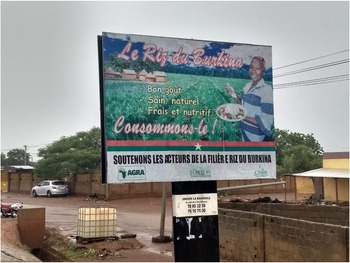
Unlike other GR4A value chain initiatives that target regional markets (such as cassava from Mozambique) or global markets (such as cashews from Côte d’Ivoire), Burkina Faso’s rice initiative is squarely focused on import substitution and boosting rice self-sufficiency within the country. What this means, then, is that the project must build a local market for Burkina rice, actively competing with imported rice from Asia, which is preferred by urban consumers because of price and specific attributes. This effort includes a local advertising campaign (see Figure 3, which features a roadside billboard encouraging consumers to eat local rice from Burkina Faso). The drive to build a market also requires that those who are running the project be hyper-vigilant with regard to quality, and consistent use of certified seed is the cornerstone of the effort. Anecdotal evidence suggests that it is difficult to find Burkina rice in most local shops in urban areas. Shopkeepers report that Burkina customers are not interested in local rice, although this may be due to the reputation of local rice predating the AGRA initiative. Interestingly, Malians seem to appreciate Burkina rice more than the Burkinabe.Footnote 2 Key informants reported that Malian rice traders come into Bama (the major rice growing area north of Bobo Dioulasso) to buy up rice and take it back to Mali. Interestingly, project representatives found this phenomenon irritating, because they thought it detracted from their efforts to make the country more self-sufficient in rice production (although others might suggest that this is not necessarily a problem if it boosts regional rice self-sufficiency). Parboiled Burkina rice, however, does seem to sell better to locals than other types of Burkina rice. Women’s groups have formed themselves into cooperatives to produce this product, often investing in buildings and equipment, in order to supply this market. Parboiling locks in certain nutrients and allows the rice to last longer and cook more quickly, all of which is appealing to customers. In sum, the market for locally produced rice in towns and urban areas is not great (Burkina rice accounts for 30 percent of rice consumed in the country), with the exception of parboiled rice. It could be that the market for Burkina rice is at an inflection point, but as of the rainy season of 2019, developing a robust market for the product still seemed some distance away.
Roadside billboard encouraging consumers to eat local rice from Burkina Faso. Source: author

To what degree does a GR4A Project impact the food security and dietary diversity of participating women?
We first examine the mechanics of the project, followed by an examination of its impacts on food security and nutrition. At the ground level, the idea was that agroprocessors and agrodealers would interact directly with rice farmers, who would grow the desired rice varieties. In some cases, the project works with rice farmers in irrigation schemes that have the ability to fully control water flow. In other cases, they work with farmers in wetland areas that only have partial control of water flow. This latter type of arrangement is commonly referred to as improved wetlands (or “bas fonds amenegés” in French). Within the study area, improvements were made to seasonal wetlands by one of two groups, either the Rainfed Rice Program (Programme Riz Pluvial [PRP]), supported by the Government of Taiwan, or the Agricultural Productivity and Food Security Project (Projet d’amélioration de la productivité agricole et de la sécurité alimentaire [PAPSA]), supported by the World Bank. In either case, the projects take an existing seasonal wetland used for traditional rice production, level it, divide it into quarter-hectare plots, and then build small water-control dikes with the help of village labor. These plots are then distributed among community members, of which roughly a third are women.
In terms of impact on household food security (using the HFIAS scale) and household and women’s dietary diversity (using HDDS and MDDW), the results in Figures 4 and 5 below are based on survey results from the period from June to August 2017 (during the rainy season) and the period from November to December 2017 (during the dry season). The timing of the first survey coincides with the hungry season in Burkina Faso, a time when labor demands are high and food stocks are running low before the next harvest, especially for poorer households. The second survey occurred after the harvest. Of the 161 women interviewed, 53.4 percent are involved with the Burkina Rice Commercialization project, 91.7 percent are married, 72.9 percent are in polygamous marriages, and 96.6 percent have children. The average number of children per woman was five, the median age was 39, and the average household size was 16.
Household Food Insecurity [HFIAS] and Dietary Diversity Scores [HDDS and MDDW] for Rainy and Dry Seasons in 2017 [n = 161]. Source: author surveys
Notes: For Household Dietary Diversity Score (HDDS) and Minimum Dietary Diversity Score for Women (MDDW), the results are the number of nutritional categories from which a household or women consumed food in the past 24 hours. For the Household Food Insecurity Access (HFIAS) Scale (1 = food secure, 2 = mild food insecurity, 3 = moderate food insecurity and 4 = severe food insecurity), the result is tabulated based on the scores to the nine questions in Figure 1.

Shifts in Household Food Insecurity [HFIAS] and Dietary Diversity Scores [HDDS and MDDW] for Rainy and Dry Seasons in 2017 [n = 161]. Source: author surveys

The findings suggest that the households surveyed are experiencing moderate food insecurity as per the HFIAS scale (3.12 for project households and 3.17 for non-project households in the rainy season, and 3.02 for project households and 3.03 for non-project households in the dry season). Since a decline in this score indicates an improvement, it is not surprising that scores are slightly better after the harvest and that the wealthy tend to do better than the poor. Most important to note is that the differences between project and non-project participants are not significant, and that the poor outside of the project may be doing better than the poor inside the project. More broadly, this higher level of food insecurity is important to note, given that this is the wealthiest part of Burkina Faso (and it is consistent with the Upper Basin Paradox discussed earlier). In contrast, the rainy season levels of dietary diversity (HDDS and MDDW) are relatively high (and here a higher score is better); these scores are likely influenced by an abundance of wild or foraged food available in the rainy season (Ickowitz et al. Reference Ickowitz, Powell, Salim and Sunderland2014). By way of comparison, these levels of dietary diversity are higher than what Hanson Nyantakyi-Frimpong (Reference Nyantakyi-Frimpong2017) found in nearby northwestern Ghana. These scores tend to decline for the poor in the dry season (when wild foods are less abundant) and increase for the wealthy (who may have more money to spend on sauce ingredients). Interestingly, there is no significant difference (in terms of household dietary diversity and women’s dietary diversity) between those households involved with the rice commercialization project and those not involved with the project.
This finding, that the GR4A project has had limited impact on food security and on the dietary diversity of participants, is not surprising, given that the reach and success of the project has been limited. Women involved with the project only get one quarter ha of land, and a number of confounding factors (poor rains, flooding, destruction by hippos, and commercialization issues) often limit harvests and sales. In terms of potential or anticipated impacts, these impacts should be understood in the context of women’s gendered responsibilities within households in this area. Given that women traditionally provide sauce ingredients for the meal (e.g., vegetables, fruit, meat, and nuts that go into the sauces that accompany a starch), and not staple grains, we might expect women’s involvement with such a project to have a greater impact on dietary diversity than on food security if women use the money earned from rice production to purchase sauce ingredients.
Qualitative information collected during the interview process suggests that other factors than project participation are often more important for determining household food security and dietary diversity. These factors include subsistence production, wild food collection, land tenure, and female agency. To the first point regarding subsistence production, food secure households in this area would historically have been grain self-sufficient, with the use of the market to purchase staples seen as a key indicator of food insecurity and insufficient grain stocks. In contrast, buying sauce ingredients, and certainly meat, would have been seen as a sign of wealth or well-being. As such, value chain approaches need to be cognizant of the ways in which rice is used in rural communities (which vary greatly). Is it a staple grain crop (in which case sales might undermine food security), or is it a luxury crop to be sold for income (in which case sales might improve dietary diversity if the income is spent on nutrition-dense foods)?
How does gender influence the impacts of a GR4A rice project?
Despite GR4A discourses acknowledging the importance of gender, socially constructed gender roles, opportunities, and constraints are constantly impinging on the outcomes of this project on the ground, often undermining its ability to positively influence the income, food security, and dietary diversity of the participating women. Women’s differential access to land, varying constraints within different ethnic groups, and specific economic needs all have an impact on project outcomes. These findings are consistent with the predictions of feminist political ecology outlined earlier in this article.
Women’s access to land varies across southwestern Burkina Faso, and it has a definite influence on the outcomes of the project. To the north of Bobo Dioulasso, we surveyed farmers in two communities dominated by Mossi people, who originated on the Mossi plateau further east in Burkina Faso (see Figure 1). The Bobo are the traditional land stewards in this area, and historically, this zone along the Mouhoun River (also known as the Black Volta) was lightly populated due to black fly infestation. (Long-term exposure to the black fly causes river blindness, or Onchocerciasis.) The United Nations (UN) began spraying in this area in the 1970s to eliminate the black fly and open it up to denser agricultural settlement, particularly for rice production in the flood plains along the Mouhoun River (Grace Reference Grace2013). In semi-structured interviews, village elders stated that the Mossi who came, while originally from Burkina’s Mossi Plateau, had previously spent thirty years in the Office du Niger in Mali (having been forcibly moved there under French colonial rule), and had significant expertise in rice production (Filipovish Reference Filipovish2001). They were invited by the Government of Burkina Faso to move into this area, but they were also compelled to move by the drought of the mid-1980s. The Bobo essentially ceded their land to the Mossi (although it was, in traditional terms, a loan). The Mossi males then effectively controlled all the land within the community, with women gaining access via their spouses or other male family members. When PAPSA improved the wetland area in advance of the GR4A project, they (PAPSA) redistributed the land, and women gained access to a share of the rice plots. The end result was that improvements to the rice lands actually enabled women to obtain increased access to land.
This situation to the north of Bobo Dioulasso may be compared with villages to the south of the city, where Dioula and Senufo communities are the original settlers and maintain control of the land. Here, most of the land is controlled by men, with the exception of the rice lands, which are traditionally controlled by women (with land being passed down from mother to daughter or mother to daughter-in-law). In this situation, when the rice lands were improved by the PAPSA or PRP projects, the land was taken away from the women and then redistributed to both men and women. The end result was that women, on the whole, suffered a loss of control over one of the few areas of farmland over which they had traditional tenure. (Feminist political ecologists Judith Carney [Reference Carney1993] and Richard Schroeder [Reference Schroeder1999] observed a similar situation with agricultural development projects in The Gambia). What these two examples suggest is that varying land tenure arrangements for women across the project zone have a huge impact on project outcomes, and the project model does not account for these differences. While the project may improve female farmers’ access to land in some cases, it actually reduces their tenure rights in others.
Women also face varying constraints across different ethnic groups within the project zone. In contrast to other ethnic complexes in southwestern Burkina Faso, Mossi communities are more patriarchal, and women tend to have less power than their counterparts in the Dioula or Senufo areas (Kevane & Gray Reference Kevane and Gray1999; Kevane & Wydick Reference Kevane and Wydick2001). Surveys in Mossi areas of the project zone revealed that women’s access to key farming inputs (such as seeds, fertilizers, and pesticides) was often more constrained relative to non-Mossi areas (acknowledging that women’s wealth and position relative to co-wives also influenced their access to resources). Mossi women could often only access these inputs via their husbands or another male relative, whereas Dioula or Senufo women could acquire them directly through the GR4A project or in the marketplace. In other words, the same rice commercialization project, operating in two different ethnic communities, tended to conform to different gender norms and expectations. Despite varying gender restrictions, the GR4A project does make it a point to include a certain number of women at each of its project sites. That said, when we were initially prospecting for research villages, we found that in some cases, women were only participating in name, and that their husbands effectively controlled the rice plots and revenues (although they used their wives’ labor on the plots).
Women also often have different economic needs than men. The rice value chains that are being developed by the GR4A project are often in competition with existing value chains, many of which are not legible to external actors, based on their informal nature. These may be pre-existing rice value chains, or they may be value chains for other products such as cashew nuts or shea. In either case, new value chains will only be successful if they meet the needs of the actors involved. In the case of the village of Medinacoura, the GR4A project had arranged for participating farmers to sell their rice harvest to a miller who extended them the improved variety of rice seeds (as identified by the project) on credit. But when it came time to sell, the villagers learned that they would not be paid for several weeks. Rather than wait to receive a higher price for their rice, the majority of rice farmers (and especially women) in Medinacoura decided to sell their rice to local traders who could pay in cash immediately, even though the price was lower. This was upsetting to the GR4A project and the miller, as they thought it was a breach of contract. The female farmers, on the other hand, were desperate for cash, as many had debt obligations and preferred to deal with traders who could compensate them more quickly. Some farmers also believed that they had been misled about the timing of the compensation.
Women also have more cautious attitudes toward credit than men, given their more marginal positions (Theriault, Smale, & Haider Reference Theriault, Smale and Haider2017). The GR4A project was intent on normalizing the use of credit as a way to encourage high external input agriculture. Seeds, fertilizers, and pesticides (particularly herbicides) must all be acquired at the beginning of the season, and many farmers do not have the resources to pay for these outright in cash. In interviews, female farmers shared that they were reluctant to take on debt, and therefore they carefully managed their cash outlays and the risks associated with credit. This gendered difference in attitudes toward agricultural credit is important. Most men have more financial assets and social capital to draw on than women, were they to find themselves in a difficult repayment situation.
Conclusion
Unlike some GR4A value chain initiatives in other African countries that are seeking to develop crops for export, Burkina Faso’s rice initiative is focused on boosting production for the local market. This effort to foster food self-sufficiency is laudable in many ways, because it has the potential to reduce Burkina Faso’s dependence on volatile global rice markets and is not attempting to develop new exports with an uncertain future. That said, the project has wrestled with other GR4A goals related to gender, food and nutrition security for the poor, and market engagement.
While the GR4A rice initiative is beginning to change the structure of the rice value chain in Burkina Faso, so far these efforts have scarcely impacted the food security and dietary diversity of most poor female farmers. While these results are specific to Burkina Faso, scholars using the same study design in Côte d’Ivoire and Mozambique have seen similar results (Bassett et al. Reference Bassett, Koné and Pavlovic2018; Gengenbach Reference Gengenbach2019). Other scholars have also found limited food security and nutrition impacts of the GR4A value chain approach in other African countries (Nyantakyi-Frimpong Reference Nyantakyi-Frimpong2015; Wise Reference Wise2020). Although little has changed in terms of food and nutrition security outcomes at the village level, the effort and investment in GR4A activities increases as one moves away from rural communities and up the value chain. Seed development, seed replication, and rice market development all receive significant attention, whereas improving farmer food security and dietary diversity appears to be an afterthought. This suggests that not all actors in value chain development initiatives are treated equally, as power and politics influence the distribution of resources to different actors within these programs.
The Burkina Faso GR4A rice initiative is packaged and sold in the language of the free market and entrepreneurship, yet there is much about the project to suggest that it is an old-fashioned, top-down modernization effort. Private sector actors are central to the GR4A rice value chain, but their participation, and even their existence in some cases, is heavily supported by the GR4A rice commercialization project and associated funding from AGRA. The influence of agronomists and plant breeders pervades the effort and is reflected in the paramount importance given to improved seeds. Quite understandably, these initiatives are received politely but warily by a population of small farmers, and especially female farmers, that has long sought to manage risk in a highly variable climatic and economic environment. Small millers are also concerned about the risk of participating in this new value chain without some protections. In contrast to other value chain actors, plant breeders have the most direct access to AGRA and other donors, and thus they are able to shape the design of the programs and benefit from funding. Despite a lack of demand from farmers and consumers, using certified seed, pushing for standardization, and developing a high-quality Burkina rice is seen as the cornerstone of an effort to make Burkina Faso more self-sufficient with regard to rice production. Ironically, some of the rice that is being produced is snatched up by Malian traders for export because of a lackluster Burkina market for the product. Like colonial-era initiatives to introduce commercial agriculture and market capitalism, the GR4A is a postcolonial reprise of these same efforts to teach and disseminate a capitalist rationality. This neocolonial effort to expand capitalism on the periphery is revealing in at least two ways. First, it suggests that markets and value chains just don’t happen, but they must be constructed. Second, what we think of as capitalist expansion on the periphery is often deeply inflected with modernization, that is, an effort to build markets and systems as they appear in the West.
Despite the project’s discursive attention to gender and an awareness of the centrality of women to revitalizing African agriculture, the project’s uniform implementation across the several different cultural environments and income groups has led to highly variable outcomes for participating female farmers. This finding is consistent with other scholars employing a feminist political ecology lens to GR4A projects (e.g., Bezner-Kerr Reference Bezner-Kerr2012; Nyantakyi-Frimpong Reference Nyantakyi-Frimpong2017; Luna Reference Luna2020). This suggests that the focus on gender, and on nutrition as well, is an add-on at best. Furthermore, the project’s attempt to orchestrate a value chain based on free market principles is also interesting, because it basically boils down to involving private sector actors such as seed companies and agroprocessors. The participation of these private sector actors is not necessarily a result of market forces, but must often be incentivized with grants, loans, and trainings with per diem payouts. At the end of the day, the real focus of the initiative is on developing a “modern” looking rice value chain and boosting rice self-sufficiency in Burkina Faso, with a nod toward gender and nutrition, and a handshake and a wink with free market capitalism. Burkina Faso’s GR4A rice initiative may be flirting with gender and nutrition advocates and involving private-sector actors to garner support and funding, but consciously or unconsciously, male-oriented agronomy and modernization theory tenaciously remain in the driver’s seat of this initiative. Initiatives which actually seek to work with female farmers to improve food security and nutrition, rather than just boosting production, likely need to develop a very different approach than that conceptualized by the value chain model.
Acknowledgments
Much of our thinking in this paper was influenced by our work with a National Science Foundation (NSF) funded research project studying the New Green Revolution for Africa and associated value chains (grant #1539833). The other PIs in this group include: Rachel Schurman (University of Minnesota), Thomas Bassett (University of Illinois), William Munro (Illinois Wesleyan University), and Heidi Gengenbach (University of Massachusetts Boston). A special thanks to William Munro, who participated in the value chain interviews in Burkina Faso during the summer of 2019, to Heidi Gengenbach who helped us understand HDDS and MDDW surveys, to Tom Basset and William Munro who provided valuable feedback on a draft of this article, and to Rachel Schurman for being the lead PI. We also wish to express our appreciation to three Macalester students, Julia Morgan, Millicent Varley, and Eliza Pessereau, who participated in the fieldwork for this project, as well as to four Burkinabe research assistants: Eveline Héma, Yacouba Zi, Salimata Traore, and Bureima Kalaga. Last but not least, we wish to thank our official collaborator, the Burkina Faso National Institute for the Environment and Agricultural Research (INERA), and especially agroeconomist Adema Ouedrago, for helping us identify research sites and coordinate the household surveys.
Competing Interest
The author(s) declare none.