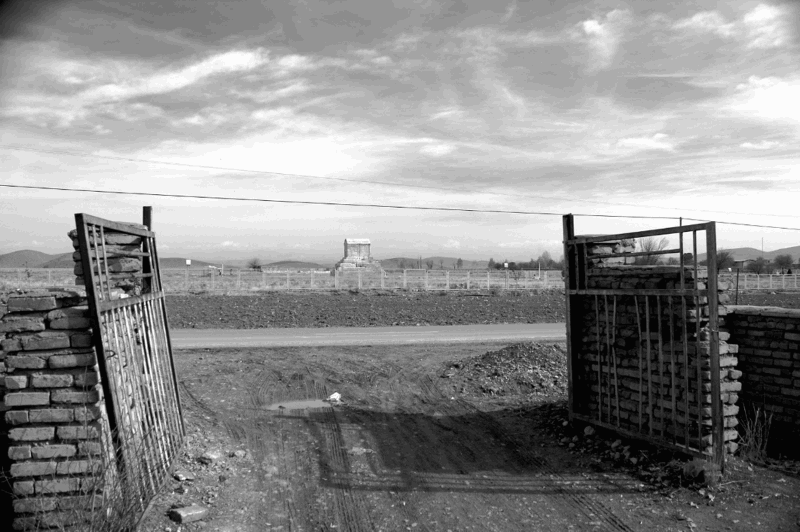
Introduction
Pasargadae is one of Iran’s most significant pre-Islamic World Heritage sites. Located in southern Iran, it is at once a major domestic tourism destination and a politically charged, contested place. As with any other heritage tourism site, perceptions of Pasargadae are popularized through visual representations in the public domain: on postcards, online photographs, and, only very recently, online footage. However, the relationship between these photographs and Pasargadae remains hitherto unexamined. Performing this examination, which is a core objective of this paper; provides critical insights into both the potential meanings of visual representations of this site as well as the evolving position of pre-Islamic heritage in state‒society relations in contemporary Iran.
Scholarship in heritage and tourism has emphasized the power of photographic representation in shaping and even pre-empting the experience of a placeFootnote 1 and, by implication, influencing the practices and events related to site visitation. This scholarship suggests a direct connection between visual representation and the performance of heritage: representation can/will inculcate certain expectations, attitudes, and behaviors in viewers. In so doing, representation assumes an ideological function, constructing ideologically driven realities and silencing contending claims that may be associated with a site or monument. This assertion rests on two pillars: the often hegemonic nature of official heritage and the significance of vision in the experience of place.
On the one hand, heritage scholarship has shown that sites themselves relate to specific histories, cultures, and social groups.Footnote 2 These accounts are conveyed in ways that promote a site, such as Pasargadae, variously as of ongoing and vital importance to the present, as dead, or as belonging to a bygone time and thus irrelevant. Because of this malleability, heritage can contribute to enforcing and legitimating or contesting dominant discourses of power and politics. Based on the former potential, official heritage has been criticized as a hegemonic discourse driven by the interests of ruling elites, reinforced by expert knowledge, and focused on objects (monuments)—and all of this to the detriment of the socio-cultural contexts in which it (heritage) is embedded in the first place.Footnote 3 Official heritage is thus seen as instrumentalist, exclusionary, elitist, and prescriptive about collective identities.Footnote 4 Thus, hegemonic discourse has repercussions for visitation experience and “site-seeing” practices.Footnote 5
On the other hand, visual material can frame and even participate in the production of knowledge and institutionalized “ways of seeing.”Footnote 6 Heritage places and monuments are often identified and popularized via the visual medium of photographs that “are provided to a public in the form of social norms and ethnocentrisms and cosmologies.”Footnote 7 Recognizing the increasing prominence of vision over other senses, since the late 1970s tourism scholars turned their attention to photographic representations as a means of understanding tourism practices.Footnote 8 Scholars have argued that vision profoundly shapes the tourist experience.Footnote 9 Photographs suggest intentionalities and potentially influence the experience of a place, and perhaps even act in lieu of its direct experience.Footnote 10 They can create expectations in future visitors of a place with regard to what ought to be seen, captured, or reproduced.Footnote 11 Introducing a perceived historical distanciation and political passivity, the photographic frame allows the imposition of order and a mastery of the other.Footnote 12 This is because photography allows the decontextualization of objects (monuments) and events. In this context, scholars have drawn connections—at times directlyFootnote 13—between photographs and hegemonic heritage discourses of the state.
Acknowledging the above scholarship, this paper elaborates the place‒photograph relationship in the context of Pasargadae and, through this process, underlines the cultural ambiguities surrounding this place as an instance of pre-Islamic heritage. Following the pillars of the existing scholarship, which relate vision to hegemonic practices, this paper presents its analysis in two steps. In the first step and after a brief introduction of Pasargadae, the paper presents a visual analysis of photographs of the site available in the public domain. The focus of this research is on material available online. In terms of impact, availability, and circulation, online photographs are by far the most effective means of representing the site. The visual materials in this paper are sourced through popular search engines, mainly Google®, but also from a variety of other sources,Footnote 14 which together form the most readily accessible sources to tourists by virtue of being online.Footnote 15 These sources include tourism blogs (such as Travelblog®), tourism advisory websites (such as Wikitravel® and TripAdvisor®), YouTube®, and Flickr®,Footnote 16 which contain similar types of visual representations.Footnote 17 Given this similarity and the overlap between these search engines and Google®, the analysis is focused on the Google® results.
With regard to method, various critical visual analyses address one or a combination of three aspects in relation to an image: the image as an object of analysis in its own right, its production (including modes, means, techniques, and purposes), and its reception by the audience, or “audiencing.”Footnote 18 The visual analysis here deals more specifically with the first two aspects. A mixed methods approach is taken in order to “broaden the scope” of the study and overcome some of the limitations of single methods.Footnote 19 Hence, the analysis draws on methods of content analysis in determining the (heuristic, stratified) sampling of online visual representations. In this case, this is a full count of relevant images at the given date. It then draws on compositional analysis as well as semiotics to interpret and classify the composition of an iconic image (the tomb of Cyrus), its connotations, and denotations. This will allow us to hypothesize on the relationship between the visual material, the site, and its social context. Combined with an historical understanding of the production of visual material on Pasargadae, the analysis suggests an, albeit shifting, affective, intimate engagement with the site, which is explored in the second step of the analysis.
The second step in the analysis is concerned with examining anecdotes of events and practices on site. These were gathered during visits and participant observations conducted by the author in 2004 and during two short periods of fieldwork (2011 and 2013). These anecdotes indicate some of the social context of images in circulation and are important for interpreting the function of the visual material. Few of these practices are published online and only recently (since 2013) has official media started paying attention to publishing selected public interactions with Pasargadae. As discussed later, official (or semi-official) reactions to such interactions are varied and, at times but not always, divided along factional lines within the state. The same applies to visual representations of practices on site. For example, while some aspects of national(istic) heritage such as Nowruz tourism are covered by official media, other aspects which may diverge from the state ideology may remain silent. As such, it would be difficult to rely on structural dualisms, such as state-people or dominant-subaltern, in the analysis of Pasargadae, dualisms that often underpin analyses of heritage and visual representation. At present, hegemonic discourses are not imposed by the state or its elite on pre-Islamic heritage sites such as Pasargadae with any considerable degree of success. The current popularity of the site is not the result of pre-planned state tourism policies or an official political drive for centering the pre-Islamic in collective identity construction. As the second step of the following analysis suggests, the state is ambivalent in relation to this type of heritage.
Therefore, Pasargadae photographs may perform a different role in the Iranian context. Reading the photographs in relation to anecdotes of practices of the site suggests an experience of intimacy, part of which is captured through imagery, in relation to the site and especially the tomb of Cyrus the Great. Briefly, here the term intimacy is used to capture two interrelated qualities that, on this particular site, converge despite their different scales. Firstly, it relates to the emotional, affective experience of feeling close or attached to the place and its monuments. This arises from physical proximity to monuments, the experience of being in place individually or as part of a group. Secondly, functioning conceptually and on a broader scale, it refers to what Michael Herzfeld has identified as cultural intimacy—the often essentialized national traits that form a common cultural ground between the state and people; a ground on which a shared cultural identity is constructed.Footnote 20 It is on this common cultural ground that contending entities and groups meet; a space of unexpected “collusion” between authorities and others “over questions of culture,”Footnote 21 which is challenged and negotiated at various scales among various entities (supra-state, state, local). In addition to being applicable to a range of contexts and styles, Herzfeld’s model is also useful as it “describes a negotiable process rather than a fixed condition” and this explains attempts on the part of factions within the Iranian state to appropriate pre-Islamic heritage as a useful device for aligning people with the state
Popular clichés and aspects of state ideologies coincide precisely on this common ground; in which a cultural link, or more specifically an intimacy, between the state and society undermines categorical and therefore potentially essentialized divisions between the two.Footnote 22 However, while the site itself is increasingly playing such a role for various groups of people, ideological impediments and factionalism within the state prevent the growth of such a commonality and this keeps the site in an ambivalent and tenuous relationship with power. While many state ideologues at the dawn of the Islamic revolution would have seen it as a symbol of oppression, and some may still see it that way, it is no longer treated with overt contempt on the part of all members of the ruling elite. It has also seen some instances of protest (against the Sivand Dam, for exampleFootnote 23), and performances that may seem like, or lead to, protest, such as prostration toward the tomb or participating in “Cyrus the Great Day,” which is discussed later in this paper.
The argument of this paper rests on the idea that media and visual representations play a significant role in creating this cultural space of intimacy, and this can account for some of the changes we witness in the nature of photographs in circulation. Reading the photos on their own can be misleading. There are few visuals with a human context and most depict only monumental objects. No doubt, certain social and visual conventions, norms and precedents, as well as the qualities of the object itself,Footnote 24 influence the photographs. Even so, the content and style of available photographs affirms that they also have “a complex biography”: an image takes many different forms and participates in multiple narratives and practices.Footnote 25 The meaning of an image, therefore, is contingent upon not just the circumstances in which it is produced, but also upon the historical and sociopolitical circumstances under which it is received and appreciated. It is this contingency, the ambiguity, which must be borne in mind in the analysis of images of Pasargadae.Footnote 26
Before proceeding, three points need to be observed. Firstly, due to Iran’s international and domestic political circumstances, marked by general isolation, international tourism is not (yet) as powerful an influence as it would have been in other comparable situations.Footnote 27 Secondly, and consequently, most visitors to Iranian heritage sites are currently domestic. It is only since the lifting of sanctions that Iran’s tourism has begun to experience a relative boom.Footnote 28 Thirdly, a coherent and comprehensive body of field data registering the various perceptions of domestic and international tourists remains to be collected and analyzed, although for the former, Pasargadae presumably reads as a politically charged and emotionally loaded symbol with cultural nationalist overtones.
Pasargadae
Pasargadae is located approximately 130 kilometers northeast of the city of Shiraz (capital of the province of Fars), within a cultural landscape that includes other unique pre-Islamic and Islamic monuments and sites, such as Persepolis, another UNESCO World Heritage site of the Achaemenid era (580‒330 BCE). It is one of Iran’s most significant UNESCO World Heritage sites (registered in 2004 on criteria I, ii, iii, and iv, which include art history and cultural landscape),Footnote 29 housing the capital and tomb of Cyrus the Great, the founder of the Achaemenid Empire. The site is also the birthplace of the Persian (later Islamic) gardens, a formal landscape with teleological underpinnings closely tied to Achaemenid ideology: it was a concrete manifestation of the promise of “world order” and happiness under Achaemenid rule.Footnote 30 In addition to Cyrus’ tomb, the core zone of the site includes the important monumental remains of palaces and ceremonial buildings, namely the tomb of Cambyses, an Islamic period Caravanserai, a fortified hill (Tall-e Takht), a sacred area and royal gardens.Footnote 31
Pasargadae has had multiple lives, functions and meanings throughout its history.Footnote 32 Originally standing as a capital and administrative center, it became a mosque in the Islamic period, then a Muslim female pilgrimage site during the early decades of the twentieth century, a site of nationalist‒monarchist celebrations (the 2,500th Anniversary of Persian Kingship) in 1971 and ultimately in 2004, a World Heritage site. Throughout its history, and until the early decades of the twentieth century, Pasargadae was, above all, a notable pilgrimage site.Footnote 33 In its vicinity, local settlements appeared (possibly sometime in the early nineteenth century) initially in the form of fortified villages and, since the early 1970s, expanded out into a more dispersed form of settlement.
As a contemporary tourist site containing significant monumental remains, it is fenced off but accessible every day within normal working hours (8am‒5pm) to domestic and international tourists upon payment of an entrance fee. Locals, understood in the context of this paper as the inhabitants of the handful of villages and settlements that currently surround the site, are granted free entry. The site has a history of ritual significance for local residents, who used to celebrate various religious and social occasions around the tomb, before it was fenced off for heritage protection (by 2006 the monument was surrounded by a metal chain which was later replaced by glass balustrades).
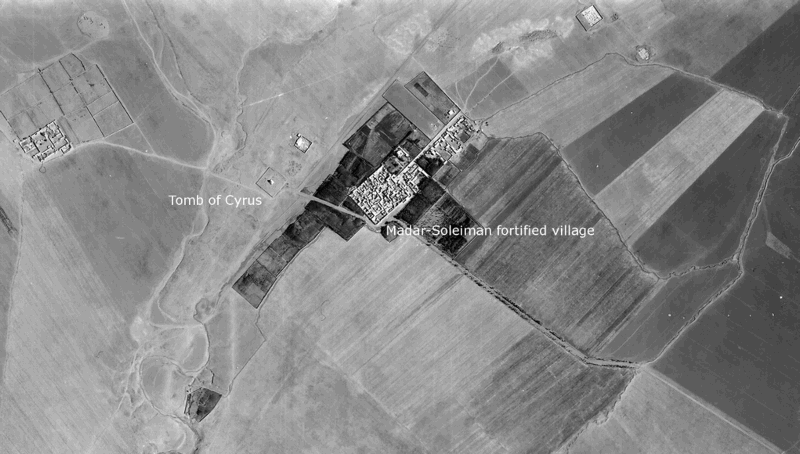
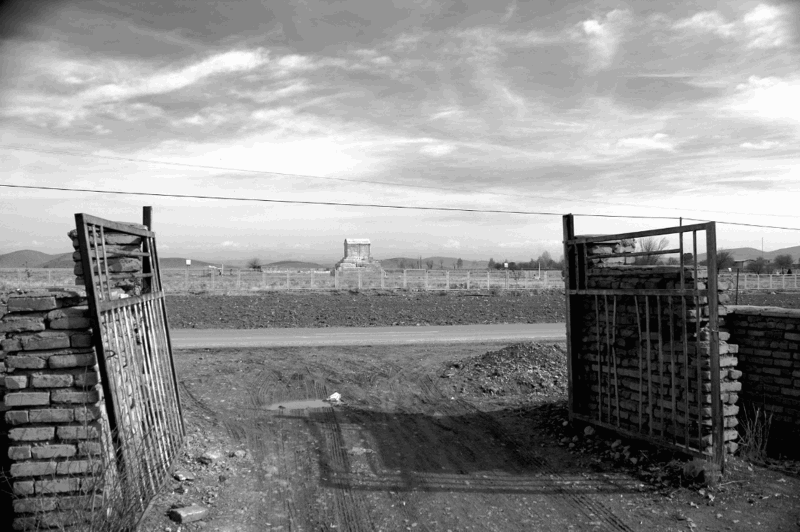
There are few publicly available historic images of the site that allow a chronological re-imagination, and those available lack the surrounding living context. Therefore, non-resident tourists would generally know little about the site’s local significance and its past lives, and the transformations of its surroundings. For example, few visitors would know that Mādar-e Soleymān (Mother of Solomon), the village in the immediate vicinity of the site, was initially a fortified village which was razed to the ground in the 1980s by locals with the encouragement of the local (official) Imam, since it had become derelict and appeared ruined and out of place.Footnote 34 Today, there is little trace of it left and it exists only in the memories of those residents who remember the developments on site. Additionally, the tomb of Cyrus was previously situated at the center of a local cemetery that had expanded through the centuries. In 1970 this cemetery was bulldozed and relocated across the road with a vista to the tomb (Figure 1). This was part of the Pahlavi state’s “grooming” program in aid of the celebrations of the 2,500th Anniversary of Persian Kingship in 1971.Footnote 35 It was also during this time that settlements outside the fortified village began to appear and later, after the 1979 Revolution, grew exponentially, giving the Mādar-e Soleymān village its current size and appearance.Footnote 36
The tomb from within the present village cemetery.
Source: © Ali Mozaffari, 2011.
Given the erasure of such physical traces—the disappearance of the local cemetery and the razing of the original village and increasingly their associated memories—both the site and its photographs are decontextualized and thus ready to be coopted into various discourses. This decontextualization—which is clear in photographs circulating online—combined with the increasing popular and public expressions of reverence for the site (and for Cyrus), have caused alarm among some Iranian news and political commentators who are concerned with the rise of racial ideologies such as Aryanism.Footnote 37 This paper acknowledges that the site has multiple concurrent meanings which arise from the multiplicity of the ways in which Pasargadae is used and its complex historical trajectory.Footnote 38 As the following analysis shows, this multiplicity compounds the relationship between those meanings and the photographs in circulation—a relationship that is neither direct nor decisive. There is, nonetheless, a common ground between the two, which, as mentioned in the introduction, relates to a sense of intimate reverence for Pasargadae that this paper seeks to elaborate.
Step One: Visual Representations of Pasargadae
Considering the precedents in visual studies in heritage, photographs have been used as “primary evidence,”Footnote 39 to elicit the meaning and processes behind representing heritage. However, the caveat to observe is that the meanings elicited are fleeting as they change depending on the socio-historical context in which the photograph is deployed.Footnote 40 For analytical purposes, the production process of the visual materials—whether they are produced by the researcher (or at their behest), the participant as in “volunteer-employed photography,”Footnote 41 or both— is significant, as is the type of material itself, which may range from postcardsFootnote 42 and historic snapshots from archives to contemporary photos. Focusing on web content eliminates volunteer-employed photography from the analysis. To a certain degree, it also collapses these distinctive categories such as postcards versus visitor-generated content. Therefore, while certain categories, for example the archaeological photographs produced by Ernst Herzfeld (archeologist), are distinguishable as such, the motivations of those producing other photographs remain the subject of conjecture. This may appear to be a methodological handicap, but in practice it is not a major impediment for the analysis of this paper, where the focus is on the broad language and frame of representation available to the potential visitor. In the context of the nascent tourism industry in Iran, various online searches provide a sound indication of the most readily available types of visual information on Pasargadae and constitute the major source for visual acquaintance with the site.Footnote 43
For this part of the analysis, and drawing on the work of others including Hunter,Footnote 44 greater focus is given to the image itself. Hunter points out that photographs are generated with intrinsic (the style of images and the message they may convey) as well as extrinsic (the relationship between what they depict and the reality on the ground) meanings and qualities. They have certain values embedded in the very composition of the image and they constitute an edited representation of realityFootnote 45 and may be analyzed for their actual content (denotation) and their metaphorical implications (connotations).
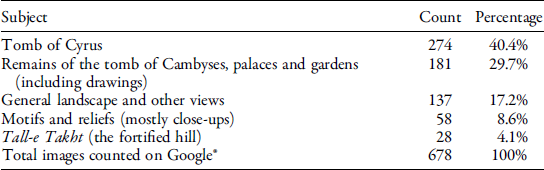
With these issues in mind, the online photographic material was collected and classified using a heuristic approach. Beginning with a simple Google® search, the keyword “Pasargadae” returned 291,000 hitsFootnote 46 while a similar search for images only returned 61,500 hits (see http://bit.ly/2orox69).Footnote 47 In both cases the result includes a considerable number of tagged images and outputs that are not directly concerned with Pasargadae the heritage site. The top images depicted on these pages are mostly from educational sites or enthusiasts’ blogs of varying degrees of scientific quality such as: the Smithsonian’s repository, livius.org, Wikipedia, gardenvisit.com, and cias-soas.com. These images were then surveyed and classified based on their content (denotation, meaning what it depicts). Table 1 shows the result of direct counting of images in Google® in 2014‒15. As the table indicates, the tomb of Cyrus is the single most frequently cited photograph in this search engine. Further, a considerable portion of Pasargadae’s visual representation in the public domain seems to have been produced by visitors.Footnote 48 The geographical distribution of photographs was also revealing and seems to attest to this conclusion. Searching for Pasargadae through Panoramio®Footnote 49 showed the distribution of images upon the core zone of the heritage site, despite the satellite image’s clear depiction of settlements around it (Panoramio was discontinued by Google on 4 November 2016).
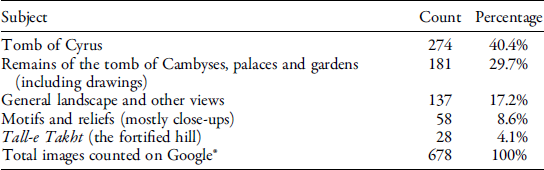
Given the frequency of images of the tomb of Cyrus, the photographs of this structure were further analyzed in terms of the properties of the image (composition, distance, contact, and point of view) and drawing on semiotics. The rationale for this focus was that many activities within the site occur around and in relation to this iconic structure, making it both historically and politically loaded. Therefore, it must be possible, through analysis, to elicit some of the representational purposes embedded in the image.
Photographs in the public domain
From this simple process, a common content to the photographs can be observed. Arguably driven by the present configuration of the core zone as an empty site with scattered monumental remains, the photographs often capture (with varying degrees of success) an overwhelmingly “natural” landscape dotted with monumental remains. Insofar as the online evidence shows, there are a few dominant angles from which the monuments, particularly the tomb of Cyrus, are photographed and shared. None of the images include the adjacent villages, their condition, or their relationship to the site. A search through the photo-sharing site Flickr® yields similar results (see http://bit.ly/2orFM7w), as does a visit to specific tourist websites (both Iranian and international) such as the Iran Tour Centre®, IranExplorers®, and virtualtourist®.Footnote 50 In both cases, even a search in either Persian or English for Mādar-e Soleymān or “Mother of Solomon,” which names the nearby township, does not pick up images of settlements. The photographic evidence available to this study suggests that the human context (ritual, pseudo-ritual, or festival) within and adjacent to the site and the surrounding fabric (settlements), is minimized, overlooked or omitted in the framing of images. This type of omission is not peculiar to Pasargadae and is a trend that is apparent in many other heritage sites around the world.Footnote 51 In this way, photographs help decontextualize the monuments from their surroundings and enhance their monumentality.
In many images, the object of the photograph appears detached from signs of life and thus its depiction compares to archival, archaeological records of the site. Similar to other sites and monuments of “the Orient” (by which is meant anything falling outside the sphere of western civilization), Pasargadae is constituted as “authentic” and “timeless” through the (inadvertent) removal of contemporary and modern signs of human involvement in the photograph.Footnote 52 In any other context, this paucity of people and the objective focus of images would be an unremarkable phenomenon. It would be interpreted as a certain way of constructing knowledge of an historic site through framing, eliminating, and representing and therefore acculturating viewers: a likely attempt on the part of the state and its elite to promote a certain hegemonic identity,Footnote 53 with the tourism market being one of its beneficiaries. To elaborate this in relation to Pasargadae, it is useful to focus on the depictions of the tomb of Cyrus.
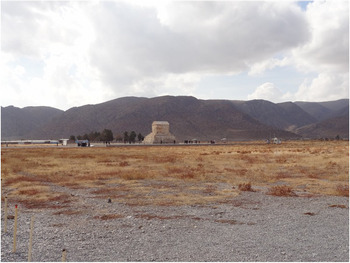
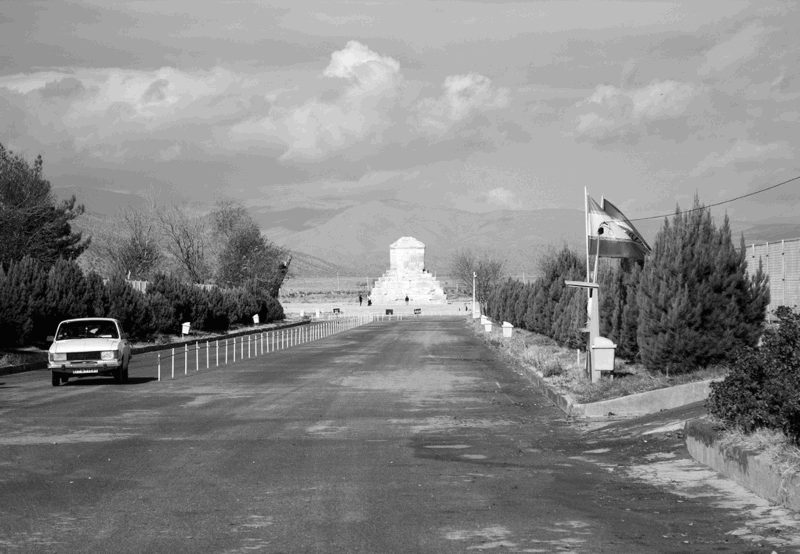
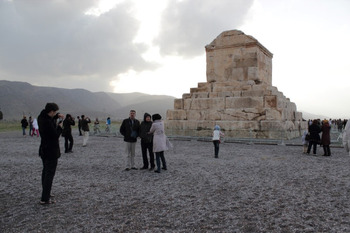
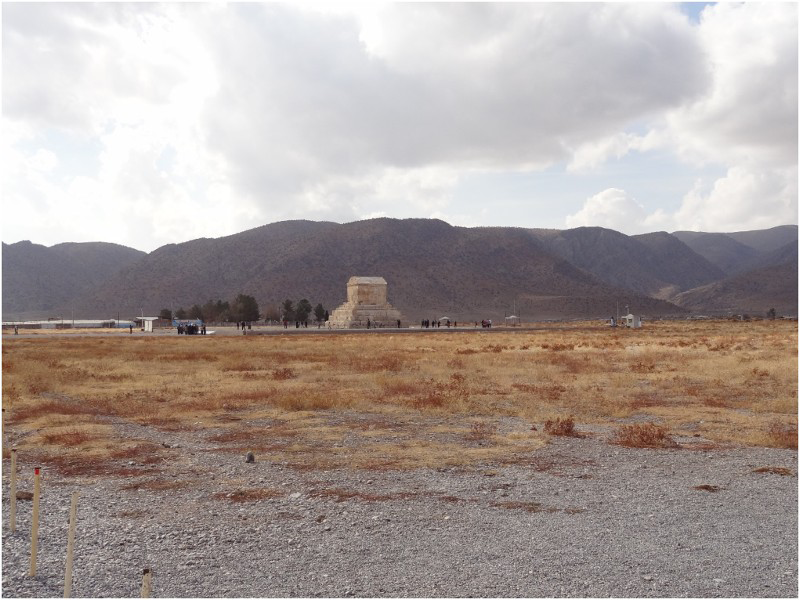
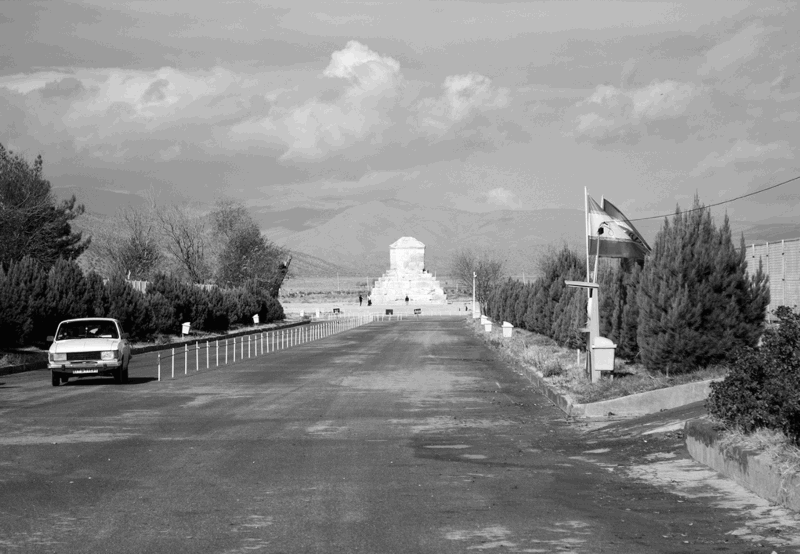
The tomb is the only edifice that retains an almost complete and discernible form and which manifests symbolic and iconic spatial presence. In general, three types of shots are discernible.Footnote 54 The first type comprises long shots which render the tomb part of the landscape (Figure 2a). The object is introduced to the viewer as part of the background, articulating a sense of the passage of time as it appears an immutable object from a distant past brought into the present. The tomb’s contrasting shape to the landscape, its color and siting, staged atop a platform which is the result of archaeological work, bestows authority upon the object by elevating it from its surroundings. In photographs taken from the entry to the core zone of the site, planned to provide an axial and frontal vista to the tomb, its dominance is clearly apparent. It has a familiar classical manner in its representation—the axiality emphasizes monumentality and significance. Although only few shots of this style exist, it perhaps offers an accurate representation of the experience of the tomb from the point of entering the site (Figure 2b).
Long-range shot of/with the tomb.
Source: © Ali Mozaffari, 2011.
The entry to the site.
Source: © Ali Mozaffari, 2011.
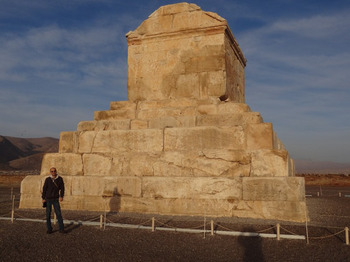
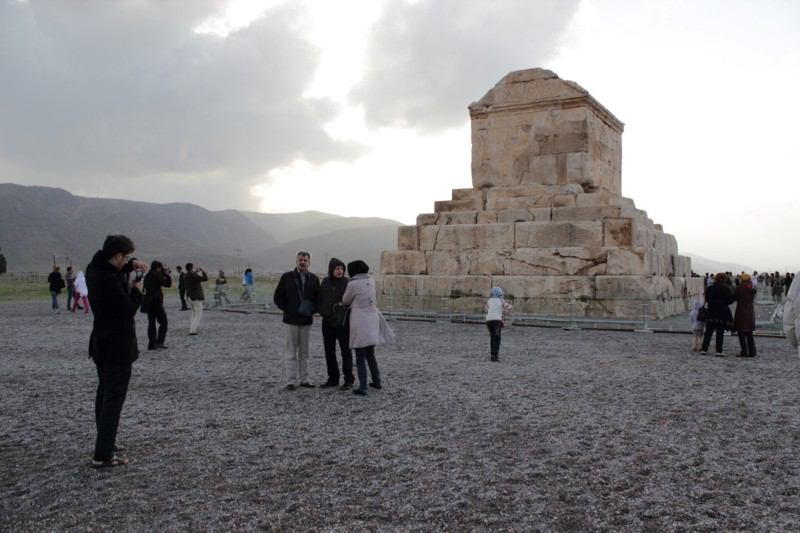
The second type comprises mid-range shots, usually taken from the tomb’s platform, which commonly focus on the object itself. Arguably, the perspective is frequently used in travel shots, in which the tomb forms a background (Figure 3). Most mid-range shots show the two sides of the structure; the monument dominates the frame. Focusing on the body language of subjects in the existing examples indicates that there are three modes of photographing the object: (1) visiting as tourist and thus having a photograph taken with the tomb; (2) revering as a pilgrim, which involves being photographed while displaying reverence toward the tomb, such as snapshots of prostrations as discussed later in this article; (3) expressing a sense of belonging as a member of a community and/or as a citizen, such as collective photographs of New Year as published in various media, while being a tourist. At times individuals in these photographs appear in local costumes. In some respects, these modes of photographing the tomb compare to those trending in front of holy places such as the Shrine of Imam Reza in Mashhad.
Mid-range shot of/with the tomb.
Source: © Ali Mozaffari, 2011.
The third type comprises photographs identified here as close-ups (as distinct from detailed images), which are rare in the case of the tomb owing to the size of the structure but also, in recent times, due to the obstacle to such a view presented by the protective fencing enclosing it (Figure 4).
Close-up photo with the tomb.
Source: © Ali Mozaffari, 2011.
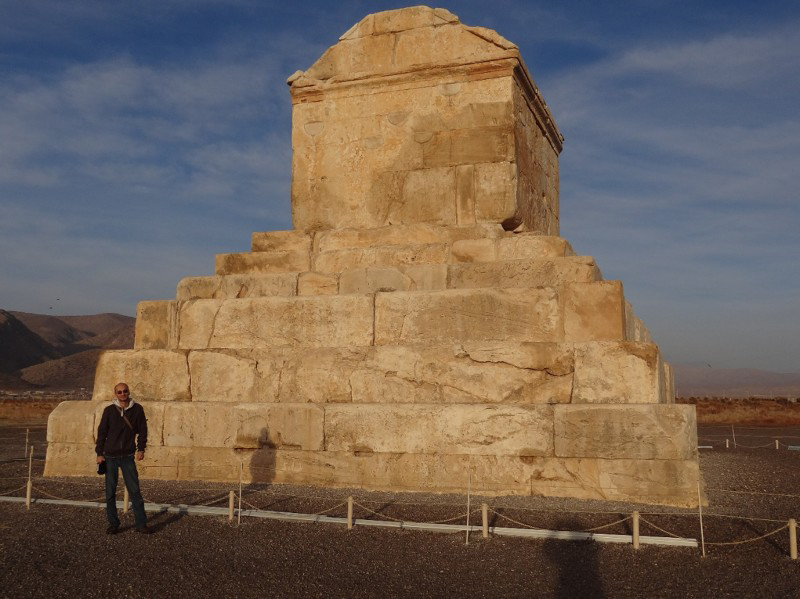
Extrapolating the visual tendencies exhibited on the web from this brief exposition, a few salient points about these photographs become apparent. On the face of it, they reaffirm a sense of timelessness and monumentality (through, among other things, framing and perspective), congruent with a nationalist ideology associated with an elite but certainly also appealing to collective self-esteem. The technical skill with which some photographs are shot further enhances this reading, augmenting drama by manipulating light and camera angle.
The three modes of photography described above illustrate the general focus on the object of the tomb, as if the site is imagined and framed through the materiality of this structure. This type of framing may be traced to an earlier time: arguably, and as discussed below, this photographic preference or taste is historically rooted. Research has shown that repetitions of this type are contingent upon the preponderance of taste or serve as a model for the perspective and angle of the picture, which has taken root. A certain scientific gaze interested in the object as art history and archaeology determined the nature of the early photographic record.Footnote 55 This also involved choices of framing and even interference—clearing, replanting, and landscaping to “set the scene” for presenting the object—with the surroundings to pronounce the archaeological scientific rendition of the object.Footnote 56 Bohrer notes how early archaeological photographs were an “unquestioned trace of ancient remains, [… and] also the product of painstaking modern labor and intense thought about how to represent them.”Footnote 57 Interpreting a photograph of excavations in Delphi (figure of Antonious, excavated in 1894) he points out how through the angle and composition of the image local workers are reduced to secondary objects framing the important archaeological discovery.Footnote 58 Such acts of grooming and framing, which often physically transformed a place, were part of processes of producing the archaeological photograph that spoke both to the European aesthetic and scientific sensibilities of the time. This process could transform monuments into alibis for hegemonic discourses and perpetuate the political dominance of certain social groups.
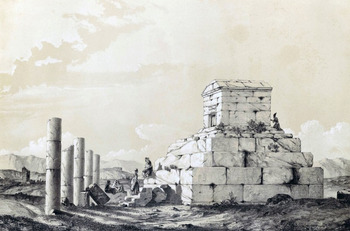
Pasargadae—especially the tomb of Cyrus—is “groomed” in this sense. However, in the context of photographs available in the public sphere, it is doubtful that monumental images of Pasargadae suggest a direct connection with an official (state-driven) or a stable hegemonic heritage discourse. Rather, the photographs are in themselves decontextualized and abstract. Indeed, the image of a solitary structure in the landscape has a pedigree that predates archaeology and its relationship with the nation-state. To elaborate, it is useful to examine a drawing of the place made by Eugene Flandin in 1840, concurrent with the invention of photography in Europe (Figure 5).
Drawing of the tomb of Cyrus the Great by Flandin in 1840.
Source: Wikimedia Commons (file in public domain).
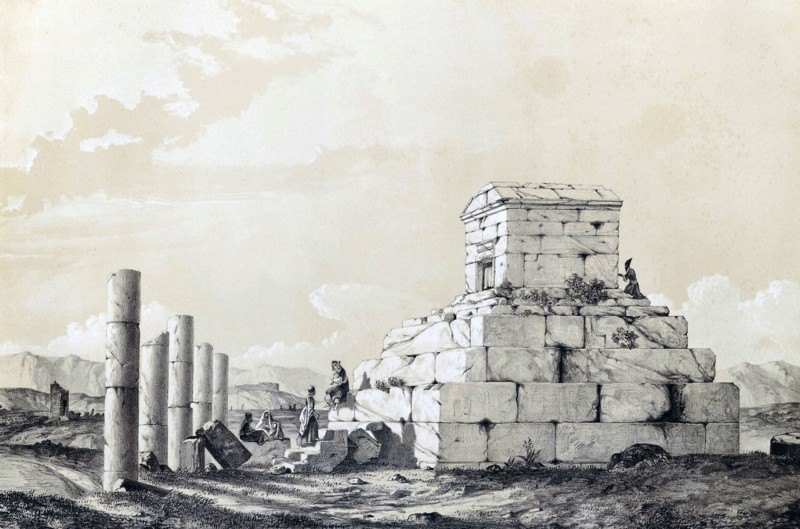
Flandin’s drawing depicts the tomb as part of a landscape. Here, the interaction between the human figures and the tomb is interesting. There is a male figure, possibly one of Flandin’s local crew or a guard, climbing the top steps with an inquisitive gesture on the last step of the tomb. Opposite him, sitting at the steps and foot of the structure, there are four female figures. The women, one of whom seems to be holding a baby, are socializing with their bodies directly in contact with the tomb. There appears to be an everyday casualness in the interaction between the women and the structure. But there is also a clear sense of intimacy with the tomb. There are examples of Orientalists’ drawings elsewhere depicting local characters in their quotidian engagement with historic structures. In this context, however, the depicted intimacy—between the women and the tomb—makes sense as, at the time, this was known as the Shrine of the Mother of Solomon (Mādar-e Soleymān), a site of female pilgrimage and fertility. The body language is also reminiscent of the demeanor during traditional family outings around religious shrines. Flandin depicts an intimate place, which we also know was locally revered. However, as we see in the following part of the paper, this mixture of reverence and intimacy is transformed and experienced at a national scale during certain times such as the Nowruz.
Early photographic representations
As concerns photographic representations, in contrast to Flandin’s drawing, almost all photographs of Pasargadae dating to the late nineteenth century depict an isolated tomb in a landscape stripped of human context. This depiction is a partial reflection of the reality of the site in recent history: the structure was (and remains) positioned on its own within the landscape, but the human context consisted of adjacent fortified settlements and transhumancing nomads, making for transient interactions with the site. Processes of ritual regulated the relationship between transient human contexts and the tomb. Pilgrims could visit it at any time; there was no specific administrative rhythm that delimited the daily life of the structure. Some early photographs depict that human context.
For instance, Antoin Sevruguin’s depiction of the tomb (c. 1900, http://s.si.edu/2fB9tgB) also reflects the effects of daily life. The presence of horses and donkeys around the tomb, for example, signify that Pasargadae was part of a travel route. But also, as Bohrer notes,Footnote 59 Sevruguin shows the “process of creating a standard [archaeological] photograph” at the time. Natural decay appears to also afflict the tomb, while birds nest in the stones’ cavities and foliage grows from the body of the monument, evincing the passage of time. The structure sits on natural terrain, which undulates around it, and the column stumps mark the zone around it reserved for reverence. At one point this zone delineated the realm of the dead as it harbored the local graveyard. Travelers (possibly Sevruguin’s crew) are shown standing casually next to the monument, in what was and remains a liminal place; at the outer edge of habitation and daily life.
Ernst Herzfeld’s photographs of the tomb, taken almost two decades after Sevruguin’s, reflect a slightly different sensibility. They follow distinct scientific conventions in terms of the camera positioning, documentary value of the image and the centrality of the object of study and the monument (by the early twentieth century the tomb is once again ascribed to Cyrus) within the deserted surroundings. Aesthetic appeal aside, they evince the process of cataloguing the archaeological object, attempting to minimize other interferences. Herzfeld’s shots made during the course of his concentrated study of the site (both for his PhD and later for his archaeological mission) also contain a greater expanse of empty space.
Clearly, the history of depicting Pasargadae, which predates archaeology, has formed a trajectory of aesthetic and technical sensibilities recorded in most photographs, which have in turn influenced the way the site is imagined and depicted in the present. However, many may encounter Pasargadae not having seen (and therefore not conditioned) by images beforehand. According to heritage-tourism theory, this trajectory generates expectations for experiencing certain types of drama and mystery at the site and this corresponds with the type of available photographs, including those taken by the visitors.Footnote 60 Indeed, the existing natural setting and the popular and historic mythology associated with Pasargadae (such as the Imperial past, Persian depth of history and culture) sets it up for dramatic experiences. Here photographs which reify the site and are decontextualized in their own right can become vessels for various (including ideological) imaginations and projections. They can bear and reinforce extrinsic notions about morality and national grandeur and historical greatness which are usually associated with discourses surrounding Pasargadae and its cultural values. From personal conversations with some visitors and taking into account some of the events that unfold on the site, and are discussed in the following section, many Iranian visitors perceive the site through the narrative of a myth of origin and imperial power centered on Cyrus the Great. Today this mythology has become pervasive, and younger generations of visitors are often unaware of the site’s Islamic history and only visit, proudly it should be noted, out of reverence for their “forebear,” Cyrus. However, such expectations are unlikely to be created through exposure to tourist material, which is in fact insufficient and comparatively scarce and cannot be tied back to a state- or elite-driven discourse which is not present in the current circumstances.
Arguably the imagined perception of a site is strong enough that, even notwithstanding encounters with the vagaries of its reality, visitors choose to approximate (imitate) what they envisioned, either through the composition of the photograph or by technically manipulating the image, so the outcome coheres with the preconceived perception.Footnote 61 This is not to say that people do not take pictures next to monuments to convey the message: “I’ve been here too.”Footnote 62 However, they do not share them as readily since only a small number of Pasargadae photographs in the public domain correspond with this type.Footnote 63 Consequently, the public domain is dominated by pictures taken from generic angles and focusing on objects. On their own, these depictions are little more than empty vessels for various projections and presently dominate and proliferate in the public domain.
But still the question remains as to why this type of abstract, objectively focused image dominates the stock available in the public domain and why it is that only specific monuments are portrayed (and not, for example, any habitation in the surroundings). It is already doubtful if an elite or a state-driven hegemonic discourse advances this phenomenon. After all, there are factions within the Islamic Republic—including the Supreme Leader who remains ambivalent about this heritageFootnote 64—that strongly oppose glorifications of the pre-Islamic past. As already suggested, images not only mediate a specific subject but also focus the content and provide a frame for viewing the environment. Perhaps, then, objects lend themselves to a particular aesthetic and the site to certain frames by virtue of their size, position in the landscape and in relation to one another, and their materiality. This is borne out at Pasargadae as there are certain types or classes of images that dominate the stock of available photographs and these images are based on subject (usually the tomb structure) or visual axes (facing the tomb). Indeed, scholars have arguedFootnote 65 that representations of heritage sites constitute a “circuitous process of cultural production and reproduction.”Footnote 66 The viewer “fabricates” a perception or image of the place, which is different to and, at times, at odds with that which is formed through an actual (empirical) experience of it, even as a tourist. While for some Pasargadae visitors this “circle of production” may exist, for others, there are no pre-formed images in mind so the experience and meaning is constituted in situ rather than mediated via photographs.Footnote 67 We will return to these questions following discussion of the experience of the site.
Step Two: Pasargadae In Situ
As argued above, prior to visiting Pasargadae, a specific idea of the site is likely cultivated by and for tourists through the photographs available: that Pasargadae constitutes a liminal place with “magical” effect,Footnote 68 completely detached from the everyday; a pivot in time and a dead, frozen place. If most visitors retain only a vague sense of a “nomadic people” living somewhere in the area, there are, however, few (and perhaps no) visual cues provided to expedite an adjustment and verification of these preconceptions. Distinguishing the effects of visiting the site offers more than a diagnosis; it builds an understanding of the actual experience of seeing the monuments within the site and the people’s interactions with them.
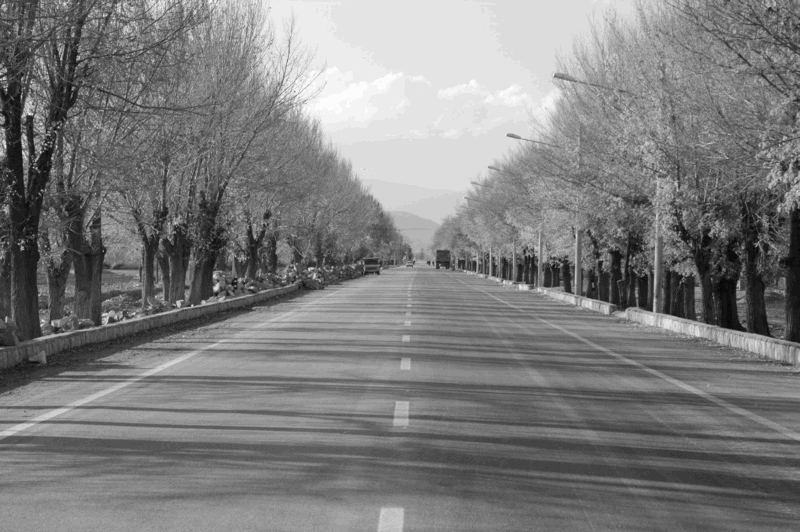
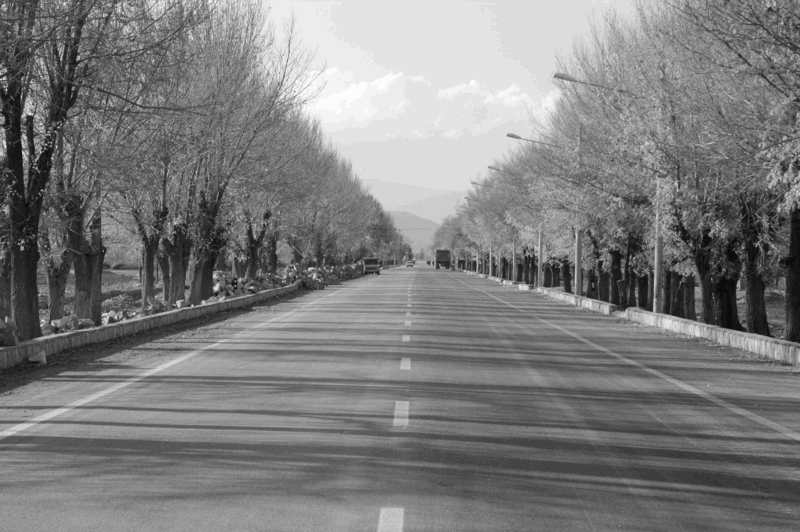
The journey to the site begins long before reaching the locality and this point of origin may change for each individual (as for some it may be in a distant country). Wherever that origin, from Shiraz the transition begins with entering the Shiraz‒Isfahan highway. Pasargadae lies in a valley surrounded by mountains. The highway accessing the site is bordered by areas of agricultural land demarcated by lines of poplars on the roadside and by townships and settlements. Some of these date back centuries, although their origins are generally masked by a haphazard architectural modernity. The site is approached through a road approximately four kilometers long that runs off the Shiraz‒Isfahan highway, the beginning of which is lined with mature poplar trees, which impose a sense of axiality and spatial enclosure that sets up an immediate contrast with the interstate highway (Figure 6)
The entry road to Pasargadae.
Source: © Ali Mozaffari, 2011.
A small village named Kordshul materializes a few hundred meters along the road and further still is another township, Mādar-e Soleymān. Both settlements are surrounded by agricultural land and remain inconspicuous to visitors. Not only do they usually escape notice, the settlements are far from being aesthetically appealing, which partly accounts for the lack of images of them or the area surrounding the site in general available in the public domain. With only limited, if any, historical value, the settlements appear poverty-stricken, decayed and fragmented. It is as if they “faded into a kind of ‘dross-scape’ of concrete frame, infill brick, cement render and aluminum window sections.”Footnote 69 The villages fall within the buffer zone of the World Heritage site, where no building is allowed over 4.5 meters, 1.5 stories, forestalling construction, and contributing to the conspicuous state of settlement growth and decline.
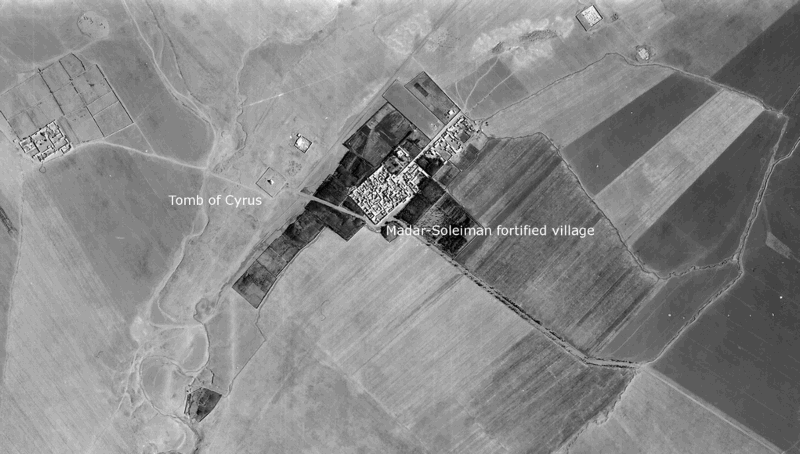
Beyond the settlements, the road opens the view to a vast expanse and from thence directly aligns with the tomb of Cyrus the Great. The road layout is relatively recent, devised as part of transforming the site into a spectacle for the Celebrations of the 2,500th Anniversary of Persian Kingship in 1971. Agricultural land was bought from farmers to allow this new approach route, which replaced an old diagonal path from the previously fortified village to the tomb (Figure 7).Footnote 70 Despite being recent and historically inaccurate (the access sequence originally began from the Gateway Palace and ended at the tomb), the new axial approach appears logical and “natural,” for reasons outlined below.
An aerial photograph of Pasargadae (1969) showing the fortified village in relation to the tomb of Cyrus.
Source: Reproduced with permission from the Iranian Cartographic Organization.
Located further still down the road is the gate to the World Heritage site. Along a short boulevard looms the tomb of Cyrus against the backdrop of distant mountains. It sits as a unique object on a slightly raised gravel platform. The carefully cleared and groomed area around the tomb enhances its majestic aspect, which corresponds to the photographs examined here. The journey is transformed for many into a pilgrimage, and the object of its focus into monuments of cultic significance. Generally, a visiting itinerary consists of the tomb, then along the asphalt route, the monuments and finally the fortified hill of Tall-e Takht. Much of the visiting time is spent in two spaces: around the tomb and on top of the Tall-e Takht, the former because of its iconic and cultic significance and the latter for the vista it affords of the vast surrounding landscape. First-hand experience suggests that most visitors are primarily interested in these two locations, possibly because both lend themselves to photography. These observations are borne out in the photographs available in the public domain.
Practices of visitation
Visits to Pasargadae tend to be conducted in a group setting. For domestic tourists, the group is often composed of peers (such as a class of students or friends) or a family setup involving a range of ages. For foreign visitors, a group usually comprises a mix of mature and well-travelled individuals. Visitors are almost all solely focused on the objects within the site. Three factors—the tangibility of objects, cultural context and the nature of activities in the place—determine experiences of the site and the nature and frequency of their representation. The more tangible the object is to the visitor, the more likely they are to photograph it. Additionally, the behavior of visitors toward a heritage site depends on the extent of the emotional or cultural links shared with it. The range and nature of such links to the site are sometimes substantial but in most cases, for Iranian visitors, there is a combination of intimacy and reverence. This is apparent in their behavior around the remains and the amount of time they spend at different distances and around each monument, especially the tomb. It also generates a more pronounced recording and representation of certain aspects, relative to others.
Pasargadae also functions concurrently on multiple scales such that it becomes the interface between local, national, and international activities, whose timing influences the experience of the site. This becomes manifest in specific calendar days, for example on the occasion of a recent “invention” by which 29 October is designated as “Cyrus the Great Day”Footnote 71 or the occasion of Nowruz.
Since its inception, “Cyrus the Great Day” has been a politically contentious event, marked by occasional clashes between visitors and state and site security and thus a subject of international (and especially dissident) news coverage. It is also one of the occasions where photographs and footage of the events and people in relation to monuments have been recorded and shared online in growing numbers during the past four years.Footnote 72 Usually in the lead-up to this date, security forces close the roads leading to the villages and even parts of the freeway leading to Pasargadae. In 2016, tour operators were also informed that foreign tourists were barred from entering Pasargadae between 27 and 30 October. Despite all these measures, in 2016 this day was particularly eventful as huge crowds gathered chanting subversive slogans. The protests were particularly bold and included a mix of slogans. These had a general patriotic or nationalist tone such as “Iran is our homeland, Cyrus is our Father.” Some went further, rejecting the Islamic regime, or chanting monarchist slogans and carrying the Lion and Sun flag. Some of the people chanted a slogan—“we are Aryans, we will not worship Arabs”—which, its Aryanist slant notwithstanding, appears to be a clear rejection of the Islamic rhetoric of the Iranian state. In reaction, some activists and visitors were arrested, among them a known satirist, Mohammadreza Ālipayām (also known as “Halu”) who was beaten during the arrest.Footnote 73 A day after the event, Ayatollah Nuri-e Hamedāni, a high-ranking cleric in Qom, attacked the events as a deviation from Islamic and revolutionary ideals.Footnote 74 The news of such events is broadcast internationally. Although violent, such events suggest a sense of greater meaning to those involved and an intimacy at a larger, national scale in relation to the site. In speaking to this author, locals stated that they were aware of these contentions and chose to keep a low profile during Cyrus the Great Day.
A different relationship with the place and especially the tomb is apparent during the Iranian New Year period (Nowruz, usually 21 March‒4 April). Here one witnesses the multiplicity of the place: the practices of the people are concurrent, and at times at odds with, official attempts to appropriate the site into a state-sanctioned narrative of identity.
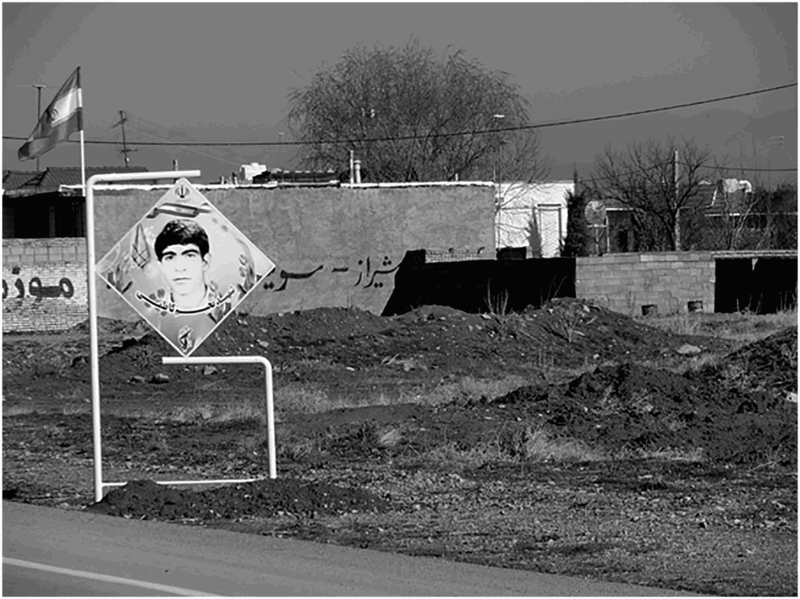
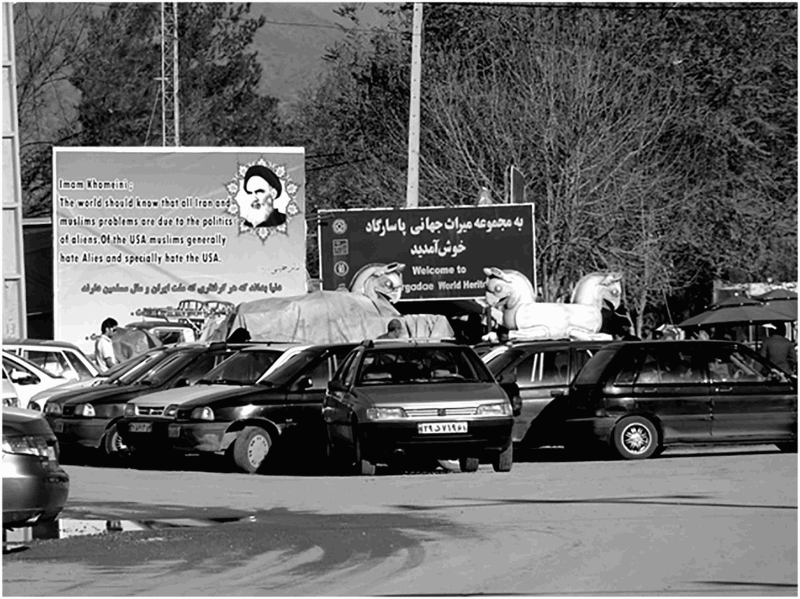
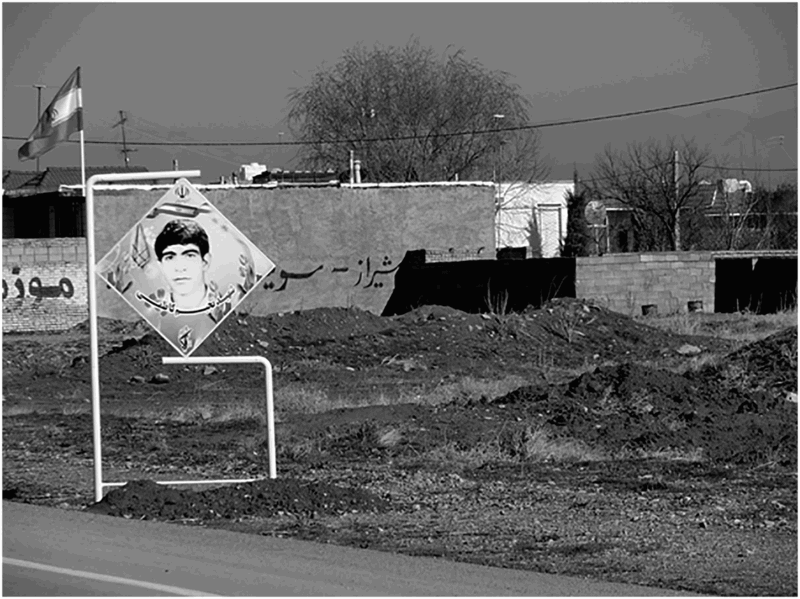
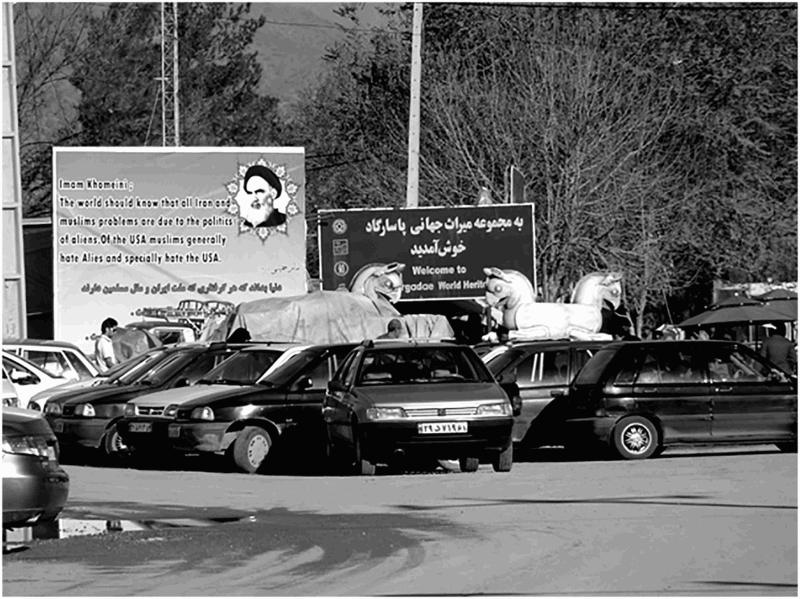
In this period, aside from the presence of people on site and camping along the access road, many images of martyrs as well as billboards appear and even clerics arrive on site with the intention of providing a state-sanctioned Islamic angle on the meaning of the monuments (Figure 8a and b). Such efforts may be read as an official attempt to emphasize the Islamic aspect of Iranian identity. Alternatively, it may suggest a recognition on the part of the state of Pasargadae’s potential in fostering a common cultural ground. It therefore appears that the state runs a serious concurrent and ideologically loaded narrative of the site during this period, a “dissonant” message.Footnote 75 In any event, the presence of clerics within the historic space is indicative of the appropriation of pre-Islamic heritage by the state.Footnote 76 Whether this as yet forms a hegemonic interpretation of heritage in Iran is uncertain as there are multiple clashing lines of heritage and identity at play (and at odds) within the state which renders the idea of a unitary discourse problematic. However, even though some do engage with the clerics and state billboards and images are readily in sight, neither of these appear in publicly accessible photographic representations. In practice, people seem to take little notice of the visual state propaganda on site; hardly anyone reads the billboards—as people pass them heedlessly—while unsanctioned music on the other hand is occasionally played where people camp along the road.Footnote 77
Image of a martyr along the access road to site.
Source: © Ali Mozaffari, 2011.
State-sanctioned signage.
Source: © Ali Mozaffari, 2011.
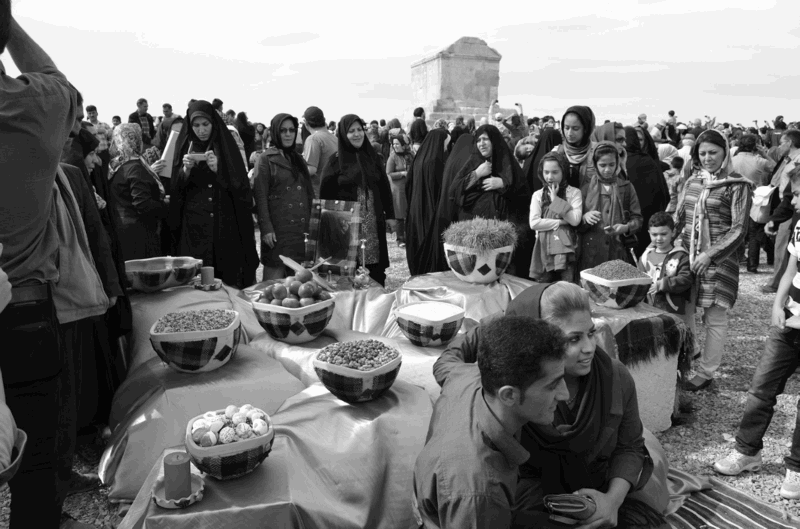
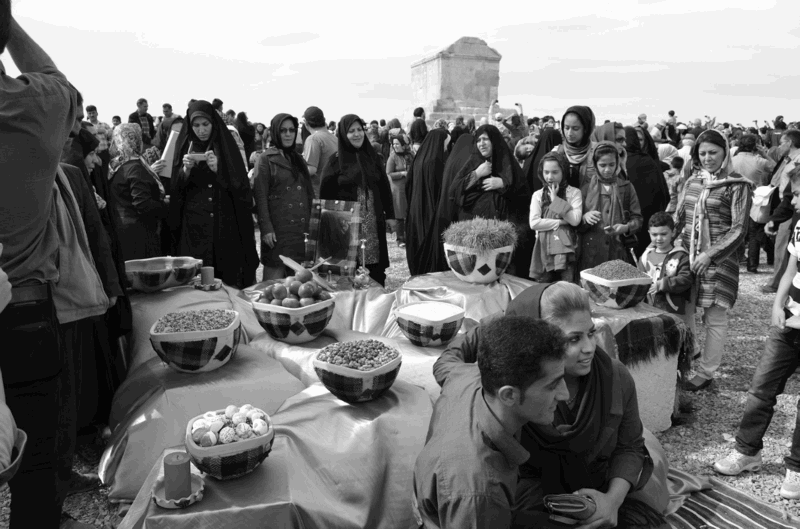
In another example, on 21 March 2013, concurrent with the sanctioned Nowruz festivities on site (as depicted in Figure 9), a sizable group of people chanted a well-known patriotic march—ey-Iran—which carries political and emotional implications; some participants then prostrated themselves toward the tomb. Although this did not cause a major disruption to the sanctioned event, which continued for the following days, the footage was subsequently uploaded to YouTube showing the “incident” and the many people recording it.Footnote 78 Nevertheless, this and similar events in preceding yearsFootnote 79 stand as examples of multiple, conflicting places (and discourses) concurrently created and performed at Pasargadae, despite official political pressures—reaffirming Tunbridge and Ashworth’s notions of dissonant heritage.Footnote 80 Evidently, dissonance here is largely the result of multiple and divergent individual or collective actions on site. In this instance, it was concerned with an interpretation of collective identity through the site.
Photograph taken by the ICHHTO of people celebrating the Nowruz on 21 March 2013.
Source: © PH, 2013.
Considering the types of photographs available in the public domain in relation to the events that unfold on this site, it is apparent that an equal (albeit subconscious) measure of resistance and suppression of state discourses are conveyed through the same bland photographic representations.
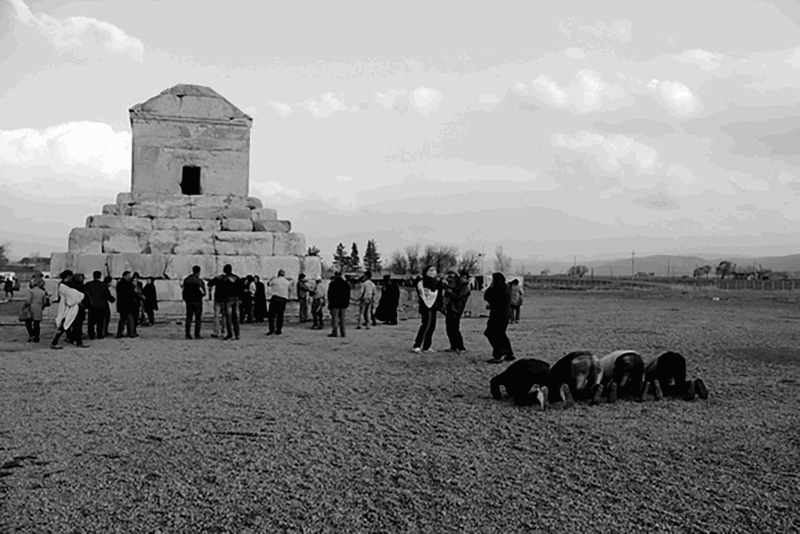
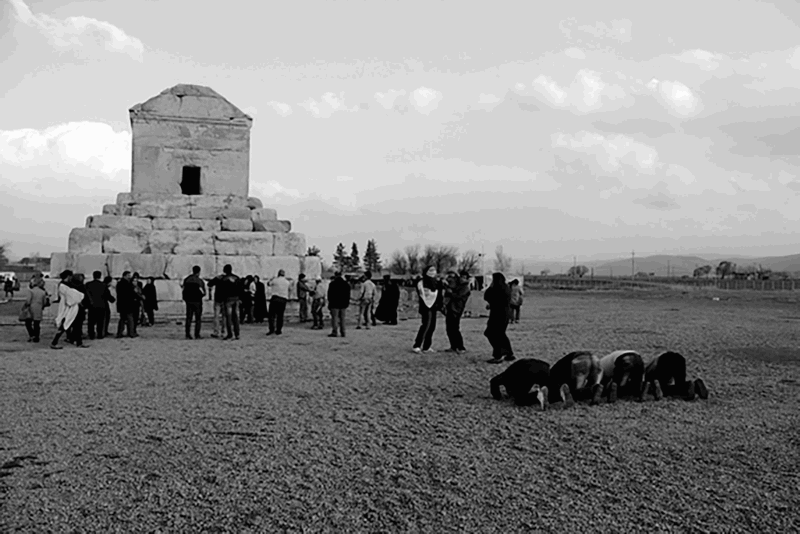
“Unsanctioned” practices also occur on site outside specific calendar dates. The practice and process of heritage is accompanied by conflicts of interest making heritage subject to continuous change and revision, simultaneously a source for and repercussion of social conflict.Footnote 81 Since the early 2000s, there has been an increasing focus on the symbolic connotations of the tomb by a growing number of the youths subscribing to unofficial versions of national identity. For example, some of these activities involved prostration around the tomb. The state then responded with a banner, warning: “prostration is only reserved for God!”—which some visitors continue to counter. In isolation, snapshots of such activities may be interpreted in multiple ways, including in support of the claim of a rise in Aryanism and hence the implication that the site is turning into, or represents, a symbol of this discourse. However, while anecdotes of behaviors including slogans or theatrical prostrations towards the tomb do take place, as a generalized claim, this is not borne out in practice. For example, Figure 10 illustrates four men in their late twenties prostrating themselves toward the tomb. As the author witnessed this performance it appeared that the “actors” were both fully self-conscious and deliberately provocative toward guards witnessing the act. A brief conversation suggested that they were above all entertaining themselves and irritating the guards.
Prostration at the tomb of Cyrus.
Source: © Ali Mozaffari, 2011.
Finally, there is an ambivalent quasi-ritual performed by some tour guides on site. In 2011, the author witnessed a bus full of tourists arriving at the tomb at the beginning of their tour. They were visibly taken with the landscape and the tomb itself. Perhaps sensing this, the tour guide recounted some historical information then declaimed a poem lamenting the now lost glory of Cyrus, which elicited an impassioned round of applause. A powerful nostalgia stirred the audience to the event. In any other context, occurrences of this kind would be taken as evidence for the perpetuation of a hegemonic discourse which glorifies the state-sanctioned identity and heritage. However, in the Iranian context the state attitude toward this type of heritage is ambivalent and this type of expression is peripheral to state narratives.
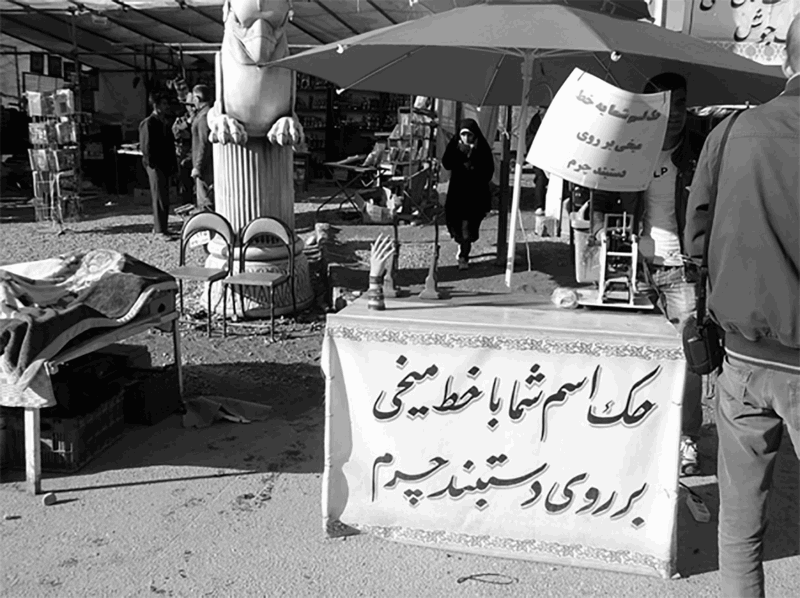
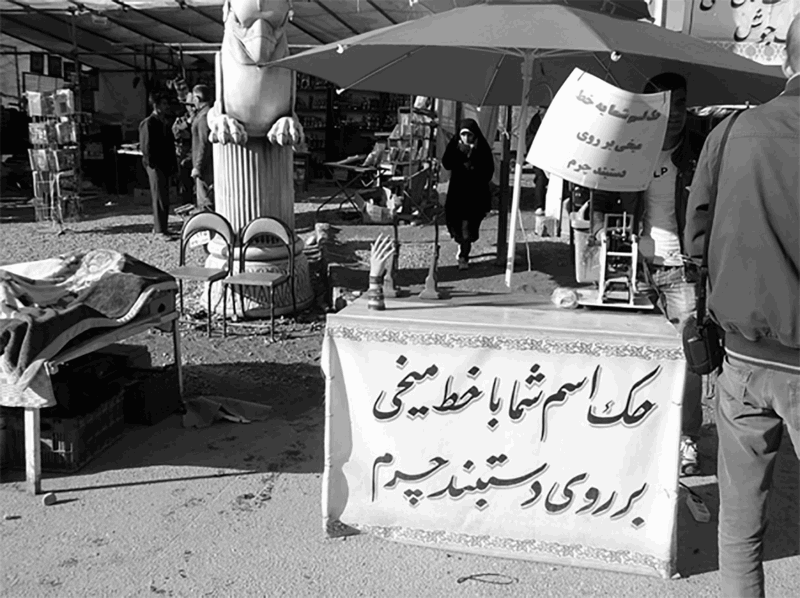
At Pasargadae, there is an interface between the locals and visitors, especially on sanctioned calendar dates such as the Nowruz. At this time, events and festivities are organized for tourists and some willing local participants. Locals and visitors mingle and a number of commercial stalls are erected (Figure 11). Perhaps this is the only event that exhibits the ethnic diversity of the country, which can be observed by both locals and visitors converging upon Pasargadae. However, there is little photographic trace of this interaction in the public domain.
Stall on road approaching site selling custom made wristbands embossed with the owner’s name in cuneiform.
Source: © Ali Mozaffari, 2011.
Living practices
As is the case the world over, heritagization of the site has transformed or even obliterated local practices—the old folkloric rituals around the tomb—and added new ones as well as changing the physical conditions of the place (the simple example being the erection of fences and controlled access).
To the locals, Pasargadae is a focal point of their village and township life, not only for its tourism-related significance, but, more importantly, as a revered recent ritual place, the memories of which persist. Thus, the traces of the old intimate reverence for the site persist at a local scale. They know it as a significant place of social interaction and venue for local rituals, including (in recent years) civic festivals such as horse races, and religious rituals such as collective prayers, to which we shall return later. These local “civic” and religious activities are officially sanctioned and, as evidenced by first-hand observation, frequently photographed by locals working for the heritage establishment and archived within the site’s management office. However, the archive is not available online. It remains unknown if locals too make their own personal recordings of these ceremonies. As a consequence, it cannot be determined, through the literature or through first-hand observation, the extent of visitor awareness of the activities at and interactions with the site by local residents, which already confirms multiplicity and “dissonance”Footnote 82 on the site.
Some other folkloric practices are remembered by locals but prohibited or discounted by heritage authorities. For example, there once existed among the locals a traditional ritual of circumambulating the tomb to consecrate events such as marriages and with a herd in order to cure or avert rabies.Footnote 83 Although such rituals were generally stopped, some locals occasionally elude heritage officials and these rituals are performed. One individual, a devout Muslim and follower of state ideology and policies, spoke of taking his bride and their wedding guests to circumambulate the tomb to consecrate their marriage. He argued the case at the gates until permission was granted and the guards allowed entry.Footnote 84
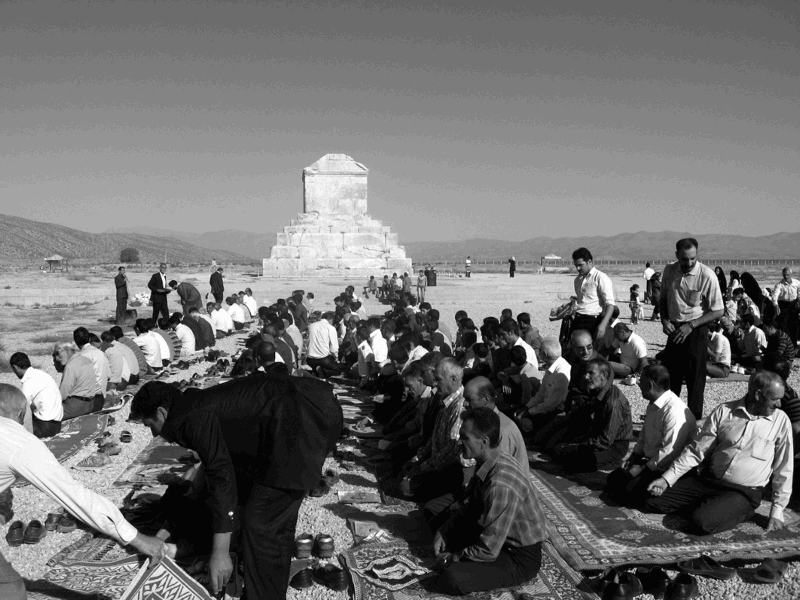
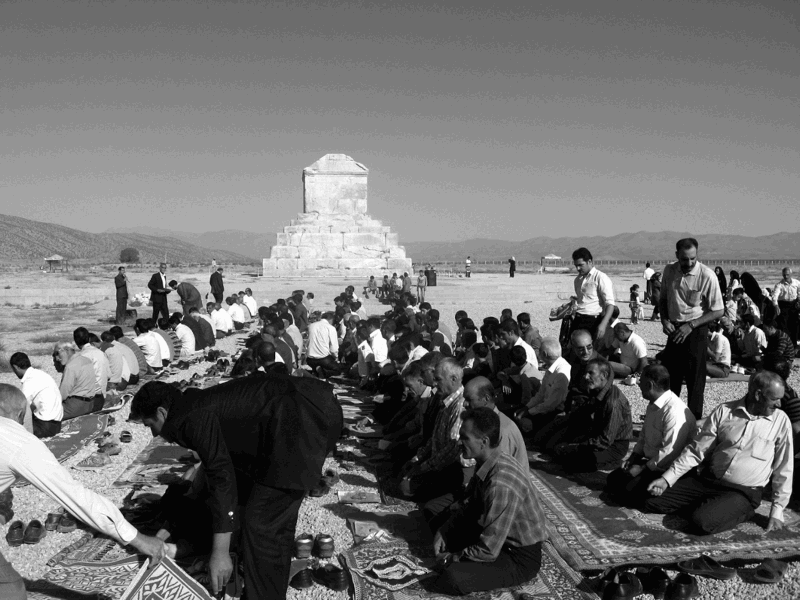
However, not all performances have ceased at the site. As already mentioned, the tomb’s surroundings and the site in its totality are held in reserve as public space for sanctioned events, in which locals participate, such as collective prayers on significant religious occasions such as Eyd-e Fetr, and commemorations for the anniversary of the Revolution (12 February) (Figure 12). The latter practice, however, ceased a few years ago, when a state-appointed cleric decided that Cyrus had little to do with revolutionary martyrs. Focus was directed instead at the township’s Martyrs’ cemetery.Footnote 85
Collective prayers for the occasion of the Islamic Eyd-e Fetr.
Source: © PH, 2013.
Examining the Images and Experiences of the Site
In this context, it is noteworthy that until 2016 very few, if any, images of on-site incidents and activities were represented in the public domain, resulting in a relative disconnect between images and practices (even visual practices) of the site. Even today, the few images that are online are almost entirely produced by official news agencies which show Nowruz celebrations around the tomb, an event that is nowadays uncontested and national in scale as evidenced in Said Zangeneh's photos of Nowruz 2016 at http://bit.ly/2oHQEKj). As already noted, contrary to the common wisdom, it seems that here official discourses are muted. A substantial link between the images and the dominance (or even presence) of a hegemonic (state-driven) discourse of heritage is hard to ascertain. Instead Pasargadae seems to represent a cultural space, at times gentle and at times violent, in which various discourses meet and a potential for common ground between official heritage and unofficial cultural practices is created.
Arguably, certain factions within the state benefit from predominant representations of the site as vacant and unoccupied because it creates a historical distanciation that suggests a bygone era and the absolute death of the place.Footnote 86 This perhaps explains why even images of officially sanctioned rituals (such as the Eyd prayers) are not distributed. While at the same time, the folkloric traditions that surround the site are quickly diluted and have all but disappeared. One need only look, for example, to the perception retained by some sectors of officialdom that preserving and glorifying cultural heritage, especially from the pre-Islamic era, is an “imperial” idea, which originates in the pre-revolutionary practice of appropriating the history of Iran and its artistic relics in support of monarchy.Footnote 87 Perhaps it was that same perspective which, in the wake of the revolution, had prompted calls in some quarters for the destruction of historical relics.Footnote 88 But then again, today, given the broader regional rivalries with Saudi Arabia and its allies and their active promotion of Wahhabism, some within officialdom may find it expedient to invoke pre-Islamic identity and history and even make references to racial differences from Arabs.Footnote 89
Another possibility in relation to the images of Pasargadae may be that the neutral images in circulation help people to avoid problematic associations with “subversive” activities or, worse, political protest. The state in Iran has held a tight, albeit uneven, control on social media. During, and even after, Ahmadinejad’s terms in office (2005‒2013), dissidents or those suspected of subversive activities against the state have been traced through their footprint on social media. In this sense, the limited nature of the public sphere and a perception of lack of safety may account for the lack of images of these events, exacerbating the limitations of visual expression in the public sphere. Although the events in October 2016 and the subsequent circulation of related images and footage can suggest a rising confrontational political tendency against the state and energized by heritage. In the examples of activities cited in this paper, the contestations do not convey immediate local relevance and the local position here is precarious, as most try to distance themselves from such politicized actions, fearing adverse consequences. For example, as mentioned, there have been instances of violent crowd control during Cyrus the Great Day, an occasion when most local residents avoid being seen as part of the crowd.Footnote 90 As a result, the contending discourses (contestation) actually occur at a national scale, at which the place is reified anyway, meaning it is seen as a symbol of a political struggle for interpretations of collective Iranian identity in which the local resident fades into irrelevance.
Reflections and Conclusions
Existing scholarship has established that photographs transform and commodify the “original characteristics of a destination into simulations conveyed through various media.”Footnote 91 Therefore, while photographs of heritage ostensibly “transcribe reality,”Footnote 92 they constitute simulacra that influence the limits of the experience of a site visit, possibly before the visitation has taken place—the former transforms the latter. This paper has illustrated the existing divergence between the dominant types of photographs in circulation and practices at Pasargadae, which indicates that in the case of Iran, the established tourism representation theories need to be applied with some nuance. Such a nuanced application results in both a critical interpretation of the meaning of photographs and the transformations of Pasargadae (thus pre-Islamic heritage) in Iran. While photographs may contribute to a redaction or diminishing of the impact of bodily encounters with the landscape for the visiting tourist, they also usefully conceal some of their on-site practices. This duplicity is, on the one hand, the result of the polysemy of photographs. Visual representations of Pasargadae have multiple meanings which are subject to change through time. In part, that change is effected by virtue of participation and appropriation of visual material in various ensembles, constructions and discourses.
On the other hand, that duplicity is a function of the photographs’ tenuous relationship with the experience and constitution of place. As citations representing “a sense of identity and belonging for particular individuals or groups,”Footnote 93 photographs influence the construction of Pasargadae as a place insofar as they are both (partial) copies of a heritage site and widely circulated symbols in their own right. In the larger scale, it may be said that photographs have played a role in amplifying Pasargadae’s political aspects, its “reactivation” on a mass scale, and its reification by eliminating the immediate local surroundings. Both conditions on site and the photographs in circulation suggest a potential for aestheticization and projection of abstract political ideologies. But this is not enough to predetermine the meaning or experience of place—which is subject to constant change in its own right—or its political function. The current situation does not substantiate a singular, monolithic ideology operating upon the site or the structural presence and dominance of a state hegemony. While politically subversive practices do take place on site, official discourses constantly change, contingent on the domestic and international politics of Iran at a given time. For example, it is difficult to predict when the image of the tomb of Cyrus will be invoked as a symbol of political protest, thus participating in a constellation of pre-Islamic, nationalistic discourse, or as a symbol of the Islamic Republic’s official appropriation of the tomb. Thus, in isolation, a photograph of Cyrus’ tomb appears as a “blank slate” upon which various meanings are projected, including ones about hegemonic discourses or even sinister ideologies such as Aryanism.
There is a further peculiarity which is related to the limitations of the public sphere and the amount of control exercised by the state, and this influences the type and flow of visual information and its connotations. It can skew the representation of heritage in the public domain and may be a reason that the same types of shots are produced and circulated both officially and unofficially.
Concurrently, there are some efforts on the part of officialdom to reconnect the site on a different level and with its contemporary Islamic context. This level of action, which involves local participation, includes reestablishing sanctioned rituals such as certain ceremonial prayers around the tomb within the confines of heritage. They operate on a local level and are usually hidden from the ordinary visitor. Endeavors of this kind, which reinvigorate the Islamic layer of the site, are not dissimilar to the previous regime’s 1970s restoration of the site to its imagined pristine condition, sometime in the ancient epochs.Footnote 94 Although sacredness is recognized as one of the characteristics of this site,Footnote 95 there is a clear contrast between this and other current and Islamic sacred sites, even in the vicinity. Such actions do encourage some limited and symbolic local participation but are not substantiated by material, economic inclusion of heritage in people’s quotidian lives. The local network remains detached from the heritage and visitor networks and that too is absent from photographs distributed in the public domain. Then again, perhaps such acts of organizing sanctioned Islamic rituals and the Nowruz alike are part of the common ground between the state and people, as signs of “cultural intimacy”—“the recognition of a cultural identity that … provide insiders with their assurance of common sociality, the familiarity with the bases of power” and that at once “reassure the disenfranchised” and “reinforce the effectiveness of intimidation” Footnote 96—at a local scale.
Yet, overall, there are various attempts to incorporate Pasargadae into official discourses, turning it into a site of cultural intimacy. On such occasions, two different scales of intimacy overlap on the site. For example, it is known that Ahmadinejad’s administration attempted to instrumentalize pre-Islamic heritage and identity for its own political discourse.Footnote 97 This condition is not unique to Pasargadae although it is most pronounced here and in the other most famous pre-Islamic site, Persepolis. It is an indication of a rapid shift in the collective imagination of the pre-Islamic past in Iran. This shift has arguably resulted in reevaluation, revalorization and even reinvention of cultural heritage, particularly in relation to the pre-Islamic. In recognition of this decisive change, successive administrations and the “state” in its totality have sought to engage and instrumentalize this kind of heritage through various strategies ranging from rejection to appropriation. This appears to be an inevitable process that is bound to continue in the hope of reaching a stable common cultural ground, a shared “intimacy,” which, in addition to other means, will be carried through various multifaceted visual representations.