The incorporation of principles of normal development into the empirical study of psychopathology has the potential to extend the work in both fields and to improve the translation of research into action. Although this approach has been advocated for over 20 years by developmental psychopathologists (Cicchetti, 1984; Cicchetti & Toth, 2000), it requires overcoming obstacles in each of these domains (Shonkoff, 2000). In this paper, we address the translation of dynamic skill constructs (Fischer, 1980; Fischer & Bidell, 2006) to children who have experienced serious maltreatment trauma, to build integrative links to improved diagnosis, treatment, and prevention of mental illness. We describe the constructs that form the basis for the developmental framework for dynamic skill theory, discuss the application of this normative developmental theory to work with maltreated children, and offer two empirical studies that compare maltreated and nonmaltreated children within this translational framework. These studies highlight the similarities and differences in the children's cognitive understanding and emotional expressiveness through the lens of this neo-Piagetian developmental frame. Our aim is to fully illustrate the importance of enhancing the contribution of normative developmental science to the study of developmental psychopathology, including clinical assessment and intervention in the prevention and intervention of mental disorders in young at risk children.
Dynamic Skill Theory: A Model for Normative Development in Context
Dynamic skill theory provides a model for understanding the intersection of normative emotional and cognitive development. Within this framework, development involves an individual's construction of progressively more complex control systems or skills. A skill is composed of a person's activities and the context or situation in which those activities occur. Therefore, a skill is a property not just of the person but of the person and situation together. Individuals demonstrate different levels of skills throughout development. Skills are organized into varying strands that build a developmental web (Fischer & Bidell, 2006). Individuals have many control systems that are naturally separate. Differences in emotional context lead to separate strands. Cognitive and emotional development, thus, flow together within these changing control systems (Fischer & Ayoub, 1994).
According to dynamic skill theory, development proceeds along a web with multiple independent strands that branch and join (Ayoub & Fischer, 2006; Fischer, 1980). A child, therefore, develops simultaneously along parallel strands, which form a sequence of skills within each domain (strand) but little sequential ordering across domains. Development, as such, is naturally fractionated in a kind of passive dissociation, with skills organized independently in terms of task, context, and emotional state (Fischer & Ayoub, 1994; Fischer & Pipp, 1984). In addition, individuals may move both up and down strands of the web. For example, a child may demonstrate a complex understanding of conservation of liquid at one point but misconceptions of conservation at another point. According to dynamic skill theory, individuals sometimes cycle back to early understandings of concepts as they learn new material. This developmental web is the norm for the full range of skills, from first relationships to reading and science.
Children's development of skills can be matched with growth cycles of the brain, especially the cerebral cortex (Case, 1991; Fischer & Rose, 1998). This rich biological concept of recurring growth cycles that predict both behavior and brain changes occur in repeating patterns of common developmental progress called a developmental level. In the last few years, new discoveries about brain functioning have led to evidence of recurring cortical growth cycles and the striking parallels of these cortical cycles with the cognitive–developmental cycles for levels and tiers (Thatcher, 1994).
An important construct in the dynamic skill model is the assumption that people do not have integrated, fundamentally logical minds, but instead have naturally fractionated strands of the web that can be potentially integrated over time (Fischer & Ayoub, 1994). The nature of the developmental process across the life span is to both integrate and differentiate these strands. Although emotions, regulatory processes, and communication skills, as well as complex cognitive schemas, develop systematically through a series of skill levels, such skills vary across the strands in the web and do not necessarily form a unified whole. This whole, be it unified or segmented, is the child's developmental pathway. The variation observed is in good part due to the variety of patterns of integration and differentiation in the web and the timing and context of the expression of each skill set. Skill theory allows for both developmental synchrony across skills as well as disconnection or splitting of skill sets within the individual; each is an adaptive move within the developmental process (Fischer & Bidell, 2006).
According to dynamic skill theory, cognitive skills develop through richly varied pathways, which are molded powerfully by emotions (Fischer, Knight, & Van Parys, 1993). Individuals organize the world according to emotion. Specifically, they split the world into mean and nice or good and bad. Gradually they move toward integrating these opposite emotional valences. This splitting and gradual reintegration is well demonstrated in children's organizations of nice and mean stories. Each level of development produces a qualitatively new type of skill for controlling nice and mean interactions. Children tend to start with the primitive splitting of mean and nice or good and bad, and then move toward integrating these opposite emotional valences.
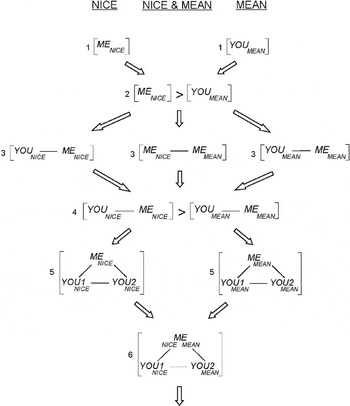
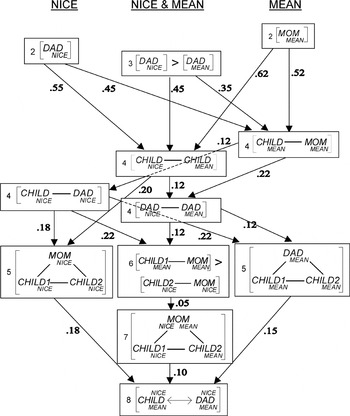
Early in the nice/mean pathway, 2- and 3-year-old children organize behavior in terms of single concrete representations for agents, people, or animate objects that carry out concrete actions and have concrete characteristics as illustrated in Figure 1. At this level, splitting is pervasive. Children represent a doll or person doing nice things or separately they represent a doll doing mean things. At this level, there is no coordination of nice and mean. Gradually, children construct more complex control systems that integrate components, including positive and negative, in higher level skills. At approximately age 4, representational mappings emerge, in which children coordinate a few representations in a single skill. At this point, most coordination maintains splitting, coordinating components that have the same valence. For example, children may relate YOUmean with MEmean to produce an understanding of negative social influence or contingency as illustrated in Step 2 in Figure 1. Integration begins with a few mappings coordinating opposite valence components for the same person or context. For instance, a 4-year-old girl may relate MEnice and MEmean to understand that she can be nice and mean at the same time.

The developmental web for typical nice and mean social interactions.
At 6 or 7 years, children develop representational systems, control systems that relate multiple representations in a single skill. Children coordinate two mappings to develop a skill where two or more people interacting can both demonstrate related positive and negative activities. For example, children begin to understand such exchanges as—I will be nice to you because you were nice to me and at the same time mean to you because you were mean to me (Steps 3 and 4 in Figure 1). It is not until 9 or 10, however, that these skills are consolidated and made routine.
Individuals tend to be biased toward the positive. This positivity bias develops during the third year, and is especially prevalent in evaluations of the self. Children and adults are inclined to evaluate themselves as basically good and as more responsible for positive than negative events. This positivity bias is seen in toddlers when children represent themselves as nice or good and someone else as mean or bad, whether the circumstances warrant that evaluation (Fischer & Ayoub, 1994; Harter & Buddin, 1987; Hencke, 1996). With development and a supportive environment, children (and adults) can integrate across this split, recognizing that both they themselves and other people can be simultaneously nice and mean. This positivity bias lasts through adulthood with most adults preferring primarily positive interactions, demonstrating a richer understanding of positive interactions, and characterizing themselves in mostly positive terms (Fischer & Ayoub, 1994).
When a new developmental level emerges, optimal performance along most strands shows discontinuity, reflected in growth spurts and reorganizations, which are marked by changes in direction, forks, and intersections of strands in the web. These changes do not occur all at once, but are distributed across a specific age period or zone. With the development of each level, the child can build new, more complex kinds of skills or understandings in diverse domains. Usually a child only produces this optimal level with strong contextual support, like that from a parent or teacher. Without such support, most thinking and learning occur at lower levels, not at the optimal level. These phenomena contribute to the diversity and dynamic movement within pathways as both stability and adaptation continue to play off of each other, resulting in variation in the behavioral presentation of the young child at any given moment in time.
Application of Dynamic Skill Theory to the Study of Maltreated Children
For scientific knowledge in human development to contribute in any productive way to the helping professions, research and theory must be translated to recognize and examine the diverse developmental pathways of individuals within multiple embedded contexts (Cicchetti & Toth, 1998; Horowitz, 2000; Lerner, Anderson, Balsano, Dowling, & Bobek, 2003; Morrison, Lord, & Keating, 1984). Moreover, it is essential to emphasize the varied potential pathways of development through the dynamic relation of the individual and her context. Dynamic skill theory offers a helpful set of developmental constructs, which can be applied to study the developmental impact of child maltreatment, and in turn, inform the development of intervention systems. The synthesis of research and theory across multiple disciplines becomes necessary to understand the child as a whole in the actual ecology of her life (Cicchetti & Curtis, 2006). This, in turn, leads to fostering research with utility for practitioners and policymakers.
Conventional views on psychopathology resulting from early maltreatment experiences assume immaturity or developmental delay resulting from fixation or regression (Freud, 1936/1966). Contrary to this view, the translation of a skill theory framework proposes that maltreated children demonstrate complex skills requisite to their particular, unique experience and on par with their nonmaltreated age mates, even when psychopathology is evident (Fischer & Ayoub, 1994; Fischer et al., 1997). If children develop along naturally fractionated strands of the web and a number of contextual influences can impact on the coordination of such skills including the trauma of child maltreatment, then it stands to reason that the developmental webs for the maltreated children are likely to differ from those of their nonmaltreated counterparts. In the case of child maltreatment trauma, children often actively keep events and anxieties separated rather than coordinated as an adaptive strategy to avoid being overwhelmed by fear and anxiety. In essence, fragmentation of thoughts and feelings serves the adaptive function of allowing the child to limit the experience of severe anxiety and helplessness and maintain functioning in order to survive. If maltreatment is recurrent, which it often is, then these traumatogenic responses become habitual and generalized; the routine use of these different ways of thinking and feeling are called “alternative developmental pathways” in the dynamic skills framework. Through translation of the pathways construct, we can hypothesize that maltreated children will demonstrate a cluster of fundamental changes in personality that include malignant feelings of inner badness and basic fragmentation in self. Such changes in how children organize themselves, especially along the positive/negative dimension and in terms of social–emotional dissociation, are not the result of delayed development, but due to the construction of different developmental pathways than those traveled by nontraumatized children. Specifically, maltreated individuals evidence more advanced skills in relation to negative than positive contexts. The influence of context on children's cognitive skill performance may help explain the discrepant findings regarding associations between maltreatment and cognitive skill development.
By using this pathways model based on dynamic skill theory, we can characterize maltreated children's behavior as adaptive and complex rather than delayed. This view of development accounts for more than a domain general and unidirectional system and considers context as primary, especially the context of relationships. In this way, we apply Fischer's framework (Fischer, 1980; Fischer & Bidell, 2006) to the analysis of developmental change in the face of child maltreatment because it allows us to emphasize the enormous variation in human development and the role of the environment over time in that variation.
These adaptive skills become even more sophisticated as the child hones defenses over time. The increasing complexity and sophistication at each skill level puts maltreated children on par with their healthy peers with respect to their relative complexity of skills but at risk for psychopathology, including a negative world view and dissociation (Briere, 1992; Hesse & Main, 2006; Macfie, Cicchetti, & Toth, 2001; Putnam, 1994). In summary, the translation of a skill theory perspective implies that the maltreated child's behavior is both adaptive and maladaptive, making survival in the home possible but survival in other contexts a challenge.
Maltreatment and Development
Maltreatment and cognitive skill development
There is extensive debate among researchers as to the cognitive sequelae of maltreatment. Some researchers report cognitive deficits among maltreated children while others find no difference in the cognitive development of maltreated and nonmaltreated children (e.g., Alessandri, 1991; Allen & Tarnowski, 1989; Eckenrode, Laird, & Doris, 1993; Kurtz, Gaudlin, Wodarski, & Howing, 1993; Reyome, 1993; Trickett, McBride-Chang, & Putnam, 1994). Furthermore, it is unclear what factors associated with maltreatment may result in differences in cognitive skill development between maltreated and nonmaltreated children. Some researchers propose that associations between maltreatment and cognitive development may exist due to environmental factors, which co-occur with maltreatment. In particular, maltreated children often experience multiple adversities, including poverty, parental psychopathology, poor nutrition, crowding, and parental unemployment (Cicchetti & Lynch, 1993; Cicchetti & Rizley, 1981), which correlate with lower level cognitive development (Smith & Thornberry, 1995; Vig, 1996). Previous studies comparing maltreated and nonmaltreated children's cognitive development have often lacked adequate comparison groups, matched on these environmental characteristics.
Maltreatment and emotional development
Maltreated children demonstrate a negativity bias in their emotional development (Shipman & Zeman, 2001). They exhibit negative emotions earlier than nonmaltreated children and attribute negative intent to others. Specifically, research demonstrates that expressions of anger tend to first occur among nonmaltreated children at 7–9 months of age and among maltreated children at 3–4 months of age (Gaensbauer & Hiatt, 1984; Sroufe, 1997). In one study, researchers found that maltreated preschoolers showed higher levels of anger and noncompliance during instructional tasks than nonmaltreated preschoolers (Erickson, Egeland, & Pianta, 1989). In addition, research shows an effect of early childhood maltreatment on the neural correlates of processing facial emotion such that maltreated children are especially sensitive to angry facial displays (Cicchetti & Curtis, 2005; Pollak, Cicchetti, Klorman, & Brumaghim, 1997).
In addition, maltreated children are hypervigilant to aggressive stimuli and are more aggressive than nonmaltreated children. Maltreated children are also able to recall aggressive events more accurately than nonmaltreated children (e.g., Macfie et al., 1999; Rieder & Cicchetti, 1989). Maltreated children's aggressive tendencies may result from their misinterpretation of and selective attention to certain emotional cues over others (Pollak, Cicchetti, & Klorman, 1998; Weiss, Dodge, Bates, & Pettit, 1992). More resources that are attentional are given to an event when it is considered particularly important or meaningful to an individual and when the emotions associated with the event are congruent to those being currently felt (Bower, 1981; Pollak et al., 1998). For maltreated children negative events and effects may be of more salience than positive events, as these events may indicate impending abuse (Pollak et al., 1998). This selective attention for the negative may leave maltreated children few resources to attend to and process positive stimuli (Pollak et al., 1998). Furthermore, behavioral findings describing negativity and fragmentation of self have been described in terms of disordered attachment styles in maltreated children by a number of researchers in the field (Ayoub, Fischer, & O'Connor, 2003; Cicchetti, 1991).
The normative positivity bias seen in nonmaltreated children and adults is often replaced by a negativity bias among maltreated individuals. The world of people begins with an assumption of meanness, sadness, danger, and violence. As early as 2 years of age, maltreated children tend to prefer mean to nice stories and to transform nice stories to mean stories. In a sample of maltreated toddlers, researchers found that stories about mean interactions developed earlier and were more energetic and richly elaborated than stories about nice interactions (Ayoub, Raya, & Fischer, 1993). In addition, nice interactions were often turned into mean ones. Consequently, although nonmaltreated individuals tend to exhibit higher level skills in positive contexts, such as being able to recall more details of positive than negative stories, maltreated individuals tend to show higher level skills in negative contexts.
Given these findings in the current literature, we offer two empirical studies to explore the assumptions from dynamic skill theory as applied to the behavioral presentations of maltreated children. The studies include an assessment of positivity and negativity bias, cognitive complexity, and affective splitting across domains with attention to exposure to different maltreatment contexts.
The current studies
The results of two studies comparing maltreated and nonmaltreated children's cognitive performance in the context of positive and negative story-telling tasks are presented here. The purpose of each study was to examine the cognitive skill performance of children on nice and mean stories in order to investigate the influence of maltreatment and context on children's cognitive skill performance; using a dynamic skill theory framework, these two studies extend the literature on maltreatment and cognitive skill development in more than three ways. First, maltreated and nonmaltreated children were matched in terms of family poverty and neighborhood environment to account for environmental contexts to which differences in the cognitive skill performance of maltreated and nonmaltreated children may be attributed. Second, children's performance in both positive and negative contexts was evaluated at increasing levels of cognitive complexity. Third, the potential moderating role of age on the association between maltreatment and cognitive skill performance in both nice and mean stories was assessed. Fourth, in each study the characteristics of the child's maltreatment trauma were systematically documented through operational definitions of subtypes, including criteria related to severity, frequency, and chronicity. This classification system provided independent coding of maltreatment that was legally substantiated by mandated agencies not directly involved with the research. In addition, the utilization of legally identified occurrences of child maltreatment is representative of actual cases that are considered sufficiently severe to warrant intervention by state authorities.
Methods
Common components of both studies
Although each study was designed and executed independently, they are presented together because of the unifying use of dynamic skill theory to frame questions about differences in maltreated children's cognitive skill performance in the context of specific positive and negative emotional stimuli. Each study used the Maltreatment Classification System (MCS; Barnett, Manly, & Cicchetti, 1993) to classify the children's maltreatment and the Mean and Nice Interaction Scales to measure the level of cognitive skill performance in light of systematic variation in emotional cues along positive and negative dimensions.
The Mean and Nice Interaction Scales
The Mean and Nice task (Fischer, Hencke, Hand, Ayoub, & Russell, 2001a, 2001b) is a series of 17 stories of nice, mean, and nice and mean interactions between children and their peers (Peer version) or children and their caregivers (Adult–Child version). Stories are told in order of increasing complexity, forming a developmental sequence based on Fischer's dynamic skill theory. Children's performance on each story is coded on whether they successfully retold the story either verbally or nonverbally. To successfully pass a story at a particular level of complexity the participant must be able to attend to the story and accurately represent the characters, verbally or nonverbally, as nice or mean and the various component parts of the story. Each child receives a skill level score for correct completions.
The MCS
The MCS (Barnett, Manly, & Cicchetti, 1993) was used to delineate diverse features of child maltreatment that individual children had experienced in each study. Cicchetti and Rizley (1981) argued that the phenomenology of child maltreatment is heterogeneous, involving different types and patterns of maltreatment with diverse etiologies, developmental sequelae, and responses to treatment. Accordingly, Barnett et al. (1993) advocated the development of a nosological system to characterize the substantial variability in experience among maltreated children. The MCS utilizes Department of Health and Human Services (DHHS) records detailing investigations and findings regarding maltreatment occurrences in identified families. Rather than relying on official designations and case dispositions, the MCS codes all information available on a designated family from DHHS records, making independent determinations of maltreatment experiences. In particular, the MCS codes all incidents that have been documented in DHHS records and, based on operational criteria, designates the subtypes of maltreatment individual children have experienced (i.e., sexual abuse, physical abuse, neglect, and emotional maltreatment), the severity of each type of maltreatment, the perpetrator(s) of each maltreatment incident, the developmental periods in which maltreatment occurred (i.e., infancy, toddlerhood, or preschool), and the frequency of maltreatment within and across developmental periods.
The presence of sexual abuse was coded when any sexual contact or attempted sexual conduct occurred between a child and an adult. These incidents ranged from exposure to inappropriate sexual activities to forced intercourse. Physical abuse included injuries that were inflicted upon a child by nonaccidental means. These physical abuse incidents ranged from corporal punishment that was deemed “excessive” because of bruising to permanently disfiguring injuries, such as severe burns. Physical neglect was coded when a responsible adult failed to meet a child's needs for food, clothing, shelter, medical, dental, or mental health care, education, adequate hygiene, or physical safety. Examples of typical neglect incidents included leaving young children alone, failing to seek appropriate medical care, maintaining unsanitary living conditions, and providing inadequate nourishment. Particular attention was taken to distinguish neglect from poverty, although attention to the child's needs was paramount. Thus, if a caregiver failed to access medical care for a serious medical condition, then the child was coded for experiencing neglect, regardless of the caregiver's income or medical insurance coverage. Emotional maltreatment was coded for incidents involving persistent or extreme thwarting of children's emotional needs. These included the need for psychological safety and security, for acceptance and self-esteem, and for age-appropriate autonomy. Examples of emotional maltreatment in the sample included serious threat to injure a child, exposure to violent acts among family members, caregivers' attempts to commit suicide in the presence of the child, and abandonment by primary caregivers. Events that were considered emotionally maltreating could occur in conjunction with another subtype, but particular attention was given to differentiating subtypes, and the emotional maltreatment component needed to be explicit to be coded. (See Barnett et al., 1993, for a detailed description of the nosological system used to code incidents for maltreatment.)
Prior investigations using the MCS have shown it to be reliable and valid in classifying maltreatment incidents (Bolger, Patterson, & Kupersmidt, 1998; Macfie et al., 2001; Manly, Cicchetti, & Barnett, 1994; Smith & Thornberry, 1995). Coding was completed by trained graduate students and PhD clinical psychologists, and very good reliability was obtained (weighted K = 0.78–1.00). In the current study, maltreatment status was indicated by a dummy variable (0 = nonmaltreated, 1 = maltreated). A child was classified as maltreated if he/she had, been physically, sexually and/or emotionally abused and/or neglected.
Maltreatment frequency
A continuous maltreatment variable was created to represent frequency of maltreatment. The scale values were 0 = no abuse, 1 = one incident of reported abuse, 2 = two reported incidents of abuse, and 3 = three or more reported incidents of abuse. Children who did not experience a particular subtype were coded 0 on that dimension.
Maltreatment severity
A single report of maltreatment could contain multiple incidents of maltreatment. For each incidence of maltreatment, the seriousness of the maltreatment was coded on a 5-point scale, with 1 = less severe maltreatment to 5 = extremely serious maltreatment. The severity scales are characterized by a continuum across subtypes. Children who did not experience any maltreatment were coded 0.
Study 1
Participants
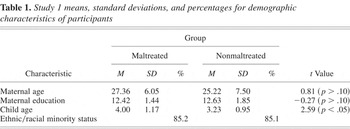
Before enrolling in this study, mothers of all maltreated and nonmaltreated children gave informed consent for their child's participation, as well as consent for examination of any DHHS records pertaining to the family. The participants in this study were 53 children (68.3% male, 31.7% female) ranging in age from 22 to 73 months (Mage = 44.25 months, SD = 14.18 months). Approximately half the sample was maltreated (50.9%) and half nonmaltreated (49.1%). Children were recruited from three childcare centers in an urban, low-income neighborhood. The maltreated group was chosen based on social service reports of maltreatment. The nonmaltreated group was selected to match the maltreatment group on demographic variables, specifically socioeconomic status (SES) and racial/ethnic group membership. Children from the nonmaltreated group who were identified as maltreated, by teachers and/or social workers, during the course of the study were reclassified as maltreated. Children were primarily African American (44.4%) and Latino American (25.9%). All children lived at or below the poverty line. The mean number of years of school completed by the children's mothers was approximately 12. There were no significant differences between the maltreated and nonmaltreated groups in terms of maternal age and education (see Table 1). In addition, the Denver Developmental Screening Test (DDST; Frankenburg et al., 1990) was individually administered to all maltreated and nonmaltreated children to determine whether any of the children were developmentally delayed. None of the children included in the current sample were developmentally delayed.
Study 1 means, standard deviations, and percentages for demographic characteristics of participants

Measures
DDST
Trained researchers completed the DDST on all children. The DDST (Frankenburg et al., 1990) is an observational measure of children's development. Children are rated as exhibiting or not exhibiting a specific behavior. Four developmental domains are assessed: personal–social, fine motor–adaptive, language, and gross motor. The mean of the four developmental scores from each of the sections of the DDST is highly correlated with full-scale intelligence and developmental tests, including the Bayley Scale of Infant Development and the Stanford–Binet Intelligence Scale (Frankenburg, Camp, van Natta, & Pearl, 1971).
The Mean and Nice Interaction Scales: Peer
In the first study, children completed the Peer nice and mean stories (Fischer et al., 2001b). Children's performance on each story is coded on two variables. First, participants are coded on whether they successfully retold the story either verbally or nonverbally as described above to obtain a skill level. Second, the children's stories in this study are coded for complexity of representation regardless of whether or not the story was retold correctly; this is an extension of the mean and nice story-telling procedure unique to this study that has been labeled as “highest level exhibited.” For example, a child might fail to retell accurately the story by switching the mean and nice characters, or by making a nice story mean, but his/her story might nonetheless be highly complex. Children were scored according to the complexity of the story with which they exhibited the highest skill level regardless of whether they recounted the story correctly. The purpose of this second code was to determine the child's cognitive skill in the context of any one of the stories told.
The children were visited at their childcare centers and administered the nice/mean measure individually in an empty classroom by a trained research assistant who had been introduced to the participants by a teacher. All administrations were videotaped and coded to analyze children's performances. Coders were unaware of children's maltreatment status. Interrater reliability was computed based on 60 codes of data (five stories). Cohen's kappa between raters ranged from .80 to .98. All children were administered the measure during the spring insuring that they had been in childcare for at least 7 months. Therefore, all the children were comfortable within the assessment environment.
The MCS
In addition to verification of maltreatment status by the Department of Social Services through the MCS (Barnett et al., 1993), study participants' maltreatment status was also verified by their primary case managers at the therapeutic child care facility that they attended.
Results
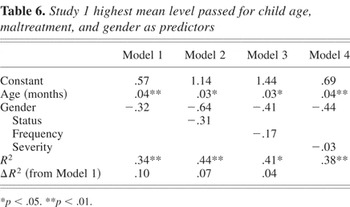
The means and standard deviations for highest level passed overall and for nice and mean stories were higher for older than younger children. No gender differences were found in highest level passed overall and for each of the categories of stories.
To examine whether children's performance on nice and mean stories was predicted by their maltreatment experiences, hierarchical multiple regressions were performed. Separate analyses were conducted to predict highest level exhibited, higher level passed overall, highest level passed nice, and highest level passed mean. Three different sets of analyses were performed to examine independently the effects of maltreatment status, frequency, and severity for a total of 12 sets of regressions. In all regression analyses, age and gender were entered in the first step and maltreatment experiences in the second step to examine the effects of maltreatment controlling for the effects of age and gender. In the last step, interactions were tested between the maltreatment variable and age.
Mean and Nice Scale: Highest level exhibited
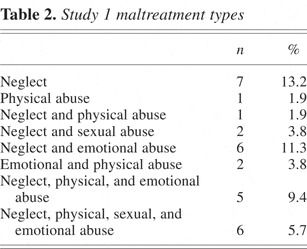
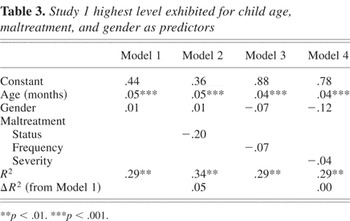
There were no significant associations between the maltreatment variables and highest level of story exhibited (see Table 2). Therefore, the data did not show that children who experienced maltreatment exhibited lower levels of ability than nonmaltreated children when their cognitive skills were assessed based on the most complex story told, regardless of ability to conform to the rules of retelling the story presented by the examiner.
Study 1 maltreatment types

Mean and Nice Scale: Highest level passed overall
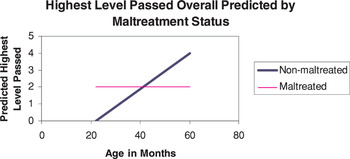
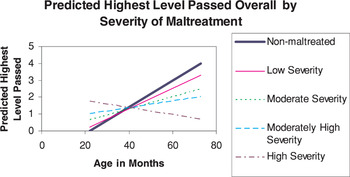
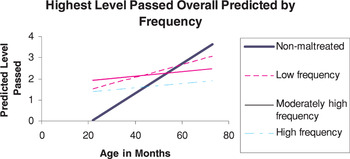
There was no main effect of maltreatment status, frequency, or severity on highest level passed (see Table 3). There were, however, interaction effects of age and maltreatment status (β = −.05, p < .10), age and maltreatment frequency (β = −.02, p < .05), and age and maltreatment severity (β = −.02, p < .05) on highest level passed overall. The interaction of maltreatment status and age is illustrated in Figure 2. Prior to 48 months, maltreated children passed higher level stories than nonmaltreated children. However, subsequent to 48 months nonmaltreated children passed higher level stories. The interaction of age in months and severity of maltreatment is illustrated in Figure 3. Prior to approximately 40 months, children who experienced the most severe incidents of maltreatment passed the highest level stories, while nonmaltreated children passed the lowest level. However, subsequent to 40 months, maltreated children passed higher level stories than nonmaltreated children. In addition, after 40 months, children who experienced less severe maltreatment passed higher level stories than children who experienced more severe maltreatment. Interestingly, among nonmaltreated children and children who did not experience high severity maltreatment, older children passed higher level stories than younger children. However, among children who experienced a high severity of maltreatment, older children passed lower level stories than younger children. The interaction of frequency of maltreatment and age is demonstrated in Figure 4. This interaction indicated that maltreated children passed higher level stories than nonmaltreated children until a certain age, which varied based on frequency of maltreatment, after which nonmaltreated children performed better. Specifically, subsequent to 45 months, nonmaltreated children passed higher level stories than children who experienced a high frequency of maltreatment. Subsequent to 57 months nonmaltreated children passed higher level stories than children who experienced a moderately high frequency of maltreatment. Last, subsequent to 62 months, nonmaltreated children passed higher level stories than children who experienced a low frequency of maltreatment. Among maltreated children, those who experienced the highest frequency of maltreatment passed the lowest level stories.
Study 1 highest level exhibited for child age, maltreatment, and gender as predictors


The interaction of maltreatment status and age on the highest level passed overall in Study 1.

The interaction of maltreatment severity and age on the highest level passed overall in Study 1.

The interaction of maltreatment frequency and age on highest level passed overall in Study 1.
Mean and Nice Scale: Highest level passed—Nice stories
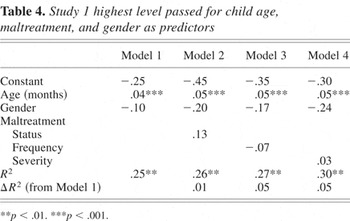
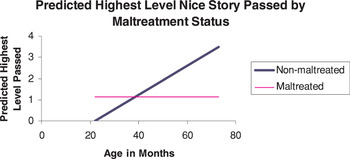
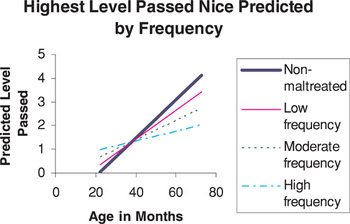
There was not a main effect of maltreatment status, frequency, or severity on highest level of nice story passed (see Table 4). However, there were interaction effects of maltreatment status and age (β = −.07, p < .05), maltreatment frequency and age (β = −.03, p < .05), and maltreatment severity and age (β = −.02, p < .05). The interaction of maltreatment status and age is shown in Figure 5. Prior to 39 months maltreated children passed higher level nice stories than nonmaltreated children; however, subsequent to 39 months maltreated children passed lower level stories. Interestingly, the slope for maltreated children was such that age had no effect on highest level of nice story passed. The interaction of maltreatment frequency and age is demonstrated in Figure 6. Prior to 40 months maltreated children passed higher level nice stories than nonmaltreated children. However, after 40 months, maltreated children who experienced low frequency maltreatment passed higher level nice stories than those who experienced moderate and high frequency maltreatment. After 40 months, children who experienced high frequency maltreatment passed the lowest level nice stories.
Study 1 highest level passed for child age, maltreatment, and gender as predictors


The interaction of maltreatment status and age on the highest level passed—nice in Study 1.

The interaction of maltreatment frequency and age on the highest level passed—nice in Study 1.
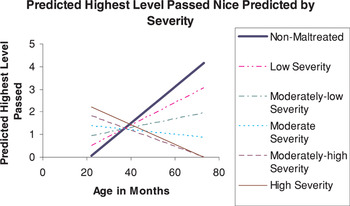
The interaction of severity of maltreatment and age is demonstrated in Figure 7. This interaction indicated that maltreated children passed higher level stories than nonmaltreated children until a certain age, which varied based on severity of maltreatment, after which nonmaltreated children performed better. Specifically, prior to 39 months, maltreated children passed higher level stories than nonmaltreated children. Subsequent to 39 months, however, nonmaltreated children passed higher level nice stories than maltreated children. Maltreated children's performance, however, varied as a function of severity. In particular, after 39 months, children who experienced less severe maltreatment passed higher level nice stories than children who experienced more severe maltreatment. Furthermore, among children who experienced low, moderately low, and moderate severity maltreatment, older children passed higher level nice stories than younger children. However, among children who experienced moderately high and high severity maltreatment, older children passed lower level nice stories than younger children.

The interaction of maltreatment severity and age on the highest level passed—nice in Study 1.
Nice and Mean Scale: Highest level passed—Mean stories
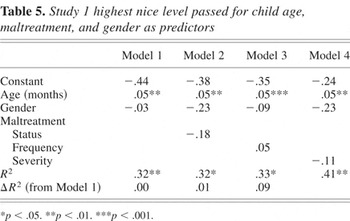
There was not a main effect of maltreatment status, frequency, or severity on highest level of mean story passed (see Table 5).
Study 1 highest nice level passed for child age, maltreatment, and gender as predictors

Study 2
Participants
The participants in this study included 141 children who ranged in age from 3.5 to 6 years. The sample comprised 75 maltreated children and 66 nonmaltreated comparison children from low SES backgrounds, all of whom resided in their biological homes. Table 6 provides a breakdown of the number of participants, mean age, standard deviation, and percentage of males of low SES maltreated and nonmaltreated comparison children in each of three recruited chronological age levels (3.5 years of age or less, 3.6–4.5 years of age, and 6 years of age). No statistically significant age differences on these variables were obtained at any chronological age level or for the overall sample. Moreover, there were no gender differences, either as a function of chronological age level or for the entire sample.
Study 1 highest mean level passed for child age, maltreatment, and gender as predictors

In addition, the Peabody Picture Vocabulary Test—Revised (PPVT-R; Dunn, Dunn, & Dunn, 1981) was individually administered to maltreated and nonmaltreated children to ensure that they were comparable on receptive vocabulary/level of cognitive maturity. No statistically significant differences were obtained between groups; the mean PPVT-R of the nonmaltreated children was 84.95 (SD = 19.25) and the mean of the maltreated children was 80.48 (SD = 15.68).
Prior to enrolling in this investigation, mothers of all maltreated and nonmaltreated children provided informed consent for their child's participation, as well as consent for examination of any DHHS records pertaining to the family. Families of maltreated children were recruited from the DHHS and were representative of families receiving services at the Monroe County DHHS. Specifically, families identified as having a child between the ages of 3.5 and 6 years with a documented history of maltreatment were contacted by a DHHS liaison, who requested permission from consenting families for project staff to contact them regarding study participation. Determination of maltreatment status was based on detailed examination of Child Protective Service (CPS) and Preventive Services records at DHHS. These records contained descriptions of children's maltreatment histories based on information obtained from multiple informants familiar with the family (e.g., CPS workers, mothers, neighbors, teachers, physicians, and daycare providers). All existing DHHS records for these families were examined and coded by trained raters utilizing the Barnett et al. (1993) nosological classification system for child maltreatment (described below).
Low SES nonmaltreated children were recruited from families receiving public assistance (e.g., Aid to Families with Dependent Children or Temporary Assistance to Needy Families). These families were selected based on their similarity to the demographic characteristics of the maltreating families. Nonmaltreatment status was determined by confirmation through record searches of an absence of any CPS or Preventive Services records for the family and further verified by maternal report. During maternal interviews to provide an additional screen for child maltreatment, mothers were queried regarding any family involvement with CPS or Preventive Services. Families were excluded from the nonmaltreatment group if there were any family history of DHHS involvement as indicated by record searches or maternal report.
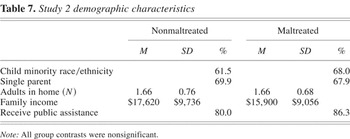
Low SES maltreating and nonmaltreating families did not differ on a number of important demographic characteristics (see Table 7). The majority (65.2%) of the children were from minority ethnic or racial backgrounds: 46.9% of the sample were African American, 34.8% were European American, and 18.3% were Latino. There were no differences in the percentage of minority and nonminority participants between the maltreated and nonmaltreated sample at any CA level or for the overall sample.
Study 2 demographic characteristics

Most of the families (69.9% of the maltreating, 67.7% of the nonmaltreating) were headed by single parents, typically female. Both groups of families contained an equivalent number of adults in the home (M = 1.66 in each group). Moreover, the maltreating and nonmaltreating families did not differ on their annual total income. Including benefits, the maltreating families made $15,900.00 per year, whereas the nonmaltreating comparisons made $17,620.00 annually. Finally, the families in both groups were heavily reliant on public assistance, with 86.3% of the maltreating and 80.0% of the nonmaltreating families receiving such support.
The abuse and neglect experiences of the maltreated sample were diverse. Approximately 14.70% (n = 11) of the children had been sexually abused, 36.00% (n = 27) had been physically abused, 65.3% (n = 49) had been emotionally maltreated, and 86.70% (n = 62) had been neglected. As such, the majority of maltreated children (64%, n = 48) had experienced two or more subtypes of maltreatment. The frequency of cases with only one maltreatment subtype was low for children who had been physically or sexually abused. Only one of the children who had been physically abused experienced physical abuse exclusively, and only two of the children who experienced sexual abuse were solely sexually abused. The multiplicity of subtypes experienced by children in the maltreated sample is consistent with that reported in other samples of maltreated youngsters (Barnett et al., 1993; Manly et al., 2001).
Procedure
All children were brought into a laboratory assessment room that contained a table and chairs. Children were individually administered the Mean and Nice Interaction Scale: Adult/Child (Fischer et al., 2001a) and the PPVT-R by PhD-level and graduate student examiners who were unaware of study hypotheses and maltreatment status. In a separate lab room, mothers completed a brief demographic interview. Sessions lasted approximately 60 min.
Measures
Mean and Nice Interaction Scale: Adult/ Child
The Mean and Nice Interaction Scale—Adult/Child (Fischer et al., 2001a) was used in this study: stories were about children's interactions with a caregiving adult as opposed to peer, as in Study 1. Children were administered nice, mean, and nice–mean integration stories in this study. The coding of the scale was completed by the same coder, who was trained to reliability standards by the scale author (K.F.). Coders did not code for highest level exhibited. The coder was not aware of the group status of the children in the study or the study's hypotheses.
Child age
Age was categorically coded such that children were assigned a score of 1 if they were 3.5 years or younger at test administration, 2 if they were 3.6–4.5 years at test administration and 3 if they were 6 or older at time of administration.
PPVT-R
The PPVT-R (Dunn et al., 1981) is an individually administered, multiple-choice test designed to assess the receptive vocabulary skills/cognitive maturity of persons aged 2.5 through 90+ years. Prior research using the PPVT-R has shown it to be both valid and reliable (e.g., split-half reliability = .81, test–retest reliability = .72). The correlations between the PPVT-R and the vocabulary subtests of the Wechsler Preschool and Primary Scale of Intelligence and Wechsler Intelligence Scale for Children—Revised (the predecessor to the Wechsler Intelligence Scale for Children–Third Edition) are .40 and .70, respectively.
Maltreatment classification
The MCS (Barnett et al., 1993) used in Study 1 was also used in Study 2. The only difference in coding of maltreatment from Study 1 and Study 2 was that in Study 2 the presence of specific types of maltreatment were also dummy coded as occurring or not.
Results
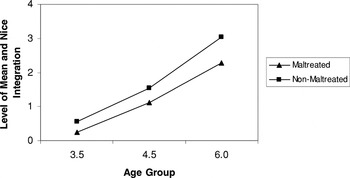
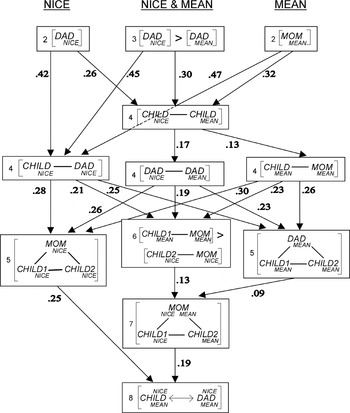
Four variables, derived from the Mean and Nice Interaction Scales, were examined to investigate the developmental and maltreatment influences on children's level of social–cognitive complexity. These variables included (a) the highest overall level of performance attained on the scale, (b) the highest nice level, (c) the highest mean level, and (d) the highest level of mean and nice integration. Analyses of variance were conducted contrasting the performance of maltreated and nonmaltreated children in the three age groups on these four variables. Strong age group effects were found for each of the performance variables with F (2, 135) values ranging from 41.08 to 53.71 (ps < .001). For all of the dependent variables, post hoc Tukey tests indicated that the age 3.5 group performed significantly lower than the age 4.5 group, which performed significantly lower than the age 6 group. A maltreatment main effect was found for one variable, mean and nice integration, F (1, 135) = 7.17, p < .01. All interactions between maltreatment status and age group were nonsignificant. Figure 8 illustrates the age and maltreatment group effects for the mean and nice integration variable. At each age, maltreated children perform at a lower level than nonmaltreated children. The dendrograms in Figures 9 and 10 provide graphic displays of the different sequences of nice and mean responses from maltreated and nonmaltreated children across time. These dendrograms were created through a technique called partially ordered scaling, in which sequences can have branches rather than simply linear steps (see Knight & Fischer, 1992, for additional details). In addition to the sequencing of tasks, partially ordered scaling provides a measure of the magnitude of the ordering or dominance between tasks. The dominance is the variance of the difference between two items. Dominance figures are documented in Figures 9 and 10.

The interaction of maltreatment status and age on the highest level passed—nice and mean in Study 2.

A dendrogram of the comparison group in the first three age categories for Study 2.

A dendrogram of the maltreated children in the first three age categories for Study 2.
Subtypes of maltreatment
In addition to the global categorization of children in the maltreated and nonmaltreated groups, we also examined various parameters of child maltreatment to provide a more detailed characterization of how variation in maltreatment experiences influences social–cognitive understanding. In terms of the sub-types of maltreatment, the high comorbidity among emotional maltreatment, physical abuse, sexual abuse, and neglect resulted in it not being feasible to classify children into discrete subtype groups. Alternatively, we conducted a series of analyses contrasting maltreated children who had experienced a specific form of maltreatment (e.g., emotional maltreatment) with the nonmaltreated children to investigate the relation of different forms of maltreatment in relation to social–cognitive complexity.
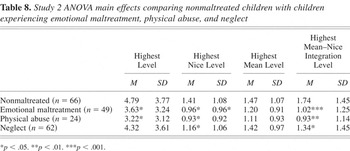
When emotionally maltreated children (n = 49) were contrasted with nonmaltreated children in analyses of variance (ANOVAs) along with age group, important differences were found (Table 8). Not only were emotionally maltreated children found to differ from nonmaltreated children on mean and nice integration, F (1, 115) = 11.60, p < .001, as had been found for the entire maltreatment sample, but also emotionally maltreated children were found to differ for overall level, F (1, 115) = 4.67, p < .05, and highest level of nice, F (1, 115) = 8.30, p < .01. Across the three age groups, emotionally maltreated children attained a lower level of performance than nonmaltreated children for each of these three variables. No differences were found for the highest mean level of understanding.
Study 2 ANOVA main effects comparing nonmaltreated children with children experiencing emotional maltreatment, physical abuse, and neglect

Similar findings were found when physically abused children (n = 27) were compared to the nonmaltreated group. Whereas no significant differences were found for highest mean level of understanding, main effects for physical abuse were observed for the highest overall level, F (1, 87) = 4.41, p < .05, highest nice level, F (1, 87) = 5.59, p < .05, and highest level of mean and nice integration, F (1, 87) = 9.87, p < .01. The subgroup of children experiencing physical abuse performed more poorly on these variables than nonmaltreated children across the age range.
When children who had experienced neglect (n = 62) were contrasted with the nonmaltreated children, the ANOVAs revealed significant differences; however, the differences were less distinct than for the subgroups involving emotionally maltreated and physically abused children. Beyond the effects of age, neglected children performed more poorly than nonmaltreated children on highest level of nice, F (1, 122) = 4.29, p < .05, and highest level of mean and nice integration, F (1, 122) = 6.14, p < .05.
The small number of children who had experienced sexual abuse (n = 11) did not permit us to examine these children in ANOVAs with age group. However, when we compared the children who had experienced sexual abuse with the nonmaltreated children in t tests, none of the contrasts was significant.
Because the maltreated children frequently had experienced multiple forms of maltreatment, the total number of subtypes of maltreated to which children had been subjected was examined as an index of the pervasiveness of maltreatment. For maltreated children, scores ranged from 1 to 4, and nonmaltreated children were given a score of 0. A regression strategy was employed to evaluate the effects of the number of subtypes of maltreatment and chronological age as predictors of the mean and nice variables. Age was entered in the first step of the regression equation, followed by the number of subtypes of maltreatment in step 2. The number of subtypes of maltreatment did not contribute to prediction of overall level of performance or to the highest mean level attained. However, the number of subtypes of maltreatment experienced did contribute independently beyond the effects of age to prediction of the highest nice level and the highest level of mean and nice integration. For the highest nice level, the number of subtypes experienced was negatively associated with level of performance (β = −.18, p < .01). Similarly, for the highest level of mean and nice integration, the number of subtypes of maltreatment experienced was negatively related to performance (β = −.20, p < .01).
Subtype severity
In addition to the experience of the various forms of child maltreatment, we also examined whether variation in the severity of each of the forms of maltreatment contributed to social–cognitive complexity, beyond the effects of chronological age. The maximum level of severity children experienced for each subtype of maltreatment was determined, with severity scores ranging from 1 to 5 for emotional maltreatment, neglect, and physical abuse, and from 2 to 5 for sexual abuse. Children not experiencing a specific form of maltreatment were given a score of 0. In regression equations, after controlling for the effects of age in step 1, the severity variables were entered stepwise in step 2 to predict the social–cognitive variables. Severity scores were only associated with the highest nice level and the highest level of mean and nice integration. Furthermore, only the emotional severity scores made an independent contribution to prediction of these variables (β = −.15, p < .05 and β = −.17, p < .01, for nice level and mean and nice integration level, respectively). More severe emotional maltreatment was related to poorer performance on these variables.
Developmental timing
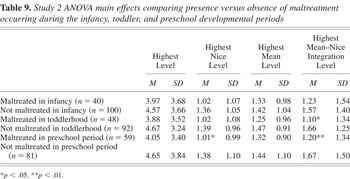
The maltreated children varied in terms of when in the course of development maltreatment had occurred and in the chronicity of maltreatment. The presence or absence of maltreatment during the infancy, toddler, and preschool developmental periods was determined for all participants, and these variables were used as dependent variables in a series of ANOVAs, along with age group to examine differences in performance on the social–cognitive variables (Table 9). For maltreatment occurring during infancy, no main effects of maltreatment were found. In contrast, a main effect for maltreatment occurring during the toddler period was found for the level of highest mean and nice integration, F (1, 134) = 4.11, p < .05. Beyond the effects of chronological age, children experiencing maltreatment during the toddler period attained lower levels of performance than children who were not maltreated as toddlers. Similarly, maltreatment occurring during the preschool period also was related to social–cognitive abilities. Maltreatment occurring during the preschool period was related to lower levels on the highest level of nice attained, F (1, 134) = 5.83, p < .05, and to lower levels of mean and nice integration, F (1, 134) = 8.06, p < .01.
Study 2 ANOVA main effects comparing presence versus absence of maltreatment occurring during the infancy, toddler, and preschool developmental periods

The effect of the chronicity of maltreatment was examined based on the total number of developmental periods in which maltreatment had occurred. The number of developmental periods of maltreatment (with nonmaltreated children being given scores of 0) was used as an independent variable along with chronological age in a series of regression equations to predict the social–cognitive variables. The chronicity variable did not contribute to prediction for the highest overall level attained or the highest mean level. In contrast, chronicity contributed, beyond the effects of age, to highest nice level attained (β = −.15, p < .05,)and to the highest level of mean and nice integration (β = −.16, p < .05). Children with more chronic maltreatment performed more poorly on these social–cognitive variables.
Perpetrators of maltreatment
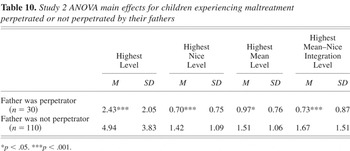
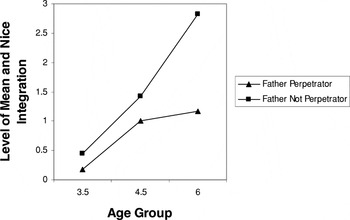
The experience of child maltreatment also varied within the sample, based on the perpetrator of maltreatment, particularly whether the child's father was a perpetrator. A series of ANOVAs was conducted, with age group and the presence versus absence of maltreatment perpetrated by fathers as independent variables (Table 10). In addition to the age main effects, significant main effects for the father as perpetrator variable were found for all four social–cognitive variables, F (1, 134) = 12.43, p < .001, F (1, 134) = 13.12, p < .001, F (1, 134) = 5.36, p < .001, and F (1, 134) = 11.47, p < .001, for highest level, highest nice level, highest mean level, and highest level of mean and nice integration, respectively. Children whose fathers had been perpetrators of maltreatment performed more poorly on each of the social–cognitive variables compared to children who had not experienced maltreatment from their fathers. Furthermore, significant interactions between age group and father perpetrator were observed for performance variables, highest nice level, F (2, 134) = 3.17, p < .05, and highest mean and nice integration, F (2, 134) = 3.01, p < .05. Preschool age children whose fathers perpetrated maltreatment performed substantially lower than others on these two variables. Figure 11 illustrates the interaction for the highest level of mean and nice integration.
Study 2 ANOVA main effects for children experiencing maltreatment perpetrated or not perpetrated by their fathers


The interaction of the father as perpetrator and age on the highest level passed—nice and mean for Study 2.
Discussion
The purpose of these studies was to illustrate the application of normative developmental constructs from a dynamic skills perspective to a sample of maltreated children. By using the translation of these normative developmental processes as a framework, we enhanced our understanding of the variation in the behavioral and cognitive presentations of both the maltreated and nonmaltreated children. This understanding, in turn, will inform our decision-making process around the need for and design of interventions to reduce the risk of mental disorder in these vulnerable children. For example, maltreatment has been identified in some studies as a risk factor for delayed and lower cognitive skill development. Researchers, however, have argued that maltreatment alone may not be responsible for cognitive delay as maltreatment tends to co-occur with multiple other risks. A grounded developmental theory like dynamic skill provides the framework to consider the interface of cognitive and affective domains in context and offers that context in which studies of maltreatment with comparable groups of maltreated and nonmaltreated children can be conducted. The two studies reported herein provide a means to frame and conduct such analyses from the broader perspective of adaptive variation than that offered by either a pathological or normative approach alone.
In Study 1, we found that maltreated children did not evidence cognitive delay, compared to nonmaltreated children, but rather developed along an “alternate developmental pathway” as described in the skill theory literature. In particular, controlling for the effect of age, maltreatment status was not associated with the highest level of skill children exhibited in their stories. Overall, maltreated and nonmaltreated children demonstrated the same level of cognitive complexity. This affirms prior research that documents some de-lay in maltreated children, but also clarifies that nature of the selectivity of such demonstrated delays. Maltreated children in the study were not cognitively compromised in the traditional sense, but were responding through an organizational lens different from that of their nonmaltreated counterparts. Maltreated children, when compared to nonmaltreated children, did pass lower levels of stories after approximately 42 months of age. In other words, maltreated children were not able to retell stories as accurately as nonmaltreated children. This disparity in maltreated and nonmaltreated children's overall performance related specifically to their different levels of performance on nice and integrated nice/mean stories. After approximately 3.5 years of age, maltreated children passed lower levels of stories that involved nice interactions than nonmaltreated children. In contrast, on average, both groups of children passed the same level of mean stories. These findings augment previous research, which demonstrates that among maltreated children, affective splitting is present in early childhood and development is shifted toward negative emotionality (Fischer & Ayoub, 1994). Maltreated children, through their focus on negativity as an adaptive response to the perception of increased threat, appear to learn to divert attention from material that is positive and benign.
Both studies illustrate the importance of examining the effects of maltreatment among very young children. Each emphasizes the importance of a developmental framework that takes context and cognitive development into account. The effects of maltreatment and maltreatment severity on the highest level of nice story passed were found to vary by age in Study 1 but not Study 2. In Study 1, maltreated children, regardless of severity of maltreatment, performed above nonmaltreated children prior to 40 months indicating precocious development among maltreated children. Subsequent to 40 months, however, maltreated children performed lower than nonmaltreated children and children who experienced more severe maltreatment performed below those who experienced less severe maltreatment. In Study 2 though, regardless of age, maltreated children performed below nonmaltreated children and children who experienced more severe maltreatment performed lower than those who experienced less severe maltreatment. These results would suggest that maltreated children always performed lower than nonmaltreated children on positive stories. Children in the second study, however, were mostly older than 42 months. Findings indicate that if studies of maltreatment only focus on older children, erroneous conclusions may be drawn regarding the developmental implications of maltreatment.
The fact that an effect of maltreatment on children's performance on positive stories was not evident until approximately 40 months of age is in line with dynamic skill theory. Most 2- and 3-year-olds have not developed beyond skill level 3, at which point there is no true coordination of nice and mean. Therefore, very young children are not able to engage in complex affective splitting. In the case of the maltreated toddlers, they are consistently hypervigilant across both nice and mean stories (Fischer & Ayoub, 1994). However, by approximately 4 years of age, children begin to engage in representational mapping and coordinate a few representations into a single skill. At this point, most coordinations maintain splitting, coordinating components that have the same valence. The ability to engage in representational mapping allows for more complex affective splitting. Such complex splitting, (i.e., sorting events, persons, objects into categories or groups) results in evidenced positivity or negativity biases depending upon the context of the child's lived experience. Most nonmaltreated children develop a positivity bias due to their preference to think of themselves in positive terms. Maltreated children, however, tend to develop a negativity bias at this stage. These differences in biases appear to contribute to nonmaltreated children's better understanding of nice stories. These findings illustrate the importance of developmental theory in the assessment of vulnerable populations and reinforce the importance of the reciprocal interplay between basic developmental science and the study and treatment of psychopathology.
These two studies also demonstrate the complexity of child maltreatment and its effects on development. The effects of maltreatment on cognitive skill performance vary not only as a function of age and maltreatment severity, but also according to specific characteristics of the maltreatment situation. In the second study, emotionally and physically maltreated children performed lower than nonmaltreated children did overall and on nice and nice/mean integration stories. Neglected children performed lower than nonmaltreated children on nice stories and nice/mean integration stories but did not evidence a difference in overall performance. These results lend some support to previous studies examining varying effects of maltreatment involving acts of omission versus commission. Research suggests greater negative effects of acts of commission potentially due to the personally invasive nature of such abuse. The variation in alternative pathway responses clearly may be impacted by the nature, severity, and duration of the maltreatment experience.
The number of subtypes of maltreatment children experienced and the frequency and chronicity of maltreatment were negatively associated with several aspects of children's performance. Specifically, children who experienced more subtypes and more frequent episodes of maltreatment performed lower on nice and nice/mean integration stories than children who experienced fewer subtypes and over fewer developmental periods. These results are not surprising as previous studies indicate that maltreatment effects on emotional development are cumulative such that the more types and incidents of abuse suffered, the greater the negative consequences, as manifested in negative attribution biases and aggression.
In addition, children in the second study were assessed based on the identity of the perpetrator of abuse. Fathers as perpetrators resulted in poorer performance in the child victims. This finding speaks to the need to target fathers and men in general for both focused and universal preventive parenting education.
Conclusion
In conclusion, results from these studies offer additional evidence for maltreated children's development along “alternate developmental trajectories” characterized by selective cognitive performance differences and the development of a negativity bias or negative world view. Similar results were found in both studies even though varying analytic methods (regression and ANOVA analyses) were employed. Such findings also offer a cautionary message for clinicians because traditional ways of assessing cognitive competence in young children may lack the sensitivity to compare their performance in both negative and positive emotional contexts.
In general, maltreated children's storytelling is as complex as that of their nonmaltreated counterparts; however, maltreated children have more difficulty representing nice interactions as they mature. Implications for learning are evident; if young children are less able to attend and respond to positive narratives, they may be at risk for difficulties with concentration and learning in both home and school settings. These difficulties do not arise from generalized developmental delay or primary organic difficulties, but from the selective inattention that maltreated children learn to give to routine events that are positive. In contrast, the maltreated toddler, not yet able to engage in representational mapping, must address each new situation as unique. Because younger maltreated children cannot hold people and events in groups related to positive and negative contexts, they are hypervigilant in the face of all new stimuli as a result of their negative life experiences.
From the basic developmental science perspective, these findings provide credence to the proposition that the two central organizers of developing close relationships, the positive–negative dimensions of emotions and the natural patterns in differentiation and integration, are fundamentally reorganized as a result of emotional trauma (Fischer et al., 1997; Fischer & Pipp, 1984). The variation from the norm remains a central feature of the schemas that become further differentiated and integrated as the child gains cognitive skills. However, these fundamental coping strategies, learned in response to trauma, but generalized to everyday life, mold the child's thoughts and emotional processing in ways that are quite different from those of nontraumatized children.
Finally, these two studies, as examples of translational work, have implications for both diagnostic and intervention systems. The similarities and differences in the emotional and cognitive functioning of maltreated children are evident early in the life of the child. Impacts may certainly be present even if the child's developmental capacity does not make them fully evident to the examiner. A sound knowledge of normative developmental processes and the differences demonstrated by maltreated children should become a component of the diagnostic process for the clinician working with young children and families (Toth & Cicchetti, 1993, 1999). The imbalance in problem solving for young maltreated children, especially with difficulties in positively bias scenarios, also has implications for educators working to assist learning for such children.
One key message clarified by a basic developmental framework applied to this special population of vulnerable children is that the assumption of generalized cognitive delay in a maltreated child should be considered cautiously by the practitioner; the influence of selective inattention and preoccupation with negative occurrences should be examined in assessment. The importance of maltreated children receiving early intervention services is underscored through the results of these two studies. Treatment protocols that address the early differences in attention, negativity bias, and affective splitting should be considered. Changes in response rates of maltreated preschoolers to positive scenarios can be used as an indicator of the child's progress.
The implications for change in the assessment with maltreated children are twofold: first, very young children already have begun to incorporate cognitive schemas that favor negativity and lead to increased difficulty with successfully managing positive interactions (Cicchetti & Toth, 2005). Once children are able to represent and categorize their experiences into groups, the maltreated children begin to lag in cognitive competence in given domains (managing positively charged tasks). However, maltreated children's abilities to think with cognitive complexity, similar to their nonmaltreated counterparts, is sustained, but applied differentially to situations based on emotional valence. These findings require new thoughtful approaches to teaching maltreated children to problem solve in positive contexts rather than focusing on reduction of negative expression alone. Second, the impact of trauma on the young child is related to the severity and frequency of the child's negative experience; continued efforts to reduce serious and prolonged maltreatment demand more targeted focus on assessment of very young children. Children who experience severe and frequent maltreatment are in serious danger of powerful and prolonged deleterious impacts on their functioning. Implications for treatment include reinforcement of the need for early intervention and the importance of reducing the frequency and severity of continued neglect or abuse in children who remain in their biological homes. Although future studies are needed to assess the continuing impact of these changes in maltreated children's cognitive and emotional functioning into adolescence and adulthood, intervention systems to assist young maltreated children in more normative integration of cognition and emotion can begin today.