Introduction
In 2018, 124 disasters were declared in the United States (US), with 76% of states or territories experiencing at least 1 disaster. 1,2 The Federal Emergency Management Agency (FEMA), a government agency that coordinates community efforts in addressing disasters, has partnered with a variety of organizations to encourage US households to prepare for potential disasters through its Ready Campaign, which launched in 2003. 3 As part of the campaign, FEMA published “Are You Ready? An In-Depth Guide to Citizen Preparedness” as a resource, which includes recommendations on making a disaster supplies kit with enough food, water, and other supplies to last at least 3 days. 4 In the past, FEMA and the American Red Cross have also suggested that citizens store enough food and water for their households to last at least 2 weeks. 5 Public health officials have long recognized the importance of preparedness and have included it as a Healthy People 2030 topic area. 6
Although evidence currently exists as to general preparedness of US households in regards to large-scale disasters or emergencies, Reference Howe7,8 and the prevalence of natural disasters, 1 relatively few studies have provided an in-depth report of food and water storage practices. Golem and Byrd-Bredbenner Reference Golem and Byrd-Bredbenner9 conducted household food inventories in 1 geographical location and found that households’ food supplies, even at 100% of meeting dietary recommendations for each household member, could last beyond the 3-day supply recommended by FEMA. A similar study conducted by Golem, Hallman, et al., Reference Golem, Hallman, Cuite, Bellows and Byrd-Bredbenner10 found among a small sample of African-American and Oaxacan-American households, many would not be able to sustain a nutritionally-balanced diet for household members after 3 days. Limitations of these studies included the use of 1 geographical region, small sample sizes, and only surveying households with children 12 years of age or younger. Gerla et al., Reference Gerla, Lloyd, Eggett and Pike11 tested water stored in non-commercially packaged containers in Utah households, and found a small percentage of consumers who stored water in non-approved containers or who had water contaminated with excess amounts of chlorine or coliform bacteria, thus making it a potential health hazard if the water was used in an emergency situation. To our knowledge, outside of the Gerla et al. Reference Gerla, Lloyd, Eggett and Pike11 publication little research had focused on an in-depth analysis of consumer practices in storing water for emergency situations, although in natural disasters, public culinary water supplies may become disrupted or contaminated, creating a critical public health concern. Reference Trento and Allen12,Reference Rebmann, English and Carrico13 The purpose of our study was to report food and water storage practices among a diverse (in regards to age, sex, household composition, and geographical location) sample across the US, including what people were storing specifically, and how well they were following FEMA guidelines.
Methods
Study Design and Sample
A convenience sample of Qualtrics (Qualtrics, Provo, UT, USA) adult survey panelists (n = 572) completed an online survey about general preparedness and food and water storage practices in August 2014. Panelists initially received an invitation to participate and if interested, completed screening questions to determine eligibility and an informed consent form. Respondents were compensated for their time based on Qualtrics panel rates. The Brigham Young University’s Institutional Review Board approved this study.
Survey Development
The 142-item survey was developed based on underlying emergency preparedness guidelines for the general public provided by FEMA, the Centers for Disease Control and Prevention’s Behavioral Risk Factor Surveillance Survey (BRFSS), and other emergency preparedness entities. 4,Reference Gerla, Lloyd, Eggett and Pike11,14 Survey design/content experts reviewed the initial survey and revisions were made to the survey based on their feedback. Further testing of the survey occurred through cognitive interviews (n = 5) and a pilot survey (n = 14) to test understandability, readability, and the length of time it took respondents to complete the survey. Cognitive interviews allow researchers to determine if the subjects in the target population interpret questions in the survey in the manner the researchers had intended. Reference Dillman, Smyth and Christian15 Interviews lasted, on average, 48 minutes. Subjects were reimbursed for their time with a $40 gift card. Efforts were made to select individuals including a diversity of ages, gender, and emergency preparedness practices. Based on feedback, revisions were made to the survey prior to further pilot testing. In the pilot, the survey took participants on average, 38 minutes to complete (data from 2 respondents were excluded because the survey was not closed the same day it was opened, and therefore, were considered outliers). Subjects were reimbursed for their time with a $20 gift card.
A subset of survey items were used in the current paper, including 18 items about food storage, 7 items about water storage, 3 items about general emergency preparedness beliefs/practices, and 8 demographic items. Likert scale items included scale options of (1) well prepared, somewhat prepared, and not at all prepared; (2) never, rarely, some of the time, most of the time, and all of the time; and (3) not at all connected, somewhat connected, and well connected. A large-scale disaster or emergency was defined in the survey as “any event that leaves you isolated in your home or displaces you from your home for at least 3 days. This might include natural disasters such as earthquakes, hurricanes, tornadoes, floods, ice storms, or man-made disasters such as explosions, terrorist events, or blackouts.” 14 To assess the length of time food could last in households, respondents were given these instructions: “Think about all of the food you currently have in your household, including food in your refrigerator/freezer, food on your kitchen shelves, food stored for emergency situations, or any other food available in your home. About how many days, weeks, or months could the food last to feed all members of your household based on normal portion sizes and meal patterns?” Similarly, to assess the length of time water could last in households, these instructions were given: “Think about all of the water you have stored in containers that could be used for drinking water in an emergency situation. About how many days, weeks, or months could your stored water last for all members of your household if you allow for 1 gallon of water per person per day? Note that 1 gallon is the size of a milk jug, 8 water bottles (500 ml/16.9 fl. oz.), 2 soda bottles (2-liter).” For survey items about type(s) of water stored, photos of each water container type were included in the survey. An attention filter was also used—if a respondent did not answer the attention filter item correctly, the survey automatically went to the end and was considered an incomplete survey.
Data Analysis
A total of 1360 subjects clicked on the survey link, with 42% (n = 572) being the final sample included in all statistical analyses. Surveys with incomplete data (n = 124 for incorrectly answering attention filter; n = 648 for exiting the survey early) and those who finished the survey in less than 10 minutes (n = 12) were excluded. Amongst the respondents, there were 4 with a duplicate IP address, so only the first response was used for these individuals. The geographical region variable (West, Midwest, South, and Northeast) were classified based on the US Census Bureau definitions. 16 Descriptive statistics were used to describe the data. Responses of ‘well-prepared’ and ‘somewhat prepared’ were combined into 1 category, “prepared” for all analyses. Chi square statistics were used to compare differences between level of preparedness and demographic variables. All analyses were performed in Statistical Analysis System (SAS) software, version 9.2 (SAS Institute Inc., Cary, NC, USA, 2007). Level of significance was set at P < 0.05.
An open-ended question (“What, if anything, do you do to prepare your water containers?”) was analyzed qualitatively using a similar method as Banna, et al. Reference Banna, Richards and Brown17 In the current study, 3 researchers independently classified subjects’ (those who reported storing water in personally-filled containers) responses (n = 145) into whether or not they met FEMA instructions (clean and sanitize containers) 4 or if the comment was not discernable. Researchers created a Microsoft Excel spreadsheet with all independent classifications listed side-by-side; any discrepancies in coding were reconciled. A final list of codes for the “not meeting FEMA guidelines” group was collectively determined: clean only; sanitize only; clean and sanitize; nothing; and other treatment.
Results
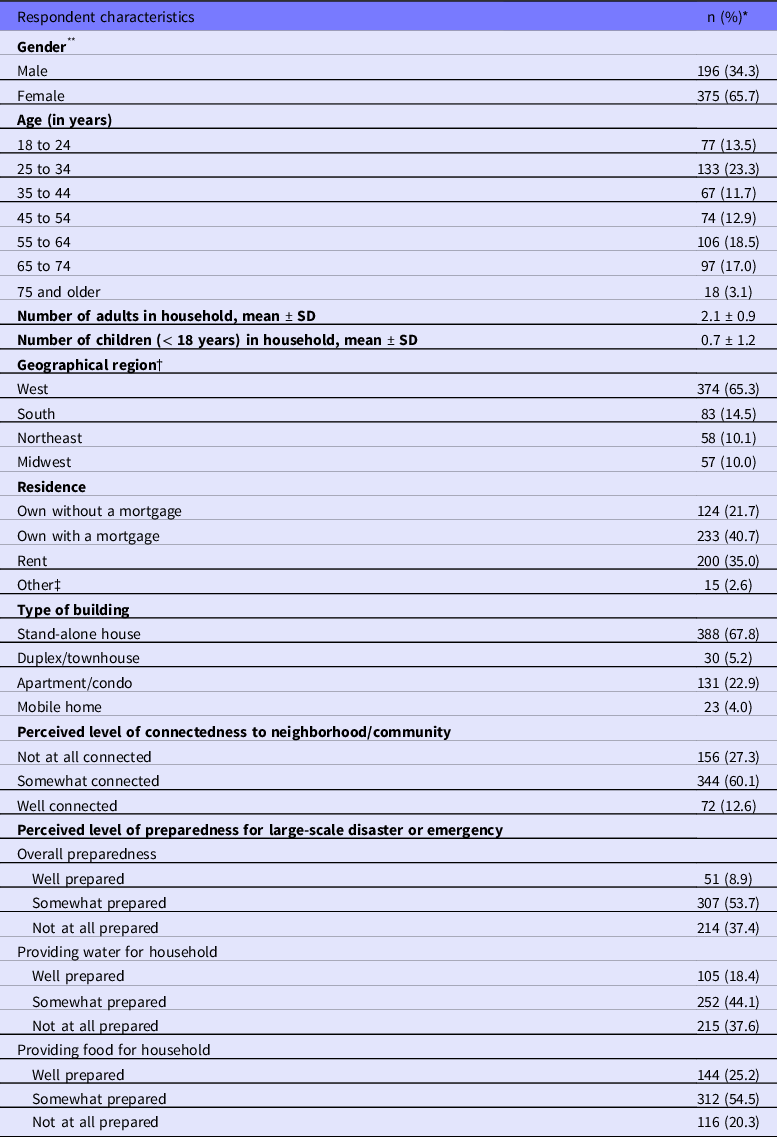
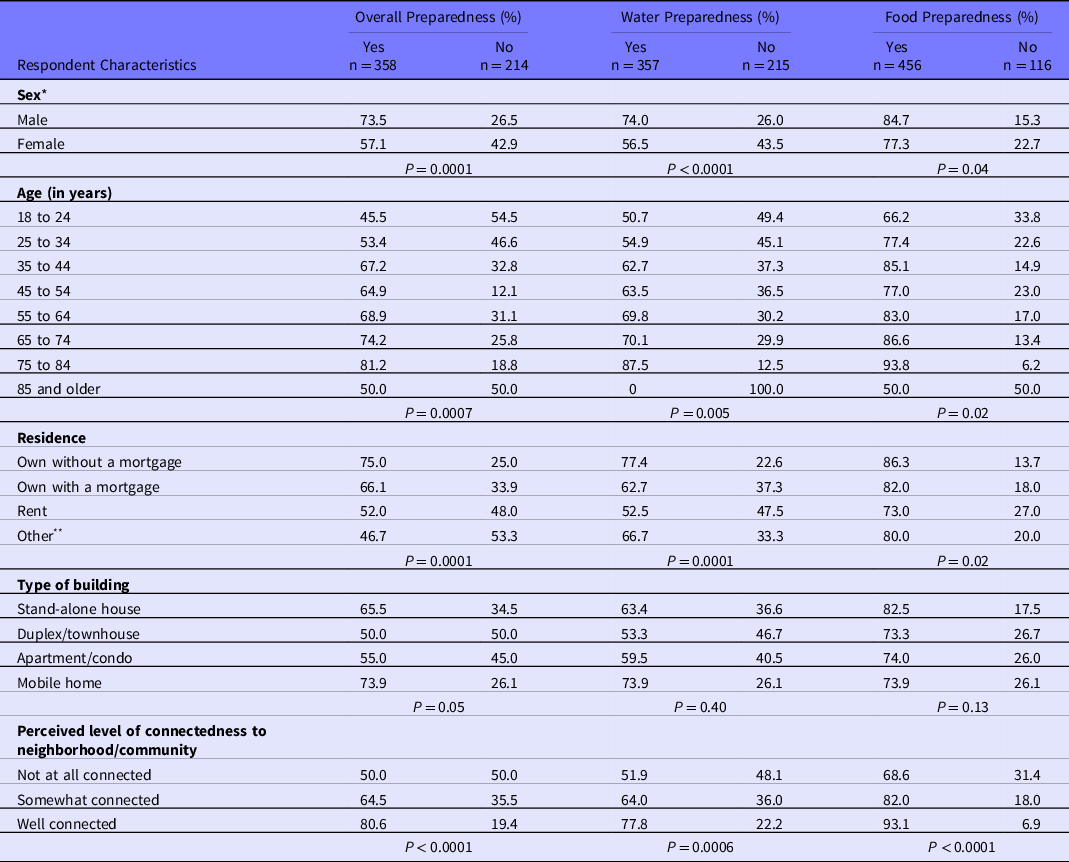
Many respondents reported being somewhat or well prepared to provide food and water for their households (Table 1). Male respondents, compared to females, and those who owned a residence more frequently reported being prepared and in providing water for their household during an emergency (Table 2). Respondents who felt connected to their neighborhood or community, compared to those who did not, more frequently perceived being prepared and in providing food and water to their household during an emergency (Table 2).
Demographics of food and water storage survey respondents from across the United States, 2014 (n = 572)

Abbreviations: SD, standard deviation
* Totals may not add up to 100 percent because of rounding.
** Missing data, n = 1
† Geographical region classification based on United States Census Bureau (https://census.gov/geo/reference/webatlas/regions.html): West = Alaska, Arizona, California, Hawaii, Idaho, Montana, Nevada, New Mexico, Oregon, Utah, and Washington; South = Alabama, Arkansas, Florida, Georgia, Kentucky, Louisiana, Mississippi, North Carolina, Oklahoma, Tennessee, Texas, Virginia, and West Virginia; Northeast = Connecticut, Delaware, Maine, Maryland, Massachusetts, New Hampshire, New Jersey, New York, Pennsylvania, and Rhode Island; and Midwest = Illinois, Indiana, Iowa, Kansas, Michigan, Minnesota, Missouri, Nebraska, North Dakota, Ohio, South Dakota, and Wisconsin. Only states in which survey respondents resided were classified.
‡ Other defined by respondent as housesitting (n = 2), living with parents or other relative (n = 7), managing apartment so does not pay rent (n = 1), house owned by someone else (n = 4), and clean (n = 1).
Perceptions of food, water, and overall preparedness levels among survey respondents across the United States in 2014, by demographics (n = 572)

* Missing data, n = 1
** Other defined by respondent as housesitting (n = 2), living with parents or other relative (n = 7), managing apartment so does not pay rent (n = 1), house owned by someone else (n = 4), and clean (n = 1).
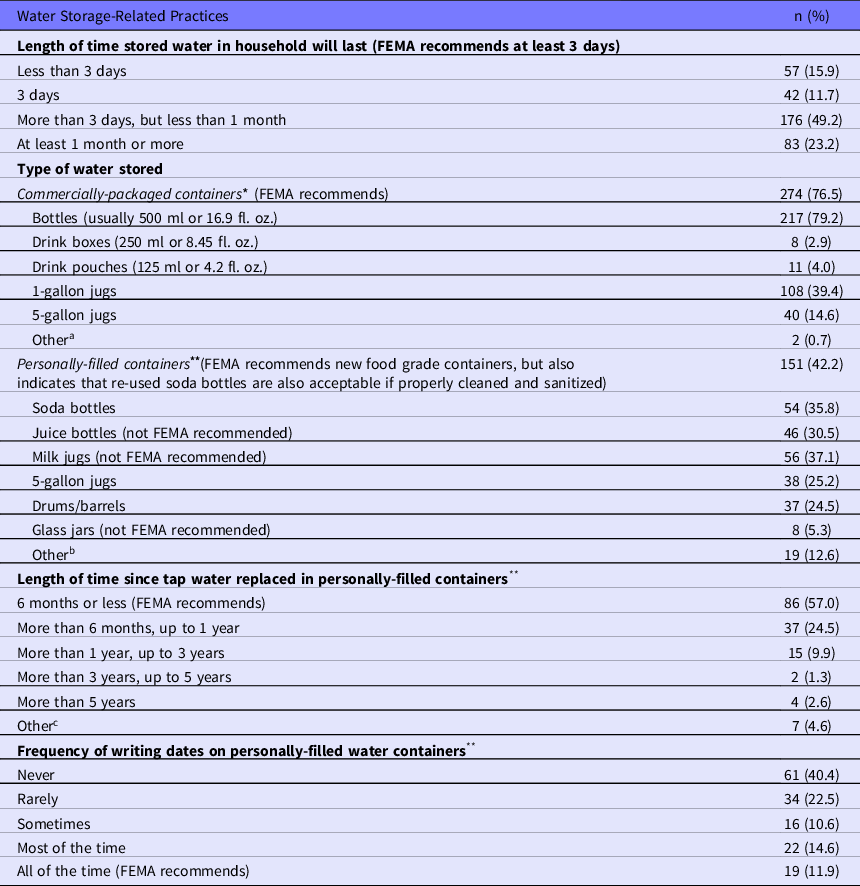
A total of 53% of respondents reported that they had a 3-day supply of water for their household (data not shown). Among those who had water stored, 72% indicated it would last more than 3 days (Table 3). Most households stored water purchased in commercially-packaged containers, with bottled water and gallon jugs being the most popular types (Table 3). The most prevalent personally-filled containers included soda bottles, which are FEMA approved, as well as juice bottles and milk jugs, which are not (Table 3). Over half of those who stored water in personally-filled containers claimed they had been filled within the previous 6 months, but most did not write dates on their containers (Table 3).
Water storage-related practices of survey respondents across the United States who had water stored that could be used in an emergency in 2014, (n = 358), including comparison with Federal Emergency Management Agency (FEMA) guidelines

* Percentages for each type of commercially-packaged container based on the 274 respondents who indicated that they had water stored in commercially-packaged containers.
** Percentages for each type of personally-filled container based on 151 respondents who indicated that they had water stored in personally-filled containers.
a Defined by respondent as larger jug with spout; other respondent did not specify.
b Defined by respondents as hot water tank, reused gallon water bottles and jugs (n = 4), reused water bottles (n = 7), washed out foil pouches, a well with a generator, plastic almond jars, 2-quart plastic pitcher with lid, empty 1.75L plastic alcohol bottle, Brita® pitcher, and medium plastic travel container.
c Respondent answered “don’t know.”
From the qualitative review of personally-filled containers, most people attempted to prepare their containers for storage by washing and/or sanitizing them in some way, but fell short in following FEMA instructions. Out of 133 people, 12 (9%) indicated they used a combination of cleaning and sanitizing for their containers, but either did not give enough detail to determine if they had met the FEMA recommendations or did not describe an approved method for sanitizing, such as freezing or using rubbing alcohol (data not shown). Out of 133, 26 (20%) only mentioned sanitizing (bleach, boiling, or an unspecified method), but did not mention washing the containers first. Out of 133, 58 (44%) made some attempt to clean their containers but did not give any indication of sanitizing them. Close to 19% indicated that they did not do anything to prepare the containers. Among those who mentioned using bleach, it was unclear whether the bleach was added to sanitize the container or directly to the water, and if the appropriate amount was used.
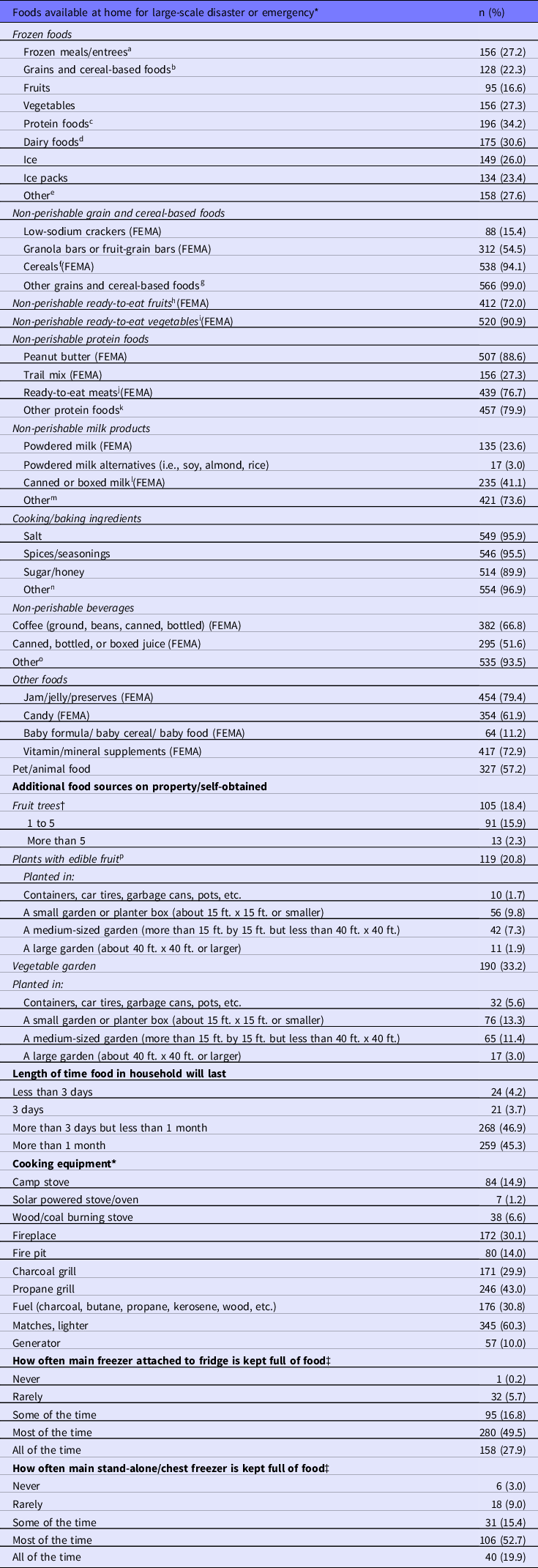
The majority of households had some form of non-perishable foods available, with the most frequently reported items as cereals and other grains/cereal-based foods, ready-to-eat fruits, vegetables and meats, peanut butter, dried dairy products (hot chocolate or canned/dried cheese), salt and other cooking/baking ingredients, beverages, and jam/jellies or preserves (Table 4). Non-perishable items with the lowest household availability included low-sodium crackers, trail mix, frozen fruit, meats and vegetables, ice, and powdered milk. About a third of respondents obtained food through their own vegetable garden. A smaller percentage (4-10%) hunted or fished for food or raised livestock animals for meat, eggs, or milk (data not shown). Nearly the entire sample indicated their food supply could last more than 3 days as recommended by FEMA, with almost half reporting their food supply could last more than 1 month. The most common piece of cooking equipment available for use in an emergency was a propane grill, however not all of these individuals had the fuel to run it.
Household food availability, including food from the Federal Emergency Management Agency (FEMA) guidelines, and perceived sustainability of the household food supply in a large-scale disaster or emergency situation (n = 572)

aTV dinners, frozen pizzas, lasagna, pasta dishes, burritos, etc.; bBread/rolls/bagels/tortillas, white flour, whole wheat flour, wheat kernels/unground wheat; cMeats (includes poultry, beef, pork, fish, meat substitutes, etc.), beans/legumes (not green beans), nuts; dIce cream, cheese; eButter/margarine, freezer jam, yeast; fOats/oatmeal, Ready-to-eat cereal; gBrown rice, white rice, wheat kernels/unground wheat, pasta, packaged rice or pasta seasoned meals/side-dishes (i.e., macaroni and cheese, ramen noodles, Spanish rice, red beans and rice, couscous, quinoa, etc.), cornmeal/masa flour, whole wheat flour, white flour, regular crackers, pretzels, corn chips, tortilla chips, pancake/waffle mix, popcorn, cake mixes, packaged cookies; hCommercially canned/bottled fruits (not jams/jellies), home canned/bottled fruits (not jams/jellies), commercially dried/dehydrated fruits (i.e., raisins, fruit leather, dried apricots), home dried/dehydrated fruits (i.e., raisins, fruit leather, dried apricots); iComercially canned/bottled vegetables, home canned/bottled vegetables, commercially dried/dehydrated vegetables (i.e., dried carrots, tomatoes, etc.), home dried/dehydrated vegetables (i.e., dried carrots, tomatoes, etc.), instant mashed potatoes, potato chips, packaged potato meals/side-dishes (i.e., scalloped, hash browns, cheesy, etc.); jCommercially canned/bottled meat (includes tuna or other fish, chicken/turkey, beef, pork, etc.), home canned/bottled meat (includes poultry, beef, pork, fish, etc.), commercially dried/dehydrated meats (i.e., jerky, bacon bits, fish or seafood, meat substitutes, etc.), home dried/dehydrated meats (i.e., jerky, bacon bits, fish or seafood, meat substitutes, etc.); kCommercially canned bottled beans/legumes (not green beans), home canned bottled beans/legumes (not green beans), dry beans/legumes, nuts, sunflower seeds, or pumpkin seeds; lBoxed (shelf-stable) fluid cow’s milk, boxed (shelf-stable) fluid milk alternatives (i.e., soy, almond, rice), canned milk (i.e., evaporated milk, sweetened condensed milk); mHot cocoa mix, canned/bottled cheese (spreads, squirt-able, grated Parmesan), freeze-dried cheese, cheese powder; nBaking powder/baking soda, yeast, powdered eggs, cooking oil, shortening/shortening sticks, sweetened add-ins (i.e., chocolate chips, coconut, butterscotch chips, toffee chips); oBlack or green tea, herbal tea, canned or bottled soda pop/soft drinks, powdered drink mix, alcohol, energy drinks, sports drinks; pRaspberries, strawberries, blueberries, grape vines, etc.
* Respondents could select more than one response on these items (all that applied).
† Missing data, n = 1
‡ Percentages based on those who had the kitchen appliance in the household (n = 566 for freezer attached to fridge; n = 201 for stand-alone/chest freezer).
Discussion
The findings of this study provide further insights into emergency water and food storage practices among US households and how these practices align with FEMA guidelines. Previous research on household water emergency preparedness has focused on whether or not households have a 3-day supply of water, finding that around 54% of people surveyed had a 3-day supply of water for each member of their household, Reference Ko, Strine and Allweiss18,19 which is comparable with our data, and shows a need for improvement. However, our study also provided more specific detail on the amount of water stored, the types of containers used, and household practices for personally-filled water containers.
It is commendable that in our study most households with water stored indicated that they had enough to last for 3 days, and some even longer, which would be helpful in an emergency situation. Reference Trento and Allen12,Reference Crowther, Haimes and Taub20 It’s not surprising that commercially packaged water was most prevalent among study subjects, since bottled water and gallon jugs are widely available and easily purchased. Since most study subjects had bottled water available, the portability of this type of stored water could be especially advantageous in a disaster requiring a home evacuation. Having stored water could be part of a lifestyle for those who regularly purchase commercially packaged water or continuously use and refill water containers, resulting in coincidental preparedness. Reference Tanner and Doberstein21
With regard to personally-filled water containers, our research indicates that consumers can improve in following FEMA instructions, including selecting proper containers, cleaning/sanitizing them, using chlorine bleach properly, labeling dates on containers, and rotating water. 4 While not the focus of their research, Gerla, et al. Reference Gerla, Lloyd, Eggett and Pike11 also found consumers were using containers not approved by FEMA, such as reused milk jugs or juice bottles that are difficult to clean, or glass jars that are heavy and breakable. 4
Based on the qualitative results, it appears there was confusion among subjects about using bleach to sanitize a storage container in contrast to adding it to treat water. Previous research found a small percentage of water prepared for storage by consumers exceeded the 4ppm chlorine Environmental Protection Agency (EPA) limit. Reference Gerla, Lloyd, Eggett and Pike11 Government sources discussing the use of chlorine bleach for sanitizing and water treatment do not always specify the bleach concentration 4,22 and should be updated to reflect the current 6.25% or 8.25% sodium hypochlorite concentrations of bleach available to consumers. 23 It should also explain the proper use of bleach in sanitizing and water treatment, including a statement that chlorine bleach does not need to be added to water prior to storage if the water supply has been chlorinated.
While over half of the subjects who stored water in personally-filled containers appeared to be meeting the FEMA recommendation to rotate their water every 6 months (documented evidence to support this recommendation is not readily available), other research has concluded that there is a minimal health risk from the leaching of plasticizers and other contaminants into stored water, Reference Zare Jeddi, Rastkari, Ahmadkhaniha, Yunesian, Nabizadeh and Daryabeygi24 although research is ongoing. Gerla et al Reference Gerla, Lloyd, Eggett and Pike11 found antimony levels were well below the EPA limit in 16 reused PET soda bottles with water stored 6 months to over 25 years at room temperature and suggested that water rotation of water may not be necessary if containers are cleaned and sanitized properly. There is value in re-evaluating the FEMA recommendation on water rotation.
FEMA recommends households have various non-perishable foods on-hand in the case of an emergency situation. 4,25 Our findings suggested households had availability to some of the specific suggested emergency food items better than others. For example, almost all respondents had household availability to cereals, rice, flour, or grain-based snack foods, however, only 15% had low-sodium crackers. Most respondents had non-perishable ready-to-eat fruits and vegetables, peanut butter, trail mix, jam/jelly preserves, coffee, and hard candy, which is in direct alignment with FEMA guidelines. 4 Fewer respondents had other FEMA-recommended foods including canned or boxed milk, powdered milk or milk alternative, and canned, bottled or boxed juice. 4 Some households also had access to frozen foods (which is in alignment with FEMA guidelines), animal livestock, fruit trees or plants with edible fruit and vegetable gardens; depending on the time of year, these other foods might provide households with additional resources to rely on in the case of a disaster. Although not all households had all of the FEMA specific suggested food items on-hand, only 4% of households reported being unable to provide their household for food less than the FEMA recommended 3-day food supply based on each person’s current daily intake patterns, and may even be able to provide food for their household for an even longer period of time in a disaster. Golem and Byrd-Bredbenner Reference Golem and Byrd-Bredbenner9 found that food secure female adults could provide food for their household for more than the 3-day FEMA-recommended guidelines, with all household members still meeting nutrient recommendations. Findings from our study, which included a larger and more diverse (in regards to sex, geographic region, and age) sample, similarly found that most people could meet the 3-day FEMA guidelines. However, the ability of households to provide this food during a disaster would depend on whether the food was still accessible during and after the disaster (e.g., flooding may contaminate or eliminate food stored within a home, power outages may lead to food spoilage or inability to use cooking equipment, or a mandated evacuation may displace individuals from home thus limiting access to their home food supply) and thereby might not allow them to consume nutritionally-adequate diets. Reference Golem and Byrd-Bredbenner9,Reference Golem, Hallman, Cuite, Bellows and Byrd-Bredbenner10,Reference Magnus26,27 Furthermore, the ability to use stored foods in an emergency situation to create palatable meals may be limited because not all households in our study had access to the fuel to run the alternate cooking sources such as propane or charcoal grills. The extent of a negative nutritional impact on household members may be exacerbated the longer the household remains without alternative fuel sources to use for cooking. Reference Golem and Byrd-Bredbenner9 This suggests better educational campaigns are warranted to encourage households to maintain adequate amounts of fuel sources to run commonly-owned alternate cooking sources in an emergency situation. Our findings also suggest that it may be warranted for FEMA to re-evaluate whether or not specific foods need to be recommended, given most households in our study had a variety of foods on hand which could provide essential nutrients during an emergency or disaster situation, even if they did not have the specific foods listed by FEMA. It is important to note that if a home evacuation was required in a disaster, households may be limited in providing food for their household if they did not have the means to transport their food supply or if they did not have enough time to gather food to take with them. It would be advantageous for households to make a plan for portable transport of food and water if an emergency evacuation was required.
Our findings that those who feel connected to their neighborhood or community have increased perceptions of food and water storage preparedness are not surprising. Other studies show that the majority of support during disaster was provided by family, friends, and neighbors, and that a culture of preparedness within a community increases the likelihood of others being prepared themselves. Reference Murphy, Cody, Frank, Glik and Ang28-Reference Wood, Mileti, Kano, Kelley, Regan and Bourque30 Initiatives by government entities, such as FEMA’s “Whole Community Approach to Emergency Management” 31 and Ready.gov, support connectedness through its programs. Our study supports the value of continued efforts of strengthening bonds within communities as an essential component of food and water preparedness.
Limitations
Study limitations included data were self-reported, with food and water availability in the household that could be used in emergency situations not actually measured. Subjects may have also overestimated the length of time food and water could last in an emergency situation due to social desirability bias. Reference Uscher-Pines, Chandra, Acosta and Kellermann32 Although respondents resided in 46 states in the US, this sample is not representative of the US as it was a convenience sample.
Some subjects stored water in different types of containers, but did not distinguish preparation methods for each container type before using it to store water, thus limiting our interpretation of whether cleaning/sanitizing methods met FEMA guidelines for different container types. In addition, the survey did not ask respondents to distinguish whether the preparation methods used (such as adding bleach) were added to water or just to the container, thus limiting our interpretation of the appropriateness of methods described. We also did not ask respondents if they had water filters and access to other water sources nearby, such as lakes, which would allow them to obtain potable water if they were required to evacuate their home.
Conclusions
Many US households in this study met the FEMA guidelines of storing a 3-day supply of water and food for emergency situations, which is similar to previous research. Reference Ko, Strine and Allweiss18,19 However, this study further found that not all households were following FEMA guidelines in the types of containers used to store water and may be using unsafe cleaning and sanitizing methods in water storage containers, thus posing a potential health hazard if this water were ingested in an actual emergency situation. More evidence-based education and outreach is needed to help people properly prepare and store water for emergency situations, including container selection, proper use of bleach (when needed), and acceptable storage time. Households in our study did not always have foods recommended by FEMA, however, they reported having a variety of foods available that could be consumed in an emergency situation, thus providing a rationale for FEMA to re-evaluate the necessity of the current food list recommendations.
Perception of being connected to neighbors or a community was found to enhance perceived water and food preparedness for emergency situations. Having a culture of preparedness among individuals, along with an attitude of shared responsibility with all levels of government is an essential step toward preparedness. 33 Household food and water preparedness can benefit individuals and communities by motivating others to prepare for a disaster and empowering households to take care of their own needs and those of their neighbors rather than relying on outside resources.
Funding Statement
This research project was funded by the Religious Studies Center at Brigham Young University.
Conflicts of Interest
None