Introduction
In an age of demographic and social transformation, traditional intergenerational relationships are also undergoing significant changes (Shi, Reference Shi2017). Ageing, low fertility and high life expectancy have transformed the structures of the Chinese population and families (Lin, Reference Lin2018; Yang and Du, Reference Yang and Du2021). Modernisation and urbanisation have boosted internal migration and reconstructed traditional values (Goode, Reference Goode1963; Yang and Du, Reference Yang and Du2021). These provide a necessity to analyse the continuity and change of intergenerational relationships in contemporary China.
Intergenerational relationships in China have been extensively studied over the past two decades (Wang, Reference Wang2014; Shen, Reference Shen2015; Liu, Reference Liu2017; Zeng and Li, Reference Zeng and Li2020). Two conflicting viewpoints have been proposed. One holds that modernisation has fundamentally transformed Chinese intergenerational relationships (He, Reference He2008; Chen, Reference Chen2009) and the other opposes that the traditional intergenerational relationships have been largely preserved (Logan and Bian, Reference Logan and Bian1999; Wang, Reference Wang2015; Liu et al., Reference Liu, Guo, Xu, Mao and Chi2017). However, most previous studies have relied on qualitative or cross-sectional data, leaving a gap in our understanding of how these relationships evolve over time. Furthermore, much of the existing research has focused on a single dimension of intergenerational relationships, such as contact, support or affection, without fully exploring their complexity.
To overcome these limitations, this study aimed to analyse data collected from the Chinese Longitudinal Aging Social Survey (CLASS) during two waves (2016, 2018). A key objective of this study was to describe the transitions in the older parents–adult children's relationships, as well as the factors associated with these transitions. First, we employed the Latent Transition Analysis (LTA) model (Collins and Lanza, Reference Collins and Lanza2010) to visualise the transitions in intergenerational relationships across the two waves. Additionally, we explored the likelihood of specific types of intergenerational relationships undergoing change. Second, we examined multiple dimensions of intergenerational relationships, including solidarity and conflict (Bengtson and Oyama, Reference Bengtson, Oyama, Cruz-Saco and Zelenev2010). Third, we constructed the convoy model of social relations to identify predictive factors for these transitions (Kahn and Antonucci, Reference Kahn, Antonucci, Baltes and OG1980). These findings provided an understanding of intergenerational relationships in contemporary China from dynamic and multi-dimensional perspectives.
The Chinese context
Contemporary China is experiencing a profound societal transformation that is reshaping population dynamics and social structures. This transformation is pivotal in shaping and evolving intergenerational relationships within Chinese society (Yuesheng, Reference Yuesheng2017). On one hand, the one-child policy, which was in place for several decades, has had a substantial impact on family structures (Ngan-ling Chow and Zhao, Reference Ngan-ling Chow and Zhao1996). It has led to smaller family sizes and an increase in single-child families, especially in urban areas. This policy has also heightened the responsibilities and rights of daughters within intergenerational relationships, as they may be the sole carriers of their family's legacy (Hu and Shi, Reference Hu and Shi2020). On the other hand, urbanisation has brought about new dynamics in intergenerational relationships (Cui and Jin, Reference Cui and Jin2015). As rural populations move to urban areas in search of better opportunities, it often results in incomplete families and geographical separation (Guo et al., Reference Guo, Chi and Silverstein2012). The challenges of maintaining strong intergenerational relationships in the face of physical distance and changing lifestyles are noteworthy.
Furthermore, China's rapid modernisation has occurred on a condensed timeline and across diverse geographical regions (Chang, Reference Chang2010). This unique pace and spatial diversification create a complex interplay of traditional and modern elements within intergenerational relationships (Ji, Reference Ji2017). Aspects of traditional Chinese values and norms continue to coexist with rapidly evolving modern influences. Given these complexities, it is essential to analyse both the continuity and changes in contemporary Chinese intergenerational relationships. Understanding how traditional values and modern forces interact in this context can provide valuable insights into the evolving dynamics of Chinese families.
Typology of Chinese intergenerational relationships
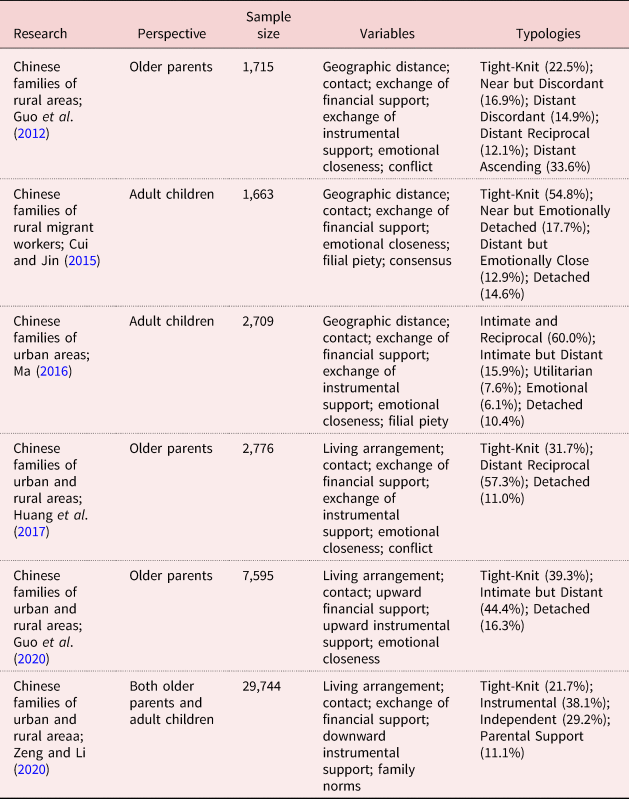
The typology approach has been extensively employed to capture the associations among multiple dimensions within intergenerational relationships and identify their underlying structures (Van Gaalen and Dykstra, Reference Van Gaalen and Dykstra2006; Silverstein et al., Reference Silverstein, Gans, Lowenstein, Giarrusso and Bengtson2010). Previous typology studies focusing on Chinese intergenerational relationships have generated both similar and distinctive typologies, contingent upon the samples and dimensions examined. Table 1 provides a summary of findings from representative studies conducted in China. Three main types of intergenerational relationships have been identified: (a) ‘Tight-Knit’: geographic proximity, high levels of support, contact and emotional closeness; (b) ‘Intimate but Distant’: geographic distance, maintained frequent support and emotional communication; and (c) ‘Detached’: geographic distance, limited support, weaker emotional closeness (Guo et al., Reference Guo, Chi and Silverstein2012, Reference Guo, Xie and Li2020; Cui and Jin, Reference Cui and Jin2015; Ma, Reference Ma2016; Huang et al., Reference Huang, Peng and Chen2017; Zeng and Li, Reference Zeng and Li2020). Generally, the prevalence of the ‘Tight-Knit’ type is higher in China, a country that values filial piety (Cui and Jin, Reference Cui and Jin2015; Ma, Reference Ma2016). However, recent studies have observed an increasing proportion of ‘Intimate but Distant’ types (Guo et al., Reference Guo, Xie and Li2020; Zeng and Li, Reference Zeng and Li2020; Wang et al., Reference Wang, Evandrou, Falkingham and Xu2023), which presents an intriguing perspective for our study. Hence, we hypothesise that current intergenerational relationships in China are undergoing a transition towards a more functional and geographically dispersed type (Hypothesis 1).
A summary of empirical typology studies of Chinese intergenerational relationships

Existing studies have also revealed predictors for each specific type, including personal characteristics (i.e. age, gender, socioeconomic status, household registration) and situational characteristics (i.e. marital status, health conditions, number of children, filial piety) (Guo et al., Reference Guo, Chi and Silverstein2012, Reference Guo, Xie and Li2020; Cui and Jin, Reference Cui and Jin2015; Zeng and Li, Reference Zeng and Li2020). For example, older, female, married individuals with higher income, advanced education, urban residence and good health are more inclined to foster ‘Tight-Knit’ relationships with their adult children (Cui and Jin, Reference Cui and Jin2015; Zeng and Li, Reference Zeng and Li2020); while higher income and education levels, rural residence and having more children are associated with the cultivation of ‘Intimate but Distant’ relationships (Guo et al., Reference Guo, Chi and Silverstein2012). Furthermore, residing in rural areas and having more sons contribute to the development of ‘Detached’ relationships (Guo et al., Reference Guo, Xie and Li2020). In order to establish construct validation of our typology, we will examine the associations between the derived types and theoretically relevant covariates.
Continuity of intergenerational relationships
The continuity and transition of intergenerational relationships across time has become an issue of family sociology (Bengtson et al., Reference Bengtson, Giarrusso, Mabry and Silverstein2002; Giarrusso et al., Reference Giarrusso, Silverstein, Gans, Bengtson, Johnson, Coleman and Kirkwood2005; Suitor et al., Reference Suitor, Gilligan, Pillemer, George and Ferraro2016). Questions have been released about whether and how intergenerational relationships change or maintain over time (Hogerbrugge and Silverstein, Reference Hogerbrugge and Silverstein2015). To answer them, we used the principles of lifespan and lifecourse to establish our theoretical framework.
The principle of lifespan (Baltes, Reference Baltes1987) emphasises that human development and ageing are lifelong processes. The experiences and events of one's early life have a profound impact upon behaviour and the choices one makes in later life (Fuller-Iglesias et al., Reference Fuller-Iglesias, Smith and Antonucci2009). At the individual level, ageing is a process of continuity (Atchley, Reference Atchley1989). Thus, as people age, they attempt to preserve their existing behaviour, emotions and relationships. Second, at the family level, ageing is a process of social learning (Whitbeck et al., Reference Whitbeck, Simons and Conger1991). Family relationships constructed in one's earlier life have an impact on his or her interactions with family members in later life. Furthermore, in the Western sample, there is limited empirical evidence that the patterns of intergenerational relationships exhibit more stability and continuity over time than changes (Schenk and Dykstra, Reference Schenk and Dykstra2012; Hogerbrugge and Silverstein, Reference Hogerbrugge and Silverstein2015). In line with continuity theory and social learning perspective, we hypothesise that intergenerational relationships will exhibit greater stability and continuity compared to changes (Hypothesis 2).
Change in intergenerational relationships
In contrast, the principle of lifecourse posits that individuals are shaped by the situations, historical time and geographical locations they encounter throughout their lives (Elder, Reference Elder1987; Elder et al., Reference Elder, Johnson, Crosnoe, Mortimer and Shanahan2003). These situations include life transitions, individual and historical events, behavioural patterns and role expectations (Fuller-Iglesias et al., Reference Fuller-Iglesias, Smith and Antonucci2009). Following this principle, the convoy model of social relations (Kahn and Antonucci, Reference Kahn, Antonucci, Baltes and OG1980) holds that social relations are dynamic and ever-evolving. Both personal and situational characteristics affect the quality, function and structure of social relations (Antonucci, Reference Antonucci, JE and KW2001). Below we elaborate on how personal and situational characteristics impact older parents–adult children ties, and formulate hypotheses on shifts in relationship type.
Personal characteristics encompass factors such as age, gender and socioeconomic status (Fuller et al., Reference Fuller, Ajrouch and Antonucci2020). Age-related declines in biological and social functions increase older adults' need for family support (Suitor et al., Reference Suitor, Sechrist, Gilligan, Pillemer, Settersten and Angel2011; Toyokawa, Reference Toyokawa2012). Indeed, there is substantial evidence demonstrating that intergenerational relationships undergo changes as the older generation ages (Hogerbrugge and Silverstein, Reference Hogerbrugge and Silverstein2015; Steinbach et al., Reference Steinbach, Mahne, Klaus and Hank2019). Consistent with socioemotional selectivity theory (Carstensen et al., Reference Carstensen, Isaacowitz and Charles1999), individuals tend to prioritise close family members and the emotional aspects of social interactions as they grow older (Carstensen et al., Reference Carstensen, Isaacowitz and Charles1999). Consequently, we hypothesise that intergenerational relationships will exhibit greater functionality and emotional closeness with advancing age (Hypothesis 3).
Moreover, the urban–rural divide has emerged as a significant factor influencing the dynamics of intergenerational relationships in China (Guo et al., Reference Guo, Xie and Li2020; Wang et al., Reference Wang, Evandrou, Falkingham and Xu2023). Rural areas, characterised by traditional yet highly mobile societies, provide an intriguing context for examining family dynamics. Firstly, the extensive rural-to-urban migration has resulted in significant structural transformations within rural families (Guo et al., Reference Guo, Aranda and Silverstein2009). Additionally, the clash between tradition and modernisation has intensified conflicts between younger and older generations (Wu and Yuan, Reference Wu and Yuan2023). Consequently, we hypothesise that intergenerational relationships in Chinese rural families are more likely to undergo complex and multi-directional changes compared to their urban counterparts (Hypothesis 4).
Situational characteristics refer to the context in which people live or have lived, for instance, family context, life events, roles, norms and demands (Fuller-Iglesias et al., Reference Fuller-Iglesias, Smith and Antonucci2009; Fuller et al., Reference Fuller, Ajrouch and Antonucci2020). The level of an older parent's demand for intergenerational relationships may be influenced by the severity of illness and the number of other family members available to provide support (Antonucci et al., Reference Antonucci, Birditt, Sherman and Trinh2011). As health declines or disability arise, ageing parents may require increased practical support from their adult children (Schenk and Dykstra, Reference Schenk and Dykstra2012). While receiving aid can foster positive feelings of closeness, the shift towards greater dependency may also give rise to negative experiences of conflict and dissatisfaction (George, Reference George, KA and RS1986). Hence, we hypothesise that intergenerational relationships will exhibit increased functionality or conflict in response to a decline in parental health (Hypothesis 5).
In addition, life events, such as familial occurrences (i.e. marital transitions, widowhood) and shifts in labour force engagement (i.e. entering or exiting employment), are often accompanied by transformations in various needs and opportunities, including those related to intergenerational relationships (Ha et al., Reference Ha, Carr, Utz and Nesse2006; Szydlik, Reference Szydlik2008; Shapiro, Reference Shapiro2012; Damman and Duijn, Reference Damman and Duijn2016; Lin and Marin, Reference Lin and Marin2022). For instance, research indicates that parental divorce has adverse effects on intergenerational relationships, leading to reduced opportunities for contact and diminished emotional needs (Shapiro and Cooney, Reference Shapiro and Cooney2007; Shapiro, Reference Shapiro2012). Conversely, the experience of widowhood fosters greater emotional closeness in intergenerational relationships with adult children, as a result of heightened needs for emotional and practical support with bereavement (Ha et al., Reference Ha, Carr, Utz and Nesse2006). Thus, we hypothesise that life events experienced during the ageing process will facilitate transitions between relationships types, surpassing the prevailing trend towards increased functionality and emotional closeness (Hypothesis 6).
Methods
Sample
Data were collected from the CLASS, a continuous and nationally representative large-scale social survey conducted by Renmin University of China. The survey focuses on the older population aged 60 and above in China, covering various domains such as demographic and socioeconomic circumstances, physical and mental health, and family relationships. A multi-stage sampling method was used to recruit 11,511 cases as baseline data in 2014. In 2016, a total of 6,603 cases (response rate = 57.4%) were followed up, with an additional 4,892 new cases supplemented. In 2018, 9,672 cases (response rate = 84.3%) were successfully followed up, including 1,747 newly added cases. Considering the modifications made to the family section of the questionnaire in the 2016 survey, the analysis in this study utilised data from 2016 as the baseline, with a follow-up in 2018.
A total of 11,471 individuals successfully completed the initial round of interviews in Wave 1 (2016). To ensure data integrity, we excluded 1,986 participants from the analysis due to: (a) the absence or the lack of surviving adult children, (b) never-married status, and (c) missing values on intergenerational relationship indicators. The final baseline sample consisted of 9,485 participants. In Wave 2, 1,482 cases were lost to follow-up. After merging the data from Wave 2, we further excluded 994 participants who lacked necessary information for measuring intergenerational relationship indicators. Therefore, the current study sample comprised 7,009 eligible respondents with complete data for both waves. The analysis of the excluded participants reveals that advanced age, widowhood or divorce, not working, having more children, and endorsement of filial piety were all associated with a higher likelihood of loss to follow-up.
Measures
Intergenerational relationships
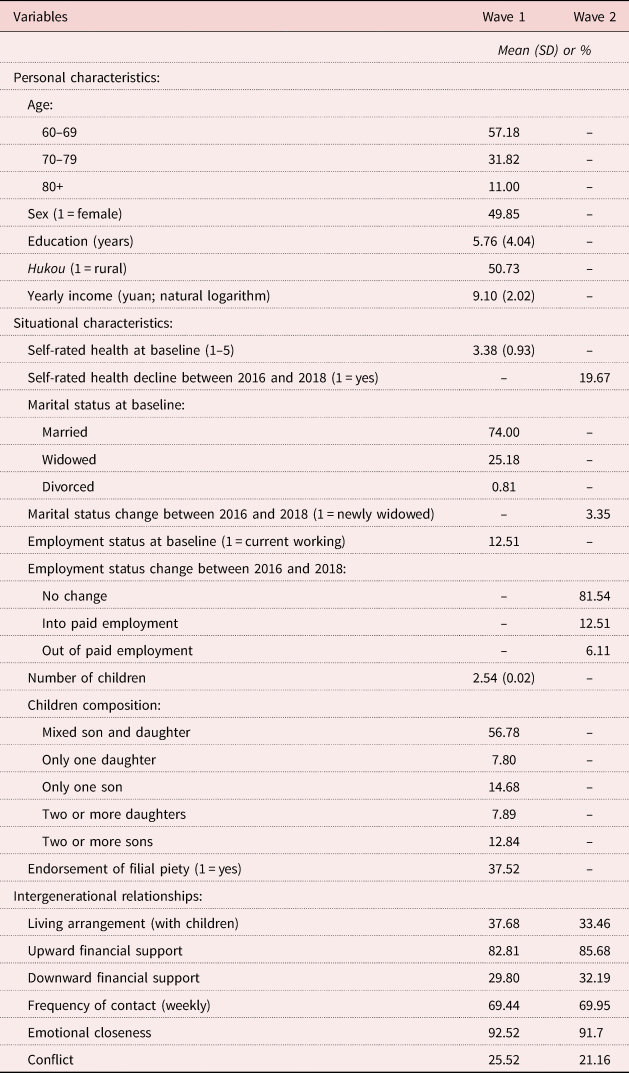
Based on the intergenerational solidarity and conflict paradigm (Bengtson and Oyama, Reference Bengtson, Oyama, Cruz-Saco and Zelenev2010), six indicators were used to measure the structural, functional, associational, affectual and conflictual dimensions of the intergenerational relationships. All measures were constructed using information provided by older parents who were asked to answer questions about their intergenerational relationships with each adult child. If the answer was ‘yes’ for any child, the variable was given one point. To reduce sparseness in the cross-classification table, all indicators were handled as dichotomous variables (Silverstein and Bengtson, Reference Silverstein and Bengtson1997; Dykstra and Fokkema, Reference Dykstra and Fokkema2011). Table 2 provides an overview of the frequencies of the six indicators in both waves.
Descriptive statistics for key variables in the two waves

Notes: N = 7,009. SD: standard deviation.
(a) Living arrangement, as an indicator of structural solidarity, was determined based on whether the parents had any children residing and dining with them (1 = yes, 0 = no). (b) Upward financial support was derived from any monetary or in-kind assistance received from any adult child within the past 12 months (1 = yes, 0 = no). (c) Downward financial support was derived from any monetary or in-kind assistance given to any adult child within the past 12 months (1 = yes, 0 = no). These two variables serve as indicators of functional solidarity. (d) Frequency of contact, which reflects associational solidarity, was assessed based on whether the parents had contact with at least one child more than once a week in the past 12 months (1 = yes, 0 = no). If the respondents reported co-residing with any children, this question was skipped, and a value of 1 was assigned. (e) Emotional closeness, representing affectual solidarity, was assessed using the following question: ‘How close do you perceive the relationship between you and your child, considering all aspects?’ (1 = very close, 0 = somewhat close or not close). (f) Conflict was evaluated using two items: ‘How often do you think your child makes too many demands on you for help and support?’ and ‘How often do you perceive your child to be indifferent towards your request?’ Participants responded on a scale from 1 (never) to 4 (often). The variable was subsequently recoded as follows: 1 = experiencing some conflict (score > 4) and 0 = experiencing no or infrequent conflict (score ≤ 3).
Predictor variables
Personal characteristics of parents included age (1 = 60–69, 2 = 70–79, 3 = 80+), gender (coded as 0 = male, 1 = female), education (in years of schooling), hukou (China's household registration system that categorises residents into urban and rural areas, with urban residents typically receiving preferential resource allocation in areas such as health care, education and social welfare compared to rural residents and migrants, coded as 0 = urban, 1 = rural) and yearly income (in Chinese yuan; natural logarithm).
Situational characteristics of parents included health status, marital status, employment status, family composition and norms of filial piety. Parental health status at baseline was measured using self-rated health (1 = poor, 5 = excellent). We categorised participants as experiencing self-rated health decline if their level of self-rated health decreased between 2016 and 2018 (0 = no decline, 1 = self-rated health decline). Marital status at baseline was coded as 0 = married, 1 = widowed, 2 = divorced. Additionally, a categorical variable was created to capture changes in marital status over the observation period (0 = no change, 1 = newly widowed). Employment status at baseline was coded as 0 = not working, 1 = currently working. Changes in labour force engagement between 2016 and 2018 were represented by a variable coded as 0 = no change, 1 = into paid employment, 2 = out of paid employment. Family composition included the number of children and the composition of children (0 = mixed son and daughter, 1 = only one daughter, 2 = only one son, 3 = two more daughters, 4 = two more sons). Endorsement of filial piety was determined based on whether the parent believes that their children should bear the primary responsibility for caring for the elderly (0 = no, 1 = yes).
Data analysis
An LTA model was used to explore the transitions in intergenerational relationship across the two waves. LTA, as an extension of Latent Class Analysis (LCA), combines the cross-sectional analysis of categorical latent variables and the longitudinal analysis of change in the latent variables over time (Collins and Lanza, Reference Collins and Lanza2010).
With SAS PROC LCA and PROC LTA (Lanza et al., Reference Lanza, Dziak, Huang, Wagner and Collins2015), we conducted (a) an LCA model in each wave to identify the number of classes that best fit the data across the two waves and (b) an LTA model with the measurement invariance across time to examine the transition probabilities of latent status between the two waves. Model fit was indicated by the loglikelihood value, likelihood-ratio statistic (G 2), Akaike's Information Criterion (AIC), Bayesian Information Criterion (BIC), sample-size adjusted BIC (aBIC) and entropy values. A good fit was signified by lower AIC, BIC and aBIC, and a higher entropy (McCutcheon, Reference McCutcheon, McCutcheon and Hagenaars2002; Rosato and Baer, Reference Rosato and Baer2012). To discern the predictors for transitions in intergenerational relationships over time, we employed logistic regression models, incorporating parental personal and situational characteristics.
Results
Typology of intergenerational relationships
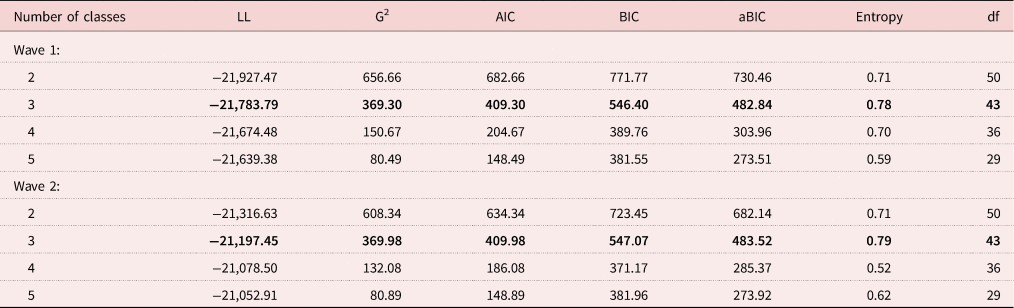
Table 3 presents a series of LCA models with two to five classes of intergenerational relationships, which were thoroughly tested and compared. Across both time-points, the information criteria (AIC, BIC and aBIC) exhibited a consistent decrease as the number of classes increased. The entropy value indicated a precise classification in the three-class model, surpassing 0.75 in both waves (Lubke and Muthén, Reference Lubke and Muthén2007). Thus, the three-class model demonstrated the best fit to the data for both waves. Next, measurement invariance across time was examined for the three-class LTA model. The likelihood-ratio test (Difference G 2 = 69.87, Difference degrees of freedom (df) = 18, p > 0.05) suggested the presence of three equivalent latent statuses across the two time-points.
Model fit indices for Latent Class Analysis models in two waves

Notes: Bold indicates the best solution model for the corresponding fit index. LL: loglikelihood value. G 2: likelihood-ratio statistic. AIC: Akaike's Information Criterion. BIC: Bayesian Information Criterion. aBIC sample-size adjusted BIC. df: degrees of freedom.
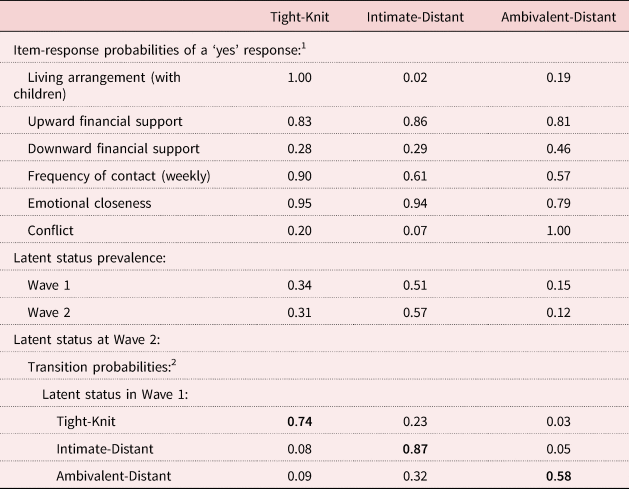
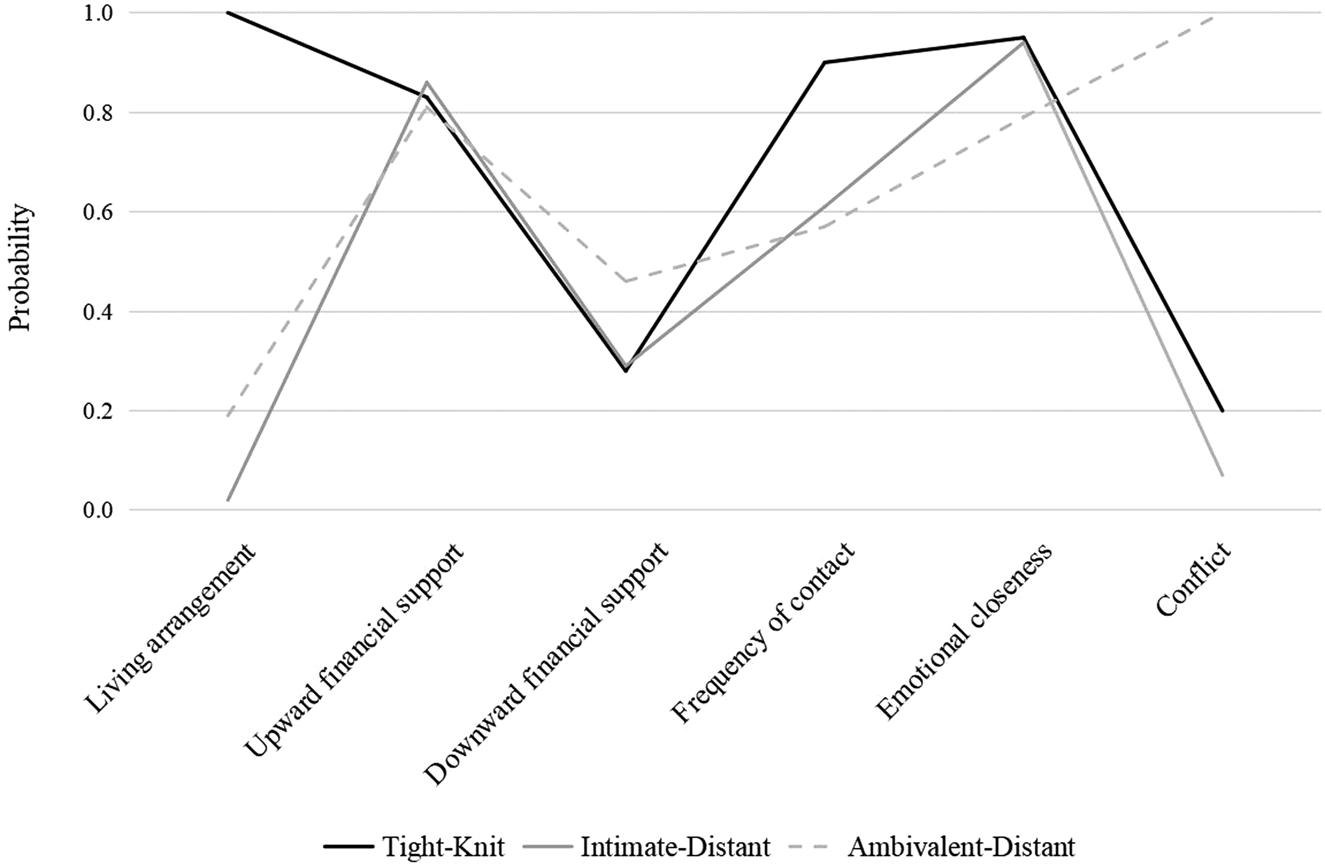
Table 4 and Figure 1 summarise the results of the three-class LTA model. Based on the item-response probabilities, we classified 7,009 respondents into three types of intergenerational relationships in each wave. The first type, labelled ‘Tight-Knit’, exemplifies the most cohesive intergenerational relationship type, characterised by robust endorsements in all domains of solidarity, coupled with minimal conflict. The second type, ‘Intimate-Distant’, and the third type, ‘Ambivalent-Distant’, shared common characteristics such as reduced likelihoods of co-residing with adult children and infrequent contact. Despite their similarity in structural and associational solidarity, the two types diverge significantly in functional, affectual and conflictual dimensions. The ‘Intimate-Distant’ type demonstrates a higher likelihood of receiving upward financial support and cultivating intimate relationships with adult children, characterised by high emotional cohesion and minimal conflict. Conversely, the ‘Ambivalent-Distant’ type exhibits the highest likelihoods of engaging in downward financial support with adult children, while simultaneously experiencing a strong yet ambivalent relationship, marked by profound emotional cohesion and notable conflict.
Three-class Latent Class Analysis model of intergenerational relationships between Chinese older parents and adult children in two waves

Notes: 1. Item-response probabilities constrained equal across time. 2. Diagonal transition probabilities in bold indicate no transition of relationship pattern between waves.
Three-class Latent Transition Analysis model.

Additional evidence supporting the robustness of our typology was obtained through a logistic regression analysis. This analytical examination scrutinised the personal and situational characteristics associated with class membership during the initial measurement. Broadly speaking, the type of intergenerational relationships is contingent upon various factors, including parental age, gender, education, household registration, health status, marital status, employment status, endorsement of filial piety and family composition (for details, see the online supplementary material). Furthermore, these findings align with prior research outcomes (Guo et al., Reference Guo, Chi and Silverstein2012, Reference Guo, Xie and Li2020; Cui and Jin, Reference Cui and Jin2015; Zeng and Li, Reference Zeng and Li2020; Wang et al., Reference Wang, Evandrou, Falkingham and Xu2023).
Transitions in intergenerational relationships
The middle section of Table 4 illustrates the prevalence of the three classes at each wave. The prevailing and increasingly favoured type was ‘Intimate-Distant’, comprising more than half of the sample (increasing from 51 to 57%). Conversely, the least common type was ‘Ambivalent-Distant’, with its prevalence rate declining from 15 to 12 per cent over time. In addition, there was a decrease in the ‘Tight-Knit’ type, falling from 34 to 31 per cent. After classifying respondents according to posterior probabilities produced in the LTA at either time-point, it is calculated that about 22.1 per cent (N = 1,540) of the older parents transitioned into another type over a two-year period.
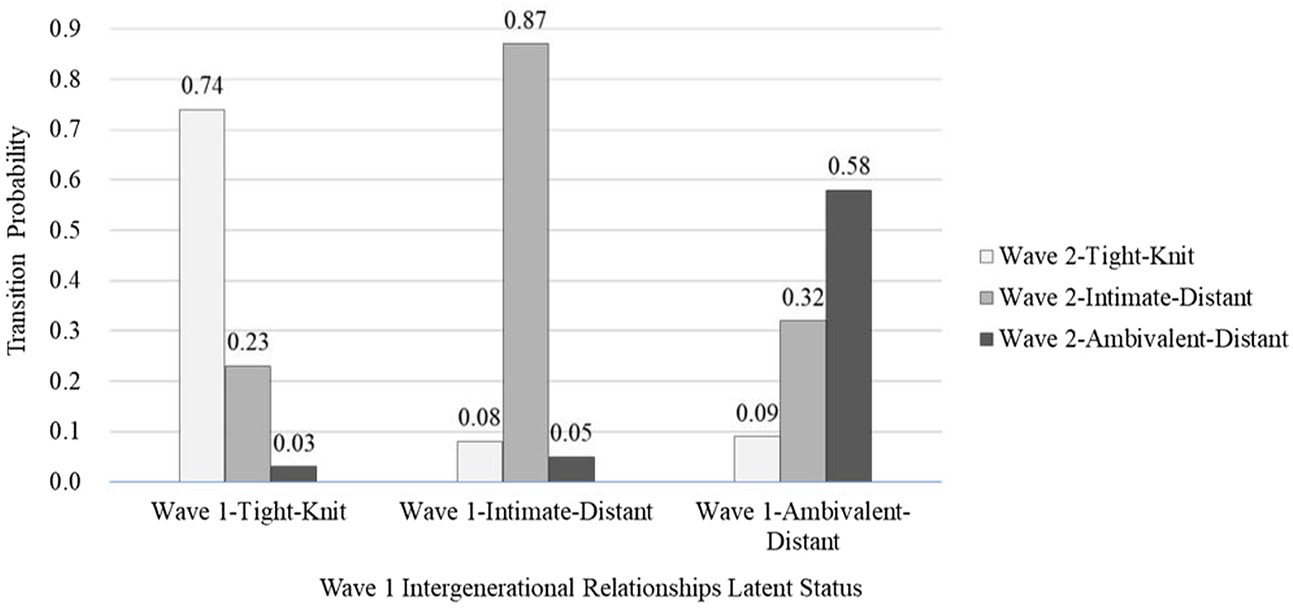
The bottom of Table 4 summarises the transition probabilities, which elucidate how latent classes changed over time. The diagonal elements signify the probability of remaining in the same latent class across both waves. According to the transition matrix, those in the ‘Intimate-Distant’ type at Wave 1 exhibited the highest stability, with 87 per cent of such classes persisting after two years. Notably, transitions towards this type of relationship were also quite probable. If a transition occurred, it was less likely to shift towards the ‘Ambivalent-Distant’ type (5%) than the ‘Tight-Knit’ type (8%). On the other hand, individuals classified as ‘Ambivalent-Distant’ and ‘Tight-Knit’ types at Wave 1 were more prone to change, with only 58 and 74 per cent, respectively, maintaining the same latent classes over time. They were most inclined to transition to the ‘Intimate-Distant’ type (32 and 23%, respectively). Figure 2 visually demonstrates how older parents transitioned in and out of latent classes of intergenerational relationships over a two-year period.
Transition probabilities.

Predictors of intergenerational relationship transitions
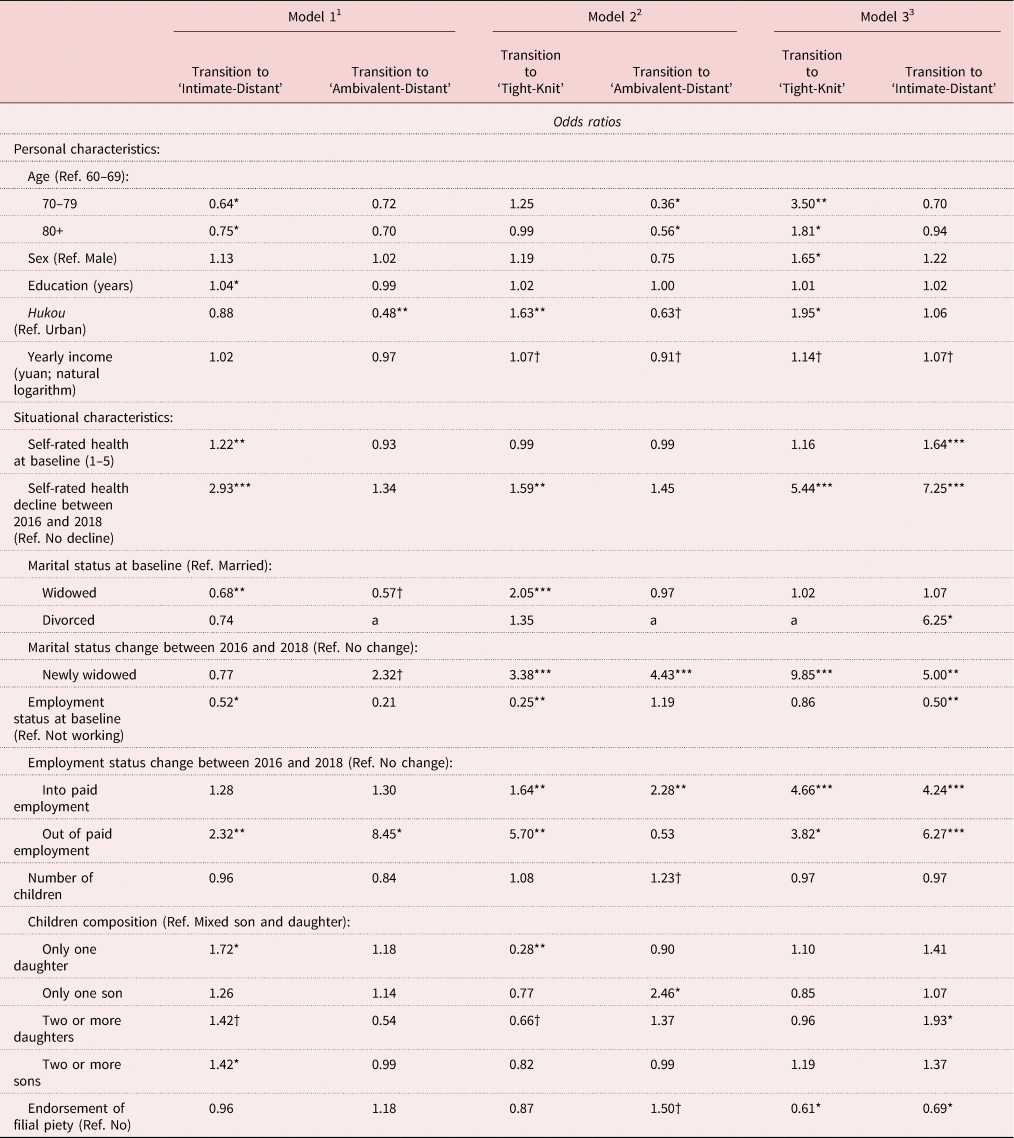
Multinomial logistic regressions were conducted to investigate whether personal and situational characteristics could predict class membership transitions. Table 5 presents a series of multinomial logistic regressions corresponding to three outcomes: (a) transitioning out of ‘Tight-Knit’ versus remaining in ‘Tight-Knit’, (b) transitioning out of ‘Intimate-Distant’ versus remaining in ‘Intimate-Distant’, and (c) transitioning out of ‘Ambivalent-Distant’ versus remaining in ‘Ambivalent-Distant’. An odds ratio higher than 1 indicates that the predictor is associated with a higher likelihood of transitioning to the specific type compared to remaining in the original type.
Predictors for the transitions in intergenerational relationships among Chinese older parents and adult children: the multinomial logistic regression analysis

Notes: Ref.: reference category. a: effect inestimable due to empty cells. 1. N = 2,443; Ref. Remain in ‘Tight-Knit’. 2. N = 3,422; Ref. Remain in ‘Intimate-Distant’. 3. N = 1,144; Ref. Remain in ‘Ambivalent-Distant’.
Significance levels: † p < 0.10, * p < 0.05, ** p < 0.01, *** p < 0.001.
Personal characteristics
Table 5 displays the outcomes of the multiple regression analysis. Middle-aged (70–79) and older (80+) seniors exhibit an elevated inclination to transition from the ‘Ambivalent-Distant’ type to the ‘Tight-Knit’ type, while also demonstrating greater stability in both the ‘Tight-Knit’ and ‘Intimate-Distant’ types compared to their younger counterparts (60–69). This suggests that intergenerational relationships tend to manifest heightened emotional closeness and stability as individuals advance in age. Moreover, women are more predisposed than men to undergo the shift from the ‘Ambivalent-Distant’ type to the ‘Tight-Knit’ type. Parents with higher levels of education exhibit a greater likelihood of transitioning from the ‘Tight-Knit’ type to the ‘Intimate-Distant’ type. In comparison to urban parents, rural parents show a greater propensity to experience shifts in intergenerational residential distance and transition towards the ‘Tight-Knit’ type. Furthermore, they demonstrate a higher probability of maintaining stability in both the ‘Tight-Knit’ and ‘Intimate-Distant’ types.
Situational characteristics
Parents with superior baseline health condition are more predisposed to transition to the ‘Intimate-Distant’ type. Conversely, individuals experiencing a decline in health between two waves tend to shift towards the ‘Tight-Knit’ type. Concerning baseline marital status, widowed individuals manifest an amplified proclivity to transition to, and a diminished likelihood of moving out of, the ‘Tight-Knit’ type in comparison to married counterparts. Meanwhile, those who experienced new widowhood during the study period show an increased probability of transitioning from the ‘Intimate-Distant’ type to either the ‘Tight-Knit’ or ‘Ambivalent-Distant’ types. Moreover, they exhibited a greater inclination to move out of the ‘Ambivalent-Distant’ type. Older parents engaged in paid employment showed a higher inclination to maintain stability in their original relationship type compared to those not working at baseline. Additionally, we observed an increased likelihood of relational transitions when parents entered or exited paid employment between two waves.
We further investigated the impact of family composition and norms of filial piety. Older parents with exclusively one or more daughters exhibited a heightened tendency to undergo a transition to and maintain stability in the ‘Intimate-Distant’ type. This inclination towards the ‘Intimate-Distant’ type was also evident in parents with solely multiple sons. On the other hand, parents with only one son demonstrated a greater proclivity to experience increased conflict and undergo a shift from the ‘Intimate-Distant’ type to the ‘Ambivalent-Distant’ type. Concerning filial piety norms, older parents who uphold such beliefs are more inclined to maintain the ‘Ambivalent-Distant’ type or undergo a transition from the ‘Intimate-Distant’ type to the ‘Ambivalent-Distant’ type.
Discussion
Utilising longitudinal data from a national and extensive sample of Chinese older adults, this study delves into the intergenerational relationship transitions between Chinese elderly parents and adult children over a two-year period, alongside the predictive factors. Employing the LTA model, our study unveiled three distinct types of older parents–adult children relationship, namely ‘Tight-Knit’, ‘Intimate-Distant’ and ‘Ambivalent-Distant’, which undergo changes over a two-year period. Notably, approximately 21 per cent of the families underwent shifts from one relational type to another over time.
From the macro perspective, the findings of our study offer compelling evidence of the integration of tradition and modernity in the evolving intergenerational relationships of China. Employing a longitudinal and dynamic typological research approach, we discerned a notable trend in Chinese intergenerational relationships transitioning towards the ‘Intimate-Distant’ type. As such, our research lends robust support to Hypothesis 1, positing that contemporary intergenerational relationships in China are transitioning towards a more functional and geographically dispersed nature. This discovery aligns with previous reports, which have documented the gradual emergence and prevalence of the ‘Intimate-Distant’ type in Chinese samples, attributable to urbanisation and demographic changes (Huang et al., Reference Huang, Peng and Chen2017; Zeng and Li, Reference Zeng and Li2020). Consistent with the perspective of compressed modernity and mosaic temporality, the transition patterns of Chinese intergenerational relationships mirror an intricate fusion of tradition and modernity, shaped by the impact of compressed modernity in East Asia and the enduring influence of Confucian tradition (Chang, Reference Chang2010; Ji, Reference Ji2017). Arguably, the ‘Intimate-Distant’ type epitomises this integration, wherein the traditional co-residing living arrangement is forsaken, while preserving deeply rooted traditional filial obligations.
From the micro perspective, we have scrutinised the continuity and change in intergenerational relationship patterns within individuals over time. Primarily, it is evident that there is notably more continuity in intergenerational relationships than change. Throughout the two-year duration of the present study, only 22.1 per cent of older parents transitioned from one type of relationship to another. We thus find support for Hypothesis 2, which posited that the types of relationships between parents and adult children will show more stability and continuity over time than changes. This finding supports the lifespan principle and continuity theory (Baltes, Reference Baltes1987; Atchley, Reference Atchley1989), indicating that current intergenerational relationships are influenced by their historical dynamics. Furthermore, we observed that the ‘Intimate-Distant’ type is the most resistant to change, whereas the ‘Tight-Knit’ type, particularly the ‘Ambivalent-Distant’ ones, exhibit less stability. The results, however, present some discrepancies in comparison to previous studies, where the type characterised by solidarity and emotional closeness was considered the most stable (Schenk and Dykstra, Reference Schenk and Dykstra2012; Hogerbrugge and Silverstein, Reference Hogerbrugge and Silverstein2015). Considering that neither of the studies included structural solidarity in the construction of the typology, this inconsistency may be attributed to changes in geographical proximity.
In addition, our findings offer compelling evidence in support of the convoy model of social relations. Notably, personal and situational characteristics played a significant role in predicting the transitions within intergenerational relationships. Regarding personal characteristics, factors such as age, gender and socioeconomic status proved to be influential predictors of relational transitions. Interestingly, we observed that as parents advanced in age, they placed greater emphasis on emotional intimacy and stability within their intergenerational ties. We thus find support for Hypothesis 3 that intergenerational relationships will exhibit greater functionality and emotional closeness with advancing age. This phenomenon is particularly pronounced among older parents, who have developed a propensity to employ continuity as a primary adaptive strategy in coping with the challenges of ageing (Atchley, Reference Atchley1989). Moreover, this finding aligns with the prevailing reality in China, where older parents often expect to receive daily companionship and care from their adult children, especially as they reach an advanced age and require support (Wu, Reference Wu2022).
Another important finding of this study pertains to the notable disparities in relational transitions between urban and rural regions, shedding light on the importance of China's dual urban and rural structure in the context of intergenerational relationship research (Guo et al., Reference Guo, Xie and Li2020). In line with Hypothesis 4, rural parents exhibit a greater inclination to undergo transitions in intergenerational residential distance, consequently leading to changes in relationship types. This phenomenon may be attributed to labour migration driven by urbanisation, making rural parents more susceptible to experiencing empty nests as their children move away, or even relocating themselves to be closer to their children and thereby reducing the spatial gap between generations (Zhang and Li, Reference Zhang and Li2004; Jingbo, Reference Jingbo2017). Additionally, the unique characteristic of rural Chinese parents, moving back and forth between cities and rural areas to reunite with their children or fulfil grandparenting roles, also contributes to the likelihood of short-term intergenerational transitions (Yang, Reference Yang2018).
Regarding situational characteristics, factors such as health conditions, life events, family composition and norms of filial piety have been demonstrated as influential predictors of relational transitions. Concerning health conditions, our findings partly support Hypothesis 5, indicating that health declines contribute to the heightened functionality of intergenerational relationships, thus confirming the impact of need structures on intergenerational solidarity (Szydlik, Reference Szydlik2008). As for life events, we discovered that the experience of widowhood significantly increases the likelihood of transitions in intergenerational relationships. This event is associated with increased functional support from adult children and heightened parent–child contact (Ha et al., Reference Ha, Carr, Utz and Nesse2006; Shapiro, Reference Shapiro2012). Similarly, entering or exiting paid employment also contributes to transitions in intergenerational relationships, as it alters the roles and financial dependencies of older parents on their children (Damman and Duijn, Reference Damman and Duijn2016). These findings lend support to Hypothesis 6, suggesting that life events during the ageing process play a facilitative role in transitions between relationship types.
Moreover, we have made intriguing discoveries regarding family composition. Both the gender and the number of children demonstrated an impact on the transition of intergenerational relationship. Given the considerable emphasis on the concept of co-residence in this study, the findings indicate that parents with only daughters, particularly those with just one daughter, are more predisposed to undergo a transition to and maintain an ‘Intimate-Distant’ type of relationship. This observation aligns with previous research (Guo et al., Reference Guo, Xie and Li2020; Zeng and Li, Reference Zeng and Li2020), illuminating the reality that Chinese parents are more inclined to reside with sons rather than daughters, influenced by the traditional adage: ‘Raise sons to care for you when you get old.’ Additionally, in line with the resource dilution model (Downey, Reference Downey1995), sons, being the main pillar of support in old age, tend to receive the primary allocation of family resources. An increase in the number of sons may result in an uneven distribution of resources, potentially leading to estrangement in intergenerational relationships.
Several limitations of this study need to be acknowledged. Firstly, owing to its reliance on secondary analyses of a specific survey instrument, all indicators of intergenerational relationships were derived from responses provided by older parents concerning their relationships with their adult children, which might be too simplistic to encompass fully the intricate and nuanced changes within these relationships over time. Secondly, this study concentrates on the overall intergenerational relationships within families. Unfortunately, data constraints prevented us from considering the variations in intergenerational relationships among different children within the same family. Future research endeavours could explore the complexity of intergenerational relationships and their evolution over time among older parents and all of their children. Thirdly, the longitudinal study experiences a relatively high sample attrition rate, which may introduce selectivity bias and potentially compromise the validity of the findings, leading to an overestimation of relational stability within our study. Lastly, the relatively short timespan of each wave (two years) limited the frequency of life events that could be captured during this period. Longer-term observations may provide more reliable data regarding a wider range of transitions.
Despite the limitations, this study is among the first to examine the dynamic evolution of intergenerational relationships in China. Firstly, our findings highlight a noteworthy trend in Chinese intergenerational relationships, as they shift towards the ‘Intimate-Distant’ type. This provides compelling evidence for the integration of tradition and modernity within intergenerational relationship patterns in China. Furthermore, our study effectively captures the intricate dynamics of intergenerational relationships and their associated predictors. This allows us to validate the stability of these relationships and the convoy model of social relations' efficacy in predicting relational transitions. In conclusion, building upon prior typological studies of intergenerational relationships, this research presents a visualisation of the dynamic developmental patterns within such relationships. Moreover, it enhances our understanding of the intricate and emerging trends in Chinese intergenerational relationships within the context of social modernisation.
Supplementary material
The supplementary material for this article can be found at https://doi.org/10.1017/S0144686X23000879.
Author contributions
RD: conceptualisation, data curation, formal analysis, writing – original draft, writing – review and editing. SY: formal analysis, writing – review and editing. JY: conceptualisation, supervision, writing – review and editing, funding acquisition.
Financial support
This work was supported by the Social Science Foundation Project of the People's Republic of China (18BRK026); and the Postgraduate Research & Practice Innovation Program of Jiangsu Province (KYCX22_1768).
Competing interests
The authors declare no competing interests.
Ethical standards
The studies involving human participants were reviewed and approved by Renmin University of China. The patients/participants provided their written informed consent to participate in this study.