Anabolic–androgenic steroids (AASs) are used primarily in pursuit of a perfect appearance and the perceived social and health benefits that come from having a perfect body (Copeland, Peters, & Dillon, Reference Copeland, Peters and Dillon2000; Hildebrandt, Langenbucher, Carr, Sanjuan, & Park, Reference Hildebrandt, Langenbucher, Carr, Sanjuan and Park2006; Monaghan, Reference Monaghan2002). This undertaking also involves a range of healthy activities including attention to diet and regular exercise, two behaviors almost universally endorsed by the medical community, health organizations, and public health officials as essential to one's mental and physical health. The addition of AASs to these behaviors creates an interesting paradox where the pursuit of health and well-being may actually lead to too much of a good thing. Although AASs enhance certain markers of mental and physical health (e.g., increased muscularity, decreased body fat, increased sex drive, improved mood and cognition, etc.), the long-term effects of this lifestyle may rob individuals of their health and well-being (Kanayama, Hudson, & Pope, Reference Kanayama, Hudson and Pope2008). Drawing the line between life enhancement and long-term health risk becomes an interesting exercise, currently influenced by the sociopolitical environment of cheating athletes (Catlin, Fitch, & Ljungqvist, Reference Catlin, Fitch and Ljungqvist2008) and without substantial clinical or empirical data to aid in this challenge. Thus, the pressing questions become: how does AAS use turn life enhancement into poor health, where does life enhancement transition into a harmful pattern of drug use, and who is vulnerable to the negative outcomes of this AAS lifestyle?
Much of the attention given to these questions has focused on AAS addiction where traditional categories of abuse and dependence are used to define harmful use (Kanayama, Brower, Wood, Hudson, & Pope, Reference Kanayama, Brower, Wood, Hudson and Pope2009b) and the biological risk is drug-centric, attributing risk to the ability of AASs to hijack the reward system (Wood, Reference Wood2008). There are limitations to answering these questions about harmful use with AAS abuse and dependence. First, this framework pathologizes the substance and consequently makes any use of the substance dangerous. This drug-centric approach contradicts the well-established safety and low abuse potential of AASs when used to treat certain medical conditions (i.e., testosterone deficiency, wasting syndrome in AIDS patients, etc.; Bassil, Alkaade, & Morley, Reference Bassil, Alkaade and Morley2009). Second, the classic addiction framework relies heavily on the substance's ability to alter one's brain, such that an individual would need the drug to feel pleasure. This focus is inconsistent with the primary uses of AASs; they are used almost exclusively for their effects on the body and not for their ability to produce pleasure in the brain. Third, vulnerabilities are attributed to individual differences in the brain's motivation–reward system. Those who have an altered motivation–reward system are believed to be more sensitive to the drug's pleasure-producing effects and consequently more likely to develop addiction upon use. In the absence of data, it is unclear what makes certain individuals vulnerable to the negative effects of AASs and others resistant to these outcomes. Thus, the use of AAS addiction to answer these questions about how, where, and who is limited by a narrow focus on the pleasure producing properties of AASs and an individual's innate sensitivity to this pleasure.
There are also a number of basic features of AASs and their use that suggest a broader focus is necessary to answer these questions and resolve the AAS paradox. First, illicit AASs use occurs exclusively in the context of dietary control and intense exercise (Evans, Reference Evans2004), and the desired effects of AASs require some baseline investment in these healthy behaviors. Thus, these associated features must be included in the basic understanding of how AASs use can result in some health-related benefits as well as the potential for health risk. Second, AASs are synthetic hormones and consequently have broad effects on a range of peripheral tissues (e.g., muscle, bone, kidneys, liver, etc.) as well as the central nervous system (CNS; Shahidi, Reference Shahidi2001). The motivation–reward system, which lies within the CNS, simply does not adequately capture the major psychological effects of AASs. Third, there is a significant degree of heterogeneity in the population of AAS users (Hildebrandt, Alfano, & Langenbucher, Reference Hildebrandt, Alfano and Langenbucher2010; Hildebrandt, Langenbucher, Carr, & Sanjuan, Reference Hildebrandt, Langenbucher, Carr and Sanjuan2007) and the potential for AASs to lead to negative mental or physical health outcomes includes more than specific vulnerabilities in the motivation–reward system. Vulnerability to the negative effects of AASs are likely to encompass psychological features such as body image disturbance as well as the primary biological effects of AASs, which include the regulation of the hypothalamic–pituitary–gonadal (HPG) and hypothalamic–pituitary–andrenal (HPA) axes.
Defining Allostasis, Allostatic Load, and Allostatic Overload
In order to better answer these questions about AASs, we consider a broader theoretical framework that can capture the primary hormonal effects of AASs as well as the secondary effects on motivation–reward. Allostasis is the process of maintaining homeostasis or the level of activity required to provide the physiological steady states necessary to adapt to the environment (McEwen, Reference McEwen1998; McEwen & Stellar, Reference McEwen and Stellar1993). Allostatic load is the consequence of engaging different physiologic systems to maintain the adaptive homeostatic state. Over prolonged periods of adaptation, allostatic load increases and leads to a higher likelihood of psychological and physiological consequences or allostatic overload. In cases of extreme overload, the homeostatic system may be unable to adapt, indicating a state of homeostatic failure. In other words, the constructs of allostasis and allostatic load or overload are used to describe the general physiologic consequences of stress over time. These constructs have also been used to describe the physiological adaptation in the motivation–reward system characteristic of drug addiction (Koob, Reference Koob2003; Koob & Le Moal, Reference Koob and Le Moal2001). For the purpose of this paper, we will define allostasis as the process of maintaining stability in the HPG and HPA axes, as well as the motivation–reward system (Koob, Reference Koob and Le Moal2001), in the context of both exercise and AAS use. Allostatic load and overload will be used to describe the physiological toll of this maintenance on both hormonal and motivation-reward systems.
How Are AASs Used?
AASs are taken in “cycles,” which typically last 3 to 4 months and range in intensity with average weekly doses of AASs from 1000 to 1200 mg/week (Hildebrandt et al., Reference Hildebrandt, Langenbucher, Carr and Sanjuan2007; Pagonis, Angelopoulos, Koukoulis, & Hadjichristodoulou, Reference Pagonis, Angelopoulos, Koukoulis and Hadjichristodoulou2006; Perry, Lund, Deninger, Kutscher, & Schneider, Reference Perry, Lund, Deninger, Kutscher and Schneider2005). AASs are frequently “stacked” such that multiple AASs are taken simultaneously or consecutively to achieve optimal effects (Bahrke & Yesalis, Reference Bahrke and Yesalis2004). This “on-cycle” period is marked by use of a range of AASs but often includes other substances such as stimulants, thyroid hormones, insulin, and growth hormone, which are taken as the individual becomes more invested in AAS use. Initially, the period of AAS discontinuation, termed “off-cycle,” is mild, with the majority of discomfort associated with fears about losing the physical gains from the on-cycle period. Unlike many drugs of abuse, the pattern of use is planned with prolonged recovery times between cycles (i.e., months to years). The desired outcomes from AASs are also sustained well after the drugs are discontinued, particularly in the context of specific diets and regular exercise.
As the intensity and duration of AAS cycles increases, AAS users will often begin taking ancillary agents to reduce side effects and to increase the tolerability of increasingly higher doses or prolonged exposure to AASs and other appearance- and performance-enhancing drugs. These agents include substances like antiaromatase drugs, antiestrogens, and pain killers to manage on-cycle effects and substances like human chorionic gonadotropin (HCG) to jumpstart natural production of testosterone after AAS discontinuation (Hildebrandt, Langenbucher, et al., Reference Hildebrandt, Langenbucher, Carr, Sanjuan and Park2006). This period of ancillary drug use may also be characterized by “bridging,” a practice of maintaining above normal levels of androgen to prevent postcycle discomfort and to sustain the added physical (e.g., lean muscle) and psychological benefits (e.g., improved mood, sex drive, self-esteem) from use. In its chronic form, AAS use appears like a self-directed from of hormone replacement therapy, with overall doses decreasing and the relative absence of cycles with the user never completely going off cycle.
Biochemical activity of the AASs
AASs are synthetic androgenic hormones taken through intramuscular injection, orally, or through a transdermal patch, with the most commonly reported AASs being testosterone, trenbolone acetate, stanozolol, nandrolone decanoate, methandrostenolone, methyltestosterone, oxandrolone, and oxymetholone (Hildebrandt et al., Reference Hildebrandt, Langenbucher, Carr and Sanjuan2007; Parkinson & Evans, Reference Parkinson and Evans2006; Perry et al., Reference Perry, Lund, Deninger, Kutscher and Schneider2005). All synthetic androgens are four-ringed structures with 19 carbon atoms, but AASs generally consist of modified testosterone molecules. The chemical structure of these synthetic androgens differs in several important ways. For instance, 17α-alkylation of the testosterone molecule allows for it to be ingested orally and slows its metabolization in the liver or 17β-estrification, which slows the conversion to other keto steroids (Shahidi, Reference Shahidi2001). The body naturally produces C19 steroid hormones (known as the androgens) through a series of biotransformations primarily in the gonads, where pregnenolone is eventually converted into testosterone and androstenedione. These androgens are produced in the Leydig cells of testes, and Sertoli cells produce androgen-binding proteins that carry androgens through the blood and are able to cross the blood–brain barrier. Natural as well as synthetic androgens exert a majority of their biological activity through androgen receptors (ARs), which are spread widely throughout the mammalian body with the highest concentrations being in the reproductive tissue (e.g., gonads), and nonreproductive tissues such as the kidneys, liver, muscles, brain, and bone. In addition to direct activation of ARs by AASs, these hormones are also subject to different metabolic processes. For example, testosterone breaks down into several metabolites including dihydrotestosterone (DHT) and estradiol (E2). The biotransformation of testosterone into these molecules is a result of enzymatic activity of 5α-reductase and aromatase, respectively. These enzymes have different concentrations throughout the body and both metabolites are biologically active in the brain as well as peripheral tissues. These metabolic processes provide important regulatory control over natural levels of testosterone as well as AASs.
Allostasic Model of Drug Addiction
As described above, allostasis is the process of maintaining homeostasis. Hence, allostasis in the context of drug use describes the process of maintaining a balance in the motivation–reward system. This version of the allostatic model builds upon the opponent-process theory of motivation (Solomon & Corbit, Reference Solomon and Corbit1974), which implicates opposing biological processes in the experience of pleasant or aversive states (i.e., hedonic states). A central tenet of opponent-process theory is that the CNS adapts to the experience of pleasure or pain over repeated exposure in order to reduce the hedonic state. This can be conceptualized as an a-process, where the hedonic response (pleasure or aversion) occurs quickly after the stimulus presentation and correlates with the properties of that stimulus. For typical drugs of abuse, the a-process is the acute pleasure producing biological response to drug administration, and its magnitude is a function of the drug potency. The a-process is followed by an opposing b-process that develops slowly and grows with more exposure. This response equates to a withdrawal state that as it grows, limits the a-process and leads to habituation (i.e., drug tolerance).
The brain changes that correspond to the opponent-process model have been a focus of a substantial amount of animal research, and findings suggest that addictive drugs all share positively reinforcing effects that are mediated through increased extracellular dopamine in the nucleus accumbens or ventral tagmental area, or independently through changes in opiate peptides (Koob, Reference Koob1992). During drug withdrawal, there are decreases in these neurotransmitters (and others such as serotonin and γ-aminobutyric acid) that lead to dysphoria, increased anxiety, and additional changes in neurotransmitters associated with stress such as norepinephrine, corticotrophin-releasing factor, and neuropeptide-Y (Koob & Le Moal, Reference Koob and Le Moal2008). These withdrawal effects formally introduce the HPA axis into addiction and yield the concept of antireward (Koob & le Moal, Reference Koob and Le Moal1997), which involves the recruitment of the stress system to lower the reward setpoint so that drug effects are less pleasurable and the absence of the drug is increasingly uncomfortable.
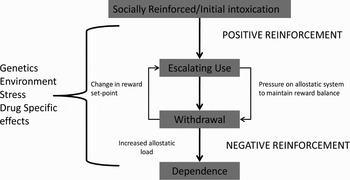
The allostatic model also implies that drug use transitions from a state of pleasure seeking (i.e., positively reinforcing), to a state of dysphoria relieving (i.e., negatively reinforcing). This pattern assumes that drug use escalates from recreational or impulsive use into more compulsive patterns because the drug properties alter the individual's ability to experience pleasure. According to this model, as this system becomes dysregulated, preoccupation with the substance increases. After a certain amount of drug exposure the individual becomes dependent upon the substance because the reward set point has dropped to adjust to the pleasurable effects of the drug. This process involves taking larger amounts of the substance over longer periods of time, increased drug tolerance, and the increasing intensity of withdrawal symptoms. As withdrawal becomes more severe, the initial positively reinforcing effects of drug use transition into a compulsive pattern of use marked by negative reinforcement. Figure 1 summarizes this transition from positive to negative reinforcement. In the classic addiction model, where individual differences in the likelihood of transitioning from recreational drug use to more compulsive and problematic patterns of use results from a combination of genetic vulnerability, environmental factors, stress, and the properties of the specific substance (Le Moal, Reference Le Moal2009).
The traditional model of drug addiction summarizes a transition from impulsive and positively reinforcing drug use to a compulsive and negatively reinforcing pattern of drug use. This latter state is indicative of drug addiction and results from repeated drug exposure that changes an individual's ability to experience pleasure. This lower reward set point leads to increased preoccupation with the drug, and eventually, the inability to experience pleasure without the drug. Individual differences in genes, environment, stress, or potency of the drug can slow down or speed up this process.

Does the Allostatic Model of Drug Addiction Apply to AAS Addiction?
AAS use has a different relationship to allostasis than traditional drugs of abuse. Because the primary effects of AASs are hormonal and are taken to change physical features (as opposed to produce pleasure), the primary allostatic responses occur along the HPG and HPA axes (as opposed to CNS changes in dopamine). In AAS use, allostasis operates as a function of both exercise and drug taking. The majority of AAS users report initiation of use as a result of a desire to improve their outward appearance (Copeland et al., Reference Copeland, Peters and Dillon2000), and thus we can conceptualize the initial AAS use as a functional attempt to reduce a negative mood states related to dissatisfaction with one's appearance. However, the use of AASs is almost always preceded by intense and regular exercise. The physiological correlates of a poor body image are not well understood, although it is regularly correlated with poor mood (Hallsworth, Wade, & Tiggemann, Reference Hallsworth, Wade and Tiggemann2005), eating disorder symptoms (Choi, Pope, & Olivardia, Reference Choi, Pope and Olivardia2002; Mangweth et al., Reference Mangweth, Pope, Kemmler, Ebenbichler, Hausmann and De Col2001), and obsessive–compulsive features among male weightlifters (Hildebrandt, Schlundt, Langenbucher, & Chung, Reference Hildebrandt, Schlundt, Langenbucher and Chung2006). Thus, there may be a chronically low hedonic tone that precedes AAS use. However, the physiological correlates of acute and regular exercise are better characterized, and are typically associated with increased mood or hedonic tone. The advantage of an allostatic model of AAS use is that it allows us to link the physiology of these two behaviors (AAS use and exercise) to a general hedonic state.
The essential role of exercise in AAS addiction
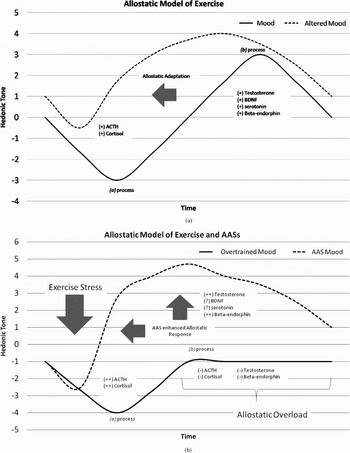
Exercise is a functional form of stress with its own hormonal and neuroendocrine consequences (Kraemer, Reference Kraemer1988) that are adaptive and can protect individuals from deleterious effects of chronic psychosocial stress (Tsatsoulis & Fountoulakis, Reference Tsatsoulis and Fountoulakis2006). Figure 2a shows an adapted opponent process model of this behavior. Initially there is an increase in adrenal hormone secretion (e.g., ACTH and cortisol), aimed at mobilizing energy stores to support muscoskeletal and cardiac demands of exercise. This is associated with physical discomfort, dysphoria, and pain. An opposing response involving the release of androgens (e.g., testosterone) and endorphins (e.g., β-endorphin) aimed at stimulating recovery and protecting against pain is then initiated. This response can produce a mild euphoria that makes exercise pleasurable. Repeated exercise encourages allostatic adaptation, which occurs along the HPA and HPG axes. If adequately balanced, exercise lowers HPA reactivity to other stressors and increases chemical release of proteins like brain-derived neurotrophic factor (BDNF), which initiates the protective effects of exercise (Mata, Thompson, & Gotlib, Reference Mata, Thompson and Gotlib2010). Furthermore, exercise produces increases in neurotransmitters such as noradrenaline, serotonin, and dopamine, which facilitate the mood-enhancing effects of exercise (Ma, Reference Ma2008; Meeusen, Reference Meeusen2005). Nevertheless, when exercise is overused it can lead to an overtraining syndrome marked by underactivity of the HPA axis (decreased cortisol and adrenal hormone levels and reactivity), and associated fatigue, depression, and anhedonia (Lehmann, Foster, Dickhuth, & Gastman, Reference Lehmann, Foster, Dickhuth and Gastman1998). Similar changes in neurotransmitter levels are not well documented but are likely to occur in prolonged periods of overexercise.
(a) The allostatic model of exercise involves an a-process that occurs during acute physical exertion, and is associated with pain and low mood. The a-process also involves the release of ACTH and cortisol, which support the increased output of energy, and are consistent with this change in mood. The a-process is followed by a b-process that opposes this stress and aims to protect the individual from future stresses. This change may be described as an “exercise high,” and corresponds to a general analgesic type feeling of relief. This b-process is characterized by increases in hormone levels needed to support muscle recovery and protect against pain. Similarly, other changes in the central nervous system occur to support the increased mood and hedonic tone. Over repeated exposure, the physiologic response of the b-process becomes more efficient and robust, supporting regular exercise through allostatic adaptation. (b) The combined allostatic model of AAS and exercise suggests that increases in testosterone support allostatic adaptation to intense exercise. These effects are likely to be especially robust when overtraining has led to a state of allostatic overload, where the b-process is weak and consequently there are chronically low levels of testosterone and β-endorphin as well as a failure of exercise to induce appropriate stress response (i.e., yielding lower ACTH and cortisol). The use of testosterone mimics the natural allostatic change to exercise, reinstituting a b-process that increases mood and hedonic tone.

The allostatic response coordinates the change in tolerability to exercise by increasing the repair processes directed by changes along the HPA and HPG axes. This coordination allows for longer term adaptation to exercise and the ability to increase the intensity of a given workout because of increased allocation of proteins to repair and enhance the muscles involved in the repetitive exercise (Morton, Kayani, McArdle, & Drust, Reference Morton, Kayani, McArdle and Drust2009). This process is complex and involves changes at the molecular level that influence protein synthesis and mitochondrial function (Morton et al., Reference Morton, Kayani, McArdle and Drust2009), and associated morphological changes to the composition and function of the musculoskeletal system (Folland & Williams, Reference Folland and Williams2007). Furthermore, the allostatic response involves androgenic hormone-dependent processes in the muscle (Aizawa et al., Reference Aizawa, Iemitsu, Maeda, Otsuki, Sato and Ushida2010), and is partially responsible for the gender differences in muscle mass and strength (Aizawa et al., Reference Aizawa, Iemitsu, Otsuki, Maeda, Miyauchi and Mesaki2008).
In the case of overtraining, these androgenic processes and the corresponding HPG and HPA axial functions are chronically suppressed (Angeli, Minetto, Dovio, & Paccotti, Reference Angeli, Minetto, Dovio and Paccotti2004). This suppression can be formulated as a consequence of allostatic overload to the physical stress of exercise (Angeli et al., Reference Angeli, Minetto, Dovio and Paccotti2004). When muscles are stressed, cytokine release coordinates an inflammatory response to support survival, but this can lead to an increase in a range of physiological responses that include increased cortisol (followed by chronic suppression in later stages of allostatic overload), and decreased testosterone levels found among overtrained exercisers (Smith, Reference Smith2000). As summarized in Figure 2a, the use of AASs provides the opportunity to eliminate some of this natural allostatic response to exercise by externally stimulating the protective effects of androgens on muscle breakdown. Thus, overtraining provides a unique hormonal environment where AAS use may functionally improve one's allostatic response to exercise with less chance of allostatic overload in the musculoskeletal system. AASs are adaptive for the overtrained individual because they prevent the loss of androgenic tone during weight training, and in fact, upregulate sensitivity and influence of the androgenic mechanisms involved in muscle growth and function (Eriksson, Kadi, Malm, & Thornell, Reference Eriksson, Kadi, Malm and Thornell2005). This allows for further morphological changes to the muscle and muscle metabolism, such that overtraining leads to increased muscle size and strength via changes at the molecular level (Kadi, Reference Kadi2008). The result is a system that is initially protected against exercise-induced allostatic overload and consequently allows one to pursue their ideal body. This is evident in AASs' efficacy to increase muscle mass, improve recovery time, and tolerate longer and more intense exercise in a dose-dependent fashion (Bhasin et al., Reference Bhasin, Woodhouse, Casaburi, Singh, Bhasin and Berman2001; Woodhouse et al., Reference Woodhouse, Reisz-Porszasz, Javanbakht, Storer, Lee and Zerounian2003, Reference Woodhouse, Gupta, Bhasin, Singh, Ross and Phillips2004).
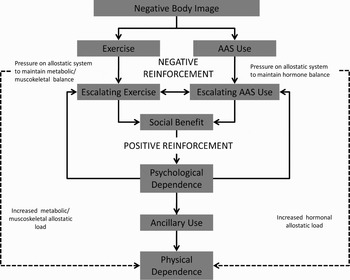
The relationship between exercise, gonadal, and stress hormones not only suggests a reversal of the opponent-process model traditionally associated with addiction but also a reversal of the transition from impulsive to compulsive drug use. As depicted in Figure 3, AAS use interacts with exercise to be negatively reinforcing. Functionally, AASs reduce the stress of exercise while also improving outward appearance. The dysphoria associated with either state (overtraining or poor body image) is reduced. Thus, AAS drug taking behavior is primarily negatively reinforcing. In fact, the most interesting aspect of this model is that the positive, pleasurable hedonic state is secondary and corresponds with the HPG axis changes associated with increased levels of androgens. Androgens are known to be mildly reinforcing (Wood, Reference Wood2004), particularly in their ability to alter the reinforcing value of other pleasurable activities. For instance, AASs increase the reinforcing value of exercise (Wood, Reference Wood2002), amphetamine (Clark, Lindenfeld, & Gibbons, Reference Clark, Lindenfeld and Gibbons1996), and cocaine (Martinez-Sanchis, Aragon, & Salvador, Reference Martinez-Sanchis, Aragon and Salvador2002). They are also known to increase the frequency and drive for sex (Yates, Perry, MacIndoe, Holman, & Ellingrod, Reference Yates, Perry, MacIndoe, Holman and Ellingrod1999) and aggression (Pibiri, Nelson, Carboni, & Pinna, Reference Pibiri, Nelson, Carboni and Pinna2006). These findings are consistent with the transition from a compulsive (negatively reinforcing drug use schedule) to a pattern of impulsive behavior (positively reinforcing), where naturally pleasurable behaviors (e.g., aggression and sex) and other drugs of abuse (e.g., stimulants) can increase. The increase in these behaviors coincides with other socially desirable changes in physical appearance, and thus the social benefits provide a strong source of secondary reinforcement for AAS users. We can conceptualize this as a period of psychological dependence, where the AAS user learns that social benefits (e.g., appearance, sex, or social dominance through aggression) are related to AAS use. Over prolonged use, AASs themselves may become reinforcing in a pattern much similar to later stages of traditional drug dependence, where there is evidence of a physiological adaptation such that the individual is unable to sustain normal HPG axis function without AASs. This can be thought of as a homeostatic failure mediated by the HPG axis. This latter dependence syndrome is also likely to be a function of the increased allostatic load caused by intense exercise and the efforts of the HPG axis to maintain hormonal balance.
The allostatic AAS addiction model reverses the traditional progression to addiction. Individuals who use AAS begin from a negative hedonic state and use both exercise and AASs to address this lower hedonic set point. The synergistic effects of AAS and exercise not only improve hedonic tone, but lead to secondary social gains providing an increased number of opportunities for pleasure or positive reinforcement. In this model both Exercise and AASs contribute pressure to the homeostatic system and both ultimately contribute to the physiological addiction that develops over the course of chronic AAS use. The transition from psychological dependence to physiological dependence is marked by the use of substances to reduce the side effects of allostasic load.

The initial increase in both positive and negative health outcomes
The reconceptualization of AAS use as a negatively reinforcing form of drug use helps explain some of the paradox of AAS use. Because these substances take advantage of the natural defenses against physical stress and “fool” the body into speeding up recovery and preventing muscle breakdown from exercise, they provide clear evidence of their health benefits. In essence, they reduce the allostatic load on the musculoskeletal system by providing an external source of physiological adaptation. However, the introduction of high doses of AASs provides for another potential source of allostasis. With the introduction of supraphysiologic doses of AASs, the body's natural negative feedback system and metabolic processes responsible for regulating androgen production and circulating androgen levels are stressed. In the context of repeated cycles, this may lead to a loss of the ability to naturally regulate androgen levels creating a hypogondal state (Kanayama, Brower, Wood, Hudson, & Pope, Reference Kanayama, Brower, Wood, Hudson and Pope2009a).
The secondary reinforcement of these initial physiological changes is also likely to influence the experience of health benefits. For example, the increase in lean muscle mass may increase one's attractiveness and access to sexual partners, improve job performance, or reduce social stress related to low self-esteem. The same individual may receive more positive attention for his or her physical changes and feel an improved perception of social standing. However, these same changes may lead others to engage in risky sexual behavior (Middleman, Faulkner, Woods, Emans, & DuRant, Reference Middleman, Faulkner, Woods, Emans and DuRant1995) or increased aggression (Clark & Henderson, Reference Clark and Henderson2003). The latter is thought to increase AAS users' likelihood of violent criminal offenses and violent death (Klotz, Petersson, Isacson, & Thiblin, Reference Klotz, Petersson, Isacson and Thiblin2007; Petersson, Garle, Granath, & Thiblin, Reference Petersson, Garle, Granath and Thiblin2006; Thiblin, Lindquist, & Rajs, Reference Thiblin, Lindquist and Rajs2000). Thus, AAS users may experience increased health risks due to the behavioral effects of AASs well before they experience health decline as a function of wear and tear on other physiological systems from AASs.
In addition, as an individual pushes his or her physical limits with AAS over time, his or her body may begin to break down. The most robust and dangerous example of this occurs within the cardiovascular system. AAS users are at increased risk for a range of negative cardiac effects including cardiomyopathy and ischemic stroke (Ahlgrim & Guglin, Reference Ahlgrim and Guglin2009; Dickerman, Schaller, Zachariah, & McConathy, Reference Dickerman, Schaller, Zachariah and McConathy1997; Du Toit, Rossouw, Van Rooyen, & Lochner, Reference Du Toit, Rossouw, Van Rooyen and Lochner2005; Stergiopoulos, Brennan, Mathews, Setaro, & Kort, Reference Stergiopoulos, Brennan, Mathews, Setaro and Kort2008; Sullivan, Martinez, Gennis, & Gallagher, Reference Sullivan, Martinez, Gennis and Gallagher1998), with some data suggesting that these effects persist after discontinuation of AAS use (Urhausen, Albers, & Kindermann, Reference Urhausen, Albers and Kindermann2004). This latter finding is consistent with the allostatic model where overload causes a failure in other physiologic systems attempting to adapt to the intense exercise and muscle growth common to AAS users. As with most negative AAS outcomes, the impact on the specific system may be exacerbated or even caused by the intense and persistent levels of strenuous exercise typical of AAS users (Dickerman, Schaller, & McConathy, Reference Dickerman, Schaller and McConathy1998; Haykowsky, Dressendorfer, Taylor, Mandic, & Humen, Reference Haykowsky, Dressendorfer, Taylor, Mandic and Humen2002). Thus, it is difficult to identify the specific source of these negative outcomes, but the allostatic model allows for both exercise and AAS use to contribute pressure to the cardiac system, and is thus likely to provide a more defensible explanation of both the increased health benefits and negative consequences of AAS use.
The transition from recreational AAS use into a drug problem
Using the suggested model, the point where AAS use transitions into a drug problem occurs when the individual's AAS use leads to more negative health outcomes than positive health outcomes and, despite this shift, the individual continues to use AASs. This transition point could be theoretically linked to the point where the individual experiences significant allostatic overload and ultimately some form of homeostatic failure. The most obvious example of this would be when the individual can no longer produce testosterone, although this may be difficult to identify. Other systems, however, may be equally forced to adapt and are consequently stressed, leading to a whole range of side effects. For instance, liver toxicity is well documented in animal models of AAS use (Noorafshan, Karbalay-Doust, & Ardekani, Reference Noorafshan, Karbalay-Doust and Ardekani2005; Vieira et al., Reference Vieira, Franca, Damaceno-Rodrigues, Dolhnikoff, Caldini and Carvalho2008), and supported by case studies in humans (Martin, Abu Dayyeh, & Chung, Reference Martin, Abu Dayyeh and Chung2008; Nakao et al., Reference Nakao, Sakagami, Nakata, Komazawa, Amimoto and Nakashima2000; Socas et al., Reference Socas, Zumbado, Perez-Luzardo, Ramos, Perez and Hernandez2005). Sexual side effects are also common and typically occur during off-cycle periods where the individual enters a hypogonadal state and experiences loss of sexual desire and difficulty getting or maintaining an erection (Hildebrandt et al., Reference Hildebrandt, Langenbucher, Carr and Sanjuan2007; Langenbucher, Hildebrandt, & Carr, Reference Langenbucher, Hildebrandt and Carr2008). Milder side effects such as gynecomastia, acne, and hair loss are common (Hartgens & Kuipers, Reference Hartgens and Kuipers2004). Mood related side effects could be included in this same list as some attribute permanent changes in impulsivity and aggression to AAS use (Galligani, Renck, & Hansen, Reference Galligani, Renck and Hansen1996; Porcerelli & Sandler, Reference Porcerelli and Sandler1995).
As side effects are almost universal among AAS users (Hildebrandt et al., Reference Hildebrandt, Langenbucher, Carr and Sanjuan2007; Langenbucher et al., Reference Langenbucher, Hildebrandt and Carr2008) and often treated with ancillary drugs (Hildebrandt, Langenbucher, et al., Reference Hildebrandt, Langenbucher, Carr, Sanjuan and Park2006), evidence for increased levels of allostatic load may be difficult to quantify or detect clinically. However, this ancillary use could be conceptualized as a method for preventing allostatic overload and thus ancillary drug use may be a proxy for allostatic overload. A simple example involves the body's natural metabolism of testosterone into estrogen via the aromatase enzyme. When supraphysiological doses of AAS are used, aromatase increases in efforts to keep levels of testosterone low and balance the testosterone to estrogen ratio (Ellem & Risbridger, Reference Ellem and Risbridger2010). However, increased estrogen levels have their own consequences including the development of female breast tissue or gynecomastia (Basaria, Reference Basaria2010). Aromatase inhibitors are often used by AAS users to prevent this side effect from occurring or at the initial onset of symptoms (Hildebrandt, Langenbucher, et al., Reference Hildebrandt, Langenbucher, Carr, Sanjuan and Park2006). Such use obscures evidence of the allostatic overload (i.e., increased aromatase activity). In fact, this type of ancillary drug use may be a good marker of increased allostatic load, and reliance on ancillary drugs to tolerate AAS use may be a useful way of identifying the threshold where an individual transitions from AAS user capitalizing on the health benefits of AASs into an AAS user with a drug problem.
Explaining individual differences in the risk for negative health outcomes of AAS
There are very little data on who is at greatest risk for negative AAS related outcomes. Based on a standard drug addiction model, all individuals are at risk because the drug is causal in the disease development. However, AASs do not operate like other drugs of abuse. Nevertheless, an expanded allostatic addiction model allows risk factors to include vulnerabilities in the motivation–reward system, which can include genetic and epigenetic contributions to this system. Furthermore, the integration of the HPA axis into the opponent process model allows for risk to include other sources of allostatic overload (e.g., early childhood stress). Using the same logic, those at the greatest risk for developing AAS-related health consequences would be those with specific vulnerabilities in HPG function. For instance, there is some evidence of this type of risk factor as higher preexisting concentrations of ARs yield stronger AAS effects (Wood & Peters, Reference Wood and Peters2008). Other sources of vulnerability might include genetic polymorphisms in ARs or DNA that codes for the enzymes involved in testosterone metabolism. As with that allostatic model of addiction, other genetic or epigenetic vulnerabilities in the stress system could also predispose individuals to develop a harmful pattern of AAS use. For example, a functional variation in the androgen-receptor gene in adolescent males is correlated with visceral adiposity and blood pressure (Pausova et al., Reference Pausova, Abrahamowicz, Mahboubi, Syme, Leonard and Perron2010). Males with this receptor variation who use AASs may engage be more prone to harmful AAS use simply because their body systems are under greater physical stress and are therefore more susceptible to the potential negative effects of AASs. In addition, because androgens within normal limits play a protective role in stress management, particularly with regard to the HPA axis (Handa, Burgess, Kerr, & O'Keefe, Reference Handa, Burgess, Kerr and O'Keefe1994), individuals with disturbances in their overall androgen levels (either abnormally high or low levels) may suffer greater consequences from AAS use by dysregulating an already fragile system than those with healthy androgen levels.
A novel source of risk may involve age of initial AAS exposure. Adolescence is a period marked by rapid changes in the brain facilitated by surges in pubertal hormones including androgens. However, the specific neurobiological changes that occur during adolescence are poorly understood and involve a complex interplay of genetic and environmental interactions (Romer &Walker, Reference Romer and Walker2007). In addition, neurobiological developments during adolescence are even more difficult to probe when drugs are involved (Spear, Reference Spear2000). The most relevant of these adolescent changes to our proposed model involves the remodeling of the stress system neurons that are activated by androgens and their metabolites (Raznahan et al., Reference Raznahan, Lee, Stidd, Long, Greenstein and Clasen2010). AASs are likely to hijack this natural process and increase the likelihood of a range of problematic behaviors and perhaps contribute to a more impulsive and aggressive personality that persists beyond adolescence even without continued AAS use. Thus, AAS experimentation during this period may be a particularly risky endeavor as its effects may not only be acute, but may have a lasting impact on the physiological and psychological development of the adolescents. In humans, adolescence may itself be a risk factor for AAS use. Researchers have noted that adolescents seek rewards and try substances more frequently than those of other ages (Kelley, Schochet, & Landry, Reference Kelley, Schochet and Landry2004). By introducing high doses of synthetic androgens to this pubertal change process may lead to age-specific vulnerabilities in some of the negative behavioral effects of AAS.
The psychopathology related to AAS use suggests an increased level of Axis I and II disorders and broader disturbances in a range of pathological behaviors and personality traits. For instance, AAS use has been linked to anger, aggression, hostility, hypomania, and even psychosis (Choi, Parrott, & Cowan, 1990; Lefavi, Reeve, & Newland, Reference Lefavi, Reeve and Newland1990; Perry, Andersen, & Yates, Reference Perry, Andersen and Yates1990; Pope & Katz, Reference Pope and Katz1988, Reference Pope and Katz1994), as well as increases in violence and criminality (Conacher & Workman, Reference Conacher and Workman1989). AAS use has also been linked to increased impulsivity, sensation seeking, and narcissism (Clark & Henderson, Reference Clark and Henderson2003; Perry et al., Reference Perry, Kutscher, Lund, Yates, Holman and Demers2003; Porcerelli & Sandler, Reference Porcerelli and Sandler1995), suggesting both behavioral and personality changes are possible as a result of AAS use. The mechanisms of these different psychopathological outcomes are not entirely understood, although most neurobiological theories link aggressive and impulsive behavior to AR-mediated changes in specific brain regions (McGinnis, Reference McGinnis2004). Of interest, the greatest support for aggressive behavior and impulsivity originates from epidemiological data with adolescents (DuRant, Escobedo, & Heath, Reference DuRant, Escobedo and Heath1995; DuRant, Rickert, Ashworth, Newman, & Slavens, Reference DuRant, Rickert, Ashworth, Newman and Slavens1993; Irving, Wall, Neumark-Sztainer, & Story, Reference Irving, Wall, Neumark-Sztainer and Story2002) suggesting an important developmental context for many of these outcomes.
It is possible that AAS use during adolescence may lead to certain behavioral traits that predispose individuals to a broader base psychopathology that extends beyond drug dependence. For example, because androgens are responsible for organizing the brain for male sexual behavior during adolescence, the introduction of excess androgens during puberty may exacerbate this organization to increase pleasure seeking behavior (Sato, Schulz, Sisk, & Wood, Reference Sato, Schulz, Sisk and Wood2008). The lasting increases in aggression among animals exposed to AASs during adolescence are perhaps the clearest example of this early onset risk (Wesson & McGinnis, Reference Wesson and McGinnis2006). Both adult animals and humans exposed to the same AASs experience acute (opposed to chronic) increases in these same behaviors, but not chronic changes (McGinnis, Reference McGinnis2004). However, adolescent exposure among animals appears to have lasting effects including alterations to sleep and hyperactivity (McGinnis, Lumia, Tetel, Molenda-Figueira, & Possidente, Reference McGinnis, Lumia, Tetel, Molenda-Figueira and Possidente2007) and reactivity to other drugs of abuse (Steensland, Hallberg, Kindlundh, Fahlke, & Nyberg, Reference Steensland, Hallberg, Kindlundh, Fahlke and Nyberg2005). Thus, the timing of exposure to AASs is important for both drug-based and broader psychopathological outcomes, even in the absence of continued drug use.
A third source for individual risk may involve exercise. As suggested, overtraining may provide a unique hormonal environment for the effects of AASs and create one potential risk for AAS addiction onset. The larger question, however, is whether this overtrained state places an individual at greater risk for AAS consequences. This could be a result of allowing the individual to continue to exercise intensely despite having reached a point of allostatic overload. The effects of exercise on the motivation–reward system may also be enhanced by AAS use providing a hedonic balance that favors the combination of AASs and exercise. This synergistic effect is likely mediated through opiate mechanisms (Wood & Peters, Reference Wood and Peters2008), and it may be vulnerabilities in the opiate system (e.g., genetic or epigenetic) that increase the risk for harmful AAS use.
Genetic and epigenetic sources of variation
The genes responsible for opiate and stress hormone response are likely to affect an individual's risk for AAS dependence. For instance, polymorphisms in the genes involved in the opiate system are implicated in risk for alcohol and opiate additions (Mayer & Hollt, Reference Mayer and Hollt2001). These polymorphisms could include functional polymorphisms present in the opiate-mu or delta receptors (Mendez & Morales-Mulia, Reference Mendez and Morales-Mulia2008) or metabolism and production of opiate stimulating hormones such as proopiomelacortin. Alternatively, functional polymorphisms in genes that mediate stress response could also contribute to variation in AAS response. For instance, genes involved in coordinating stress responses are believed to moderate the risk for individuals exposed to different stressors and the likelihood of developing drinking problems (Zimmermann, Blomeyer, Laucht, & Mann, Reference Zimmermann, Blomeyer, Laucht and Mann2007). The individual stress response to exercise (Leal-Cerro et al., Reference Leal-Cerro, Gippini, Amaya, Lage, Mato and Dieguez2003) is likely to be an important aspect of this variation and potentially provide insights into the genetic risks for AAS dependence. We would hypothesize that those predisposed to chronically low cortisol as adults from early trauma (Pervanidou, Reference Pervanidou2008) would have a similar neuroendocrine environment to those with overtraining syndrome. Thus, trauma would be an additional risk factor for AAS addiction. Extending this hypothesis, we could also hypothesize the transgenerational contribution to this type of predisposition through mothering in trauma exposed mothers. The nature of this transmission is not entirely understood, but it is supported through observational research in human cohorts (Yehuda & Bierer, Reference Yehuda and Bierer2008) and the animal literature that indicates that maternal behavior can alter gene function in the stress system (Meaney et al., Reference Meaney, Diorio, Francis, Widdowson, LaPlante and Caldji1996).
Possible protective factors
Although there are several notable risk factors for developing AAS dependence, protective factors are poorly understood. Biologically, resilience to the allostatic overload and homeostatic failure characteristic of AAS dependence could be found in two potential sources. The first would involve the preexisting neurohormonal infrastructure where primary androgenic actions are found. Peripherally, this could involve specific mechanisms in the muscoskeletal system activated by AASs. In particular, if there are comparatively few functional androgen receptors in the muscle (e.g., because of a functional polymorphism), the individual will experience less change in musculature and experience less protection against allostatic overload. There is some evidence of an inverse correlation between CAG repeat polymorphism in the AR and fat-free mass among men (Walsh et al., Reference Walsh, Zmuda, Cauley, Shea, Metter and Hurley2005), which is one potential genetic marker that may reduce the sensitivity of men to the reinforcing effects that AAS exert via changes in outward appearance. Similarly, the same lack of sensitivity to androgens could be present centrally in the brain and in specific regions of relevance such as the amygdala or hippocampus. For instance, Manuck et al. (Reference Manuck, Marsland, Flory, Gorka, Ferrell and Hariri2010) found evidence for the moderating effect of the CAG AR polymorphism on the positive relationship between testosterone and amygdala activation. These findings suggest that AR sensitivity is likely to moderate some of the negative effects of AAS and decreased sensitivity may yield decreased potential for developing AAS dependence. To extend this model, there are a number of downstream molecular regulators of AR activation on muscle development (Wyce, Bai, Nagpal, & Thompson, Reference Wyce, Bai, Nagpal and Thompson2010) and broadly across tissues (Bennett, Gardiner, Hooper, Johnson, & Gobe, Reference Bennett, Gardiner, Hooper, Johnson and Gobe2010) that could provide sources of resilience to AAS dependence by reducing the potency of AAS. This would be particularly relevant for the AR mediated changes to β-endorphin release and regulation of cortisol characteristic of the allostatic response to exercise.
In addition to these preexisting biological protective factors, developmental factors such as age may also serve to protect individuals for biological and environmental reasons. For example, aging men who enter into AAS use later in life as a form of hormone replacement might be protected against AAS dependence because (a) they have a natural decline in AR, which reduces sensitivity to the drug, (b) the patterns of use involve less intense exercise and lower doses for AASs, and (c) the social context around AASs has less influence over patterns of use. In particular, older men may be less vulnerable to establishing a lifestyle focused on using AASs because of the existence of competing interests that have been established over time (e.g., professional goals, family, or other commitments).
Summary
AAS use is a complex phenomenon, and our understanding of it has largely been influenced by the changing sociopolitical environment targeting doping athletes. However, the use of AASs extends well beyond the athletic field and into the everyday lives of people who simply want to look better, for a longer time, and reap the benefits of this status. The effectiveness of AASs at increasing lean muscle mass makes them good candidates for illicit use. Yet this level of effectiveness generates a paradox pertaining to the likelihood of health benefits and degree of health consequences caused by AAS use. Because AASs are taken in the context of regular exercise and with close attention to diet, they can be considered part of a larger healthy lifestyle. Many of the health benefits originate with exercise providing their foundation, and AASs appear to enhance this lifestyle for many of the AAS users (Hildebrandt, Langenbucher, et al., Reference Hildebrandt, Langenbucher, Carr, Sanjuan and Park2006; Monaghan, Reference Monaghan2002). However, there are many concerns about the negative health effects of AAS use with much of this imprecisely conceptualized through traditional models of drug abuse and dependence (Kanayama et al., Reference Kanayama, Brower, Wood, Hudson and Pope2009a).
Allostasis helps to resolve this paradox by taking AAS use out of the traditional drug model and considering the larger lifestyle associated with AAS use. In particular, an allostatic AAS model includes exercise as a necessary component of the larger processes involved in the benefits and consequences of AAS use and prioritizes the direct effects of both exercise and AAS on the HPG and HPA axes. This broader conceptualization provides opportunities to answer some important and specific questions about the risks and benefits of AAS use. First, it suggests an allostatic role for AASs in protecting the musculoskeletal system from the deleterious effects of overtraining. This allows individuals to get closer to their idealized bodies and perform better in situations where their body may be under physical stress (e.g., weight training, sports, certain jobs, etc.). This external enhancement of allostasis also suggests a specific between system communication between the HPA and HPG axes that allows for increased lean muscle mass, but that may also have centralized effects in the brain that protect individuals against a range of stressors. Nevertheless, this enhancement is likely to come at a cost to the homeostasis of the HPG axis. As the body adapts to increased androgens, it increases efforts to metabolize and slow production of endogenous androgens. This adaptation is likely to lead to points of allostatic overload and the occurrence of a range of side effects such as gyencomastia, sexual dysfunction, or male pattern baldness. Similar allostatic overload is also probable in the cardiovascular system where exercise and AASs may contribute independently or synergistically to a range of cardiac problems. Thus, this model leads to a number of testable hypotheses about how AAS use simultaneously enhances and impairs one's health without the limitations in scope of the motivation–reward system. Second, allostatic overload and homeostatic failure provide theoretically identifiable points where an individual transitions from pursuing a functional form of life enhancement to a harmful pattern of drug use. Research on motivation–reward system has historically had a rather large influence on the development of the existing diagnostic criteria for drug dependence, and the sociopolitical environment has been equally influential on the development of existing criteria for drug abuse (Martin, Chung, & Langenbucher, Reference Martin, Chung and Langenbucher2008). Given that AASs are not primarily used for their euphoria-producing effects, and the sociopolitical environment has tended to both idealize bodies and achievement gained through AAS while simultaneously stigmatizing AAS users as cheaters and villains, relying on the traditional addictions approach is likely to complicate and further obscure this phenomenon. To the degree that allostatic overload and homeostatic failure are identifiable among users, the allostatic model provides the opportunity for clear transition points between recreational and harmful use. Finally, the allostatic model also provides a broader scope for examining individual differences in AAS risk. The HPG axis (as opposed to the motivation reward system) becomes the focus for investigations of risk and resilience to harmful use. In addition, the allostatic model identifies periods of increased risk such as adolescence, where puberty may increase sensitivity of the CNS to the effects of AAS.
The lack of data on AAS use in humans provides an opportunity to address many of these theoretical and practical questions about AAS use in a way that does not stigmatize users and provides opportunities to better understand some fundamental biological processes. Perhaps most interesting is the possibility for understanding how the HPA and HPG axes communicate with each other to respond and adapt to stress. Consider in the developmental context of this communication offers a further opportunity to understand individual differences in AAS addiction and simultaneously provides information about the specific types of psychopathology (e.g., aggression/impulsivity). Defining this process could help explain sex differences in the negative effects of stress as well as provide a therapeutic target for stress-based disorders. Similarly, a better understanding of the secondary effects on the motivation–reward system may help explain gender differences in rates of traditional drug abuse and dependence. Finally, pursuing the study of androgens on the brain may help us understand the biological reasons for this gender disparity.