INTRODUCTION
Meiofauna, and in particular free-living nematodes, form an important component of the benthic domain both in abundance and biomass, and are closely related to other organisms playing a key role in trophic webs (see Giere, Reference Giere2009 for review). These features, and the numerous advantages of the use of nematodes in the ecological surveys, strongly support their use as bio-indicators. For this reason this phylum was recently proposed as an indicator for assessing the ecological quality of marine ecosystems according to the European Water Framework Directive (WFD, Directive 2000/60/EC) (Moreno et al., Reference Moreno, Semprucci, Vezzulli, Balsamo, Fabiano and Albertelli2011).
Tropical zones are subject to an increasing number of events at both global and local scale that compromise their integrity and functionality (Buddemeier et al., Reference Buddemeier, Kleypas and Aronson2004). The economic and social importance of tropical ecosystems, and in particular of coral reefs, is widely recognized, and their loss would be a significant impact for innumerable people worldwide and for biodiversity conservation (Hoegh-Guldberg, Reference Hoegh-Guldberg1999; Adrianov, Reference Adrianov2004).
The Maldivian archipelago, located in the central part of the Chagos–Laccadive ridge, is one of these vulnerable geographical regions. Of the approximately 1120 islands, about 200 are inhabited and 98 of them are used for tourism. Touristic activities are the first business of the country, but it may be a relevant threat for the natural resources. Other threats are represented by fishing, along with destructive practices of anchorage, modification of the coast, extraction of coral rock, eutrophication and pollution resulting from landfill into the sea, thermal pollution from desalination plants and the disposal of solid waste (Price & Clark, Reference Price, Clark and Sheppard2000; Sugiyama et al., Reference Sugiyama, Staples and Funge-Smith2004).
Huvadhoo atoll, situated in the southern extremity of the archipelago of Maldives, is one of the still uncontaminated atolls. Until 2009, it was far from the most frequented and important touristic routes, but the situation is changing, with a potential increase in the human impact on ecosystems and their benthic assemblages. Therefore, a definition of the spatial patterns of biodiversity of the benthic assemblages is urgent, especially in the tropical regions that are rapidly changing (Montiel et al., Reference Montiel, Quiroga and Gerdes2011).
This study aims to characterize the meiofaunal and nematode assemblages of the lagoon system of the poorly known Huvadhoo atoll both from a taxonomic and functional point of view, so providing the first ecological data on the benthic assemblages of the lagoon and facilitating future temporal comparisons which may also open up new perspectives for the conservation and management of this geographical region.
MATERIALS AND METHODS
Study area
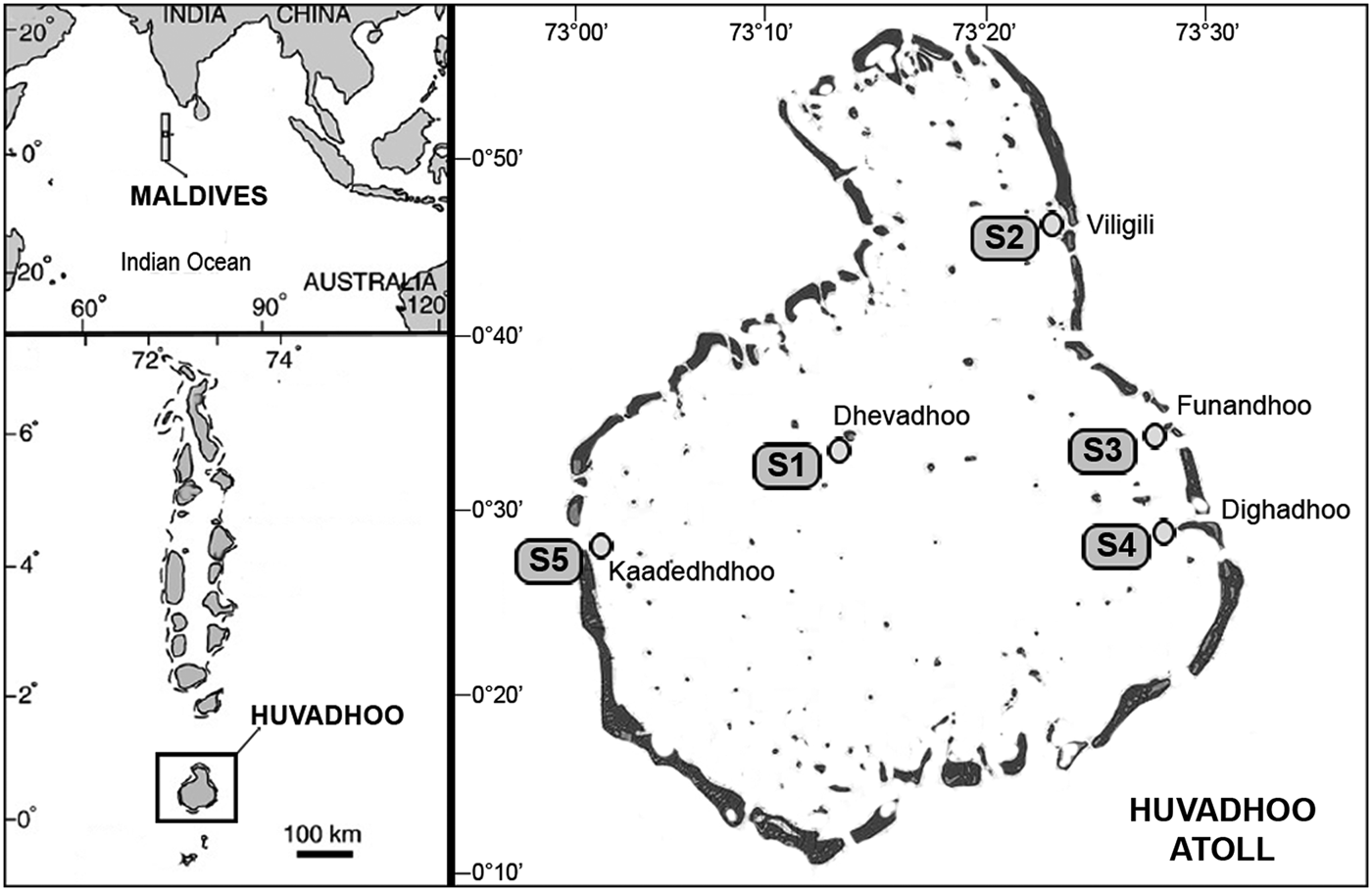
Huvadhoo atoll, also referred to as ‘Suvadiva’ on some maps, is situated on the southern end of the chain of atolls of the Maldivian archipelago (Figure 1). Located only few miles north of the equator, it is one of the largest atolls in the world: about 65 km wide and 82 km long. It contains the largest and deepest lagoon of the Maldives, whose irregular and rough floor, studded with numerous patch reefs, reaches the considerable depth of about 90 m.
Map of the study area and sampling stations.

The samplings were carried out at the beginning of habitat exploitation for construction purposes after a long period of restrictions. Although a general quite uncontaminated landscape was observed, several new touristic buildings were under construction from coral debris and sands collected on the beaches and on the seafloor, so contributing to altering the habitat integrity. The tragic worldwide event of coral bleaching followed by mass mortality which occurred in the Maldives in 1998 (Hoegh-Guldberg, Reference Hoegh-Guldberg1999) seemed to be overcome, and large communities of Acropora and Pocillopora again characterize the shallow reef community.
The ring of coral reefs that form the atoll shows a north side very irregular, low and discontinuous. Along it there are few sandy islands, while elsewhere the reefs are narrow, almost continuous, with relatively few passes. The reefs are surrounded by a garland of long islands parallel to the atoll margin. On the eastern side some passes are cut by straight lines that suggested fault dislocations, with lowering and uplifting features more intense than those that characterize the geological development of the northern part of the archipelago.
We also noted that many of the visited islands are composed of sand piled up on bars of pebbles and rubble where the reefs stand out from sea level. The pebbles are frequently very rounded and often show a thin coat of Fe and Mn oxides, an index of burial in a weak reducing environment. During different climatic phases, the sea level actually significantly dropped (Smith & Kinsey, Reference Smith and Kinsey1976; Neuman & Macintyre, Reference Neumann and Macintyre1985) causing the emergence of large portions of reef that then were deeply eroded. As proof of these events which produce the long and continuous landscape evolution, there are surfaces of abrasion, outcrops of old hard coral rocks, furrows, notches, caves, relict sediments and sedimentary structures.
Sample collection
The study was carried out from 30 March to 3 April 2009 in the Huvadhoo atoll (Figure 1). To characterize the meiobenthic and nematode assemblages of the area, a sampling design similar to that used by Semprucci et al. (Reference Semprucci, Colantoni, Baldelli, Sbrocca, Rocchi and Balsamo2013) in the central part of the archipelago was adopted. The stations were identified according to different levels of anthropogenic disturbance. At each station, three replicated samples for the meiofauna study were collected by a SCUBA diver using a Plexiglas® corer tube (2 cm diameter) pushed by hand 5 cm into the sediment. The samples were immediately treated with a 7% magnesium chloride aqueous solution for narcotizing the fauna, fixed with a 4% formaldehyde solution in buffered sea-water, stained with a rose Bengal aqueous solution, and stored for subsequent processing.
Sediment analysis
A grain size analysis was performed on the collected sediments using a vibro-siever for fractions larger than 63 µm and an X-ray analyser for the pelite fraction (Sedigraph 5200, Micromeritrics, USA). The ‘ф’ notation (−log2 size in mm) was used for sediment classification and the various granulometric parameters for statistical analysis (Folk & Ward, Reference Folk and Ward1957).
Meiobenthic and nematodes analysis
Meiofauna were separated in the laboratory with the decantation technique through a 42 µm mesh sieve (Pfannkuche & Thiel, Reference Pfannkuche, Thiel, Higgins and Thiel1988). From each sample, 100 nematodes were picked out at random and mounted onto permanent slides (Seinhorst, Reference Seinhorst1959). They were identified at genus level by using the NeMys online identification key and literature therein (Deprez et al., Reference Deprez, Vanden Berghe, Vincx, Vanden Berghe, Brown, Costello, Heip, Levitus and Pissierssens2004). Shannon's diversity (H′) and Pielou's evenness (J) indices (log2) were calculated to describe the nematode assemblage structures at genus level. The trophic and life strategies were among the functional traits considered. Nematode genera were classified according to Wieser (Reference Wieser1953) into four feeding groups to investigate the trophic structure of the assemblages: selective (1A) and non-selective (1B) deposit feeders, epistrate feeders (2A), and predators/omnivores (2B). The Maturity Index (MI, Bongers, Reference Bongers1990; Bongers et al., Reference Bongers, Alkemade and Yeates1991) was calculated as the weighted average of the individual colonizer–persistent (c-p) values. The contribution of each life-strategy group (c-p 1–5) to the total nematode assemblage was then calculated.
Statistical analysis
Non-metric multi-dimensional scaling (nMDS) ordinations derived from Bray–Curtis similarity matrices (square-root transformed) were used to view spatial differences in the structures of meiofaunal and nematode assemblages. In addition, the formal significance of the differences in the benthic assemblages was tested by means of the analysis of similarity (ANOSIM).
The SIMPER test (cut-off of 50%) was used to determine the contribution of each taxon to the total dissimilarity. All of the multivariate analyses were performed with the PRIMER software, v.5 (Clarke & Gorley, Reference Clarke and Gorley2001; Clarke & Warwick, Reference Clarke and Warwick2001).
Possible differences between stations in the univariate measures (meiofaunal and nematode richness, H′ and J indices, nematode trophic groups and c-p classes) were evaluated using analysis of yariance (ANOVA). Prior to analysis, the normality and homoscedasticity assumptions were checked using the Kolmogorov–Smirnov and Levene's tests respectively. When required, the data were log (1 + x) transformed. Tukey's multiple-comparison tests were used when significant differences (P < 0.05) were detected (SPSS v.17 program).
RESULTS
Sedimentological parameters
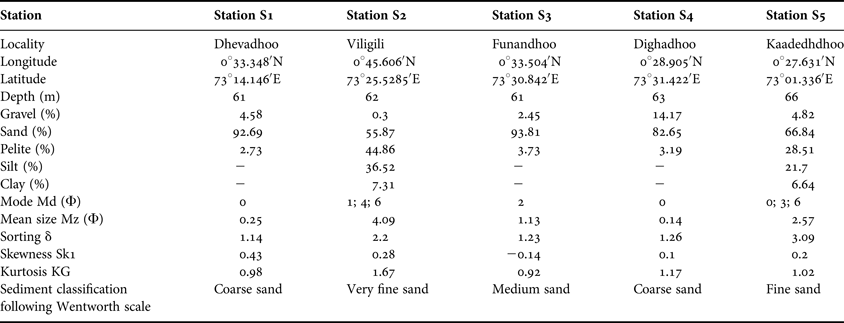
In the deep lagoon of Huvadhoo, the sediments of the stations studied were of sand or silty and gravelly sand. Their characters were, therefore, rather different. The pelite content was very low in the poorly sorted sand and gravelly sand (Stations S1, S3, S4), but reached 44.9 and 28.5% in the very poorly sorted silty sand (Stations S2 and S5, respectively). All the grain size analysis results, along with the sample location, are listed in Table 1.
Sedimentological parameters at each sampling station.
Meiofaunal and nematode assemblages
The following metazoan meiofaunal higher taxa have been identified: cnidarians, platyhelminthes, nematodes, gastrotrichs, rotifers, kinorhynchs, polychaetes, oligochaetes, copepods (and naupliar stages), ostracods, tanaidaceans, tardigrads and halacaridans. The richness of the meiofaunal assemblage revealed the highest values at Station S3 (13 major taxa), while the lowest values were recorded at Station S4 (10). The density ranged from 350.8 ± 25.5 to 937.1 ± 264.1 ind. per 10 cm−2 (S4 and S2, respectively) (Figure 2). The dominant taxon was nematodes, which represented on average 59% of the total meiofauna. The next most abundant taxa were the copepods (adults and larvae; on average: 26%), followed by platyhelminthes, (7%) polychaetes (4%) and gastrotrichs (2%). Overall, the contribution of the other remaining taxa was less than 1%, and they have therefore been cumulatively considered as ‘Others.’
Meiofaunal abundance and composition in the study area.
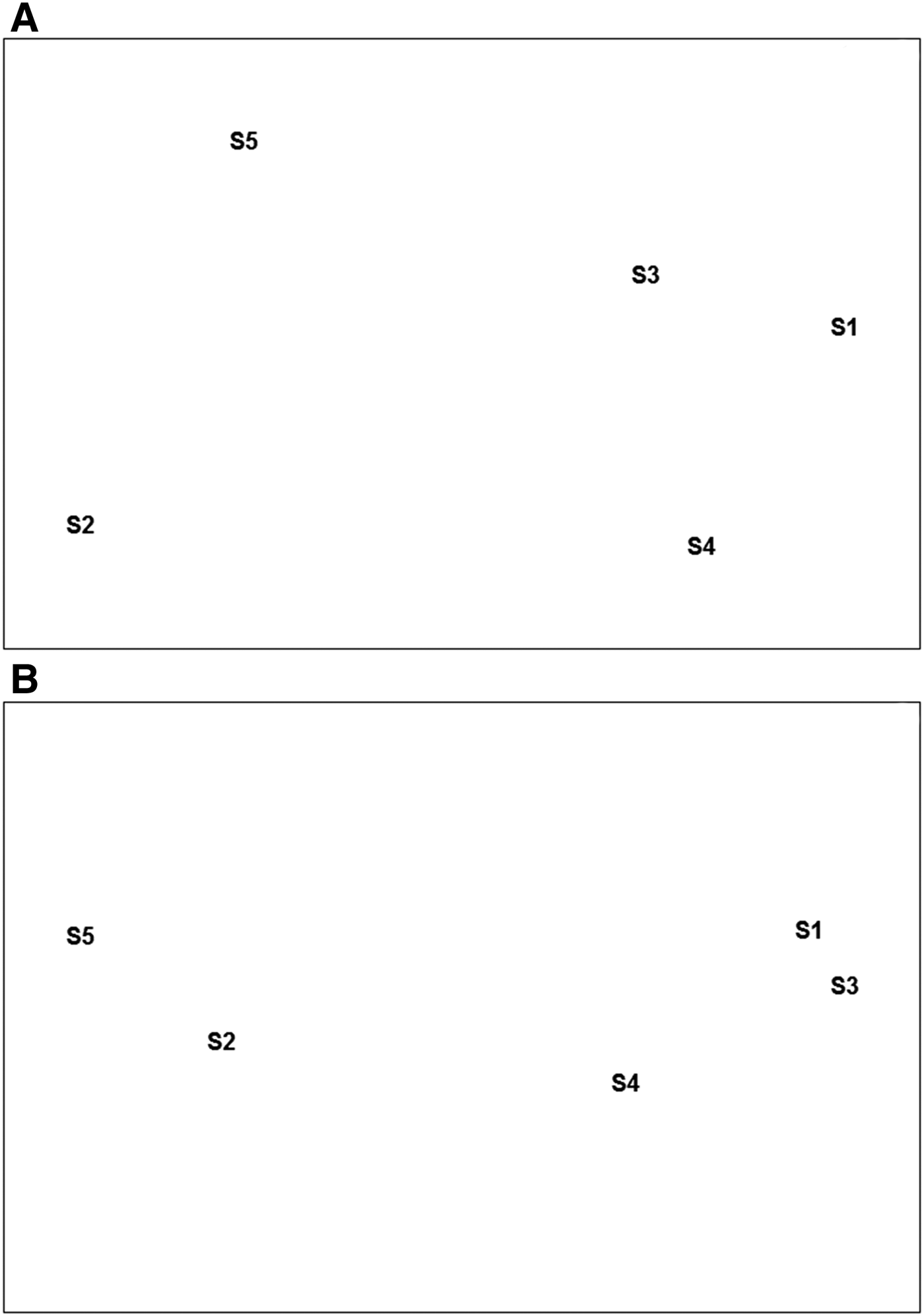
Analysis of similarity showed significant differences between the stations (R = 0.74; P = 0.001). Even if the pair-wise comparisons did not show significant differences, the main ones were detected between Stations S2 and S5 and the other stations. This was also revealed by the nMDS plot (Figure 3A) that highlighted the presence of two main groups: the first represented by S2 and S5; and the second by S4, S1 and S3. The first two stations were distinguished from the other stations by the higher abundance of nematodes, which represented here more than 50% of the total meiofaunal assemblage (SIMPER 50%). Instead, an increase of copepods and nauplii was recorded in the second group.
Non-metric multi-dimensional scaling plot: (A) on meiofaunal; (B) on nematode assemblages in each sampling station (stress values: 0.01).
The nematode assemblage was made up of a total of 131 genera belonging to 33 families. The richness of nematodes was higher at the Station S3 and Station S2 (64 and 59 genera, respectively), than at Station S5 (55), Station S1 (52) and Station S4 (48).
Desmodoridae (16 genera), Chromadoridae (12) and Xyalidae (10) represented the richest families. Desmodoridae were also the most abundant family, representing 23% of the total nematode fauna, followed by Chromadoridae (14%), Xyalidae (9%), Selachinematidae (7%) and Comesomatidae (6%).
Some 50% of the nematode assemblage was characterized by: Ptycholaimellus, Theristus, Ceramonema, Dracograllus, Desmodora and Spirinia at Station S1; Dorylaimopsis, Molgolaimus, Daptonema, Laimella, Spirinia, Desmodora and Rhinema at Station S2; Desmodora, Spilophorella, Craspodema and Monoposthia at Station S3; Desmodora, Ptycholaimellus, Dracograllus and Tricoma at Station S4; Ptycholaimellus, Daptonema, Astomonema, Paracanthonchus and Elzalia at Station S5 (SIMPER, 50%).
The ANOSIM test revealed significant differences between the stations (R = 0.63, P = 0.001) revealing the same two groups highlighted by the general meiofauna (Figure 3B). However, significant pair-wise comparisons were not detected. The genera that contributed mainly (being more abundant) to the difference between the stations of the first group (Stations S2 and S5) and the others of the second were: Dorylaimopsis, Laimella, Daptonema, Molgolaimus, Terschellingia, Astomonema, Cobbia, Elzalia, Onyx, Paracanthonchus, Ptycholaimellus and Rhinema (SIMPER, 50%). The genera that mainly differentiated Station S4 were Dracograllus, Quadricoma, Richtersia and Desmoscolex, while Craspodema, Monoposthia, Perepsilonema, Ceramonema, Dracograllus, Spilophorella and Theristus were the genera that mainly contributed to the difference of Stations S1 and S3 (SIMPER, 50%).
H′ ranged from 4.16 (Station S4) to 4.48 (Station S2), while J ranged from 0.89 (Station S2) to 0.94 (Stations S1, S3 and S4).
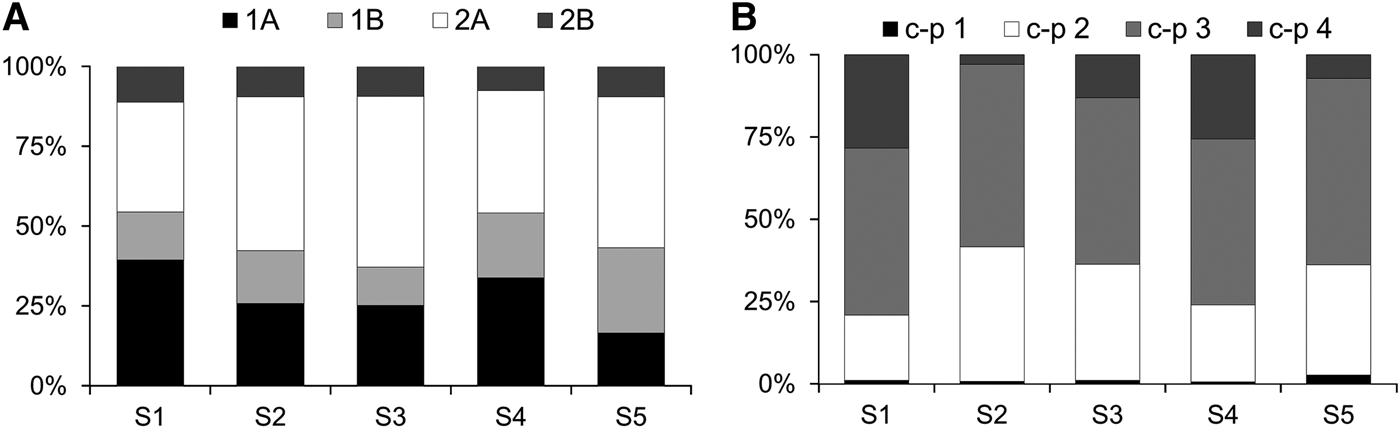
The dominant trophic group was on average represented by 2A (44%), followed by 1A (28%) and 1B (18%); 2B was the least dominant feeding type, with mean relative abundances of 9% (Figure 4A). The 2A group was the dominant component of the nematode fauna in all the stations, with the exception of Station S1, in which 2A was the co-dominant group (34%) and 1A was the dominant one (39%). The co-dominant trophic guild was generally the 1A with the exception of Station 5, in which a peak of 1B was recorded (27%).
Percentage of nematode: (A) trophic groups; (B) c-p values at the various sampling stations.
MI ranged between 2.6 (Station S2) and 3.1 (Station S1) due to the clear dominance of c-p 3 (mean relative abundance: 53%) and c-p 2 (30%) genera (Figure 4B). The c-p 4 represented on average 15% of the genera. C-p 1 genera occurred with very low abundances (mean relative abundance of 1.3% and a peak value of 3% at Station S5), while c-p 5 genera never occurred (Figure 4B). C-p 3 was always the dominant class in all the stations of Huvadhoo, while the co-dominant one was c-p 4 at Stations S1 and S4 and c-p 2 at Stations S2, S3 and S5.
Among the univariate measures analysed only c-p 4 was significantly different in the comparison of the stations (ANOVA, P < 0.001). In particular, the Tukey's test highlighted that the lowest values were present in the Station S2 (P < 0.05).
DISCUSSION
Taxonomic and functional structure of meiofaunal and nematode assemblages
Huvadhoo Atoll is an area of the Maldives that is changing rapidly due to the increasing human pressure. As such, the estimation of the biodiversity trends of this study may be useful for the management and conservation of this environment, especially if it is based on good bioindicators such as meiofaunal organisms.
The richness of the meiofauna was overall comparable to the data available on similar types of habitats and in tropical regions (Gourbault & Renaud-Mornant Reference Gourbault and Renaud-Mornant1990; Guo et al., Reference Guo, Helleouet and Boucher2008; Semprucci et al., Reference Semprucci, Colantoni, Baldelli, Sbrocca, Rocchi and Balsamo2013). The lowest abundances recorded in the Huvadhoo lagoon could be explained by the well-known inverse trend between meiofaunal abundance and depth (Alongi & Pichon, Reference Alongi and Pichon1988; de Bovée et al., Reference de Bovée, Guidi and Soyer1990; Tietjen, Reference Tiejen, Rowe and Pariente1992; Vincx et al., Reference Vincx, Bett, Dinet, Ferrero, Gooday, Lambshead, Pfannkuche, Soltwedel and Vanreusel1994; Sommer & Pfannkuche, Reference Sommer and Pfannkuche2000; Rex et al., Reference Rex, Etter, Morris, Crouse, McClain, Johnson, Stuart, Thies and Avery2006). Accordingly, Danovaro et al. (Reference Danovaro, Tselepides, Otegui and Della-Croce2000) documented a decline in meiofaunal abundance in the continental shelf of the Mediterranean Sea between 40 and 700 m depth. Similar findings were also reported by Muthumbi et al. (Reference Muthumbi, Vanreusel, Duineveld, Soetaert and Vincx2004) in the Indian Ocean from 20 m depth. Deep sea sediments, in fact, are food-limited environments, in which benthic assemblages strongly depend on the amount of organic matter (OM) reaching the sea floor (Gooday & Turley, Reference Gooday and Turley1990; Lampadariou et al., Reference Lampadariou, Tselepides and Hatziyanni2009). OM, especially in the deep sea, is cycled through benthic microbacteria that may represent an important link between sedimentation processes and the benthic fauna (de Bovée et al., Reference de Bovée, Guidi and Soyer1990; Rowe et al., Reference Rowe, Sibuet, Deming, Khripounoff, Tietjen, Macko and Theroux1991; Deming & Baross. Reference Deming, Baross, Engel and Macko1993; Danovaro et al., Reference Danovaro, Tselepides, Otegui and Della-Croce2000; Sevastou et al., Reference Sevastou, Lampadariou, Polymenakou and Tselepides2012). Nematodes were the dominant taxon in the coral sediments of Huvadhoo, along with copepod harpacticoids: this finding is in accordance with the structure of the meiofaunal assemblages of tropical lagoons (Boucher & Gourbault, Reference Boucher and Gourbault1990; Boucher & Kotta, Reference Boucher and Kotta1996; Boucher et al., Reference Boucher, Clavier, Hily and Gattuso1998). A clear subdivision of the meiofaunal structure was recorded in the study area, showing an enhancement of the nematode contribution in the finest sediments and harpacticoids in the medium or coarse sands. This is in agreement with the ecological requirements of these taxa: fine sediments are mainly occupied by nematodes (Vanaverbeke et al., Reference Vanaverbeke, Gheskiere, Steyaert and Vincx2002; Semprucci et al., Reference Semprucci, Colantoni, Baldelli, Rocchi and Balsamo2010b, Reference Semprucci, Colantoni, Baldelli, Sbrocca, Rocchi and Balsamo2013), while the abundance of harpacticoids and nauplii increases in coarser and better oxygenated sediments (Hicks & Coull, Reference Hicks and Coull1983; De Troch et al., Reference De Troch, Van Gansbeke and Vincx2006, Reference De Troch, Raes, Muthumbi, Gheerardyn and Vanreusel2008).
Analysis of the composition and structure of the nematode assemblage revealed that Huvadhoo lagoon is inhabited by a rather high number of families and genera, overall comparable with those reported in similar habitats (Boucher & Gourbault, Reference Boucher and Gourbault1990; Gourbault & Renaud-Mornant, Reference Gourbault and Renaud-Mornant1990; Boucher, Reference Boucher1997; Guo et al., Reference Guo, Helleouet and Boucher2008; Armenteros et al., Reference Armenteros, Ruiz-Abierno, Fernández-Garcés, Pérez-García, Díaz-Asencio, Vincx and Decraemer2009). From comparison with previous studies carried out in the central part of the Maldivian archipelago, the families and genera numbers appear overall higher, especially with respect to the sub-tidal habitats (Semprucci et al., Reference Semprucci, Colantoni, Baldelli, Rocchi and Balsamo2010b, Reference Semprucci, Colantoni, Sbrocca, Baldelli, Rocchi and Balsamo2011, Reference Semprucci, Colantoni, Baldelli, Sbrocca, Rocchi and Balsamo2013). Desmodoridae, Chromadoridae and Xyalidae were the dominant families as is often the case in coral sediments, followed by Comesomatidae and Selachinematidae, which are mainly associated with sub-tidal muddy bottoms (Heip et al., Reference Heip, Vincx and Vranken1985). In this case the statistical analysis also revealed two main groups represented by the nematode association of fine and medium-coarse sands, respectively. Dorylaimopsis, Laimella, Daptonema, Molgolaimus, Terschellingia and Astomonema, were dominant in the finest sediments of the lagoon, and are, in fact, generally typical of deep sea or sub-tidal habitats (Tietjen, Reference Tietjen1976, Reference Tietjen1977; Warwick & Gee, Reference Warwick and Gee1984; Vanaverbeke et al., Reference Vanaverbeke, Soetaert, Heip and Vanreusel1997; Muthumbi et al., Reference Muthumbi, Vanreusel, Duineveld, Soetaert and Vincx2004; Barnes et al., Reference Barnes, Kim and Lee2012; Guilini et al., Reference Guilini, Levin and Vanreusel2012). Specifically, the Comesomatidae Dorylaimopsis and Laimella are frequently found in tidal and sub-tidal environments characterized by fine or muddy sediments (Gambi et al., Reference Gambi, Vanreusel and Danovaro2003; Muthumbi et al., Reference Muthumbi, Vanreusel, Duineveld, Soetaert and Vincx2004, Reference Muthumbi, Vanreusel and Vincx2011; De Leonardis et al., Reference De Leonardis, Sandulli, Vanaverbeke, Vincx and De Zio2008; Barnes et al., Reference Barnes, Kim and Lee2012). Daptonema is typical of sub-tidal muddy sediments rich in hydrogen sulphide (Shirayama & Ohta, Reference Shirayama and Ohta1990; Liu et al., Reference Liu, Zhang and Huang2007; Guilini et al., Reference Guilini, Levin and Vanreusel2012). Terschellingia is also considered tolerant to several types of disturbance, and is known from oxygen poor environments characterized by a high amount of fine fraction and OM (e.g. Moreno et al., Reference Moreno, Vezzulli, Marin, Laconi, Albertelli and Fabiano2008; Armenteros et al., Reference Armenteros, Ruiz-Abierno, Fernández-Garcés, Pérez-García, Díaz-Asencio, Vincx and Decraemer2009; Gollner et al., Reference Gollner, Riemer, Martínez Arbizu, Le Bris and Bright2010; Guilini et al., Reference Guilini, Levin and Vanreusel2012). In the deep sea, species of the Molgolaimus genus seem well suited to stressful conditions such as hydrothermal vents (Vanreusel et al., Reference Vanreusel, Van Den Bossche and Thiermann1997) and to low-oxygen zones (Muthumbi & Vincx, Reference Muthumbi and Vincx1996); in fact, they find there a high variety of micro-habitats due to biological and physical processes, which also generally increase their diversity (Grassle & Maciolek, Reference Grassle and Maciolek1992; Lambshead, Reference Lambshead1993; Fonseca et al., Reference Fonseca, Muthumbi and Vanreusel2007). The finding of Astomonema in the finest sediments of Huvadhoo may suggest a suitable environment for its sulphur-oxidizing symbiotic bacteria (Dando et al., Reference Dando, Austen, Burke, Kendall, Kennicutt, Judd, Moore, O'Hara, Schmaljohann and Southward1991; Austen et al., Reference Austen, Warwick and Ryan1993; Giere et al., Reference Giere, Windoffer and Southward1995). This genus is usually correlated with reduced sulphur- or methane-seep sediments (De Leonardis et al., Reference De Leonardis, Sandulli, Vanaverbeke, Vincx and De Zio2008).
The genera that characterized the station with the highest gravel percentage (S4) were mainly Dracograllus, Quadricoma, Richtersia and Desmoscolex. Draconematids like Dracograllus occur in sediments ranging from medium to very coarse sand (Gheskiere et al., Reference Gheskiere, Vincx, Urban-Malinga, Rossano, Scapini and Degraer2005) or coral sediments (Gourbault et al., Reference Gourbault, Warwick and Helléquet1998; Netto et al., Reference Netto, Warwick and Attril1999; Raes & Vanreusel, Reference Raes and Vanreusel2006; Semprucci et al., Reference Semprucci, Colantoni, Baldelli, Sbrocca, Rocchi and Balsamo2013). Their great abundance in coral sediments characterized by a high percentage of coral fragments may be related to their adaptations (ambulatory setae and caudal glands) to the instability that is frequent in coarse substrates (Raes & Vanreusel, Reference Raes and Vanreusel2006; Maria et al., Reference Maria, Paiva, Vanreusel and Esteves2013). The presence of large biogenic rubble at this station may favour also the abundance of Desmoscolecidae (namely Desmoscolex, Quadricoma and Tricoma), which are also well known to be associated with pristine environments (Vezzulli et al., Reference Vezzulli, Moreno, Marin, Pezzati, Bartoli and Fabiano2008). In particular, Desmoscolex is another taxon characterized by specialized setae associated with glands which may facilitate attachment in these substrates. The Desmoscolecidae family is recorded mainly in fine sediments, but it is reported also from coral or sponge fragments. Indeed, the presence of Desmoscolecidae in these micro-habitats types is due to the fact these fragments may be ‘traps’ for finer sediment and so create an environment suitable for both sediment-dwelling and epifaunal taxa (Raes & Vanreusel, Reference Raes and Vanreusel2006; Semprucci et al., Reference Semprucci, Colantoni, Baldelli, Sbrocca, Rocchi and Balsamo2013). Nematodes with heavily armoured cuticles (i.e. Ceramonema and Richtersia) are generally documented in association with sub-tidal coarse coral sediments (Vanreusel et al., Reference Vanreusel, Fonseca, Danovaro, Da Silva, Esteves, Ferrero, Gad, Galtsova, Gambi, Da Fonsêca Genevois, Ingels, Ingole, Lampadariou, Merckx, Miljutin, Miljutina, Muthumbi, Netto, Portnova, Radziejewska, Raes, Tchesunov, Vanaverbeke, Van Gaever, Venekey, Bezerra, Flint, Copley, Pape, Zeppilli, Martinez and Galeron2010; Semprucci et al., Reference Semprucci, Colantoni, Baldelli, Sbrocca, Rocchi and Balsamo2013). The cuticle ornamentation of the nematodes may be interpreted as an adaptation to physical disturbance by hydrodynamic forces. In particular, it is worth highlighting that Ceramonematidae genera are more frequent in deep coral sediments than in the slope soft ones, in which they are present in low abundances (Vanaverbeke, et al., Reference Vanaverbeke, Soetaert, Heip and Vanreusel1997; Raes & Vanreusel, Reference Raes and Vanreusel2006; Vanreusel, et al., Reference Vanreusel, Fonseca, Danovaro, Da Silva, Esteves, Ferrero, Gad, Galtsova, Gambi, Da Fonsêca Genevois, Ingels, Ingole, Lampadariou, Merckx, Miljutin, Miljutina, Muthumbi, Netto, Portnova, Radziejewska, Raes, Tchesunov, Vanaverbeke, Van Gaever, Venekey, Bezerra, Flint, Copley, Pape, Zeppilli, Martinez and Galeron2010).
An overall high level of biodiversity was highlighted by the H′ and J indices. Indeed, the great substrate heterogeneity plays an important role in allowing the co-existence of different nematode species and in structuring the nematode diversity: this is in accordance with the small scale habitat heterogeneity hypothesis (Vanreusel et al., Reference Vanreusel, Fonseca, Danovaro, Da Silva, Esteves, Ferrero, Gad, Galtsova, Gambi, Da Fonsêca Genevois, Ingels, Ingole, Lampadariou, Merckx, Miljutin, Miljutina, Muthumbi, Netto, Portnova, Radziejewska, Raes, Tchesunov, Vanaverbeke, Van Gaever, Venekey, Bezerra, Flint, Copley, Pape, Zeppilli, Martinez and Galeron2010). Noteworthy is the finding of a higher level of diversity in the sub-tidal habitats than in the back-reef platforms (Semprucci et al., Reference Semprucci, Colantoni, Baldelli, Rocchi and Balsamo2010b, Reference Semprucci, Colantoni, Sbrocca, Baldelli, Rocchi and Balsamo2011, Reference Semprucci, Colantoni, Baldelli, Sbrocca, Rocchi and Balsamo2013).
Food source is also an important aspect for the distribution of nematode species (Moens et al., Reference Moens, Verbeeck and Vincx1999). The nematode assemblages on the continental slope are usually dominated by deposit feeders (1A and 1B) (Soetaert & Heip, Reference Soetaert and Heip1995; Vanreusel et al., Reference Vanreusel, Fonseca, Danovaro, Da Silva, Esteves, Ferrero, Gad, Galtsova, Gambi, Da Fonsêca Genevois, Ingels, Ingole, Lampadariou, Merckx, Miljutin, Miljutina, Muthumbi, Netto, Portnova, Radziejewska, Raes, Tchesunov, Vanaverbeke, Van Gaever, Venekey, Bezerra, Flint, Copley, Pape, Zeppilli, Martinez and Galeron2010). However, several authors have also reported a co-dominance of 1A and 2A in deep-sea environments (Vanaverbeke et al., Reference Vanaverbeke, Soetaert, Heip and Vanreusel1997; Gambi et al., Reference Gambi, Vanreusel and Danovaro2003; Raes & Vanreusel, Reference Raes and Vanreusel2006). The great dominance of the 2A group in the Huvadhoo atoll is in agreement with the data collected in the previous surveys in the Maldives, both in shallow and deep sub-tidal habitats (Semprucci et al., Reference Semprucci, Colantoni, Baldelli, Rocchi and Balsamo2010b, Reference Semprucci, Colantoni, Sbrocca, Baldelli, Rocchi and Balsamo2011, Reference Semprucci, Colantoni, Baldelli, Sbrocca, Rocchi and Balsamo2013). They are commonly found in medium-coarse sands worldwide, and especially in coral sediments (Alongi, Reference Alongi1986; Raes et al., Reference Raes, De Troch, Ndaro, Muthumbi, Guilini and Vanreusel2007), which could be related to the presence in coral sediments of a microbial film covering the surface of the particles and to the high abundance of diatoms (Boucher, Reference Boucher1997; Freiwald & Wilson, Reference Freiwald and Wilson1998). Furthermore, the wider trophic style of some 2A feeders and even their close relationship with organic enrichment are reported by several authors (Moens & Vincx, Reference Moens and Vincx1997; Schratzberger et al., Reference Schratzberger, Bolam, Whomersley, Warr and Rees2004a, Reference Schratzberger, Whomersley, Warr, Bolam and Ressb).
Notes on the ecological quality status of the Huvadhoo lagoon
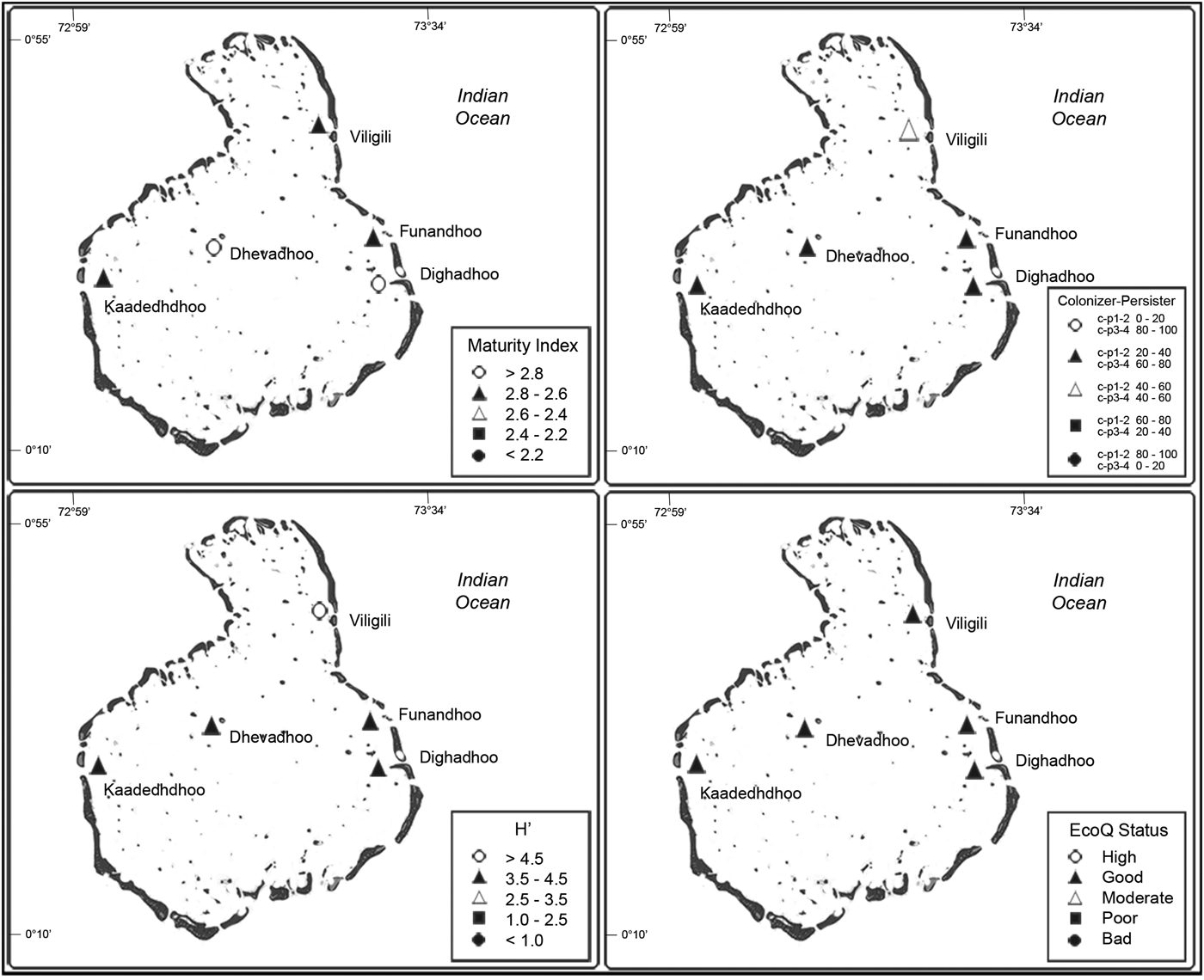
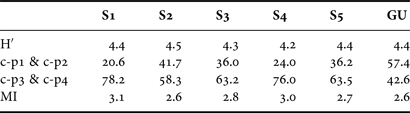
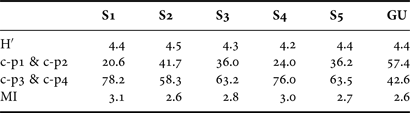
Moreno et al. (Reference Moreno, Semprucci, Vezzulli, Balsamo, Fabiano and Albertelli2011), in analysing the most frequently used nematode indices in the ecological surveys, have suggested that c-p percentage composition, MI and H′ can be used as synthetic descriptors to evaluate ecological quality status (EQS) efficiently. Even though these types of descriptors have never been used to evaluate the EQS of a tropical area, in order to assess the EQS of Huvadhoo lagoon, we have applied the same thresholds already used in coastal area of the Mediterranean Sea (see Moreno et al., Reference Moreno, Semprucci, Vezzulli, Balsamo, Fabiano and Albertelli2011). The Maturity Index (MI), which may summarize the lifestyle of the nematode species, was rather high, mainly due to the high abundance of c-p3 and c-p4 classes, which are representatives of intermediate opportunists and sensitive species, respectively (Bongers, Reference Bongers1990; Bongers et al., Reference Bongers, Alkemade and Yeates1991). These c-p classes were at all the stations the most abundant groups, and only at S2 showed the lowest percentages, pointing to a moderate EQS at that station. This is probably related to a greater human disturbance there, due to the proximity of Viligili Island, one of the most urbanized areas of the Huvadhoo lagoon. The lower MI and the higher presence of c-p1 and c-p2 at S2 might be associated also with the fine grain size of the sediments. However, Semprucci et al. (Reference Semprucci, Boi, Manti, Covazzi Harriague, Rocchi, Colantoni, Papa and Balsamo2010a) reported only a slight influence of granulometry on MI and c-p, giving more support to the hypothesis of higher anthropogenic activity in the area affecting the assemblages. Also, H′ indicated a level of EQS from good to high, and when all the nematode descriptors are considered together, an overall good EQS for the whole area is highlighted. Furthermore, comparing present and previous data from a study carried out in the central part of the archipelago, in the Guraidhoo lagoon (Semprucci et al., Reference Semprucci, Colantoni, Baldelli, Sbrocca, Rocchi and Balsamo2013), the EQS of Huvadhoo appears higher (Figure 5; Table 2). Indeed, the use of the same faunal parameters revealed a moderate EQS in Guraidhoo, which is more disturbed, since it is one of the most frequented areas of the archipelago.
Classification of the ecological quality status (EQS) of the Huvadhoo lagoon by means of nematode parameters (Moreno et al., Reference Moreno, Semprucci, Vezzulli, Balsamo, Fabiano and Albertelli2011 modified).
Nematode descriptors used to evaluate the ecological quality status of Huvadhoo (S) lagoon and their values in comparison with Guraidhoo Lagoon (GU) (Southern and Central Maldivian Archipelago, respectively).
ACKNOWLEDGEMENTS
We warmly thank the two anonymous referees for their constructive and critical reviews of the manuscript.