Eager to move on after the divisive Sonderweg debates of the 1980s, historians of modern Germany have been busily elaborating a new central narrative around the notion of biopolitics. Aimed at producing a more powerful and productive society by regulating, optimizing, and even exterminating specific human populations, biopolitics has encompassed everything from housing reform, anti-smoking campaigns, and child vaccination programs to pro- and anti-natalist tax policies, national census taking, and the science of industrial hygiene. Identified by Michel Foucault and others as a general feature of all Western modernities, biopolitics has been a particularly fruitful concept for German historians, who have used it to trace the evolution of racial hygiene—the Nazi variant of eugenics and Germany's most infamous application of biopolitical principles—from a politically diverse group of Wilhelmine and Weimar social reformers. The very normality of these reformers, given the international context, has in turn allowed scholars to avoid labeling German modernity as deviant while at the same time framing the murderous dynamic of the Nazi years as a potential latent in modernity more generally. As Edward Ross Dickinson put it in an excellent review article recently, Germany has emerged from this reevaluation “not as a nation having trouble modernizing, but as a nation of troubling modernity.”Footnote 1
Although this reassessment is most welcome, it also needs to be pushed further, a point that Dickinson himself makes.Footnote 2 With good reason, much of the revisionism so far has centered on tracing the Wilhelmine and Weimar antecedents that fed into Nazi programs of racial hygiene. But although eugenics certainly belongs to any adequate history of German biopolitics writ large, to focus only on this aspect of Germany's troubled modernity is to skew the historical picture, both by keeping other biopolitical projects out of sight and, relatedly, by ignoring the multiple paths that German biopolitics in fact took in the twentieth century.
This article uses the case study of the German nutritionist Max Rubner to explore new lines of expansion for the discussion of German biopolitics. It seeks to make three main points. First, articulated by experts such as Rubner during the Wilhelmine and Weimar years, nutrition science and policy were key sites of German biopolitical practice. Arguably more influential in twentieth-century world history even than German eugenics, they deserve sustained scholarly attention. Second, a pronounced bourgeois progressivism underlay Rubner's bold advocacy for “rational nutrition,” as he called his program for using modern sciences such as physiology and economics to underpin public policies for the improvement of mass eating habits. With its emphasis on expert management of fin-de-siècle social problems such as urban malnutrition and its dual aim of quelling social unrest while boosting national efficiency, rational nutrition echoed themes and concerns then being voiced by bourgeois progressives around the world. Third and finally, Rubner's rational nutrition project had many endpoints after 1914: in democratic welfare states as well as totalitarian race states, in the nationalist “total wars” of the first half of the twentieth century as well as internationalist institutions such as the League of Nations and United Nations created in their wake.Footnote 3 As an example of an “other” German biopolitics, in short, rational nutrition allows us to expose a wide spectrum of trajectories that the fin-de-siècle German progressive impulse took in the twentieth century.
Who Was Max Rubner?
Although virtually erased from historical memory today, Max Rubner (1854–1932) undoubtedly deserves a prominent place in any adequate history of nutrition science and its role in the making of the modern body.Footnote 4 Trained in the 1870s in the Munich Physiological Institute of Carl Voit, then Germany's leading chemist, Rubner broke with his mentor over the question of how best to study metabolism in living organisms. Shunning Voit's chemical approach, which focused exclusively on the role of protein in providing material to build and maintain body tissue, Rubner developed a novel bioenergetic approach, which iconoclastically cast protein in the role of providing fuel for the body's heat and work. In a series of articles published between 1878 and 1883, Rubner presented experimental evidence for a new physiological law, the isodynamic law, which stated that proteins, fats, and carbohydrates were mutually interchangeable in the body according to their caloric equivalents.Footnote 5 Over the following years, he extended this experimental work to establish so-called “standard values” by which to calculate caloric equivalents, thereby creating a nutritional tool of lasting practical importance.Footnote 6 Nor were the isodynamic law and these standard values Rubner's only major scientific contributions. As the holder of the hygiene chair at the University of Marburg in the 1880s, Rubner also built the world's first self-registering calorimeter and used it on a dog to prove that the first law of thermodynamics (which states that energy can be neither created nor destroyed) applied not just to inanimate machines, as had been established several decades earlier, but to living organisms as well.Footnote 7 In myriad ways, then, Rubner played a central role in casting the body as a “heat machine” converting proteins, fats, and carbohydrates—now measured in the universal unit of the calorie—into work.Footnote 8
By the 1890s, these scientific contributions had vaulted Rubner into a position of national fame and power. Appointed to the prestigious chair of hygiene at the University of Berlin in 1891, he began to advise the Wilhelmine state on a wide variety of hygienic matters, from reorganizing the water supply and sewage system of Germany's big cities to reforming Berlin's famous Charité hospital.Footnote 9 As a key player in the emerging realm of scientifically informed public policy making, moreover, he became president of the Reichsgesundheitsrat in 1893 and was appointed by Wilhelm II in 1897 as a geheimer Medicinalrath. Footnote 10 He also began to produce educational speeches and essays for lay audiences on topics as diverse as how quackery harmed public health to how modern nutrition science could be applied to an ordinary grocery list.Footnote 11 At the same time, he assumed leadership roles in the professional scientific community. He coauthored several leading medical textbooks, including the Lehrbuch der Hygiene, which went through eight editions between 1890 and 1907, and began editing the important journal Archiv für Hygiene und Bakteriologie in 1892. Nor, despite the new public aura surrounding him during these years, did Rubner neglect his laboratory work, which now took a more practical orientation. Building on the thermodynamic insights of his earlier work, Rubner produced important studies on the physiological effects of modern clothing, the nutritional needs of infants and growing children, and the effects of diet on the aging body.Footnote 12 By the early twentieth century, Rubner was arguably the world's most famous and influential physiologist, a scientist of such public stature that he became in 1906 the first hygienist ever elected to the Prussian Academy of Sciences.Footnote 13
At this point, Rubner emerged on both the national and international stage as a passionate advocate for “rational nutrition,” one of the major biopolitical projects of the twentieth century. Beginning with a keynote address delivered at the Fourteenth International Congress of Hygiene and Demography in Berlin in 1907 and published a year later as Volksernährungsfragen (People's Nutrition Questions), and ending in 1932 with the posthumous delivery of a speech on “Die Feinde der Menschheit” (“The Enemies of Mankind”), Rubner wrote and spoke tirelessly about this project. Striving to assess the immense impact of Rubner's work on this front, one of his eulogists noted in the early 1930s:
Almost every housewife knows what a calorie is, how many calories an average person needs, and how best to distribute calories among different foodstuffs. Without this foundation, the management of rational nutrition for mass feeding in barracks, public kitchens, and prisons would be well nigh unthinkable.Footnote 14
As this quote suggests, rational nutrition represented the breakthrough of a new kind of biopolitics that regarded entire populations and their food needs as thermodynamic systems requiring constant regulation. To understand the historical significance of Rubner's approach to the “people's nutrition question,” it is helpful to explore first his analysis of the irrationalities of modern urban eating before turning to the details of his program for rational nutrition and its impact on food policy during the twentieth century.
The Irrational Sandwich
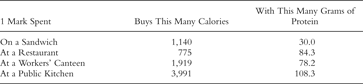
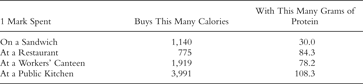
In his 1913 book Wandlungen in der Volksernährung (Changes in the People's Nutrition), Rubner devoted an entire chapter to the voracious sandwich-eating habits of working-class Berliners. Tasty, meaty, and convenient, the sandwich had become the ubiquitous “modern meal” of the metropolis, widely available outside the home at street kiosks and vending machines. But, Rubner asked, was the sandwich as cheap and nutritious as popular opinion held? To put urban wisdom to scientific test, Rubner purchased twenty-eight sandwiches at different locations around the city and had them nutritionally analyzed in his laboratory. Every mark spent on sandwiches, it turned out, netted the buyer approximately thirty grams of protein, sixty-nine of fat, and ninety of carbohydrates, for a total yield of 1,140 calories.Footnote 15 Under current market conditions, Rubner calculated, this meant that an average worker would have to spend 2.70 marks per day to make a sandwich diet nutritious.Footnote 16 The implications were troubling: workers who made a sandwich diet nutritious by paying the outrageous sum of 2.70 marks per day wrecked their household budget, while those who made a sandwich diet affordable by eating less of it consigned their bodies to undernourishment.Footnote 17 Sandwiches, in short, were low in nutritional value but high in monetary cost. Contrary to popular opinion, Rubner concluded, Berlin's beloved sandwich was irrational.
The irrational sandwich encapsulated in microcosm Rubner's approach to the people's nutrition question, one that combined thermodynamic physiology with economics and social analysis to pinpoint the major causes of urban undernutrition. In econo-physiological terms, one problem was that, pfennig for pfennig, sandwiches delivered too little protein and too much fat. One mark spent on a sandwich netted its buyer less than half the protein available for the same amount of money at a typical Berlin restaurant (see Table 1). From a protein perspective alone, it was thus clearly more rational to spend one's money at a restaurant. The problem with restaurants, however, was that although they delivered a good protein to pfennig ratio, they could not deliver enough calories to fuel the body properly for much less than the outrageous sum of three marks.
Number of Calories and Amount of Protein Available per Mark Spent
SOURCE: Max Rubner, Wandlungen in der Volksernährung (Leipzig: Akademische Verlagsgesellschaft, 1913), 103 and 116.
Fat, which accounted for more than half of the calories in a sandwich, merely compounded this problem. If one considered just the butter used as a sandwich spread, Rubner pointed out, workers spent as much on this as they would to buy all the potatoes, flour, rice, legumes, and fresh produce their entire household needed each day. As if this were not bad enough, fat also left consumers feeling so sated that they ate less food overall, which could lead to dangerous drops in protein intake and a general state of undernourishment. Sandwich eating, Rubner concluded, was not a “physiological necessity” but rather an “unhealthy deformity” and “unnecessary custom” that stripped workers of their hard-earned cash and robbed their bodies of either protein (what Rubner called Enteiweißung) or calories or both.Footnote 18
In addition to this econo-physiological analysis, Rubner also delved into the social dimensions of the sandwich problem. Why, he asked, had the sandwich become the ubiquitous modern meal of the metropolis? To find an answer, Rubner began to study how urbanization had changed traditional eating patterns. Although he did not entertain any romantic notions about the supposedly high nutritional status of rural populations, he did insist nonetheless that the demographic shift to the city had had a pernicious effect on public nutrition over the previous several years. Not only had it forced more and more people to take their meals away from home, it had also encouraged them to eat more meat, especially in the form of convenient street foods such as the ubiquitous sandwich. Urbanization itself, he concluded, tended to promote meat eating and mass undernourishment simultaneously.Footnote 19
In reaching this iconoclastic conclusion, Rubner did not deny the nutritional gains of the previous century. As a nation, Germans certainly ate better now than ever before. For most Europeans alive in the early twentieth century, indeed, famine had become a problem that occurred elsewhere, in places such as India, Africa, and China that international trade had yet to reach.Footnote 20 The bland and monotonous poor person's diet of legumes, rye bread, and potatoes had given way to a tastier, more varied, and easily digestible diet centered on meat, wheat bread, sugar, fruits, vegetables, and milk products such as cheese. Now recognized by historians as a nutritional revolution, this shift had many causes. By 1900 or so, a real increase in income had enabled German workers to improve their standard of living. Food remained the largest single item of expenditure in the household budget of a typical working-class family, but whereas such families had spent seventy to seventy-five percent of their income on food in 1800, by 1900 they spent closer to fifty-three percent. With more money in their pockets, German workers were able to take advantage of the expanding food market, another important element in the nutritional revolution. Cheap and readily available in small pieces that could be bought on a daily basis, including on the street, precooked sausage became particularly popular. At the same time, the drop in sugar prices enabled workers to sweeten their diet and, although fresh vegetables and fruits remained financially out of reach, workers also began to incorporate dried or preserved vegetables and fruits (in the form of sauerkraut, pickles, dried mushrooms, and fruit preserves, for example) into their daily meals. The diet of urban workers may not have been balanced according to our own standards—the poorest families probably still did not receive enough protein, vitamins, or minerals—but the problem of chronic malnourishment had been definitively overcome.Footnote 21
Too good a scientist to ignore these myriad signs of a successful nutritional revolution, Rubner nonetheless insisted that nutritional progress had hidden dangers, primary among which was growing meat consumption in urban centers. Before the 1850s, only economic elites had been able to afford a meat-rich diet, while the vast majority of Europeans had lived on a diet low in animal protein and fat. Some historians have gone so far as to blame this low-meat diet for the so-called “hidden hunger” and high mortality rates of pre-industrial times. In the 1850s, however, a series of changes most visible in the growing urban centers resulted in a dramatic increase in meat consumption by Europeans of all classes. Rising personal income meant that more people could afford to buy meat. Cities built large public slaughterhouses that helped to bring more meat to market. Railroads and shipping lines extended the meat market, previously local, into part of long-distance trade. And improvements in food technology, particularly canning and refrigeration, helped to expand this trade beyond Europe as well. The first shipment of frozen meat arrived in Rouen in 1877, for instance, following a 104-day trip from Buenos Aires.Footnote 22
In Germany, the increase in meat consumption was particularly dramatic, a development that Rubner recognized and bemoaned. Meat consumption had held an important place in the diet of German-speaking Europe until the late Middle Ages, but dropped off dramatically in the early sixteenth century and began to rise again only in the mid-nineteenth century, a fact widely remarked upon by contemporaries.Footnote 23 In 1913, Rubner even claimed high meat consumption as a modern German peculiarity:
The German has the peculiar quality of placing great economic value on meat and the fleshy part of animals. No country has sausage factories to such an extent as we do. I would wager that the yield on edible parts is scarcely matched in other countries.Footnote 24
Regardless of whether Germans were truly unique in this respect, it was clear that as food prices dropped and market structures expanded, German meat consumption had increased by 122 percent between the 1850s and the eve of the First World War. By 1911, meat had taken first place in the German diet and the rate of per capita meat consumption in the Kaiserreich was reached again only in the Bundesrepublik of the 1950s.Footnote 25 On the eve of the First World War, Germans were eating meat at a per capita rate of 52.3 kilos per year, outdone only by Australians (111.6 kilos per year) and Americans (54.4 kilos per year). For Rubner, it was the rise in urban meat consumption, particularly among the poor (die Minderbemittelte), that explained most of this jump. In Berlin alone, he calculated, per capita meat consumption now stood at a whopping 70.9 kilos per year.Footnote 26
Most contemporaries celebrated the upswing in urban meat consumption among the poor, nowhere more so than in Rubner's own scientific community, where meat had been praised for its nutritional value for decades. As early as the 1840s, the German chemist Justus von Liebig had flagged meat as an essential source of dietary protein, thus reinforcing the common bourgeois view that meat was a vital foodstuff.Footnote 27 “Meat makes meat” became the pithy phrase summarizing this view, which soon saturated the universities, medical profession, and emergent institutions of the welfare state. Particularly influential was Liebig's student Carl Voit, who set the daily protein minimum for an average working adult eating a “nutritious” meat-based diet at 118 grams.Footnote 28 By the early 1880s, Germany's scientific elite took it as an established fact that meat was the key element in a “rational” diet because it was the only foodstuff that could adequately deliver the 118-gram protein minimum.Footnote 29
When Rubner singled out excessive meatiness as a prime source of urban nutritional irrationality, therefore, he was challenging both popular and scientific consensus. Most Germans concerned with the problem of undernourishment were trying to figure out how to get more meat into the urban diet, not less. On what grounds, then, did Rubner—who, after all, had trained under none other than Carl Voit, who had himself trained under Liebig—break ranks to criticize the German diet for being too meaty? Rubner developed his position through a series of vignettes. In a best-case scenario involving the household budget of two Berlin seamstresses who shared living expenses, cooked and ate together at home, shunned street foods, and avoided such extravagances as eating out or drinking alcohol, Rubner found that each woman had only 63 pfennig or so per day to spend on food. With a total annual income of 624 marks per person, it turned out, 228.2 marks or 36.5 percent went for food; of the portion spent on food, moreover, more than one third went for the purchase of meat. For every mark spent on such a diet, the seamstresses received only 116 grams of protein and 2,674 calories to share. This might have been enough to sustain one worker, but was certainly insufficient for two. Given what they could afford, Rubner concluded, there was no way to make this meat-centered diet nutritious, and if they stuck to it for long, the two seamstresses would be sure to drop into a state of semi-starvation.Footnote 30
If sharing a home-cooked meal was one of the cheapest ways to enjoy a meat-centered diet, yet still left the urban poor undernourished, the situation became even direr when one considered that favorite urban-working class habit: eating out, whether on the street or at an eating establishment. As the data gathered by Rubner and summarized in Table 1 suggests, one mark sufficed to purchase enough protein and calories to constitute an adequate diet only at a public kitchen (Volksküche), which managed this feat only by using not meat but vegetable sources of protein such as legumes and potatoes to deliver high nutritional value at low monetary cost. Unfortunately, however, the vegetable-centered meals available in public kitchens were precisely the kinds of meals that the meat-loving city dwellers of all classes shunned.Footnote 31
For Rubner, then, neither eating meat nor eating out was the problem per se. Rather, it was the combination of nutritional, economic, and social forces that made the new meaty, street-based diet of Berlin's sandwich-loving workers so irrational. By combining marks, calories, and grams of protein into a larger balance sheet, Rubner succeeded in showing that the changing diet of the urban poor led to an as yet undiscovered disease of modernity: the “hidden hunger” of undernourishment caused by irrational eating.Footnote 32
Poor Food, Rational Nutrition
Not content simply to diagnose, Rubner went on to develop a wide-ranging program of “rational nutrition” that articulated a new biopolitical understanding of food and the human body. Rational nutrition undoubtedly built on earlier attempts by scientific reformers to answer the so-called social question of what to do with the revolutionary potential of the landless poor, a question that had been reframed by the early twentieth century in primarily urban terms. But because it used thermodynamic physiology to cast the bodies of the urban poor as a pressing economic interest of the state, rational nutrition also belonged to the complicated history of twentieth-century biopolitics, considered both within the context of the German metropolis as well as the national and international organizations that emerged to administer public health during and after the First World War. This section explores the pre-war German story, locating Rubner within fin-de-siècle bourgeois progressivism, and the next section considers the varied paths taken by rational nutrition after 1914.
Nutrition science had been a topic of public discourse and an occasion for political engagement long before Rubner. Cameralist officials concerned with boosting state wealth had been gathering agricultural statistics in the German lands since the late eighteenth century. By the mid-nineteenth century, state-sponsored statistical studies were linking food and diet to the nascent social question.Footnote 33 At the same time, concern with nutritional aspects of the social question was pushing many scientists into political action. The hunger and misery that preceded the revolution of 1848 inspired the physiologist Jakob Moleschott to pen several tracts, including his famous The Science of Foodstuffs, For the People (Lehre der Nahrungsmittel, für das Volk) in 1850, which combined liberal political ideals with contemporary nutrition science.Footnote 34 For Liebig, it was his journey in 1851 to Ireland, where he saw the devastating legacy of the potato famine, that galvanized his many speeches and articles advocating the social, economic, and political benefits of a more “rational agriculture.”Footnote 35 Concern over the social question also underlay the marked increase in support by the German states for food-related sciences and industries, especially those linked to chemistry, from the 1850s onward.Footnote 36
By the turn of the century, both inside and outside Germany, the new thermodynamic physiology that Rubner had helped to pioneer in the 1880s featured regularly in calls for political and economic reform. In 1895, for instance, the chemist Wilbur Atwater adapted Rubner's caloric techniques to complete a series of studies for the United States Department of Agriculture in which he warned that unless Americans improved their diet, national economic and moral decline would inevitably follow.Footnote 37 The new nutrition also wound its way into Poverty: A Study of Town Life (1901), a classic sociological study by Benjamin Seebohm Rowntree, whose analysis of urban poverty in York inflamed public opinion and framed British social policy for decades to come.Footnote 38 In a quite different context, Francesco Nitti, an economist who later became Italian premier, published a much discussed essay in 1896 that used the new calculus of calories to highlight diet as a primary determinant of “the labour-power of nations.”Footnote 39 As these brief examples suggest, food science and food politics were in constant dialogue by the fin de siècle.Footnote 40
In Germany, too, the new physiological approach to nutrition quickly permeated the emerging realm of social policy (Sozialpolitik). In the influential Verein für Sozialpolitik (f. 1872), for instance, a politically diverse group of bourgeois reformers produced several influential studies of urban poverty. All proponents of some form of state socialism, the group's members investigated topics as diverse as progressive taxation, minimum wages, collective bargaining, and the economics of diet. Working under the auspices of this group in the early twentieth century, Alfred Grotjahn relied heavily on Rubner's scientific work to conduct a pathbreaking sociological survey of the household budgets and eating habits of urban workers.Footnote 41 In studies such as Grotjahn's, researchers exposed for the first time the real nutritional disparities among Germans of different classes and successfully framed nutrition as an urgent national priority.
But if physiology had permeated social scientific analysis in groups such as the Verein für Sozialpolitik, it had done so imperfectly in the form of universalistic assumptions about the body that Rubner strenuously contested. Primary among these was the concept of Normalkost or “normal diet,” a construct so misleading that Rubner went so far as to call it a social evil on a par with undernutrition itself. Investigators such as Grotjahn defined a normal diet as one that furnished at least 118 grams of animal protein per day. Lifted directly from Voit's classic paper on the working needs of an “average” Munich laborer, this number became the gold standard by which to measure any worker's nutritional state anywhere; accordingly, a diet that included less than the 118-gram minimum became an Armenkost or “poor diet.” Neither Normalkost nor this sense of Armenkost, Rubner fulminated, were useful benchmarks for the study of diet. Not only did people vary in size, living condition, age, and workstyle, making it impossible to establish one diet good for all, but what people ate also depended heavily on local habits and supply chains.Footnote 42 Researchers were still too ignorant about how people really ate to define any absolute standards.
Instead of normal diet, Rubner proposed that it would be much more useful to study the relation of specific diets to specific types of work by studying the nutritional dimensions of the human body's Leistungsfähigkeit or “physical efficiency.” Rubner, in short, overlaid a thermodynamic understanding of food onto what had previously been a more static protein-centered one. As he wrote in his 1908 book:
If we want to establish the value of a diet, we must in the first place observe its effect on human beings, that is, the work it performs (was sie leistet). A sufficient level of nutrition is reached when a diet allows the [growing] body to develop naturally and when an adult, relative to his size, maintains proper anatomical development and physical efficiency.
The nutritional value of a diet, in other words, was to be judged not against some illusionary universal food standard but against the working needs of different bodies in situ. A diet that allowed a growing body to develop naturally and an adult body to maintain its proper anatomical shape and ability to do specific kinds of work in a particular setting was a nutritionally adequate diet, but what this meant in numerical terms would vary widely. Rubner did provide numerical estimates of how many calories made a diet thermodynamically adequate, but warned that these numbers would fluctuate, depending on factors as diverse as body size, work type, the temperature of the work place, the clothing the worker wore, and the kind of apartment in which he or she lived.Footnote 43
In shifting the terms of analysis from Normalkost to Leistungsfähigkeit, Rubner marked himself as a fin-de-siècle bourgeois progressive, one who spoke the new language of social modernity with its simultaneously biological and economic emphasis on efficiency and performance. Rational nutrition, indeed, contained within it the politically charged warning that national efficiency, understood both biologically and economically, was on the decline. Although Germans now lived in an age when machines did much of the hard physical labor such as lifting and carrying that had previously been done by the human body, the nation's need for well-performing, well-nourished bodies had not disappeared. Soldiers and workers, for instance, needed to be able to withstand extremes of temperature to do their jobs effectively, something that undernourishment could severely hamper. On the industrial front, moreover, although it was true that nineteenth-century public health measures had brought overall mortality down, this gain had come with a decrease “in the bodily power and efficiency of big-city dwellers, above all among the industrial working class.” As Rubner's econo-physiological balance sheets showed, “those of lesser means” were losing ground in their “struggle for daily bread” and becoming undernourished underperformers who lacked both the physical and mental energy to do mechanical work.Footnote 44
Politicians who ignored the aggregate effects of this silent national crisis did so at great peril, Rubner warned. Invoking the famous metaphor of the cell state, he compared German society to a living organism in which individuals were like cells whose combined somatic qualities grounded the health and strength of the whole. Too much attention had been devoted to the “ruling 10,000,” not enough to those 17.25 million Germans living in poverty. As Rubner put it in a passage that mixed physiological and economic metaphors freely:
Nutrition is the foundation of the individual's physical and mental performance (Leistung), and thus the foundation of national productivity (Leistungskraft) and public health. Apart from this positive effect of nutrition, the directly disease-causing influences [of poor nutrition] emerge only secondarily as losses and withdrawals that confront total national power as a deficit account.Footnote 45
And it was not just Germany's economic prowess that was tied to nutrition but its socio-political viability as well. Undernourished workers were unhappy citizens whose anger could only exacerbate class antagonism.Footnote 46 In words that seem prophetic from the vantage point of the politically explosive and hungry years of 1917–9 and 1945–6, Rubner reminded his audience that:
Stomach questions play, as the politician should know, a big role. They can possibly dissolve all the bonds of civilization. A well-nourished population is an easily governed mass.Footnote 47
Rubner's mission to guide the state toward a scientifically informed understanding of the “people's nutrition question” was thus another aspect of the progressive bourgeois politics that underlay his thinking.
But how should the state respond to this national crisis? Here, Rubner's program for a national nutrition policy based on “rational nutrition” came to the fore. What was needed in the first place was a sound analysis of the nutritional situation and needs of the masses, but because studies alone would not solve a problem so complex and variable, Rubner also called on the state to set up a Central Nutrition Office (Zentralnahrungsamt) to coordinate this effort:
Here, all relevant questions would be put together. Besides establishing the foodways of different regions, testing such results scientifically, … producing new foods or improving ones already in use, [and] investigating methods for preserving and transporting food, [this office would] study the food economy, price structures, and ways to improve food processing and preparation. [It] would also examine food in public eating establishments for the sick, prisoners, children, and other such groups … The central office would promote all measures for improving the nutritional state [of the nation], and also support public education, establish schools for housekeeping and cooking, and so on.Footnote 48
As this quote suggests, Rubner clearly envisioned a vast multidisciplinary effort to tackle the people's nutrition question. From the political and economic side, researchers would investigate how food was produced and transported, which factors were most important in setting food prices, and how income levels affected what different populations ate. Physiologists, hygienists, and food engineers, for their part, would study how changing dietary customs such as sandwich eating affected the nutritional status of different populations, how raw materials might be transformed more cheaply into healthful foods (Rubner was particularly enthusiastic about the soy bean), and develop new technologies for transporting and preserving foodstuffs.Footnote 49
Much was still unknown, but Rubner believed that enough had already been discovered by 1912 to sketch out the lines along which state policy making could most profitably develop. In a much anticipated keynote address delivered that year at the Fifteenth International Congress of Hygiene and Demography in Washington, D.C., and published a year later in Germany, Rubner urged states to:
• Establish mixed committees to study the people's nutrition question systematically.
• Base national food policy on the lab-tested science of nutritional physiology.
• Implement measures to free up more of the household budget for food purchases (for example, by lowering rents or encouraging the consumption of protein-containing foods cheaper than meat).
• Improve cramped and poorly equipped urban tenements, many of which did not even have cooking facilities, in order to encourage workers to prepare and eat meals at home rather than out at pubs and sandwich stands.
• Educate girls and women about rational nutrition and proper management of the household budget.
• Target valuable and vulnerable populations by sponsoring easily accessible urban restaurants for industrial workers, relocating factories to rural areas (where food was cheaper and generally of better quality), and expanding feeding programs for infants, children, and pregnant or lactating mothers.Footnote 50
Not all of these ideas, of course, had originated with Rubner. His interest in using urban restaurants to improve the diet of workers, for instance, built on the pathbreaking work of Lina Morgenstern, who had set up special public kitchens for mass feeding in Berlin between 1866 and 1890. Similarly, his insistence on the need to educate girls and women on how to buy and cook food properly at home echoed Hedwig Heyl, a prominent philanthropist and activist in the German women's movement who had established a “Course in Domestic Science” for low-income women in Berlin in the 1890s.Footnote 51 If Rubner had not been the first to broach such ideas, though, his was certainly an authoritative voice offering a synthetic vision of how nutrition science and social reformism could work together to address the people's nutrition question. As the next section will show, this grand vision also came to underpin the elaboration of national and international food policies after 1914.
For now, it is important to note that what Rubner did not recommend was as significant as what he did and reflected a final aspect of his bourgeois progressivism: the assumption that the best way to head off social conflict was not through political or socio-economic change but by changing the environment and behavior of urban workers themselves. Skeptical that lowering meat prices or raising wages was sufficient or even necessary measures to solve malnutrition, Rubner emphasized instead that with rational management undertaken by the state in concert with scientific experts such as himself, national efficiency could be maximized and social conflict minimized. Implicitly rejecting both the free-market faith of nineteenth-century liberalism and the Marxist claim that only by overthrowing capitalism would the war between capital and labor end, Rubner promised that rational nutrition would have a political payoff as well. In a period of escalating conflict between workers and owners and against the backdrop of the 1912 election that made the Social Democratic Party the single largest party in the German Reichstag, it is impossible to view Rubner's rational nutrition project, couched so carefully in economic and biological terms, as anything but also a deeply political one.
With its econo-physiological categories, technocratic hopefulness, and underlying faith in a third way between liberalism and socialism, rational nutrition thus belonged to an important moment in German bourgeois progressivism. Nor, as the many laudatory articles published in the foreign press indicated, was the transnational promise latent in Rubner's vision for rational nutrition missed. As The Washington Post put it in a piece on Rubner's speech, “We ought to eat scientifically. If every person could regulate his diet … we would have a healthier race of people in every country.”Footnote 52
“The Proper Nutrition of Nations”
If rational nutrition in its prewar form embodied a progressive bourgeois politics, it also at the same time contained within it a variety of potentials: nationalist and internationalist, democratic and totalitarian. By examining the larger context within which Rubner articulated his vision and then tracking its different trajectories after 1914, this section seeks to expose the immense political flexibility of nutritional biopolitics in the twentieth century.
From the beginning, rational nutrition had a decisively internationalist valence. Consider, for instance, the International Congress for Hygiene and Demography, the venue in which Rubner first aired his ideas publicly in 1907 and 1912. In the official welcoming address of 1912, the American President William Taft extolled the group as follows:
It is delightful to contemplate this phase of the congress, because it is one of those shining instances of worldwide organization for the promotion of the peaceful arts, of which I am glad to say the number is growing every year, and in which the common interest of humanity is made conspicuous by contrast with the selfishness and isolation of each nation in the conflict of interests that are typified by our burdensome and ever increasing preparations for war.Footnote 53
Taft's praise echoed leading internationalists of the day, who were well aware that cooperation across old political and linguistic borders had expanded dramatically over the previous century.Footnote 54 Developments in business, finance, transport, and communication had brought Europeans and Americans closer together to collaborate on causes as diverse as the abolition of slavery, the humanization of war, and the coordination of religious and intellectual life. Within this broad spectrum of activities, moreover, international scientific congresses played a prominent role.Footnote 55 Founded in 1852 to discuss public health in its broadest aspect, the International Congress of Hygiene and Demography had become a seedbed for international biopolitical projects.Footnote 56 During Rubner's presidency in the early twentieth century, the Congress helped to launch the Code alimentaire (1910–1912), a pathbreaking intergovernmental project to secure the quality of the international food supply.Footnote 57 Nor was the Congress Rubner's only international venture. In 1912, for instance, he joined the Preliminary World Committee established by P. H. Eijkman to plan a “Foundation for the Promotion of Internationalism” at The Hague. Dedicated to fostering intellectual and social trends that could underpin world peace, the Foundation planned to establish a major international agency for public health and drew the support of a prestigious circle of scientists, including several Nobel Prize winners.Footnote 58 The rational nutrition project and its creator, in short, belonged to a vibrant and now largely forgotten moment in the history of international scientific cooperation.
But Taft's approval for the Congress in promoting “the peaceful arts” rather than contributing to “preparations for war” glossed over a more complicated reality. Despite expanding international cooperation, nationalism remained an important impulse among bourgeois progressives, as became abundantly clear with the first path that rational nutrition took in Germany after the outbreak of hostilities in 1914: waging war.Footnote 59 That October, Rubner joined other such notables as the physicist Max Planck in signing the infamous “professors' letter” denying German responsibility for starting the war.Footnote 60 And in a speech delivered before the Reichstag on December 17, Rubner played off the widespread fear of military encirclement when he warned of “political nutritional encirclement” (politische Ernährungseinkreisung). This phrase highlighted Germany's dangerous dependence on food imports, an issue that had been raised before the war by civilians but largely ignored by military planners. The onset of the British blockade that fall exacerbated fears that Germans might be starved into defeat. Rather than giving into despair, however, Rubner retained a remarkably optimistic outlook, assuring his audience that a more rational approach to harvesting, distributing, and consuming domestic foodstuffs would be sufficient to meet the challenge. He even came prepared with a laundry list of measures—including less sandwich eating—that would enable the nation to fight the food war successfully.Footnote 61
Rubner's upbeat speech before the Reichstag echoed the conclusions of the influential Eltzbacher report that he had helped to write earlier that fall. Titled Die deutsche Volksernährung und der englische Aushungerungsplan, the report estimated how many billions of calories and tons of protein would be needed to feed the entire German population adequately during the war. The authors acknowledged that Germany faced a dire situation, noting that fully twenty-five percent of the nation's caloric needs and thirty-three percent of its protein needs had been met in the prewar years by imports. Still, they calculated, if civilians and the state alike got serious about increasing Germany's nutritional efficiency, domestic resources might just suffice to withstand the blockade and maintain industrial performance. Civilians would have to give up their high-fat, high-meat diet and make up the nutritional deficit by eating more skimmed milk, low-fat cheese, and plant protein. For its part, the state would have to stop exporting food, regulate the use of seed and fertilizer, expand the growing of crops such as pulses, reduce the stock of large animals such as pigs and cattle in favor of smaller ones such as chickens, bring moors and other unused lands into cultivation, teach housewives to cook nutritional meals with little to no meat or butter, improve access to public kitchens, and develop new foodstuffs. Such efficiencies would reduce Germany's caloric deficit to eleven percent, its protein deficit to thirteen percent. Taking into account other factors that reduced this deficit even further, the authors assured readers that “we will hold out.”Footnote 62
The Eltzbacher report signaled a turning point for rational nutrition, which now began to evolve from an imagined program to real-world policy making. Taken together, for instance, the sixteen authors of the report embodied just the kind of mixed committee that Rubner had advocated in his 1912 speech. The Eltzbacher Commission, as it came to be known, included three physiologists, six agricultural scientists, two statisticians, one economist, one home economist, two geologists, and the philosopher Paul Eltzbacher, who gave the report its name. The calculations showing that nutritional resources could be managed to secure national performance, moreover, followed Rubner's recommendation that food policy be based on nutrition science and reflected the econo-physiological outlook that had informed rational nutrition before the war. By devoting attention to the social dimensions of food, including better use of food kitchens and educating housewives, finally, the report also attended to the same currents of social reformism that Rubner had absorbed into his 1912 vision.
But although it did represent a culmination of previous trends, the Eltzbacher report was also something of a watershed. Prewar rational nutrition had been focused on the irrational eating habits of the urban poor. During the war, in contrast, rational nutrition evolved onto a grander scale, becoming an effort to regulate the nation's entire food system—including its producers, middlemen, and consumers of all classes—so as to guarantee peak national performance. Indeed, contemporaries around the world recognized the report as a significant turning point. When Britain's leading medical journal The Lancet translated and published long excerpts in February 1915, for instance, its editors noted approvingly that “[t]he whole forms an exposition of the problems of a nation's food supply with such wealth of information and authority as can hardly ever have been brought to bear before on the topic.”Footnote 63 Echoing this praise after the war, the American scientist Graham Lusk lauded the report as a pathbreaking attempt to secure “the proper nutrition of nations.”Footnote 64
Securing proper nutrition for Germans, however, turned out to be harder than the report's authors had imagined. In Berlin in late 1915, for instance, members of the Commission pointed out that pigs were still competing with humans for food, especially potatoes, and reiterated the previous year's plea that a portion of the national pig stock be slaughtered. Reacting to popular demand for more potatoes, the state followed this advice, but after the initial slaughter had been done, potato shortages continued and, to make matters worse, the price of pork went up. When Berliners protested, the Commission reversed course and advised the government to sell cheap pork in working-class areas of town to head off even more unrest. As Rubner observed with frustration about such episodes a few months later, “If we had no pigs, we'd have no food worries. Perhaps we'll learn at least from the war, that swine husbandry is for the politics of food an example of insanity.”Footnote 65 Exasperated as much with the irrationality of consumers as with the bungling of the state, Rubner and other public figures began to voice their criticisms openly in 1916. In a speech delivered at an important meeting sponsored by Berlin's Kulturbund, for instance, Rubner noted that profiteering, high prices, and scarcity of key food items were already an issue, particularly for the poor, and sure to grow worse. Echoing the themes of pre-war rational nutrition, Rubner pointed out that conservative eating habits were only exacerbating the problem: Germans would have to learn to eat less fat and meat, but little had been done to ensure that this happened. To make it through the war victoriously, he concluded, the state would have to intervene massively with a “communal nutrition policy.”Footnote 66
Rubner's speech echoed widespread consensus, among both experts and consumers, that after two years of fighting the state had thoroughly botched the food war. Indeed, popular agitation for a “food dictator” to manage Germany's food system led in May 1916 to the establishment of the Kriegsernährungsamt (War Food Office) or KEA, a civilian-run agency within the Prussian Ministry of War for which Rubner quickly went to work.Footnote 67 Adapting his pre-war sandwich experiments, Rubner completed numerous studies on the econo-physiological value of underutilized foods, including asparagus, vetch (a leguminous plant), and whole wheat bread.Footnote 68 More importantly, he helped to devise a system of nutritional supplements for “hard-working” and “hardest-working” laborers that markedly improved provisioning for industrial workers. Although all of this earned him an Iron Cross, Germany's highest civilian honor, Rubner could have had little doubt of the relative ineffectiveness of the KEA.Footnote 69 He recorded his own radical weight loss in a special chart kept during the war and data he finally published in 1928 showed that public nutrition had indeed worsened steadily after the founding of the KEA in 1916.Footnote 70 Charts and data aside, moreover, Rubner would only have had to go out onto the streets of Berlin to reach the same conclusion. Ongoing food shortages had led to riots and strikes in the capital by 1917, and helped to bring about the collapse of the Kaiserreich itself in November 1918.Footnote 71
All of this raises the difficult question of just how much success rational nutrition had really had during the war. If success is to be measured in numbers, then rational nutrition must certainly be judged an abject failure. At a special meeting of the Imperial Health Office (Reichsgesundheitsamt) in December 1918, Rubner and others presented calculations showing that almost 800,000 civilian deaths in Germany could be attributed to the effects of the blockade.Footnote 72 Two days later, at a special meeting of the Berlin Medical Society, Rubner repeated these numbers and explored their social dimensions. Who, he worried, would take care of the children and adults whose health had been permanently damaged by severe malnourishment endured during the war? With the blockade still being enforced, moreover, Germany's immediate future looked grim indeed. As the specter of Bolshevism hung over the country, Rubner warned that the ongoing food problem “might have fatal consequences from a sanitary and political point of view.”Footnote 73 Quickly translated as part of the collection The Starving of Germany, this speech and the calculations on which it was based drew intense criticism almost immediately and have continued to do so since. Most recently, the historian Avner Offer has accused Rubner of grossly inflating the mortality statistics and falsely speaking of “nutritional catastrophe.” “Germany,” Offer argues, “did not starve.”Footnote 74 This may well be true, but even Offer's lower figure for excess civilian mortality—he puts it at 633,000—remains a damning indictment of the impotency of rational nutrition to alleviate the food crisis during the war.
But if the numbers suggest failure, the institutional dimensions of rational nutrition suggest instead long-term success. Consider, for instance, the second trajectory that rational nutrition took after 1914, this one into the heart of the democratic welfare state. As Germany's first national welfare institution, the KEA embodied many of the functions that Rubner had originally envisioned for the Central Nutrition Office: from research to practice, it had sought to establish a truly national feeding program based on the econo-physiological categories of rational nutrition. And whatever its failures during the war, its central importance to the postwar welfare order was confirmed in March 1920 with its refounding as an independent government office, the Imperial Ministry for Nutrition and Agriculture (Reichsministerium für Ernährung und Landwirtschaft). Rubner's work for the KEA during the war, moreover, also found its way into the new social order when Robert Kuczynski used the nutritional standards developed by Rubner and others to define a national poverty line in 1921. Over the next four decades, this food-based line became a key tool for elaborating a national poverty policy, which was finally codified into welfare law in West Germany's Bundessozialhilfegesetz of 1961.Footnote 75
Rational nutrition also achieved long-term institutional success on its third trajectory: global food policy. Although Rubner had returned by the 1920s to his prewar outlook of internationalism, the poor economic situation and continuing animosity against German and Austrian scientists prevented him from ever again finding an international forum comparable to the 1912 congress for airing his ideas.Footnote 76 Nevertheless, as a discourse that he had been instrumental in articulating before the war, rational nutrition did live on in many post-1918 efforts to study global dietary habits and elaborate an international nutrition policy, nowhere more so than in the interwar Health Organization of the League of Nations (LNHO, f. 1921) and its successor, the Food and Agriculture Organization of the United Nations (FAO, f. 1946). In the LNHO report of 1937 and the FAO report of 1943—the world's first complete statements on global nutritional needs—echoes of rational nutrition abounded. In both, reformers used the old bioeconomic language of efficiency and performance to warn states about the dangers of malnutrition and goad them into establishing multidisciplinary committees that would adapt and translate “the general rules of rational nutrition” into popular idiom.Footnote 77 This is not to say that these reports only reiterated prewar notions of rational nutrition. On the contrary, the LNHO added a new scientific concern with vitamins, and the incorporation of New Deal rhetoric of “freedom from want” into the FAO report turned food access into a basic issue of human rights.Footnote 78 But if the discussion of international nutrition policy shifted in these and other ways, its basis in earlier programs of rational nutrition remained unmistakable, right down to the sources, including many by Rubner, cited so abundantly in the reports' footnotes.
If rational nutrition thus found a home in international institutions after 1918, it also at the same time followed a fourth deeply nationalist and racist path into Nazi Germany. Here, Rubner's direct institutional legacy was still at work. Even before the outbreak of the First World War, his insistence on the central importance of studying the relation of diet to work performance in order to make headway on the people's nutrition question had helped to convince the German state to fund the Kaiser Wilhelm Institut für Arbeitsphysiologie (f. 1912). As its director until 1925, Rubner led the institute's systematic investigations on how to optimize the physiology of the working body through diet and related factors. Still intact by the time the Nazis came to power in 1933, the institute's research stayed true to Rubner's pre-war interests in the relation of nutrition to work performance but developed an explicitly racist orientation that Rubner had never pursued. Under the leadership of the chemist Heinrich Kraut, the institute's department for physiological chemistry used caloric methods to optimize use of the nation's human and food resources, concluding after detailed studies with both German and foreign workers that forced laborers from the Soviet Union (Ostarbeiter) were, in econo-physiological terms, the most efficient. Ostarbeiter, Kraut calculated, needed only 2,800 calories per day to perform hard labor, whereas Germans needed 3,450. Apparently unconcerned that labor performed on such a diet led inevitably to slow starvation, Kraut built on Rubner's legacy to make the kind of hyper-rational and chillingly racist calculation for which the Nazi regime has become so infamous.Footnote 79 Nor, as recent research has shown, were Kraut's studies in any way exceptional: diet and nutrition were major tools of Nazi policy, implicated both in waging war and building better Germans.Footnote 80
This, then, returns us to the larger topic of German biopolitics. As an example of how nutrition science became enmeshed in the Nazi race state, Kraut's experiments certainly implicate German biopolitics in the darker side of modernity. But to stop here is to miss a larger picture, for nutrition science had other endpoints, both before and after 1945. In fact, Kraut's postwar career itself suggests this. Once denazified and relaunched as a leader of German nutritional physiology, Kraut went on to build the aid agency Deutsche Welthungerhilfe (f. 1962; German Committee for the Fight Against Hunger) into West Germany's premier food-related philanthropy for international development, thus recalling, once again, the international and humanitarian values of Rubner's original vision.Footnote 81 Considered within the larger story of rational nutrition presented here, indeed, Kraut's experiments in Nazi Germany emerge less as a necessary endpoint of German biopolitical practice than as a crossing where two strands of fin-de-siècle bourgeois progressivism—eugenics and rational nutrition—fatefully met. As an understudied but crucial branch of German biopolitics, nutrition science has clearly found many niches in the twentieth century, from total wars and race states to welfare democracies and agencies for international development. This wide-ranging and politically multivalent history suggests, finally, that it may be time to expand our vision of German biopolitics so that we can see it not as a single line but as a complex web dappled, rather than uniformly darkened, by modernity's various potentials.