


In 1979, an Islamic revolution in Iran confounded American foreign policy and inspired an Islamic resurgence in Afghanistan, Kashmir, the Middle East, and elsewhere. In Turkey, after over seven decades of rule by a secular nationalist military regime, an Islamic party won elections in 2002, deepening democracy and advocating Turkey's entry into the European Union. In the 1990s, after four decades of rule, India's secular Congress Party yielded power to a Hindu nationalist party that promoted religious laws and discourse and provoked Hindu-Muslim violence. The teachings of the Catholic Church's Second Vatican Council of 1962 to 1965 encouraged subsequent democratization in the Philippines, Brazil, and Poland, but not in Rwanda, Argentina, or Hungary. In Sri Lanka, a lack of separation between sangha and state has fueled war between Buddhists and Hindu Tamils, whereas Buddhism in Taiwan and South Korea has promoted human rights and religious tolerance. Over the past generation, evangelical Protestants have become a powerful voting bloc in the United States, Brazil, Guatemala, and Kenya.
Defying the erstwhile dominance of the secularization thesis among western intellectuals, religion has waxed in its political influence over the past generation in every region of the globe except perhaps Western Europe (see Berger 1999; Casanova 1994; Stark 1999). What form this influence takes has become the subject of heated debates in the popular media, academia, and policy circles. Most voluble are today's polemicists, for whom rising religion amounts either to a growth in fundamentalism, violence, and intolerance or to a welcome bulwark against cultural decadence. More measured analyses, along with the previous examples of religious politics, point instead, in Appleby's phrase (2000), to an “ambivalence of the sacred” that eludes the bivalence of the culture wars. Religion devastates not only New York skyscrapers but also authoritarian regimes; it constructs not only bellicose communal identities but also democratic civil society.
Still, is it possible to say anything general? What explains why religion becomes either violent or irenic, a source of terrorism or a contributor to the rule of law? Scholars have offered a bewildering array of explanations for the politics of religions: their theology, their national and ethnic identities, colonialism, their historical relationships to political authorities, their competition with other religions, their grievances, and a multitude of economic, political, and demographic factors. Yet certain patterns continue to resurface. Certain features of religious communities prove to be the most powerful bellwethers of their political orientation.
Here, two concepts are proposed as particularly promising. The first comes from modern sociology, but has earlier antecedents. Known as “differentiation,” it describes how religious and political authority is related. Does one dominate the other? Do they collaborate? Or are they institutionally separate? The second is political theology. Like parties and classes, religious bodies contain shared ideas about legitimate political authority. Situated in core doctrinal teachings yet adapted to the circumstances of time and place, these ideas prescribe one or another posture toward the state.
Differentiation and political theology, institutions and ideas—these core concepts then yield causal claims: this kind of differentiation and that political theology lead a religious body to a certain sort of political involvement.1
For an earlier version of the thesis, applied to European integration and the 1989 democratic revolutions in Europe, see Philpott and Shah 2006.
This essay plumbs religion's relationship to democracy and political violence through comparisons across global regions, religions, and states. What it does not probe systematically is the influence of differentiation and political theology relative to other shapers of the politics of religions—economic, demographic, cultural, political, or certain traits of religious actors themselves like their internal hierarchy and unity or the level of their members' commitment. Nor does it test the influence of religious communities on democratization and political violence relative to other possible causes. Scholars have explained democracy, for instance, as the product of economic development, ethnolinguistic unity, imperial legacies, and many other factors, including religion (Geddes 1999; Huntington 1991). Further research involving such tests would deepen our understanding of both the causes and the effects of religious actors' politics.
But in identifying two major influences on the posture of religious actors toward two vital contemporary issues in global politics, this essay takes an important step toward systematic understanding. In the end, it finds not only that differentiation and political theology shape religion's role in each issue area but also that their influence in both areas is conceptually linked. By and large, the sorts of differentiation and political theology that lead religious actors to encourage democracy are the same ones whose absence tends to result in religious support for political violence, and vice versa. It is an important result for academic analysts and policymakers alike, providing insight into how ideas and institutions make religion a source of promise or a root of peril. The essay's conclusion draws out this link and its implications for the normative stability of democracy and the destructive instability of political violence.
HOW RELIGION MEETS THE STATE
Political scientists are most at home when they describe states—how states make their decisions, how they interact, and who influences them. They are far less nimble with religions, which are far older than the state, make claims far larger than the state, entail a membership far wider than most states, and indeed often accept the legitimacy of states only conditionally, according to their deepest commitments. Neither do religions fit easily into disciplinary boundaries like that between comparative politics and international relations. Rather, they are transnational. But unlike Keck and Sikkink's (1998) transnational networks, religions do not specialize in single issues, but make claims about every realm, and even the ultimate condition, of life. Nor are they limited to networks of activists, but comprise enormous populations—1.3 billion Muslims, 2.1 billion Christians, 14 million Jews, 900 million Hindus, and 376 million Buddhists (Hunter 2007). Expressing this scale far better is Rudolph's (1997) concept of “transnational civil society.”
But for all of their depth, width, and breadth, religions do not usually act singly or comprehensively in their politics. Some tenets of a political doctrine will be shared across an entire religion. In some religions, on some occasions, a single authority like the Pope will speak for the entire body. Usually, though, religious tenets will be translated and enacted by more particular entities, including regional or national level religious authorities, masses of believers in a region or nation, ordinary clerics, clerical orders, religious political parties, or organizations of “lay” believers (Byrnes 2001). Sometimes these actors will take cues from their higher-ups; sometimes they will act in isolation from, and perhaps at odds with, their religious brethren elsewhere. Even within the ranks of religious bodies, members will differ over doctrine and policy. Still, generalization is possible: at some level of collectivity, leaders will speak in the name of their followers; a body's members may largely tend this way or that. “Religious actor,” then, denotes any individual or collectivity, local or transnational, who acts coherently and consistently to influence politics in the name of a religion.
Differentiation
The ambition and the divergence in the claims of religion and state combine to create potential for friction. One professes truths about the moral order of the universe, whereas the other asserts sovereignty, or supreme authority within a territory, and has succeeded in becoming the only form of polity ever to replicate itself across the entire land surface of the globe. This tension has been resolved from state to state through sundry balances of authority, with the extremes of theocracy and atheistic dictatorship flanking a wide middle ground of diverse schemes and settlements.
The principle that best describes these balances, borrowed from sociologists, is differentiation (Berger 1967; Martin 1978). Defined here, differentiation is the degree of mutual autonomy between religious bodies and state institutions in their foundational legal authority, that is, the extent of each entity's authority over the other's basic prerogatives to hold offices, choose its officials, set its distinctive policies, carry out its activities, in short, to govern itself. Religion and state relationships with a high degree of differentiation can simply be called “differentiated”; and ones with a low degree, “integrationist.”
There are four dimensions by which differentiation is realized to greater and lesser degrees. First, does the state grant a singe religion constitutional status as the official one? Pakistan's 1956 constitution, for instance, declares it an Islamic republic, affirming divine sovereignty and allowing no law “repugnant to Islam.” Western European countries like England and Denmark have established churches, whereas others like Austria, Belgium, and Germany officially recognize some religious bodies but not others. Second, does the state exercise the prerogative to promote religious purposes through legislation and judicial powers? This might include providing religious education, collecting taxes for religious bodies; sponsoring religious courts with jurisdiction over the family or religious practice; and passing laws on marriage, burial, dress, speech, and other matters. Third, does the state restrict the freedom of religion—either minority religions or all religions—to operate? Typical strictures have constrained the ability of religious bodies to appoint officials; worship and practice; educate; build facilities; speak and assemble publicly; convert others to their faith; regulate marriage, burial, dress, and artistic expression; and govern civil society institutions such as orphanages, schools, and hospitals. Fourth, does any religious body hold express constitutional prerogatives, standing titles, offices, or legal privileges in appointing state officials or vetoing government decisions? Such prerogatives are rare today, but they do exist: in Iran, a clerical Council of Guardians can veto legislation and vet candidates for parliament, whereas a clerical Council of Experts chooses the Supreme Leader, the country's most powerful authority. It is along these four dimensions that the degree of differentiation between any state and any religious actor can be measured.2
My measurement of differentiation is drawn from descriptive accounts. Precise quantitative assessments of differentiation on a global scale can be found in at least two major datasets: the International Religion Indexes of Brian J. Grim and Roger Finke (2006), and the Religion and State Dataset of Jonathan Fox (see Fox 2006 for analysis; dataset is available on request from him at Department of Political Studies, Bar Ilan University). Fox analyzes 152 states between 1990 and 2002, whereas Grim and Finke analyze 196 cases from 2003. Unfortunately, the date range of both sets falls later than the vast majority of instances analyzed here where differentiation is either established or undergoes change in a given country. I do make some use of the Grim and Finke dataset in my analysis of contemporary terrorist groups below. Generally, both datasets conceive the relationship between religion and state quite similarly to the way I do.
Differentiation should not be equated with concepts that are but components of it, like the familiar ideas of establishment and religious freedom. Both Iran and England establish religion, for instance, but differ wildly in the state's authority over both established and minority religions and in the authority of the established religion over the state. Differentiation, a matter of foundational legal authority, ought not to be confused, either, with the influence that religion and state exercise on one another's policies through persuasion, ideological influence, or electoral power. Only this distinction can explain the paradox of the United States, where the world's highest degree of separation between religion and state (Fox 2006, 559) coexists with the strong political activism and influence of religious groups.
Differentiation varies not only in degree but also in kind, for it can be achieved through either mutual agreement or heroic resistance to suppression and can be absent due to either consensual coziness or cruel domination. That is, high and low levels of differentiation can each take either a consensual or a conflictual form, yielding a matrix of four types, as Table 1 shows. A consensual arrangement is a stable one, where both parties are satisfied with the status quo. A conflictual settlement is one that at least one party wants to revamp; any consent it gives is coerced by the other. In a constitutional democracy where religion and state are contentedly autonomous, differentiation is high and consensual. The United States is a clear example. Consensual differentiation is also possible, though rarer, under authoritarianism—many Latin American states in the mid-twentieth century, for example. In other states, like Communist Poland and Chile under General Augusto Pinochet, religious communities have achieved autonomy, but only through determined resistance. Differentiation here is high but conflictual. States where the authority of religion and state are mutually meshed—contemporary Iran, Saudi Arabia, and Sri Lanka, and the now disappeared Catholic establishment states in Spain, Portugal, and colonial Latin America, for instance—are ones where differentiation is low but consensual. The weaving of institutions makes this arrangement integrationist. In a final variant, where differentiation is low and conflictual, religious bodies are dominated and suppressed, against their will, sometimes despite their resistance. This relationship, too, is integrationist in that the state has “integrated” religion into its authority, as Communist Bulgaria and Romania did to the Orthodox Church, whose choice was to consent or die.

Political Theology
Political theology is the set of ideas that a religious body holds about legitimate political authority. Who possesses it? The state? Or some other entity? To what degree ought the state to promote faith? What does justice consist of? What is the right relationship between religious authorities and the state? What are the obligations of religious believers toward the political order? Answers to these questions motivate religious leaders and organizations to support, oppose, modify, or thwart the activities of the state. Political theology can be arcane and scholarly, but also simple and popular. Al Qaeda's political theology is held by a network of militants, but originated decades earlier with intellectuals. Sometimes political theology will have attained the status of “common sense” within a population, in the way that most Americans regard the doctrine of separation of church and state. Some planks of a political theology may be shared widely within a religion, others, by only certain communities or factions. Muslims widely hold that political authority should meet the standards of shari'a, or the pathway to God, but differ radically over its content. Political theology also evolves. It is influenced by ancient, formative teachings, but also by historical development and by the circumstances of time and place. The rise of “Engaged Buddhism” all across Asia over the past half-century, for instance, has transformed at least some sectors of Buddhism from otherworldly quiescence to activism for human rights and democracy. Other Buddhist communities, like the one in Sri Lanka, grafted faith to the modern nation in the late nineteenth and early twentieth centuries and now aggressively advocate a Buddhist nation-state (Queen 2005). To say that political theology matters is to say that a religious community's political stance is traceable, at least in part, to this set of ideas.
The character of these ideas, like that of differentiation or of a religious actor's political activities, is discerned through the works of historians, sociologists, anthropologists, religious studies scholars, and political scientists. Some actors are described through literatures of 10 or more sources, others through only two or three. How were these sources selected for interpretation? For many religious actors, major sources are in fact largely in harmony in characterizing the variables of concern, even when they differ in their agendas, biases, and interpretations of other matters. In a few cases, sources disagreed but some interpretations were clearly better evidenced than others. Generally, then, confidence in characterizing variables is warranted. Space constraints, however, permit only a reference to one or two sources per actor, usually those that best describe its ideas, institutions, and political activities (see Lustick 1996 on selection issues).
Pathways to the Present
Every religious community's ideas and its relationship to the state is like a palimpsest, shaped by the events and ideas of its founding, and then centuries of schism, diaspora, growth, decline, conquest, subjection to conquest, persecution, migration, growth in institutional power, and the spread, rise and ebb of membership. Resonant here are the emphases of the historical institutionalist school of political science, which explains state policies as the result of long historical pathways eked out by evolving institutions and ideas (Pierson and Skocpol 2002). Could not religions experience similar dynamics?
The pathways through which religious actors' ideas and relationships with states develop will be diverse. In some religious communities, they wind back many centuries; in others, their emergence is more recent. Ideas and institutions themselves also interact, causing, incubating, shaping, and enabling each other. Each factor in turn has its own causes. This does not threaten its explanatory power, for every causal variable is also a dependent variable, ad infinitum. More troubling would be the discovery that one or both is systematically reducible to some additional variable, say, the interests of the owners of the means of production, or that one of them, say, ideas, flows in lockstep from the other, say, institutions. What the cases show, though, is that political theology and differentiation are rooted in historical circumstances that are identifiable but difficult to generalize about. The unpopularity and the weakness of the Cold War Czechoslovakian Catholic Church vis-à-vis the state date back to the Habsburg suppression of nationalist Protestant uprisings during the Reformation era. Radical Islamic Revivalism was launched by early-twentieth-century intellectuals who perceived that Islam was decaying due to Western imperialism and internal corruption. Each religious actor tells its own story. The cases show that ideas do not merely justify, retrospectively explain, or otherwise strictly conform to institutions, either. Often, the political theology of single religious actors changes whereas their differentiation from the state remains constant. Often, too, political theology varies between religious actors whose differentiation from the state is similar. In cases where political theology leads a religious actor to oppose a political order, its independence is particularly salient.
Generalization is more possible, though, with respect to the sequence in which ideas and institutions emerge and affect each other. At least four pathways are perceptible. In the first, institutions—that is, a religious actor's level and kind of differentiation—take their shape well before a new political theology arises. The new thinking then serves as the proximate cause of the change in the religious actor's political pursuits, though these pursuits will remain empowered or hindered by the actor's prior condition of differentiation. The Catholic Church in Latin America had achieved differentiation decades before, and in Poland two centuries before, it took up the liberal democratic ideas that led it to support democratization. Once it did embrace these ideas, its differentiated position empowered it to pursue them. A Radical Islamic Revivalist political theology led opposition parties in Iran and Algeria to take up violence even though their states had sponsored oppressively integrationist institutions for two or more decades. In a second pattern, a religious actor takes on a new political theology whose very logic then leads it to refashion its institutional relationship with the state. Here, not only are ideas independent from institutions, but also they shape them. Once the leading prelates of the Catholic Church in Spain accepted the Second Vatican Council's teaching of religious freedom, they withdrew their decades-long tight institutional links with the Spanish authoritarian state, thus enabling them to pressure it to democratize. Successive Islamic political parties in Turkey took on democratic thinking more widely and deeply over the second half of the twentieth century, out of which they struggled, through fits and starts, to achieve institutional autonomy. In a third pattern, changes in institutions lead the way, eliciting a fairly quick rise or strengthening of political theology in religious groups. A Communist integrationist regime's seizure of power in Afghanistan in 1978 spawned or attracted numerous jihad movements, which converged there to wage civil war for a decade. Finally, the fourth sequence is one where political theology and differentiation both take root decades or even centuries in the past and remain constant into the present. The Orthodox Church of the Cold War years espoused and practiced an integrationism that dates back to the “Caesaropapism” of the Byzantine Empire. A slight variant is the Islamic democracy movement in Indonesia, whose differentiated institutions and ideas favoring pluralism and separation of religion and state both date back to the era of medieval Europe, though its thinking then became updated through modern liberal democratic ideas in the late twentieth century. Although such mutual historical roots and tandem evolution do not reveal how ideas and institutions are causally linked to each other, still, their integrationist or differentiated character can be compared with the same factors in other countries and linked with their respective political outcomes.
In tracing these pathways, clarity about the nature of ideas and institutions themselves is also essential. Political theology is a set of propositions about politics that people hold in their minds, share and develop through language and discourse, and use to persuade and motivate. Differentiation is an institutional relationship that embodies legitimate authority. The promotion of democratization and the execution of political violence are actions through which religious actors further a political end. In the case of democratization, that end is a liberal democratic constitution where rights, especially religious freedom, are enshrined in law. In the case of political violence, ends are more various—a new regime, perhaps, or the end of imperialism, or revenge. Figure 1 illustrates these causal relationships.

The Causal Logic of the Argument
DEMOCRATIZATION
Along with the global resurgence of religion, the past generation has witnessed a historically impressive outbreak of democracy. Huntington (1991) documents a “Third Wave” of democratization involving 30 countries between 1974 and 1989. The trend has continued. Freedom House (2004, 2005) reports that over the most recent 15 years, the number of electoral democracies has increased from 69 out of 167 total states (41%) to 119 out of 192 (62%), and that between 1994 and 2005, the number of “free” countries in the world increased from 76 to 89; whereas the number of “partly free” countries declined from 61 to 54; and the number of “not free” countries from 54 to 49. Might the two trends be related?
Democratization is a natural area where differentiation and political theology might explain the politics of religious actors. Democracy, after all, itself embodies differentiation, the mutual and consensual distancing of religious and political authority that Stepan (2001) has described as “the twin tolerations”—especially if democracy is conceived to embody not only contestation and participation but also liberal freedoms like minority rights and religious freedom. Support for democratization can take the form of several kinds of civic, nonviolent modes of resistance, including explicit statements and actions of protest against authoritarian regimes, conduct of religious ceremonies with an oppositional intent, cooperation with co-religionists across borders in defying the regime, and similar collaboration with parties, unions, and other opposition groups within domestic civil society.
An initial global glance shows religious actors exercising such influence during the Third Wave in places like Poland, Lithuania, the Philippines, Indonesia, Turkey, Kenya, South Africa, Chile, and Brazil, but not in places like Rwanda, Argentina, and Senegal. What explains the varying postures? Those who agitate for democracy are motivated by a political theology that endorses liberal democratic institutions. They have embraced religious freedom and the broad separation of spiritual and temporal authority, abjured standing temporal authority for their clerics and a legal monopoly that denies religious freedom to other citizens, and rejected a quietist stance that demands blanket obedience. They have also established differentiation from the authoritarian state. Though it may be threatened constantly, their autonomy serves as an island of free space—a sphere of “moral extraterritoriality,” as Weigel (1992) has put it—from which they can actively oppose the regime. Conflictual differentiation is the structural space that empowers liberal democratic political theology. Integrationism, by contrast, denies religious bodies the distance to oppose authoritarian regimes. When it is conflictual, they are effectively suppressed; when it is consensual, they often enjoy financial and legal privileges that make them unwilling to oppose the arrangement. Together, these ideas and institutional relationships spur the democratic activity of religious actors, which then helps to bring about the liberal democratic institutions that enshrine consensual differentiation stably in the rule of law.
The focus here on democratization—the transition from an authoritarian regime to a liberal democratic one—ignores some respects in which religion shapes democracy, for instance, through participation and influence on government policy. In addition, the focus here on the Third Wave rules out some cases of democratization. Such circumscriptions exclude some interesting cases of religion and democracy—like Israel, for instance, which was founded in 1948, before the Third Wave began, and was a democracy from its conception. Israel's unique combination of comprehensive Jewish law, the lowest degree of separation of religion and state of any modern democracy (Fox and Sandler 2005, 326), and an otherwise liberal democratic constitution that affords significant religious freedom to non-Jews resonates with what Elazar (1995) has called the biblical “covenant tradition” in Jewish political thought, a political theology whereby the political community is founded on divine initiative yet also rests on mutual consent, equality, joint popular action, and a “federal” separation of powers. Despite omitting states like Israel, though, the focus adopted here yields tractability, close comparisons, and thus more confident conclusions about religion's political influence that can then be extended to other cases and dimensions of democracy through further research.
The Catholic Wave
Huntington (1991, 76–85) observed that the Third Wave was “overwhelmingly a Catholic wave.” Of the 30 countries that made a transition to democracy between 1974 and 1990, roughly three-fourths were predominantly Catholic. It is a striking finding: why would countries the majority of whose population belong to a particular religious community, especially one that has historically distrusted democracy, compose the motor of a global trend in democratization (Philpott 2004)?
Behind the Catholic Wave was a sea change in the Catholic Church's political theology: the Second Vatican Council (1962–1965), where the Church adopted human rights, religious freedom, democracy, and economic development into its teaching and declared its withdrawal from temporal prerogatives—a definitive, doctrinal embrace of differentiation (Flannery 1975).
True, some separation between temporal and spiritual authority has always characterized Christian political theology: “Give to Caesar what is Caesar's, and to God what is God's,” taught Jesus. Even after the Roman Emperor Constantine officially established Christianity on his conversion in 313 A.D., the Church clung to a principle of separate spheres, expressed famously in Pope Gelasius's doctrine of the two swords in 496 A.D. In the Western medieval church, Gelasius' distinction survived, but just barely. In the Respublica Christiana, ecclesial and temporal authority were deeply meshed in both theory and practice, whereas Jews, Muslims, and other non-Christians were given no fundamental right to practice their faith (Hehir 2005).
Then, over subsequent centuries, medieval integrationism endured a long, slow erosion. A central agent of differentiation was the continental system of sovereign states, whose consolidation at the Peace of Westphalia of 1648 elevated a form of polity whose authority was territorial and independent of ecclesiastical authority and sealed the decline of a united Christendom—eliciting the predictably sharp condemnation of the Pope (Philpott 2001; for contrasting views, see Osiander 2001; and Krasner 1993). Behind this transformation, to be sure, were economic, technological, and demographic forces (Spruyt 1994; Tilly 1992), but also two epochal metamorphoses in ideas and identities: first, the rise of the nation, whose origins, as historians like Hastings (1997) have shown, lie in medieval and early modern Judeo–Christian narratives, and second, the Protestant Reformation, whose very political theology called for stripping the Catholic Church of its temporal authority (Philpott 2001, 97–149).
By the nineteenth century, the chief motor of differentiation was the Church's struggle with European liberalism. In the name of the rights of man, democracy, and the nation, partisans of the French revolution, republicanism, socialism, and Bismarck's kulturkampf attacked the authority of the Catholic Church, who, in response, clung to its medieval doctrine and condemned the liberal sovereign state. From the late nineteenth to the mid twentieth century, though, circles of Catholic intellectuals and Christian Democratic parties in Europe and Latin America came to embrace what they saw as a friendlier liberalism that envisioned Catholicism to be neither established nor suppressed and that proclaimed religious freedom. In taking this position at the Second Vatican Council, the Church in fact preserved its censure of absolute state sovereignty, rendering the state's legitimacy as real but relative to a larger moral order to which the Church would now demand conformity from its differentiated position (Hehir 2005, 97–101).
In the wake of the Council, these new teachings redounded through the Church via its unusually dense transnational ligatures of authority—a global network of bishops united around the Pope, who is understood theologically as a visible sign of the Church's unity. Though some local churches had already sprouted the new political theology prior to its official promulgation, virtually every Catholic effort to promote democracy gained vigor and explicitness once Rome had pronounced it officially.
Yet this commonly broadcast seed fell onto soils of varying fertility. Even in this most centralized of religious bodies, national churches came to embrace and promote democracy with divergent levels of vigor (Byrnes 2001). This variance, in turn, corresponds to the greater and lesser degrees to which churches differentiated themselves from the state and embraced new political theologies.
Through four broad causal patterns, liberal democratic ideas and differentiation influenced (or failed to influence) Catholic churches' promotion of democratization. The first pattern occurred in countries where the Church had been institutionally differentiated from the state several decades or more prior to the rise of a liberal democratic political theology during the years surrounding the Second Vatican Council. Of these national churches, those who came to oppose authoritarian regimes most vigorously were those where the new liberal democratic thinking became most deeply lodged—among Catholic student movements, labor movements, rural cooperatives, Christian Democratic parties, lay organizations, or grass roots cooperatives known as Ecclesial Base Communities. But in no church could liberal democratic ideas occupy a “center of gravity,” to borrow Mainwaring's (1986) phrase, unless they attained the support of at least a coalition of bishops.
Best exemplifying this pattern is the Polish Catholic Church, whose vital role in overthrowing its Communist regime in 1989 began with Stefan Cardinal Wysziński's mobilization of opposition during the 1950s and 1960s and continued through the pilgrimages of native son Pope John Paul II, which hundreds of thousands attended in the late 1970s and early 1980s. This was a church that, through a century and a half of fending off invaders from Prussia, Russia, and the Austro-Hungarian Empire, had established a strong autonomy from the state, fortified by a deep identification with the popular nation. Under Communism, it then defended its differentiation by maintaining control of its own governance, education, and worship. When the teachings of Vatican II arrived, this church became not simply a defender of its own freedom, but a more explicit advocate of human rights and democracy, themes powerfully reinforced by John Paul II, who incorporated them into his social teachings (Mojzes 1992, 294–99; Weigel 1992).
Most like the Polish Church were the Lithuanian and Ukrainian Catholic churches, which also preserved their historical autonomy under Communism, allied with popular nationalism, took on the teachings of Vatican II, and then strongly challenged their regimes through protest and ceremony (Mojzes 1992, 182–256). Likewise, in South Korea, after Vatican II, a Catholic Church with a long history of conflictual differentiation from the ruling state cooperated with Protestant churches in defying dictator Park Chung Hee through protests and political gatherings in the 1970s and the 1980s (Yun-Shik 1998).
The pattern is also widely evidenced in Latin America, where Catholic churches share both strong majorities and a common historical trajectory. After most Latin American states won independence from Spain and Portugal in the first three decades of the nineteenth century, they shed the consensual integrationism of the colonial period and came to reproduce European rifts between secularizing liberals and Catholics who wanted to retain as many prerogatives as possible. Between roughly 1850 and 1925, liberals gained the upper hand and won disestablishment and religious freedom, thus ensconcing differentiation firmly and early. Most Latin American churches then adopted a “neo-Christendom” stance by which they sought informal but close ties with the state in order to preserve their influence in education, marriage law, and other areas. By midcentury, though, sectors of several of these churches began to embrace “progressive” ideas of liberal democracy and economic development for the poor, concepts that gained great strength in the Second Vatican Council and in the 1968 Conference of Latin American Bishops in Medellin, which christened them as “liberation theology” (Gill 1998, 17–46).
Variations in ideas then explain variations in politics. It was those Catholic churches where this new political theology took root deepest, widest, and earliest that came to support democracy most vigorously (Mainwaring and Wilde 1989). Strongest was the Brazilian Church, where urban, rural, and student lay movements, base communities, and a coalition of the nation's bishops embraced democracy and development. Though its bishops were divided over military rule when it arrived in 1964, by 1970, in good part due to Vatican II's influence, they had joined lay dissidents and issued a string of pastoral statements and denunciations that outpaced any church in the region (Mainwaring 1986, 79–141). The Chilean bishops, though also initially divided toward General Augusto Pinochet's coup of 1973, had by 1976 united to create the Vicariate of Solidarity, whose exposure of human rights violations rivaled every Latin American Church save Brazil's for the strength of its opposition to dictatorship (Fleet and Smith 1997, 111–58). A majority of Catholic bishops also came to oppose military dictatorships by the end of the 1970s in Nicaragua and El Salvador, where “progressive” ideas had penetrated several sectors of the Church at least a decade earlier. A close variant of the same pattern developed in Peru, Ecuador, Panama, and Bolivia, and in Guatemala by the mid-1980s (Cleary 1997; Klaiber 1998, 121–67, 216–38).
The second pattern is one where national churches remained consensually integrated with their states well into the 1960s, when Vatican II teachings changed their thinking and induced them to differentiate themselves politically. Here, changes in ideas preceded and elicited changes in differentiation. The Spanish Church first took on the Council's teachings, then abruptly distanced itself from its longstanding integrationist ties with Generalissimo Francisco Franco and became an impetus for Spain's democratization following his death in 1975 (Payne 1984, 149–213). Just prior to this transformation in Spain came democratization in Portugal, also supported by a Catholic church that had withdrawn from close collaboration with an authoritarian state after taking on Vatican II political theology (Manuel 2002, 81–92). Similarly, a Catholic Church that had long been closely integrated with the government of the Philippines gradually took on the teachings of the Council and grew in its opposition to the dictatorship of Ferdinand Marcos, culminating in Cardinal Jaime Sin's inspiration for the “people's power” protest movement that overthrew Marcos in 1986 (Youngblood 1990).
In a third pattern, differentiation and new ideas rose roughly contemporaneously, but neither clearly caused the other. In Africa during the 1980s and 1990s, Catholic churches came to oppose postcolonial regimes in Kenya, Congo, Ghana, Malawi, Zimbabwe, Mozambique, South Africa, and Zambia through bishops' statements, politically suffused worship, education, papal visits, and cooperation with political parties and Protestant churches. In every case, the rise of differentiation and new ideas preceded the Church's democratic activity. Each church came to espouse Vatican II's teachings about human rights and democracy, sometimes with a strong alloy of liberation theology, as in Malawi. In cases like Mozambique, the Church had been meshed with the colonial regime, but after independence developed a strongly conflictual differentiation from the postcolonial government (Gifford 1995; Phiri 2001).
A fourth pattern consists of those national churches that, by contrast, never or only weakly opposed authoritarian regimes. These achieved far less autonomy from the state than did those that became oppositional and espoused liberal democracy far more lukewarmly, if at all. The Czechoslovakian Catholic church came to oppose its Communist regime less vigorously and much later than did the Polish and Lithuanian Churches. It was also far less able to govern itself, enjoyed fewer ties with other opposition groups, and, at least in Czech lands, was alienated from the nation, whose anti-Catholicism dates back to Habsburg suppression of separatism during the Reformation era (Ramet 1998, 90–144). The Hungarian Catholic Church, apart from the lonely resistance of Cardinal József Mindszenty, opposed its Communist regime even more weakly, and was also coopted, suppressed, and slow to adopt Vatican II (Ramet, 104–22). In Africa, too, several national Catholic churches failed to support democracy, including in Angola; in Cameroon; in Uganda under the Museveni regime after 1986; and in Rwanda, where the Church did little even to stop genocide. These churches were generally neutral in their political theology, willing to support any sort of regime. In Cameroon, though the Church remained differentiated, a quietist theology focusing on personal salvation discouraged active political involvement. Others remained undifferentiated—either suppressed, as was the Angolan Church by its Marxist government, or closely linked with the regime, as was the Church in Rwanda (Gifford 1995; Rittner, Roth, and Whitworth 2004).
In Latin America, churches in Argentina and Uruguay never became strong democratizing forces, whereas the Church in Paraguay protested only just prior to the fall of dictator Alfred Stroessner in the late 1980s. Here, neither liberal democratic political theology nor liberation theology took root among the laity and clergy anywhere nearly as deeply as they did in Brazil, Chile, and elsewhere, whereas hierarchies perpetuated the “neo-Christendom” model of close ties to military rulers. During the Dirty Wars in Argentina from 1976 to 1983, for instance, the Church remained largely passive toward the military regime (though with exceptions), failing to advocate democracy until 1981. These churches, because of their ideas and their institutions, stood on the sidelines of the Catholic Wave (Klaiber 1998, 66–120).
Is it possible, though, that despite the relationship of differentiation and political theology to the Catholic Wave, another, unexamined factor in fact drove the Church's stances toward authoritarianism? Although the argument here generally probes the influence of two factors rather than testing them against alternatives, Gill's (1998) explanation for the Catholic politics of democratization—also comparative and systematic—presents a strong enough challenge to warrant consideration.
Covering the decision of twelve national Catholic churches in Latin America to support or oppose authoritarianism in the 1960s and 1970s, Gill's range of cases converges with a portion of the Catholic Wave. But his explanation focuses on the religious competition that the Church faced from evangelical Protestantism. Arguing according to the logic of rational choice, he assumes that churches seek to maximize membership and secondarily financial resources to run their organizations. All else being equal, churches have strong incentives to ally with states, who can provide churches with resources and favorable laws in return for their provision of ideological legitimation. But when Protestant churches attract the Catholic Church's members, particularly among the poor, and when states are authoritarian, Gill argues, the Catholic Church must then distance itself from such states—and thus support democracy—since the poor regard dictatorships as oppressors and friends of the wealthy (1998, 47–78).
Gill does not ignore the role of ideas. His regression analysis uses the age of bishops as a proxy for reformist doctrines, theorizing that younger bishops will more strongly favor Vatican II, and finds that it helps to predict the political stance of Catholic churches, though without statistical significance (1998, 107–108). But he underestimates the role of ideas. By focusing on bishops, he ignores the associations of religious orders and lay people who crucially empowered and embraced liberal democratic ideas. Although a national religion's aggregate favor for ideas is difficult to quantify precisely, it can be assessed feasibly through descriptive accounts of organized movements and espicopal opinion alike and then compared across countries, especially when only 12 cases (or even up to twenty Latin American states) are involved. As argued previously, such a comparison reveals a relationship between ideas and Catholic politics, stronger than the one Gill allows for. Ideas also explain particular cases better. Gill calls Guatemala an outlier, claiming that Protestant competition coexisted with a pro-authoritarian stance. Yet in the midto late 1980s, the Catholic Church here proclaimed human rights and democracy and distanced itself from its military regime. What explains this shift is the death of pro-regime Cardinal Mario Casariego in 1984 and his succession by a head prelate who joined other sectors of the church in favoring Vatican II's political theology. Neither the fact nor the direction of this change can be described through aggregations of bishops' ages.
Gill (1998) also overestimates the role of Protestant competition. His assumption that the poor demand a church that opposes authoritarianism is empirically questionable. Across Latin America cases where both the poor and Protestant churches support authoritarian governments, and even more where both are apolitical, compete with cases where they favor democracy (Freston 2007; Sigmund 1999). His logic also misses a central reason why the poor choose Protestant churches—for their ability to provide pastoral services, in contrast to the Catholic Church, where priests have been scarce for much of the twentieth century. It is unclear, too, why competition would lead the Catholic Church to support democracy. Undoubtedly, it has led some sectors of the Church to reach out to the poor—through base communities, for example. But why, in a rational choice logic, would not the Church also find it instrumentally rational to urge the authoritarian state to suppress Protestantism, which states were perfectly well equipped to do and in fact did well into the twentieth century? And why not take other measures like ending priestly celibacy in order to increase pastoral services? (Kalyvas 2000) The answer to both questions lies in the Church's doctrines. Finally, Gill's evidence fails to link the timing of Protestant conversions with the Catholic opposition to authoritarianism. Measuring the growth of Protestantism between 1900 and 1970, his statistics give little sense of when conversions occurred or were most intense, leaving their link with opposition to authoritarianism ambiguous. In Brazil, the site of the Catholic Church's strongest stance for democracy, Protestantism grew sharply only following this stance—at a rate of 8.8% from 1980 to 2000, as compared to 2.6% from 1960 to 1980, according to Brazil's national census. As for Gill's qualitative evidence for the Church's concern with Protestantism, it is drawn from previous decades and does not reveal the motivations behind the Church's opposition during the 1960s, 1970s, and 1980s. Although Gill does establish a correlation between Protestant competition and Catholic defiance, his argument does not supplant the role of ideas, or, for that matter, differentiation, in explaining the Catholic Church's stance towards democratization in Latin America.
Other Christian Churches
Eastern Orthodox and Protestant Christian churches contributed to the Third Wave far less vigorously than Catholic churches. Greece's transition to democracy in 1974 received little support from the Greek Orthodox Church, which remained close to the preceding military junta, then quickly transferred its loyalty to the victor regime. Nor did the Orthodox Church in Bulgaria and Romania play much of a role in the revolutions of 1989, their small dissident movements surfacing only shortly before the transitions. When Ukraine won its independence from the Soviet Union in 1991, the Orthodox Church did little to encourage democratization, in contrast with the Catholic Church, which had developed an underground structure and lay pressure groups. Likewise, the Orthodox Church in Russia has done little to encourage democracy there since the fall of communism (Billington 1999, 56–57; Kuzio and Wilson 1994, 89–91; Legg and Roberts 1997, 53–54).
Integrationism penetrates more deeply into the Orthodox Church than it does in the Latin West, both in its political theology and its relationship with temporal authorities. As western Christianity formed its Gelasian doctrine, the Orthodox Church of eastern Byzantium developed a “Caesaro-Papism” that fused spiritual and temporal authority into the same hands. Close integrationism survived under the Ottoman Empire after the fall of Constantinople in 1453 and persisted into the era of the modern nation-state, where it has been reinforced by an ecclesiology of “autocephaly” that divides the Church's hierarchy along national lines—again, in sharp contrast to the transnational centralization of the Catholic Church, which strengthens differentiation (Ware 1963, 18–72, 87–101, 239–63). Neither have Eastern Orthodox churches developed a consensus around a political theology of human rights and democracy.
All of these factors characterized the Orthodox churches of Bulgaria and Romania, who, in the 1870s, attained national autonomy and came under the control of monarchs in their governance, finances, and role in civil society, ripening them for the far more thorough and conflictual integrationism of Communist states in the 1940s, which killed dissident bishops, priests, and nuns and forced the church into a subservient role of espousing the regime's propaganda (Ramet 1998, 181–201, 275–307). The Russian Orthodox Church, too, was made susceptible to a harsh Communist takeover in the 1920s by a consensual integrationist relationship with Russia's Tsars dating back to the reign of Peter the Great in the early eighteenth century. Having attained national autonomy in 1589, the Russian Church was also bereft of transnational links that might fortify its differentiation from the state (Ware 1963, 102–25). The Greek Orthodox Church also practiced a consensually integrationist relationship with the modern state, which established it as an official national church, managed its fiscal affairs, and even participated in appointing its clergy (Legg and Roberts 1997, 53–54, 104; Ware, 213).
Protestant churches advanced differentiation far earlier than the Catholic Church. Or at least certain Protestant churches did. To claim that the Reformation brought religious freedom or the separation of church and state is both anachronistic and overly general. The churches of Martin Luther, Ulrich Zwingli, Oliver Cromwell, and those of the Swedish reformation all supported an “Erastian” state that would protect their worship, enforce their orthodoxy, and even play a role in their governance. It was rather the churches of the “radical reformation”—Mennonites, Quakers, and certain Baptist, Puritan, and Calvinist sects—that called for a sharp separation between the Christian community and civil authority. Their emphases on individual conscience, the unmediated apprehension of faith, and the autonomy of church authority, and the very multiplicity of their sects all contributed to their demand for religious liberty in seventeenth century England and the Netherlands, as well as in the American colonies, where they laid the foundation for the United States Constitution's guarantee of religious freedom. That they often opposed ruling powers and suffered persecution testifies to the autonomy of their political theology. During the twentieth century, Protestants have come to advocate religious liberty in Africa, Latin America, and Asia, where their numbers have grown dramatically—in Africa, for instance, from 2% of the population in 1900 to 27% in 2000 (Woodberry and Shah 2005, 117–22). Drawing from their political theology, they have likewise become advocates of the United Nations and international human rights covenants (Little 2005).
Today, though, Protestant churches are diverse both in their theology and their differentiation from the state, consisting of not only transnational “mainline churches”—Methodist, Lutheran, Anglican, Presbyterian, and the like—but also of thousands of independent churches, many of them Pentecostal, that can differ from one another as much as any of them differ from Catholicism or Orthodoxy.
A corresponding variation in their support for democratization results. In Europe, Lutheran churches in East Germany, Latvia, and Estonia fit the Erastian pattern—a political theology that stresses the authority of rulers over their justice, a hierarchy willing to submit to the oversight of Communist regimes in exchange for their survival, and hence a lack of active support for democratization until only a year or so prior to the downfall of their regimes. In East Germany, a grassroots “church from below” resisted the regime more actively than the church's hierarchy, precisely because it espoused a doctrine of human rights that led it to distance itself from the regime in dissent (Kellogg 2001; Monshipouri and Arnold 1996).
In Africa, Asia, and Latin America it was the mainline Protestant churches whose leaders held a strong doctrine of human rights and democracy and who governed themselves independently from the regime that most actively opposed dictatorships. The relationship between ideas and differentiation differs among these diverse churches, but especially in Africa it was often liberal democratic ideas that led churches to distance themselves from the state. Most formidable was the South African Council of Churches, which held a “contextual theology” that endorsed human rights, democracy, and racial equality, separated itself from the apartheid state, and strongly opposed it from the 1960s to the early 1990s (Borer 1998). A similar configuration of political theology, differentiation, and democratizing activity characterized the Malawian Presbyterian Church, the Kenyan Anglican Church, the Mozambican Anglican Church, the Ghanian Presbyterian Church, councils of Protestant churches in Zambia, the National Council of Churches in South Korea, the Taiwanese Presbyterian Church, and, to a more moderate degree, evangelical churches in Peru and Nicaragua. Protestant churches who did not favor democratization either enjoyed a consensual integration with the state, like Protestant churches in Uganda, Cameroon, Rwanda, Liberia, and Guatemala, or the Dutch Reformed Church in South Africa, or were differentiated but held a political theology that stressed personal salvation over political action, as did Pentecostals in Brazil, Chile, South Korea, and Kenya (Freston 2001; Gifford 1995; Yun-Shik 1998).
Islam and Democratization
In the Islamic world, democratization has been rare. Today, out of 47 Muslim-majority countries, only three, Mali, Senegal, and Indonesia, live under regimes that Freedom House categorizes as “free” (Freedom House 2006). In 2001, only Mali was free, whereas 18 Islamic countries were “partly free” and 28 were “not free.” Eleven of the Muslim countries, or 23%, had elected regimes in 2001, but the failure of 10 of these to fit the “free” category points to their lack of other democratic features. By contrast, in the non-Islamic world of 2001, 85 countries were “free,” 39 “partly free,” and 21 “not free,” whereas fully 110 of 145 states, or 76%, had democratically elected regimes. Nor has democracy increased in the Muslim world during the past generation. From 1981 to 2001, no Muslim country moved into the “free category,” whereas two dropped out of the “partly free” group and ten joined the “not free” group. The pattern is even starker in the Arab portion of the Muslim world, which altogether lacks an electoral democracy or “free” country (Karatnycky 2002, 101–104). Finally, Fish's (2002, 13) quantitative global analysis reveals a strong statistical relationship between Islam and authoritarianism, even when other demonstrated influences on democracy like economic development and ethnic uniformity are factored in (see also Donno and Russett 2004; Midlarsky 1998).
Are Islam and democracy, then, inherently incompatible? Since September 11, 2001, analysts have hotly debated the issue. Whereas few categorically deny that Muslims can be ruled democratically, skeptics point to the lack of a basis for constitutionalism, human rights, and democracy in the Islamic tradition of thought and experience, to the prevalence of fundamentalism, to a privileging of revealed law over legislated law and popular sovereignty, to gender inequalities, and to economic and political underdevelopment (e.g., Kedourie 1992; Lewis 1996; Pipes 2002). Defenders of Islam's democratic possibilities demur, stressing the multiplicity of voices, sources of law, and political traditions in Islam, historical practices of respect for minorities such as the millet system of the Ottoman Empire, and Islamic concepts that favor democracy such as shurah (consultation), ijma (consensus), and ijtihad (independent interpretive judgment) (Esposito and Voll 1996; Sachedina 2001; Stepan 2001, 233–46).
The empirical record seems to favor the skeptics. But it is not the whole story, and the possibility of evolution must not be discounted. Prior to the Catholic Wave, Catholicism did not appear compatible with democracy, either, and then a sea change occurred. Today, Muslim democratic movements in fact exist in several parts of the world. That roughly half of the world's Muslims live under democratic or near democratic constitutions also suggests the compatibility of Islam and democracy (Stepan 2001, 237).
A paucity of democratic regimes mottled with democratic movements: political theology and differentiation explain much about both sides of this profile of Islam. The prevalence of integrationist political theology and institutions matches the rarity of Islamic democracy. Fox (2006, 554) confirms that the rate of “government involvement in religion” in Islam is at least twice that of all other world religions. But the variations are important, for they represent the possibility of Islamic democracy. Behind them, in turn, are variations in the ideas and institutions of local Islamic communities.
Historically, both sorts of possibilities lay in Islamic political thought and institutions, which, like those of Christianity, contain a diversity of voices within a common fealty to the tradition's founding texts, the Qur'an and the Hadith. A fusion of spiritual and temporal authority existed in the first Muslim polity, the city of Medina, during the latter half of the Prophet Mohammed's life. Well into the period corresponding to the European Middle Ages, Islam's predominant Sunni community favored a caliph, a common spiritual and temporal head of the Islamic people, the umma. The Shi'ite tradition, too, has long conceived of spiritual and temporal authority as integrated. Yet, contemporary historians point out that in early Islamic ‘Abbasid and Umayyad dynasties, religious authorities sought a critical distance from the caliphs, one that resembled early Christianity's Gelasian doctrine (Lapidus 1975)’.
Since the nineteenth century, the issue of separation within Islamic political thought has revolved largely around the Westphalian state, whose status, according to Hashmi (1998), Muslims have viewed in three broad ways. The first of these is “statism,” a broadly secular view that embraces the territorial state. A second, more widely held, view is “Islamic internationalism,” which accepts the Muslim state in principle but stresses its Islamic foundation and its pan-Islamic obligations. Finally, “Islamic cosmopolitanism” views the state and the state system as European impositions and illegitimate dividers of the umma. Ayatollah Khomeini of Iran and Abu al-A'la Maududi of Pakistan, for example, endorsed their states only as instruments for creating a globalized Islamic order.
Closely resonant with cosmopolitanism is “radical Islamic revivalism,” the tradition that yields today's most militant Islamic factions, including Al-Qaeda. Revivalism's most famous articulators are early and mid-twentieth century theorists and activists like Maududi, the founder of Jamaat-i-Islami, Hasan al-Banna of Egypt, the founder of the Muslim Brotherhood, and Sayyid Qutb of Egypt, all of whom, echoing nineteenth-century Arab Muslim revival movements like Salafism and Wahhabism, held that Islam had suffered a centuries long, worldwide decline into jahiliyyah, a state of barbarism. This decline, they thought, was not only moral and spiritual but also social and political, involving the domination of Islam at the hands of western colonial states, and, in turn, calling for both a moral and spiritual renewal and a reassertion of Islamic governance. It was a second generation of revivalists that made violence a central plank of their program in the 1950s and 1960s, inspiring a proliferation of terrorist groups, many of them eventually converging in Afghanistan's war against the Soviet Union (Roy 1993). Though revivalists did, and still do, disagree on the best form of governance—on whether it involves a caliph, for instance—they commonly demand a strong form of shari'a law upheld by the state (Abu-Rabi 1996).
How do these approaches, and their institutional manifestations, help to explain not only the dearth of democratization but also the exceptional cases of it, within Islam? Ironically, the political theology behind most of the twentieth-century authoritarian regimes in Islamic states has not been religious at all, but has been a rigidly secular one, framed by nationalism, economic development, and sometimes socialism. These are Hashmi's statist regimes. Though their leaders are Islamic—sometimes even devout, as was Egypt's Gamal Abdel Nasser—they sharply separate Islam from politics and often favor the import of Western institutions, and even culture, into their countries. Acting out of this political theology, they have constructed integrationist, often highly suppressive, institutions. In many cases, they have coopted a moderate Islamic faction, established it as official, and offered it economic and legal support while monitoring its governance and preventing its political assertion—consensual integrationism. They have marginalized more conservative or radical Islamic movements by outlawing or preventing their political participation—conflictual integrationism. The standard bearer of this kind of regime was Kemal Atatürk, who established the Republic of Turkey in 1923 on the basis of nationalism, equality, and secularism, abolished the last caliphate, and strongly restricted the expression of Islam in politics, education, and culture. After World War II, secular authoritarianism prevailed as the model for postcolonial Muslim states in Egypt, Syria, Morocco, Libya, the Iran of the Shah, Saddam Hussein's Ba'athist Iraq, Suharto's Indonesia, Tunisia, Algeria, Morocco, Turkey, Jordan, Kuwait, Yemen, and in most of the post-Soviet regimes in the Central Asian republics.
These statist, integrationist institutions have contributed to a correspondingly undemocratic posture in Islamic movements that have arisen to oppose them. It is too strong to argue that statist Islamic regimes have spawned radical Islamic revivalists ex nihilo, but certainly these regimes have radicalized already conservative Muslim movements by suppressing their legal, nonviolent participation, convincing them that their regime is hostile to Islamic justice, and sequestering them from the moderating influences of democratic competition, compromise, and public argument. In many cases, regimes and opposition movements have played what Almond, Appleby, and Sivan refer to as a continual cat and mouse game of suppression, loosening of control, resurgence, and further suppression (Almond, Appleby, and Sivan 2003, 217–18). This dynamic of suppression and radicalization, where institutions foster ideas, is observable all across statist regimes, but most recently in Central Asia, where post-Soviet secular authoritarian governments' curtailment of the freedoms of Muslims, including nonmilitant and even nonpolitical ones, has spawned the rise of militant Islamic revivalists throughout the region (Hunter 2001).
The other sort of Islamic integrationist regime is one where integrationist movements have triumphed over statist governments. In the last quarter century, several movements with a Radical Islamic Revivalist political theology have succeeded either in revolting and establishing their own highly integrationist regime or in pressuring their ruling regime to promote their political theology through integrationist institutions. Here, ideas clearly shape institutions. The standard bearer is revolutionary Iran, where a Shi'ite movement overthrew the statist regime of the Shah in 1979, established a regime as integrationist as any in the world, and called for similar revolution throughout the umma. Such regimes have also reigned in Sudan, in Afghanistan under the Taliban, in 12 out of 36 states in Nigeria, and in Saudi Arabia, where Islamists exert strong influence over the monarchy.
But Islam is not authoritarian everywhere. Muslim democratic movements exist; where they do, they again evidence the importance of ideas and institutions. In Mali, one of the three “free” majority Muslim countries in the world today, a syncretic Islamic community with a half-millennium old tradition of differentiation from the state in both its thinking and its practice supported the country's first multiparty elections in 1992. In neighboring Senegal, the second of these “free” states, by contrast, a far more integralist Islam supported democratization hardly at all. Democratic Islamic movements have also surfaced in statist regimes like Egypt and Jordan, which relaxed some of their controls in the late 1980s (Esposito and Piscatori 1991, 428–30).
Two other Islamic democratic movements, though, are more impressive in their size and influence. Indonesia's Nahdlatul Ulama (NU) represents a tradition of what Hefner (2000) calls “civil Islam”—an institutional separation between religious and political authorities complemented by a doctrine that sanctions such a separation and a culture of religious pluralism—that is at least six centuries old. In the last generation, the NU's political theology has evolved to embrace modern democracy, which then led it to promote more differentiated institutions. Empowered by an Islamic resurgence in the 1970s and 1980s, the NU came to join a coalition for democracy that was instrumental in overthrowing the dictatorship of Haji Mohamed Suharto, encouraging multiparty elections in 1999, and transforming Indonesia into the third “free” Islamic state.
In Turkey, too—the very prototype of a statist regime—an Islamic movement exercised force for democracy. Its political theology springs from the modernist Islam of the Nurcu and Nakşibendi movements, rooted in the urban middle class and business elite, infused with a Sufi spirituality, and committed to influencing society and politics as a civil society actor. Though long accompanied by a more integralist Islamist strain, this new, democratic, thinking has risen to dominate Turkish Islam, embodied in a succession of political parties that have then pursued a differentiated politics in which they might participate democratically. But the Kemalist military has long made this differentiation conflictual though its regular interventions to suppress Islam, most recently in the soft coup of 1997 in which it overthrew a government in which the Welfare Party had become the first Islamic coalition partner in the history of the republic. In the more recent elections of 2002, though, a new Islamic party—the Justice and Development Party (AKP)—came to power, espousing loyalty to European Union standards of human rights and democracy and indeed advocating Turkish membership in the European Union. At least for the moment, a democratically thinking Islamic movement has strengthened Turkey's differentiation in the form of democratic institutions (Yavuz 2003). Here, ideas have evolved within, and come to challenge, integrationist institutions.
Finally, the sources of Islamic democracy can be perceived in the politics of three movements—Jamaat-e-Islami in Pakistan, the Islamic Party of Malaysia, and Hamas in the Palestinian Authority—that favor their respective states' complex combination of differentiation in their practice of electoral politics and integration in their constitutional provisions that strongly promote Islam's place in society and allow little religious freedom (Esposito and Voll 1996, 102–23; Nasr 1995). All of these movements also proclaim a political theology that sanctions such a combination and do so in the differentiated setting of electoral competition. These cases of “illiberal democratic” movements (Zakaria 2004) further reveal the relationship among ideas, institutional position, and the political stances of religious actors.
Democratization in Hinduism and Buddhism
Hinduism and Buddhism offer far less grist for judging the sources of the politics of religions. They are a majority in far fewer states; only a portion of these have democratized. Historically, they are far more eclectic in the sources of their political theology—and indeed of their general doctrines—than Islam, Judaism, or Christianity. Arguably, these traditions came to be systematized as “world religions” at all only in the eighteenth and nineteenth centuries, and largely under Western colonial influence. As Kitagawa observes of Buddhism, though it contains universal principles and a moral code, it provides few “middle principles” for politics, economics, and society (Kitagawa 1980, 100; Queen 2005).
Still, both traditions contain lessons for religion and politics. India, the world's largest Hindu state and, since 1947, the world's largest democracy, is founded on religious freedom and a “secularism” by which the state is to remain at an “equal distance” from—but not uninvolved in—the country's religious affairs. How does Hinduism appraise this arrangement? In the Hindu tradition, political rule is grounded in the divine cosmos but differentiated from spiritual functions, as set forth in the Law Code of Manu and in Kautilya's Arthashastra, both dating back to the first four centuries, B.C. (Madan and Juergensmeyer 2005). The modern Hinduism of Mahatma Gandhi and the Congress Party have supported differentiation, too. A far more integrationist Hinduism, centering on the idea of a Hindu rashtra, or nation, and the idea of Hindu nationalism, or hindutva, emerged in the context of nineteenth century Indian nation-building. Developing first as a cultural movement, sponsored most prominently by the Rashtriya Swayamsevak Sangh (RSS), a militant organization founded in 1925, Hindu nationalism had by the 1960s become a political movement, eventually led by the Bharatiya Janata Party (BJP), founded in 1980. Though they do not contest the constitution's basic secularist provisions, Hindu nationalists promote Hinduism as a national religion and urge symbolic activities like constructing a Hindu temple on the site of the Babri Mosque in Ayodhya, the alleged birthplace of the god Ram, which Hindu rioters destroyed in 1992. Once it became the dominant partner in a coalition government in 1998, the BJP passed laws in some states prohibiting Christian and Muslim conversions, limited quotas for economically disadvantaged Muslim minorities, and even sanctioned pogroms against Muslims in Gujarat. Here, then, is a case where a religious actor's integrationist ideas actually curtailed the differentiation of institutions. But it is also a case where democratic institutions—the imperatives of competing in elections and forming governing coalitions—forced the same religious actor to temper its message. In 2004, the Indian electorate then voted the BJP-led coalition out of power at the center (Hansen 1999, 90–199; Jaffrelot 1993).
Buddhist political traditions originated roughly around the same time that Hindu political traditions did with Emperor Asoka Maurya, who conquered vast tracts of India in the third century B.C., then converted to Buddhism and established a rule of religious toleration and political forbearance. The tradition of righteous kingship that developed in South and Southeast Asia during the time of the European Middle Ages, though, was one that closely integrated the authority of the monarch and the sangha, or the body of clergy. Today, Buddhism contains both differentiated and integrationist orientations, often within the same state. In at least five countries, sangha and state are closely integrated. Integrationism may be consensual, as in Sri Lanka and to some degree in Thailand, where the sangha legitimizes and offers its ongoing policy advice to the state while the state supports Buddhism financially and legally. Or it may be conflictual, as in Vietnam, Burma, and Laos, where the state tightly and coercively controls the leadership, doctrines, and activities of the sangha. In their political theology, integrationist sanghas typically espouse either quietism, calling monks away from political pursuits, or a Buddhist nationalism that resembles Hindu nationalism in India. The nineteenth- and early-twentieth-century fusion of Buddhism with nationalism in Sri Lanka formed the basis of a close integration of sangha and state and a suppression of the minority rights and autonomy of Hindu Tamils after independence in 1948, a clear case of ideas shaping institutions. In the past half-century, though, a competing doctrine, “Engaged Buddhism,” has arisen, which combines ancient Buddhist notions of peace and toleration with Western political conceptions like human rights, democracy, nonviolence, and environmentalism. Found in Cambodia, Vietnam, Thailand, Korea, Japan, and Taiwan, communities with this view have sought to shape the policies of their governments, sometimes in the face of intense opposition (Queen 2005; Swearer 1995, 66–75). Like other faiths, Buddhism manifests both likenesses and variations.
Arrayed around political theology and differentiation, these likenesses and variations explain similarities and differences in democratization, not only among religious traditions but also among actors within religious traditions. The most comprehensively contrasting cases are the Catholic Wave and contemporary Islam. The Catholic Wave illustrates the power of new ideas to transform a religion globally, though with different effects on national churches depending on how extensively they embraced the ideas and on how differentiated they were. Islam, by contrast, has experienced no such global onset of liberal democratic ideas. Integrationism, either secular nationalist or radical revivalist, is far more common. Democratizing Islamic actors are correspondingly far rarer. Where they do exist, though, they demonstrate the influence of liberal democratic political theology and differentiation. Orthodox churches, generally nondemocratizing, and the Hindu BJP party, which has sought to dilute liberalism in India, offer negative evidence for the influence of ideas and institutions, whereas Protestant churches and Buddhist sanghas illustrate this influence comparatively through the varying stances of their various communities.
POLITICAL VIOLENCE
As the headlines continually cry, religion has a darker valence, one most vividly unveiled when believers take up the gun, both on the large scale of communal conflict—in Sudan, Afghanistan, Kashmir, and Chechnya—and through the more targeted violence of terrorism. Might their political theology and degree of differentiation from the state help explain why religious communities engage in these deadly pursuits? The logic mirrors what brings religious bodies to encourage democracy, a form of regime, after all, based on the nonviolent resolution of disputes. Religious communities are prone to violence when they hold a political theology that interprets their scriptures, traditions, and divine commands so as to favor an integrationist state, one that both makes its religion official and suppresses other faiths. They also tend toward belligerence when they are faced with laws and institutions—either secular or sponsored by another faith—that suppress their own practice and expression. Either cause may operate alone, but the two may also interact, reinforcing each other. The obverse manifestation of the same factors that explain religious actors' pursuit of democratic politics—ideas and institutions—also account for their pursuit of lethal politics.
Communal Conflict
Sometimes, religious violence occurs on a large scale, involving popular insurrections, rebel militia offensives, and their suppression by the armed forces of the state, all of these justified, urged, and sanctified by the honor, ideals, and claims of religious communities. Every religion on the planet has carried out such violence. Toft conceives this type of conflict as “religious civil war,” involving at least two groups, one of whom is the state, a contest over the governance of the political unit, and at least 1,000 annual battle deaths on average (Toft 2007, 112–113). Another political scientist, Fox, drawing on the Minorities at Risk data set, identifies them as “ethnoreligious conflicts,” a subset of ethnic conflicts where the warring groups are of different religions (Fox 2002, 70–71; Gurr 2000).
Toft reports that from 1940 to 2000, 42 out of 133 civil wars, or 32%, have involved religion (Toft 2007, 97). According to Fox (2002, 71), 105 out of 268 disputes involving ethnic minorities, or 39%, are ethnoreligious. Religious conflicts have only increased in proportion. In the 1940s, by Toft's measure, they made up 19% of civil wars, then 29% in the 1950s and 21% in the 1960s. But in the 1970s, they rose to 36%, then rose to 39% in the 1980s, then rose up to 43% in the 1990s. Since 2000, 50% of civil wars have been religious (Toft 2006, 9) Both Fox and Toft report that Islam appears disproportionately often in religious conflicts. Of the 42 civil wars that Toft describes as religious, 30, or 71%, involved Islamic practice as an issue (Toft, personal communication). In 34 of the 42 religious civil wars, or 81%, one or both parties were Muslim. Of all states that have fought civil wars, 58% have majority Muslim populations (Toft 2007, 113–114). And in those 10 religious civil wars fought between groups of the same faith, nine have involved Muslims (Toft 2006, 15). Fox also finds strong evidence for a rise in conflict among Muslims during the 1990s (Fox 2004, 68).
What exactly does it mean that a conflict is religious? Analysts often debate whether a war between religious communities in Northern Ireland, Bosnia, Sri Lanka, or Kashmir is “really” religious or rather about something else—land, oil, ethnicity, or historical memories. In fact, religion fuels conflict in two broad ways. First, it shapes the identities and loyalties of warring communities—Serbs, Northern Irish Loyalists, or Buddhist Sinhalese. This influence is pervasive: Juergensmeyer (1993) argues that all over the world both before and after the end of the Cold War, religion became fused with nationalism, replacing an earlier secular nationalism with new loyalties and motives for conflict. And it can be powerful: Sells (1996) has shown how, in Yugoslavia's wars of the 1990s, nationalist demagogues used religious language and symbols to inflame the bellicosity of communities whose faith had become “folk religion”—theologically desiccated, but rich in ritual, lore, and ethnicity. Once religion has shaped communal identity, something other than religious aims then motivates conflict—nationalist campaigns for autonomy or independence, memories of historical injustice, and economic ends. Political theology, here, plays little role. Religion is a source of communal loyalty and not a set of propositions about right authority. Of Toft's 42 post-1940 religious civil wars, 17, or 40%, were of this variety: religion shapes identity (Toft 2007, 103).
In a second logic, religion fuels conflict more directly by defining not only the identities and loyalties of communities, but also their very political goals, which then become casus belli. In some conflicts, religion even defines ends but not communities—intra-Muslim disputes in Iran and Algeria, for example. It is in those conflicts where religion also defines ends that political theology matters. Toft reports that 25 out of 42, or 60%, of religious civil wars are of this sort: religion shapes ends as well as identities (Toft 2007, 103). It is the integrationist character of these ends that forces an armed clash. One or more belligerents—the state or the opposition—promotes a political theology that demands the denial of differentiation, calling for a regime that discriminates against a separate, usually minority, religious group. My own analysis of these 25 conflicts shows that 18, or 72%, involved at least one combatant with integrationist goals. The importance of integrationist political theology suggests, in turn, why Islam—whose history has yielded globally widespread integrationist thinking—is represented so largely in religious conflicts. Toft notes that in cases where Islam was involved in a religious civil war, 18 out of 34, or 53%, of conflicts entailed religion as a central issue, whereas when other religions were involved, religion was a central issue in only three out of 11, or 27%, of cases (Toft, personal communication). Similarly, Fox discovers a sharp increase in the role of religious issues in conflicts between Muslims over the years from 1965 to 2001 (Fox 2004, 69).
In some conflicts, religious ends and identities mingle. Kashmir's many separatist groups, for instance, vary among secular nationalist and radically integrationist, those that want independence and those that want to join Pakistan, all of them differing in their methods, goals, and longevity (Sikand 2004). In many conflicts, religious ends and identities mix with nonreligious goals, too—economic greed and grievance, nonreligious discrimination, and self-determination.
Where conflict involves a religious end, it is common for integrationist groups, if they succeed in capturing the state, to impose a set of integrationist laws and institutions that suppress or discriminate against a rival religious group, causing it to fear for its faith: ideas shape institutions. The logic is similar to that by which authoritarian regimes cause opposition groups to be less democratic; here, these groups become violent as well. Ruling integrationist groups often will be what Bruce Lincoln calls “religions of the status quo,” ones desiring a symbiosis of a state that promotes faith and religious authorities who hold political powers (Lincoln 2003, 79–83). Twelve out of 25 conflicts over religious ends, according to my assessment of Toft's cases, involved integrationist states. Civil war raged for 21 years in Sudan, where an authoritarian Islamist state sought to impose a harsh version of shari'a law on the Christian south. In Sri Lanka, civil war between Buddhists and minority Hindu Tamils results partly from the fusion of religion and nationalism in Sinhalese Buddhism, but also a political theology by which the sangha wields formidable political authority while the state promotes a Buddhist homeland through its constitution, its education policies, and its funding of religious activities. Although Tamil separatism is itself largely secular, it is crucially propelled by the Tamils' marginalization— politically, economically, religiously—in a Buddhist state (Tambiah 1993).
Integrationist regimes that beget violence through marginalizing religious groups are not always themselves religious. Communist regimes, for instance, hold a political theology of their own, a set of presuppositions about religion that beget a low and conflictual differentiation. When the Soviet Union invaded Afghanistan in 1979 to sustain a Communist coup against an Islamic regime, it provoked an 11-year uprising that united traditional Afghan Islamic leaders with radical revivalist jihadis from all over the Muslim world (Roy 1993, 492). Similarly, China's Communist regime suppressed Tibetan Buddhists, who responded with civil war during the early 1950s.
Integrationist regimes might also be secular or mildly religious non-Communist dictatorships, whose ideology also shapes the nature of their institutions. In postcolonial Algeria, the authoritarian government of the National Liberation Front sought to control Islam by allying with a reformist sect, promoting it and regulating it while marginalizing more conservative forces. In reaction to this as well as to economic underperformance and political corruption, Islamist movements rose up and gained political strength during the 1970s and 1980s. When the government finally allowed national elections in 1991, the Islamic Salvation Front gained victory in the first round, only to have the government cancel the second round and revive military rule, bringing a civil war that is estimated to have taken over 100,000 lives in the 1990s (Malley 1996). The authoritarian government of Iran under the Shah similarly sought to suppress forms of Islam that challenged its modernizing, socially liberalizing goals, giving rise to the Islamism that triumphed in the 1979 revolution.
In many conflicts over religious ends, opposition groups are themselves integrationist, also driven by ideas. In Lincoln's terms, they arise as “religions of resistance” and then become “religions of revolution” (Lincoln 2003, 82–91). They are found in the above mentioned struggles in Algeria, Iran, and Afghanistan, as well as in Muslim opposition forces in Central Asian republics and in Chechnya. In not every case is the state which they oppose integrationist—witness the Moro Islamic Liberation Front, which fights the Philippines government, or Islamic revivalist groups in Kashmir who war against India. Sometimes it is other grievances that propel them. Of the 21 post-World War II conflicts where religion has shaped ends, my research into Toft's cases reveals that nine have involved opposition groups with an integrationist political theology, all of them Muslim.
Terrorism
Terrorism is distinguished by its killing of civilians for political purposes (Hoffman 1998, 13–44). It may occur within the course of communal violence or entirely separately. It is usually more episodic and targeted than communal violence, though it may well be repeated and its targets sizable and widespread. Though terrorism may be practiced by governments, the focus here is on opposition groups.
Religious terrorists are those who declare for themselves religious aims and identities. In fact, their pursuits are rarely limited to religion, as Jessica Stern cautions, but range from spiritual to temporal, from ideological to profit-driven, and from instrumental, where terrorism is a means to a concrete end, to expressive, where terror is itself a mode of communicating a message (Stern 2003, 6–8). But even in this range of activities, religious terrorists always proclaim their religious purposes.
Until the nineteenth century, religious terrorists were the only sort of terrorists there were. The English words assassin, thug, and zealot indeed arise from ancient and medieval Islamic, Hindu, and Jewish terrorism (Rapaport 1984). By 1968, though, secular ends had supplanted religious ones as the motive of all of the world's 11 terrorist groups, according to Hoffman (1998). It was not until 1980 that religious terrorists inched their way back into global politics, then amounting to two out of 64 terrorist groups in the world. Then, their numbers began to swell. By 1992, 11 terrorist groups were religious; in 1994, 16 of 49, or 33% of groups fit the description; by 1995, the numbers had climbed to 26 out of 56, or 46% of all terrorist groups (Hoffman 1998, 90–94). Today, according to my examination of the Terrorism Knowledge Base, 95 out of 262, or 36% of known terrorist groups, are identifiably religious.3
The knowledge base is presented by the National Memorial Institute for the Prevention of Terrorism (MIPT), and can be found at http://www.tkb.org/Home.jsp. I performed my analysis of its data in July 2005. These data do not necessarily correspond to the data from which Hoffman derives his numbers.
Why do religious terrorists take up the gun? Scholars including Stern (2003); Ranstorp (1996); Juergensmeyer (2003, 183–85); Pape (2003); and Almond, Appleby, and Sivan (2003) emphasize a range of motivations: adventure; profit; heavenly reward or retribution; the alienation and humiliation of populations on the down side of globalization, urbanization, and economic progress; legacies of colonialism and Western imperialism; oppressive political regimes that choke off religious and political expression; foreign military occupations; the breakdown of secular nationalism as a source of legitimacy and loyalty; and the loss of masculinization.
But each of these analysts likewise recognizes that such motivations fall short of accounting for religious terrorism. Poverty, oppression, and the like apply to whole populations that dwarf the tiny pockets of people who form and join religious terrorist groups. Nor do these factors explain diversity among militant movements. The variegated separatist movements of Kashmir, for instance, exist in a common political, economic, and demographic environment that does little to explain their differences.
Most analysts, then, also stress the centrality of religious terrorists' beliefs, that is, how they interpret their texts, their traditions, their truths, and their historical moment so as to take up violence urgently, vehemently, and without regard for traditional laws of war. Several motifs recur: religious terrorists commit violence as a sacramental or divine duty; they claim divine sanction to commit indiscriminate killing on a grand scale; their constituency, or audience, is often their own followers; they view themselves as opposed not merely to a given regime's policies, but to an entire, irrevocably corrupted order; often they act out of an apocalyptic vision (Hoffman 1998, 94–95). Near the center of virtually every religious terrorist group's beliefs also lies a political theology. They believe that one or more regimes is illegitimate for having defiled and failed to promote authentic faith, and should be replaced by one where political authority is tightly meshed with religious authority, which actively promotes right religion, and that thereby subordinates other religious communities.
Empirical patterns bear out political theology's importance. My analysis of the Terrorism Knowledge Base shows that 93% of all religious terrorist groups hold an integrationist political theology. They have taken up the gun to replace corrupted, secularized orders with ones where political authority is rightly oriented. Whatever their differences, they share these ideas about politics, which then lead them to change institutions. Hoffman quotes a description of Iranian-backed Shi'ite terrorists: “[They] do not believe in the legitimate authority of secular governments,…,Since Iran is the only state to have begun to implement ‘true’ Islam, however, it is thought to be the world's only legitimate state with a unique obligation of facilitating the worldwide implementation of Islamic law. Force and violence are not only acceptable but necessary means of doing so” (Hoffman 1998, quoting Zonis and Brumberg 1984). For all Radical Islamic Revivalists, political authority consists either of a caliphate or of an Islamic government that enforces a strongly integrationist version of shari'a law. Currently, fully 91% of all religious terrorist groups are Radical Islamic Revivalist, their ideas drawn from this movement's critique of Islam and its relationship to the modern world. Christian white supremacist groups in the U.S. and Jewish extremist movements like the Kach movement of Rabbi Meir Kahane hold roughly equivalent notions.
If political theology is behind religious terrorism, then what of differentiation? Perhaps religious terrorism, like communal violence, arises through the same logic by which integrationist regimes make opposition groups less democratic. Almond, Appleby, and Sivan (2003) make just such a case: when states prevent religious groups from expressing their doctrines, raising funds, and recruiting, such groups are likelier to turn violent. Regimes may sometimes succeed in suppressing them, but they rarely do away with these phoenixes. To be sure, oppressive regimes do not alone give rise to religious terrorists, many of whose similarly situated fellow believers do not choose violence. But such regimes do encourage religious terrorists. The obverse side of Almond, Appleby, and Sivan's logic is that religious terrorists will be far rarer under differentiated institutions, that is, democracies. Here, the arguments about democracy and political violence converge. Within a democracy, religious groups can operate but will also face exposure, competition, and the imperative of allying with moderates, all of which temper, attenuate, and even factionalize these groups (Almond, Appleby, and Sivan 218).
The evidence that democracy diffuses terrorism, however, is mixed. Some scholars even conclude the opposite. Pape (2003), for instance, finds that suicide terrorist attacks are more likely to be directed against democracies than against authoritarian regimes, and that since 1980 all such campaigns have been directed against democracies. His argument, however, is not that democratic regime structures breed terrorists, but that terrorists attack states whom they perceive as occupying their lands, which happen to be democracies. His sole focus on suicide terrorists also limits generalizations about terrorism and democracy from his argument. More straightforwardly, Weinberg and Eubank (1998) found that during 1994 and 1995, terrorism occurred more often in democracies than elsewhere. Gause (2005) corroborates the claim with a State Department Report showing that between 2000 and 2003, 269 major terrorist incidents took place in countries that Freedom House ranks as “free,” whereas 199 occurred in “partly free” countries and 138 in “not free” countries.
Against these findings, though, and supporting Almond, Appleby, and Sivan's (2003) argument, is Alberto Abadie's (2004) report showing a strong correlation between terrorist risk and authoritarianism, an inverse correlation between terrorism and political freedom, and a lack of correlation between terrorism and poverty, once regime type is factored into the analysis. He cautions, though, that terrorist risks are higher in countries that are between authoritarian and free, suggesting the vulnerability of the transition to democracy. The link between terrorism and democracy, then, is ambiguous. Gause (2005) concludes that on balance, the evidence is inconclusive in either a positive or a negative direction.
Perhaps a connection between authoritarianism and terrorism, though, emerges less in where terrorists operate than in where they incubate. Even if terrorists target democracies, they may well emerge in authoritarian settings. The claim indeed finds support in a Freedom House study that connects the lack of political rights and civil liberties to the origins of terrorist movements. Between 1999 and 2003, 70% of deaths attributable to terrorism were caused by terrorists whose origins lie in “not free” countries. In comparison, only 8% of deaths from terrorism were caused by terrorists with origins in “free” countries (Freedom House 2005).
None of these findings, though, specifically focuses on religious terrorists, who, again, make up 36% of all terrorists. Given their religious ends, one might expect authoritarian regimes, especially integrationist ones, to rouse them especially strongly. An analysis of the Terrorism Knowledge Base shows a positive relationship between authoritarianism and religious terrorism with respect to the site of operation: of 95 current religious terrorist groups, only 31, or 32%, operate in “Free” countries, whereas 42, or 43%, operate in “Not Free” countries, and 20, or 21%, in “Partly Free” countries. Evidence that the countries where these groups operate are integrationist is also found in the International Religion Indexes of Grim and Finke (2006). The “Government Regulation Index” of these countries, which measures government interference in religion on a scale from 0 to 10, averages out to 5.75, compared to an average of 3.07 among the total of 196 countries in the data set; their “Government Favoritism Index,” which measures direct government support for religions, averages 6.92 for countries where terrorists operate, compared to 4.34 for the entire dataset. Data showing where religious terrorists originate are unfortunately scarce.
A form of evidence for the integrationist sources of religious terrorism is less direct and more subjective—the perceptions of religious terrorists themselves. Recall that 91% of them are Radical Islamic Revivalists. All revivalists believe that outsiders are attacking and eroding their faith (though they identify internal sources of decline, too). Even though not all of today's revivalist groups originated or operate in an oppressive setting, they commonly trace their parentage to intellectuals who perceived all of Islam in a state of defensive embattlement—Maududi, al-Banna, Qutb. In part, what revivalists want to defend are Muslim homelands. The Terrorist Knowledge Base shows that 32% of today's religious terrorist groups mix their religious ends with self-determination; 11% of them fight for the Palestinian cause. But revivalists also hold that oppressive governmental institutions prevent the realization of Islamic law and morality. They identify such institutions historically as colonial regimes imposed by the West and contemporarily as secular, nationalist, authoritarian Arab regimes and communist regimes—the strongest embodiments of integrationism. It is in response to what they perceive as attempts to marginalize them and their vision that revivalist terrorists wage their jihad.
Political theology and institutions, both of an integrationist sort, then, plausibly fuel the pursuit of both communal violence and terrorism among religious actors. Communal violence is advanced by groups with integrationist political theologies, sometimes secular in character, who capture the state and impose integrationist institutions upon minority faiths who then rebel, and by integrationist religious groups who take up opposition to states. Religious terrorism results from integrationist political theology, the suppression of religious communities by integrationist authoritarian regimes, and the perceptions of religious terrorists themselves that they operate in hostile surroundings.
The analysis of political violence is shorter than that of democratization. In part, this is because it draws on the description of the historical development of ideas and institutions in the world religions that appears in the democratization section. But it is also due to a relatively thinner literature on religion and violence, especially when it involves religious ends and identities rather than identities alone. Additional research is needed, then, on the role of political theology and integrationism in particular cases of religious violence, on global trends such as the nature of regimes where religious terrorists originate, and on the sources of political violence in Islam.
CONCLUSIONS
Religion matters. More specifically, religions matter. Variations within and between local religious communities matter, too. Two features of these communities explain much about their politics.
Political theology and the relationship between religion and state will not explain everything. Among violent conflicts, they explain only those where religious ends, not just identities, matter. In explaining both violence and democratization, other aspects of religious communities matter, too—their size and the centralization of their hierarchy, for instance. Some evangelical and Pentecostal communities in Latin America and Africa have held liberal democratic ideas but were too small or decentralized to shape their state. Ethnic and religious pluralism makes a difference as well (Dowd 2006). Finally, religiosity itself is important—the degree to which members adhere to their community's beliefs and participate in its activities. The Catholic Church in Communist Poland, a famous democratizer, stood out for the devotion of its members, whereas the Catholic Church in Czechoslovakia, a comparatively passive democratizer, registers the lowest rates of religiosity on the planet, at least in what is now the Czech Republic (Pew Global Attitudes Study 2002). But these variables also have their limitations. The importance of religiosity, for instance, is confounded by the Greek Orthodox Church, whose members are among the most religious in the world, but which failed to support democratization. It is this church's statist political theology and lack of differentiation from the state that explain why.
At a time when religion's impact on politics has become contentious both in the United States and around the world, what lessons arise from the importance of political theology and differentiation? The normative status of a political theology and set of institutions, of course, depends on a given evaluator's commitments. Where the analysis can offer firmer conclusions is in the related matter of normative stability. That is, what configuration of political theology and institutions is most likely to attain lasting legitimacy?
The most troubled configuration is conflictual integrationism. Here, a regime with an integrationist political theology suppresses religion, denying its autonomy and even more so its political participation. Religions accept this denial only because they are forced to. Such regimes are typically secular. Sometimes they ruthlessly suppress religion, as Communist regimes in Bulgaria, Romania, Russia, and Czechoslovakia did for over a generation. In other cases, as with most Arab nationalist regimes and Communist China, they permit religious groups only insofar as they conform to the regime's ends. But if religion can come to resist, conflictual integrationism will totter. Some opposition groups will radicalize their own integrationist ends and become violent, as Radical Islamic Revivalism has over the past generation. But other groups, usually ones with a liberal democratic political theology, will succeed through nonviolent struggle in securing a measure of autonomy despite the regime's opposition. They transform a country's institutional configuration to one of conflictual differentiation.
Consensual integrationism, an undemocratic and illiberal arrangement in which religion and state are mutually and contentedly meshed in their institutional authority, might even last longer, as it did in medieval Christendom or colonial Latin America, or at least impressively long, as it has in Saudi Arabia, Iran, and Sri Lanka. It is consensual, after all. But two sorts of threats can undermine it. One is a minority or dissenting religious group suppressed by the integrationist regime—Sri Lankan Tamils, Sudanese Christians, Tibetan Buddhists, or Islamic revivalists under Arab regimes. The result is often a violent conflict that moves the country to a state of conflictual integrationism. The other is a change in political theology so that at least one party no longer favors the arrangement. Within a century after Latin American countries attained their independence, liberal parties managed to win disestablishment and religious freedom. Gradually, national churches themselves came to favor the arrangement, solidifying a consensual differentiation in which they pursued their favored laws and polices through informal links.
Conflictual differentiation is contested by definition. Here, religion has carved out significant autonomy in its own governance and practice and challenges its regime in the name of its liberal democratic political theology, usually non-violently. The regime resists, either because it desires integrationism, as Kemalist Turkey did, or is differentiated but still authoritarian, as were Latin American military dictatorships in the 1960s and 1970s. The contest may last for decades, but if and when the religion's struggle succeeds, as it did in many countries in Eastern Europe, Latin America, Africa, and Asia during the Third Wave, the result is the consensual differentiation of liberal democracy.
Consensual differentiation is likely to be the most normatively stable. By definition, it is uncontested. But unlike consensual integrationism, it guarantees religious freedom, and so is less likely to provoke the revisionism of minorities. It is most likely to result when religious communities hold a liberal democratic political theology. They renounce institutional prerogatives, which they might otherwise regard as guarantees of their preferred politics, and permit minority religions to compete for followers and influence. But they do not abjure political influence, which they may now exert from a differentiated position. The state, for its part, agrees to respect the autonomy of religious groups and to allow their participation in politics, even when groups promote ends that some elites disfavor. Such mutual indulgence and forbearance are Stepan's (2001) twin tolerations. Consensual differentiation, though, can be fragile. If a religious group becomes integrationist in its political theology and politically empowered, it can elicit a more integrationist state, as Hindu nationalists in India have attempted. States themselves become more integrationist when they more and more restrict religion, as France has done through its policies of “laïcité.” Consensual differentiation requires a religion that seeks influence, but not standing constitutional authority, and a state that allows its religious communities—all of them, including minorities—to practice and participate. Herein lies the possibility of liberal democracy.
This article was commissioned by the Religion in Global Politics project, which is based at the Harvard University Academy for International and Area Studies, and funded by the Weatherhead Center for International Affairs at Harvard University as well as by the Smith Richardson Foundation. I thank these sources of support, as well as the Edmond J. Safra Center for Ethics at Harvard University. For helpful comments, I thank participants in the Lansing Lee Seminar at the University of Virginia, the Religion, Politics, and Public Life Faculty Seminar Series at Harvard University, the Religion, Political Economy, and Society Seminar at Harvard University; as well as Jonathan Fox, Bryan Hehir, Samuel Huntington, James Kurth, David Little, Diana Philpott, and Monica Duffy Toft. Extensive conversations with Timothy Samuel Shah were integral in developing the paper's ideas. For research reports I thank Edgar Chen, Robert Dowd, Laurie Johnston, Robert Portada, and Eli Sasaran; and for research assistance, Stephanie Aberger, Julia Fitzpatrick, Colleen Gilg, Stephen Joyce, Benjamin Kaplan, Jessica Lieberman, Kevin Loria, Kevin McCormick, Sarah Mehta, Sarah Miller, Paul Nauert, Alexander Pickett, John Skakun, Carolyn Sweeney, Erin Urquhart, and Afiya Whisby.
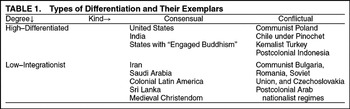
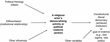



Comments
No Comments have been published for this article.