Introduction
Almost 90% of those who died by suicide contacted a health care professional in the 3 months prior to their death (De Leo et al. Reference De Leo, Draper, Snowdon and Kolves2013a ). Of those who had contact with a health care professional in the four weeks before their death, 22% expressed suicidal intent (Isometsa et al. Reference Isometsa, Heikkinen, Marttunen, Henriksson, Aro and Lonnqvist1995). Several authors claim that expression of suicidal ideation is one of the most important predictors for completed suicide (van Heeringen & Hengeveld, Reference van Heeringen, Hengeveld, Hengeveld and van Balkom2009; Posner et al. Reference Posner, Brown, Stanley, Brent, Yershova, Oquendo, Currier, Melvin, Greenhill, Shen and Mann2011; Batterham et al. Reference Batterham, Calear, Mackinnon and Christensen2013), but this association has not been firmly established (Large & Nielssen, Reference Large and Nielssen2012) with inconsistent previous reports. Most importantly, the risk of dying by suicide after expression of suicidal ideation is currently unknown.
Some of the previous studies reported a strong association between suicidal ideation and completed suicide (Taiminen et al. Reference Taiminen, Huttunen, Heilä, Henriksson, Isometsä, Kähkönen, Tuominen, Lönnqvist, Addington and Helenius2001; McGirr et al. Reference McGirr, Renaud, Seguin, Alda, Benkelfat, Lesage and Turecki2007; De Leo et al. Reference De Leo, Draper, Snowdon and Kolves2013b ), whereas others found no association (Bradvik & Berglund, Reference Bradvik and Berglund1993; Bertelsen et al. Reference Bertelsen, Jeppesen, Petersen, Thorup, Øhlenschlaeger, le Quach, Christensen, Krarup, Jørgensen and Nordentoft2007; Jollant et al. Reference Jollant, Malafosse, Docto and Macdonald2014). Previous meta-analyses (Large et al., Reference Large, Smith, Sharma, Nielssen and Singh2011a , Reference Large, Sharma, Cannon, Ryan and Nielssen b ; Hawton et al., Reference Hawton, Sutton, Haw, Sinclair and Deeks2005a , Reference Hawton, Sutton, Haw, Sinclair and Harriss b ; Reference Hawton, Casanas, Haw and Saunders2013; Chapman et al., Reference Chapman, Mullin, Ryan, Kuffel, Nielssen and Large2015) that assessed this association also reported inconsistent results, with odds ratios ranging from 1.5 in bipolar disorder (Hawton et al. Reference Hawton, Sutton, Haw, Sinclair and Harriss2005b ) to 29.8 in schizophrenia (Hawton et al. Reference Hawton, Sutton, Haw, Sinclair and Deeks2005a ). These meta-analyses only investigated the effect of suicidal ideation within specific populations, without comparing effects between different populations or exploring other sources of clinical heterogeneity. Furthermore, the effects in the general population and several other psychiatric populations remain unknown (Runeson, Reference Runeson2002; Conwell, Reference Conwell2009).
Suicidal ideation is quite common, with a lifetime prevalence of 10% in the general population (Nock et al. Reference Nock, Borges, Bromet, Alonso, Angermeyer, Beautrais, Bruffaerts, Chiu, de Girolamo, Gluzman, de Graaf, Gureje, Haro, Huang, Karam, Kessler, Lepine, Levinson, Medina-Mora, Ono, Posada-Villa and Williams2008). Clinicians can only use suicidal ideation in their clinical risk assessment when they know the absolute risks of suicide for those who do and those who do not express suicidal ideation (Grobbee & Hoes, Reference Grobbee, Hoes, Grobbee and Hoes2009). However, such summary statistics have not been provided by the aforementioned meta-analyses (Large et al., Reference Large, Smith, Sharma, Nielssen and Singh2011a , Reference Large, Sharma, Cannon, Ryan and Nielssen b ; Hawton et al., Reference Hawton, Sutton, Haw, Sinclair and Deeks2005a , Reference Hawton, Sutton, Haw, Sinclair and Harriss b , Reference Hawton, Casanas, Haw and Saunders2013; Chapman et al., Reference Chapman, Mullin, Ryan, Kuffel, Nielssen and Large2015). Furthermore, suicidal ideation is strongly correlated with other predictors of completed suicide like previous suicide attempts (Harris & Barraclough, Reference Harris and Barraclough1997; ten Have et al. Reference ten Have, de Graaf, van Dorsselaer, Verdurmen, van ‘t Land, Vollebergh and Beekman2009) and it is not known whether it independently predicts completed suicide (Large & Nielssen, Reference Large and Nielssen2012).
Therefore, we conducted a systematic review and meta-analysis to assess whether the expression of suicidal ideation predicted subsequent completed suicide in various populations, including non-psychiatric and psychiatric populations. Secondly, we aimed to estimate the absolute risks of suicide after expression of suicidal ideation in these populations and to investigate whether the expression of suicidal ideation predicted subsequent completed suicide independent of the presence of past suicide attempts.
Method
Search strategy
Ten electronic databases (PubMed, Embase, Web of science, PsycINFO, PsycARTICLES, Psychology and behavioural sciences collection, Cochrane, CINAHL, Academic search premier and ScienceDirect) were searched until February 5, 2016 without language restrictions. A medical librarian was involved in formulating the search string (Supplement S1).
Eligibility criteria
Only journal articles fulfilling the following inclusion criteria were eligible for inclusion: (1) assessment of presence or absence of suicidal ideation as a distinct determinant (i.e. not combined with suicidal behaviour). Suicidal ideation was considered present when any form of ideation, ranging from death wish to suicide plans or threats, was expressed; (2) assessment of completed suicide (which could include open verdicts) as a distinct outcome measure; (3) comparison of suicidal ideation v. no suicidal ideation with respect to risk of subsequent completed suicide (4) cohort or case–control study design; and (5) mean age of the study population ≥18 years.
Next, the following exclusion criteria were applied: (1) presence of suicidal ideation was assessed after a suicide attempt; (2) comparison of suicidal ideation v. suicide attempt as determinant in a cohort study; or (3) comparison of those who died by suicide and those who survived an attempt as outcome in a case–control study.
For the assessment of the absolute risks of completed suicide, we included only cohort studies and nested case–control studies (with the size of the source population specified and random selection of controls from the source population) in which the number of suicides in the suicidal ideation group and the exposed person time could be extracted or estimated.
To determine whether suicidal ideation predicted subsequent completed suicide independent of the presence of past suicide attempts, articles that assessed the effect of suicidal ideation on subsequent completed suicide adjusted for previous suicide attempts were selected.
Study selection
All retrieved articles in the original search were screened independently by two of the three reviewers (A.A.M.H., S.M. and S.H.M.P.), first on title, then abstract and subsequently full-text evaluation to consider final eligibility. Disagreements with regard to final eligibility were discussed to reach consensus or, if necessary, another independent reviewer (E.J.G.) got involved. In addition, the reference lists of eligible articles and relevant review articles identified by the search strategy were examined by one of the reviewers to search for eligible studies. When multiple publications used (partially) overlapping study populations only the largest study or, when similar, the most recent study was included.
Data extraction
For each eligible article, two of the three reviewers (A.A.M.H. and S.M. or S.H.M.P.) independently extracted data using a standardised form. Disagreements were discussed or another independent reviewer (E.J.G.) got involved if needed. When information necessary to compute the effect size for the primary aim was missing, a request for the missing numbers was emailed to the corresponding author. In case of no response, the study was not included. Authors of eleven studies were emailed, two of them provided additional data and could be included in the meta-analysis (Appleby et al. Reference Appleby, Cooper, Amos and Faragher1999b ; Dutta et al. Reference Dutta, Murray, Allardyce, Jones and Boydell2011).
Risk of bias assessment
Two independent reviewers (A.A.M.H. and S.M. or S.H.M.P.) assessed four risk of bias aspects (Supplement S2), judged on the basis of adapted items from the Newcastle–Ottawa scale (Wells et al. Reference Wells, Shea, O'Connol, Peterson, Welch, Losos and Tugwelln.d.) and Altman (Reference Altman2001).
Statistical analyses
A study protocol was written a priori (Supplement S1), but was not published or registered. The primary outcome of this meta-analysis was the pooled unadjusted risk ratio for the association between suicidal ideation and completed suicide in a random effects model according to the method of DerSimonian and Laird (Borenstein et al. Reference Borenstein, Hedges, Higgins, Rothstein and Sharples2009a ). Due to the varying absolute risks of suicide among different populations (Nordentoft et al. Reference Nordentoft, Mortensen and Pedersen2011), the pooling of risk ratios was stratified for the following populations: affective disorders (including both in- and outpatients), (former) psychiatric inpatients (mixed diagnoses), schizophrenic patients (including both in- and outpatients), other mixed psychiatric populations (including people with substance use disorders, patients with borderline personality disorder and mixed diagnosis psychiatric outpatients [sometimes combined with inpatients]), general population and a residual category of non-psychiatric study populations that could not be grouped in one of the other categories. Studies in each subgroup were combined using a random effects model with separate estimates of tau-squared (Borenstein et al. Reference Borenstein, Hedges, Higgins, Rothstein and Sharples2009b ). To pool results from different studies, odds ratios, risk ratios and incidence rate ratios were considered to approach the same value, which is reasonable given the low risk of completed suicide. When only χ 2 values or p-values were given in combination with a direction of the effect, these were used to estimate risk ratios. If the given p-value was <0.05, we assumed a p-value of 0.049. There were no eligible studies only reporting a p-value >0.05. When articles reported on multiple suicidal ideation determinants (e.g. thoughts and plans separately) we computed a combined effect across these different determinants (Borenstein et al. Reference Borenstein, Hedges, Higgins, Rothstein and Sharples2009c ).
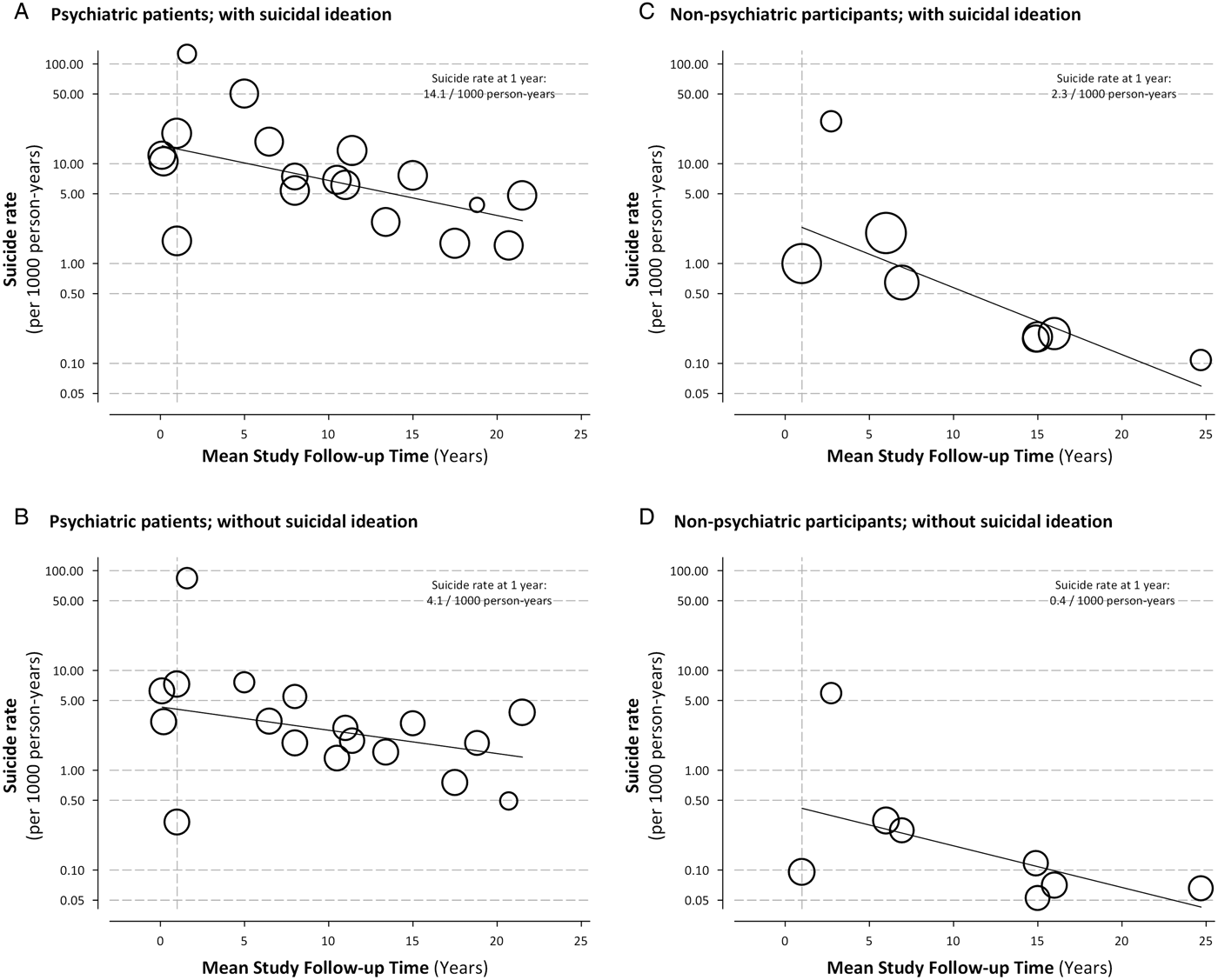
With regard to the risk of suicide after expression of suicidal ideation we were most interested in the suicide risk during the first year of follow-up. Since studies had varying follow-up times, and we did not expect a constant suicide rate over time, we conducted maximum-likelihood meta-regression analyses with mean study follow-up time as determinant and loge-transformed rates of completed suicide as outcome. Given the limited number of studies per population subgroup, analyses were stratified for psychiatric and non-psychiatric populations only. When one article assessed suicidal ideation at multiple time points, we only included the determinant that assessed suicidal ideation closest to baseline.
In order to assess whether suicidal ideation predicted completed suicide independently of previous attempts the past suicide attempt-adjusted risk ratios were extracted and used for estimation.
To check the robustness of the results, we restricted the analyses to: (1) studies with a low risk of bias (Supplement S2), (2) cohort studies (for the primary research aim only) and (3) studies that assessed suicidal ideation at baseline or in the preceding month (for the secondary research aim only). Only this last analysis was not pre-specified in the study protocol, but was conducted because of the large variation in suicidal ideation assessment periods, which could have influenced suicide risk. In addition, we stratified analyses of the primary outcome for studies with short (≤1-year) v. long (>1-year) timeframe between expression of suicidal ideation and completed suicide and suicidal ideation assessment method. Mean effects within subgroups were compared by testing for total between groups heterogeneity. Maximum likelihood meta-regression was applied to examine the effects of mean age and gender in the study populations.
Heterogeneity was assessed using the I 2 statistic, small study bias by inspecting the funnel plot and Egger's test for funnel plot asymmetry. A p-value <0.05 was considered statistically significant. Post-hoc, we changed the significance level for Egger's test for funnel plot asymmetry in the different subgroups to 0.10, given the limited number of studies that were included in these analyses and the relatively low power of the test. Statistical analyses were performed using Comprehensive Meta-analysis software version 2.0.064 (www.meta-analysis.com).
Results
Literature search and study characteristics
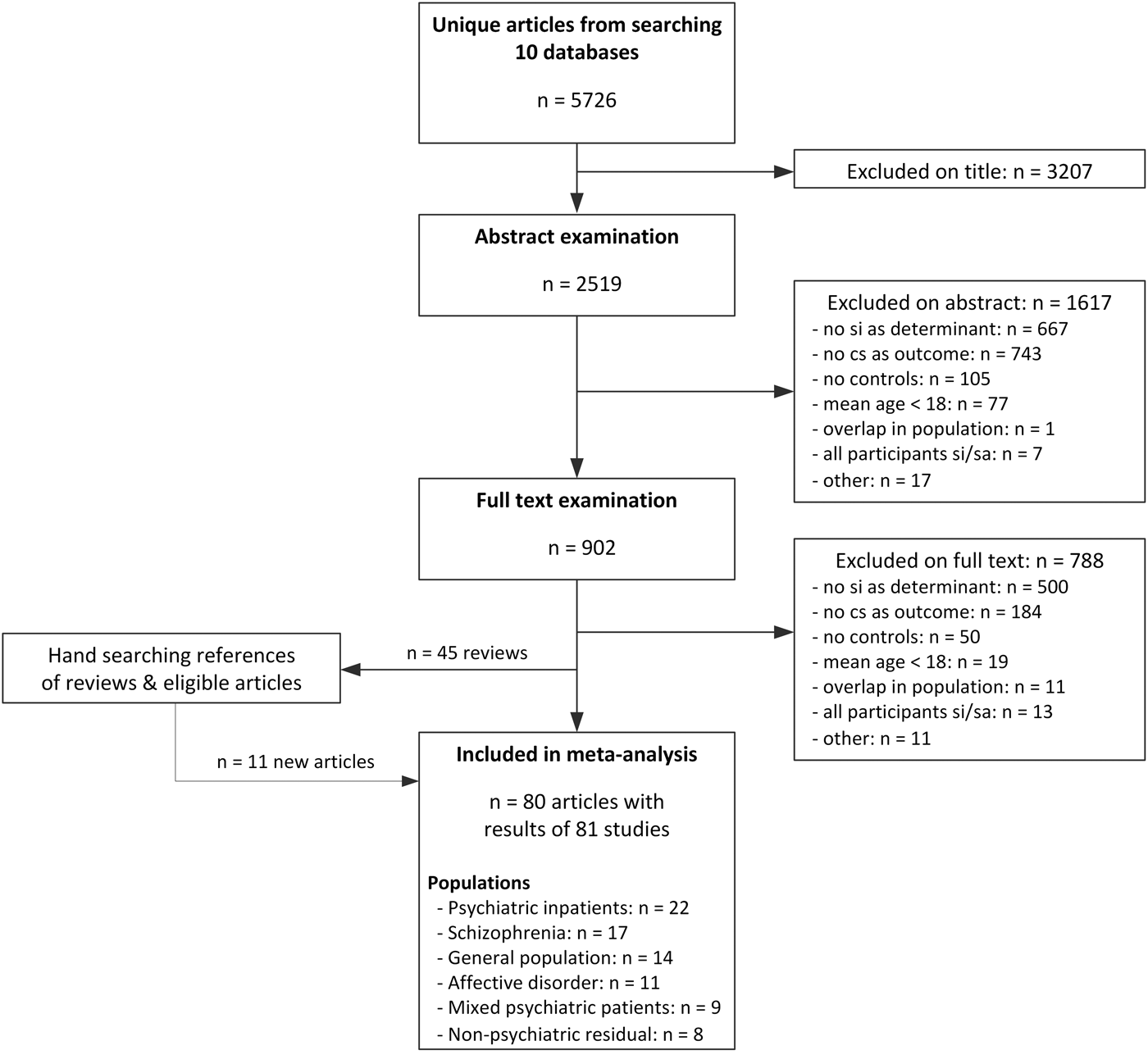
The literature search identified 5726 unique articles: 80 articles were finally included, which presented results of 81 studies (Fig. 1). The majority of the articles was published in English (n = 75), others in German (n = 2), Spanish (n = 1), French (n = 1) or South African (n = 1). Together these studies included 4 601 378 participants (median 216; range 14–4 045 993), with a total of 7729 completed suicides (median 60; range 3–1429). Suicidal ideation was assessed retrospectively by interviewing a next of kin or clinician of the deceased (n = 19), was extracted from medical records (n = 45) or was determined by asking the patient him/herself (n = 16) (missing: n = 1) (Supplement S3).
Flowchart of the study selection process. Si indicates suicidal ideation; cs, completed suicide; sa, suicide attempts. Mixed psychiatric populations: n = 9; including three studies on people with substance use disorders, two on patients with borderline personality disorder, two on mixed diagnosis psychiatric in & outpatients, and two on mixed diagnosis psychiatric outpatients. Non-psychiatric residual category: n = 8; including two studies on military, one on veterans, one on stalkers, one on HIV infected males, one on survivors of childhood cancer, one on prisoners, and one on emergency department visitors.
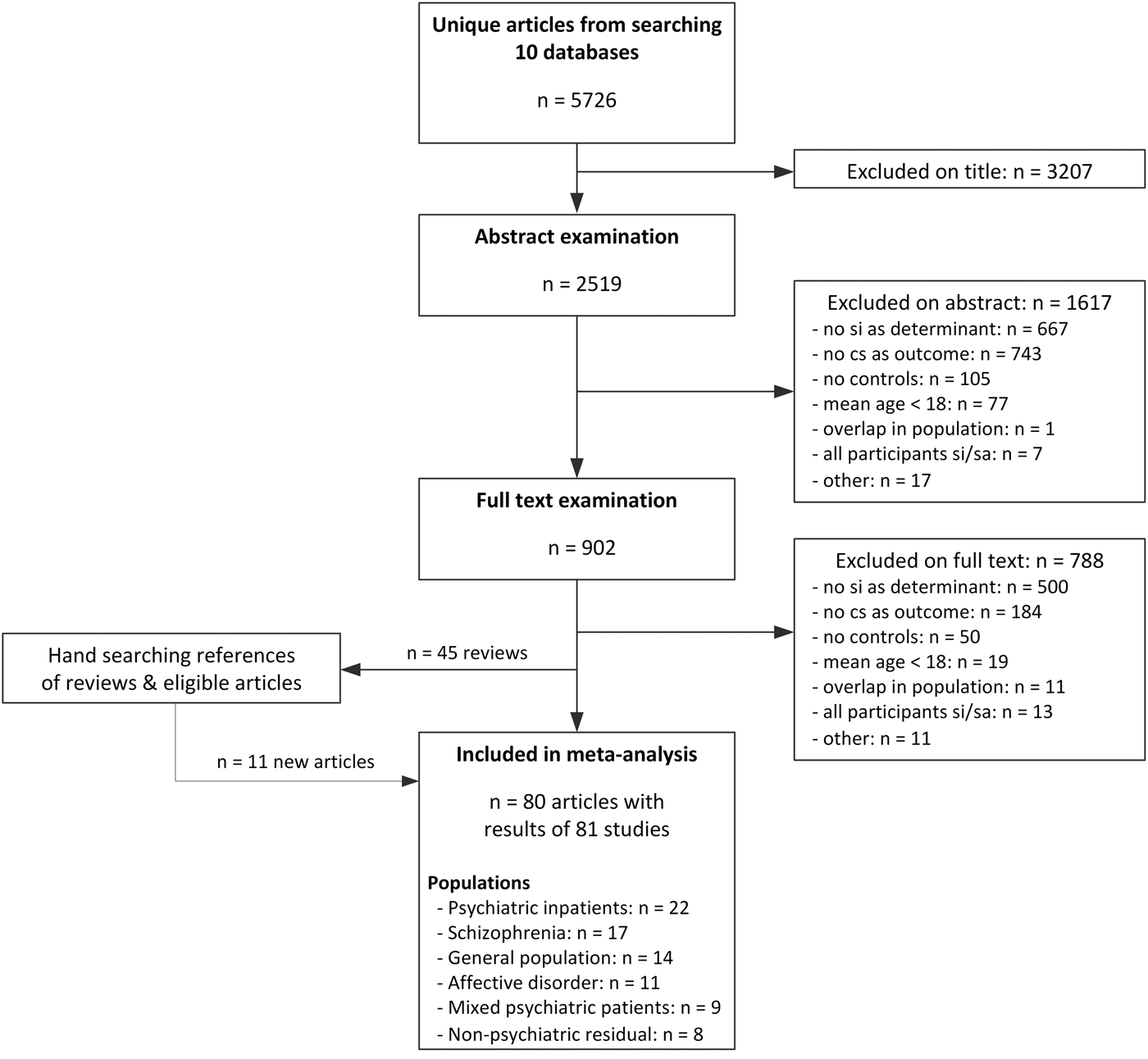
The majority of included studies were (nested) case–control studies (n = 51, 63.0%). In only 26 studies the absolute risk of completed suicide could be extracted. None of the 81 eligible studies assessed the effect of suicidal ideation on completed suicide with sole adjustment for previous suicide attempts. However, there were 46 studies that applied a multivariable model, but only 28 adjusted for previous attempts as a separate determinant in this model.
Association between suicidal ideation and subsequent completed suicide
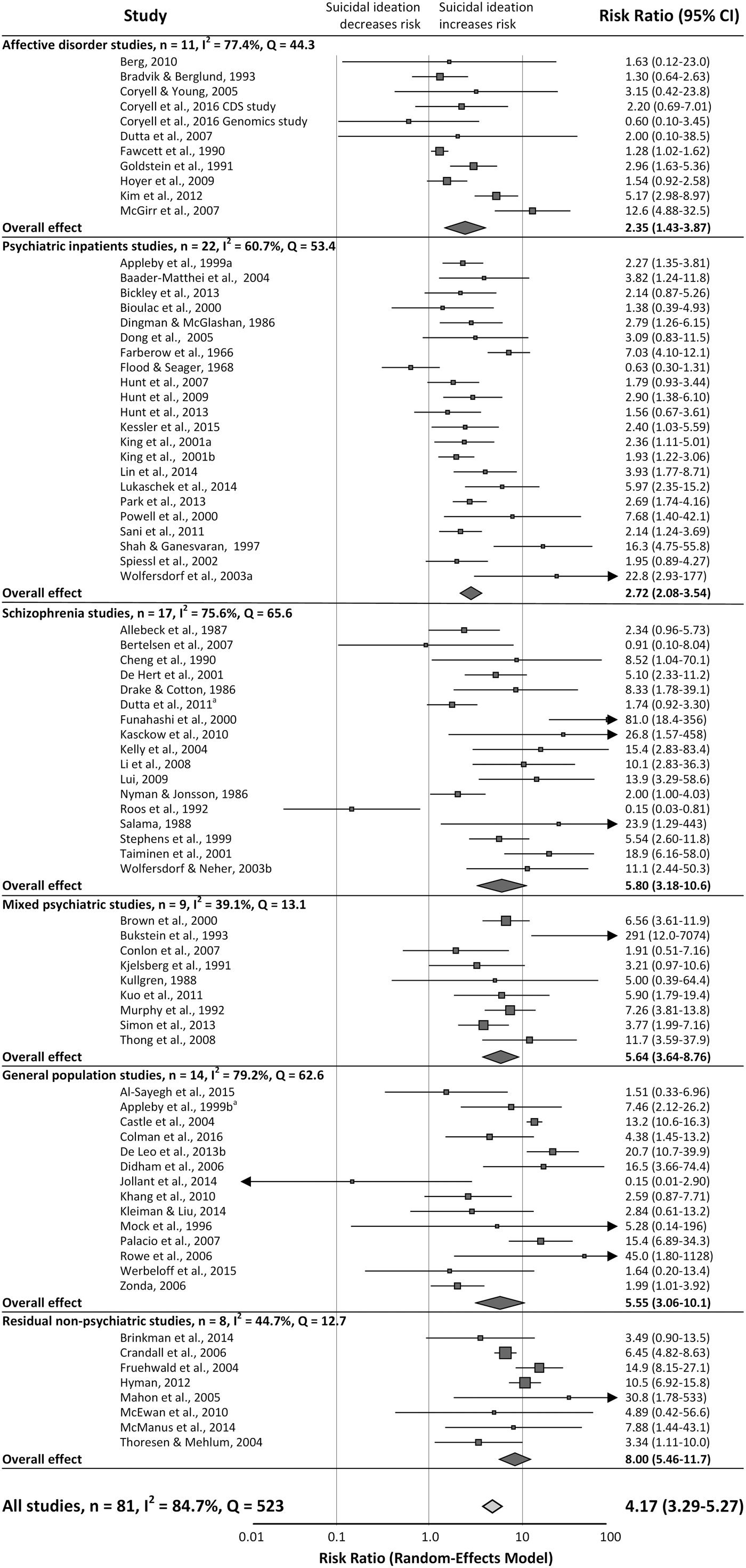
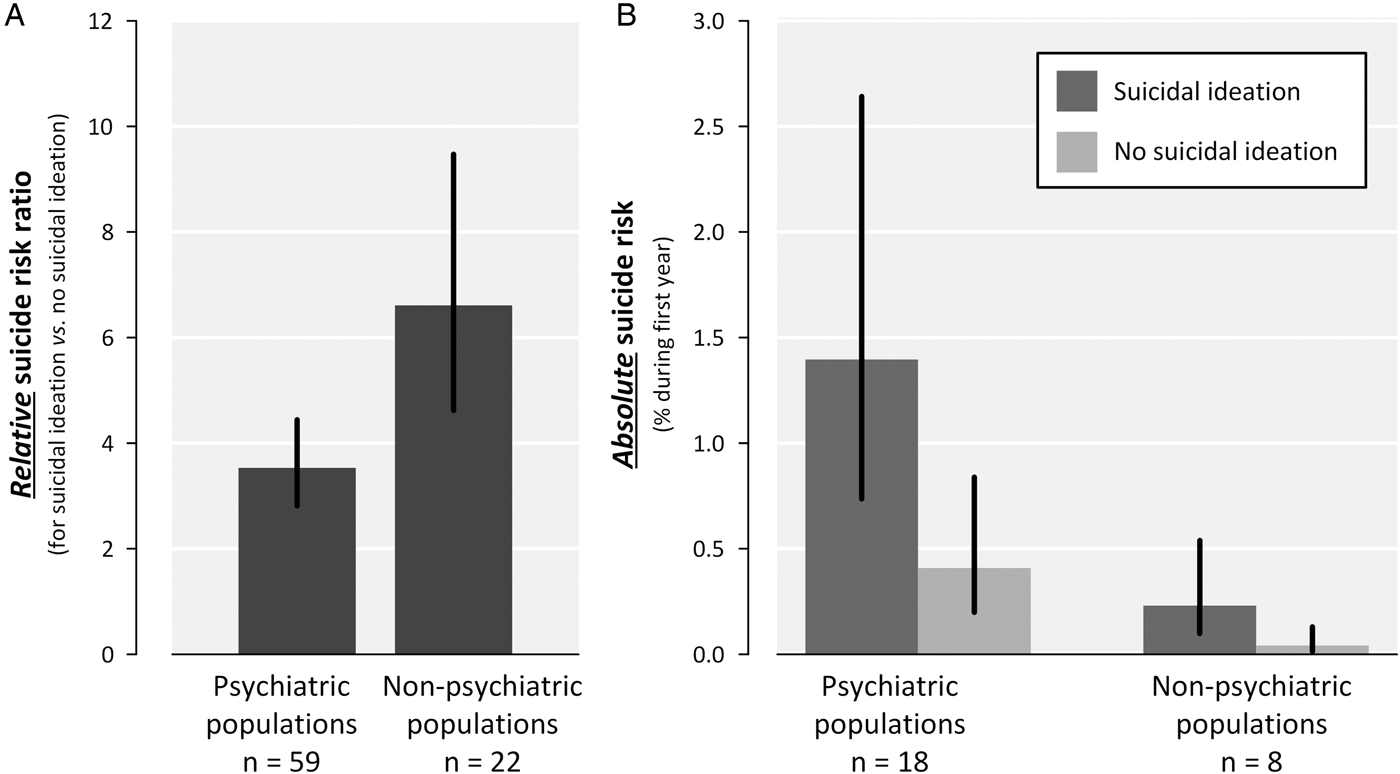
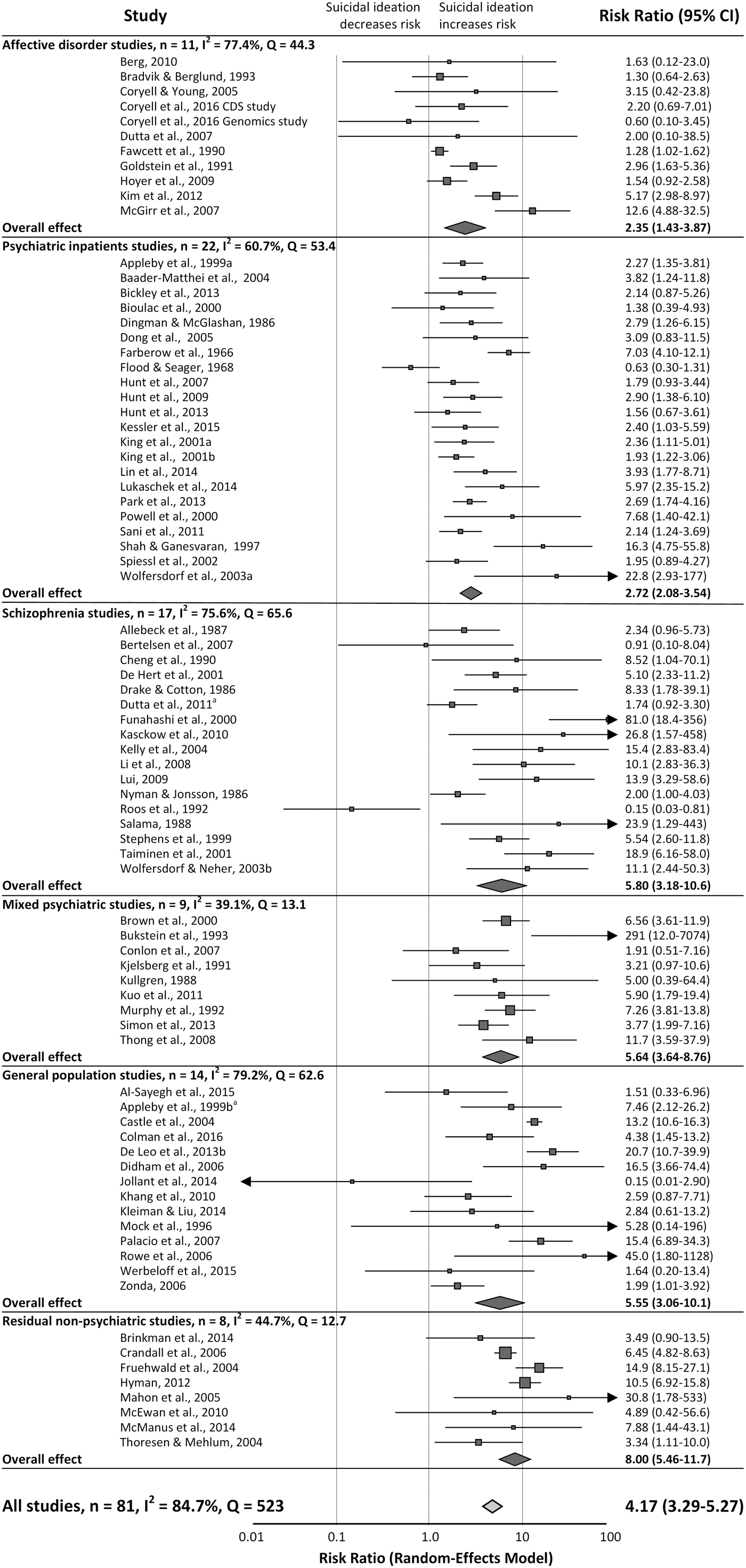
For all population subgroups investigated in this meta-analysis, the pooled risk of suicide was significantly higher in study participants who had expressed suicidal ideation compared with study participants who had not. Whereas the overall risk ratio (RR) was 4.17 (95% confidence interval (CI) 3.29–5.27), the risk ratios per population subgroup varied substantially. The risk ratio was highest in the non-psychiatric residual subgroup, followed by schizophrenia, mixed psychiatric patients, the general population, psychiatric inpatients and affective disorder (Fig. 2). Overall, the risk ratio was significantly higher in non-psychiatric populations (RR 6.61; 95% CI 4.62–9.47) than in psychiatric populations (RR 3.53; 95% CI 2.81–4.44) (p-value = 0.004) (Fig. 3).
Forest plot showing the association between suicidal ideation and subsequent completed suicide. CI, confidence interval. aAuthors provided additional data to compute effect size.
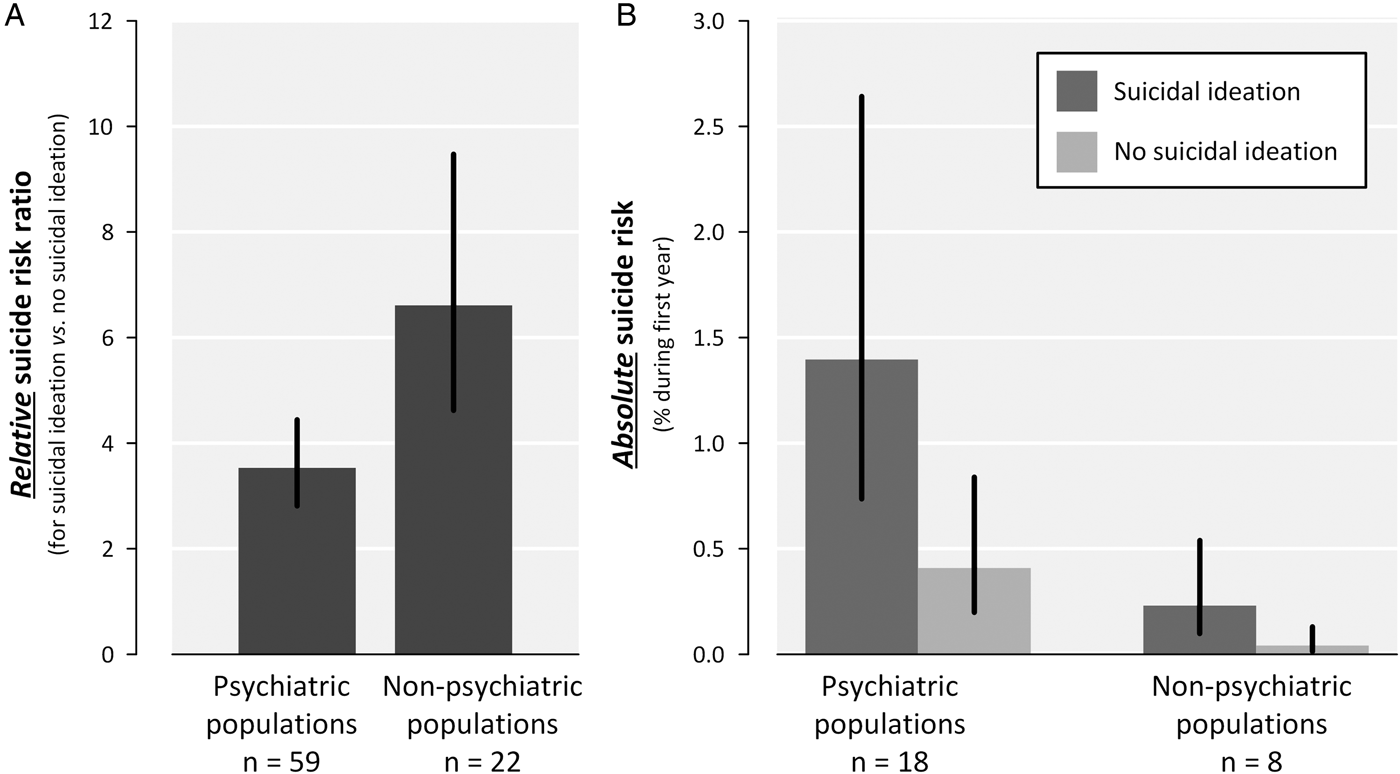
Bar chart showing suicide risk ratio and the suicide risk (%) during first year of follow-up. Lines indicate 95% confidence interval. Numbers of studies included in (A) and (B) differ because in only 26 of the 81 studies the absolute risk of completed suicide could be extracted. A. Risk ratio for suicide after expression of suicidal ideation, stratified for psychiatric and non-psychiatric populations. B. Results specified separately for study participants who had expressed suicidal ideation and study participants who had not, stratified for psychiatric and non-psychiatric populations. Percentages calculated using maximum likelihood meta-regression analyses with mean study follow-up time as determinant and loge-transformed rates of completed suicide as outcome (see Fig. 4).
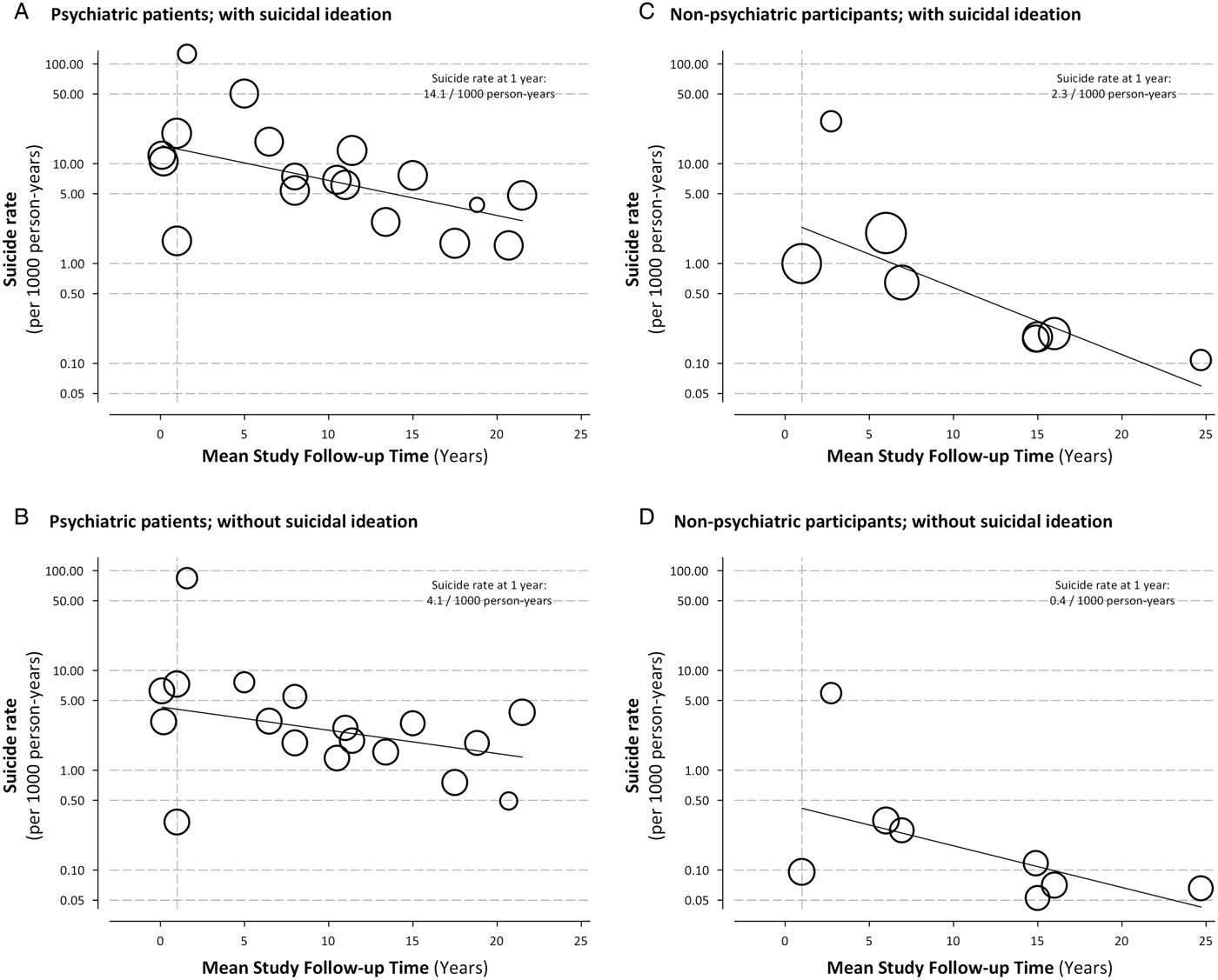
Meta-regression of mean study follow-up time on suicide rate. Maximum likelihood meta-regression analyses with mean study follow-up time as determinant and loge-transformed rates of completed suicide as outcome presented on logarithmic scales. The bubble size is proportional to the study's weight. Vertical line indicates 1 year follow-up. The suicide risk can be calculated using the following formulas: suicide risk (during first year of follow-up) = 1 – e(-rate per person-year at year 1). Figure part A, B: Psychiatric subgroup included: Dingman & McGlashan, Reference Dingman and McGlashan1986; Drake & Cotton, Reference Drake and Cotton1986; Allebeck et al. Reference Allebeck, Varla, Kristjansson and Wistedt1987; Goldstein et al. Reference Goldstein, Black, Nasrallah and Winokur1991; Bradvik & Berglund, Reference Bradvik and Berglund1993; Stephens et al. Reference Stephens, Richard and McHugh1999; Bioulac et al. Reference Bioulac, Bourgeois, Ekouevi, Bonnin, Gonzales and Castello2000; de Hert et al. Reference De Hert, McKenzie and Peuskens2001; Spiessl et al. Reference Spiessl, Hubner-Liebermann and Cording2002; Coryell & Young, Reference Coryell and Young2005; Dutta et al. Reference Dutta, Boydell, Kennedy, van Os, Fearon and Murray2007; Berg, Reference Berg2010; Dutta et al. Reference Dutta, Murray, Allardyce, Jones and Boydell2011; Kuo et al. Reference Kuo, Tsai, Liao, Conwell, Lin, Chang, Chen and Chen2011; Sani et al. Reference Sani, Tondo, Koukopoulos, Reginaldi, Kotzalidis, Koukopoulos, Manfredi, Mazzarini, Pacchiarotti, Simonetti, Ambrosi, Angeletti, Girardi and Tatarelli2011; Park et al. Reference Park, Choi, Kyoung Yi and Hong2013; Simon et al. Reference Simon, Rutter, Peterson, Oliver, Whiteside, Operskalski and Ludman2013. Lin et al. Reference Lin, Hung, Liao, Lee, Tsai, Chen and Kuo2014; Figure part C, D: Non-psychiatric subgroup included: Crandall et al. Reference Crandall, Fullerton-Gleason, Aguero and LaValley2006; Khang et al. Reference Khang, Kim and Cho2010; McEwan et al. Reference McEwan, Mullen and MacKenzie2010; Hyman, Reference Hyman2012; Brinkman et al. Reference Brinkman, Zhang, Recklitis, Kimberg, Zeltzer, Muriel, Stovall, Srivastava, Sklar, Robison and Krull2014; Kleiman & Liu, Reference Kleiman and Liu2014; Al-Sayegh et al. Reference Al-Sayegh, Lowry, Polur, Hines, Liu and Zhang2015; Werbeloff et al. Reference Werbeloff, Dohrenwend, Levav, Haklai, Yoffe, Large, Davidson and Weiser2015.
Risk of completed suicide
Although the psychiatric subgroups had the lowest risk ratios, meta-regression analyses showed the suicide risk was highest in the psychiatric subgroups who had expressed suicidal ideation (risk during first year of follow-up 1.40%; 95% CI 0.74–2.64). This was clearly higher than the suicide risk in psychiatric patients who had not expressed suicidal ideation (risk during first year of follow-up 0.41%; 95% CI 0.20–0.84). In non-psychiatric study participants the suicide risk during the first year of follow-up was 0.23% (95% CI 0.10–0.54) in participants who had expressed suicidal ideation and 0.04% (95% CI 0.01–0.13) in participants who had not (Fig. 3 and Fig. 4). When grouping all studies, the suicide risk during the first year of follow-up after expression of suicidal ideation was 1.03% (95% CI 0.43–2.44) (data not shown).
Risk of bias assessment and sensitivity analyses
When restricting the analyses to studies that scored ‘adequate’ on all four risk of bias items (n = 34, 42.0%), the pooled risk ratio decreased slightly to 3.41 (95% CI 2.67–4.35) and the overall suicide risk during the first year of follow-up also decreased slightly (risk during first year of follow-up 0.77%; 95% CI 0.27–2.16). In addition, restricting the primary analysis to cohort studies resulted in a slight decrease in the risk ratio (RR 3.10; 95% CI 2.22–4.32). Restricting the secondary analysis to studies that assessed suicidal ideation in the month around baseline resulted in a similar risk (risk during first year of follow-up 0.99%; 95% CI 0.39–2.51).
Is suicidal ideation an independent predictor for completed suicide?
Of all studies that used a multivariable model for the prediction of suicide and adjusted for (among other predictors) the presence of a previous suicide attempt (n = 28), only 14 reported the adjusted effect size of suicidal ideation. In 11 of these studies, suicidal ideation was a significant independent predictor of completed suicide. The other 14 studies that included previous attempts in their multivariable model either did not include suicidal ideation as a separate predictor (n = 6), or did include suicidal ideation but did not report the adjusted effect size (n = 8), which was non-significant in seven of these studies. While in at least 11 studies suicidal ideation was a significant independent predictor of completed suicide, the 14 adjusted effect sizes were not pooled due to large underreporting of mainly non-significant results.
Subgroup analyses
There was considerable heterogeneity (I 2 for overall risk ratio = 84.7%, Q-value = 523), even when stratified for specific populations (I 2 range 39–79%, Q-values 12.7–65.6). The results of subgroup analyses can be found in Supplement S4.
Publication bias
The overall funnel plot (Supplement S5) for the primary research question showed a rather symmetrical funnel plot. However, visual inspection of some of the funnel plots of the subgroups showed there might be missing studies with negative effects. The overall Egger's test indicated no funnel plot asymmetry (two-tailed p-value = 0.94). Only in the general population subgroup, the Egger's test for funnel plot asymmetry was significant (two-tailed p-value = 0.04).
Discussion
Meta-analysing 81 eligible studies showed that overall, people expressing suicidal ideation are four times more likely to die by suicide than people not expressing suicidal ideation, with the highest relative risks in non-psychiatric populations. However, absolute suicide risks, rather than relative risks, are essential in suicide prediction, and were highest in psychiatric populations, with a suicide risk during the first year of follow-up of 1.4% compared with 0.23% in non-psychiatric populations.
The results of this meta-analysis show an overall modest relationship, with moderate risk ratios for psychiatric subgroups and strong risk ratios for non-psychiatric subgroups (Rosenthal, Reference Rosenthal1996). The results are in line with previous meta-analyses on suicidal ideation and subsequent completed suicide (Large et al., Reference Large, Smith, Sharma, Nielssen and Singh2011a , Reference Large, Sharma, Cannon, Ryan and Nielssen b ; Hawton et al., Reference Hawton, Sutton, Haw, Sinclair and Deeks2005a , Reference Hawton, Casanas, Haw and Saunders2013; Chapman et al., Reference Chapman, Mullin, Ryan, Kuffel, Nielssen and Large2015), which only assessed psychiatric populations. The highest relative risk was found in a meta-analysis restricted to schizophrenic patients (Hawton et al. Reference Hawton, Sutton, Haw, Sinclair and Deeks2005a ; Chapman et al. Reference Chapman, Mullin, Ryan, Kuffel, Nielssen and Large2015) followed by meta-analyses restricted to psychiatric inpatients (Large et al., Reference Large, Smith, Sharma, Nielssen and Singh2011a , Reference Large, Sharma, Cannon, Ryan and Nielssen b ) and depressed patients (Hawton et al. Reference Hawton, Casanas, Haw and Saunders2013; Chapman et al. Reference Chapman, Mullin, Ryan, Kuffel, Nielssen and Large2015). Remarkably, in contrast to our study, one recent meta-analysis (Chapman et al. Reference Chapman, Mullin, Ryan, Kuffel, Nielssen and Large2015) reported that the association between suicidal ideation and completed suicide was not significant in patients with a mood disorder, probably explained by the broader definition of suicidal ideation in our study and the fact that we excluded studies that compared expression of suicidal ideation in suicide completers v. attempters. Unfortunately, none of the previous meta-analyses (Hawton et al., Reference Hawton, Sutton, Haw, Sinclair and Deeks2005a , Reference Hawton, Sutton, Haw, Sinclair and Harriss b ; Reference Hawton, Casanas, Haw and Saunders2013; Large et al., Reference Large, Smith, Sharma, Nielssen and Singh2011a , Reference Large, Sharma, Cannon, Ryan and Nielssen b ; Chapman et al., Reference Chapman, Mullin, Ryan, Kuffel, Nielssen and Large2015) assessed the absolute risks of suicide.
The expression of suicidal ideation was reported as a significant independent predictor of suicide more often than expected by chance. However, underreporting of non-significant effects refrained us from concluding to what extend suicidal ideation is an independent predictor of completed suicide. Many studies included in our meta-analysis did develop a prediction model for suicide, although it is widely accepted that it is very difficult to accurately predict suicide for an individual patient (van Hemert et al. Reference van Hemert, Kerkhof, de Keijser, Verwey, van Boven, Hummelen, de Groot, Lucassen, Meerdinkveldboom, Steendam, Stringer, Verlinde and van de Glind2012), and there is a lot of debate on whether or not clinical risk categorisation is helpful in preventing completed suicide (Large et al. Reference Large, Ryan and Nielssen2011c ; O'Connor et al. Reference O'Connor, Allan and Scott2014). The low baseline rate of suicide results in low positive predictive values and in the majority of suicides occurring in the group that is classified as low-risk according to the prediction model (Large et al. Reference Large, Sharma, Cannon, Ryan and Nielssen2011b ; Madsen & Nordentoft, Reference Madsen and Nordentoft2012; Paton et al. Reference Paton, Large and Ryan2014). It was striking that only 60% of the studies that developed a prediction model for suicide included previous suicide attempts as a predictor, whereas this has been reported as one of the most important independent predictors of completed suicide (Large et al. Reference Large, Ryan and Nielssen2011c ). Future studies on suicide risk assessment should therefore include known predictors from the literature (e.g. previous suicide attempts) rather than only selecting predictors by univariable screening in the developmental dataset (Steyerberg, Reference Steyerberg2009).
Strengths and limitations
A major strength of our paper was the attempt to provide risk estimates for different subgroups. Moreover, we strictly excluded studies that might have combined suicidal ideation with behaviour, and included many studies for the primary research aim. There are also limitations that need to be considered. First, the majority of studies only provided long-term follow-up results, while the short-term risk has most clinical value. Although the provided suicide risks should be interpreted with caution due to the declining rates over time and the limited number of studies, especially with short-term follow-up, that could be included in the meta-regression analyses, results clearly show the risk of suicide is higher after expression of suicidal ideation, especially in psychiatric patients. Future studies should focus on short-term suicide risk in the different psychiatric populations. Second, only part of the large amount of heterogeneity could be explained for. Included studies often did not provide several patient characteristics that would be interesting in exploring/explaining this heterogeneity, like duration of suicidal ideation (ten Have et al. Reference ten Have, van Dorsselaer and de Graaf2013) or behavioural traits (Turecki, Reference Turecki2014). We did not find a significant difference between suicidal ideation assessment subgroups, possible due to varying or lacking definitions of suicidal ideation and the large variation in suicidal ideation assessment methods within the subgroups. Unfortunately we could not further explore this variation due to insufficient reporting in the individual studies and study level confounding. Clear definitions of suicidal ideation and its assessment method are necessary (Silverman et al. Reference Silverman, Berman, Sanddal, O'Carroll and Joiner2007) and validated and standardised assessment methods should be used. Even within studies that used standardised assessment methods, the instruments used varied widely with only a maximum of two studies using the same instrument. This can also be a source of heterogeneity as different validated suicidal ideation assessment methods (Yigletu et al. Reference Yigletu, Tucker, Harris and Hatlevig2004; Vuorilehto et al. Reference Vuorilehto, Valtonen, Melartin, Sokero, Suominen and Isometsa2014) can result in different suicide ideation prevalences, even in the same population at the same time point. The considerable heterogeneity that still exists between studies within the different population subgroups, but that supposedly also exists within individual studies, limits the generalisability of our findings to individual patients and will result in higher suicide risks in some patients and lower suicide risks in others. We recommend future studies to explore sources of clinical heterogeneity in more detail, especially with regard to suicidal ideation assessment method. Third, study level confounding (Hingorani et al. Reference Hingorani, Windt, Riley, Abrams, Moons, Steyerberg, Schroter, Sauerbrei, Altman and Hemingway2013) might have influenced the results of our subgroup analyses, e.g. resulted in a significant effect of gender on the association between suicidal ideation and completed suicide, as the percentage of females was lower in certain high-risk population subgroups like schizophrenia. Fourth, some required study parameters could not be directly extracted from the original articles. For example the exposed person-years were conservatively estimated when possible, which could have resulted in an underestimation of the suicide risk. Fifth, reporting bias cannot be ruled out. The power of Egger's test is relatively low (Sterne et al. Reference Sterne, Egger, Moher, Higgins and Green2011) and effects in the different population subgroups might have been underestimated as we did not attempt to access unpublished data or grey literature and due to underreporting of negative and non-significant effects. Sixth, studies that were published after February 5, 2016 were not included in this meta-analysis. Our meta-analysis especially has limited power on analyses regarding absolute suicide risk in psychiatric and non-psychiatric populations and the independent predictive effect of suicidal ideation. A future update of this meta-analysis should focus on studies that address these research questions.
Implications for clinical practice
For clinical psychiatric care, it is important to inquire about suicidal ideation in psychiatric patients given the substantial risk after expression of suicidal ideation, especially in the first period after expression. Although the relative risk was highest in non-psychiatric populations, the absolute suicide risk after expression of suicidal ideation in non-psychiatric populations was lower than in psychiatric populations, given their lower baseline suicide risk. However, even in psychiatric patients, suicidal ideation assessment should be placed in perspective as the suicide risk during the first year of follow-up among psychiatric patients who had not expressed suicidal ideation was 0.41%, which was higher than the suicide risk in non-psychiatric persons who had expressed suicidal ideation. Expression of suicidal ideation is one of the factors that clinicians take into account when assessing suicide risk in an individual patient (Popovic et al. Reference Popovic, Benabarre, Crespo, Goikolea, González-Pinto, Gutiérrez-Rojas, Montes and Vieta2014), which should of course not merely be based on a ‘tick box’ approach that classifies patients as either at high or low risk on the basis of a list of risk factors (van Hemert et al. Reference van Hemert, Kerkhof, de Keijser, Verwey, van Boven, Hummelen, de Groot, Lucassen, Meerdinkveldboom, Steendam, Stringer, Verlinde and van de Glind2012; O'Connor et al. Reference O'Connor, Allan and Scott2014). The suicide risks provided in this meta-analysis can help clinicians in their clinical suicide risk assessment and stepped care approach, for example to decide whether burdensome secondary prevention measures such as (compulsory) admission are proportional to the risk of suicide.
In a patient who expresses suicidal ideation, follow-up inquiries are needed about the nature of these thoughts and the assessment of other known risk factors for suicide (Hawton & van Heeringen, Reference Hawton and van Heeringen2009). As patients will not always express suicidal ideation spontaneously (van Hemert et al. Reference van Hemert, Kerkhof, de Keijser, Verwey, van Boven, Hummelen, de Groot, Lucassen, Meerdinkveldboom, Steendam, Stringer, Verlinde and van de Glind2012), it is important to ask them about suicidal thoughts. Actually, asking patients about suicidal ideation can reduce future suicidal ideation and follow-up inquiries can benefit long-term mental health (Dazzi et al. Reference Dazzi, Gribble, Wessely and Fear2014). Patients often feel relieved by having an opportunity to talk about their suicidal ideas (Gliatto & Rai, Reference Gliatto and Rai1999), especially if clinicians take time, show empathy, and acknowledge the suicidal feelings (Talseth et al. Reference Talseth, Lindseth, Jacobsson and Norberg1999). Remarkably, in several of the included studies that assessed the presence of suicidal ideation in medical records, this information was missing. This means that it was unavailable to clinicians and appropriate care might have been unnecessarily withheld from these patients (King et al. Reference King, Baldwin, Sinclair, Baker, Campbell and Thompson2001b ).
Fortunately, the majority of patients with suicidal ideation do not die by suicide. Nevertheless, assessment of suicidal ideation is of priority in people with psychiatric illnesses and when a patient expresses suicidal ideation, prompt secondary prevention strategies are necessary to reduce their substantial increased risk of suicide. Future suicide prediction studies should focus on absolute suicide risks and the independent predictive effect of suicidal ideation.
Supplementary Material
The supplementary material for this article can be found at https://doi.org/10.1017/S2045796016001049
Acknowledgements
We would like to thank medical librarian J.W. Schoones, Walaeus Library, Leiden University Medical Center for his help in conducting the literature search. In addition, we would like to thank the authors that provided additional information on their studies.
Funding
This research received no specific grant from any funding agency, commercial or not-for-profit sectors.
Conflict of Interest
None.
Availability of Data and Materials
Data supporting our findings can be found in Fig. 2 and Supplement S3.