Introduction
While there have been studies of mental disorders in community settings (McConnell et al. Reference McConnell, Bebbington, McClelland, Gillespie and Houghton2002) and representative studies of general mental well-being in Northern Ireland (NI) (Department of Health and Social Services and Public Safety, 2007), we are aware of no previous report providing representative estimates of mental disorders in NI based on validated diagnostic criteria.
One of the most significant advancements in the epidemiology of mental disorders was the development of the Composite International Diagnostic Interview (CIDI) (Kessler et al. Reference Kessler, Aguilar-Gaxiola, Alonso, Angermeyer, Anthony, Berglund, Chatterji, de Girolamo, de Graaf, Demyttenaere, Gasquet, Gluzman, Gruber, Gureje, Haro, Heeringa, Karam, Kawakami, Lee, Levinson, Medina-Mora, Oakley-Browne, Pennell, Petukhova, Posada-Villa, Ruscio, Stein, Tsang, Üstün, Kessler and Üstün2008) and establishment of the World Mental Health (WMH) Survey Initiative in 1998. This initiative was established to coordinate a series of epidemiological studies using standardized methods in 28 countries. The aim was to obtain valid information about: (a) the prevalence and correlates of mental disorders; (b) levels of unmet need; (c) treatment adequacy; (d) the societal burden of mental disorders. These surveys reveal that anxiety disorders was the most prevalent disorder category in 10 of 17 countries, with lifetime prevalence estimates ranging from 4.8% in China to 31% in the US. Mood disorders were the most prevalent in all other but one of the remaining countries with overall estimates ranging from 3.3% in Nigeria to 21.4% in the US (Kessler et al. Reference Kessler, Aguilar-Gaxiola, Alonso, Angermeyer, Anthony, Berglund, Chatterji, de Girolamo, de Graaf, Demyttenaere, Gasquet, Gluzman, Gruber, Gureje, Haro, Heeringa, Karam, Kawakami, Lee, Levinson, Medina-Mora, Oakley-Browne, Pennell, Petukhova, Posada-Villa, Ruscio, Stein, Tsang, Üstün, Kessler and Üstün2008).
Examination of age-at-onset distributions for disorders may inform the timing of service provision and interventions. Estimates of age-at-onset distributions from WMH studies show broadly consistent results. Impulse control disorders had the earliest median age at onset and a narrow range of onset risk. For anxiety disorders, the pattern varied with disorder type while mood disorders displayed a later age-at-onset range (29–43 years). While the onset of substance use generally increased from adolescence to early adulthood, the rate of this increase varied substantially across countries (Kessler et al. Reference Kessler, Aguilar-Gaxiola, Alonso, Angermeyer, Anthony, Berglund, Chatterji, de Girolamo, de Graaf, Demyttenaere, Gasquet, Gluzman, Gruber, Gureje, Haro, Heeringa, Karam, Kawakami, Lee, Levinson, Medina-Mora, Oakley-Browne, Pennell, Petukhova, Posada-Villa, Ruscio, Stein, Tsang, Üstün, Kessler and Üstün2008).
Given the impairment associated with mental disorders, early treatment-seeking following disorder onset is desirable. The National Institute of Clinical Excellence highlights the key role of the general practitioner, as the initial point of contact for the majority of individuals with mental health problems, in the identification, assessment and subsequent treatment management of individuals with mental health disorders (National Collaborating Centre for Mental Health, 2010). NI, as part of the UK, benefits from free access to primary care services under the National Health Service (NHS) and we may therefore expect minimal delays in treatment seeking. A number of epidemiological studies have investigated delays in treatment following disorder onset (Olfson et al. Reference Olfson, Kessler, Berglund and Lin1998; Wang et al. Reference Wang, Berglund, Olfson and Kessler2004, Reference Wang, Berglund, Olfson, Pincus, Wells and Kessler2005; Borges et al. Reference Borges, Wang, Medina-Mora, Lara and Chiu2007; Bruffaerts et al. Reference Bruffaerts, Bonnewyn and Demyttenaere2007; Lee et al. Reference Lee, Zhang, Shen, Huang, Fung, Tsang, Liu, Shen and Kessler2007; Sareen et al. Reference Sareen, Jagdeo, Cox, ten-Have, Clara, Belik, de Graaf and Stein2007) and show substantial delays from onset to initial service contact (e.g. 6–8 years for mood disorders and 9–23 years for anxiety disorders (Wang et al. Reference Wang, Berglund, Olfson, Pincus, Wells and Kessler2005). Despite significant delays, many studies also found that most individuals eventually seek treatment [94%, mood disorders; 85%, anxiety disorders; 61%, substance disorders (Bruffaerts et al. Reference Bruffaerts, Bonnewyn and Demyttenaere2007)].
NI has experienced 30–40 years of civil conflict in its recent history, giving rise to particular questions in relation to mental health. In the ‘Good Friday Agreement’, which came into effect in 1999, NI politicians, together with leaders in the UK and Ireland, set out a strategy to achieve a peaceful resolution. This paper reports on findings from the NI Study of Health and Stress (NISHS), which was conducted between 2004 and 2008 during which time the population lived in relative peace.
Method
Sample
The NISHS is a representative survey of English-speaking household residents aged ⩾18 years in NI. The sample was selected under a multi-stage area sample design based on a probability proportional to size selection strategy. To achieve an equal probability sample of households, a three-stage area probability sample design was used. In the primary stage, Wards were selected from within each local government district. Within each of the respective Wards two census output areas (COAs) were selected. Finally, a sample of 10 dwellings was selected from within each sample COA. The selection of individuals within each household was achieved using Kish tables on household listings (Kish, Reference Kish1965).
Face-to-face interviews were undertaken by professional interviewers between February 2004 and August 2008. The response rate was 68.4%. The survey was administered in two parts. Part 1 included a core diagnostic assessment of all respondents (n=4340). Part 2 included questions about risk factors, correlates, treatment and additional disorders and was administered to all part 1 respondents with a lifetime disorder plus a probability subsample of other respondents (n=1986).
Sample weights
Based on the sample design and information from the NI census, case-specific weights were computed to minimize the effects of bias. These weights included information relating to sample selection, non-response and post-stratification factors such age, sex and geographical region. An additional weight was applied to adjust for differential selection into part 2 of the survey. Information on weights and stratification was incorporated into all analyses included in the current paper.
Assessment of disorders
Assessment of disorders was based on the CIDI version 3.0, a fully structured lay-administered diagnostic interview first developed by Robins et al. (Reference Robins, Wing, Wittchen, Helzer, Babor, Burke, Farmer, Jablenski, Pickens, Regier, Sartorius and Towle1988). This is the same instrument utilized by all WMH Survey Initiative countries (Kessler et al. Reference Kessler, Aguilar-Gaxiola, Alonso, Angermeyer, Anthony, Berglund, Chatterji, de Girolamo, de Graaf, Demyttenaere, Gasquet, Gluzman, Gruber, Gureje, Haro, Heeringa, Karam, Kawakami, Lee, Levinson, Medina-Mora, Oakley-Browne, Pennell, Petukhova, Posada-Villa, Ruscio, Stein, Tsang, Üstün, Kessler and Üstün2008). Results presented in this paper are based on DSM-IV criteria (APA, 1994) and the following disorders were examined: anxiety disorders [panic disorder, generalized anxiety disorder (GAD), social phobia, specific phobia, agoraphobia without panic, post-traumatic stress disorder (PTSD), obsessive compulsive disorder (OCD) and separation anxiety disorder/adult separation anxiety (SAD/ASA)]; mood disorders [major depressive disorder (MDD), dysthymia and bipolar disorder]; impulse control disorders [oppositional-defiant disorder (ODD), conduct disorder, attention-deficit/hyperactivity disorder (ADHD) and intermittent explosive disorder (IED)]; substance use disorders (alcohol abuse, drug abuse, alcohol dependence, drug dependence). PTSD, OCD, alcohol/drug abuse, alcohol/drug dependence, SAD/ASA, ODD, conduct disorder and ADHD were assessed in part 2 of the interview. All other disorders were assessed in part 1. Hierarchy rules were used to determine diagnoses of GAD, MDD, dysthymia and ODD and IED.
Age at onset
The risk of developing lifetime disorders was examined in relation to age at onset. Retrospective age-at-onset information was obtained by asking a series of questions designed to elicit the most accurate estimates and maximum response rates.
Sociodemographic correlates and the experience of civil conflict
Predictor variables included sex, age at interview (18–34, 35–49, 50–64 and 65+ years), marital status (married, separated/widowed/divorced and never married), highest education level (primary, GCSE/O-level, A-level, higher level) and household income (low, low-average, high-average and high). Household income was calculated as the sum of pre-tax income in the previous 12 months, including salaries earned by all members of the household plus all sources of other income. A four-category income scale was created based on the per capita income of the respondent's household divided by the median income for the country. The household was in the low, low-average, high-average or high categories if this ratio (x) was ⩽0.5, 0.5 <x⩽1.0, 1.0<x⩽2.0, or >2.0, respectively. Given NI's history of conflict and its mental health impact (Fay et al. Reference Fay, Morrissey, Smyth and Wong1999; O'Reilly & Stevenson, Reference O'Reilly and Stevenson2003; Ferry et al. Reference Ferry, Bolton, Bunting, Devine, McCann and Murphy2008), the experience of conflict was also included as a predictor variable. This information was obtained from the PTSD section of the CIDI (n=1986), in which individuals indicated specific traumatic events they experienced during their lifetime. The experience of civil conflict was determined from the question ‘Did you ever live as a civilian in a place where there was ongoing terror of civilians for political, ethnic, religious or other reasons?’.
Treatment seeking
Information on treatment seeking was elicited in the ‘services’ section of the CIDI, where participants were asked if they had ever seen a professional for ‘problems with emotions, nerves, or use of alcohol or drugs’. Individuals who said that they had seen a professional were provided with a list of professionals and asked which they had spoken to. This list included mental health specialists such as psychiatrists and psychologists, general practitioners, counsellors, social workers, other medical professionals, religious and spiritual advisors and complementary and alternative therapists. Participants who endorsed seeking help were subsequently asked questions about their visits, including their age when they first talked to that professional.
Analysis
Age at onset and projected lifetime risk were estimated using the two-part actuarial method implemented in SAS version 8.2 (SAS Institute, 2001). This method has been shown to provide accurate estimates of onset to within 1 year (Halli & Rao, Reference Halli and Rao1992). The association of sociodemographic predictors and the experience of civil conflict with mental disorders was examined using logistic regression analyses (Pampel, Reference Pampel2000) with multiple predictors. The effect of a change in a specific independent variable on the lifetime prevalence of a disorder category was represented by an odds ratio controlling for all other variables. Logistic regression analyses were implemented using Stata version 10.0 (StataCorp, 2007).
The estimated cumulative lifetime probability of treatment seeking from year of onset was obtained from survival analysis using the actuarial method, implemented in the Statistical Analysis System version 8.2 (SAS Institute, 2001). The median duration of treatment delay was defined as the median number of years between disorder onset and the first time an individual sought treatment. In these survival analyses, censoring occurred at the respondent's age at interview or age of recovery.
Results
Lifetime prevalence of DSM-IV disorders
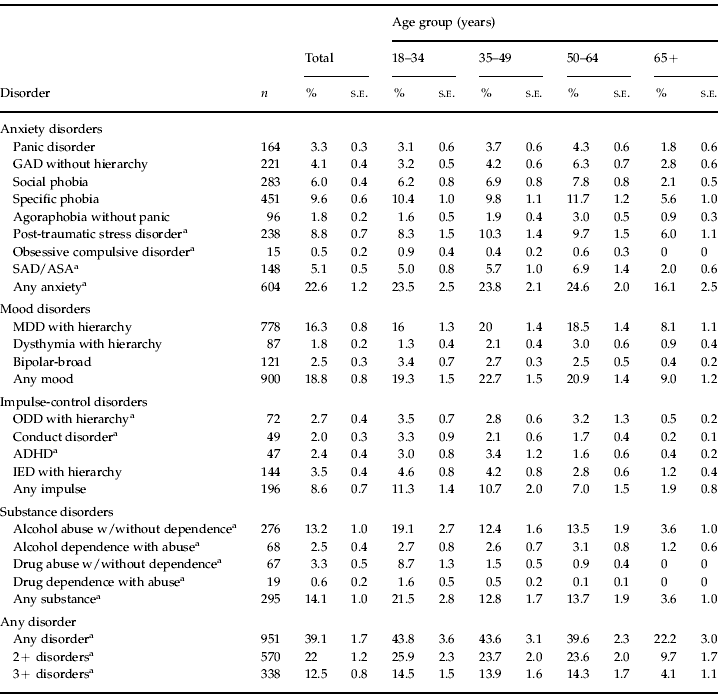
The lifetime prevalence of disorders among different age groups is presented in Table 1. The most prevalent disorder category was anxiety disorders (22.6%) followed by mood disorders (18.8%), substance disorders (14.1%) and impulse-control disorders (8.6%). The most prevalent disorder types were MDD (16.3%), alcohol abuse (13.2%), specific phobia (9.6%) and PTSD (8.8%). Overall, 39.1% of the sample met the criteria for any lifetime disorder.
Lifetime prevalence for part 1 and part 2 samples of DSM-IV disorders

GAD, Generalized anxiety disorder; SAD/ASA, separation anxiety disorder/adult separation anxiety; MDD, major depressive disorder; ODD, oppositional-defiant disorder; ADHD, attention-deficit hyperactivity disorder; IED, intermittent explosive disorder.
Part 1 sample size=4340.
Part 2 sample size=1986.
a Assessed in the part 2 sample.
Lifetime prevalence rates for mood and anxiety disorders increased with age, dropping substantially for the 65+ year group. The overall pattern for impulse-control and substance disorders was more varied, although disorders in these categories were more prevalent among the youngest age cohort (18–34 years). For all disorders, the lifetime prevalence was lowest among the 65+ year age group.
Age-at-onset distributions and projected lifetime risk
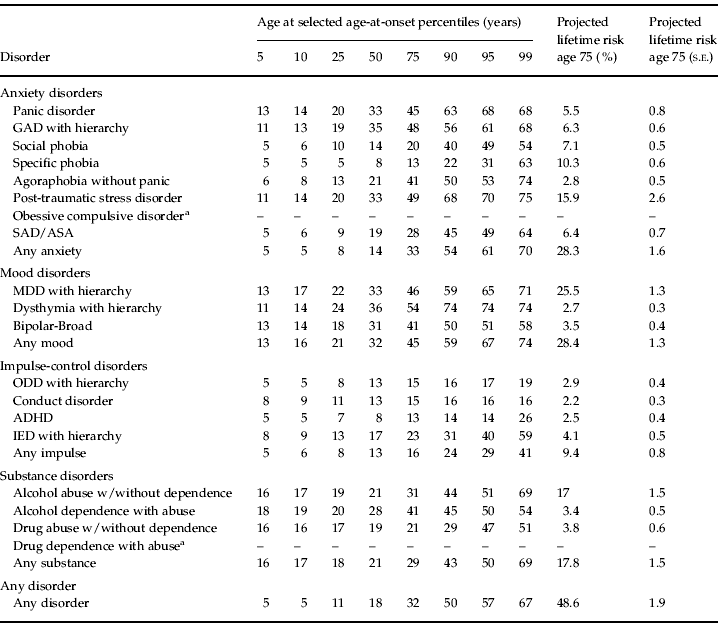
Table 2 presents cumulative lifetime risk estimates at selected age-at-onset percentiles. Age at onset was earlier for anxiety disorders (14 years) and impulse-control disorders (13 years) compared with mood disorders (32 years) and substance use disorders (21 years).
Age at selected percentiles on the standardized age-at-onset distributions of DSM-IV disorders with projected lifetime risk at age 75 years

GAD, Generalized anxiety disorder; SAD/ASA, separation anxiety disorder/adult separation anxiety; MDD, major depressive disorder; ODD, oppositional-defiant disorder; ADHD, attention-deficit hyperactivity disorder; IED, intermittent explosive disorder.
a Cell size <30 cases, too small to estimate.
Specific phobia and ADHD had the earliest median age at onset (8 years), followed by ODD and conduct disorder (13 years). Disorders generally had similar distribution characteristics to other disorders in their category. For example, the median age at onset for all mood, impulse-control and substance disorders occurred within a narrow range (31–36 years for mood disorders, 8–17 for impulse control disorders and 19–28 for substance disorders). Anxiety disorders, on the other hand, displayed a more varied distribution.
Table 2 also presents projected lifetime risk by the age of 75 years based on the aforementioned age-at-onset distributions. Comparing these percentage estimates with previous lifetime prevalence estimates gives an indication of how lifetime prevalence may change when participants reach age 75 years. Mood disorders represented the highest projected risk (28.4%). The risk of anxiety disorders was 28.3%, followed by substance disorders (17.8%) and impulse-control disorders (9.4%). The projected lifetime risk of any disorder by age 75 was 48.6%. Lifetime risk by age 75 was 25% higher than lifetime prevalence for anxiety disorders, 51% higher for mood disorders, 9% higher for impulse-control disorders and 26% higher for substance use disorders.
Association of sociodemographic characteristics and the experience of civil conflict with DSM-IV disorders
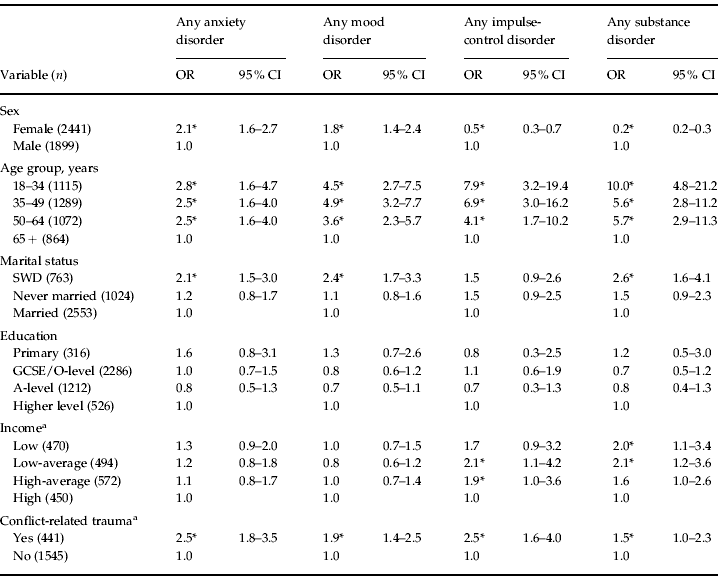
Table 3 presents the results of logistic regression analyses with multiple predictors examining the association of sociodemographic variables and the experience of civil conflict with the lifetime prevalence of disorders. While women were significantly more likely to have anxiety and mood disorders, men had significantly greater odds of having impulse-control and substance disorders. Age at interview was significantly associated with having a disorder in each category, with an overall trend of decreasing odds as age increased. Individuals who were previously married were more than twice as likely to have anxiety, mood and substance disorders. Those with lower income levels were significantly more likely to have impulse-control and substance disorders compared with those in the highest income bracket. Individuals who stated that they had ever lived ‘as a civilian in a place where there was ongoing terror of civilians for political, ethnic, religious or other reasons’ were significantly more likely to have all disorder types.
Logistic regression analyses of sociodemographic and conflict related correlates of DSM-IV disorders

OR, Odds ratio; CI, confidence interval; SWD, separated/widowed/divorced.
a Assessed in the part 2 sample.
* Significant difference compared to base category at the 0.05 level.
Cumulative lifetime probabilities of treatment seeking
Survival analysis was used to predict the percentage of individuals with lifetime disorders who eventually seek treatment. Estimates for selected anxiety, mood and substance disorders and any disorder in these subcategories are illustrated in a series of survival curves in Figs 1–4 respectivelyFootnote 1 Footnote †. Estimates for anxiety disorders (Fig. 1) reveal a varied pattern. For example, while a substantial proportion of individuals with panic disorder seek treatment within 10 years of onset (approximately 70%), a lower percentage of those with specific phobia seek treatment in the same period (approximately 10%). Results indicate that for each anxiety disorder, the majority of individuals take considerable time before seeking treatment.
Cumulative lifetime percentage of treatment seeking for anxiety disorders from year of onset. PD, panic disorder; GAD, generalized anxiety disorder; SP, specific phobia; SoP, social phobia.

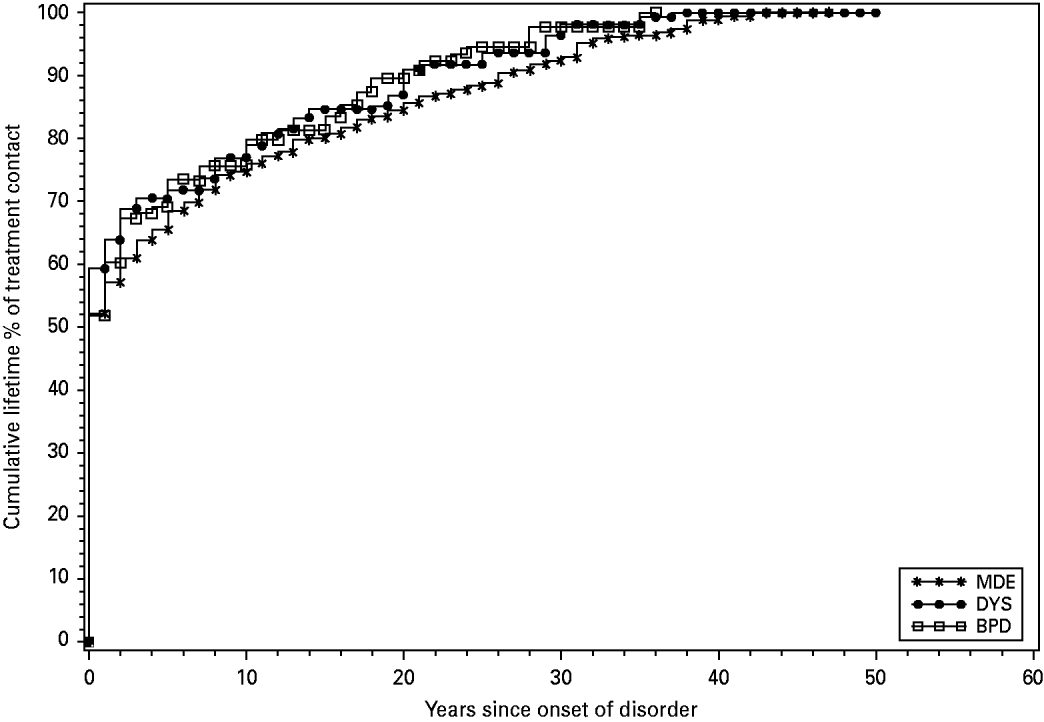
In contrast, the projected percentages of treatment seeking among those with specific mood disorders were relatively similar (Fig. 2). At least 50% of those with major depressive episode, dysthymia or bipolar disorder sought treatment in the first 2 years following onset. The projected cumulative probabilities then follow a fairly steep trajectory.
Cumulative lifetime percentage of treatment seeking for mood disorders from year of onset. MDE, major depressive episode; DYS, dysthymia; BPD, bipolar disorder.

Treatment-seeking curves for substance disorders again reveal a more varied pattern (Fig. 3). While the majority of individuals with drug dependence seek help within the first 2–3 years (approximately 84%), a much smaller percentage of those with alcohol abuse seek treatment in the same time period (approximately 12%).
Cumulative lifetime percentage of treatment seeking for substance disorders from year of onset. AA, alcohol abuse; AD, alcohol dependence; DA, drug abuse; DD, drug dependence.

Overall lifetime treatment patterns for anxiety, mood and substance disorders are shown in Fig. 4. While a relatively high percentage of those with mood disorders seek treatment in the first year following onset (approximately 50%), a much lower percentage of those with anxiety and substance disorders seek treatment in the same time period (approximately 16% and 4% respectively).
Cumulative lifetime percentage of treatment seeking for any disorder group from year of onset. ANYANX, any anxiety disorder; ANYMOOD, any mood disorder; ANYSUB, any substance disorder.

Duration of delays in first treatment seeking
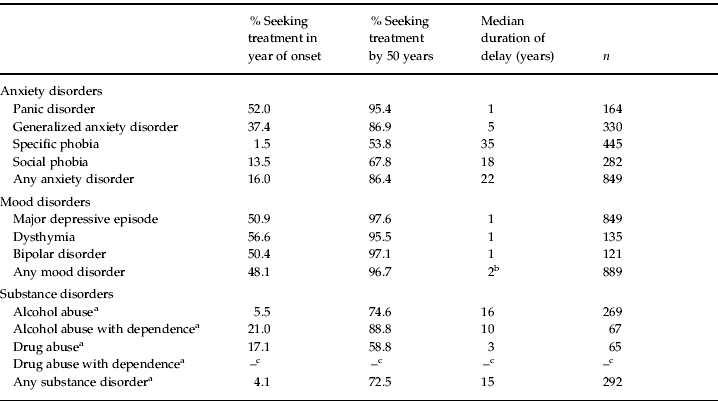
Survival analysis was also used to estimate the percentage of individuals with a disorder who seek treatment within 1 year of first onset, the percentage who seek treatment within 50 years of first onset and the medium duration of treatment delays (Table 4).
Proportion seeking treatment in the year of disorder onset and median duration of delay among cases that subsequently sought treatment

a Assessed in the part 2 sample.
b This figure reflects rounding errors and also the fact that an individual may have multiple mood disorders.
c Disorder was omitted due to insufficient n<30, but it will be included as one of the disorders in ‘Any’ category.
The highest percentage seeking treatment within the first year of onset was among those with mood disorders, with 48.1% seeking treatment in the first year following onset. The corresponding figures for anxiety and substance disorders were 16% and 4.1%. In terms of specific disorders, the highest percentage of treatment seeking within 1 year of onset was among those with dysthymia (56.6%) and panic disorder (52%). Estimates also suggest that the majority of individuals with mood disorders seek treatment by 50 years following onset (96.7%), while 86.4% of those with anxiety disorders and 72.5% of those with substance disorders seek treatment in the same period. The median duration of delay in treatment varied substantially with respect to specific disorders, ranging from 1 year to 35 years.
Discussion
Results may be viewed as conservative given the following limitations. Individuals with mental disorders are more likely to decline participation and less likely to report stigmatizing symptoms, leading to an underestimation of prevalence and treatment figures (Cannell et al. Reference Cannell, Marquis and Laurent1977). While the impact of non-response bias has not been specifically examined in the NISHS, a non-response survey carried out alongside the NCS-R found no evidence of such bias (Kessler et al. Reference Kessler, Berglund, Chiu, Demler, Heeringa, Hiripi, Jin, Pennell, Walters, Zaslavsky and Zheng2004). In addition, the NISHS did not include individuals living in institutions, a population with a high prevalence of mental disorders (Gunn et al. Reference Gunn, Maden and Swinton1991; Lamb & Weinberger, Reference Lamb and Weinberger1998; Brown et al. Reference Brown, Lapane and Luisi2002). Despite the possibility of underestimation, previous studies suggest that results produced from lay-administered survey instruments such as the CIDI and Diagnostic Interview Schedule overestimate prevalence compared with clinician-administered interviews (Anthony et al. Reference Anthony, Folstein, Romanoski, Vonkorff, Nestadt, Chahal, Merchant, Brown, Shapiro, Kramer and Gruenberg1985; Brugha et al. Reference Brugha, Jenkins, Taub, Meltzer and Bebbington2001). Finally, although strategies were used to increase the accuracy of self-report, it may be difficult for respondents to recall correctly their age at disorder onset.
A further limitation relates to the experience of civil conflict. The PTSD section includes a question ‘Did you ever live as a civilian in a place where there was ongoing terror of civilians for political, ethnic, religious or other reasons?’. Due to the standardized format of the CIDI, this particular question did not elicit specific information about an individual's personal experience of this event type or relate to a specific place or location within NI. While we assume that endorsements of this item relate mainly to the experience of civil conflict in NI, we do not have data on how this item was interpreted.
Despite these limitations, results reveal the extent of the burden of mental disorders, with almost two-fifths of the population meeting the criteria for any disorder in their lifetime. Furthermore, projections suggest that almost one half of the population will eventually develop a disorder. These results lie at the upper end of the range of estimates from completed WMH studies with the figures for lifetime prevalence higher than any other Western European country. Prevalence rates of specific disorder categories again reveal that estimates from NI are among the highest of all comparable figures (Kessler et al. Reference Kessler, Aguilar-Gaxiola, Alonso, Angermeyer, Anthony, Berglund, Chatterji, de Girolamo, de Graaf, Demyttenaere, Gasquet, Gluzman, Gruber, Gureje, Haro, Heeringa, Karam, Kawakami, Lee, Levinson, Medina-Mora, Oakley-Browne, Pennell, Petukhova, Posada-Villa, Ruscio, Stein, Tsang, Üstün, Kessler and Üstün2008).
Anxiety disorders were the most prevalent category, while MDD, alcohol abuse, specific phobia and PTSD were the most common disorders. The lifetime prevalence of PTSD was higher in NI (8.8%) than in the US (Kessler et al. Reference Kessler, Berglund, Demler, Jin and Walters2005) and all of the other WMH countries including other countries that have experienced civil conflict in their recent history, such as Israel and the Lebanon (Alonso & Kessler, Reference Alonso, Kessler, Kessler and Üstün2008; Bromet et al. Reference Bromet, Gluzman, Tintle, Paniotto, Webb, Zakhozha, Havenaar, Gutkovich, Kostyuchenko, Schwartz, Kessler and Üstün2008; Gureje et al. Reference Gureje, Adeyemi, Enyidah, Ekpo, Udofia, Uwakwe, Wakil, Kessler and Üstün2008; Herman et al. Reference Herman, Williams, Stein, Seedat, Heeringa, Moomal, Kessler and Üstün2008; Huang et al. Reference Huang, Liu, Zhang, Shen, Tsang, He, Lee, Kessler and Üstün2008; Karam et al. Reference Karam, Mneimneh, Karam, Fayyad, Nasser, Dimassi, Salamoun, Kessler and Üstün2008; Levinson et al. Reference Levinson, Lerner, Zilber, Levav, Polakiewicz, Kessler and Üstün2008; Medina-Mora et al. Reference Medina-Mora, Borges, Lara, Benjet, Fleiz, Rojas, Zambrano, Villatoro, Aguilar-Gaxiola, Kessler, Kessler and Üstün2008; Posada-Villa et al. Reference Posada-Villa, Rodríquez, Duque, Garzón, Aguilar-Gaxiola, Breslau, Kessler and Üstün2008). Further investigation is required to disentangle the factors associated with this finding; however, the impact of the ‘Troubles’ (Fay et al. Reference Fay, Morrissey, Smyth and Wong1999; Muldoon et al. Reference Muldoon, Schmid, Downes, Kremer and Trew2003; O'Reilly & Stevenson, Reference O'Reilly and Stevenson2003; Ferry et al. Reference Ferry, Bolton, Bunting, Devine, McCann and Murphy2008) is evident. The current study found that those who reported that they had lived ‘as a civilian in a place where there was ongoing terror of civilians for political, ethnic, religious or other reasons’ were significantly more likely to have each disorder category. Factors explaining the association of civil conflict with these disorder groupings remain unclear. It may reflect the direct adverse impact of civil conflict in NI on mental health outcomes. In another WMH initiative study, Karam et al. (Reference Karam, Mneimneh, Karam, Fayyad, Nasser, Dimassi, Salamoun, Kessler and Üstün2008) found similar associations in their examination of the mental health impact of war-related events in the Lebanon. Their study found that exposure to war-related events increased the risk of first onset anxiety, mood and impulse-control disorders. Alternatively, the findings may reflect the fact that individuals with these disorders are more likely to have been exposed to civil conflict. One key factor may be the high levels of social deprivation in the areas where much of the violence in NI was concentrated (Fay et al. Reference Fay, Morrissey, Smyth and Wong1999). This interaction has been highlighted by McConnell et al. (Reference McConnell, Bebbington, McClelland, Gillespie and Houghton2002) in their examination of mental disorders in the District of Derry. They concluded that high levels of social deprivation have undoubtedly contributed to rates of psychiatric morbidity. McConnell et al. (Reference McConnell, Bebbington, McClelland, Gillespie and Houghton2002) also allude to the adverse impact of civil conflict. While their study is not directly comparable to the present study, given its focus on 1-month and 12-month prevalence rates, they reported elevated rates of mental disorders, which were higher than those reported in a similar survey of inner-city London.
Age-at-onset distributions are consistent with those reported in previous epidemiological studies showing that impulse-control disorders had the earliest onset followed by substance, anxiety and mood disorders. Similar to the NCS-R (Kessler et al. Reference Kessler, Berglund, Demler, Jin and Walters2005), the NISHS data show the upper bounds of the interquartile range of onset are among the relatively young for each disorder category, indicating that mental disorders develop within a relatively narrow age range.
A number of sociodemographic variables were related to lifetime risk. Women had a significantly higher risk of anxiety and mood disorders and men had a higher risk of impulse control and substance disorders. These results are consistent with the findings of the NCS-R (Kessler et al. Reference Kessler, Berglund, Demler, Jin and Walters2005) and point to a need for sex-specific mental health promotion and targeting of services. Younger people were at higher risk of all disorder categories, highlighting the need for research into the mental health needs of young people and mental health promotion initiatives targeting young people. Those who were previously married were also more likely to have anxiety, mood and substance disorders and lower income levels were significantly associated with impulse control and substance disorders. Findings in relation to income level concur with results from other similar studies (Gresenz et al. Reference Gresenz, Sturm and Tang2001; Jenkins et al. Reference Jenkins, Bhugra, Bebbington, Brugha, Farrell, Coid, Fryers, Weich, Singleton and Meltzer2008).
On a positive note, the majority of individuals with disorders eventually seek treatment. These results compare favourably with figures from other WMH studies. Figures are similar to estimates from Europe, the US and New Zealand and are considerably higher than estimates from developing countries (Wang et al. Reference Wang, Aguilar-Gaxiola, Alonso, Angermeyer, Borges, Bruffaerts, Chatterji, Chiu, de Girolamo, Fayyas, Gureje, Haro, Heeringa, Huang, Kessler, Kovess-Masfety, Levinson, Nakane, Oakley-Browne, Ormel, Pennell, Posada-Villa, Üstün, Kessler and Üstün2008). The lower level of treatment seeking among those with substance disorders also mirrors findings from previous studies (Bruffaerts et al. Reference Bruffaerts, Bonnewyn and Demyttenaere2007; de Graaf et al. Reference de Graaf, Ormel, ten Have, Burger, Buist-Bouwman, Kessler and Üstün2008; Haro et al. Reference Haro, Alonso, Pinto-Meza, Vilagut Saiz, Fernandez, Codony, Martinez, Domingo, Torres, Almansa, Ochoa, Autonell, Kessler and Üstün2008; Kessler et al. Reference Kessler, Aguilar-Gaxiola, Alonso, Angermeyer, Anthony, Berglund, Chatterji, de Girolamo, de Graaf, Demyttenaere, Gasquet, Gluzman, Gruber, Gureje, Haro, Heeringa, Karam, Kawakami, Lee, Levinson, Medina-Mora, Oakley-Browne, Pennell, Petukhova, Posada-Villa, Ruscio, Stein, Tsang, Üstün, Kessler and Üstün2008; Wang et al. Reference Wang, Aguilar-Gaxiola, Alonso, Angermeyer, Borges, Bruffaerts, Chatterji, Chiu, de Girolamo, Fayyas, Gureje, Haro, Heeringa, Huang, Kessler, Kovess-Masfety, Levinson, Nakane, Oakley-Browne, Ormel, Pennell, Posada-Villa, Üstün, Kessler and Üstün2008) and may reflect lower levels of perceived need or lack of awareness of substance problems as mental disorders (Cunningham et al. Reference Cunningham, Sobell, Sobell, Agrawal and Toneatto1993). Failure to seek help, however, was also prevalent among individuals with phobias (46% and 32% for specific phobia and social phobia respectively) and those with lifetime drug abuse (41%). These findings again are consistent with previous studies (Wang et al. Reference Wang, Berglund, Olfson, Pincus, Wells and Kessler2005; Bruffaerts et al. Reference Bruffaerts, Bonnewyn and Demyttenaere2007; Arababzadeh-Bouchez et al. Reference Arababzadeh-Bouchez, Gasquet, Kovess-Masfety, Negres-Pages, Lépine, Kessler and Üstün2008; de Graaf et al. Reference de Graaf, Ormel, ten Have, Burger, Buist-Bouwman, Kessler and Üstün2008; Haro et al. Reference Haro, Alonso, Pinto-Meza, Vilagut Saiz, Fernandez, Codony, Martinez, Domingo, Torres, Almansa, Ochoa, Autonell, Kessler and Üstün2008).
While the majority of individuals with disorders eventually seek treatment, a major area of concern is the delay from initial disorder onset to first seeking treatment, particularly for anxiety and substance disorders. This finding may be viewed as surprising given that NI has open and free access to primary care services through the NHS. This raises the question of whether provision is adequate in addressing need, as those with needs may simply choose to ignore available services. Previous studies have reported similar findings and together provide an account of the features of treatment seeking for these disorders across countries and cultures. Bruffaerts et al. (Reference Bruffaerts, Bonneywyn, Demyttenaere, Kessler and Üstün2008) estimated treatment-seeking delays of 16 and 18 years for these disorder groups, while the corresponding estimates from the German WMH study were 23 and 9 years respectively (Alonso & Kessler, Reference Alonso, Kessler, Kessler and Üstün2008). Results for anxiety may reflect specific symptoms, such as avoidance, that characterize these disorders (APA, 1994). Delays in seeking treatment for substance disorders, particularly alcohol disorders, may be associated with cultural norms of heavy drinking (Cunningham et al. Reference Cunningham, Sobell, Sobell, Agrawal and Toneatto1993). The minimal delays found for mood disorders coincides with previous European studies (Bruffaerts et al. Reference Bruffaerts, Bonnewyn and Demyttenaere2007; de Girolamo et al. Reference de Girolamo, Morosini, Gigantesco, Delmonte, Kessler, Kessler and Üstün2008; de Graaf et al. Reference de Graaf, Ormel, ten Have, Burger, Buist-Bouwman, Kessler and Üstün2008; Haro et al. Reference Haro, Alonso, Pinto-Meza, Vilagut Saiz, Fernandez, Codony, Martinez, Domingo, Torres, Almansa, Ochoa, Autonell, Kessler and Üstün2008) and may reflect greater public awareness of depression and the treatments available. It may also be a reflection of the greater impairment associated with depression and the impact on family and loved ones, who may influence an individual's decision to seek help.
In summary, this first study of its kind in NI provides policy makers with evidence regarding the prevalence of mental disorders and the sociodemographic groups most at risk that would benefit from effective treatments. The study also enhances the evidence base regarding the features of mental disorders and treatment seeking and, as such, is relevant to an international audience. Results reveal that mental disorders are highly prevalent and that different disorders first occur within narrow age ranges. Age-at-onset information suggests that young children and adolescents should be the main priority for policy and interventions. The elevated prevalence of PTSD and the importance of living ‘in a region of ongoing terror’ in predicting lifetime disorders suggests that the civil conflict has had an additional impact on mental health and has implications for the targeting of mental health services. Furthermore, interventions should target the substantial delays in treatment seeking for anxiety and substance use disorders.
Acknowledgements
The NI Study of Health and Stress, including salary of S.M. and S.O'N. was supported by a grant from the Research and Development (R&D) Division in NI. The authors have support from the R&D Division NI for the submitted work; they have no relationships with the R&D Division NI that might have an interest in the submitted work. The survey was carried out in conjunction with the World Health Organization WMH Survey Initiative, which is supported by the National Institute of Mental Health (NIMH; R01 MH070884), the John D. and Catherine T. MacArthur Foundation, the Pfizer Foundation, the US Public Health Service (R13-MH066849, R01-MH069864, and R01 DA016558), the Fogarty International Center (FIRCA R03-TW006481), the Pan American Health Organization, Eli Lilly and Company, Ortho-McNeil Pharmaceutical, GlaxoSmithKline, and Bristol-Myers Squibb. We thank the staff of the WMH Data Collection and Data Analysis Coordination Centres for assistance with instrumentation, fieldwork and consultation on data analysis. None of the funders had any role in the design, analysis, interpretation of results or preparation of this paper. A complete list of all within-country and cross-national WMH publications can be found at http://www.hcp.med.harvard.edu/wmh/.
Declaration of Interest
None.